 Kerala Backwaters Escape

Karnataka Tour Packages
Bangalore – Belur – Chikmagalur – Sringeri – Agumbe – Udupi – Kaup – Mangalore – Ullal – Bekal – Kannur – Thalassery – Kozhikode
At a glance
North of Kochi, few foreign visitors travel the stretch of coast where Karnataka hands over to Kerala, yet this is where Tulu, Kannada, Konkani, Beary and Malayalam cultures overlap in food, ritual and language. Our coastal Karnataka and North Kerala tour starts in Bangalore, climbs into the coffee hills of Chikmagalur, crosses the Western Ghats to Sringeri and Udupi, then follows the shore through Mangalore, Bekal and Kannur to Kozhikode, the old port the Portuguese knew as Calicut. Seventeen days give enough time to stay for night-long performances and village rituals rather than glimpse them from a car window.
The angle of this Malabar coast tour is culture you can watch and taste. In Udupi you see Yakshagana, the Tulu coast's all-night theater of painted faces and towering headdresses. Mangalore brings ghee roast, neer dosa and a fish curry sharpened with kokum. In Kannur, from roughly December to March, village shrines hold Theyyam, in which performers are believed to become gods for a few hours, and we check each shrine's calendar before fixing your nights there. Kozhikode closes the loop with the spice trade that drew Arab, Chinese and European ships to this shore for centuries.
Drives are short once you reach the coast, mostly two to three hours, and every stop on the shore has at least two nights, so the pace stays easy. The same driver and air-conditioned vehicle carry you from start to finish, and a fresh regional guide meets you in every district. Our coastal Karnataka tour is built for travelers who have already seen Rajasthan or Kerala's backwaters and want a second, deeper trip, as well as NRIs with roots in Dakshina Kannada or Malabar. Late autumn through early spring brings calm water and most of the festival dates, so aim for that window.
Whichever hub you connect through, Doha, Dubai, Singapore or Frankfurt, you land at Bangalore's airport north of the city and find our colleague by the arrivals pillars holding a sign with your name. Your driver for the next seventeen days is introduced on the spot, because he will be the person you see most on this trip, and he loads the bags into a clean air-conditioned car. The first hours are kept clear of any plan. Most guests sleep until lunch, and the hotel can serve a light meal of idli, curd rice or a sandwich whenever you wake.
In the afternoon your tour manager visits the hotel to walk you through the route on a map. It is a useful hour, because this trip crosses a state border, two languages and several ritual calendars, and some evenings, especially those built around Yakshagana and Theyyam, are confirmed only a week or two in advance. You receive a local SIM card if needed, a folder with the day plans and the phone numbers of the regional teams in Mangalore and Kannur. Questions about tipping, dress at temples and what to eat on the first days are answered over a pot of strong filter coffee.
As the light softens, a short drive brings you to Basavanagudi, an old south Bangalore neighborhood of shady streets and family-run sweet shops. Your guide takes you to the quiet garden around the Bugle Rock, a granite outcrop where watchmen once blew horns to warn the town, and then to the stalls of VV Puram's food street, which comes alive after dark with fried snacks, holige flatbreads stuffed with jaggery and lentil paste, and ragi-based dishes few visitors try. It is a soft landing into Kannada city life before the hills tomorrow. Dinner is light, and the night is early. Overnight in Bangalore.
Bangalore began as a mud fort raised by Kempegowda in 1537, and your morning walk starts close to where it stood, in the old market district of KR Market, where flower traders unload sacks of marigold, rose and jasmine before sunrise. Arriving by seven gives you the full scene: porters balancing baskets on their heads, women stringing garlands at speed, and buyers from temples and wedding halls bargaining for the day's supply. Your guide points out how flowers move from the hill farms around the city into homes and shrines across south India, a trade that ties into the temple towns you will see later on this route.
Minutes from the market stands the timber pavilion of Tipu Sultan's palace, completed in 1791 as a hot-season residence. Faded paint still clings to its teak columns and arches, and panels on the ground floor cover the Anglo-Mysore wars. Next is Lalbagh, where Hyder Ali's gardeners set out saplings brought from Persia and Kabul in the 1760s. Seek out the iron-and-glass hall of 1889 and the sheet of bare gneiss in one corner, about three billion years old. The tall watchtower on that rock is one of four that Kempegowda is said to have placed to mark the limits of his town, and children like to race up the slope to reach it before their parents.
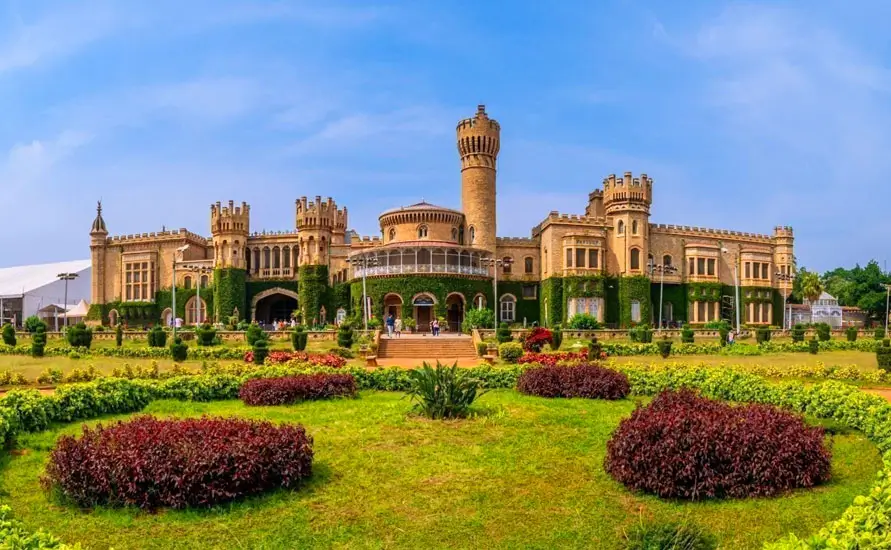
The afternoon belongs to modern Bangalore, a city of tech offices, startups and some of India's best craft breweries and coffee roasters. Your guide suggests a walk through the leafy lanes of Indiranagar or Church Street, with a stop at a specialty café that sources beans directly from estates in Chikmagalur and Coorg. Ask the barista about the difference between monsoon-processed, washed and natural coffees, and you will arrive in the hills tomorrow knowing what to look for. Dinner could be at a microbrewery with a menu of local small plates such as akki rotti and ghee podi idli. Overnight in Bangalore.
Leaving straight after breakfast, the car heads west on the highway through the market towns of Kunigal and Channarayapatna, where coconut groves give way to fields of ragi, the finger millet that fed rural Karnataka for centuries. Your driver knows the clean stops along this road, and a break for a plate of thatte idli, a flat steamed rice cake the size of a saucer, comes around mid-morning. The road is good for most of the way, and the last stretch toward Hassan is lined with roadside stalls selling tender coconuts and seasonal fruit. Hassan town is skirted, and Belur is reached by early afternoon.
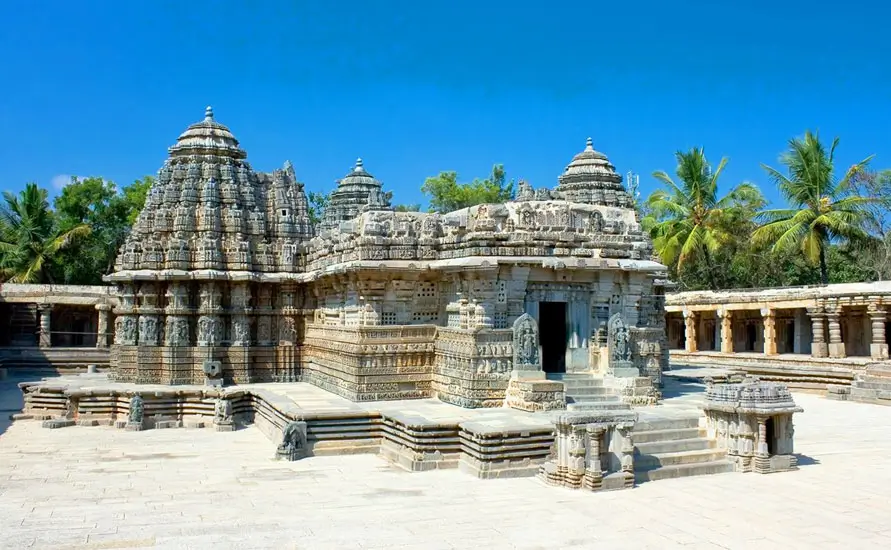
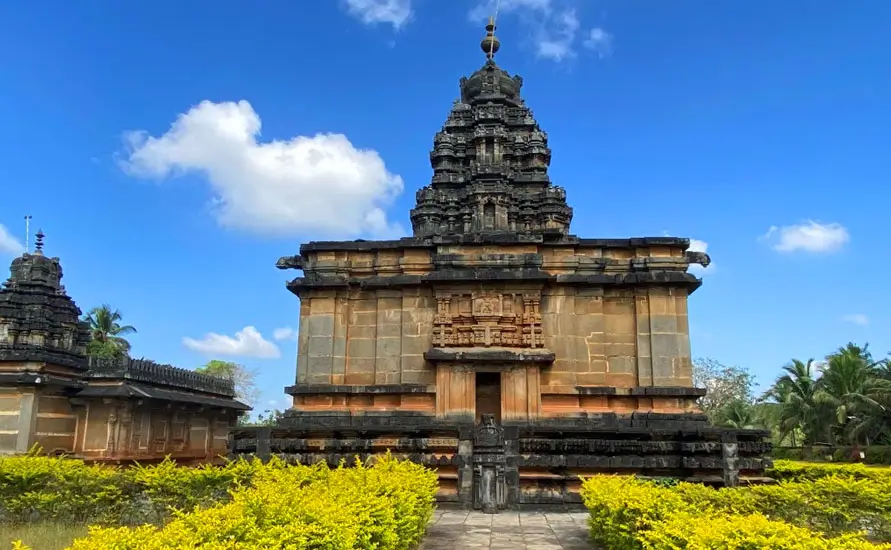
Consecrated in 1117 to celebrate a Hoysala victory, the Chennakeshava Temple at Belur entered the World Heritage list in 2023 together with Halebidu and Somanathapura. The temple stands on a star-shaped platform, and its soft soapstone walls allowed carvers to work in detail that looks almost like lace. Look up at the celestial maidens on the roof brackets, one holding a mirror and another a parrot, and the lathe-turned Narasimha pillar inside, which locals once claimed could spin. Shoes stay outside, so bring socks for the warm stone. Temple priests still perform daily rituals here, and visitors who arrive around midday may hear the bells of the noon puja.
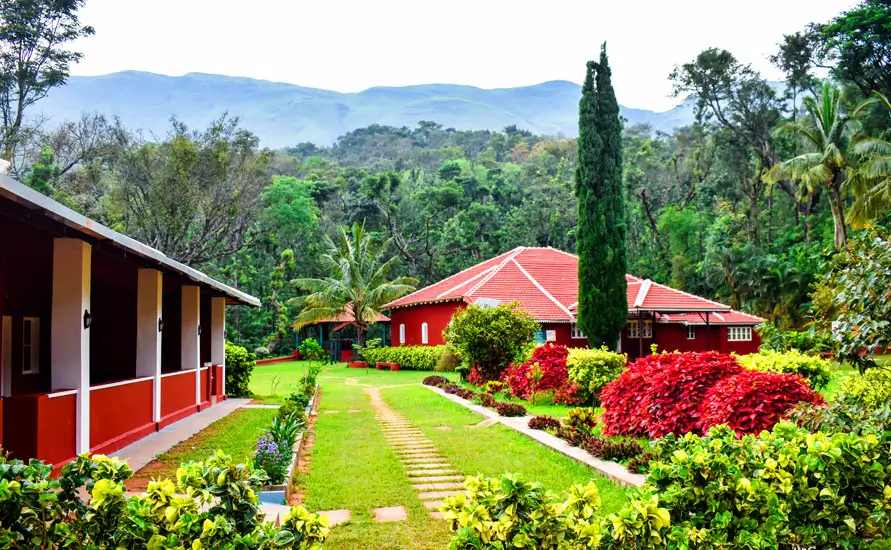
From Belur it is about an hour to Chikmagalur, climbing gently through areca and pepper plantations until the first coffee estates appear on the slopes. The town sits in a bowl of hills at around 1,000 meters, and the evenings are noticeably cooler than Bangalore, especially from November to February. Your room for two nights is on a working estate or just outside town, and after dark you hear only crickets and, now and then, a barking deer. Dinner is often home-style Malnad cooking, with akki rotti, a bamboo-shoot curry in season and a sharp pickle of wild mango. Overnight in Chikmagalur.
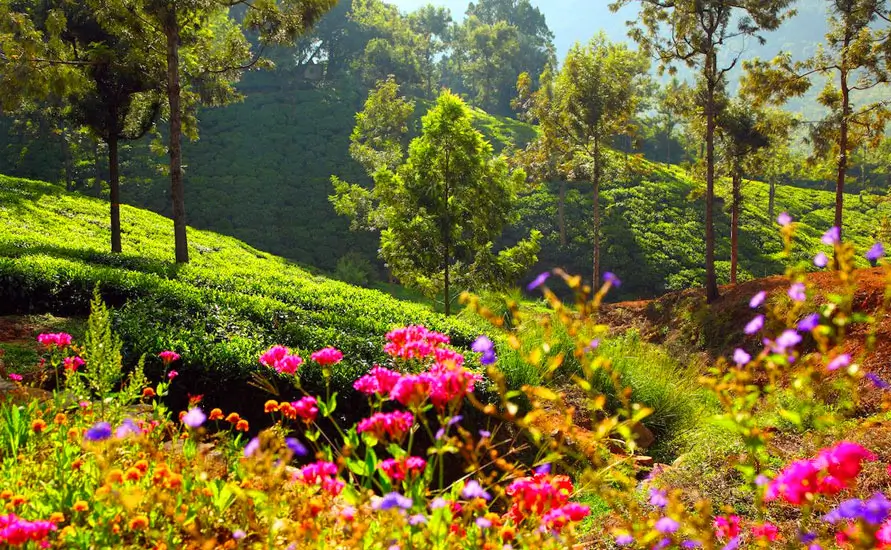
Indian coffee has a founding legend, and it is set on the hills above Chikmagalur. Sometime in the 17th century, legend says, the Sufi Baba Budan came home from the Hajj with seven green beans tucked in his beard, because Yemen banned the export of seed that could sprout, and planted them beside his hillside cave. The morning starts with a walk through a working estate, where the estate manager explains how arabica and robusta grow under silver oak shade, why ripe red cherries are hand-picked in winter, and how the beans are pulped, fermented and spread on drying yards to be raked through the day.
Later the car climbs the narrow road to Baba Budangiri, where the shrine linked to the saint is visited by both Hindus and Muslims, a shared site with a long and sometimes contested history that your guide explains with care. From the ridge, grassland and shola woods roll away in every direction, and after rain the ranges stack up in blue layers toward the sea. Close by rises Mullayanagiri, Karnataka's highest summit, where a short stairway leads to a tiny Shiva shrine on the top. Weekends bring crowds and traffic on the single-lane road, so we aim for a weekday when possible.
Afternoon is free on the estate. Some guests join a cupping session, tasting coffees side by side and learning how altitude and processing change the cup, while others take a gentle walk along the plantation roads to spot Malabar whistling thrushes and hornbills. If you visited in the picking season, the estate may let you try a shift with the pickers, a quick lesson in how hard the work is. Before dinner, a bonfire is often lit, and the talk usually turns to the Malnad region's mix of planters, farmers and forest communities. Buy a bag of fresh beans here to take home. Overnight in Chikmagalur.
Today's drive is short but slow, following winding roads through Malnad, the rainy hill country of Karnataka, where coffee gives way to areca nut, pepper vines and patches of evergreen forest. You pass through Balehonnur, a small town on the Bhadra river known as the seat of the Rambhapuri Peetha, one of the five main mathas of the Veerashaiva Lingayat tradition, and your guide explains how this reform movement of the 12th-century poet-saint Basavanna shaped Karnataka's society. A tea stop by the river is a good moment to watch farmers drying areca on mats and to notice the red-tiled houses with their deep verandas built for the monsoon.
By lunchtime you arrive in Sringeri, a compact pilgrim town beside the clear, rocky Tunga river. It is home to Sringeri Sharada Peetham, the oldest of four seats of learning traced to Adi Shankaracharya in the 8th century to teach Advaita Vedanta, the philosophy of non-duality. The matha runs Vedic schools, and you will see students in white dhotis carrying palm-leaf bundles or tablets between classes. After checking in and resting, you walk to the river steps, where large mahseer fish crowd the shallows waiting for puffed rice from pilgrims, a scene children and adults both enjoy.
Toward evening you walk around the Vidyashankara Temple, a 14th-century granite shrine on a high plinth that joins Hoysala and early Vijayanagara ideas, its hall held up by twelve zodiac pillars. Next door is the main Sharadamba Temple, dedicated to the goddess of learning, where the evening puja draws families from across south India. Shirts come off for men in the inner shrine, and both sexes should cover shoulders and knees. The day ends with a simple vegetarian meal at the matha's dining hall or a local restaurant, and a quiet walk across the footbridge over the river. Overnight in Sringeri.
Mist usually hangs over the Tunga as you pull out of Sringeri, and within the hour you reach Agumbe, a ridge-top hamlet whose rain gauge records some of the wettest monsoons in the south. Its rainforest is a stronghold of the king cobra, and a research station nearby studies the snake and its habitat. Fans of Indian television know Agumbe as the village where Malgudi Days was filmed in the 1980s, and an old house used in the series still stands. Your driver stops at the cliff-edge viewpoint, where on a clear morning the land drops away to a plain of forest and fields reaching toward the Arabian Sea.
Then comes the descent, fourteen hairpin bends through dense jungle, which your driver takes slowly because buses and timber trucks share the narrow road. The air grows warm and heavy with moisture, and the vegetation changes from forest to paddy and coconut as you reach the coastal plain. This is Tulu Nadu, the land of the Tulu-speaking people, whose language has a rich oral tradition but is mostly written today in Kannada script. Your guide explains how the region is divided between Udupi and Dakshina Kannada districts and how many families here speak three or four languages at home and in the market.
You reach Udupi by lunchtime, and the first meal is, fittingly, a full vegetarian thali on a banana leaf at a restaurant run in the old style, with rice, a thin saaru broth, sambar thick with ash gourd, a coconut curry, papads and a sweet payasa. The style of cooking born in the kitchens of the Udupi mathas spread across India and later the world through migrant restaurant owners. After resting at the hotel, an evening stroll around the temple car street gives a first look at the town, with its lamp-lit shops of brass vessels, prayer beads and pictures of Krishna. Overnight in Udupi.
The Udupi Krishna Matha dates to the 13th century, when the philosopher Madhvacharya installed an image of Krishna here and set out the Dvaita teaching that God and the soul are always separate. Around the temple stand the eight mathas, whose heads take turns managing worship for two-year terms in a cycle called Paryaya. Devotees view the deity through a window with nine small openings, and your guide tells the story of Kanakadasa, the shepherd-poet whose devotion is remembered at a second window on the outer wall. Go early for the quietest darshan; male visitors bare their chests at the inner gate.
Midday is for the sea. A short drive brings you to Malpe, a busy fishing port where trawlers unload mackerel, sardine and pomfret on the wharf, and auctioneers sell the catch in rapid Tulu and Kannada. From October to May, weather permitting, boats cross to St. Mary's Islands, a cluster of islets where columns of hexagonal basalt rise from the shore, formed by volcanic activity many millions of years ago. Vasco da Gama is said to have landed here in 1498 before sailing south to Calicut, a link to your final stop. Lunch is a plate of fried fish at a simple beach shack.
Night falls on Yakshagana, the coast's own theater, where a singer-narrator, drums and dancers in mirror-studded crowns act out episodes from the epics, with improvised Kannada dialogue. Troupes, known as melas, tour villages from November to May and traditionally play through the night. Depending on the calendar, we book seats at a nearby performance or arrange a shorter demonstration at a training center in Udupi, where artists show how they paint their faces and tie their costumes. Your guide explains the difference between the northern Badagutittu style seen here and the southern Tenkutittu style of Mangalore. Overnight in Udupi.
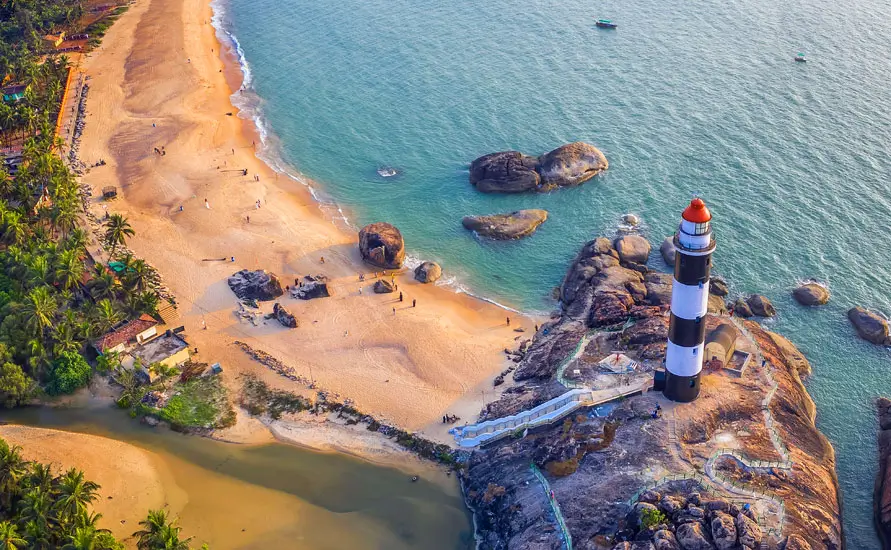
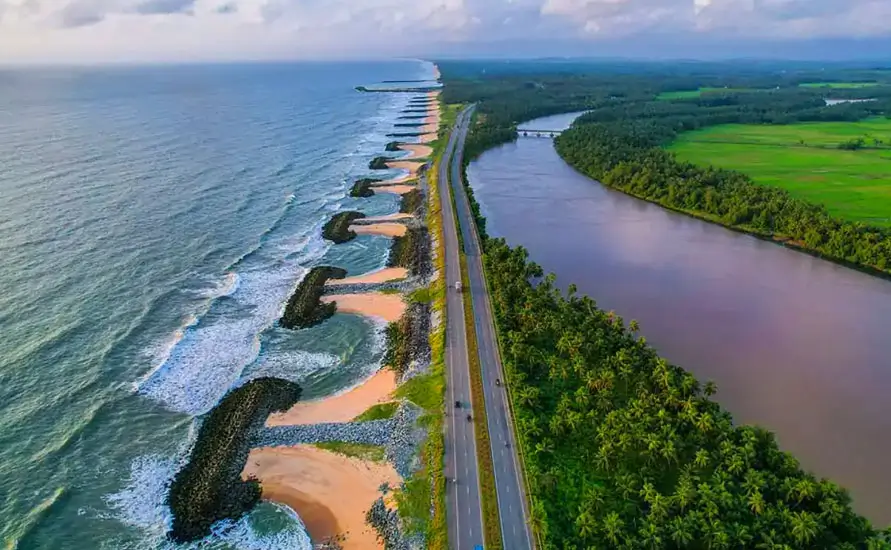
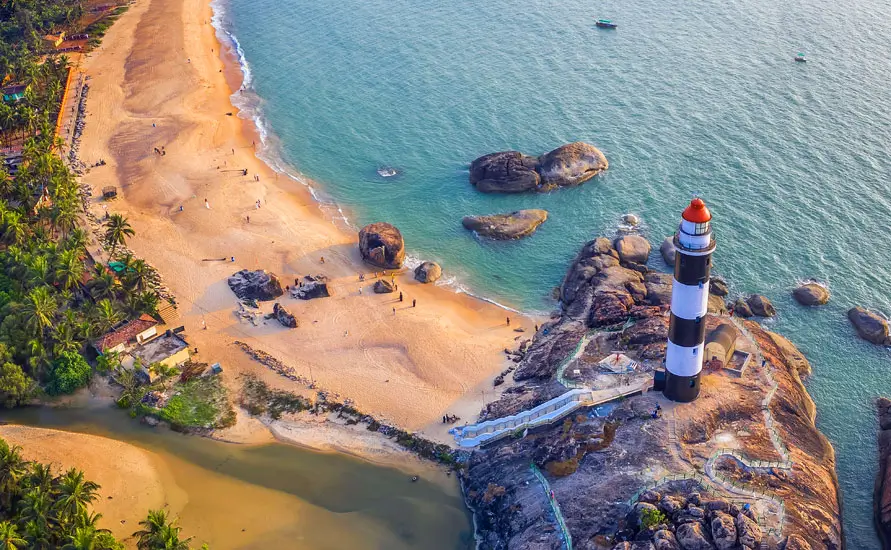
After a slow breakfast you drive south along the coastal highway, a road that runs between estuaries, coconut groves and long empty beaches. The first stop is Kaup, where a white lighthouse built in 1901 stands on a rocky headland above the waves, and visitors can climb to the gallery when it is open for a view up and down the coast. Close by stands a ruined Jain basadi and the reconstructed Marikamba temple, and your guide uses them to explain how the Tulu coast was ruled by small local dynasties such as the Alupas and later by Vijayanagara governors before the Keladi Nayakas and Tipu Sultan.
The highway then crosses several wide rivers on long bridges before reaching Mangalore, now officially Mangaluru, the main port of coastal Karnataka. Hindu, Muslim, Catholic and Jain families have shared this port for centuries, and a single bazaar can carry five languages: Tulu, Kannada, Konkani, Beary and Malayalam. You check in for two nights, then have a gentle afternoon. A drive along the old port road shows the wooden dhows that still sail to the Lakshadweep islands carrying rice, building materials and passengers, and the roads around the harbor smell of drying fish.
Dinner tonight is the start of a two-day Mangalorean food trail. Your guide takes you to a long-running family restaurant for a chicken ghee roast, a dish of red chillies roasted and ground with spices, then cooked down in plenty of ghee until it turns a dark brick color. It is followed by kori rotti, crisp wafers of rice that soften under a thin chicken curry, and neer dosa, lacy rice pancakes so thin they are almost see-through. Vegetarians are well served too, with a menu of coconut curries and goli baje, soft fried dumplings. Finish with a gadbad, Mangalore's layered ice-cream sundae. Overnight in Mangalore.
Your city tour begins at the Kadri Manjunatha Temple, at the foot of a laterite hill on the north side of town. The shrine is dedicated to Shiva, but it carries traces of an older Buddhist and Natha past, and a bronze image of Lokeshwara from the 10th century is among the finest of its kind in south India. Water from springs above the temple feeds a series of stone tanks where pilgrims bathe. Next is the Mangaladevi Temple, whose goddess gave Mangalore its name. Your guide explains how the cult of local mother goddesses merged with mainstream Hindu worship along this coast.
Late morning is for the St. Aloysius Chapel, on the campus of a Jesuit college founded in 1880. Its walls and ceiling are covered with paintings by the Italian Jesuit artist Antonio Moscheni, completed in 1899, which show the life of St. Aloysius Gonzaga, scenes from the Bible and the apostles in a style often compared with Roman churches. Photography is generally not allowed inside. Your guide then talks about the Mangalorean Catholic community, whose ancestors moved down from Goa in the 16th and 17th centuries and who were deported to Srirangapatna by Tipu Sultan in 1784, a story still remembered here.
After lunch the focus turns to Bhuta Kola, Tulu spirit worship, where a costumed performer speaks as the local guardian spirit and is asked to judge village quarrels. The 2022 film Kantara made it famous across India. Ceremonies take place mostly between December and May, often at night, and outsiders may watch when the community welcomes them, so we confirm dates through local contacts. If none falls during your stay, the guide shows you masks and costumes and explains the tradition in detail. Dinner is a second round of the food trail, this time Mangalorean fish curry with neer dosa and a crisp rava-fried pomfret. Overnight in Mangalore.
South of Mangalore, the Netravati river meets the sea at Ullal, a coastal town associated with Rani Abbakka Chowta, the 16th-century Jain queen who fought off the Portuguese for decades. Few visitors know her story, and your guide brings it to life on a short stop near the old town, explaining how she allied with the Zamorin of Calicut and with local Muslim sailors to defend her coast. Nearby, the Ullal Dargah of Sayyid Muhammad Shareeful Madani, a Sufi saint who arrived from Medina in the 16th century, draws pilgrims of many faiths, and visitors should cover their heads and shoulders before entering.
Not long after Ullal you cross into Kerala at Talapady, and the change is visible at once. Signboards switch from Kannada to Malayalam script, roadside tea shops offer pazhampori banana fritters, and the houses take on Kerala's sloping tiled roofs and painted walls. Kasaragod, Kerala's northernmost district, is famous for its many languages, with Tulu, Kannada, Konkani, Beary, Marathi and Malayalam all spoken here. Your driver handles the permit for crossing the state line, and the Kerala team meets you on arrival. You reach your hotel near Bekal in time for lunch and an hour of rest.
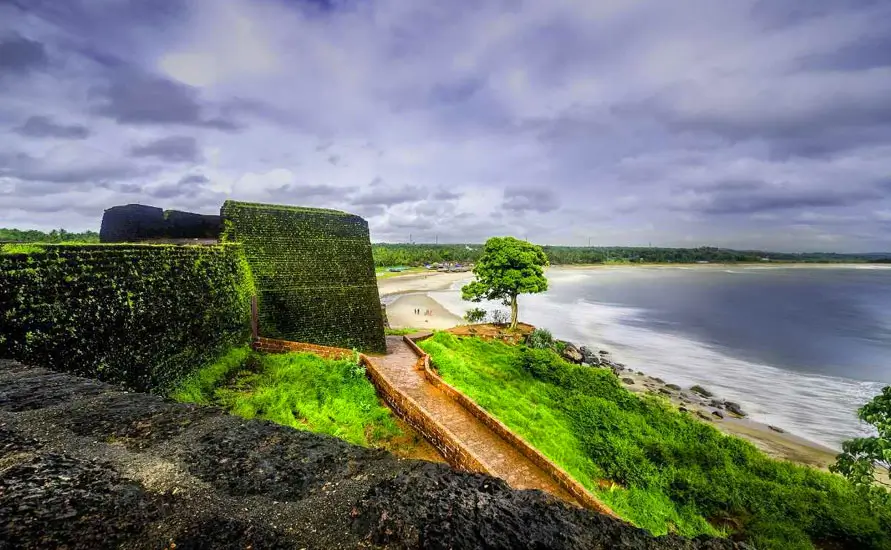
In the late afternoon you visit Bekal Fort, a large laterite fort set on a headland jutting into the Arabian Sea. It was built in the mid-17th century under Shivappa Nayaka of the Keladi kingdom, then passed to Hyder Ali, Tipu Sultan and finally the British. Its circular walls rise straight from the rocks, and the observation tower at the center once held cannon facing the sea. Indian film fans recognize the ramparts from a famous song sequence in Mani Ratnam's 1995 film Bombay. Stay for sunset from the outer walls, when the light turns the laterite deep red. Overnight in Bekal.
A morning drive of about forty minutes takes you to the Ananthapura Lake Temple, a small shrine dedicated to Vishnu that stands in the middle of a rock-cut pond. Local tradition holds that this is the original seat of the Anantha Padmanabha deity worshipped at the great temple in Thiruvananthapuram, far to the south. The structure is simple, reached by a short footbridge, and the setting is calm, with laterite cliffs rising behind the water and a cave said to lead to the capital. Cover up, and expect male visitors to take off shirts at the shrine door.
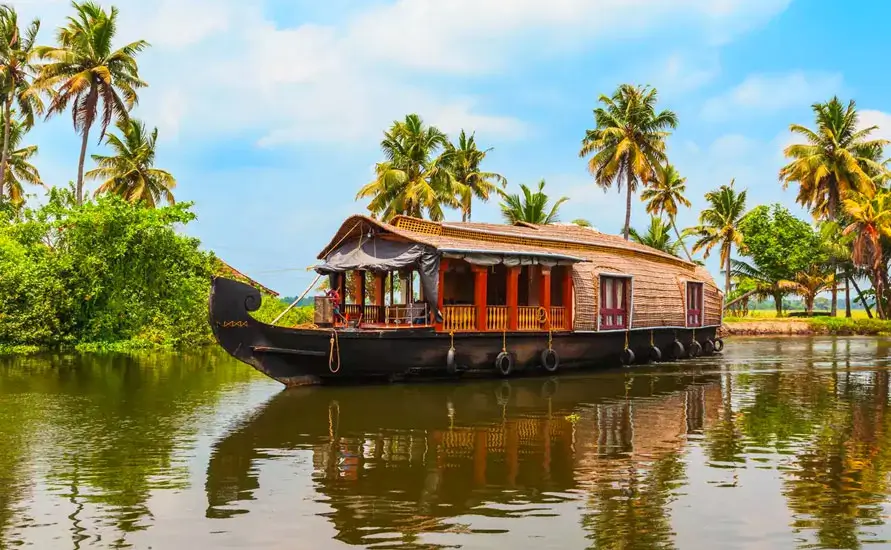
Late morning you reach Valiyaparamba, a chain of lagoons and sandbar islands near Payyanur that sees a fraction of the boats found further south. Instead of the large houseboats of Alleppey, you go out in a small country boat or a modest motor launch with a local boatman, gliding past mangroves, coconut-fringed islands and fish farms. Small islands host villages where ferries are the only link to the mainland. Lunch is a traditional Kerala meal with fish curry, mussels in season, rice and vegetable sides, served at a riverside home or a simple local restaurant.
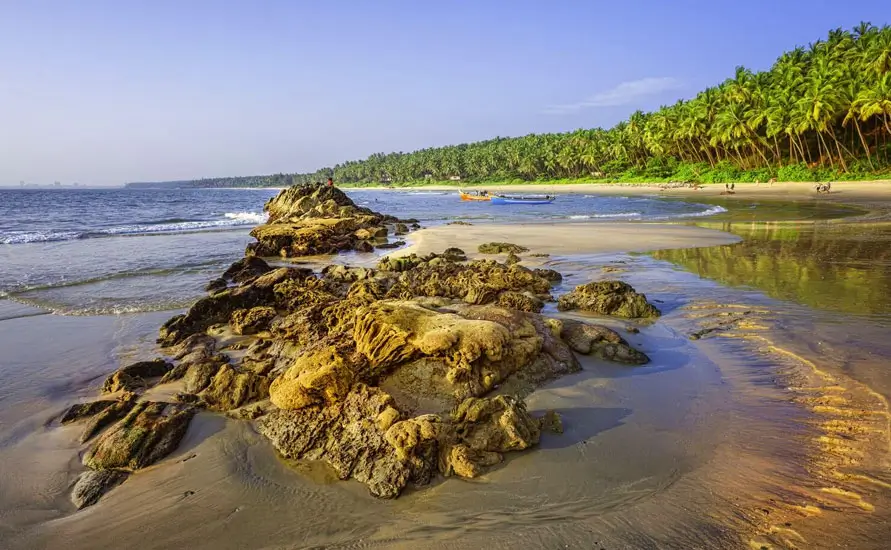
You return to Bekal in the afternoon with time to rest or walk on the beach near your resort, where fishermen bring their boats in on the sand at dusk. A stop at the Kappil or Pallikere beach shows the local side of the coast, with families picnicking and children playing cricket on the sand. Craft lovers can call at a small loom shed in the district that weaves cotton bedcovers and lungis. Dinner can be Kasaragod-style seafood, often cooked with fresh coconut and coastal tamarind. Ask for the local pathiri and a mild prawn roast if the full spice level feels strong. Overnight in Bekal.
Heading south after breakfast, the highway passes through Payyanur, a small town known for its bell-metal crafts and its role in India's freedom movement, when a salt satyagraha was held on the nearby beach in 1930. Your guide points out the coconut and cashew plantations along the road, and explains why the Malabar region, though part of Kerala, has its own dialect, cuisine and ritual traditions quite unlike those of Kochi or Thiruvananthapuram. A coffee stop in town gives you the chance to taste unniyappam, small sweet fritters of rice, banana and jaggery, a staple at temple festivals across Kerala.
You reach Kannur, once known as Cannanore, by midday and check in for two nights. The town has long been a trading port, a center of handloom weaving and the capital of the Arakkal family, the only Muslim royal house in Kerala's history, who ruled from here and from the Lakshadweep islands. Post-lunch, the Arakkal Kettu palace museum shows letters, furniture and household objects that trace the family's dealings with the Dutch, the British and Mysore. The neighborhood around it still holds old mosques and merchant houses. Women visitors should carry a scarf for any mosque visit along the way.
Your guide then briefs you on Theyyam, the ritual form that is the main reason many travelers come to north Malabar. Performers, mostly from hereditary communities, prepare for hours with face painting in red, yellow and black, and wear huge headgear made of areca palm, bamboo and cloth before they are believed to become the deity. The main season runs roughly from December to March, though some shrines begin in November or continue into April and May. Shrines publish their own calendars, and our local team checks them for your dates. If a performance is held tonight, the evening is spent there. Overnight in Kannur.
The morning starts at St. Angelo Fort, built in 1505 by Francisco de Almeida, the first Portuguese viceroy of India, on a headland facing the Arabian Sea. The fort later changed hands between the Dutch, the Arakkal rulers and the British, and the weathered laterite walls, moat and bastions are still in good shape. An old Dutch painting of the fort hangs in the Rijksmuseum in Amsterdam, a detail your guide likes to share, and the Mappila Bay fishing harbor sits right below it. From the walls you look down on the harbor, where fishing boats unload their catch and buyers bargain loudly on the shore.
Before lunch you visit a handloom weaving cooperative, part of an industry that has kept Kannur's name on furnishing labels around the world for more than a century. Inside, weavers work on wooden and semi-automatic looms, turning out bedsheets, curtains and towels in cotton for export. The guide explains how the German Basel Mission introduced new weaving techniques here in the 19th century. In the afternoon, a drive to Muzhappilangad, a long, firm beach where cars are allowed to drive on the sand, shows how local families spend a free afternoon. The views from the nearby Dharmadam island are best at low tide.
If there was no Theyyam last night, tonight is set aside for it. Your local guide accompanies you to a village kavu, a sacred grove or shrine, where you watch the performers complete their makeup, then join the crowd as the drummers start and the deity appears with lamps and fire. Visitors should dress modestly, keep a respectful distance and ask before taking photos, and flash photography is best avoided. Performances can start in the evening and continue into the early hours or begin before dawn, so we keep the next morning free. Your driver waits close to the shrine to take you back. Overnight in Kannur.
After a late breakfast, you drive about forty minutes to Thalassery, once called Tellicherry, a town whose name was known in London trading houses for its high-grade black pepper. On a rise above the sea, the East India Company's Thalassery Fort of 1708 keeps its massive gateway and secret tunnels that local stories say run to the shore. Your guide explains how the company used it to control the pepper trade and how the town became a base for British operations in Malabar. Its small streets still have old churches, mosques and warehouses, and the British-era cemetery near the pier tells its own story of early colonists.
Thalassery has a few unexpected claims to fame, and your guide covers them on a walk through town. Mambally Bapu, a local baker, is said to have made India's first plum cake here in 1883 for a British planter, and his family's bakery business still trades in the region. The town is also seen as the birthplace of the Indian circus, as Keeleri Kunhikannan trained the first performers here in the late 19th century. Most of all, the town is known for Thalassery biryani, cooked with fragrant small-grained jeerakasala rice and ghee-fried onion, and lunch shows how far it is from the Hyderabad style.
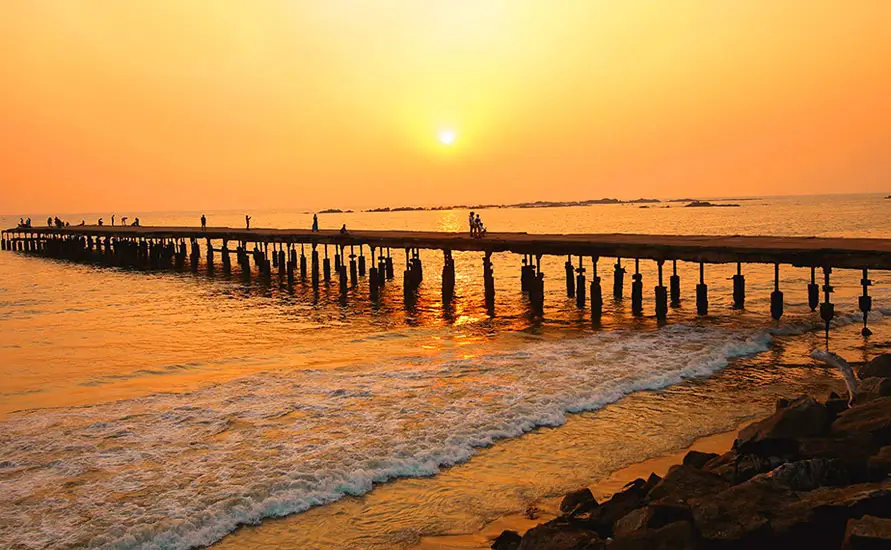
Southbound again, you pass Mahe, a sliver of former French territory now governed as part of Puducherry, with French-era names and a riverside walk, before arriving in Kozhikode. The road follows the coast through busy towns and coconut groves, and you reach Kozhikode by late afternoon. After checking in for three nights, walk to Kozhikode beach, where locals gather at sunset to eat spiced fruit and roasted peanuts, and the ruins of old piers stretch into the sea. Supper is Malabar seafood with flaky parotta at a busy local favorite. Overnight in Kozhikode.
Forty minutes north of the city, a modest stone pillar on Kappad beach marks where Vasco da Gama's crew are thought to have come ashore in May 1498, opening Europe's sea route to India. Today the beach is a quiet stretch of sand and rock, popular with local families on weekend evenings. At the time, the port belonged to the Zamorins, Hindu rulers whose wealth came from customs on pepper and ginger bought by Arab, Persian and Chinese shippers of every faith. The Portuguese arrival changed that balance, and the story of the next century is told through the local sites you visit today.
Heading back, the car pauses at Kuttichira, a Muslim quarter around a big tank whose old mosques look like Kerala temples, with tiered tiled roofs, timber ceilings and no minarets. The Mishkal Mosque, built in the 14th century by a wealthy Arab merchant, was partly burned by the Portuguese in 1510 and later restored. Non-Muslim visitors can usually see the outside and sometimes enter at quiet times with permission, dressed modestly. Nearby, the Tali Shiva Temple, linked to the Zamorins, once hosted the Revathi Pattathanam, an annual contest of Sanskrit scholars held under royal patronage, and your guide explains its history.
The afternoon is spent around Mananchira Square, a park with a large tank that was once the Zamorins' private bathing pond, and the SM Street, known locally as Sweetmeat Street. Its nickname comes from the halwa counters lining it, where glossy slabs of Kozhikode halwa, made with wheat, coconut oil and sugar or jaggery, come in shades from black to bright green. Shopkeepers usually let you taste before buying. Your guide also points out the old cinema halls and the tiled merchant houses behind the square. In the evening, try a plate of kallummakaya, mussels stuffed with spiced rice, at a local restaurant. Overnight in Kozhikode.
Spices built Kozhikode, and the morning visit to Valiyangadi, the big market near the old port, shows how that trade still works. Wholesale godowns with high ceilings are stacked with sacks of black pepper, cardamom, ginger, turmeric and copra, and merchants sit cross-legged on mats checking quality by smell and touch. Your guide explains how pepper from the Western Ghats once reached Rome, Baghdad and Lisbon from this coast, and how prices were negotiated in Arabic, Malayalam and Portuguese. A short visit to a small coconut oil mill or a spice trader's office adds detail, and you can buy fresh whole spices here at fair prices.
Before lunch, you drive about 30 minutes south to Beypore, a port town at the mouth of the Chaliyar river known for the building of the uru, a large wooden dhow still made by hand for merchants from the Gulf. Shipwrights from the Khalasi community build these boats on the riverbank without written plans, using teak and other hardwoods and traditional tools. Depending on the orders, you may see an uru under construction, with its hull rising over the sand like a skeleton. The guide explains how these boats were once the backbone of trade across the Arabian Sea and are now often bought as luxury yachts.
Toward sunset, join local families strolling the Beypore breakwater, a stone arm reaching roughly a kilometer out to sea. For the last dinner, we can book a Mappila family kitchen or a cooking class, with pathiri rice flatbreads, a chicken curry thick with roasted coconut and unnakaya, banana dumplings stuffed with egg and nuts. Over the meal, the talk tends to drift back along the coast to Udupi and the many communities met on the way. Before bed, pack the halwa and spices carefully, since sticky sweets and loose pepper do not travel well in a soft bag. Overnight in Kozhikode.
Your last morning is free until the transfer time, which is planned around your flight. Calicut International Airport, at Karipur, lies about 25 km south-east of the city, and the drive normally takes under an hour, although we leave a margin for traffic on the national highway. Non-stop services link Karipur with Gulf hubs with easy connections on to London, Toronto or Sydney, plus domestic routes to Bangalore, Mumbai and Delhi. For an evening departure we can request extended room use at extra cost, and the driver is happy to fit in a final beach walk.
At the terminal your driver helps with your bags and says goodbye after seventeen days on the road. You have moved from the coffee hills of Chikmagalur and the matha town of Sringeri through the Tulu coast and the Malabar shore, seen Yakshagana and Theyyam, and tasted ghee roast, biryani and halwa along the way. Many guests come back to the region for the Paryaya festival in Udupi or a longer Theyyam season trip in north Kerala, and we are always happy to plan either. Thank you for traveling the coast with us, and safe travels.
Your Journey

N.S. Rathore & Mrs. Omlata Rathore · Managing Director
We still read every enquiry ourselves. Tell us the places you liked and our planners will send a day-by-day route with drive times and a clear price.
Every package can be customised and no pressure to book. A planner from our office replies within 24 hours with a route written for your group.
Fill this in and your planner will send a first draft itinerary.
Explore more
Kerala Backwaters Escape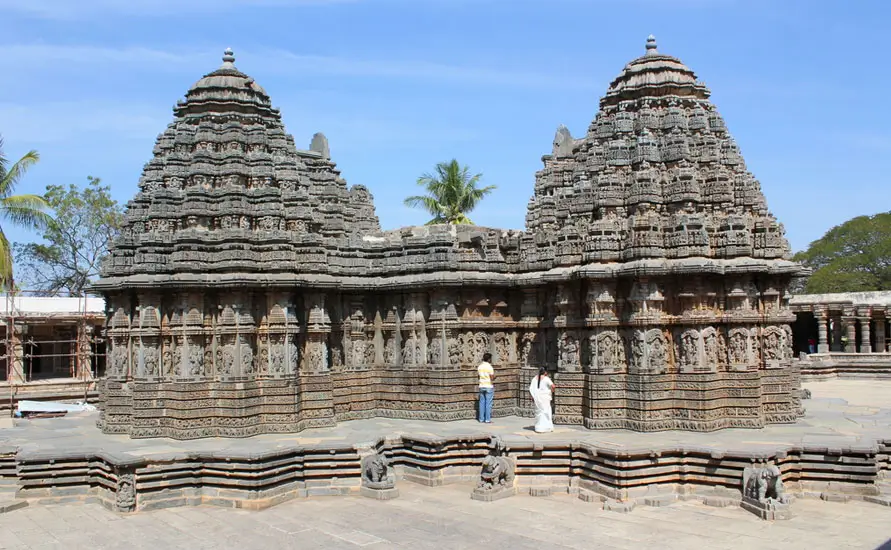 Kerala Backwaters Escape
 Kerala Backwaters Escape
 Kerala Backwaters Escape
 Kerala Backwaters Escape
 Kerala Backwaters Escape
 Kerala Backwaters Escape
 Kerala Backwaters Escape
 Kerala Backwaters Escape
 Kerala Backwaters Escape
 Kerala Backwaters Escape
 Kerala Backwaters Escape
 Kerala Backwaters Escape
 Kerala Backwaters Escape
 Kerala Backwaters Escape
 Kerala Backwaters Escape
 Kerala Backwaters Escape
 Kerala Backwaters Escape
 Kerala Backwaters Escape
 Kerala Backwaters Escape
 Kerala Backwaters Escape
 Kerala Backwaters Escape
 Kerala Backwaters Escape