 Kerala Backwaters Escape

Karnataka Tour Packages
Bangalore – Somanathapura – Talakadu – Mysore – Kabini – Coorg – Belur – Halebidu – Davangere – Hampi – Hubballi
At a glance
Few Indian states let you follow a herd of wild elephants along a reservoir shore in the morning and stand inside a 13th-century temple a couple of days later. Our Karnataka Wildlife and Heritage Tour pairs the forests of Kabini, where the river reservoir divides Nagarhole from Bandipur, with the finest stone architecture in the south. In twelve days you see Hoysala carving at Somanathapura, Belur and Halebidu, the royal city of Mysore, Kodava ancestral homes in Coorg and the vast ruined capital of Hampi, where a sloth bear reserve adds a final wildlife chapter.
Kabini gets two full nights, which allows up to four outings into the forest by jeep, canter or boat. Safaris inside Nagarhole are run and booked through the Karnataka forest department, seats are limited, and slots are confirmed only shortly before your dates, so we request them as early as possible but cannot promise them. No one can promise sightings either. Tigers and leopards live here, yet many drives bring elephants, gaur, deer, langurs and a long list of birds instead, which most guests find just as rewarding.
On the heritage side, the route is planned so you meet three distinct building traditions: Hoysala soapstone, Wodeyar palace style and Vijayanagara granite. Expert local guides handle the monuments, a lodge naturalist handles the forest, and a single chauffeured car, cooled and driven by an English speaker, handles every road leg. This Karnataka heritage tour with wildlife works best from October to May, with the hot weeks of April and May giving the most reliable animal sightings near water. You fly home from Hubballi, or from the smaller Jindal Vijayanagar airport near Hampi when its schedule fits.
Welcome to Karnataka. A smiling member of our ground team spots you as you come through the airport doors, sign in hand, and steers you toward the car and the driver who will cover every kilometer of this trip with you. The drive from Kempegowda airport into the city usually takes about an hour. Expect a short briefing on the way, covering your safari bookings, the clothing to pack for the forest and the temples, and the number for our round-the-clock helpline. For flights that arrive before dawn, reserving the room from the previous date lets you sleep off the flight straight away.
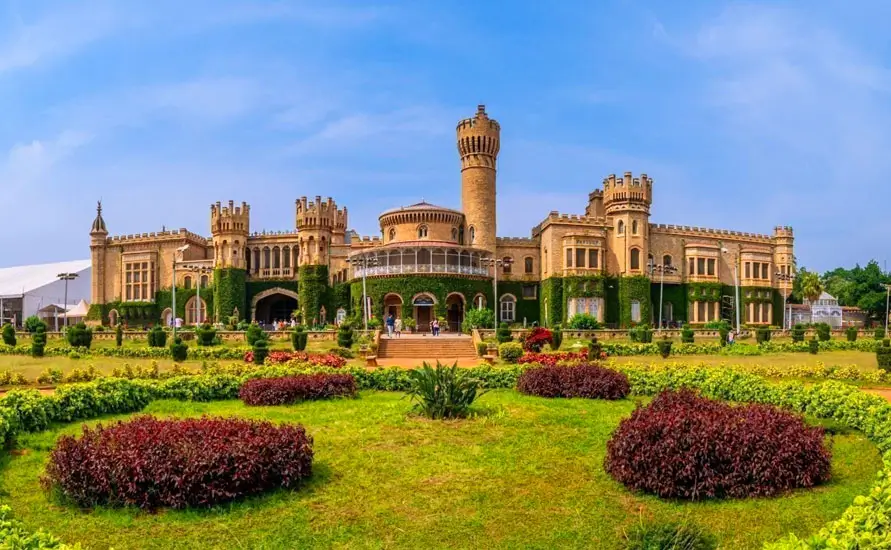
Once rested, an easy afternoon outing introduces Bangalore's past as a fortified market town. Your guide meets you at the Bangalore Fort, of which only the arched Delhi Gate and a few walls remain, carved with small figures of Ganesha and floral panels. Hyder Ali rebuilt the mud fort in stone in the 18th century, and British troops took it in 1791. A few steps away stands Tipu Sultan's Summer Palace, an elegant two-level pavilion of teak with carved arches, faded wall paintings and a small museum telling the story of the ruler often called the Tiger of Mysore.
Beyond the palace gates spreads the old pete, Bangalore's original trading district, where streets are still named after the goods once sold in them: cotton, rice, brass, ghee. Evening is when the sprawling KR Market looks its liveliest, as porters carry baskets of marigolds and rose petals on their heads and traders shout prices across the stalls. Your guide makes sure you keep your bearings in the crowd. Head back for an early supper and bed, since tomorrow begins with a scenic drive through the countryside south of the city. Overnight in Bangalore.
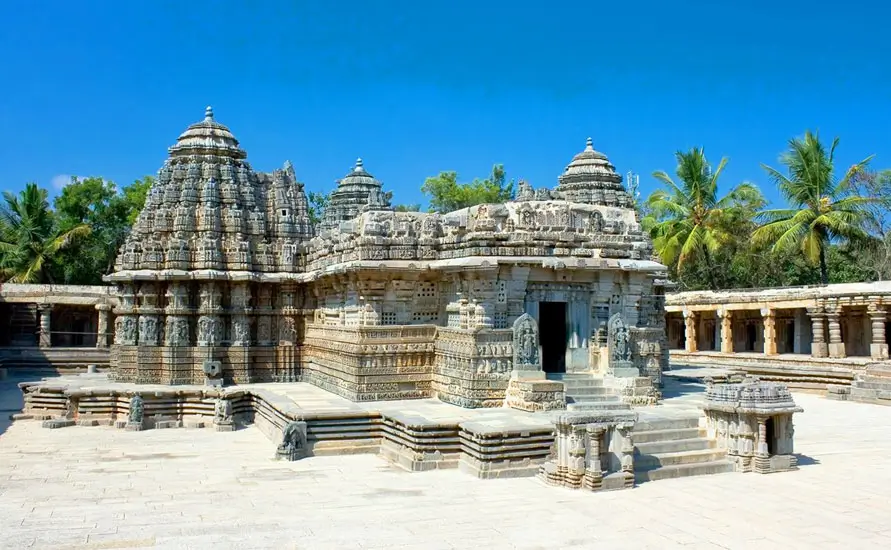
Instead of the direct expressway, today follows a quieter rural route through Kanakapura and Malavalli, where sugarcane, mulberry plots for silk farming and coconut groves line the road. After about three hours you reach Somanathapura, a sleepy village with one of the most complete Hoysala buildings anywhere. The Keshava Temple, consecrated in 1268 by Somanatha, a general of King Narasimha III, rises from a star-plan plinth inside a walled courtyard lined with small cells. Along with Belur and Halebidu, it won UNESCO World Heritage status in 2023 under the Sacred Ensembles of the Hoysalas listing.
The temple has three shrines arranged around a central hall, each topped with its own tower, and the walls carry rows of carved elephants, horsemen, swans and scenes from the epics. Your guide shows you where several sculptors signed their work, unusual in Indian temple art, and points out the ceiling panels inside, each carved as an opening lotus with a different pattern. The original images in the shrines are no longer worshipped, so the site is calm and you can take your time. Come back to these details later in Belur and you will notice how the style developed over 150 years.
A 30-minute drive brings you to Talakadu on the banks of the Kaveri, a former royal town that sand dunes slowly buried from the 16th century onward. Local legend blames a curse from a grieving queen on the Wodeyar family. Several temples have been dug out of the sand, including the Vaidyeshwara Temple with its fine granite carving, while others still lie partly below the dunes. Afterwards you continue about an hour west to Mysore, arriving around sunset. Dinner could feature a plate of crisp Mysore masala dosa, coated inside with a red garlic chutney, at a local restaurant. Overnight in Mysore.
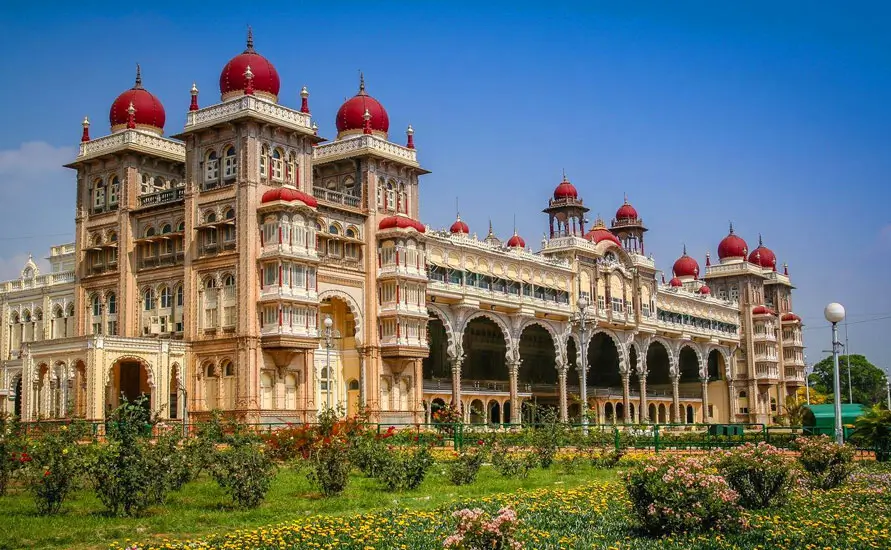
Today is given over to the royal city and its collections. Start at the Mysore Palace soon after it opens, before the coach groups. Your guide focuses on the architecture and its craftsmen: the cast-iron columns shipped from Scotland, the carved rosewood and ivory doors of the Amba Vilas hall, and the silver-plated doors of the inner rooms. You hear about the Wodeyar dynasty, which ruled Mysore for centuries, was sidelined for decades by Hyder Ali and his son, and was restored by the British after 1799. You hand in footwear before entering, and cameras stay in their bags in the royal halls.
Next comes the Jaganmohan Palace, an 1861 building that served as a stand-in royal residence after the old wooden palace burned. It now houses an art gallery with canvases by Raja Ravi Varma, the Kerala-born painter whose goddesses and epic heroines shaped how millions of Indians picture their gods, as well as Mysore-style gold-leaf paintings, musical instruments and an unusual French clock where tiny soldiers march out every hour. Lunch is at a traditional restaurant in the old city. Try a rice plate of saaru, palya and holige, or a sweet slab of Mysore pak, first made in the palace kitchens.
Toward evening the road winds up Chamundi Hill for the Chamundeshwari Temple, where the shrine of the city's protecting goddess draws a steady line of local families. Visit the huge black Nandi on the way down, then stop at a viewpoint as the sun sets over the city and the palace becomes a small outline on the plain. Should a Sunday or other public holiday fall during your Mysore stay, you can continue to the palace grounds to see its outline traced in light for about 45 minutes after 7 pm. Back in town, the Devaraja Market is still open for a quick walk. Overnight in Mysore.
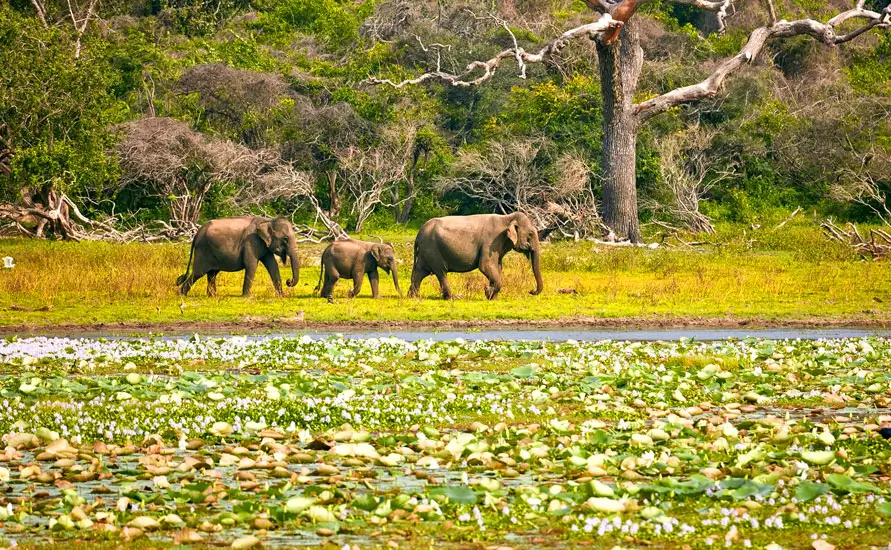
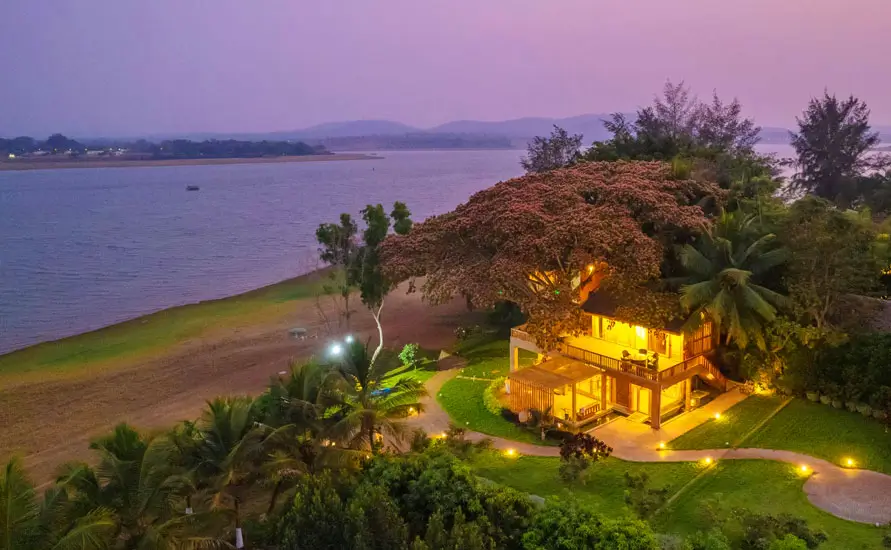
After an unhurried breakfast you head south-west toward the Kabini river, passing through HD Kote, where farmland gradually becomes dry deciduous forest. The Kabini dam, completed in the 1970s, created a long reservoir that forms the boundary between Nagarhole and Bandipur national parks, and together with neighboring reserves in Kerala and Tamil Nadu this area holds one of the largest Asian elephant populations in the world. You check in at a riverside lodge or resort before lunch. Rooms here usually look over the water, and bonnet macaques, peacocks and kingfishers are often seen from the garden itself.
Your naturalist explains how safaris work. Every drive into Nagarhole National Park is run by the state forest department in jeeps or larger canters, on fixed routes, with morning and afternoon departures. Seats are limited and sold through the department, or through lodges that hold allotments, and bookings can only be confirmed close to the date, so we arrange them as early as the system allows. A boat safari on the reservoir is the main alternative when jeep slots are full. Wear muted colors, skip strong perfume, and keep voices low, because sound carries a long way in the forest.
If a slot is available, your first safari sets off after afternoon tea and is back at the gate by dusk. Herds of spotted deer graze in open clearings, gaur, the massive Indian bison, move slowly between the trees, and langurs bark in warning from the treetops once a predator moves nearby. Tigers and leopards, including the rare melanistic leopard often called the black panther, do live in these forests, but sightings depend on luck and patience and can never be guaranteed. Back at the lodge, there is often a short wildlife film or talk before dinner, and a bonfire if the night is cool. Overnight in Kabini.
Wake-up calls come early, as morning safaris usually leave at first light, when animals are most active and the forest air is fresh. Bring a warm layer in the winter months, because open vehicles can be chilly before sunrise. Your naturalist reads fresh pugmarks on the track and keeps an ear open for the sharp honk of a sambar, which may reveal a big cat on the move. Elephant families often cross the track here, and drivers stop at a respectful distance. Birders can look for the Malabar grey hornbill, crested serpent eagle and the flame-throated bulbul, among more than 250 species recorded in the park.
Late breakfast follows at the lodge, and nothing is scheduled until mid-afternoon. Most guests rest, read on a veranda facing the water or join a short guided nature walk around the property, where the naturalist identifies butterflies, spiders and medicinal plants. Many lodges also show a short film on the conservation history of Nagarhole, including the relocation of forest villages and the work of anti-poaching camps. Lunch is usually a buffet with South Indian and continental dishes. If you would rather skip the second drive, the lodge pool and a quiet afternoon are always an option on this tour.
The afternoon outing is a boat safari across the reservoir, giving a completely different view of the park. As water levels drop through the dry season, the shoreline turns into a broad meadow where elephants come to drink, bathe and graze, sometimes in groups of dozens. From the boat you can also see mugger crocodiles basking on the mud, smooth-coated otters fishing in the shallows, and ospreys, cormorants and river terns diving for fish. Boat timings and availability are also set by the authorities, so we confirm them on arrival. Dinner is at the lodge. Overnight in Kabini.
If you have a morning drive booked, enjoy one last chance to find a tiger or a pack of dholes, the wild dogs of India, before breakfast. Otherwise, sleep in and watch the river from your veranda. Around mid-morning you check out and drive west along the edge of the forest through Hunsur and Gonikoppal into southern Coorg, a quieter part of the district than the area around Madikeri. The road climbs slowly through coffee, orange trees and paddy, and you may still spot spotted deer or langurs near the roadside as you pass the edge of Nagarhole.
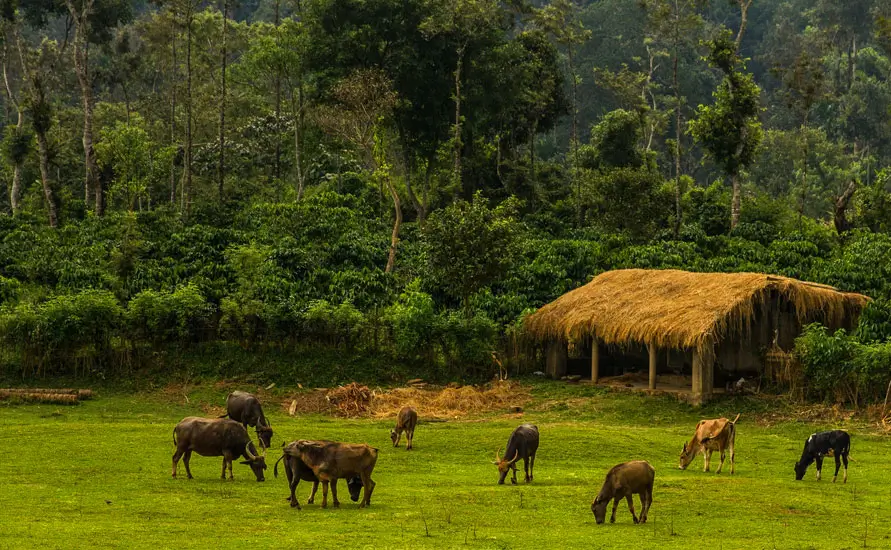
Two nights follow on a south Kodagu estate where a Kodava family farms coffee, pepper and cardamom and welcomes paying guests. Kodava hosts are known for their hospitality, and the house will often be decorated with family photos of soldiers, hunting rifles and the curved short swords called odi kathi. After lunch, take a walk with your host along the estate paths. In the cool evening, the plantation comes alive with the calls of jungle owlets and nightjars, and fireflies may appear between the coffee bushes in the weeks after the rains. Dinner is home-cooked Kodava food, perhaps kumm curry made with wild mushrooms or the famous pork pandi.
Before turning in, ask your host about the festivals that shape the year here. Kailpodh in September marks the end of paddy transplanting with the cleaning and worship of weapons, Kaveri Sankramana in October celebrates the river's source, and Puthari in late November or December, when the paddy is harvested, is the biggest celebration of all. Kodava weddings are equally distinctive, conducted by elders rather than priests. These customs give the Kodagu hills a character quite different from the rest of Karnataka, and tomorrow's visits are planned to show you more of it. Overnight in Coorg.
Today is devoted to the history of the old kingdom of Kodagu, which the Haleri dynasty ruled from the 1600s until the British deposed the last king in 1834. After breakfast you drive to Nalknad Palace near Kakkabe, a two-story hunting lodge built around 1792, where the king Dodda Vira Rajendra hid during wars with Tipu Sultan and where he married. The building is small and simple, with painted wooden ceilings and a secret chamber, and it is set on the slopes below Tadiandamol, the highest peak in Coorg. En route there may be time for a Kodava ainmane, or ancestral house, if a host family is available that day.
Afternoon brings you to Madikeri, the district capital, for the Madikeri Fort. Tipu replaced the old mud walls with stone, and Lingarajendra of Kodagu rebuilt them in turn; the fort houses government offices, a colonial-era church turned into a small museum, and two life-size stone elephants by the entrance. Close by, the Gaddige royal tombs stand on a hill above the town: domed Indo-Islamic mausoleums of King Dodda Vira Rajendra, his queen and the royal priest, surrounded by gardens. Visitors are often surprised by their resemblance to Muslim tombs, which reflects the strong Deccani influences on the court of the time.
Finish the day at Raja's Seat for the evening view over the valleys, or at the Omkareshwara Temple nearby, which combines a Kerala-style tiled shrine with an Islamic-style dome and corner towers. Madikeri market is worth a quick stop for local honey, homemade wine from fruit, and bags of estate coffee and spices to take home. Back at your plantation stay, the evening is yours. Tomorrow is a long road day with a temple visit at the end, so it is worth packing tonight and asking for an early breakfast. Your host can pack coffee and snacks for the road. Overnight in Coorg.
An early start takes you north through Somwarpet and Sakleshpur, where the coffee thins out into tea gardens and areca groves and then the open plains of Hassan district. The road is mostly good, and your driver plans a break for coffee and snacks at a highway restaurant along the way. Look out for the hilltop Manjarabad Fort near Sakleshpur, built by Tipu Sultan in the shape of an eight-pointed star; it makes a short leg-stretch stop if you are not too tired. Arrival in Belur is timed for a late lunch, a rest and a temple visit once the heat fades.
Belur was once the early capital of the Hoysalas, and Vishnuvardhana raised the Chennakeshava Temple from 1117 to celebrate a military victory over the Cholas. Your guide focuses on the parts most visitors miss: the tall Garuda pillar facing the shrine, the large stepped tank in the corner of the courtyard, and the small frog carved on one of the bracket figures, which gives a minor shrine nearby its name, Kappe Chennigaraya. Inside the dark main hall, the central Narasimha pillar is said to have been able to rotate on its base. Allow at least two hours for this site.
As the sun goes down, the temple courtyard turns quiet, and if the evening puja is underway you will hear the drums and bells from the shrine. Belur has only simple hotels and a few homestays, but the town is small and safe to wander, with tea stalls and fruit sellers along the main road. Have dinner early, because tomorrow brings the biggest stretch of road on this itinerary. Your guide will go over the timings with you and suggest you keep a small bag with the things you need for the day within reach. Overnight in Belur.
A 16 km hop brings you to Halebidu shortly after breakfast, while the light is still low and soft on the carvings. The Hoysaleswara Temple is in fact two linked temples, one named after King Vishnuvardhana and the other after his queen, Shantala Devi, a celebrated dancer. Its walls carry one of the densest carved friezes in India. Your guide focuses on a few panels in detail, such as Arjuna shooting at a revolving fish target and Ravana lifting Mount Kailasa. A small ASI sculpture gallery on the lawn and the black-stone Jain basadis nearby round off the visit.
Then you head north-east through Arsikere and Kadur, joining the national highway toward Davangere, a busy commercial town that every Karnataka traveler knows for one thing: benne dosa. Here the dosa is cooked thick and soft, then crisped on the outside with generous amounts of white butter, and served with a coconut chutney and a mild potato filling. Lunch at a busy local dosa house is quick, filling and a highlight for many guests. The highway is good, with clean fuel stops, and it is mostly flat and straight across the cotton and maize fields of central Karnataka.
From Davangere it is about two and a half more hours to Hospet. Watch the landscape change as you near the Tungabhadra: piles of rounded granite boulders appear, some balanced at angles that seem impossible. Check-in is by late afternoon, leaving time for a swim or a rest. Your guide drops by to set a timetable that works around the heat, starting early and breaking during the hottest hours. Tomorrow begins before sunrise, so set your alarm and order breakfast in a box if Matanga Hill is on your list. Overnight in Hospet.
For those who enjoy a climb, the day starts in the dark with a 30-minute scramble up Matanga Hill, the highest point in the ruins, to see first light spread across the boulder fields of Hampi. The path is uneven, so wear proper shoes and carry a torch; your guide leads the way. At the summit the Virupaksha tower, the river and the long colonnaded streets of the old city all come into view. If you prefer to sleep in, the same view in gentler form is available later from Hemakuta Hill. Either way, return to the hotel for breakfast before the main sightseeing begins.
Below Matanga Hill lies the Achyutaraya Temple, built in 1534 under King Achyuta Deva Raya and approached along a long ruined bazaar once known as the Courtesans' Street. It is less visited than the major sites, and the carvings on its pillars, including fine scenes of lovers and dancers, are in good condition. Walk down to the riverbank to the small Kodandarama Temple, where Rama is believed to have crowned the monkey king Sugriva, and look at the hundreds of small lingams carved into the rocks along the river. A coracle crossing can be arranged here on request.
After a midday break you visit the Virupaksha Temple, which has remained in worship since before Vijayanagara rose to power. Inside, look up at the ceiling paintings of the mandapa, which are among the few surviving examples of Vijayanagara painting, and the pinhole projection of the tower in a side chamber. Afterwards walk the length of the old Hampi Bazaar, a broad street lined with ruined pavilions whose pavilions once housed dealers in pearls, cloth and spices. End at Hemakuta Hill for a sunset among the early temples. Overnight in Hospet.
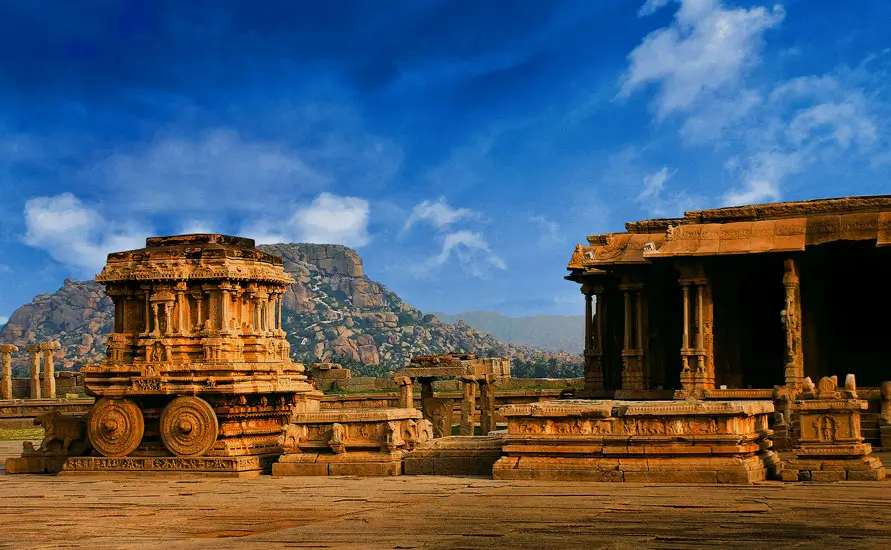
Gates open early at the Vittala Temple, and so should you: the masterpiece of Vijayanagara architecture, begun in the 15th century and expanded by Krishnadeva Raya. Your guide focuses on the carvings of horses and foreign traders on the pillars, a reminder that the empire imported horses from Arabia and Persia, as well as the famous stone chariot, a Garuda shrine designed to look like a processional chariot. Then you drive to the Royal Centre for the Lotus Mahal, the elephant stables, the Hazara Rama Temple and the great Mahanavami platform. Come back to the hotel for lunch and a rest.
Around four o'clock, set off for Daroji Bear Sanctuary, roughly 15 km away, a rocky scrub reserve set up in 1994 to protect the Indian sloth bear. The sanctuary has a watchtower overlooking a rocky slope where rangers leave food such as honey and jaggery near the rocks to draw bears into view. Shaggy and black, with a white V-shaped mark on the chest, sloth bears feed on termites and fruit, and they usually come out in the hour before dusk. Sightings are frequent, but not certain. Peafowl, leopards, painted spurfowl and jackals can also be seen in the area.
Dinner back in Hospet doubles as a farewell meal. Your guide can suggest a local restaurant for a north Karnataka meal of jowar rotti, the thick sorghum flatbread typical of the region, with spicy brinjal curry, lentils and fresh curds. Use the evening to repack your bags, check that safari clothes are dry and settle any bills, as tomorrow's departure drive starts after breakfast. If you have any energy left, a quiet walk along the Tungabhadra Dam gardens near Hospet, which are lit up on some evenings, rounds off the day. Overnight in Hospet.
Your last breakfast done, the car turns west for Hubballi Airport, a highway run of about 160 km. Hubballi has regular domestic flights to Bangalore, Mumbai, Delhi and other cities, which makes connections to international departures straightforward. If your schedule fits, the smaller Jindal Vijayanagar airport near Hospet, about an hour away, is a convenient alternative with limited flights mostly to Bangalore and Hyderabad. We will choose the best option with you at booking time, and your driver will make sure you reach the terminal well before check-in closes.
Over twelve days you have tracked elephants along the Kabini, watched for sloth bears at Daroji, and walked through Hoysala temples, a royal palace, Kodava royal tombs and the remains of Vijayanagara. It is a combination few itineraries offer, and we hope it has given you a fuller picture of Karnataka. For a return visit, Bandipur, the Western Ghats around Agumbe and the temples of Badami and Pattadakal make an excellent second trip. Have a safe flight, and please keep in touch.
Your Journey

N.S. Rathore & Mrs. Omlata Rathore · Managing Director
We still read every enquiry ourselves. Tell us the places you liked and our planners will send a day-by-day route with drive times and a clear price.
Every package can be customised and no pressure to book. A planner from our office replies within 24 hours with a route written for your group.
Fill this in and your planner will send a first draft itinerary.
Explore more
Kerala Backwaters Escape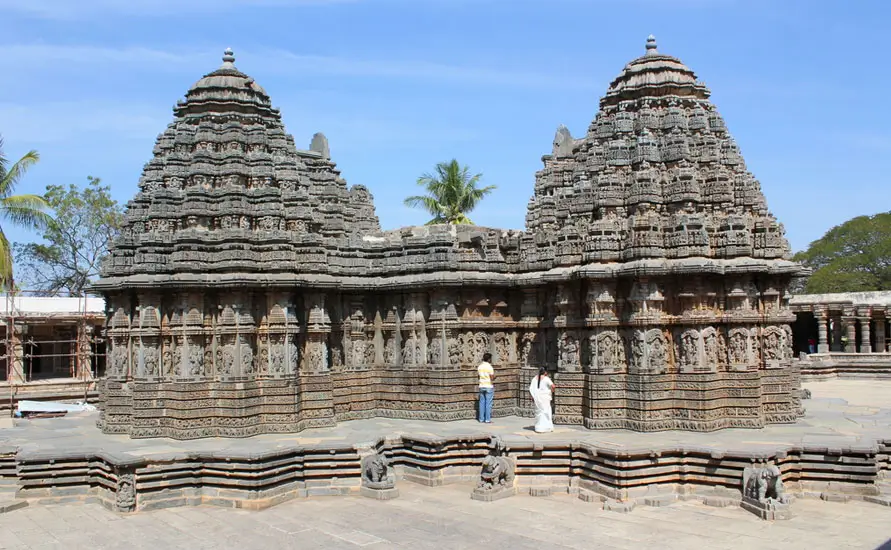 Kerala Backwaters Escape
 Kerala Backwaters Escape
 Kerala Backwaters Escape
 Kerala Backwaters Escape
 Kerala Backwaters Escape
 Kerala Backwaters Escape
 Kerala Backwaters Escape
 Kerala Backwaters Escape
 Kerala Backwaters Escape
 Kerala Backwaters Escape
 Kerala Backwaters Escape
 Kerala Backwaters Escape