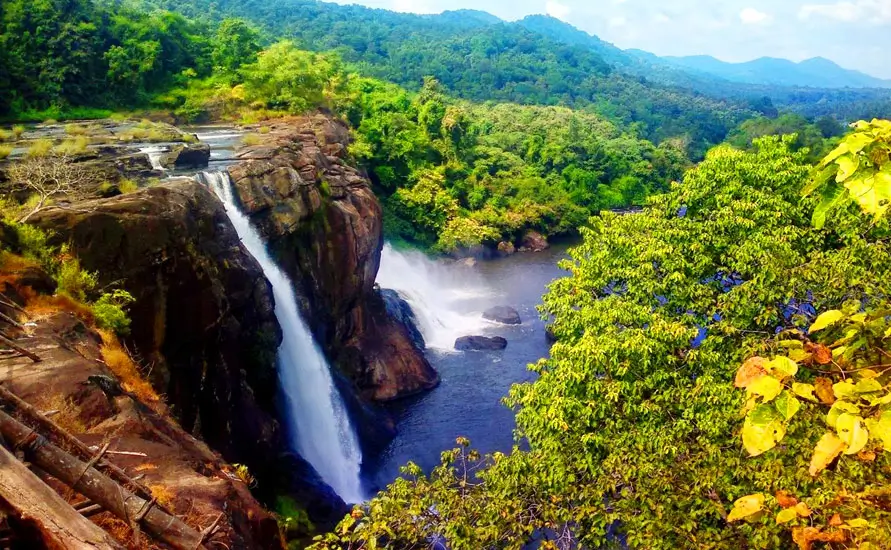
 Kerala Backwaters Escape

Karnataka Tour Packages
Bangalore – Mysore – Somanathapura – Bylakuppe – Coorg – Hassan – Belur – Halebidu – Hampi – Goa
At a glance
Plenty of travelers in their sixties and seventies say much the same when they first write to us: India appeals, properly seen,, just never at coach-tour speed. Our Karnataka Tour for Senior Travelers takes that wish as its starting point. Over fifteen days the route links Bangalore, royal Mysore, plantation-covered Coorg, the twelfth-century carvings at Belur and Halebidu, plus the Vijayanagara ruins of Hampi, then finish with two quiet nights in Goa. Mysore and Hampi each get three nights, and nowhere on the route do you stay for fewer than two.
Sightseeing on this senior citizen Karnataka tour is concentrated before lunch, while temperatures stay low and crowds thin, and afternoons are left for rest. Most drives are three hours or less, with a comfort stop every ninety minutes or so, and the two long transfer days are broken by lunch and tea breaks at clean restaurants. Your guides know where the steps and uneven paths are, and they plan the walking around benches, shade and the car's parking point. Where a battery vehicle or a short cut exists, we use it.
This Karnataka Tour for Senior Travelers is suited to retired couples and friends from Britain, Ireland, the Netherlands, North America and Australasia, and to NRI parents who want a gentle return to South India. Tell us about any mobility needs, diet or medication when you book, and we choose ground-floor or lift-access rooms and adapt each day. Travel between late October and February brings the mildest weather, and a doctor on call can be arranged through most hotels on the route.
Everything starts at Kempegowda International Airport: once you pass customs, our representative steps forward and takes over the luggage trolley. If you have asked for wheelchair assistance through your airline, the airport staff will bring you to the exit, and our team will be waiting at the point where the assistance ends. The car is parked as close as the airport rules allow, and the driver loads the bags while you settle in. Bottled water, a small towel and a printed copy of your plan are in the back seat, and the air conditioning is set to a comfortable level rather than an icy one.
Allow around an hour and a quarter to reach the city, as the airport sits on the northern edge of Bangalore and traffic can be heavy at peak times. Hotels on this tour are chosen with lifts, ground-floor options and walk-in showers where they are available, and we inform each hotel in advance about any requests such as an extra pillow, a bed rail or a room far from the corridor noise. If your flight lands in the early hours, ask us to reserve an early check-in and sleep at once rather than wait in the lobby until the afternoon.
Nothing is planned for the rest of the day. Sitting on a plateau roughly 900 meters high, Bangalore rarely gets as hot as the plains, and after a long-haul flight a slow lap of the hotel garden and a pot of tea outdoors is usually as much as anyone wants. Drink plenty of water, eat lightly and rest; your body clock will thank you tomorrow. In the evening our tour manager calls to check that the room is comfortable and to go over the next day's timing, which starts with a relaxed breakfast and no alarm clock. Overnight in Bangalore.
Following an unhurried breakfast, the guide collects you from the lobby, heading first to Lalbagh Botanical Garden, where the main paths are paved and level and there are benches under the big rain trees every hundred meters or so. You do not need to cover the whole garden. Your guide chooses a short loop past the lake, the old trees with name plates in English and Kannada, and the iron-and-glass hall where the twice-yearly flower shows are staged. The bare rock in the garden is best seen from its base; the climb to the small watchtower on top is optional and involves a rough slope with no handrail.
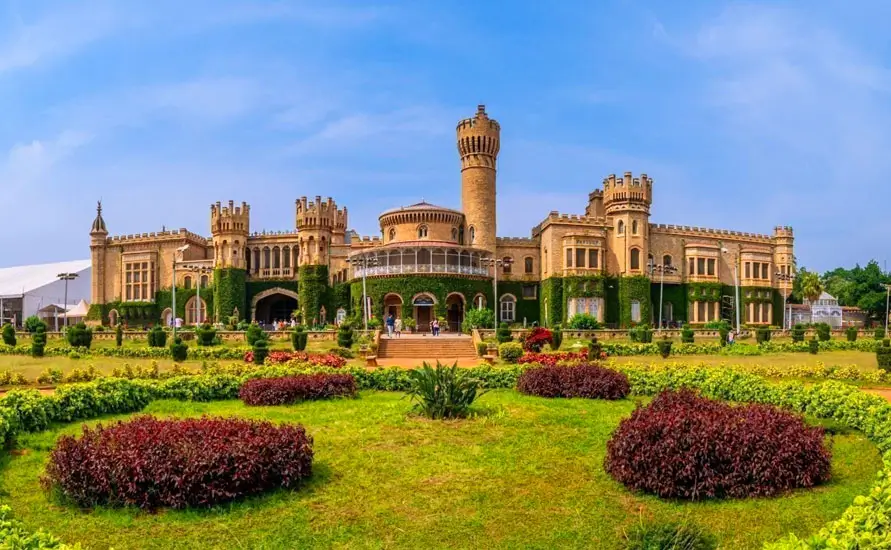
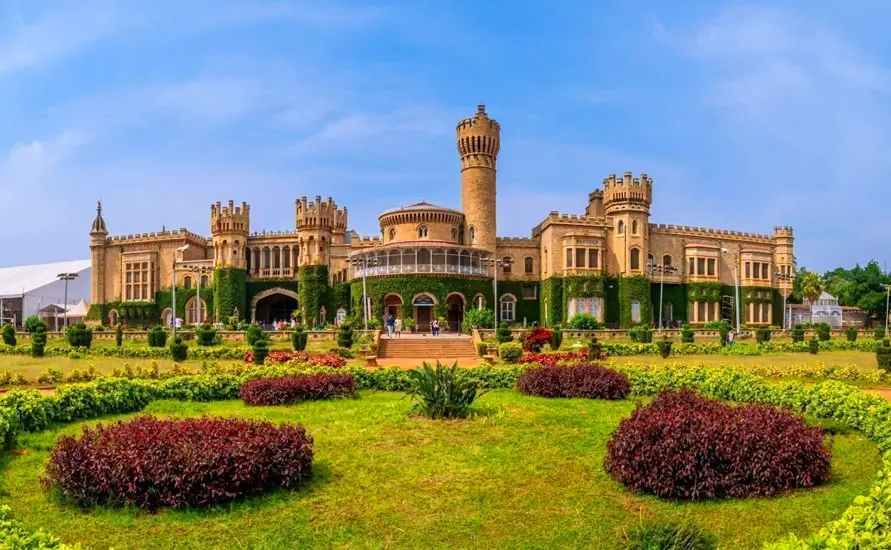
Your second stop is Bangalore Palace, the royal family's town residence, built in the late 19th century with towers and battlements in an English castle style. The car stops close to the entrance, and the tour of the main rooms is on two floors, with a wide wooden staircase between them, so take your time and use the handrail. An audio guide lets you move at your own speed and sit down in the courtyard whenever you need a pause. Inside you see carved wooden ceilings, old Belgian chandeliers and walls full of photographs of royal hunts, durbars and family weddings.
Midday brings a meal at a long-running vegetarian eatery, where the waiters bring a set South Indian meal in small steel bowls and the dishes are mild unless you ask otherwise. Afterwards the car brings you back for a lie-down through the warmest hours. Later, if you feel up to it, a short ride brings you to Cubbon Park to watch the evening walkers from a bench, or to the state handicraft emporium for silk, sandalwood and lacquered wooden toys sold at fixed prices with no bargaining needed. Keep the evening short, as tomorrow you move on to Mysore. Overnight in Bangalore.
The expressway to Mysore is a broad, modern road, and the drive is smooth enough to doze in the back. Your driver leaves after breakfast once the morning rush has thinned, and he plans a halt at about the halfway mark in the town of Maddur, known across Karnataka for the crisp, onion-flecked fritter called Maddur vada. The roadside restaurants here have clean restrooms and shaded seating, and a cup of sweet filter coffee goes well with the vada. After a stretch of the legs you continue toward Mysore through sugarcane and coconut country, crossing the Kaveri near the old island town of Srirangapatna.
If you would like to stop at Srirangapatna, your guide can show you the Daria Daulat Bagh summer pavilion of Tipu Sultan from the garden path, where a few steps lead up to the verandas covered in painted murals. This visit is entirely optional and lasts about forty-five minutes. Otherwise you carry straight on to Mysore, arriving around midday at the hotel where you stay for three nights, which means you can unpack properly and stop living out of a suitcase. Many guests on this route say this is the point in the trip where they start to slow down.
No activities are fixed for the afternoon. Mysore is a flat, green city with wide roads and many parks, and its pace is slower than Bangalore's. Toward evening you might sit on the hotel lawn, or ask your driver for a short drive past the palace walls and the circles with their statues of past rulers. On Sundays and public holidays the Mysore Palace is lit up with thousands of bulbs from about 7 pm until a little before 8, and when your dates match, the driver brings you to a spot where you can watch from a chair near the gate. Overnight in Mysore.
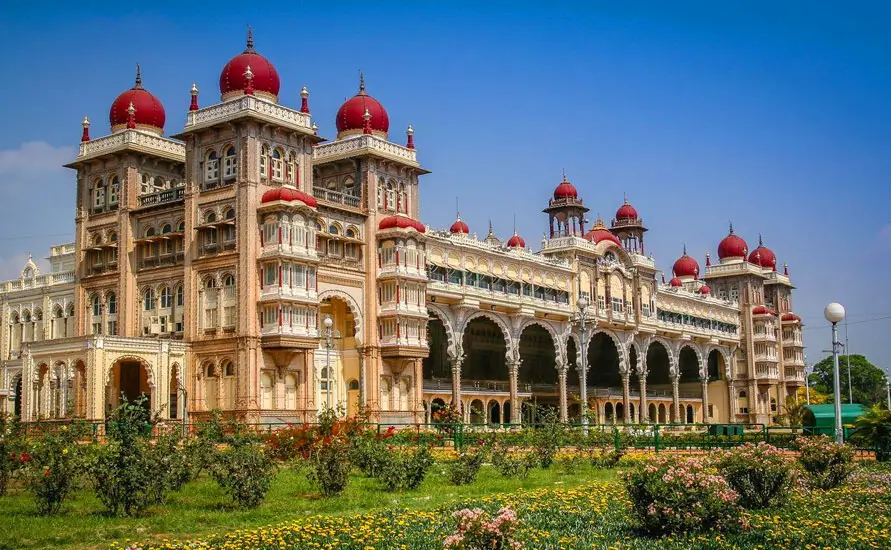
Begin at Mysore Palace straight after it opens, before tour groups arrive. The visitor route inside has some stairs and a few uneven thresholds, and you will need to leave your shoes at the counter, so wear socks if the marble floors feel cold or slippery. Your guide keeps the group pace slow and finds places to sit along the way. The palace is the residence of the Wodeyar kings, rebuilt after a fire in 1897 and finished in 1912, and it contains some of the most lavish rooms in South India: stained glass from Glasgow, cast-iron columns, carved silver doors and a vast hall for royal audiences.
Your guide points out the paintings that line one long corridor, showing the Dasara procession in about 1930, with the maharaja on an elephant and thousands of soldiers, priests and musicians around him. The festival, held in late September or October, is still the biggest event in Mysore, and the palace is the backdrop for much of it. Photography is not permitted inside, and phones must be kept away, so the best pictures are taken in the front courtyard before or after the tour. A bench by the main lawn makes a good spot to look up at the domes and the flagpole.
After lunch, retreat to your room until the sun drops. Once it cools, the driver can take you to the edge of Devaraja Market and wait while your guide leads you along the main aisle, where traders sell jasmine, marigold, turmeric, betel leaf and small hills of colored powder for temple offerings. The floor is uneven in places and crowded in the evenings, so a short visit of half an hour is often enough. Afterward you might stop at a sweet shop for Mysore pak, a rich fudge made from gram flour, ghee and sugar, which keeps well and makes an easy gift to take home. Overnight in Mysore.
Pilgrims who walk up Chamundi Hill climb roughly a thousand steps, but you will go up by car on a winding road that ends close to the temple entrance at the top. The temple honors Chamundeshwari, the goddess whom the Wodeyars considered the protector of their kingdom, and its tall gopuram is carved with figures of gods and guardians. Queues for darshan can be long on weekends and festivals, so your guide may suggest looking at the outer courtyard instead of joining the line. On the way down the car stops near the giant granite Nandi, a short, level walk from the parking area.
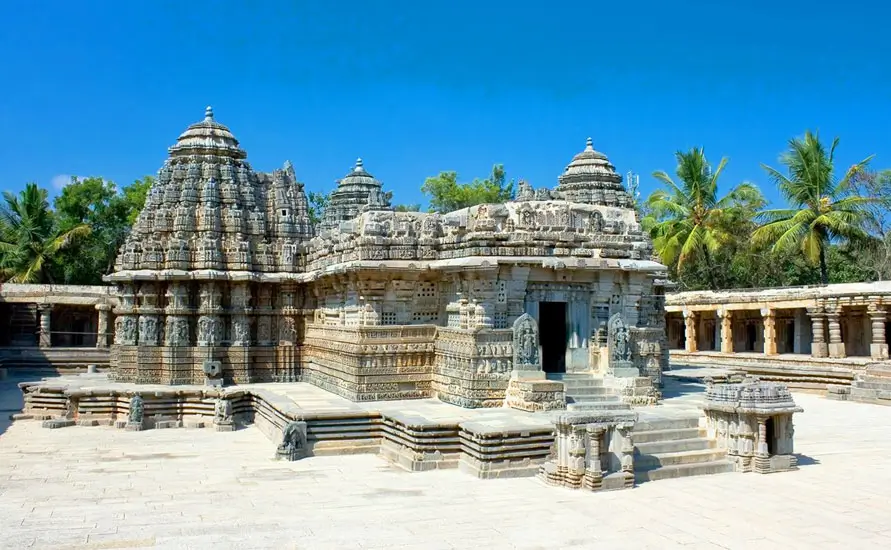
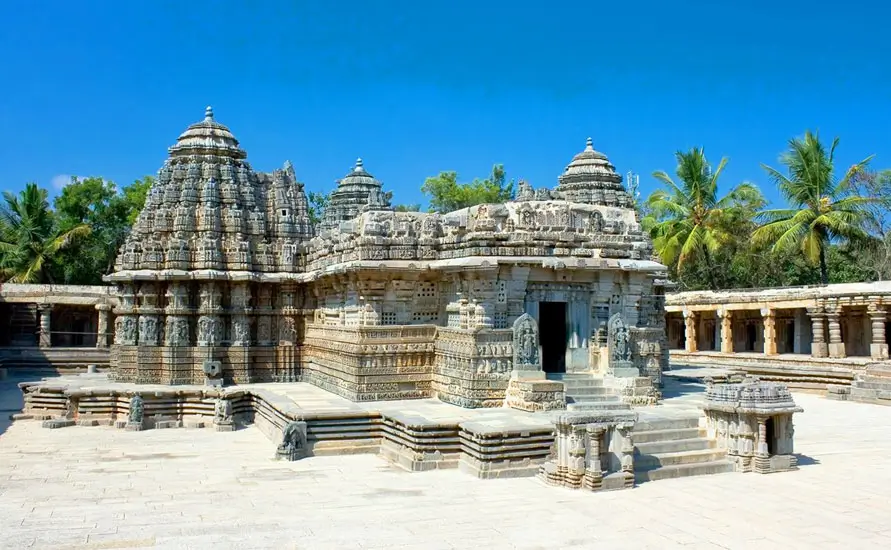
Around 35 km beyond the city to the east lies Somanathapura, a village where the Hoysala general Somanatha built the Chennakeshava Temple in 1268. Of the three Hoysala sites that gained World Heritage status in 2023, this one is the easiest of the three for visitors who walk slowly. Its shrine rises from a jagged, star-plan plinth within a cloistered compound, with level ground almost all the way around. Your guide shows you the carved friezes that run around the base, the three shrines under their own towers and, inside the dim central hall, pillars polished smooth on a lathe.
Lunch is back in Mysore, followed by a long afternoon of rest. Some guests like to book an Ayurvedic massage at the hotel, which is optional and best arranged in advance, while others prefer to read or sleep. In the evening the driver can take you to St. Philomena's Church, a large twin-towered church with a calm interior and stained-glass windows, which has only a few steps at the entrance. Dinner could be a local meal of bisi bele bath, a warming rice and lentil dish flavored with tamarind and spices, mild enough for most visitors and served with crunchy papad. Overnight in Mysore.
Leaving Mysore at a comfortable hour, you head west along a quiet road through farmland and small market towns. The landscape changes after Periyapatna, where the flat fields give way to areca palms and the first low hills. Your driver makes a short stop for tea and a restroom about an hour into the drive. At Bylakuppe, close to Kushalnagar, you reach a Tibetan settlement founded in the early 1960s, where monks in maroon robes cycle past fields and the roads are lined with prayer flags. The Namdroling Monastery at its center welcomes visitors, and the car can drop you close to the main gate.
The main temple is reached by a broad set of steps, and the hall inside is large and cool, with three huge golden statues behind the altar and walls painted with Buddhist stories. If steps are difficult, the gardens and courtyard outside give a good view of the building and its decorated roofline, and there are benches where you can sit and watch the young monks pass between classes. Lunch is at a small Tibetan restaurant nearby, where steamed momos and a bowl of noodle soup are light on the stomach and easy on the spice, before you continue for the last hour to Coorg.
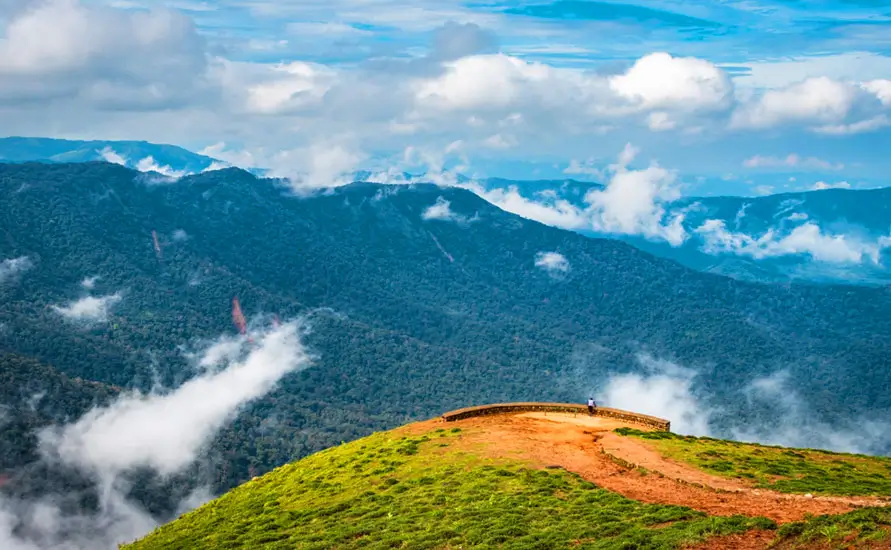
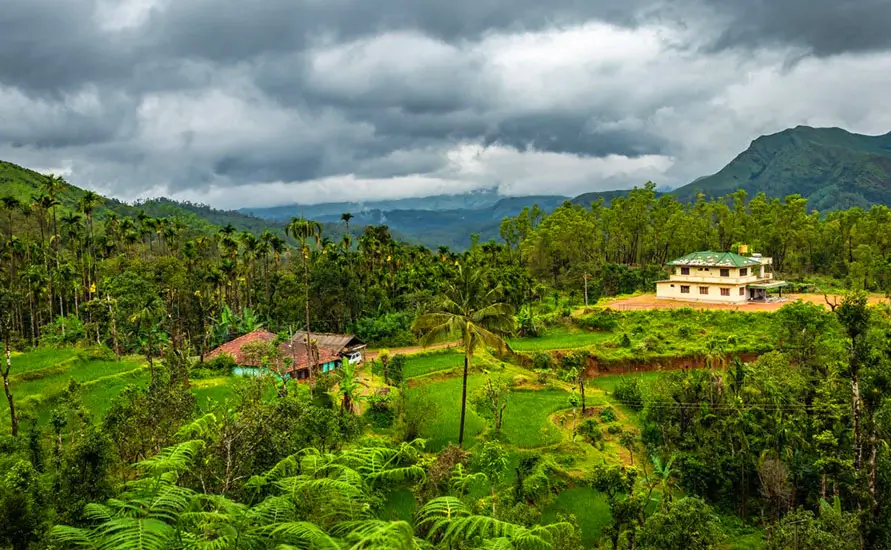
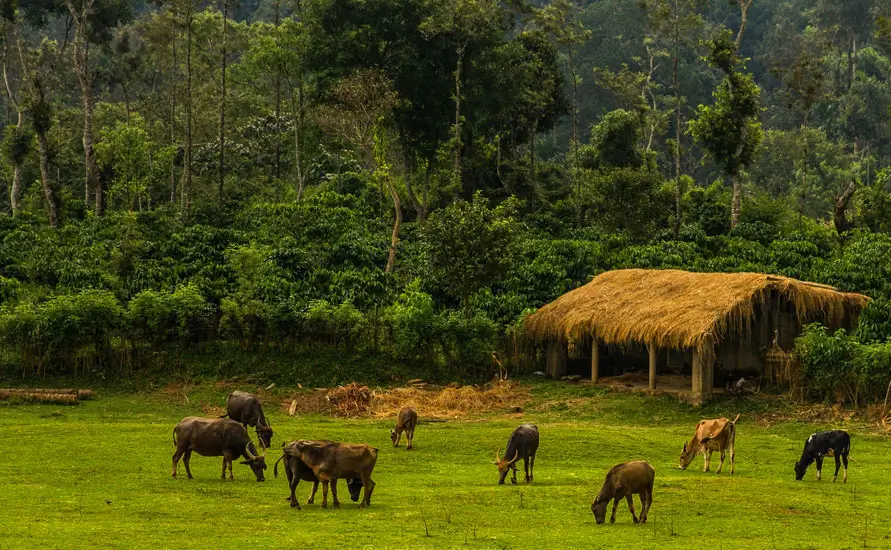
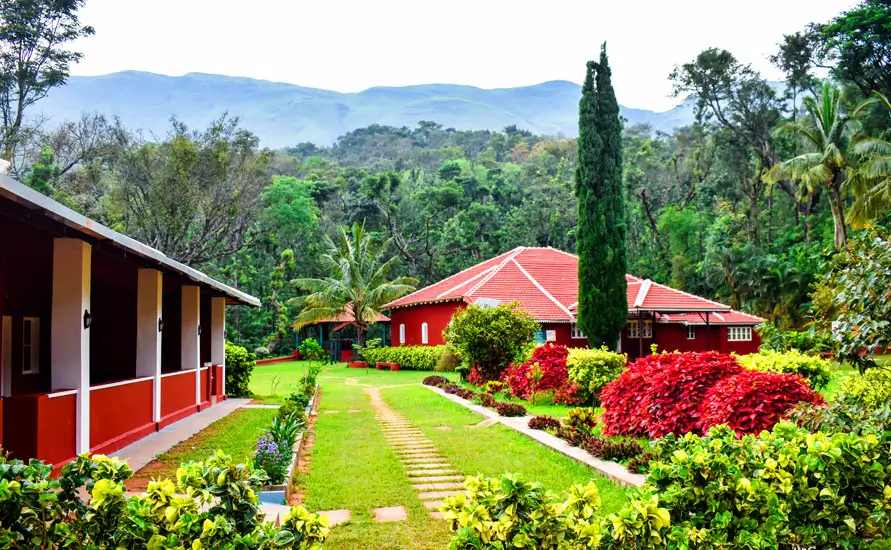
Your hotel in Coorg is a coffee estate resort chosen for its level paths, rooms close to the main building and good food. Check-in is followed by a free afternoon. You might sit on a veranda with a pot of estate coffee and look out over the shade trees, or follow one of the gardeners on an easy loop of the most level section of the property. The air in the hills is cooler than in Mysore, especially at night, so keep a cardigan or light jacket handy. Dinner is often a buffet that includes Kodava dishes alongside milder choices. Overnight in Coorg.
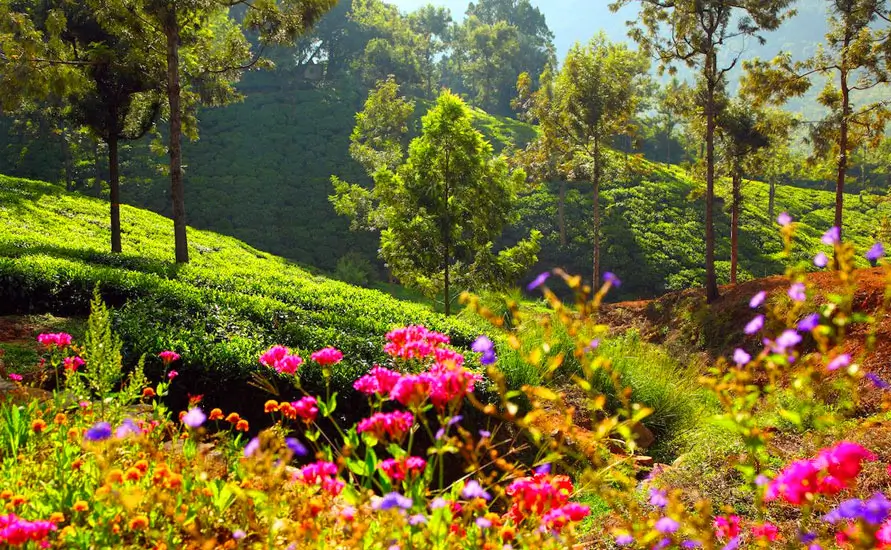
Mornings on a coffee estate start with birdsong and the smell of roasting beans from the processing yard. After breakfast the estate's planter takes you on a short, level walk among the coffee bushes, choosing a route without steep slopes. He explains how the plants are grown in the shade of tall trees, how pepper vines climb those trees, and why Coorg coffee has a slightly sweet, soft character. From November to February you may see workers picking ripe red cherries by hand, and in the yard behind the estate office they are spread out on concrete floors to dry in the sun.
Later in the morning you drive into Madikeri, the small district capital. First comes the Omkareshwara Temple, raised by a Kodagu raja in 1820, with a dome and corner turrets that look more like a mosque than a Hindu shrine, standing beside a water tank full of fish. The temple is reached by a short path with only a couple of steps. You then visit the Madikeri Fort area from the car or with a brief walk, looking at the old walls and the colonial church inside, which now houses a small museum. Midday food comes from a small family kitchen in town that cooks Kodava dishes.
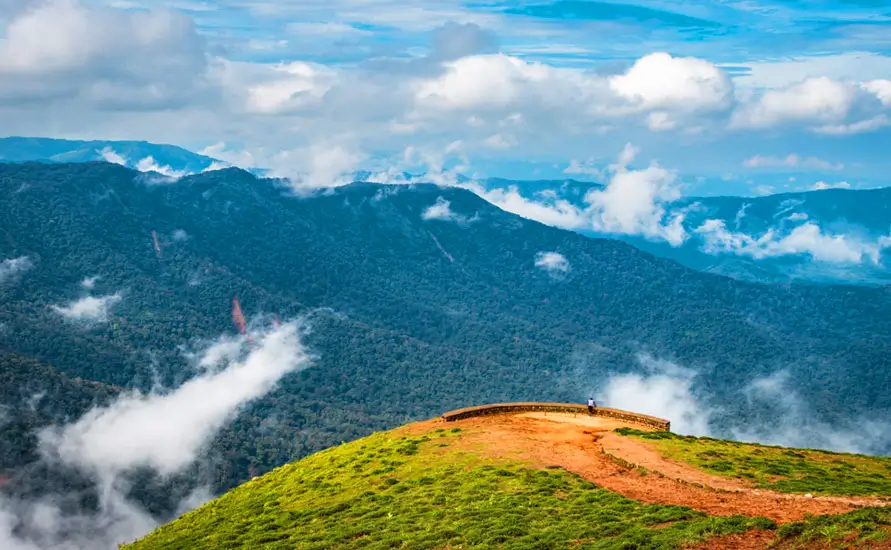
After a rest at your resort, you return to Madikeri toward five o'clock, when Raja's Seat catches the last light, where paved walks and many benches make the hilltop garden easy for slower walkers. From here you look out over valleys and wooded hills, and on most evenings a light breeze makes the air cool and fresh. Abbey Falls is close to town too, but reaching the viewpoint means walking down and back up a long set of steps, so it is offered only to those who are comfortable with that effort. Dinner is at the resort, perhaps with a taste of Kodava pandi curry. Overnight in Coorg.
Coorg's hills fall behind this morning as the car heads north-east to Hassan, the town that serves as a base for the Hoysala temples. The route crosses rolling farmland and small towns, and the road is generally in good condition. Your driver plans one stop for tea and restrooms and a lunch break, so the time on the road is never more than about ninety minutes at a stretch. On request, the driver can turn off briefly to the Gorur Dam on the Hemavathi river, where you can look at the reservoir from the car park, which takes only a few minutes from the main road.
Many visitors to this part of Karnataka also go to Shravanabelagola, about 50 km from Hassan, to see the 17-meter statue of the Jain saint Gommateshwara, sculpted out of one granite mass in about 983 CE. Reaching it involves climbing more than 600 rock-cut steps without shade, which makes it unsuitable for most of our guests on this tour. If you are keen, your guide can drive you to the town at the foot of the hill, where you can see the statue from below and visit the Jain monasteries and temples in the lower town, which are on level ground. Mention this when booking and we will fit it in.
You reach your hotel in Hassan by mid-afternoon with nothing further on the program. Hassan is a working town rather than a tourist center, and hotels here are simple compared with those in Mysore or Coorg, but we choose properties with lifts, good beds and reliable hot water. If you have energy, the driver can take you to a nearby lake or for a short drive around town. Supper can be a light vegetarian meal at the hotel, perhaps ragi mudde, the finger-millet dumpling that farm families eat for strength, dipped in a gentle lentil saaru. Overnight in Hassan.
Today's two temples are less than an hour from Hassan and about 16 km from each other, so the morning is easy on the road. You visit Belur first, where the Chennakeshava Temple was begun in 1117 and is still in daily worship. The car stops near the main gopuram, and the courtyard inside is mostly paved and flat, though there are steps up to the temple platform. Your guide shows you the bracket figures of women dancing, playing music and dressing their hair, each carved from a single piece of dark soapstone, and the gleaming round pillars of the main hall, one of which was once said to spin on its base.
At Halebidu, the old Hoysala capital, the Hoysaleswara Temple sits in a well-kept garden with level lawns and trees for shade. The temple is a double shrine to Shiva, and its outer walls are covered with rows of carved elephants, lions and horsemen, and scenes from Hindu epics. You can see most of the carving simply by walking slowly around the outside of the temple at ground level. A small site museum on the grounds displays sculptures found nearby, and it has only a few steps at the entrance. Your guide will suggest a short walk to the nearby Jain temples if you are comfortable.
You return to Hassan for lunch and an afternoon at the hotel. These temples are among the finest carved monuments in India, and many visitors find that one morning with them is enough to take in what they have seen. Before dinner, your guide and driver will brief you about tomorrow's long drive to Hampi, including the stops and the timing. If you prefer, you can choose the alternative by air, driving to Bangalore airport and flying to Jindal Vijayanagar airport near Hampi, though flight days are limited. We confirm this option when you book. Overnight in Hassan.
Expect the most hours on the road of the whole trip today, so the car leaves straight after an early breakfast, and the drive is split into short sections. The route heads north through Arsikere, Tiptur and Chitradurga, mostly on wide, divided highways with good surfaces. Every ninety minutes or so your driver pulls in at a clean highway restaurant or a fuel station with decent restrooms, so you can stretch, have a coffee and use the facilities. Lunch is planned near Chitradurga, where a hill fort of the local Nayaka rulers rises above the town; you can see its walls from the road without leaving the car.
As you approach Hampi in the late afternoon, the landscape turns rocky, with huge granite boulders balanced on one another and banana plantations along the irrigation canals. Your base is a hotel near the ruins picked for flat grounds and rooms reachable without stairs, where you will stay for three nights. The evening is entirely free to rest after the drive, with dinner at the hotel. If you chose the flight option instead, our Hampi driver meets you at Jindal Vijayanagar airport and drives you about an hour to the hotel. Overnight in Hampi.
For some two hundred years Hampi was Vijayanagara, a royal city that foreign envoys of the time described as larger than Lisbon, and its remains, now a UNESCO World Heritage Site, are spread over a large area of boulder-strewn hills along the Tungabhadra river. The ground here is uneven, with loose stones, sand and rock slopes, so good walking shoes and a stick, if you use one, are essential. Your guide plans the day so that the car brings you as close as possible to each site. You begin at the Virupaksha Temple, still in worship, which has a large paved courtyard and only a few steps between its halls.
Inside the temple, your guide takes you to a small, dark chamber where sunlight through a narrow opening projects the main entrance tower onto a wall, inverted. Pilgrims, priests and bell-ringing at the shrine doors make it feel very much a working temple rather than a monument. Outside the temple, the long street of Hampi Bazaar stretches toward the hills, lined with the stone pavilions where traders once sold horses, jewels and spices. You can see it from the car or walk a short stretch on the level road. Then the car takes you to the giant Lakshmi Narasimha statue and the Badavilinga, both close to the road.
After lunch at your hotel you have a long afternoon of rest. In the late afternoon, if the water is calm and you feel steady on your feet, you can take a short coracle ride on the river; the boatman holds the round basket boat still while you step in, and it is entirely optional. Otherwise, your driver takes you to a viewpoint near the river from which the boulder hills can be seen turning gold at dusk, no climbing involved. Hemakuta Hill and Matanga Hill are popular sunset points, but both involve climbing over rough rock, so they are offered only to those who are confident. Overnight in Hampi.
The Vittala Temple lies at the end of a long path through the ruins, and for this reason battery-operated vehicles carry visitors from the parking area, where available. Your guide arranges the ride, and the vehicle drops you close to the entrance. The temple's most famous sight is the stone chariot in the courtyard, a small shrine carved in the shape of a temple cart with wheels that once turned. The main hall has the musical pillars, which rang with notes when struck; they are now protected, so visitors may not touch them. The ground around the temple is uneven, but there are smooth paths and places to sit in the shade.
From Vittala you return by battery vehicle and drive to the Zenana Enclosure, where the elegant two-story Lotus Mahal is surrounded by lawns and paths that are fairly flat. Nearby, the Elephant Stables are a long row of domed chambers, best seen from the grass in front without needing to climb anything. The car then takes you to the Royal Enclosure, where the stepped water tank and the carved platform of the Mahanavami Dibba can both be seen from ground level, though climbing the platform is optional. You end with the Queen's Bath, which is close to the road and has a flat walkway around the pool.
You lunch at the hotel and keep the hot hours for sleep or the garden. With strength left by four o'clock, a visit to the Hazara Rama Temple is possible, where the walls are carved with scenes from the Ramayana and the approach is reasonably flat. Hampi is hot from March onward, so we keep all the walking to the early morning and late afternoon and make sure you have plenty of water. In the evening your guide will say goodbye, while the driver sets a departure time for the road to Goa. Eat early and turn in soon after. Overnight in Hampi.
Leaving the dry interior behind, today's long drive ends on the Konkan coast. The route passes Hubballi and then descends through the forests of the Western Ghats, where the road narrows and climbs in bends that call for a slow, careful driver. Your driver stops for tea and restrooms every hour and a half or so, and a proper sit-down lunch halfway. If you suffer from motion sickness, please let him know before the ghat section, so he can take it gently and stop if needed. The forest views and the change in air are a good reward for the long hours.
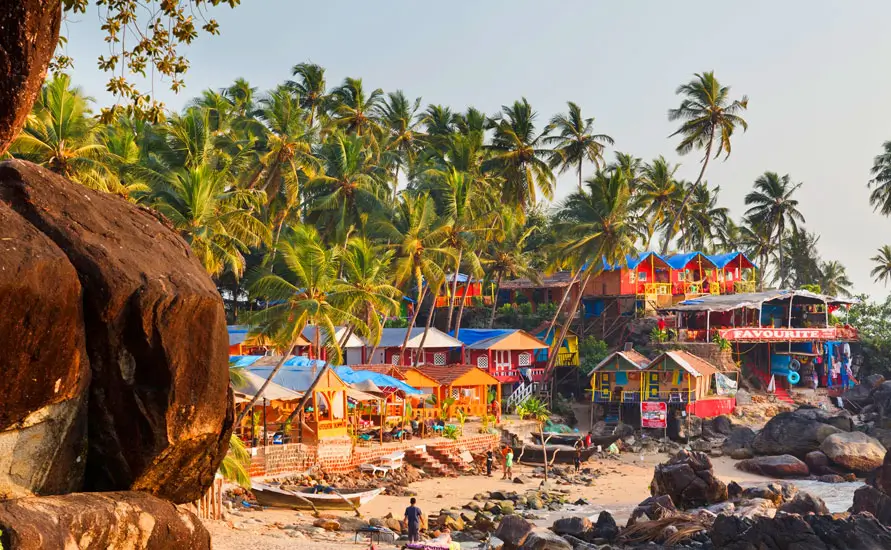
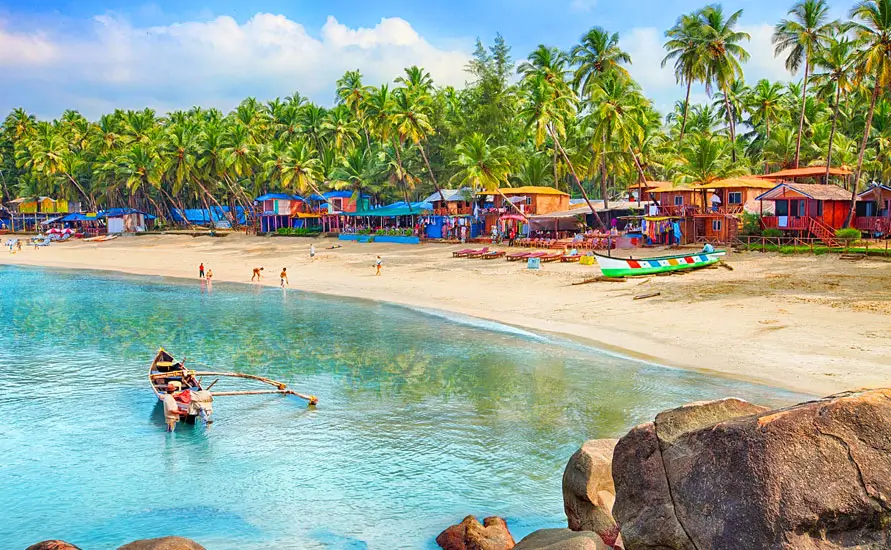
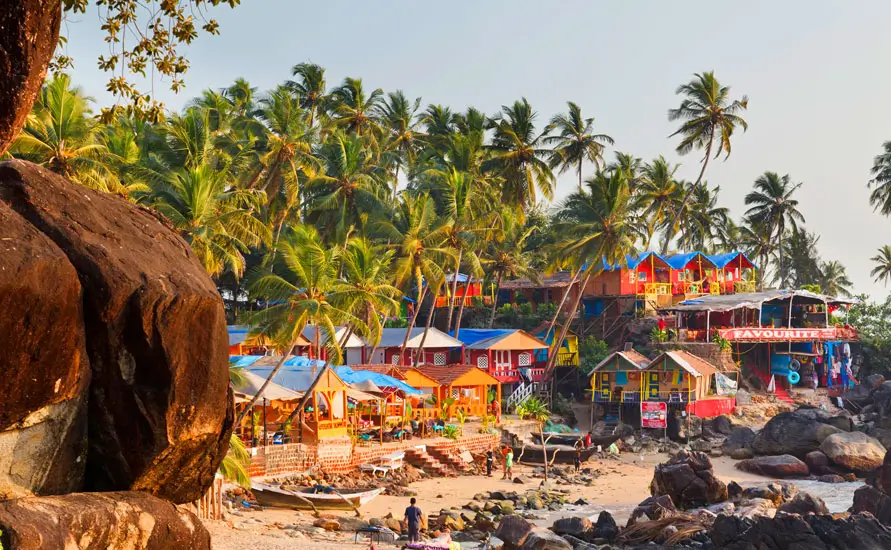
You reach your hotel in Goa in the late afternoon. We choose a quiet beach or riverside property in central or South Goa with level grounds, a pool and rooms close to the dining area, so there is little walking needed. The evening is free to rest after the drive. Goan cooking is known for seafood and coconut, but the hotel can prepare mild dishes on request, and a simple meal of grilled fish or chicken with vegetables is easy to arrange. Sit outside and listen to the sea or the evening birds before an early night. Overnight in Goa.
A slow breakfast with sea views starts your last full day. Around eleven, the car sets off for Old Goa, the former Portuguese capital, about thirty to forty minutes from most hotels in central Goa. Here, the Basilica of Bom Jesus keeps the body of St. Francis Xavier, the Navarre-born Jesuit who died off the Chinese coast, in a silver casket above an ornate tomb. The church has a level floor and only a couple of steps at the main door. Facing it is the Se Cathedral, a vast building dedicated to St. Catherine, with its whitewashed facade and a famous bell, and the lawns between the two are easy to cross.
Your guide explains the history of Portuguese Goa, which lasted from 1510 until 1961, when the territory became part of India. Old Goa was once a crowded city, but repeated outbreaks of cholera and malaria drove residents to Panjim over time, and today only the churches and convents remain among the trees. After the visit, you can stop for lunch at a restaurant serving Goan dishes such as fish curry rice, chicken cafreal and bebinca, a layered coconut dessert. Your driver will then take you back to your hotel for a free afternoon.
Spend what remains of the day poolside, with a stroll along the shore or one last dip. Spa sessions are offered by most Goan resorts and are paid locally. It is a good time to pack, sort out souvenirs and spend a quiet evening reflecting on the trip. For a last dinner, choose a beach restaurant with lanterns and the sound of the waves, or in the hotel dining room. Our tour manager will call to confirm tomorrow's pickup time, check your flight details and make sure any airport wheelchair request is in place. Overnight in Goa.
No plans fill the final morning; the driver arrives at an hour worked back from your departure. Goa has two airports: Dabolim, about an hour from most central and South Goa hotels, and the newer Mopa airport in the north, which is around two hours away. We check which airport you are using and leave plenty of margin. If you have requested wheelchair help, our driver brings you to the terminal entrance, where the airline staff take over. A day room or a later check-out can be added when the plane leaves in the evening.
Over fifteen days you have seen royal palaces, coffee hills, Hoysala temples, the ruins of Hampi and the churches of Goa, all at a pace that allowed time for rest and recovery each day. Thank you for traveling with us. Should Kerala's backwaters or Tamil Nadu's great temple cities tempt you next, at the same slow tempo, just write to us. Safe travels and a comfortable flight home.
Your Journey

N.S. Rathore & Mrs. Omlata Rathore · Managing Director
We still read every enquiry ourselves. Tell us the places you liked and our planners will send a day-by-day route with drive times and a clear price.
Every package can be customised and no pressure to book. A planner from our office replies within 24 hours with a route written for your group.
Fill this in and your planner will send a first draft itinerary.
Explore more
Kerala Backwaters Escape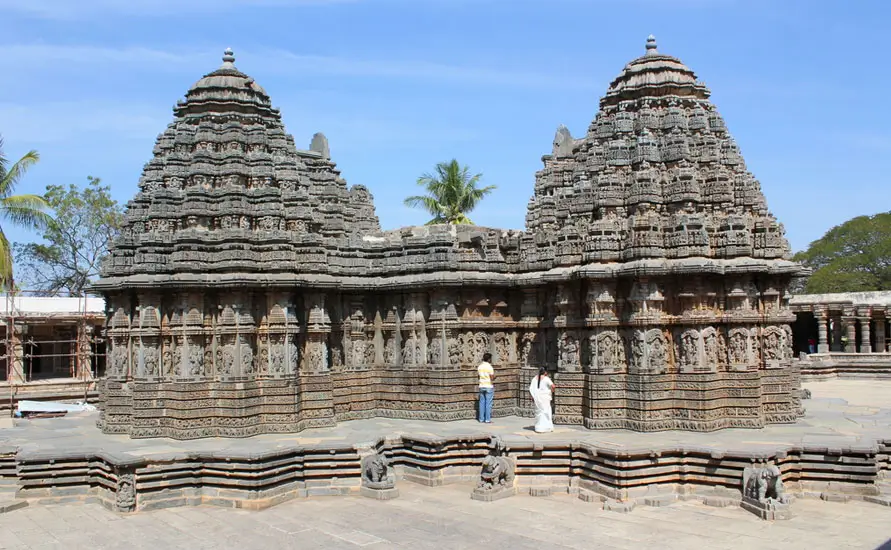 Kerala Backwaters Escape
 Kerala Backwaters Escape
 Kerala Backwaters Escape
 Kerala Backwaters Escape
 Kerala Backwaters Escape
 Kerala Backwaters Escape
 Kerala Backwaters Escape
 Kerala Backwaters Escape
 Kerala Backwaters Escape
 Kerala Backwaters Escape
 Kerala Backwaters Escape
 Kerala Backwaters Escape
 Kerala Backwaters Escape
 Kerala Backwaters Escape
 Kerala Backwaters Escape
 Kerala Backwaters Escape
 Kerala Backwaters Escape
 Kerala Backwaters Escape