 Kerala Backwaters Escape

Karnataka Tour Packages
Goa – Mirjan Fort – Gokarna – Hampi – Badami – Pattadakal – Aihole – Lakkundi – Hubli – Goa
At a glance
Many visitors reach Goa for the beaches and then realize that some of India's finest ruins sit only a few hours inland. Our Karnataka tour from Goa turns that short distance into a proper cultural loop. You leave from your Goa hotel or straight from Dabolim or Mopa airport, spend two nights in the temple town of Gokarna, three in the boulder country of Hampi, two in red-sandstone Badami, and one in Hubli before the car brings you back across the Western Ghats to Goa for your flight home.
The route is a circle, not a there-and-back, so you never drive the same road twice. Stretches behind the wheel are kept to roughly three to six hours, with stops built in: a laterite fort on the Aghanashini estuary, Chalukya temple sites at Pattadakal and Aihole, and the stepwells of Lakkundi on the way to Hubli. One private air-conditioned car and the same English-speaking driver stay with you for all nine days, and licensed guides join you at each major site.
Our Goa to Hampi tour suits British, European, American and Australian guests who have a week or two on the coast and want a break from sun loungers, as well as NRI families staying with Goan relatives who would like their children to see a few days of real history. Plan it between October and March, when the Deccan plateau stays dry and the afternoons are comfortable for walking. Hotels, pace and start point are all private and can be changed to fit your plans, including a start from North Goa or South Goa.
Your driver collects you at an agreed hour from your hotel anywhere in Goa, or meets you outside arrivals at Dabolim or Mopa airport if you are flying in that morning. Reaching Gokarna from Dabolim takes a little over three hours by car; coming from Mopa in the far north, count on close to five. The highway runs through Canacona and over the Karnataka border at Karwar, where the Kali river meets the Arabian Sea under a long road bridge. Before you set off, our coordinator goes through the nine-day plan with you, confirms your return flight time and hands over contact numbers for the whole trip.
Karwar makes a handy coffee halt, and when the haze lifts the low islands offshore and the naval anchorage up the coast come into view. South of the town the road squeezes between hills and the sea, passing cashew groves, small fishing harbors and the mouths of rivers lined with mangroves. If time allows, the driver can stop at a quiet beach near Ankola, where local families come to buy fish straight from the boats. The landscape here feels close to Goa, yet the shop signs, the language and the temple architecture already belong to coastal Karnataka.
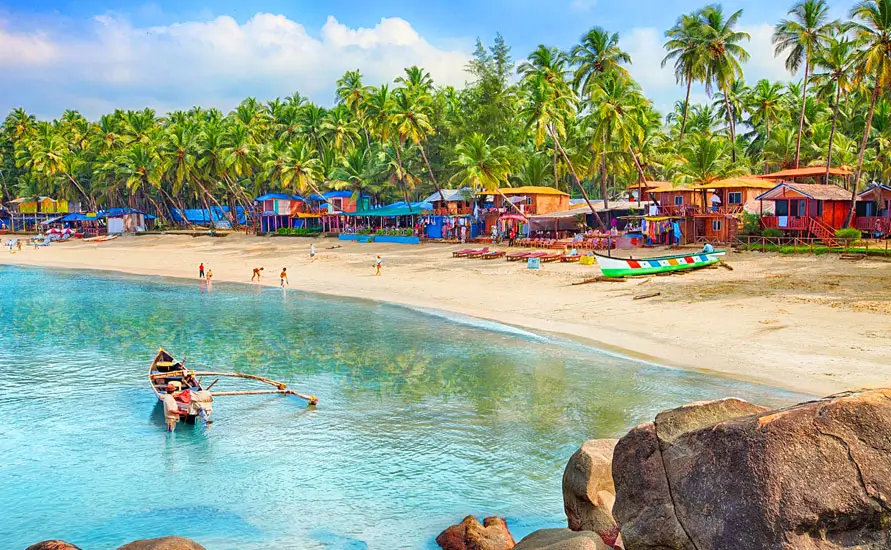
You check in to your Gokarna hotel in the early afternoon and have time to rest before a short walk into the old town. Gokarna is a working pilgrimage center rather than a resort; along Car Street you pass tiled houses, Sanskrit schools and shopfronts piled with copper pots, rudraksha beads and puja items. In the late afternoon, take the car or a short path to Kudle beach, a curved bay backed by laterite cliffs where the sun drops directly into the sea. Simple beach cafés serve grilled fish, banana pancakes and fresh lime soda. Overnight in Gokarna.
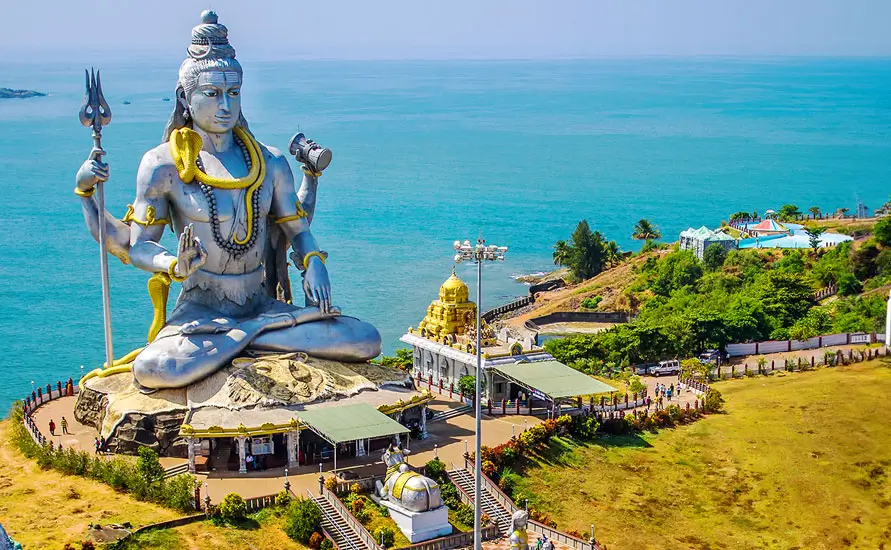
Early morning is the liveliest time at the Mahabaleshwar temple, when pilgrims who have bathed in the sea walk barefoot up the main street with flowers and coconuts. The shrine is linked to the legend of Ravana and the Atmalinga, a story your guide tells well, and it is counted among the most sacred Shiva sites on the west coast. Male visitors normally go in bare-chested, and access to the inner sanctum is decided by the priests, so your guide confirms on the morning itself what non-Hindu guests may see. Nearby, the stone-stepped Kotiteertha tank is used for ritual bathing and is quietly busy from dawn.
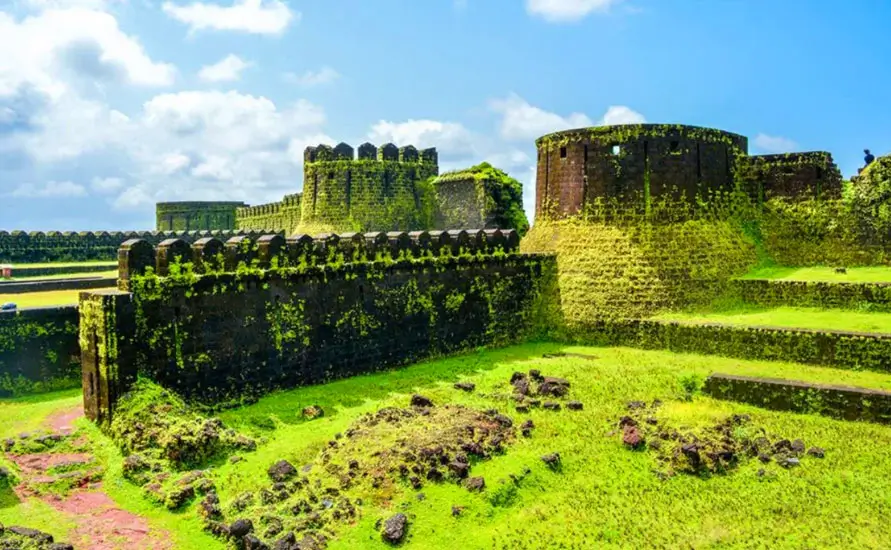
Around eleven the car heads roughly 30 km south to Mirjan Fort, close to Kumta on the bank of the Aghanashini river. Built of dark red laterite and ringed by a moat, it is associated with Rani Chennabhairadevi, a 16th-century ruler who grew rich from the pepper trade with the Portuguese and earned the nickname Pepper Queen. The fort is small enough to walk in half an hour, with ramparts, wells, gateways and steps overgrown with moss after the monsoon. It sees few foreign visitors, which makes it a pleasant contrast with the temple crowds of the morning.
Back in Gokarna after lunch, the afternoon is for the coastal footpath. Your driver drops you above Kudle, and a marked trail of about forty minutes climbs over the headland to Om beach, named for its two linked coves that resemble the Om symbol from the hilltop. Wear proper shoes, carry water, and avoid swimming where red flags are up, as currents along this coast can be strong. Small boats wait at Om beach to carry you on to Half Moon beach if you want more, or the car picks you up from the road above. Dinner is at a seaside café. Overnight in Gokarna.
Leave Gokarna after an early breakfast, because today's drive crosses the whole width of northern Karnataka. The first hour follows the coast to Ankola before the road turns inland and begins climbing the Western Ghats through thick teak and bamboo forest around Yellapur. Lorries move slowly on the ghat section, and your driver knows the safe overtaking points and the clean roadside stops. By mid-morning you come out onto the high plateau, where the air is drier and the scenery changes to cotton fields, sunflower farms and wide open sky.
Lunch is in the twin city of Hubballi-Dharwad or at a highway restaurant beyond it, usually a generous steel plate of North Karnataka food such as jolada rotti, a flatbread made from sorghum, with spicy brinjal curry and lentils. You will see this city again at the end of the trip, so the stop today is short. After Hubli the road heads east through Koppal district, and the first granite boulders start appearing in the fields like scattered piles of giant pebbles, a sign that the Hampi region is close.
Your hotel in Hampi or neighboring Kamalapura is home for the next three nights, and you arrive with some daylight left. For about two centuries this was Vijayanagara, the seat of an empire that ruled most of the southern peninsula, until an alliance of Deccan sultans won the battle of 1565 and the city was sacked and left empty. Its ruins are now a UNESCO World Heritage Site covering more than 4,000 hectares. If you still have energy, a short evening walk by the Tungabhadra river near the Virupaksha temple is a calm first look. Overnight in Hampi.
A full day with your Hampi guide begins in the Royal Centre, the walled zone where Vijayanagara kings lived, received ambassadors and staged festivals. You climb the Mahanavami Dibba, a high stone platform carved with friezes of hunters, dancers, horses and camels, from which the royal family watched the Dasara celebrations. Below it lies a finely cut stepped tank, excavated by archaeologists only in the 1980s, and a network of stone channels that brought water to the palace area. Persian and Portuguese visitors described this city at its peak, and your guide quotes a few of their accounts on the spot.
Close by is the Zenana Enclosure, where the two-story Lotus Mahal blends Hindu and Islamic arches, and beside it stretch the eleven domed chambers of the Elephant Stables, each roof shaped a little differently. Kings worshipped privately at the Hazara Rama temple; its outer walls carry tiers of marching horses, elephants and soldiers, while the black stone pillars inside retell the Ramayana panel by panel. The Queen's Bath looks severe from the road, yet inside its square walls a sunken pool is framed by arched corridors and projecting balconies. Lunch is at a café in Kamalapura, and the hottest hours are best spent resting at the hotel.
Once the sun softens, you see the two monolithic Ganesha figures named Kadalekalu and Sasivekalu, after the gram seed and mustard seed their bellies are said to resemble, and the Ugra Narasimha, a man-lion form of Vishnu over six meters high, carved from one boulder. A few minutes on foot takes you onto Hemakuta Hill, a tilted slab of granite dotted with early shrines and pavilions. Families, students and travelers gather here every evening to watch the sun go down behind the gopuram of the Virupaksha temple and the boulder hills beyond. Take a torch for the walk down. Overnight in Hampi.
Start early at the Virupaksha temple, the one shrine in Hampi that has stayed in daily worship since before the empire was founded. Its tall eastern gateway faces the long colonnaded street of Hampi Bazaar, where traders once sold horses, pearls and textiles. Inside, your guide points out the dim corridor where a narrow slit in the wall throws an inverted shadow of the main gopuram onto the stone, a pinhole effect the builders may well have planned. Then look up at the painted ceiling of the main hall, where faded panels show the marriage of Shiva and the local goddess Pampa.
From the end of the bazaar a riverside footpath runs for about two kilometers past the Achyutaraya temple, the Kodandarama shrine and smaller ruins wedged among the rocks. It is one of the most rewarding walks in Hampi, but carry water and a hat, as there is little shade. At the end of the path stands the Vittala temple, the high point of Vijayanagara art, with its famous stone chariot and the main hall where the slender pillars once rang with musical notes when tapped. Tapping is no longer allowed, to protect the stone, though your guide explains how the sound was made.
Later in the afternoon you head down to the Tungabhadra to board a coracle, the round basket boat of split bamboo sealed with tarpaulin that the boatmen steer, and sometimes spin, with one paddle. The river runs between smooth boulders and small shrines carved into the rock face, and kingfishers are common along the banks. Rides depend on the water level and are suspended when the river is high after heavy rain. Life jackets are provided. Supper can be a vegetarian thali at a rooftop café near the bazaar. Overnight in Hampi.
After a slow breakfast on your last Hampi morning you leave town and head north-west toward Badami, crossing the Tungabhadra and passing through farmland where sugarcane, maize and onions grow in big rectangular fields. Bullock carts still share the road with tractors here, and the villages have flat-roofed stone houses typical of the northern Deccan. A tea halt at a roadside dhaba lets you watch the cook slap rotis onto a hot iron plate. Allow some three and a half hours in all, so you are at your Badami hotel by lunchtime.
Badami, ancient Vatapi, was the capital of the Early Chalukyas from the 6th to the 8th century, and its setting is hard to forget: a horseshoe of red sandstone cliffs wrapped around the green Agastya lake. After lunch you climb with your guide to the Badami cave temples, four sanctuaries hollowed straight out of the cliff. Cave 1 holds a Nataraja with eighteen arms, Caves 2 and 3 are dedicated to Vishnu, and Cave 3 carries an inscription dated 578 CE. Cave 4, the smallest, is a Jain shrine with carved Tirthankaras.
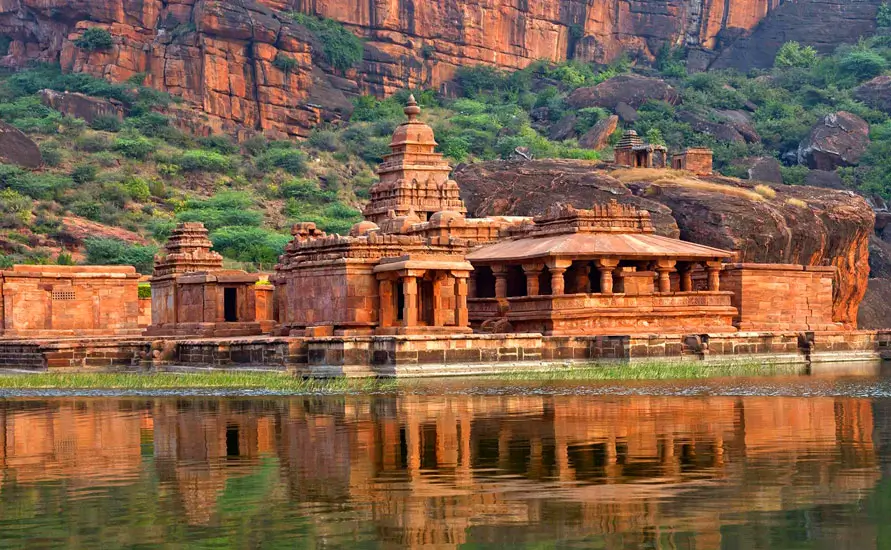
Langurs and macaques are common on the cave steps, so keep food in your bag and hold onto sunglasses. Late in the day, walk along the lakeshore to the Bhutanatha temples, a small group of shrines that sit right on the water at the eastern end of the lake and glow orange as the sun sets. The town around the lake is busy and a little ragged, with women washing clothes on the ghats and boys diving from the steps. For dinner, ask for a North Karnataka plate with ennegai, a stuffed brinjal curry, at your hotel or a small eatery in town. Overnight in Badami.
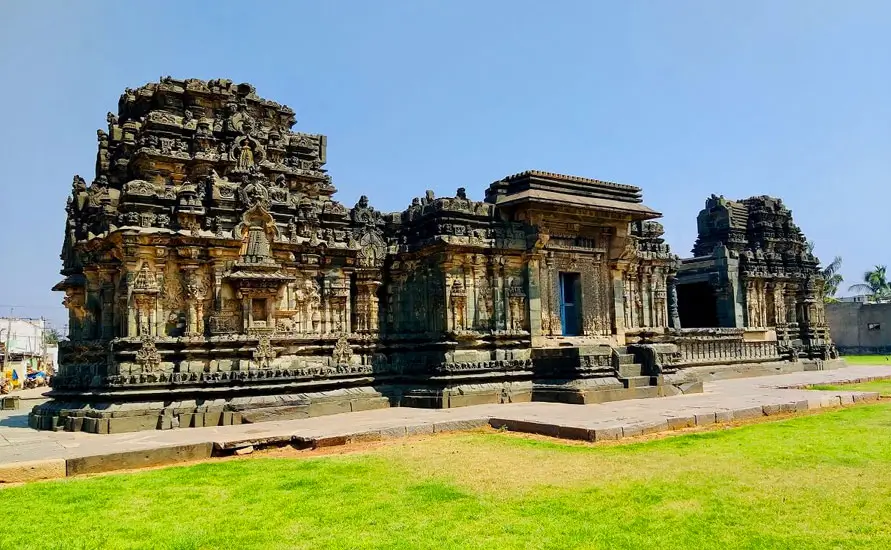
Two of India's most important early temple sites lie within easy reach of Badami, and today you see both with your guide. First is Pattadakal, about 22 km away on the bank of the Malaprabha river, a UNESCO World Heritage Site where Chalukya kings were crowned. Its ten main temples show northern-style curved towers and southern-style stepped towers side by side, built in the 7th and 8th centuries. The largest, the Virupaksha temple, was commissioned by Queen Lokamahadevi around 745 CE to celebrate her husband's victory over the Pallavas, and its walls are crowded with carved scenes from the epics.
Around 14 km further on is Aihole, often described as a laboratory of Indian temple building because its craftsmen tried out shapes and plans that were later refined elsewhere. More than a hundred temples are scattered in and around the village. The best known is the Durga temple, with an unusual rounded back wall and a pillared walkway running all the way around it. Nearby are the flat-roofed Lad Khan temple, among the earliest on the site and named after a man who once lived in it, and the Meguti Jain temple on the hill, whose inscription of 634 CE gives historians a firm date.
Lunch is a simple meal near Aihole, as there are few restaurants in these villages, and your driver knows where the food is fresh. On the way back to Badami you can stop at a village near Pattadakal where weavers make Ilkal-style saris, a handloom tradition of this district recognized for its distinctive border and pallu. The afternoon heat can be strong from March, so in warmer months the visits are arranged early. You return to Badami in the late afternoon with time for a rest or a second look at the lake. Overnight in Badami.
Leaving Badami after breakfast, the car runs south-west for roughly ninety minutes toward Gadag. Just before the town lies Lakkundi, a village that served as an important center under the Kalyani Chalukyas in the 11th and 12th centuries and is still full of temples and stepped wells. Many sit between ordinary houses, so you walk through lanes where people dry chillies on the rooftops. The Brahma Jinalaya, a Jain temple in dark green-gray schist, and the finely carved Kashivishweshwara temple are the two to see, along with the Musukina Bhavi, a deep stepwell with carved niches on every level.
The stone here is softer and darker than the granite of Hampi, which allowed sculptors to cut extremely fine door frames and pillars that look almost turned on a lathe. A small sculpture gallery run by the Archaeological Survey of India displays broken idols, lintels and inscribed slabs found in the village fields. From Lakkundi it is a short hop to Gadag, where you can stop at the Trikuteshwara temple, which has shrines to Brahma, Vishnu and Shiva under one roof. After a midday meal in Gadag, the last 60 km west to Hubli pass quickly.
Hubli and its twin city Dharwad form one of the largest urban areas in Karnataka, and the region has produced famous Hindustani classical singers, including Gangubai Hangal and Bhimsen Joshi. In the afternoon you visit the Chandramouleshwara temple at Unkal, a Chalukyan shrine with four doorways facing the four directions, and walk beside Unkal lake as the evening breeze comes in. Before dinner it is worth a stop for Dharwad peda, a brown, grainy sweet of slow-cooked milk and sugar that locals pack as gifts for anyone leaving town. Overnight in Hubli.
After breakfast you leave Hubli for the last leg of the loop. The road passes Dharwad and then drops through the forested Western Ghats around Anmod into Goa, and the change from dry plateau to green coast happens within an hour. Allow about four hours to Dabolim and roughly five to Mopa, plus extra margin for slow traffic on the ghat. We fix the leaving hour around your flight, and if you are staying on in Goa the car can take you to a beach hotel instead.
In nine days you have moved from coastal pilgrim lanes to the capital of a lost empire and on to the temples where Chalukya builders worked out the shape of the South Indian shrine, all without retracing a single road. Should a later trip appeal, Bijapur and the Gol Gumbaz or the coffee hills of Coorg pair well with this loop, and we are happy to put a plan together. Thank you for letting us show you this side of Karnataka, and have a good flight.
Your Journey

N.S. Rathore & Mrs. Omlata Rathore · Managing Director
We still read every enquiry ourselves. Tell us the places you liked and our planners will send a day-by-day route with drive times and a clear price.
Every package can be customised and no pressure to book. A planner from our office replies within 24 hours with a route written for your group.
Fill this in and your planner will send a first draft itinerary.
Explore more
Kerala Backwaters Escape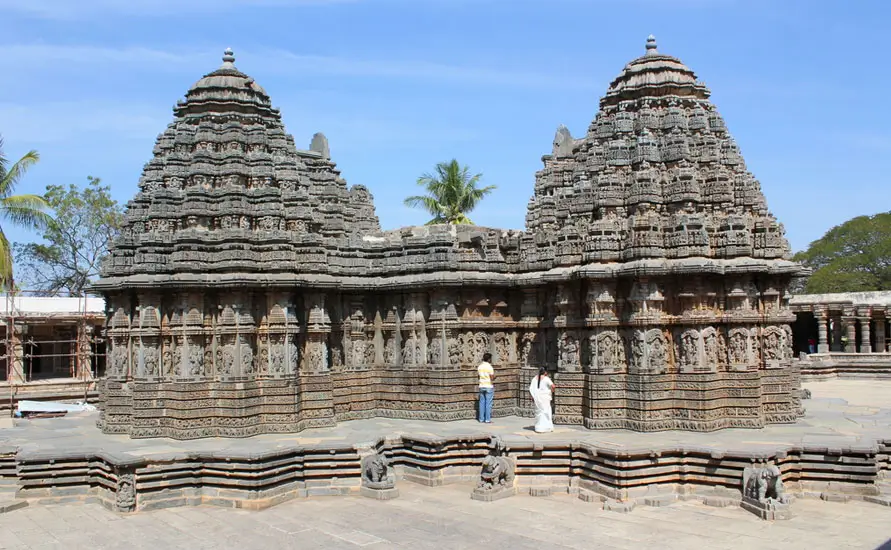 Kerala Backwaters Escape
 Kerala Backwaters Escape
 Kerala Backwaters Escape
 Kerala Backwaters Escape
 Kerala Backwaters Escape