 Kerala Backwaters Escape

Karnataka Tour Packages
Bangalore – Srirangapatna – Mysore – Somanathapura – Hassan (Belur, Halebidu) – Chitradurga – Hampi – Aihole – Pattadakal – Badami – Hubli
At a glance
Karnataka's past reads like a relay race between royal houses, each one handing the land, its craftsmen and its festivals to the next. Our Karnataka heritage tour follows that story backward in time, one dynasty at a time. You start with the Wodeyars of Mysore, whose palace and Dasara festival still shape the city, then move to the Hoysala temples of Belur and Halebidu, the ruined imperial capital of Hampi, and finally the Chalukya cave shrines and temple towns of Badami, Aihole and Pattadakal, where much of South Indian temple design was first worked out.
Three UNESCO World Heritage listings fall on this route: the Hoysala temples, the Group of Monuments at Hampi and the Pattadakal temples, alongside Badami and Aihole, which sit on the tentative list. The Karnataka heritage tour package is private from start to finish, with one car and driver for the whole trip and a specialist guide at every major site. Three nights in Hampi give you two full days among its ruins, and long drives are broken with stops at the Hoysala temple of Somanathapura and the hill fort of Chitradurga.
The trip ends at Hubballi airport in north Karnataka, which saves you the long drive back to Bangalore and has daily domestic flights for onward international connections. It is designed for travelers who enjoy history and architecture and are happy with early starts to beat the heat and the crowds. October to February is the most comfortable time, since Hampi and Badami can get very hot from March onward. We can add a night in Bangalore at the end or extend the trip to Bijapur and its Adil Shahi monuments.
Our team meets you as you come out of the arrivals hall at Kempegowda International Airport, and you settle into a private air-conditioned car for the ride to your hotel. Bangalore is better known today for software and startups than for royalty, yet it was founded in 1537 by Kempegowda, a chieftain who answered to the Vijayanagara emperors, and it later passed to the Wodeyars of Mysore, to Hyder Ali and Tipu Sultan, and then to the British. Your hotel room can be ready on arrival if you tell us your landing time in advance, so you can rest properly before any sightseeing starts.
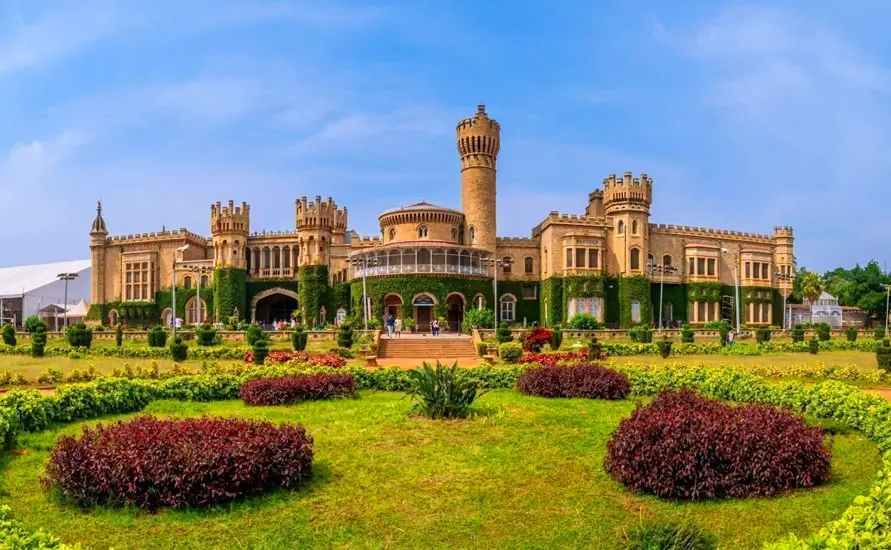
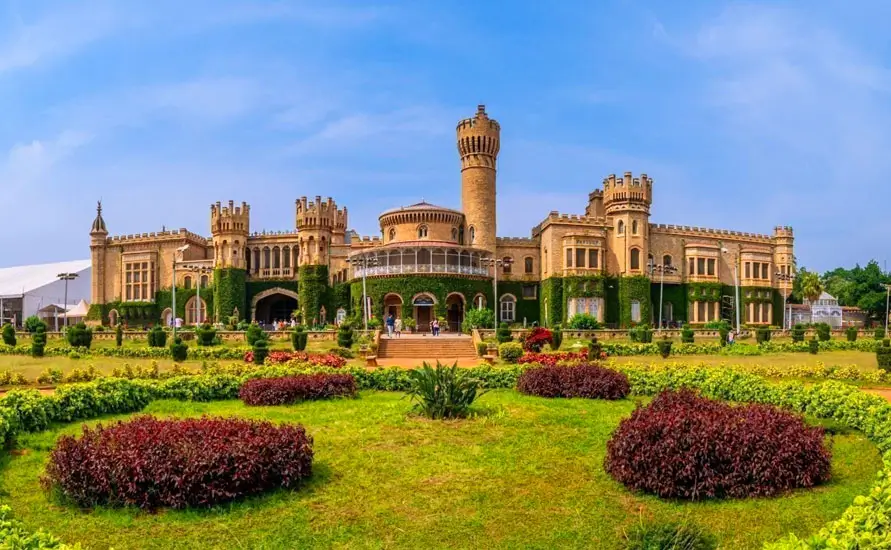
Later in the day your guide opens the dynastic story at Bangalore Palace, which Chamarajendra Wodeyar X bought in the late 19th century and remodeled with towers and battlements inspired by Windsor Castle. The Wodeyar family still owns the building, and its rooms hold hunting trophies, carved wooden ceilings, Victorian furniture and photographs of royal ceremonies from the early 20th century. An audio guide is included with the entry ticket, and photography inside carries an extra charge. Your guide uses the visit to sketch out the four dynasties you will follow over the next ten days.
In the older southern part of the city stands Tipu Sultan's Summer Palace, a modest two-story building of teak with arches and painted floral panels, completed in 1791. It is a useful contrast to what you just saw, a reminder that for about forty years in the late 18th century the Wodeyars were pushed aside by Hyder Ali and his son, who made this region one of the strongest powers in India. Close by, the walls of the old Bangalore fort survive as a short stretch of stone with a carved gateway. Dinner can be at a traditional Udupi-style restaurant nearby. Overnight in Bangalore.
Morning traffic in Bangalore can be heavy, so your driver aims to leave right after breakfast and takes the access-controlled expressway toward Mysore. The first stop is Srirangapatna, the island town on the Kaveri that served as the Wodeyar capital from 1610 until Hyder Ali seized power, and later as Tipu Sultan's stronghold. Your guide explains how Raja Wodeyar took the town from a governor of the fading Vijayanagara Empire, an event that connects the Mysore royal house directly to Hampi, which you will reach later on this trip. The Ranganathaswamy Temple here, much older than both families, gave the town its name.
Next you follow sections of the fort walls to the place where the British breached the defenses in May 1799, and to the low, vaulted cell where Tipu kept captured British officers. Tipu's summer residence, the Daria Daulat Bagh, has painted walls showing his army's victory at Pollilur in 1780 and are among the few surviving records of how 18th-century South Indian armies looked and fought. After Tipu's death the British restored the Wodeyars, placing a five-year-old boy, Krishnaraja Wodeyar III, on the throne, and moved the royal capital back to Mysore, a short drive further south.
Mysore is only half an hour on, and you are at your hotel by early afternoon. When the afternoon cools, your guide leads you to the Jaganmohan Palace, built in 1861 and used by the royal family while the main palace was being rebuilt, and now the home of an art gallery. Its walls are lined with royal portraits, a set of paintings by Raja Ravi Varma, and a famous work showing a woman holding a lamp that seems to glow as you change position. Old musical instruments and Mysore-style gold-leaf paintings complete the collection. On Sundays and public holidays the main palace is lit with thousands of bulbs in the early evening. Overnight in Mysore.
Begin soon after opening time at Mysore Palace, still the center of the Mysore Dasara festival each September or October. The present building replaced a wooden palace destroyed by fire in 1897, and it took fifteen years to complete under the regent queen Kempananjammanni Vani Vilasa Sannidhana. Inside, your guide shows you the octagonal Kalyana Mantapa, where the ceiling glass came from Glasgow in peacock designs, the long public durbar hall where the king appeared before his subjects, and the murals that record the Dasara procession in minute detail, with numbered figures so that individual courtiers could be identified.
The Dasara festival itself has roots in the Mahanavami celebrations of the Vijayanagara emperors, and the Wodeyars adopted the custom when they rose to power in the early 17th century. The golden throne used during the festival is assembled and shown to the public only during Dasara, and the current head of the family still holds a private durbar on it each year. Your guide also points out the Wodeyar emblem of the two-headed bird, the Gandaberunda, which appears on gates, coins and the state emblem of Karnataka today. Shoes and phones in some areas must be handed in before you enter.
After lunch the road climbs Chamundi Hill toward the Chamundeshwari Temple, dedicated to, the family deity of the Wodeyars, whose festival image leads the Dasara parade on a golden howdah. A great black stone Nandi sits on a terrace part of the way down the hill road, carved in the time of Dodda Devaraja Wodeyar. Back in town, a stroll through the stalls of the Devaraja Market brings you back into everyday life, with heaps of flowers, fruit and powdered dyes. Mysore pak, the dense ghee sweet first made in the palace kitchens, is a fitting end to a Wodeyar day. Overnight in Mysore.
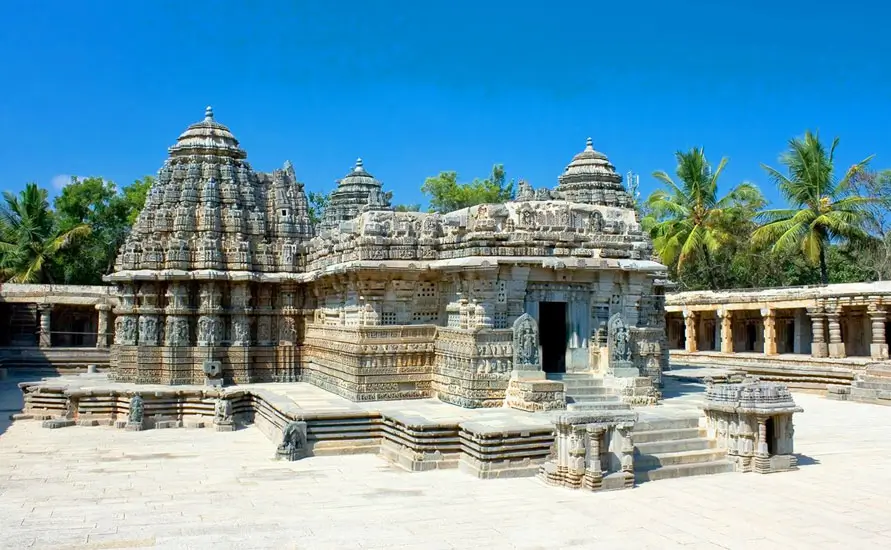
Today the story moves back in time by several centuries, from the Wodeyars to the Hoysalas, who ruled this region from the 11th to the 14th century. About an hour east of Mysore lies the village of Somanathapura and its Keshava Temple, built in 1268 by Somanatha, a general serving the Hoysala king Narasimha III. Of the three Hoysala temples on the UNESCO list it is the most compact, and it has survived in remarkably complete condition. The temple stands on a raised platform shaped like a star and has three shrines, each topped with its own tower, set inside a cloistered courtyard of small cells.
Look closely at the base of the walls, where your guide shows you six bands of carving running all the way around, from elephants for strength at the bottom to horses for speed and scrolling foliage above. Several of the larger sculptures are signed by the artists who made them, and the name Mallitamma appears again and again, a rare case of medieval Indian sculptors leaving their names for later visitors to read. The images inside the shrines are no longer worshipped, which makes the temple quieter than most. Photography is usually allowed in the compound, but check with the attendant at the gate.
From Somanathapura you head north-west past coconut groves and village tanks to Hassan, a district center that makes a practical base for the main Hoysala sites. Allow roughly three hours for this stretch, broken by lunch at a reliable roadside restaurant. You check in during the late afternoon and have time to relax before dinner. Ask at the hotel or your driver for ragi mudde, a soft ball of finger millet eaten with a spicy lentil or chicken curry, the staple food of rural southern Karnataka and very different from the rice-based meals of the coast. Overnight in Hassan.
The Hoysala dynasty took its name from a legend carved over the gateway at Belur, in which a young warrior named Sala strikes down a tiger to save his teacher, and that scene became the royal emblem. The Chennakeshava Temple was built by Vishnuvardhana in 1117, after he turned from Jainism to Vishnu worship under the influence of the philosopher Ramanujacharya, and after his armies defeated the Cholas at Talakadu. His queen Shantala Devi was a celebrated dancer, and tradition says some of the female figures on the outer walls were modeled on her. Worship continues here every day, so the courtyard is busy with pilgrims as well as visitors.
Your guide shows you the most famous of the bracket figures, the Darpana Sundari, a woman gazing into a hand mirror, and explains how the soft green-grey chloritic schist allowed the sculptors to cut jewelry, hair and even fingernails with great precision. Inside the dark hall, the central pillar known as the Narasimha pillar is covered in tiny figures, and legend says it once rotated. The temple took over a century to finish, and three generations of Hoysala kings added to it. Light is best early in the morning, so we aim to arrive soon after the gates open, before the heat sets in.
After lunch it is about 16 km to Halebidu; as Dwarasamudra it was the Hoysala royal city until it was sacked in 1311 by Malik Kafur, a general of the Delhi Sultanate, and never recovered. The Hoysaleswara Temple, begun around 1121 and paid for by an official named Ketamalla, has two shrines side by side dedicated to Shiva, often linked to the king and his queen. Its outer walls carry hundreds of panels from Hindu epics, and no two of the elephants in the bottom band are said to be the same. The large tank behind the town still holds water. Overnight in Hassan.
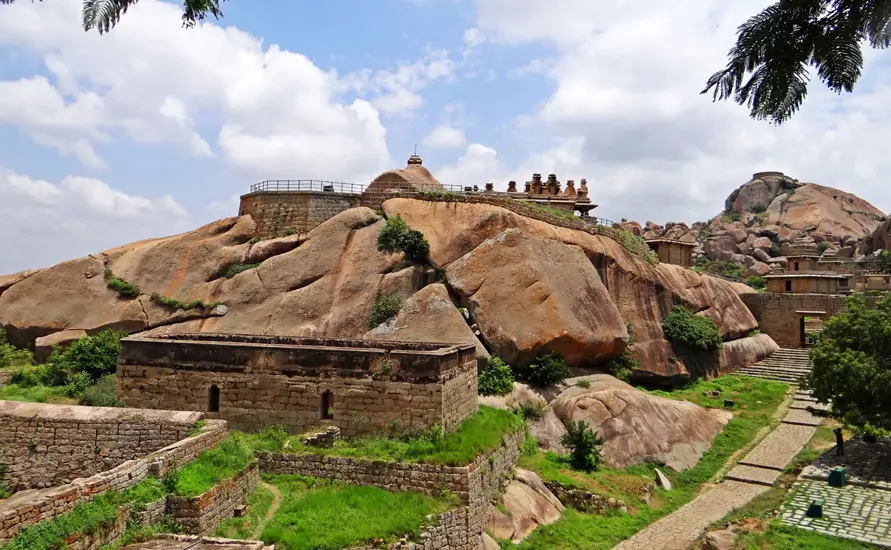
Expect the longest day on the road of the whole tour, so you set out soon after breakfast and head north across the dry plateau toward the Tungabhadra River. About halfway, the road reaches Chitradurga, where a fort of seven concentric walls wraps around a cluster of granite hills. It was held by the Nayakas of Chitradurga, local rulers who served the Vijayanagara emperors before becoming independent after the empire fell. Local guides love the tale of Onake Obavva, wife of a sentry, who held a gap in the walls armed only with a wooden pestle when Hyder Ali's soldiers tried to slip in, and yours will show you the narrow crack in the rock where it happened.
After a walk through the fort and a late lunch, the drive continues for another three hours to Hampi, where the landscape turns into hills of giant orange boulders, banana plantations and sugarcane fields. You check in near Hampi or in the nearby town of Hosapete in the early evening. The first sight of the boulder-strewn hills around the old capital in the evening light is a good introduction to the next two days. Dinner is at your hotel, and your guide will meet you briefly to plan the start time for tomorrow morning. Overnight in Hampi.
The Vijayanagara Empire was founded around 1336 by the brothers Harihara and Bukka, and for more than two centuries Hampi was its capital, one of the largest and wealthiest cities in the world at the time. Foreign visitors such as the Persian envoy Abdur Razzaq and the Portuguese traders Domingo Paes and Fernão Nunes left detailed accounts of its markets, palaces and festivals. Your guide starts the day in the Royal Enclosure, where the foundations of palaces, audience halls and granaries are laid out on the ground, and explains how the city was planned with a sacred center near the river and a royal center further south.
The great stone platform known as the Mahanavami Dibba was where the emperor watched the nine-day autumn festival, the same festival that the Wodeyars later carried on as the Mysore Dasara. Its sides are carved with processions of horses, elephants, musicians, dancers and hunting scenes. Close by is a square stepped tank, dug out of the earth during excavations in the 1980s, its green schist blocks marked with mason's numbers for assembly. At the Hazara Rama Temple, which served the royal household, the outer walls are lined with friezes showing the Ramayana and royal parades. You also visit the Lotus Mahal with its arches mixing Islamic and Hindu ideas, and the long Elephant Stables.
Once the midday heat has passed, you continue to the Queen's Bath and the two huge statues near the old market: the monolithic Lakshmi Narasimha, carved in 1528 under Krishnadevaraya, the greatest of the Vijayanagara rulers, and the Badavilinga, a Shiva lingam about three meters high whose base sits permanently in water from an old channel. The empire's end came in 1565 after the Battle of Talikota, when an alliance of Deccan sultanates defeated its army and the city was looted for months. As the sun sets, walk up the granite slopes of Hemakuta Hill among small early temples to watch the light change over the ruins. Overnight in Hampi.
Begin at the Virupaksha Temple, which predates the empire and is still in active worship, with a tall gopuram that dominates the old bazaar street. The Vijayanagara rulers saw Virupaksha, a form of Shiva, as their protector, and Krishnadevaraya added a pillared hall here in 1510 to celebrate his coronation. Inside, your guide shows you a dim side room where a narrow opening throws an inverted image of the great tower onto the wall, the same principle as a camera obscura. Visitors must remove shoes and dress modestly, and non-Hindus may be asked to stay out of the inner sanctum.
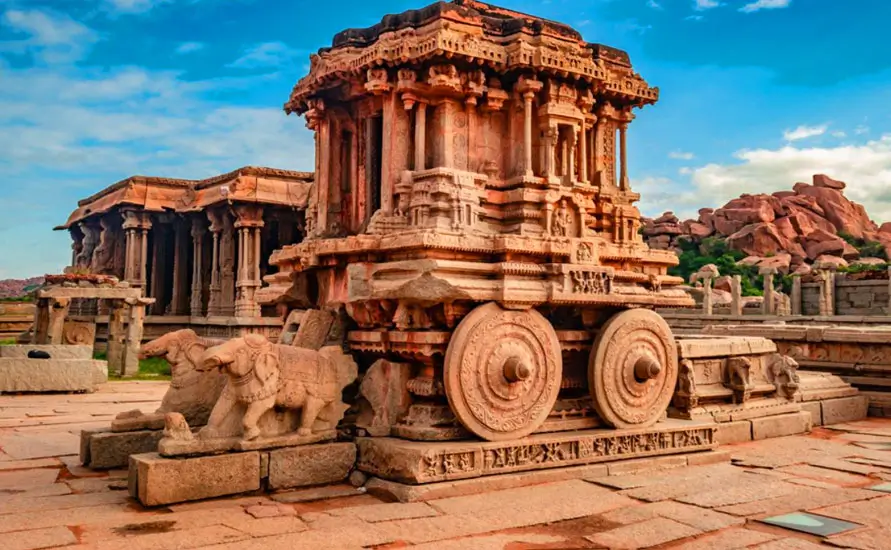
A short drive and a walk along the river bring you to the Vittala Temple, the finest example of Vijayanagara architecture. Out in the courtyard is the stone chariot, really a Garuda shrine built to look like a processional car, its wheels carved so that they once appeared ready to turn. The main hall has slender pillars cut so that they give off musical notes when struck, but tapping them is no longer allowed in order to protect them. Your guide explains the design of the courtyard halls, one of which was used for the ritual marriage of the god, and shows you the remains of the old bazaar street outside.
Later you cross the Tungabhadra River in a round coracle made of woven bamboo and lined with waterproof material, steered by a local boatman with a single paddle. Across the river lies Anegundi, an older fortified settlement which, according to local tradition, was the kingdom of the monkey kings Vali and Sugriva in the Ramayana, and a base for the dynasty before Hampi was built. The village has a slower pace, with old houses, a small craft center producing banana-fiber products, and fields of paddy. You return to Hampi for a quiet final evening. Overnight in Hampi.
Drive north-west to Aihole, the earliest of the three Chalukya temple centers you will see, often described as the place where builders of the 5th to 8th centuries tried out new ideas in stone. Over a hundred shrines lie in and around the village, many tucked between houses and fields. The Durga Temple is the most striking, with an unusual rounded back that reminds many visitors of a Buddhist prayer hall and a pillared veranda that circles the whole building. Nearby, the flat-roofed Lad Khan Temple looks like a village assembly hall, a reminder of how early these builders were in working out what a temple should look like.
On a low hill above the village sits the Meguti Temple, a Jain shrine whose wall carries an inscription from 634 CE by the court poet Ravikirti, praising the Chalukya king Pulakeshin II, who defeated the northern emperor Harsha. It is one of the most important early records of the dynasty. Your next stop, just 13 km away, is Pattadakal, a UNESCO World Heritage Site where the Chalukya kings were crowned. Its riverside temples show the northern curved towers and the southern stepped towers side by side, the clearest place in India to compare the two great temple styles.
At Pattadakal your guide focuses on the Virupaksha Temple, commissioned around 745 CE by Queen Lokamahadevi to celebrate her husband Vikramaditya II's victory over the Pallavas of Kanchipuram. It was modeled on the Kailasanathar Temple there, and it is believed that the Chalukyas brought Pallava craftsmen back with them. The sculptures inside show scenes from the epics and everyday life, and an inscription names the chief architect. You then drive about 22 km to Badami, the old Chalukya capital known as Vatapi, set at the foot of red sandstone cliffs. Dinner tonight is at your hotel. Overnight in Badami.
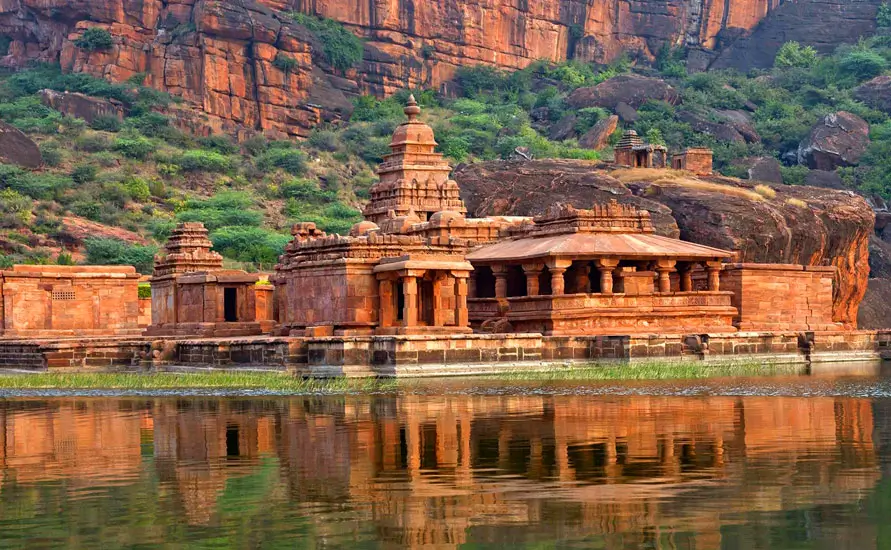
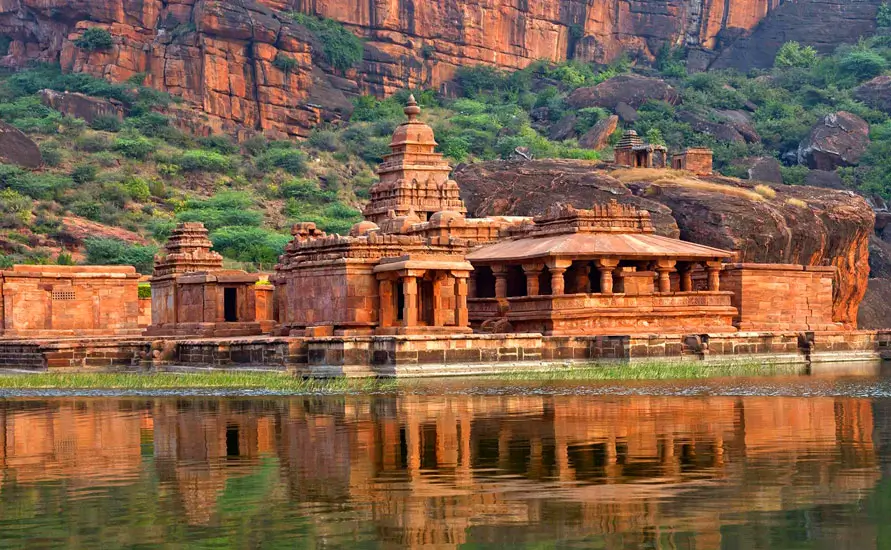
Arrive at the Badami cave temples as they open, when the red rock glows in the morning light and the steps are still cool underfoot. The four caves were cut into the cliff in the 6th century: the first for Shiva, whose Nataraja figure has eighteen arms, the second and third for Vishnu, and the fourth for the Jain saints. Cave 3, the largest, carries an inscription dated 578 CE by the king Mangalesha. Below, the Agastya Lake reflects the Bhutanatha temples on its far shore. Watch your bags and snacks, since the resident monkeys are bold.
Following an early lunch, the last drive of 2.5 hours takes you to Hubballi Airport for a domestic flight to Bangalore, Mumbai or another hub for your international connection. Over ten days you have followed four dynasties, from the Wodeyars' palace city through Hoysala carving and the ruined capital of Vijayanagara to the Chalukya cliffs, each building on what came before. Your driver stays with you until check-in. If you want more, Bijapur and Bidar to the north continue the story with the Deccan sultanates. Safe travels.
Your Journey

N.S. Rathore & Mrs. Omlata Rathore · Managing Director
We still read every enquiry ourselves. Tell us the places you liked and our planners will send a day-by-day route with drive times and a clear price.
Every package can be customised and no pressure to book. A planner from our office replies within 24 hours with a route written for your group.
Fill this in and your planner will send a first draft itinerary.
Explore more
Kerala Backwaters Escape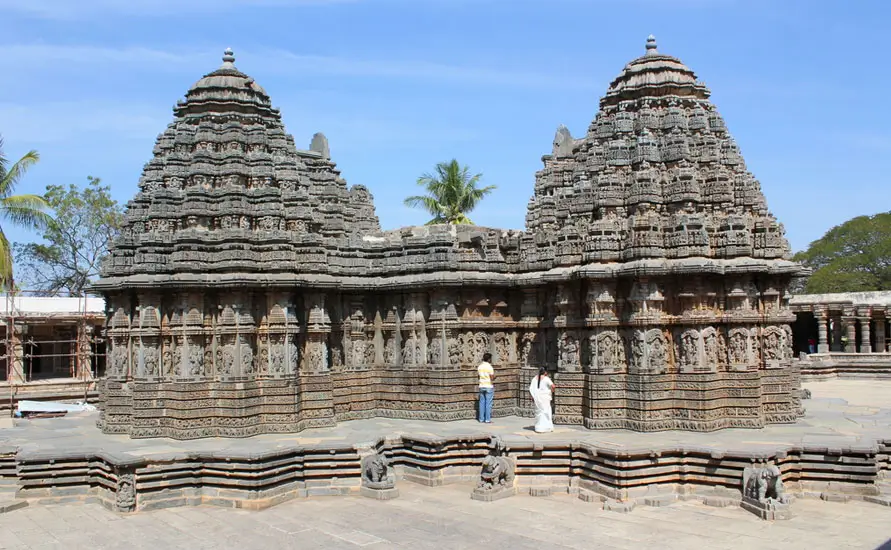 Kerala Backwaters Escape
 Kerala Backwaters Escape
 Kerala Backwaters Escape
 Kerala Backwaters Escape
 Kerala Backwaters Escape