 Kerala Backwaters Escape

Karnataka Tour Packages
Bangalore – Srirangapatna – Mysore – Somanathapura – Bylakuppe – Coorg – Hassan – Halebidu – Belur – Hampi – North Goa
At a glance
Karnataka rewards travelers who give it time, and Goa next door is the obvious place to rest afterwards. Our Karnataka tour with Goa covers the state's best-known highlights in ten days and then hands you four quiet nights on the sand. From Bangalore you head south to royal Mysore, climb into the coffee estates of Coorg, stop at the carved Hoysala temples of Belur and Halebidu, spend three nights among the ruins of Hampi, and finish on a calm North Goa beach close to Mopa airport.
The long gap between Coorg and Hampi is the one tricky leg on any map of the state, and we break it with a night in Hassan. That way the Hoysala sites become a proper stop rather than a blur through the window, and the following drive to Hampi starts fresh. Most other days involve three hours or less on the road. A single driver who speaks English stays with you and your private, air-cooled vehicle for all fourteen days, and a licensed guide takes over at each major site.
This Karnataka and Goa tour package is designed for overseas visitors, from Dublin and Amsterdam to Boston, Vancouver and Perth, and for NRI parents keen to show sons and daughters raised abroad far more of the state than a single city. Plan for October to March, when Coorg is green but dry, Hampi is bearable at midday and the Goan sea is calm. Every part of the trip is private, so you can add a night in Coorg, swap the beach or upgrade hotels.
With passports stamped and bags collected at Bangalore's Kempegowda airport, head for the pickup zone, where someone from our team stands whose placard shows your surname in large letters. The airport is roughly an hour from most central hotels, and on the way you get your first look at the city's mix of glass tech parks, flyovers and old neighborhoods shaded by huge rain trees. Standard check-in is in the early afternoon. Guests arriving at dawn off a long-haul overnight can add the preceding night at booking time, so a bed and a hot shower are ready as soon as you get there.
After some rest, head out toward sunset to Malleswaram, a north-western suburb that dates back well over a century and was planned after the plague epidemic of 1898 pushed families out of the crowded old town. The broad cross-streets still have tiled bungalows with deep verandas, small Kannada bookshops and temple carts parked in sheds. Stop at the Kadu Malleshwara temple, a 17th-century Shiva shrine on a low rise, and the Nandi Teertha temple across the road, where water flows from the mouth of a stone bull onto a linga, its source a long-running local mystery.
Malleswaram's 8th Cross market is busy until late with flower sellers stringing jasmine, banana-leaf stacks, fruit carts and shops selling brass lamps. Food is the other reason to come here: some of the city's best-loved breakfast and tiffin houses are in this part of town, and a benne dosa, a thick, crisp pancake brushed with butter, with a cup of filter coffee is the right way to begin a Karnataka trip. Bed comes early tonight, since jet lag tends to bite on the second day and the road to Mysore starts mid-morning. If you cannot sleep, the hotel can send up a pot of ginger tea or a glass of warm turmeric milk, an old Indian remedy for a restless night. Overnight in Bangalore.
After breakfast the car takes the expressway south-west toward Mysore. The new road has shortened the trip a great deal, though many travelers still like to stop at Maddur or Ramanagara for a snack, where vendors sell maddur vada, a flat, crunchy fritter of semolina, onion and curry leaf. Rocky granite hills rise out of the farmland on both sides near Ramanagara, an area known to Indian film fans as the backdrop of the 1975 Bollywood classic Sholay. Your driver keeps the pace easy and asks if you would rather have music or quiet.
About two hours from Bangalore you cross the Kaveri onto the river island of Srirangapatna, which served as Tipu Sultan's seat of power until East India Company troops breached its walls in May 1799. Your guide begins at the Daria Daulat Bagh, a teak pavilion set in formal gardens, whose verandas are covered in fresco murals of cavalry charges and cannon, most famously his army's rout of Colonel Baillie at Pollilur in 1780, along with portraits of rajas and nawabs of the era. Inside the ruined ramparts a stone marker shows where Tipu's body was found, a vaulted cell once held captured Company soldiers chained to the walls, and outside town the cream-colored Gumbaz shelters the tombs of Tipu, his mother and his father Hyder Ali under one dome, with ebony doors inlaid in ivory.
Last on the island is the temple of Ranganatha, the reclining Vishnu whose name the town carries, lying on the many-headed serpent Adishesha inside a dim sanctum. Mysore is barely half an hour beyond, and you check in well before the afternoon tea hour. In the evening, walk to the area around the palace for a first look at the city, which is cleaner and calmer than most of urban India. Should your arrival fall on a Sunday or national holiday, the palace façade is switched on after dark, and the car can drop you at the gates to see it. Overnight in Mysore.
Start with Chamundi Hill, the low hill that overlooks Mysore and carries the temple of the city's patron goddess. Hairpin bends bring the car to the top in a quarter of an hour, and on the descent you halt beside the massive kneeling Nandi, nearly five meters tall, which devotees dress in garlands and silver ornaments; it was hewn from the hillside in the 1600s under Dodda Devaraja Wodeyar. Pilgrims climb the 1,000 steps from the bottom, and you can do the last section on foot if you wish. A brightly painted statue of the buffalo demon Mahishasura, sword in hand, greets you near the car park, since Mysore is named after him and the goddess Chamundeshwari is believed to have slain him on this hill.
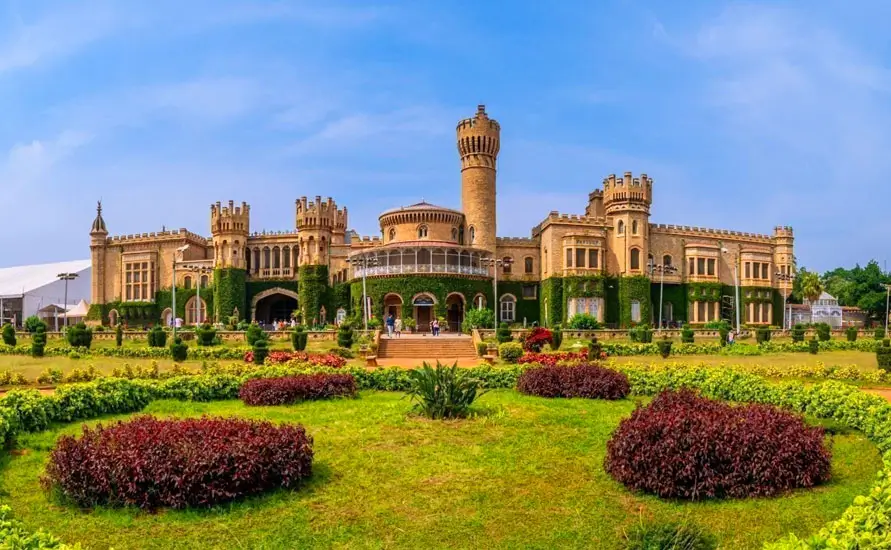
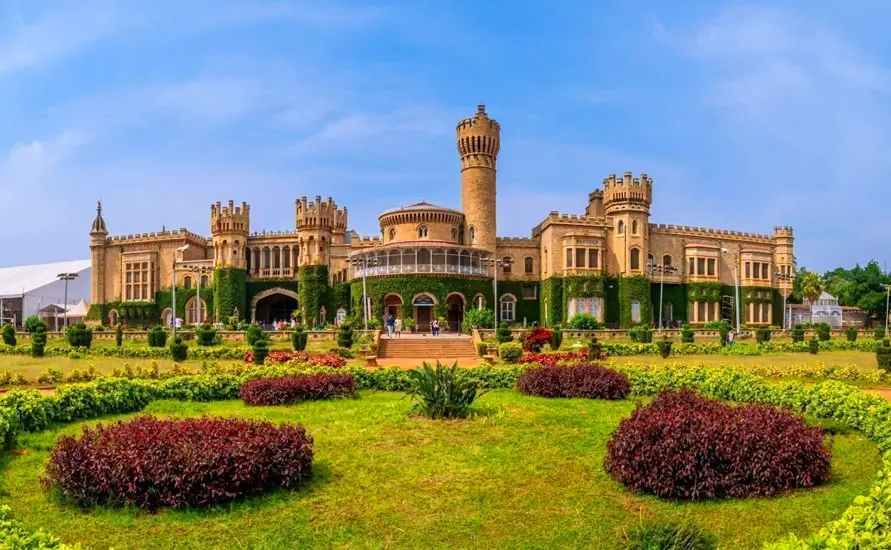
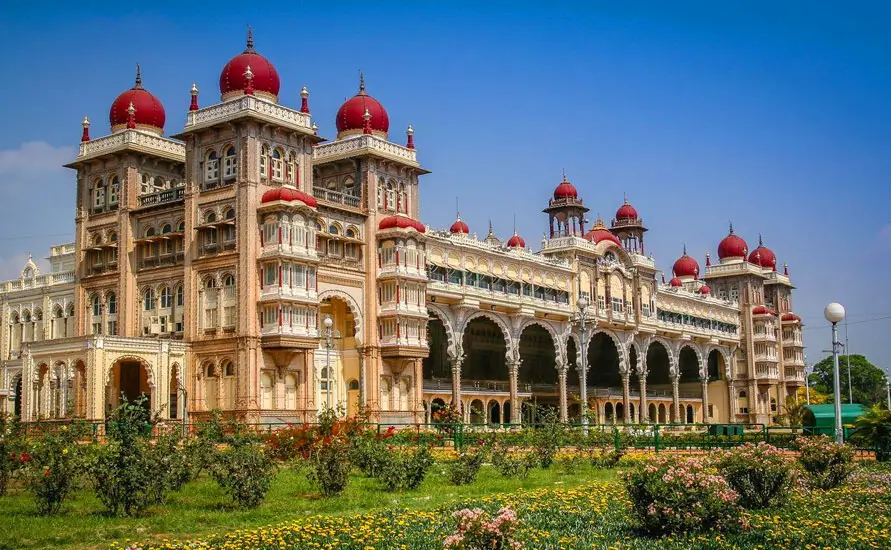
Next comes Mysore Palace, the domed Indo-Saracenic building that the British architect Henry Irwin designed for the Wodeyars after the old timber palace burned down in 1897. Inside, the octagonal wedding hall, the Kalyana Mantapa, sits under a dome of colored glass made in Glasgow, the public Durbar Hall glitters with gold-leafed columns, and a wall of paintings records the Dasara procession of the 1930s. Shoes are left at a counter at the entrance, and photography is restricted inside. Come back on a Sunday or holiday evening and close to 100,000 bulbs trace each dome and arch from 7 pm for roughly forty-five minutes.
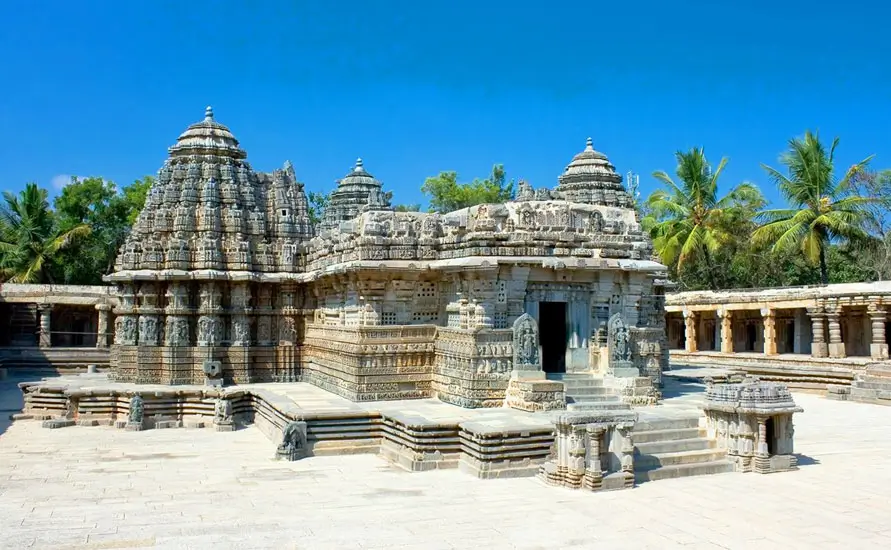
After lunch, walk through the arched entrance of Devaraja market, where sellers pile up turmeric, kumkum powder, betel leaves, bananas and garlands of jasmine. A short drive north, the paired spires of St. Philomena's Church, modeled loosely on Cologne cathedral, rise above the rooftops, and the crypt below holds a relic of the saint. Later in the afternoon you drive about 35 km east to Somanathapura to see the Keshava temple, a 13th-century Hoysala shrine raised on a star-shaped platform with three sanctums and bands of carved elephants, horsemen and epic scenes. Since 2023 it has carried UNESCO status together with Belur and Halebidu, which you will see later in the trip. Overnight in Mysore.
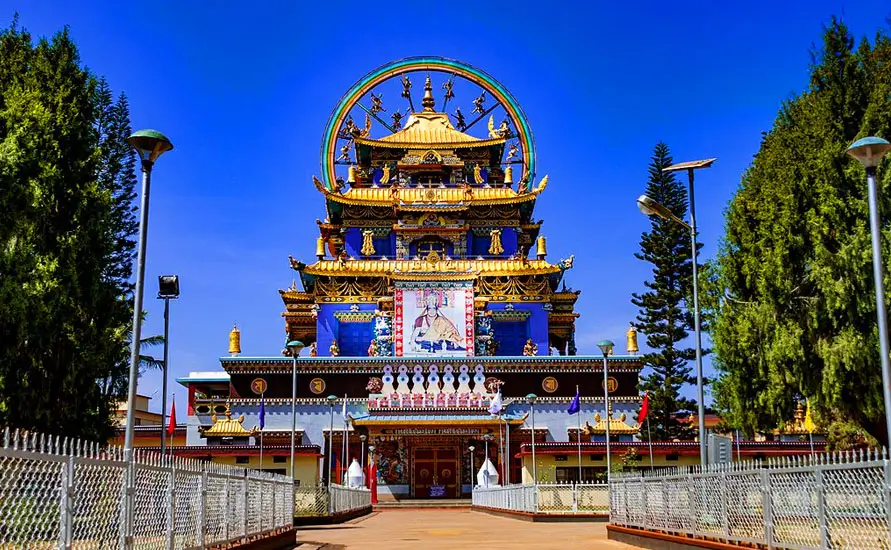
Leaving Mysore mid-morning, you head west through tobacco and paddy country for roughly two hours to Bylakuppe, where the state government gave forest land to Tibetan refugees in 1961. Six decades on, the camps have grown into a town of red-robed students, prayer flags strung between areca palms and shops selling butter tea next to Kannada general stores. Most visitors come for the Namdroling monastery of the Nyingma school, founded by Penor Rinpoche in 1963. Inside its so-called Golden Temple sit three towering gold-plated figures of Padmasambhava, Shakyamuni Buddha and Amitayus, with walls painted in deep reds, blues and greens.
If a puja is in progress you may slip onto the carpet near the door and listen as rows of young monks chant over the low blast of dungchen horns, cymbals and drums. Remove shoes before entering, avoid pointing your feet toward the altar and ask before photographing monks. Lunch is at a small Tibetan eatery outside the monastery gate, where thukpa noodle soup and steamed momos come with chilli sauce made on the spot. Stalls nearby sell prayer wheels, juniper incense, carpets and woolen shawls, many made in the camps' own handicraft centers, and buying here supports the settlement directly.
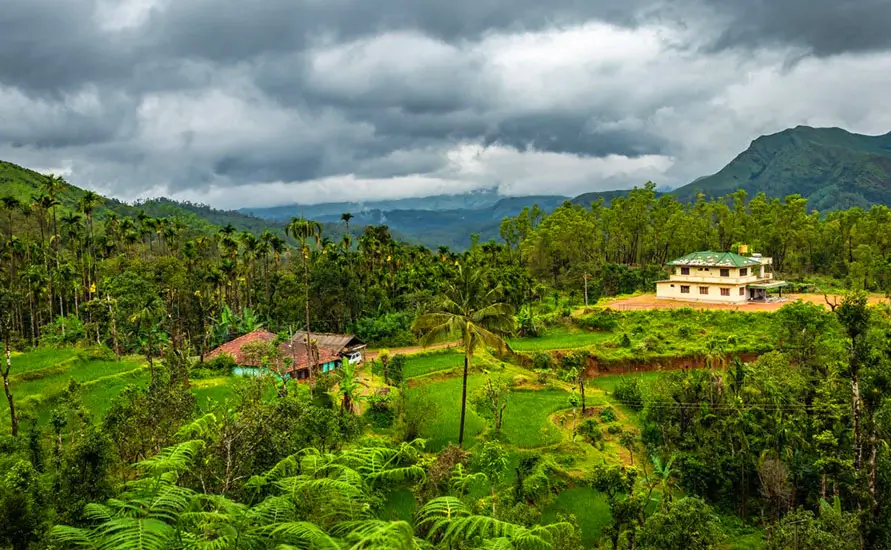
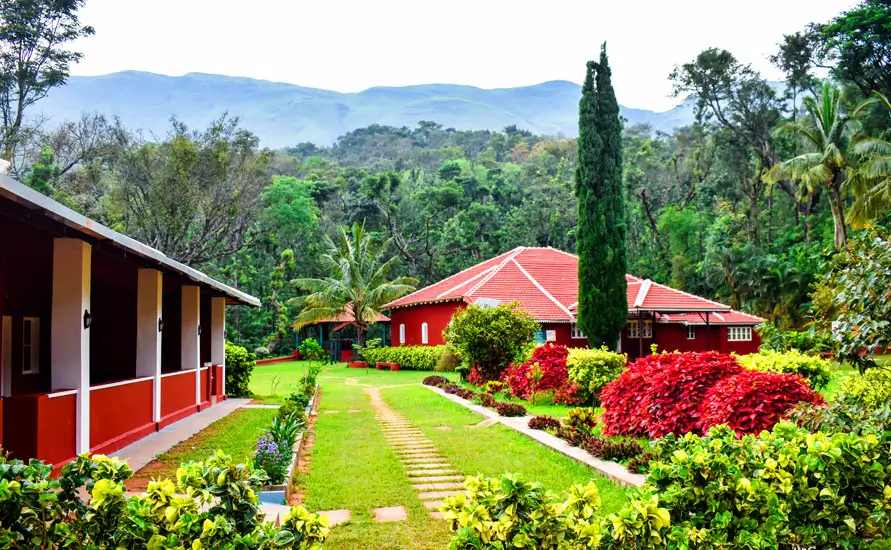
From Bylakuppe the road begins to climb into Coorg, also known as Kodagu, and within an hour you are surrounded by coffee bushes shaded by silver oak, jackfruit and rosewood trees, with pepper vines climbing their trunks. You check in for two nights at a plantation homestay or estate resort near Madikeri. The hills grow chilly after sunset in winter, so keep a fleece handy. Ask your hosts for a Kodava supper: pandi curry, pork slow-cooked almost black with roasted spices and a sour fruit vinegar called kachampuli, mopped up with kadambuttu, steamed balls of broken rice. Overnight in Coorg.
Morning mist often lies in the valleys at this hour, and it is the right time for a guided walk around a coffee estate. The planter or estate manager explains how robusta and arabica are grown here at different altitudes, how the berries are picked by hand from December onward, and why the bushes are planted under tall shade trees. You walk past pepper vines, cardamom clumps and orange trees, and in season you may see workers sorting freshly picked cherries. Back at the bungalow you taste a cup made from the estate's own beans and see the concrete yards where the cherries are spread out to dry in the sun.
After lunch the car climbs into Madikeri, Kodagu's hill capital, where a compact stone fort has changed hands between Kodava kings, Tipu's garrison and British officials, and today houses district offices and a modest museum. Close by stands the Omkareshwara temple, an unusual building that combines Islamic domes with a Hindu shrine. The Kodavas, the main community of the district, are known for their martial tradition, their distinctive dress and their worship of ancestors and the river Kaveri. Your guide talks about the region's long ties to the Indian Army, which has drawn many senior officers from Coorg.
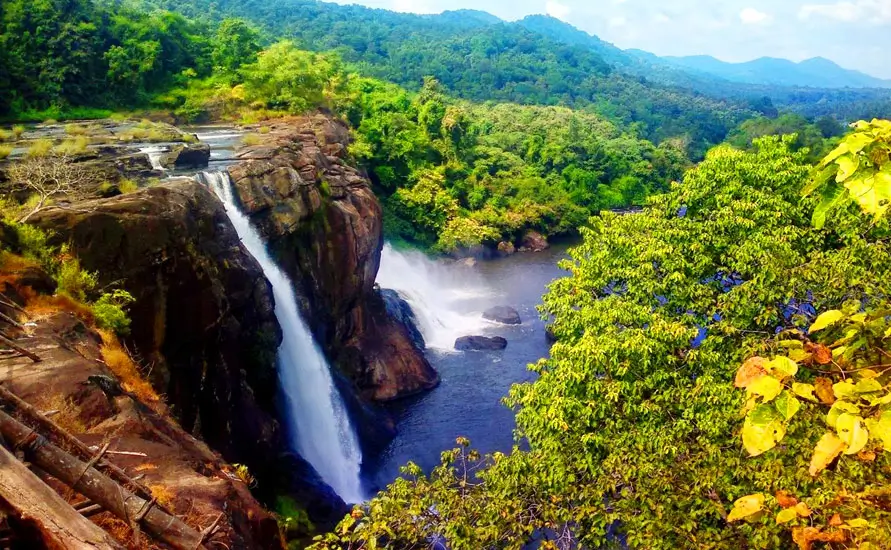
Around four you head out to Abbey Falls, about 8 km away, and walk down a stepped path lined with coffee bushes to a footbridge opposite the falls, which roar after the rains and settle to a gentler flow by winter. Heading back into town, pause at Raja's Seat, the terraced garden on Madikeri's western lip, which earned its name because the old kings liked to take their evening leisure here. Ridge upon ridge fades into blue haze toward the Kerala border, and as the sun drops the valleys below fill slowly with mist. Overnight in Coorg.
The trip from Coorg to Hampi is too long for one comfortable day, so today you cover the first leg to Hassan, a district town on the plateau. The road leaves the plantations through Somwarpet or Kushalnagar and drops into open farmland of coconut palms, ragi and sugarcane. Your driver stops for coffee and a snack along the way, and you reach Hassan around lunchtime. Hotels in Hassan are simple and practical, picked for one comfortable night rather than a long stay, and it puts you within half an hour of the two finest Hoysala temples.
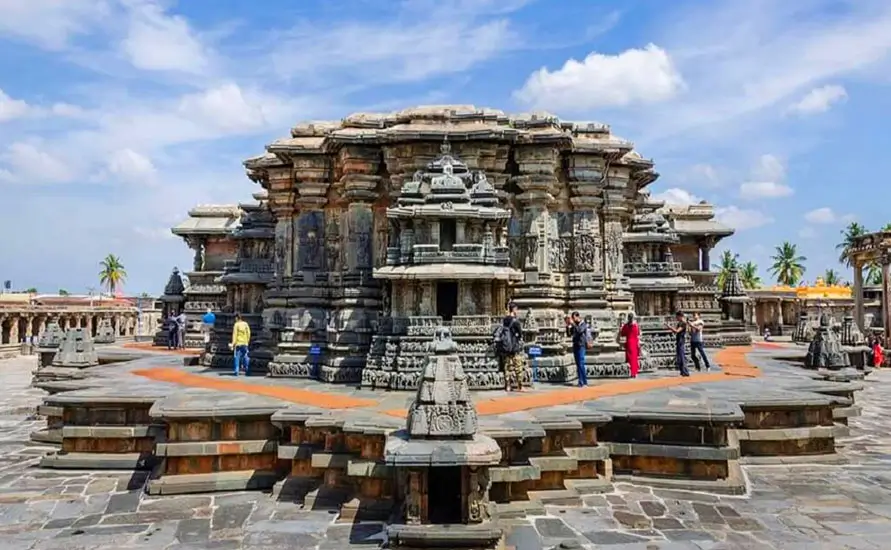
In the afternoon you drive to Halebidu, the old Hoysala capital of Dwarasamudra, which was sacked by armies from the Delhi Sultanate in the early 14th century. The Hoysaleswara temple, built in the 12th century, is a twin shrine to Shiva in soapstone covered with more carved figures than anyone could count in a single visit. The lower bands of the wall run around the building as continuous friezes of elephants, lions, horsemen, scrollwork and episodes from the Ramayana, Mahabharata and Bhagavata Purana, each band telling its own story, and no two panels repeat exactly.
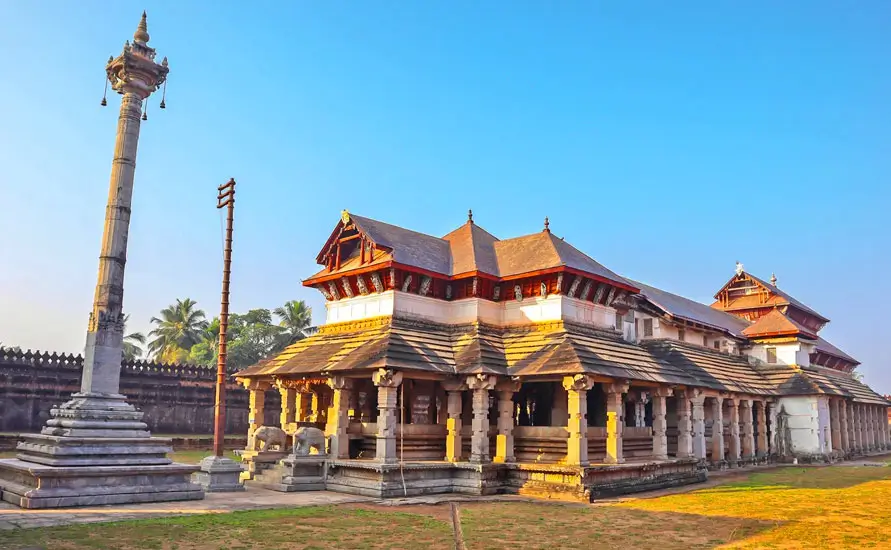
Facing each sanctum, a polished Nandi rests in its own open pavilion, and a small museum on the grounds displays carved fragments, hero stones and statues found in the surrounding fields. Before leaving, take a few minutes at the quieter Jain basadis of Basadihalli, a short distance away, where polished black pillars reflect light like mirrors. The site is quiet in the late afternoon, and the warm light brings out the depth of the carving. It is easy to spend two hours here with a guide and still miss half the carving, so do not rush. You return to Hassan for dinner. Overnight in Hassan.
Set off soon after seven for Belur, 40 km west of Hassan, so the carvings are seen in soft light. King Vishnuvardhana ordered the Chennakeshava temple built in 1117 after defeating the Chola governor at Talakad, and it took around a century to complete. Its most famous features are the madanikas, graceful bracket figures of dancers, musicians and a woman holding a mirror, which lean out from the tops of the pillars around the outer walls. One figure carries a parrot, another dries her hair, and your guide points out the tiny details sculptors added, such as a lizard and a fly on the stone.
Inside the dark main hall, look for the Narasimha pillar, carved so finely that it was once said to turn on its base, and the lathe-turned pillars whose polished surfaces gleam in the lamp light. Priests still perform daily rituals here, so cover shoulders and knees and walk barefoot inside the compound. Once you are done, your driver begins the long drive north, passing through the towns of Arsikere and Chitradurga, where you stop for lunch. No other day on the tour has as many kilometers, yet the four-lane highway is smooth and your driver breaks the drive every couple of hours.
North of Chitradurga the landscape turns drier, with red earth, thorny scrub and scattered windmills, and the first great piles of granite boulders announce the Hampi region. It is close to five when you pull into your hotel near Hampi, which is base for the next three nights. Most of the evening is for resting, though if you have energy, a short walk to the riverbank near Hampi Bazaar lets you hear the evening temple bells. Your guide calls by in the evening to plan the next two days. Overnight in Hampi.
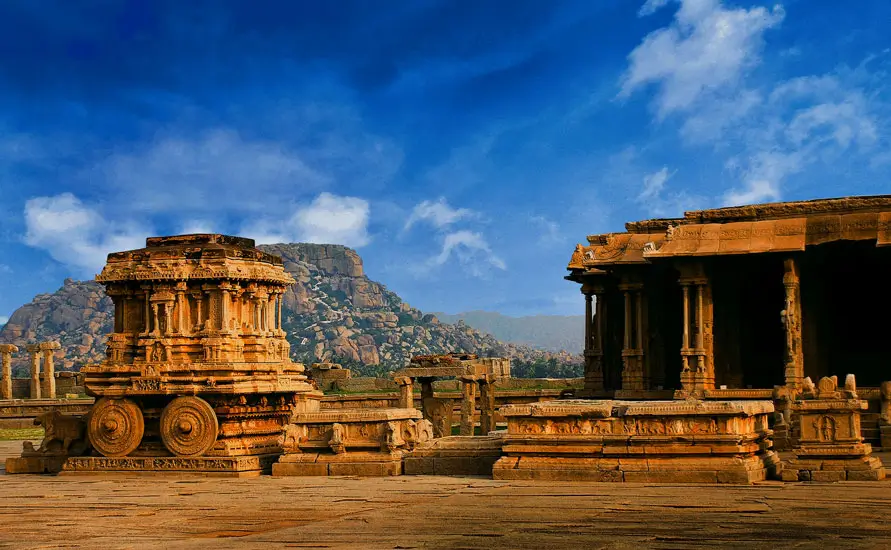
Your Hampi guide shapes today around one theme: how a medieval city of perhaps half a million people actually worked. You start at the Virupaksha temple, still active after more than seven centuries, and walk the length of Hampi Bazaar, the colonnaded street where traders sold jewels, cloth and horses. From there you drive to the Vittala temple, where the stone chariot, the musical pillars and the long processional street show how festivals, trade and worship overlapped. Arriving early helps beat the heat and the crowds at this most visited part of the site.
In the late morning you follow the old water system that kept the royal city alive. Stone aqueducts and channels carried water from the Tungabhadra to tanks, baths and gardens, and some of them can still be traced among the ruins. Your guide shows you the stepped tank near the Royal Enclosure, built of carefully fitted green schist blocks, and explains the engineering of the canals that still feed the farmland today. You also see the octagonal Queen's Bath and the remains of the stone pipes that once filled it.
After lunch and a break at the hotel, you visit the Archaeological Museum in Kamalapura, whose courtyards and galleries display hero stones, copper plates, coins, weapons and a big floor model of the ruined capital, useful for fitting together everything you have walked through. Seeing the sites first and the model second tends to make the pieces click. The museum shuts one day each week, so your guide arranges the order of visits around it. Before sunset, climb the steps behind the Achyutaraya temple or a quiet boulder ridge for views over the ruins and the river. Overnight in Hampi.
A slower day begins at the Malyavanta Raghunatha temple, built on a rocky hill on the eastern edge of Hampi where Rama is believed to have waited during the monsoon before the battle with Ravana. A natural cleft in the rocks behind the temple is carved with rows of Shiva lingas and small figures of fish, turtles and other creatures. Few tourists come here, and the views over banana plantations, paddy fields and distant boulder hills are some of the best in the area. Devotees hold continuous Ramayana chanting in the temple hall.
Late in the morning you drive to Hosapete to see the Tungabhadra dam, a large masonry dam completed in the 1950s that created a vast reservoir and irrigates huge stretches of northern Karnataka and Andhra Pradesh. Gardens below the dam are popular with local families, and from the viewpoint you can see how the water spreads across the plateau. Lunch is at a restaurant in Hosapete, where a north Karnataka meal of jolada rotti, flatbread made from sorghum, comes with spicy curries, raw onion and chutney powder. Ask for a glass of buttermilk with it, spiced with green chilli and curry leaves, which locals swear by as the best cure for the midday heat.
Around four the car sets off for the Daroji Sloth Bear Sanctuary, about 15 km from Kamalapura, a rocky scrubland reserve set up to protect sloth bears. Visitors watch from a viewing tower, where forest staff sometimes leave food on the rocks below, and the bears often appear toward evening along with peacocks, monitor lizards and other wildlife. Entry is controlled by the forest department and sightings are never guaranteed, so treat it as a quiet evening in wild country. Bring binoculars and a light jacket, since the tower is exposed and the sun sets quickly over the rocks, and keep voices low so you do not disturb the animals. Overnight in Hampi.
Today you swap the Deccan for the coast, and most of the hours are spent in the car. Leaving Hampi after breakfast, the car heads west via Hosapete, Koppal and Hubballi-Dharwad, where you stop for lunch. Beyond Dharwad the road crosses the Ghats through dense moist forest and enters Goa near Mollem, where the vegetation becomes thick and green. Allow around seven hours including stops, and expect slow stretches on the ghat roads.
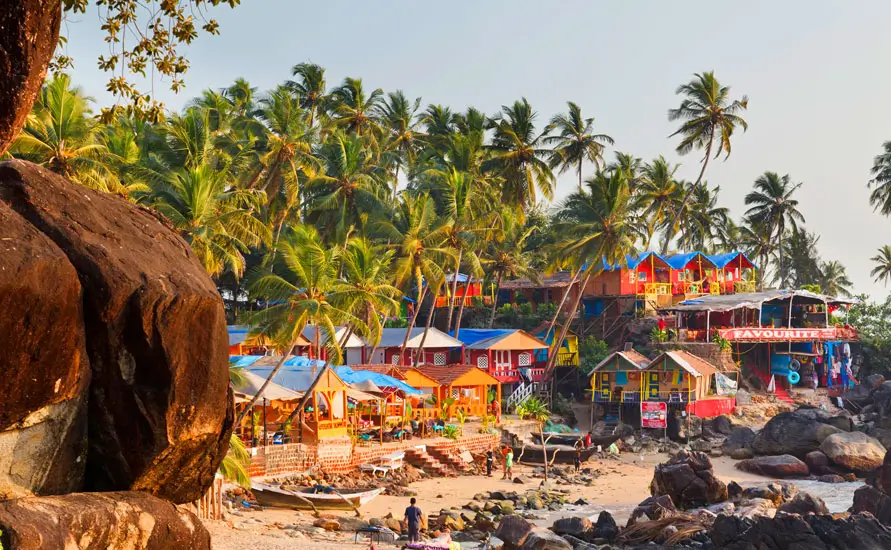
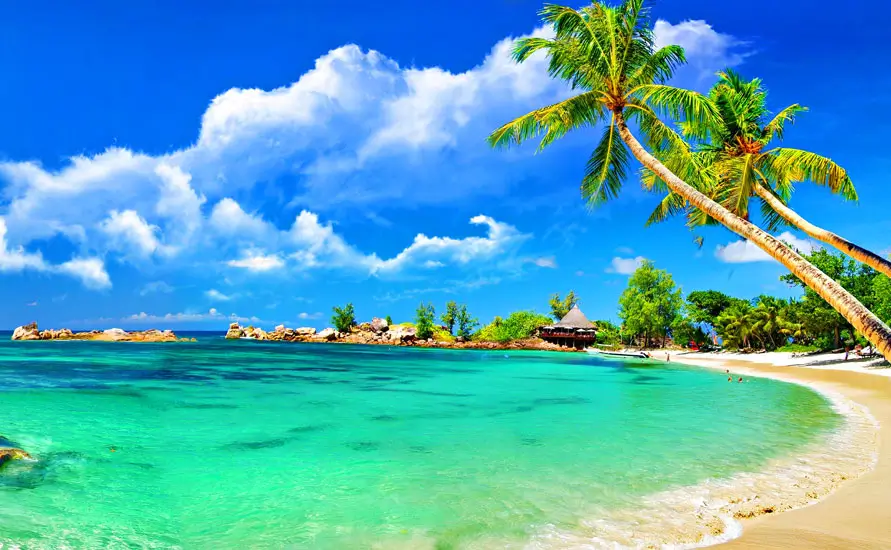
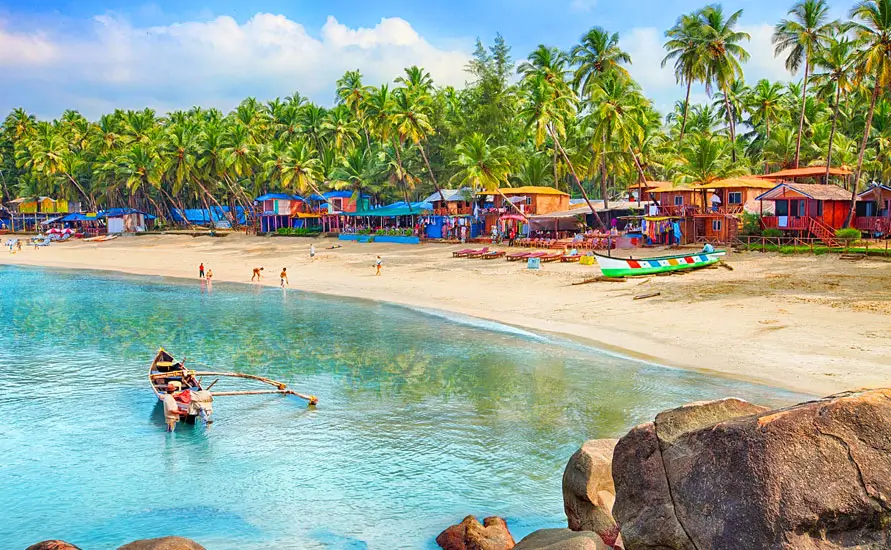
Your beach hotel is in North Goa, on the quieter stretch between Mandrem, Ashwem and Morjim, about half an hour from Mopa airport. These beaches are wide, clean and much calmer than the party strips further south around Baga and Calangute. After checking in, walk down to the sand for the sunset, which here falls straight over the Arabian Sea. Overnight in North Goa.
Today is entirely free, and the slow rhythm of the North Goa coast makes it easy to do very little. Mandrem beach has a small river creek running parallel to the shore, crossed by bamboo bridges, which makes it popular for paddling with children. Between November and March the water stays fairly flat close to shore, though you should still stay inside the lifeguard flags. Early hours suit a long walk along the hard sand toward Ashwem, when fishermen are bringing in their boats and the air is still cool.
Ashwem and Morjim are known for nesting olive ridley turtles in some winters, and parts of the beach may be fenced off by the forest department during the nesting season. Morjim is also one of the places where many Russian visitors spend the winter, so do not be surprised to see menus in Cyrillic. For anyone who cannot sit still, many hotels run morning yoga on a deck above the sand, and a few shacks hire out stand-up paddleboards or arrange gentle boat rides along the coast toward the Chapora estuary, where fishermen moor their wooden canoes.
Toward evening, claim a shack table with a cold lime soda or a local beer and let the light fade over the waves. Shack menus in this part of Goa range from simple Goan fish curry and rice to grilled lobster, fresh salads and wood-fired pizzas. Many places light lanterns and candles on the sand after dark, and the sound of the waves carries in the warm evening air. Fancy something different? Ten minutes inland, family-run village kitchens are serving Goan sausage pulao or crab xec xec. Overnight in North Goa.
After breakfast your guide joins you for the drive to Panjim, the state capital, about an hour south. The old neighborhood of Fontainhas is one of the last surviving parts of Portuguese-era Goa, with narrow streets of yellow, blue and ochre houses, tiled roofs, carved balconies and azulejo name plaques. Many families still live here, so walk quietly, keep out of doorways and ask before photographing people. Your guide leads you to the small St. Sebastian chapel, which keeps an unusual crucifix with Christ's eyes open, once kept in the Inquisition's palace in Old Goa, and small bakeries selling bebinca and other Goan sweets.
Down toward the river, the white Church of the Immaculate Conception, reached by a zigzag double stairway, and white façade are among the best-known sights in Goa. From here a short walk along the Mandovi river brings you to the old Secretariat, once the palace of the Sultan of Bijapur's governor before the Portuguese took the town. Lunch is at a Goan restaurant in Panjim, where you can try chicken cafreal, a green, herby curry, or a classic fish thali with sol kadhi, a pink drink of kokum and coconut milk.
Later you head inland to Ponda, where a farm guide takes you along shady paths through a spice plantation where farmers grow cardamom, vanilla, nutmeg, black pepper, cinnamon and areca nut under the canopy of tall trees. Crushed leaves and seeds are passed round to sniff, and you learn how many of these spices reached Goa with Portuguese traders. Most farms lay out a Goan buffet on banana leaves at the end of the walk, and some offer a cooling splash of water poured over your head by a farmhand as a playful send-off. In the mid-afternoon you return to your beach hotel for a last swim before dinner. Overnight in North Goa.
A short morning outing takes you to Chapora fort, a laterite stronghold perched over the Chapora estuary, which the Portuguese raised in 1717 where an earlier fort of Adil Shah had stood. Ten minutes uphill from the parking area brings you onto the walls, with a view over the river mouth, the fishing harbor and the long sweep of Vagator beach. The fort became famous in India after it appeared in a well-known Bollywood film in 2001, and it is popular with young Indian tourists for that reason, especially at sunset.
Below the fort lies the small Chapora village, where a fishing jetty, old Portuguese houses and simple cafés line the lanes, and the smell of drying fish mixes with fresh bread from the bakery. If today is a Wednesday in season, a detour to the Anjuna flea market is easy; its stalls sell clothes, jewelry, Kashmiri shawls and souvenirs. On Saturday evenings in season, a large night market in Arpora has live music and food stalls. Both are optional, and your driver will advise on timings and the best places to park.
After lunch the hours are yours, and the hotel can arrange anything you need. Book an Ayurvedic massage at your hotel, read under a palm or wander the shoreline once more. When the sky starts to color, pick a table on the sand for a farewell dinner of Goan seafood and a glass of local feni or kokum juice. Pack your bags tonight to keep the morning stress-free, and confirm the pickup time with your driver, who will have already checked the latest traffic advice for the airport road. Overnight in North Goa.
Breakfast on the last morning comes with the sound of the surf, and then the car heads for the terminal. Mopa, officially Manohar International, lies roughly thirty minutes from Mandrem, while Dabolim in the south is around two hours away, depending on traffic over the Zuari bridge. We agree the leaving time with you the night before so you reach the terminal with plenty of margin for check-in and security.
Fourteen days have taken you from Tipu's island fort and the Wodeyar palace through Kodava coffee country and Hoysala soapstone to the boulders of Vijayanagara, and then let you rest by the Arabian Sea. Badami, Gokarna and the Kabini forests are still waiting, and we would gladly build them into a second trip. Wishing you an easy flight home; it was a pleasure to plan these two weeks for you.
Your Journey

N.S. Rathore & Mrs. Omlata Rathore · Managing Director
We still read every enquiry ourselves. Tell us the places you liked and our planners will send a day-by-day route with drive times and a clear price.
Every package can be customised and no pressure to book. A planner from our office replies within 24 hours with a route written for your group.
Fill this in and your planner will send a first draft itinerary.
Explore more
Kerala Backwaters Escape Kerala Backwaters Escape
 Kerala Backwaters Escape
 Kerala Backwaters Escape
 Kerala Backwaters Escape
 Kerala Backwaters Escape
 Kerala Backwaters Escape
 Kerala Backwaters Escape
 Kerala Backwaters Escape
 Kerala Backwaters Escape
 Kerala Backwaters Escape
 Kerala Backwaters Escape
 Kerala Backwaters Escape
 Kerala Backwaters Escape
 Kerala Backwaters Escape
 Kerala Backwaters Escape
 Kerala Backwaters Escape
 Kerala Backwaters Escape
 Kerala Backwaters Escape