 Kerala Backwaters Escape

Karnataka Tour Packages
Bangalore – Srirangapatna – Mysore – Nagarhole – Coorg – Bylakuppe – Chikmagalur – Belur – Halebidu – Hampi – Gokarna – Goa
At a glance
Karnataka is one of the few Indian states where a single road trip can take in a royal capital, a tiger forest, coffee mountains, carved 12th-century temples and the ruins of a medieval empire before ending on the Arabian Sea. Our Best of Karnataka Tour strings all of these together in fifteen days. You start in Bangalore, move south to the palace city of Mysore, spend two nights at the edge of Nagarhole National Park, then wind uphill through the plantations of Coorg and Chikmagalur before turning north to Hampi and the beaches of Gokarna and Goa.
Two nights in most places is the rhythm of this Karnataka tour package, which means fewer early check-outs and time to sit on a veranda while the planter's coffee brews. Drives are mostly two to four hours, with two longer days broken up by lunch stops and sightseeing on the way. One chauffeur and one air-conditioned vehicle cover every kilometer between Bangalore airport and the Goa departure gate, and local guides lead you through Mysore, Belur, Halebidu and Hampi, where the stories behind the stone matter as much as the stone itself.
This Best of Karnataka Tour is planned for overseas guests, be they from Manchester, Munich, Chicago or Perth, who want one trip that shows the full range of South India's most varied state, and NRI families who grew up hearing about Mysore Dasara or Coorg coffee and want to see it with their own children. Safaris, hotel category and pace can all be changed, and Hampi or the beach can be extended by a night. Aim for the dry season, roughly October to March, and the forests look greenest in the first weeks after the rains end.
After immigration and baggage at Kempegowda International Airport, our Bangalore representative will be waiting by the exit doors; your name will be on a card, and the vehicle parked outside is the same one that carries you across Karnataka for the next fortnight. Because Kempegowda lies about 35 km north of central Bangalore, allow sixty to ninety minutes to reach the hotel, more if you land at peak office hours. On the way, your driver introduces himself, points out the flyovers and tech parks of the new city, and explains how the trip will run. Your welcome pack contains a printed itinerary, local contact numbers and a SIM card guide.
Plenty of overseas flights touch down in the small hours, so the plan leaves the first half of the day empty; reserve an early check-in with us and the room is held from dawn. If you land early in the day and feel lively by afternoon, a short walk in Cubbon Park is an easy first outing. Laid out in 1870 by the British, the park spreads across roughly 300 acres of the old cantonment, and its red State Central Library stands among clumps of bamboo and flowering trees. Opposite rises the Vidhana Soudha, the grey granite seat of the state assembly, its colonnades floodlit on certain holiday nights.
Bangalore has a reputation across India for its pubs, brewpubs and coffee houses, and the city's mild climate, at roughly 900 meters above sea level, makes evenings outdoors pleasant for most of the year. Your driver can drop you in the Church Street or Indiranagar areas for a first dinner, where small breweries serve house beers alongside dosa, ghee roast chicken and Andhra-style biryani. Jet lag tends to win on the first night, though, and a simple room-service supper is no bad idea with a full city program waiting after breakfast. Overnight in Bangalore.
Mornings are the best time for Lalbagh Botanical Garden, when retired Bangaloreans march their daily laps and the air still holds the night's cool. Hyder Ali commissioned the first plantings around 1760, and Tipu Sultan later enlarged them with plants brought from as far away as Persia and Afghanistan. The Victorian-era glasshouse, whose iron frame borrows from the design of London's Crystal Palace, hosts the big flower shows held each January and August, when thousands of blooms are arranged into replicas of temples and monuments. You also climb the low Lalbagh Rock, a bare hump of peninsular gneiss thought to be some three thousand million years old, topped by one of the four towers attributed to Kempegowda, the founder of Bangalore.
Close to the old fort area you reach Tipu Sultan's Summer Palace, a teakwood pavilion on two levels with carved pillars and arches, completed in 1791 and used by Tipu as a retreat from the heat when he was in the city. Small panels inside tell the story of his wars with the British, and your guide explains why his name still comes up in Indian politics today. In the leafy Basavanagudi district the Bull Temple houses a Nandi cut from one rock, about 4.5 meters high, its granite turned almost black by generations of oil offerings. Next door, the Dodda Ganesha temple holds a large Ganesha covered in butter on some festival days.
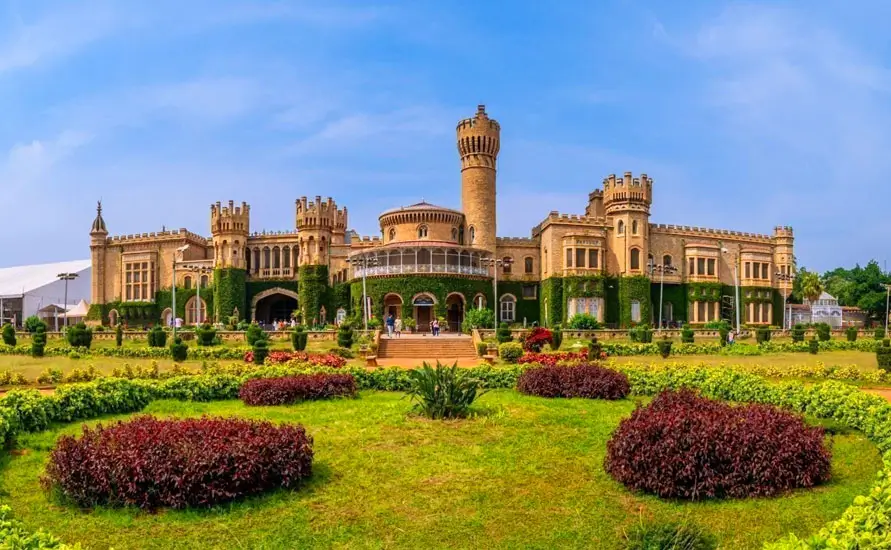
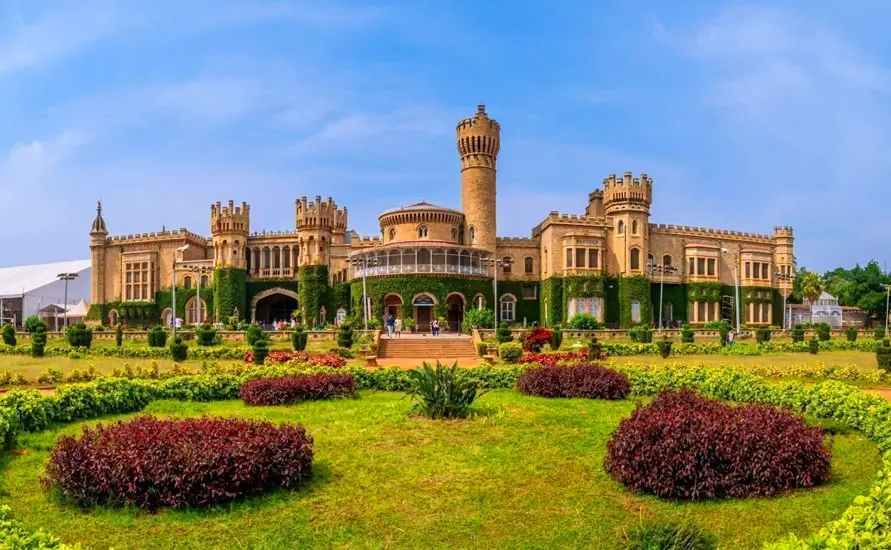
Lunch is followed by Bangalore Palace, an 1880s royal residence of the Wodeyars whose battlements and towers owe more to Windsor than to the Deccan, and whose corridors are hung with faded hunting photographs and royal portraits. An audio guide is available at the entrance, and photography inside carries a separate fee. Late afternoon is free for shopping on Commercial Street or at the state government handicraft emporium, where sandalwood carvings, Channapatna toys and Mysore silk are sold at fixed prices. In the evening you might try a meal of akki roti and filter coffee at an old Bangalore café that has been serving the same menu for decades. Overnight in Bangalore.
Breakfast is followed by an early start on the expressway to Mysore, the smoothest road in southern Karnataka and one of the busiest. If you would like a break, the driver can stop in Channapatna, a small town known for lacquered wooden toys made on hand-turned lathes, where a workshop visit shows how the colors are pressed onto the spinning wood. Just before Mysore, the road crosses the Kaveri onto an island of about 13 square kilometers, the site of Srirangapatna, the fortified capital from which Hyder Ali and Tipu Sultan ruled much of the south in the late 18th century.
Your Mysore guide meets you at the island and starts with Daria Daulat Bagh, the garden pavilion Tipu built in 1784, where every inch of the wooden walls is covered in painted murals, including a large scene of the Battle of Pollilur in which his army defeated the British in 1780. At the eastern end of the island the Gumbaz holds three cenotaphs, for Tipu, Hyder Ali and Tipu's mother, behind doors inlaid with ivory. You also see the spot where Tipu fell during the British siege of 1799, the battered ramparts, and the Colonel Bailey dungeon in which captured East India Company officers were chained, before visiting the old Ranganathaswamy Temple, which gave the island its name.
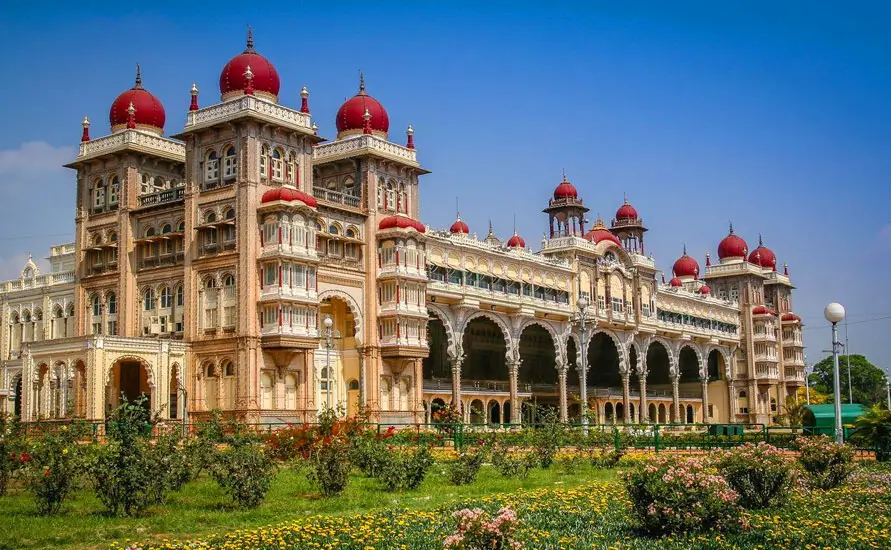
After lunch you drive the last 20 km into Mysore and check in to your hotel, perhaps a heritage property that once belonged to a member of the royal court. Mysore was the seat of the Wodeyar dynasty for most of the past six centuries, and its wide avenues, circles with statues and ornate public buildings still give it the air of a royal capital. The early evening is free for a walk or a rest. Should this be a Sunday or public holiday, your driver heads to the palace grounds at around 7 pm to see the building outlined by nearly 100,000 light bulbs. Overnight in Mysore.
Your guide begins the day on Chamundi Hill, the 1,000-meter hill east of the city that is topped by the temple of Chamundeshwari, the form of Durga who slew Mahishasura, the buffalo-headed demon from whom Mysore takes its name. Pilgrims climb about a thousand steps from the bottom, but you go up by car and walk down part of the way to the Nandi, a black granite bull hewn out of one boulder around 1659 and decorated with chains and bells. From the viewpoint on the hill you can pick out the palace, the race course and the lakes of the city below. Modest dress is needed in the temple, and shoes are left at the stand outside.
Late morning belongs to Mysore Palace. A fire in 1897 burned the timber palace of the Wodeyars, and the present stone building went up in its place over the next fifteen years. The architect, Henry Irwin, mixed Hindu, Islamic and Gothic styles, and the result is a building of domes, arches and stained glass where every hall seems bigger than the last. Inside you see the Kalyana Mantapa, the octagonal marriage pavilion with its peacock-patterned glass ceiling, and the Durbar Hall with its painted pillars. Footwear goes into a free locker at the gate, and phones and cameras must stay out of sight in the halls. For the ten days of Mysore Dasara, held in late September or October, the courtyard becomes a stage for music, processions and the royal durbar.
After lunch you walk through Devaraja Market, the arcaded bazaar laid out under Chamaraja Wodeyar, where vendors sell jasmine garlands, betel leaves, pyramids of turmeric and kumkum powder, incense and bananas of half a dozen varieties. Your guide takes you to a family shop that makes sandalwood oil and attar, and to a sweet shop for a piece of Mysore pak, the rich gram flour and ghee fudge credited to a royal cook named Kakasura Madappa. You end the afternoon at St. Philomena's Church, whose two Gothic Revival spires, finished in the 1950s, can be seen from much of the old city. Overnight in Mysore.
Leaving Mysore after breakfast, you drive south-west through farmland where sugarcane, coconut and ragi fields give way to teak plantations and then to forest. Your destination is the southern Kabini edge of Nagarhole National Park, a protected forest of over 640 square kilometers that links with Bandipur, Mudumalai and Wayanad to make one of the largest continuous wildlife ranges in Asia. Your jungle lodge sits close to the backwaters of the Kabini dam, where the receding water in the dry months leaves wide grassy banks that draw herds of elephants and gaur in the late afternoon.
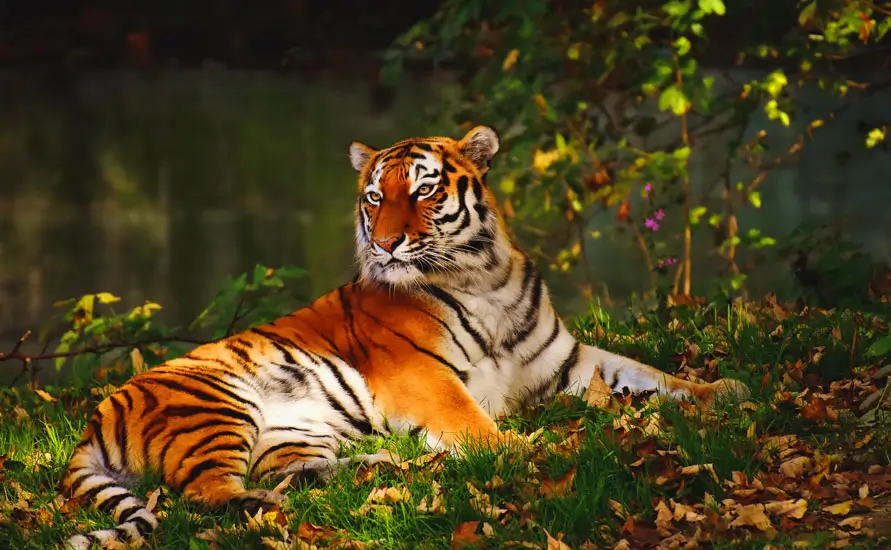
After check-in and lunch, the first Nagarhole safari goes out in the afternoon. Only the Karnataka forest department may run drives inside the park, using jeeps or larger canters on set routes, and seats are booked in advance through the department, so the exact timing and vehicle type depend on availability on the day. Your naturalist explains what to look for in the dry deciduous forest: pugmarks in the dust, alarm calls from spotted deer and langurs, fresh scratch marks on trees. Tigers, leopards and the Indian wild dog, or dhole, all live in the park, but sightings can never be guaranteed, and a quiet drive is as much part of the forest as a big cat.
Once you return, pull up a chair on the lodge lawn at dusk and listen to the birds settling in for the night: cormorants and darters on the dead trees in the reservoir, peacocks calling from the scrub, and sometimes the low trumpet of an elephant across the water. Many Kabini lodges screen a wildlife film or hold a slide talk after dark, and supper tends to mix Karnataka curries with simpler Western plates. Phones and lights should be kept low after dark, because wild animals often move near the lodge boundary at night. Overnight in Nagarhole.
Wake-up calls at a forest lodge come before dawn, with tea or coffee and biscuits served before you set off on your second Nagarhole safari. The early hours are often the most productive for wildlife, as predators are still moving after the cooler night and the light is soft for photography. Keep a warm layer with you in December and January, since mornings in the open vehicle can be surprisingly chilly. Your naturalist helps you identify raptors and forest birds, among them the changeable hawk-eagle, Malabar pied hornbill and grey junglefowl, and shows you how elephants strip bark from trees during the dry season when grass is scarce.
Breakfast is waiting for you when you return, and the late morning is free to rest by the pool or read on the veranda while the heat builds. Many lodges on the Kabini also offer a boat safari on the reservoir in the afternoon, subject to forest department rules and water levels. From the water you have a different angle on the forest edge, with crocodiles basking on mudbanks, ospreys and fish eagles hunting, and family groups of elephants wading out to the shallows in the late afternoon. If you prefer, a second jeep safari can be booked instead, again depending on what the department has available for that day.
Within the lodge fence, a staff member can lead an hour-long stroll looking at orb-weaver spiders, butterflies and the plants that Jenu Kuruba and Betta Kuruba families, the forest's original honey-gatherers and basket-makers, still use as medicine. Your naturalist can explain how the forest department works with these communities and what has changed since the park was first protected. Dinner is followed by a quiet evening around the campfire if the lodge has one. The sky here is darker than in the cities, and on a clear night you can see far more stars than you might expect. Overnight in Nagarhole.
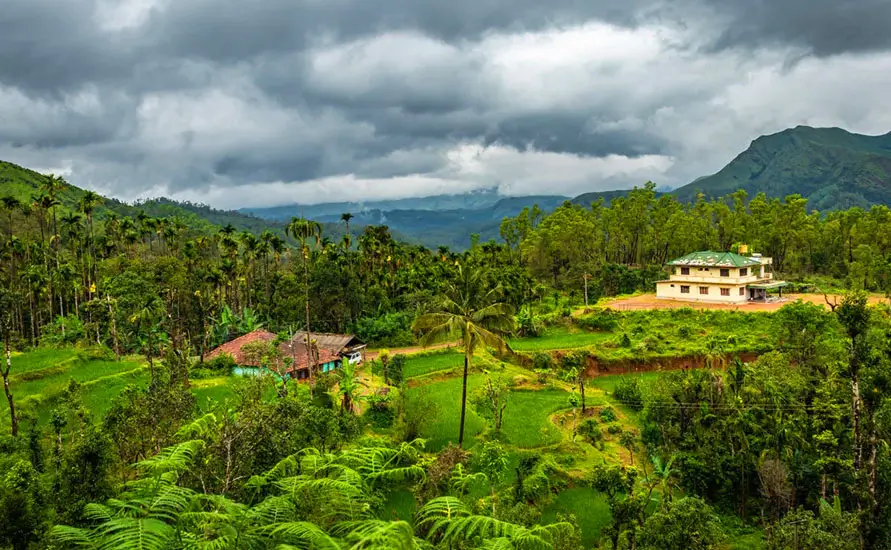
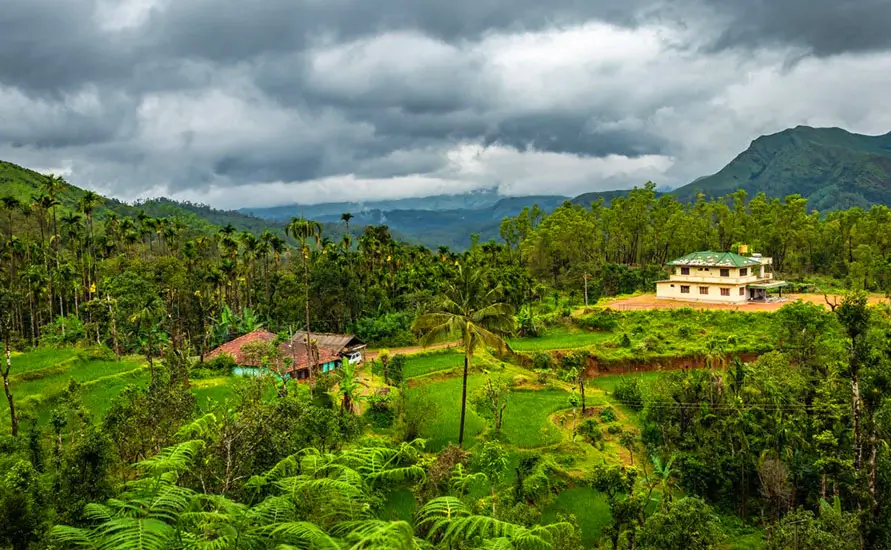
After breakfast you leave the forest and head north-west into the hills of Coorg, known officially as Kodagu, a district of shaded coffee, pepper and cardamom that drapes the leeward flank of the Ghats. The road climbs gently through the small towns of Gonikoppal and Virajpet, and you will notice the change from forest to plantations as the shade trees close in over the coffee bushes. Coffee in Coorg is grown under a canopy of tall native trees, many of them silver oaks and jackfruit, which keeps the soil cool and makes the hills look like forest from a distance even when they are farmed.
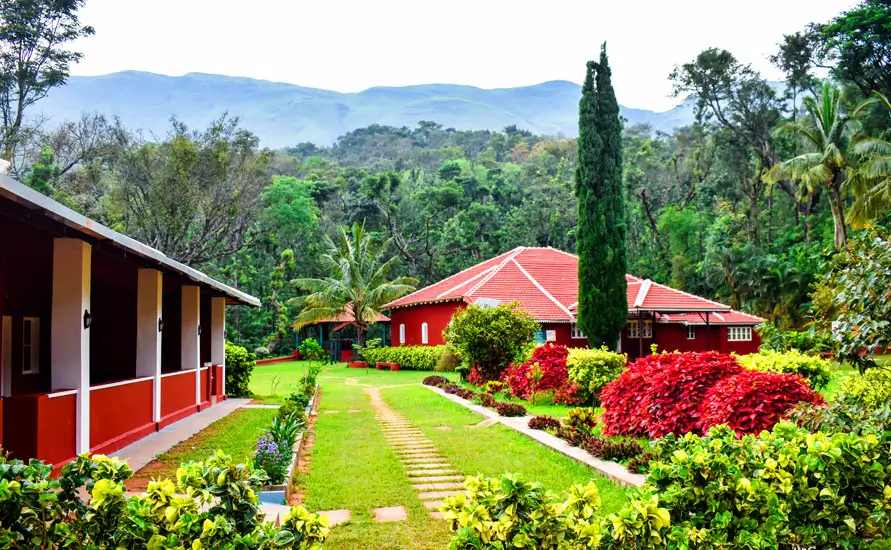
Two nights are booked at a working coffee property close to Madikeri, the district town, where staff often serve coffee grown on the surrounding slopes. After lunch, the estate manager or one of the senior workers leads you along the estate paths to compare arabica bushes with the hardier robusta, and shows how pepper vines are trained up the shade trees, and why the blossoming season in March fills the hills with a smell like jasmine. Picking takes place mainly between November and February, and if you visit then you can watch the cherries being hand-picked and spread out to dry in the yard.
Toward dusk the car climbs into Madikeri town for Raja's Seat, a garden of flower beds and a pavilion at the lip of a ridge, the spot local rulers reputedly chose for watching evening fall over the valleys. When the air is clean, the view runs across range after range of the Ghats, each paler than the one in front. Dinner tonight could be a Kodava meal, with pandi curry, pork cooked dark with a vinegar made from the kachampuli fruit, eaten with kadambuttu, the round rice dumplings of Kodagu kitchens, or with akki roti, a thin rice flour flatbread. Vegetarians are well looked after with bamboo shoot curry and mushroom dishes. Overnight in Coorg.
The source of the river Kaveri lies about 45 km from Madikeri at Talacauvery, high on the Brahmagiri hills, and the drive there after breakfast winds through dense forest and small paddy terraces. The river rises from a small spring that feeds a temple tank, and it is honored by Kodavas as the goddess Kaveriamma, the protector of their land. A long flight of steps behind the tank leads to a viewpoint from where you can see the Western Ghats in every direction, though clouds often drift across the summit. Descending, the car pauses at Bhagamandala, where the Kaveri is joined by the Kannike and the mythical underground Sujyoti and a Kerala-style temple with copper-clad roofs stands beside the confluence.
Back in Madikeri, you see the ramparts of Madikeri Fort, whose stone walls date from Tipu's rebuilding, and the Omkareshwara Temple of 1820, an odd and handsome mix of a central dome, corner minarets and a sloping Kerala-style roof. The Kodavas are a small community with their own language and customs, including a special way of tying the sari with pleats at the back and a strong military tradition that has given India two army chiefs. If you are lucky with timing, your guide may arrange a short visit to an ainmane, the traditional ancestral house of a Kodava clan.
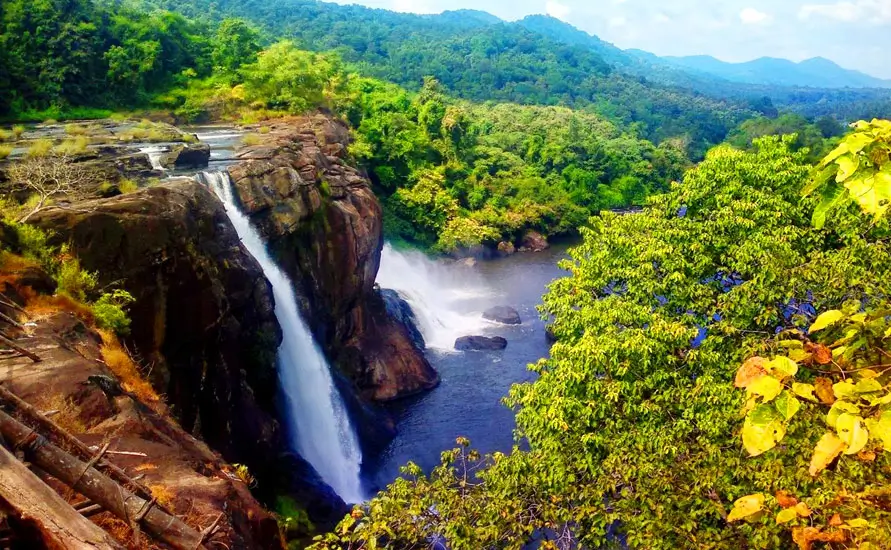
Spend the afternoon by the estate pool, or ride out to Abbey Falls, roughly 8 km outside town, where the water spills over a rock face hemmed in by coffee and cardamom. Expect the strongest flow from August to November; reaching the viewing bridge means going down a set of steps that can be slippery after rain, so sturdy shoes help. If you are a keen photographer, ask your driver about a late-afternoon visit to the Dubare area by the Kaveri river, where a forest camp keeps working elephants; please do not touch, feed or bathe the animals, as we only support watching them from a respectful distance. Overnight in Coorg.
About 30 km east of Madikeri, near the town of Kushalnagar, the road passes Bylakuppe, a Tibetan refugee town of monasteries and camps, founded in the early 1960s for Tibetans who left their homeland after 1959. At its center is Namdroling Monastery, a large Nyingma institution whose main hall, nicknamed the Golden Temple, holds three towering gilded figures: Shakyamuni Buddha, Guru Rinpoche and Amitayus. Around late morning the young monks are often heard chanting or see them debating in the courtyard. Visitors are welcome, but quiet and modest dress are expected, and photography inside the hall should only be done if signs allow it.
Before you leave Bylakuppe, take a few minutes in the market streets around the monastery, where small Tibetan restaurants serve momos and thukpa soup, and stalls sell prayer flags, incense and singing bowls. The drive then heads north through Hassan district into the hills of Chikmagalur, crossing farmland, small towns and long stretches of coconut and areca nut groves. Your driver plans a lunch stop along the way at a simple, clean restaurant serving South Indian meals, and makes short breaks if you need them. Most of the road is good, though the last part can be slow because of trucks and traffic in the small towns.
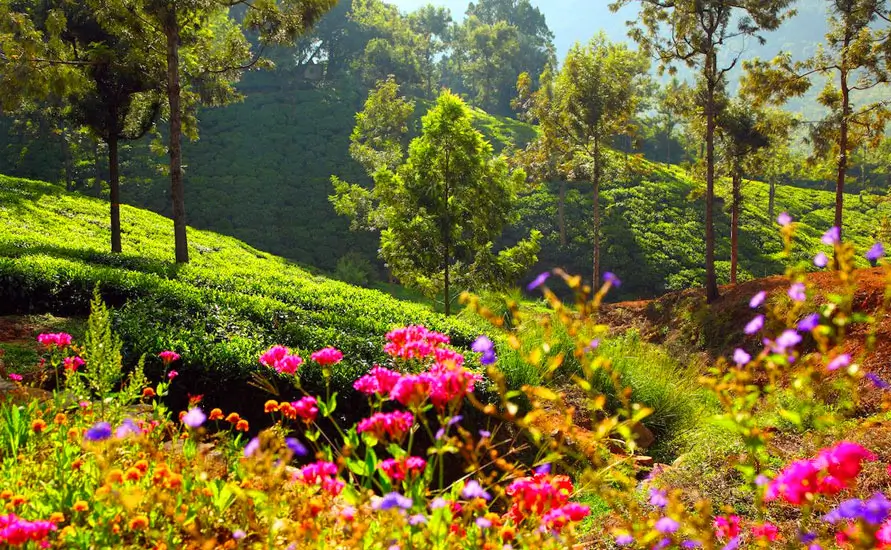
Chikmagalur is often called the coffee land of Karnataka, and its higher slopes produce some of the country's best-known arabica beans. You arrive in the afternoon at your estate stay, where the hills around you are covered with coffee bushes and silver oaks. Nothing more is planned for the day beyond a stroll through the rows of bushes. In the evening the owner or manager may join you for a drink and tell you about the challenges of growing coffee in the age of climate change and fluctuating world prices. Dinner might include a Malnad dish such as kadubu or a chicken curry flavored with coffee-country spices. Overnight in Chikmagalur.
Legend holds that coffee first came to India in the 17th century when Baba Budan, a Sufi mystic coming home from the Hajj, tucked seven raw coffee seeds into the folds of his robe, smuggled past the Arab traders who guarded their monopoly. He planted them on the hills that now bear his name, and Baba Budangiri is still a place of pilgrimage for both Hindus and Muslims, who revere the same cave shrine under different names. Getting up there from town means roughly ninety minutes on narrow roads with hairpin bends, and the views across the shola grasslands grow wider as you climb.
After that, you tackle Mullayanagiri, which tops out near 1,930 meters and is Karnataka's tallest summit. Cars stop short of the top, and a stone stairway of a few hundred steps finishes the climb at a Shiva shrine; clouds permitting, the Malnad hills roll away below in all directions. The hills are often wrapped in mist, so a light jacket is useful even in summer, and the road is closed in bad weather. Coming down, a detour leads to Hirekolale Lake, a reservoir with the hills reflected in the water, where local families picnic on weekends and the light is good for photography in the afternoon.
The afternoon is given over to coffee. Back at the estate, the planter walks you through each stage between ripe cherry and brewed cup: drying the cherries in the sun, hulling, grading the beans by size and color, and roasting them in small batches. Some estates have a small tasting room where you can try a cupping session and learn to tell a Chikmagalur arabica from a robusta. Freshly roasted beans make a light souvenir, and the estate team will grind them to suit a filter, moka pot or French press back home. After dark, a wood fire is often lit on the veranda when the hill air turns cold. Overnight in Chikmagalur.
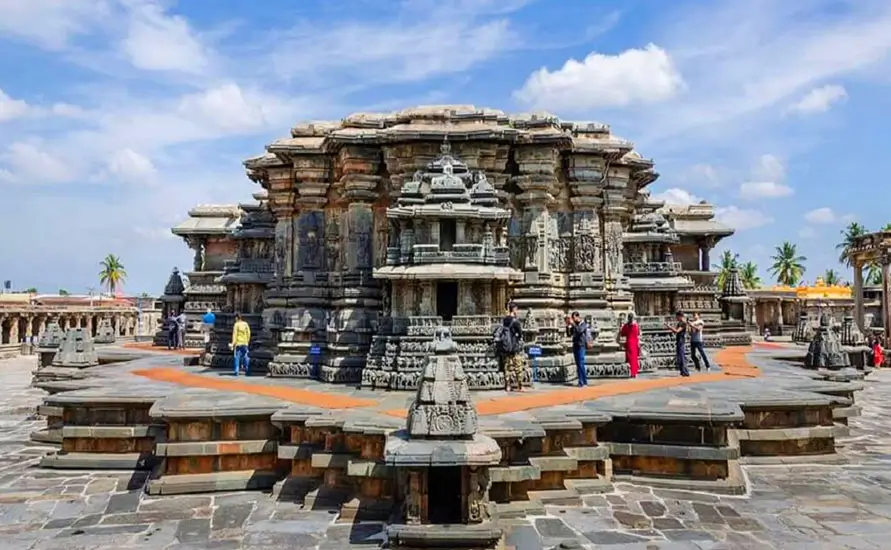
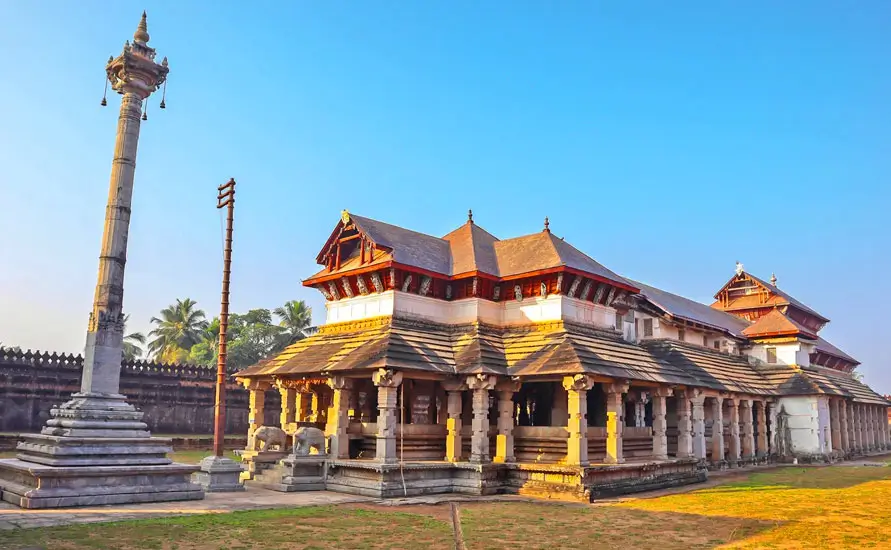
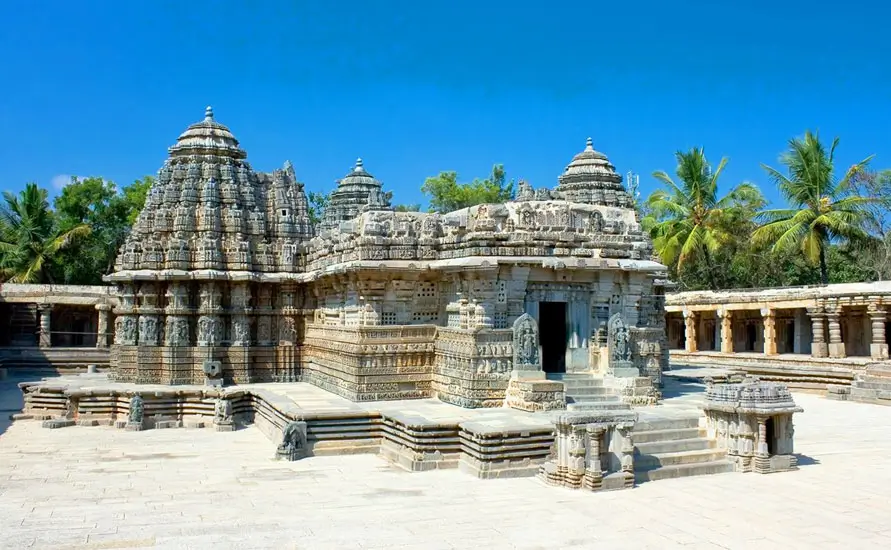
An early breakfast lets you reach Belur, about an hour from Chikmagalur, soon after the temple opens. Vishnuvardhana, the Hoysala ruler, ordered the Chennakeshava Temple built at Belur in 1117, reportedly to mark a victory over the Cholas, and took more than a century to finish. It is built of chloritic schist, a soft greenish stone that hardens with time and allowed the sculptors to carve almost as finely as in wood. Look up at the madanikas, slender bracket figures of dancers, drummers and huntresses that lean out from the roof, including the famous woman looking into a mirror, known as Darpana Sundari.
Sixteen kilometers away, Halebidu was the Hoysala capital until it was sacked by armies from Delhi in the early 14th century. Its Hoysaleswara Temple is a pair of linked shrines to Shiva, each with a seated Nandi in a pavilion facing it, and the outer walls carry one of the longest continuous friezes in India. Count the rows from the bottom: elephants, lions, horsemen, scrolling vines, then the epic tales of Rama and the Pandavas, each band with hundreds of figures. Belur, Halebidu and Somanathapura won joint World Heritage status in 2023, listed by UNESCO under the name Sacred Ensembles of the Hoysalas.
After lunch in Halebidu the drive north to Hampi is long, about five hours on mostly good highways through Arsikere and Chitradurga, with the landscape slowly turning drier and rockier. Your driver stops for tea and stretches along the way, and you can rest in the car with the seats reclined. Toward evening, the first granite boulders of the Deccan plateau start to appear, piled on top of one another as if by giants, and you begin to see why the Vijayanagara kings chose this land for their capital. You check in to your hotel near Hampi or Hospet in the evening, with dinner served at the hotel. Overnight in Hampi.
Between the 14th and 16th centuries Hampi was Vijayanagara, seat of an empire that held most of the peninsula south of the Krishna river, a city that Portuguese and Persian visitors compared to Rome. After the empire's defeat in 1565 the city was looted and abandoned, and its ruins now spread over more than 40 square kilometers of boulder hills and banana plantations. Your guide starts the morning at the Virupaksha Temple, which has been in active worship since before the empire rose. In a dark room near the inner shrine, light through a small hole throws an inverted picture of the main tower onto the wall, a pinhole effect that delights children and adults alike.
Leaving the temple, you walk up the smooth granite back of Hemakuta Hill, covered with small shrines and gateways, for a wide view over the Virupaksha gopuram and Hampi Bazaar. Nearby are two huge statues of Ganesha, Sasivekalu and Kadalekalu, the names meaning mustard seed and Bengal gram, after the shape of their bellies. Further along stands the monolithic Lakshmi Narasimha, close to 6.7 meters high, showing Vishnu in his man-lion form, and beside it the Badavilinga, a three-meter Shiva lingam standing in water channeled from an old canal. Your guide tells you the stories behind each and the damage done by the invaders.
Toward evening, follow your guide down to the bank of the Tungabhadra for a ride in a coracle, a round boat of woven bamboo coated with tar, which the boatman spins gently as he paddles past rocks carved with lingams and Vishnu figures. Rides are seasonal and depend on water levels and safety rules, so the final call is made each morning. From the river you continue to Hemakuta or the base of Matanga Hill for sunset, when the boulders turn orange and the ruins below take on deep shadows. Dinner can be thalis or wood-fired pizza at the cafés near the river, a legacy of Hampi's long backpacker years. Overnight in Hampi.
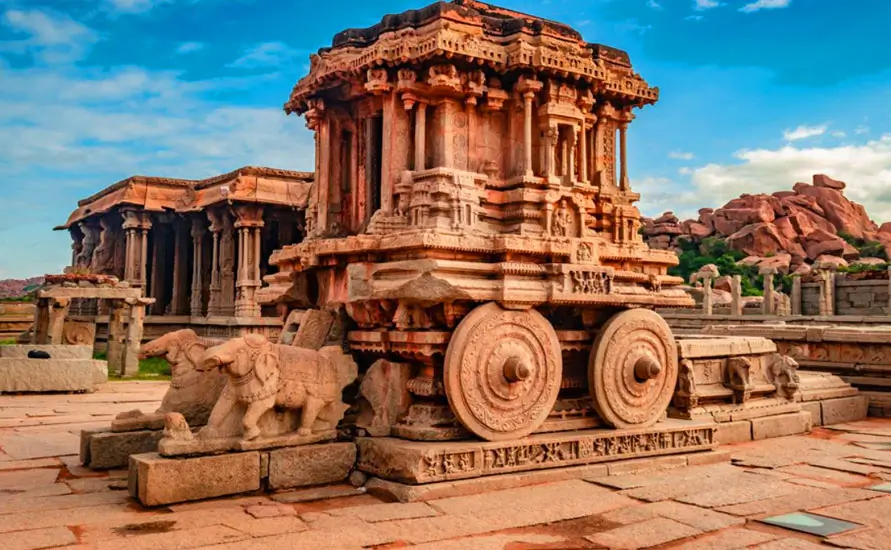
Today begins at the Vittala Temple, about two kilometers from the parking area along a path through the ruins; battery-operated vehicles run along it, or you can walk. The temple complex was built in the 15th and 16th centuries for Vishnu as Vittala, and its most famous feature is the stone chariot, a shrine for Garuda carved to look like a wheeled temple car, pictured on the back of the current 50-rupee banknote. Inside the main hall stand the musical pillars, clusters of thin stone shafts that once sounded musical tones when tapped. Touching them has been banned for years because of wear, yet your guide can describe how the effect works.
Next you move to the Royal Enclosure, the administrative and ceremonial heart of the old city, where the Mahanavami Dibba, a tiered granite platform whose sides show processions, hunting scenes and dancers, served as the royal viewing stand during the nine nights of Mahanavami. A short walk away lies the stepped tank, a geometric water tank of black stone uncovered by archaeologists only in the 1980s. You also visit the Hazara Rama Temple, once reserved for the king's household, where carved panels run the story of Rama around the enclosure wall, and the Lotus Mahal in the Zenana Enclosure, a two-storied pavilion that blends Hindu and Islamic arches.
After lunch, the last stops are the Elephant Stables, eleven domed bays in a single line where the royal elephants were kept, and the Queen's Bath, a square pool surrounded by an arched corridor with ornate balconies, possibly used by the royal women. The afternoon heat in Hampi can be fierce from March onward, so your guide keeps the open-air walks for the cooler hours and leaves time in between for rest and shade. Your last evening here is free to watch the sunset from a rooftop café or simply relax at your hotel before the drive to the coast tomorrow. Overnight in Hampi.
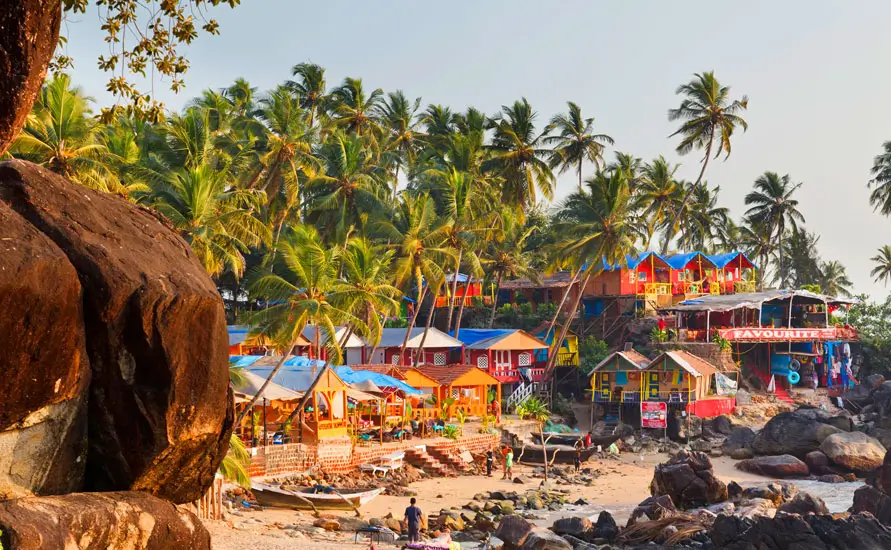
Leaving Hampi after an early breakfast, you drive west across the Deccan plateau through Hubballi and then down the Western Ghats toward the Arabian Sea. The plains of sunflower and cotton fields slowly give way to teak and bamboo forest as the road drops through the ghats, with a lunch halt at a reliable highway restaurant and at a couple of viewpoints for photographs. By mid-afternoon you reach Gokarna, a small temple town on the Uttara Kannada coast that was a pilgrimage site for centuries before backpackers found its beaches. Your resort lies a few minutes outside town, close to the sand.
Before sunset your driver takes you into the town for a walk along Car Street, the main road of old wooden houses that leads to the Mahabaleshwar Temple, believed to hold an atmalinga of Shiva left here by Ravana, the demon king of Lanka. Entry rules are traditional, with a strict dress code and limits for some visitors, so your driver checks the current position on the day; if you cannot go in, the street itself, with priests, pilgrims bathing at the sea and shops selling copper pots and rudraksha beads, is still worth the visit. The small Mahaganapati temple nearby is part of the same pilgrim route.
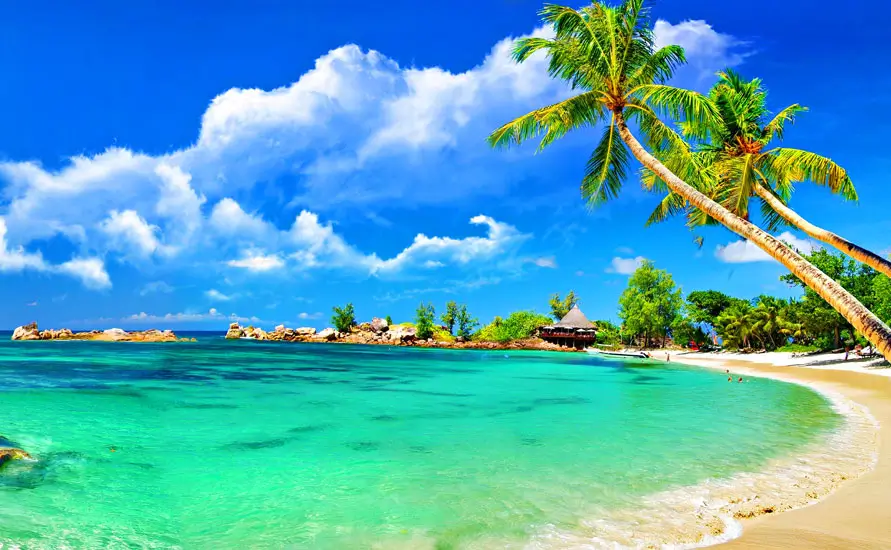
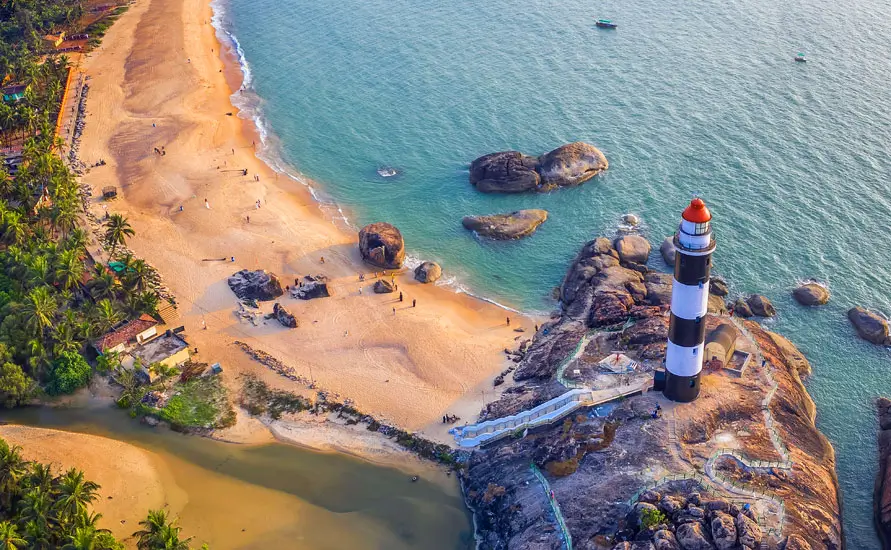
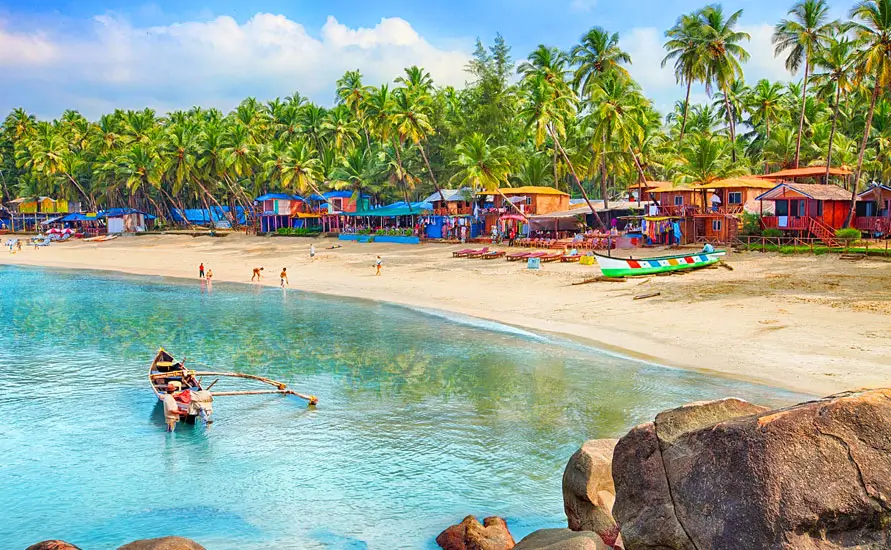
Late afternoon is the time for Om Beach, named after its double curve that resembles the written Om symbol, where you can walk the sand and swim in the calmer sections when the sea allows. Simple shacks sell fresh juices and fried fish, and a cliff path or a short boat ride leads to Half Moon Beach, a smaller cove with far fewer people. Lifeguards are not always on duty and currents can be strong outside the winter months, so check conditions before going in. Dinner at your resort might be a Konkan fish curry with kokum, or a plate of crisp fried mackerel with rice. Overnight in Gokarna.
A last breakfast by the sea leaves time for a morning swim or a walk on the beach before you pack. The coastal highway north crosses the Kali river at Karwar into Goa, and your driver times the start around your flight: Dabolim Airport is roughly three hours away, while the newer Mopa Airport in North Goa is closer to four and a half hours, so we confirm which one you are using when you book. Flights in the evening leave room for a detour to Palolem beach or the cliff-top Portuguese fort of Cabo de Rama on the way.
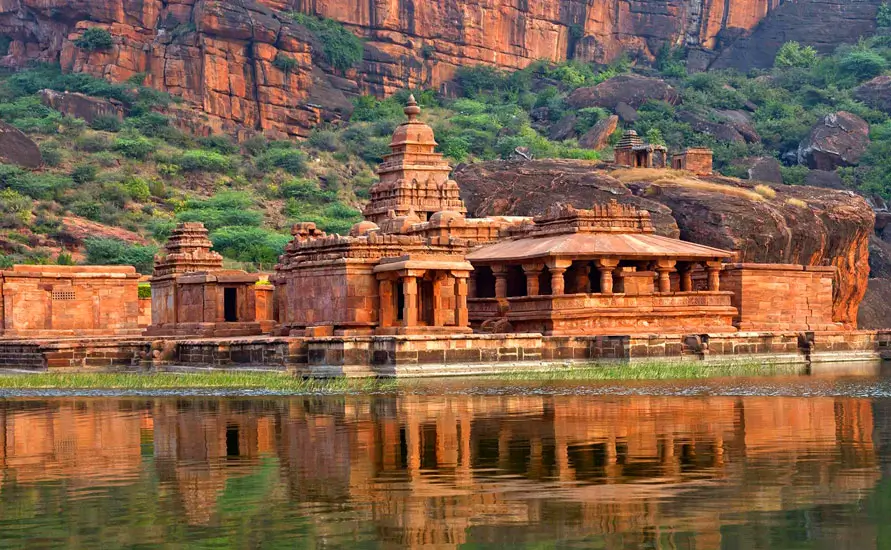
Over two weeks you have seen palaces, a tiger forest, coffee estates, Hoysala temples, the ruins of an empire and the Konkan coast, a cross-section of Karnataka that few visitors manage in one trip. For a return visit focused on Badami, Aihole and Pattadakal in the north, or the temple towns of coastal Karnataka, our Karnataka desk can put together a second route. If you prefer an extra beach night in South Goa before flying, that can be added at an additional cost. Someone from our office remains on call until you have cleared airport check-in. Safe travels home.
Your Journey

N.S. Rathore & Mrs. Omlata Rathore · Managing Director
We still read every enquiry ourselves. Tell us the places you liked and our planners will send a day-by-day route with drive times and a clear price.
Every package can be customised and no pressure to book. A planner from our office replies within 24 hours with a route written for your group.
Fill this in and your planner will send a first draft itinerary.
Explore more
Kerala Backwaters Escape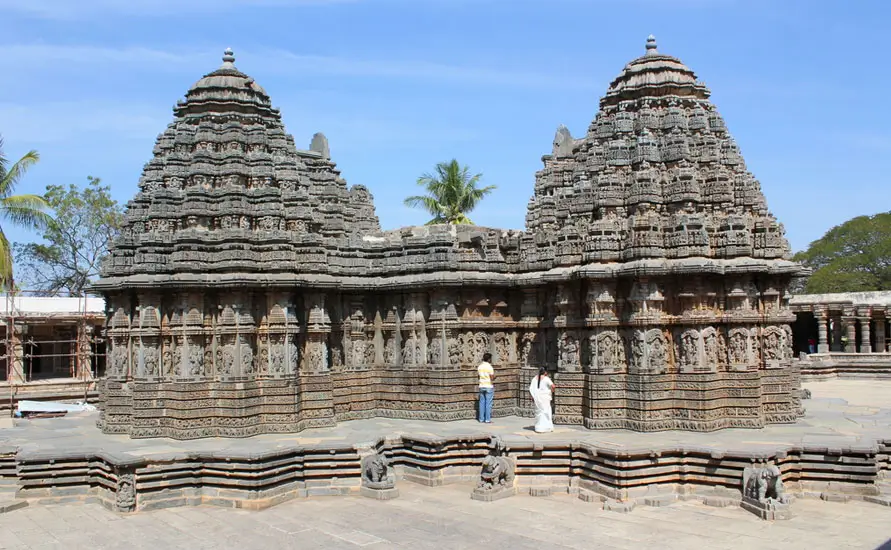 Kerala Backwaters Escape
 Kerala Backwaters Escape
 Kerala Backwaters Escape
 Kerala Backwaters Escape
 Kerala Backwaters Escape
 Kerala Backwaters Escape
 Kerala Backwaters Escape
 Kerala Backwaters Escape
 Kerala Backwaters Escape
 Kerala Backwaters Escape
 Kerala Backwaters Escape
 Kerala Backwaters Escape
 Kerala Backwaters Escape
 Kerala Backwaters Escape
 Kerala Backwaters Escape
 Kerala Backwaters Escape
 Kerala Backwaters Escape
 Kerala Backwaters Escape