 Kerala Backwaters Escape

Karnataka Tour Packages
Bangalore – Shravanabelagola – Chikmagalur – Sringeri – Agumbe – Udupi – Maravanthe – Murudeshwar – Honnavar – Gokarna – Goa
At a glance
Karnataka has a coastline of roughly 320 km, and very few foreign visitors ever see it. Our Coastal Karnataka and Western Ghats Tour starts high in the mist of Chikmagalur, follows the river Tunga to the temple town of Sringeri, and then plunges down the hairpin bends at Agumbe to a shore of temple towns, fishing harbors and quiet beaches. Over thirteen days you eat your way through Udupi, take a boat to the basalt columns of St. Mary's Island, stand beneath the giant Shiva at Murudeshwar and end on the coves of Gokarna before flying out of Goa.
The route is built on contrasts. The first five days are cool and green, with coffee estates, waterfalls, shola grassland and a monastery town where pilgrims feed temple fish from the river steps. Then the road drops some 600 meters in a few kilometers, the air turns warm and salty, and the menu changes from akki rotti to fish curry and neer dosa. Drives are kept short, mostly two to three hours, and you stay three nights in both Chikmagalur and Udupi, which leaves time to wander on foot. This coastal Karnataka tour suits travelers who prefer small towns to big cities.
The Coastal Karnataka and Western Ghats Tour was shaped for couples and independent travelers from overseas, and for NRI families with Kanara-coast roots who would like their children to know that shore. Your car is private and air-conditioned, the driver speaks English, and a local guide joins you in each main town. Plan for the cooler, drier stretch between October and March. Boats to St. Mary's Island do not run in the monsoon, roughly June to mid-September, so we check the season before confirming that part of the plan.
Bags collected, head for the exit at Kempegowda Airport, where someone from our team waits with your name printed on a board. Bangalore's airport sits about 35 km north of the center, so plan on an hour in the car, and more if you land in the evening rush. Nothing has been scheduled for the first hours, because most travelers from Europe or America arrive tired after a night in the air. Rest at the hotel, take a long shower and have something light to eat. Hotels hand over rooms around 2 pm as a rule; landing before sunrise means booking an extra half night, which we can add.
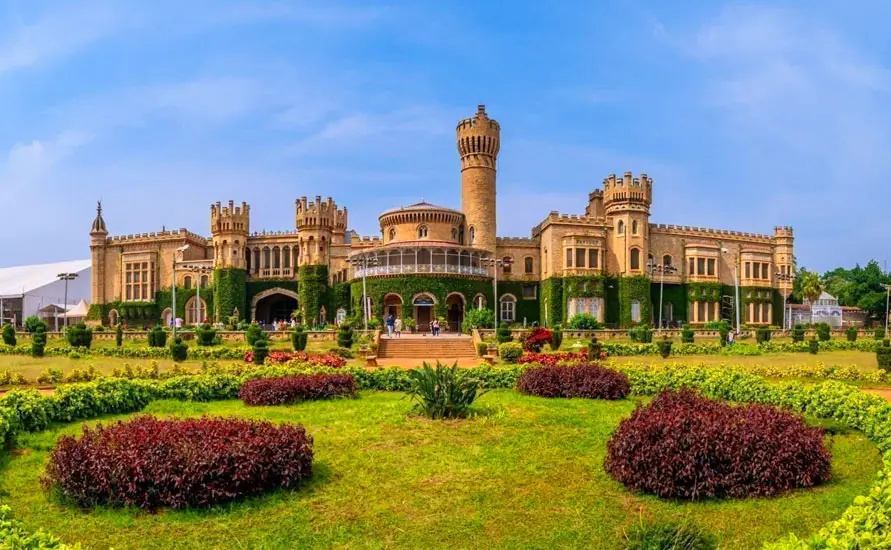
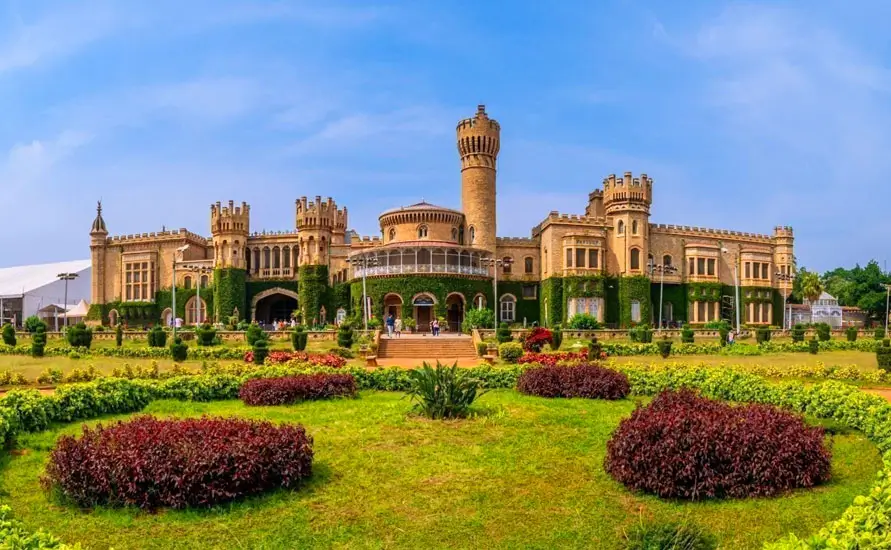
Around four o'clock your guide calls at the hotel for a short, easy look at Bangalore. Your first stop, Tipu Sultan's Summer Palace, is an airy teak pavilion of 1791 with cusped arches and fading painted panels, built as a hot-weather retreat for the Mysore ruler. A short ride away stands the Bangalore Fort, or what remains of it: a stone gateway with a Ganesha shrine tucked inside, the last trace of the mud fort that Kempe Gowda raised in 1537 and that Hyder Ali later rebuilt in stone. Your guide explains how the British stormed it in 1791 during the Third Anglo-Mysore War.
Steps away lies KR Market, Bangalore's great wholesale market, where traders weigh out heaps of jasmine, marigold and rose petals beneath a cavernous concrete roof. The evening is free. The city likes its microbrewed beer and single-origin coffee, and Indiranagar and Church Street are full of places serving each. Go if you feel lively, or simply eat at the hotel and sleep early ahead of tomorrow's long road. Jet lag tends to hit hardest on the second evening, so there is no shame in choosing the quiet option, and your driver will be outside at seven sharp tomorrow with water and a plan for breakfast on the highway. Overnight in Bangalore.
Leave by 7 am to beat the traffic on the Tumkur and Hassan road, then settle back as the city fades into coconut groves, granite hills and fields of millet. After about three hours you turn off toward Shravanabelagola, a small Jain pilgrimage town set between two rocky hills, with a large stepped tank in the middle. The town has been sacred to Jains for more than two thousand years. Jain tradition holds that Chandragupta Maurya renounced his empire and died here as an ascetic, and the lower hill, Chandragiri, carries his name along with hundreds of old inscriptions.
Up on the taller hill, Vindhyagiri, stands Gommateshwara, or Bahubali, a figure around 17 meters high cut from one granite outcrop in about 981 CE. To reach it you climb around 600 steps cut into the rock, barefoot, since shoes are not allowed on the hill. Start early, as the granite heats up fast, and carry socks if you have tender feet. The figure stands naked and upright in deep meditation, with creepers carved winding around his legs, a sign of how long he stood still. Once in roughly twelve years, at the Mahamastakabhisheka festival, the statue is anointed from a scaffold with milk, saffron, sandal paste and flowers.
Back down the steps, have lunch in town or at a highway restaurant, then continue west through Hassan to Chikmagalur, about two and a half hours more. The plains rise slowly into the Malnad hills, and the first coffee estates appear as rows of dark green bushes under tall shade trees. You check into a plantation bungalow or estate resort and stay three nights. Most properties of this kind serve home-style meals, so dinner tonight might be akki rotti, a rice-flour flatbread pressed by hand, with a coconut chutney and a mildly spiced vegetable curry. In December and January a sweater is welcome after dark. Overnight in Chikmagalur.
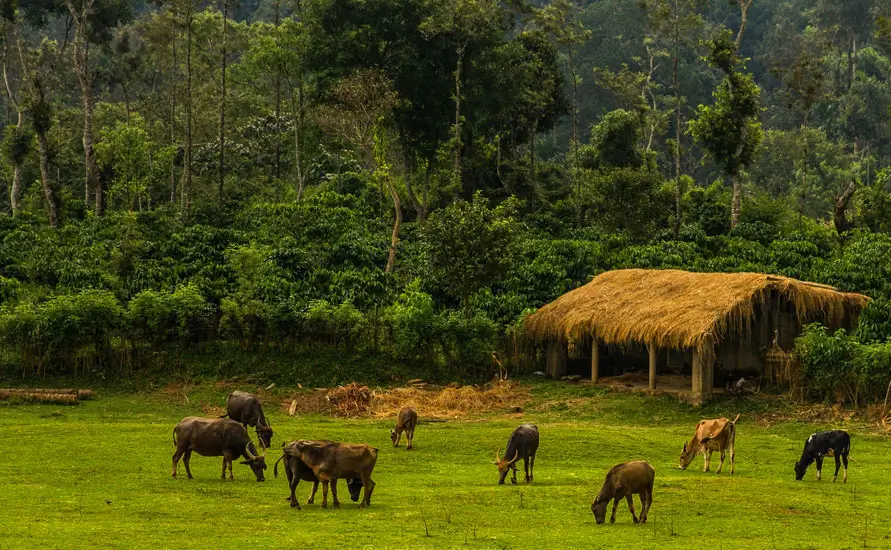
Begin the morning with a walk around the plantation in the company of a member of the estate staff, who can explain how coffee is grown under trees and why the bushes are pruned low enough to pick by hand. Chikmagalur grows mostly arabica on its higher slopes and robusta lower down, and many estates also harvest pepper, cardamom and areca nuts. Birdlife is good at this hour: look for Malabar whistling thrushes, scarlet minivets and hornbills in the canopy. If you are here between November and February, workers will be picking ripe cherries, and you can follow a basket to the drying yard to see the harvest spread out in the sun.
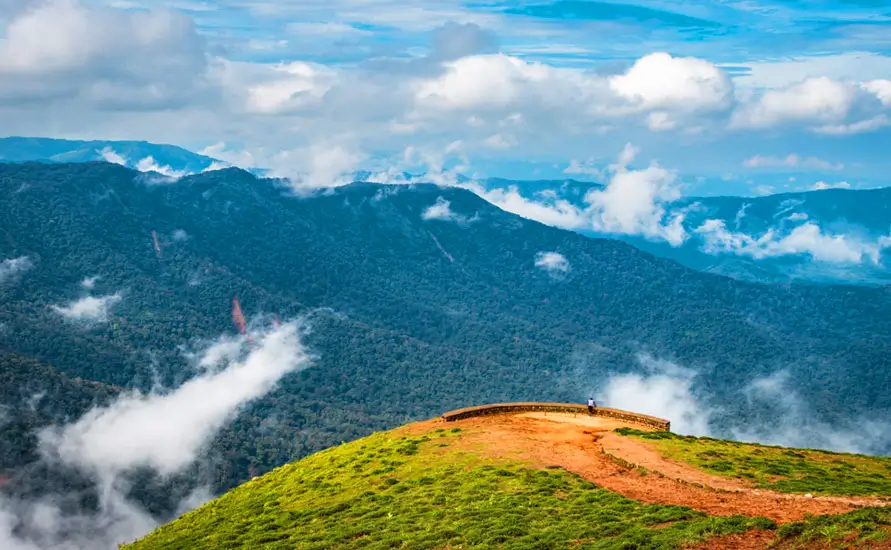
Mid-morning you drive north into the hills to Baba Budangiri, named for the 17th-century saint whom tradition credits with smuggling seven coffee seeds out of Yemen and planting them here, the start of coffee farming in India. His cave shrine is revered by Muslims and Hindus alike, an unusual shared site that your guide can tell you about. The road then winds on to Mullayanagiri, at roughly 1,930 meters the highest point in Karnataka. Stone steps lead to a little Shiva shrine at the top, and in clear weather the Western Ghats roll away in fading blue ridges.
Lunch is late, and nothing is planned afterward. Read on the veranda with estate coffee, sleep, or wander the coffee rows while the valley fills with evening mist, a slow end to a busy morning. Some estates organize short evening walks to a nearby stream or viewpoint, and the staff will happily point out tracks of wild boar or porcupine on the trails. Dinner tonight could be a Malnad chicken curry cooked with fresh pepper from the estate, or a mild vegetable kurma for those who prefer less spice. Overnight in Chikmagalur.
Today heads to the eastern part of the district, about an hour and a half north-east of town, where Kemmangundi sits at around 1,400 meters among grassy hills and pockets of shola forest. The Mysore royal family used it as a hot-season retreat, and its terraced garden still keeps flower beds and a few colonial buildings. A short trail leads to Z Point, a ridge viewpoint reached by a narrow path through tall grass, where you look out over the Bhadra valley and its forested slopes. Rain makes this path greasy, so trekking shoes and a light raincoat help in wet months.
From Kemmangundi a jeep track runs down through private coffee estates to Hebbe Falls, where the Hebbe stream drops in two stages, a big upper fall and a smaller lower one called Chikka Hebbe. Ordinary cars cannot make the trip, so you switch to a local four-wheel-drive jeep for the bumpy ride of about eight kilometers, followed by a short walk and a stream crossing. The falls are fullest from August to December. Swimming at the base is sometimes allowed, but the rocks are slippery and the current can be strong, so follow local advice. Access can close in heavy rain, and in that case we offer the Kalhatti Falls instead.
By late afternoon you drive back to Chikmagalur for a rest. If you would like to see a little of the town, your driver can stop at the main market, where shops sell coffee powder by the kilo, estate honey and dried spices. Many travelers pick up a bag of freshly ground coffee here, blended with or without chicory to their taste. The evening is free at your estate, which makes it a good time to pack, because tomorrow you leave the coffee country and head for the river valley around Sringeri. Dinner is at the estate, and you may hear frogs and nightjars calling as you eat. Overnight in Chikmagalur.
After breakfast you leave the estate and head west toward the heart of the Western Ghats. The road drops through Balehonnur and follows the Bhadra valley past arecanut gardens, terraced paddy fields and pockets of dense forest, where it is common to see langurs crossing ahead of the car. This is the Malnad, the rain country, and even in the dry season everything stays green. A roadside break for sugarcane juice or a green coconut is easy to fit in. You reach Sringeri, on the left bank of the Tunga River, by late morning, with plenty of time to check in before lunch.
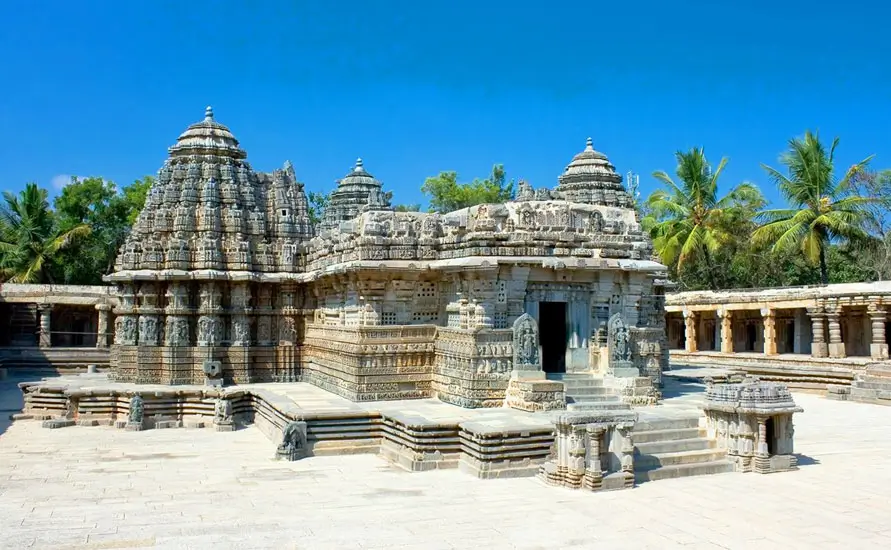
Sringeri is one of the most important centers of Hindu learning in South India. The philosopher Adi Shankaracharya is said to have founded his first monastery, the Sringeri Sharada Peetham, here in the 8th century, and the line of teachers he started continues to this day. Its main temple honors Sharada, goddess of learning, and parents come here for a ceremony in which small children trace their first alphabet letters in rice. Right next to it stands the Vidyashankara Temple, built in 1338 in grey granite, with twelve pillars carved with the signs of the zodiac. They are positioned so that sunlight falls on the pillar matching each month.
Later in the afternoon, walk down to the stone steps on the river behind the temple, where the Tunga is full of large mahseer and other fish, considered sacred and never caught. Pilgrims feed them puffed rice, and the water churns as hundreds of fish rise to the surface. A footbridge leads across to the quieter far bank, where the monastery's teachers have their residence and a garden runs along the river. Visitors should dress modestly here, with shoulders and knees covered, and footwear is left outside the temple. In the evening, you might catch the sound of Vedic chanting drifting across the water. Overnight in Sringeri.
Morning prayers at the Sharada temple begin early, and it is worth returning for a few minutes to watch the ritual before you have breakfast and check out. Thirty kilometers on, at the lip of the escarpment, sits Agumbe. Agumbe is one of the wettest places in India, often called the Cherrapunji of the South, and it receives several meters of rain each monsoon. It is also known for its rainforest research station, which studies king cobras, and for its old houses, some of which were used as sets for the much-loved television series Malgudi Days in the 1980s.
A guided forest walk near the village leads under evergreen giants hung with lianas and ferns, over ground scattered with fallen leaves and fruit. The forest is home to lion-tailed macaques, Malabar pit vipers and many species of frogs, though sightings are a matter of luck. You then stop at the Agumbe Sunset Point, a viewpoint on the edge of the escarpment. Even at this hour the coastal plain lies spread out far below, and on a very clear day a thin silver line of the Arabian Sea shows on the horizon; locals come back in the evening for the sunset that gives the spot its name.
The descent down the Agumbe Ghat is the most dramatic stretch of road on this tour, with fourteen hairpin bends dropping steeply through the forest, so take a travel sickness tablet if you are prone to it. At the bottom, the temperature rises, the vegetation changes to coconut palms and cashew trees, and the houses take on the sloping clay-tiled roofs typical of the coast. Early in the afternoon you reach Udupi, your base for three nights. Later, stroll the lanes around the temple square, which fill with lamps, flower stalls and pilgrims after dark. Overnight in Udupi.
Madhvacharya, the 13th-century philosopher of the Dvaita school, established the Udupi Krishna Temple, and eight monasteries known as the Ashta Mathas still share its management, passing it from one to the next every two years. Your guide brings you here in the morning, when the temple courtyard is busy with pilgrims. Visitors do not enter the main sanctum; instead, the image of Krishna is seen through a small latticed window known as the Kanakana Kindi. According to legend, the poet Kanakadasa, who was refused entry because of his low caste, prayed outside, and the image turned around to face him through a crack in the wall.
Udupi has given its name to an entire style of vegetarian cooking, and restaurants across India still call themselves Udupi hotels. Your guide takes you to a local restaurant for lunch, where you can try a full Udupi meal served on a banana leaf: rice with saaru, a thin peppery broth, sambar with ash gourd, a coconut-based vegetable curry, and payasam for dessert. Many people believe the masala dosa was invented in this area. If you would like to taste the food served to pilgrims, the temple itself offers a free lunch to all visitors, and it is a busy and fascinating scene in the dining hall.
In the late afternoon, drive about six kilometers west to Malpe, one of the busiest fishing harbors on the Karnataka coast. Your guide walks you along the quay, where trawlers unload their catch of mackerel, sardines and prawns, and auctioneers sell it in loud bursts to waiting traders. Malpe Beach, a short distance away, is a long stretch of sand that gets crowded on weekends but is pleasant on weekday evenings. Stay for sunset with a paper plate of masala-fried fish from a stall. Swimming is only allowed in marked areas, and the flags change with the surf. Overnight in Udupi.
If the boats are running, this morning is spent on St. Mary's Island, a small group of islands about forty-five minutes by boat from Malpe harbor. Here the coastline is formed of rare hexagonal basalt columns, created by volcanic activity millions of years ago, when the Indian subcontinent was separating from Madagascar. The site is listed as a National Geological Monument. According to local tradition, Vasco da Gama landed here in 1498 and set up a cross. Boats usually run from about October to May, and are suspended during the monsoon months. On the island, there are no shops or shade, so bring water, sunscreen and a hat.
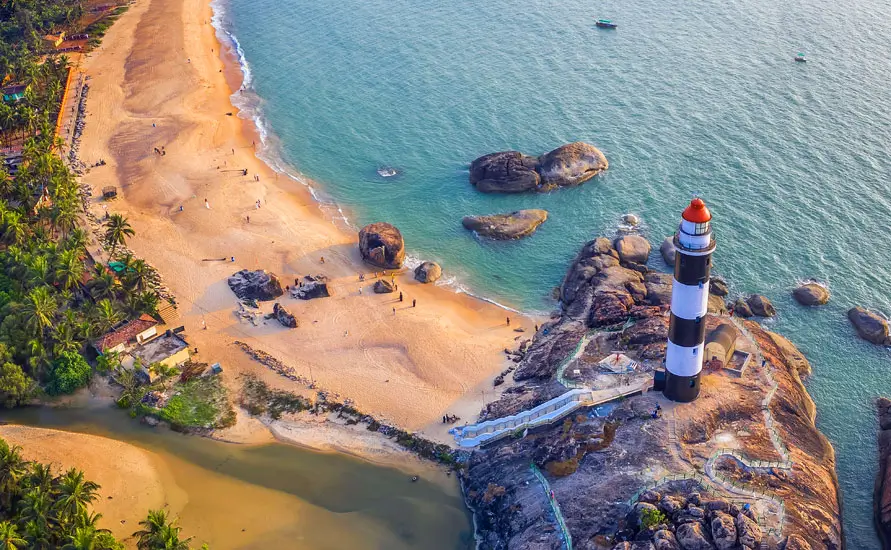
The island is small enough to walk around in about an hour, and the most impressive columns lie on its northern side, rising from the water in stacks and clusters. Swimming is not permitted because of strong currents and sharp rocks, but you can climb over the rock pools at low tide and look for crabs, shells and small fish. The island is also sometimes called Coconut Island, after the palms that cover its center. If the boats are not running because of the season or rough seas, we swap this morning for a visit to the coastal temple at Kaup and its old lighthouse, set on a rocky headland just south of Udupi.
After lunch, drive about five kilometers to Manipal, a university town with a very different atmosphere from the old temple streets of Udupi. In the town, a heritage village preserves traditional homes dismantled in different parts of Karnataka and beyond and rebuilt here beam by beam, including a merchant's house with carved wooden pillars, together with a large collection of folk art, bronzes and textiles. Your guide shows you around before you return to Udupi. For dinner, look for a red Mangalorean fish curry eaten with neer dosa, soft rice pancakes as thin as cloth. Overnight in Udupi.
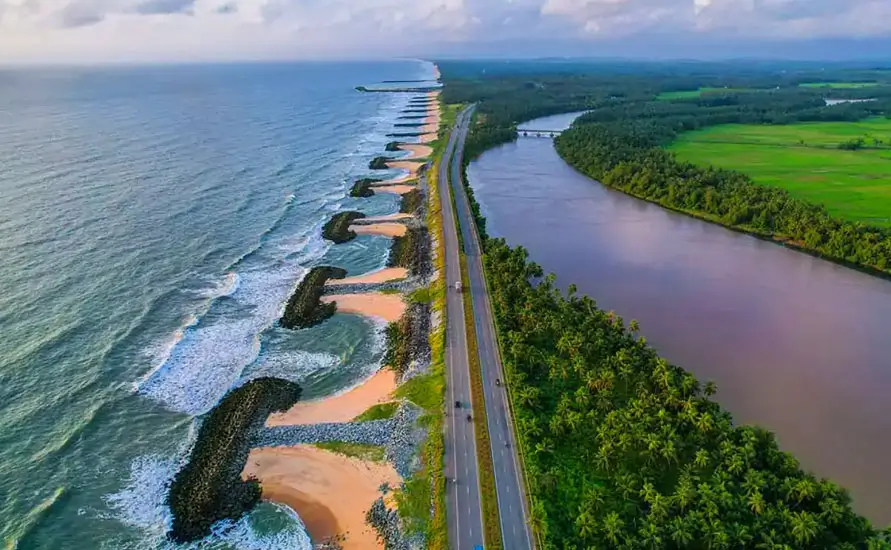
Today the road follows the coast north, crossing a series of rivers and backwaters on long bridges, with fishing villages, palm groves and Catholic churches lining the way. An hour north lies Maravanthe, where the highway squeezes along a sandbar between surf on the left and the calm Souparnika River on the right. It is a popular spot for photographs, and your driver will pull over so you can walk on the sand. Local men cast hand nets into the shallows, and early risers may catch crews hauling their boats up the sand after a night offshore.
Continuing north for another hour, you arrive in Murudeshwar, a temple town on a small headland. Above it all sits Shiva, cast in concrete some 37 meters high on a rocky hill by the waves, a figure counted among the largest of its kind anywhere. Below it, the Murudeshwar Temple has a modern gopuram about twenty stories high, with a lift that takes visitors to a viewing gallery near the top. From there you look down on the statue, the sea and the fishing boats in the harbor. Dress modestly, and expect crowds on weekends and festival days, especially around Maha Shivaratri.
The hill also has a series of painted sculptures from Hindu mythology, including a scene of Ravana and the atmalinga, the story that links Murudeshwar with Gokarna, where you will stay tomorrow. Your guide tells you the tale as you walk around. In the late afternoon, the beach in front of the temple fills with local families paddling and buying ice cream, and the light on the statue turns golden as the sun goes down. If you would like to try snorkeling or diving, Netrani Island lies off the coast here, and a trip can be arranged for the next morning, weather permitting. Overnight in Murudeshwar.
Optional for divers and snorkelers: an early boat trip to Netrani Island, about an hour offshore, which has some of the best coral and fish life on India's west coast. Dives are run by licensed operators, are dependent on sea conditions and are usually possible from about October to May. Non-divers can linger over breakfast and take one more look at the giant Shiva. The drive north follows the coast to Honnavar, about forty minutes away, where the Sharavathi River, which flows over Jog Falls far inland, reaches the sea through a broad estuary dotted with islands and mangrove creeks.
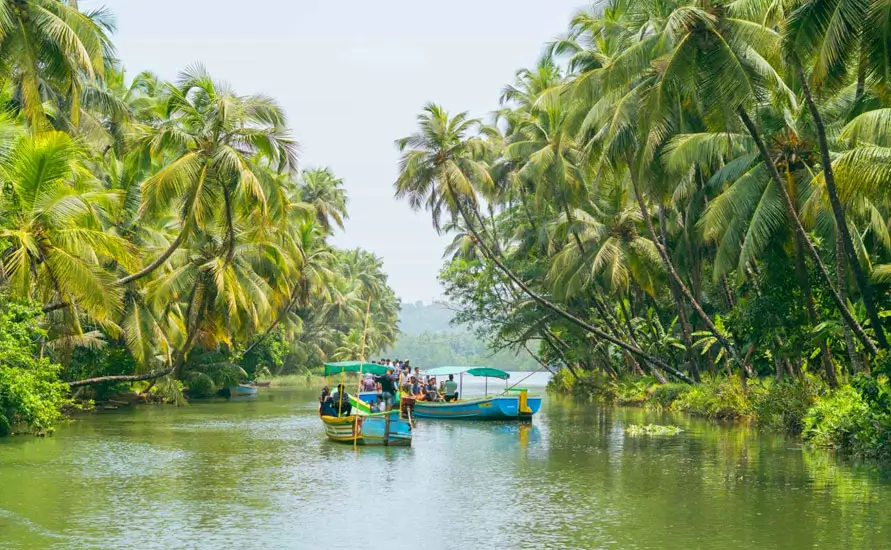
At Honnavar you board a local country boat for a ride of about two hours on the Sharavathi backwaters. The boatman steers between mangroves, sandbanks and small islands where families grow coconuts and keep a few cattle. You may see kingfishers, egrets and Brahminy kites hunting along the banks, and fishermen casting their nets from canoes. Some boat trips stop at an island village for tender coconut. The water is calmest in the morning, and the light is soft, which makes it a good time for photographs. Life jackets are provided, and the boats have a canopy against the sun.
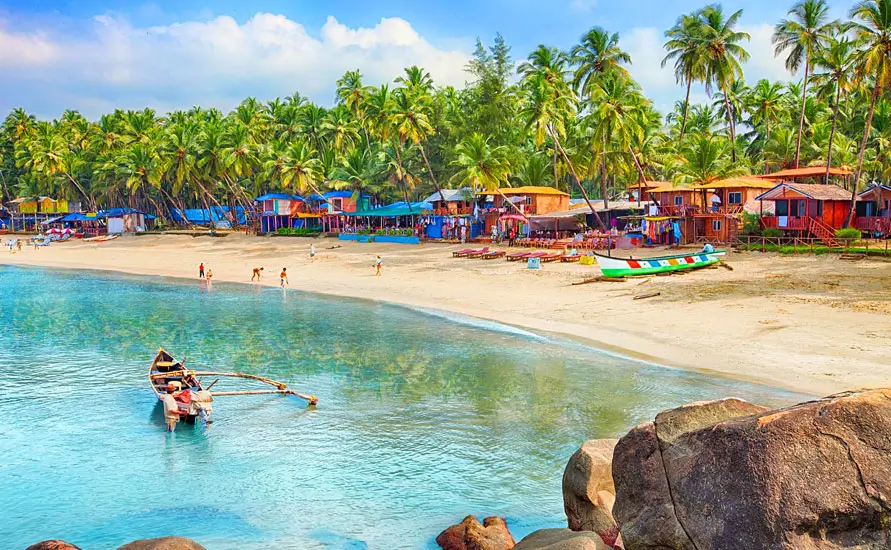
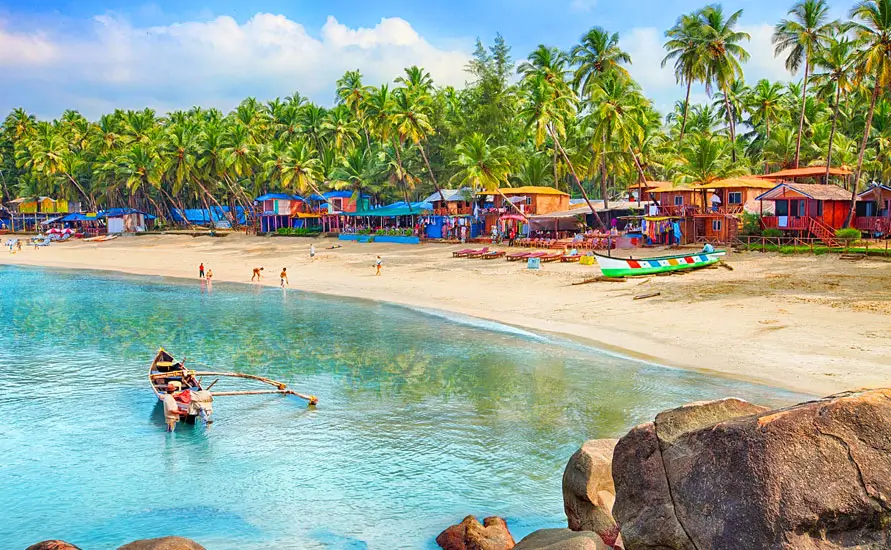
From Honnavar it is about an hour's drive to Gokarna, a small temple town on a strip of coast lined with coves and cliffs. Two nights are booked at a beach resort or simple guest house. Many places here are simple and relaxed, with cottages set among palms just behind the sand. Use the afternoon to get settled and find your way to the sand. As the sun sets, you can watch fishing boats heading out from the shore and the sky turning deep red over the Arabian Sea. Dinner is fresh seafood, such as a kingfish fry or a coconut prawn curry. Overnight in Gokarna.
Gokarna is one of the holiest towns on the western coast, and the Mahabaleshwar Temple is at its center. Inside, pilgrims believe, rests the atmalinga that Ravana was carrying home to Lanka until a trick by Ganesha made him put it on the ground, where it stuck fast. Your guide takes you to the temple in the morning and explains the dress code and entry rules, which can be strict, especially for the inner sanctum. Walk down the main street afterward, with its wooden houses and shops selling ritual items, and down to the main beach where pilgrims take a ritual dip before visiting the temple.
Late in the morning, set off on foot along the coastal trail that links Gokarna's beaches. From the southern end of the town it climbs over a headland to Kudle Beach, a curve of sand with a handful of cafés, then over another headland to Om Beach, named after its shape. Beyond Om, a rougher path leads on to Half Moon Beach and the small cove beyond it, both quieter and can also be reached by boat. The walk to Om takes about an hour, and you can take a boat back. The headlands are bare and hot, so go in proper footwear with water, and aim to finish before noon.
After that, swim or sit in a shack café with a salted lime soda until the light fades. Currents pick up at the start and end of the season, so swim only in patrolled stretches or where locals say it is safe. In the evening, many travelers walk back into town to see the temple lit up and the street stalls selling flowers and incense. If you are interested in yoga, several centers in Gokarna offer drop-in classes, and your driver can help arrange one. It is your final night on the Karnataka shore, so order the catch of the day. Overnight in Gokarna.
Leave Gokarna after breakfast on the coast road north to Karwar and the mouth of the Kali River. The road crosses the long Kali bridge and passes the naval base and the quiet beaches of Karwar, then crosses the state border into Goa. Over the border, whitewashed churches, balconied houses in ochre and blue, and small bars appear along the roadside. A detour to the clifftop ruins of Cabo de Rama fort, or lunch at Palolem, can be added on the way.
You reach your hotel in Goa by the middle of the afternoon. We choose a beach hotel in south or north Goa to match tomorrow's airport, Dabolim or Mopa. Nothing else is planned. Goan food is quite different from the Karnataka coast, with Portuguese influence in dishes such as sorpotel, chicken cafreal and the layered dessert called bebinca. If you would like to add more beach time before you head home, we can extend your stay by a few nights. Overnight in Goa.
Enjoy your last breakfast and a swim if time allows. We confirm the pickup the night before, timed to get you to Dabolim or Mopa without rushing. For a night flight, a late checkout or day room can be booked at extra cost, since rooms normally go back at midday. We remain on the phone line until you are through the terminal doors.
In thirteen days you have gone from the coffee hills and rainforest of the Western Ghats to the temple towns, fishing harbors and beaches of the Kanara coast, a side of Karnataka that most visitors to India never see. Hampi, Mysore and the Hoysala temples are still to come, and we would be glad to build them into a future trip. Safe travels home.
Your Journey

N.S. Rathore & Mrs. Omlata Rathore · Managing Director
We still read every enquiry ourselves. Tell us the places you liked and our planners will send a day-by-day route with drive times and a clear price.
Every package can be customised and no pressure to book. A planner from our office replies within 24 hours with a route written for your group.
Fill this in and your planner will send a first draft itinerary.
Explore more
Kerala Backwaters Escape Kerala Backwaters Escape
 Kerala Backwaters Escape
 Kerala Backwaters Escape
 Kerala Backwaters Escape
 Kerala Backwaters Escape
 Kerala Backwaters Escape
 Kerala Backwaters Escape
 Kerala Backwaters Escape
 Kerala Backwaters Escape
 Kerala Backwaters Escape
 Kerala Backwaters Escape
 Kerala Backwaters Escape