 Kerala Backwaters Escape
Destination
Five hundred years ago, Hampi was the capital of the Vijayanagara Empire, one of the largest and richest cities in the world. Portuguese and Persian visitors in the 1500s wrote about markets selling rubies and horses, palaces with gold-plated ceilings, and a population that may have run into the hundreds of thousands. In 1565, after the empire's army was defeated at the Battle of Talikota, the city was sacked and abandoned. What remains today is a vast field of ruins spread across a strange landscape of giant granite boulders, banana plantations, and the winding Tungabhadra River.
The Group of Monuments at Hampi has been a UNESCO World Heritage Site since 1986, and it is unlike anywhere else in India. There are more than 1,600 surviving structures, including temples still in active worship, royal enclosures, stepped tanks, elephant stables, and long colonnaded bazaar streets. Many of them are scattered among hills of piled rock, so part of the pleasure of Hampi tourism is the landscape itself: watching the boulders turn orange at sunset, or crossing the river in a round basket boat.
Hampi is a small village in northern Karnataka, and it takes some effort to reach. That remoteness keeps it relatively quiet compared to the big monuments of North India. It needs time. A rushed half day here is a mistake, and most travelers who plan a Hampi private tour wish they had stayed longer. Two or three nights let you see the main ruins without hurrying and leave room for a sunrise climb and an evening by the river.
Vittala Temple and Stone Chariot, Virupaksha Temple, Royal Enclosure, Lotus Mahal, Elephant Stables, Matanga Hill
October – February
Cooler, dry days for walking the ruins
2–3 Days
Add 1 day for Badami and Pattadakal on the way
English, Kannada
Guides and guesthouse staff speak English; less in rural areas
The ruins are spread over about 16 square miles (around 41 square kilometers), and they fall into two main zones: the Sacred Center around Hampi Bazaar, Virupaksha, and the river, and the Royal Center around the palaces near Kamalapura. Here are the best ways to get around:
Hampi is a small village, and food is simple. Most guesthouse cafés serve a mix of South Indian dishes and traveler favorites like pancakes, falafel, and pasta, a legacy of the backpacker scene. For local flavor, try a North Karnataka meals with jolada rotti (sorghum flatbread), spicy ennegai (stuffed eggplant curry), lentils, and chutney powders. In the bazaar area you'll find small places serving dosa, idli, and South Indian thali at lunch. Because Hampi is a holy town, the village around Virupaksha is largely vegetarian and alcohol isn't sold there; resorts outside the core area usually have wider menus.
Read More +Like what you see? Let's plan it for you.
Private car, driver and hotels arranged around your dates. Reply within 24 hours.
Hampi
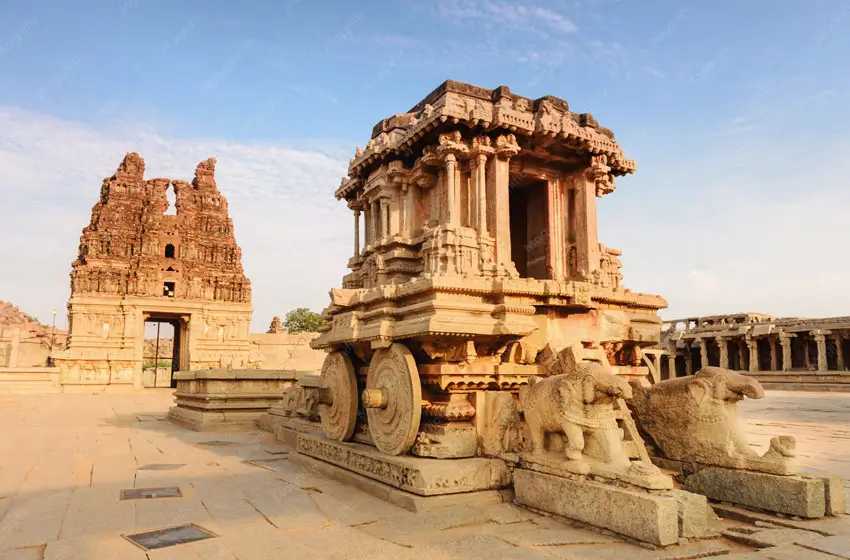
The Vittala Temple complex is the finest building in Hampi and the one image most people know. Started in the 15th century and expanded under the great king Krishnadevaraya, it is dedicated to a form of Vishnu. In the courtyard stands the Stone Chariot, a shrine to Garuda carved to look like a temple car, with stone wheels that once turned. It is so well known that it appears on India's 50-rupee note. The main hall, the Maha Mantapa, has slender granite pillars that ring with musical notes when tapped; visitors are no longer allowed to strike them, as the pillars were being damaged, but your guide can explain how they work. Look closely at the carvings of horses, warriors, and foreign traders along the plinths. The site is about 2 km from the parking area, and the last stretch is covered by battery-run buggies or on foot along the old Vittala Bazaar. Come at opening time to see it before the heat and the tour buses.
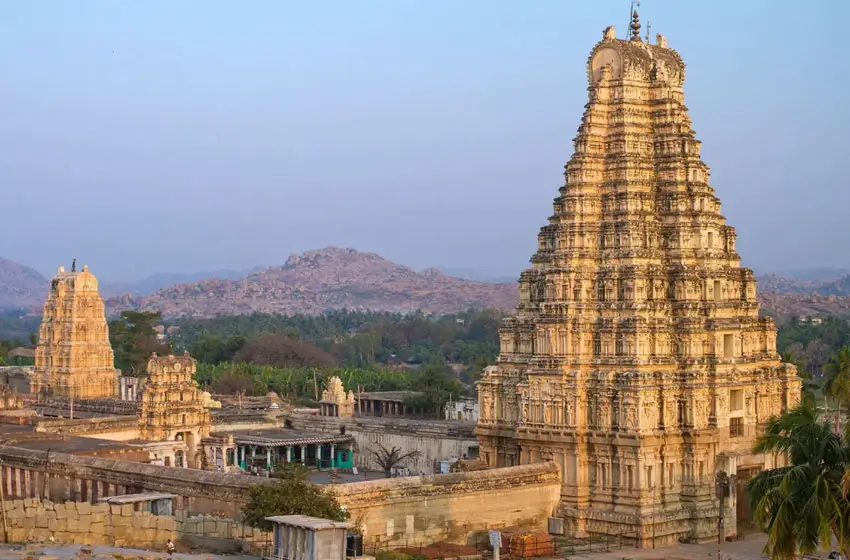
The Virupaksha Temple at the head of Hampi Bazaar is the oldest working temple here and the religious heart of the village. Its 160-foot eastern gopuram dominates the skyline and can be seen from the hills all around. Parts of the shrine date to before the Vijayanagara period, and worship has continued without a break for centuries. Inside, look for the painted ceiling of the main hall with scenes from the epics, and a small dark room where a hole in the wall projects an inverted image of the gopuram onto the opposite wall like a pinhole camera. Mornings and early evenings, when bells ring and lamps are lit for the daily rituals, are the best times to visit. Shoes are left outside, and non-Hindus can enter most areas.
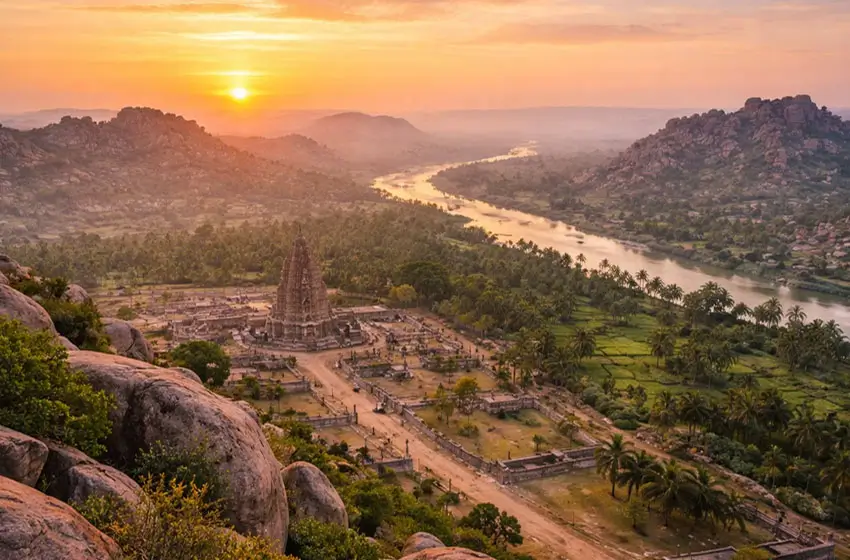
In front of Virupaksha runs Hampi Bazaar, a long street lined with the stone pavilions of the old market that once traded in precious stones, silks, and spices. Today it's mostly ruins with a few stalls at the temple end. At the far end of the bazaar, a set of steps leads up Matanga Hill, the highest point in the area and the best spot in Hampi for sunrise. The climb takes about 30 to 45 minutes over rock steps and boulders, and from the top you can see the whole site laid out: Virupaksha's tower, the river, the Achyutaraya Temple below, and boulder hills fading into the distance. Wear proper shoes, carry water and a flashlight if you go before dawn, and go with your guide or in a group rather than alone.
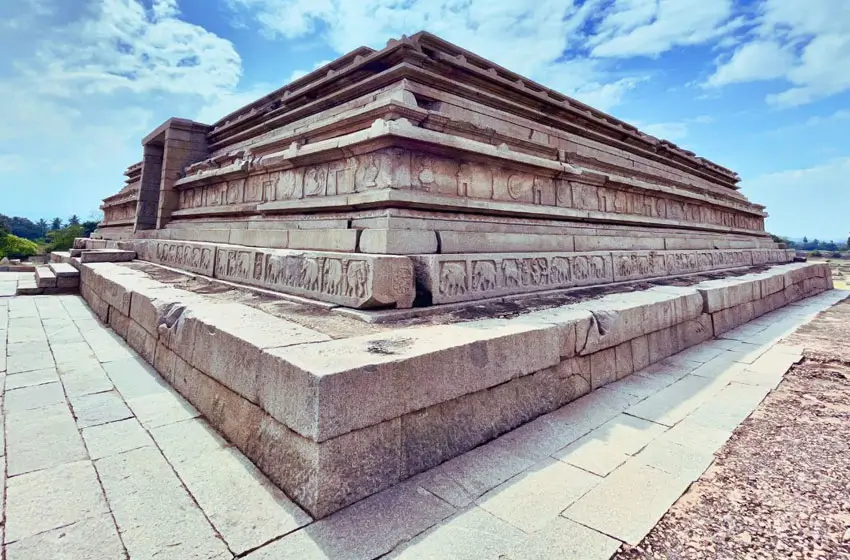
The Royal Enclosure was the political center of Vijayanagara, a walled area where the kings lived and held court. Most of the palaces were wooden and burned in 1565, so what survives are the stone foundations, water channels, and platforms. The most impressive is the Mahanavami Dibba, a tall, stepped platform from which the king watched the festival parades, its sides carved with hunting scenes, dancers, horses, elephants, and soldiers. Nearby is the beautiful Stepped Tank, a square pool with symmetrical stone steps uncovered by archaeologists in the 1980s, and an underground chamber thought to be a secret meeting room.
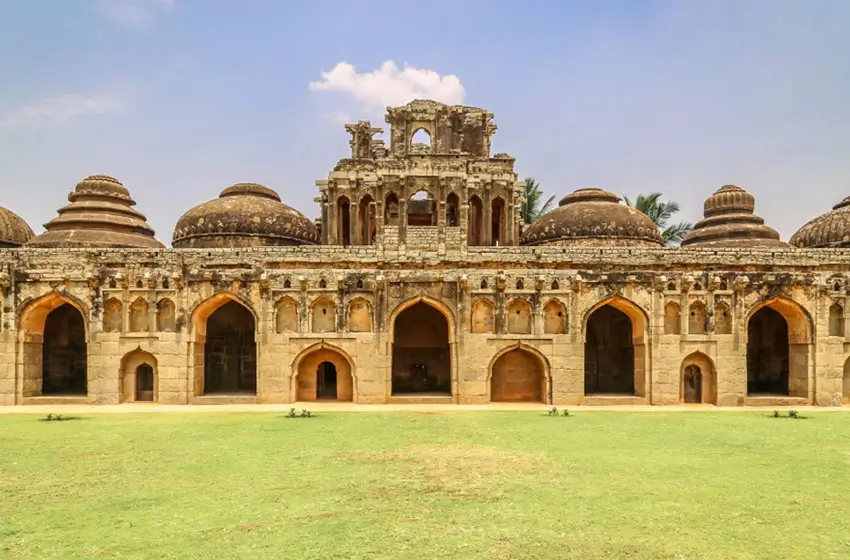
Inside the walled Zenana Enclosure, the Lotus Mahal is a two-story pavilion with arches shaped like the petals of an open lotus. It mixes Hindu and Islamic building styles, a sign of how open Vijayanagara architecture was to outside ideas. Its exact use is uncertain, but it may have been a cool retreat for royal women or a council hall. A short walk away are the Elephant Stables, a long row of eleven high-domed chambers where the royal elephants were kept. The domes alternate in shape and style, and the building is one of the best preserved in Hampi.
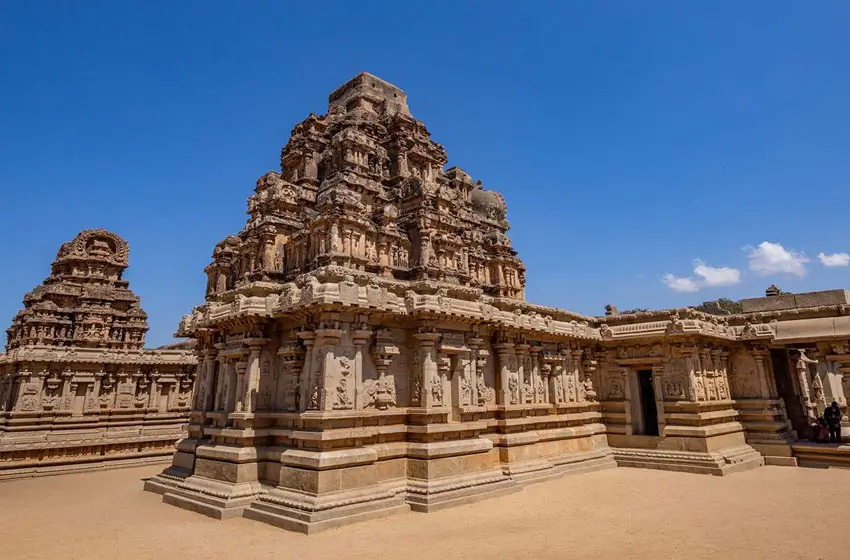
The small Hazara Rama Temple was the private royal temple, standing in the middle of the palace area. Its name means "a thousand Ramas," and its outer walls are covered with long carved panels telling the story of the Ramayana in sequence, along with processions of horses, elephants, dancers, and soldiers. Inside, four polished black stone pillars are carved with gods. It's one of the best places to understand the skill of Vijayanagara sculptors, and it's usually quiet.
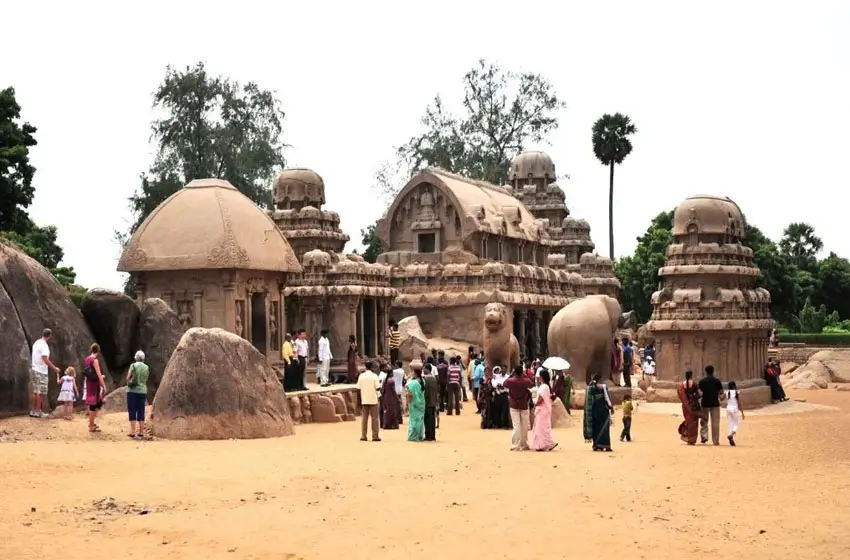
Hidden in a valley between Matanga Hill and the river, the Achyutaraya Temple was one of the last great temples built before the city fell. You reach it through Sule Bazaar, a long avenue of ruined pillared halls that was once a courtesans' street and market. Because it's off the main road, it gets few visitors, and the walk along the river from here toward the Vittala Temple passes small shrines, carved boulders, and the old King's Balance, where kings were said to be weighed against gold and grain for charity.
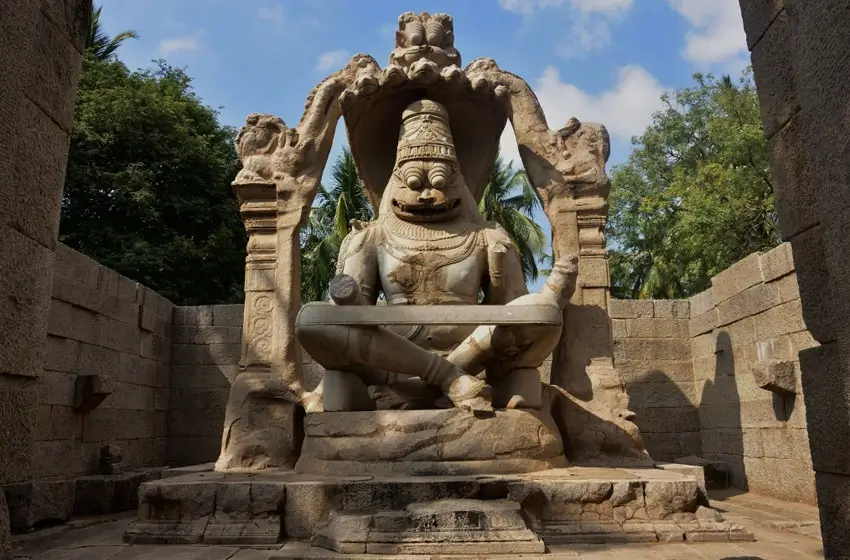
Two giant monolithic statues stand next to each other south of Hampi Bazaar. The Lakshmi Narasimha statue, carved from a single boulder in 1528, shows Vishnu in his man-lion form, seated under a hood of seven cobra heads. It is about 22 feet high. Next to it, the Badavilinga is a 9-foot Shiva lingam that stands permanently in water flowing through a channel. Both are quick stops but remarkable in scale.
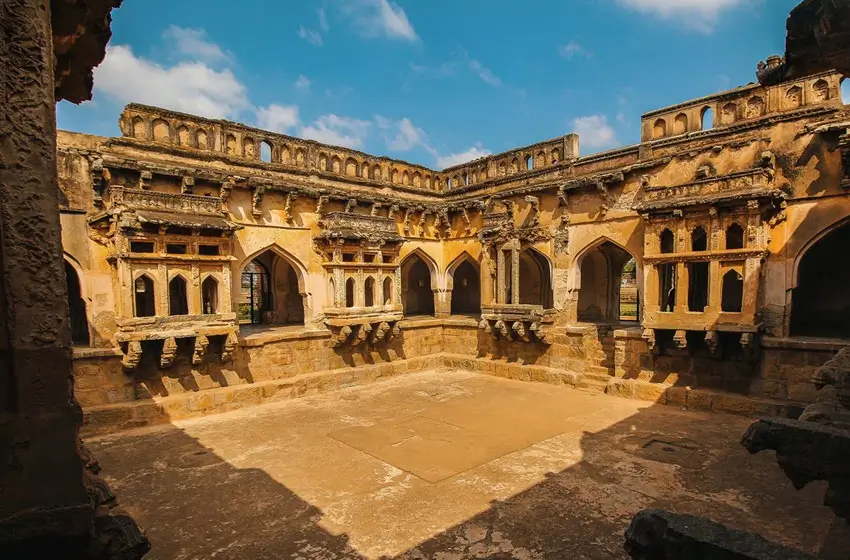
The Queen's Bath is a plain building from the outside, but inside is a large sunken pool surrounded by an arched corridor with ornate balconies. It was likely a royal bathing pavilion. Down the road at Kamalapura, the small Archaeological Museum has sculptures from the site, coins, weapons, and a large scale model of the area that helps you understand the layout before or after exploring. The museum is closed on Fridays.
Like what you see? Let's plan it for you.
Private car, driver and hotels arranged around your dates. Reply within 24 hours.
Getting there
Hampi is in northern Karnataka, about 6 to 7 hours by road from Bangalore and best reached through the town of Hospet.
Jindal Vijaynagar Airport near Toranagallu (about 1 hour) has limited domestic flights; Hubli Airport (about 3.5 hours) and Bengaluru International Airport (about 6–7 hours) have more options
Hosapete Junction (about 30 minutes), with an overnight train to Bangalore and connections to Hubli and Goa
Good highways from Bangalore, Badami, and Hubli; Goa is about 7–8 hours by road
Tours that include Hampi
Explore more
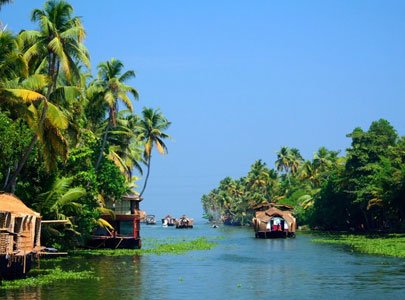
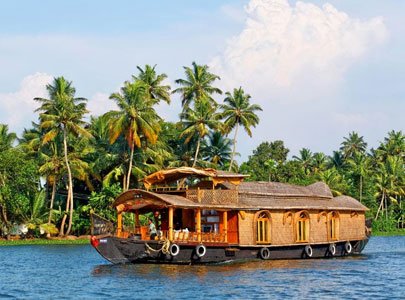
Kerala Backwaters Escape Kerala Backwaters Escape
 Kerala Backwaters Escape
 Kerala Backwaters Escape
N.S. Rathore & Mrs. Omlata Rathore · Managing Director
We still read every enquiry ourselves. Tell us the places you liked and our planners will send a day-by-day route with drive times and a clear price.
No ready-made packages and no pressure to book. A planner from our Kochi office replies within 24 hours with a route written for your group.
Fill this in and your planner will send a first draft itinerary.