 Kerala Backwaters Escape

Karnataka Tour Packages
Bangalore – Somanathapura – Mysore – Srirangapatna – Kabini (Nagarhole) – Bylakuppe – Coorg – Tholpetty – Wayanad – Kozhikode – Kochi – Kumarakom
At a glance
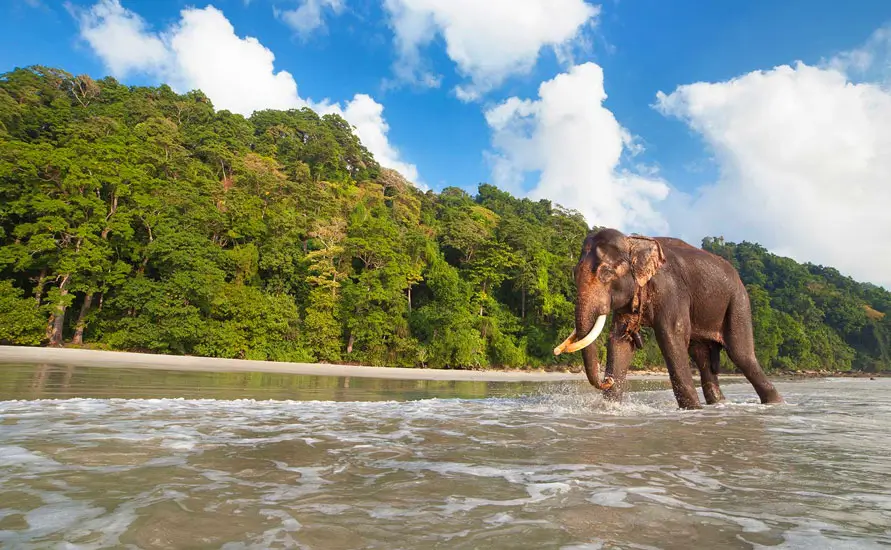
Elephants wading across the Kabini reservoir at dusk, hornbills crossing a coffee valley in Coorg and kingfishers on the edge of Vembanad Lake: those are the moments this trip is built around. The Karnataka Wildlife and Kerala Tour spends eight of its thirteen nights in Karnataka, moving from Bangalore and the Hoysala temple at Somanathapura to royal Mysore, then into the teak forests of Kabini on the southern edge of Nagarhole National Park and up to the rain-soaked hills of Coorg, before crossing into Kerala.
Across the border, Wayanad continues the same forest belt with cave carvings, tribal farming villages and misty spice estates. From there you descend the Thamarassery ghat to Kozhikode, where a train or a road transfer brings you to Fort Kochi, and the trip closes beside the lake at Kumarakom, one of Kerala's best spots for waterbirds. Every road leg is handled by your own chauffeur in an air-conditioned car. Kabini drives are reserved via the state forest department, seats depend on daily quotas, and nobody, guide or lodge, can promise which animals will show themselves.
This Karnataka wildlife tour is aimed at naturalists arriving from Britain, continental Europe, the United States, Canada or Australia who still want palaces, temples and good food, and NRI families looking for an outdoor holiday with children. October to May is the main season; the hot months of April and May often give the best mammal sightings at Kabini as animals gather near water, while November to February is cooler and greener. Lodge grades, extra safari days and the pace of the Karnataka Wildlife and Kerala Tour can be tailored to you.
Touchdown at Kempegowda International Airport may come in the small hours, and our airport host, holding a sign with your family name, is there regardless of the clock. A forty-five-minute to ninety-minute ride, depending on traffic, delivers you to a hotel in central Bangalore, where the morning or early afternoon is set aside for sleep. Before leaving you, the host walks through the two-week plan, the safari timings at Kabini and the train ticket details for Kerala, and saves our round-the-clock helpline in your phone. Ask any question you like at this point, from currency exchange to what to wear inside temples.
Toward five o'clock, once the heat has dropped, your guide picks you up for a walk in Malleswaram, a residential quarter planned in the 1890s when an 1898 plague epidemic sent residents looking for healthier, open ground. Wide streets lined with old trees, tiled houses with deep verandas and small temples give it the feel of a Bangalore that existed long before software parks. On 8th Cross, vendors sell banana leaves, string jasmine into garlands and fry snacks in large iron pans, and the Kadu Malleshwara Temple, a Shiva shrine from the 17th century, sits on a gentle slope among old trees.
Malleswaram is also the right place for a first proper South Indian meal. Your guide can take you to one of the old vegetarian canteens where benne masala dosa, a crisp crepe brushed with butter, arrives on a steel plate with coconut chutney, followed by a small cup of filter coffee frothed by pouring from one tumbler to another. Back at the hotel, set out comfortable shoes and binoculars for the next morning, since the day begins in a garden where birdwatchers gather at sunrise. A long sleep after the flight is the best preparation. Overnight in Bangalore.
Sunrise in Lalbagh belongs to walkers, yoga groups and birders, and an early start lets you join them before the gates fill with families. A naturalist guide leads you around the lake at the southern end of the garden, where purple herons, little cormorants and pond herons fish among the reeds, and rose-ringed parakeets and Asian koels call from the old trees. The garden itself dates back to Hyder Ali's time and was later extended into a botanical collection with trees from several continents. The walk ends near the glasshouse, after which breakfast is served back at your hotel.
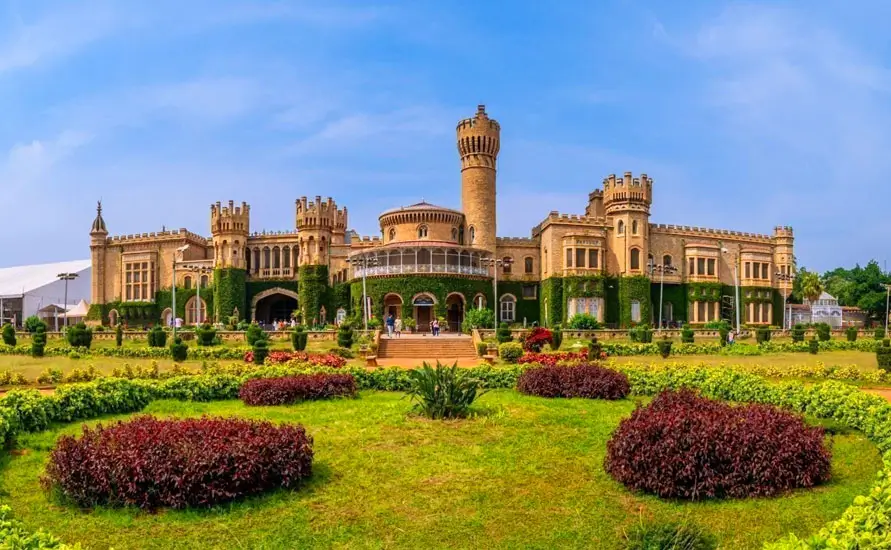
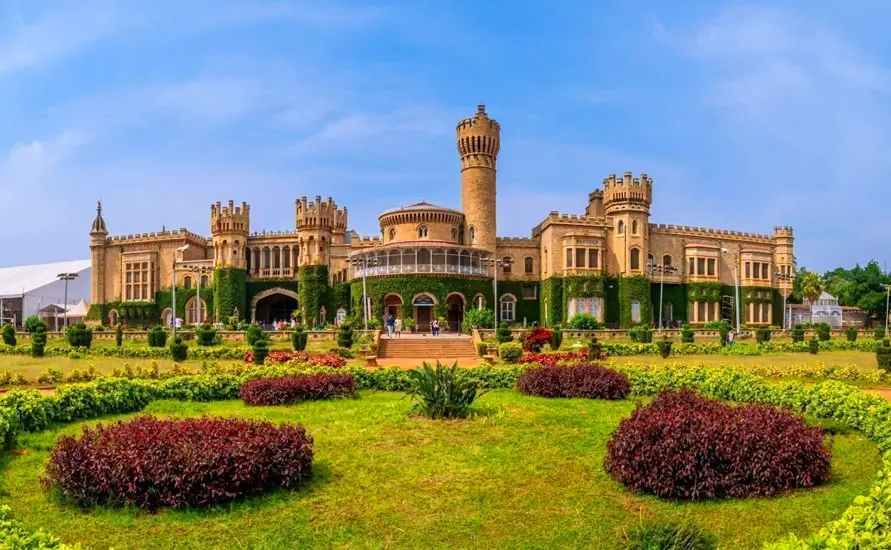
Late morning you visit Bangalore Palace, which the Wodeyar family began in 1878 on lines borrowed from English castles, complete with turrets, battlements and timber-framed gables. With an audio handset you move through the courtyard, the ballroom and a series of drawing rooms filled with hunting trophies, vintage photographs and paintings by Raja Ravi Varma. Many visitors are surprised by how British the building looks from the outside and how Indian it feels inside. The grounds are also used for concerts and large weddings, so parts of the lawns can be closed on some days.
After lunch you move to the older south of the city. Tipu Sultan's Summer Palace, two floors of carved timber with painted pillars and arched balconies, sits beside the remains of the old Bangalore fort, of which a single gateway and some walls survive nearby. Your guide continues to the Bull Temple in Basavanagudi, where a large Nandi carved from one granite rock looks out over the hill, and to the neighboring Bugle Rock garden. Evening is free, and Bangalore's brewpubs and cafés on the streets around Indiranagar are a lively option if you are still awake. Overnight in Bangalore.
Instead of the direct expressway, your driver takes the quieter southern road through Kanakapura and Malavalli, past granite hills, silk farms and villages where women spread ragi millet to dry on the tarmac. Mulberry fields along the way feed the silkworms that supply the silk weavers of Mysore, and your driver may stop if you want to see cocoons being sorted at a rural market. The road is narrower than the highway and takes a little longer, but traffic is light and the countryside feels much closer, with buffalo carts and small roadside shrines at almost every junction.
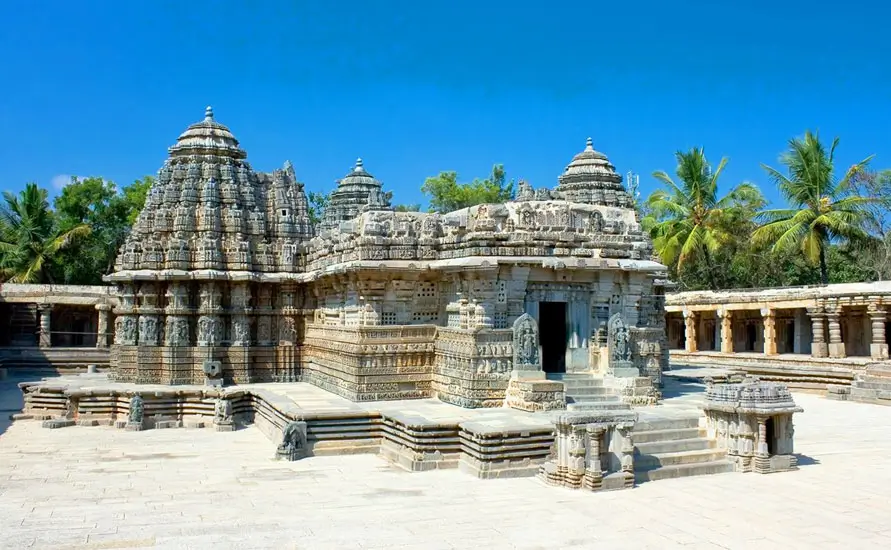
Around midday the car pulls into Somanathapura, a farming hamlet that guards one of Karnataka's best-preserved Hoysala shrines. Consecrated in 1268 by Somanatha, a commander serving King Narasimha III, the Keshava Temple stands on a raised star-shaped platform inside a walled courtyard. Its three shrines are covered with friezes carved in soapstone: rows of elephants, horsemen, scrolling vines and scenes from the epics, each band smaller and finer than the one below. UNESCO inscribed it in 2023 within the Sacred Ensembles of the Hoysalas, together with the temples at Belur and Halebidu.
From Somanathapura it is about an hour to Mysore, where you check in by late afternoon. Sundays, public holidays and Dasara nights bring the palace illumination, roughly 7 to 7:45 pm, and the square in front fills with families waiting for the switch-on. On other nights, a walk along the arcades near the clock tower and the old Krishnaraja Circle gives you a first sense of the city. Dinner could be a ragi mudde meal, a soft ball of finger millet that farmers have eaten for centuries, broken by hand and dipped into a spicy lentil or mutton saaru. Overnight in Mysore.
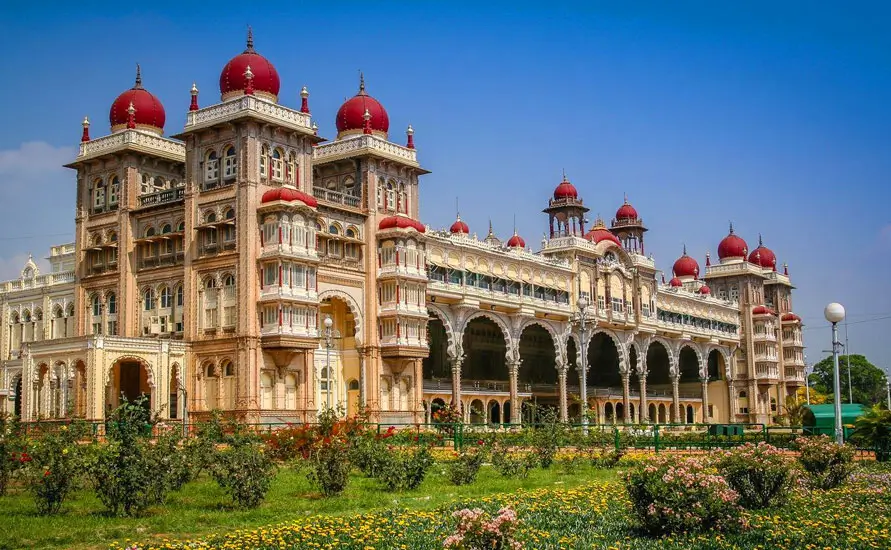
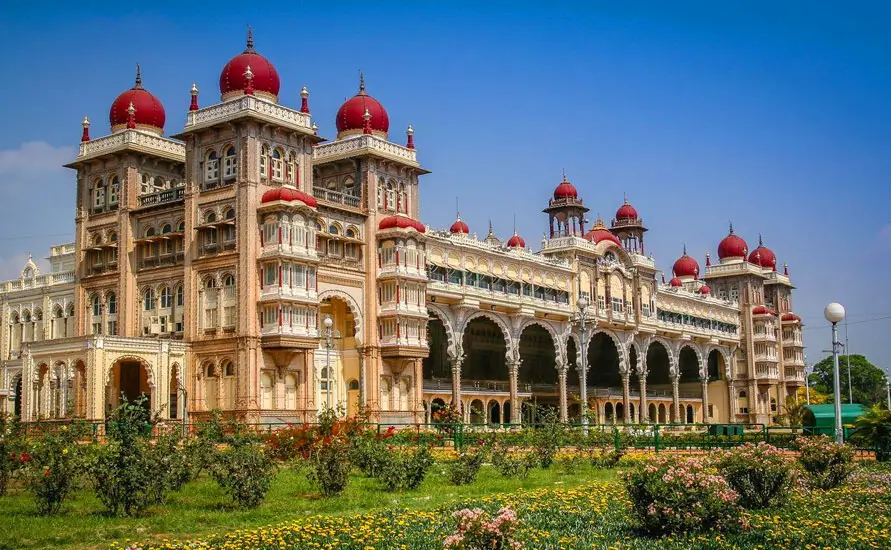
First up is Mysore Palace, ideally right at opening time before the tour groups arrive. Inside the Indo-Saracenic building, your guide points out the carved silver doors of the Kalyana Mantapa, the painted ceilings of the Durbar Hall where the maharaja held audiences, and the long wall paintings that show elephants, cavalry and courtiers in the Dasara procession. Leave footwear at the shoe counter before entering, and keep cameras away inside the main halls. Afterwards your guide leads you through the stalls of Devaraja Market for flowers, fruit and the incense that Mysore sends all over India.
Then you drive about 15 kilometers north to Srirangapatna, the fortified river island that was the seat of Tipu Sultan. Follow the surviving ramparts to the water gate and Colonel Bailey's Dungeon, a vaulted cell once used for captured British soldiers, then visit the domed Gumbaz, whose ebony and ivory doors open onto the tombs of Tipu and Hyder Ali. Your guide explains how the island fell in 1799 and how that defeat opened the south of India to British rule. Lunch is at a local restaurant, where you can try a plate of Mysore masala dosa with a red chutney spread inside.
Late in the afternoon you continue to Ranganathittu Bird Sanctuary, where a 17th-century weir on the Kaveri left a scatter of wooded islets that birds now use as a nursery. Boatmen paddle you slowly past colonies of painted storks, Asian openbills, spoonbills, night herons and river terns, and mugger crocodiles often lie on the rocks with their mouths open. Nesting is busiest from about December to June. Keep your voice low and stay seated in the boat. The last light over the water is soft and golden, and makes the best photographs of the day. Overnight in Mysore.
Leaving after breakfast, you head south-west through farming country to Kabini, where a 1970s dam turned the Kabini River into a broad reservoir separating Nagarhole National Park from Bandipur. The drive is short, around two hours, through villages of coconut palms and sugarcane, and you pass the town of H.D. Kote before the road narrows near the forest. Your jungle lodge sits on or near the reservoir, and check-in is followed by lunch overlooking the water. Rest while you can; the first drive sets off in the warm middle of the afternoon.
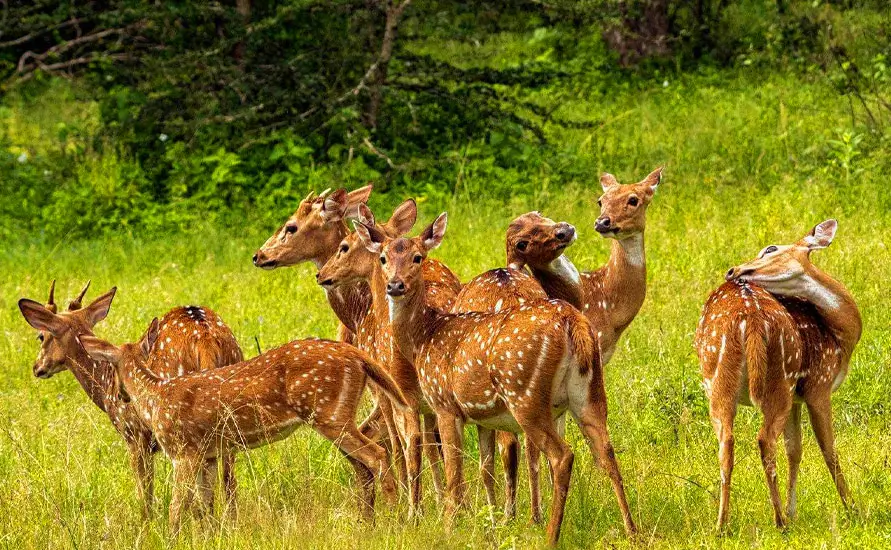
Nagarhole, officially Rajiv Gandhi National Park, protects a mix of moist and dry deciduous forest and is known for one of the highest densities of tigers, leopards and wild dogs in South India. The afternoon drive is in a jeep or canter of the forest department, booked through the department and subject to availability, along fixed tracks with a trained guide. You are likely to see spotted deer, sambar, gaur, wild boar, langurs and elephants, and many guests are also lucky with leopards resting in trees. Tigers live here too, but sightings depend on luck and can never be promised.
Back at the lodge around sunset, wash off the forest dust and sit by the water as the light fades. Many lodges at Kabini hold a short evening presentation by a naturalist on the animals of the Nilgiri Biosphere Reserve, which includes Nagarhole, Bandipur, Mudumalai and Wayanad. The sounds after dark are wonderful: frogs, nightjars, the alarm calls of deer, and sometimes elephants trumpeting across the reservoir. Dinner is usually a buffet with Karnataka and Kerala dishes and is included at the lodge. Go to bed early, as the morning safari leaves before dawn. Overnight in Kabini.
A wake-up knock with tea and biscuits comes around 5:45 am, and soon after you are on the morning safari, again operated by forest staff, with seats allotted according to availability. The first hour after sunrise is the coolest and often the best for tigers and leopards on the move, and for watching dholes, the Indian wild dogs, hunting in small packs. Birders will enjoy crested serpent eagles, Malabar pied hornbills, green bee-eaters and the Indian pitta in the right season. The naturalist reads alarm calls and pugmarks to decide where to wait, and the jeep stops often for photos.
Breakfast is waiting on your return, and nothing is planned until mid-afternoon. You can sleep, swim in the lodge pool if there is one, read on a veranda or follow a naturalist around the property looking for butterflies, spiders and medicinal plants. Many visitors also enjoy just watching the reservoir from a hammock, as langurs, peacocks and storks pass by. Lunch is at the lodge. If you want an extra jeep safari instead of the boat ride later, tell us before arrival and we will put in a request with the forest office, though availability is never certain.
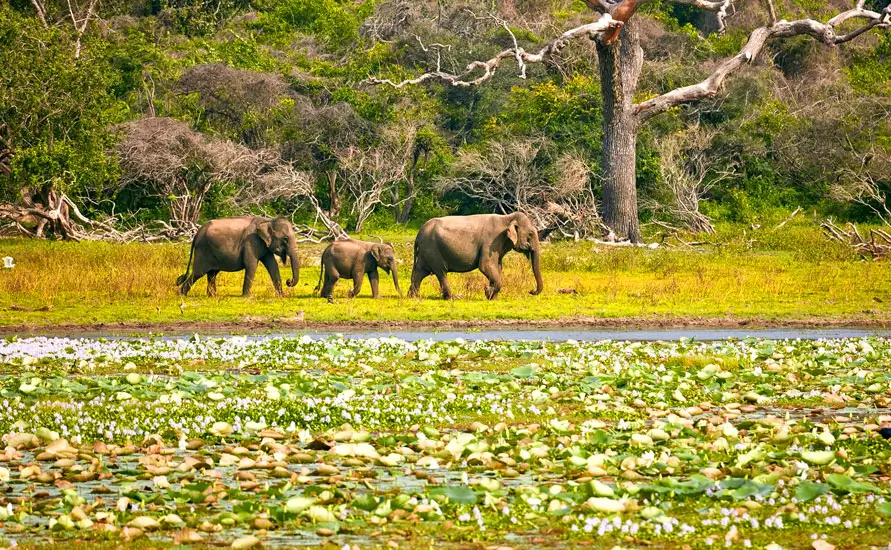
Around four, a forest department motorboat takes you out on a Kabini River safari along the reservoir margin. As the reservoir shrinks from February onward, it uncovers meadows of fresh grass that attract large herds of elephants, sometimes dozens of animals at once, and it is common to see them bathing and drinking as you drift slowly past. Otters, marsh crocodiles, ospreys and grey-headed fish eagles are also regular sights. The boat safari is subject to availability and water levels. As the sun sets behind the forest, the reflection of the trees in the water is a fitting end to your time in Kabini. Overnight in Kabini.
One last look at the reservoir with your morning coffee, then you check out and drive north via Hunsur to Bylakuppe, home to Tibetan exiles since the early 1960s. Here you stop at the Namdroling Monastery, whose bright red and gold temple is one of the largest Tibetan Buddhist teaching centers outside Tibet. The main shrine holds three gilded statues, and in the courtyard you may see young monks debating with expressive hand claps, a tradition used to test their understanding of Buddhist texts. A small café near the monastery serves good momos and noodle soup for lunch.
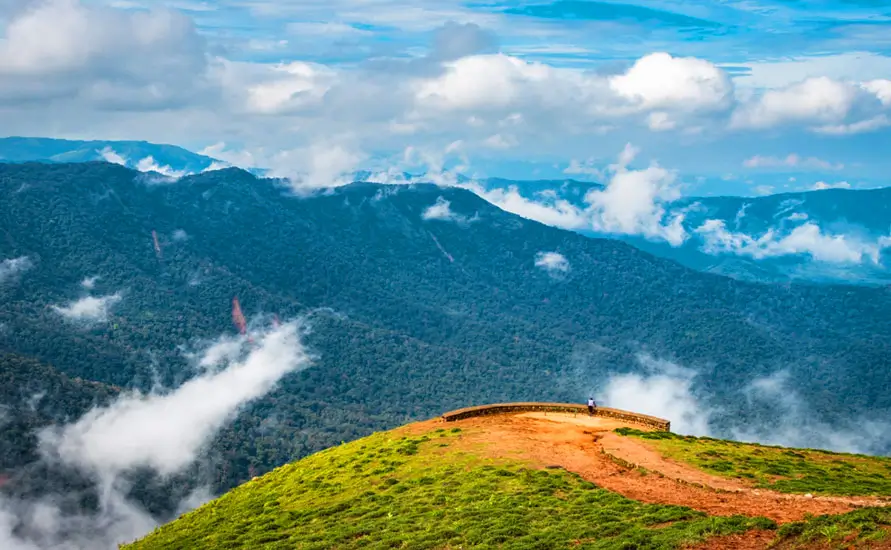
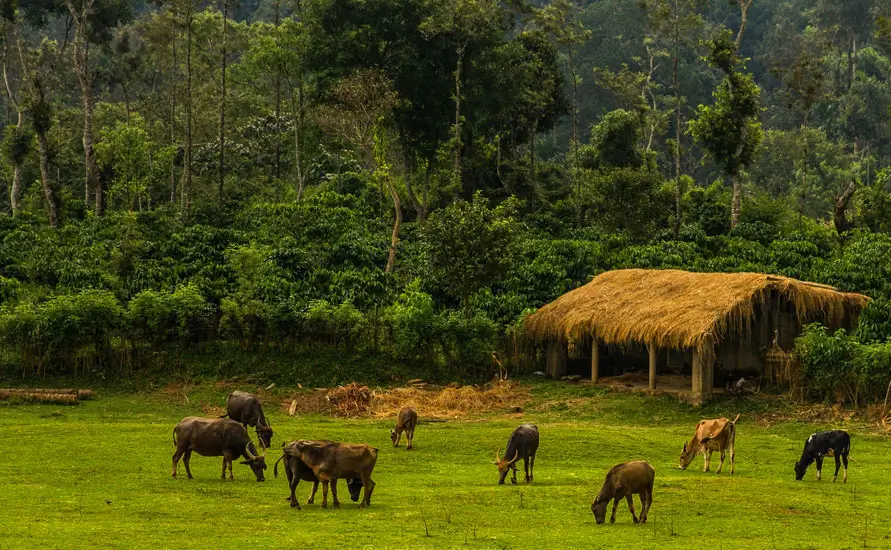
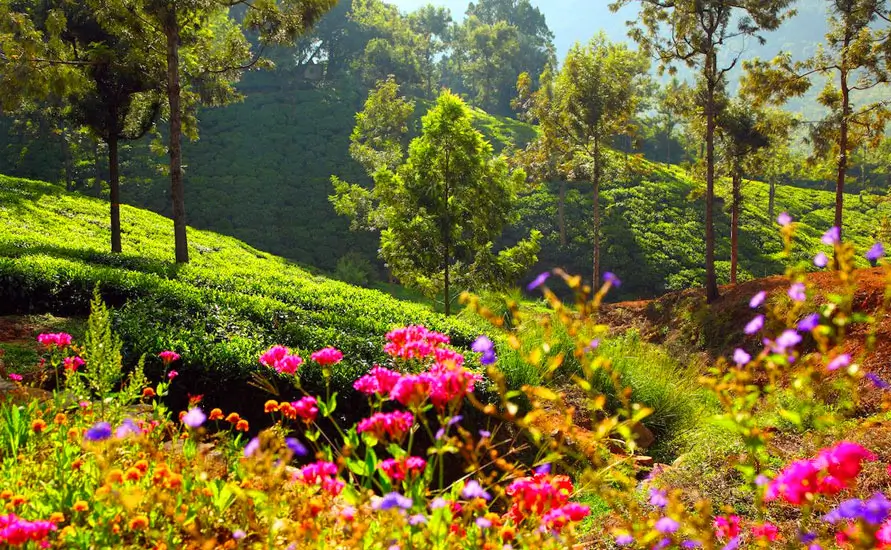
From Kushalnagar the road starts climbing into Coorg, the hill district also known as Kodagu. The land changes quickly from dry plains to dense forest, coffee estates and pepper vines, and you may notice the cooler air on your arms as the car climbs. The Kodava people, the main community of these hills, have their own customs, dress and food, and many still run family estates that go back several generations. On request the car pulls over at a spice stall for cardamom, pepper or homemade wine made from local fruits, a Coorg specialty that families make at home.
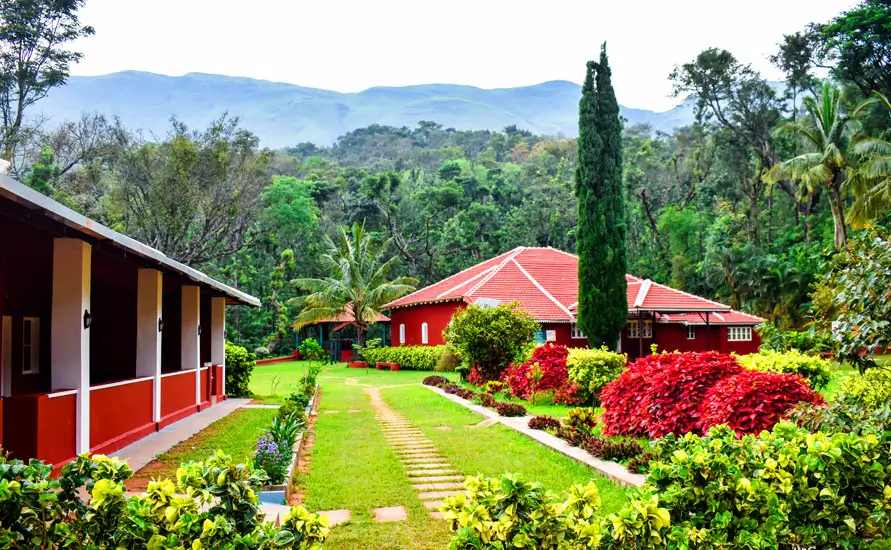
You check in to your estate bungalow or hill resort in the afternoon. Coorg has many plantation stays where you sleep among coffee and cardamom, and the owners are often happy to talk about their crops, family history and the forests around them. In the evening, look out for flying squirrels, Malabar giant squirrels and owls, which are common in the trees near estates. Dinner is a chance to taste Coorg dishes such as pandi curry, kadambuttu rice dumplings and bamboo shoot curry, all of which are best paired with a glass of local coffee afterwards. Overnight in Coorg.
Morning is for the source of the Kaveri, one of South India's holy rivers. Some 45 kilometers from Madikeri you come to Bhagamandala; at this temple town the Kaveri takes in the Kannike stream and, in belief, a third invisible river called Sujyoti at a confluence called the Triveni Sangama, and visit the Bhagandeshwara Temple with its Kerala-style sloping roofs. A further climb brings you to Talacauvery, on the slopes of the Brahmagiri hills, where a small tank marks the place where the river is believed to rise. Climb the steps behind the tank and, if the cloud cooperates, the forested Ghats fold away in blue layers toward Kerala. Dress modestly and remove shoes before the shrine area.
After lunch, a local naturalist leads you on a gentle walk through a patch of evergreen forest or a forest-edge estate, depending on season and permissions. These hills belong to the Western Ghats, which UNESCO lists for their biodiversity, and the walk focuses on the smaller life most visitors miss: endemic frogs, colorful butterflies like the blue-and-black Malabar banded peacock, giant wood spiders and the plants used in Kodava cooking and medicine. In the monsoon months leeches are common, so wear socks and closed shoes. Watch too for devara kadu, small sacred groves that Kodava villages have left uncut for centuries.
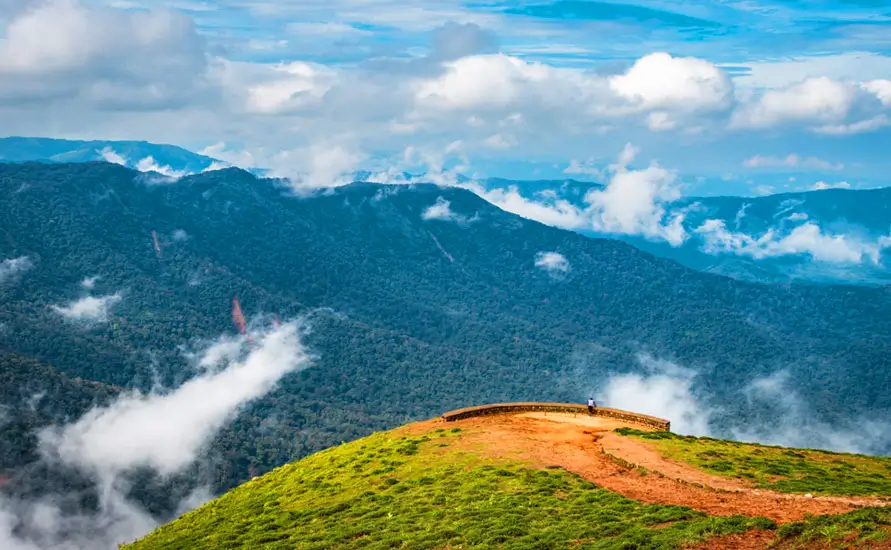
Late in the day you return to Madikeri for a short stop at Raja's Seat, where the valleys fall away in layers of blue and green as the sun goes down. You may also visit the small fort museum in town, which holds old weapons and photographs from the Kodava kingdom. In the evening, if your hosts are willing, they may show you traditional Kodava dress or tell you about festivals such as Puthari, the harvest festival, and Kailpodh, which marks the end of planting with the worship of weapons. Pack tonight, as you leave for Kerala in the morning. Overnight in Coorg.
Today the trip crosses into Kerala. The road heads south through Gonikoppal and Srimangala to Kutta, the last town in Karnataka, where coffee estates give way to the forests of the Brahmagiri range. Just across the state border lies Tholpetty, the northern part of the Wayanad Wildlife Sanctuary, which links Nagarhole and Bandipur with the forests of Kerala and Tamil Nadu. Elephants, gaur and deer often cross the road here, so drivers go slowly. Jeep safaris run by the Kerala forest department are sometimes available at Tholpetty, and we can try to book one if timing and availability allow.
Continuing past Mananthavady, a small market town known for its spice traders, you stop at the old Thirunelli Temple, a Vishnu shrine on the slopes of the Brahmagiri hills built in a traditional Kerala style with granite pillars. Non-Hindus can see the temple from the outer area, and the setting, with forested hills all around, is beautiful. Lunch is at a simple local restaurant where meals are served on banana leaves, with red rice, sambar and several vegetable side dishes, a very different taste from the Kodava food of the last two days.
Check-in at your Wayanad resort or plantation stay comes late in the afternoon. The district is a mosaic of hills, tea and coffee gardens, paddy fields and forests, and Adivasi groups such as the Kurichiya, the Paniya and the Kattunaika have farmed and gathered honey here for generations. Several resorts work with these communities on guided village visits and craft sales. Many resorts here are built on hillsides or among spice gardens, with cottages on stilts or tree houses. Evening sounds from the forest carry to every veranda, and you can also join a short talk by your host about the region's history and farming. Dinner is usually Kerala-style, with fish or chicken curry and appam. Overnight in Wayanad.
An early start takes you to Edakkal Caves near Ambalavayal, which are not true caves but a narrow cleft between two huge boulders on Ambukuthi Mala. A steep climb of about twenty to thirty minutes on steps and paths leads to the entrance, where carved figures cover the inner rock face, among the earliest such engravings known in Kerala, including human and animal figures and symbols. Archaeologists date some of the carvings to the Neolithic period. Visitor numbers are limited each day, the site has a weekly closing day, and the climb can be hard in heat, so we plan an early arrival and check the schedule beforehand.
In the late morning you visit a spice and coffee farm, where the farmer leads you between black pepper, cardamom, nutmeg, cinnamon, cloves and vanilla, and explains how spices from Wayanad were once carried down to the ports of Kozhikode and Kochi for traders from Arabia and Europe. You also see how coffee berries are dried and how pepper is picked, sorted and sun-dried on mats. Lunch can be taken at the farm, which often serves a home-style meal of rice, fish curry and vegetables cooked with local spices. Buying directly from the grower usually means fresher stock at fair prices.
Late in the afternoon you drive to Banasura Sagar Dam, a huge earthen embankment across the Karamanathodu stream, where small islands rise out of the reservoir against the Banasura hills. Stroll the crest, or pay locally for a speedboat spin on the reservoir. Quieter alternatives include a hilltop viewpoint or a visit to a tribal village run by a local cooperative instead, depending on your interests. Return to your resort for a Malabar-style dinner, and pack your bags tonight, as tomorrow is a long travel day to Kochi. Overnight in Wayanad.
You leave Wayanad after breakfast and descend the Thamarassery ghat, nine hairpins carrying the road off the plateau to the Malabar lowlands, with wide views over the forest at each turn. In about three hours you reach Kozhikode, also called Calicut, whose nearby beach at Kappad saw da Gama's ships arrive in 1498. Time permitting, a short detour covers the old Kuttichira quarter with its multi-story wooden mosques and the beach front. Then you board an express train to Ernakulam, a ride of roughly four hours along the Kerala coast.
If you prefer to stay in the car, the drive from Kozhikode to Kochi takes about five to six hours along the coastal highway, with stops for lunch and tea. Whichever you choose, our Kerala staff receive you on arrival and settle you into your Fort Kochi hotel by evening. Kozhikode is famous for its biryani and Malabar snacks, so you might like to pick up a packed lunch or sweet halwa before boarding. After a full day in transit, the evening is left open. Overnight in Kochi.
Your Fort Kochi walk begins at the Indo-Portuguese Museum or the Dutch-era Bastion Bungalow, depending on the day, then follows the shoreline, where crews lean their weight on rock-laden ropes to tip the Chinese fishing nets into the harbor. Your guide explains how Fort Kochi grew under the Portuguese, the Dutch and then the British, and how traders from China, Arabia and Europe all left their mark on the town. St. Francis Church, dating from the early years of Portuguese rule, and the Santa Cruz Basilica, whose nave ceiling is painted with scenes of the Passion, are both on the route.
In the late morning you visit Mattancherry, the old merchant quarter. Local people still call the Mattancherry Palace the Dutch Palace, and its walls carry some of Kerala's most detailed murals, and the Paradesi Synagogue, built in 1568, still serves the small Jewish community that remains in Kochi. Plan around their rest days: no palace entry on a Friday, and for the synagogue no entry on Fridays, Saturdays or Jewish festivals, which may mean swapping this day with the next. The lanes around the synagogue are full of antique shops and spice dealers, and are good for an hour of browsing.
Afternoon is free to rest, shop or sit at a café in one of the old warehouses. After dark, take a seat for Kathakali, a temple-born drama form of Kerala, in which actors with green painted faces and huge skirts act out scenes from the Mahabharata with eyes, hands and drums. Arrive early to watch the make-up being applied. Alternatively, you can watch a Kalaripayattu show, the old martial art of Kerala that uses sticks, swords and acrobatic kicks. For dinner, try a seer fish fry or a Kerala prawn roast near the beach. Overnight in Kochi.
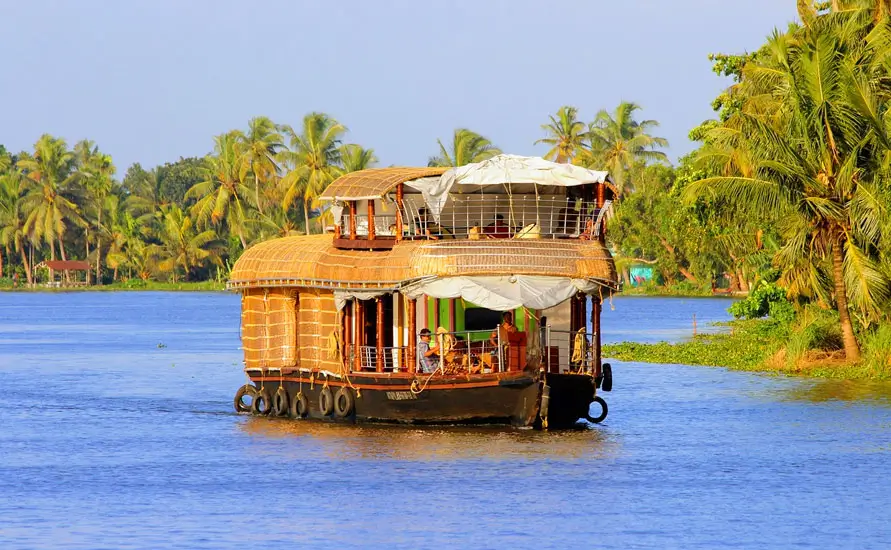
After breakfast the car heads south-east to Kumarakom, a scatter of low islands where Vembanad Lake, Kerala's biggest body of water, meets the paddy country of Kottayam. The road passes through Vaikom and the edges of Kottayam district, with paddy fields, rubber trees and canals on both sides. Your lakeside resort is set among coconut palms and waterways, and many rooms have a private veranda over the water. Far fewer houseboats operate here than around Alleppey, leaving the canals calm for birdwatching and for simply watching village life along the canals, where people still paddle to church or market.
In the afternoon a naturalist takes you to the Kumarakom Bird Sanctuary, a small lakeside wood of mangroves that began life as a rubber estate laid out by an English planter family named Baker. Between November and February migratory birds join the residents, and you may see darters, little cormorants, night herons, egrets, Indian pond herons and kingfishers. The best time for birds is early morning or late afternoon. The walk follows a shaded path, and binoculars are useful. Bring mosquito repellent, as the area is close to water and the insects become active toward sunset.
Toward evening you board a country boat for a private sunset cruise on the canals and the open lake. The boatman poles the canoe through narrow waterways where houseboats cannot go, past village homes, toddy shops, small churches and paddy fields kept dry below the water level. As the sun goes down over Vembanad, flocks of egrets fly home to roost and fishermen return with their catch. Back at the resort, you can book an optional Ayurvedic massage or try karimeen pollichathu, pearl spot smeared with masala and roasted inside a banana leaf, for dinner. Overnight in Kumarakom.
Rise early for one last walk along the lake shore, when darters dry their wings on posts and the lake lies flat. Checkout follows breakfast, and then comes the road to Cochin International Airport, roughly two hours away, leaving enough time for international check-in. Night flyers can request extra hours in the room at the resort or a day-use hotel close to the terminal at an extra cost. Your driver unloads the bags at departures, and our office keeps checking in by phone until you are through.
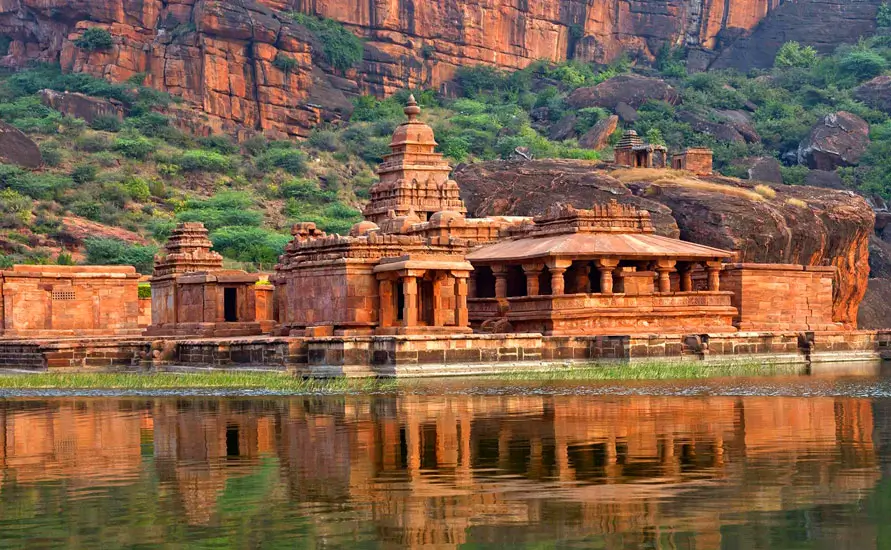
Two weeks have taken you through the teak forests of Kabini and Nagarhole, the coffee hills of Coorg and Wayanad, the palace of Mysore and the old ports of Kozhikode and Kochi, finishing beside the lake at Kumarakom. Karnataka has many more forests to visit, from Bandipur and BR Hills to Bhadra and Dandeli, and its northern ruins at Hampi and Badami are a natural next trip. We would be glad to help plan your return. Have a safe flight home.
Your Journey

N.S. Rathore & Mrs. Omlata Rathore · Managing Director
We still read every enquiry ourselves. Tell us the places you liked and our planners will send a day-by-day route with drive times and a clear price.
Every package can be customised and no pressure to book. A planner from our office replies within 24 hours with a route written for your group.
Fill this in and your planner will send a first draft itinerary.
Explore more
Kerala Backwaters Escape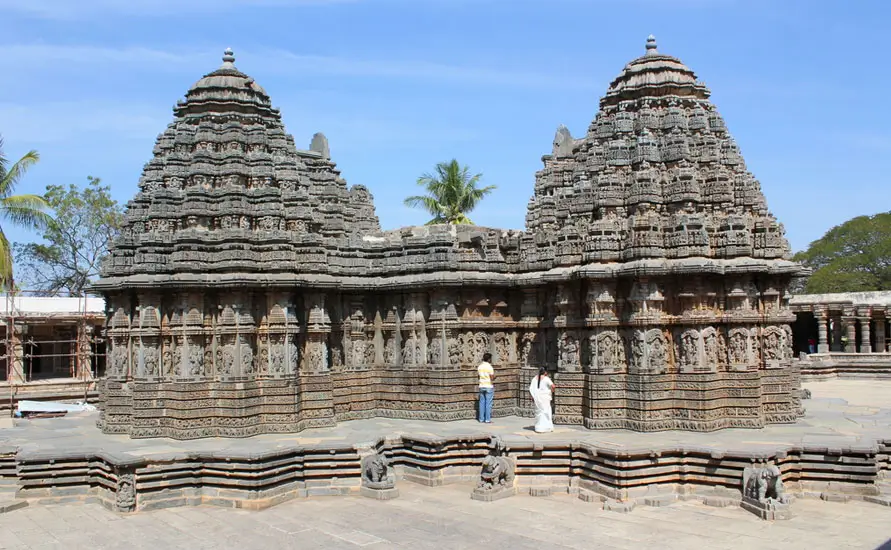 Kerala Backwaters Escape
 Kerala Backwaters Escape
 Kerala Backwaters Escape
 Kerala Backwaters Escape
 Kerala Backwaters Escape
 Kerala Backwaters Escape
 Kerala Backwaters Escape
 Kerala Backwaters Escape
 Kerala Backwaters Escape
 Kerala Backwaters Escape
 Kerala Backwaters Escape
 Kerala Backwaters Escape
 Kerala Backwaters Escape
 Kerala Backwaters Escape
 Kerala Backwaters Escape
 Kerala Backwaters Escape
 Kerala Backwaters Escape
 Kerala Backwaters Escape