 Kerala Backwaters Escape

Karnataka Tour Packages
Bangalore – Bylakuppe – Coorg – Belur – Chikmagalur – Hampi – Goa
At a glance
Few travelers realize that the beans in a good espresso blend may well have grown on the hills west of Bangalore. Our Coffee Country and Hampi Tour spends the first half of ten days in the shade-grown plantations of Coorg and Chikmagalur, where pepper vines climb the trees above the coffee bushes and planters still judge a crop by smell and taste. The second half trades green slopes for granite: the boulder fields and royal ruins of Hampi, capital of the Vijayanagara empire, before a final night near the beach in Goa.
Coffee is the thread that holds the first five days together. You walk working estates with a planter or estate manager, learn why robusta grows lower and arabica higher, watch ripe cherry being pulped and spread out to dry, and sit down for a proper cupping session, spoons and all. In Chikmagalur you also climb toward Baba Budangiri, the range tied to the story of how coffee first reached India. The Coffee Country and Hampi Tour then crosses the Deccan plateau to the ruins, with three full nights so you are never racing the sun.
We built this private Karnataka coffee tour for overseas guests who like a practical, unhurried pace, and for NRI travelers raised on filter coffee who are curious about where the beans come from. The same air-conditioned vehicle, with a driver who speaks English, covers every road leg, and licensed guides meet you at the key sites. November to February is the best window, because picking is under way on the estates and Hampi is cool enough to walk in the middle of the day.
Look for our driver and your name card once you clear customs at Kempegowda International; the ride to your Bangalore hotel then runs about an hour, or longer in rush traffic. Plenty of flights from Europe and the Gulf arrive around 2 or 3 am, so the morning stays open. Rest, order a late breakfast and give the jet lag a few hours to fade. If you land at dawn and need a room straight away, tell us before you travel so we can request an early check-in. On arrival we hand over a paper copy of the route, help with an Indian SIM card if needed, and give you a support number staffed around the clock.
Bangalore makes a natural first stop on a coffee trip, because the city takes its morning cup very seriously. After lunch, head with your guide to an old darshini in Basavanagudi or Malleswaram, a stand-up café where the coffee comes in a steel tumbler resting inside a small bowl known as a dabara. The coffee is poured from one vessel to the other to cool it and build froth, and most places mix in a little chicory, a habit that goes back to the years when pure coffee was expensive. Your guide explains how this decoction is brewed overnight in a two-part metal filter at home.
From the café you continue to the Bull Temple, where a monolithic Nandi carved from grey granite has been worshipped since the time of Kempe Gowda, the 16th-century chief credited with founding the city. Close by lies Lalbagh Botanical Garden, where an hour is enough for the old rain trees, the glasshouse and the ancient granite outcrop near the southern gate. Should you feel lively later on, the city's microbreweries and specialty roasters sit near most central hotels, and the driver is happy to drop you off. Overnight in Bangalore.
Leave after an early breakfast to get clear of city traffic before it builds. The road runs south-west on the Mysore expressway, then turns west across farmland planted with sugarcane, coconut and ragi, the finger millet that is still a staple in rural Karnataka. Breakfast number two, idli and strong tea at a highway eatery, comes about an hour out of town. The landscape changes slowly as you approach the hills: fields give way to arecanut groves, and the air picks up a faint smell of woodsmoke. Because the drive is long, we split it near the midpoint with a colorful and rather unexpected stop.
Roughly 220 km out of Bangalore you reach Bylakuppe, where Tibetan refugees were given land by the old Mysore state in the early 1960s and built what is now among the biggest Tibetan communities in exile. The heart of the camp is Namdroling Monastery, a Nyingma institution where thousands of monks and nuns study and pray. Locals simply call its central hall the Golden Temple, after the gilded Buddha, Padmasambhava and Amitayus inside, each figure nearly 18 meters high. Visitors may enter quietly, with shoes removed. If you arrive during an afternoon prayer session, you will hear long horns and deep chanting fill the hall. Momos and butter tea are served in small cafés outside the gate.
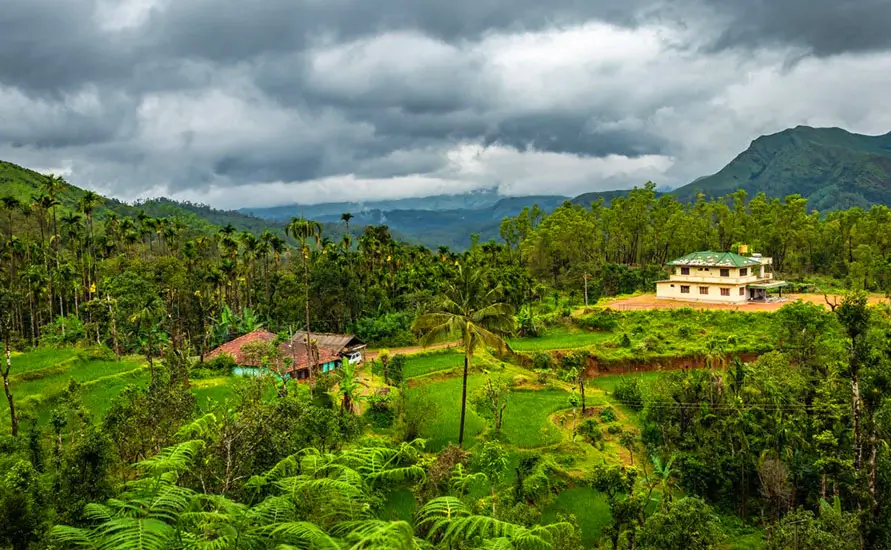
Another ninety minutes brings you up into Coorg, or Kodagu, the hill district that grows more coffee than almost any other in India. The road climbs past the town of Kushalnagar into a green landscape of estates, paddy valleys and forest. You sleep the next two nights at a plantation resort or estate bungalow, often with coffee bushes growing right up to the veranda. As evening falls, the temperature drops noticeably and the sound of cicadas takes over. Ask the kitchen for Kodava food at dinner: pandi curry, pork cooked dark and sour with kachampuli vinegar, and a side of kadambuttu, steamed rice dumplings the size of a fist. Overnight in Coorg.
Mornings on a Coorg coffee estate start early, so join the estate manager or a senior worker after breakfast for a walk through the plantation. Every coffee bush here lives in shade, below silver oak, jackfruit and native forest trees, and the trunks of those trees double as poles for black pepper vines. Your host shows you the difference between robusta, the hardier plant that covers most of Coorg, and arabica, which prefers higher and cooler slopes. If you visit between November and February, pickers will be moving through the rows with baskets, stripping ripe red cherry by hand. In March or April, the first rains bring out white, jasmine-scented blossom.
The walk ends at the processing area, where you follow the cherry after it leaves the bush. On some estates it is pulped, fermented and washed to produce parchment coffee, while on others whole cherry is spread out on concrete yards and raked several times a day until it dries hard and dark. Your host explains how each method changes the final cup and why weather in the picking months can make or break a season. Many estates also grow cardamom, oranges and vanilla, and you may be offered a handful of fresh pepper to take home. Lunch is served on the estate or in a local restaurant.
Then it is on to Madikeri, Kodagu's small capital, where the fort walls bear the marks of Tipu Sultan's rebuilding and later British changes, and the former rajas' palace and a small museum stand within. Along the way the guide introduces the Kodavas, a proud warrior community with their own tongue, ancestral clan homes and harvest festivals, and one of the few groups in India allowed to keep guns without a license. Sunset is spent at Raja's Seat, a ridge-top garden where, according to local lore, the rulers of Coorg came to watch evening settle over the folded hills. Overnight in Coorg.
After a last walk around the estate with your morning cup, you check out and head north through Somwarpet and Sakleshpur. The route follows the edge of the Western Ghats, where the hills are covered in more coffee, cardamom and pepper, and the roadside is lined with stalls selling estate honey and homemade chocolate. Just say the word if you want to pull over for photos or spices. Around midday, or a bit before, you pull into Belur, on the plains just east of the coffee hills, home to some of the finest temple carving in South India and timed for a late-morning visit.
King Vishnuvardhana of the Hoysala dynasty ordered the Chennakeshava Temple at Belur in 1117, and since 2023 it has shared a UNESCO listing with Halebidu and Somanathapura under the title Sacred Ensembles of the Hoysalas. Built in soft soapstone that hardens with exposure to air, it allowed sculptors to carve detail as fine as jewelry. Look up at the dancers carved on the brackets below the eaves: one admires herself in a mirror, another shoos away a monkey pulling at her sari. In the dim hall, pillars shaped as if on a lathe glow in the light from the door, no two carved alike. Footwear stays outside, and bare feet will notice the warm stone by noon.
From Belur it is only about 25 km and forty minutes to Chikmagalur, the district where Indian coffee began. The road rises gently toward the Mullayanagiri range, and late in the afternoon you settle into a plantation stay for the next two nights. Some properties sit high enough for clear views across the valley toward the Baba Budangiri hills you will visit tomorrow. Before dinner, take a short stroll on the estate paths while the light fades, and ask your hosts about this season's crop. Dinner can feature Malnad dishes such as akki rotti, rice flatbread, with a spicy chicken or vegetable curry. Overnight in Chikmagalur.
Set off early for the hills north of town, about an hour's drive along a narrow road that climbs through shola forest and grassland. Baba Budangiri carries the name of a Sufi holy man said to have come home from the Hajj around the 1600s with seven green coffee beans hidden in his belt, smuggled out while Arab traders still kept the plant to themselves. He is said to have planted them near his cave in these hills, and Chikmagalur's coffee industry grew from that small beginning. Hindus honor the same cave as the Dattatreya Peetha, and your guide can describe how two faiths have long claimed and shared it.
From the shrine the road continues to Mullayanagiri, which rises to about 1,930 meters and is the highest peak in Karnataka. You leave the car just under the top and climb a flight of stone stairs to the hilltop shrine to Shiva. With clear skies the estates fall away in every direction and the Kudremukh range lines the western horizon, while in the rainy months cloud races over the ridge. Wear shoes with grip and carry a light jacket, because the wind can be cold even when the plains below are warm. Weekends and holidays are crowded, so we aim for a weekday if your dates allow.
After lunch back at your estate, it is time for the session many coffee lovers look forward to most: a coffee cupping led by the estate's taster or a local roaster. Beans from several lots are roasted, ground into separate bowls and covered with hot water; after a short wait you push a spoon through the floating grounds and lean in to catch the aroma. Then comes the slurping, which spreads the coffee across the palate, and a discussion of body, acidity and aftertaste. You will taste the difference between washed and natural processing, and between arabica and robusta, side by side. Beans can usually be bought on site. Overnight in Chikmagalur.
Most of today goes to the drive, which means an early breakfast and an early start. The drive runs north-east through Tarikere and the old trading town of Davanagere, known across Karnataka for its butter-laden benne dosa, and your driver can stop there for an early lunch. As you descend from the Malnad hills onto the Deccan plateau, the green of the estates fades into wide fields of maize, sunflower and cotton dotted with windmills. Breaks for tea and stretching are planned every two hours or so. The road is mostly good, though the last stretch slows down near the towns.
Toward evening the boulders around Hampi come into view, glowing orange in the low light, and you check in close to the ruins for three nights. Most places to stay are in Kamalapur or along the road to Hosapete, about ten to twenty minutes from the main sites. No visits are planned tonight, though a quick drive to a nearby viewpoint for the last light is easy to arrange. Have an early dinner and rest, because tomorrow starts with a temple at sunrise. Overnight in Hampi.
The ruins of Hampi spread across more than 25 square kilometers, and the UNESCO site was once Vijayanagara, a capital that Portuguese and Persian visitors in the 1500s compared to Rome in size. Begin at the Virupaksha Temple, older than the empire itself and never abandoned, with daily rituals that continue today. Its eastern tower looms over the former bazaar, and in a small dark room inside, light through a narrow gap throws an inverted picture of the gopuram onto the wall. Morning prayers draw pilgrims from across the state, so arrive early and keep shoulders and knees covered. Shoes are left at the gate.
A few minutes uphill from the temple sits Hemakuta Hill, bare granite dotted with small shrines that predate the Vijayanagara rulers. From the top you look down over the Virupaksha gopuram, the river and a skyline of balanced boulders that seems almost unreal. Farther south are two giant Ganesha figures, Sasivekalu and Kadalekalu, nicknamed for the mustard seed and the Bengal gram their round stomachs recall. Then you visit the Lakshmi Narasimha statue, nearly seven meters tall and carved from a single boulder, and the Badavilinga shrine next to it, where water still flows around the base of the linga.
After lunch and a midday rest, you walk the length of the Hampi Bazaar, the long colonnaded street where merchants once traded horses, pearls and textiles under the eyes of visiting envoys. The pavilions along it are now partly restored, and at the far end steps lead up toward Matanga Hill. Come sunset, climb back to Hemakuta or another rocky perch to see the ruins turn gold, a scene that ends up in countless photo albums. If you have time before dinner, your guide can suggest a café serving South Indian thalis or wood-fired pizza near the bazaar area. Overnight in Hampi.
Today's highlight is the Vittala Temple, best seen in the early morning before tour buses arrive. Private cars stop at a parking area, and battery-powered vehicles or a short walk cover the final stretch. At the center of the temple yard sits the stone chariot, a Garuda shrine built to resemble a festival car, an image that also appears on the reverse of India's ₹50 bill. The main hall holds the so-called musical pillars, slim stone columns that once rang with different tones when tapped. Visitors may no longer tap them, since the stone was getting damaged, yet the guide can explain the acoustics and point out the clearest reliefs of drummers and dancers.
By late morning you are in the Royal Centre, where the court, not the gods, held sway. Here you see the Mahanavami Dibba, a stepped stone platform where kings watched the Navaratri festival, covered with friezes of hunting scenes, camels and foreign visitors. Nearby are the geometric stepped tank, the Queen's Bath and the Lotus Mahal, a pavilion that blends Indian and Islamic arches. The long domed Elephant Stables close the visit. The Kamalapur archaeological museum, worth a visit for its sculptures and a large model of the ruins, shuts on Fridays, so we move it to another afternoon when needed. Lunch is at a restaurant nearby.
Toward evening, walk down to the Tungabhadra and step into a coracle, a round bamboo basket boat lined with plastic or hide, a design boatmen here have used for centuries. The boatman spins the craft gently between granite banks, past riverside shrines and fishermen setting nets, and the view of the ruins from water level is quite different. When the river is high, mostly during and shortly after the monsoon, coracles stop running, and we swap in a walk along the riverside ruins. Your last evening in Hampi is free. Overnight in Hampi.
Hampi falls behind after breakfast as the car heads west for the sea. The route passes through Hosapete and the farmland of northern Karnataka, then crosses the plateau via Hubballi or Haliyal before dropping down the Western Ghats through teak and bamboo forest. The descent into Goa is one of the most scenic parts of the road, with views across the coastal plain when the weather is clear. Your driver plans stops for lunch and breaks for coffee, and can adjust the route depending on traffic and road works. Expect to spend most of the day in the car, so keep a book or music handy.
By late afternoon you pull up at a beach hotel in Goa for the final night. We pick its location to suit your flight, south Goa for Dabolim or the north for the newer airport at Mopa. The evening is free for a swim, a walk along the sand or a dinner of Goan fish curry, prawn balchão or pork vindaloo at a beach shack. If you would like to stay a few more days by the sea, we can extend your stay before you leave. Overnight in Goa.
Take your time over breakfast and a final stroll by the sea. Pickup is set by your flight time, so that you reach the terminal three hours ahead for international routes or two for domestic ones. The transfer from most beach areas takes thirty minutes to an hour to Dabolim, and longer to Mopa. Rooms are usually released at noon, so guests on evening flights can ask us to arrange a late checkout or day room, charged separately.
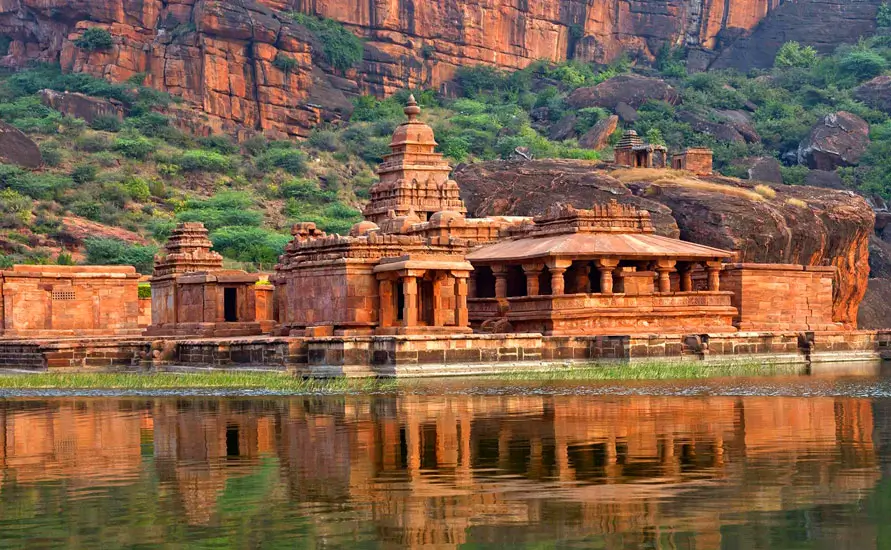
Over ten days you have followed coffee from the bush to the cup in Coorg and Chikmagalur, and then walked through the ruins of a medieval capital at Hampi. Halebidu, the Gokarna coast and the Badami caves would make a fine second Karnataka trip, and we would happily plan it with you. Have a safe flight home, and enjoy the coffee you carry back in your bag.
Your Journey

N.S. Rathore & Mrs. Omlata Rathore · Managing Director
We still read every enquiry ourselves. Tell us the places you liked and our planners will send a day-by-day route with drive times and a clear price.
Every package can be customised and no pressure to book. A planner from our office replies within 24 hours with a route written for your group.
Fill this in and your planner will send a first draft itinerary.
Explore more
Kerala Backwaters Escape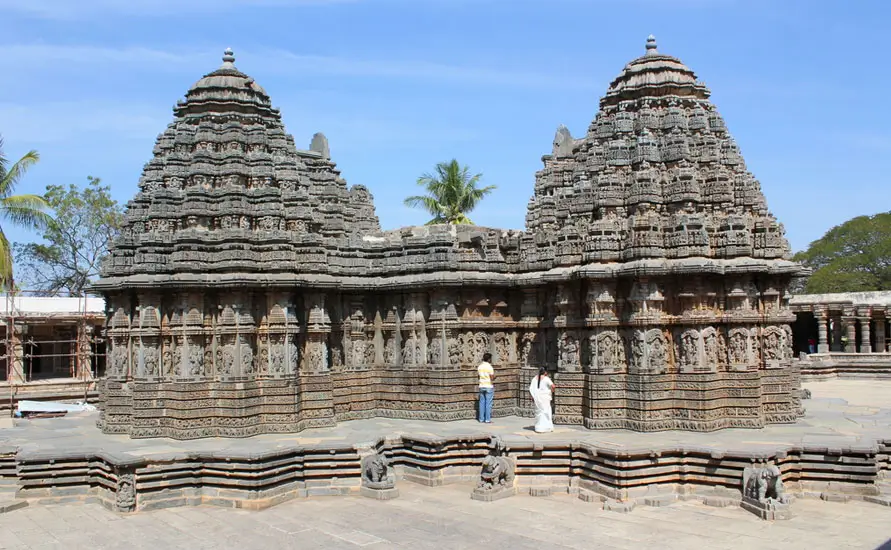 Kerala Backwaters Escape
 Kerala Backwaters Escape
 Kerala Backwaters Escape
 Kerala Backwaters Escape
 Kerala Backwaters Escape