 Kerala Backwaters Escape

Karnataka Tour Packages
Bangalore – Srirangapatna – Mysore – Coorg – Belur – Chikmagalur – Hampi (Anegundi) – Gokarna – Goa
At a glance
Most itineraries in India change hotels every night or two. Our Karnataka Slow Travel Tour with Homestays does the opposite. Across sixteen days you unpack only six times: three nights each with families in Mysore, on a Coorg coffee estate, on a farm near Chikmagalur and in Anegundi village opposite Hampi, then two sea-facing nights at Gokarna. Your hosts are local families who cook for you, take you to their markets and temples, and introduce you to neighbors you would never meet from a hotel lobby.
Sightseeing is still part of the plan: Mysore Palace, the Hoysala carvings at Belur and Somanathapura, Baba Budangiri and the ruins of Vijayanagara. But each place gets a full free day as well, with time for a cooking lesson in a family kitchen, a walk through paddy fields with a farmer, or an afternoon reading on a veranda while it rains. Driving days are kept to a minimum. This Karnataka homestay tour is for people who would rather know one village well than see ten from a car window.
Repeat visitors to India, people who dislike rushing, and NRI parents keen for their children to eat at a Kannada or Kodava family table are the guests we had in mind for the Karnataka Slow Travel Tour with Homestays. Homestays are chosen for warmth and cleanliness rather than luxury, with private bathrooms in every case. Your private car and its English-speaking driver stay on call for the whole route, and licensed guides step in at the big monuments. Travel from October to March and the days stay mild.
Slow travel begins with a slow first day. Past customs at Kempegowda International, a member of our team waits holding a name board, and the car ride into Bangalore takes roughly sixty minutes. Because this is the only hotel night of the first two weeks, we choose a comfortable, quiet property in a leafy part of town where you can sleep off the flight. If you land before dawn and want the room straight away, we can book it from the previous night. During the drive our representative goes over the route, the homestays and how to reach us at any hour.
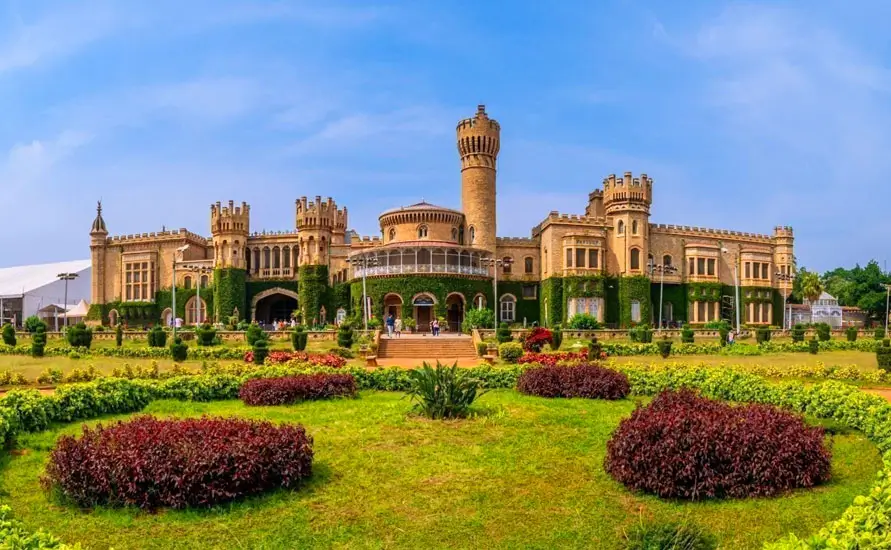
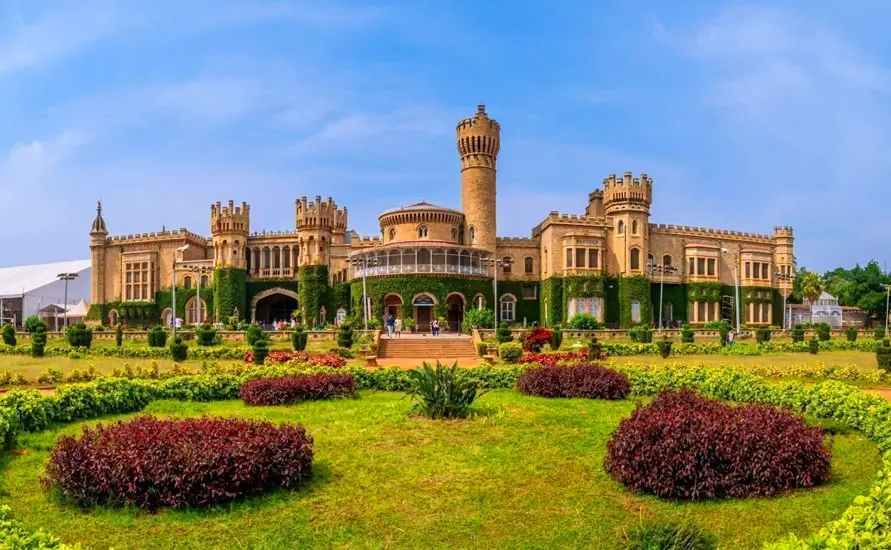
Toward five o'clock a guide calls for an easy amble, not a sightseeing marathon. The route takes in Cubbon Park, a large green space laid out in the 1870s, where joggers, dog walkers and students reading under bamboo groves give a sense of everyday Bangalore. Around its edges rise the brick-red State Central Library and the vast granite Vidhana Soudha, where Karnataka's lawmakers sit, seen from outside. Your guide talks you through the city's history, from its foundation by Kempe Gowda in 1537 to its role as India's technology capital.
Dinner is a good place to start learning Karnataka food. Ask for bisi bele bath at one of the old-style eateries your guide suggests: rice, toor dal and vegetables cooked soft with tamarind and a roasted spice blend, topped with ghee and crunchy boondi. Bangalore is also home to dozens of microbreweries if you would like a cold beer after the long flight. Tonight is the last hotel bed for two weeks; from tomorrow, mealtimes and mornings follow the rhythm of whichever household you are staying with. Overnight in Bangalore.
A relaxed breakfast, then onto the expressway south toward Mysore. Some two and a half hours on, you cross the Kaveri into Srirangapatna, the river-island stronghold from which Tipu Sultan ruled. Your guide starts at the Ranganathaswamy Temple, older than the fort around it, where Vishnu lies stretched on the serpent Adishesha, then follow the broken ramparts to the marker where Tipu was killed when the British stormed the fort in 1799. Inside the teak Daria Daulat Bagh, his garden palace, murals still show his cavalry routing British troops at Pollilur.
From Srirangapatna it is only half an hour to Mysore, and your homestay is in one of the older residential areas of the city, close to the palace. Your hosts are a local family who have opened part of their house to guests, and they will show you to your room, offer you tea or filter coffee, and explain how the household works: when meals are served, which areas are private and what you can ask for. Homes like this often have a puja room, a courtyard or terrace, and a kitchen run by the senior women of the family, who decide what will be on the table each day.
Spend the late afternoon getting to know the neighborhood on foot with your hosts or simply on your own. Mysore is an easy, walkable city, with tree-lined roads, old bungalows and small corner shops selling agarbatti incense, jasmine and the famous Mysore silk. Dinner is served at home, usually around 8 pm, and the first meal is often a simple one: rice, a lentil saaru, a vegetable palya stir-fried with coconut, and curd to finish. Ask questions, offer to help set the table, and do not be surprised if someone asks about your family, your work and your country in great detail. Overnight in Mysore.
One of the best ways to start a day in Mysore is to go shopping with your host. Many families still buy their vegetables, fruit and flowers at Devaraja Market, a covered market from the 19th century in the center of the city. Follow your host down lanes stacked with betel leaves, cones of colored kumkum, sweet limes and strings of Mysore jasmine. Your host shows you how to choose ripe bananas from the many varieties sold here and how much a fair price for a handful of curry leaves is. Back home, you can watch or help as these purchases go into lunch.
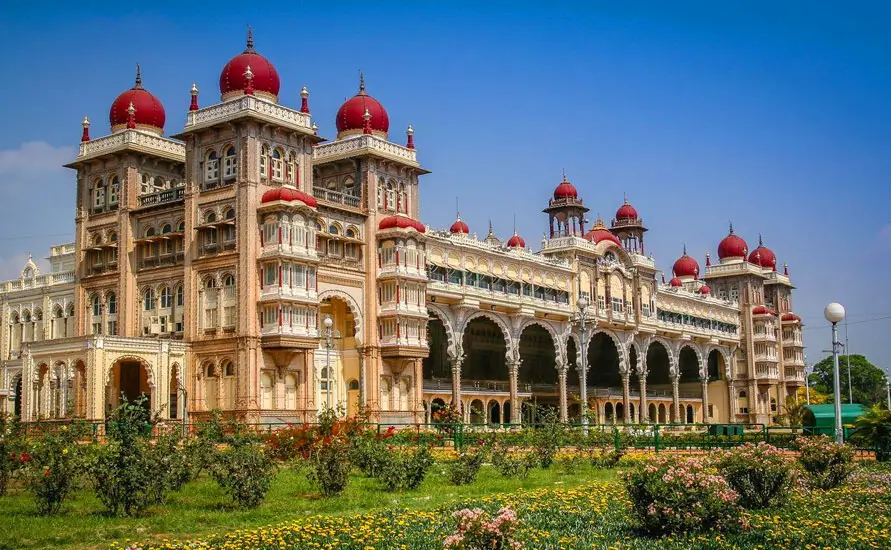
After lunch a licensed guide meets you at Mysore Palace, home of the Wadiyar maharajas. The current building was completed in 1912 after an earlier palace burned down, and its mix of Hindu, Islamic, Gothic and Rajput styles makes it one of the most visited monuments in India. Shoes go in a free locker, and cameras stay away inside the state rooms. Your guide points out the painted Dasara procession on the walls of the Kalyana Mantapa, the octagonal wedding hall with its stained-glass ceiling, and the throne room where the Wadiyar kings once held court during the festival.
Is one of your Mysore evenings a Sunday or public holiday? Then go back at seven, to see the facade lit by close to a hundred thousand lamps for about forty-five minutes. On other days, a walk around Chamundi Hill or the old Lansdowne Bazaar is a good alternative. During the Dasara festival, usually in September or October, the city is busiest, and your hosts will be able to tell you about the processions, the decorated elephants of the royal parade and the doll displays many families still set up at home. Dinner tonight may include a homemade Mysore pak, the rich gram-flour sweet. Overnight in Mysore.
Early this morning your driver takes you about 30 km into the countryside east of Mysore for a village walk led by a local farmer or a guide from the area. Paths run along irrigation channels between paddy fields, sugarcane, coconut and patches of ragi, the finger millet that has been grown here for thousands of years. You pass farmhouses with cattle tied outside, women drawing kolam patterns in rice powder on the doorsteps, and perhaps a small shrine to a village goddess under a sacred tree. Your guide explains the farming year, from the monsoon planting to the harvest festival of Sankranti in January.
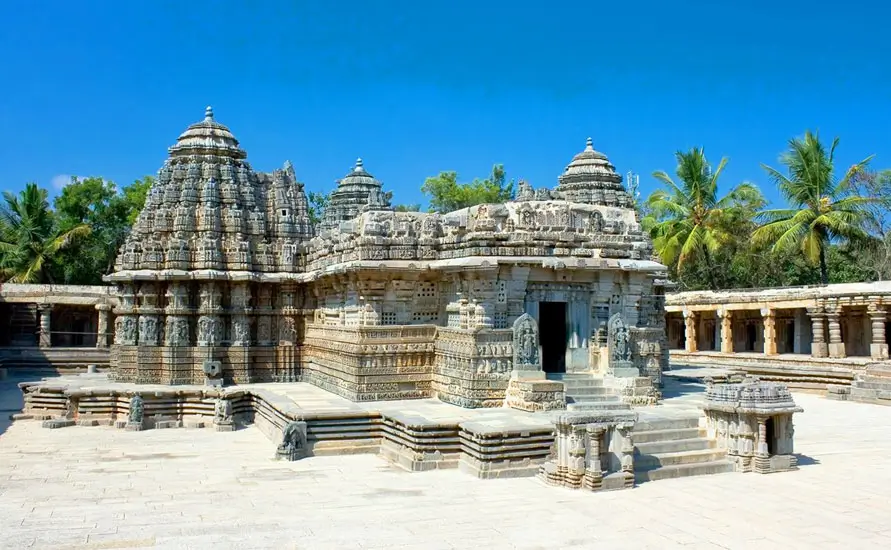
From the village it is a short drive to Somanathapura, where the Keshava Temple was built in 1268 by a general of the Hoysala king Narasimha III. Among the three UNESCO-listed Hoysala sites, this one survives most intact, a triple-towered shrine whose star-shaped plan sits on a raised platform. Bands of carving run around the plinth, with marching elephants, riders, leafy scrollwork and epic scenes in the upper rows. It is no longer a temple in worship, so the site is calm, with neat lawns and very few other visitors on weekdays. Your guide shows you where sculptors signed their names in the stone.
Back in Mysore after lunch, the afternoon is free for a home cooking lesson in the family kitchen. You learn the oggarane, the sizzle of mustard seed, curry leaf and red chili in hot oil that opens most Karnataka recipes, and how to grind coconut with spices on a stone or in a mixer. You might make a ragi mudde, a firm ball of millet flour eaten with a spicy saaru, a farmhouse staple that your host may tell you was looked down on in cities until recently. Eat what you have cooked for dinner with the family, and take notes of any recipes you want to try at home. Overnight in Mysore.
Farewells said, the car turns west after breakfast toward the hills. Beyond Hunsur, with its tobacco fields and brick curing barns, the land rises into Coorg, also called Kodagu, where forest and coffee cover the slopes. A detour leads to Bylakuppe, settled by Tibetan exiles in the 1960s, and the gilded main hall of Namdroling Monastery. Young novices kick a football or bowl a cricket ball between lessons while older monks pass in maroon. A cup of salt butter tea or a plate of momos at a café near the gate makes a good snack.
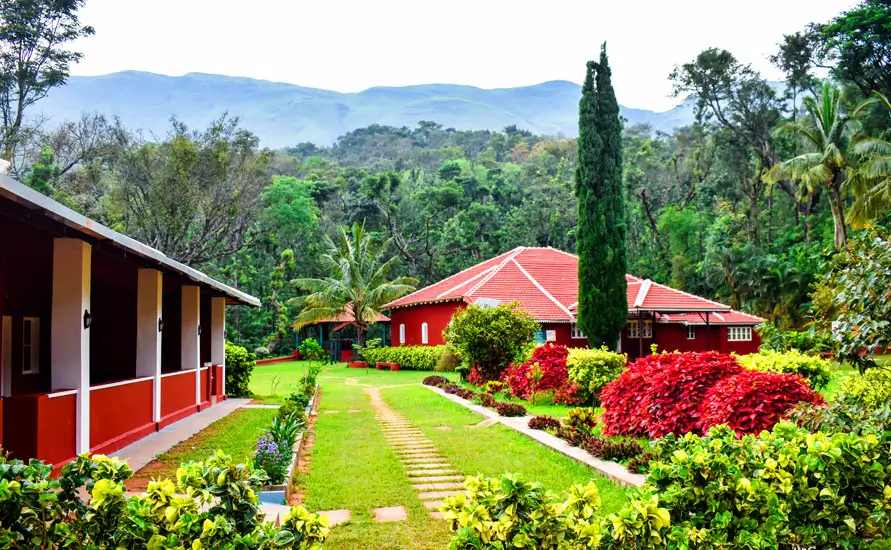
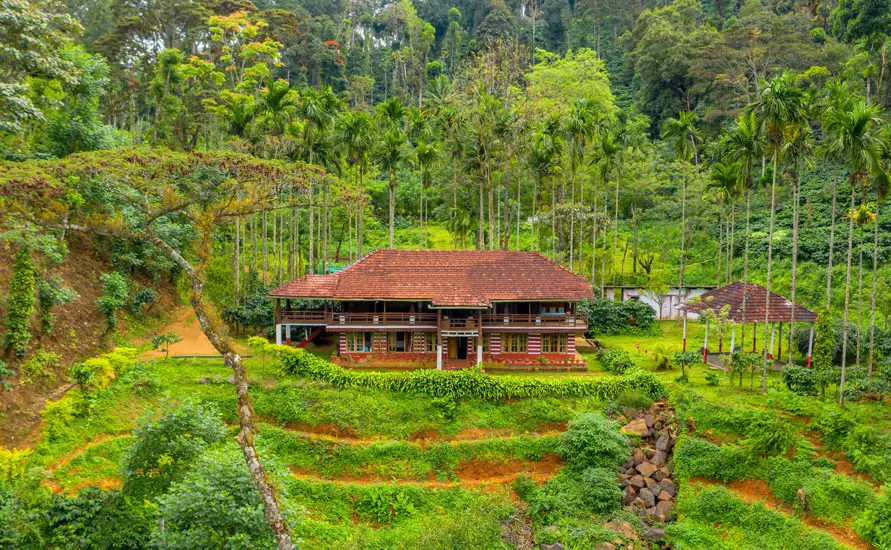
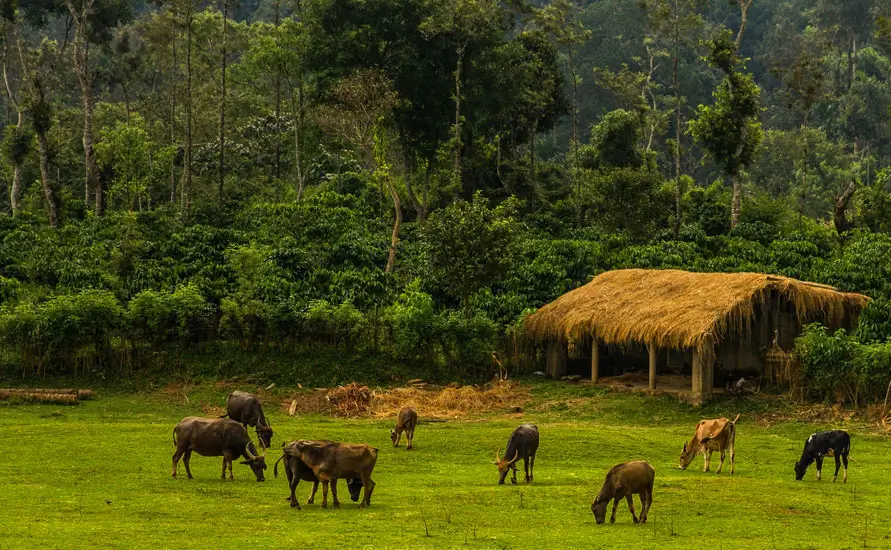
The Coorg coffee homestay belongs to a family, usually Kodava, whose grandparents or great-grandparents first cleared the land for coffee. The main house usually has a large veranda, sloping tiled roofs and a hearth where the family gathers in the cool months. Rooms are simple and comfortable, with private bathrooms and views over the coffee bushes and shade trees. Your hosts welcome you with a cup of coffee grown and roasted on the estate, and introduce you to the dogs, the cows and the workers who live on the property. It is a working farm, so expect the sounds of roosters, birds and machinery during the day.
Before dusk, one of the family takes you round the property on foot. They point out the different trees used for shade, such as silver oak, jackfruit and rosewood, and the pepper vines and cardamom plants that grow between them. You will often hear the call of Malabar whistling thrushes and the chatter of giant squirrels in the canopy. Dinner is served in the family dining room. Kodava food is meaty and full of flavor, and you may be offered pandi curry, pork cooked with dark kachampuli vinegar, along with rice rotis called akki otti and a bamboo-shoot curry in season. Overnight in Coorg.
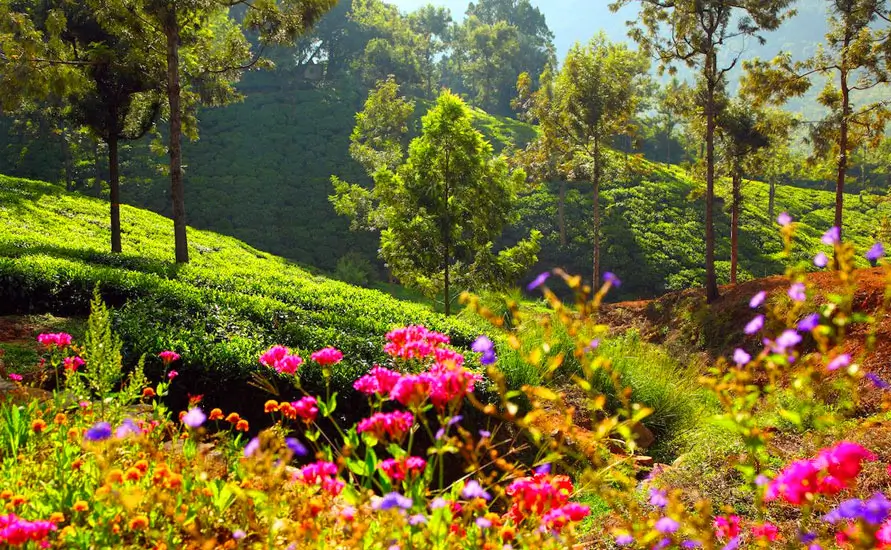
Today follows the working life of the estate. In the picking season, from November to February, you can join the workers in the morning and learn how to strip ripe red cherries from the branches without damaging the buds that will flower next year. At other times of year, there is pruning, weeding, shade-lopping or the spraying of the bushes, and your host will explain what each task means for the next crop. Flowering comes in March or April, set off by the first rains, which planters call blossom showers; for a few days the bushes turn white and smell faintly of jasmine.
Later in the morning, your host shows you what happens after picking. Small estates often dry whole cherry on cement yards, turning it with wooden rakes for a couple of weeks, before trucks take it to a curing works for hulling and grading. Some estates also pulp the fruit and wash the beans, and your host can explain how the method affects the flavor. You may also see pepper being separated from its stalks and dried, and cardamom pods being cured in a small kiln. If you would like to try roasting a small batch of beans in a pan over the hearth, many families are happy to show you the old way.
The afternoon is unscheduled. Read on the veranda, take a nap, or walk to a nearby stream with a member of the family. For an outing, Abbey Falls outside Madikeri is about forty minutes away, reached by steps through a private estate; it roars after the rains and thins to a ribbon by April. Over the evening fire, ask about Puttari, the December rice-harvest festival, or Kailpodh in September, when Kodava families honor their guns and swords. Dinner might include chicken curry with kadambuttu rice dumplings and a sweet made with estate honey. Overnight in Coorg.
This morning a local guide or your host leads you on a village walk through the paddy fields and hamlets near the estate. Kodava villages are spread out, with houses set among their own coffee and paddy land, linked by footpaths and streams. Your guide explains the importance of the ainmane, the ancestral clan house that each Kodava family traces itself back to. Many of these houses are more than a century old, with wooden pillars, courtyards and shrines to the ancestors, and some can be visited with permission. The family members who look after them often share stories of the clan, its warriors and its festivals.
After lunch at the homestay, an hour's drive west takes you to Bhagamandala, a temple town at the Triveni Sangama, where the Kannike stream and, by tradition, an invisible third river flow into the young Kaveri. The temple here, built in the Kerala style with copper-covered roofs, is one of the most important in Kodagu. A winding road continues for eight kilometers up to Talacauvery, the traditional source of the Kaveri, where a small pond and a shrine mark the place where the river is said to rise. Each October, during the festival of Tula Sankramana, thousands of pilgrims gather here to see the water surge from the spring at a fixed moment.
The views from the hill above Talacauvery, reached by a long flight of steps, stretch over the Brahmagiri range and, in clear weather, toward the plains of Kerala. Cover shoulders and knees for both shrines, and men should be ready to take off their shirts at Bhagamandala. Back at the estate, the evening is your last in Coorg, so it is a good time to buy some estate coffee, honey or spices from your hosts. The cook may prepare a farewell meal of local dishes, perhaps including noolputtu, steamed rice noodles, with a coconut curry and fried fish. Overnight in Coorg.
A longer drive today, broken by one of the great Hoysala temples. The route runs north via Somwarpet and Sakleshpur, a planters' market town on the rim of the ghats, then drops to the open country around Belur. The Chennakeshava Temple, finished in the 12th century under King Vishnuvardhana, is still a place of worship, and you may see priests offering flowers to the image of Vishnu. Your guide shows you around the outer walls, which are covered with friezes of elephants, lions, gods and dancers, all carved in soapstone, and the bracket figures of celestial maidens tucked under the eaves.
Inside, the dim pillared hall is lit only by daylight from the doors, and the lathe-turned columns gleam where centuries of hands have touched them. The Narasimha pillar, carved with tiny figures, is said to have once rotated on its base. With Halebidu, which you see tomorrow, and Somanathapura from Day 4, Belur makes up the UNESCO Hoysala listing. Shoes are left outside the gate, and a small fee is charged for parking. After the visit, stop for a simple South Indian lunch at a local restaurant, perhaps a plate of rice with sambar, rasam and a vegetable curry.
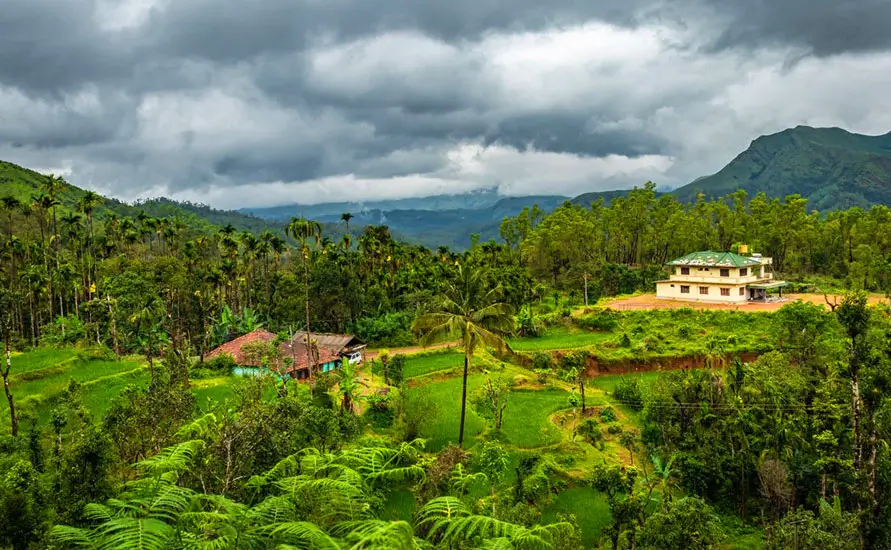
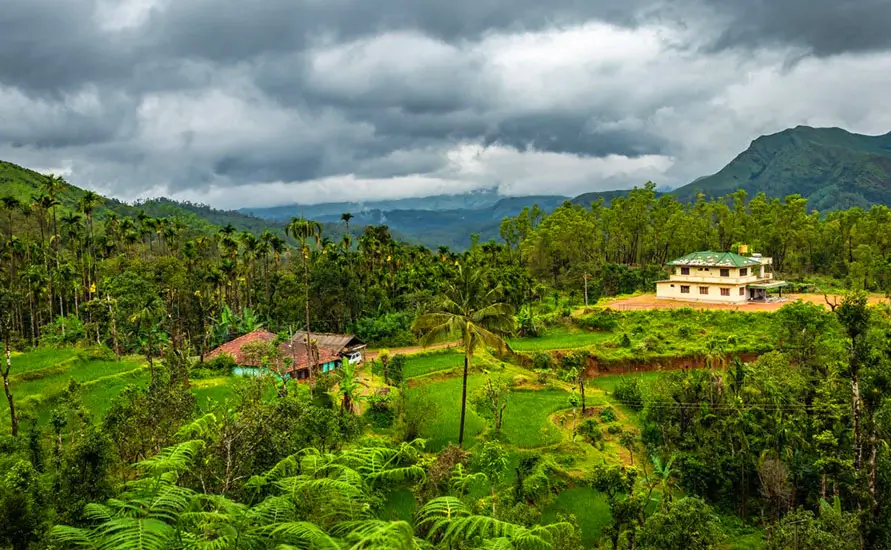
From Belur it is about forty minutes to Chikmagalur, where your next homestay sits on a small coffee or areca farm outside town. The family here is likely to be from the Malnad region, with its own style of cooking and its own dialect of Kannada. Many Malnad homes have long verandas, wooden ceilings and a central courtyard open to the sky where rain falls in the monsoon. Your hosts will show you around and serve tea or coffee as you settle in. Dinner may include akki rotti, a rice-flour flatbread cooked on a griddle, with a spicy chutney and a dish of colocasia leaves. Overnight in Chikmagalur.
Start the morning with your host on the farm. In Malnad homes, the day often begins with milking the cows and collecting flowers for the household shrine, and you are welcome to help or watch. Your host can take you around the kitchen garden, where vegetables, herbs and greens grow for the family's meals, and explain how areca nuts are harvested, boiled and dried, a crop that supports many small farmers in this region. If the family keeps bees, you may see the hives and taste honey straight from the comb. Breakfast might be a dosa made from fresh batter with a coconut chutney and a dollop of homemade butter.
Around eleven, set off on the hour-long drive to Halebidu, once Dorasamudra, the Hoysala royal seat. The Hoysaleswara Temple, begun around 1121, is a double temple with two shrines side by side, and its outer walls carry some of the most detailed carving in India. Your guide shows you panels of the Ramayana, Mahabharata and Bhagavata Purana, a dancing Ganesha and rows of animals around the base, each one different. Two large Nandi bulls sit in pavilions facing the shrines. Halebidu was sacked twice in the 14th century, and the temple was never completed, but what remains is remarkable.
Return to the homestay for a late lunch and a quiet afternoon. Curious about Malnad food? Ask to help with kadubu, rice dumplings steamed in turmeric or jackfruit leaves, or a jaggery and coconut payasa. In the evening, take a walk down the lane with your host to meet the neighbors, many of whom will be curious to see a visitor and happy to show you their own farm. The stars are bright here on a clear night, away from the lights of the town, and owls call from the areca palms. Overnight in Chikmagalur.
Breakfast is early, then the car climbs north toward Baba Budangiri. This range is linked to the beginning of coffee in India: tradition says a Sufi saint named Baba Budan brought seven beans from Arabia in the 1600s and planted them near his cave, which is now a shrine visited by Muslims and Hindus. The site has a long and sometimes disputed history, and your guide explains how both communities have come to share it. The road up winds through shola forests and wide grassy slopes, and in the cool months the hills are often in cloud until mid-morning, so take a warm layer with you.
A side road leads up to Mullayanagiri, Karnataka's highest peak at around 1,930 meters. The car can go almost to the top, and a short stone stairway leads to a small temple on the summit. From here the coffee country unfolds in every direction, and you may see eagles and kites riding the thermals over the ridges. It is breezy and cool, even in March. Weekends can be crowded with visitors from Bangalore, so we try to plan this trip on a weekday. Your driver will take it slowly on the narrow road, which has steep drops in places and only enough room for one car to pass at a time.
Return to the homestay for lunch and an easy afternoon. This is your last full day before the long drive north, so spend it as you like. If you are interested in coffee, your host can arrange a visit to a neighboring estate or a curing works, where green beans are graded and sorted for export. You might also visit the town market for spices, coffee powder or small gifts. In the evening, the family may invite you to join their puja or to sit with them while they watch a Kannada soap opera, a very ordinary but enjoyable way to see how people here spend their evenings at home. Overnight in Chikmagalur.
No other day on the route has as many kilometers, so hugs and photos with your hosts happen straight after an early breakfast. The road leaves the hills and crosses the Deccan plateau through Tarikere, Davanagere and Hosapete, a mostly flat landscape of maize, cotton and sunflower fields with granite outcrops rising here and there. Your driver plans regular stops, and lunch can be at a highway restaurant in Davanagere, a town famous for its benne dosa, a thick dosa cooked with a generous amount of butter. If you prefer, we can break the trip at a roadside temple or a sugarcane juice stall along the way.
You reach Anegundi in the late afternoon. This village lies on the north bank of the Tungabhadra, opposite the ruins of Hampi, and was an important town even before the Vijayanagara capital was founded. Your homestay here is a simple, traditional village home, often with whitewashed walls, a courtyard and a terrace with views over rice fields and granite boulders. Your hosts welcome you with tea, and dinner is a local North Karnataka meal, perhaps jolada rotti, a sorghum flatbread, with a spicy brinjal curry and a lentil dish. Overnight in Anegundi.
This morning the ruins of Hampi, seat of the Vijayanagara kings for some two hundred years and today on the UNESCO list, wait on the far bank. Your driver takes the road bridge downstream, a drive of roughly forty minutes, since the old crossing near the village is not open to cars. Your guide begins at the Virupaksha Temple, which never fell out of worship even after the city was sacked in 1565. Devotees queue with coconuts, bananas and garlands for the shrine of Shiva, and the tall eastern gateway faces the old Hampi Bazaar, a long avenue once lined with the houses of wealthy merchants.
From the temple, walk up the granite slope of Hemakuta Hill, scattered with small early shrines whose stepped pyramidal roofs predate the empire. From the top you see the river, the bazaar and a landscape of boulders that looks almost piled by hand. Your guide then leads you south past the giant Ganesha statues and the Lakshmi Narasimha monolith to the Royal Centre, the heart of courtly life. Highlights are the Mahanavami Dibba, the tiered stage where kings sat for Navaratri, a stepped tank of green schist uncovered only in the 1980s, and the royal chapel of Hazara Rama, its walls carved with lines of horses, dancers and soldiers.
Post-lunch, walk into the walled Zenana Enclosure for the Lotus Mahal, its two floors framed by scalloped Indo-Islamic arches, and next door the eleven domed bays of the Elephant Stables. By late afternoon you can choose to rest at a café or climb Malyavanta Hill for a sunset that is far quieter than the popular viewpoints near the bazaar. The drive back to Anegundi crosses the river and runs through rice fields as lamps come on in the villages. Dinner is with your hosts, who will probably want to hear what you made of the ruins, and may add a few local legends of their own. Overnight in Anegundi.
Make an early start for the Vittala Temple, before the heat and the tour groups arrive. Electric buggies carry visitors from the parking area, or you can walk about a kilometer along a path lined with ruined pavilions. In the yard stands the stone chariot, a Garuda sanctuary made to look like a temple cart, and in the hall the thin columns that were once struck like instruments. Hands off now, for conservation reasons, but your guide shows you the best reliefs, from drummers to the rearing lion-like yalis. You are back in Anegundi before the midday sun.
After an early lunch at home, a local guide walks you through Anegundi itself, a village where houses, temples and fortifications from different centuries stand side by side. You pass old gateways, the Ranganatha Temple and the Gagan Mahal, a palace associated with the royal family. Many women here earn an income weaving bags, mats and baskets from banana fiber through a village craft cooperative, and you can watch them at work and buy directly. Next, at the water's edge, a boatman spins you across the Tungabhadra in a coracle, his round basket boat, past boulders and small river shrines. Coracles stop when the river runs high, usually during and just after the monsoon.
In the late afternoon, drive a few minutes to the foot of Anjanadri Hill, which many Hindus believe to be the birthplace of Hanuman. The path is some 570 painted steps to the hilltop shrine; fit walkers take twenty minutes, others forty. Monkeys are everywhere, so keep food and bags zipped. From the top you look across rice paddies, banana groves and heaps of boulders to the ruins on the far bank. Stay for the sunset, then go home for a farewell dinner, perhaps ennegai, small brinjals stuffed with peanut and sesame masala, with jolada rotti. Pack tonight, since tomorrow is a long drive. Overnight in Anegundi.
After breakfast and a farewell to your hosts, you head west across the Deccan to the coast. The road passes through Hosapete and Hubballi, where you can stop for lunch, then crosses the Western Ghats through the forests around Yellapur. Coming down the ghats the road twists through teak and bamboo, and each bend brings warmer, damper air from the sea. Your driver can stop for tea or a stretch at a roadside stall or temple along the way, and will take care on the ghat road, which has many curves and heavy truck traffic.
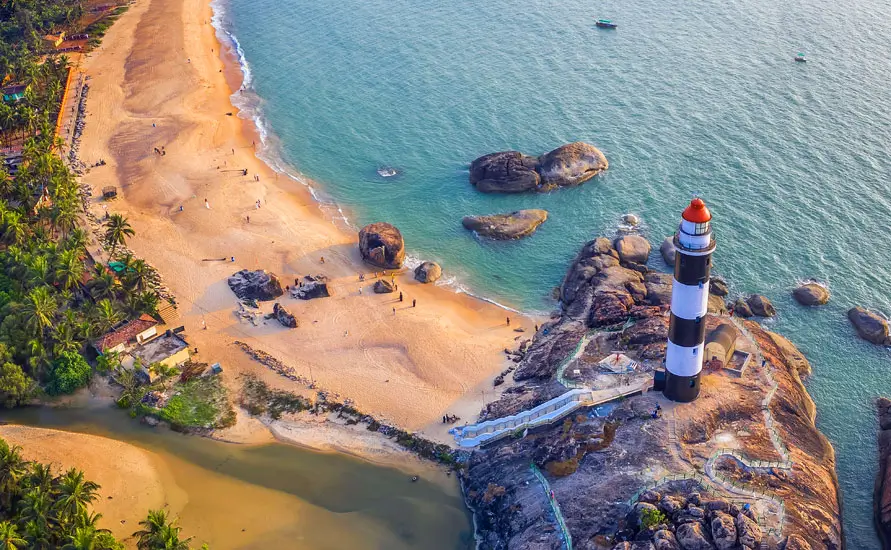
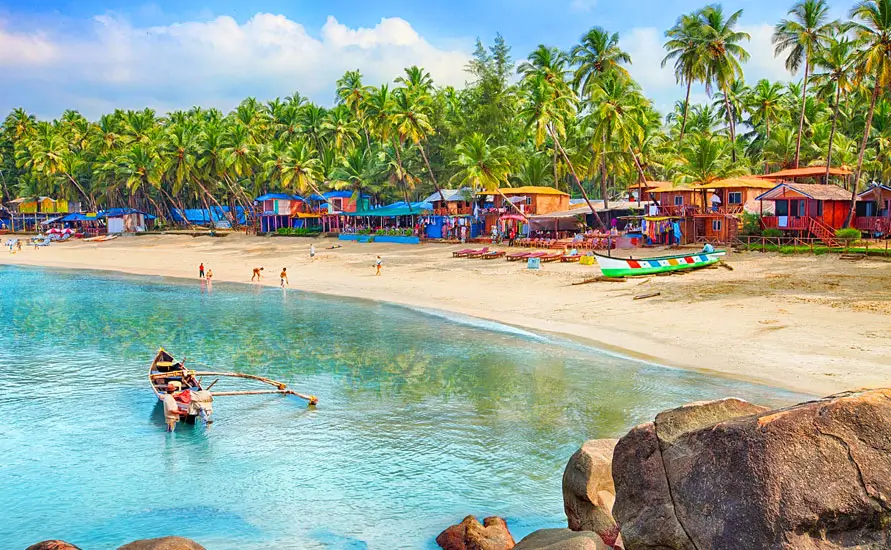
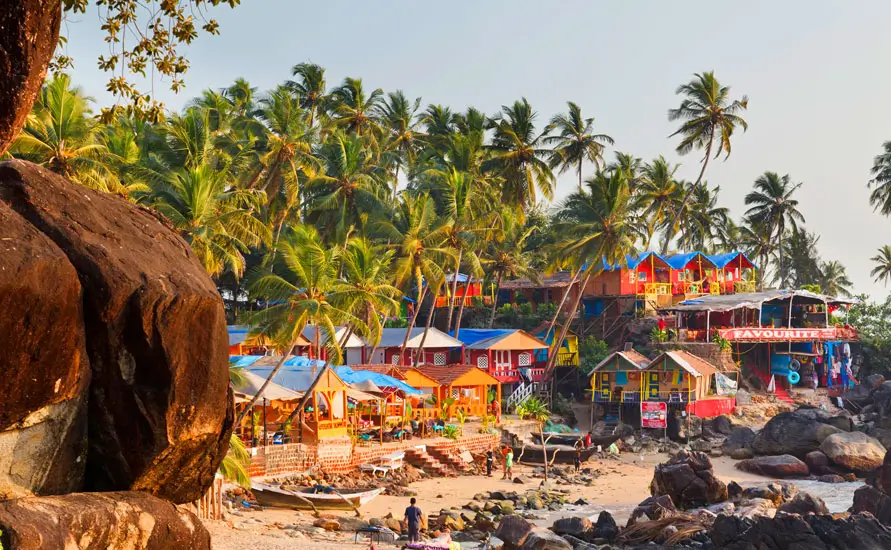
Late in the day you reach Gokarna and a small family guest house a short walk from the sand, home for the last two nights. After the inland villages, the sea air and the sound of waves are a welcome change. Walk down to the main beach to see pilgrims and local families in the water, or sit on the sand with a fresh coconut. Eat with your hosts or at a café on the sand: kingfish fry, prawn sukka, or a Konkani fish curry soured with kokum. Overnight in Gokarna.
Begin early at the Mahabaleshwar Temple, the reason pilgrims have come to Gokarna for centuries. Legend says Ganesha, disguised as a boy, fooled Ravana into setting down Shiva's atmalinga here as he carried it toward Lanka, and it could never be lifted again. Rules are traditional: men usually go in bare-chested, and the inner sanctum may be closed to non-Hindus or at certain hours, so follow your host's lead. Afterward, wander the car street with its wooden houses, brass shops and stalls of flowers and sacred thread, and stop for a breakfast of buns, sweet fluffy puris, with coconut chutney at a local café.
Mid-morning, set off on the coastal footpath that links the beaches south of town. The trail climbs over a rocky headland to Kudle Beach, a long curve of sand backed by cafés, and then over a second headland to Om Beach, whose two linked bays are said to resemble the sacred syllable. The walk takes about an hour, with little shade on the bare laterite tops, so carry water and a hat and wear proper shoes. From Om, a short boat ride brings you back toward town if you would rather not retrace your steps. Swim only where locals or lifeguards say the sea is safe.
The afternoon is left open, in the spirit of the whole trip. Lie under a palm with a book, try a drop-in yoga session, or watch the fishing boats come home from a café table. Many guests use this quiet time to write down recipes before they forget them and send photos to the families they stayed with. At dusk, the temple lamps are lit and pilgrims crowd the main beach for evening prayers. Your last dinner in Karnataka can be at a seafront shack with fried pomfret and neer dosa, or at the guest house. Overnight in Gokarna.
Your Journey

N.S. Rathore & Mrs. Omlata Rathore · Managing Director
We still read every enquiry ourselves. Tell us the places you liked and our planners will send a day-by-day route with drive times and a clear price.
Every package can be customised and no pressure to book. A planner from our office replies within 24 hours with a route written for your group.
Fill this in and your planner will send a first draft itinerary.
Explore more
Kerala Backwaters Escape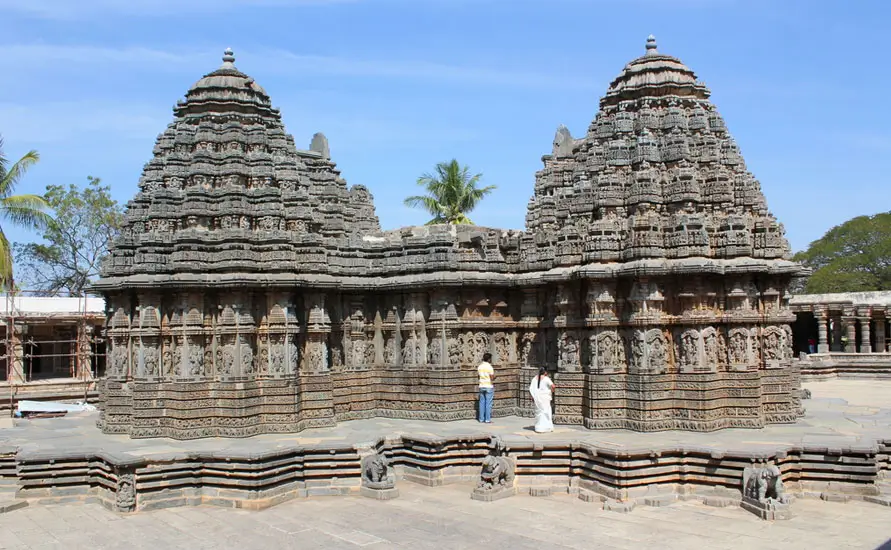 Kerala Backwaters Escape
 Kerala Backwaters Escape
 Kerala Backwaters Escape
 Kerala Backwaters Escape
 Kerala Backwaters Escape
 Kerala Backwaters Escape
 Kerala Backwaters Escape
 Kerala Backwaters Escape
 Kerala Backwaters Escape
 Kerala Backwaters Escape
 Kerala Backwaters Escape
 Kerala Backwaters Escape
 Kerala Backwaters Escape
 Kerala Backwaters Escape
 Kerala Backwaters Escape
 Kerala Backwaters Escape
 Kerala Backwaters Escape
 Kerala Backwaters Escape