 Kerala Backwaters Escape
Destination
Kochi, still called Cochin by many travelers and old maps, has been a port for spices and ideas for more than six hundred years. Arab, Chinese, Portuguese, Dutch, and British traders all came here for black pepper, and each group left something behind: fishing nets on the shore, a Portuguese church, a Dutch palace, a Jewish quarter, and old trading warehouses that now hold cafés and art galleries. For travelers on a Kerala tour, it's usually the first stop and one of the most enjoyable places in South India to explore on foot.
The city is really several towns joined by water. Ernakulam on the mainland is the modern commercial center with malls, offices, and the main railway stations. Across the harbor, on a narrow peninsula, sit Fort Kochi and Mattancherry, the historic heart of the city. This is where most visitors spend their time, walking shaded streets lined with colonial bungalows, sitting in garden cafés, and watching fishermen haul in their nets at sunset. The pace is slow, the streets are easy to walk, and almost everything worth seeing is within a mile or two.
Kochi also works well as a base for the rest of Kerala. The backwaters of Alleppey and Kumarakom are a short drive south, the tea hills of Munnar are a scenic drive east, and the international airport has good connections to the Gulf, Singapore, and major Indian cities. Two or three nights here give you time to adjust to the climate, try real Kerala food, and see one of the more unusual historic districts in Asia.
Chinese Fishing Nets, St. Francis Church, Mattancherry Palace, Paradesi Synagogue, Jew Town, Kathakali performance
October – March
Dry, sunny days and cooler evenings
2 Days
Add 1 day for a backwater or Cherai Beach trip
Malayalam, English.
English widely understood in hotels, shops, and cafés
Kochi is a great place to discover Kerala cuisine, which leans heavily on coconut, curry leaves, black pepper, and fresh seafood. Try appam with stew, a lacy rice pancake served with a mild coconut-milk curry. Karimeen pollichathu is pearl spot fish marinated in spices, wrapped in banana leaf, and grilled. Fish moilee is a gentle, yellow coconut curry that suits travelers who don't like too much heat. Look for Kerala parotta with beef or chicken fry, and for lunch try a Kerala sadya, a vegetarian meal served on a banana leaf with rice and more than a dozen small dishes. Fort Kochi's cafés also serve good Western breakfasts and coffee. Finish with banana fritters (pazham pori) and a cup of sweet tea.
Jew Town and Mattancherry are the main shopping streets for visitors, with antiques, old wooden doors, brass lamps, textiles, and Kashmiri crafts sold alongside Kerala items. Not all "antiques" are old, so buy what you like rather than paying for age. Spices, tea, and coffee are the best buys and travel well; buy from established shops near the spice market. Kerala cotton sarees and mundu (the traditional white wraparound with a gold border) make good gifts. In Ernakulam, MG Road and Broadway have local markets, and Lulu Mall is one of the largest shopping malls in India, handy for anything you forgot to pack.
Read More +Like what you see? Let's plan it for you.
Private car, driver and hotels arranged around your dates. Reply within 24 hours.
Kochi
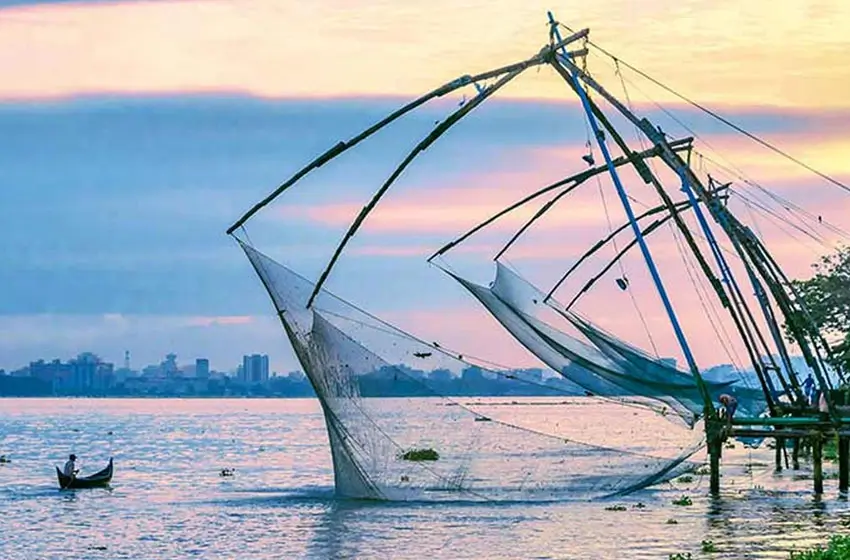
The tall, cantilevered Chinese fishing nets along the Fort Kochi waterfront are the image most people connect with the city. Each net is a large wooden frame with a mesh hanging from it, balanced by heavy stones on ropes so that a team of four to six men can lower it into the water and raise it again. They are believed to have arrived with traders from China centuries ago, and they're still in use. Come in the early morning or around sunset, when the nets are working and the light over the harbor is soft. Fishermen will often let you help pull the ropes for a small tip. Next to the nets, stalls sell the fresh catch, and nearby kitchens will cook it for you on the spot.
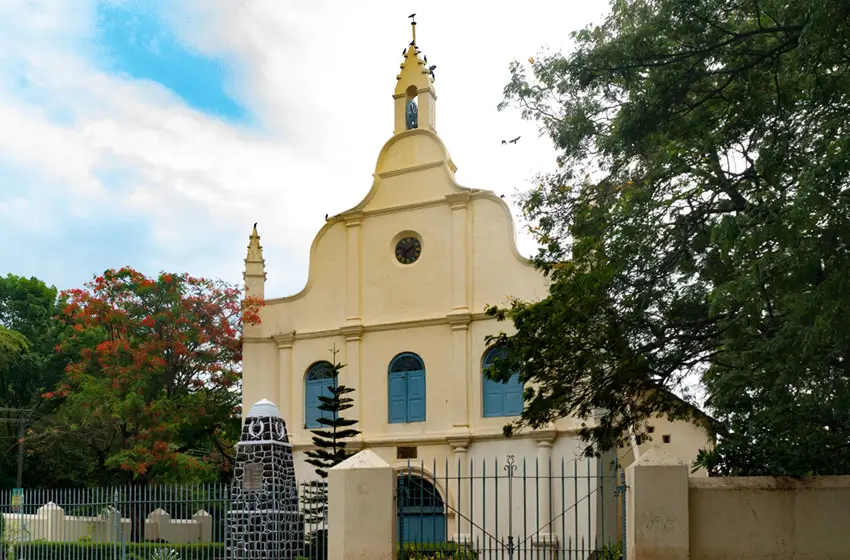
Built by the Portuguese in the early 1500s, St. Francis Church is considered the oldest European-built church in India. The explorer Vasco da Gama died in Kochi in 1524 and was first buried here, and his gravestone can still be seen inside, though his remains were later taken back to Portugal. The church passed from the Portuguese to the Dutch and then to the British, and today it belongs to the Church of South India. It's a simple, whitewashed building with a quiet interior, old tombstones set into the walls, and hand-pulled cloth fans called punkahs hanging from the ceiling. Services still take place, so visit quietly and dress modestly.
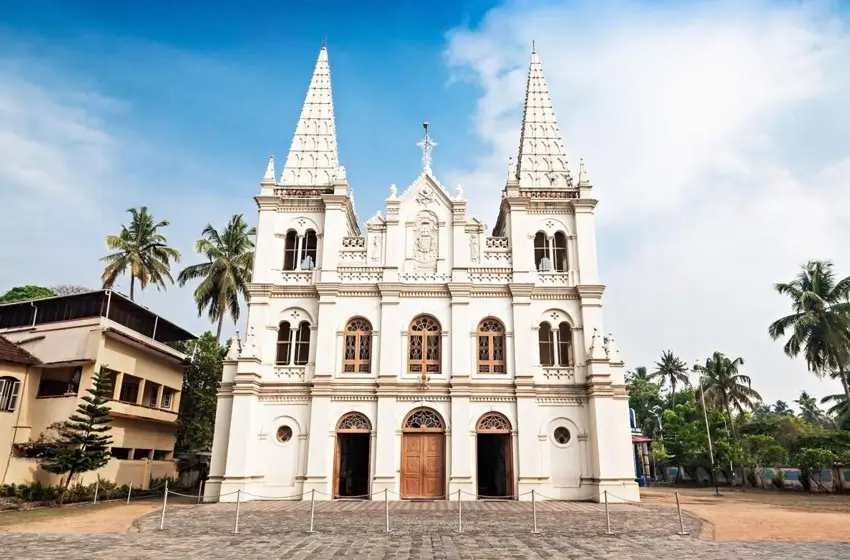
A few minutes' walk from St. Francis Church, the Santa Cruz Cathedral Basilica is a very different building. Its white Gothic-style exterior with twin spires hides a colorful interior filled with painted ceilings, murals of the Stations of the Cross, and stained glass. The present structure dates to the early 1900s, built on the site of a much older Portuguese church. It's one of the most important Catholic churches in Kerala and a lovely, cool place to sit for a few minutes during a morning walk around Fort Kochi.
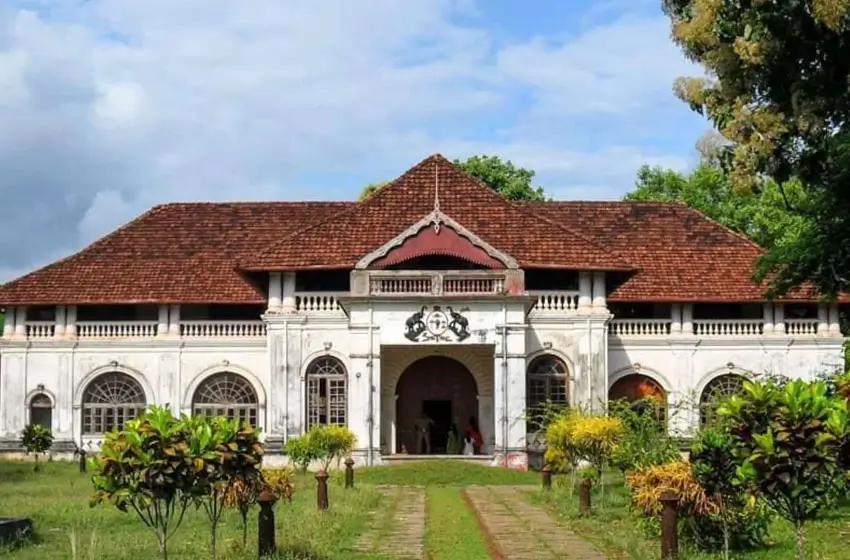
Despite its nickname, Mattancherry Palace was built by the Portuguese in the 1550s and given to the Raja of Kochi; the Dutch later renovated it, which is how it became known as the Dutch Palace. From the outside it looks plain, but inside are some of the finest Kerala murals you'll see anywhere, with detailed scenes from the Ramayana and other Hindu stories painted in warm reds, ochres, and greens. Galleries also display royal palanquins, costumes, weapons, and portraits of the Kochi rulers. Photography is not allowed in the mural rooms. The palace museum is closed on Fridays, so plan your Mattancherry day around that.
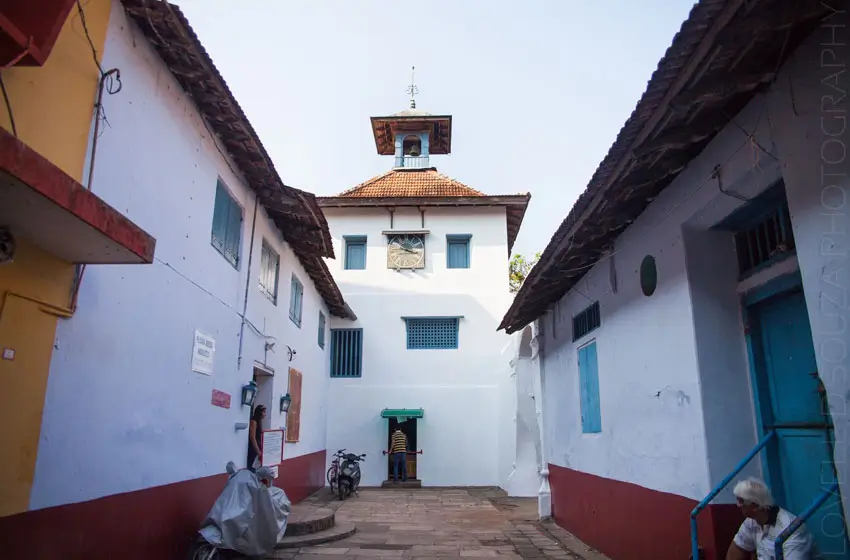
The Paradesi Synagogue, completed in 1568, is the oldest active synagogue in the Commonwealth. It was built by Jewish families who settled in Kochi after leaving Europe and the Middle East, joining a much older community on the Malabar Coast. Inside, the floor is laid with hand-painted blue-and-white Chinese tiles, each slightly different, and Belgian glass chandeliers hang from the ceiling. Only a handful of Jewish residents remain in Kochi today, but the building is carefully kept. It is closed on Saturdays, Jewish holidays, and some other days of the week, so check opening days locally before you go. A strict dress code applies, with shoulders and knees covered. The lane leading to it, known as Jew Town, is now lined with antique stores, spice shops, and small boutiques.
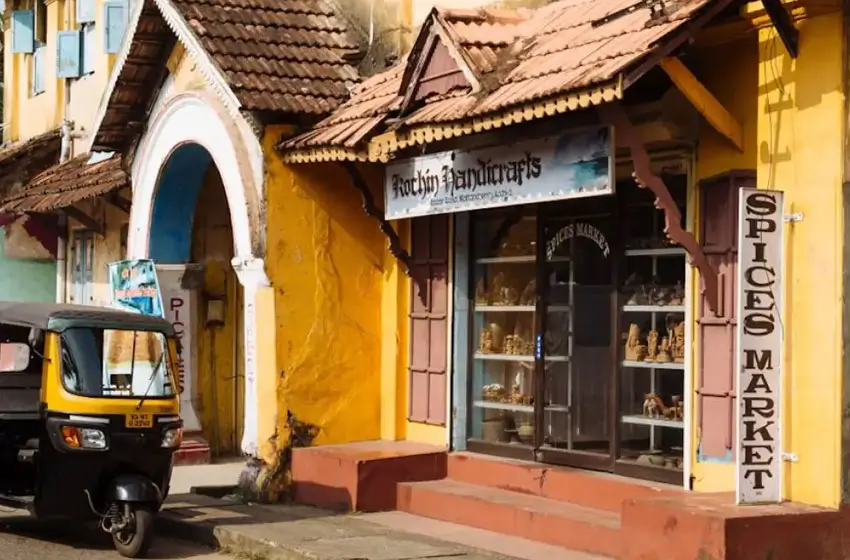
Just beyond Jew Town, the old spice warehouses of Mattancherry are still in business. Walk along Bazaar Road and you'll smell dried ginger, black pepper, cardamom, and turmeric before you see them. Workers sort and pack spices by hand in open godowns (warehouses), some of which have been used for the same trade for generations. It's a good place to understand why Europeans fought over this coast for centuries. Several shops sell well-packed spices and tea suitable for carrying home.
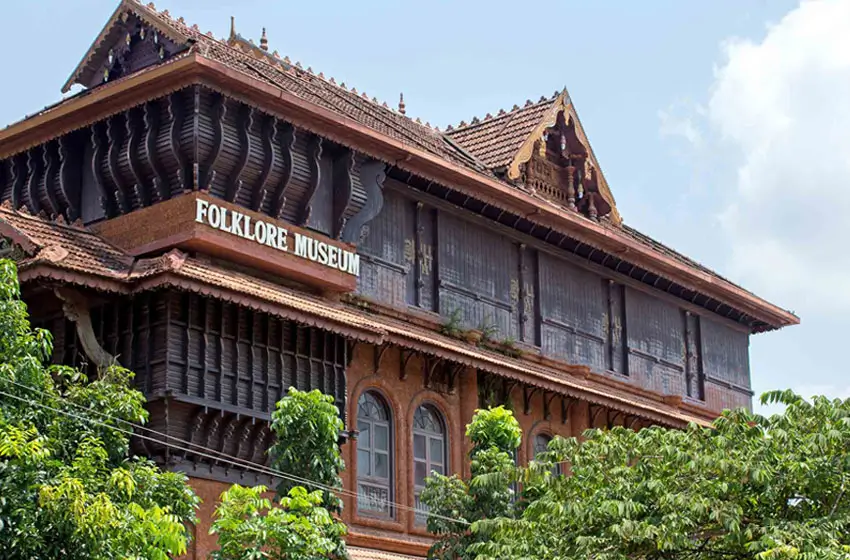
Set in a large wooden building made in traditional Kerala style, the Kerala Folklore Museum in Thevara holds thousands of objects collected from across South India, including masks, costumes, carved wooden panels, musical instruments, bronze lamps, and theater props. Many people say it's the best private museum in the state. The building itself, made with parts salvaged from old homes and temples, is worth seeing. Small dance performances are sometimes held in the top-floor theater in the evenings.
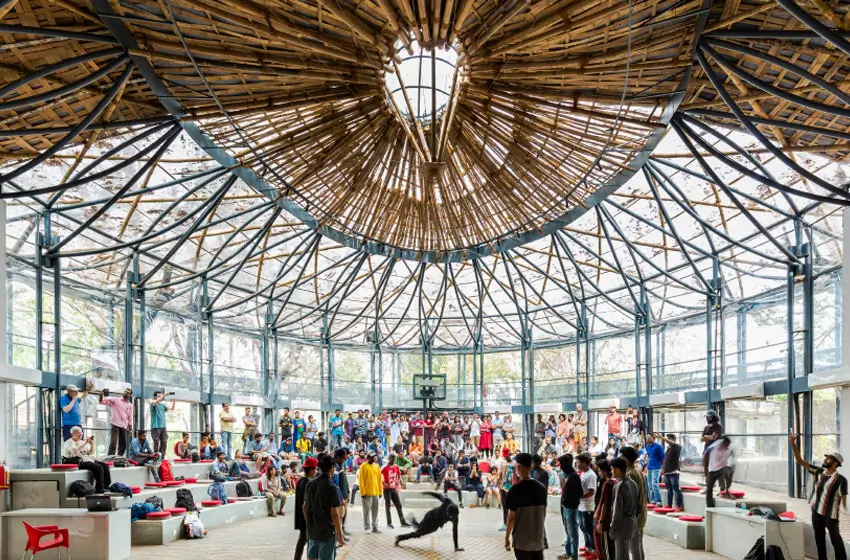
Kochi hosts the Kochi-Muziris Biennale, India's largest contemporary art festival, held every two years and usually running from December into the spring. Old warehouses such as Aspinwall House and Pepper House become exhibition spaces for artists from India and around the world. Even outside Biennale years, Fort Kochi has a strong art scene, with small galleries and street murals scattered through the lanes. If your trip falls during a Biennale season, set aside at least half a day.
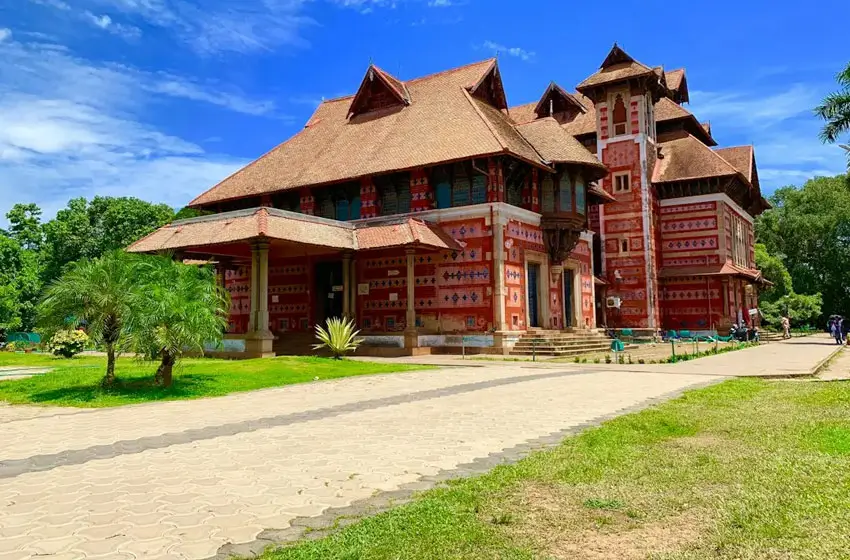
About 30–40 minutes from Ernakulam, the Hill Palace was the main residence of the Kochi royal family. Today it's Kerala's largest archaeological museum, with royal crowns, oil paintings, weapons, carved beds, and inscriptions displayed across several buildings. The palace sits in landscaped grounds with deer, making it a pleasant half-day trip for those who like history and quiet surroundings.
Like what you see? Let's plan it for you.
Private car, driver and hotels arranged around your dates. Reply within 24 hours.
Getting there
Kochi is Kerala's main transport hub, with good air, rail, and road links.
Cochin International Airport at Nedumbassery, about 1 to 1.5 hours from Fort Kochi, with direct flights from the Gulf, Singapore, Kuala Lumpur, and major Indian cities
Ernakulam Junction and Ernakulam Town stations, with trains to Trivandrum, Bangalore, Chennai, Mumbai, Goa, and Delhi
National highways to Alleppey, Thrissur, and Trivandrum, and a scenic hill road east to Munnar and Thekkady
Tours that include Kochi
Explore more
Kerala Backwaters Escape Kerala Backwaters Escape
 Kerala Backwaters Escape
 Kerala Backwaters Escape
N.S. Rathore & Mrs. Omlata Rathore · Managing Director
We still read every enquiry ourselves. Tell us the places you liked and our planners will send a day-by-day route with drive times and a clear price.
No ready-made packages and no pressure to book. A planner from our Kochi office replies within 24 hours with a route written for your group.
Fill this in and your planner will send a first draft itinerary.