 Kerala Backwaters Escape

Tamil Nadu Tour Packages
Bangalore – Bandipur – Mudumalai – Ooty – Coonoor – Mettupalayam – Coimbatore – Palani – Madurai – Chettinad – Sittanavasal – Tanjore – Kumbakonam – Chidambaram – Pondicherry – Mahabalipuram – Chennai
At a glance
Bangalore has one of the best-connected airports in South India, and it sits only a day's drive from the Tamil Nadu border. Our Tamil Nadu tour from Bangalore puts that short distance to work. Instead of flying to Chennai and starting with the coast, you enter the state from above, through two tiger reserves and up into the Nilgiri Hills, then ride the UNESCO-listed mountain railway down to the plains. From there the trip runs south and east through the temple country of Madurai, Chettinad and Tanjore before ending on the Bay of Bengal in Chennai.
The second day is the most memorable drive of the trip. South of Mysore the highway passes through Bandipur and Mudumalai, where spotted deer, gaur and elephants are often seen right from the car. Your driver then takes one of two roads up the Nilgiri escarpment: the steep Kalhatti ghat via Masinagudi, famous for 36 hairpins that each carry a number, or the gentler route through Gudalur. After two nights in Ooty you descend on the Nilgiri Mountain Railway and continue through Coimbatore and the hill temple of Palani to Madurai.
This Tamil Nadu tour package is entirely private and flexible, with one chauffeur and one cooled vehicle all the way from Bangalore to Chennai, and licensed local guides in the main towns. Thirteen days allow two nights in most places, so you are not repacking every morning. It is designed for overseas visitors and for NRI families visiting relatives in Bangalore who want a proper look at Tamil Nadu. The best season is October to March; the Nilgiris are also pleasant in April and May.
Bangalore's Kempegowda airport is a long way out at Devanahalli, and your chauffeur waits just past the arrivals doors holding a card printed with your name. The ride into central Bangalore takes about an hour, longer at rush hour, and the representative uses the time to hand over your documents and talk you through the route ahead. Many long-haul flights reach Bangalore after midnight, so an early check-in can be added in advance if you want a bed as soon as you arrive. Until mid-afternoon nothing is planned except rest, a late breakfast and adjusting to the time change.
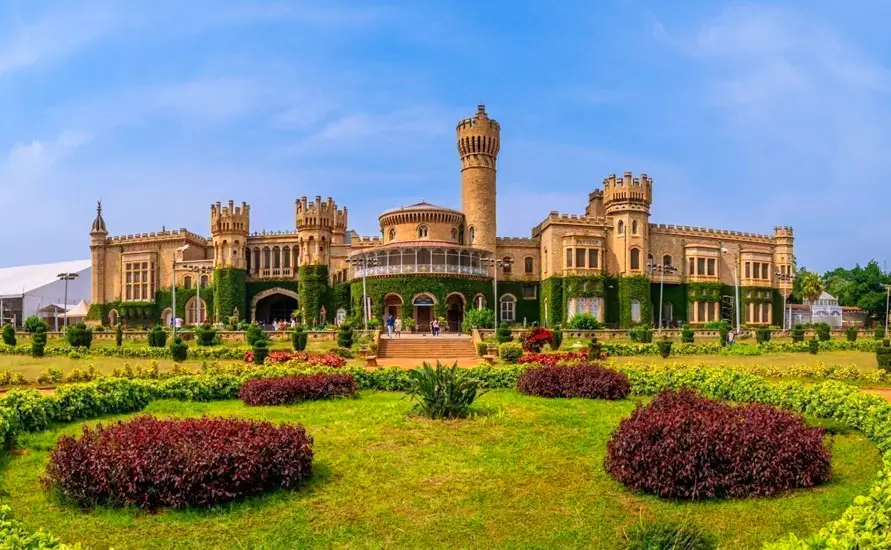
Bangalore sits on a plateau at about 900 meters, which keeps it cooler than most Indian cities. In the afternoon you visit Lalbagh Botanical Garden, a Mysore-sultanate pleasure garden first planted for Hyder Ali and extended by his son Tipu Sultan. Its Victorian glasshouse fills with blooms for the August and January flower shows, and the grounds hold enormous rain trees, a lake and a bare sheet of gneiss rock that geologists count among the most ancient anywhere. Your guide can point out a watchtower on the rock, one of four built to mark the limits of the old city.
From Lalbagh it is a short drive to Basavanagudi, one of Bangalore's older neighborhoods. Here the Bull Temple shelters a giant granite Nandi, smeared with butter and oil by devotees, and the nearby Dodda Ganapathi Temple has a huge Ganesha image that is sometimes covered in a coat of butter. If you visit in November or December, the street outside may be full of stalls for the annual groundnut fair. End with a dosa and filter coffee at one of the old vegetarian cafés in the area, and turn in early, because tomorrow is a full day on the road. Overnight in Bangalore.
Leave Bangalore early, ideally by 7 am, to beat the city traffic and reach the forest stretch in good light. The expressway to Mysore is fast, and your driver can stop for breakfast at one of the famous roadside eateries near Maddur or Bidadi known for thatte idli and vada. Beyond Mysore the road narrows and passes through farmland and small villages until you enter Bandipur National Park, one of the most important tiger reserves in Karnataka. Traffic through the reserve is allowed only during the day, as the forest highway closes to most vehicles at night to protect wildlife.
Inside Bandipur and across the state line in Mudumalai in Tamil Nadu, the dry deciduous forest grows right up to the road. Herds of spotted deer graze on the verges, langur monkeys sit on the crash barriers, and wild elephants regularly cross the highway, especially in the early morning and late afternoon. Halting or stepping out of vehicles is forbidden within the reserve, so keep your camera ready at the window. At Theppakadu, the road divides. The short route via Masinagudi leads to the Kalhatti ghat, while the longer road heads west through Gudalur before climbing to Ooty.
The Kalhatti road is famous for its 36 hairpin bends, each one numbered on a roadside sign, climbing about 1,000 meters in roughly 15 km. It is steep and narrow, and authorities sometimes limit it to certain vehicles or one direction, so your driver will choose between Kalhatti and Gudalur on the day based on rules, weather and how you feel about steep roads. Either way, the forest gives way to eucalyptus, tea and potato fields as you climb, and the air turns sharply cool. Expect to roll into Ooty around five, where a colonial-style hill hotel is booked for two nights. Overnight in Ooty.
Udhagamandalam, as Ooty is officially called, grew into the hot-weather retreat of Madras officials in the 1800s, and the town still has stone churches, a racecourse and cottages with names like Woodcock Lodge. Start at the Government Botanical Garden, terraced into the hillside in the Victorian era, where a petrified log of enormous age is displayed near the gate. On a hillside above the garden your guide introduces you to the Toda people, the original pastoral community of the Nilgiris, whose barrel-shaped huts and red and black embroidered shawls are unlike anything else in the region.
Later in the morning you drive up to Doddabetta, the summit of the range at about 2,600 meters, where a telescope house gives views across layer after layer of blue hills on a clear day. Mornings are best, because cloud tends to roll in after noon. From there you wind down for 45 minutes to Coonoor, lower, smaller and calmer than Ooty. Sim's Park, a sloping garden laid out around a ravine, has trees from several continents, and the drive to Lamb's Rock brings you to a sheer viewpoint over the plains of Coimbatore far below.
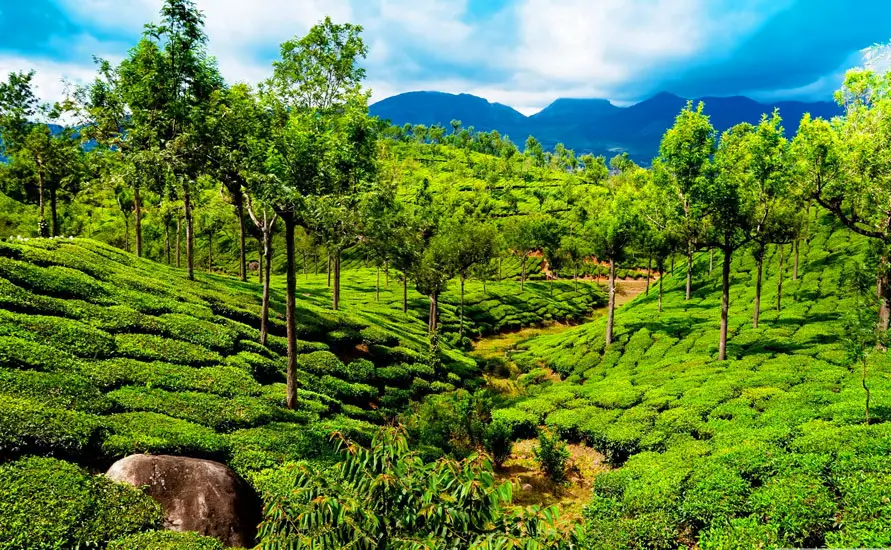
Coonoor is the center of Nilgiri tea, and in the afternoon you visit a working factory to see fresh leaf withered, rolled, fermented and dried. The guide at the factory explains why Nilgiri tea is valued for its brisk flavor and fragrance, and you finish with a tasting of several grades, including a green and a white tea. On the way back to Ooty, stop at a bakery or chocolate shop in Charing Cross, since homemade chocolate has been a local trade here for decades. Dinner tonight is at your hotel, where a fireplace is often lit on winter evenings. Overnight in Ooty.
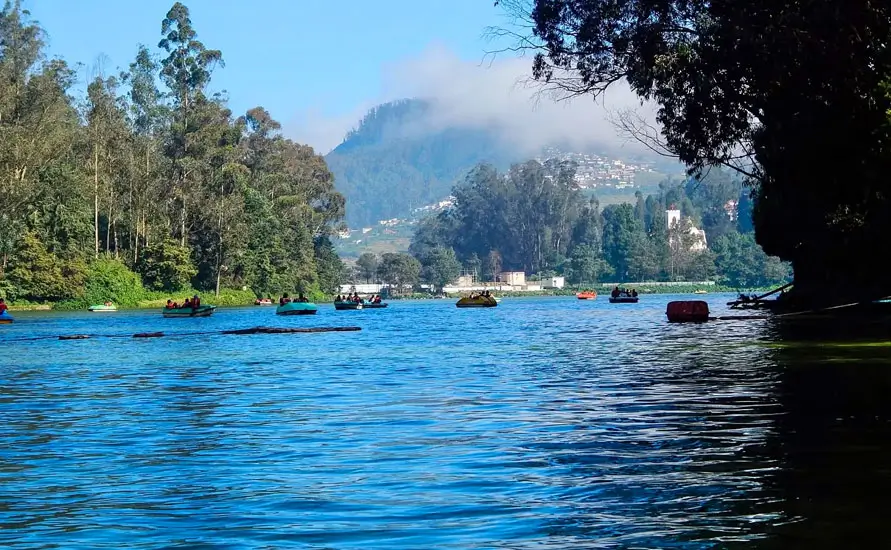
Use the free morning in Ooty for a walk around the lake, a look inside St. Stephen's Church, a Georgian-style hill church from the 1820s, whose beams are believed to have been taken from Tipu Sultan's palace, or a browse in the old Ooty market for spices, eucalyptus oil and local cheeses. After an early lunch, your driver takes you to Ooty station, where the blue and cream carriages of the Nilgiri Mountain Railway wait at the platform. The line was completed in 1908 and is one of the three Mountain Railways of India listed by UNESCO. Your luggage travels separately in the car so you can sit back and enjoy the ride.
The section from Ooty down to Coonoor uses ordinary adhesion track, but below Coonoor the train switches to a rack-and-pinion system, gripping a toothed middle rail to control its descent on gradients that reach about 1 in 12. The track passes through tunnels, over tall bridges and along cliffs with deep views into forested valleys, and the train stops at small stations like Hillgrove where staff top up the engine's water. Windows on the left side going down usually have the better views, and seats are allocated when tickets are booked. Train times can change, and we confirm them closer to your date.
At Mettupalayam, in the foothills, your car is waiting outside the platform, and the change in temperature is immediate. The drive to Coimbatore takes about an hour through areca nut and banana plantations. Coimbatore is Tamil Nadu's second-largest city and a center of textile mills and engineering works, and it is known across South India for its own Kongu cuisine, which is milder than Chettinad food and uses a lot of coconut and lentils. Your hotel can recommend a place for a Kongu-style dinner, or you can rest after the long afternoon. Overnight in Coimbatore.
Before leaving Coimbatore, visit the Perur Pateeswarar Temple, on the western edge of the city near the Noyyal River. Its Kanaka Sabha hall, added in the 17th century, has some of the finest pillar carvings in western Tamil Nadu, including a dancing Shiva, a figure of Kali and fine details of animals and musicians. The temple is busy with local families on weekends and festival days, and your guide will brief you on etiquette such as removing shoes and keeping shoulders covered. Then join the highway heading south-east through Pollachi and Udumalpet, coconut country with long avenues of palms on both sides.
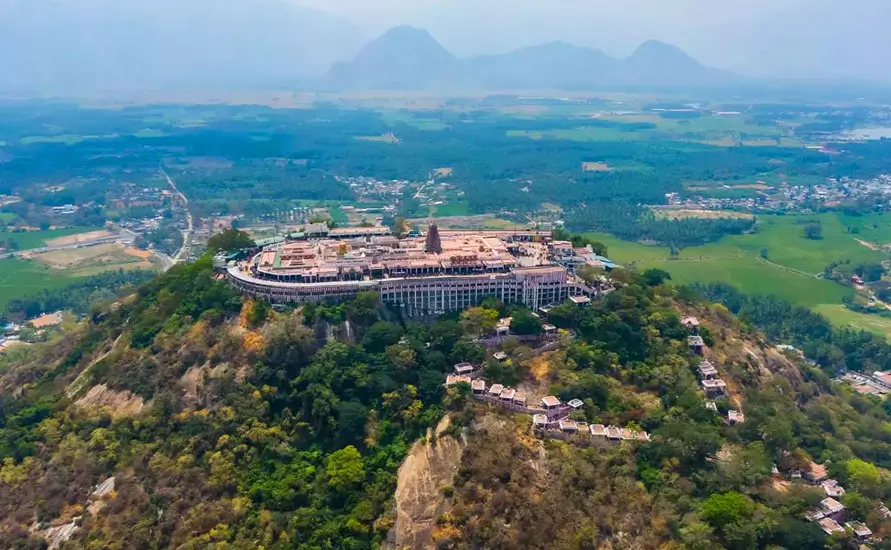
Around midday you reach Palani, a pilgrimage town at the foot of a rocky hill crowned by a temple to Murugan, the Tamil god of war and wisdom. Pilgrims climb about 700 steps to the top, many with their heads shaved as an offering, but you can also ride up by the winch railway or the rope car, both of which can have queues on festival days. The idol here is believed to be made of a mix of nine minerals and herbs. Your guide explains the importance of Murugan in Tamil culture, and why the sweet panchamirtham sold here is taken home by pilgrims from across the state.
After lunch the road passes Oddanchatram, one of the biggest vegetable markets in Tamil Nadu, and then Dindigul, a town known for its locks and its biryani. The final stretch brings you to Madurai by late afternoon. Once you have rested, walk with your guide to the Thirumalai Nayak Palace, where pillars of brick and lime stand nearly 20 meters high, and stay for the English-language sound and light show if it runs that evening. Alternatively, keep the evening quiet and save your energy for a full day at the Meenakshi Temple tomorrow. Overnight in Madurai.
Get up before dawn for the Mattuthavani flower market, where farmers from nearby villages unload jute bags of jasmine buds, orange marigolds, crossandra and lotus for buyers who bid by weight. Madurai malli, the city's own jasmine variety, carries legal GI protection, and at this hour its perfume fills the whole shed. Women thread the blooms into long garlands for hair and temple offerings right in front of you. Breakfast afterwards can be idiyappam with coconut milk or a crisp dosa at a small local restaurant, before you head to the old city.
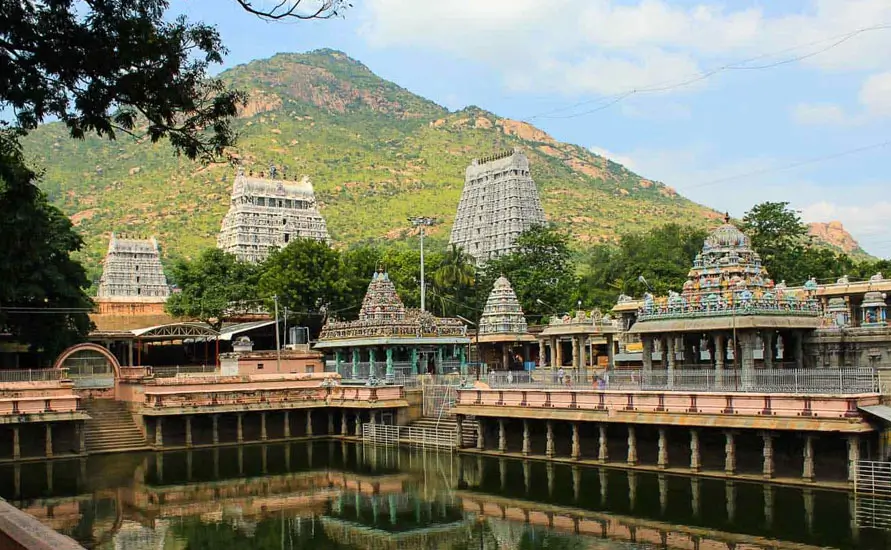
The Meenakshi Temple is a city within a city, and a good guide makes a real difference. Today's visit focuses on details many people walk past: the Ashta Shakti Mandapam at the entrance, with eight forms of the goddess carved on its pillars; the musical pillars that ring at different notes when tapped; and the painted ceilings in the corridors around the Golden Lotus Tank. Non-Hindus are not allowed inside the inner sanctums, and all phones and cameras stay behind in lockers at the gate, so plan to spend about two to three hours here without photographs.
After a rest in the middle of the day, head for the Gandhi Memorial Museum, which occupies a Nayak-era palace once used by Queen Mangammal. It traces India's freedom struggle in clear English panels, and a dim inner room keeps the dhoti, stained with blood, that Gandhi had on when he was killed in Delhi. It was also here in 1921 that he gave up shirts and adopted the plain loincloth of poor Tamil farmers. In the evening, head back toward the East Tower late at night for the palliyarai ritual, or stroll through the lanes near the South Tower for a late dinner of parotta and salna. Overnight in Madurai.
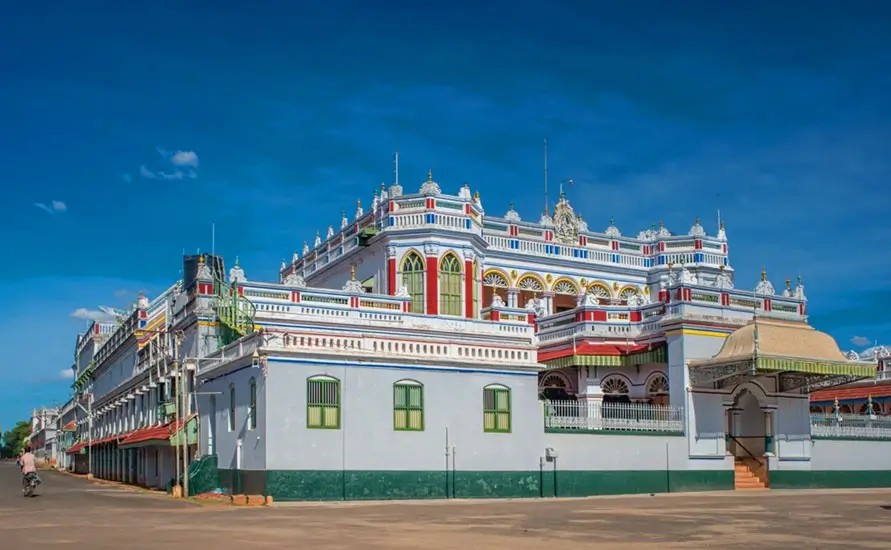
A short morning drive takes you north-east into the dry scrubland of Sivaganga district, where small reservoirs, palmyra palms and red earth mark the landscape. A short detour leads to Kundrakudi, a rocky hill topped by a Murugan temple and a cave shrine with Pandya-era carvings at its foot. It is usually quiet and gives you a sense of village worship away from the famous sites. Soon after, you reach Chettinad, some seventy-odd villages raised by the Nagarathar Chettiars, banking families who lent money to planters and traders in Burma, Malaya, Ceylon and French Indochina.
You check in to a heritage mansion hotel in the area and spend the early afternoon resting in its shaded courtyard. Later, a local guide takes you to Kottaiyur and Kanadukathan, where you walk past houses with carved teak doors, rows of granite pillars and tall entrance halls lit by skylights. Inside a mansion open to visitors, you can see the reception hall, the inner courtyard for the women of the family, and the cupboards that once held brass vessels and porcelain for weddings. Much of this wood, marble and steel was shipped in from Burma, Italy and Britain.
In the evening you join a Chettinad cooking demonstration with the hotel kitchen, learning how the spice mixes are roasted and ground by hand. The cook shows you the key ingredients, including star anise, marathi mokku (dried kapok buds), kalpasi and dried red chilies, and explains why dishes like chicken chettinad or the vegetarian kara kuzhambu taste so different from food in the rest of Tamil Nadu. Dinner follows on banana leaves laid along the long dining hall. Request gentler heat if you prefer, as the kitchen is used to cooking for overseas guests. Overnight in Chettinad.
The morning starts at Athangudi, a village famous for its handmade cement tiles. In a family workshop, a craftsman pours colored pigment into a stencil on a glass sheet, fills the frame with sand and cement, and later sets the finished tile in a water tank for several days. No kiln is used, and every tile is a little different. Next, visit the antique dealers of Karaikudi, where whole streets are lined with salvaged doors, pillars, lamps and enamel kitchenware from demolished mansions. Even if you do not buy, the stacks of carved wood and old brass make for an interesting hour.
On the way north toward Tanjore, the road passes Sittanavasal, a rocky hill in Pudukkottai district with a rock-cut Jain cave temple. Inside, faded paintings on the ceiling show lotus ponds, fish, elephants and dancers, and are among the oldest surviving murals in Tamil Nadu, generally dated to the Pandya period. A short path above the cave leads to flat stone beds carved into the rock, where Jain monks once rested. Visiting time inside the cave is short and photography rules may apply, so your guide briefs you outside on the key panels first.
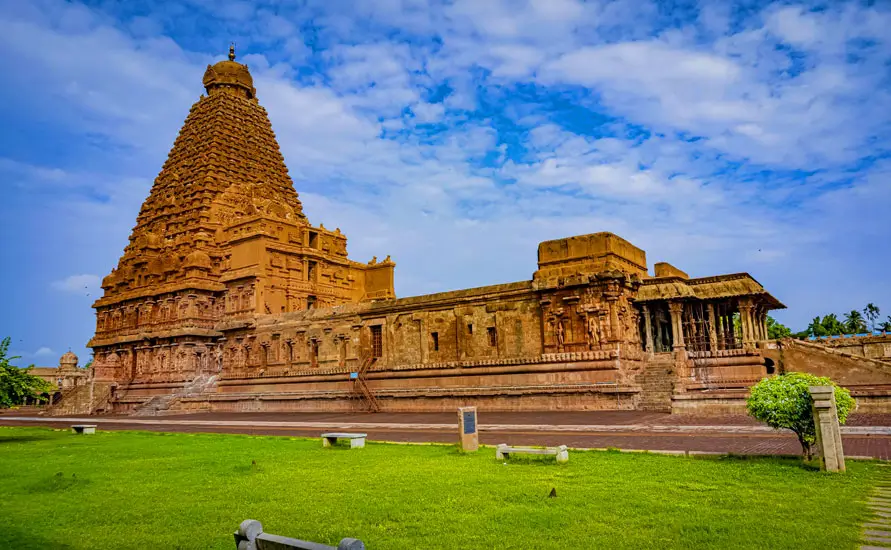
Arrival in Tanjore is in mid-afternoon, and the hotel here is booked for two nights. After a rest, head to the Brihadeeswarar Temple in time for the late afternoon light. Built by Rajaraja Chola I and consecrated in 1010, Rajaraja's shrine is the flagship of the three-temple Chola listing by UNESCO. Rather than focusing only on the great tower, your guide shows you the fresco fragments in the inner corridors, the 108 dance poses carved in parts of the walls, and the long Tamil inscriptions recording the temple's dancers and musicians. Stay as the tower glows in the evening light. Overnight in Tanjore.
Start with the Thanjavur Royal Palace, a maze of halls, courts and towers started by the Nayaks and expanded by the Maratha kings who ruled from here until the 19th century. The palace art gallery has one of the best collections of Chola bronzes in the country, and the Saraswathi Mahal Library preserves rare olai manuscripts, illustrated texts and maps. Before leaving town, stop at a small studio where Tanjore painting is still done by hand, with raised details in chalk paste covered in gold foil. Then drive east toward Kumbakonam, about an hour away along the Kaveri delta.
Swamimalai, near Kumbakonam, is the home of South Indian bronze casting. In a family workshop you can watch artisans use the ancient lost-wax method: an image is modeled in beeswax and resin, coated with clay from the Kaveri riverbed, then fired so the wax melts away, leaving a hollow for poured bronze. Each bronze is unique, as the mold must be broken to release the figure. The town's hilltop Murugan temple is one of the six main shrines to the god. In nearby Kumbakonam, see the Mahamaham tank, the scene of a great ritual bath held once in about twelve years.
Late in the afternoon visit the Airavatesvara Temple at Darasuram, another of the UNESCO-listed Chola monuments. Dating from the 1100s and far more compact than Tanjore, it is finer in detail, with a front hall carved as a chariot pulled by horses and steps that once made musical notes when you walked on them. The tiny panels on the base show scenes of daily life, dance, war and devotion. Drive back to Tanjore in the evening, and if you have time, have dinner at a mess serving Thanjavur-style meals with rasam, kootu and fresh curd. Overnight in Tanjore.
Check out after breakfast and drive north to Gangaikonda Cholapuram, whose name recalls Rajendra Chola I bringing Ganges water home after his northern wars in the 11th century. The palaces have vanished, but the great temple, last of the UNESCO Chola trio, still stands. It stands in open grounds among villages and fields, and the sculptures of Shiva crowning a devotee and a large Nandi made of brick and plaster are among the highlights. The quiet setting is a pleasant contrast to Madurai, and you will often see local schoolchildren picnicking on the lawns.
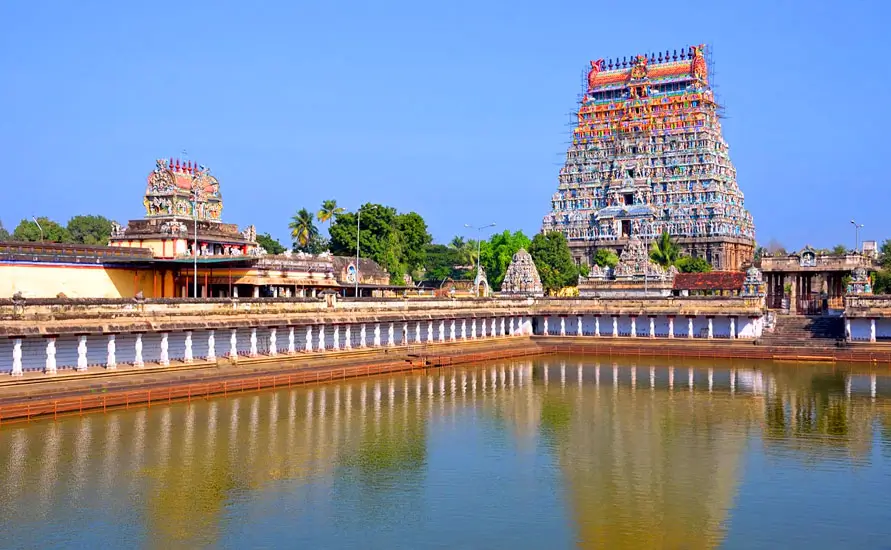
Next comes Chidambaram and its Thillai Nataraja Temple, whose presiding image shows Shiva dancing within a ring of flames. The temple has a golden roof over the inner hall, and its east gopuram shows the 108 poses of Bharatanatyam carved into the stone, which is why the Natyanjali dance festival is held here every February or March. Rituals here are in the hands of the Dikshitars, a hereditary priestly group, and non-Hindus may be limited to certain areas. Ask your guide about the Chidambara Rahasyam, the mystery of an empty space behind a curtain in the sanctum.
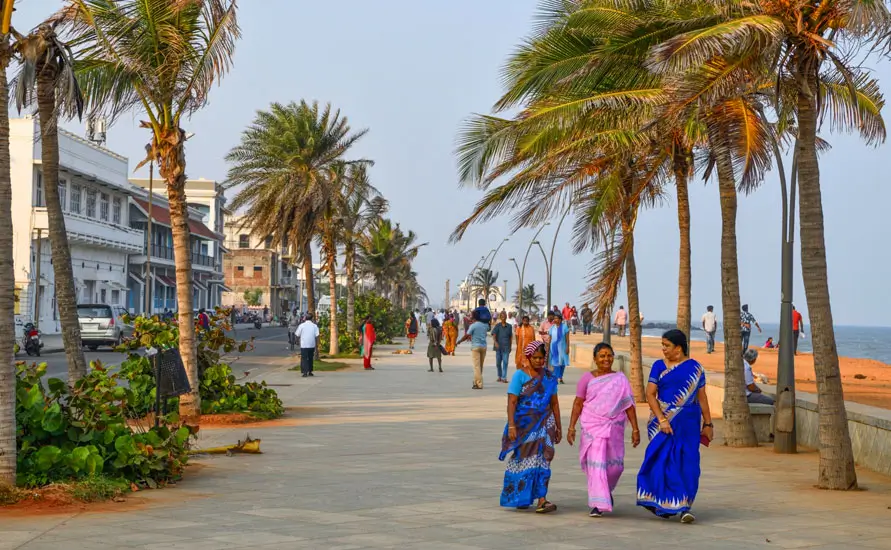
From Chidambaram, the road heads north past Cuddalore toward Pondicherry, a drive of about two hours. By late afternoon you are in Pondicherry, settling into a heritage hotel near the old town for two nights. After a long day of temples and driving, keep the evening simple: a walk along Goubert Avenue, the seafront road, then a dinner of Tamil, French or Creole cooking. Local cafés serve good wood-fired pizza, buckwheat crêpes and grilled seafood if you want a break from South Indian food after a week of rice meals. Overnight in Pondicherry.
A morning walk with a local guide starts in the French Quarter, where wide streets laid out on a grid lead past the French Institute, the Lycée Français and old villas with tall shuttered windows. The Église de Notre Dame des Anges, a pale pink church facing the sea, holds Sunday masses in French, English and Tamil. Next you walk over the old drainage canal to the Tamil Quarter, where houses have wooden pillars, raised verandas and carved doors, and where you can see women drawing kolam patterns with rice flour on their doorsteps in the early morning.
After lunch, head out to Auroville, a twenty-minute ride from town. The township was founded in 1968 as an experiment in human unity, and today people from over fifty countries live here. Start with the ten-minute film in the visitor center hall; from there a woodland trail leads toward the gilded Matrimandir at the heart of the township. Entry to the chamber inside is by prior reservation only and the daily quota is small, so let us know well ahead. The Auroville shops sell handmade pottery, organic food, incense and clothes made in its workshops.
Back in Pondicherry, the late afternoon is free. You might call at the Sri Aurobindo Ashram and its marble samadhi heaped with fresh flowers, or browse the bookshops and boutiques on Nehru Street and Mission Street. At sunset, find a spot on the boulders by the old lighthouse and watch the city come out for its evening walk. Dinner tonight could be a slow-cooked Creole fish curry in a courtyard restaurant, a style of cooking that blends French technique with Tamil spices and is hard to find anywhere else in India. Overnight in Pondicherry.
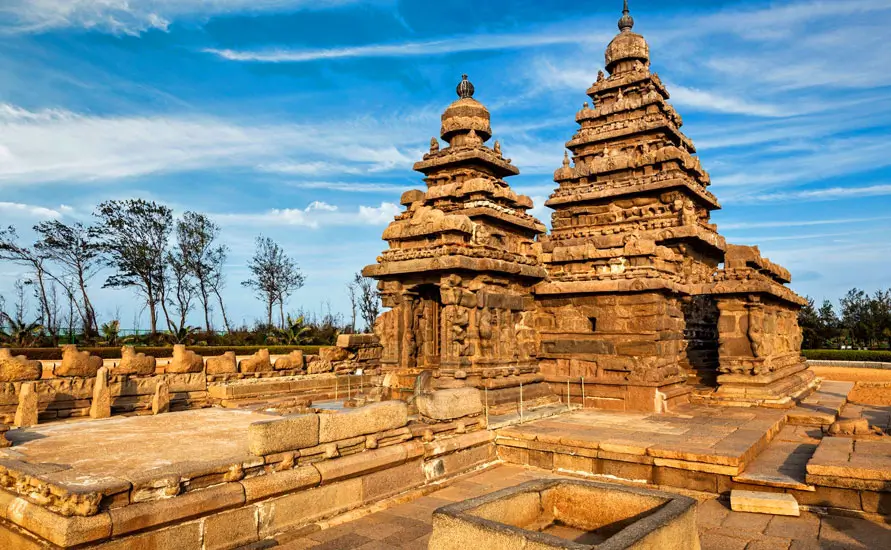
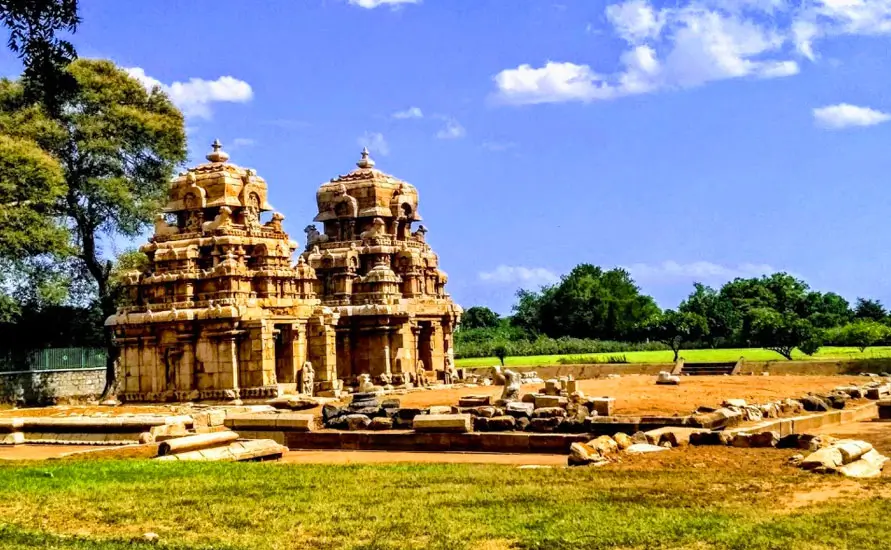
Leaving Pondicherry after breakfast, you take the East Coast Road north, a coastal stretch with the sea on one side and salt pans, fishing villages and casuarina groves on the other. Roughly 150 minutes later you pull into Mahabalipuram, the old Pallava port whose monuments are listed by UNESCO. The twin-towered Shore Temple, assembled from dressed granite blocks, unlike the rock-cut works nearby, looks out over the beach, and its walls are lined with rows of Nandi figures. Your guide explains how the temple survived centuries of salt spray, and what archaeologists learned after the 2004 tsunami.
Next, walk to Arjuna's Penance, a giant relief spread across two boulders, crowded with deities, hunters, sages, cats, monkeys and two life-size elephants. Nearby are the Pancha Rathas, five shrines hewn straight out of one granite outcrop, and Krishna's Butter Ball, a huge boulder that seems to defy gravity on a sloping rock. If time allows, visit a stone carving workshop on the main street, where sculptors still produce gods and animals in granite using hand tools. Lunch is grilled fish or tiger prawns at a simple beach shack run by a fishing family, with your choice of catch cooked to order.
In the afternoon, drive the last 55 km into Chennai, arriving at your hotel before dusk. Depending on traffic and your energy, you can visit the Kapaleeshwarar Temple in Mylapore in the evening, when the temple tank is lit up and devotees gather for the evening puja. Chennai is also the home of Carnatic music, and if you are here during the December music season, your guide can suggest a concert. Tonight, have a farewell dinner at a restaurant serving traditional Tamil vegetarian meals on banana leaves. Overnight in Chennai.
Should your flight be late in the day, the morning can go to Fort St. George, the first British fortress in India, built in the 1640s by the East India Company. Inside, St. Mary's Church, consecrated in 1680, is among the oldest Anglican churches in Asia, and the Fort Museum displays old uniforms, coins and portraits from the colonial era. Checkout is normally midday; a later release of the room is possible if requested while booking.
The final transfer reaches Chennai International Airport around three hours ahead of an international departure. In thirteen days you have crossed from Karnataka into Tamil Nadu through the forests and ghats of the Nilgiris, ridden a mountain railway, and seen the great temple towns of the plains before reaching the coast. Rameswaram, Kanyakumari and Kerala are all waiting for a second trip, and we can plan it whenever you are ready. Safe travels home.
Your Journey

N.S. Rathore & Mrs. Omlata Rathore · Managing Director
We still read every enquiry ourselves. Tell us the places you liked and our planners will send a day-by-day route with drive times and a clear price.
Every package can be customised and no pressure to book. A planner from our office replies within 24 hours with a route written for your group.
Fill this in and your planner will send a first draft itinerary.
Explore more
Kerala Backwaters Escape Kerala Backwaters Escape
 Kerala Backwaters Escape
 Kerala Backwaters Escape
 Kerala Backwaters Escape
 Kerala Backwaters Escape
 Kerala Backwaters Escape
 Kerala Backwaters Escape
 Kerala Backwaters Escape
 Kerala Backwaters Escape
 Kerala Backwaters Escape
 Kerala Backwaters Escape
 Kerala Backwaters Escape
 Kerala Backwaters Escape
 Kerala Backwaters Escape
 Kerala Backwaters Escape
 Kerala Backwaters Escape Kerala Backwaters Escape Kerala Backwaters Escape