 Kerala Backwaters Escape

Tamil Nadu Tour Packages
Chennai – DakshinaChitra – Mahabalipuram – Pondicherry – Chidambaram – Gangaikonda Cholapuram – Tanjore – Darasuram – Trichy – Madurai – Kodaikanal – Ooty – Coonoor – Coimbatore
At a glance
Tamil Nadu rises from sea level on the Coromandel Coast to well above 2,000 meters in the Nilgiris, and our Tamil Nadu temples and hill stations tour climbs that whole staircase in thirteen days. The first week stays on the hot, flat plains where the great dynasties built: Pallava shore carvings at Mahabalipuram, French streets in Pondicherry, the Chola temples around Tanjore and the towering gopurams of Madurai. Then the road goes up, first to Kodaikanal in the Palani Hills and finally to Ooty, before you fly out of Coimbatore with cool air still in your lungs.
The order is deliberate. Temple visiting is best done early and late in the day, and a week of dawn starts, bare feet on warm stone and long afternoons out of the sun earns a proper rest. The second half supplies exactly that: lakes under morning mist, eucalyptus woods, tea factories and a downhill run on the Nilgiri Mountain Railway. Four UNESCO sites appear along the way, including all three of the Great Living Chola Temples. One drive, Kodaikanal to Ooty, takes most of a day, and we treat it honestly as a travel day.
Guests flying in from London, Frankfurt, Toronto or Sydney, and NRI parents introducing children to their roots, get the whole state from this Tamil Nadu temple tour without a detour into Kerala. The same chauffeur and cooled private vehicle serve you from the first Chennai morning to the Coimbatore terminal, and licensed local guides lead each temple and town visit. December to March suits the plains best, and a fleece earns its suitcase space in the Nilgiris, where winter nights dip to a few degrees.
Chennai's airport handles most long-haul arrivals in the small hours, and our driver will be outside the international terminal holding a sign with your name whatever time you clear immigration. Your hotel is under an hour away even in heavy traffic, and the morning is kept free so jet lag can wear off. We pre-book the room from the night before when your plane lands before dawn, so you go straight to bed rather than waiting in the lobby. A welcome folder with your vouchers, the day-by-day plan and our local phone numbers is handed over in the car.
After lunch your Chennai guide starts with British Madras at Fort St. George, where Company traders first fortified their warehouse in the 1640s; the state assembly and secretariat still sit inside it. Within the ramparts rises St. Mary's Church, from 1680, the earliest Anglican church built east of Suez, where Robert Clive was married and old memorial tablets line the walls. Next door, the Fort Museum keeps regimental colors, old Madras coins and stiff oil portraits of governors. Photography rules near the government buildings are strict, so your guide will tell you where cameras are fine.
Toward five o'clock you move on to Egmore's Government Museum, dating from 1851, where the bronze gallery displays hundreds of Chola-era images, many dug up from delta villages where they were buried to hide them from raiders. The star is a Nataraja, Shiva as Lord of the Dance, cast about a thousand years ago and perfectly balanced inside a ring of flames, a good preview of the temples you will see next week. The museum keeps one weekly closing day, so your guide may switch the order of the afternoon to suit. Dinner can be in the hotel or at a restaurant serving Chettinad dishes. Overnight in Chennai.
The East Coast Road leaves Chennai past IT parks and seafood shacks, and about an hour south lies DakshinaChitra, a heritage center where real houses from across South India were taken down and rebuilt by local craftsmen. You can walk into a Chettiar merchant's home with a pillared courtyard, a Kerala Syrian Christian house with a carved wooden ceiling and a potter's cottage from rural Tamil Nadu. Artisans demonstrate basket weaving, glass bangle making and pottery, and some workshops let you try the craft yourself. Tuesday is normally its weekly closing day, which we check when fixing your dates.
After lunch in the center's canteen, which serves a simple Tamil meal, you continue to Mahabalipuram, a fishing town that the Pallava kings made into a port and an open-air workshop for stone carvers more than 1,300 years ago. Check-in at a beach hotel comes next, and lunch and a siesta fill the hot middle hours, when even local fishermen pull their boats up and rest in the shade. Their successors are still at it: hammer taps ring from sheds along the main road, where statues of deities, from palm-sized pieces to temple-sized figures, are made for buyers across India and abroad.
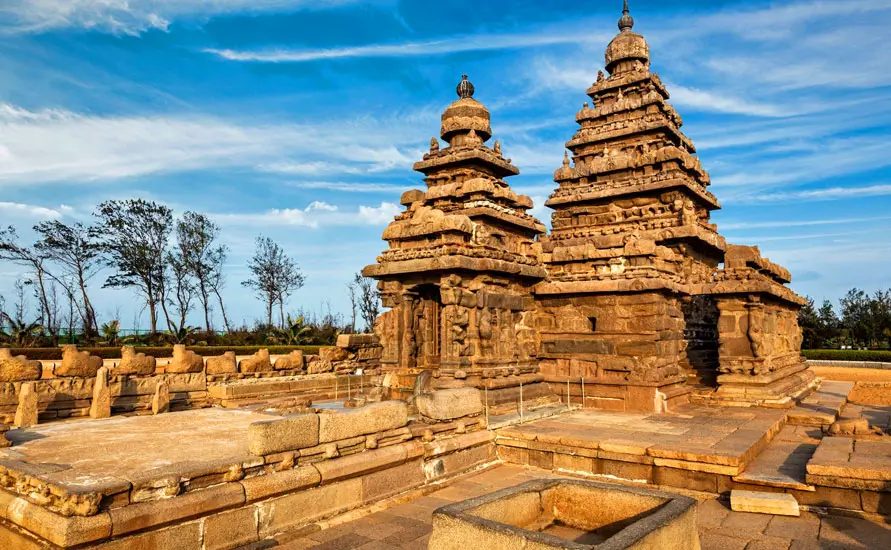
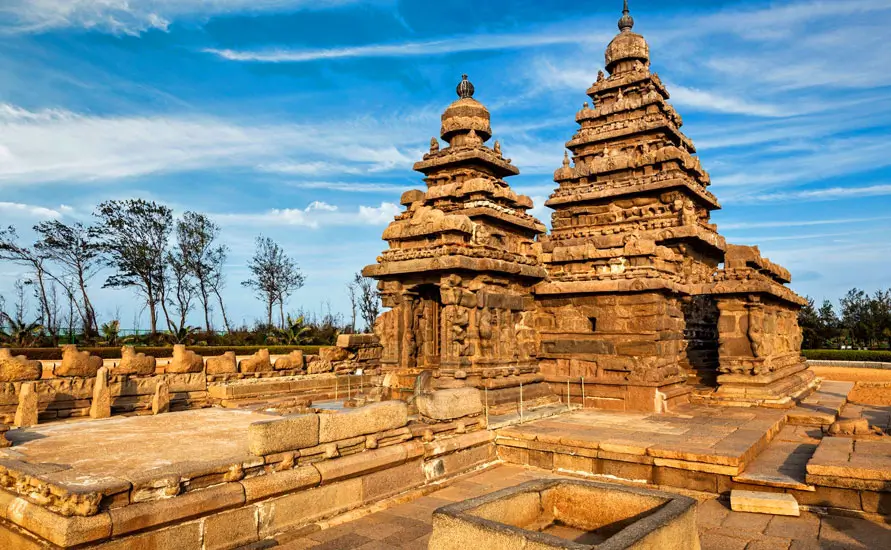
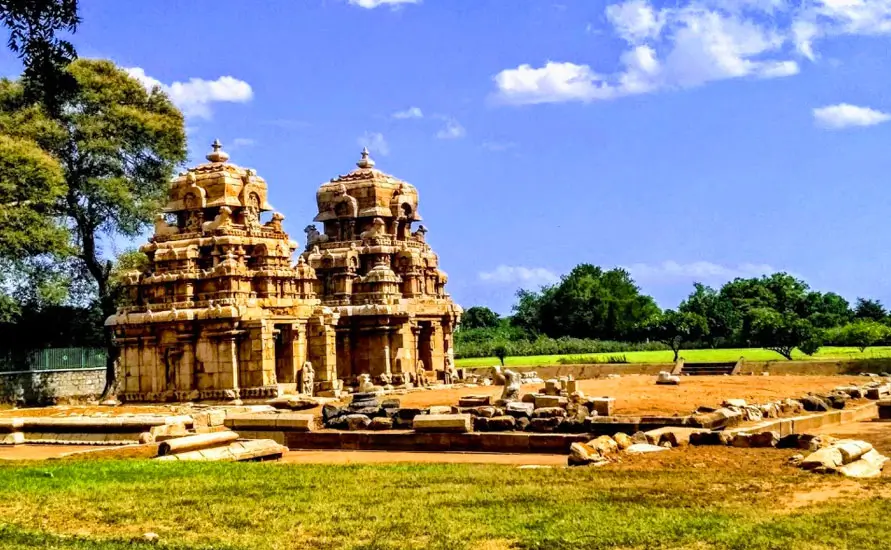
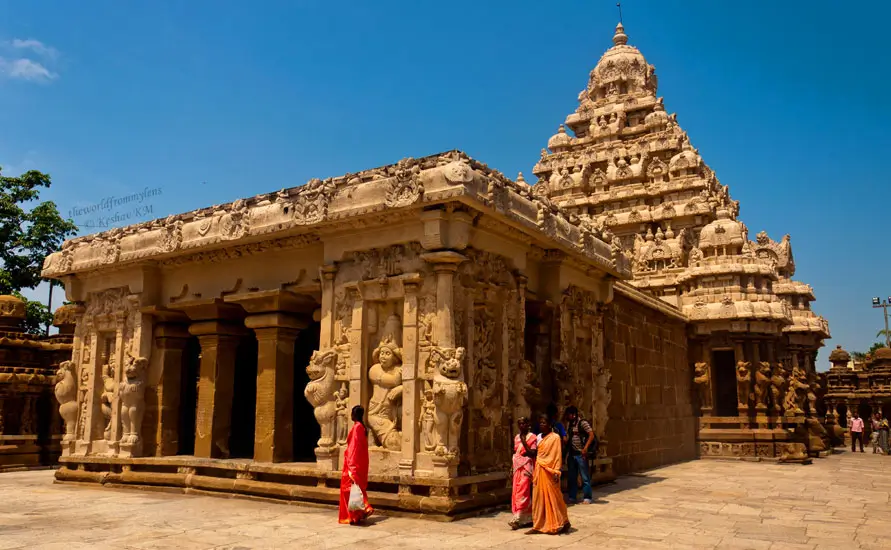
Around four your guide walks you to the Pancha Rathas, five shrines hewn from boulders in the seventh century, which look like a sculptor's catalogue of roof styles. Then you walk to the Shore Temple, standing on the beach with waves breaking a few meters away. Late afternoon is the ideal time here, when the low sun turns the weathered granite to honey and the crowds start to leave. The Mahabalipuram monuments are listed together by UNESCO, and your guide shows you the Nandi figures lining the temple's compound wall. Fresh fish grilled at a beach café makes an easy dinner. Overnight in Mahabalipuram.
Early light is kind to the reliefs, so your guide returns with you after breakfast to the rocky hill in the center of town. Arjuna's Penance, a granite cliff face carved with elephants, sages, cats and river spirits, makes most sense when you stand back from it and see the natural cleft running down the middle, which once may have carried water to represent the Ganges. Cut into the same hill are two cave shrines named for Varaha and for Mahishasuramardini, with reliefs of boar-headed Vishnu lifting the goddess Bhudevi from the ocean and the eight-armed Durga charging the buffalo-headed Mahisha on her lion.
Climb a little higher to the lighthouse area for a view of the town, the coast and the Bay of Bengal, and to see the small Olakkanesvara temple perched on the rocks, which once held a lamp for passing ships. Your guide explains how Pallava sculptors began with caves, moved on to monoliths and only then built free-standing temples like the Shore Temple, so that Mahabalipuram shows the birth of South Indian temple architecture in a single town. By late morning you head south on the coast road, past salt pans, cashew groves and fishing villages.
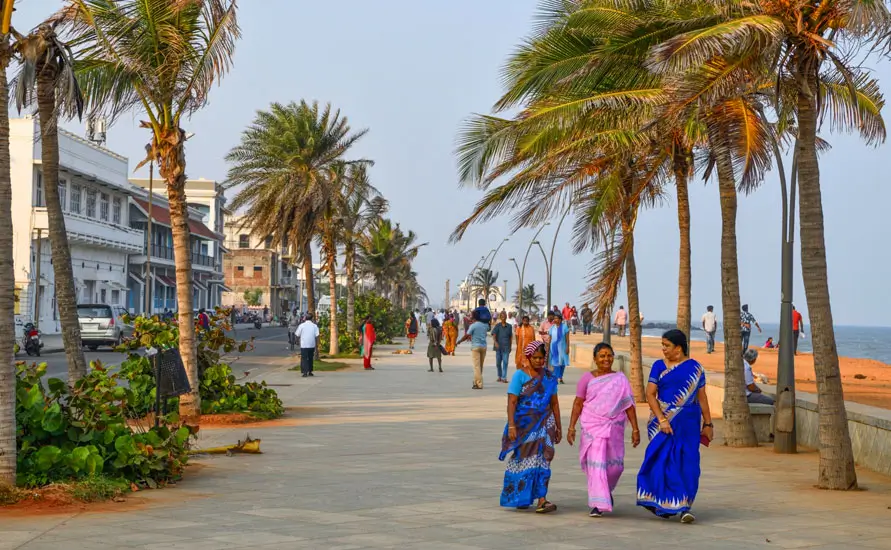
Pondicherry comes into view around lunchtime, and a heritage guesthouse on a quiet street of the old town is your base for two nights. After a rest, walk the waterfront Promenade in the evening, when it fills with families, joggers and couples and the sea breeze cools the air. Beyond the Gandhi statue stands the old French war memorial, and further on the Customs House and the old lighthouse. For dinner, try a Creole dish such as fish assad, a mild coconut curry that grew out of the meeting of French and Tamil kitchens. Overnight in Pondicherry.
An old drainage canal splits the town in two, and day visitors rarely cross to the eastern-facing Tamil half. Your guide starts there, in the Tamil quarter, where houses keep raised street-front platforms known as thinnai, carved wooden doors and pillared halls inside. Each dawn, women sweep the threshold and sprinkle fresh kolam patterns from a pinch of rice flour, and small family shrines stand at street corners. At the Goubert Market, a covered bazaar, you pass heaps of jasmine, green chilies and the morning's sardines, and a family-run shop making incense or handmade paper. Watch how the colors of the houses shift from the Tamil side to the French one as you cross the canal.
On the French side, the streets run in a neat grid named rue Romain Rolland, rue Suffren and so on, with ochre and white villas set behind high walls and bougainvillea. Along the way you see the French Institute of Pondicherry, the French lycée and the pale pink church of Notre Dame des Anges, built in 1855 and facing the sea. At the Sri Aurobindo Ashram visitors gather silently around the courtyard samadhi, heaped daily with fresh blossoms; cameras stay outside. Lunch can be at a café serving French pastries and South Indian filter coffee side by side.
Mid-afternoon the car heads out to Auroville, a half-hour north, the township begun in 1968 whose residents from dozens of nations run organic farms, schools and craft units. From the visitor center a woodland footpath leads to the official lookout facing the golden Matrimandir. Entry to the meditation chamber inside is a separate matter, booked days ahead in small numbers, so raise it with us while planning. Back in Pondicherry, the evening is yours for leather sandals, block-printed cotton and glazed pottery from the town's workshops, or a quiet drink on a rooftop facing the sea. Overnight in Pondicherry.
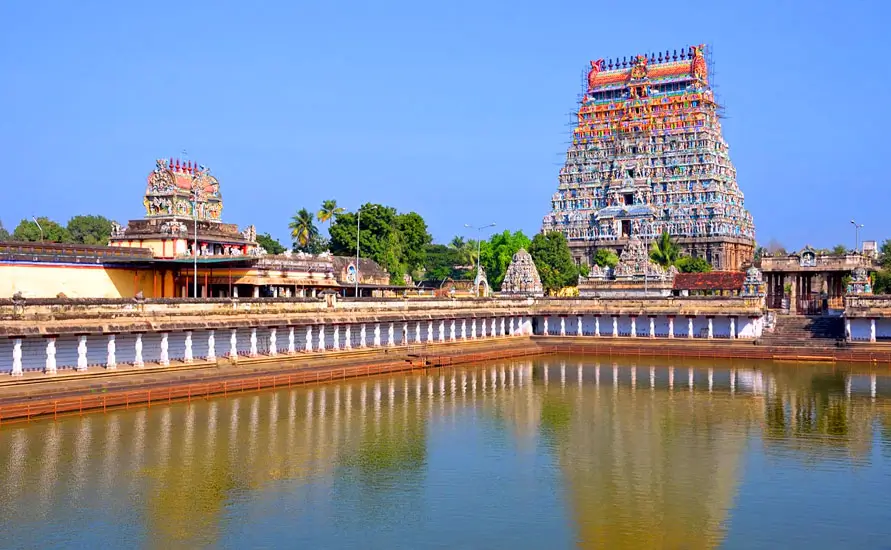
Leaving Pondicherry early, you head south toward the Kaveri delta, the green heartland of the Chola empire, where rice paddies stretch to the horizon and every village seems to have a temple tank. Roughly 70 km south sits Chidambaram and its Nataraja Temple, a shrine to Shiva as Lord of the Dance, whose steps in local belief keep the cosmos turning. Gilded tiles cover the roof of the central hall, and a hereditary priestly clan, the Dikshitars, still manages the rites, each wearing his hair in a knot at the front of the head. The dancing image is visible from the hall just outside the sanctum, and men may have to take off their shirts near the inner halls.
Inside the four gopurams, sculptors carved all 108 karanas, the movement units of Bharatanatyam, each labeled in Tamil, a stone manual of the art that dancers still study. Every February or March, the Natyanjali festival brings dancers from across India to perform in the temple courtyard. Following lunch you press on to Gangaikonda Cholapuram, the capital Rajendra Chola I founded after his armies marched north to the Ganges, its temple consecrated around 1035. The temple stands alone in open fields, without the crowds of Tanjore, and its tower rises in smooth curves. A large Nandi faces the shrine, and a lion-shaped well sits in the courtyard.
From there the road crosses the delta via Kumbakonam to Tanjore, or Thanjavur, around two hours on, past sugarcane fields, coconut groves and villages with red-tiled roofs. By late afternoon you check in, a little weary after two of the south's great shrines in a single day. Dinner tonight is best kept simple and close to the hotel, perhaps a plate of idiyappam with vegetable kurma from the restaurant downstairs, or a quick walk to a nearby mess serving fresh dosa straight off the griddle. Tomorrow's program starts early, before the temple stone heats up in the sun, so get a good night's sleep. Overnight in Tanjore.
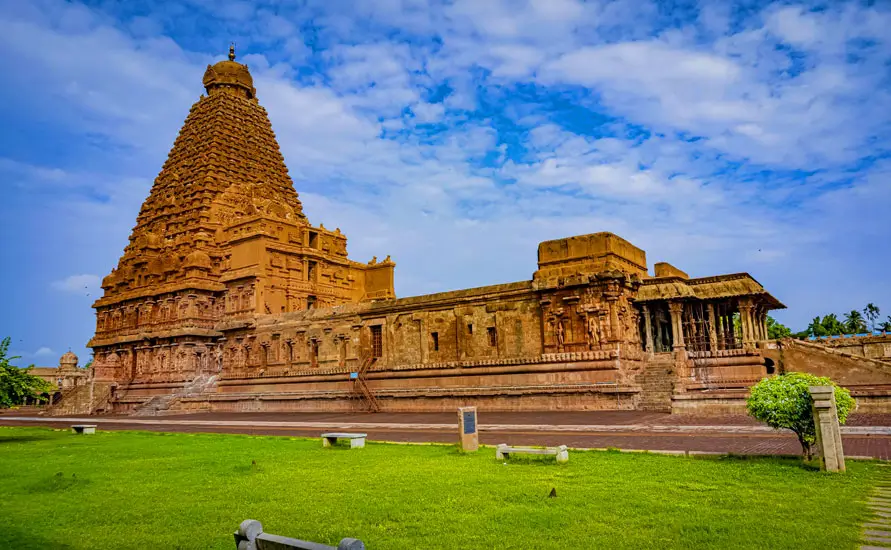
At first light the Brihadeeswarar Temple is at its finest, with the granite tower glowing pink and gold and early worshippers moving quietly across the vast courtyard. Rajaraja Chola I finished it in 1010, and the main tower, at about 66 meters, was the tallest in India for centuries. Your guide explains how the capstone, a single block weighing around 80 tonnes, was raised to the top, perhaps via a long earth ramp. Shiva's bull Nandi, a monolith around four meters high, rests under a separate pillared canopy, and the inner corridors hold Chola frescoes, though access to some areas can be restricted.
Mid-morning brings you to the Thanjavur Palace, home first to Nayak and later Maratha kings; its art gallery holds Chola bronzes and stone sculptures found across the delta. In the same compound, the Saraswathi Mahal Library grew from a royal collection begun under the Nayaks, and its small public gallery shows a selection of palm-leaf texts, illustrated medical manuals and early European printed atlases behind glass, while scholars use the reading rooms upstairs. Before lunch, a studio visit shows a Tanjore painting taking shape, a traditional style using gold foil and gesso on wood, with deities in deep reds and greens.
After lunch you head 35 km east to Darasuram, just outside Kumbakonam, where Rajaraja Chola II raised the Airavatesvara Temple in the 1100s. UNESCO groups it with Brihadeeswarar and Gangaikonda Cholapuram as the three Great Living Chola Temples. Its scale is smaller, but the carving is the finest of the three, with tiny panels of dancers and musicians on every surface. Near the entrance, the steps are designed to give musical notes when struck. Returning, a detour to Swamimalai shows sthapathi families pouring bronze into wax-formed clay molds. Overnight in Tanjore.
An hour west of Tanjore lies Trichy, also called Tiruchirappalli, where the Kaveri River splits around the island of Srirangam. The Sri Ranganathaswamy Temple covers the island with seven concentric walls and 21 gopurams, the largest temple complex in India still in active worship. The outer rings hold homes, shops and stalls, so you cross a working neighborhood before reaching the inner courts. The sanctum of the reclining Vishnu is closed to non-Hindus, though a guide-led climb to a viewing terrace shows the gopurams in rows, and to the Hall of a Thousand Pillars with its rearing horses.
Before lunch you drive across the river to the Rock Fort, a granite outcrop rising 83 meters above the city, with a Ganesha temple at the top reached by about 400 steps cut into the rock. The climb is steep but short, and from the top you look across the Kaveri, the town and the gopurams of Srirangam. Halfway up is a rock-cut Pallava cave temple with fine carvings. Shoes are left at the bottom, and the steps can be hot in the afternoon sun, so morning is the best time to climb.
After lunch at a local restaurant, the road continues south through dry country of palmyra palms and scrub toward Madurai, about three hours away. Sangam-era poets sang of Madurai's markets two millennia ago, and the city still sees itself as the guardian of Tamil culture. You reach your hotel by late afternoon and have the evening free. Ask your driver to drop you near a jigarthanda stall, where the city's favorite chilled drink , jigarthanda, comes topped with ice cream in a tall glass, a cold reward after a long road day across the plains in the summer heat. Overnight in Madurai.
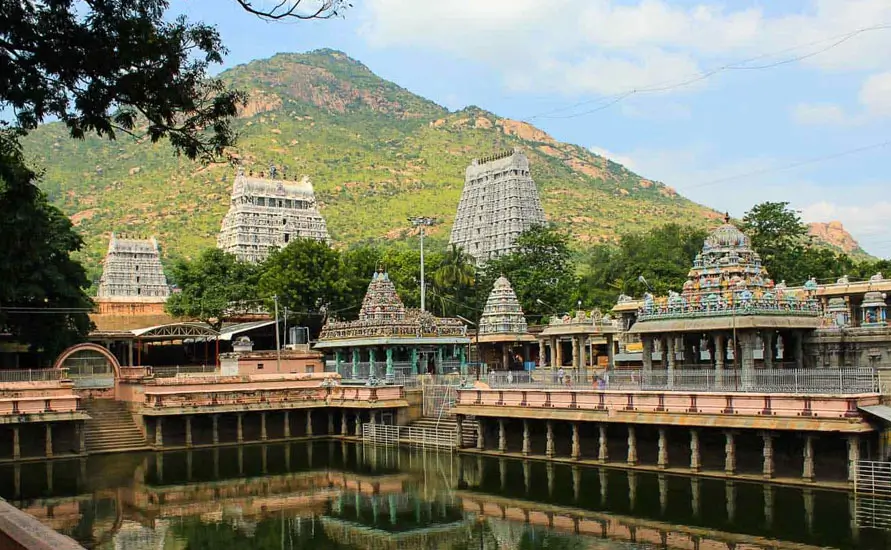
The Meenakshi Temple opens before six, and arriving at dawn lets you see the first rituals with the corridors still cool. Your guide hands your phone and camera in at the deposit window and leaves shoes with the attendant at the gate. The inner shrines of Meenakshi and Sundareswarar are reserved for Hindus, yet everyone can walk the long colonnades, watch priests carrying offerings and stand at the Porthamarai Kulam, a tank in which, legend says, the ancient academy dropped new poems, keeping those that floated. Look out for the columns sculpted with the divine wedding, Vishnu giving away his sister.
After breakfast you visit the Thirumalai Nayak Palace, a seventeenth-century palace with massive white columns and a domed throne hall. Opposite the east gate, the Pudhu Mandapam shelters tailors stitching at treadle machines among carved Nayak kings, and later you call at the Gandhi Memorial Museum, where a dark room keeps the cloth he wore when he was killed. Retreat to your air-cooled room after lunch for a couple of hours, because the city heats up fiercely from March onward, or linger over a banana-leaf thali at a vegetarian canteen.
Come back after dark for the palliyarai ceremony, held near 9 pm, when Sundareswarar travels by litter from his own shrine to the goddess's bedchamber. Drums, pipes and chanting fill the corridors, and devotees press close to watch. Many guests rate this bedtime ritual as the moment they remember most from Madurai, partly because it is a working rite for local worshippers, not a show staged for visitors. Eat beforehand at a busy local place; mutton chukka and the egg-and-mince kari dosai are the dishes to order. Your guide walks you back to the car afterward. Overnight in Madurai.
This is the day the trip changes direction, from the plains up into the hills. After breakfast you leave Madurai and drive west across flat country of rice paddies and coconut palms. At Batlagundu the road starts to climb, and within an hour the landscape changes from mango orchards to coffee, pepper and then shola forest. The temperature can drop by fifteen degrees between Madurai and the top, so keep a sweater handy in the car. Along the road, small stalls sell plums, pears and avocados grown on the slopes.
About halfway up you pass Silver Cascade, a waterfall beside the road where monkeys gather on the railings hoping for food. Higher still, the views open over the plains you crossed in the last week, with Madurai's direction often lost in the haze. Your driver stops at several viewpoints along the way. Early afternoon brings you to Kodaikanal, over 2,000 meters up, the retreat American mission families carved out of the forest in 1845. You settle into a hotel with views over the valley and a fireplace for the evening.
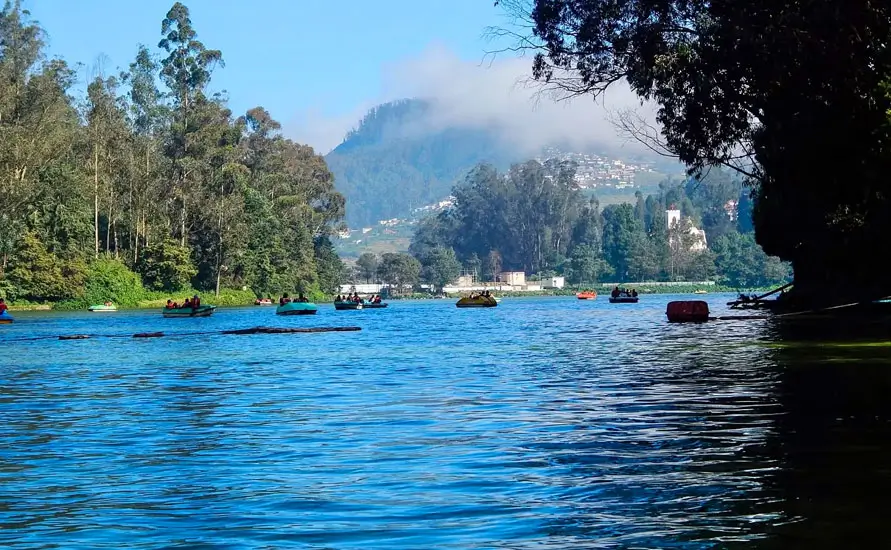
After lunch and a rest, walk down to Kodai Lake, the star-shaped lake at the center of town, and follow the 5 km path around its shore, under eucalyptus and cypress trees. You can hire a rowboat or a bicycle, or simply enjoy the fresh air after a week of temple visits on the hot plains. Small shops near the lake sell homemade chocolates, eucalyptus oil and hand-knitted woolens. As evening falls, the temperature drops quickly and mist often rolls across the water. Dinner at the hotel, followed by a quiet evening by the fire. Overnight in Kodaikanal.
Some of the best scenery around Kodaikanal lies beyond the town, on the forest road to Berijam Lake, about 20 km to the west. The road passes through a protected forest area, and the forest department controls entry with a permit and a limited number of vehicles, so we arrange this in advance. Along the way you stop at Moir Point, a viewpoint over a deep valley, and pass the Guna Caves, known locally as the Devil's Kitchen, a series of deep chasms between rocks that are now fenced off for safety but can be seen from a viewing area.
Berijam Lake itself is a quiet reservoir surrounded by shola forest and grassland, with almost no development around it. Indian bison, wild boar and sambar deer are sometimes seen grazing near the water early in the day. The same road passes the Silent Valley and Fire Tower lookouts, each giving long views over ridge after ridge of the Ghats. Picnics are popular here, and your hotel can pack a lunch of sandwiches, fruit and a flask of hot tea to eat on the grassy shore. The forest area usually closes to visitors in the early afternoon and on some weekdays, so your guide plans the timing.
Back near town, you visit the Shembaganur Museum of Natural History, run by the Sacred Heart College, a Jesuit seminary founded in the 1890s. The museum displays stuffed animals, birds, butterflies and a large collection of orchids from the Palani Hills, some grown in a small orchid house. It is old-fashioned, with hand-lettered labels and wooden cabinets, but fascinating, and the priests who started it were among the first to study the region's plant life. In the evening, you can visit the small La Saleth Church or stroll around the town's bazaar. Overnight in Kodaikanal.
No road links Kodaikanal and Ooty directly across the hills, so you descend to the plains, cross the Coimbatore region and climb again into the Nilgiris. Allow around six to seven hours of driving, plus stops, which makes this a full travel day. Your driver leaves after an early breakfast, descending the Palani ghat road to the pilgrim town of Palani, where the hilltop Murugan temple stands above the plains. Rows of wind turbines and dry fields of millet follow on the way to Coimbatore, and lunch is at a reliable highway restaurant.
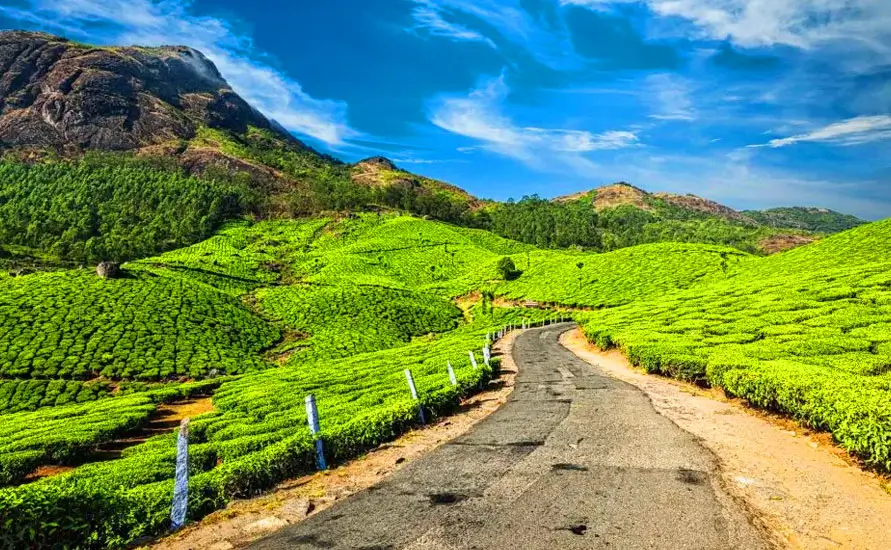
Past Coimbatore lies Mettupalayam, where the plains end abruptly, and then the car tackles the Coonoor ghat, a winding road with many hairpin bends, through tea gardens and eucalyptus forest. The temperature drops again as you near Ooty, at more than 2,200 meters, and the light fades over the hills. You reach your hotel in the late afternoon or early evening, ready for a hot shower and dinner. Tomorrow is a more relaxed day with a ride on the toy train. Overnight in Ooty.
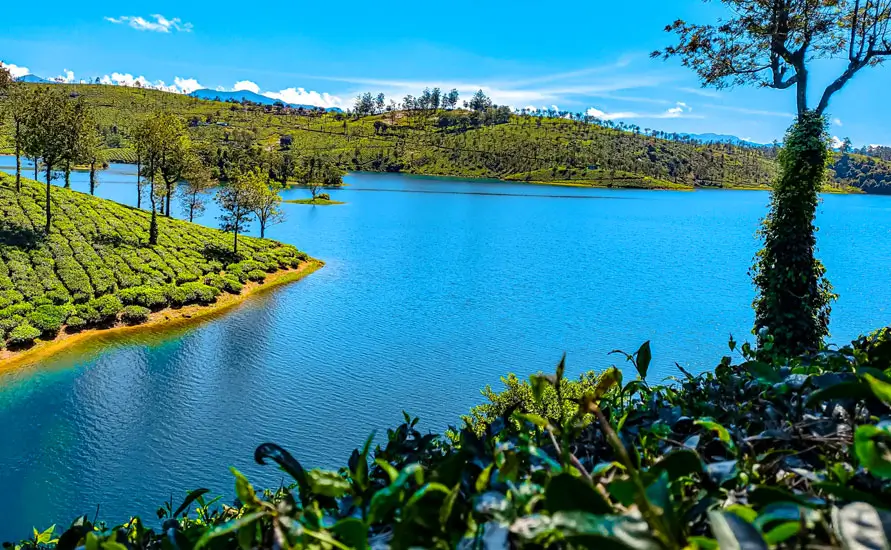
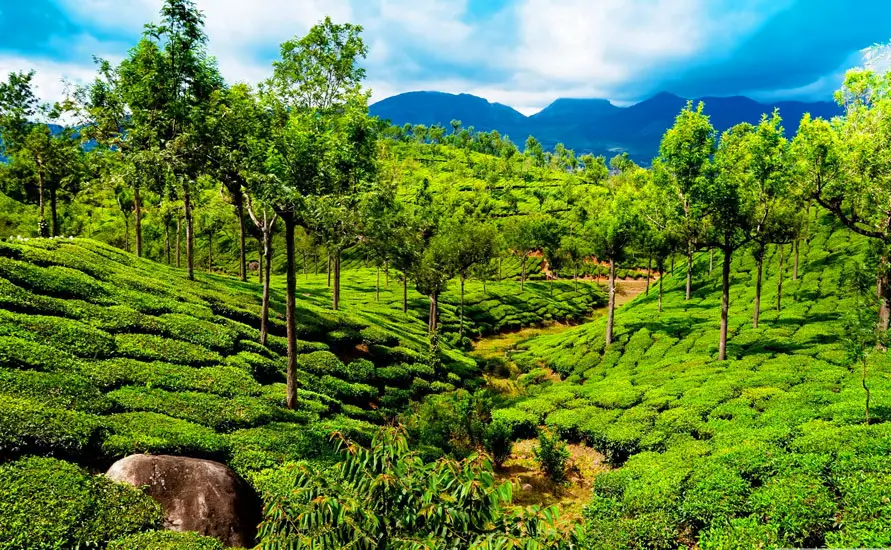
First thing, drive up Doddabetta, which at around 2,637 meters tops the Nilgiri range, for views across the plateau and down to the plains. Clouds often gather by late morning, so it is best to go early. Lower down, a small factory lets you trace the leaf from the withering troughs through the rollers and dryers to the sorting sieves, ending with a tasting cup. Your guide explains how tea came to the Nilgiris in the nineteenth century and how small growers, many from the local Badaga community, now sell their leaf to these factories.
Around midday you board the Nilgiri Mountain Railway at Ooty station for the ride down to Coonoor, about an hour and a quarter. Opened to Ooty in 1908, the line belongs to UNESCO's Mountain Railways of India listing. On this upper section, the train runs through tunnels, over bridges and past small stations such as Lovedale and Ketti, with views across valleys of terraced carrot and cabbage farms that the Badaga families have worked for generations. Waiting at the Coonoor platform is your driver, and after yesterday's road marathon the slow train feels like a reward.
In Coonoor, take a short walk through the town's market and stop for tea at a local shop. Then drive back to Ooty via the Ketti valley viewpoint, where the valley opens out below. Back in town, there may be time for the Government Botanical Garden, with its fossil tree trunk and terraced lawns, or a lap of Ooty Lake on foot. Your farewell dinner at the hotel tonight closes a trip that began on the Bay of Bengal shore and ends on a cold Nilgiri ridge. Pack for tomorrow's departure, and leave out a warm layer for the early drive. Overnight in Ooty.
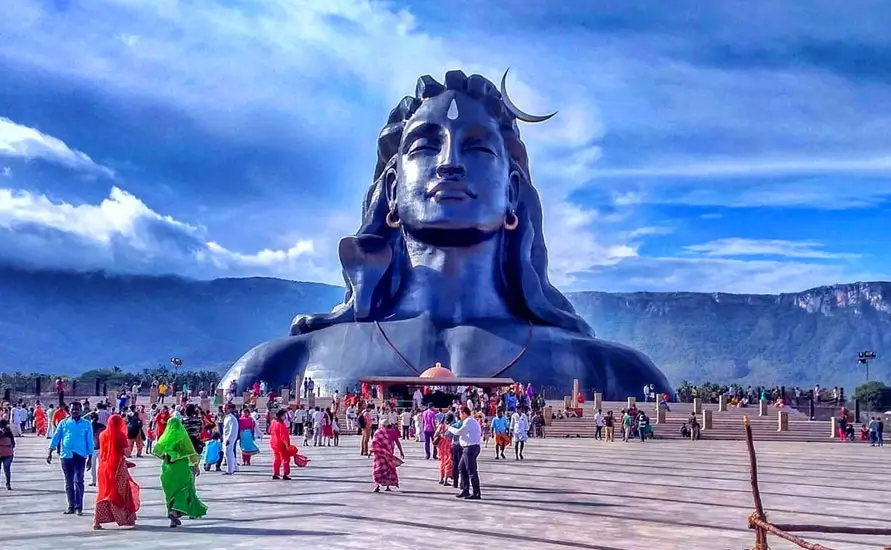
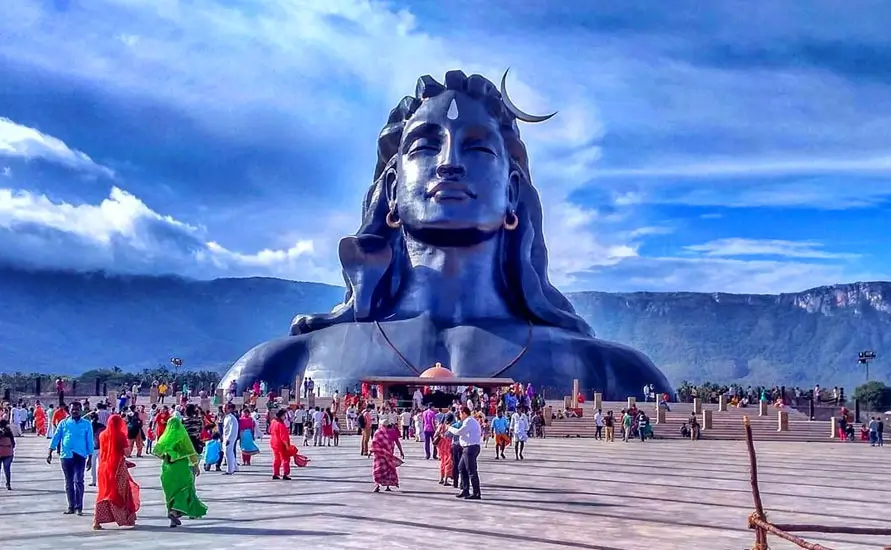
A final hill breakfast, then the ghat road carries you down to Coimbatore Airport, roughly three hours by car. The descent passes through tea gardens, eucalyptus forests and finally the coconut groves of the plains, and every hairpin seems to add a degree of warmth. Departure from the hotel is planned with time to spare, and with an evening flight there may be time for the giant Adiyogi bust on Coimbatore's western fringe. Coimbatore Airport has connections to Chennai, Bengaluru, Mumbai and Delhi, and direct flights to the Gulf and Singapore for onward connections home.
From Pallava reliefs on the shore and French Pondicherry to the Chola shrines of the delta, Madurai's gopurams and the tea slopes of the Nilgiris, thirteen days have spanned the state from sea level to its peaks. We hope this tour has shown you the full range of Tamil Nadu, from its temple traditions to its cool green hills. Kanyakumari, Rameswaram and Chettinad still wait for a later trip, and we would enjoy shaping that one for you too.
Your Journey

N.S. Rathore & Mrs. Omlata Rathore · Managing Director
We still read every enquiry ourselves. Tell us the places you liked and our planners will send a day-by-day route with drive times and a clear price.
Every package can be customised and no pressure to book. A planner from our office replies within 24 hours with a route written for your group.
Fill this in and your planner will send a first draft itinerary.
Explore more
Kerala Backwaters Escape Kerala Backwaters Escape
 Kerala Backwaters Escape
 Kerala Backwaters Escape
 Kerala Backwaters Escape
 Kerala Backwaters Escape
 Kerala Backwaters Escape
 Kerala Backwaters Escape
 Kerala Backwaters Escape
 Kerala Backwaters Escape
 Kerala Backwaters Escape
 Kerala Backwaters Escape
 Kerala Backwaters Escape
 Kerala Backwaters Escape
 Kerala Backwaters Escape
 Kerala Backwaters Escape
 Kerala Backwaters Escape Kerala Backwaters Escape Kerala Backwaters Escape