
 Kerala Backwaters Escape

Tamil Nadu Tour Packages
Chennai – Mahabalipuram – Pondicherry – Chidambaram – Tranquebar – Darasuram – Tanjore – Chettinad – Madurai – Kodaikanal – Ooty – Coonoor – Coimbatore
At a glance
Think of the Best of Tamil Nadu tour as our flagship for the state: fifteen days that take in its coast, its great temples, its merchant mansions and its two best-loved hill towns. The first week runs down the Coromandel shore, from Chennai to the Pallava carvings at Mahabalipuram, the Franco-Tamil grid of Pondicherry and the little Danish outpost of Tranquebar. The second week heads inland to the Chola temples near Tanjore, the villages of Chettinad and the old Pandya capital of Madurai, then rises to Kodaikanal and Ooty for cool air, tea and a ride on the toy train.
Fifteen days can feel long if the plan is crowded, so we kept it loose. Two nights is the norm, most road legs take two to four hours, and only the hop from the Palani Hills to the Nilgiris is a full driving day, with lunch and rest stops built in. One driver and one car stay with you from start to finish, and guides born in each town take over at each major site. Rooms change in character as you go: a beach hotel, a colonial villa, a Danish bungalow, a Chettiar mansion and hill lodges with fireplaces.
Our Tamil Nadu tour package is popular with couples and families from Britain, continental Europe, the USA, Canada and Australia, and with NRI parents keen to show their children the land of their grandparents. Meals become part of the story, from French bakery breakfasts to peppery Chettinad curries and Madurai's chilled jigarthanda. Run the Best of Tamil Nadu tour between October and March for the kindest weather, and fly out from Coimbatore at the end, with easy links home through Singapore, the Gulf or the big Indian hubs.
Vanakkam, and welcome to Tamil Nadu. Once you are through passport control and the baggage hall, a member of our ground team steps forward with a printed card, pushes the trolley and leads you to the waiting car. Long-haul flights usually reach Chennai before sunrise, so we leave the morning completely open; sleep, shower and have a late breakfast before anything else happens. Should you land in daylight, we can reserve the room from the previous night for a supplement. Your folder contains the full fifteen-day route, guide phone numbers and a short glossary of Tamil courtesies.
At about four your guide calls for you, and you head for Mylapore, a temple quarter that was a busy port long before the British founded Madras. Its Kapaleeshwarar Temple was rebuilt in the 16th century after the Portuguese pulled down the original on the shore, and the present gopuram swarms with painted plaster gods. Shoes stay with a minder at the gate, and covered shoulders and knees are expected. In the inner courtyards your guide walks you through the basic plan of a Tamil temple, from the flagstaff to the sanctum, while priests carry oil lamps from shrine to shrine for the evening worship.
Outside, the lanes around the great stepped tank sell brass lamps, strings of jasmine and coffee powder ground to order and sold by weight. Look down at the doorsteps: each morning the women of these houses sketch geometric kolam designs in white rice powder, and by evening only smudged traces remain. A short ride brings you to San Thome Cathedral, rebuilt in neo-Gothic style in 1896 above a tomb linked by tradition to St. Thomas, and from there to Marina Beach, where families gather at sunset. For dinner, try a crisp ghee roast dosa at a busy tiffin house nearby. Overnight in Chennai.
Your first stop this morning is Kalakshetra, the arts school on the southern edge of Chennai set up by the dancer Rukmini Devi in the 1930s, at a time when Bharatanatyam was looked down on in polite society. Lessons take place in open-sided halls beneath old banyans, and on many weekday mornings guests may stand quietly at the side while students drill footwork against the rap of a wooden stick or practice Carnatic vocal exercises. A craft unit on the campus weaves silk and cotton saris on handlooms. Visits depend on term dates and exam weeks, so we reconfirm a few days ahead.
Next, on the coast road, comes Cholamandal Artists' Village, founded in 1966 when a band of young Madras artists pooled their savings to buy land and work outside the commercial gallery system. Several families of artists still have houses and studios inside the compound. Its small gallery hangs canvases, metal reliefs and terracotta by past and present members, and prices are fair. If one of the resident artists is around, a short chat gives a modern view to set against the centuries-old temple carving that fills so much of this Best of Tamil Nadu tour in the days ahead.
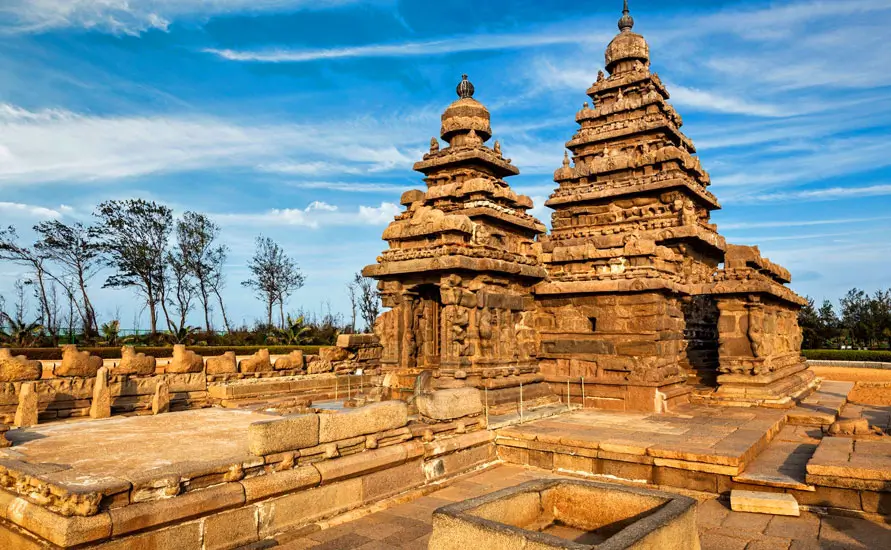
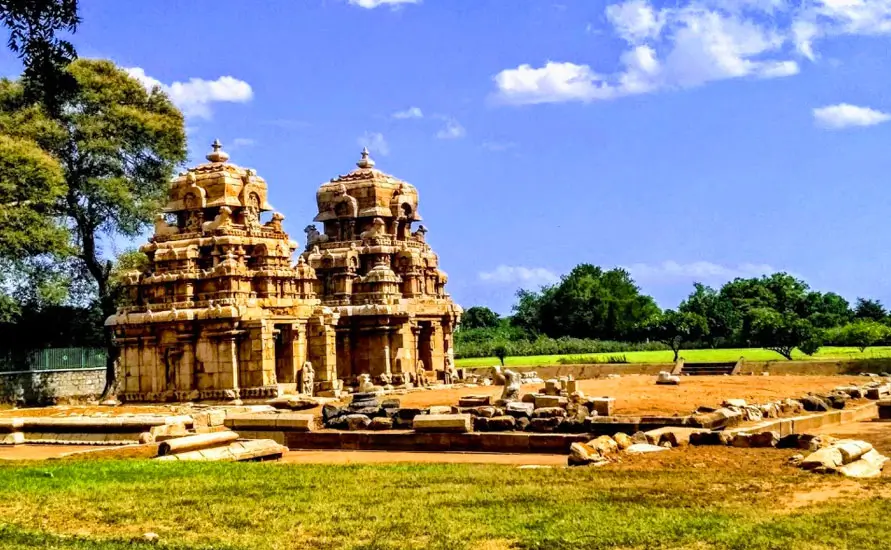
By early afternoon you are at your sea-facing hotel in Mahabalipuram, with time for lunch and a rest. Later your guide leads you first to the Shore Temple, where the granite turns honey-colored as the sun sinks behind the town, and then to Arjuna's Penance, the vast relief on two boulders. Side light at this hour sharpens every figure: celestial beings in flight, hunters, a pair of life-size elephants and, at the bottom, a cat standing on its hind legs pretending to be a holy man while mice gather round it. The carvings date from the Pallava era and are listed by UNESCO. Overnight in Mahabalipuram.
Come early to the Pancha Rathas, before tour buses arrive from Chennai, and you have the five stone chariots nearly to yourself. Each was hewn from a single outcrop and named, much later, after the Pandava brothers and Draupadi, and your guide shows how they copy wooden and thatched buildings in granite, down to the rafters and roof ridges. On the hill behind the town, the Varaha and Mahishasuramardini cave halls carry relief panels of gods in action. Before you leave, step into one of the stone-carving studios on the main road, where young sculptors learn to measure proportions by hand-spans and finger-widths.
After lunch you continue down the coast, past salt pans where laborers rake glittering crystals into heaps, brackish lagoons full of herons and fishing settlements with catamarans hauled onto the sand. The ride to Pondicherry takes around 150 minutes. Apart from a few spells of British occupation, it stayed French until 1954, and its seafront still looks more like a quiet Mediterranean town than an Indian city. Your room tonight is in a restored villa or a boutique hotel within walking distance of the sea, with a shaded courtyard, cool tiled floors and tall louvered windows.
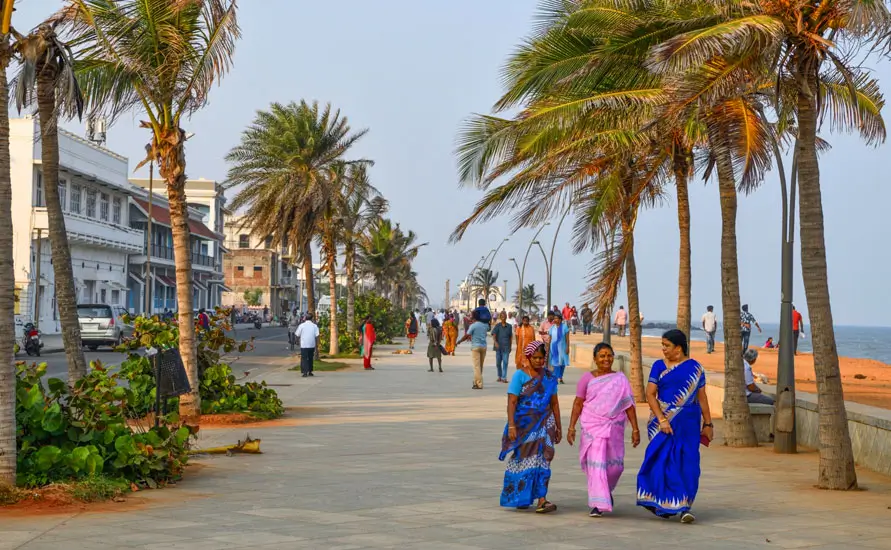
Once the sun is down, Goubert Avenue along the seafront is closed to motor traffic and the town comes out to stroll. Along the road you pass the 19th-century lighthouse, the mairie and a memorial to the dead of the First World War, and a few streets inland a statue of Joan of Arc stands in front of the cathedral. Hawkers push carts of hot sundal, a spiced chickpea snack served in paper cones, and children play on the boulders of the sea wall. For dinner, the choice runs from a steak frites to a fragrant Creole prawn curry at one of the family-run places that blend both kitchens. Overnight in Pondicherry.
Walking White Town at seven in the morning is a different thing from walking it at noon. The streets are swept, bakeries are pulling out their first trays and the mustard-yellow walls hold the cool of the night. Your guide takes you along Rue Dumas, Rue Suffren and Rue Romain Rolland, past the consulate and the French school, explaining how Governor Dupleix and his engineers drew the town on a strict grid. A drainage canal divided the European blocks by the shore from the Indian district behind, and the line is still easy to see on a map today.
On the far side of that canal the houses change completely. In the Tamil Quarter, homes face the street with a raised platform called a thinnai, where elders still sit with neighbors in the evening, and open onto inner courtyards behind carved wooden pillars. Your route includes a quiet pause at the Sri Aurobindo Ashram, the pink-washed Capuchin church known as Notre-Dame des Anges and the small Pondicherry Museum, where shards of Roman amphorae dug up at Arikamedu, just south of town, prove that Roman wine and olive oil were reaching this beach some twenty centuries ago.
In the afternoon you head north to Auroville, launched in 1968 as a township where settlers from dozens of nations try to live by shared work rather than private property. A short film at the information hall sets out the founding charter, and a path of roughly a kilometer through planted woodland brings you to the viewing point for the golden Matrimandir. Getting inside the meditation chamber requires a booking made in person a day or more ahead, with limited places, so it is a possibility rather than a certainty. Before heading back, browse the shops for handmade paper, organic coffee and incense made on site. Overnight in Pondicherry.
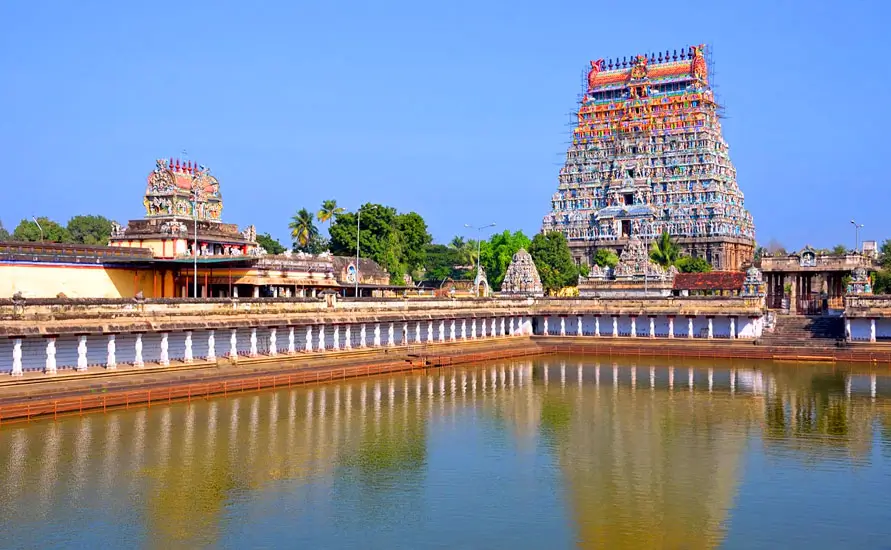
About ninety minutes down the road lies Chidambaram, a temple town devoted to Shiva in his form as Nataraja, lord of the dance. At the Thillai Nataraja Temple the inner hall where the bronze dancer resides is roofed with gold-plated tiles, a gift of early Chola kings. Your guide leads you to the eastern tower, whose passage walls are lined with small panels illustrating the karanas, the dance movements listed in the ancient Sanskrit manual of theater. Each February or March, during the Natyanjali festival, classical dancers from all over India come to perform in these courtyards as an act of devotion.
Chidambaram has customs found nowhere else. Daily worship belongs to the Dikshitars, an old hereditary clan of priests who knot their hair over the forehead, and it is said that their ancestors were brought from the Himalaya by Shiva himself. Behind a curtain in the sanctum lies the famous empty space known as the secret of Chidambaram, standing for the formless aspect of the god. A Vishnu shrine shares the same enclosure, which is rare in this state. Male visitors are sometimes requested to go shirtless in parts of the inner temple. A vegetarian lunch near the east gate follows before you continue south across the Kollidam River.
By mid-afternoon you reach Tranquebar, or Tharangambadi, a name usually translated as land of the singing waves. Denmark's Asiatic traders kept this small port from 1620 until selling it to Britain in the 1840s, and it remains one of the calmest towns on the whole coast. You stay in an old Danish-era bungalow on King Street, carefully restored, a few minutes on foot from the beach. Late in the day, pass through the arched Town Gate and walk among whitewashed houses to the shore, where fishing boats lie on the sand below the fort walls. Evening is yours, with grilled fish and an empty beach. Overnight in Tranquebar.
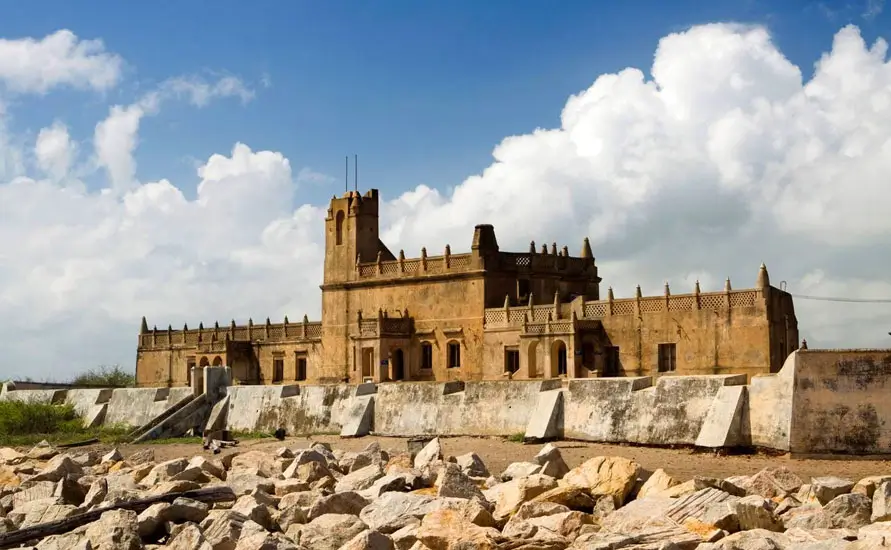
Rise before breakfast and you can watch the boats come in below Fort Dansborg, the trapezoid Danish fort raised in 1620 for the expedition of Admiral Ove Gjedde. Later your guide opens up its small museum, with Danish coins, porcelain, ship drawings and colonial letters. Up the street stands the New Jerusalem Church of 1718, founded by Bartholomäus Ziegenbalg, the German Lutheran pastor who set up a printing press here and produced the first printed Gospels in Tamil. On the shoreline you also see the Masilamani Nathar Temple, a 14th-century shrine battered by the sea and since partly restored.
From the coast you head inland toward Kumbakonam, and just outside it you stop at Darasuram for the Airavatesvara Temple, the work of Rajaraja II in the mid-12th century and one of three Chola shrines grouped together on the World Heritage List. Compared with the giants of the delta it is modest in size but extraordinary in finish. Your guide points out acrobats and dancers carved no larger than a thumb, the front hall built as a wheeled stone chariot hauled by prancing horses, and long friezes telling the lives of the sixty-three Nayanmars, the Shaivite poet-saints whose hymns are still sung across Tamil Nadu.
Lunch in Kumbakonam should end with the town's celebrated degree coffee, poured from height between two steel vessels until it foams. Another hour of driving brings you to Tanjore, where you check in for two nights. If you feel like it, wander the old streets around the palace this evening, where shops sell bronze lamps, temple jewelry and veenas. These long-necked classical lutes are still hollowed by hand from jackfruit timber in nearby workshops, and your guide can add a short visit tomorrow for anyone curious about how one is made and tuned. Overnight in Tanjore.
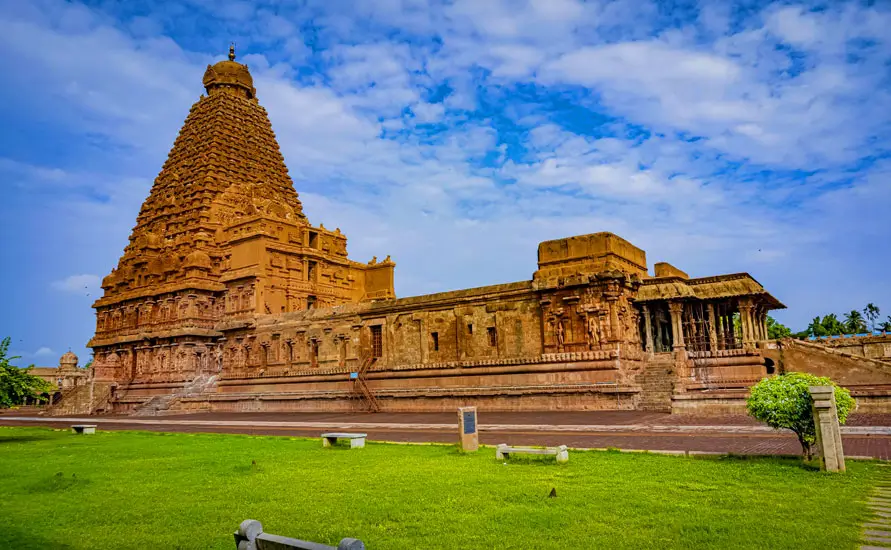
A full day in Tanjore begins at the Brihadeeswarar Temple, which Rajaraja I dedicated in the year 1010 as a statement of Chola power. At about 66 meters its vimana was far taller than any temple tower of its day, and every block of granite had to be hauled in from hills a long way off, since the delta has no stone of its own. A colossal Nandi, carved in one piece, kneels under a pillared canopy, gazing at the shrine. Your guide reads part of the inscriptions on the base, which name the craftsmen, accountants, musicians and dancers the temple employed.
Hidden in the corridors round the main shrine are Chola wall paintings found in the 1930s beneath a later layer of Nayak work, though visitors can rarely enter that passage. Late morning you move on to the Thanjavur Royal Palace, a sprawling Nayak and Maratha complex. Its art gallery, set in the old audience hall, holds one of the strongest collections of Chola bronzes you will see on the trip. The palace also houses the Saraswathi Mahal Library, whose public display room shows a small selection of palm-leaf texts, painted maps and early printed books collected by the Maratha rulers.
After a midday rest you can choose between two traditional crafts. A Tanjore painting studio shows how artists build relief in chalk paste, lay gold foil and set colored stones before painting the deity, while a veena workshop shows how the instrument's bowl, neck and frets are shaped. Both crafts carry a geographical indication tag. After dark you can go back to the Brihadeeswarar Temple, when floodlights wash the tower in amber and families sit on the warm flagstones after the evening puja. A banana-leaf supper in town rounds off the day. Overnight in Tanjore.
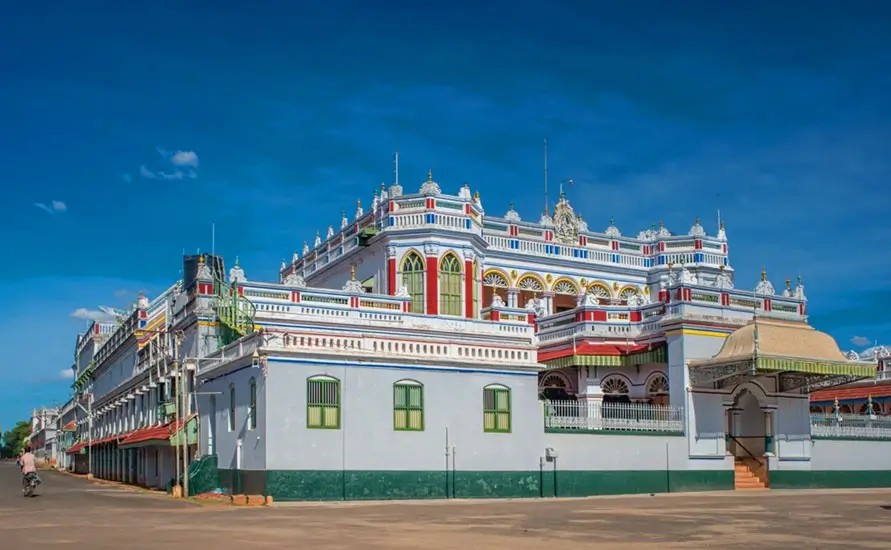
Driving south after breakfast, you see the delta's green paddies give way to dry red earth and palmyra palms, a sign you are entering Chettinad. This was home to the Nattukottai Chettiars, a banking caste who lent money across Burma, Ceylon, Malaya and Saigon in the late colonial era and sent their profits back to build palaces in their home villages. Teak came from Burma, marble from Italy, tiles from Japan and England, chandeliers from Belgium. Some ten thousand such houses were built across about seventy-five villages, and you check in to one that has been restored as a heritage hotel.
Late afternoon brings a walk round Kanadukathan, a village of broad streets and huge facades, many with their gates locked for most of the year. In a mansion open to visitors, you walk from the raised entrance veranda into a pillared reception courtyard, then deeper into the family courtyards, store rooms and the great dining hall used for weddings. Look up at the painted ceilings, the colored glass and the rows of portraits of the patriarchs. Your guide describes how a Chettiar wedding could feed a thousand guests, and how families divided these houses between brothers. Ask before taking pictures.
Dinner tonight is a Chettinad feast in the mansion's dining hall. This cooking is the most heavily spiced in Tamil Nadu, built on freshly ground masalas with black pepper, fennel, dried red chilies, star anise and kalpasi, a dried lichen that gives a smoky, earthy note. Expect dishes such as pepper chicken, mutton kola urundai (spiced meatballs), vegetable kootu and soft kuzhi paniyaram cooked in a dimpled iron pan. The cook will gladly tone down the heat if you ask. Later the house goes very quiet, with only crickets and the odd temple bell outside. Overnight in Chettinad.
Morning takes you to Athangudi, where the patterned floor tiles found in every Chettiar mansion are still made by hand. A worker sets a brass stencil on a sheet of glass, pours in colored cement slurry, backs it with dry cement and sand, and then soaks the finished tiles in water for days; no kiln is involved, and the glass gives the surface its shine. You are welcome to try making one. In the village, look out for kandaangi cotton saris in bold checks and for antique dealers selling enamelware, brass vessels and carved panels salvaged from old houses.
Between Karaikudi and Madurai you stop at Pillaiyarpatti, where the Karpaga Vinayagar Temple is cut into a low rock face. Its Ganesha, roughly two meters tall, is carved straight out of the living stone and has two arms rather than four, a sign of great age; inscriptions suggest the cave goes back to the early centuries of the first millennium. The Chettiar community runs the temple and keeps it spotless. Your guide explains why Tamil families pray here before weddings and new ventures, and points out the old Tamil script cut into the cave wall. Shoes come off at the entrance.
Madurai, which you reach by lunchtime, has been a city for well over two thousand years. It was the seat of the Pandya kings, traders from Rome and Greece wrote about it, and legend places the great Sangam assemblies of Tamil poets here. After checking in, take an evening stroll with your guide round the temple streets, which are laid out in squares inside squares and each named after the Tamil month when the temple chariots roll along it. Try kari dosai, a dosa topped with minced mutton, and then a glass of jigarthanda, milk, almond gum and ice cream. Overnight in Madurai.
Start early at the Meenakshi Amman Temple, before heat and crowds build up. The goddess Meenakshi, a Pandya princess in legend, is worshipped here with Sundareswarar, the name Shiva takes in this city, and the compound is ringed by fourteen gopurams carrying a dense crowd of painted plaster figures. Entry to the two innermost shrines is limited to Hindus, while all visitors are free to walk the corridors and pillared halls of the complex. Leave your phone and camera at the counters outside, or simply in the car, and wear loose clothing that covers shoulders and knees.
Inside, your guide leads you into the Thousand Pillar Mandapa, where every column is carved with gods, musicians or rearing yalis, and to the Porthamarai Kulam, a stepped pool named for a golden lotus of legend. Tradition says poets once dropped their palm-leaf verses on its water, and only works of merit stayed afloat. Your guide also tells the story of the divine wedding re-enacted each April or May at the Chithirai festival. Later you drive to the Thirumalai Nayak Palace, raised by the Nayak king in the 1630s, where giant white columns and arched halls show Islamic influence on a Dravidian plan.
After lunch comes the Gandhi Memorial Museum, lodged in a summer palace once used by Rani Mangammal, who ruled as regent around 1700. It walks you through the freedom struggle and preserves, behind glass, the stained cloth from the evening he was killed in Delhi. It was in Madurai, in 1921, that he gave up shirt and cap and took to the simple loincloth he wore for the rest of his life. After dinner you return for the palliyarai ritual around 9 pm: to the beat of drums and the drone of the nadaswaram, priests escort the god's sandals in a small litter to Meenakshi's shrine, where the divine couple rest until dawn. Overnight in Madurai.
Early risers can join the guide at the wholesale flower market near the Mattuthavani bus terminal, open from before dawn. Farmers arrive on buses and motorbikes with sacks of jasmine, marigold, crossandra and tuberose, and buyers shout prices over heaps of white and orange blossom. Madurai malli, the local jasmine, is valued for its thick petals and strong scent and is flown to cities across India and the Gulf. By mid-morning most of the stock has gone, and the floor is a carpet of crushed petals. Women string garlands at lightning speed on the stalls outside.
After breakfast the road heads west across farmland and then climbs into the Palani Hills from the foothill town of Batlagundu. Expect bend after bend through banana groves, coffee under shade trees, then eucalyptus and wattle. The Silver Cascade falls lie right beside the road, and several bends open up long views back to the plains. Bonnet macaques wait at the lay-bys hoping for snacks, but feeding them is discouraged, as it makes them bold. At around 2,100 meters, Kodaikanal is much cooler than Madurai, so keep a fleece close by.
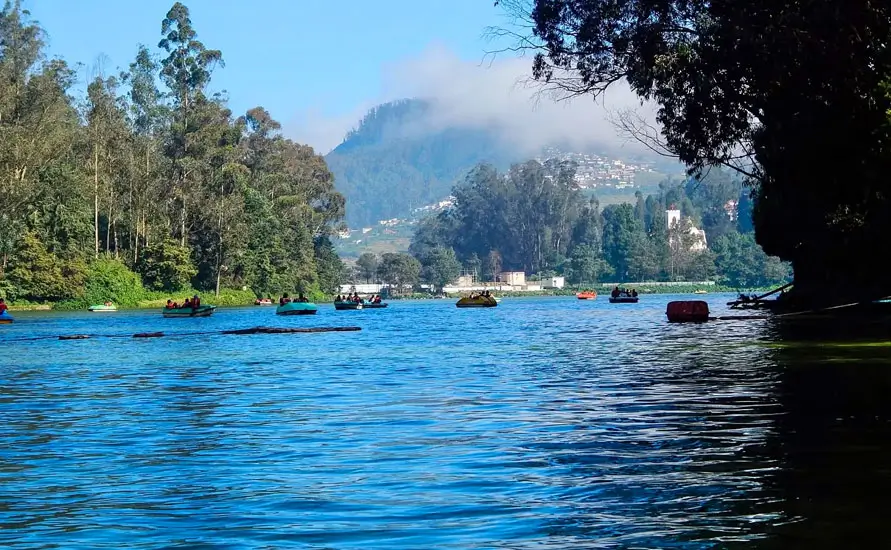
Kodaikanal began in the 1840s as a hot-weather retreat for American missionaries working around Madurai, and a missionary school started here in 1901 still draws students from many countries. Once settled, head down to Kodai Lake, an irregular star-shaped lake made in the 1860s. A level road of about five kilometers circles it, and you can rent bicycles, take a rowing boat or simply sit by the water. Toward evening, the town's bazaar sells homemade chocolate, eucalyptus oil, plums in season and local cheese, a tradition started by early settlers. Overnight in Kodaikanal.
Make an early start along Coaker's Walk, a cliff-edge promenade built in the 1870s that clings to the southern rim of town. On clear mornings the land falls away to a patchwork of fields below, and on the very best days you can make out the haze of Madurai on the horizon. Often, though, mist rises from the valley within minutes and swallows the view, then just as quickly clears again. A telescope house about halfway along lets you zoom in on distant villages. Nearby Bryant Park, a garden laid out in 1908, is known for its rose beds and its glasshouse.
Later the car takes you west of town to the Pine Forest, planted around the 1900s, where tall straight trunks and a soft needle floor make a cool, dim world that Tamil film directors love. A few minutes away are the Guna Caves, plunging fissures that the British nicknamed Devil's Kitchen; visitors now see them from a fenced viewing area. Your last stop is Pillar Rocks, three granite columns over a hundred meters tall that stand side by side at the edge of the plateau. Clouds drift between them and come and go, so a little patience is often rewarded with a clear look.
After lunch there is a choice. The Kodaikanal Solar Observatory, running since 1899, is one of the oldest astronomical stations in India; its small museum opens only at set times, and your guide will check. The other option is the hilltop Kurinji Andavar Temple, dedicated to Murugan and named for the kurinji shrub, which flowers across these slopes only once every twelve years and turns them blue-violet. Nothing else is scheduled, so you can rest, read by the fire or walk in the town. Tomorrow's drive is long, so an early night helps. Overnight in Kodaikanal.
Today the car crosses from one hill range to another, the longest stretch of driving on the trip, so you leave right after an early breakfast. The route drops down through Palani, where the hilltop Murugan shrine is visible high on its rock, crosses the coconut country around Pollachi and passes the edge of Coimbatore before climbing again from Mettupalayam. Allow seven to eight hours, including a relaxed lunch at a clean highway restaurant and regular tea stops. Your driver has done this road many times and will pull over whenever you want to stretch your legs or take photos.
The final climb from Mettupalayam to Ooty winds through a long ladder of numbered hairpin bends, gaining nearly two thousand meters as eucalyptus and tea plantations close in on both sides. Arrival at your hotel is around late afternoon; many properties in Ooty sit in their own gardens and offer rooms with fireplaces, which feel welcome after sunset. Nights can be chilly, especially in December to February, when frost sometimes whitens the lawns at dawn. Keep the evening simple with dinner at the hotel and an early bedtime after the long drive. Overnight in Ooty.
Start the day in Ooty's Government Botanical Garden, a set of hillside terraces opened in the 1840s, with its Italian garden, fern house and an ancient fossil tree trunk lying beside the path. Nearby is Ooty Lake, created by damming a stream in the 1820s on the orders of John Sullivan, the British official who first developed the hill station, and now lined with eucalyptus. Your guide then accompanies you to the station for the Nilgiri Mountain Railway, the narrow-gauge line that UNESCO listed in 2005 as part of the Mountain Railways of India. Seats are booked ahead, but in peak periods tickets are scarce, so we confirm closer to the date.
The run down to Coonoor takes just over an hour, through short tunnels, over viaducts and past tea terraces and eucalyptus groves. The train halts at Lovedale, home to the Lawrence School, and at Wellington, the cantonment of the Madras Regiment, which traces its roots to the 1750s. The carriages are compact, with wooden fittings and big windows, and the valley views are best on the side facing away from the hill. Your driver is waiting at Coonoor station. At about 1,850 meters, Coonoor is lower and gentler than Ooty, a town of tea estates, old bungalows and quiet roads.
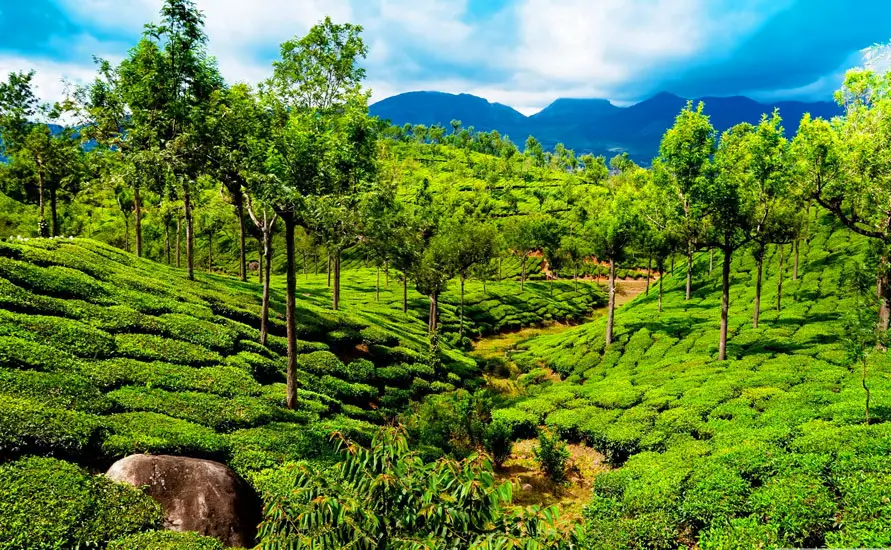
In Coonoor you visit Sim's Park, whose sloping lawns hold trees from as far away as Australia and Japan, and then Lamb's Rock, a lookout over the plains of Coimbatore and steep slopes of tea. A tea factory visit follows, where you see fresh leaf withered on racks, crushed, oxidized and dried before being sorted by grade. The tasting room lets you compare a brisk breakfast tea with a lighter, flowery Nilgiri. Pack a few fresh packets for home. Then you drive back up the hill to Ooty, around forty minutes, for your final night in Tamil Nadu. Overnight in Ooty.
Following a last breakfast in the hills, you check out and wind down the ghat road toward the plains and Coimbatore International Airport, some three hours away. Tea estates fall behind you as banana and coconut groves return near Mettupalayam. Your driver sets the departure time well ahead of your flight. If you fly in the evening, there may be time for lunch in Coimbatore, where Kongunadu cooking, the regional style of western Tamil Nadu, is lighter on chili than Chettinad, or for a quick stop at a cotton textile shop. A day room can be reserved at extra cost.
From Coimbatore, there are flights to the major Indian metros and to Singapore and Sharjah for onward routes. In fifteen days you have moved from the shores of the Coromandel to the Chola temples, Chettiar mansions, Madurai's goddess and the cool tea slopes of the Nilgiris, which is about as complete a picture of Tamil Nadu as one trip can give. We remain a phone call away until you are checked in. When you are ready to return, Kerala's backwaters, Karnataka's ruins or a festival tour in Tamil Nadu would make a fine sequel. Safe travels.
Your Journey

N.S. Rathore & Mrs. Omlata Rathore · Managing Director
We still read every enquiry ourselves. Tell us the places you liked and our planners will send a day-by-day route with drive times and a clear price.
Every package can be customised and no pressure to book. A planner from our office replies within 24 hours with a route written for your group.
Fill this in and your planner will send a first draft itinerary.
Explore more
Kerala Backwaters Escape Kerala Backwaters Escape
 Kerala Backwaters Escape
 Kerala Backwaters Escape
 Kerala Backwaters Escape
 Kerala Backwaters Escape
 Kerala Backwaters Escape
 Kerala Backwaters Escape
 Kerala Backwaters Escape
 Kerala Backwaters Escape
 Kerala Backwaters Escape
 Kerala Backwaters Escape
 Kerala Backwaters Escape
 Kerala Backwaters Escape
 Kerala Backwaters Escape
 Kerala Backwaters Escape
 Kerala Backwaters Escape
 Kerala Backwaters Escape Kerala Backwaters Escape