 Kerala Backwaters Escape

Tamil Nadu Tour Packages
Chennai – Kanchipuram – Kumbakonam – Tanjore – Madurai – Rameswaram – Kanyakumari – Trivandrum
At a glance
Many Tamil families abroad know the feeling: grandparents speak of a village temple, a family deity and a street in Kumbakonam or Tirunelveli, while the children, raised in Toronto, London, New Jersey or Singapore, have only seen it in photos. Our Tamil Nadu tour for NRI families turns those stories into places. Over eleven days you travel from Chennai to Kanchipuram, the Cauvery delta around Kumbakonam and Tanjore, then south to Madurai, Rameswaram and Kanyakumari, with room built in for the visits that matter most to your own family.
The heart of the plan is a free day for your kuladeivam or ancestral village, arranged around whatever details you can give us: a village name, a deity, a grandparent's memory. Around it sit the nine Navagraha temples, an unhurried morning with silk weavers for wedding shopping, and a gentle stream of Tamil for the children through stories, songs, kolam, food and a little alphabet practice. Drives are kept to sensible hours with breaks for snacks and restrooms, and you stay three nights in Kumbakonam, so there is no daily packing.
This NRI family tour of Tamil Nadu is private from start to end: one air-conditioned car and driver throughout, and English-speaking guides who are equally happy explaining a legend to a nine-year-old or arranging an archanai with a priest. Rooms can be family suites or interconnecting, and the itinerary works with the long school breaks in December and the summer months, though April and May are very hot inland. Departure is from Trivandrum, the closest airport to Kanyakumari, with good Gulf and Singapore connections.
Long-haul flights with young children are tiring, so the first day asks almost nothing of you. Our Chennai coordinator is at the arrivals gate with a name board and enough hands for car seats, strollers and the extra suitcase full of gifts for relatives. If you need a child seat in the car, tell us when booking and we will have one fitted. The drive to your hotel in south Chennai takes under an hour in normal traffic. Family rooms or interconnecting rooms are reserved in advance, and we strongly suggest booking an early check-in so that everyone can sleep the moment you arrive.
Over juice in the lobby, the coordinator goes through your plan and collects the details for the ancestral village day later in the trip: the name of the village or taluk, the family deity, the gotram if you know it, and the names of any relatives still living nearby. Even partial information helps, because our team can phone the temple office or a local contact ahead of your arrival. You also receive local SIM cards if requested, a printed contact sheet in English and Tamil, and a small Tamil picture-word booklet for the children, with everyday words such as vanakkam, amma, thanni and nandri.
When the afternoon heat drops, the car heads a few minutes south to Elliot's Beach, the Besant Nagar shoreline, a calmer and cleaner stretch of sand than the city's main beach. Children can run on the sand, buy a balloon, try a cone of sundal (spiced chickpeas) from a cart and watch the evening crowds without any pressure to see anything. The little Ashtalakshmi Temple at the end of the beach rises in tiers toward the sea, and a quick visit there can be your first family darshan in Tamil Nadu. Dinner is close by, and everyone is in bed early to shake off jet lag. Overnight in Chennai.
After a slow breakfast you head to Mylapore, where your guide walks the family through the agraharam lanes around the Kapaleeshwarar temple tank. Ask the children to count the different kolam designs drawn in rice flour at each doorstep; a local woman will often show them how to draw a simple pattern of dots and loops. The walk ends at the home of a Chennai family who welcomes you for lunch. Before eating, the children help roll a few chapatis or temper a pan of sambar, and they learn how to eat from a banana leaf with the right hand, and how folding the leaf toward you signals you enjoyed the meal.
In the early afternoon you visit Kalakshetra, the dance and music school Rukmini Devi Arundale set up in 1936 to revive Bharatanatyam and Carnatic music. Its campus sits under huge banyan trees near the sea, and on most weekday mornings students practice in open-sided classrooms, so ask us whether a short visit to watch a class is possible on your date. For families whose daughters or sons take dance or music lessons abroad, seeing a traditional class in this setting is often the moment the whole trip starts to make sense. Kalakshetra also has a weaving center that produces its own silk and cotton saris.
Next, a coastal run of forty minutes brings you to DakshinaChitra at Muttukadu, an open-air heritage museum of real village homes moved here from around South India. Children can climb into a Chettinad merchant's courtyard, peer into a potter's cottage and watch craftspeople at work, from clay modeling to palm-leaf toys, and most days there is a small play or puppet show. Few places in the state make it simpler to explain how grandparents lived as children. The museum closes on Tuesdays, so we swap the order of the day if needed. You return to the hotel for dinner. Overnight in Chennai.
Checking out after breakfast, you drive west to Kanchipuram, a short two-hour ride that most children sleep through. This is the day for family wedding shopping, so come with a list: who is getting married, the colors the bride's side prefers, and how many saris and veshtis you need. Your guide takes you first to a weavers' cooperative or a family workshop rather than a big showroom, where you can see a pit loom at work and learn the main checks for a pure Kanchipuram silk sari: the weight of the fabric, the separate weaving of border and body, and the real silver-and-gold zari test.
Custom orders in a chosen color or border can take several weeks, so if a wedding is coming up, we can help you place the order now and arrange courier shipping overseas once it is ready. Younger girls usually love choosing a silk pattu pavadai, the long skirt and blouse set worn at festivals, while boys can be fitted for a silk veshti and shirt for temple visits during the trip. Prices vary widely by weight and zari, and there is no obligation to buy from any shop we visit. For lunch, a vegetarian thali in town comes with a sweet pongal that children tend to like.
In the late afternoon, once the temples reopen, you visit the Kamakshi Amman Temple, one of the most important goddess shrines in Tamil Nadu and a place many families visit before a wedding to pray for a happy marriage. Next on the list is the Varadharaja Perumal Temple, where a hall of carved pillars has a granite chain whose links were carved out of one solid stone, which children enjoy trying to spot. This temple is also known for the Athi Varadar idol kept under the temple tank and brought out only once every forty years. Hotels in Kanchipuram are simple but comfortable. Overnight in Kanchipuram.
Five hours make this the biggest drive of the first half, so the car leaves early with breakfast boxes, fruit and a few road-trip games for the back seat. The route runs south through Villupuram and the farmland along the Kollidam river, and the landscape changes clearly as you enter the Cauvery delta: canals, coconut groves and paddy fields in every shade of green. Your driver stops every hour or so for tea, restrooms and a stretch. If the family has roots in this area, your grandparents may recognize town names on the signboards, and this is a good moment to call them on video from the road.
Kumbakonam appears around two o'clock, and your rooms here are booked for three nights. Kumbakonam has more temples for its size than almost any town in India, and it is also the hometown of the mathematician Srinivasa Ramanujan, whose modest family house on Sarangapani Sannidhi Street is now a small memorial. Children who like numbers enjoy hearing how a clerk from this town wrote letters to Cambridge that changed mathematics. Lunch could include a tumbler of the famous Kumbakonam degree coffee, made with fresh milk and chicory-blended decoction, served with a dramatic pour between steel tumbler and dabarah.
In the evening your guide walks you to the Mahamaham tank, a large stepped tank surrounded by sixteen small pavilions. At the Mahamaham festival, held at twelve-year intervals, lakhs of pilgrims take a dip, trusting that the holy rivers of India flow together into this one pool. Nearby stand the Adi Kumbeswarar Temple, whose legend explains the town's name through a pot of nectar, and the Sarangapani Temple with its chariot-shaped central shrine. As the lamps are lit, the bells and pipes of the evening puja carry across the water, a sound many NRI parents remember from their own childhood. Overnight in Kumbakonam.
Families who follow Hindu astrology often plan a whole trip around the nine Navagraha temples, each dedicated to one of the nine planetary deities and spread across the delta within about 60 km of Kumbakonam. Pilgrims believe a visit can ease difficult planetary periods noted in a horoscope, and many parents ask a priest for a special archanai in their children's names. Since most temples close from around noon until four, the day starts at dawn with Suriyanar Kovil, the temple of the Sun, followed by Kanjanur for Venus and Thingalur for the Moon. The priests are used to families and will guide the children through the offerings.
Before lunch you reach Alangudi, temple of Jupiter (Guru), where many parents pray for their children's education, before a long lunch break while the temples are shut. In the late afternoon the circuit continues with Thirunageswaram for Rahu, known for a milk abhishekam during which the milk is said to turn blue, and Keezhperumpallam for Ketu near the coast. The day ends with Vaitheeswaran Koil for Mars, where Shiva is worshipped as the divine healer, and Thiruvenkadu for Mercury. Saturn's shrine at Thirunallar lies in Karaikal, a part of Puducherry, and is visited first thing next morning.
Nine temples in one day is ambitious with children, so your guide keeps the pace flexible and carries a printed card for each shrine with its planet, color, grain and story, which children can tick off like a nine-stop scavenger hunt. Clothing matters: men usually remove shirts at some of these temples, and women are most comfortable in a sari, churidar or long skirt. Special puja tickets and offerings are paid on the spot. If you prefer a lighter day, the remaining temples can be split across tomorrow afternoon, and we will adjust around your ancestral visit. Dinner is back in town. Overnight in Kumbakonam.
Sunrise finds you on the road to Thirunallar, roughly sixty minutes away,, the Saturn temple, where devotees bathe in the Nala Theertham tank and light sesame oil lamps for Saneeswaran. Saturday is by far the busiest day here, so we plan around it where possible. From breakfast onward, the day is your family's own. For many NRI parents, the visit to the kuladeivam temple, the family deity worshipped by the clan for generations, is the true reason for the trip. It may be a grand temple in the delta or a small village shrine to Ayyanar or a local goddess under a banyan tree, and we treat both with equal care.
Using the details you shared on Day 1, our team contacts the temple ahead, confirms the priest is present and arranges an abhishekam or archanai in the family's names. If your village lies further away, perhaps near Tirunelveli, Pudukkottai or Salem, we reshape the surrounding days so the extra distance still fits. In the village itself your guide can help you find the old family house, the street your grandfather lived on, or elders who remember the family name. Many guests have found distant cousins this way, and some have seen their family's names in temple records. Children are often fascinated to see where their surname comes from.
If your family has no fixed ancestral place, or you prefer to keep this day lighter, the alternative is a visit to Swamimalai, where artisans still cast bronze idols by the lost-wax method, followed by the UNESCO-listed Airavatesvara Temple at Darasuram, a Great Living Chola Temple its pillars covered in palm-sized dancers, tumblers and drummers that children can hunt for on the pillars. A late-afternoon walk among the betel leaf and banana farms on the edge of town completes the day. Whichever option you take, eat early and phone home to grandparents to share the photographs. Overnight in Kumbakonam.
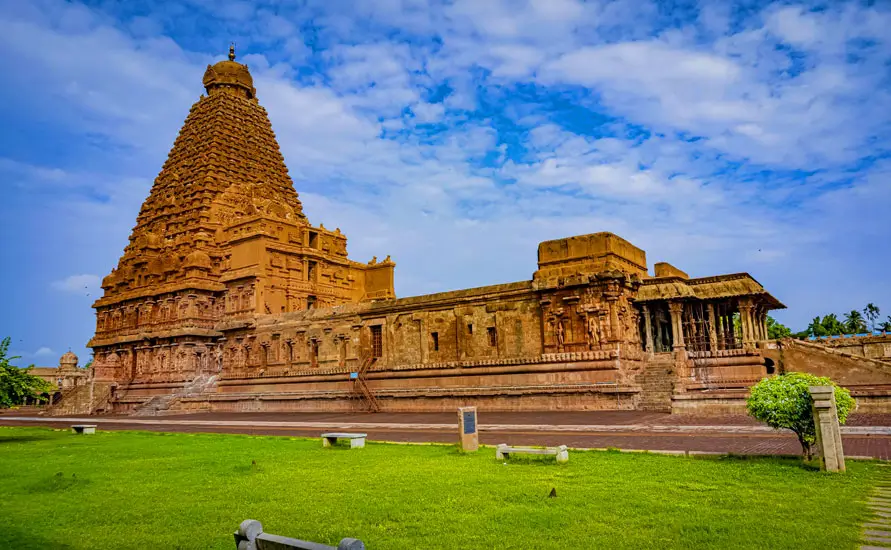
Within an hour of leaving Kumbakonam you are in Tanjore, the capital of the Chola kings for much of their greatest century. Your first stop is the Brihadeeswarar Temple, finished for Rajaraja Chola in 1010 and one of the three UNESCO-listed Great Living Chola Temples. Children usually ask how the builders lifted the huge capstone onto the top of a 66-meter tower without cranes, and your guide shares the long-told story of an earthen ramp several kilometers long. The stone Nandi in front of the shrine, carved from a single rock, is among the largest in India and makes a perfect family photo spot.
A quick hop across town takes you to the Thanjavur Palace, extended in turn by Nayak and then Maratha kings. The highlight for children with an interest in language is the Saraswathi Mahal Library, where palm-leaf bundles and paper volumes run into the tens of thousands and rare books in Tamil, Sanskrit, Marathi and other languages. A small display shows how the script was etched into dried leaves with a metal stylus, and seeing old Tamil letters can make the alphabet booklet from Day 1 suddenly feel real. The palace also has an art gallery of Chola bronzes and a tall bell tower with views over the town.
After lunch the afternoon turns hands-on. At a small workshop you watch artists apply gold foil and colored glass stones to a Tanjore painting, and children can try a simple design to take home. Afterwards, look for the famous Thanjavur dancing dolls, the thalaiyatti bommai, whose heads keep bobbing because of a weighted base, a cheap and popular gift for cousins abroad. If any family member plays the veena, Tanjore is also known for its veena makers, and a visit to a workshop can be arranged. The evening is free, and the Big Temple glows golden when its lights come on. Overnight in Tanjore.
Leaving Tanjore after breakfast, you take the highway south through Pudukkottai, a former princely state, and into drier country of rock outcrops and palmyra palms. A mid-morning break for snacks and a toilet stop is planned on the way, and your driver knows the clean roadside restaurants. Along this stretch your guide can start telling the children the story they will see in carvings this evening: the legend of Meenakshi, a warrior princess of Madurai who defeated every king she met until she came face to face with Shiva, who later married her in a wedding still celebrated each spring in the Chithirai festival.
Lunchtime check-in in Madurai leaves a few hours for a nap or the pool. Close to five o'clock the family follows the guide into the Meenakshi Amman Temple, entering through the eastern gate. Everyone's phone and camera goes into the deposit counter, which some parents find a relief because the children look up instead of at screens. Only Hindus may approach the two main deities, so NRI families can join the queue for darshan, while any non-Hindu friends or partners traveling with you can wait in the outer halls. Special darshan tickets help shorten the line on busy evenings.
Inside, children love the parrots kept in the corridor near Meenakshi's shrine, the musical pillars and the huge painted ceilings. You also walk past the Golden Lotus Tank, where the guide explains the legend of the Tamil Sangam poets, a good link to the Thirukkural verse the children might learn later in the trip. After dinner, older children can return with a parent for the palliyarai procession at about nine, when Shiva's image is carried to Meenakshi's chamber with drums and pipes. Younger ones can stay at the hotel with the rest of the family. Overnight in Madurai.
An early start takes you east toward the coast, through Ramanathapuram and the salt flats around the Gulf of Mannar. The drive ends with a highlight for the children: the road bridge over the sea onto Pamban Island, where your driver stops so the family can see fishing boats bobbing below with the rebuilt rail bridge and its lifting span just beside you. After dropping bags at the Rameswaram hotel you continue about 20 km to the tip of the island while the light is still good, since the police ask everyone to head back before sunset. The road ends at Arichal Munai, with sea on both sides.
On the way you stop at Dhanushkodi, flattened by the cyclone of December 1964. The ruins of its church, railway station and post office poke out of the dunes, and the story of a whole town that was once a port for ferries to Sri Lanka holds even teenagers' attention. In Hindu belief this is also where Rama's army built the bridge to Lanka, and your guide can tell the story of the floating stones and the squirrel who helped, a children's favorite. Swimming is not safe here because of currents, but you can paddle at the edge in calm conditions.
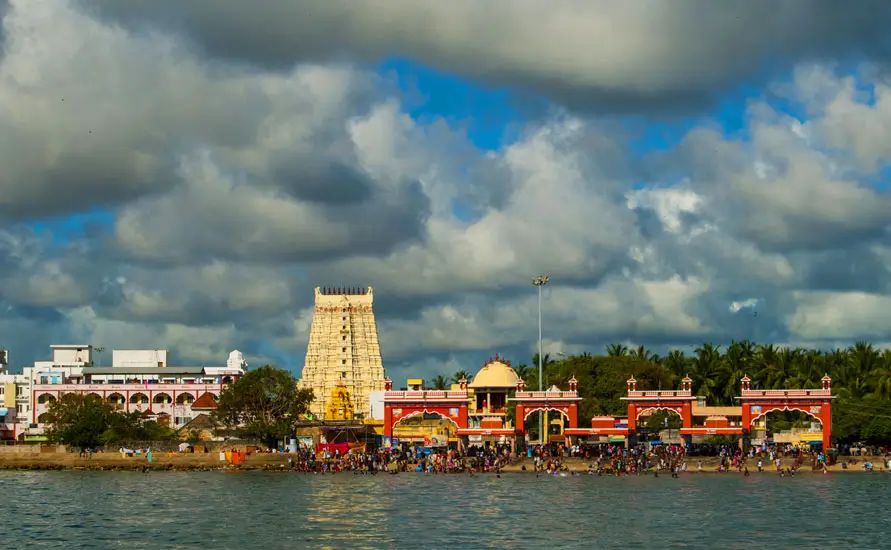
Returning toward town, you visit the Dr. A.P.J. Abdul Kalam National Memorial, honoring the former President of India a boy from a Rameswaram boat-owning household who grew up to lead India's missile program. Displays of his missiles and personal letters, and his message to young people about dreams, make this one of the most inspiring stops on the tour for children. In the evening you can make a first visit to the Ramanathaswamy Temple and walk part of its pillared corridor, one of the longest of any temple in India. Our coordinator confirms tomorrow's tarpanam arrangements with the priest tonight if you have requested it. Overnight in Rameswaram.
Rameswaram is one of the most important places in India for rites to honor departed ancestors, and many NRI families save a pitru tarpanam for this visit, especially after losing a parent or grandparent abroad. At dawn, a priest we arrange meets the family at Agni Theertham, the sea-front bathing ghat in front of the temple, and guides the eldest son or chosen family member through the offerings of sesame and water. Afterwards family members bathe in the sea, then walk into the temple to be doused with water from the 22 sacred wells, an energetic, giggly ritual that children remember long after the trip.
After breakfast and a change of clothes, you check out and begin the long drive south along the coast. Your driver has planned stops for lunch and rests, and the route passes the salt pans of Tuticorin and stretches of palmyra palms where stalls sell fresh nungu (palm fruit), which children like for its jelly-like texture. To pass the time, the guide or parents can teach one or two couplets of the Thirukkural, the ancient book of Tamil wisdom that has 1,330 short verses, and a reward appears once the drive is over: a giant statue of the poet himself rising from the sea.
You arrive in Kanyakumari in the late afternoon and head to the seafront for sunset, which faces the Arabian Sea on this side of the cape. The beach steps near the Kumari Amman Temple fill with families from every corner of India, and vendors sell colored sand in bottles and shell keyrings that children love as souvenirs. The temple of the virgin goddess is worth a short evening visit if everyone still has energy, and men generally go in shirtless. Dinner is at your hotel, and alarms are set early for tomorrow's sunrise. Overnight in Kanyakumari.
Wake before dawn for sunrise at Kanyakumari, when the crowd on the shore hushes while the first orange edge clears the Bay of Bengal. With an evening flight, there is time to catch the early ferry to the Vivekananda Rock Memorial and walk across to the Thiruvalluvar statue, where the children can recite the couplet they learned on the drive. Ferries stop in rough seas and queues grow quickly, so going first thing is best. For earlier flights we skip the ferry and leave straight after breakfast for the two-and-a-half-hour drive to Trivandrum International Airport.
We chose Trivandrum for departure because it is far closer to Kanyakumari than Madurai and has frequent flights to Dubai, Doha, Abu Dhabi, Muscat, Singapore and Colombo for onward travel. The car reaches the departures curb with a generous margin before check-in closes. Over eleven days your children have eaten from banana leaves, drawn a kolam, seen their family deity, chosen silk for a cousin's wedding and recited the Thirukkural at land's end. We hope the trip becomes a family story of its own, and our team is ready whenever you plan the next visit home. Safe flight.
Your Journey

N.S. Rathore & Mrs. Omlata Rathore · Managing Director
We still read every enquiry ourselves. Tell us the places you liked and our planners will send a day-by-day route with drive times and a clear price.
Every package can be customised and no pressure to book. A planner from our office replies within 24 hours with a route written for your group.
Fill this in and your planner will send a first draft itinerary.
Explore more
Kerala Backwaters Escape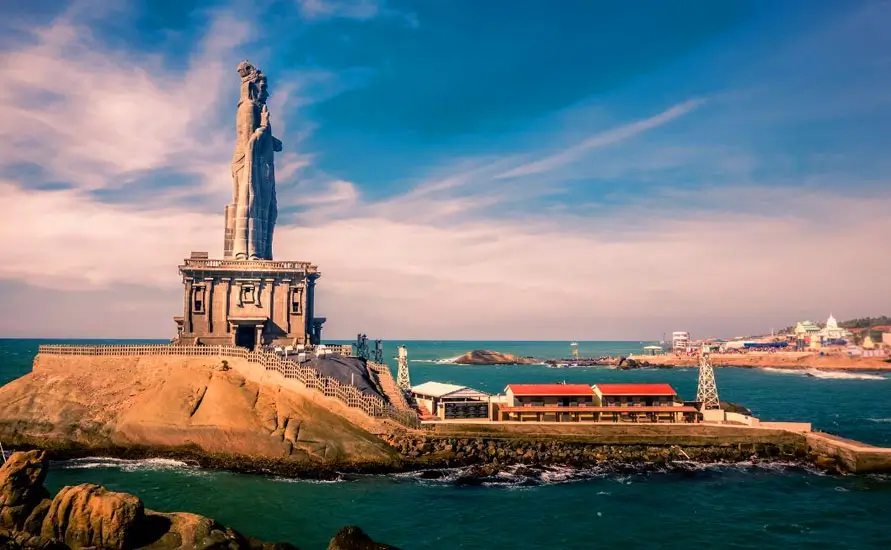 Kerala Backwaters Escape
 Kerala Backwaters Escape
 Kerala Backwaters Escape
 Kerala Backwaters Escape
 Kerala Backwaters Escape
 Kerala Backwaters Escape
 Kerala Backwaters Escape
 Kerala Backwaters Escape