


 Kerala Backwaters Escape

South India Tour Packages
Chennai – Mahabalipuram – Pondicherry – Gangaikonda Cholapuram – Darasuram – Tanjore – Madurai – Munnar – Thekkady – Alleppey – Kochi
At a glance
Neighbors on the map, Tamil Nadu and Kerala could hardly be more different once you are on the ground, and our Tamil Nadu and Kerala tour is planned to let you feel that contrast day by day. The first week belongs to the Tamil plains, where granite temples built by Pallava, Chola and Pandya kings still run on daily rituals, from the shore at Mahabalipuram to the Chola towers of Tanjore and the nightly ceremony in Madurai. Then the road climbs into the Western Ghats, and Kerala takes over with tea hills, spice gardens, wildlife and water.
Each state gets six nights, which gives the comparison a fair balance. In Tamil Nadu you see how temple towns are laid out around their shrines, how bronze images are carried in procession and how a banana-leaf meal is served. In Kerala the focus moves to nature and farming: tea in Munnar, cardamom and pepper around Thekkady, the forests of Periyar, and the rice fields of the Alleppey backwaters. The Tamil Nadu Kerala tour package links all of this with drives of five hours or less and a private car and driver throughout.
It is planned for inquisitive grown-up visitors flying in from Britain, the European mainland, the US, Canada or Australia, plus NRIs who grew up with one state's food and festivals and are curious about its neighbor across the Ghats. Guides in each region are chosen for depth on their own culture, so a Tanjore guide talks about Chola bronzes while a Thekkady naturalist names birds and spice plants. Hotel levels range from comfortable three-star to heritage and plantation stays. October to March is the best season, and the Tamil Nadu and Kerala tour can be reversed to start in Kochi.
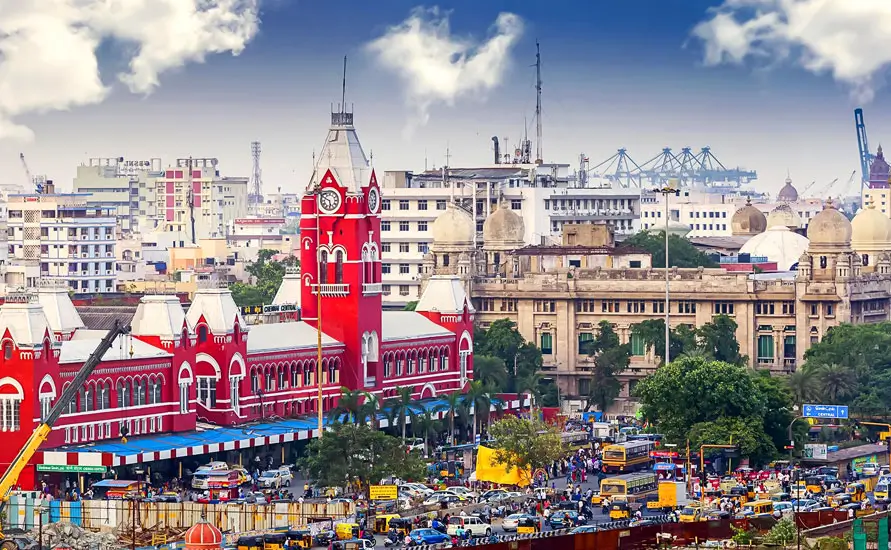
Chennai, once called Madras and now the seat of the Tamil Nadu government, is where your Tamil Nadu and Kerala tour gets underway on the Bay of Bengal shore. Look for our staff member holding a name board just beyond customs; he walks you out to the car, where your driver loads the luggage for the cool ride into town. Most overseas flights land around midnight or in the small hours, so nothing is planned for the morning apart from rest and breakfast. Rooms are normally released in the early afternoon, so if you land in the dark hours booking the room from the previous night is worth considering. Before leaving you, our team walks you through the printed route, the guide names for each region and a few useful phrases in Tamil.
Once rested, head out with your guide to the Government Museum in Egmore, founded in 1851 and one of the oldest museums in India. Nowhere is better to prepare for the coming week, since the bronze gallery keeps a superb set of Chola metal images, among them several figures of Nataraja, Shiva dancing inside an arch of fire as the cosmic lord of dance. Your guide explains how these figures were cast by the lost-wax method and why they were made to be carried out of the temple in processions. The museum is usually closed on Fridays, so the order of visits may change.
From Egmore you drive to Triplicane for the Parthasarathy Temple, an 8th-century shrine dedicated to Krishna in his role as charioteer to the warrior Arjuna. By dusk the lanes near the sacred tank fill up with jasmine vendors, stalls selling oil lamps and worshippers coming for the evening puja. Non-Hindus may be limited to the outer areas, and your guide will explain where you can go and how to behave respectfully. Dinner could be a traditional South Indian thali at a restaurant in the old quarter, a first taste of the vegetarian cooking you will meet often in Tamil Nadu. Overnight in Chennai.
A short drive down the coast takes you to Mahabalipuram, where the story of Tamil temple building begins. Under the Pallava kings of the 7th and 8th centuries, sculptors here moved from carving shrines out of living rock to building free-standing stone temples, and the results are listed together by UNESCO. First comes the Varaha Cave, a compact hall cut into the rock, where one relief shows Vishnu in boar form lifting Bhudevi, the earth, out of the cosmic sea. A short climb brings you to the lighthouse hill, where the old Olakkaneshvara Temple sits on the rocks with views across the town and coastline.
Midday brings grilled fish or prawns close to the sand, and then a break back at the hotel while the sun is at its fiercest. In the late afternoon, visit a granite sculpture workshop on the main road, where carvers work on statues of gods and goddesses that may later be installed in temples across India and abroad. Many of them trained at the government sculpture college in town, which keeps alive the traditional rules of proportion set down in old texts called the Shilpa Shastras. Watching a craftsman tap a figure free from stone with a hammer and chisel helps you read every temple carving you see later on the trip.
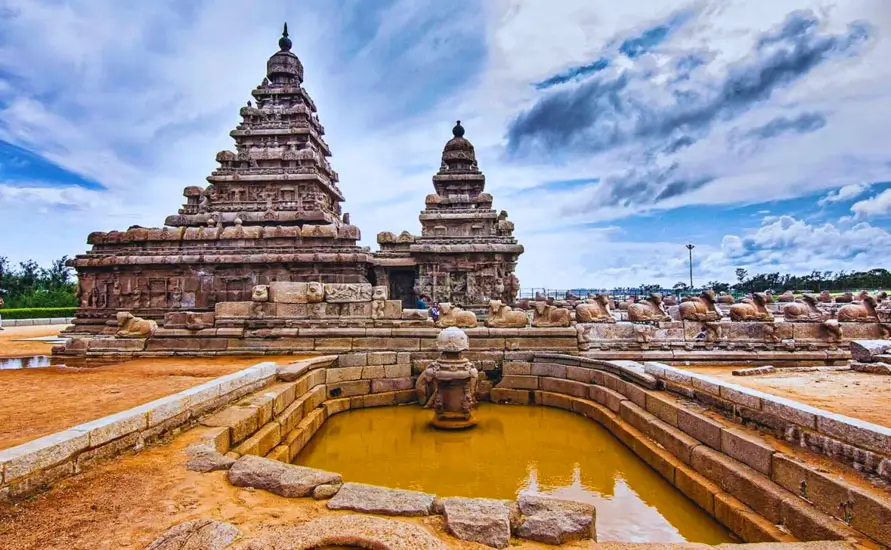
As the sun drops, walk to the Shore Temple, built in the early 8th century and one of the first stone temples in the region to be put together block by block rather than cut from a single rock. Its twin towers look out to sea, and your guide points out the reclining Vishnu shrine squeezed between the two Shiva sanctuaries. You also visit Arjuna's Penance while the evening light picks out its carved elephants and sages. The town's restaurants serve fresh catch from the Bay of Bengal, cooked with Tamil spices or in a simpler Western style. Overnight in Mahabalipuram.
Make the most of the cool early hour at the Pancha Rathas, five shrines shaped from one granite ridge and named after the Pandava heroes of the Mahabharata and their wife Draupadi, before leaving the hotel and heading south on the East Coast Road. The highway passes salt pans, casuarina plantations and fishing villages where colorful boats are pulled up on the sand. A few kilometers short of town, you turn off for Auroville, where a woodland trail leads from the visitor center to a lookout facing the Matrimandir, the gilded globe that forms the township's spiritual center. Entry to the inner chamber requires a separate advance booking and slots are limited, so please let us know beforehand if you want to try.
Lunch is waiting at your restored colonial-era hotel in Pondicherry, where you settle in before the afternoon walk. The town was under French rule until 1954, and your afternoon walking tour compares its two old halves, which were once divided by a canal. On the sea side, the former White Town has straight streets, colonial villas and French street names. On the inland side, the Tamil quarter has narrow lanes of houses with deep verandas, carved wooden doors and raised stone platforms where neighbors still sit and talk in the evenings. Your guide shows how the two communities borrowed building ideas from each other over the centuries.
Toward sunset, call at the Manakula Vinayagar Temple of Ganesha, its interior painted floor to ceiling with episodes from the god's stories. The temple predates the French arrival, and local stories tell how colonial officials once tried and failed to move it. From there, walk to the Sri Aurobindo Ashram for a few quiet minutes at the flower-covered samadhi, where silence is expected and photography is not allowed. Finish the day on the seafront promenade as locals gather for their evening stroll, then choose between a French bistro or a Tamil restaurant for dinner. Overnight in Pondicherry.
Today you drive into the Kaveri delta, the farming heartland that fed the Chola empire at its height between the 10th and 13th centuries. Your first stop, after about two and a half hours, is Gangaikonda Cholapuram, the capital built by Rajendra Chola I to mark his northern campaign to the Ganges. Little remains of the royal city, but the temple stands proud on open lawns, its curved tower slightly smaller and more graceful than its model in Tanjore. A huge Nandi faces the shrine, and the carvings around the doorways include a fine panel of Shiva crowning the devotee Chandesha.
Lunch is a simple vegetarian meal in Kumbakonam, a temple town where nearly every street leads to a gopuram. In the afternoon you visit the Airavatesvara Temple at Darasuram, built in the 12th century by Rajaraja Chola II and the third of the three Great Living Chola Temples on the UNESCO list. Its scale is modest next to its two sisters, but every surface rewards a close look, from tiny carved dancers, drummers and tumblers on the columns to an entrance hall built as a stone chariot drawn by horses on carved wheels. The steps at the entrance were once designed to produce musical notes when struck.
Before reaching Tanjore, you can stop at Swamimalai, a village known for its bronze casters who still use the lost-wax method you saw explained in Chennai. Families here shape figures in beeswax, coat them in clay from the Kaveri riverbed, and then pour molten metal into the mould, breaking it open to reveal the finished image. Dusk is falling as you pull into Tanjore and settle into your rooms. Dinner can include Thanjavur specialties such as kozhukattai, a steamed rice dumpling, or a simple meal of rice, sambar and vegetables. Overnight in Tanjore.
Morning is the best time to visit the Brihadeeswarar Temple, the largest and most famous of the Chola temples. Completed in 1010 by Rajaraja Chola I, it stands inside a fortified compound with a vast stone courtyard, and its main tower rises in tiers to a single capstone weighing many tons. Your guide explains the theories about how the stone was raised to the top, from long ramps to wooden scaffolding. Visitors can walk around the main shrine and see the Nandi pavilion, the corridor of lingams and the carvings of dancers on the outer walls. Shoes are left at the entrance, so wear socks if the ground is hot.
Afterward, visit a workshop where artists make Thanjavur paintings, a traditional art form where gods are shown in bright colors with raised gesso work and gold foil. You can also see how the veena, the classical stringed instrument of South India, is carved from a single block of jackfruit wood in small family workshops around town. If time allows, stop at the Thanjavur Palace to see the art gallery's Chola bronzes. Then set off on the four-hour drive south through farmland and small towns, stopping for lunch on the way at a clean restaurant your driver knows well.
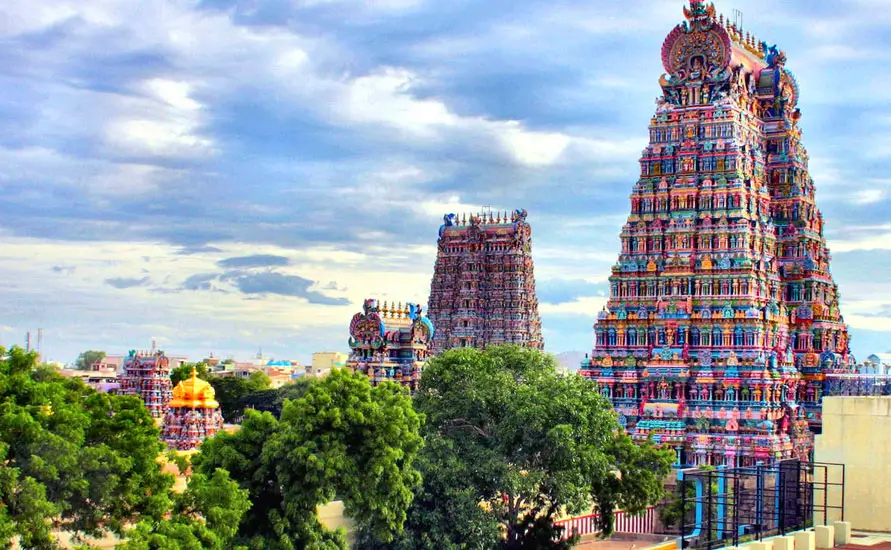
Around four or five o'clock the car rolls into Madurai, leaving you an hour or so to settle in. The city lies on the Vaigai River and has been an important center of Tamil culture for more than two thousand years, mentioned in ancient Tamil poetry as a royal capital of the Pandya kings. After dark your guide leads a gentle stroll through the market lanes ringing the Meenakshi Temple, lined with stalls of lamps, fabrics and puja supplies. The towers glow in the evening light, and you get a first sense of the size of the complex before tomorrow's full visit. Return to your hotel for dinner. Overnight in Madurai.
Soon after breakfast you return with your guide for a full visit to the Meenakshi Temple, which is dedicated to the goddess Meenakshi and her consort Sundareswarar, a form of Shiva. Unlike most Tamil temples, here the goddess takes the main role, and the city's festivals celebrate her marriage to Shiva. You enter through one of the towering gopurams, covered in brightly painted figures. The inner sanctums are open to Hindus only, though visitors of any faith are welcome in the pillared halls and long corridors. Leave your phone and camera at one of the paid cloakrooms near each gate, since neither is allowed past the security check. Your guide explains the temple's legends, festivals and daily rituals.
Late morning is for the Thirumalai Nayak Palace, raised in the 1600s, where massive columns and broad arches combine Dravidian and Islamic ideas. Then head to the Gandhi Memorial Museum, housed in an old palace, which tells the story of India's independence movement and holds the blood-stained cloth worn by Gandhi when he was assassinated. At lunch, order a glass of jigarthanda, the city's chilled specialty of milk, almond gum, sweet syrup and ice cream. In the afternoon, rest at your hotel or visit the flower market if you missed it earlier.
Around 9 pm you head back inside the Meenakshi Temple for the palliyarai ceremony, the god's nightly visit to his consort. Priests carry the image of Sundareswarar in a silver palanquin from his shrine to Meenakshi's bedchamber, accompanied by drums, nadaswaram pipes, oil lamps and chanting. Visitors may watch quietly from the side. It is a powerful sight and gives you a clear picture of the living nature of Tamil temple culture. After the ceremony, your driver takes you back to your hotel. This evening completes your week in Tamil Nadu before you cross the hills into Kerala tomorrow. Overnight in Madurai.
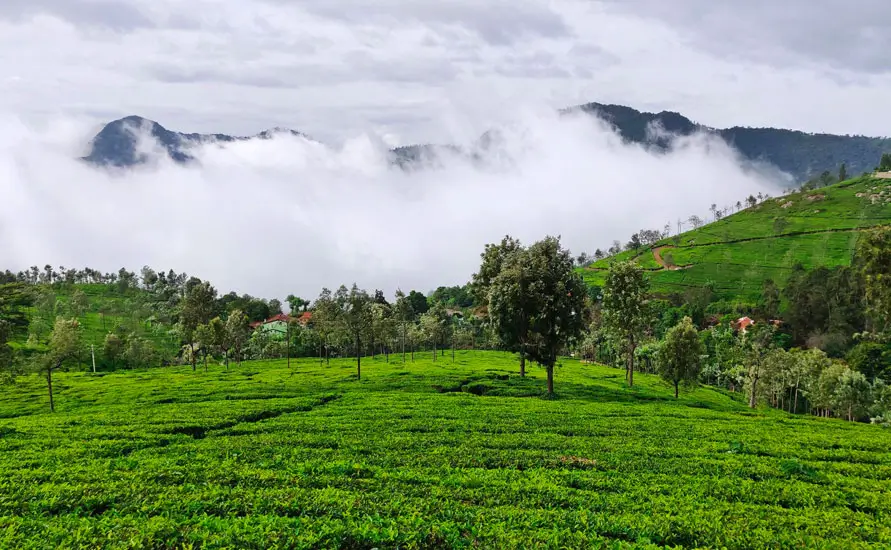
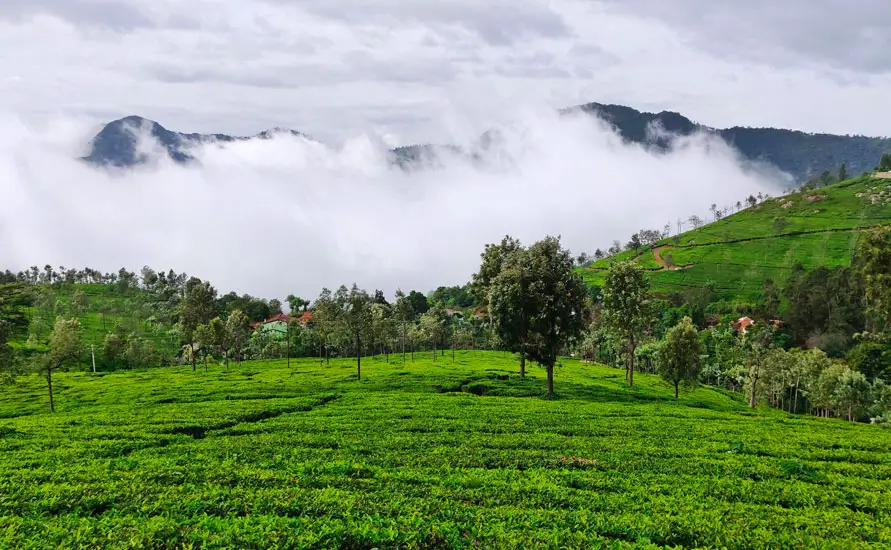
The state line between Tamil Nadu and Kerala lies on today's route, high in the hills. You drive west from Madurai across the dry plains, passing coconut farms, vineyards and small towns. The road climbs into the Western Ghats, the mountain range that separates the two states and catches most of the monsoon rain. As you rise, the scenery changes from brown plains to green forested hills. At the Bodimettu pass you leave Tamil Nadu behind, and tea bushes soon begin to cover the slopes in tight green rows. Your driver stops at viewpoints along the way, and lunch is at a local restaurant serving both Tamil and Kerala dishes.
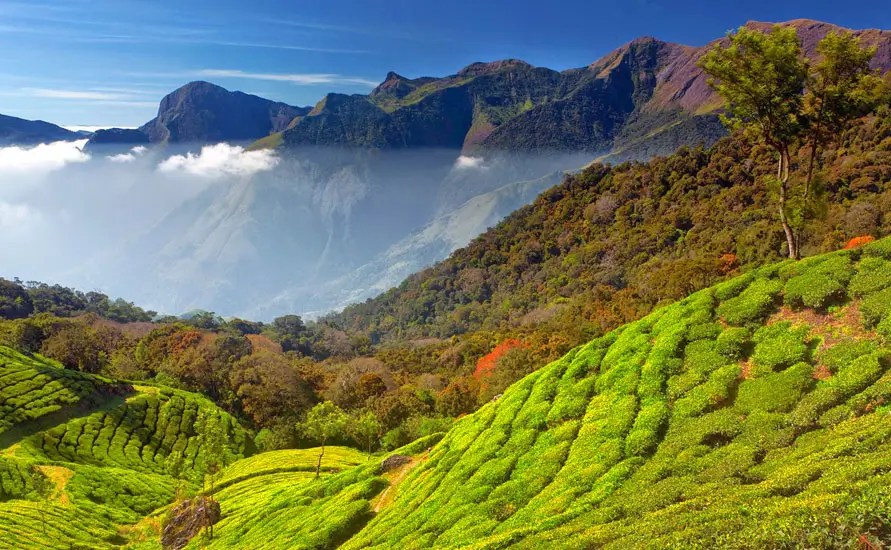
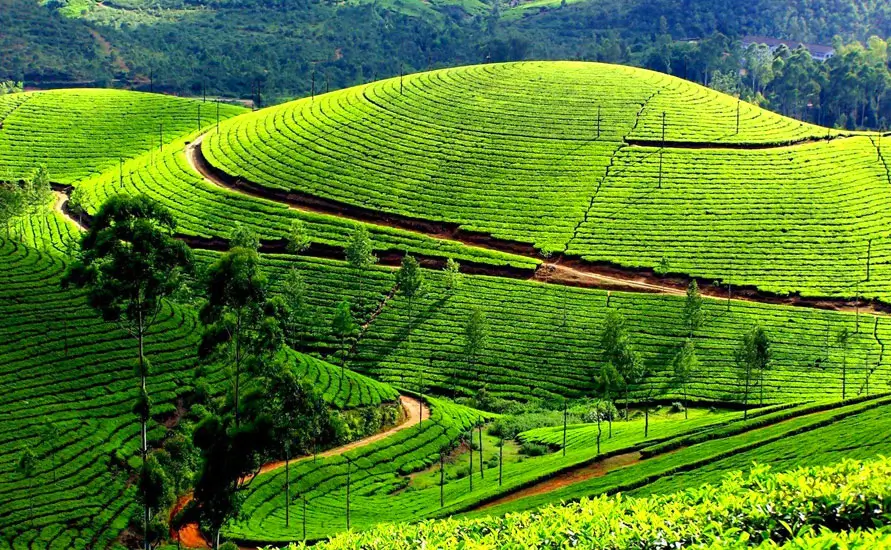
Afternoon brings you to Munnar, where your room is in a hillside resort or an old tea estate bungalow. At roughly 1,600 meters, the town feels fresh and cool after the sticky heat of Madurai. The landscape is dominated by tea estates, with neat rows of bushes covering the slopes. In the late afternoon, take a gentle walk around your resort or through nearby tea gardens with a local guide, who explains how tea is grown and picked. You may see tea pickers at work, filling large bags with leaves and carrying them to collection points.
Kerala's food and culture feel different from Tamil Nadu almost as soon as you arrive. Malayalam replaces Tamil on road signs, churches and mosques appear alongside temples, and meals often include coconut, fish and red rice. Your guide talks you through some of these differences over dinner at the resort, which may include appam with stew or a Kerala-style fish curry. The evening can be chilly, so pack a light sweater or jacket. Use the quiet evening to rest after the long drive and prepare for tomorrow's walk in the national park. Overnight in Munnar.
An early start takes you to Eravikulam National Park, the main refuge of the Nilgiri tahr, a sure-footed wild goat that lives only in the Western Ghats. Park buses take visitors from the entrance to the tourist zone, where a paved path winds along the grassy slopes. These animals are used to people and often graze a few meters from the walkway, while your guide describes the conservation work that brought their numbers back. On clear mornings you can also pick out Anamudi, at about 2,695 meters the tallest summit south of the Himalayas. Because the park normally shuts for several weeks in the February to March period while the young tahr are born, we confirm the reopening date before your trip and rework the day if needed.
After the park, visit a tea factory or the tea museum in Munnar to learn how tea is processed. A guide shows you the machines used to wither, roll, ferment and dry the leaves, and you can taste different grades of tea. In the afternoon, enjoy a guided walk through the tea estates, following paths between the bushes and stopping at viewpoints. British planters cleared the first gardens here in the closing decades of the 1800s, and your guide tells how the industry grew from those beginnings. You can eat lunch in town or back at the resort, whichever suits the timing.
Evenings in the hills are short and cool, so most guests head back to the resort before dark to sit on a veranda while mist fills the valleys below. Dinner is a good chance to compare the two kitchens you have now tasted: Tamil meals built around rice, lentils, tamarind and curry leaves, against Kerala dishes rich with coconut, black pepper and fish. If you would like to learn more, your guide can arrange an optional home-cooking demonstration with a planter's family. Ahead lie Thekkady's spice gardens and the backwaters, where the Kerala half of the story deepens. Overnight in Munnar.
Leaving the tea hills after breakfast, the car drops south along a winding road through cardamom country toward Thekkady, on the edge of the Periyar forests. The route passes Pooppara and small junction towns where jeeps load up with plantation workers, and the slopes change from clipped tea to taller, shadier growth where cardamom hides beneath the forest canopy. Your driver stops at a viewpoint over the reservoir valleys and at a roadside tea stall for a glass of sweet milky chai. You reach Thekkady by late morning and check in to a plantation-style resort with time for lunch before the afternoon program.
Mid-afternoon a farmer guides you around a working spice plantation on the outskirts of Kumily. Kerala's spice trade drew Arab, Chinese, Portuguese and Dutch ships to this coast for centuries, and here you see where the cargo actually began: green cardamom pods clustered at the base of the plant, black pepper ripening on vines that wind around jackfruit and silver oak, and clove, nutmeg, vanilla and allspice growing within a short walk of each other. The farmer explains drying, grading and the auctions that set prices, and you leave with a small bag of whatever is in season.
Tamil Nadu showed you temple dance carved in stone; Kerala's answer this evening is Kalaripayattu, the martial art said to be one of the oldest still practiced anywhere in the world. In a small arena near Kumily, performers in red loincloths go through high kicks, low animal stances and sparring with staffs, daggers, swords and the urumi, a long flexible sword that coils like a belt. The show lasts about an hour, and seats close to the pit are best for watching footwork. Back at the resort, dinner may feature Kerala parotta with vegetable kurma, a contrast to the dosas of the plains. Overnight in Thekkady.
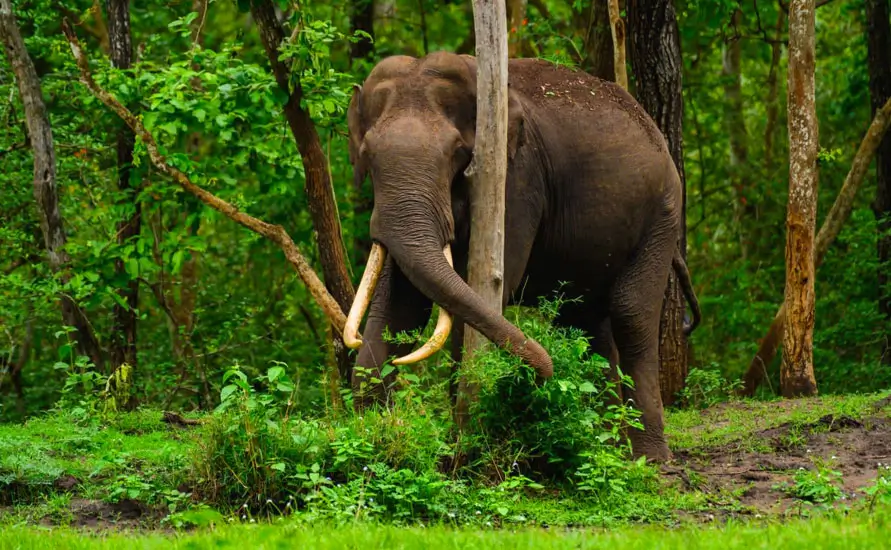
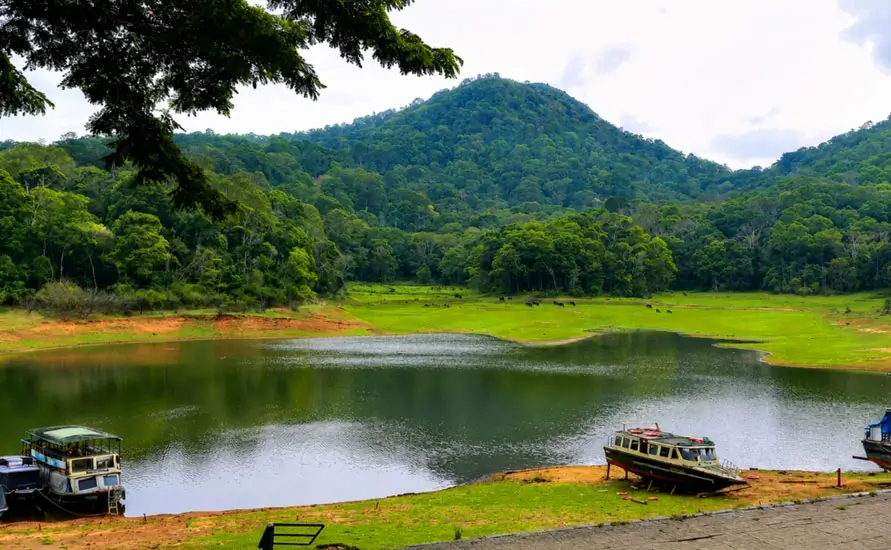
Dawn is the right hour for Periyar Tiger Reserve, so you head to the boat landing early to join one of the first departures of the forest department's cruise on Periyar Lake. The lake was created in 1895 when the British built the Mullaperiyar Dam, and the drowned trees still stand as grey stumps in the water, where cormorants and darters dry their wings. From the deck you look for gaur, sambar deer, wild boar and, with luck, elephants coming down to drink at the shoreline. Tigers live here but are seldom seen, so the reserve is best enjoyed for its whole forest community rather than one animal.
Later in the morning you can choose a guided nature walk with trained trackers from the local tribal communities, who once collected forest produce here and now work with the reserve as guides and guardians. Walks follow trails through evergreen and moist deciduous forest, and your tracker picks out hornbill calls, Malabar giant squirrels, butterflies and medicinal plants. Leech socks are handed out in damp months, and long trousers and closed shoes are needed. Places on these walks are limited and allotted daily, so we book as soon as the reserve allows, and an alternative bamboo raft or border hike may be offered instead.
The afternoon turns to village life around Thekkady, which differs sharply from the Tamil farming villages you passed last week. With a local guide you visit a family homestead where pepper, coffee and cardamom grow together on small plots, see a cow shed and a kitchen garden, and share tea and banana fritters with your hosts. You may also call at a cardamom grading center to watch pods sorted by size and color. The evening is free in Kumily town, where spice shops, tea stalls and Ayurveda centers line the main road. Overnight in Thekkady.
After an early breakfast you come down from the cardamom hills toward the sea-level plains of central Kerala. The road descends through rubber plantations around Mundakayam and Kottayam, where you may see latex being collected in coconut shells tied to the trunks, then flattens out among paddy fields and canals. The change in altitude is dramatic, from cool forest at nearly 900 meters to humid lowland in about four hours. Your driver times the drive to reach Alleppey around noon, which is when the houseboats normally welcome guests on board at the jetty near Punnamada or Pallathuruthy.
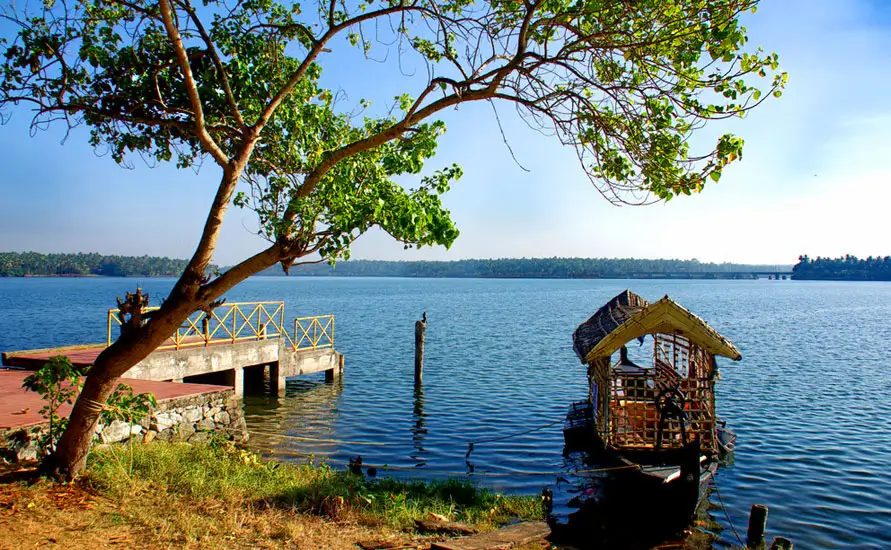
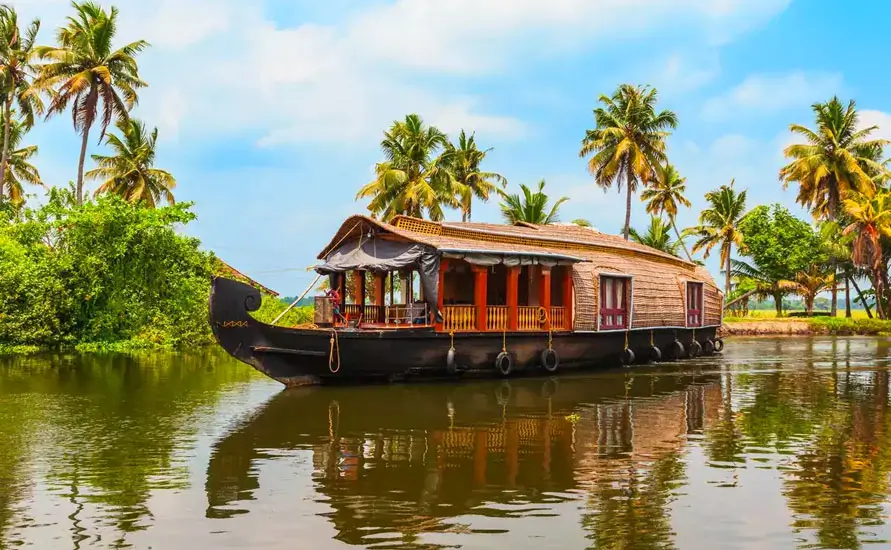
Waiting at the jetty is your private Kerala houseboat, built on the lines of the kettuvallam, a covered barge that once hauled rice and spice sacks along these canals. Its hull is still made of jackwood planks tied and sealed in the traditional way, while the cabins now have beds, a bathroom and a sitting deck. The crew of three, a captain, a cook and a deckhand, serves a lunch of rice, fish curry, thoran and pickle as the boat moves off into the Vembanad lake system. Through the afternoon you pass churches, toddy shops, narrow canals and fields set below the water level, protected by long mud dikes.
Kerala's water world could not be further from the dry temple plains of Madurai, and that contrast is what this Tamil Nadu and Kerala tour was built around. Around sunset the boat stops cruising, as local regulations require, and the crew ties up at a quiet bank for the night. This is a good time to walk along the dike with the deckhand, watch villagers wash and fish at the waterline, and see ducks herded home. Dinner is cooked on board, often with pearl spot fish or prawns bought from passing canoes, followed by sweet payasam. Overnight on the houseboat.
Early risers can sit out on the deck as mist lifts off the water and the first school canoes and ferries pass by. Breakfast of appam, egg curry and fruit is served before the boat returns to the jetty, as houseboat checkout is around 9 am. Your driver is waiting for the short drive north to Kochi, where a heritage hotel in Fort Kochi is your base for the night. The city has been a trading port for many centuries and passed in turn through Portuguese, Dutch and British hands, all of whom left churches, warehouses and street names that you will see today.
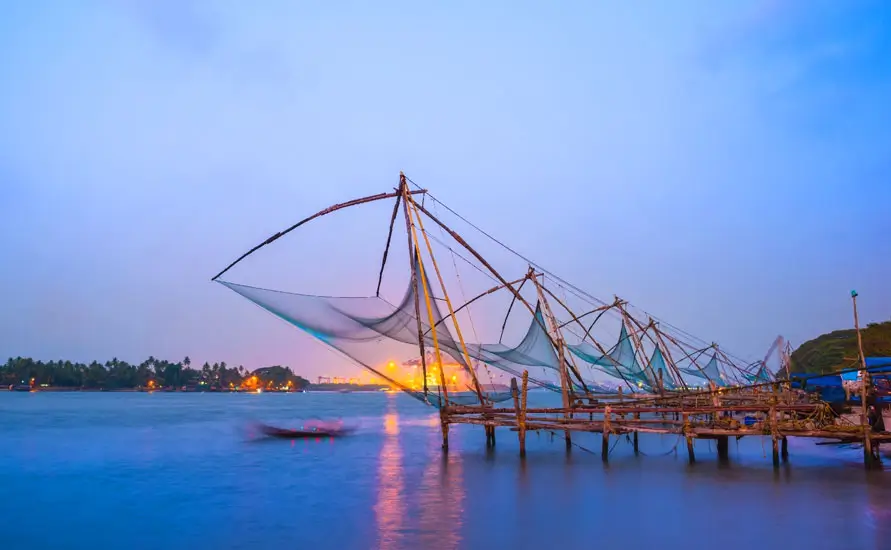
With a local guide you walk past the Chinese fishing nets on the Fort Kochi beachfront, the St. Francis Church, which held the remains of Vasco da Gama before they were sent back to Portugal, and the Dutch-era houses along Princess Street. You then drive to Mattancherry, where the Mattancherry Palace displays Hindu murals from the Ramayana, and Jew Town, home to the Paradesi Synagogue, whose floor is laid with blue-and-white tiles from China. Both close on Fridays, and the synagogue also shuts on Saturdays and Jewish holidays, so the order of this day is adjusted to your dates. Spice warehouses and antique shops fill the lanes in between.
At dusk you take your seats for Kathakali in an intimate Fort Kochi theater. Arrive early to see the actors applying their green, red and white make-up, a process that takes over an hour and turns each face into a mask of a god, hero or demon. The story is told through hand gestures, eye movements and drumming, with a short introduction in English before the show. It is a fitting finish after the temple rituals of Tamil Nadu, since both traditions grew from the same epics. A farewell dinner of Kerala seafood can follow at a waterfront restaurant. Overnight in Kochi.
Your last morning in Kochi is free until it is time to leave for the airport, and how you use it depends on your flight. Early risers can walk back to the beachfront to watch the fishermen work the cantilevered nets at first light, or take the public ferry across to Ernakulam for a few rupees and a view of the harbor. Others prefer a slow breakfast in the hotel garden and a final round of the antique and spice shops on Jew Town Road for cardamom, pepper, tea or a carved wooden souvenir to take home.
If you have time to spare, your driver can take you past the old Dutch Cemetery or to a café in Fort Kochi for a last cup of Kerala filter coffee. Please pack any liquids and spices you bought in your checked baggage, and keep a copy of your passport and e-Visa handy for airport security. Rooms are normally vacated by midday, and we can arrange a late checkout or a day room on request if your flight leaves later in the evening. Our team checks the timing of your flight the day before.
About three hours before your international departure, your driver collects you for the drive to Cochin International Airport, roughly ninety minutes away depending on traffic. Over thirteen days you have crossed two states with different languages, food, faiths and landscapes, from Pallava stone on the Bay of Bengal and Chola towers in the Kaveri delta to tea, spice and backwater country on the Arabian Sea side. We hope this Tamil Nadu and Kerala tour has given you a clear picture of how much variety South India holds. Your tour ends at the departure terminal.
Your Journey

N.S. Rathore & Mrs. Omlata Rathore · Managing Director
We still read every enquiry ourselves. Tell us the places you liked and our planners will send a day-by-day route with drive times and a clear price.
Every package can be customised and no pressure to book. A planner from our office replies within 24 hours with a route written for your group.
Fill this in and your planner will send a first draft itinerary.
Explore more
Kerala Backwaters Escape Kerala Backwaters Escape
 Kerala Backwaters Escape
 Kerala Backwaters Escape
 Kerala Backwaters Escape
 Kerala Backwaters Escape
 Kerala Backwaters Escape
 Kerala Backwaters Escape
 Kerala Backwaters Escape
 Kerala Backwaters Escape
 Kerala Backwaters Escape
 Kerala Backwaters Escape
 Kerala Backwaters Escape
 Kerala Backwaters Escape
 Kerala Backwaters Escape
 Kerala Backwaters Escape
 Kerala Backwaters Escape
 Kerala Backwaters Escape
 Kerala Backwaters Escape
 Kerala Backwaters Escape
 Kerala Backwaters Escape
 Kerala Backwaters Escape
 Kerala Backwaters Escape
 Kerala Backwaters Escape
 Kerala Backwaters Escape