


 Kerala Backwaters Escape

South India Tour Packages
Chennai – Mahabalipuram – Pondicherry – Chidambaram – Tanjore – Trichy – Madurai – Kodaikanal – Munnar – Kochi
At a glance
Chennai airport is the natural landing point for anyone who wants to see the temple country of Tamil Nadu properly, and our South India tour from Chennai begins right there. From the moment your driver loads your bags into the car, the whole two weeks run on the road, east to west across the peninsula, with no domestic flights to catch and no early airport check-ins. You follow the Bay of Bengal down to Mahabalipuram and Pondicherry, turn inland to the great Chola temples of Tanjore, and reach Madurai before the road starts to climb.
Beyond Madurai, the trip trades temple towers for cool hill air. Kodaikanal, set around a star-shaped lake in the Palani Hills, gives you two quiet nights of forest walks and valley views, and a scenic mountain road then carries you over the state border to the tea estates of Munnar in Kerala. The final leg drops down to the coast at Kochi, where the trip ends among spice warehouses and colonial churches. This South India tour from Chennai keeps daily drives mostly between three and five hours, with sightseeing stops built into the longer ones.
Travelers who like to see the land change outside the window enjoy this route the most. Outside the car, the scenery shifts from salt flats and paddy to palmyra country, then coconut plantations, and at last the clipped green slopes of Kerala tea. Nobody else shares your vehicle: one chauffeur drives you for the full fortnight, and certified local guides take over at the major stops. Cooler, drier weather from October through March makes that the ideal window; Kodaikanal and Munnar stay comfortable until about May, and we can shift days around temple festivals or add rest stops.
Your trip begins in the arrivals area of Chennai International Airport, where a member of our team stands with a printed sign bearing your name. He helps you with the luggage trolley, introduces you to your driver, who stays with you for the next two weeks all the way to Kochi, and settles you into the car for the short drive to your hotel. Many long-haul arrivals from Europe and the Gulf touch down well after midnight, which is why nothing demanding is planned before the afternoon. Standard rooms open in the early afternoon, so travelers arriving at 3 or 4 am may prefer to pay for the previous night and sleep straight away.
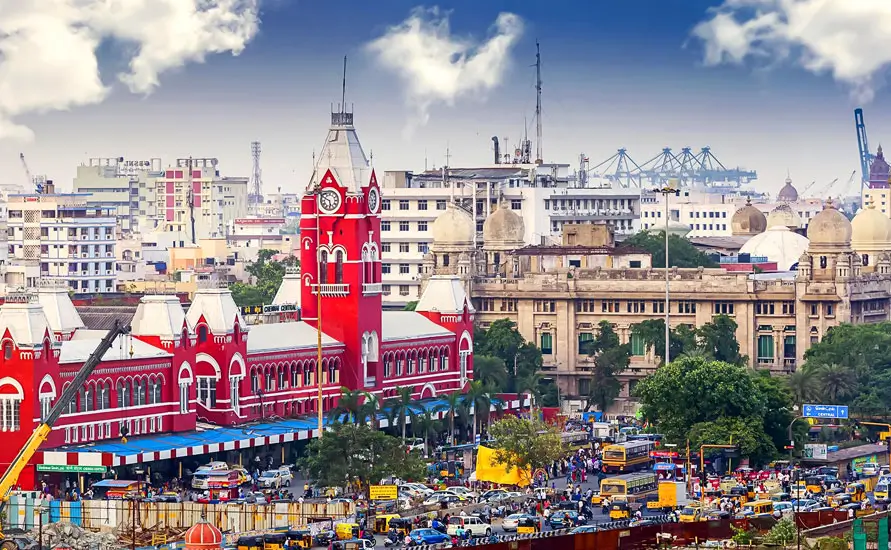
After a rest, your Chennai guide drives you to Fort St. George, which the East India Company raised in 1644 as its first stronghold on Indian soil; the Tamil Nadu legislature and secretariat still work from offices within it. A short walk away is St. Mary's Church, consecrated in 1680, the earliest surviving English church building in the country and the place where Robert Clive took his wedding vows, its floor paved with weathered grave slabs. The fort museum displays weapons, uniforms, coins and portraits from the Company days. Your guide fills in the story of how a small trading post on the Coromandel coast grew into the city then known as Madras.
The afternoon ends in Egmore at the Government Museum, founded in 1851; its separate bronze gallery displays hundreds of metal images cast under the Cholas, with a celebrated Nataraja, Shiva poised mid-dance inside a ring of flames, as the centerpiece. Seeing these pieces on the first day gives you a reference for the temples you will reach later in the trip. Friday is normally the museum's weekly holiday; if your arrival falls then, your guide substitutes a slow drive past the brick-red domes and minarets of the 1892 court complex and the white facade of the Ripon Building. Dinner can be at a local restaurant serving Chettinad dishes such as pepper chicken. Overnight in Chennai.
A slow morning lets you recover from the flight, and after breakfast you check out and head south along the East Coast Road. Before leaving the city, your guide can stop at the Kalakshetra Foundation, an arts school founded in 1936 that revived Bharatanatyam dance training, where visitors may sometimes watch students in their open-air classes on weekdays. The road then runs past fishing villages, beach houses and long stretches of casuarina trees planted as wind breaks. Traffic eases quickly once you clear the southern suburbs, and the drive along the coast feels almost rural within an hour of leaving Chennai.
Halfway to Mahabalipuram you stop at Dakshinachitra, a heritage village where old homes from Tamil Nadu, Kerala, Karnataka, Andhra Pradesh and Telangana have been taken apart in their home villages and rebuilt here plank by plank and tile by tile. Walking through a Chettiar merchant's mansion, a Kerala Syrian Christian house and a potter's cottage in a single hour gives you a simple introduction to South Indian architecture and daily life. Craftspeople work in small sheds around the site, making glass bangles, palm leaf baskets and terracotta pieces. The site is closed on Tuesdays, when we replace it with a stop at the Cholamandal artists' village.
You reach Mahabalipuram by early afternoon and check in to a beachside hotel. After lunch and a rest, walk along the main street to see the town's living stone-carving tradition, as dozens of workshops turn out granite gods, elephants and dancers for temples and homes across India and abroad. The sound of chisels on stone carries down the road, and the carvers are usually glad to show you how a figure is first sketched onto a block and then cut. The evening is yours for a walk on the beach and a dinner of grilled fish or prawns at one of the simple seafood places near the shore. Overnight in Mahabalipuram.
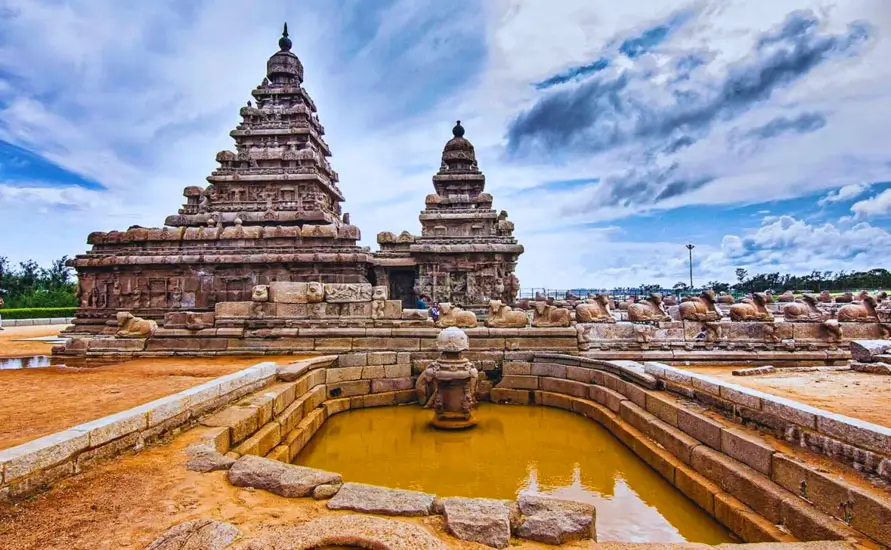
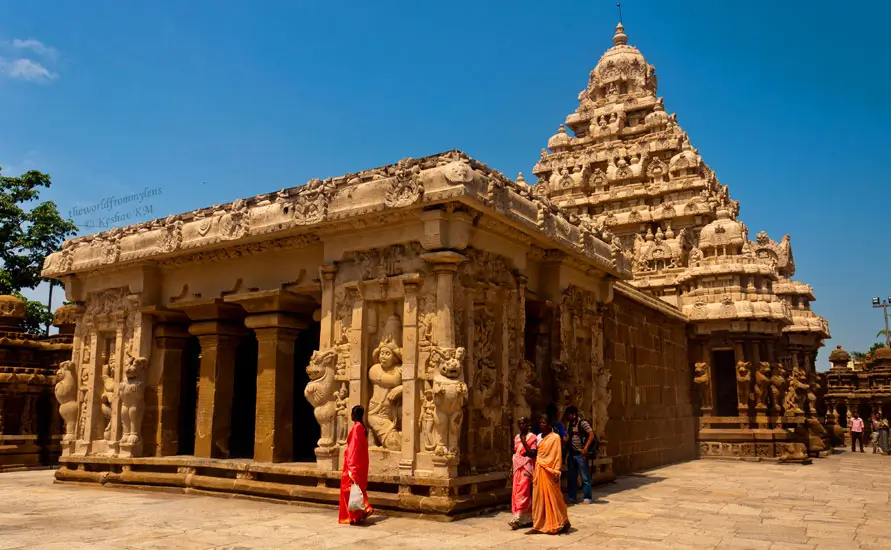
Mahabalipuram's monuments are spread over a low granite ridge, and your guide starts on the quieter side of the hill, away from the main crowds. Inside the Varaha Cave Temple, one wall shows Vishnu in his boar form rescuing Bhudevi from the cosmic waters, while a neighboring panel portrays him as Trivikrama, one leg raised high to measure the heavens in a single stride. Further along, the Mahishasuramardini Cave pairs two contrasting scenes: on one side an eight-armed Durga charges on her lion at the buffalo-headed Mahisha, and opposite her Vishnu lies at rest on the coils of the serpent Adishesha. Your guide explains how these 7th-century Pallava carvers worked directly into the living rock, with no room for mistakes.
Above the caves stands the old Olakkanesvara Temple, a small stone shrine once used as a lighthouse, with a modern lighthouse beside it that you can climb for a view over the town, the sea and the temple-covered ridge. On the way back to the car your guide points out the unfinished carvings scattered across the boulders, where you can see the first chisel marks of figures that were never completed. The Shore Temple and the Five Rathas are visited quickly before you leave, since they are close to the road. Arriving early also avoids the heat on the exposed rocks, which can be intense by noon.
Lunch is followed by a two-and-a-half-hour run down the coast to Pondicherry, past prawn farms, the salt works around Marakkanam and the ruined brick walls of Alamparai, a small 18th-century fort and seaport that later passed to the French. By about four o'clock you are settling into a restored colonial-era hotel inside the old French grid. The seafront is a good place for an evening stroll, as cars are kept off it in the evenings and the breeze off the Bay of Bengal brings the temperature down. Your guide can recommend a bakery for French-style bread and pastries for the next morning's walk. Overnight in Pondicherry.
Most visitors only see the French side of town, so this morning's walk with your guide begins in the Tamil Quarter, west of the old canal that once divided the colonial town in two. Here the houses have deep verandas, carved wooden pillars and raised platforms called thinnai, where families still sit in the evenings to talk with neighbors. You stop at Goubert Market, where the fish section buzzes from dawn and stalls sell flowers, vegetables and kitchen tools. The Immaculate Conception Cathedral and the pastel-colored Our Lady of Angels church show how deeply Catholic traditions took root in the town during French rule.
Crossing back over the canal, you walk through the quiet French streets with names like Rue Dumas and Rue Romain Rolland, lined with old villas and walled gardens. Your guide shows you the French War Memorial near the seafront, the old customs house and the Pondicherry Museum, which displays Roman pottery found at the nearby port of Arikamedu along with French colonial furniture. You also stop at the Manakula Vinayagar Temple to see its painted ceiling and the gold-plated chariot used during festivals. The Sri Aurobindo Ashram is open to visitors who keep silence inside, and you can sit for a few quiet minutes by the samadhi.
A 12 km drive north takes you to Auroville, the township founded in 1968 on land that was once almost bare, now covered with forest planted by its residents. Starting from the visitor center, where a brief documentary sets out the founding idea, you take a woodland trail of ten to fifteen minutes to the public lookout facing the Matrimandir; no reservation is needed to view its gilded dome from there. The inner chamber can be visited only with an advance booking, and places are limited, so we will help you apply if you are interested. The Auroville boutiques sell handmade paper, incense and organic food. Overnight in Pondicherry.
Today you leave the coast and drive inland across the rice-growing delta of the Kaveri River, the region that fed the great Chola empire. Your first stop, about an hour and a half from Pondicherry, is Chidambaram and its Thillai Nataraja Temple, one of the most important Shiva shrines in South India. The god is honored here in his dancing form, and the stone gateways are lined with small figures performing the 108 karanas, the movements set out in the Natya Shastra treatise on dance. Some inner areas are open only to Hindus, but your guide shows you the halls and corridors where visitors are welcome and explains the rituals performed by the temple's hereditary priests.
Kumbakonam, a market town known for its many temples, its brass lamps and its strong filter coffee, is the lunch stop, and from there you continue to Darasuram and the Airavatesvara Temple, built in the 12th century by the Chola king Rajaraja II. UNESCO groups it with the shrines at Tanjore and Gangaikondacholapuram under one World Heritage listing for Chola architecture that remains in daily worship. Its small size is part of its appeal, since you can get close to the detailed carvings of dancers, musicians and acrobats on its pillars and walls. Look out for the stone chariot wheels at the front hall and the steps that, according to tradition, make musical notes when struck.
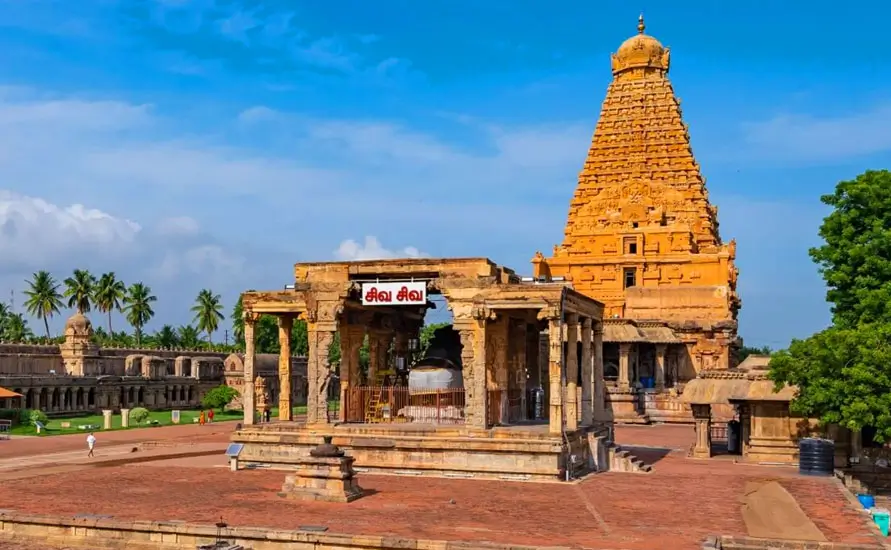
The last hour of the drive brings you to Tanjore, also written Thanjavur, by mid-afternoon. Bags dropped at the hotel, you go directly to the Brihadeeswarar Temple, the royal shrine Rajaraja Chola I dedicated in roughly 1010, whose pyramid-shaped granite vimana climbs some 66 meters into the sky. The late afternoon is the best time to visit, as the sandstone-colored stones glow in the setting sun and families arrive for the evening rituals. Your guide shows you the giant Nandi statue carved from a single rock and the Chola-era frescoes hidden in the inner passages. Dress modestly, with shoulders and knees covered, and leave your shoes at the counter at the entrance. Overnight in Tanjore.
Your last Tanjore visit is the Thanjavur Maratha Palace: the Nayaks raised most of it, and the Bhonsle Marathas moved in after seizing the kingdom in 1674. The complex houses an art gallery with a large collection of Chola stone sculptures and bronzes, and the Saraswathi Mahal Library, one of the oldest libraries in Asia, which holds thousands of palm leaf manuscripts in Tamil, Sanskrit and Marathi. Tanjore is also known for its painted panels with gold leaf and glass inlay, and for its bobble-headed dancing dolls, and a small workshop visit shows you how both are made.
One hour west lies Trichy, or Tiruchirappalli, where you visit the Sri Ranganathaswamy Temple on the river island of Srirangam, often listed as one of the largest working Hindu temple complexes in the world. It is made up of seven concentric walled enclosures, the outer ones filled with homes, shops and markets, so you walk through a living town before reaching the inner courts. The hall of a thousand pillars, carved with rearing horses and warriors, is a highlight. Non-Hindus may not enter the inner sanctum, and your guide can arrange access to a rooftop viewpoint where the golden vimana above the sanctum is visible.
On the way out of town you get a view of the Rock Fort Temple, perched on an 83-meter rock above the old city, which can be climbed via a long covered staircase if you have the energy. From Trichy the highway runs south across dry plains dotted with granite hills to Madurai, a drive of about two and a half hours. Rooms are ready when you pull in around dusk, and nothing more is planned, though a glass of jigarthanda is worth seeking out: the chilled local favorite layers reduced milk, soaked almond gum, sarsaparilla syrup and a topping of ice cream. Overnight in Madurai.
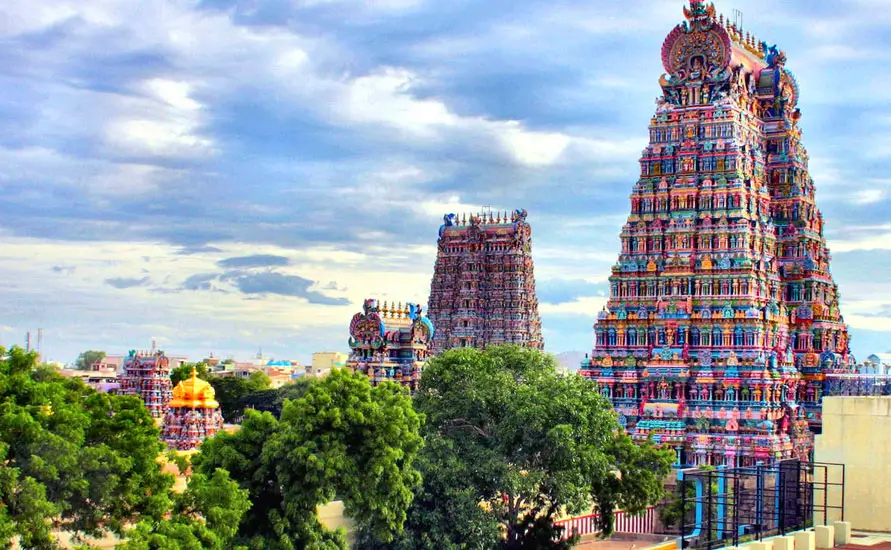
Madurai is one of the oldest cities in India still lived in today, and its life still revolves around the Meenakshi Amman Temple. You go there with your guide in the early morning, when the corridors are cool and filled with pilgrims carrying flowers and coconuts. Fourteen gopurams ring the complex, and the southern one, the highest, reaches roughly 52 meters, every tier crowded with brightly colored deities, guardians and mythical beasts. Entry to the shrines of Meenakshi and Sundareswarar is reserved for Hindus, yet the open areas hold more than enough for a long morning, including the Golden Lotus Tank and the pillared Aayiram Kaal Mandapam, which now serves as a temple art museum. Mobile phones and cameras are not allowed past the entrance, so you hand them in at the cloakroom before security.
Later, when the sun is lower, you head for the 1636 Thirumalai Nayak Palace, commissioned by King Thirumalai Nayak, the same ruler who added several mandapams to the Meenakshi complex. Only part of the original palace survives, but its huge courtyard surrounded by round white pillars and its domed ceilings give a sense of the scale of Nayak power. Across the Vaigai River, the Gandhi Memorial Museum occupies a 17th-century royal residence, and its most moving exhibit is the stained dhoti Gandhi had on at his assassination in January 1948. Madurai is where Gandhi first chose to wear only the simple loincloth, after seeing the poverty of local farmers.
After dark you head back to Meenakshi's shrine for the palliyarai ceremony, the nightly ritual that starts at about 9 pm. Priests lift the festival image of Sundareswarar into a palanquin and bear it through the halls to Meenakshi's sleeping quarters, with nadaswaram pipes and drums leading the way, while worshippers press along both sides of the passage for a glimpse. Your guide finds you a good place to stand and explains each step of the ritual. Before the ceremony, take a walk through the streets around the temple, where tailors in the old Pudu Mandapam hall sew clothes for you in a few hours. Overnight in Madurai.
Morning in Madurai begins with a short visit to the Vandiyur Mariamman Teppakulam, a huge temple tank with a small island shrine at its center, where a float festival takes place each January or February when the tank is filled. Your guide then takes you through the busy flower market near Mattuthavani, where jasmine buds from the surrounding villages are traded by the kilo every morning, filling the air with their scent. Madurai jasmine has its own protected geographical status and is sent to cities across India. By late morning you check out and leave the plains behind, with the Palani Hills appearing as a blue wall to the west.
The climb to Kodaikanal begins at the foot of the hills near Batlagundu, and the road rises about 2,000 meters through a series of hairpin bends. On the way up you pass the Silver Cascade, a waterfall that pours down beside the road and where macaque monkeys wait for snacks, so keep food out of sight. The vegetation changes from banana and mango groves to pine, eucalyptus and acacia forests. Kodaikanal was founded in 1845 by American missionaries looking for a cool place to escape the heat of the plains, and the town still has a well-known international school and several old churches from that time.
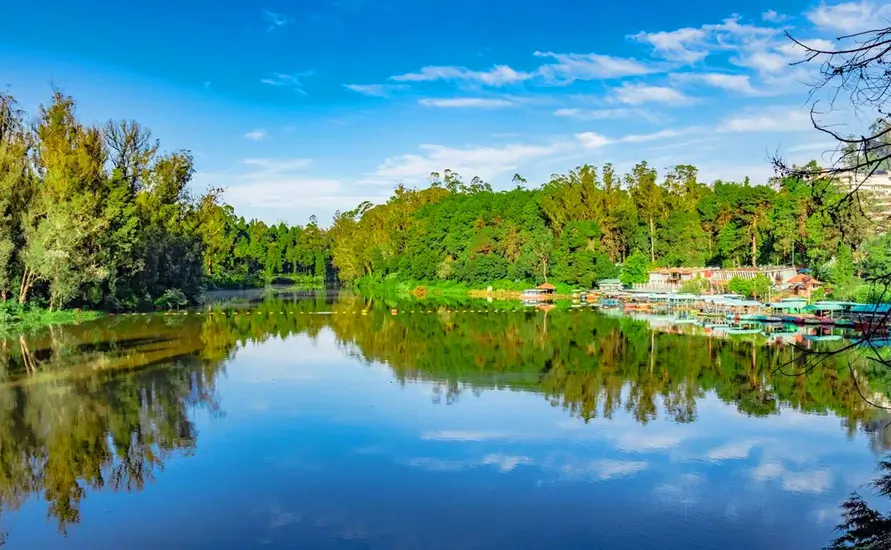
Check-in at your hill resort comes in the afternoon, leaving the rest of the day for settling in. Kodaikanal Lake, a star-shaped lake created in 1863, lies at the center of town, and a road about five kilometers long circles it. You can walk or cycle around the lake, hire a pedal boat or row boat, or simply sit at one of the lakeside cafés and watch the mist drift in from the hills in the late afternoon. Evenings are cold, especially from November to February, so bring warm layers. Shops in town sell homemade chocolates, eucalyptus oil and plums and pears in season. Overnight in Kodaikanal.
Mornings in the Palani Hills are often clear for the first few hours before cloud rises from the valleys, so your guide collects you soon after breakfast and heads first to Coaker's Walk. The paved path, about a kilometer long, was laid out in 1872 by a British officer named Lieutenant Coaker, and it runs along the edge of a steep slope on the southern side of town. On a clear day the plains around Periyakulam lie spread out far below, and on the best mornings you may even pick out the distant shape of Madurai. A small observatory tower with a telescope stands at one end, and benches along the railing let you sit and watch the light change over the valley.
Next comes the Pine Forest on the road west of town, a plantation of tall, straight trees started in 1906 by a forest officer named Bryant, the same man remembered in the name of the botanical park beside the lake. The ground beneath the trees is soft with fallen needles, and the light falls in thin strips through the high canopy, making it a favorite place for a short, quiet walk. Farther along, the Guna Caves, a set of deep rock clefts once called the Devil's Kitchen, are now fenced off for safety and seen only from a viewing platform. Just beyond, the three granite columns of Pillar Rocks rise about 120 meters from the slope, often half lost in drifting mist.
Back in town, lunch can be at a small café near the lake known for wood-fired pizzas and homemade bread, a tradition left by the hill station's long foreign community. In the afternoon your guide can take you to the Kurinji Andavar Temple, dedicated to Murugan, from where you look over the Palani range toward the temple town of Palani; the slopes nearby are famous for the kurinji shrub, which flowers in a blue haze only once every twelve years. Bryant Park, beside the lake, holds a glasshouse and rose beds, and the flower show each May draws large crowds. After sunset, most hill resorts light a log fire before dinner is served. Overnight in Kodaikanal.
No direct road links Kodaikanal with Munnar today, so the route drops back down the eastern slopes before climbing again into Kerala, and an early start after breakfast keeps the day comfortable. Your driver descends through the forests above Periyakulam, where the bends are tight and the views open out over the plains, and then crosses flat farmland to Theni. This part of Tamil Nadu grows grapes, bananas, coconuts and cardamom, and in season you will pass roadside vineyards where vines are trained over high wire frames. Stalls near Cumbum and Theni sell fresh grapes by the bag, and the driver can stop for tea and a snack whenever you wish.
At Bodinayakanur, a busy market town where much of the region's cardamom is traded and auctioned, the second climb of the day begins. The ghat road up to Bodi Mettu winds through more than a dozen hairpin bends, and with every turn the dry plains fall farther behind until you reach the pass on the Tamil Nadu–Kerala border. Crossing into Kerala, the landscape changes almost at once: cardamom bushes crowd the ground beneath a canopy of old forest, small farm towns appear around Poopara, and the wide, dark lake behind the Anayirangal dam lies off to one side. Wild elephants sometimes cross this stretch, so your driver keeps a careful eye on the road.
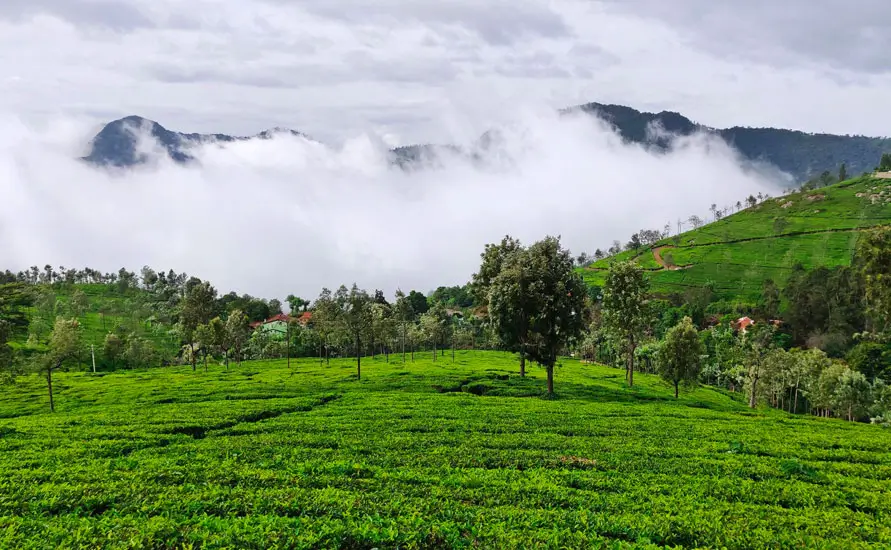
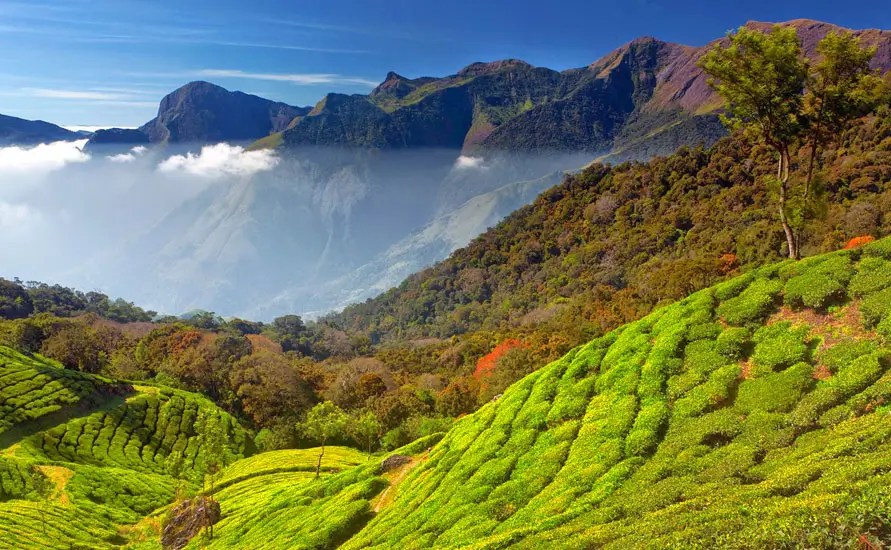
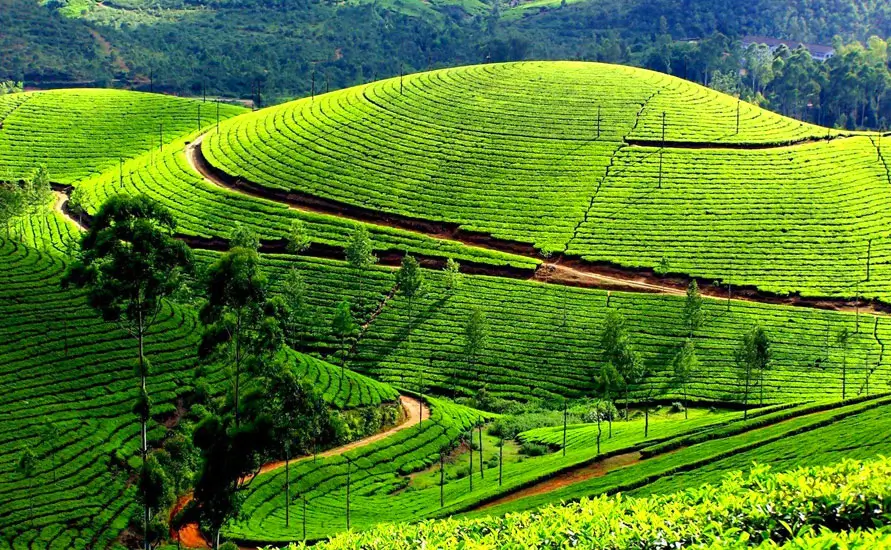
The last section brings you past Lockhart Gap, where the road hugs a cliff above a deep valley, and then onto the first neatly trimmed tea gardens of the High Range. Expect to pull into Munnar by mid or late afternoon, where your base for two nights is a resort on a working tea estate or a hotel on the slopes above town. The town sits where three mountain streams, the Muthirapuzha, Nallathanni and Kundala, flow together, and its name is thought to mean three rivers in Malayalam. After the long drive, a cup of fresh High Range tea on the veranda and an early dinner are all you need. Nights here are cool, so keep a sweater close. Overnight in Munnar.
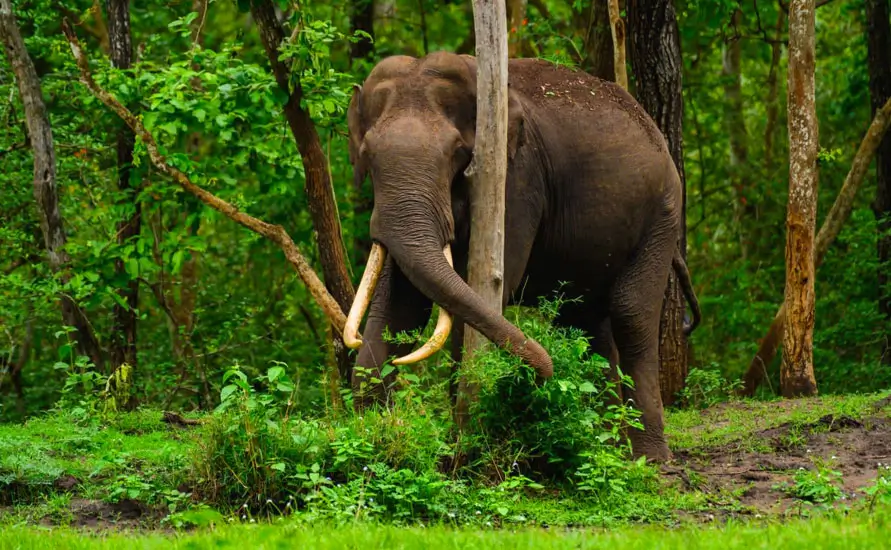
Start with the hills themselves. Your guide drives you out early to Eravikulam National Park, about 15 km north of town, which protects high grassland and patches of shola forest along the slopes of Anamudi, at around 2,695 meters the tallest peak in South India. Cars are left at the gate; a forest department shuttle climbs to the Rajamalai section, and from the drop-off a paved track continues on foot. Eravikulam shelters more Nilgiri tahr than anywhere else, a mountain goat that lives nowhere but these ranges, and small herds often graze within a few meters of the walkway. Newborn tahr arrive early in the year, and the park normally shuts to visitors for several weeks around that time, roughly February to March.
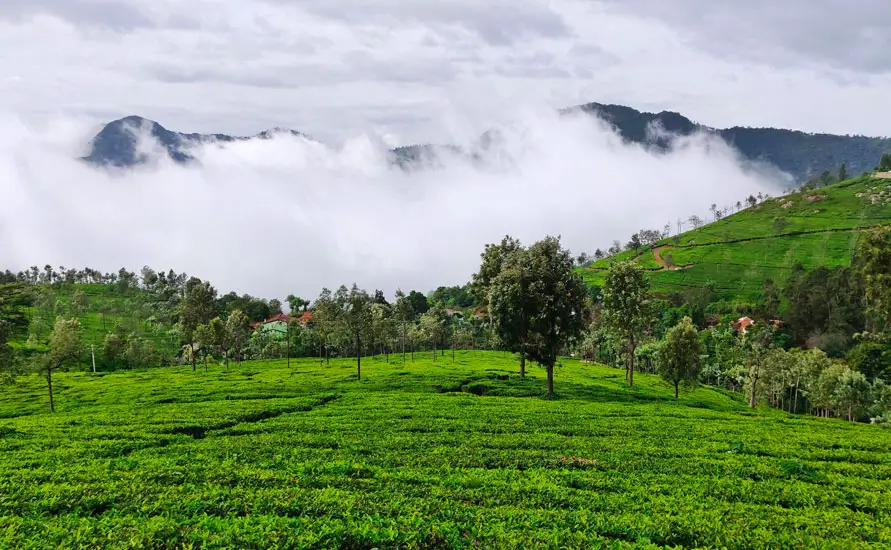
Late morning is set aside for tea. Run by the planters' company on the Nallathanni estate, the Tea Museum tells how Scottish planters cleared these slopes from the 1880s, with old photographs, a rolling machine, a sundial and the parts of a narrow-gauge railway that once linked the estates before a flood destroyed it in 1924. A short film covers the history, and a working factory section shows how green leaf is withered, rolled, fermented and dried into the black tea you buy at home. Afterwards, your guide takes you along the estate roads, where pickers work in rows between the bushes and you can stop to photograph the patterns of the slopes. Ask before photographing the workers.
For the afternoon, choose between a relaxed drive toward Mattupetty Dam and Echo Point, where the lake is ringed by forest and dairy farms, or a longer run to Top Station on the edge of the Kerala–Tamil Nadu border, whose cliff-top viewpoint looks far down over the plains of Tamil Nadu on a clear day. Cloud often rolls in after lunch, so a morning start is better for views. Back in town, small shops sell cardamom, pepper, local honey and loose-leaf tea packed straight from the estates, and homemade chocolates are a local specialty. Supper at the resort tends to be Keralan, with lacy rice appams served beside a mild coconut-milk stew. Overnight in Munnar.
Your last morning in the mountains is easy, with time for a walk through the tea bushes near the resort before breakfast. Then the road starts a long, winding descent toward the coast, dropping more than 1,500 meters over about four hours. Near Adimali the forest thickens, and two waterfalls, Cheeyappara and Valara, tumble close to the highway, most impressive after the monsoon, between August and December. The air grows warmer and heavier as you leave the hills, and spice gardens, rubber plantations and pineapple fields replace the tea. Fresh pineapple sold at roadside stalls near Vazhakulam, a region known for growing the fruit, makes a good snack stop.
After crossing the Periyar River at Neriamangalam, the road passes through Kothamangalam and the growing suburbs of Ernakulam before reaching Fort Kochi on its peninsula by early afternoon. Your hotel for the final two nights is a heritage property set inside a restored warehouse or colonial bungalow, a calm base close to the waterfront. After lunch and a short rest, stroll along the promenade beside the harbor, where small ferries cross to Vypeen and fishermen sell their morning catch from tables near the shore. The trip from Chennai has now crossed the full width of the peninsula, from the Bay of Bengal to the Arabian Sea, all by road.
Tonight is set aside for Kathakali, staged in an intimate Fort Kochi hall; the dance drama grew from Kerala temple theater around the 17th century. Before the story begins, a performer usually demonstrates the language of the dance: the hand gestures called mudras, each with its own meaning, and the detailed movements of the eyes and eyebrows that show love, anger, fear or wonder. Then the drums and cymbals start, and characters in huge skirts and crowns act out a tale from the Mahabharata. Green faces mark noble heroes, while red streaks warn of a villain. Expect the whole program to run roughly ninety minutes. Overnight in Kochi.
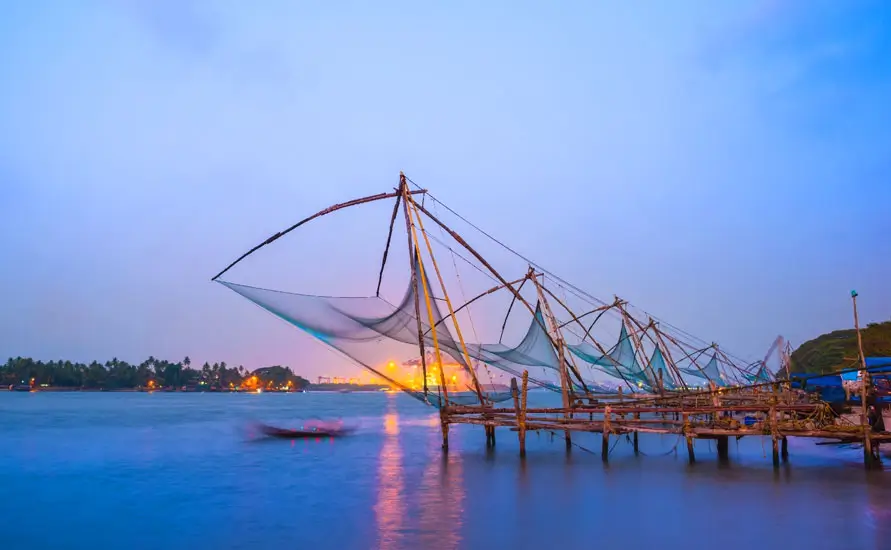
Your Kochi guide meets you at the hotel in the morning for a full day around the old port. The day opens at the waterfront, where a line of Chinese fishing nets guards the harbor entrance, each a large cantilevered frame of teak and bamboo balanced by a row of heavy stones tied on ropes. A team of four to six men works each net, walking along the main beam to lower it into the water and then pulling it up a few minutes later; the catch is often small, but the rhythm of the work is fascinating to watch. From there you walk to St. Francis Church, among the oldest European-built churches in India, and on to the cream-and-white Santa Cruz Basilica, whose twin spires and ceiling paintings date from its rebuilding in 1905.
A short drive brings you to Mattancherry, the older trading town on the eastern side of the peninsula. Portuguese builders raised Mattancherry Palace around 1555 and handed it to the ruling Kochi king, and its walls carry Kerala murals of rare quality; a short walk away, the Paradesi Synagogue of 1568 closes off the end of Jew Town Road. Both keep weekly closures (no palace visits on a Friday, and no synagogue visits on a Friday, a Saturday or a Jewish holiday), so your Kochi day is fixed around your travel dates. Jew Town's lanes are lined with antique shops and spice dealers, and the smell of ginger, turmeric and dried pepper drifts out of the old warehouses.
After lunch comes the Dhobi Khana, Fort Kochi's open-air laundry, where washermen's families still beat linen on stone slabs, peg it on long lines across the yard and press it with heavy irons filled with glowing charcoal. Later there is time for last-minute shopping for Kerala handloom, coir mats or spices, or a final Ayurveda massage. For a farewell dinner, try a seafood restaurant near the harbor, where you choose fish, prawns or crab from the morning's catch and have it cooked in your preferred style. Watching the ships pass in the dusk is a fitting end to two weeks of travel across the south. Overnight in Kochi.
Departure day has no fixed plan before the airport transfer, so the pace depends on your flight time. Early risers can walk to the waterfront to see the fishing nets being worked in the soft morning light, or stroll through the quiet streets past the Dutch Cemetery, a walled plot of moss-dark 18th-century graves usually viewed through its gate, and the old parade ground where colonial soldiers once drilled. Breakfast at the hotel can be as long and slow as you like. Rooms must normally be vacated by noon; for a night departure, ask us to hold the room into the afternoon or book a day room, at extra cost and subject to availability.
At the hour fixed the night before, your driver loads the car for the run to Cochin International Airport at Nedumbassery, roughly ninety minutes from Fort Kochi depending on Ernakulam traffic. The road crosses the long bridges over the backwater channels, past the high-rise buildings of the new city and the busy markets of Aluva. The airport is known as the first in the world to run entirely on solar power, with large fields of solar panels next to the runway. For international flights, plan to reach the terminal about three hours before departure, as security and immigration queues can be long in the busy winter season.
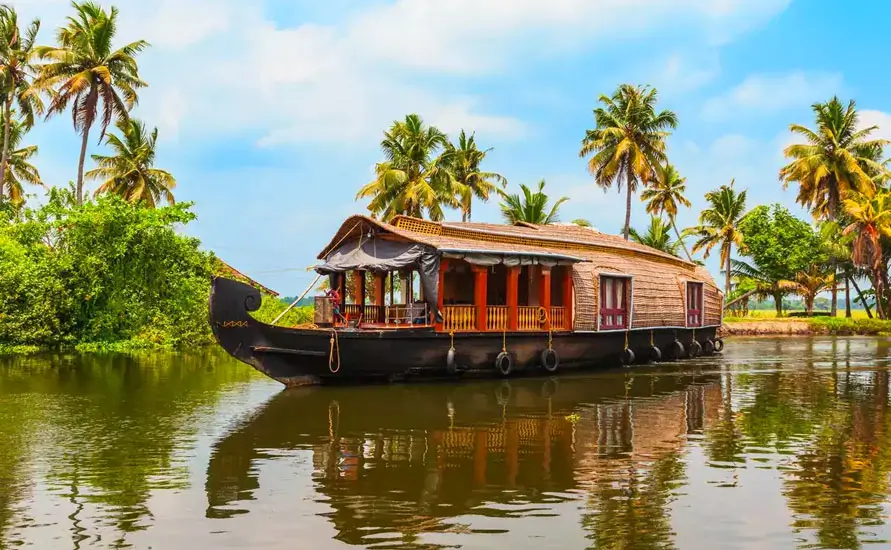
As the car pulls up at the terminal and your driver unloads the bags, it is time to say goodbye to the man who has shared every kilometer of the road since Chennai. Over fourteen days your South India tour from Chennai has taken you through Pallava cave temples, the French and Tamil streets of Pondicherry, the great Chola shrines of the delta, the night ceremony at Madurai, the forests of Kodaikanal and the tea gardens of Munnar, ending on the spice coast of Kerala. If you would like to extend your stay with a houseboat night or some beach days, our team can add them before you leave. Safe travels, and come back to the south soon.
Your Journey

N.S. Rathore & Mrs. Omlata Rathore · Managing Director
We still read every enquiry ourselves. Tell us the places you liked and our planners will send a day-by-day route with drive times and a clear price.
Every package can be customised and no pressure to book. A planner from our office replies within 24 hours with a route written for your group.
Fill this in and your planner will send a first draft itinerary.
Explore more
Kerala Backwaters Escape Kerala Backwaters Escape
 Kerala Backwaters Escape
 Kerala Backwaters Escape
 Kerala Backwaters Escape
 Kerala Backwaters Escape
 Kerala Backwaters Escape
 Kerala Backwaters Escape
 Kerala Backwaters Escape
 Kerala Backwaters Escape
 Kerala Backwaters Escape
 Kerala Backwaters Escape
 Kerala Backwaters Escape
 Kerala Backwaters Escape
 Kerala Backwaters Escape
 Kerala Backwaters Escape
 Kerala Backwaters Escape
 Kerala Backwaters Escape
 Kerala Backwaters Escape
 Kerala Backwaters Escape
 Kerala Backwaters Escape
 Kerala Backwaters Escape
 Kerala Backwaters Escape
 Kerala Backwaters Escape
 Kerala Backwaters Escape