


 Kerala Backwaters Escape

South India Tour Packages
Bangalore – Srirangapatna – Mysore – Bylakuppe – Coorg – Wayanad – Kozhikode – Kochi – Alleppey
At a glance
Few routes in India change scenery as completely as the road from the Deccan plateau down to the Malabar coast. Our Karnataka and Kerala tour follows that line over eleven days, starting among the gardens and royal monuments of Bangalore and Mysore, climbing into the coffee hills of Coorg, crossing the forest border into Wayanad, and ending on the water in Kochi and Alleppey. Along the way you see where Tipu Sultan ruled and fell, sleep on a working coffee estate and visit one of the largest Tibetan settlements outside Tibet.
The pace is built around two-night stays, so most mornings start with breakfast rather than packing. Road legs in Karnataka are short, usually three to four hours, and the one long stretch, from Wayanad down to the coast, is broken with a stop in Kozhikode and a comfortable express train to Ernakulam, or a full drive if you prefer. A private air-conditioned car and English-speaking driver handle every transfer, and licensed local guides join you in Bangalore, Mysore, Coorg, Wayanad and Kochi.
Visitors who have done the Golden Triangle on an earlier trip and now want coffee hills, rivers and a gentler pace tend to pick this Karnataka Kerala tour package, and overseas Indian families like it as a way to show their kids two southern states in depth. The plan suits October to March, when the hills are dry and clear. Hotel category, the number of nights in each place and the Kochi to Alleppey section can all be changed to fit your dates and interests on this Karnataka and Kerala tour.
Bangalore sits at about 900 meters above sea level, which is why the air feels milder than you might expect when you step out of Kempegowda International Airport. Our representative waits at the arrivals exit holding a sign with your name, and your driver takes you into the city in a private air-conditioned car, a trip of roughly an hour depending on traffic. Many long-haul flights land in the early morning, so the first hours are kept free for rest at your hotel. During the transfer we hand over your tour documents and local SIM card details, and talk through the plan for the coming eleven days.
In the afternoon your guide collects you for a first look at old Bangalore. First stop is Lalbagh Botanical Garden, started in 1760 on Hyder Ali's orders; Tipu Sultan extended it and had seeds and saplings shipped in from as far as Persia, Afghanistan and France. Twice a year, in late January and mid-August, the Victorian-style glass pavilion fills with tens of thousands of blooms for the national-holiday flower shows. Ten minutes on foot takes you to the top of Lalbagh Rock, among the oldest exposed rock formations on Earth, where one of Kempegowda's four boundary towers still stands above the canopy.
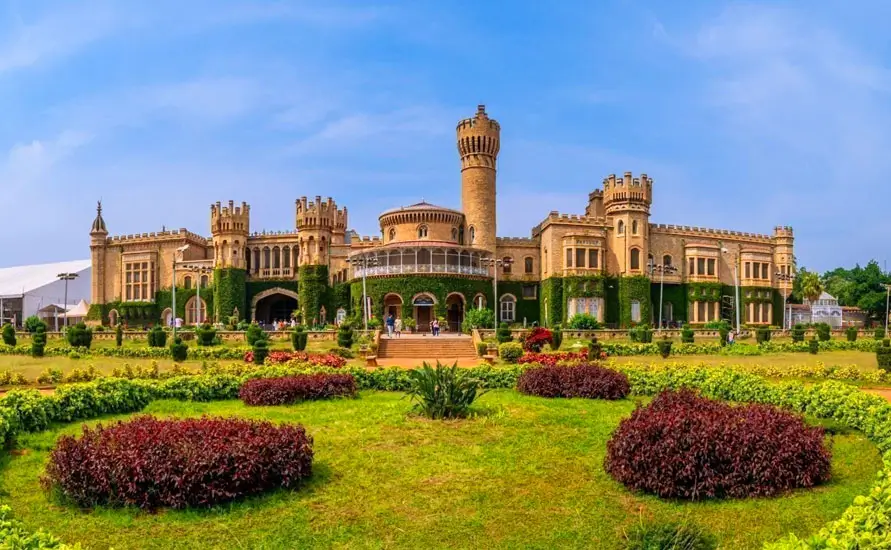
From the garden it is a short drive to Tipu Sultan's Summer Palace, a two-story building of teak pillars and carved arches finished in 1791. Tipu called it the abode of happiness and used it as a retreat during the hot months, and a small display on the ground floor tells the story of his long wars against the British East India Company. If time allows, your driver passes the Tudor-style Bangalore Palace and the granite Vidhana Soudha on the way back. Dinner is at your hotel or at a local restaurant serving Karnataka dishes such as bisi bele bath and ragi mudde. Overnight in Bangalore.
A quiet early walk in Cubbon Park starts the day, at an hour when joggers, dog walkers and retired civil servants share the shaded paths under rain trees and bamboo. The park covers about 300 acres in the middle of the city and holds several red colonial buildings, including the State Central Library and the old High Court. With bags loaded after an early meal, the car joins the Bengaluru–Mysuru expressway heading south-west. The road crosses farmland planted with sugarcane, coconut and mulberry, which feeds the silkworms behind Karnataka's well-known silk industry, and your driver can stop for fresh tender coconut along the way.
Roughly two and a half hours out of the city, a bridge over the Kaveri brings you to Srirangapatna, the river-island fortress Tipu Sultan ruled from and died defending against the British in 1799. Your guide shows you the Daria Daulat Bagh, a teak summer palace whose walls are covered with painted scenes, including the Battle of Pollilur, where Mysore forces defeated a British army in 1780. Nearby stand the old fort walls, the marked spot where Tipu was killed during the final siege, and the Gumbaz, the domed tomb he built for his father Hyder Ali and where he himself was later buried. The ivory-inlaid doors at the entrance were a later gift from Lord Dalhousie.
Before leaving the island you stop at the Ranganathaswamy Temple, a large Vishnu shrine that gave Srirangapatna its name and predates Tipu by several centuries. It is one of three important Ranganatha temples on islands in the Kaveri, and pilgrims often visit all three on one trip. A drive of about 30 minutes brings you to Mysore, where you check in to a heritage hotel by late afternoon. Spend the evening at the Brindavan Gardens below the Krishnaraja Sagar dam, known for its terraced lawns and the musical fountain show after dark, or relax at your hotel after a full day. Overnight in Mysore.
Morning is the best time for Mysore Palace, before the tour groups and school buses arrive. Fire burned down the Wadiyars' earlier timber residence in 1897, and the stone replacement you see, the work of the English architect Henry Irwin, was ready in 1912. Your guide leads you through the Kalyana Mantapa, the octagonal marriage hall with its peacock-patterned stained-glass ceiling made in Glasgow, and the Durbar Hall, where the maharajas held court during the Dasara festival. Shoes are left at the entrance counter, and photography is restricted inside the main halls, so your guide will explain the current rules before you go in.
A winding road then climbs Chamundi Hill to the Chamundeshwari Temple, home of the warrior goddess and guardian of the Wadiyar dynasty, whose victory over Mahishasura is remembered in the city's very name. Partway down the slope, pull over beside the Nandi statue, Shiva's seated bull, hewn from one piece of dark granite during the 1600s and standing close to five meters high. Local devotees often climb the 1,000 stone steps from the bottom of the hill, and you are welcome to walk the last section down to the Nandi if you want to stretch your legs. There is also a good view over the city and the palace from the top.
In the afternoon your guide walks you through Devaraja Market, a covered bazaar from the 19th century where traders sell heaps of jasmine and marigold, betel leaves, bananas of a dozen kinds and cones of bright kumkum powder. Nearby shops sell Mysore silk, sandalwood carvings and incense, and your guide can point you to government-run outlets if you want certified products. On Sundays and public holidays, Mysore Palace is lit up with close to 100,000 bulbs for about 45 minutes from around 7 pm, and we will bring you back for the illumination if your dates allow. Overnight in Mysore.
After breakfast you leave the plains behind and head west toward the Western Ghats. Two hours out of Mysore, the road reaches Bylakuppe, where the Indian government gave land to Tibetan refugees in the early 1960s after the Dalai Lama fled to India. Today it is one of the largest Tibetan communities outside Tibet, with several monasteries, schools, farms and small shops selling butter tea and momos. Red-robed monks ride scooters between the camps, and prayer flags hang over fields of maize, which makes the settlement feel very different from the Karnataka towns around it.
The main stop is the Namdroling Monastery, a large teaching center of the Nyingma school of Tibetan Buddhism that houses thousands of monks and nuns. Its prayer hall, usually called the Golden Temple, holds three gilded statues, each close to 18 meters high, of the Buddha, Padmasambhava and Amitayus, surrounded by brightly painted wall murals. If you arrive at prayer time, you can sit at the back and listen to the chanting, horns and drums. Visitors should dress modestly, walk clockwise around the shrines and ask before photographing monks, and your guide will help you with these small customs.
Lunch can be a plate of thukpa noodle soup at a Tibetan café in the settlement before you continue for another hour into Coorg, also called Kodagu, Karnataka's main coffee district. The road climbs through Kushalnagar and into hills planted with coffee bushes under tall silver oak and jackfruit trees, many of them wrapped in pepper vines. You check in to a Coorg coffee estate stay, usually a planter's bungalow or estate resort with a veranda facing the plantation. The evening is quiet, with birdsong, a log fire on cool nights and a dinner of local dishes. Overnight in Coorg.
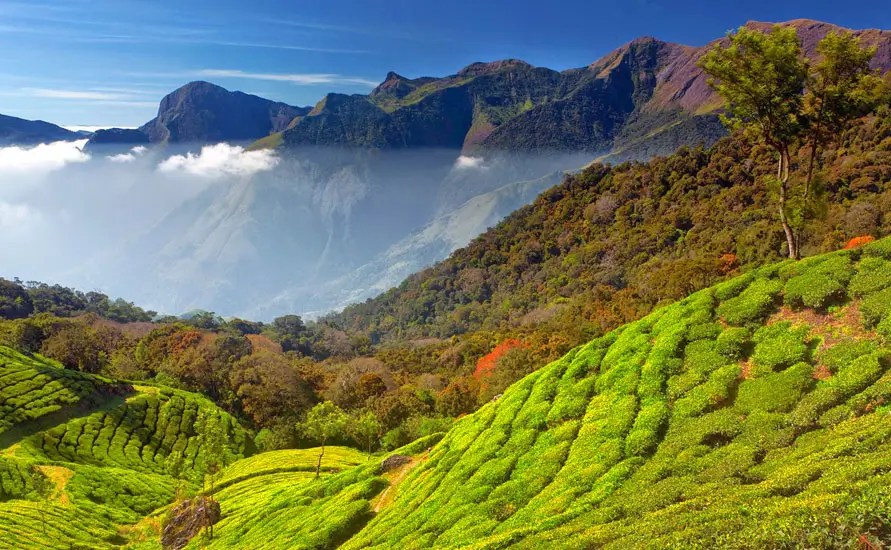
Before breakfast a member of the estate staff takes you on a walk through the plantation, explaining how coffee is grown in the shade of native forest trees instead of on cleared land. Coorg grows mainly robusta, with some arabica on the higher slopes, and the bushes flower with white, jasmine-scented blossoms in March or April after the first showers. Harvest season runs roughly from December to February, when pickers move along the rows filling baskets with red cherries. You also see pepper vines, cardamom and orange trees, and the drying yard where beans are spread out in the sun.
Coorg is home to the Kodava people, a community with its own language, clan system and long military tradition, and several of India's best-known generals came from these hills. Your guide introduces you to Kodava customs, from the men's black wraparound kupya coat with a silver dagger at the belt to the way Kodava women drape their saris with the pleats at the back. If possible, you visit an ainmane, a traditional clan house with a central courtyard, where the families still gather for festivals. Lunch is a home-cooked Kodava meal, often with pandi curry, a dark pork dish, served with steamed rice balls called kadambuttu.
In the afternoon you drive into Madikeri, the district town, to see the Omkareshwara Temple, an unusual 19th-century Shiva shrine built with a central dome and corner turrets that show Islamic influence. Nearby is the old Madikeri Fort, rebuilt in stone by Tipu Sultan and later used by the British. You end the day at Raja's Seat, a garden on the edge of a ridge where the Kodava kings are said to have watched the sunset over layer after layer of forested hills. Coffee lovers can stop at a local shop to buy freshly roasted beans or filter coffee powder. Overnight in Coorg.
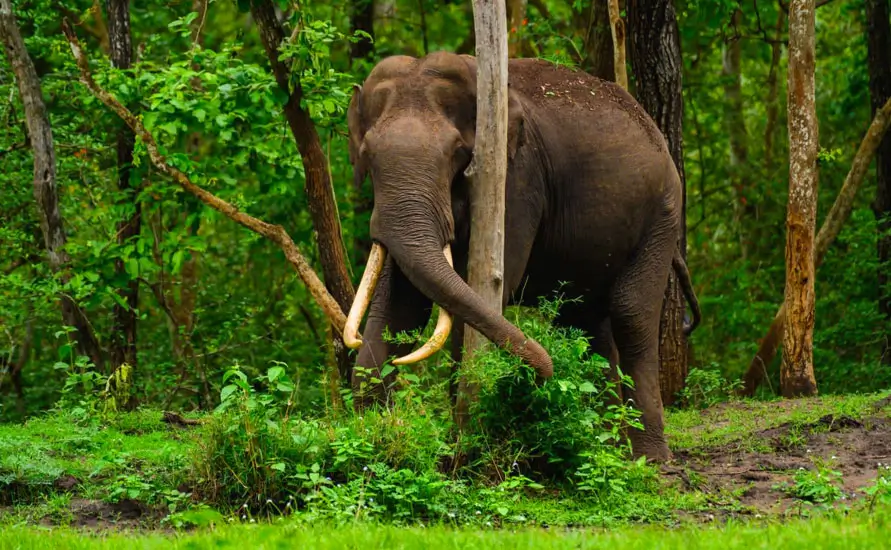
After a slow breakfast on the estate you drive south toward the Kerala border, passing Gonikoppal and the small market town of Kutta. This route skirts the edge of the Nagarhole and Tholpetty forests, which are part of one of India's largest protected wildlife areas, and it is not unusual to see spotted deer, langur monkeys or even wild elephants close to the road. Your driver keeps a steady pace and plans to cross the forest section in daylight, as forest roads in this area can have restricted hours. Short stops for photos are possible where it is safe to pull over.
Once you cross into Kerala at the state border, signboards switch from Kannada to Malayalam and the landscape becomes greener still, with paddy fields in the valleys and coffee, tea and pepper on the slopes. Wayanad is a high plateau district on the Western Ghats and has long been a home of several Adivasi communities, such as the Paniya and Kurichiya, who farmed here well before the plantations arrived. On the way you may stop at the riverside town of Mananthavady, or visit the Thirunelli Temple, an old Vishnu shrine surrounded by forest, if your driver and guide feel there is enough time.
You check in to a plantation resort or forest lodge in Wayanad by afternoon, and the rest of the day is yours. Many properties here are built with local stone and timber and sit among spice gardens, and some offer guided walks to see how pepper, vanilla and nutmeg are grown and processed. After the long sightseeing days in Karnataka, it is a good moment for a swim, a book on the veranda or an Ayurvedic massage at an extra cost. Dinner brings your first Kerala-style meal, which might include a fish curry with tamarind, a coconut vegetable stir-fry and soft rice appam. Overnight in Wayanad.
An early start helps at the Edakkal Caves, which sit high on the slopes of Ambukuthi Mala near Sultan Bathery. These are not true caves but a natural shelter formed where a huge boulder split and wedged between two rocks. The inner walls are covered with carved figures of people, animals and symbols, some of which archaeologists link to the Neolithic period, making them among the oldest rock engravings in South India. The climb from the parking area is steep and takes about 30 to 45 minutes, so good shoes and some water are essential. The caves are usually closed on Mondays, and we confirm the current schedule before your visit.
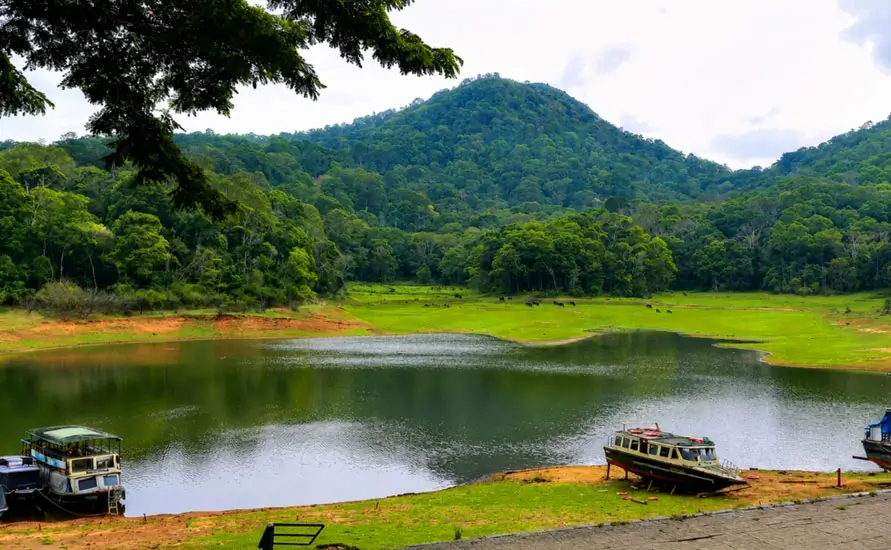
After a rest and an early lunch you drive across the district to Banasura Sagar Dam, an earth dam on a tributary of the Kabini River that is often described as the largest of its kind in India. The reservoir is dotted with small islands that were once hilltops before the valley was flooded, and the Banasura hills rise behind the water. Optional speedboat rides run on the reservoir, and walkways along the dam wall give wide views across the water. On a clear afternoon this is one of the best places in Wayanad to take photographs, especially as the light drops behind the hills.
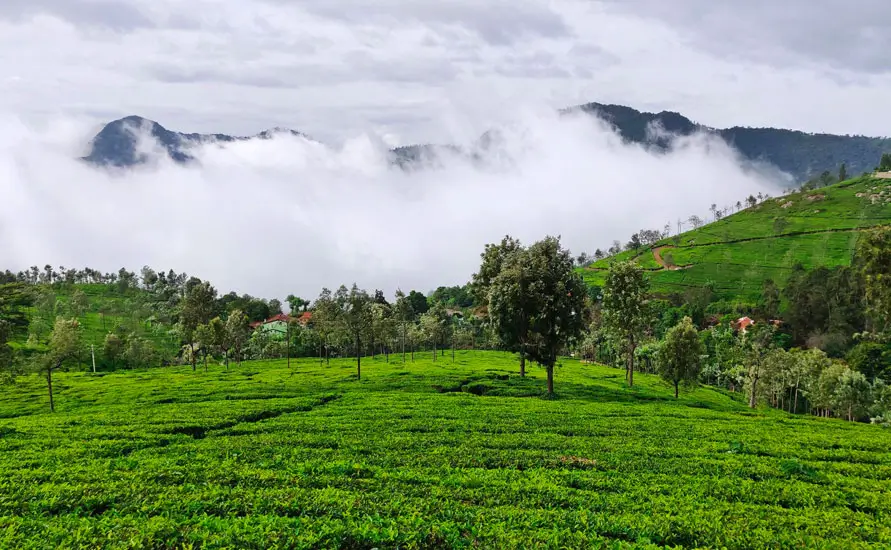
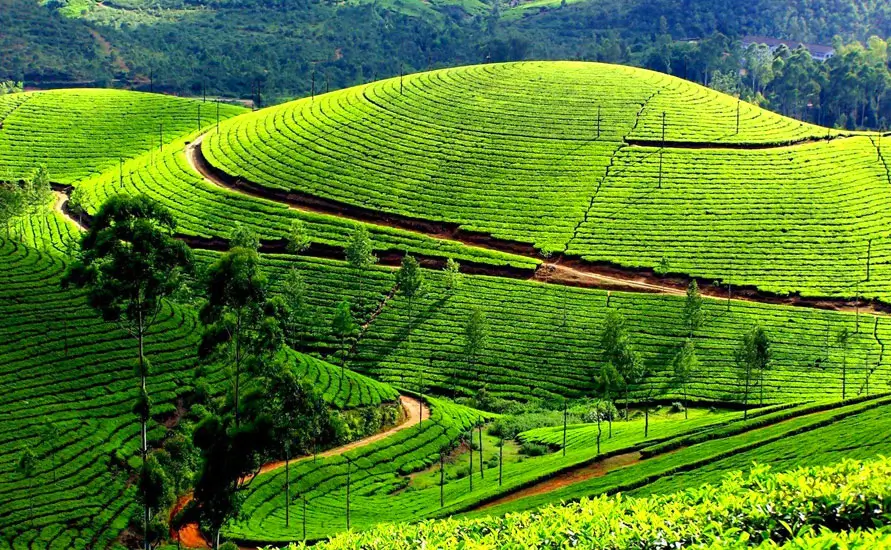
On the way back you can stop at Pookode Lake, a small natural freshwater lake surrounded by evergreen forest where pedal boats are available, or at a local spice shop to buy Wayanad pepper, coffee and honey. Nature lovers might prefer a guided walk in the tea gardens near Meppadi, the starting point for the Chembra Peak trek, which needs a forest department permit and a full morning. In the evening your hotel may arrange a bonfire or a short talk on Wayanad's plantation history and the spice trade that once linked these hills with the Arab and European merchants on the coast. Overnight in Wayanad.
Leaving Wayanad after breakfast, you stop first at Lakkidi Viewpoint, the edge of the plateau where the land drops sharply to the plains below. From here the road descends the Thamarassery Ghat, a series of nine hairpin bends cut through forest, with monkeys often sitting on the walls and views down to the Arabian Sea coast on a clear day. The full drive from Wayanad to Kochi takes six to seven hours, so we break it in Kozhikode, the old port that Europeans knew as Calicut. If you prefer to stay on the road the whole way, your car can drive you directly to Kochi.
Kozhikode has a long trading history, and Vasco da Gama's fleet came ashore near here, at Kappad, in 1498, opening the sea route from Europe to India. Your driver can take you to the beach at Kappad, where a small memorial stone marks the landing, or into the city to walk along SM Street, known for its stalls selling Kozhikode halwa in dozens of colors and flavors. Lunch is the right time to try the local Malabar biryani, made with short-grain rice, ghee and slow-cooked chicken or mutton, which many Keralans consider the best in the state.
In the afternoon you board an express train at Kozhikode station for the run down the coast to Ernakulam, roughly four hours past rivers, coconut groves and town after town of churches and mosques. We book seats in an air-conditioned class, and your driver helps you with luggage at the station. Waiting on the Ernakulam platform is a fresh driver from our Kerala office, and a forty-minute ride over the backwater bridges ends at your Fort Kochi hotel. Dinner is at your hotel or one of the seafood restaurants in the old town, where the day's catch is often shown before cooking. Overnight in Kochi.
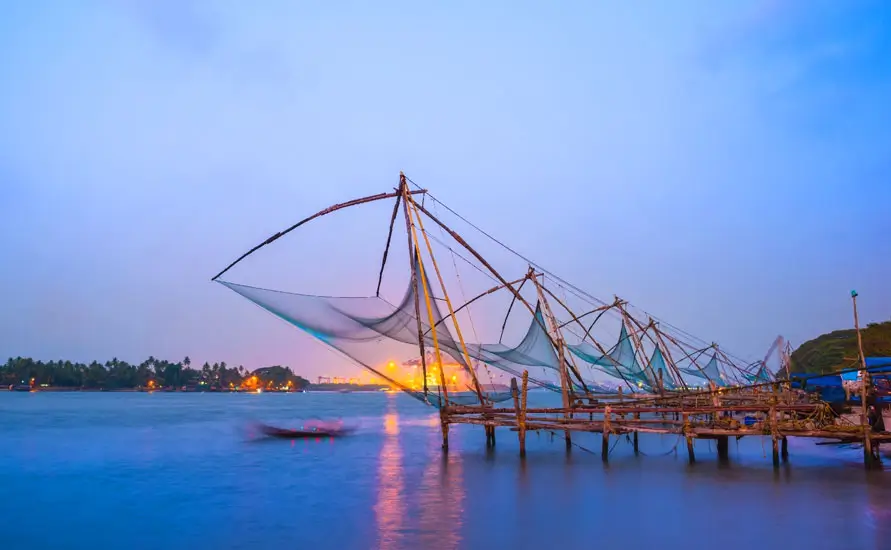
Pepper first brought Arab, Chinese, Portuguese, Dutch and British traders to this harbor, and your Kochi walk follows that trade story. Starting around the waterfront in Fort Kochi, your guide shows you the old Dutch cemetery, the warehouses of former trading companies and St. Francis Church, where the Portuguese built an early wooden chapel in 1503. Along the shore the Chinese fishing nets are at work, and at this hour you will see the catch being sold straight from the beach to restaurant cooks and families. Your guide explains how the cantilever system works and why the nets are now costly to maintain.
Later in the morning you drive to Mattancherry, where the trading houses of Kochi were based. Often called the Dutch Palace, though it was a Portuguese gift to the Kochi Raja around 1555 and only later restored by the Dutch, the Mattancherry Palace draws visitors for its painted Ramayana and Puranic murals and its rooms of royal litters and robes. Close by, the Paradesi Synagogue reflects the long history of Kochi's Jewish community. Neither site opens on a Friday, and the synagogue adds Saturdays and Jewish holidays to its closed days, so your guide slots these visits onto an open day. Between the two, your guide takes you into a working spice godown where ginger and pepper are graded and packed.
The afternoon is free for galleries, antique shops or a rest at your hotel. After dark, a small Fort Kochi theater stages Kalaripayattu, a fighting art handed down in Kerala for many centuries, with roots that its masters trace back to medieval warrior families. The performers train in a pit called a kalari, and the show includes high kicks, acrobatic leaps and mock fights with sticks, swords, shields and the flexible urumi, a whip-like steel sword. Short explanations between the sequences help you understand the moves and the link between Kalaripayattu, Ayurveda and Kerala's dance traditions. Overnight in Kochi.
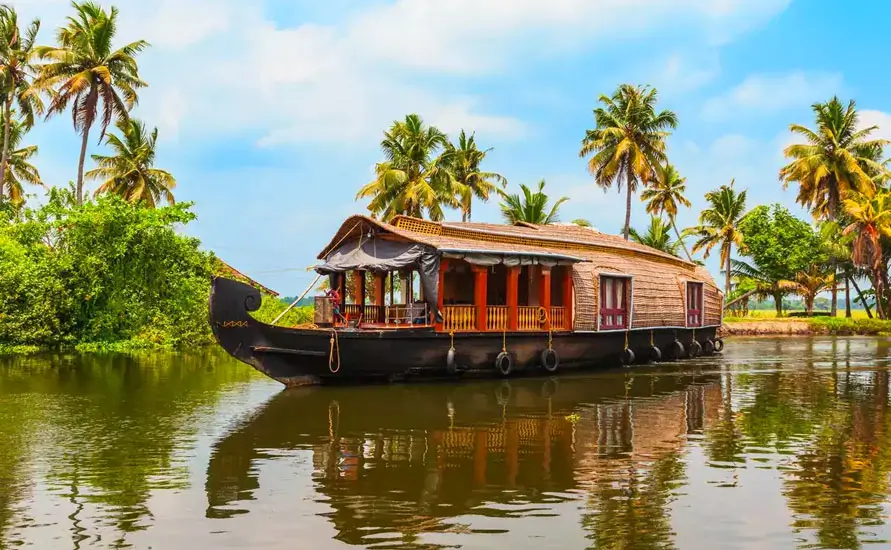
A morning drive south brings you to Alleppey, where the Kerala backwaters spread inland through a network of lakes, rivers and narrow canals. Your private houseboat is ready around midday, and the crew shows you the cabins, the open deck and the small kitchen at the back. Houseboats here are built in the style of the old kettuvallam cargo boats, with planks tied together using coir rope, and many owners still use traditional materials for the roof. Once you are settled, the boat leaves the jetty and turns into the wide waters of Vembanad Lake, the longest lake in India.
The afternoon is spent cruising through Kuttanad, often called the rice bowl of Kerala, where farmers grow paddy below sea level behind earthen walls. Along the way you pass coir workers twisting coconut fiber into rope, toddy tappers climbing palm trees to collect the sap and small churches painted in white and pastel colors. Lunch is served on deck, usually with red Kerala rice, a fish curry, cabbage thoran and pappadam, and the cook can adjust the menu if you prefer vegetarian dishes. If you ask, the crew can stop at a village landing so you can walk a short way along the canal path.
Kerala rules require houseboats to stop cruising and moor for the night in the early evening, so your boat ties up in a quiet stretch of canal around sunset. This is a good time to sit on deck with tea and watch kingfishers, egrets and cormorants hunting along the water, while village families finish their day on the banks. Dinner is cooked on board and served by lantern light, and the crew retires to their quarters at the back of the boat. The air cools as night falls, and the only lights around you come from houses along the canal. Overnight on the houseboat.
Your final morning starts early on the backwaters, with a cup of strong Kerala tea on deck as the first canoes pass by carrying milk, vegetables and children on their way to school. Breakfast is served on board, often puttu, steamed rice flour and coconut, with banana and kadala curry made from black chickpeas. The boat cruises back to the jetty, and checkout is usually around 9 am. Your driver will be waiting with the car, and the crew helps carry your bags ashore. Crews work long hours on board, so leaving a gratuity for the captain and cook, if they looked after you well, is the local custom.
Allow around two hours of road time up to Cochin International Airport; your driver works backward from the flight time so that check-in never feels rushed. If your flight leaves late in the day, there are several options to fill the time, such as a stop at a cashew factory, lunch at a beach restaurant at Marari or a few hours at a day-use hotel near the airport, all at an extra cost. Your driver can also stop at a government handicraft shop if you want to buy last-minute gifts such as coir mats, wooden elephants or Kerala spices for friends at home.
Over eleven days you have gone from Tipu Sultan's palaces and the Wadiyar court at Mysore to Tibetan monasteries, Kodava coffee estates, Stone Age carvings in Wayanad and the canals of Kuttanad. It is a route that shows how close together very different parts of South India really are. If you want to return, many of our guests combine Tamil Nadu temples with the hill stations of Ooty and Munnar, or add a beach week in Kovalam or Varkala. Your phone line to our office remains open right up to security, and everyone who helped along the way sends good wishes for the flight back.
Your Journey

N.S. Rathore & Mrs. Omlata Rathore · Managing Director
We still read every enquiry ourselves. Tell us the places you liked and our planners will send a day-by-day route with drive times and a clear price.
Every package can be customised and no pressure to book. A planner from our office replies within 24 hours with a route written for your group.
Fill this in and your planner will send a first draft itinerary.
Explore more
Kerala Backwaters Escape Kerala Backwaters Escape
 Kerala Backwaters Escape
 Kerala Backwaters Escape
 Kerala Backwaters Escape
 Kerala Backwaters Escape
 Kerala Backwaters Escape
 Kerala Backwaters Escape
 Kerala Backwaters Escape
 Kerala Backwaters Escape
 Kerala Backwaters Escape
 Kerala Backwaters Escape
 Kerala Backwaters Escape
 Kerala Backwaters Escape
 Kerala Backwaters Escape
 Kerala Backwaters Escape
 Kerala Backwaters Escape
 Kerala Backwaters Escape
 Kerala Backwaters Escape
 Kerala Backwaters Escape
 Kerala Backwaters Escape
 Kerala Backwaters Escape
 Kerala Backwaters Escape
 Kerala Backwaters Escape
 Kerala Backwaters Escape