



 Kerala Backwaters Escape

South India Tour Packages
Chennai – Mahabalipuram – Tanjore – Madurai – Thekkady – Kochi
At a glance
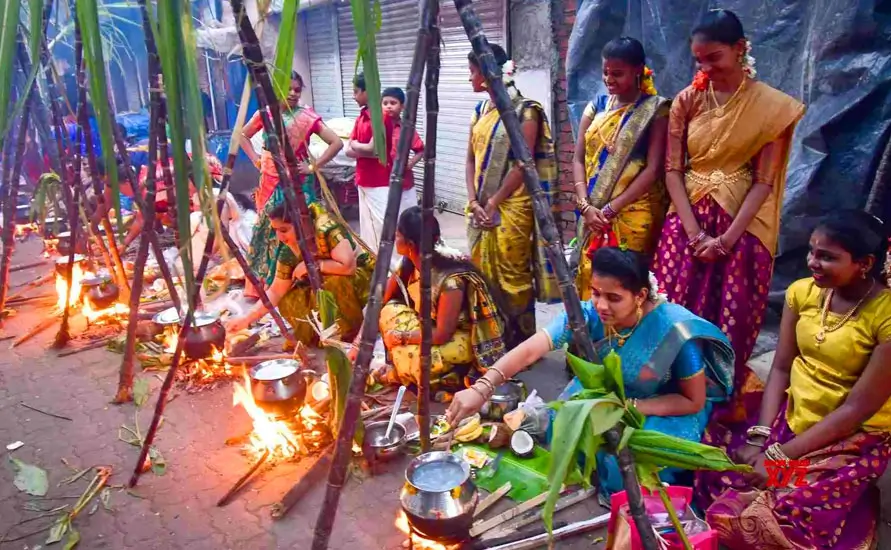
Pongal is the Tamil harvest festival, held over four days in mid-January when the new rice crop is cut and the sun begins its northward run. Families clean their homes, draw kolam patterns at the door, boil fresh rice with milk and jaggery until it bubbles over, and thank the sun, the rain and the cattle that made the harvest possible. Our South India Pongal festival tour places you in Tamil Nadu for all four days, from Bhogi bonfires in Chennai to a village celebration near Tanjore, then carries on to Madurai, Thekkady and Kochi.
The heart of this South India Pongal festival tour is a full day with a farming family in a village outside Tanjore. You help draw the kolam before sunrise, light the wood fire, stir the pot and shout "Pongalo Pongal!" with everyone else as it boils over. On the following morning, Mattu Pongal, the village bathes its cattle, paints their horns and hangs bells and garlands on their necks. The family is not a stage set; they celebrate as they would anyway, and simply welcome you to join them as house guests.
Festival dates follow the Tamil solar calendar and shift slightly from year to year, usually falling between about 13 and 17 January, so we fix the departure once the calendar is published. January is also the coolest and driest month on this route, which makes it a comfortable time for the temples of Madurai and the hills of Thekkady. Hotels, car, driver and guides are all private. Plan to book a few months ahead, because demand around Pongal in Tamil Nadu is high and village stays are limited.
We plan your arrival in Chennai for the day before Bhogi, so the festival begins on your first full morning. A driver meets you at the arrivals hall of Chennai International Airport and takes you to a hotel in the city, about 40 minutes away in light traffic. If your flight lands at night, the room is held for you, and the morning is kept free for rest. Even before you leave the airport road you will notice the season: sugarcane stalks stacked at street corners, piles of turmeric plants with the roots still on, and new clay pots lined up outside shops.
After a rest, head with your guide into the crowded shopping lanes of T. Nagar, especially Ranganathan Street, the place where Chennai families come to buy everything they need for the festival. Stalls sell bundles of sugarcane, mango leaves for the doorway, colored kolam powder in small paper packets, new cotton saris and veshtis, and the brass or clay pots in which Pongal rice will be cooked. Your guide explains what each item is for and why tradition calls for new clothes and new pots. It is crowded and loud, but it is the best way to understand how much the festival means here.
As the light fades you visit the Kapaleeshwarar Temple in Mylapore, where the tank and the surrounding streets are busy with families on the eve of the festival. Your guide shows you how the kolam outside the houses grows larger and more elaborate in the days before Pongal, with many women staying up late or rising before dawn to finish them. Dinner is at a traditional Chettinad or vegetarian restaurant, with a short talk from your guide about what you will see at dawn tomorrow. Set an early alarm, since Bhogi starts well before sunrise. Overnight in Chennai.
Bhogi, the first day of Pongal, starts in the dark. In many neighborhoods families carry out old mats, worn clothes and broken baskets and burn them in small bonfires in the street, a way of clearing out the old year before the harvest. Children beat small drums called bhogi melam and neighbors stand around the flames chatting. Your guide takes you to an older residential area where the custom is still followed, though the city now asks people not to burn plastic or tires, and some areas have cut back on fires because of air quality. Bring a scarf, as the smoke can be heavy.
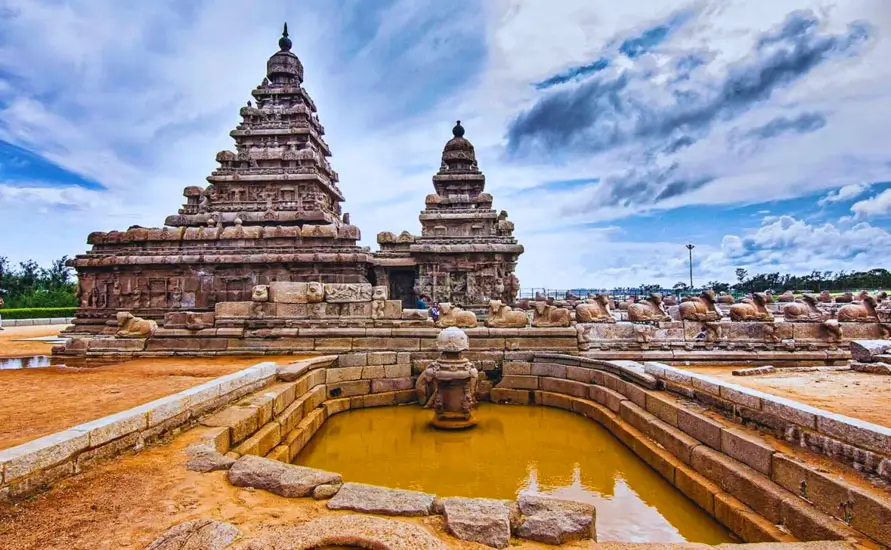
Breakfast and a short nap follow the early start; around eleven the bags go into the car and the East Coast Road leads you south toward Mahabalipuram. The 7th-century Pallava carvings here make a good pause between festival days. Your guide focuses on the scenes of rural life in Arjuna's Penance, such as a cow being milked, a deer scratching its nose and a cat standing on one leg, all carved more than a thousand years ago by sculptors who knew the same villages and herds you will see near Tanjore. The Pancha Rathas and the Shore Temple complete the visit.
Late in the afternoon there is time to visit a stone-carving workshop in town, where sculptors still shape granite deities by hand for temples across the world, using methods passed down within families. You might see a figure of Surya, the sun god, who is thanked during Thai Pongal tomorrow, taking shape under the chisel. Spend the free evening on the sand among the beached fishing boats, idle for the holiday, then pick a shack grilling the morning's prawns and fish. Pack a small bag for an early start, as the drive south is long and the village family expects you. Overnight in Mahabalipuram.
Today is the longest drive of the trip, and we leave early to reach Tanjore by mid-afternoon. Leaving the coast, you cross the paddy country of the Kaveri delta, which feeds much of the state, and by mid-January much of the harvest is in, with stubble fields and stacked sheaves along the roadside. You will see farmers stacking sheaves, threshing on the roadside and spreading grain to dry on the tarmac. Your guide explains why Thai Pongal is tied to this moment: the first rice from the new harvest is the one cooked in tomorrow's pot. There are stops for coffee, a temple town lunch and photos of bullock carts loaded with straw.
After checking in to your hotel, you visit the Brihadeeswarar Temple, built by the Chola king Rajaraja I and completed in 1010. Its tower rises about 66 meters, and the stone at its top is said to weigh around 80 tonnes. In festival week the temple is especially busy, and the huge Nandi facing the shrine is often garlanded with fresh flowers and decked out in vegetables and sweets around Mattu Pongal. Your guide explains why the bull is honored in the same week as the cattle in the villages, linking the temple to the fields outside town.
In the evening you meet the host family from the village for tea, so the first introduction is relaxed rather than rushed at dawn. They usually explain how the household prepares: which grandmother leads the cooking, who draws the kolam, and what you might like to wear. Many guests buy a cotton saree or a veshti for the occasion, and your guide can take you to a shop near the old palace if you want to. Dinner is at the hotel, followed by an early night, because the kolam drawing starts around dawn and the village is about 30 minutes away. Overnight in Tanjore.
You reach the village before sunrise, when the women of the house are already sweeping the ground outside the door and sprinkling it with water. Your host shows you how to draw a kolam, laying a grid of dots with rice flour and then looping lines around them, freehand and without lifting the fingers. On Thai Pongal many families add a drawing of a pot overflowing with rice, sugarcane and the sun. It is harder than it looks, and nobody minds a crooked line. Children from neighboring houses usually gather to watch and then show off their own patterns.
As the sun rises, the family sets up a hearth of bricks in the courtyard and places a new clay pot, tied with fresh turmeric and ginger plants, on the wood fire. You help add the new rice, milk, jaggery and cardamom and keep stirring. The moment everyone waits for is the boil-over: when the milk foams up and spills down the side of the pot, the whole family shouts "Pongalo Pongal!" as a sign of plenty for the coming year. The first portion is offered to the sun on a banana leaf with sugarcane and fruits, and then everyone shares the sweet pongal.
The rest of the day moves at village pace. Lunch is a festival meal of several dishes served on banana leaves, often with vadai, sambar, rasam, vegetable kootu and the sweet and savory versions of pongal. Afterward you might walk through the rice fields with the family, visit the village temple or watch young men practicing for the games held tomorrow. Your guide translates and helps with the small customs, such as eating with your right hand and accepting food with both hands. In the late afternoon you return to your hotel in town for a rest. Overnight in Tanjore.
Return to the village after breakfast for Mattu Pongal, the day that honors cattle. Farmers lead their cows and bullocks to the pond or canal and scrub them clean, then paint their horns in bright red, blue and green and tie on new ropes, bells, garlands and sometimes shawls. Women apply turmeric and kumkum to the animals' foreheads, and a separate pot of pongal is cooked and fed to the cattle first. Your guide explains why bullocks matter so much in Tamil farming, as plow animals and as part of the family wealth, even in an age of tractors.
Later in the morning the village gathers for informal games and processions, which vary from place to place. You might see cattle led around the temple, children racing in sacks, or a tug of war between two streets. Before leaving, there is time for a final cup of coffee with your hosts, and to thank them for letting you into their home over the festival. Many guests stay in touch with their host families for years. A small contribution toward the family's festival costs is built into your package, so you do not need to offer cash yourself.
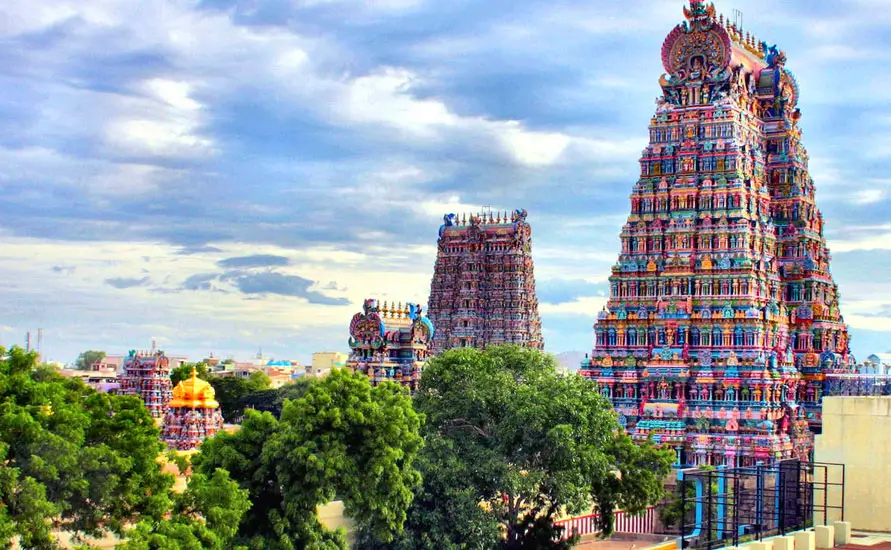
After lunch you drive south-west toward Madurai, about four hours away, and the roadside shows more painted horns and cattle wearing garlands as you pass through each village. Arrival is usually around tea time, leaving an hour or so to settle into your room. In the evening there is a short walk around the four streets that circle the Meenakshi Temple, where shops stay open late in festival week and families buy sweets and flowers for visits the next day. Your guide also talks you through tomorrow's choices, including the optional Jallikattu viewing. Overnight in Madurai.
The fourth day of the festival, Kaanum Pongal, is a day for visiting. Families dress up and go out to meet relatives, parks and temples, and younger people seek the blessing of elders. In Madurai, the Meenakshi Temple fills with these family groups, so your guide plans the visit for the early morning. Phones and cameras must be handed in at the counters outside, and non-Hindus may walk the corridors, halls and tank but may not enter the inner sanctums. Your guide explains the festival decorations, the sugarcane and turmeric offerings and the special pujas of the season.
Around Madurai, this period of Pongal is also the time of Jallikattu, the traditional bull-taming sport in which young men try to hold on to the hump of a running bull. Events at places such as Alanganallur and Palamedu draw large crowds, but they are tightly regulated, and dates, permissions, gallery access and safety rules are decided by the authorities each year. We can arrange optional viewing from a designated spectator area only if an event takes place, permits are granted and conditions are safe. It is never guaranteed, and our guide will cancel if crowd conditions are not right.
If you skip the Jallikattu option or it does not take place, the afternoon goes to the Thirumalai Nayak Palace and the Gandhi Memorial Museum, or simply a rest at the hotel after an early start. Night owls can go back for palliyarai, the bedtime rite held close to 9 pm, in which a procession of priests and musicians escorts Sundareswarar, the Shiva of this temple, to the goddess's private room. Dinner can be at a local mess known for Madurai mutton dishes or at a vegetarian restaurant, and do not leave without trying jigarthanda, the city's cold milk drink. Overnight in Madurai.
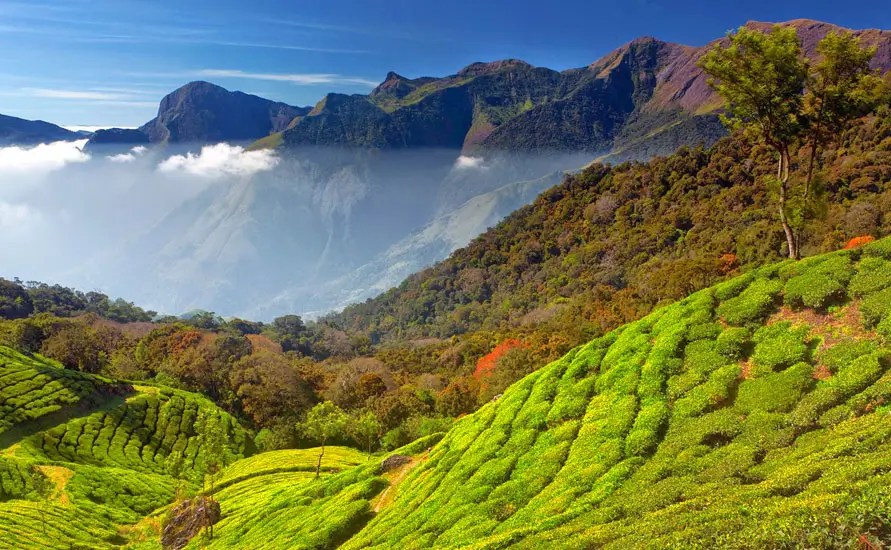
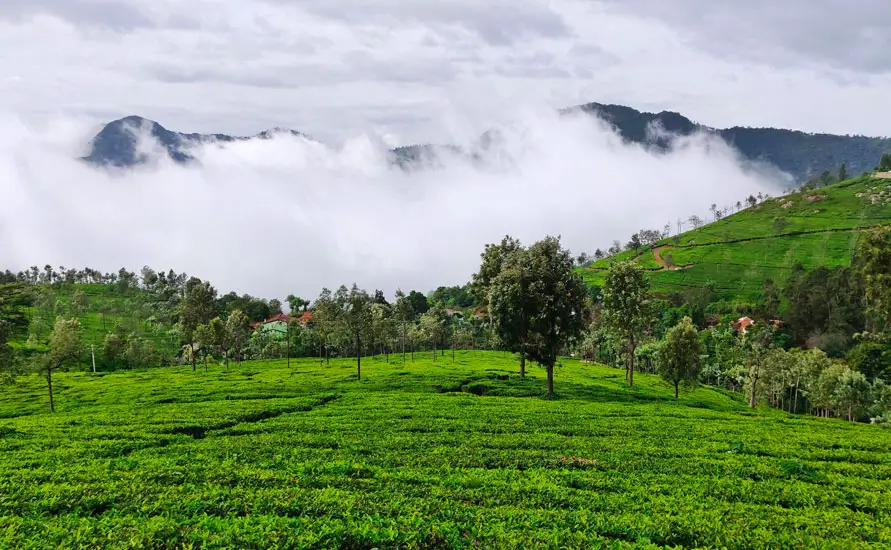
After the noise of the festival, today brings a change of pace and climate. The road leaves the plains through the town of Theni, where vineyards and banana plantations line the route, and then climbs the Western Ghats in a series of hairpin bends to the Kerala border at Kumily. The air turns cool and green, and cardamom plants appear under the trees. Your driver stops at viewpoints on the climb, where the plains you just left stretch out below in the morning haze. Thekkady sits at about 900 meters, and January nights here can feel chilly after Tamil Nadu.
You check in to a resort near Thekkady, the town at the edge of Periyar Tiger Reserve. In the afternoon a guide takes you on a walk through a working spice plantation, where cardamom, black pepper vines, nutmeg, cinnamon, cloves, coffee and vanilla grow side by side. You learn how cardamom pods are picked by hand every few weeks and dried in heated sheds, and why pepper was once worth its weight in silver. January is a good time to see this, as pepper harvest season is under way and some farms spread the berries on mats to dry.
In the evening you can choose between a Kalaripayattu show, Kerala's old martial art with sword, shield and acrobatic leaps, and a Kathakali performance at a small local theater. Both last about an hour and are held most evenings in small theaters near the town center, so there is no need to book far in advance; your guide reserves seats in the afternoon. Arrive a little early to get a front-row seat for the Kalaripayattu, where the fighters work barefoot in a sunken pit. Dinner at the resort is often a Kerala spread with appam, vegetable stew and fish curry. After the rush of the festival, the evening noises of the forest and a warm blanket make for an easy night. Overnight in Thekkady.
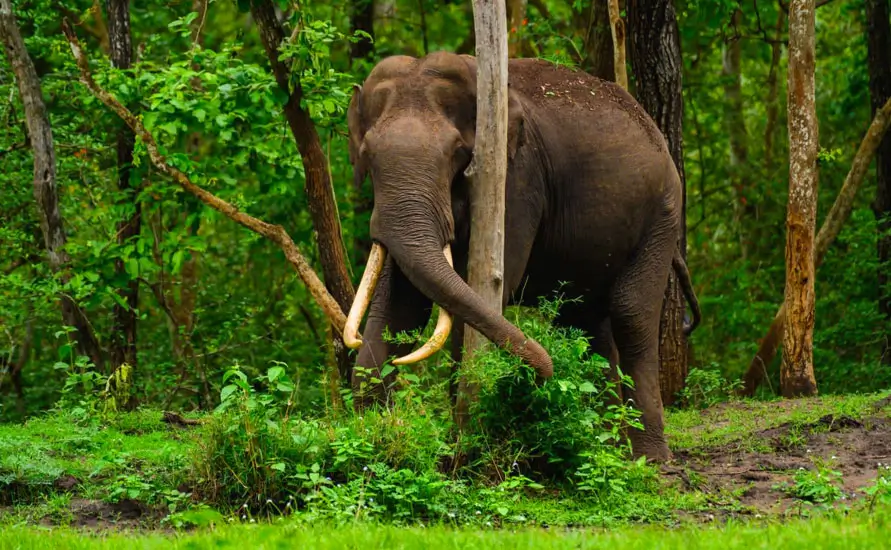
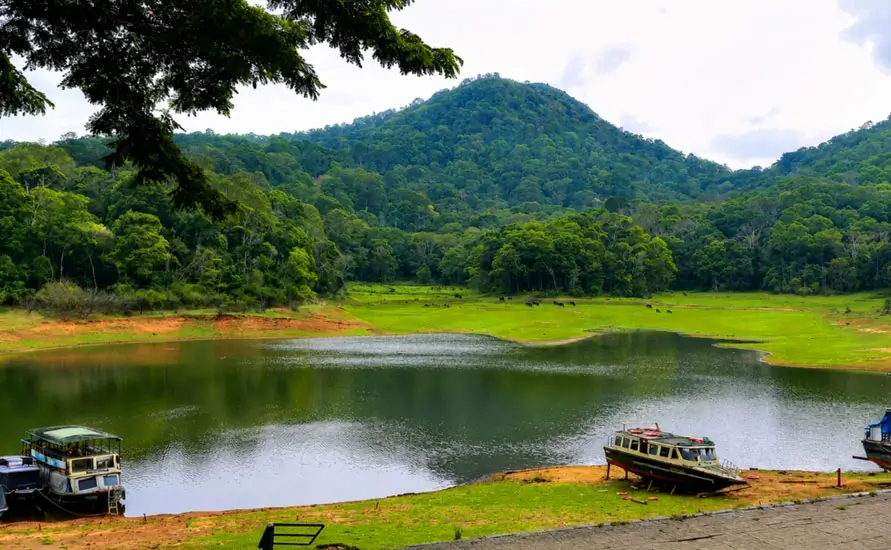
An early start takes you to the boat landing on Periyar Lake, a reservoir created in the 1890s when a dam was built on the Periyar river, leaving dead tree trunks standing in the water. Boat trips run along the edge of the tiger reserve, and with patience you may see wild elephants, gaur, sambar deer, otters and many birds near the shore. Tigers are present but rarely seen. Tickets are sold by the forest department and the first boat of the day fills quickly, so your driver gets you there early. Seats are on a first-come basis and cannot be reserved by us.
Later in the morning you can join a guided nature walk inside the reserve with a forest department tracker, a slow walk of two to three hours through grassland and forest, looking for birds, monkeys and animal tracks. Alternatively, visit a spice auction center in nearby Vandanmedu or Puttady, where cardamom is graded and traded in bulk, or join a Kerala cooking demonstration in a local home. Your guide can help you decide, depending on energy levels. Every option is booked on the spot, as forest permits and timings are set by the park.
The afternoon is free for a massage at the resort, a walk along Kumily's main road of spice shops, or a jeep trip to a viewpoint on the Tamil Nadu border, where the hills drop steeply to the plains. Spice shops here sell cardamom, pepper, cinnamon, tea and coffee straight from local farms, and the quality is often better than in city markets. If you bought anything during the festival, the shops can pack it for your flight. A quiet dinner closes the day before tomorrow's drive to the coast. Overnight in Thekkady.
Downhill all the way, the road from Thekkady winds out of the hills through rubber plantations, small towns and church spires, as the land gradually flattens toward the Kerala coast. The drive to Kochi takes about five hours with stops. Your guide uses the time to compare what you saw in Tamil Nadu with the harvest customs of Kerala, where the main harvest festival is Onam in August or September and the January season is marked more quietly in many homes. You might stop for lunch at a toddy shop-style restaurant serving fish, tapioca and spicy beef or vegetable dishes.
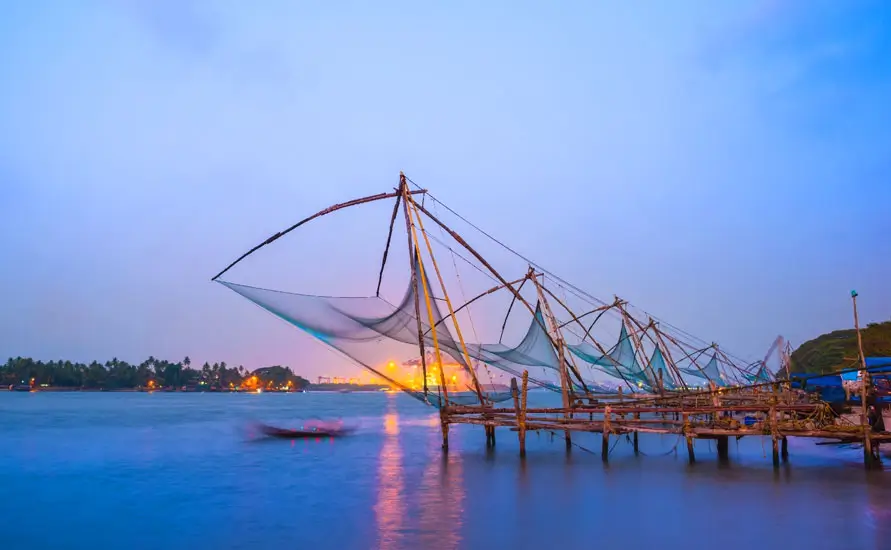
In the late afternoon you check in to a hotel in Fort Kochi and take a short walk with your guide through the old quarter. Rather than repeat a full city tour, this walk follows the waterfront, the old Dutch and British houses and the St. Francis Church, and then ends near the Chinese fishing nets at sunset, when the crews make their last catches of the day. You can buy fish from the stalls and have it cooked in one of the small kitchens behind them. The area is calm in the evening, and families from the city come out to stroll by the water.
Your final evening is free. Many guests like to look back over the trip: a rice-flour kolam drawn crookedly at dawn, a clay pot spilling over, the painted horns of a village bullock, a spice farm in the hills. Your guide can recommend a restaurant for a Kerala seafood dinner, or a café in Fort Kochi for something lighter. If you would like a souvenir from the festival, the antique and handicraft shops of Jew Town sell old brass vessels and lamps of the kind used in South Indian homes at festival time. Pack tonight, as the departure transfer is planned around your flight. Overnight in Kochi.
If your flight leaves in the afternoon or evening, the morning is set aside for Mattancherry. Walls inside the Mattancherry Palace carry Ramayana scenes done in vegetable and mineral colors, and a few lanes away the Paradesi Synagogue in Jew Town keeps its old Chinese floor tiles; plan neither for a Friday, and avoid Saturdays or Jewish holidays for the synagogue, a point we check when fixing your dates. Between the two, the spice warehouses along the lane still trade ginger, pepper and turmeric, the same root you saw tied to the Pongal pots. Your guide points out the connection between the spice trade and the harvest calendar in both states.
Return to the hotel to check out and collect your bags, with time for a last cup of Kerala coffee or a plate of banana fritters. Cochin International Airport lies roughly an hour's drive north, and the car sets off with a three-hour cushion for check-in on any flight abroad. A late-evening flight is no problem: for a supplement, keep your room on until departure or add a lazy final night by the sea at Cherai. At the departure doors someone from our Kochi office lifts the luggage onto a trolley and answers anything still on your mind.
Over ten days this South India Pongal festival tour has followed the harvest from a Chennai bonfire to a village courtyard near Tanjore, through the painted cattle of Mattu Pongal, the crowds of Kaanum Pongal in Madurai and on to the spice hills and the old port of Kochi. You leave with a small idea of how much the land and the seasons still shape daily life in South India. Should you want to return for another festival, such as Onam in Kerala or the Mysore Dasara, we would be happy to plan it. Safe travels.
Your Journey

N.S. Rathore & Mrs. Omlata Rathore · Managing Director
We still read every enquiry ourselves. Tell us the places you liked and our planners will send a day-by-day route with drive times and a clear price.
Every package can be customised and no pressure to book. A planner from our office replies within 24 hours with a route written for your group.
Fill this in and your planner will send a first draft itinerary.
Explore more
Kerala Backwaters Escape Kerala Backwaters Escape
 Kerala Backwaters Escape
 Kerala Backwaters Escape
 Kerala Backwaters Escape
 Kerala Backwaters Escape
 Kerala Backwaters Escape
 Kerala Backwaters Escape
 Kerala Backwaters Escape
 Kerala Backwaters Escape
 Kerala Backwaters Escape
 Kerala Backwaters Escape
 Kerala Backwaters Escape
 Kerala Backwaters Escape
 Kerala Backwaters Escape
 Kerala Backwaters Escape
 Kerala Backwaters Escape
 Kerala Backwaters Escape
 Kerala Backwaters Escape
 Kerala Backwaters Escape
 Kerala Backwaters Escape
 Kerala Backwaters Escape
 Kerala Backwaters Escape
 Kerala Backwaters Escape
 Kerala Backwaters Escape