 Kerala Backwaters Escape

South India Tour Packages
Bangalore – Channapatna – Srirangapatna – Mysore – Ooty – Coonoor – Kochi – Alleppey
At a glance
Traveling in India with children works best when the plan leaves room for snacks, naps and the odd change of mind, and our South India family tour is built around exactly that. Over nine days you travel from the garden city of Bangalore to the royal town of Mysore, ride the small blue carriages of the Nilgiri toy train in the hills around Ooty, then come down to the Kerala coast for Fort Kochi and a night aboard a two-bedroom houseboat in Alleppey. Each stop gives children something to do with their hands, eyes and appetites.
Pacing sits at the core of this South India family tour. Sightseeing is grouped into mornings and late afternoons, which keeps children out of the strongest midday sun, and most hotels are booked for two nights so nobody has to repack every day. Your private air-conditioned car has space for luggage and day bags, and the same driver stays with you from the first airport pickup to the last drop. Local guides in each city are chosen for their patience with young listeners and keep the history short, lively and full of stories.
The route suits families from the UK, Europe, North America and Australia with children aged roughly six to sixteen, and NRI parents who want their kids to see more of India than a grandparent's living room. Family rooms or interconnecting rooms are requested at every hotel, the houseboat has two private cabins, and mild menus are easy to order. October to March is the most comfortable window for this South India tour with kids, although Ooty stays cool all year and makes a welcome break from the heat of the plains.
Long-haul flights from Europe and the Gulf usually reach Bangalore's Kempegowda International Airport late at night or around dawn, so we keep the first morning completely free. A member of our team waits outside arrivals with a placard showing your family name, and your driver loads the bags into a private air-conditioned car, fitted with child seats if you asked for them in advance. The drive into the city takes about an hour, depending on traffic. At the hotel you receive a welcome folder with a printed itinerary, SIM card advice and emergency numbers, and then everyone can sleep off the flight.
Once the family has rested and eaten, your guide collects you in the mid-afternoon for Lalbagh Botanical Garden, a 240-acre park first laid out in the 18th century under Hyder Ali and later enlarged by his son Tipu Sultan. Children usually head straight for the Victorian glasshouse, modeled on London's Crystal Palace, and for the huge sheet of exposed rock near the eastern gate, which geologists date to around three billion years old. Lawns, shady trees and a lake give younger ones space to run after a day indoors, and the guide can point out banyan, mahogany and silk cotton trees along the way.
Next comes the Visvesvaraya Industrial and Technological Museum on Kasturba Road, a favorite with school groups across Karnataka. Its galleries cover engines, electricity, space and the human body, and many exhibits invite children to press buttons, turn handles and test ideas for themselves. Plan on about ninety minutes, or longer if your kids are science fans. On the way back the driver can pass the granite Vidhana Soudha, home of the state legislature, and the old buildings around Cubbon Park. Dinner is at the hotel or a nearby family restaurant where dosas are made in front of you. Overnight in Bangalore.
The Bangalore to Mysore expressway has made this one of the easiest drives in South India, but we break it up anyway, because children travel better with a reason to stop. About an hour out of the city you reach Channapatna, known across India as the toy town of Karnataka. Local craftsmen turn soft ivory wood on simple lathes, then press sticks of colored lacquer against the spinning piece until it shines. Your family can watch tops, rattles, stacking rings and tiny cars take shape, and older children are sometimes invited to try a few turns themselves under the craftsman's eye.
Further along the road lies Srirangapatna, an island town in the Kaveri River that served as the capital of Tipu Sultan, the ruler remembered as the Tiger of Mysore. Your guide brings his story to life at Daria Daulat Bagh, his teak summer palace, where painted walls show battles against the British in surprising detail, with soldiers, horses and cannons in every corner. Kids who like history tend to love the tale of Tipu's Tiger, a mechanical toy organ that shows a tiger attacking a British soldier and now sits in a London museum. The visit is short, and the gardens have shade for a juice break.
Check-in at your Mysore hotel follows lunch, and everyone rests during the hottest part of the day. Around sunset the driver takes you about 20 km north to the Brindavan Gardens, terraced lawns laid out below the Krishnaraja Sagar dam on the Kaveri. When it is running, the musical fountain show after dark is the moment children remember most, with jets of water rising and changing color in time to film songs. The show is sometimes paused for maintenance or because of water levels, so we confirm it on the day and swap in an evening walk or an early dinner if needed. Overnight in Mysore.
Mornings are cooler, so your guide meets you early for Mysore Palace, the official residence of the Wadiyar kings and one of the most visited buildings in India. The present palace was finished in 1912 after fire destroyed the older wooden one, and it combines Hindu, Mughal and Gothic styles beneath a row of domes. Inside, children tend to like the elephant gate, the stained-glass ceiling of the marriage pavilion and the long paintings of the Dasara procession, where they can count elephants, camels and marching soldiers. Shoes are left at a counter outside, and photography is not allowed inside the halls.
Late morning you drive up Chamundi Hill, about 13 km from the city center, to the temple of goddess Chamundeshwari, the protector of the Mysore royal family. Partway along the hill road stands a giant Nandi bull, carved from a single block of dark granite in the 17th century and close to five meters tall, which children can walk all the way around while the guide tells the story of Shiva's loyal mount. The viewpoint near the summit looks over the whole of Mysore, so the palace you saw earlier is easy to pick out. Lunch is at a local restaurant with mild dishes for young eaters.
The afternoon is gentle by design. After a rest at the hotel, you visit the Mysore Rail Museum, a small open-air collection of old locomotives, a royal saloon carriage and signal equipment, where kids can climb into some of the coaches and a mini train often runs on the grounds. Later, walk with your guide through Devaraja Market, where cones of colored kumkum powder, jasmine garlands and bananas of a dozen kinds make good photos. If today is a Sunday or public holiday, stay out until about 7 pm, when nearly 100,000 bulbs light up the palace for roughly forty-five minutes. Overnight in Mysore.
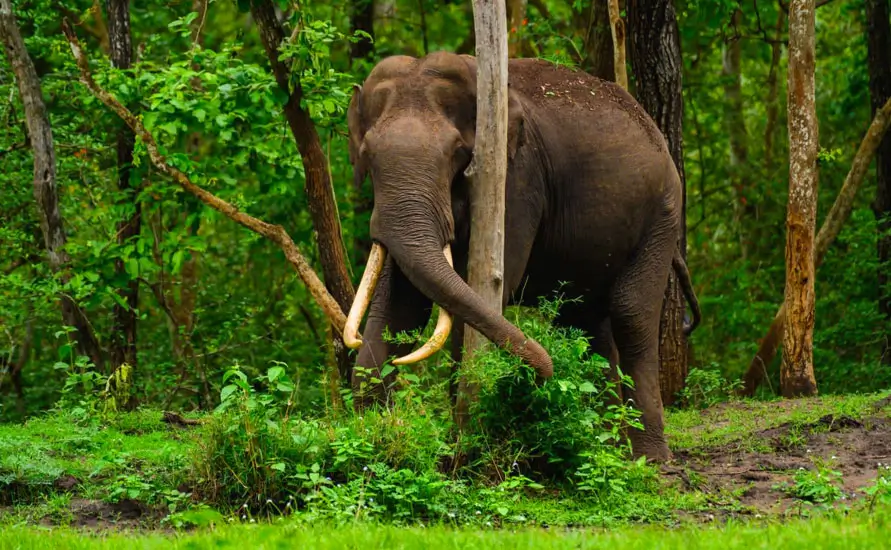
Today the landscape changes completely. Leaving Mysore after breakfast, the road crosses farmland toward Gundlupet and enters Bandipur Tiger Reserve, which joins Mudumalai across the Tamil Nadu border to form one of the largest protected forest areas in South India. Vehicles are not allowed to stop inside the reserve, but drivers slow down, and from the car windows families regularly see spotted deer, langur monkeys, peacocks and now and then wild elephants close to the road. Make a game of it: whoever spots the first elephant chooses where to eat lunch. The forest road is closed to traffic at night, which helps animals cross safely.
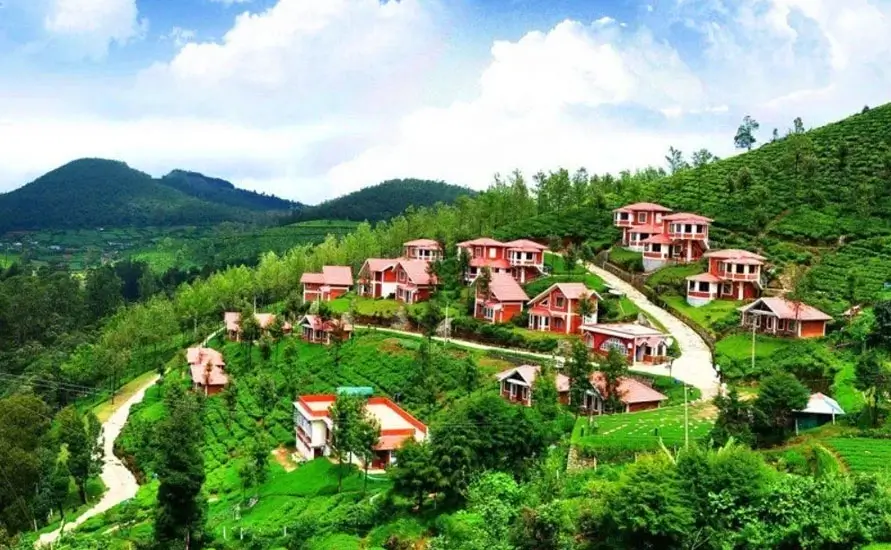
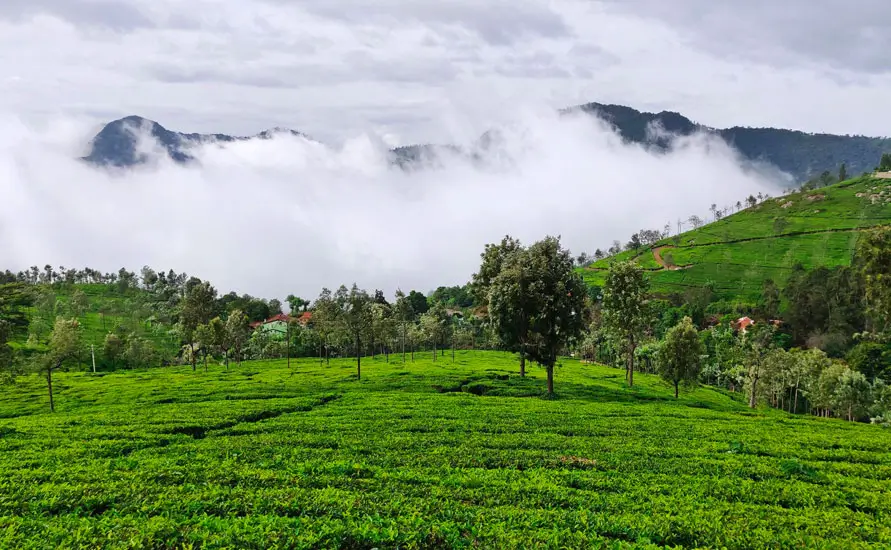
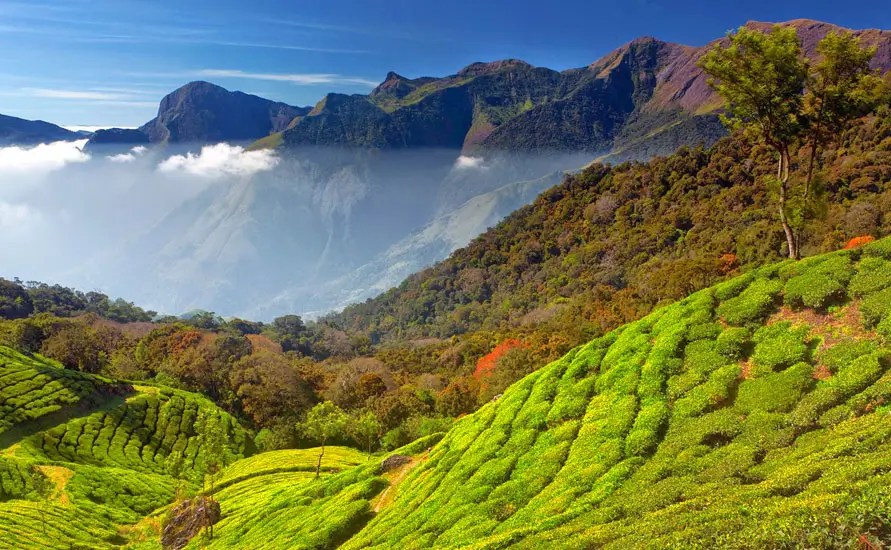
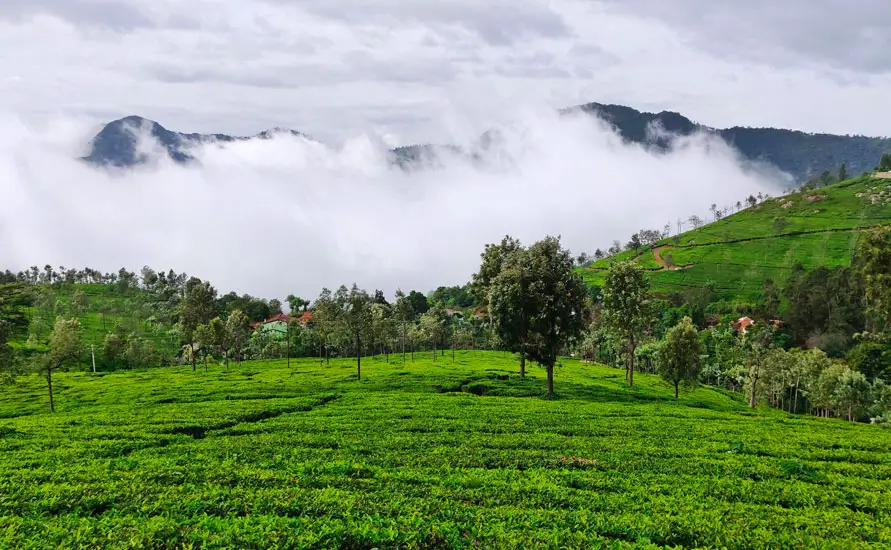
After the forest comes the climb into the Nilgiri Hills. The steepest route has thirty-six hairpin bends, so we usually take the longer, gentler road through Gudalur, especially if anyone in the family is prone to car sickness. A light breakfast, a window seat and a few ginger sweets help, and your driver will happily pull over at a viewpoint whenever someone needs fresh air. As the car gains height, the air turns cool, eucalyptus and pine replace teak, and neat green rows of tea bushes start to cover the slopes. Keep a sweater or fleece in the day bag for each child.
You reach Ooty, officially Udhagamandalam, around lunchtime and settle into your hotel, which may be a colonial-era property or a hill resort with lawns where children can play. In the afternoon your guide leads a relaxed walk through the Government Botanical Garden, laid out in 1848 on terraced slopes below Doddabetta, the highest peak in the range. Look for the fossilized tree trunk said to be about twenty million years old, the Italian-style garden and the glasshouses full of ferns and orchids. Evenings in Ooty can be chilly even in spring, and a mug of hot chocolate in town ends the day well. Overnight in Ooty.
Few things excite children in South India as much as the Nilgiri Mountain Railway, a metre-gauge line completed to Ooty in 1908 and listed by UNESCO as one of the Mountain Railways of India. The full run from Mettupalayam on the plains takes close to five hours, which is a lot for young travelers, so we book the upper section from Ooty down to Coonoor, a ride of a little over an hour. The small carriages pass Lovedale and Wellington, rattle over bridges, duck through tunnels and wind past tea gardens and eucalyptus woods. First-class seats are limited and sell out early, so we reserve them once your dates are confirmed.
Your driver meets you at Coonoor station, and the guide takes you to Sim's Park, a hillside garden with old trees, a small lake and wide paths that are easy for little legs. From there you continue to a working tea factory, where each stage of the process is explained, from withering and rolling to drying and grading, while the smell of fresh tea fills the room. Children usually enjoy the tasting at the end, comparing green, black and flavored teas side by side, and the factory shop sells boxes of Nilgiri tea that make light, easy gifts for teachers and friends back home.
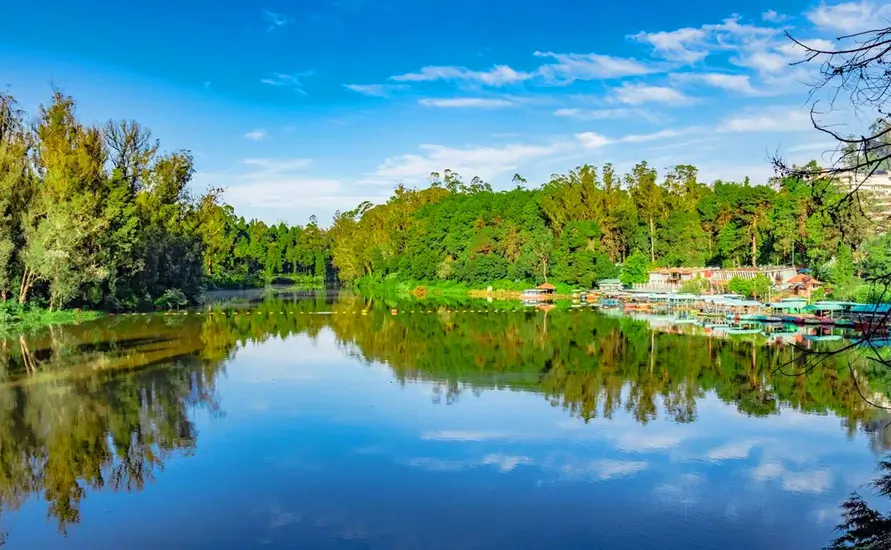
Back in Ooty after lunch, everyone gets a free hour at the hotel. Later in the afternoon, head to the Ooty Lake boat house, where the family can hire a pedal boat or rowing boat on the artificial lake created in the 1820s by John Sullivan, the British collector who founded the hill station. Pony rides along the lakeside path are popular with younger children, and the guide can help you agree a fair price before anyone climbs on. On the way back, stop at one of Ooty's homemade chocolate shops, a local specialty, and let everyone choose a bar for the road. Overnight in Ooty.
Day six is the one long travel day of the trip, and it is planned around the children rather than the clock. After an early breakfast you leave Ooty and descend through Coonoor on the ghat road toward Mettupalayam, watching the toy train tracks appear and disappear beside you. Temperatures climb steadily as you drop more than 1,800 meters, so dress the kids in layers that come off easily. Download films, audiobooks and podcasts the night before, and pack a small bag of snacks, wet wipes and a spare T-shirt for each child, so nobody needs to dig into the main luggage on the way.
The road skirts Coimbatore, one of Tamil Nadu's largest industrial cities, and then crosses into Kerala through the Palakkad Gap, a natural break in the Western Ghats about thirty kilometers wide that lets both the monsoon winds and the highway through. Your driver plans a proper lunch stop at a clean restaurant and short breaks roughly every two hours, so children can stretch their legs and use the restrooms. Paddy fields, coconut palms and red-tiled houses soon replace the dry Tamil plains, and the road signs switch to the curly Malayalam script, which kids often enjoy trying to copy in their notebooks.
The highway skirts Thrissur, home of the Pooram temple festival, and by late afternoon the car pulls up at your Fort Kochi hotel, ready for a family swim or a nap before dinner in Kochi. Nothing else is on the schedule today. Let the family swim in the hotel pool if there is one, or take a short stroll to the seafront to watch cargo ships slide through the harbor channel. For dinner, ask the kitchen for appam with vegetable stew, a mild Kerala dish of coconut milk and potatoes that most children like straight away. If this drive feels too long for your family, we can split it with an overnight stop on the way at extra cost. Overnight in Kochi.
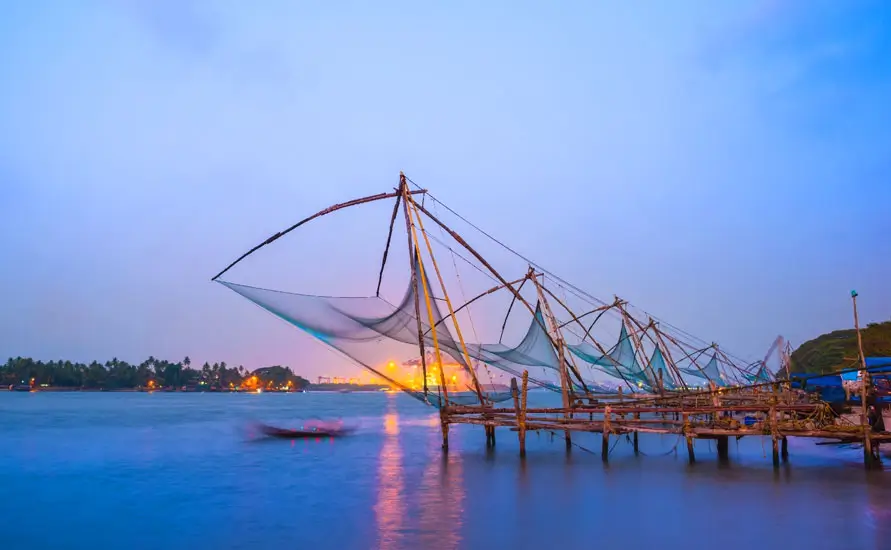
Begin early at the waterfront, when the Chinese fishing nets are at their busiest and the light is soft. Rather than just watching from the promenade, your guide introduces the family to one of the crews, who show how a row of heavy stones on ropes lets a handful of men lift a net about twenty meters across. Children are often amazed by what comes up: sardines, mullet, prawns and the occasional crab. Afterward, hop on the public ferry from the Fort Kochi jetty for a short ride across the harbor and back, a cheap and cheerful way to see fishing boats, container ships and, sometimes, dolphins.
Mid-morning you drive to Mattancherry. At the Mattancherry Palace, children can hunt for monkeys, elephants and many-armed gods in the large Ramayana murals, and the guide turns one panel into a short story they can follow from figure to figure. A few minutes away, the Paradesi Synagogue is the oldest active synagogue in the Commonwealth, with a floor of hand-painted Chinese tiles that are said to be all slightly different. Friday is a no-go for both sites, and the synagogue also stays shut on Saturdays and Jewish holidays, which is why the sequence of today's stops gets fixed only once your travel dates are known. Lunch is at a Jew Town café with pasta and sandwiches on the menu.
Spend the hot afternoon at the hotel, then return in the early evening for a Kalaripayattu show, Kerala's traditional martial art and one of the oldest fighting systems still practiced in India. Performers leap, kick and spar with sticks, swords and shields in a small sand-floored arena, and older children often rate it the best show of the whole trip. Seats near the front give the clearest view, and performers sometimes take questions afterward. Walk back along Princess Street, where small shops sell elephant-print bags, spice packets and colorful fridge magnets that suit pocket-money budgets. Overnight in Kochi.
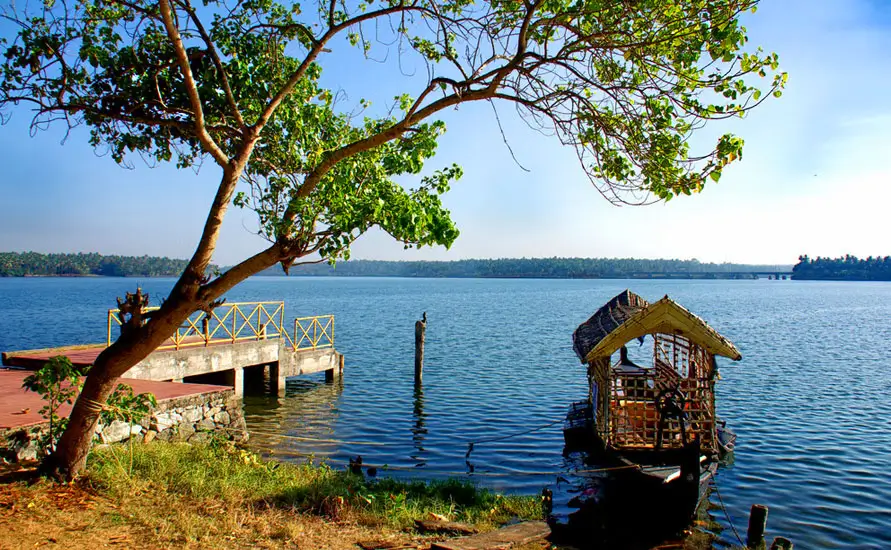
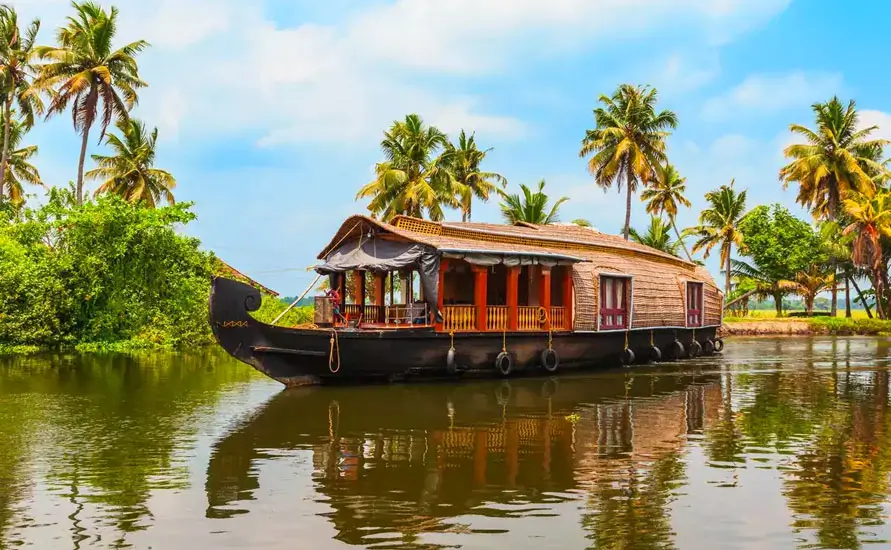
A slow morning is followed by the short drive south to Alleppey, where your family houseboat waits at the jetty. We book a two-bedroom boat so parents and children each have their own cabin with an attached bathroom, plus a shared deck with sofas and a dining table; on most boats the cabin air-conditioning runs in the evening and overnight. Check-in is around noon. Before the boat leaves, the crew shows you the life jackets, railings and steps, and we suggest one simple rule for the day: children wear life jackets on the open deck and nobody leans over the side. The crew is used to families and keeps a friendly eye on young passengers.
Lunch is served soon after you set off and usually includes rice, a mild coconut curry, fried fish, vegetables and fresh fruit. Tell the cook in advance if anyone prefers plainer food, and the kitchen will make omelettes, dal or chapatis without any fuss. Through the afternoon the boat follows wide waterways and narrow side canals past churches, schools and homes built right on the bank. Give children a checklist to fill in as you go: kingfisher, cormorant, egret, flock of ducks, snake boat shed, coconut climber. It turns a lazy afternoon on the Kerala backwaters into a friendly family contest with a prize at dinner.
Houseboats must stop cruising and moor in the early evening, so the crew ties up beside a village or paddy field before dark. It is a good time for a short walk along the embankment with a crew member, where children can watch ducks being herded home or see how farmers pump water out of fields that lie below the level of the canal. Tea and banana chips appear on deck as the sun goes down. Dinner is cooked on board, and the kids can fall asleep early in their own cabin while parents enjoy the quiet deck. Pack mosquito repellent for the evening. Overnight on the houseboat.
Early risers in the family get the best moment of the houseboat stay: the hour just after dawn, when fishermen paddle out in dugout canoes and the canal is still as glass. Breakfast on deck might be puttu with banana, string hoppers, toast and eggs, and the cook will gladly fry an extra round of pancakes for hungry children. The boat returns to the jetty and checkout is around 9 am. Before stepping off, many families take a group photo with the crew, and a tip for the captain, cook and helper is customary if you were happy with the care they gave your children.
Your driver loads the bags for the two-hour run to Cochin International Airport, and the departure time is set so you arrive at least three hours before an international flight. Families on a midnight departure often like a few hours in a day room close to the terminal, where tired kids get a shower and a proper sleep; another paid option is one more night by the sea at Cherai. On the way, stop at a supermarket or spice store for last-minute gifts, and let the kids spend their remaining rupees on banana chips, tea or a small carved wooden elephant to take back to school.
Looking back, this South India family tour has covered a lot without wearing anyone out: a royal palace, wooden toys, a forest drive, a mountain railway, a tea factory, a martial arts show and a night on the water. Children often go home with a notebook of drawings and a list of new words in Kannada, Tamil and Malayalam, which makes a ready-made school project. If you are already thinking about the next holiday, families who enjoyed this route often return for a wildlife trip to Kabini or Periyar, or a temple-and-beach tour of Tamil Nadu. We wish you all a safe flight home.
Your Journey

N.S. Rathore & Mrs. Omlata Rathore · Managing Director
We still read every enquiry ourselves. Tell us the places you liked and our planners will send a day-by-day route with drive times and a clear price.
Every package can be customised and no pressure to book. A planner from our office replies within 24 hours with a route written for your group.
Fill this in and your planner will send a first draft itinerary.
Explore more
Kerala Backwaters Escape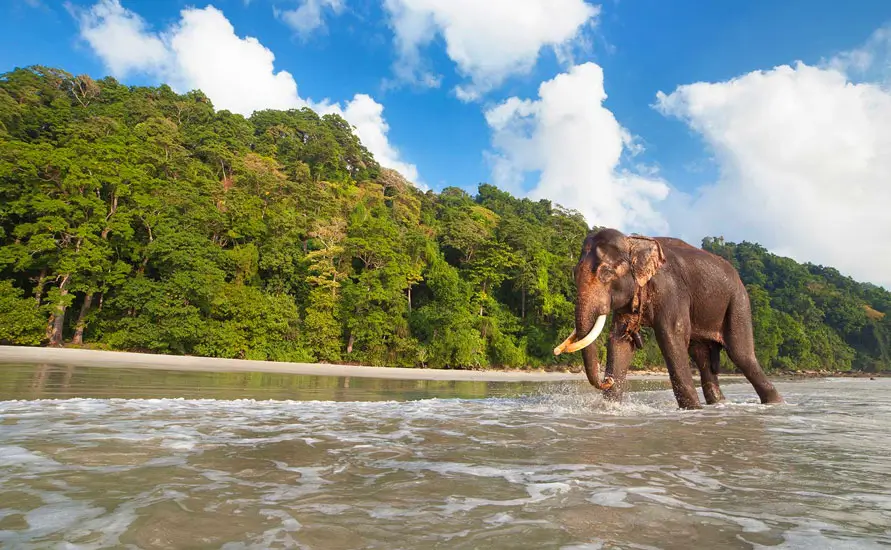 Kerala Backwaters Escape
 Kerala Backwaters Escape
 Kerala Backwaters Escape
 Kerala Backwaters Escape
 Kerala Backwaters Escape
 Kerala Backwaters Escape
 Kerala Backwaters Escape
 Kerala Backwaters Escape
 Kerala Backwaters Escape
 Kerala Backwaters Escape
 Kerala Backwaters Escape