


 Kerala Backwaters Escape

South India Tour Packages
Bangalore – Srirangapatna – Mysore – Bylakuppe – Coorg – Ooty – Pollachi – Munnar – Alleppey – Kochi
At a glance
At roughly 900 meters on the Deccan plateau, Bangalore stays milder than Chennai or Kochi, so a first night here is gentler on jet-lagged visitors than a humid coastal arrival. Our South India tour from Bangalore makes the most of that height. It runs west and south across three states, Karnataka, Tamil Nadu and Kerala, and spends most of its nights in the hills, from the coffee estates of Coorg to the Nilgiri town of Ooty and the tea slopes of Munnar, before dropping down to the Kerala backwaters and the port of Kochi.
The first leg covers royal Karnataka, with Tipu Sultan's island fort at Srirangapatna and two nights in Mysore for its palace, market and temple hill. Coorg brings plantation walks and cooler air, and Ooty adds a ride on the UNESCO-listed Nilgiri Mountain Railway. The one long day of the trip, the crossing from Ooty to Munnar, is planned as a scenic drive with stops in the coconut country around Pollachi and the dry forest of Chinnar. A night on an Alleppey houseboat and a final evening in Fort Kochi complete this South India tour from Bangalore.
Families with children, older couples and anyone who prefers mild weather to beach heat tend to like this route, since daytime temperatures in Coorg, Ooty and Munnar stay pleasant for much of the year and the nights can be cool. No part of it is shared with strangers, since one cooled vehicle and the same English-speaking chauffeur stay with you all 12 days, while town guides and well-placed, comfortable hotels fill in the rest. The best months are October to May, and we can add a night in Kabini or Wayanad for wildlife if you have extra time.
Once you clear immigration and customs at Kempegowda International Airport, our representative is waiting just past the exit doors with a sign carrying your name. Because the terminal is well north of central Bangalore, expect sixty to ninety minutes on the airport road before you reach the hotel, more if the city traffic is heavy. A large share of overseas arrivals touch down before sunrise, which is why nothing is planned until you have slept and eaten. Check-in is normally at 2 pm, and if your flight lands before dawn we recommend booking an early check-in so your room is ready the moment you arrive.
Your afternoon opens at Lalbagh Botanical Garden, which Hyder Ali began in the 1760s; his son Tipu Sultan later expanded it with saplings imported from Persia, Afghanistan and beyond. The garden's glass house was built in the 19th century on the pattern of London's Crystal Palace and still hosts flower shows around Independence Day and Republic Day. Families come here for a stroll under the old rain trees, and you will see joggers, college students and the odd wedding photo shoot. A rocky outcrop in the grounds carries one of the four watch towers built by Kempe Gowda, the city's founder.
Only a few minutes away is Tipu Sultan's Summer Palace, whose two floors are framed in teak pillars and arches, with traces of painted flowers still visible on the walls. A short drive further south brings you to Basavanagudi and the Bull Temple, where a large Nandi carved from a single granite rock is wrapped in garlands by local devotees. If time allows, your driver can pass the grand Vidhana Soudha, the state legislature, which is lit up on some evenings. For dinner, ask your guide where to find either a buttery benne dosa or a pint at one of the microbreweries the city is famous for. Overnight in Bangalore.
The road to Mysore is now a fast expressway, but your driver will still leave some time for stops along the way. About an hour out of Bangalore you pass the town of Channapatna, famous for brightly lacquered wooden toys turned on simple lathes, a craft that dates back to Tipu Sultan's time. A small workshop visit lets you watch how natural dyes and lac are pressed onto spinning ivory-wood pieces to produce a hard, glossy finish. These toys make light, safe gifts for children back home, and the prices are fair. The landscape after Channapatna opens into sugarcane fields, coconut palms and granite hills scattered across the plain.
Mid-morning you cross onto the river island of Srirangapatna, formed by two arms of the Kaveri River, which served as Tipu Sultan's capital until the British siege of 1799. Your guide shows you the spot where Tipu fell during that battle, the remains of the fort walls and the dungeon where British officers were once held. Two more stops complete the island: Daria Daulat Bagh, a teak pavilion whose outer walls show the Battle of Pollilur in bright murals, and the Gumbaz, the white-domed tomb shared by Tipu and Hyder Ali. Sri Ranganathaswamy Temple, a large Vishnu shrine, gives the island its name and is still busy with pilgrims.
Bird lovers can add a short boat ride at the Ranganathittu Bird Sanctuary, a few minutes from the island, where painted storks, egrets and spoonbills nest on small river islets for much of the year and mugger crocodiles bask on the rocks below them. Afterwards you drive the last 20 km to Mysore, arriving by mid-afternoon and checking in to a heritage hotel or a modern property near the city center. The rest of the day is open, and an evening stroll down Sayyaji Rao Road gives you a first feel for this orderly former royal capital, with its wide avenues and old clock towers. Overnight in Mysore.
Royal Mysore is best seen with an early start, so your guide meets you after breakfast and drives up Chamundi Hill, which rises just over 1,000 meters on the edge of the city. The summit is crowned by the Chamundeshwari Temple; legend says the goddess slew Mahishasura here, and the city's name comes from that buffalo-headed demon. On the way down you stop at the huge granite Nandi, carved in the 17th century beside the old stone stairway used by pilgrims. From the slopes you get a clear view over the city, the palace and the race course spread out below.
The Mysore Palace is the main event of the day. The earlier wooden palace burned down in 1897, and the present building, finished in 1912 for the Wodeyar kings, mixes Hindu, Mughal and Gothic styles under its domes and towers. The route through the interior takes in the eight-sided Kalyana Mantapa, roofed with Scottish stained glass, and the long Durbar Hall lined with gilded, painted pillars. Footwear goes into a deposit room before entry, and cameras are not welcome in the halls. Sunday and public holiday evenings bring a bonus: at around 7 pm thousands of bulbs switch on along every dome and arch, and the palace stays lit for about 45 minutes, so plan dinner after the show.
After lunch you visit St. Philomena's Cathedral, a tall neo-Gothic church with twin spires and a crypt holding a relic of the saint. Late afternoon is set aside for Devaraja Market, a covered market that has traded since the 19th century. Jasmine garlands, betel leaves, bananas of half a dozen kinds and cones of colored kumkum powder are piled on every stall, and your guide can lead you to sellers of sandalwood oil, incense and the rich sweet called Mysore Pak, said to have been first made in the palace kitchens. Mysore silk saris are sold in government showrooms nearby, with fixed prices. Overnight in Mysore.
Heading west, the car reaches Bylakuppe in a little over two hours, a refugee town that ranks among the biggest Tibetan communities anywhere in exile. Refugees arrived here in the early 1960s, cleared forest land with the support of the state government and built farms, schools and monasteries that now house thousands of monks. The red-robed students walking between classes and the prayer flags strung over the roads make a striking change from the Hindu temple towns of the previous days. Small restaurants in the camp serve momos and thukpa noodle soup, which make a light lunch before the climb into the hills.
The centerpiece of the settlement is the Namdroling Monastery, often called the Golden Temple. Its main prayer hall holds three gilded statues, each around 18 meters tall, of Buddha Shakyamuni, Padmasambhava and Amitayus, surrounded by wall paintings of Tibetan deities and scenes from Buddhist teaching. If you arrive at the right time you may hear the monks chanting with horns and drums, and visitors are welcome to sit quietly at the back. Remove your shoes before entering, walk clockwise around shrines and ask before taking pictures of monks. Namdroling belongs to the Nyingma tradition, the oldest school of Tibetan Buddhism, and your guide gives a simple outline of what that means.
From Bylakuppe the road climbs gently past Kushalnagar into Coorg, also known as Kodagu, a district of coffee, pepper and cardamom estates spread over green hills at around 1,000 to 1,500 meters. The Kodava people of Coorg have their own language, a martial tradition and a style of dress quite unlike the rest of Karnataka, and many still live on the family estates their ancestors farmed for generations. Tonight's base is a coffee estate resort or a family-run plantation homestay, with cooler air and almost no sound after dark beyond crickets. Dinner may include pandi curry, the dark Kodava pork dish, with steamed rice balls. Overnight in Coorg.
Mornings in Coorg start with mist lifting off the valleys, and the best way to spend one is on foot through a working Coorg coffee plantation. A planter or estate guide walks you along the shaded paths and explains the difference between arabica and robusta, the two types grown here, and why the bushes need the shade of tall silver oak and jackfruit trees. Black pepper vines climb many of those trees, and orange trees and cardamom grow in between. From December to February you can watch the cherries being picked and laid out to dry, while March brings the white coffee blossom and its jasmine-like scent.
After a fresh cup of estate coffee you drive to the district town of Madikeri. Tipu Sultan replaced the original mud walls of Madikeri Fort with stone, the Kodava rulers and then the British modified it, and today a modest museum occupies an old church within the ramparts. Nearby, the Omkareshwara Temple combines a Kerala-style tiled roof with domes and minarets that look borrowed from Islamic architecture, a mix rarely seen elsewhere. A winding road through coffee estates then leads to Abbey Falls, where a stream drops over a rocky ledge into a wooded gorge. The falls are at their fullest just after the monsoon, between August and November.
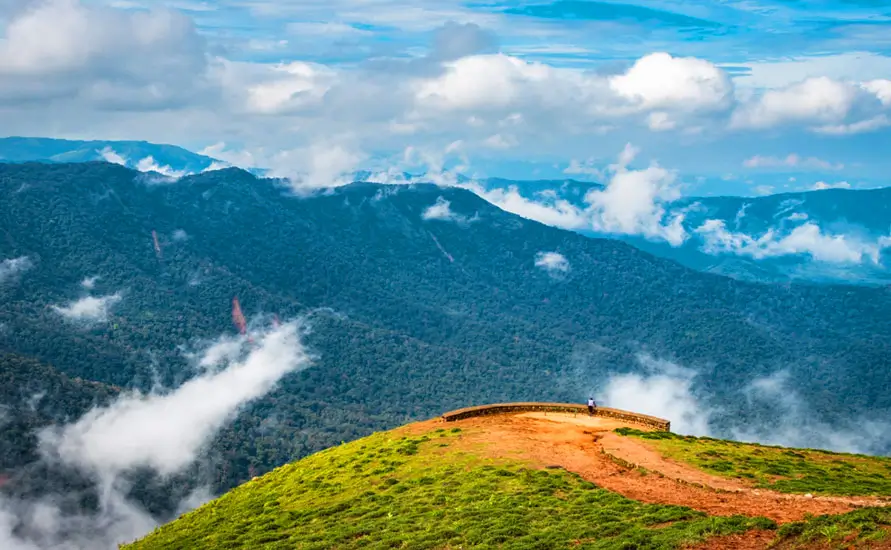
Toward dusk you head for Raja's Seat, a terraced garden on a ridge at the edge of town, where tradition says the Kodava rulers came to end their day watching the light fade. On a clear evening you can see ridge after ridge of the Western Ghats fading into blue, and local families come with snacks to watch the light change. The rest of the evening is free at your resort. If you would like more time outdoors, optional activities include a guided bird walk, a short trek to a viewpoint or a visit to a local honey and spice cooperative. Overnight in Coorg.
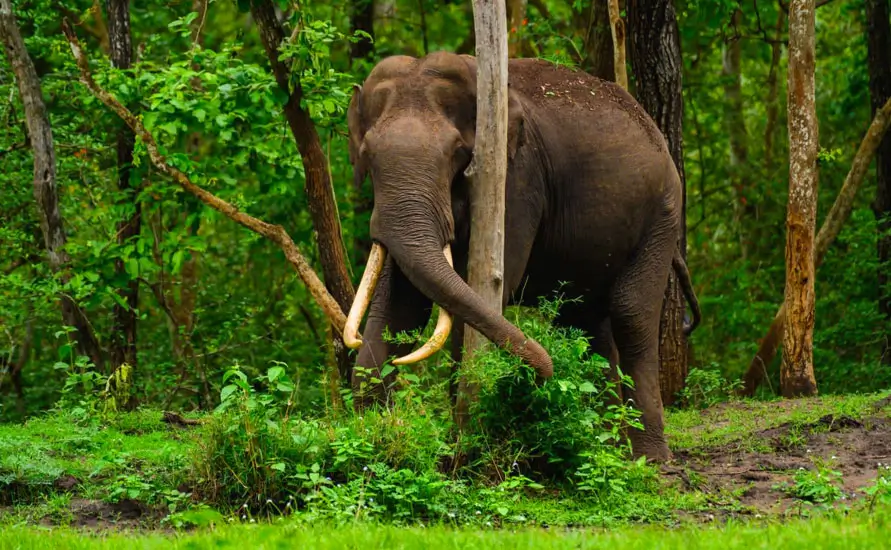
Today's drive is long, but it passes through some of the finest forest country in South India, so we leave after an early breakfast. The route heads back toward Mysore and then south past Gundlupet, where sunflower and marigold fields bloom in season, before entering Bandipur National Park. The highway runs straight through the reserve, and it is common to see spotted deer, langur monkeys and peacocks from the car window, with wild elephants and gaur seen on lucky days. Stopping in the reserve is forbidden, and a night ban closes the highway after dark, so leaving early keeps you well inside the permitted hours.
Bandipur flows without a break into Mudumalai National Park on the Tamil Nadu side, and you cross the state border at a forest check post along the way. These two parks, together with Nagarhole and Wayanad, form one of the largest protected areas for Asian elephants and tigers in India. Your driver will then choose between two roads up to the Nilgiris. One is the steep Kalhatti ghat with its 36 numbered hairpin bends, which climbs very quickly, and the other is the longer and gentler road through Gudalur. Either way, the bamboo forest gives way to eucalyptus, tea gardens and cool mountain air as you gain height.
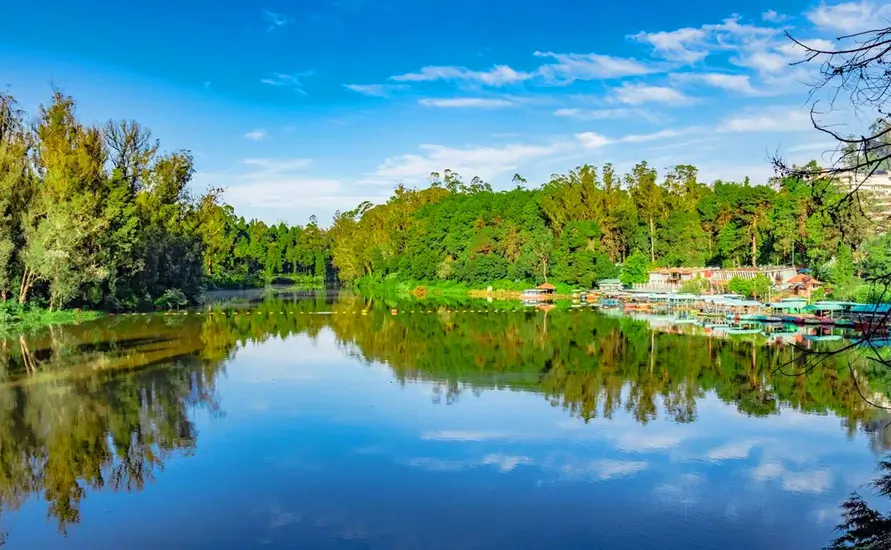
You reach Ooty, also called Udhagamandalam, in the afternoon. At about 2,240 meters it was the summer seat of the Madras government under the British, and you will still see stone churches, old clubs and cottages with steep roofs dotted around the hillsides. After checking in, take a gentle walk around the town center or along the edge of Ooty Lake, created in the 1820s, where you can hire a rowing boat. Evenings are cold for much of the year, so keep a warm sweater or fleece handy, and many hotels here have fireplaces in the rooms. Overnight in Ooty.
A ride on the Nilgiri Mountain Railway, part of the UNESCO-listed Mountain Railways of India, is the highlight of your time in the Nilgiris. Opened all the way to Ooty in 1908, the track climbs from Mettupalayam via Coonoor, and your seats are on the higher stretch, rolling downhill from Ooty to Coonoor in about seventy-five minutes. The small blue and cream train curves past tea gardens, eucalyptus woods and tiny stations such as Lovedale and Wellington, and crosses several bridges and tunnels. Seats sell out quickly in the high season, so we book them as early as possible and plan a road alternative if tickets cannot be confirmed.
Waiting at the station is your driver, ready to show you Coonoor, a smaller and quieter hill town than Ooty. You visit Sim's Park, a sloping garden with trees and shrubs from several continents, and then drive out to Dolphin's Nose, a rocky viewpoint above a deep valley with the Catherine Falls visible in the distance. On the way you stop at a tea factory where the leaves picked that morning are withered, rolled, fermented and dried in a few hours. Nilgiri tea grows at high altitude and is known for its bright, fragrant flavor, and the factory shop sells it fresh, often far cheaper than at home.
Back in Ooty after lunch, you spend the afternoon at the Government Botanical Garden, opened in 1848 on terraced slopes, which holds a fossilized tree trunk said to be millions of years old along with large lawns and fern houses. If the weather is clear, you continue to Doddabetta, the highest peak in the Nilgiris at about 2,637 meters, for wide views over the hills. Your guide can also tell you about the Toda people, one of the original communities of the Nilgiris, known for their barrel-shaped huts and fine embroidered shawls. The evening is free for homemade chocolate shopping at Charing Cross. Overnight in Ooty.
The longest day of the tour is also one of its most varied, as you leave the Nilgiris, cross the Tamil Nadu plains and climb again into the hills of Kerala. We set off around 7 am with a packed breakfast if needed and descend the ghat road past Coonoor to Mettupalayam, losing almost 2,000 meters of height within an hour or two. The road then skirts around Coimbatore, a busy textile and engineering city, and heads south. Your driver stops whenever you need a break, and the air-conditioned car makes the plains section comfortable even in the warmer months. If you prefer to break the drive, we can add a night at a farm stay near Pollachi.
Around Pollachi the landscape changes to endless coconut groves, banana plantations and small farming villages, with the blue line of the Anamalai Hills along the horizon. The town holds one of the largest jaggery and coconut markets in South India and is a popular location for Tamil film shoots. Lunch is usually taken here, at a simple restaurant serving rice meals on banana leaves. After Udumalpet, where hundreds of wind turbines turn on the hills, the road crosses into Kerala at the Chinnar Wildlife Sanctuary, a dry, rain-shadow forest of thorny scrub and rocky slopes where the rare grizzled giant squirrel lives.
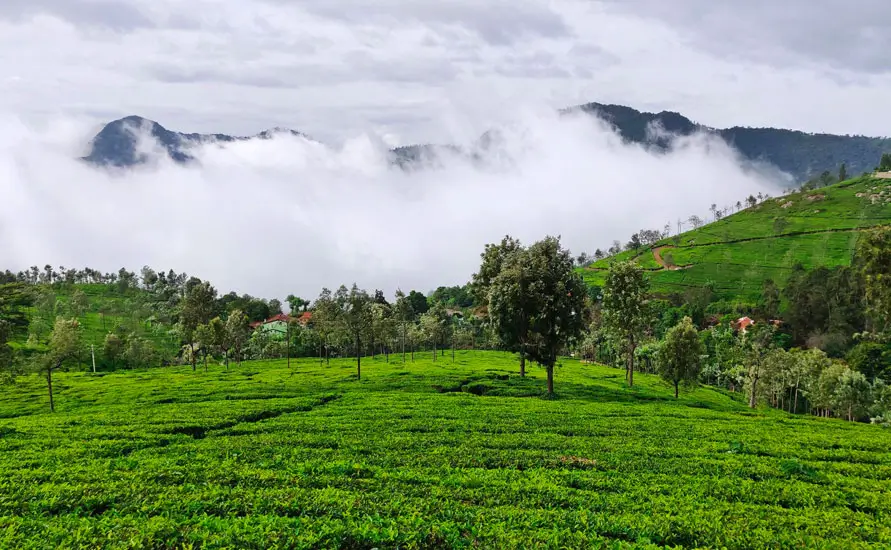
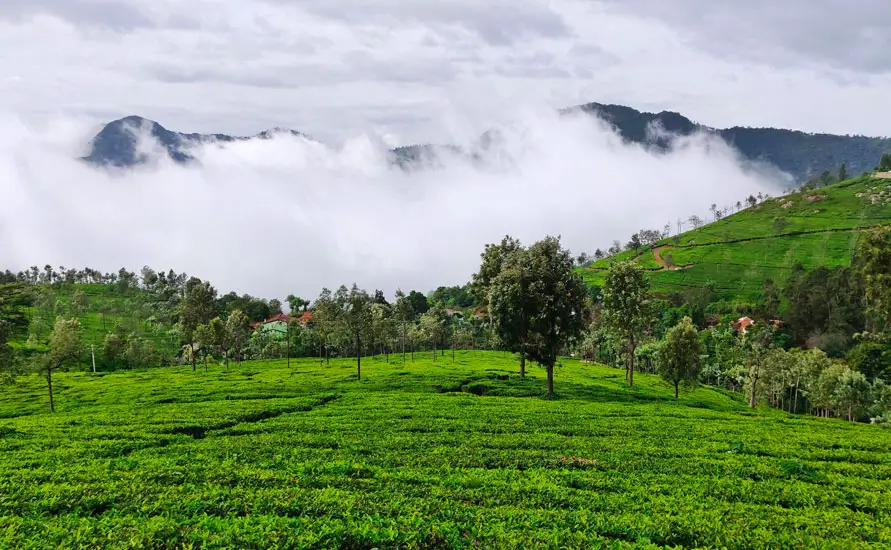
The climb from Chinnar takes you to Marayoor, known for its natural sandalwood forest, which is protected and watched over by forest guards. Small sheds along the road produce dark Marayoor jaggery from local sugarcane, and you can stop to see the boiling pans if they are working. Ancient stone burial chambers called dolmens have also been found on the hillsides around the village. From here the road winds up through tea estates to Munnar, which you reach by late afternoon or early evening. After check-in at your tea estate resort or hill hotel, a warm dinner and an early night are well earned. Overnight in Munnar.
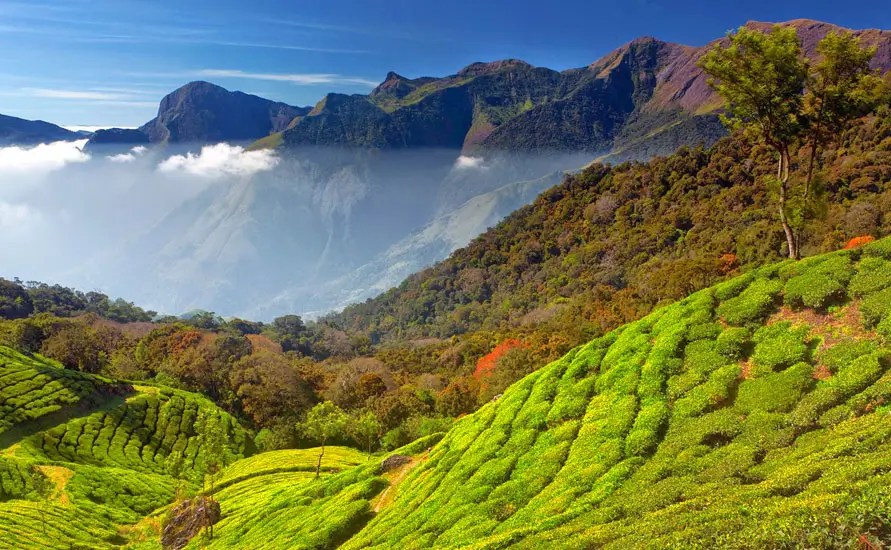
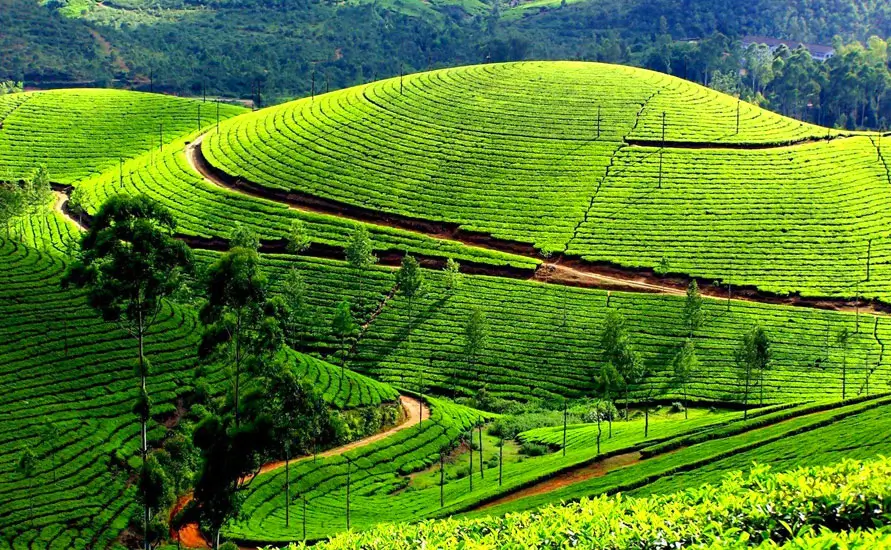
Set at around 1,600 meters where three mountain streams meet, Munnar was developed by British planters in the late 19th century and is still covered with rolling tea estates. Your first stop after breakfast is Eravikulam National Park, which shelters more Nilgiri tahr than any other place, a sure-footed goat unique to the Western Ghats. At the gate you leave your car and board a forest department shuttle up to Rajamala, where the herds feed on the grassland, sometimes only steps from visitors. Expect a closure of several weeks in roughly February to March while the young are born; if your trip overlaps, we swap the morning for another activity.
The slopes of Eravikulam are also home to the neelakurinji shrub, which covers the hills in purple flowers only once every 12 years, most recently in 2018, with the next bloom expected around 2030. Returning toward town, you stop at the Nallathanni estate's Tea Museum, where vintage rollers, sepia prints and a brief film trace a century of planting before you sample a few cups. Your guide then takes you for a walk along the estate paths, where you can watch tea pluckers at work and learn why only the top two leaves and a bud are picked. Ask before photographing the workers, who are almost always happy to chat.
Later the road leads out to Mattupetty Dam and Kundala Lake, passing through eucalyptus groves and dairy farms set up with Swiss help in the 1960s. At Echo Point the hills across the water send back any shout, which children love. Spice gardens on the edge of town show you cardamom, pepper, cinnamon and nutmeg growing side by side, and fresh spices make easy gifts to carry home. After dinner you might add a Kalaripayattu demonstration, an hour of leaps, staff fighting and sword-and-shield bouts from Kerala's old warrior tradition. Overnight in Munnar.
Houseboats in Alleppey board around noon, so we leave Munnar early and descend from the high ranges toward the coast. Soon after leaving the tea country you pass Cheeyappara Waterfalls, a stepped cascade a few meters off the highway, then Adimali, a market town whose main road is lined with spice sellers. The tea gardens slowly give way to cardamom, then to rubber plantations, pineapple fields and paddy as the road flattens out near Kothamangalam. The total descent is around 1,600 meters, and it is common to feel the warm, humid coastal air settle on you by mid-morning. Your driver will stop for tea and a toilet break on the way.
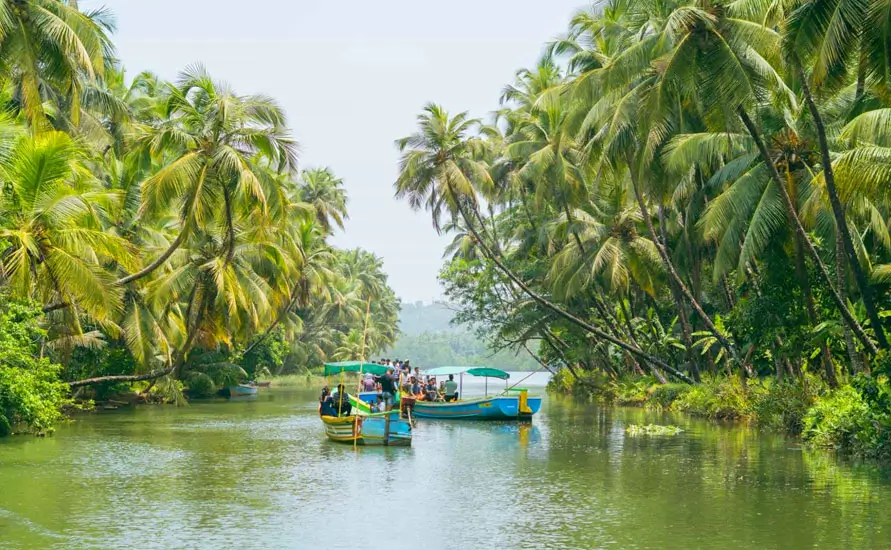
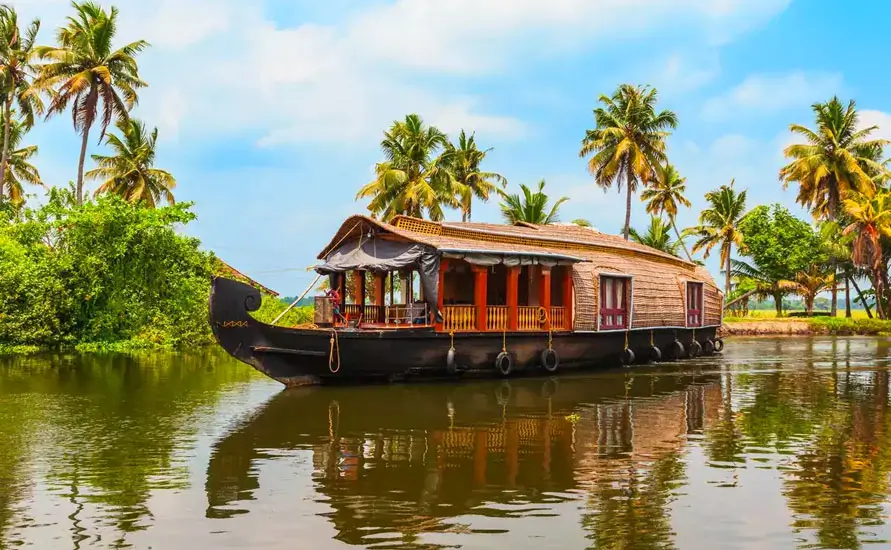
At the jetty your crew welcomes you aboard your private Alleppey houseboat, and lunch is served soon after the boat leaves its mooring. Rather than staying on the busy main lake, the captain heads into the smaller channels around the Kuttanad region, where the paddy fields lie below the level of the water around them. You pass churches built right at the water's edge, village shops on stilts and toddy tappers climbing coconut palms with a rope loop around their ankles to collect the sap. Ferry boats crammed with schoolchildren and office workers chug past, a reminder that these canals are still the main roads for many villages.
Around four o'clock the crew serves tea and fried snacks on the upper deck, and you can ask them to pull over at a village so you can walk along the embankment for a closer look at the farms. Cruising has to end by early evening under state rules, and the captain moors at a calm bend well before nightfall. Dinner might feature duck roast, fish moilee in coconut milk or a vegetarian spread, and the cook can easily make it mild. On many boats the bedroom air-conditioning runs only overnight, and mosquito nets or screens are provided. Overnight on the houseboat.
After breakfast on deck, your boat returns to the jetty and you leave it at about 9 am, when the crew passes your luggage ashore to the waiting car. Heading up the coast road, you cover the distance to Kochi in around ninety minutes, passing towns crowded with jewelry stores, roadside fish stalls and brightly painted churches. Your room tonight is in Fort Kochi, often in a converted colonial trading house with clay-tiled roofs, teak beams and a courtyard. A rest before lunch is a good idea after the morning, since the afternoon sightseeing is on foot.
Your Kochi guide meets you after lunch for a walk through the old fort area, which was ruled by the Portuguese, the Dutch and the British in turn. You stop at the old Dutch Cemetery, where weathered gravestones date back to the 18th century, and walk along streets of colonial bungalows, warehouses and shaded green spaces. The Indo-Portuguese Museum in the bishop's house holds church silverware, wooden altar pieces and religious robes from the area's Catholic communities. Fort Kochi is also home to a lively art scene, and in the years of the Kochi-Muziris Biennale, old warehouses and halls are filled with contemporary installations.
Your evening ends at a small Fort Kochi theater with a Kathakali performance. Pay attention to the colors on the actors' faces, which tell you who is who: green stands for noble heroes and gods, a red pattern on the green marks proud villains, and black is used for forest dwellers and demons. The singers and the loud chenda drum set the rhythm, while the actors tell the story only through their eyes, faces and hand gestures. Most theaters let you watch the make-up being applied, and a short explanation before the show helps you follow the plot. Overnight in Kochi.
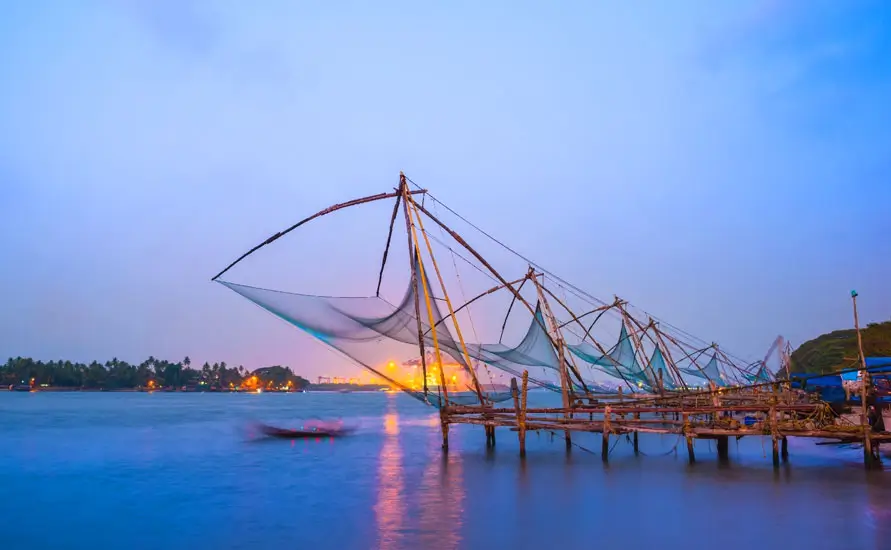
Early risers can walk down to the beach road at first light to watch the Chinese fishing nets go into the water as the morning tide comes in. At this hour the fishermen sort the catch on the spot, and buyers from local restaurants bargain for mackerel, prawns and crabs before the sun gets hot. You also see joggers, tea sellers and crows waiting for scraps, a quiet slice of everyday life in the old port before tourists arrive. Breakfast is back at your hotel, and your guide meets you afterwards for a final round of sightseeing if your flight time allows it.
Your guide takes you to Mattancherry Palace, famous for its large Hindu murals painted in natural colors, and then to Jew Town and the 16th-century Paradesi Synagogue with its hand-painted Chinese floor tiles. Friday is a closing day for both buildings, and the synagogue adds Saturdays plus the Jewish festival calendar to that list, so when your final morning lands on one of those dates we move these two stops to the previous afternoon. The lanes around the synagogue are lined with spice merchants, antique dealers and craft shops, and you can pick up Kerala coffee, pepper, cardamom or a handwoven cotton mundu as last souvenirs.
Your driver works back from your departure time and leaves enough margin for the 40 km run to Cochin International Airport, which usually needs sixty to ninety minutes. The airport has good links with the Gulf, Singapore, Kuala Lumpur and Colombo for connections to Europe, North America and Australia, and with Bangalore and other Indian cities if you need to fly back to your starting point. Looking back, the route has linked Karnataka, Tamil Nadu and Kerala, moving from royal Mysore and Kodava coffee country up into the Nilgiris, then over to Munnar's tea slopes and down to the canals of Kuttanad. We hope to welcome you back to South India soon.
Your Journey

N.S. Rathore & Mrs. Omlata Rathore · Managing Director
We still read every enquiry ourselves. Tell us the places you liked and our planners will send a day-by-day route with drive times and a clear price.
Every package can be customised and no pressure to book. A planner from our office replies within 24 hours with a route written for your group.
Fill this in and your planner will send a first draft itinerary.
Explore more
Kerala Backwaters Escape Kerala Backwaters Escape
 Kerala Backwaters Escape
 Kerala Backwaters Escape
 Kerala Backwaters Escape
 Kerala Backwaters Escape
 Kerala Backwaters Escape
 Kerala Backwaters Escape
 Kerala Backwaters Escape
 Kerala Backwaters Escape
 Kerala Backwaters Escape
 Kerala Backwaters Escape
 Kerala Backwaters Escape
 Kerala Backwaters Escape
 Kerala Backwaters Escape
 Kerala Backwaters Escape
 Kerala Backwaters Escape
 Kerala Backwaters Escape
 Kerala Backwaters Escape
 Kerala Backwaters Escape
 Kerala Backwaters Escape
 Kerala Backwaters Escape
 Kerala Backwaters Escape
 Kerala Backwaters Escape
 Kerala Backwaters Escape