

 Kerala Backwaters Escape

South India Tour Packages
Chennai – Trichy – Kumbakonam – Darasuram – Swamimalai – Tanjore – Chettinad – Madurai – Thekkady – Kochi – Alleppey
At a glance
Light in South India changes fast. The hour after sunrise paints granite temple towers a soft orange, while noon flattens everything into hard shadow. Our South India photography tour is planned around those hours, not around a standard sightseeing timetable. Over fifteen days you shoot dawn fishing boats in Chennai, Chola carvings at Darasuram, bronze casters in Swamimalai, the courtyards and tile workshops of Chettinad, the flower market of Madurai, the fishing nets of Kochi and misty mornings on the Alleppey backwaters.
A specialist photography guide travels with you for the Tamil Nadu section and joins again in Kerala. Beyond finding good angles, the guide knows which temples allow cameras, where a camera fee applies, where flash or tripods are banned, and how to ask a flower seller or fisherman for a portrait in a way that earns a smile rather than a refusal. Long midday breaks are built into each day, so you can rest, back up your cards and review images before the evening light.
This photography tour of India is private, which means the car stops when you see a shot, early starts are your choice, and non-photographing partners can join or sleep in. It suits enthusiasts with a phone, a compact or a full kit, and the pace works for both beginners and seasoned shooters. Drones are not permitted near monuments without official clearance, so we plan around ground-level work. The dry months of November to February give clear skies and the softest light.
Day one of your South India photography tour starts the moment you walk out of customs in Chennai: someone from our local office is waiting with a printed name board, lifts the tripod bag and camera cases into the boot, and settles you into the cool back seat of your own vehicle. Most flights from Europe and North America land at night, so the first priority is rest. Your hotel is chosen for its central location and secure rooms, which matters when you travel with expensive gear. Landing at three or four in the morning? Tell us beforehand and we hold the room from the night before, so a bed is ready the minute you reach it.
Once you have slept, your photography guide meets you at the hotel for a relaxed briefing over coffee. The guide walks you through the plan for the next fifteen days, the expected light at each place, and the local rules you need to know: most temples ban photography inside the sanctum, some charge a camera fee at the gate, and the Meenakshi Temple in Madurai does not allow cameras or phones inside at all. You also talk about portrait etiquette, the Tamil words for asking permission, and how to share images on your screen with the people you photograph.
Around sunset you drive south to Besant Nagar for a first easy shoot. The small Ashtalakshmi Temple stands by the sea here, with tiers of carved figures that catch the last warm light, and the beach beside it fills with families, balloon sellers and young couples as the heat fades. It is a gentle place to warm up your eye, try a few street scenes and get used to working in the humid air, which can fog lenses when you step out of air-conditioning. Dinner is at a seafood restaurant nearby, and then an early night before a dawn start. Overnight in Chennai.
The alarm rings well before sunrise for Kasimedu fishing harbor in north Chennai, one of the busiest fish landing points on the east coast. As the sky lightens, dozens of trawlers and small fiber boats come in, and porters carry baskets of tuna, mackerel and squid across the wet concrete to auction circles where traders shout their bids. Your guide positions you safely away from the heavy loading paths and helps you approach the fishermen, many of whom are happy to pose once they understand what you are doing. The ground is slippery with seawater and ice melt, so old sneakers are better than sandals, and a microfiber cloth in every pocket saves a lot of salt-spray frustration.
After a late breakfast back at the hotel and a break for backups, you head to Mylapore in the late morning. The streets around the Kapaleeshwarar Temple are full of subjects: flower sellers threading garlands, women drawing kolam patterns in rice flour on doorsteps, and priests walking to the temple tank. Photography is generally fine in the outer courtyard, though not in the inner shrines, and a polite question to the temple staff is always worthwhile. Your guide can also lead you to a small brass shop where the owner polishes lamps beside an open doorway with lovely side light.
Midday is for rest, as the light is too harsh for most work. In the late afternoon you drive to Marina Beach, where the long open sand creates silhouettes of kite fliers, horse riders and fishermen pulling up their boats against the setting sun. Food stalls with glowing lamps make good subjects as darkness falls, and a wide lens works well for the crowds near the water's edge. Your guide reviews the day's images with you over dinner, suggesting settings for the temple interiors and low light you will meet in the coming days. Overnight in Chennai.
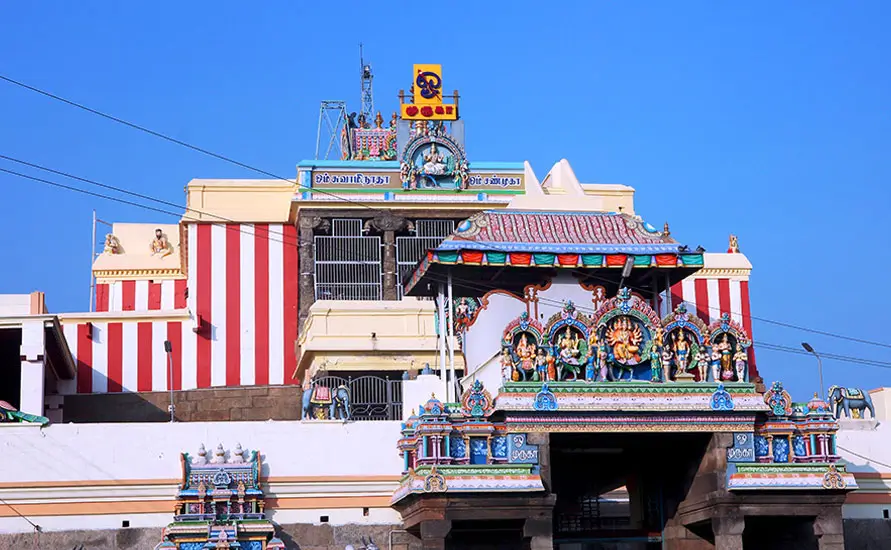
A short morning flight of about one hour takes you from Chennai to Trichy, also called Tiruchirappalli, saving a full day on the road. Pack your camera batteries in your hand luggage, as airlines in India do not allow spare lithium batteries in checked bags. Our driver meets you at the small airport, and your photography guide travels with you by car from here. The first stop is Srirangam, an island in the Kaveri river with one of the largest working temple complexes in India, surrounded by seven walls and many gateways.
The temple town of Srirangam is a great place for street photography because daily life continues inside its outer walls. Houses, shops and stalls line the streets between the gateways, and you can photograph priests, pilgrims and vendors against the painted towers. Cameras are usually allowed in the outer courtyards on payment of a fee, while the inner areas are off limits. Your guide suggests climbing to a rooftop viewpoint, where available, for a view across the towers. Lunch is a simple vegetarian meal served on a banana leaf at a local restaurant near the temple.
From Srirangam you drive east for about two hours across the Kaveri delta to Kumbakonam, through green rice fields, coconut groves and villages with small shrines and bullock carts. Your driver will stop for any scene that catches your eye, from women carrying water pots to farmers planting rice. Around four o'clock the car turns into the gates of a calm heritage resort just outside Kumbakonam, where you unpack properly for a three-night stay. The evening is free to review your images or walk around the hotel gardens. Overnight in Kumbakonam.
Bronze casters in Swamimalai, a short drive west of Kumbakonam, start work early while the air is cooler, so that is when you go to see them practice the ancient lost-wax technique. Inside the small family workshops, craftsmen shape figures of gods and goddesses in a mix of beeswax and resin, cover them with layers of fine clay from the riverbank, and then heat the mold so the wax runs out. Molten bronze is poured into the hollow mold, and the clay is later broken away to reveal the figure. The workshops are often dark with a single beam of light, so a fast lens is useful.
Next you visit the brass and copper workshops of the Kumbakonam area, where artisans hammer sheets of metal into water pots and vessels, and the nearby village of Nachiarkoil, known for its traditional brass oil lamps cast in sand molds. The sound of hammering, the sparks from the furnace and the shine of polished metal make strong material for detail and portrait work. Always ask before photographing, and buying a small item is a kind way to thank the workers. After lunch you return to the hotel to rest through the hottest part of the day.
Golden hour belongs to Darasuram, a quarter of an hour by car, where the Airavatesvara Temple forms part of the World Heritage group known as the Great Living Chola Temples. Built in the 12th century, it is known for its tiny carved panels of dancers, musicians and acrobats and for its front hall shaped like a chariot pulled by stone horses. The low sun lights up the carvings from the side, bringing out their depth. Photography is allowed in the courtyard, but tripods may need permission, so check with your guide. You stay until the light fades over the temple tower. Overnight in Kumbakonam.
After an early breakfast, drive about forty minutes north to Gangaikonda Cholapuram, the second of the Great Living Chola Temples. The temple stands on an open lawn with few visitors in the morning, so you can work at a slow pace and frame the curved tower against the morning sky. Look for the carving of Shiva crowning the devotee Chandesa on the north wall, and for the large Nandi bull in the courtyard. Village children and women carrying water often pass by the temple, giving you a chance to include people in the frame for scale.
Returning south, ask the driver to pull in at a delta market town, where traders spread out bananas, river fish and marigolds beneath old banyan and tamarind branches. Your guide helps you find the best spots and speaks to the vendors on your behalf. Lunch and a siesta at the resort keep you out of the harsh midday sun, and then the car covers the short hop of under an hour to Tanjore (Thanjavur on official maps). In the late afternoon you visit the art gallery in the Thanjavur Palace complex, which holds a fine collection of Chola bronzes; photography rules inside can vary, so ask at the counter.
The highlight of the day is the Brihadeeswarar Temple at sunset. Built around 1010 AD by Rajaraja Chola, it was the first Chola temple listed by UNESCO, and its massive tower turns deep gold in the evening light. Photography is allowed in the large courtyard, but not inside the sanctum. Your guide shows you the best spots for wide views of the tower framed by the long colonnade, and for close-ups of the huge Nandi statue as pilgrims touch it. When the lights come on after dark, the temple takes on a new look. You drive back to Kumbakonam for dinner. Overnight in Kumbakonam.
Once breakfast is done, the road heads south out of the rice country toward Chettinad, the home district of the Nattukottai Chettiars, a trading and banking clan whose wealth paid for mansions across some seventy villages. The drive takes around three hours with stops, and your driver will stop for road scenes such as roadside tea stalls, villagers on bicycles or a temple festival if you come across one. Home for two nights is a converted merchant house close to Karaikudi, and you may want your camera out before lunch is served, because its rosewood doorways, patterned floors and sunlit central courtyard are worth shooting on their own.
Once the heat breaks, you head out to the village of Kanadukathan, known for its rows of grand mansions built in the late 19th and early 20th centuries. The long, straight streets give you strong leading lines, and the colorful facades, wooden doors and balconies look best in warm side light. With the owners' consent, your guide gets you through the front doors of a couple of these houses, whose reception halls have columns of imported Burmese teak, colored glass panes and rows of framed ancestors gazing down. Some owners ask for a small fee for photography, which your guide handles for you.
As the sun sets, the streets of Kanadukathan become quiet, with only a few villagers walking home and goats wandering between the mansions. This is a good time for moody, low-light images of empty streets and closed doors, which tell the story of a community that has largely moved away to the cities. Back at your hotel, dinner is a traditional Chettinad meal served on a banana leaf, and the kitchen often allows guests to photograph the cooks at work if you ask in advance. Your guide reviews the day's images and plans tomorrow's early start. Overnight in Chettinad.
An early morning walk around the village near your hotel is a good chance to photograph daily life, as women draw kolam patterns on the doorsteps, milkmen make their rounds on bicycles, and steam rises from tea stalls. Mid-morning is set aside for Athangudi, a village whose hand-pressed floor tiles have found their way into homes far beyond Tamil Nadu. In the small workshops, artisans pour colored cement into metal molds placed on glass, then add layers of dry cement and sand to set the tile. The finished tiles are stacked in water tanks to cure, and their bright patterns make strong flat-lay images.
Before noon you visit a weekly village market, where farmers and traders sell vegetables, spices, pots and baskets under large umbrellas. The market is a good place for portraits, and most vendors are happy to be photographed, especially if you buy something or show them the picture on your screen. Your guide helps you with simple Tamil phrases to ask for permission. Afterwards you can visit a family workshop where women weave the cotton kandangi saris of Chettinad on old wooden looms, with checked and striped patterns in bold colors that photograph well.
Lunch and a rest at your hotel come next, and you then spend the late afternoon photographing the interior of a Chettinad mansion in soft light. The large courtyards let light pour down onto the polished floors, and the long rows of pillars create interesting patterns of light and shadow. A tripod is useful for interior shots, where the light is often dim, and most mansion hotels allow them if you ask first. In the evening, you can photograph the courtyard lit by oil lamps, which the staff can arrange on request. Overnight in Chettinad.
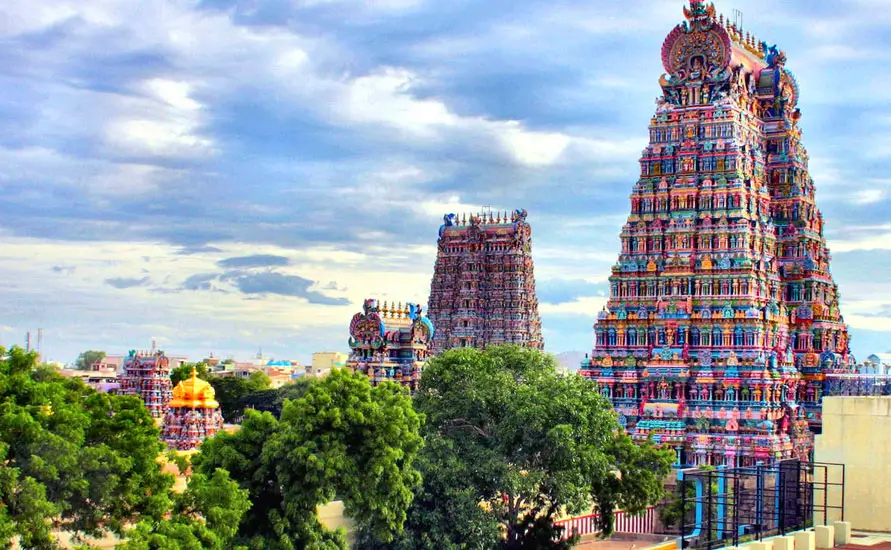
A two-hour run westward brings you to Madurai, a city that Greek and Roman traders already knew by name. Scrubland and tall palmyra palms line much of the route, and you are unpacked in your room before lunchtime. Your hotel is close to the old city, so you can walk to the temple area. The Meenakshi Temple has the strictest rules of the whole trip, and your guide goes over them after lunch: every camera and mobile phone stays in a locker at the entrance gates, and visitors who are not Hindu can walk the corridors and pillared halls while the two main sanctums remain closed to them. That is why your first visit is a scouting walk with empty hands.
Walking the complex without gear, you study how the towers line up, note the lotus-painted ceilings and pause by the sacred tank and the great pillared museum hall, building a mental map that will guide your framing from the streets later. After the visit, you collect your camera and head to the rooftops of nearby shops, where some owners allow photographers to shoot the colorful gopurams from above, often in exchange for browsing their goods. Your guide knows which rooftops offer the best views and when the light falls best on the towers, usually in the late afternoon and early evening.
As darkness falls, the streets around the temple come alive with lights, sounds and people. Flower sellers sit with baskets of jasmine, tailors work under bare bulbs, and pilgrims crowd the shops selling brass lamps and religious pictures. This is a great time for street photography with a fast lens and a higher ISO. Your guide helps you find good scenes and talks to people on your behalf. After dinner at a local restaurant, you return to your hotel to rest before tomorrow's very early start at the flower market. Overnight in Madurai.
Set the alarm for around four thirty: the Madurai flower market at Mattuthavani, beside the city's big bus stand, does most of its trade before sunrise. Farmers arrive on motorbikes and in trucks with sacks of jasmine buds, marigolds, roses, tuberose and lotus, and traders pour them onto the floor in soft heaps under hanging bulbs. Madurai malli, the local jasmine, carries a geographical indication tag and is sold by weight within hours of picking. The mixed light of tube lights and the first daylight is tricky, so your photography guide suggests a fast prime, a raised ISO and custom white balance before you step inside.
Inside, the rule is simple: ask first, and keep moving. Traders are busy and the aisles are narrow, so your guide introduces you, explains in Tamil that you are photographing the market, and points out the sellers who are glad to pose. Garland makers knotting strings of jasmine at lightning speed make good close-up subjects, and a wide view from the market entrance shows the sea of baskets. Never block a porter's path, and keep your bag in front of you. Buying a small string of jasmine is a friendly gesture. By seven the rush is over, and you return to the hotel for breakfast, backups and a long rest.
In the late afternoon, sun slants through the giant arches of the Thirumalai Nayak Palace, and the courtyard columns throw long shadows across the floor, a strong scene for wide and symmetrical compositions. A small camera ticket is usually sold at the gate, and tripods may need separate permission. Later the car takes you to Vandiyur Mariamman Teppakulam, the huge temple tank on the east side of the city, where the central pavilion is reflected in the water when the tank is full and young men play cricket on the dry bed when it is not. Stay for blue hour, when the street lamps come on. Overnight in Madurai.
A relaxed morning lets you sleep in after yesterday's early start, and you leave Madurai around nine. West of the city the land opens into the Cumbum valley, a strip of farms at the foot of the Western Ghats with vineyards, coconut palms and fields of onions and sunflowers depending on the season. Overhead grape trellises make lovely frames of green leaves and hanging bunches, and farmers rarely object to a photographer if you ask. Watch for wind turbines on the ridges and for bullock carts on the side roads. Then the car climbs a winding ghat road through forest into Kerala, gaining height quickly.
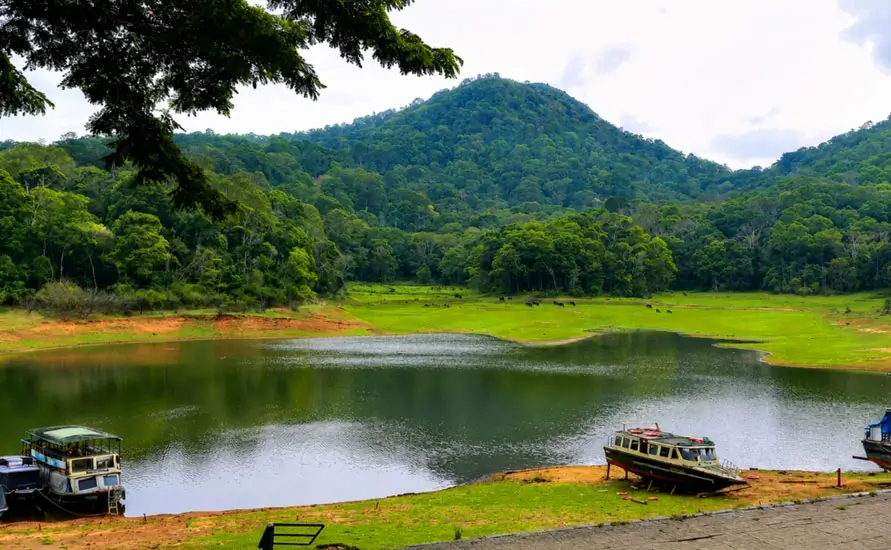
Thekkady, the resort area next to Kumily town and the Periyar Tiger Reserve, lies among the cardamom hills at roughly 900 meters. You check in at a forest-edge resort for one night and have lunch in noticeably cooler air. Use the break to clean lenses: moving between humid plains and cool hills causes condensation, and letting a closed camera bag warm up slowly before opening it helps. Spare batteries can be charged at the resort while you eat. Your photography guide takes a short break here and rejoins you in Kochi, so a local naturalist who knows the plantations and forest trails leads this afternoon and tomorrow morning.
Around four the light softens, and you walk through a spice garden with the naturalist. This is a place for macro work: the white and purple cardamom flowers that grow on runners along the ground, green pepper berries hanging in long strings, the scarlet mace around a split nutmeg and the pale yellow-green blossoms of vanilla vines. A reflector or a small diffuser helps under the dense shade, where light comes through in patches. Pickers in the plantations are often women working in groups, and many will agree to a portrait if asked. In the evening you can photograph a Kalaripayattu martial arts show, where fast shutter speeds freeze the leaps. Overnight in Thekkady.
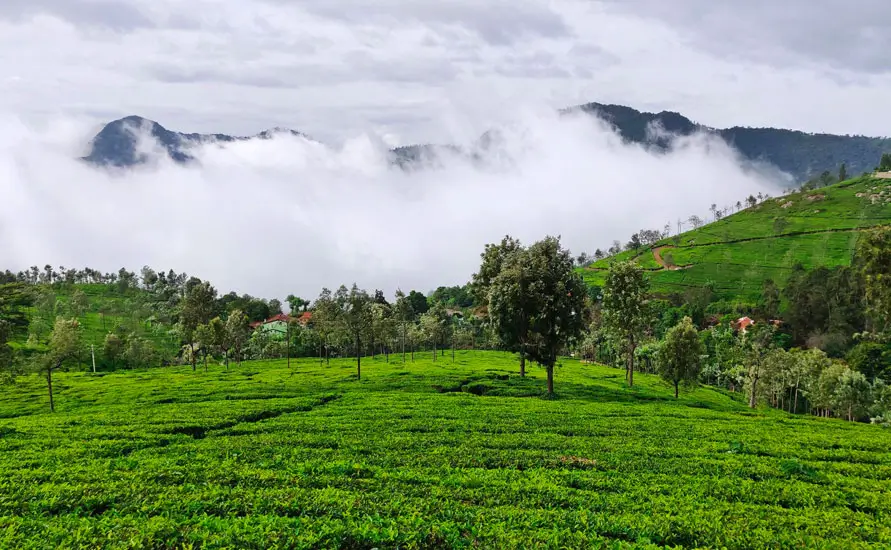
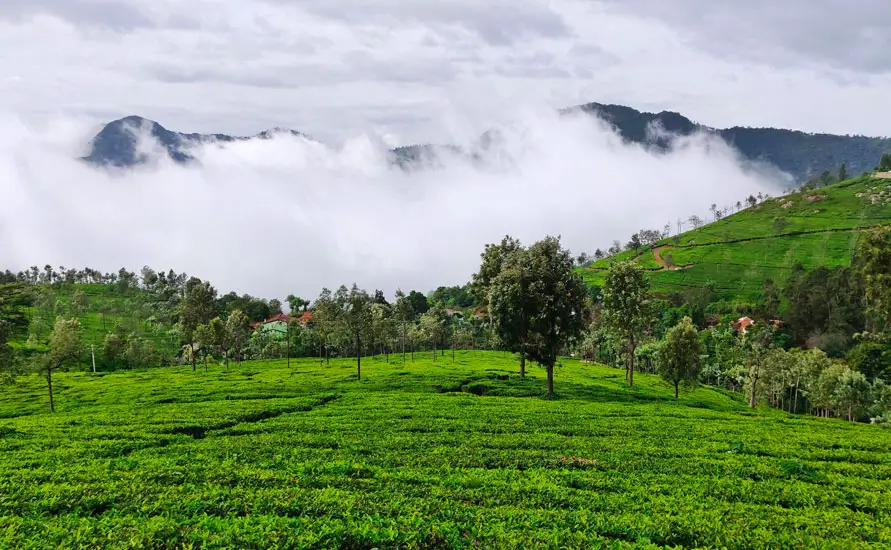
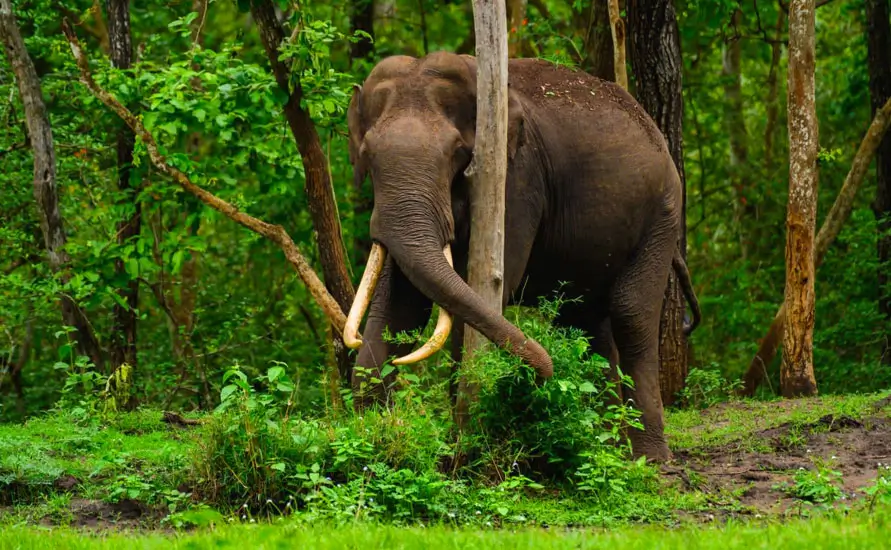
Mist often lies in the valleys around Thekkady at dawn, so the naturalist meets you at first light for a short walk along the edge of the forest or through a tea and cardamom estate near the resort. Low sun through the trees creates beams of light in the mist, and dew on spider webs and leaves makes good close-up material. A guided walk inside the Periyar Tiger Reserve is also possible with forest department trackers, though group sizes are small and slots must be booked a day ahead. Animals are shy and the forest is dense, so a long lens of at least 300 mm gives the best chance of a usable wildlife image.
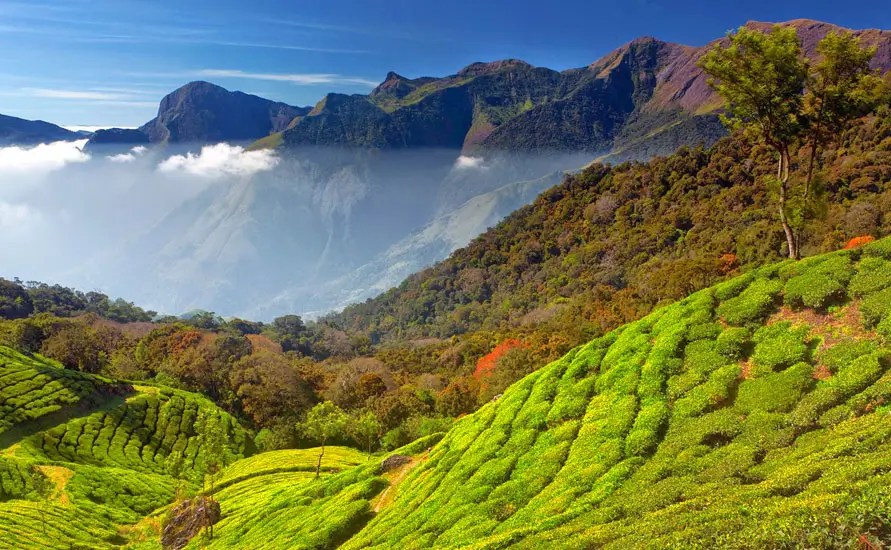
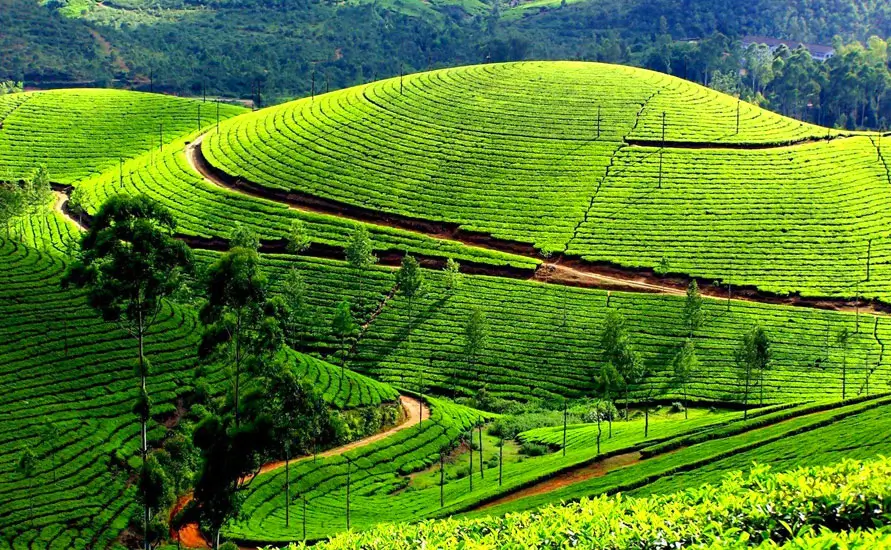
After breakfast you begin the longest drive of the tour, about five hours to the coast. The road descends past the tea gardens of Peermade, where pickers in bright clothes move along neat rows on steep slopes, making strong pattern shots from the roadside viewpoints. Lower down, rubber trees stand in straight lines with collecting cups tied to their trunks, and early-morning tappers may still be at work. Your driver knows safe places to pull over on the hairpin bends. Lunch is at a simple restaurant on the way, where a plate of fat Kerala red rice comes with three or four curries, pickles and pappadam.
By late afternoon the car pulls into Fort Kochi, where your photography guide is waiting at the heritage hotel booked for two nights. There is just enough time to walk to the beach for sunset, when the sky over the Arabian Sea turns orange behind passing cargo ships and fishing boats, and the old rain trees along the shore make strong silhouettes. Families, couples and street vendors fill the promenade, offering easy candid street scenes. Back at the hotel, you plan tomorrow with your guide, including the time of sunrise and the tide, which affects the nets' work. Overnight in Kochi.
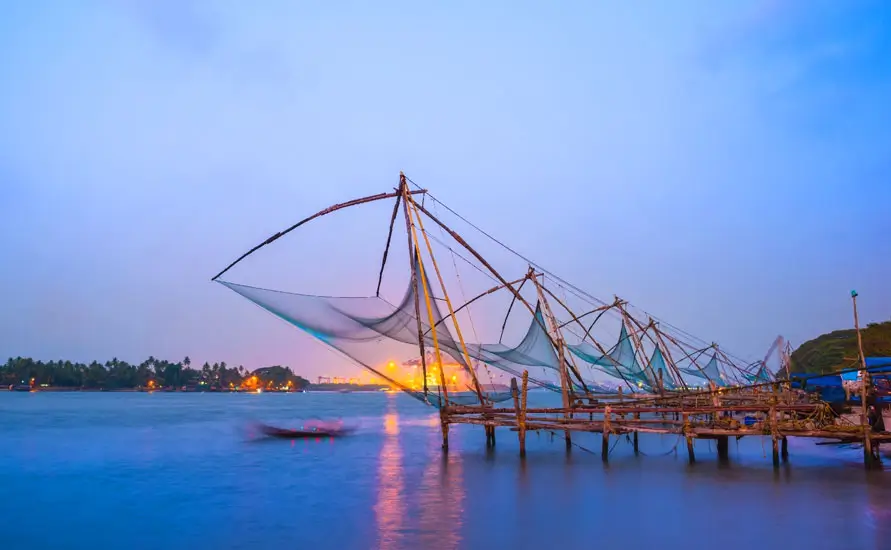
Before sunrise you walk to the Chinese fishing nets on the shore near the old Vasco da Gama Square. The nets face the harbor mouth, so at dawn the giant frames of teak and bamboo stand out against a pale sky, and the fishermen moving along the beams make good silhouettes. As the light grows, switch to portraits and details: the stones used as counterweights, the knotted ropes and the weathered hands hauling them. The crews are used to photographers, and a small tip is customary if they pose or let you stand on the platform. The fish market behind the nets also opens early.
Mid-morning, after breakfast, your guide leads a street walk through Fort Kochi and Mattancherry. The town is full of textures: peeling colonial walls, blue shutters, murals painted for the Kochi-Muziris Biennale art festival, and bicycles leaning against old godowns. In Jew Town, porters still carry sacks of ginger and pepper in the spice warehouses, where shafts of light fall through high windows and dust hangs in the air. Photography is not allowed inside the Mattancherry Palace or the Paradesi Synagogue, and both close on Fridays, the synagogue also on Saturdays and Jewish holidays, so your guide fits these visits around the timetable. Lunch is at a café.
In the late afternoon you go to a Kathakali theater well before the show to photograph the actors preparing. They sit cross-legged on the floor and paint their faces themselves with pigments ground from minerals and mixed with coconut oil, while a make-up artist builds up the white rice-paste frame along the jaw. The room is small and lit by lamps, so a fast lens and a quiet manner are important. Ask before using flash, and expect it to be banned during the performance itself, when silence and a still camera are part of the respect owed to the artists. Dinner follows in town. Overnight in Kochi.
A slow morning in Fort Kochi gives you time for a second round at the nets or a walk through the quiet lanes before checkout. Then the car heads south along the coastal highway to Alleppey, also called Alappuzha, roughly ninety minutes down the coast. The road passes fishing villages, churches with tall facades and toddy shops with hand-painted signs. You check in at a small lakeside resort or heritage homestay for one night and have lunch. In the heat of the early afternoon, rest and copy your Kochi images to a second drive; the coming two days on the water bring a lot of new material.
Around three thirty you board a country canoe, a slim wooden boat paddled by a local boatman, for a trip into the narrow village canals that houseboats are too wide to enter. Sitting low on the water gives a fresh angle: kingfishers on the power lines, women washing clothes on stone steps, children paddling home from school, and coconut husks soaking in the water to soften for coir making. Keep your camera on a strap and a dry bag at your feet, as the canoe rocks when you shift your weight. Your guide asks permission before you photograph people at their homes, as the canals run right past their kitchens.
As the sun drops, the boatman paddles out to the edge of a wide paddy field, where flocks of ducks are driven home along the canal by their herders, a classic scene of the Kerala backwaters. Egrets lift from the fields as you pass, and the palms turn into dark shapes against an orange sky, ideal for silhouettes. Mosquito repellent is a good idea at dusk. The canoe returns to the resort after dark, and dinner might feature karimeen, a flat lagoon fish, cooked in banana leaf. Charge every battery tonight, as there may be limited power on the houseboat tomorrow. Overnight in Alleppey.
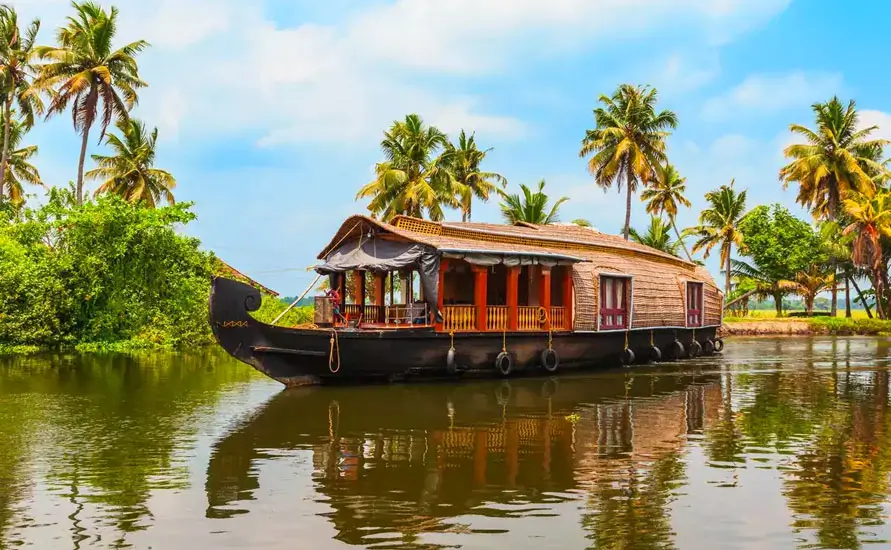
The morning is free until around noon, when you check out and board your private houseboat, which is yours for the next twenty-one hours. Before cruising begins, walk around the boat with your guide and look for the best shooting positions: the open upper deck, where the boat has one, for wide views, the bow for leading lines down the canals, and the side windows for framed shots of village life. The woven bamboo roof and coir-bound wooden hull of the kettuvallam make good detail images themselves. The crew of three, including a cook, serves a welcome drink of tender coconut and then lunch as the boat sets off across Punnamada Lake.
After lunch the hull glides along broad channels and side canals into Kuttanad, a low farming region where paddy is planted on reclaimed land up to two meters under the level of the sea, kept dry by earthen bunds. You pass toddy tappers climbing palms, small churches with their own boat jetties, and floating shops selling vegetables and fresh prawns. The light is harsh until about four, so this is time for scouting, napping on the deck or reviewing images. Then the warm light returns, and the reflections of palms on the still water make strong compositions. Local rules oblige every houseboat to halt and tie up by early evening, so the crew picks a quiet bank and moors before the sun goes down.
With the boat at anchor, you can shoot the sunset from the deck or step ashore with your guide for a short walk along the dike paths, where villagers return from the fields and evening prayers drift from a nearby temple or church. After dark, a tripod on the deck lets you try long exposures of the lamps on other boats and the stars over the paddy fields when the sky is clear. Dinner is cooked by the crew with Kerala dishes such as fish curry, vegetable stew and rice. The generator may be switched off for part of the night, so keep a small torch handy. Overnight on the houseboat.
Wake before dawn for the last and perhaps best shoot of your South India photography tour. In the cool months, a thin mist often lies on the water at first light, and the backwaters are at their quietest: fishermen throwing nets from small canoes, women washing at the steps, and the first ferries cutting through the haze. The boat is still at anchor until breakfast, so a tripod is steady on deck. Shoot toward the rising sun for soft silhouettes, then turn around for gentle colors on the palms. Your guide helps you make the most of the short window before the mist burns off.
The cook lays out breakfast on deck during the short return cruise, with houseboat checkout around nine. Before you leave, it is worth backing up all your images one last time, to a laptop, a portable drive or a cloud service, and keeping the copies in separate bags for the flight. Pack lithium batteries and power banks in your cabin baggage, as on the domestic flight on Day 3. Your guide spends a few minutes reviewing your favorite shots from the fifteen days and offers advice on editing, and you can say goodbye to the crew and hand over any tips.
Plan on roughly two and a half hours by road to Cochin International Airport, more if Ernakulam is jammed, so plan to leave by mid-morning for an afternoon flight. If your departure is late at night, we can add a day room in Kochi or a stop at a beach or market on the way for some final pictures. Your driver drops you at the terminal with plenty of time for check-in and security. We hope you fly home with full memory cards and pictures you are proud of, and with a few names and faces you will remember long after the trip.
Your Journey

N.S. Rathore & Mrs. Omlata Rathore · Managing Director
We still read every enquiry ourselves. Tell us the places you liked and our planners will send a day-by-day route with drive times and a clear price.
Every package can be customised and no pressure to book. A planner from our office replies within 24 hours with a route written for your group.
Fill this in and your planner will send a first draft itinerary.
Explore more
Kerala Backwaters Escape Kerala Backwaters Escape
 Kerala Backwaters Escape
 Kerala Backwaters Escape
 Kerala Backwaters Escape
 Kerala Backwaters Escape
 Kerala Backwaters Escape
 Kerala Backwaters Escape
 Kerala Backwaters Escape
 Kerala Backwaters Escape
 Kerala Backwaters Escape
 Kerala Backwaters Escape
 Kerala Backwaters Escape
 Kerala Backwaters Escape
 Kerala Backwaters Escape
 Kerala Backwaters Escape
 Kerala Backwaters Escape
 Kerala Backwaters Escape
 Kerala Backwaters Escape
 Kerala Backwaters Escape
 Kerala Backwaters Escape
 Kerala Backwaters Escape
 Kerala Backwaters Escape
 Kerala Backwaters Escape
 Kerala Backwaters Escape