 Kerala Backwaters Escape

South India with Sri Lanka and Maldives
Kochi – Kumarakom – Colombo – Kandy – Hatton (day trip) – Galle – Maldives
At a glance
Three of the best-loved coastlines of the Indian Ocean, linked by short flights and arranged around fine hotels, private guides and space to breathe. Our Luxury Kerala Sri Lanka and Maldives Tour starts in the old spice port of Kochi, moves to a lakeside villa resort in Kumarakom and a premium private houseboat on Vembanad Lake, then crosses to Sri Lanka for a design hotel in Colombo, a hill retreat above Kandy and a restored colonial residence inside Galle Fort. The final six nights are spent in an overwater villa in the Maldives, reached by seaplane.
Every element is private. In Kerala a chauffeur in a premium sedan or SUV stays with you, and a senior guide with a background in history or architecture leads each city visit. In Sri Lanka you travel with one seasoned chauffeur guide in a luxury vehicle for the whole week, joined by specialist guides in Kandy and Galle. Rooms are chosen from the top category of each property, usually a suite, pool villa or heritage room, and we never name hotels in advance because we match each one to your dates, budget and taste.
This Luxury Kerala Sri Lanka Maldives package is built for couples celebrating an anniversary, honeymooners and well-traveled guests from the UK, Europe, North America, the Gulf and Australia who would rather see fewer places in depth. Highlights include a guided dawn bird walk in Kumarakom, a first-class seat on the Kandy hill railway, a sundowner on the Galle ramparts and a private sandbank lunch in the atolls. Late October to April is the best window for all three countries, and seaplane transfers run in daylight only.
Your Luxury Kerala Sri Lanka and Maldives Tour begins the moment you leave customs at Kochi's airport, where our senior Kerala manager greets you personally, takes over the luggage and leads you to a premium sedan or SUV with chilled towels and water. A porter and a fast-track meet can be booked for the arrival hall if you want to skip the queues after a long-haul flight. Allow about ninety minutes for the ride into Fort Kochi; it is the only real stretch of road today, and your manager uses it to talk you through the coming nineteen days, the hotels selected for you and the small choices still open, such as spa times and dinner preferences.
You stay the first two nights in a top-end heritage hotel on the Fort Kochi waterfront, where your suite looks across the harbor and has high ceilings, teak floors and four-poster beds in the colonial style. Formalities are handled privately in the suite, and when a red-eye lands before sunrise, we book the suite from the night before, so bed comes first and breakfast later. Spend the middle of the day resting, swimming in the courtyard pool or taking a light lunch of grilled seer fish and lime rice in the garden restaurant, where staff will gladly turn down the spice level.
Around five o'clock a private motor launch collects you from the hotel jetty for a sunset harbor cruise lasting roughly ninety minutes. With only your party on board and a crew serving fresh juice or chilled wine, the boat circles Willingdon Island, passes Bolgatty and the container terminal, and returns along the line of fishing nets just as the sun sets behind them. Watching the giant nets from the water, rather than from the crowded shore, gives a fresh view of how the crews balance them. Back on land, a table is booked at the hotel's restaurant for a Malabar seafood dinner. Overnight in Kochi.
Instead of a general city guide, today you walk with a local historian whose family has lived in Kochi for generations, and who can open doors that larger groups never pass through. The morning begins in Mattancherry, at the old warehouses where pepper, cardamom and ginger were weighed and traded, and continues to the Mattancherry Palace, whose upstairs rooms hold some of Kerala's finest mural paintings. Both sites keep restricted days (the palace locks its gates each Friday, the Paradesi Synagogue each Friday and Saturday plus Jewish festivals), so this walk is dated only after your flights are fixed.
In the lanes of Jew Town, your historian talks about the small Jewish community that lived here for centuries, the old trading links with Yemen, Baghdad and Europe, and how the families left in the years after 1948. Several of the antique dealers here sell genuine carved furniture and old brass, and your guide can steer you toward reputable shops that arrange shipping abroad. A private lunch is then served in a restored merchant's house or at a family home of an old Syrian Christian or Konkani household, with dishes such as duck roast, appam, avial and a coconut milk stew that rarely appear on restaurant menus.
After an afternoon at the hotel, you attend an evening display of Kalaripayattu, the martial tradition of old Kerala, in a traditional training hall with a sunken earthen floor. Performers in loincloths show high kicks, leaps and fights with sticks, swords and flexible metal blades, while the master explains how the practice is linked to Ayurvedic massage and healing traditions. The show lasts around an hour, and front-row seats are reserved for you. Dinner afterwards could be in a candlelit courtyard restaurant in Fort Kochi, where the menu blends Portuguese, Dutch and Kerala cooking styles. Overnight in Kochi.
A late breakfast and a relaxed checkout give the morning an easy start before your chauffeur heads south-east toward Kumarakom, a scatter of farming villages where Vembanad Lake meets the paddy country on its east side, a vast brackish lake fed by several rivers. The road leaves the city behind quickly and runs past rubber plantations, small temples and canals full of water hyacinth, and the drive takes only about an hour and a half. Kumarakom is quieter than Alleppey on the opposite shore, with fewer houseboats and a more rural feel, which is why many of Kerala's most refined resorts have chosen to build here among the coconut groves and paddy fields.
Your resort for two nights sits directly on the lake, and your accommodation is a private villa with its own plunge pool, an outdoor rain shower and a veranda over the water. Many of the villas at top-end resorts here are built in the traditional Kerala style, with sloping tiled roofs, carved wooden pillars and inner courtyards, sometimes using parts of old tharavad family homes moved from other villages. After lunch by the pool, your host gives you a short tour of the property, which usually includes an Ayurveda center, an organic kitchen garden and a jetty for private boat trips on the lake.
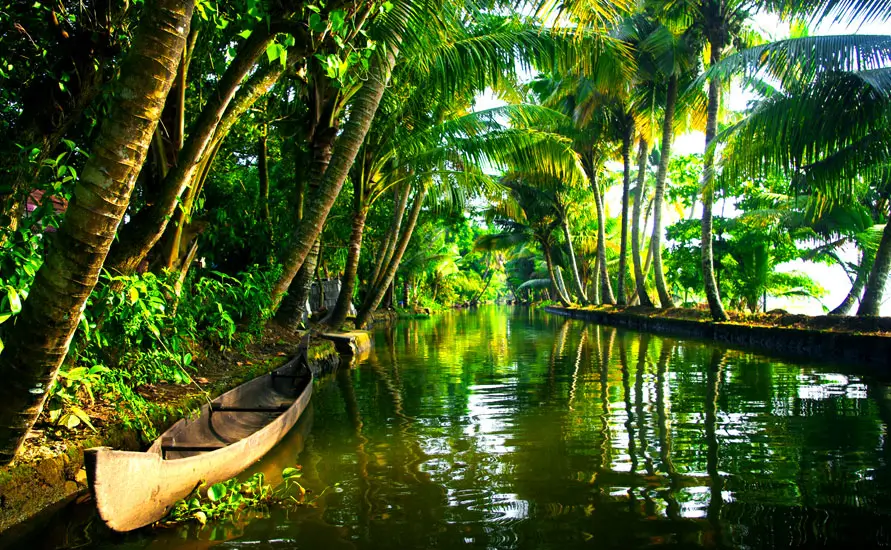
As the afternoon cools, a resort boatman takes you out in a private covered canoe through the slim waterways behind the property, where life on the water continues just as it has for decades. You pass women washing brass pots at the steps of their homes, small chapels painted white and blue and fields where cormorants dry their wings on posts. The ride finishes on the open lake at sunset, with the far shore fading into a soft haze. Dinner tonight is a private candlelit table on the lawn, with a menu of Kerala coastal dishes cooked to your preferred spice level. Overnight in Kumarakom.
An early wake-up call is worth it today, because the Kumarakom Bird Sanctuary is at its best in the first hours of daylight. A resident naturalist walks with you along shaded trails through the mangroves and tall trees beside the lake, pointing out darters, cormorants, kingfishers, egrets and, in the cooler months, migrants that arrive from northern Asia and Siberia. Trails are level and short, and binoculars and a bird list are supplied. The best viewing tends to be from November to February, though resident species are present all year round. Breakfast is served back at the resort as soon as you return.
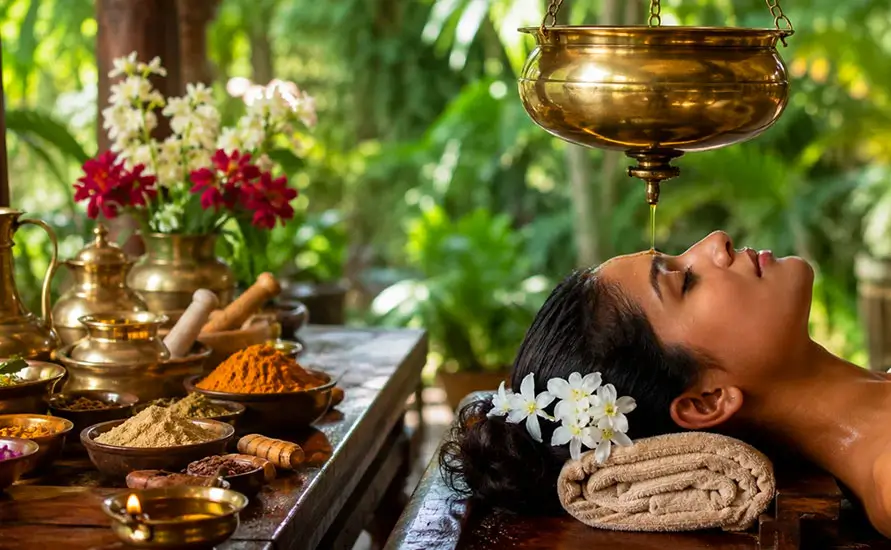
After a long breakfast and a swim, the late morning is reserved for an Ayurveda consultation with the resort's qualified doctor. Kerala's healing tradition goes back many centuries, and the session begins with questions about your health, sleep and diet before the doctor suggests a treatment suited to you. Most guests begin with abhyanga, in which two therapists massage in mirrored strokes using warmed herbal oil, or shirodhara, a slow, steady trickle of warm oil across the brow. Treatments last about an hour, and a herbal steam and a cup of ginger tea follow.
Afternoon hours belong to the villa, the pool or the resort library. If you have energy, the resort can arrange a gentle bicycle ride along the quiet roads around the village, stopping to see how coir rope is spun from coconut husk or how toddy tappers climb the palms to collect sap. Later, a resort chef can host a short private cooking session, showing how to make a fish moilee, a Kerala parotta or a mango pachadi, followed by dinner of the same dishes at your table. Recipes are written out for you to take home. Overnight in Kumarakom.
Around noon your private luxury houseboat draws up at the resort jetty, which means boarding takes place a few steps from your villa. We book only premium boats for this trip, typically a one-bedroom vessel with a glass-walled bedroom, an air-conditioned lounge, an upper deck with loungers and a crew of four, including a chef trained to cook for international guests. The boat is reserved for your party alone, and the route is set with you on board, so you can choose more time on the open lake or more time in the smaller channels. Tender coconut, freshly cut, is handed round as the crew casts off.
Lunch is a set Kerala meal served at a properly laid table, with choices discussed with the chef in advance, from a full seafood spread with prawns and pearl spot fish to a vegetarian sadya-style meal on a banana leaf. Through the afternoon the boat moves west across Vembanad, past the R Block, a stretch of farmland reclaimed from the lake in the twentieth century, and into canals flanked by paddy that sits lower than the water beside it. From the upper deck you can see farmers working in long rows, children rowing to school and churches rising above the coconut palms.
Kerala's backwater regulations bring every boat to a standstill around dusk; your skipper chooses a west-facing berth, away from the more crowded stretches near Alleppey. Before dark a crew member can lead you along the dyke path, or a short trip in a small canoe kept on board. Tea and banana fritters come out at sunset, followed by a lamp-lit dinner on deck, perhaps a whole grilled fish, a coconut chicken curry and chapatis made fresh in the galley. The bedroom is cooled at night by a generator kept away from the sleeping area. Overnight on the houseboat.
Dawn on the lake is quiet, and breakfast of lacy appam, spiced egg roast and papaya arrives on deck served while the boat returns to the jetty for a disembarkation at around 9 am. Your chauffeur meets you there and makes the two-hour run up to Cochin International Airport for the short hop to Colombo, barely seventy minutes in the air. Business class can be booked on request where the route offers it. Sri Lanka's entry requirements have been revised several times recently, so our team confirms the latest rules for your nationality and helps with the online application well ahead of your trip.
Inside the terminal at Colombo's Bandaranaike airport, our local manager greets you inside the terminal, and a fast-track service through immigration can be added. Your chauffeur guide for the coming week then drives you into Colombo in a luxury vehicle in under an hour. Tonight you sleep in a leading Colombo address, either a restored colonial landmark or a contemporary design hotel near the Indian Ocean, and a seafront suite is reserved for you. The evening is free for a drink on the terrace and dinner at one of Colombo's stylish restaurants, which your guide can book for you in advance. Overnight in Colombo.
Sri Lanka's most famous architect, Geoffrey Bawa, shaped the look of modern tropical design across Asia, and a morning devoted to his work is the right start for a luxury trip. Your guide takes you first to Number 11, the house on a quiet Colombo lane that Bawa created by joining four small bungalows into one home full of courtyards, pools of light and art collected over a lifetime. Guided visits run at set times and must be booked in advance, which we take care of. Next comes the Seema Malaka pavilion on Beira Lake, a meditation space he designed for the nearby Gangaramaya Temple.
Leaving Colombo before lunch, your chauffeur guide drives into the hills toward Kandy, which with breaks fills around three and a half hours. A good break is a lunch at a quiet country estate or a riverside restaurant on the way, where rice and curry arrives as a dozen small dishes of jackfruit, cashew, dhal, lotus root and fish. As the road climbs, the scenery changes to rubber and spice plantations, then to forested hills and terraced rice fields. Your guide uses the drive to cover Sri Lankan history in plain terms, from the early kingdoms in the north to the hill kingdom that held out against colonial powers.
For the next three nights you stay in a luxury hill retreat outside Kandy, chosen for its views and calm rather than its distance to town. Suites at these properties are often perched on a ridge above the island's longest river or on a former tea estate, with infinity pools, spas and terraces looking over the forest. Your guide will ask about tomorrow's start time, as the Temple of the Tooth is best visited early. After settling in, order Ceylon tea on the terrace as mist fills the valley, then dine in the hotel restaurant, which cooks island curries as well as European plates. Overnight in Kandy.
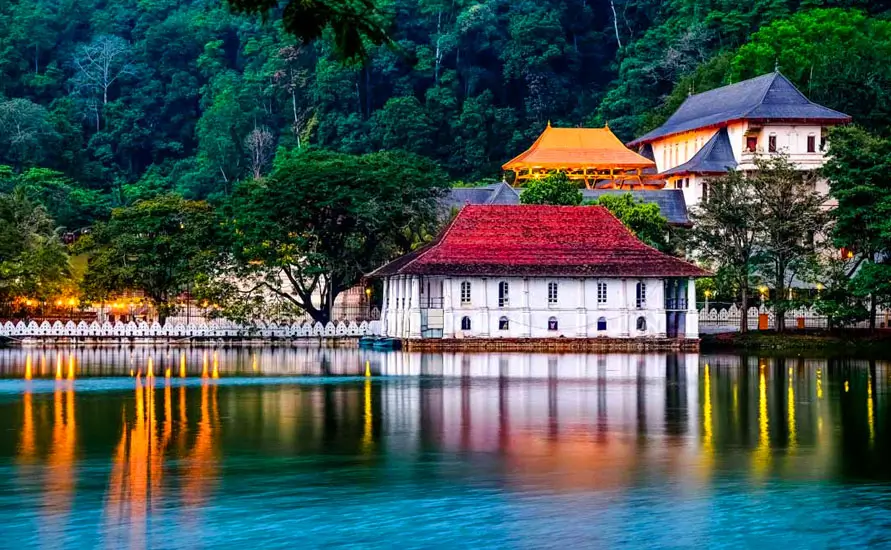
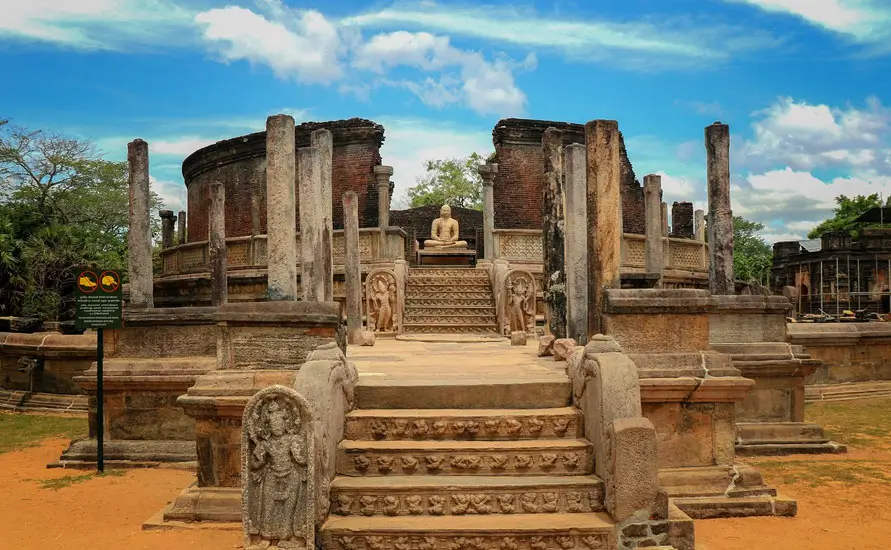
Arriving at the Temple of the Tooth shortly before the morning puja gives you the shrine at its most moving, as hevisi drummers sound in the courtyard and pilgrims carry trays of white flowers up the stairs to the relic chamber. A specialist Kandy guide with a background in Buddhist studies explains the history of the relic, the role it played in giving Sri Lankan kings the right to rule and the rituals that the monks still perform each day. Visitors should wear clothes covering shoulders and knees, and white or light colors are most respectful. Shoes are left at a counter, and you walk barefoot across the stone floors.
Leaving the town, your guide leads you to three fourteenth-century temples in the villages to the west of Kandy, a route that most visitors miss. Embekke Devale is known for the wooden pillars of its drummers' hall, each carved with dancers, wrestlers, birds and mythical creatures, while Gadaladeniya shows a stone design with South Indian influences. Lankatilaka, set on a rock above rice terraces, holds old paintings and a seated Buddha inside a brick-and-plaster shrine. The temples are small and quiet, and your guide will introduce you to the caretakers, who are often happy to explain local legends.
Lunch is at your hill retreat, and the afternoon is yours to spend at the pool or the spa, where treatments often use Sri Lankan herbs such as gotu kola and cinnamon oil. In the evening, ask your guide to arrange a private viewing of a Kandyan dance troupe, or reserve front seats at the public performance near the lake. If your trip falls during the Esala Perahera in July or August, when torch-bearers, drummers and dancers fill the streets for nights on end, we will book you a reserved seat or a private balcony along the route well in advance. Overnight in Kandy.
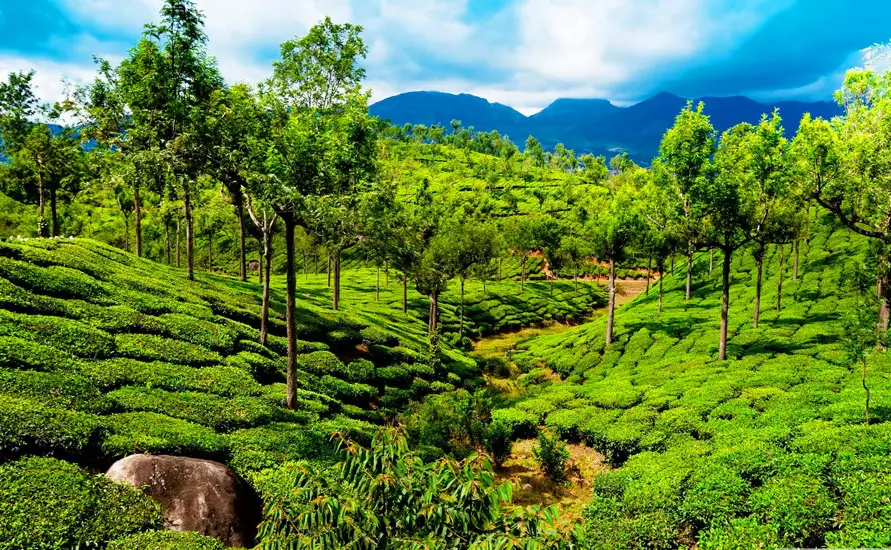
The hill-country railway is one of the world's great train rides, and today you take a section of it with reserved seats in the best available class. Your guide accompanies you to the station, where you board for Hatton, a ride of roughly three hours that winds past waterfalls, villages and steep slopes covered in tea bushes. Seats on this line sell out weeks in advance, so reservations go in the day you confirm. Trains in Sri Lanka can run late, so keep the day flexible. Your chauffeur meanwhile drives ahead by road and meets you on the platform at Hatton.
Fifteen to twenty minutes from the station lies a working tea estate in the Dickoya or Bogawantalawa valleys, some of the finest tea-growing country in Sri Lanka. A private lunch is served in a planter's bungalow from the British era, with a garden looking out across rows of bushes that run down the slopes to the reservoir. The estate manager or a senior planter talks you through the growing process, from the women who pluck two leaves and a bud by hand to the factory floor, where machines wither, roll, oxidize and dry the leaf. A formal tasting compares teas from different elevations, much like a wine tasting.
The road back to Kandy winds through the hills for close to three hours, with stops for photos at viewpoints over the Kotmale reservoir and the tea country. To skip the road, a scenic helicopter transfer can be arranged at extra cost, subject to weather and availability. Back at your hill retreat, there is time to rest before dinner, perhaps at a private table on the terrace with the lights of Kandy below. Tomorrow is a longer driving day to the south coast, so an early night suits most guests. Overnight in Kandy.
Today you trade the cool hills for the warm south coast. Your chauffeur guide takes the expressways for most of the route, skirting Colombo and joining the Southern Expressway toward Galle, allowing about four and a half hours including stops. Leaving after breakfast puts you in Galle in time for a late lunch. On the way, you can stop for coffee at a design-led café on the Colombo outskirts, or break the drive at a garden restaurant. Your guide will also point out how the landscape changes as you descend, from tea and forest to coconut palms, cinnamon gardens and the blue line of the sea.
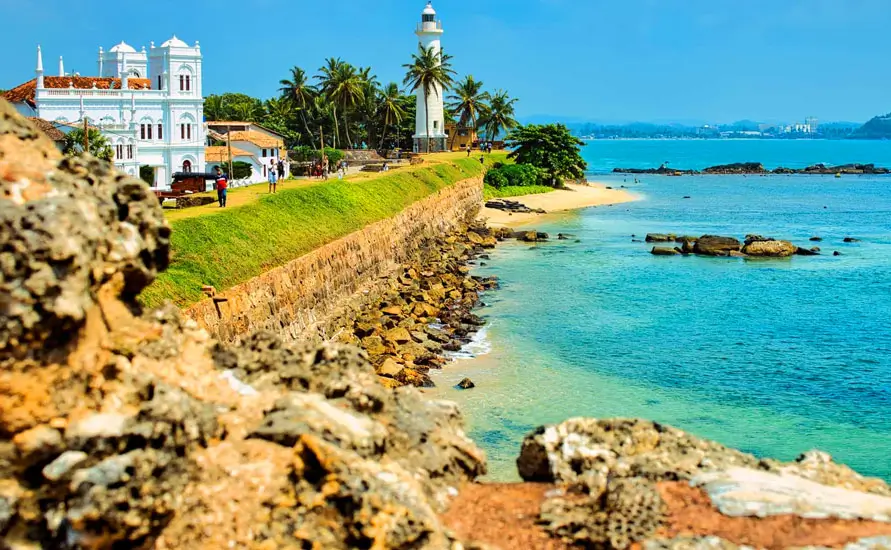
For three nights you live in a restored colonial residence or small luxury hotel inside Galle Fort, the walled town built by the Portuguese and then strongly fortified by the Dutch in the seventeenth century, now a UNESCO World Heritage Site. Many of these buildings were once merchants' houses or government offices, with thick walls, high ceilings, wooden shutters and courtyards with frangipani trees, and some have a pool or a rooftop terrace with views across the fort. Once lunch is done, settle in and then wander the nearby streets with no plan at all.
At sunset, the place to be is on the Galle Fort ramparts, the broad stone walls that run around the sea side of the old town. Local families, cricket-playing children and couples gather here every evening, and the light over the lighthouse and Flag Rock bastion is soft and golden. Your guide can reserve a table at a rooftop bar with views of the walls for a cocktail or a fresh king coconut. For dinner, the fort has excellent small restaurants serving everything from Sri Lankan crab curry to Mediterranean dishes, and your guide will recommend one to suit your taste. Overnight in Galle.
Galle Fort rewards a slow morning walk before the day's heat, and today you follow a local architectural historian who has worked on the conservation of many of its houses. The walk covers the grid of Dutch-era streets, the old Dutch Reformed Church with its floor of tombstones, the lighthouse and the old gate with the coat of arms of the Dutch East India Company. Your guide explains how the fort walls protected the town during the 2004 tsunami while much of the new town outside was badly damaged, and how families of Sri Lankan, Muslim and European descent still live side by side within the walls.
Before lunch you look into the Maritime Museum in an old Dutch warehouse, or at the small Historical Mansion museum, both of which show artifacts recovered from the shipwrecks and trade of the old port. Galle is known for its sapphire dealers, lace makers and jewelry studios, and your guide can steer you to established dealers if you want to buy Ceylon sapphires, with certificates and fixed prices. A courtyard café inside an old mansion suits lunch, with dishes such as grilled tuna, string hoppers and fresh tropical fruit, followed by a rest at your residence through the warmest hours.
Toward five, your car runs you out to the Jungle Beach area or to a quiet cove near the Japanese Peace Pagoda on the hill across the bay, which offers a fine view back to the fort. Alternatively, spend the time at your hotel's spa, with a Sri Lankan oil massage or a body scrub using cinnamon from the plantations nearby. Tonight, your guide can book a private dinner on a terrace overlooking the walls, or at a restaurant set in a restored eighteenth-century house. After dinner, the quiet lanes are safe and pleasant for a stroll. Overnight in Galle.
For those visiting between roughly November and April, today can begin with an early whale-watching outing from Mirissa, an hour east along the coast from Galle. We arrange a private or small-group boat with a responsible operator who keeps a set distance from the animals and limits time near them. Blue whales, sperm whales and spinner dolphins are seen in this area, though sightings in the wild cannot be promised, and the sea can be choppy, so take motion-sickness tablets beforehand if you are prone to it. Outside the season, or if you prefer a quieter morning, the time is free at your residence or on a nearby beach.
In the afternoon your chauffeur guide drives you to Koggala Lake, a wide body of water near the coast dotted with small islands. A private boat takes you around the lake, past mangroves and fishermen's huts, to a small cinnamon island, where a family shows how the spice is peeled from the inner bark of young branches and rolled into fine quills by hand. Sri Lanka produces some of the finest true cinnamon in the world, and the island visit explains why. You can also visit an island temple on the lake, with a quiet shrine and old trees that shade a small Buddha statue.
On the way back to Galle, your guide will point out the stilt fishermen of the south coast, who traditionally perch on wooden poles in the shallows to catch small fish. Today some of them pose for photographs in exchange for a tip, and your guide is frank about how the tradition has changed. The coast road also passes a turtle hatchery or two, though we only recommend visiting those that release their hatchlings quickly and follow good conservation practice. Your last evening in Sri Lanka is free for a farewell dinner in the fort, perhaps at the restaurant you liked most. Overnight in Galle.
An early breakfast and a quick checkout let you leave Galle in good time for the drive to Bandaranaike International Airport, mostly on the Southern Expressway and outskirts bypass. Farewells with your chauffeur guide happen at the curb, and a fast-track or lounge service can be arranged. The flight to Male takes about an hour and twenty minutes, and the Maldives grants all nationalities a free thirty-day tourist visa on arrival if you hold a confirmed resort booking. Before you fly, the online IMUGA traveler declaration must also be completed, and we send you a reminder with the link a few days in advance.
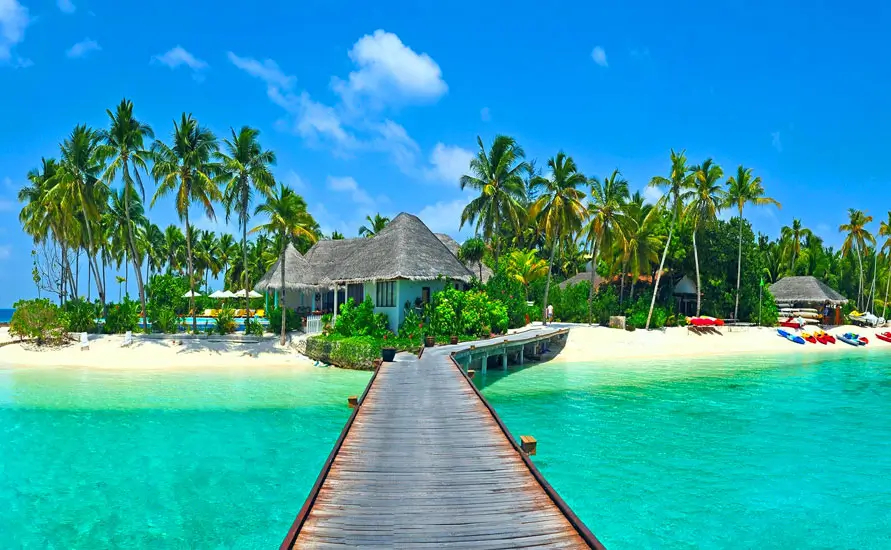
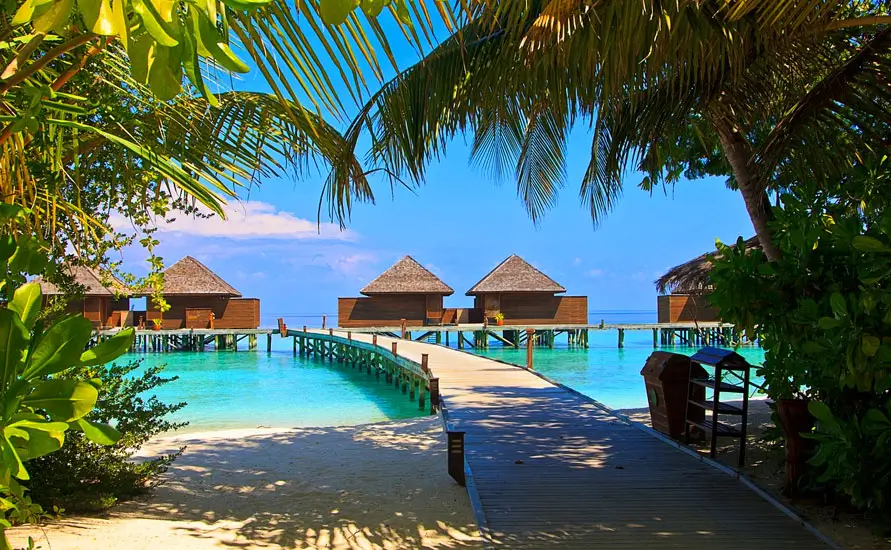
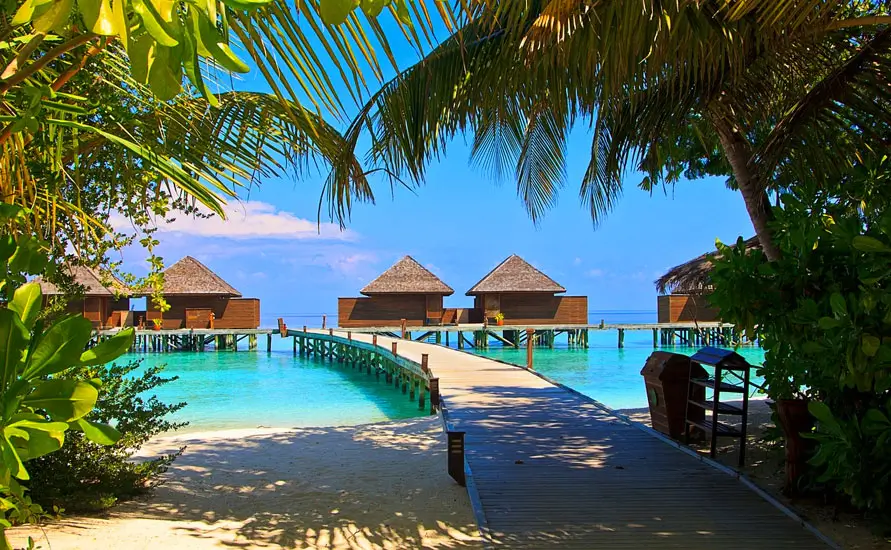
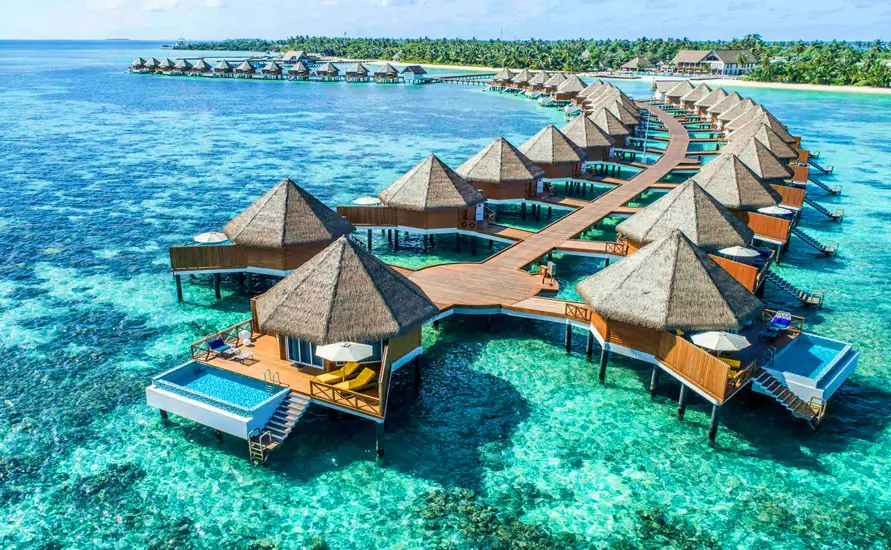
Seaplanes in the Maldives fly only in daylight, so we book a morning or midday flight from Colombo to make the connection; if a flight change puts you in Male after dark, we reserve a luxury hotel near the airport and fly you out the next morning. The resort's own lounge at the seaplane terminal looks after you before the seaplane transfer, a flight of between thirty minutes and an hour over reefs and islands in every shade of blue. On landing, the resort team guides you along the jetty to your overwater villa, with its own deck, private pool and steps down into the lagoon. Overnight in the Maldives.
Waking up above the lagoon, you can order breakfast to your deck or take it at the resort's main restaurant, which usually offers fresh pastries, tropical fruit, made-to-order eggs and Maldivian dishes like mas huni, shredded tuna mixed with coconut, onion and chili eaten with flatbread. Your villa host, often called a butler at top-end resorts, then visits to introduce the island's restaurants, spa and activities and to book anything you want for the coming days. Many guests find it simplest to let the host plan the week with you in one conversation, so each day has its own focus without endless decisions.
In the late morning you join the resort's marine biologist for a guided snorkel on the house reef. Before entering the water, the biologist gives a short talk on reef fish, coral health and how to snorkel without damaging the reef, then leads you along the drop-off where the lagoon meets deeper water. Expect parrotfish, surgeonfish, angelfish and anemone fish, with good chances of a turtle or a blacktip reef shark. Life jackets and fins are provided, and for children or anyone uneasy in deep water the biologist chooses a calm stretch close to the beach. Reef-safe sunscreen and a rash guard are recommended.
After lunch, the afternoon is for your villa: a nap on the daybed, a swim in your private pool or a slow float in the lagoon directly below your deck. In the late afternoon, take a stroll along the island's sandy paths, where you may spot herons, fruit bats in the palms and small sharks hunting in the shallows. Alcohol is served on resort islands, and a sunset drink at the bar can be followed by dinner at a restaurant of your choice, perhaps Japanese, Italian or a seafood grill. Your meal plan in the Maldives is half board, with drinks and à la carte extras charged separately. Overnight in the Maldives.
Today is spent at sea on a private yacht or luxury dhoni, with a captain, a crew member and a snorkel guide on board for your party only. You set off after breakfast and head across the atoll, stopping at two snorkel sites chosen on the day for the best visibility and calmest water, perhaps a coral garden in a sheltered lagoon or a channel where reef fish gather in large shoals. Spinner dolphins often appear in these waters and the crew scans the surface as you go, though they cannot be guaranteed. Drinks, snacks and towels are kept on board, and the shaded deck offers relief from the sun.
Around midday the yacht anchors beside a private sandbank, a strip of bright white sand with no buildings, palms or other people. The crew sets up an umbrella and a table and serves a lunch of grilled reef fish, salads and tropical fruit, with chilled drinks. You can swim from the sand straight into clear, shallow water, look for small rays and hermit crabs or simply sit under the umbrella and enjoy the silence. Sandbanks change shape with the tides and seasons, so each one is different, and the crew keeps an eye on the rising water so you are never caught out.
You are back on the island by mid-afternoon with hours to spare before evening. Tonight's dinner can be on the beach, with a table set at the water's edge, torches in the sand and dishes agreed with the chef that morning. Many couples choose this evening for an anniversary or a proposal, and your villa host can add flowers, music or a small cake if you mention it ahead of time. After dinner, look up at the sky: away from any city lights, the stars over the Maldives are remarkably bright, and the Milky Way is often clearly visible. Overnight in the Maldives.
A slow start suits this morning, with breakfast on your deck and time for a swim before a booked session at the overwater spa. Treatment rooms at many top resorts are built over the lagoon, some with glass floor panels that let you watch fish swimming below as you lie face down on the table. Treatments typically range from Balinese and Thai massages to coconut and sea salt scrubs and facials, and couples can book side-by-side rooms. Allow around two hours, including time in the steam room, relaxation lounge or outdoor bath before or after the treatment itself.
In the afternoon, join a resort chef for a private Maldivian cooking class. Local cooking is built on tuna, coconut, chili, curry leaves and lime, and the chef demonstrates garudhiya, a clear fish broth served with rice, lime and chili, or a mild tuna curry cooked in coconut milk. You can also learn to make short eats like bajiya and gulha, small fried pastries filled with fish and onion that are served with tea in every Maldivian home. The class ends with a tasting at the kitchen counter, and printed recipes go home with you.
As the light fades, visit the resort's sunset bar, which often sits at the end of a jetty facing west, or simply watch from your deck with a glass of something chilled. Some luxury resorts also have an underwater restaurant or a wine cellar with tasting dinners, and your villa host can reserve a table if your resort offers these. Otherwise, dinner tonight could be at a teppanyaki counter or a fine-dining restaurant where the chef prepares a set menu with local seafood. Night snorkeling under the jetty lights is another option for those at ease in open water. Overnight in the Maldives.
For certified divers, the resort's dive center can arrange a guided dive at one of the atoll's well-known sites, such as a thila, an underwater pinnacle that draws schools of fish, or a channel where grey reef sharks patrol the current. If you have never dived, a beginner scuba session with an instructor begins in the pool and moves to the house reef. Depending on the season and your atoll, the dive team may also offer a manta ray snorkeling trip, though manta and whale shark sightings vary greatly from place to place and cannot be promised. Travel insurance that covers diving is advisable.
After a morning in the water, lunch is at the resort's beach restaurant, leaving the rest of the day open for the pool, a novel or a game of tennis or beach volleyball if the island has courts. Many resorts also offer a glass-bottom kayak, a paddleboard or a jet-ski ride, and some hold weekly guided turtle snorkels, where the guide records the shells of individual turtles for a long-term study. Families will find that the kids' club may run a fish-feeding session or a small marine biology workshop. Your villa host will make sure your evening outing fits around any of these.
Toward dusk a wooden dhoni takes you out for sunset fishing, a pastime loved by Maldivians and well suited to beginners. With nothing more than a hand line and bait, the crew teaches you how to drop the line over a reef and feel for the tug of a snapper or grouper. The sun sets as you fish, and the boat returns under the first stars. On request, the kitchen cooks whatever you land for dinner with Maldivian spices and lime, served at a private table on the beach or on your deck. It is a relaxed, cheerful evening that many guests remember best. Overnight in the Maldives.
Your last full day in the Maldives is left entirely open, so that you can spend it exactly as you wish. You might return to the house reef for one more snorkel, take a paddleboard out at sunrise when the lagoon is like glass, or book another spa treatment. Some guests prefer to do nothing more strenuous than move between the villa pool, the deck and the lagoon below. Your villa host will ask if you would like a late breakfast, a picnic hamper on a quiet beach or lunch served on your deck, and will arrange anything that adds to the day.
In the afternoon, take time to settle any extra charges, such as drinks, spa treatments and excursions not included in your package, so that tomorrow's departure is easy. Your host will also confirm your seaplane departure time, which is set by the resort according to your flight from Male, and arrange for your luggage to be collected from the villa. If you want souvenirs, the resort boutique often sells local lacquerware, woven mats and books on Maldivian marine life, alongside beachwear and jewelry. Many guests also leave a note to the staff who have looked after you all week.
Tonight's farewell dinner is set up by your villa host in a private spot of your choosing, perhaps on a deserted stretch of beach, a jetty, or the deck of your villa, with candles, a personal waiter and your own choice of courses. Many guests choose fresh lobster, reef fish and a dessert of local fruits. After dinner, the sky is full of stars and the lagoon is lit by the soft glow of the villas along the water. Take a last walk along the jetty, where small reef sharks and rays often hunt under the lights. It is your final night of the tour. Overnight in the Maldives.
After a final breakfast, your villa host walks you to the seaplane jetty, where your luggage is already loaded. The seaplane lifts off from the lagoon and flies back over the reefs to Velana International Airport, a last chance to see the atolls from above. On arrival at the seaplane terminal, the resort's representatives help you transfer to the international terminal for your flight home, timed with a comfortable margin. For a late-night departure, a day room can be booked at a luxury hotel near the airport so you can rest and freshen up before the flight.
Nineteen days took you from a heritage suite in Kochi, a pool villa on the shore of Vembanad, a hill retreat above Kandy, a restored house inside Galle Fort and an overwater villa in the Maldives, with private guides and drivers at every step. For a future trip we can design a longer stay in Sri Lanka's hill country and national parks, a Tamil Nadu temple trail or a private tour of Rajasthan's palace hotels. It has been a pleasure looking after you; safe travels.
Your Journey

N.S. Rathore & Mrs. Omlata Rathore · Managing Director
We still read every enquiry ourselves. Tell us the places you liked and our planners will send a day-by-day route with drive times and a clear price.
Every package can be customised and no pressure to book. A planner from our office replies within 24 hours with a route written for your group.
Fill this in and your planner will send a first draft itinerary.
Explore more
Kerala Backwaters Escape Kerala Backwaters Escape
 Kerala Backwaters Escape
 Kerala Backwaters Escape
 Kerala Backwaters Escape
 Kerala Backwaters Escape
 Kerala Backwaters Escape
 Kerala Backwaters Escape
 Kerala Backwaters Escape
 Kerala Backwaters Escape
 Kerala Backwaters Escape
 Kerala Backwaters Escape
 Kerala Backwaters Escape
 Kerala Backwaters Escape Kerala Backwaters Escape Kerala Backwaters Escape Kerala Backwaters Escape
 Kerala Backwaters Escape
 Kerala Backwaters Escape