 Kerala Backwaters Escape

South India with Sri Lanka and Maldives
Kochi – Marari – Varkala – Trivandrum – Colombo – Bentota – Galle – Mirissa
At a glance
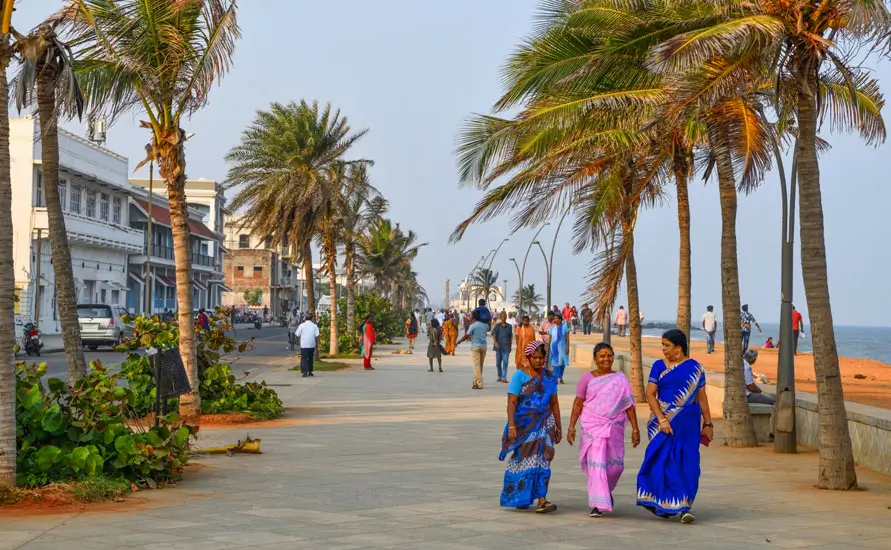
Sand, sea and slow mornings are the main point of this Kerala and Sri Lanka beach holiday, but each stop also gives you something to do when you have had enough sun. The first half follows the Arabian Sea coast of Kerala: two nights in Fort Kochi for the old port, two nights on the quiet fishing beach of Marari, and two nights on the red laterite cliffs of Varkala. A short flight from Trivandrum then carries you across the Gulf of Mannar to Colombo, where the Indian Ocean side of the trip begins.
In Sri Lanka the road runs south along the coast. Bentota gives you a wide beach, the mangrove-lined Madu River and the gardens of the architect Geoffrey Bawa. On the way to Mirissa you spend half a day inside the ramparts of Galle Fort, a living Dutch-era town listed by UNESCO, and in Mirissa an early boat goes out to look for blue whales in season. Drives are short on both sides of the water, usually two hours or less, and you never sleep in fewer than two nights per beach.
We built the Kerala Sri Lanka beach tour for couples, groups of friends and families on long-haul tickets from London, Frankfurt, Toronto, Chicago or Sydney, and for NRI guests who would rather swim than queue at temples. The best window is roughly December to March, when both the Kerala coast and the south-west coast of Sri Lanka are dry and the sea is calm. Whale watching off Mirissa runs roughly November to April. Nothing on the Kerala and Sri Lanka beach holiday is shared with strangers, so hotel grade and daily rhythm stay flexible.
Your trip opens at Cochin International Airport, where someone from our Kochi office stands beyond customs holding a card with your name and a cool bottle of water. Reaching Fort Kochi means roughly ninety minutes on the road, first past the shopping malls of Ernakulam, then over Willingdon Island to the old peninsula town at the harbor mouth. Many flights from the Gulf and Europe land in the early morning, so we plan nothing for the first few hours. Rooms are normally ready from the early afternoon; guests who want to sleep the moment they arrive can pay for the room from the previous night, which we arrange at booking.
Once you have rested, wait for about four o'clock before heading out, because the heat drops and the sea breeze picks up. With your guide you then stroll the seafront promenade, where the big Chinese fishing nets hang from their teak frames. Around sunset the fishermen work the counterweights of stones on ropes, and the catch is sold on the spot from small stalls behind them. You can point at a fish, agree a price and have it cooked at one of the simple cafes across the road, a Kochi habit that many visitors enjoy on their first night.
From the waterfront it is a few minutes on foot to St. Francis Church, a plain whitewashed building begun by Portuguese friars in the early 1500s; the Portuguese admiral who opened the sea route to India lay here for some years after dying in Kochi, until his son carried the body home to Lisbon. Your guide points out the gravestones set into the floor and the long rope fans once pulled by hand to cool the congregation. The evening ends with an early dinner, either Kerala fish curry with appam or something lighter if jet lag has spoiled your appetite. The first day is kept short on purpose, so you start the beach holiday rested. Overnight in Kochi.
After breakfast you set out with your guide to see the side of Kochi that grew rich on pepper, cardamom and ginger. In Mattancherry the narrow road known as Jew Town is lined with old warehouses where traders still store and grade spices, and the smell of dried ginger drifts out of open doorways. Inside the Paradesi Synagogue, dating from 1568, no two of the blue floor tiles carry quite the same hand-drawn willow scene, while the nearby Mattancherry Palace, which Portuguese traders built for the local ruler around 1555 and the Dutch later repaired, keeps its old murals of Rama and Krishna in the royal bedchamber. Friday shuts both buildings, and Saturday plus Jewish holidays also shut the synagogue, so our team fixes your sightseeing order once your dates are confirmed.
By midday you can break for a leisurely lunch at a cafe in a converted godown, then head to the Dhobi Khana, the old open-air laundry where washermen still beat clothes on stone slabs and iron them with charcoal-heated irons. In the afternoon there is time for the art galleries and small shops of Fort Kochi, and in Biennale years, when the Kochi-Muziris Biennale runs over the winter months, contemporary installations fill old warehouses across town. If you would rather keep the beach mood going, the guide can instead take you to the quieter end of Fort Kochi beach, where local families sit on the sea wall in the afternoon.
Evening brings a choice of two short performances in purpose-built small theaters. Kathakali tells episodes from the Mahabharata with green-painted faces, wide starched skirts and eye movements trained over years, and if you arrive early you can watch the actors grind pigments and apply their make-up. Kalaripayattu, a fighting system practised in Kerala for many centuries, is faster and more physical, with sword and shield sequences and high kicks performed in a sunken pit. Either show lasts about an hour, and the ticket for one of them is included. Dinner afterwards is at your own pace, near the hotel. Overnight in Kochi.
There is no need to rush this morning, since the drive south to Marari is one of the shortest on the trip. After a late breakfast you leave Kochi on the coastal highway, passing church spires, roadside stalls hanging with sardines and mackerel, and endless coconut groves. A brief halt is possible at Arthunkal, a fishing town known for St. Andrew's Basilica, a large white church that draws pilgrims from across Kerala in January for its annual feast. It is a short stop, but it gives you a sense of how strongly Christian this stretch of coast has been since the Portuguese period and earlier. Most of the people living on this coast earn their living from the sea.
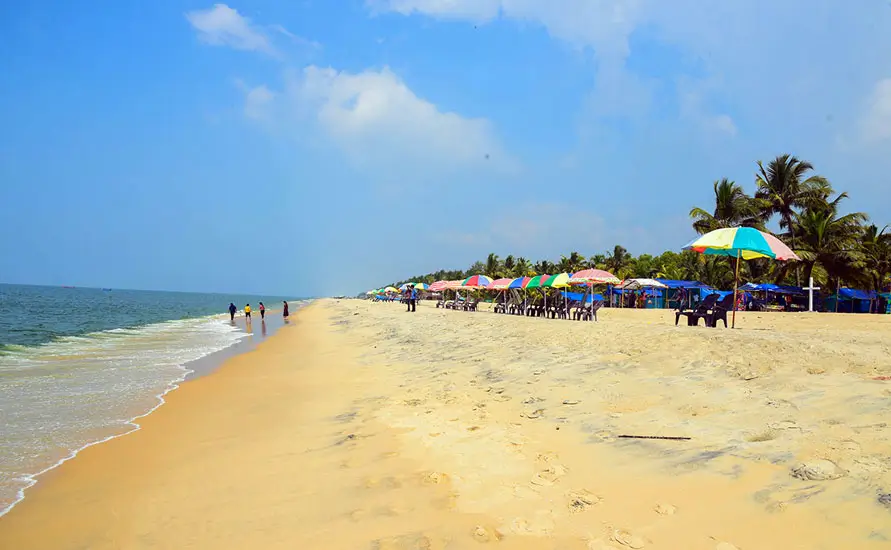
Marari Beach, at the fishing village of Mararikulam, is a very different place from the busy resort strips found elsewhere in India. There are no rows of bars or hawkers here, just a long golden shore where wooden boats rest above the tide line and a handful of small resorts sit back under the palms. You check in around lunchtime and the afternoon is yours. The sea can be lively, so it is best to swim where the resort lifeguard or staff suggest and to stay out of the water when red flags are up, especially early and late in the season.
Late in the day, walk north along the shore while the fishermen bring their boats in and the women of the village sort the catch into baskets. Children often play cricket on the hard sand, and visitors who say hello are usually greeted with smiles and questions about where they come from. Photography is generally welcome, but it is polite to ask before you photograph people at close range. Dinner at the resort tends to be relaxed, with Kerala dishes such as karimeen, a pearl spot fish from the backwaters, cooked in banana leaf. The sound of the waves is the only nightlife here. Overnight in Marari.
Today is planned around a gentle morning outing and a long, empty afternoon. Shortly after breakfast a village guide arrives at the resort with bicycles, and you pedal through the sand tracks inland from the shore at a slow pace, stopping often. The route passes small coir sheds where retted husk fiber is spun into rope on hand-turned wheels, ponds where ducks are raised for eggs and meat, and tiny Hindu and Christian shrines side by side. If you have not cycled for a while, a walking version of the same outing can be arranged instead, and it covers fewer kilometers but gives you more time to talk with people along the way.
Before returning, the ride pauses at a village home for a cup of sweet tea and a snack of banana fritters or tapioca. Families in this area have seen more foreign visitors in recent years, and many are happy to show how they cook on a wood fire or how they climb a coconut palm to tap or harvest it. If you are keen to try Kerala cooking yourself, the resort or a local family can usually arrange a short cooking session in the late morning, where you learn how to make a coconut-based fish curry and a simple vegetable thoran, then eat what you have cooked for lunch.
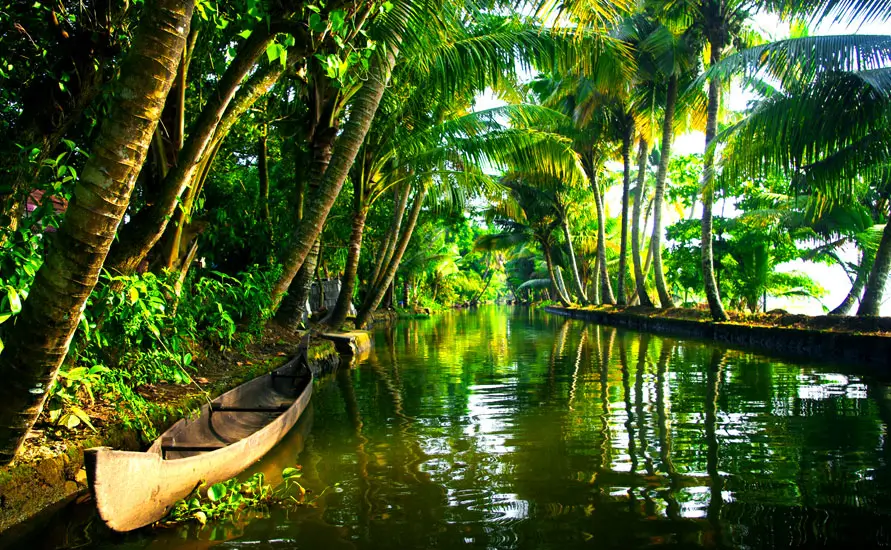
The afternoon is left completely free for the beach, the pool or a nap in a hammock. Most resorts at Marari have an Ayurveda center where you can book a full-body oil massage, but treatments are optional and paid locally. For something more active, ask about a short canoe ride on the narrow backwater canals a few kilometers inland, where you glide past village homes, paddy fields and water lilies. Back on the beach, the shore faces due west over the Arabian Sea, so with a clear horizon the final minutes of daylight turn the wet sand copper. Dinner is at the resort. Overnight in Marari.
Today's drive takes you further south toward the southern tip of Kerala. You leave after breakfast and follow the coastal road through Alleppey and Kayamkulam, with views of narrow backwater channels on one side and the sea now and then on the other. The route passes through busy market towns, so the driving time can stretch if traffic is heavy, and your driver will plan a stop for coffee and a toilet break midway. Extra stops are possible, yet most guests prefer to reach Varkala in good time for lunch.
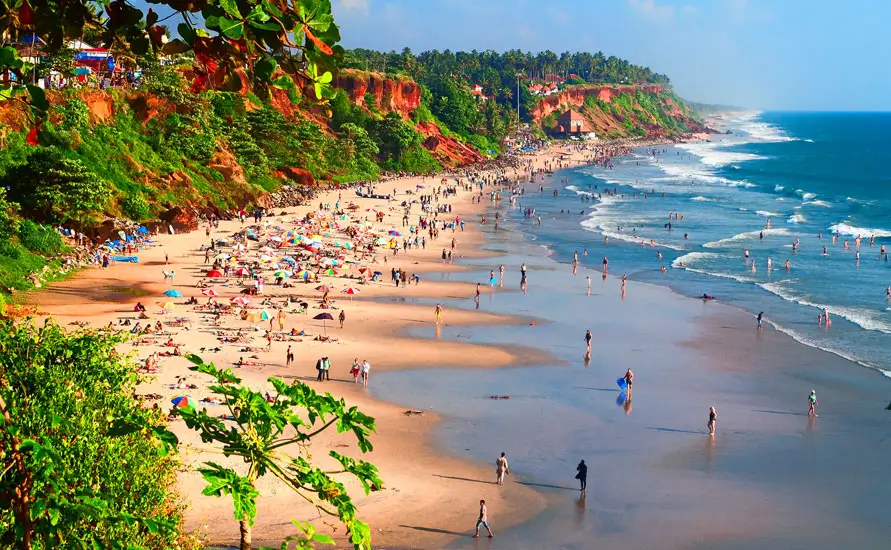
Varkala is the only place on the Kerala coast where the land rises into tall red laterite cliffs right above the beach, and the view from the top is the main reason to come here. Small guesthouses, yoga schools, cafes and craft shops line the paved clifftop path on the North Cliff, and steps lead down to the sand below. Your hotel is either on the cliff or a short walk back from it, and the hours after check-in are free for finding your bearings. The beach at the base of the cliff can have strong waves, so watch where local lifeguards place their flags before you swim.
As evening comes, the clifftop path fills with travelers and locals walking to see the sunset, and the cafes switch on their fairy lights and lay out the day's catch of fish, prawns and squid on ice. You can choose your seafood and have it grilled with garlic, lime or a Kerala masala. The atmosphere is relaxed and international, with many visitors who come to study yoga for a few weeks. Alcohol is served in some cafes, though licensing rules in Kerala are strict and a few places are more discreet about it. Your driver remains on call if you need a lift. Overnight in Varkala.
Start early, before the heat, at the Janardhana Swamy Temple, the hilltop shrine to Vishnu that made Varkala a pilgrim town long before backpackers found the cliffs. Visitors of other faiths can normally walk the outer courtyards only, and male visitors are often told to go bare-chested beyond a certain point, so wear clothes that are easy to adjust. Your guide tells the local story of a Dutch ship's bell hung here after a captain's prayers were answered, a tale people in town repeat with some pride. Morning prayers bring the busiest crowds.
Below the temple lies Papanasam beach, whose name means destroyer of sins. Hindu families gather on this sand to honor dead relatives, often at dawn, with a priest guiding them through offerings of rice balls and flowers into the sea. Visitors are welcome to watch quietly from a respectful distance, but it is best not to photograph the rituals. Later in the morning you can visit Sivagiri, the hill monastery where Sree Narayana Guru, whose message of equality for every caste reshaped Kerala, lies in his samadhi. Pilgrims in yellow clothing visit in large numbers around the turn of the year.
Afternoon plans are entirely yours. Join a walk-in hatha class on the cliff, book an Ayurveda massage, or simply move between the beach and a shaded cafe with a book. For one more short outing, ride twenty minutes up the coast to Kappil, where only a thin sand bar keeps a lagoon apart from the surf, a quiet spot for a late afternoon walk. Back on the cliff, the evening view out over the Arabian Sea closes the Kerala half of your holiday. Pack tonight for tomorrow's flight to Sri Lanka. Overnight in Varkala.
Your driver loads the luggage once breakfast is done, and the 55 km run to Trivandrum International Airport usually takes ninety minutes if the capital's traffic behaves. The flight across to Colombo is one of the shortest international hops in the region, about an hour in the air, and it saves a full day compared with routing through a bigger hub. We leave plenty of slack in the timing for check-in and security. Ahead of this day our office tells you exactly which Sri Lankan entry approval your nationality requires, because the island's online ETA system has been revised more than once lately.
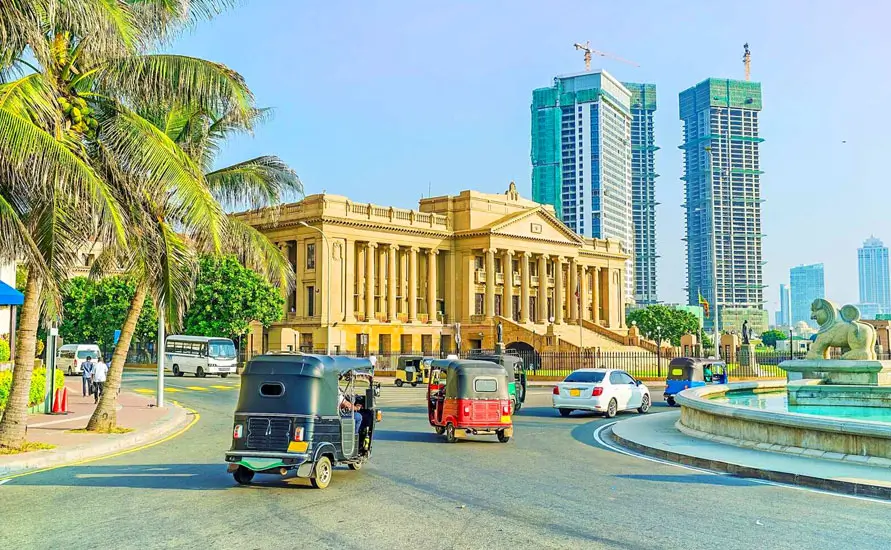
At Bandaranaike International Airport, north of Colombo, our Sri Lanka driver meets you outside the arrivals hall and drives you into the city, normally under an hour on the expressway. If time allows in the late afternoon, you stop at Galle Face Green, a long seafront lawn where Colombo families fly kites and buy isso wade, crispy lentil cakes topped with prawns, from street carts. After dark, the lit-up Gangaramaya Temple is worth a short visit for its mix of Buddhist shrines and odd collections of donated objects. Dinner tonight is your own choice. Overnight in Colombo.
Before you leave Colombo, spend an hour or two seeing the old center with your driver or a local guide. The colonial district called Fort has been heavily restored, and the Old Dutch Hospital, now filled with restaurants and shops, dates back to the Dutch era of the 17th century. A short distance away, the Pettah market area spreads over a grid of narrow streets, each one known for a particular trade, from fabric and spices to electronics and dried fish. The red-and-white striped Jami Ul-Alfar Mosque stands out above the crowds and makes a good photo stop. Bargaining is normal in Pettah, and your guide can help.
By late morning you leave the city and drive south along the coastal Galle Road, the old route that runs past fishing harbors, churches and small beach towns. It is slower than the expressway, but the views of the sea and of daily life make it the better choice for a short distance. At Bentota, the river meets the sea at a wide sandy spit, and the beach runs for several kilometers with resorts set behind it. Rooms open in the early afternoon, leaving the hours until dinner for the pool, the beach or a nap after the morning in Colombo.
The south-west coast of Sri Lanka has its dry season from about December to April, when the sea at Bentota beach is generally calm enough for swimming. From May to September the south-west monsoon churns up the surf, so take the beach staff's warning flags seriously then. Bentota is also one of the main centers for water sports in the country, with jet skiing, windsurfing and banana boat rides available from operators near the river mouth, all optional and paid locally. In the evening, local restaurants along the main road serve rice and curry, devilled prawns and cold Lion beer. Overnight in Bentota.
In the cool of the morning you head to the Madu River, or Madu Ganga, a broad wetland of some sixty islets fringed by dense mangroves. A boatman takes you upstream in a small motorboat, slowing down in the narrow mangrove tunnels where roots arch over the water and kingfishers, monitor lizards and herons are often seen. Along the way you usually stop at Cinnamon Island, where a local family shows how the bark of the cinnamon tree is peeled and rolled into quills, the same work that made this coast famous with Arab, Portuguese and Dutch traders. The boat ride lasts around two hours.
In the afternoon you visit Lunuganga, the country estate of Geoffrey Bawa, the Sri Lankan architect whose work shaped what we now call tropical modernism. Bawa spent around fifty years turning a rubber plantation on a lake into a series of garden rooms, terraces and views, and a guide takes small groups through the grounds on a timed tour. Advance booking is recommended, and our team will arrange it. If you are a keen gardener, you can also visit the nearby Brief Garden, created by Bawa's brother Bevis, a landscape artist, which feels more playful and less formal.
Back at the beach, the late afternoon is for another swim or a walk to the river mouth at sunset, when anglers stand on the boulders flicking hand lines into the swell. You might notice turtle hatcheries along the coast between Bentota and Kosgoda; some are run with sound conservation practices, while others keep turtles in small tanks for visitors to handle, so we can suggest an ethical option if you want to visit one. The resort's evening buffet usually includes Sri Lankan dishes such as hoppers, string hoppers and kottu roti. Overnight in Bentota.
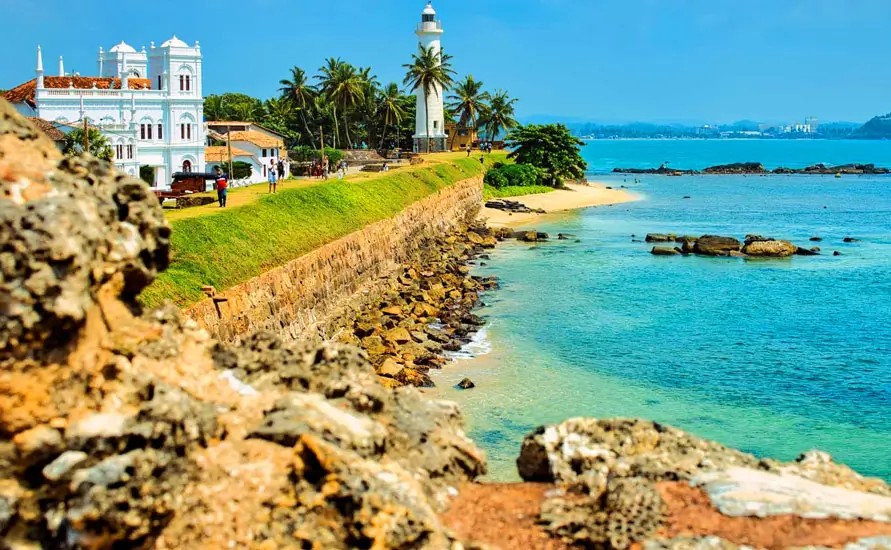
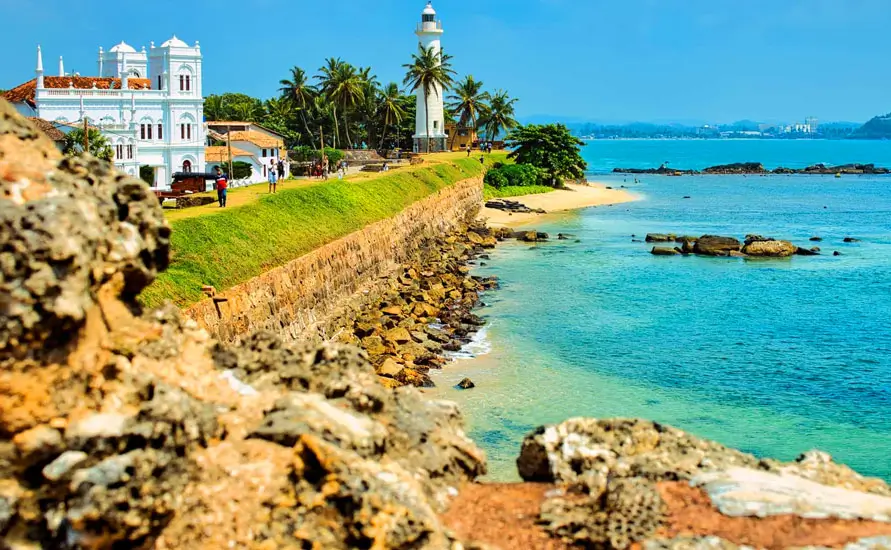
Leaving Bentota once you have eaten, you head down the coast to Galle, about an hour and a quarter away. The town's old quarter sits inside massive stone ramparts on a headland pushing into the ocean. The Portuguese first built a fort here in the 16th century, but most of what stands today was built by the Dutch from the 1660s onward, and Galle Fort carries UNESCO listing while remaining a working town where families, shopkeepers and artists live in old houses. Your guide meets you at the main gate for a walking tour of about two to three hours.
The walk follows the ramparts first, from the Sun and Moon bastions to the white lighthouse and the Flag Rock bastion, where local boys sometimes leap into the sea for tips. Inside the walls the grid of streets still carries Dutch names such as Leyn Baan and Pedlar Street, and you pass the Dutch Reformed Church, the old Dutch Hospital and the former warehouse that now holds the National Maritime Museum. Lunch is at your own choice among the many cafes and restaurants inside the fort, and there is time afterwards to browse small boutiques selling handloom textiles, moonstone jewelry, spices and antiques.
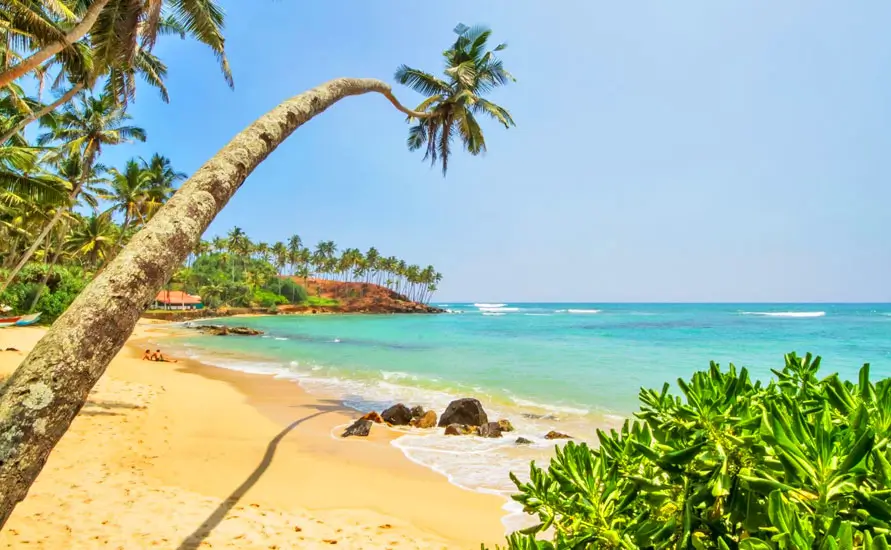
In the mid-afternoon you continue south for about an hour to Mirissa, a crescent-shaped bay with a harbor at one end and a rocky headland at the other. On the way you pass the stretch near Koggala where stilt fishermen sit on poles in the shallows, a sight that today is often staged for visitors who pay a small tip to photograph them, so stopping is entirely your call. At Mirissa you check in to your beach hotel and take a short walk to Coconut Tree Hill, a small grassy headland lined with palms that is busiest around sunset. Dinner is near the beach. Overnight in Mirissa.
If you are traveling between roughly November and April, the alarm goes off before dawn for Mirissa whale watching. Boats leave the harbor around 6:30 am and head out to deep water south of the island, where the continental shelf drops off and blue whales, sperm whales and pods of spinner dolphins are seen regularly in season. Trips last from three to five hours, and sightings are common but never guaranteed, since these are wild animals in open water. We use licensed operators who follow the local guidelines on keeping a safe distance from the whales and not chasing them with too many boats.
Seas can be choppy even in the calmer months, so take seasickness tablets the night before if you are prone to motion sickness, and bring a hat, sunscreen and a light jacket for the early start. Breakfast and water are usually served on board. If you travel outside the whale season, or prefer not to go out to sea, the morning can be used for a gentle surf lesson at nearby Weligama, where a long sandy bay with soft rolling waves suits first-timers well, or for a visit to the seaside temple at Parrot Rock at the other end of Mirissa beach.
Following a late lunch, nothing is scheduled. Mirissa beach is lined with small restaurants and bars, and on most days the water in the middle of the bay is calm enough for swimming, while the eastern end can be rougher. A short walk along the shore brings you to Secret Beach, a small cove reached by a footpath over the headland. For your last evening in Sri Lanka, many guests choose a fresh seafood dinner on the sand, with tables set under lanterns and the catch displayed on ice. Settle the bill tonight so the morning goes smoothly. Overnight in Mirissa.
A last swim before breakfast is a good idea, because later this morning the car heads north to Bandaranaike International Airport. The Southern Expressway and the Colombo bypass roads cut the time well below the coastal route, usually a little over three hours, and we time your departure to give you three hours at the airport before an international flight. For a night flight, options include a day room by the terminal, a stop for lunch in Galle, or an extra night on the beach at extra cost.
In twelve days you have covered two coastlines: the fishing beaches and red cliffs of Kerala and the river, fort and whale waters of southern Sri Lanka, with a short flight across the sea in between. Next time, the tea hills of Munnar or Nuwara Eliya, the cave temples of Dambulla or a houseboat night in Alleppey could be added to a longer route, and we are happy to sketch that out whenever you are ready. Have a smooth trip home.
Your Journey
N.S. Rathore & Mrs. Omlata Rathore · Managing Director
We still read every enquiry ourselves. Tell us the places you liked and our planners will send a day-by-day route with drive times and a clear price.
Every package can be customised and no pressure to book. A planner from our office replies within 24 hours with a route written for your group.
Fill this in and your planner will send a first draft itinerary.
Explore more
Kerala Backwaters Escape Kerala Backwaters Escape
 Kerala Backwaters Escape
 Kerala Backwaters Escape
 Kerala Backwaters Escape
 Kerala Backwaters Escape
 Kerala Backwaters Escape
 Kerala Backwaters Escape
 Kerala Backwaters Escape
 Kerala Backwaters Escape
 Kerala Backwaters Escape
 Kerala Backwaters Escape
 Kerala Backwaters Escape
 Kerala Backwaters Escape
 Kerala Backwaters Escape
 Kerala Backwaters Escape
 Kerala Backwaters Escape
 Kerala Backwaters Escape
 Kerala Backwaters Escape