 Kerala Backwaters Escape

South India with Sri Lanka and Maldives
Delhi – Agra – Fatehpur Sikri – Abhaneri – Jaipur – Kochi – Alleppey – Colombo – Negombo – Kandy – Galle – Colombo
At a glance
Most first-time visitors to Asia have a short list of places they have seen in photographs for years: the Taj Mahal at dawn, the pink walls of Jaipur, a rice boat drifting on a Kerala canal, a white stupa in the Sri Lankan hills. The Golden Triangle with Kerala and Sri Lanka puts all of them into one carefully paced 20-day plan. You begin with the Mughal and Rajput monuments of Delhi, Agra and Jaipur, fly south to the spice port of Kochi and the backwaters of Alleppey, then cross the sea to Kandy and the colonial fort town of Galle.
Distances in this part of the world are large, so we use flights where the road would waste a day. Jaipur to Kochi has no convenient nonstop service, so you take a morning flight with one change, usually in Mumbai, Bangalore or Delhi, and arrive in Kerala in time for dinner. Kochi to Colombo is a short hop of about an hour. On the Indian legs your own cooled sedan and English-speaking driver stay on call; once in Sri Lanka, one licensed chauffeur-guide handles both the wheel and the commentary. Two- and three-night stays keep packing to a sensible minimum.
Our Golden Triangle with Kerala and Sri Lanka fits first-timers flying in from Britain, mainland Europe, the Americas or Australia who want a first look at three contrasting regions while someone else stitches the logistics together. NRI families showing overseas-born children both the north and the south of India, plus a neighboring island, will find it a good fit too. Because Fridays are the Taj Mahal's weekly closing day, our planners lock the Agra nights around that rule first. November to March gives the best weather overall, and every hotel, guide and transfer is private and adjustable.
Welcome to India. With passport stamps and baggage collected at Indira Gandhi International Airport, walk through the doors to find our team member holding your printed name; a cooled private car then carries you to a central Delhi hotel. Depending on traffic the drive lasts forty minutes to an hour. Long-haul arrivals tend to touch down either around midday or deep in the night, so nothing is fixed on the schedule today. Hotel rooms open at two in the afternoon; after a dawn touchdown, holding your room from the previous evening lets you sleep the moment you arrive. Your printed itinerary, local SIM advice and emergency numbers are handed over in the car.
If you land in the morning, rest first and then let the afternoon come to you. Delhi is a sprawling capital of more than twenty million people, made up of several historic cities built one beside another over roughly a thousand years, and your first glimpse of it from the car window is chaotic and colorful in equal measure. Auto-rickshaws weave between buses, cows rest calmly on the traffic islands, and roadside vendors sell sliced guava with chili salt. Along the way, the war memorial arch and the sandstone ministries of the colonial capital flash past, saved for a proper look on Day 3.
Anyone still awake by dusk can stretch their legs at Connaught Place, a gentle first outing. Its double circle of whitewashed arcades dates from the 1930s, and beneath the central park runs Palika Bazaar, a warren of small stalls. The arcades feel safe and lively after dark, and many kitchens here will turn the chili down on request, so a first dinner of creamy black lentils, grilled cottage cheese and hot naan is an easy start. Keep the night short, because tomorrow starts in the old city after breakfast. Overnight in Delhi.
Shahjahanabad, the walled city that the Mughal emperor Shah Jahan built in the 1640s, is still the most crowded and characterful part of Delhi, and mornings here are best before the heat and traffic peak. First on the list is the Red Fort, the sandstone citadel on UNESCO's register where the Mughals held court and where the national flag goes up each 15 August. Inside you pass through the covered Meena Bazaar and see the Diwan-i-Aam, the hall of public audience. The fort is closed on Mondays, so on a Monday we simply reverse today and tomorrow.
Minutes away, Jama Masjid rises on a high plinth, its paved courtyard big enough for roughly twenty-five thousand people at Friday prayers. Shoes are left at the gate, and robes are provided for visitors whose arms or legs are uncovered. Visitors are not admitted during prayer times, and your guide plans around them. Below its eastern stairway, cycle-rickshaws wait to pedal you into Chandni Chowk, a market avenue that once had a moonlit canal running along its middle. Today its side lanes specialize in silver, wedding cards, spices and paper kites, and the rickshaw is the only sensible way through.
Lunch can be at a local institution known for kebabs and Mughlai curries, or at a simple vegetarian place near the Sikh temple of Gurudwara Sis Ganj Sahib, which you may visit with your head covered. In the afternoon you drive to Raj Ghat, the black marble platform marking the place where Mahatma Gandhi was cremated in 1948, set in quiet lawns beside the Yamuna. Visitors leave their shoes at the entrance as a mark of respect. By about five you are dropped at the hotel, and dinner tonight is your own choice. Overnight in Delhi.
New Delhi is a world away from yesterday's lanes, with broad avenues, roundabouts and tree-lined boulevards planned by Edwin Lutyens and Herbert Baker for the British capital in the early twentieth century. Start at Humayun's Tomb, raised for Babur's son by his devoted widow Bega Begum and completed around 1570. Set in a walled garden divided into four parts by water channels, it was the first garden tomb on the Indian subcontinent and an important model for the Taj Mahal. The red sandstone and white marble look their best in the soft light of the early morning.
Your next stop is the Qutub Minar in the south of the city, a ribbed victory tower roughly seventy-three meters high, started around 1200 by Delhi's first sultan, Qutb-ud-din Aibak. Carved bands of Arabic calligraphy wrap around its balconies, and the surrounding complex holds the ruins of the earliest mosque in North India, built partly with columns taken from older Hindu and Jain temples. Close by rises a wrought-iron column cast in the Gupta period, still almost free of corrosion after some sixteen centuries, a small puzzle metallurgists enjoy. Both the tomb and the tower are UNESCO World Heritage Sites.
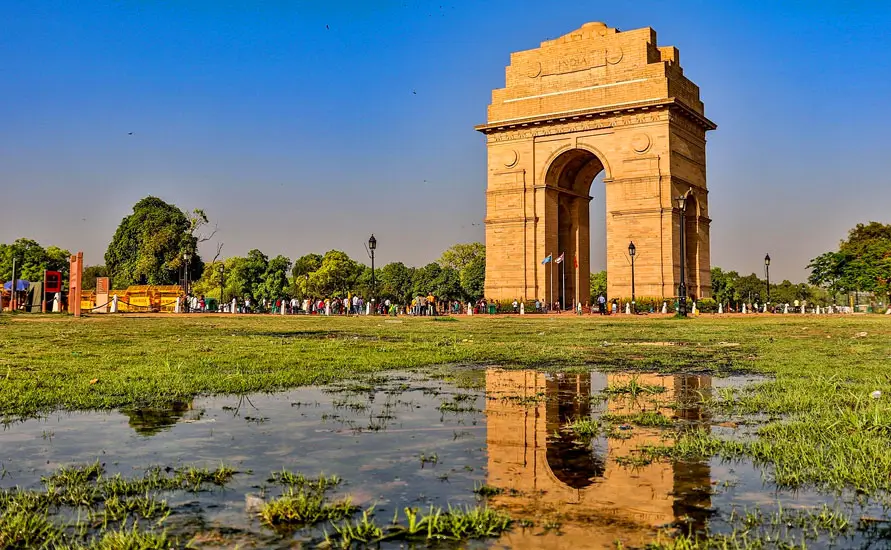
In the afternoon you drive along Rajpath, now called Kartavya Path, past the presidential palace of Rashtrapati Bhavan and the parliament area to India Gate, a war memorial arch honoring Indian soldiers who died in the First World War. Families gather on the lawns around it in the evening, and ice-cream carts and balloon sellers line the paths. If you would like a quiet hour before dinner, we can include the Lodhi Gardens, where joggers circle fifteenth-century tombs, or the Bahai Lotus Temple, which is closed on Mondays. Pack tonight for an early start tomorrow. Overnight in Delhi.
After an early breakfast you leave Delhi for Agra on the Yamuna Expressway, a fast toll road that has cut a once exhausting trip to around four hours. Beyond the outer suburbs come flat farmland in yellow and green, smoking brick kilns and village ponds where buffaloes wallow up to their noses. Clean rest stops along the way have coffee and restrooms. Lunch waits at a hotel within a short ride of the Taj Mahal, which is tomorrow's dawn appointment. If tomorrow happens to be a Friday, when the Taj is closed, we visit it this afternoon instead and swap the plan.
Your guide meets you after lunch for Agra Fort, the great red sandstone stronghold built by the emperor Akbar from 1565 and later filled with white marble pavilions by his grandson Shah Jahan. Its crescent of ramparts follows a bend of the Yamuna, and a deep dry moat once kept attackers at a distance. Today the Indian army still uses the northern section, so only part of the fort is open to visitors. Inside are the Jahangiri Mahal and the private audience hall, plus the eight-sided Musamman Burj, where tradition says an aging Shah Jahan, confined by his son Aurangzeb, gazed downriver at his wife's mausoleum. The fort is also a UNESCO World Heritage Site.
Toward sunset, drive over the bridge to Mehtab Bagh; this Moonlight Garden sits on the opposite bank, aligned with the Taj. From here there are no crowds, no ticket queues and no security lines, just a clear, wide view of the white dome and minarets reflected in the shallow water as the sun goes down. Winter evenings tint the marble rose and amber, ideal for a long-lens photo. Back at the hotel, dinner might include Mughlai dishes or the local sweet called petha. Set your alarm early for the Taj. Overnight in Agra.
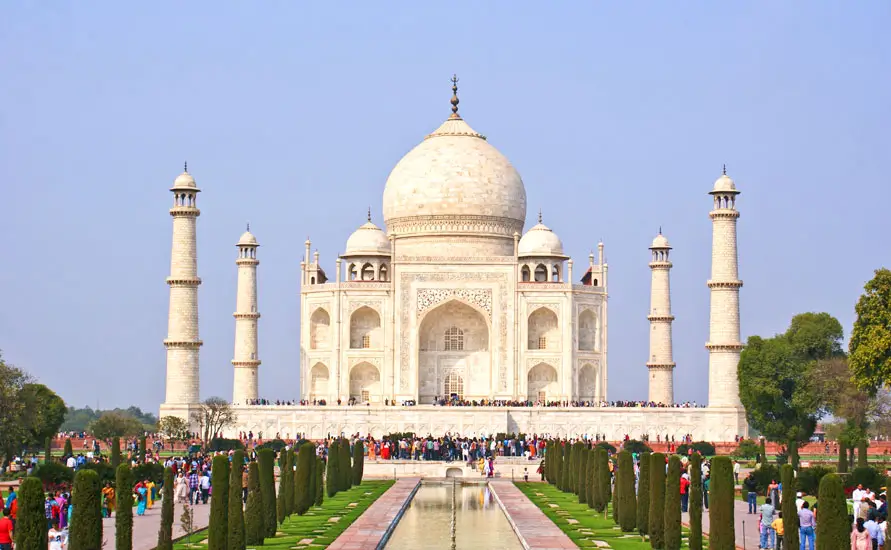
Gates at the Taj Mahal open about thirty minutes before sunrise, and arriving then is the single best decision you can make in Agra. Your guide collects you before dawn, and an electric shuttle covers the last stretch, since no fuel vehicles are allowed near the monument. Security is strict: bring only a phone, camera, passport and a small water bottle, and leave food, tripods, drones and large bags at the hotel. Shoe covers are given at the main platform. The Taj is closed every Friday for prayers at its mosque, which is why we have built flexibility into the two Agra days.
As the sky brightens, the marble changes color from grey to soft peach and then to bright white. When Mumtaz Mahal lost her life bearing their fourteenth child in 1631, her grieving husband kept some twenty thousand workers busy for about two decades on her resting place. Look for the slight outward tilt of the four minarets, the Quranic lettering that grows taller as it climbs the arch so the eye reads it as uniform, and the carnelian and lapis flowers inlaid in the panels. Breakfast is late today, followed by a nap, as the light at midday is flat and harsh and the crowds at the monument are at their peak by then.
After lunch comes Itmad-ud-Daulah, nicknamed the Baby Taj, a jewel-box tomb raised in the 1620s by Empress Nur Jahan for her father. Its walls are covered in delicate stone inlay, and it was one of the first Mughal buildings to use the technique on such a scale. If you are curious, an inlay studio nearby lets you watch artisans grind slivers of malachite and mother-of-pearl on a hand-turned wheel. There is no obligation to shop. The evening is free, perhaps for a garden dinner or an early night before tomorrow's long day on the road. Overnight in Agra.
Six hours on the road sounds long, yet two worthwhile halts split the ride to Rajasthan into easy pieces. Forty minutes west of Agra lies Fatehpur Sikri, Akbar's sandstone capital, founded in gratitude to the Sufi mystic Salim Chishti after his prophecy of a royal heir came true. The court used it as a capital for little more than a decade before moving on, probably because of water shortages, and the palaces, courtyards and audience halls have stood almost untouched ever since. The site is listed by UNESCO, and your guide brings the court life of the period into focus.
Beside the royal enclosure, the great mosque is reached through the towering Buland Darwaza, the Gate of Victory, some fifty-four meters tall. Pilgrims knot red threads onto the lattice of the saint's pearl-white shrine in its courtyard, each one a silent prayer for a child, a cure or a job. Heads should be covered inside, and shoes are left at the gate. Expect some persistent hawkers near the entrance; a polite but firm no is enough. After lunch on the highway you cross into Rajasthan, where the land becomes drier and camel carts appear beside the road.
Later a side road leads to Abhaneri, home of Chand Baori, a stepwell plunging deeper than almost any other in the country. Built around the ninth century, it drops some thirteen floors in a pattern of thousands of narrow steps arranged in zigzags on three sides, designed to reach the water table in the dry season. Beside it stand the ruins of the Harshat Mata temple with fine carved panels. Around dusk you roll into Jaipur, where a former haveli or a contemporary hotel is home until the Kerala flight. Ask the kitchen for baked wheat dumplings with lentils, the desert state's signature dish. Overnight in Jaipur.
Jaipur owes its nickname to 1876, when the walled town was washed in a salmon shade for a visit by the future Edward VII; local rules still require that color. The morning begins with the drive to Amber Fort, about eleven kilometers north of the city on a ridge above Maota Lake. Raja Man Singh began it in the 1590s, and UNESCO counts it among six hill forts of the state. We use a jeep or walk up the ramp rather than ride an elephant, as we do not support elephant rides on any of our tours.
Inside the fort your guide leads you through four courtyards, each built by a different ruler. The highlight is the Sheesh Mahal, the mirror palace, where thousands of small convex mirrors set into the walls and ceiling once reflected the light of a single candle across the whole room. The Ganesh Pol gateway is painted with fine frescoes, and the women's quarters show the screened windows through which royal ladies watched the court below unseen. Plan on two to three hours here, and wear comfortable shoes, because the floors are uneven and there are many steps between the levels.
Heading down, pause at Panna Meena ka Kund, a compact stepwell whose diagonal stairs form a neat lattice in pictures, then at the lakeshore pull-off facing Jal Mahal, a pleasure pavilion half sunk in Man Sagar. Entry to the palace itself is not permitted, but the view across the water is the main attraction. Spend the hot hours by the pool, or watch printers in Sanganer stamp cloth with teak blocks dipped in indigo and madder. Each color needs its own block, and a skilled printer lines them up by eye alone. Overnight in Jaipur.
Day two in Jaipur stays inside the walled old city, which Maharaja Sawai Jai Singh II planned in 1727 on a grid of wide streets and square blocks, unusual for its time in India. Begin at the City Palace, where a banner over the seven-floor Chandra Mahal signals that the titular maharaja is at home. The museum rooms hold royal costumes, weapons and two enormous silver urns made to carry Ganges water to London for a coronation in 1902. The four painted doorways of the Pritam Niwas Chowk each represent a season.
Next door stands the Jantar Mantar, an observatory built by the same king, who was deeply interested in astronomy and mathematics. It looks like a garden of giant abstract sculptures, but each structure is a working instrument for measuring time, tracking stars or predicting eclipses. The largest sundial is about twenty-seven meters tall and can tell the local time to within a few seconds. The site is listed by UNESCO, and your guide demonstrates how a few of the instruments are read. In the midday sun it gets very hot, so carry water and a hat.
Post-lunch, admire the Hawa Mahal, a five-tier pink screen of 953 tiny windows built so palace women could follow festivals below unseen. The best view is from a café terrace across the road. Late afternoon is for the bazaars: Johari Bazaar for jewelry and precious stones, Bapu Bazaar for textiles and leather slippers, and Tripolia Bazaar for brass and lac bangles. Bargaining tips come with the tour, and your guide will tell you honestly when a price is fair and when to walk away. Tonight, pack for tomorrow's flight to Kerala and keep your hand luggage under the airline's limits. Overnight in Jaipur.
Desert gives way to monsoon coast in a single day. No convenient nonstop flight links Jaipur and Kochi, so we book a morning departure with one change, usually in Mumbai, Bangalore or Delhi depending on the season and your dates. Count on most of the day between hotel doors. Your driver takes you to Jaipur airport after an early breakfast and helps with the check-in counter. Whenever we can, both sectors sit on one booking, which means luggage is tagged straight to Kochi and a delayed first leg becomes the carrier's problem.
As the plane descends over Kerala, the change is obvious from the window: palm trees, rivers and green paddy fields in place of the brown plains you left behind. At arrivals your new driver is waiting for the hour-and-a-half run through Ernakulam to Fort Kochi on its peninsula. The air is warm and humid, so light cotton clothes are best from here onward. Three nights are booked at a colonial-era or boutique hotel, and supper might be a grilled red snapper with lime. Overnight in Kochi.
Kochi grew rich on pepper, and for some five hundred years Arab, Chinese, Portuguese, Dutch and British merchants came here to buy it. Read it on foot before ten, while the lanes are empty and the sea breeze still blows. The Portuguese came first, in 1500, the Dutch took the town in 1663, and the British followed in 1795. Start by the low wall of the Dutch Cemetery, its mossy graves from the 1700s turned toward the waves, then follow your guide past mansions with clay-tiled roofs, louvered shutters and shady sit-outs. Many of these houses now hold small hotels, cafés and art studios.
Along the shore, giant Chinese fishing nets dip and rise on teak booms balanced by hanging rocks, each worked by a small crew. For a few rupees the men often invite visitors to haul a line, and it is harder work than it looks. The catch is modest and is sold on the spot to people who can take it to a nearby stall to be cooked for lunch. Then visit St. Francis Church, where da Gama was buried after dying in Kochi in 1524, before his son carried the remains to Portugal, and Santa Cruz Basilica with its frescoed ceiling. Both are active places of worship, so keep voices low and shoulders covered. Lunch follows at a café in a restored warehouse.
After a siesta, hop into an auto-rickshaw for the wholesale spice godowns near Mattancherry, where green cardamom and Malabar pepper are sold in gift-size bags. By five you take a seat at a small Kathakali theater to watch the performers spend an hour building up green, red and white face paint with rice paste. A narrator first decodes a few mudras, and then the play unfolds a Mahabharata episode in silence, carried only by drums, song and rolling eyes. Shows usually last about ninety minutes, and front-row seats are best for seeing the eye work, so we reserve them in advance. Afterward the actors are often happy to pose for a photo in full costume. Overnight in Kochi.
This morning concentrates on Mattancherry, the old trading district a few kilometers inland from Fort Kochi. Portuguese traders gave the Mattancherry Palace to the Kochi raja in the 1550s; Dutch renovations a century later earned it its popular name. Behind a simple whitewashed front, its bedchamber walls glow with Ramayana scenes in ochre, red and leaf green. A small gallery shows royal palanquins and costumes of the Kochi rulers. The palace closes on Fridays, so if today falls on a Friday we exchange this morning with the free afternoon of yesterday.
Next door, a lane runs into Jew Town, where the Paradesi Synagogue was founded in 1568 by a community with deep roots on the Malabar coast. The interior is small, with a brass rail around the central pulpit, glass lamps hanging from the ceiling and a floor covered in blue and white tiles brought from China in the eighteenth century. Only a handful of the community remains in Kochi today. Its doors stay shut on Fridays, Saturdays and Jewish festival days, which fixes our timing. The lane outside is lined with antique dealers, spice traders and craft stores.
In the afternoon you join a local family at their home for a hands-on Kerala cooking lesson. Grated coconut, curry leaf and spluttering mustard seed are the base for a kokum fish curry, a beans thoran and a mild stew, which you then share at the family table. It is a relaxed way to learn about daily life in a Syrian Christian or Hindu household in the city. Printed recipe cards go home in your bag. In the evening you might take a sunset walk along the beach promenade of Fort Kochi. Overnight in Kochi.
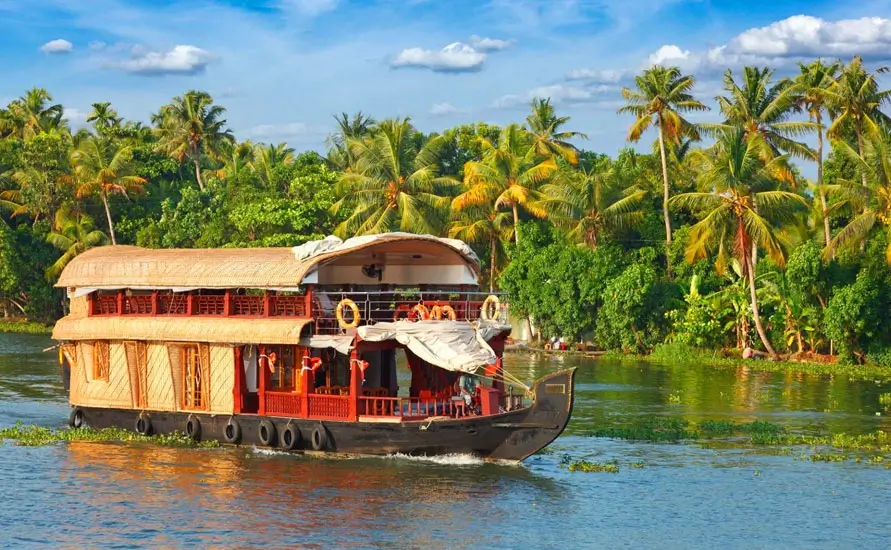
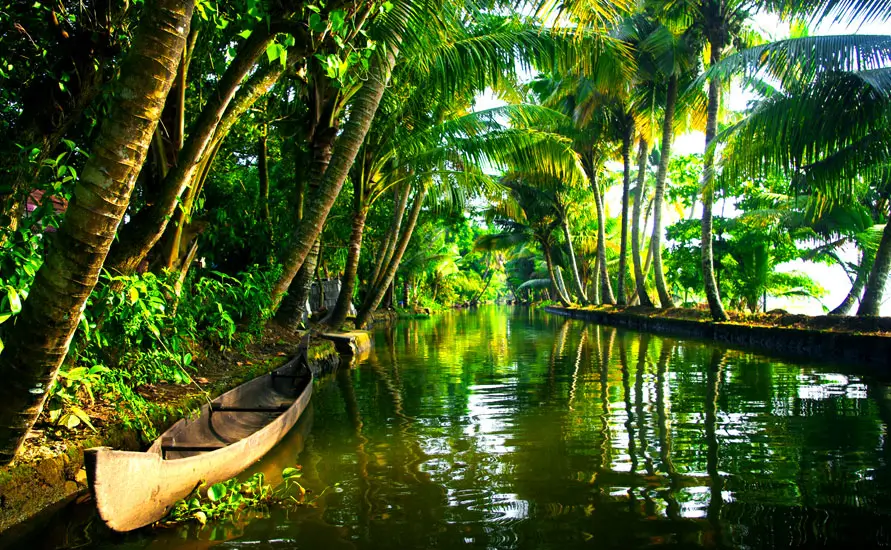
An hour and a half of coastal highway takes you to Alleppey, or Alappuzha, the hub of the backwater region, where almost every family seems to own a boat of some kind. Here, long lakes, rivers and narrow canals run parallel to the Arabian Sea, and farmers grow rice on land that lies below the water level, protected by mud and stone embankments. Your private Kerala houseboat, called a kettuvallam, is ready at the jetty around noon. Its ancestors hauled paddy and pepper to Kochi harbor, and the jackwood hull is still laced together with coconut fiber in the old way.
Three crewmen hand you chilled tender coconuts and show you an en-suite cabin under the woven palm roof. Lunch is served soon after departure: rice, a fish fry, a vegetable curry and a crunchy pappadam. As the boat moves along the main channel, you watch life on the banks at close range. Women wash clothes at stone steps, children wave from school boats, and men paddle narrow canoes loaded with coconuts or grass for their cows. White egrets and kingfishers hunt in the shallows between the patches of water hyacinth.
Around four, the boat moors by a hamlet, giving you time to stroll along the dyke between rice fields to a palm-wine shack or a small church. Kerala's regulations halt all houseboat movement by early evening so village fishermen can set their nets, and your skipper anchors well before nightfall. Dinner is cooked on board, often including a pearl spot fish caught locally, and the evening is quiet apart from the croak of frogs and distant temple music. Mosquito nets or air conditioning keep the bedrooms comfortable. Overnight on the houseboat.
Wake up early if you can, because the first hour on the backwaters is the coolest and quietest of the day, with mist on the water and fishermen already casting their nets. Breakfast is served on board, and the boat returns to the jetty by around 9 am. Your driver then takes you back north to Kochi International Airport, about two hours away, for the short international flight to Colombo. Keep your passport and Sri Lankan entry approval within reach; our team will have confirmed the island's latest admission requirements for your nationality weeks ahead.
The flight to Colombo takes about an hour, with a view of the coast and coral reefs on clear days. Past customs at Bandaranaike International, your island chauffeur-guide is waiting, and he stays with you until your final day. Since the airport lies north of the capital, we spend tonight in Negombo, a fishing town about twenty minutes away. If there is light left, walk along the beach where outrigger canoes are pulled up on the sand, or visit the old Dutch canal. Overnight in Negombo.
The early morning in Negombo belongs to the fish market, where boats come in at dawn and the catch is sorted on the beach, with seer fish, crabs, prawns and baby sharks laid out for buyers. Small fish are dried on mats in the sun along the shore, a practice that has continued here for generations. After breakfast you start the drive inland toward the hills of central Sri Lanka. The road climbs through rubber plantations, coconut groves and rice fields, and the last part runs past the Kadugannawa pass, where a viewpoint looks out over forested ridges and a tall pillar marks the old colonial road.
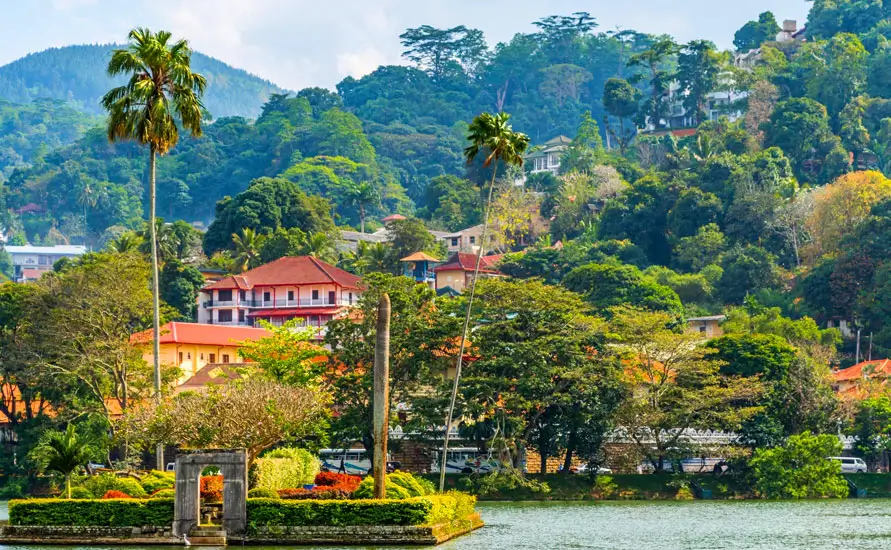
Around one o'clock you reach Kandy, seat of the island's final kingdom, and settle into a hillside hotel for two nights. The city sits around an artificial lake made in the early nineteenth century by the last king, Sri Vikrama Rajasinha, and a walk along its shore is pleasant in the afternoon. Kandy fell to the British in 1815, ending more than two thousand years of local kingship on the island, and your chauffeur-guide tells you how the city kept its role as the cultural center of the Buddhist highlands. The central market is worth a short look.
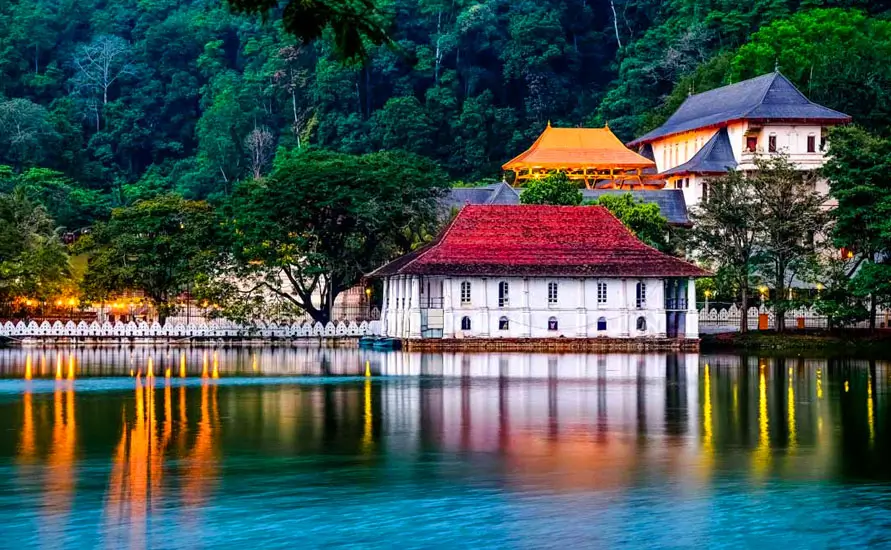
At dusk, walk to the Temple of the Tooth, whose gilded inner shrine guards the most sacred relic on the island, held by local Buddhists to be the Enlightened One's tooth. The temple and the old royal city of Kandy are listed together by UNESCO. Each evening drummers and flute players accompany a ceremony when the doors of the inner shrine are opened and pilgrims bring white lotus and jasmine flowers as offerings. Wear white or light-colored clothes covering shoulders and knees, and leave shoes at the entrance. Afterward a short performance of Kandyan dance shows fire-walking and acrobatic drumming. Overnight in Kandy.
Six kilometers outside the city lie the Royal Botanic Gardens of Peradeniya, which began as a pleasure garden of the Kandyan kings and were turned into a formal botanical garden by the British in 1843. Spread over roughly sixty hectares within a loop of the longest river in Sri Lanka, they hold avenues of royal palms, a large orchid house, a spice garden and a giant Javan fig tree whose branches cover a whole lawn. Fruit bats hang in the trees during the day. Allow two hours, and keep an eye on your snacks, as the resident monkeys are quick and bold.
Later in the morning, climb by car to a tea factory still in production and trace the leaf from withering trough to rolling machine, fermenting floor, dryer and sieve. Sri Lanka still sells much of its tea under the old name Ceylon, and the factory manager can explain why tea from higher estates tastes lighter and brighter than tea from the lowlands. A tasting session ends the visit, and you can buy fresh packs of black or green tea. Midday brings Sri Lankan rice with half a dozen curries in small bowls.
In the afternoon you can rest or visit the Bahirawakanda Buddha, a large white statue on a hill above town with wide views over Kandy and its lake, especially at sunset. A short climb leads up from the parking area, and as at all Buddhist sites, shoes are left at the base and you should never pose with your back to the Buddha image for photographs. For anyone interested in sapphires, a museum and workshop near town shows how sapphires are mined and cut. Eat in tonight or walk down to a lakeside café. Overnight in Kandy.
Down from the hills you go, bound for the southern shore. The first part of the drive descends to the lowlands through rubber estates and small towns, and then joins the expressway around Colombo, which makes the second half of the trip much quicker than the old coastal road. Orange king coconuts, hairy red rambutans and purple mangosteens are piled at stalls along the way, and a stop for a drink costs very little. If you want to break the trip, a short stop at a batik workshop shows how wax and dye are used in layers to create bright cotton prints.
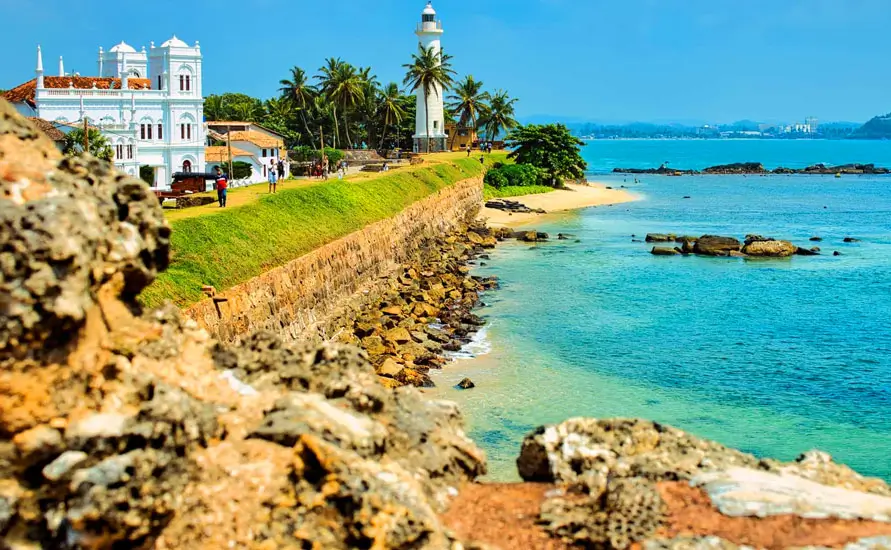
By early afternoon Galle appears, and three nights await in a small hotel within the walls or a beachfront property just outside. The town lies at the southwestern tip of Sri Lanka and has been a port since ancient times, when ships traded with Arabia, Persia and China. The Portuguese arrived in the sixteenth century, and the Dutch built most of the present fort walls after 1640. Today the old town is one of the best preserved European-built forts in Asia, and it is listed by UNESCO as the Old Town of Galle and its Fortifications.
In the late afternoon, take your first walk along the ramparts, which run around most of the fort on the sea side. Locals come here at sunset to fly kites, play cricket on the grass and watch the waves crash against the rocks below. Young men sometimes jump from the walls near the lighthouse into the sea for tips, which is risky and best watched from a distance. The fort is small and safe to walk around in the evening, and there are good restaurants in the converted merchant houses serving seafood and Sri Lankan curries. Overnight in Galle.
Your heritage walk around Galle Fort begins with a striking fact: in December 2004 the coral-and-granite bastions held back the tsunami, while the new town beyond them was badly hit. You start at the main gate, built by the British in the nineteenth century, and continue to the old gate on the harbor side, where the Dutch coat of arms with a rooster carved above it still marks the entrance. Inside the walls, streets are laid out in a grid with names such as Church Street, Leyn Baan Street and Pedlar Street, and most buildings have kept their arched verandas.
Your guide shows you the Dutch Reformed Church, built in 1755, with old tombstones set into its floor and walls, and the All Saints' Anglican Church nearby. You also see the old Dutch hospital, now a row of shops and cafés, the white Galle Lighthouse on the southeastern point and the Meeran Mosque, which looks almost like a church from the outside. The National Maritime Museum, housed in an old warehouse, has displays on the shipwrecks and sea trade of the region. Muslim, Buddhist, Hindu and Christian families all live inside the walls, and their places of worship sit side by side.
The afternoon is free. Shops along Church Street and Pedlar Street sell handmade jewelry, lace, batik and old maps, and several cafés serve good coffee and fruit juices in the shade. Sea lovers can take a ten-minute three-wheeler hop to the sheltered crescent of Unawatuna or the forest-fringed cove of Jungle Beach. Both have small cafés with sunbeds, and the water is usually calmest between December and April. In the evening, we suggest a dinner of crab curry or devilled prawns at one of the restaurants near the ramparts. Overnight in Galle.
Today is flexible and can be shaped around your interests. Many guests head east along the coast toward Koggala, where the famous stilt fishermen perch on poles above the shallow sea. Traditionally they fished for small fish with a rod during the changes of tide, and a few still do, but most of those near the main road now pose for photographs and expect a tip in return. Your guide explains the difference and can take you to a quieter stretch early in the morning. Koggala Lake, behind the beach, is good for a short boat ride past mangroves and small islands.
On one island in the lake stands a Buddhist temple, and on another a family grows cinnamon, peeling the bark from thin branches by hand and rolling it into fine quills. You can watch the work and buy freshly made sticks or cinnamon oil. Nearby, the Martin Wickramasinghe Folk Museum shows the home and books of a famous Sri Lankan writer, along with masks, puppets and old fishing boats. Lunch is at a beach restaurant, and you can take a swim in the calm water at one of the protected bays along this part of the coast.
Keen walkers may swap the lake for the small lowland rainforest reserve at Kottawa, half an hour inland, where a ranger points out endemic birds, lizards and buttressed trees. Leech socks are handy after rain, and we supply them on request. Another option is a whale-watching trip from Mirissa, about an hour east, usually run between November and April when the sea is calm. Sightings are never guaranteed, and early start times apply. Whatever you choose, the evening is back in Galle, with a final sunset on the fort walls. Overnight in Galle.
A last morning in Galle allows time for a quiet walk along the walls or a swim before checkout. Heading up the expressway to Colombo, you can detour briefly to Kalutara, where motorists drop coins at a hollow white stupa beside the river bridge for a safe road. Kalutara is also known for its mangosteens and woven reed mats. Colombo is the commercial capital of Sri Lanka, a coastal city of offices, markets, temples and colonial buildings, and it feels very different from the hill country and the southern coast you have just left.
Your city tour starts at the Gangaramaya Temple, a busy Buddhist temple near Beira Lake that is part place of worship, part museum and part school, with an odd and fascinating mix of Buddha statues, gifts from devotees, old cars and clocks. Across the water floats Seema Malaka, a meditation platform redesigned by Geoffrey Bawa. You then drive past the Independence Memorial Hall, built after the end of British rule in 1948, and the old colonial buildings around the Fort district, including the clock tower that once served as a lighthouse for ships.
In the late afternoon you walk through Pettah, the old market district, where each street is devoted to one trade, from spices and dried fish to fabric, hardware and electrical goods. Above the stalls rises the candy-striped Red Mosque, completed in 1909, and visitors are welcome outside prayer times if dressed modestly. Finish on Galle Face Green, the oceanfront promenade, with prawn fritters from a cart as kites dance overhead. Your last dinner might be crab at a harbor-side restaurant or a feast of string hoppers and curries in a local eatery. Repack your luggage for tomorrow's flight home. Overnight in Colombo.
Your final morning is unscheduled until the airport transfer. On days with an evening flight, consider the National Museum of Colombo, home to the throne of the Kandyan kings and fine bronzes, or a stroll in Viharamahadevi Park opposite. Rooms must be vacated at noon, though a paid extension is possible for a midnight flight. Your chauffeur-guide drives you to Bandaranaike International Airport, about forty-five minutes to an hour from the city, timing the transfer so that you reach the terminal at least three hours before your flight.
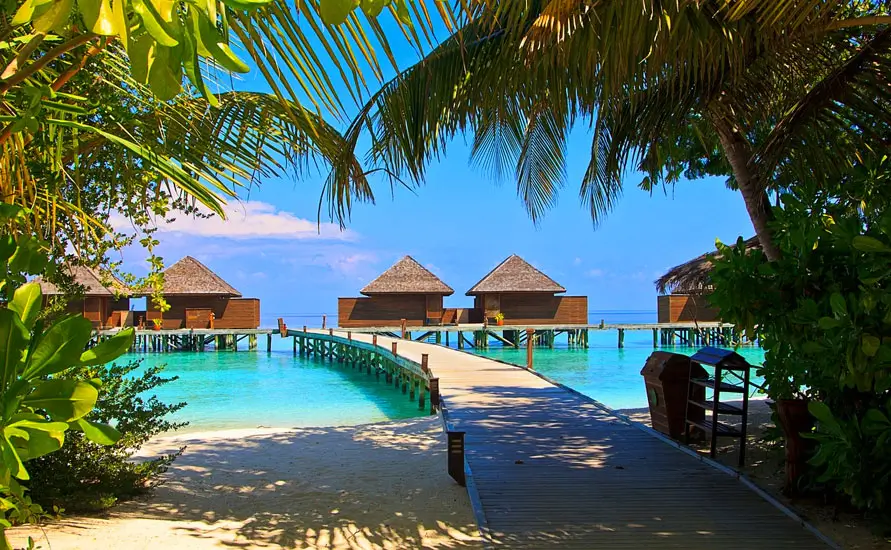
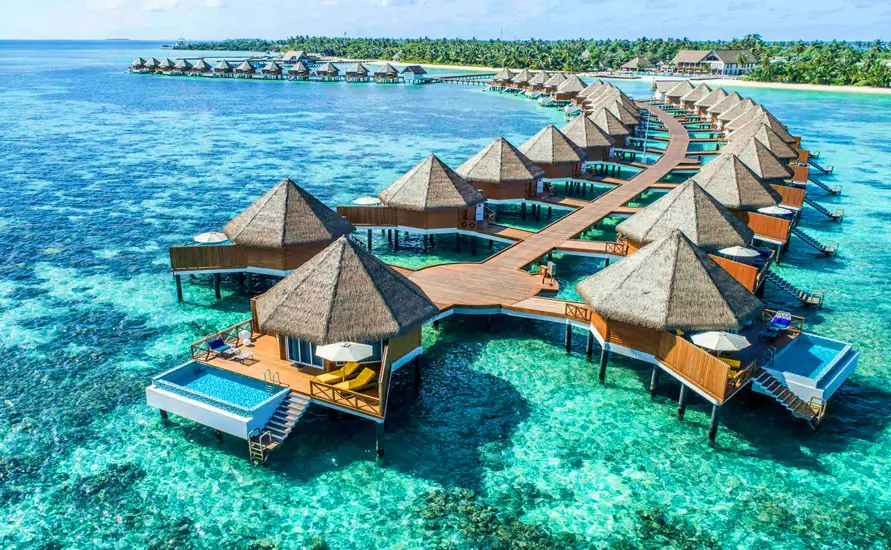
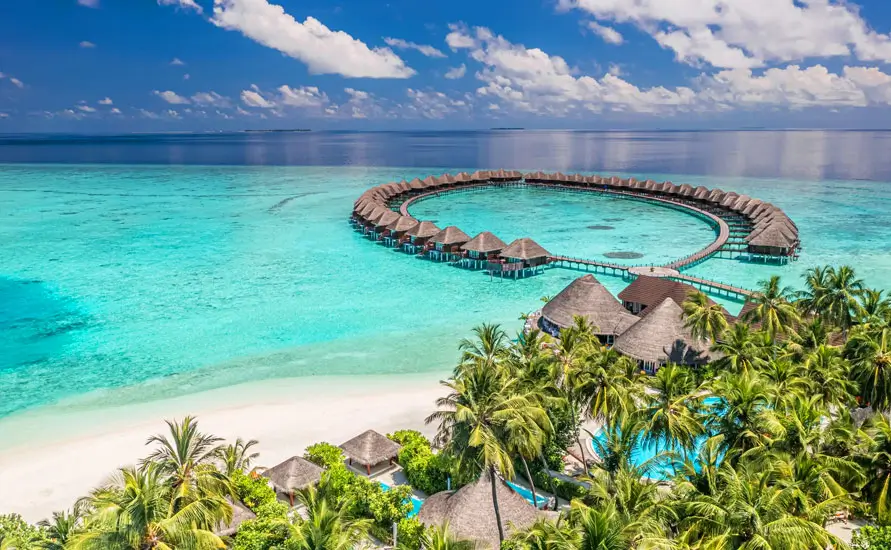
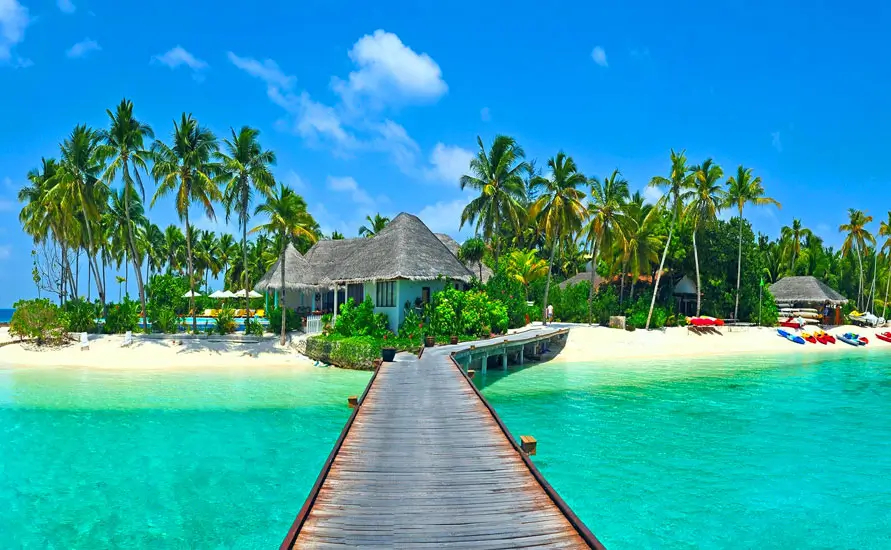
Twenty days have taken you from the Mughal tombs of Delhi and the marble of the Taj Mahal to the stepwells and forts of Rajasthan, the backwaters of Kerala, the Buddhist temples of Kandy and the Dutch walls of Galle. Most guests leave already sketching a return trip. Ask us about a short Maldives extension from Colombo or a future visit to Tamil Nadu and Karnataka.
Your Journey

N.S. Rathore & Mrs. Omlata Rathore · Managing Director
We still read every enquiry ourselves. Tell us the places you liked and our planners will send a day-by-day route with drive times and a clear price.
Every package can be customised and no pressure to book. A planner from our office replies within 24 hours with a route written for your group.
Fill this in and your planner will send a first draft itinerary.
Explore more
Kerala Backwaters Escape Kerala Backwaters Escape
 Kerala Backwaters Escape
 Kerala Backwaters Escape
 Kerala Backwaters Escape
 Kerala Backwaters Escape
 Kerala Backwaters Escape
 Kerala Backwaters Escape
 Kerala Backwaters Escape
 Kerala Backwaters Escape
 Kerala Backwaters Escape
 Kerala Backwaters Escape
 Kerala Backwaters Escape
 Kerala Backwaters Escape
 Kerala Backwaters Escape
 Kerala Backwaters Escape
 Kerala Backwaters Escape
 Kerala Backwaters Escape
 Kerala Backwaters Escape