 Kerala Backwaters Escape

South India with Sri Lanka and Maldives
Chennai – Mahabalipuram – Pondicherry – Tanjore – Trichy – Madurai – Munnar – Kochi – Colombo – Kandy – Nuwara Eliya – Ella – Yala – Galle – Colombo
At a glance
Some travelers would rather see two countries properly than five in a blur. Our Grand South India and Sri Lanka Tour is built for them. Over twenty-two days it moves at a walking pace through the temple heartland of Tamil Nadu, from the shore carvings of Mahabalipuram and the Chola masterpieces of Tanjore to the great Meenakshi complex in Madurai, then climbs into the cardamom and tea slopes of Munnar and comes down to the old harbor town of Kochi. A short flight then carries you to Colombo for the second half of the trip.
In Sri Lanka the route follows the island's spine: the royal city of Kandy, a slow ride on the hill-country railway to Nuwara Eliya, the gorges and bridges around Ella, jeep safaris in Yala National Park and finally the ramparts of Galle. Almost every stop gets two nights, and no single drive is planned over about five hours, so mornings start with breakfast rather than a suitcase. Yala's main zones normally shut for about a month from mid-September to mid-October, and on those dates we use another sector of the park or neighboring Lunugamvehera National Park instead.
The Grand South India and Sri Lanka Tour rewards curious, patient people coming from London, Amsterdam, Toronto, Sydney and similar places, as well as NRI couples who finally have three free weeks after retiring or between jobs. On the Indian side a sedan with its own English-speaking chauffeur stays assigned to you; across the Palk Strait one licensed driver-guide takes over, and specialist site guides join at the big monuments. December to March suits both countries, and every element of this South India and Sri Lanka tour can be resized, upgraded or slowed down further on request.
A long-haul arrival deserves a soft landing, and that is how the trip opens. Look for our staff member beyond the customs hall holding a board with your family name; he wheels the luggage out to a chilled vehicle parked nearby. Chennai's airport sits in the south of the city, so the run to a hotel near the center takes thirty to fifty minutes depending on traffic. Hotels hand over keys around two, though for a pre-dawn touchdown we hold the room overnight so bed comes first. Your welcome pack includes a local SIM card on request.
Formerly called Madras, Chennai began as a small English trading post in 1639 and grew into the capital of Tamil Nadu, a state of over seventy million people with its own language, film industry and food traditions. Locals are proud of their Carnatic music, their filter coffee and their idli and dosa breakfasts, and you will meet all three in the coming days. There is nothing scheduled before late afternoon, giving your body clock a little time to catch up. If you feel restless, the hotel pool or a short nap is the wisest use of the hours after landing.
Toward five o'clock, head for Elliot's Beach at Besant Nagar, quieter than the Marina and loved by evening walkers and young couples. Close by rise the whitewashed Marian shrine of Annai Velankanni and a stacked, wedding-cake temple to the eight forms of Lakshmi. Street carts sell spicy sundal made from chickpeas and coconut, and cafés along the road serve fresh juices. The sea here has strong currents, so paddle rather than swim. Supper can be simple: rice, rasam and a couple of vegetable dishes on a plantain leaf. Overnight in Chennai.
Your first full day starts at Fort St. George, where the East India Company planted its earliest Indian stronghold in 1644. Within the walls, St. Mary's Church of 1680 holds the register in which Robert Clive's wedding was recorded, while the fort museum keeps coins, swords and stiff portraits of governors. Because the state assembly and ministries now occupy much of the complex, parts are off limits and bags are screened on entry. Your local guide brings the history of the city's British origins to life, from spice trading to the wars with the French in Pondicherry.
Late morning belongs to Egmore's Government Museum, whose doors first opened in 1851, making it one of India's senior public collections. Its bronze gallery is the main reason to come: hundreds of Chola-period metal statues of Shiva, Parvati and other deities, including several versions of Nataraja, the dancing Shiva in a ring of fire. Seeing these first gives you a useful visual vocabulary for the temples ahead in Tanjore and Madurai. Fridays are its weekly holiday, and we rearrange the first days if your arrival makes that necessary. Lunch afterward introduces the peppery cooking of the Chettinad region.
In the afternoon you drive to Mylapore, the old Tamil quarter of the city. The Kapaleeshwarar Temple is busiest in the evening, when brass lamps are lit, temple bells ring and families come for worship after work. Anyone, whatever their religion, can circle the outer prakaram, and your guide links the tank, the many shrines and the gaudy tower into one story. A few minutes away stands San Thome Basilica, rebuilt in 1896 over a site associated with the apostle Thomas. Then take a quick look at the Kalakshetra crafts or a classical dance show if one is scheduled during your stay. Overnight in Chennai.
Breakfast done, the car turns onto the East Coast Road, a ribbon of tarmac squeezed between backwaters and the Bay of Bengal. Ninety minutes on, Mahabalipuram appears, once the Pallava kings' harbor and now a sleepy sculptors' village by the sand. The workshops along the main road are worth a look on the way in, with artisans chiseling granite deities, lamps and elephants for temples across the world. Many of them come from families who have worked stone here for generations, and they are happy to show visitors how a piece begins.
Your guide leads you through the UNESCO-listed monuments, which are best seen in the cooler morning hours. The Shore Temple stands at the edge of the beach, battered by sea spray for well over a thousand years, while Arjuna's Penance covers a whole rock face with gods, sages, hunters, cats and elephants carved in relief. The five Rathas are free-standing temples, each sculpted out of one granite outcrop and never used for worship. A climb to the old lighthouse gives a good overview of the site, though the steps are steep. Lunch is fresh seafood at a beachside café.
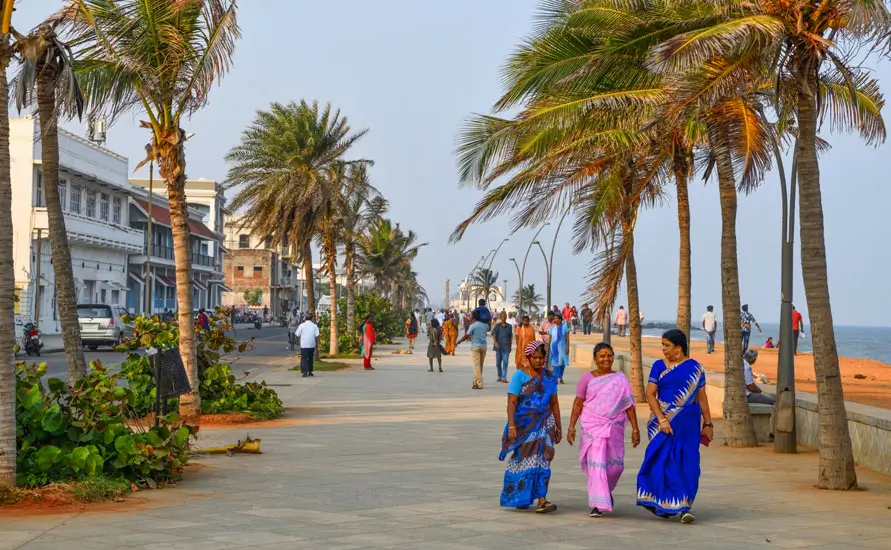
In the afternoon the coast road continues south through casuarina plantations and fishing villages to Pondicherry, also called Puducherry, which reaches you by late afternoon. This former French enclave remained French until 1954, and you will notice the difference at once: wide streets on a grid, yellow and white villas with bougainvillea over the gates, and street names in both French and Tamil. A restored colonial villa in the White Town is home for two nights. After dark, join the townspeople on the car-free beach road, Goubert Avenue. Overnight in Pondicherry.
Morning is the right time for a walk through Pondicherry, as the town was planned around the sea breeze and its shady streets stay comfortable until about ten. Beginning beside the Gandhi statue and the memorial to French soldiers, your guide leads you inland past the consulate, the old French school and the pastel facade of the Notre Dame des Anges, rebuilt in 1855. Over the drainage canal lies the Tamil town, where house fronts have stone benches for neighbors to sit on and doorways carved in teak, an area most day-trippers never see.
Inside the grey walls of the Sri Aurobindo Ashram, silent visitors may file past the flower-strewn samadhi of the philosopher and his collaborator, known simply as The Mother. Photography is not allowed inside and shoes are left outside. Nearby, the Manakula Vinayagar Temple is dedicated to Ganesha and is busy from early morning with local worshippers, its walls covered in gilded panels showing the many forms of the god. After this, lunch might be a crêpe or a French-style café meal in the White Town, or a Tamil thali at a local restaurant.
In the afternoon, head ten kilometers north to Auroville, the experimental global settlement inaugurated in 1968 with soil from over a hundred countries. From the reception pavilion a woodland path, about a kilometer long, leads to the spot where the public can view the golden Matrimandir from outside. Places in the inner meditation hall are limited and need an advance request, so mention it when you book. Return to town for a dinner of French or Creole cooking. Bring a hat and water, since the forest walk has little shade near midday. Overnight in Pondicherry.
Two great temples break up the longest road day of the Tamil Nadu section. Your first halt, Chidambaram, holds the Thillai Nataraja Temple, revered as the stage on which Shiva danced the universe into motion. Its golden roof covers the inner shrine, and its gopurams are carved with the 108 classical dance poses of Bharatanatyam. Rather than a state board, the Dikshitar priestly families have managed worship here for centuries, a rare arrangement. Non-Hindus may visit the outer halls and corridors. Footwear stays at the eastern entrance, and male visitors are often asked to go bare-chested beyond the first enclosure.
Southwest of there stands Gangaikondacholapuram, built by Rajendra I to celebrate his troops' march north to the Ganges around 1025. Little is left of the royal city, but its great temple survives in an open lawn, almost empty of visitors on most days. Seek out the north-wall carving of the god honoring his devotee Chandesha with a wreath of flowers, which some historians link to the king's own victories, and the brick-and-plaster Nandi on the lawn. UNESCO groups it with tomorrow's two shrines as the Great Living Chola Temples. Benches under the neem trees make a pleasant spot for a picnic lunch packed by your hotel, as eateries close by are very basic.
The final hour of the drive takes you through the fertile Kaveri delta, where rice paddies, banana groves and coconut palms line the roads, and small villages hold their own temples and water tanks. By late afternoon you pull into Tanjore, called Thanjavur on road signs, for a two-night stay. From here the Cholas once commanded a sea-faring empire reaching Sri Lanka and Southeast Asia. Dinner tonight is at your hotel, with time to rest before a full day of sightseeing. Ask the kitchen for a Thanjavur-style meal of rice, sambar and crisp vadai. Overnight in Tanjore.
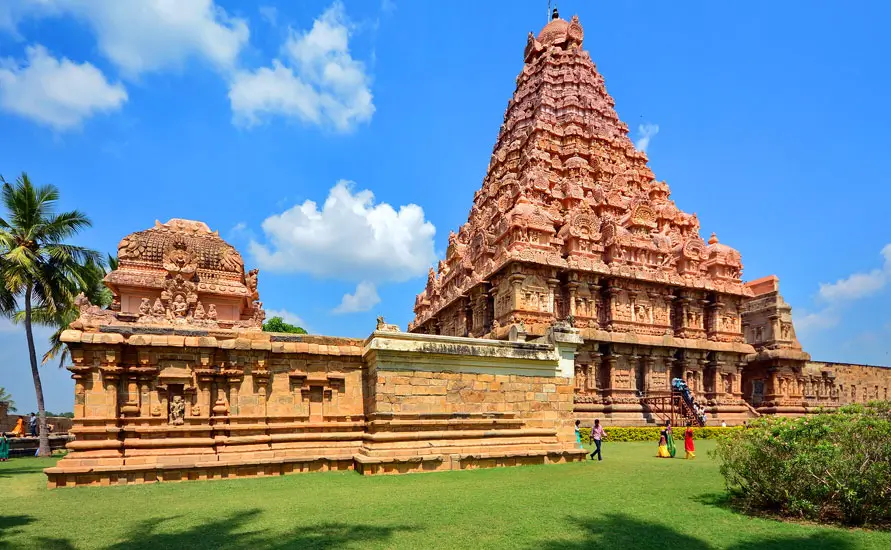
Rajaraja Chola I completed the Brihadeeswarar Temple around 1010, and it remains one of the greatest achievements of Tamil architecture. Its tower rises about sixty-six meters and is topped by a huge capstone that local tradition says was hauled into place along an earthen ramp several kilometers long. Morning light is best for the carved walls, so you arrive early with your guide. Inside, a giant Nandi carved from one stone faces the main shrine, and the corridor around the courtyard holds a long row of lingams and fading Chola murals. The temple is still in daily worship, so dress modestly.
Mid-morning brings the Thanjavur Royal Palace, a rambling complex enlarged by Nayak and later Maratha kings. Its gallery is packed with Chola metal icons, and the Saraswati Mahal library guards palm-leaf texts in several scripts, some on medicine and music. The palace is a little run down in places, but the bell tower and the Durbar Hall give a sense of its former grandeur. Nearby workshops produce the well-known Tanjore paintings with gold leaf and the bronze casting that still uses the lost-wax method. Our guide makes sure you see the Sangeeta Mahal, a hall said to carry sound beautifully.
After lunch a forty-minute ride brings you to Darasuram, beside Kumbakonam, and its Airavatesvara Temple, a twelfth-century work of Rajaraja II. It is smaller than Tanjore's temple but carved in extraordinary detail, with miniature dancers, musicians and acrobats on almost every pillar. Wheels and prancing horses turn the entrance hall into a stone chariot, and a short flight of steps is said to sing when tapped. On the way back, there is time to visit a village where bronze casting is done in family workshops. The evening is free in Tanjore for dinner and a rest. Overnight in Tanjore.
Sixty kilometers upriver sits Trichy, short for Tiruchirappalli, a trading town astride the Kaveri. Begin on the river island of Srirangam, almost wholly filled by the Ranganathaswamy Temple, ranked among the biggest working Hindu sanctuaries anywhere. Its seven rings of walls contain whole residential streets and markets, and the southern Rajagopuram climbs to roughly seventy-three meters. Non-Hindus may visit the outer courtyards and the Hall of a Thousand Pillars, but not the innermost shrine. A rooftop viewpoint, open with a small ticket, looks out over the golden vimana and rows of towers.
Back across the river, the Rockfort rises out of the center of Trichy, a granite outcrop about eighty meters high and one of the oldest rocks in the world, by some accounts. Over four hundred steps hewn into the stone climb past ancient cave shrines to the little Ucchi Pillayar Temple, a Ganesha sanctuary on the crown. Plan half an hour up, barefoot, so mornings beat midday when the stone heats up. From the top, the view takes in the river, Srirangam and the city's markets. Macaques patrol the stairway, so bags with snacks should stay zipped.
After lunch, a highway through scrubland and boulder hills takes you to Madurai, home of the Sangam poets and a seat of Tamil learning for over twenty centuries. Two nights are booked here. Madurai is a temple city in the most literal sense, as its old streets are laid out in squares around the Meenakshi Temple, named after the Tamil months and festivals that take place in each. After sundown, a rooftop café near the east tower makes a fine vantage point for the floodlit gateways. Jasmine sellers crowd the temple lanes at night. Overnight in Madurai.
Madurai's day starts before dawn, when flower sellers bring jasmine into the city and the first pilgrims arrive for morning prayers. Post-breakfast, enter the Meenakshi Amman Temple with your guide, where the warrior princess Meenakshi, with eyes shaped like fish, is worshipped beside her Shiva husband. The complex covers about fourteen acres and is enclosed by fourteen gopurams covered in thousands of colorful painted figures. Before entering, every phone and camera is handed in at the deposit counter, and the two innermost shrines are reserved for Hindus. The guide explains the stories behind the sculptures in the long pillared halls.
The Hall of a Thousand Pillars inside the temple has been turned into a small museum of bronze and stone images, and some of its pillars ring with musical notes when tapped. Next to the temple, the Pudhu Mandapam is an old pillared hall now filled with tailors and fabric stalls. After lunch comes the Thirumalai Nayak Palace, whose stucco arches and fat white pillars blend Dravidian and Islamic ideas from the 1630s. Time permitting, the Gandhi Memorial Museum keeps the stained dhoti from the evening of 30 January 1948 when Gandhi was assassinated.
Toward nine you go back for the nightly palliyarai rite, in which priests bear the god's image by palanquin to Meenakshi's bedchamber amid drums, oil lamps and chant. The procession moves through the corridors to the sound of nadaswaram music and the smell of camphor, and visitors may watch from the side as long as they keep a respectful distance. It is one of the most memorable rituals you can see in South India. A short ride returns you to the hotel. Arrive fifteen minutes early to find a good spot near the corridor. Overnight in Madurai.
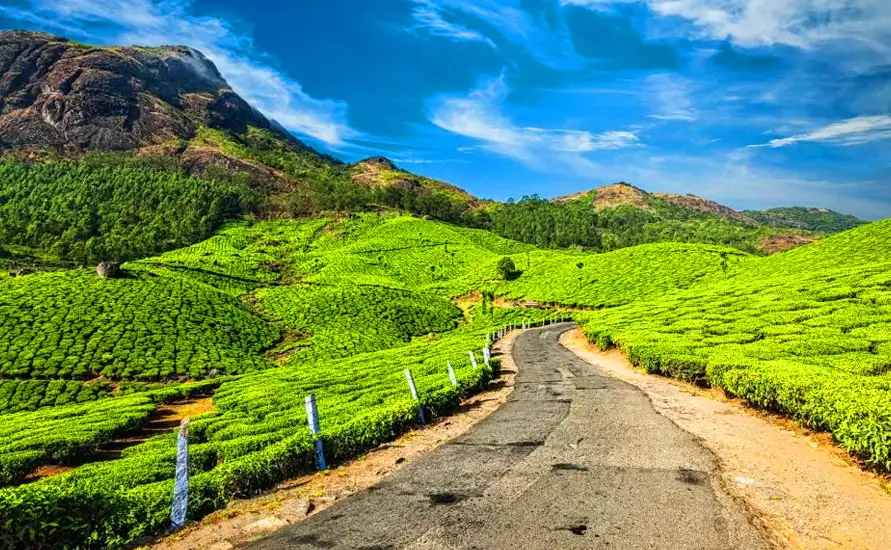
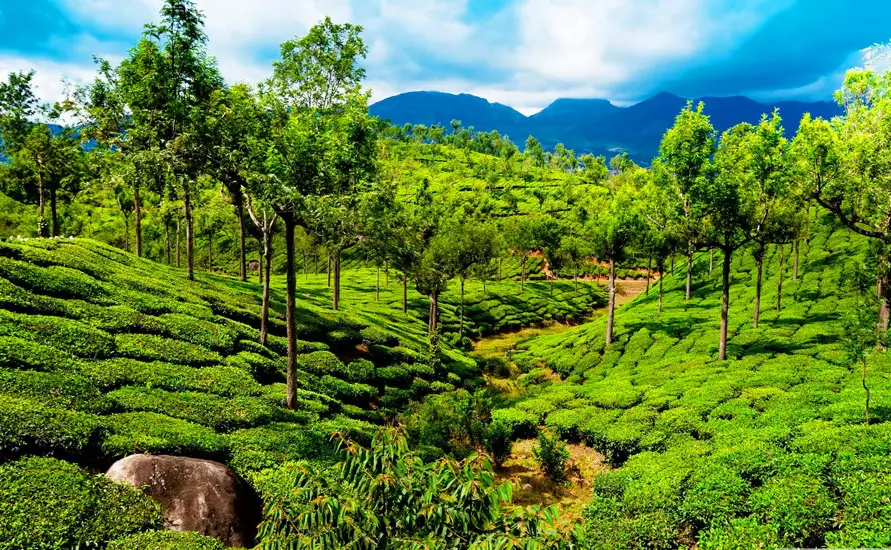
Westward the car points this morning, toward the wall of hills that marks the Kerala frontier. The road crosses the town of Theni, surrounded by vineyards and coconut groves, and then begins to climb through the Bodi hills toward the pass at Bodimettu. Here the scenery changes dramatically: rocky slopes give way to cardamom forests, spice gardens and finally neat rows of tea bushes covering every hill. Dozens of switchbacks follow; your driver takes them gently, pausing at lookouts where the lowlands spread out beneath you and farmers sell green pods by the handful.
As you approach Munnar, the air turns noticeably cooler and the hillsides shine green with tea. Sitting near 1,600 meters, the settlement grew from the 1870s when Scottish and English growers cleared the slopes, trying coffee before tea won out. Today most of the estates belong to a large company that is partly owned by its workers. Two nights are reserved at a plantation bungalow or a valley-view resort. Warm layers are useful in the evenings here, especially between December and February, when temperatures can fall below ten degrees. Expect cooler air with each bend and the scent of cardamom drying on mats.
The remaining hours stay unscheduled. If you are feeling active, a short walk through the nearby tea rows lets you meet the women who pluck the leaves by hand, often carrying the baskets on their heads. Resident naturalists at several properties lead short bird walks where you might hear the whistling thrush or spot a flash of red minivet. Toward dusk, a family spice plot nearby shows pepper vines, vanilla orchids and cardamom clumps sharing the shade. Ask for a fireplace room on cold nights; some estates still keep wood stoves in their old planter cottages. Overnight in Munnar.
Be at the gate of Eravikulam National Park soon after opening: its rolling shola grasslands shelter the endangered Nilgiri tahr, a wild goat native to these hills alone. Private cars stop at the barrier, and official minibuses shuttle you up to the Rajamalai section, where the animals feed calmly beside the tarmac. The park also holds the Anamudi peak, the highest in South India at about 2,695 meters. Each spring the reserve shuts for the kidding season, roughly February into April, with dates set annually, and we check them against your trip.
Back in town, the company-run Tea Museum at Nallathanni displays a vintage rolling machine, planters' photographs and a film on how the estates began. A demonstration in the small factory shows how green leaves become black tea, and a tasting room offers several grades to try. Afterward, drive out to Mattupetty Dam, whose lake offers short pedal-boat or speedboat rides. En route lie a cattle-breeding farm set up with Swiss help and Echo Point, beloved of shouting honeymooners. Gift packs of high-range tea are sold at the counter, and the staff will vacuum-seal them for the flight.
By late afternoon you may catch an optional Kalaripayattu display at a small theater in town. This old Kerala fighting system mixes acrobatic jumps with bouts using staffs, swords and shields, all packed into an hour. If you prefer to rest, the resort's gardens and views are reward enough. Top Station, a cliff-edge lookout on the state line, can be added if you would rather watch cloud spill over the ridge. Supper at the resort usually includes a Kerala curry or two. Kalari seats are first come, first served, so we reserve tickets. Overnight in Munnar.
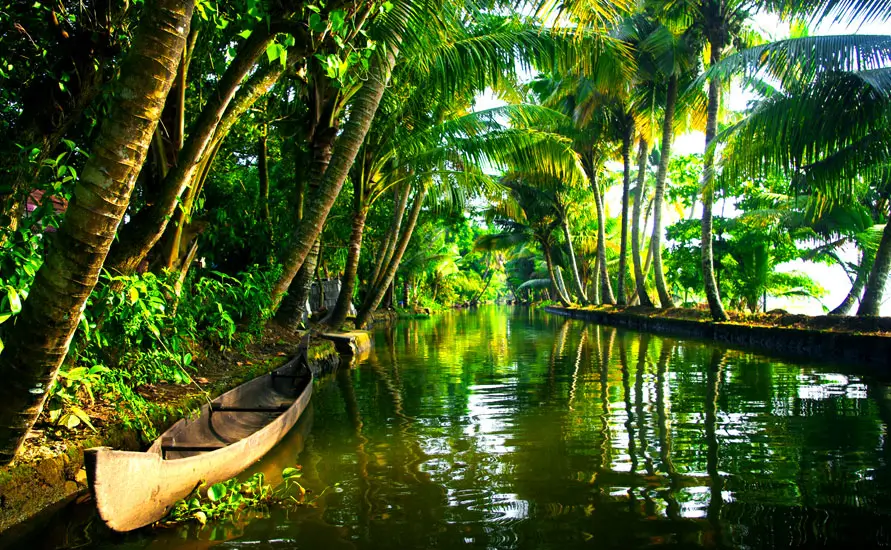
After a last walk through the tea rows, you leave Munnar and descend toward the coast. The road winds down through cardamom and rubber plantations, past villages where bamboo baskets and pineapples are sold by the road, and then reaches the waterfalls of Cheeyappara and Valara, which are full and loud after the monsoon. As you lose height, the air warms and the vegetation becomes more tropical, with banana plantations, jackfruit trees and coconut palms. Drivers here rarely pass a tea shack without stopping for a glass of milky chai and a hot pazham pori.
You reach Kochi, the commercial capital of Kerala, by early afternoon. The city spreads over the mainland district of Ernakulam and several islands linked by bridges and ferries, with the historic area of Fort Kochi at the tip of a peninsula facing the Arabian Sea. A converted colonial bungalow there is booked for two nights. Fort Kochi has kept many old buildings from its Portuguese, Dutch and British periods, and it is easy to walk around, with plenty of cafés and art galleries in old warehouses. In certain winters the old godowns also host a major contemporary art biennale.
Toward sunset, wander past the shoreline Chinese fishing nets; high water brings the busiest hauls. The crews haul the nets up in a slow rhythm, and the small catch is sold to passers-by or to the stalls behind the beach, where cooks will fry it for you with spices. Container vessels and ferries slide through the channel as the light fades. Later, order lacy rice hoppers with vegetable ishtu or a tiger prawn roast at a seafront kitchen. Tea stalls near the jetty serve sweet milky coffee as the light goes. Overnight in Kochi.
Fort Kochi is best covered on foot, and your guide sets off with you straight after breakfast. You start at St. Francis Church, a modest Portuguese-founded building where the navigator was buried for fourteen years before his remains went to Lisbon. The church is still used by the Church of South India, and its plain interior holds old Dutch and British memorial stones. You continue past the colonial bungalows on the parade ground and the Santa Cruz Cathedral Basilica, rebuilt in the early twentieth century, then walk to the old Dutch quarter, where narrow lanes and tiled houses recall the period when Kochi was a Dutch trading post.
Next is Mattancherry Palace, a Portuguese present to the Kochi rajas around 1555. Its murals of the Ramayana and the stories of Krishna are among the finest in the state. Around the corner, the 1568 Paradesi Synagogue shines with Cantonese porcelain tiles underfoot and hanging glass lamps. Since Friday shuts both sites and the synagogue also rests on the Sabbath and Jewish festivals, we slot this morning on a Sunday to Thursday. In the lanes outside, shops sell antiques, spices, carpets and handicrafts from all over India. Ask the guide about the Jewish families who still live nearby.
Afternoon hours are your own, and by evening a seat waits at a small Kathakali hall. Arrive about an hour early to see the elaborate make-up being applied, a process that can take hours for the leading characters. The story is told entirely through gestures, facial expressions and music, and a short explanation is usually given before the show. Dinner under the trees in a courtyard café rounds off India; pack tonight for the island. Eye movements, called navarasa, express nine emotions, and watching them up close is a large part of the pleasure. Overnight in Kochi.
Your driver takes you to Kochi International Airport for the short flight to Colombo, which takes about an hour. Allow about an hour from Fort Kochi to the terminal at Nedumbassery, and we set the pickup accordingly. Remember to keep your passport, ticket and Sri Lankan entry approval within easy reach; our office briefs you in advance on what Sri Lanka currently asks of travelers holding your passport. At Colombo's airport in Katunayake, the Sri Lankan driver-guide who will be with you until the final morning is waiting in the arrivals area.
A toll road brings you into the capital in under an hour for a single night in the city. If daylight remains, wander Galle Face Green, the sea-facing lawn where hawkers fry isso wade, lentil fritters crowned with whole prawns. You might also walk past the old Dutch Hospital building, now restored with restaurants and shops. Dinner might be at one of these, perhaps a crab curry or a plate of kottu roti. Overnight in Colombo.
Inland to Kandy is today's direction, with a first halt at the Kelaniya Raja Maha Vihara, a Buddhist temple about twenty minutes from Colombo that is believed to have been visited by the Buddha himself. Its walls are covered with murals showing scenes from his life and the history of Buddhism in Sri Lanka, and its large white stupa is a center of pilgrimage. Every full moon, or poya, is a public holiday and the shrine fills with worshippers in white. Wear white or light clothes covering shoulders and knees, and remove your shoes and hat before entering the temple grounds.
The road to Kandy climbs gradually through rubber estates, pineapple farms and spice gardens. Halfway, you can stop at a spice garden in Matale or near Kadugannawa to see cinnamon, nutmeg, pepper and cloves growing, and learn how they are used in Ayurvedic medicine. By early afternoon you are in Kandy, where two nights are planned. The city, surrounded by green hills, was the capital of the last Sinhalese kingdom until the British took it in 1815, and it remains the cultural and religious center of the island today. Packets of cinnamon bark and clove oil make light souvenirs.
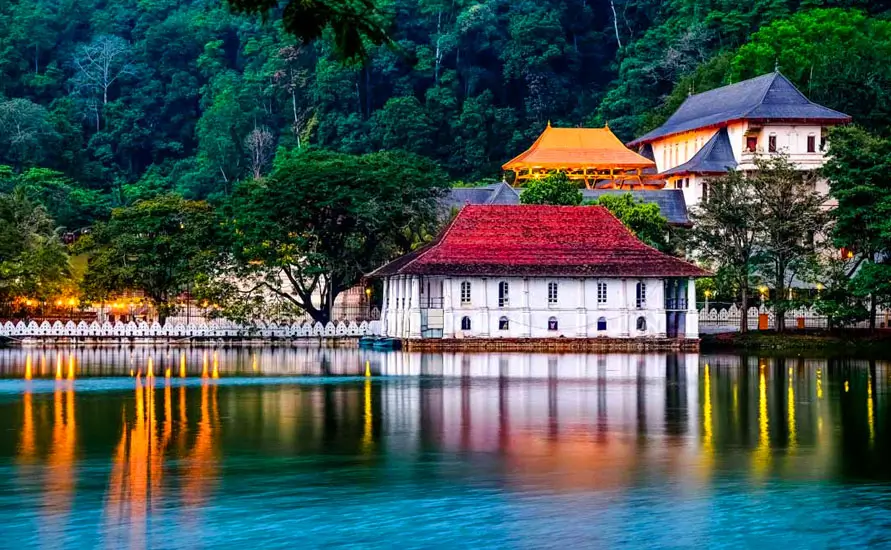
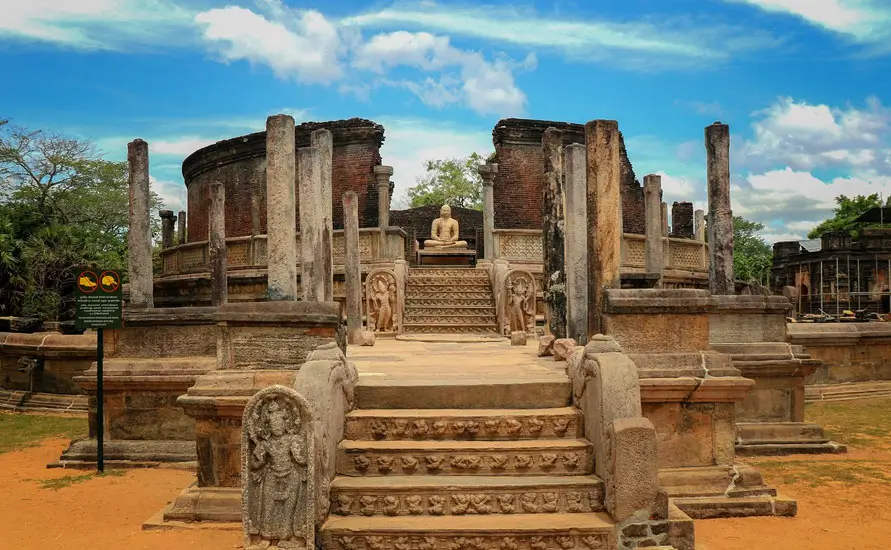
Late in the day comes the lakeside Temple of the Tooth Relic, inscribed by UNESCO together with the sacred city around it. The tooth itself stays hidden within nested golden reliquaries; what you witness is the evening puja, when drums thunder and the shrine-room doors swing open briefly. You can also see the museum and the old royal palace next door. Afterward, a performance of Kandyan dance, with its drumming, acrobatics and fire-walking, ends the day. Remember to wear clothes covering knees and shoulders, ideally in white, and leave shoes in the free shelter by the entrance. Overnight in Kandy.
Start the morning at the Royal Botanic Gardens in Peradeniya, laid out in a bend of the island's longest river just outside the city. The gardens hold more than four thousand species, including a famous orchid house, a palm avenue and a huge Javan fig tree with branches spreading over an entire lawn. You also see trees planted by visiting royals and statesmen. Fruit bats hang from the trees during the day, and families picnic on the lawns. A walk of two or three hours covers the main areas, and there are cafés for a cold drink or a light lunch.
After lunch, thirty minutes of country lanes lead to Embekke Devale, whose drumming hall rests on timber columns carved with dancers, wrestlers, double-headed eagles and goose motifs. Nearby, the Lankathilaka and Gadaladeniya temples, set on rocky hills, show different styles of Sri Lankan Buddhist and Hindu architecture. This trio of temples is rarely crowded, and the road between them runs through rice fields and small villages, giving you a quiet look at rural life in the hill country. Your chauffeur-guide explains the history of each site. Painted lotus ceilings and old moonstones reward the slow visitor.
Back in town, stroll around Kandy Lake, dug on the orders of King Sri Vikrama Rajasinha early in the nineteenth century. A path around it offers views of the Temple of the Tooth and the hills, and the white walls along the lake are decorated with patterns of clouds. You can also visit the central market or the arts and crafts center for handicrafts, masks and lacquer work. Dinner is at the hotel, with time to pack a small bag for tomorrow's train ride; the main luggage travels with your chauffeur-guide by road. Overnight in Kandy.
Rail fans wait all trip for this one: the hill-country train carries you from Kandy up to Nanu Oya, the railhead for Nuwara Eliya. The ride takes about four hours and is one of the loveliest rail rides in Asia, winding past tea plantations, waterfalls, mountain villages and forest. Reserved seats in the first or second class, or in an observation saloon when available, sell out quickly in high season and must be booked as early as the system allows. If seats cannot be secured, your chauffeur-guide drives you instead, about three hours, with stops at a tea factory and waterfalls.
Your luggage travels ahead with the car, so you can relax and enjoy the view. Vendors walk through the carriages selling snacks such as roasted peanuts, samosas and wade, and local families chat and share food with fellow passengers. Many travelers lean out of the open doors for photos, but this is risky, so keep a firm hold and stay away from the edge. As the train climbs higher, the air becomes cooler and the hills more dramatic, with tea estates covering steep slopes. Your chauffeur-guide meets you at Nanu Oya station for the short drive into town.
Perched near 1,900 meters, Nuwara Eliya developed as a colonial sanatorium where officials escaped the lowland heat. It is sometimes called Little England for its red-brick post office, mock-Tudor hotels, golf course and racecourse. You check in to a colonial-style hotel or a tea estate bungalow for two nights. Before dinner, loop around Gregory Lake or through Victoria Park's flowerbeds. Nights are cold here, so bring a sweater or a light jacket. Ask the hotel to light a fire in the lounge, a colonial habit still kept up in many old bungalows here, and order a pot of local tea. Overnight in Nuwara Eliya.
An early start, around 5:30 am, takes you to Horton Plains National Park, a high plateau of grassland and cloud forest about an hour's drive from Nuwara Eliya. A walking trail of about nine kilometers loops past World's End, where the land drops nearly 900 meters to the valleys below, and Baker's Falls, a pretty cascade surrounded by forest. Mist usually rolls in by mid-morning, so the earlier you start, the better the view. Sambar deer graze near the visitor center, and the park is home to many endemic birds. Wear sturdy shoes and bring a warm layer.
After a late breakfast or brunch back in town, you visit a working tea estate near Nuwara Eliya. This region produces some of the finest high-grown Ceylon teas, known for their light, delicate flavor. Inside the factory, staff walk you along the line from wilting racks to rollers and ovens, and then pour samples from pekoe to dust grade. Many estates have cafés with views of the plantations. Afterward, you might visit the Hakgala Botanical Gardens, about ten kilometers from town, where roses, ferns and orchids grow in a cool, damp setting on the slope of a mountain.
On the road near Hakgala stands the Sita Amman Temple, a small Hindu shrine on the bank of a stream. According to Ramayana tradition, this is the place where Sita was held captive by Ravana, and Hindu pilgrims, especially from India, come to pray here. Marks on the rock by the stream are believed by devotees to be the footprints of Hanuman. The temple is colorful and peaceful, and your guide explains the legend respectfully. In the evening you return to Nuwara Eliya, perhaps for high tea at one of the old colonial hotels. Overnight in Nuwara Eliya.
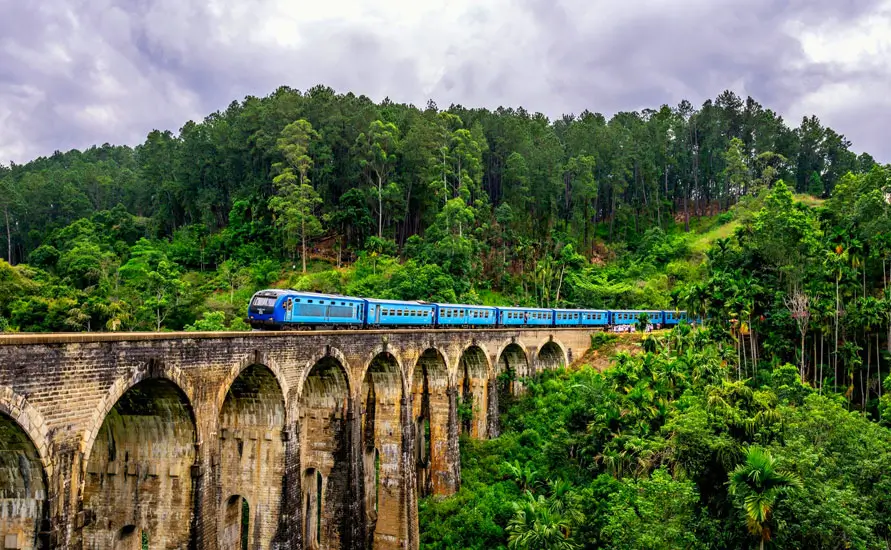
Leaving Nuwara Eliya after breakfast, you drive south through tea country to Ella, a small village surrounded by hills and valleys, popular with walkers and backpackers. The road passes through the Uva region, whose teas are known for their bright, strong flavor. At Ella your first stop is the Nine Arches Bridge, a brick-and-stone viaduct finished around 1921 over a jungle gorge. Trains cross it a few times a day, and your guide checks the timetable so you can watch one pass, framed by jungle and tea. Paths to the bridge can be slippery after rain, so wear good shoes.
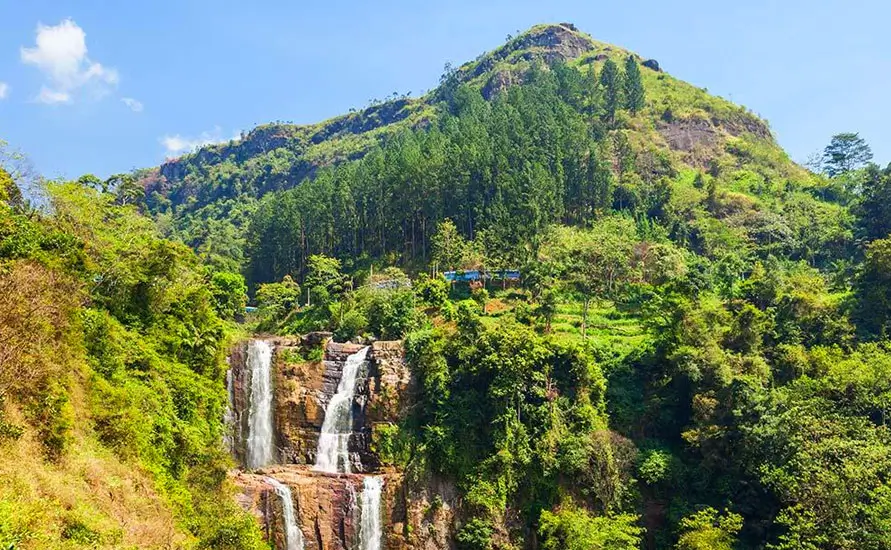
Then tackle Little Adam's Peak, a forty-five-minute uphill stroll through tea bushes to a grassy top overlooking Ella Gap. The path is well-marked and suitable for most fitness levels. After lunch in Ella, you continue down through the Ella Gap past Ravana Falls, a waterfall linked by tradition to the Ramayana story, where Ravana is said to have hidden Sita in a nearby cave. The road then drops steeply to the lowlands, and the climate becomes hot and dry, with scrub forest replacing the tea gardens. Carry water and sunscreen for the climb.
Late afternoon brings you to Tissamaharama, close to Yala National Park, where a bush lodge or a lakeside hotel is booked for two nights. Tissamaharama has a large white stupa and a reservoir where birds gather at sunset, including painted storks, pelicans and herons. The evening is quiet, with the sounds of frogs and insects outside. Dinner is at the lodge, and your naturalist explains the plan for tomorrow's safari. If your dates fall in the mid-September to mid-October window, when Blocks 1 and 2 usually close for the dry season, the plan uses another block or neighboring Lunugamvehera National Park. Overnight in Yala.
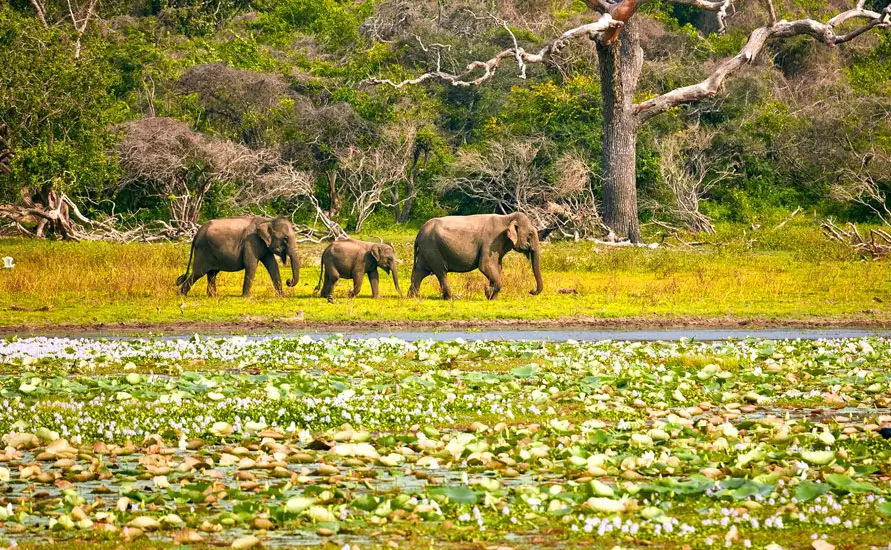
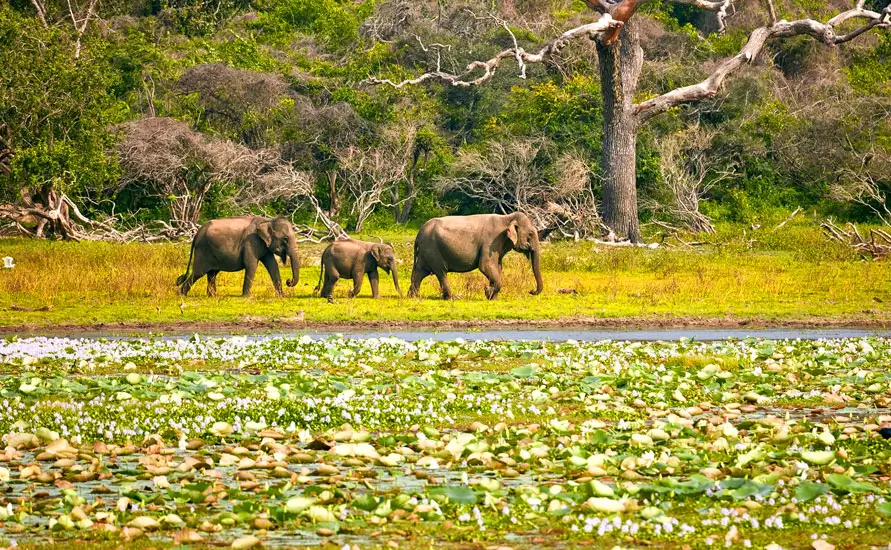
Yala is Sri Lanka's best-known wildlife park, covering a large area of dry forest, scrub, lagoons and beaches along the southeastern coast. Its reputation rests on the spotted cats: few places on earth pack more leopards into each square kilometer, and elephants, sloth bears, mugger crocodiles and buffaloes share the ground. Your morning safari leaves at dawn in a private open jeep with a driver and tracker, when animals are most active. Sightings are never guaranteed, but your tracker knows where leopards have been seen recently, and good patience usually brings rewards. Pack binoculars and a hat.
Your safari continues until late morning, when the heat makes the animals hide in the shade. Lunch and a siesta follow back at the lodge. The busiest part of the park, Block 1, can get crowded with jeeps around a leopard sighting, and your driver is instructed to keep a respectful distance and not to chase animals. Park rules forbid getting out of the vehicle except at designated points. Yala also has a long sandy coast, and the jeep may stop near a beach where the 2004 tsunami struck, marked by a memorial for those who died there.
In the afternoon, a second safari takes you back into the park until sunset, when the light turns golden and elephants often come to the water holes to drink and bathe. You may see peacocks displaying, mongooses running across the track and eagles hunting from the treetops. If Block 1 is closed during your visit, we arrange safaris in another part of the park, such as Block 5, or in Lunugamvehera National Park next door, where elephants gather around the reservoir on most days. Return to the lodge for a barbecue dinner under the stars. Overnight in Yala.
Wildlife country fades behind you as the road swings west along the southern coast toward Galle. The route passes through the fishing towns of Hambantota, Tangalle and Matara, with beaches, coconut groves and colorful boats along the way. Near Dondra, the southernmost point of Sri Lanka, a tall white lighthouse stands on a headland, and a short stop gives you a view of the open ocean stretching toward Antarctica. Long before European ships appeared, this southern shore traded cinnamon and sapphires with Arab and Chinese sailors, as your driver-guide recounts.
Lunch is in Mirissa, a beach town known for its curved bay, palm trees and seafood restaurants. Between November and April, it is also the main base for whale watching in Sri Lanka, with chances of seeing blue whales, sperm whales and dolphins. If you would like to join a whale-watching boat, we can arrange it as an optional extra, but it means an early start and a night in Mirissa, which can be added to the plan. Otherwise, after lunch, you can relax on the beach or walk up to Parrot Rock for a view of the bay.
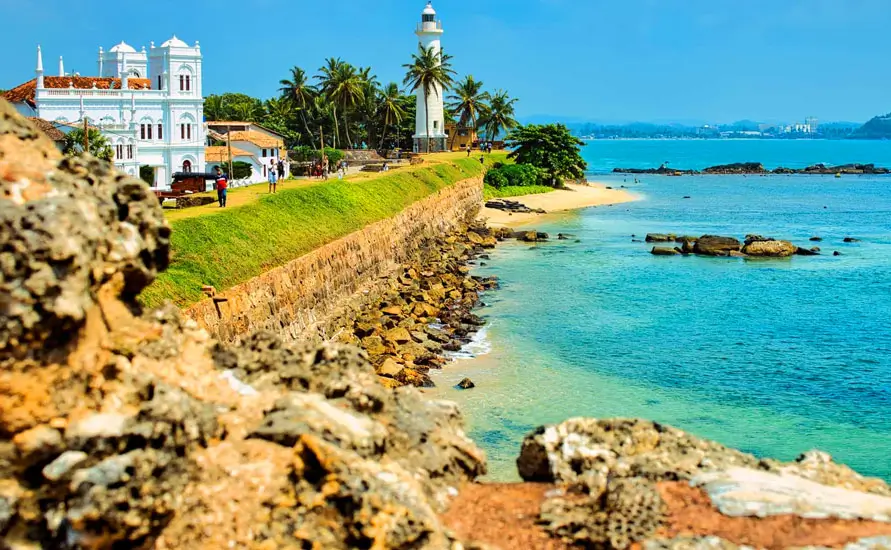
In the late afternoon you reach Galle, the historic port city on the southwestern coast. For the final two nights you stay within the bastions of Galle Fort or at a seafront hotel just beyond. Portuguese soldiers threw up the first defenses; after 1640 Dutch engineers replaced them with today's bastions, and UNESCO now protects the whole walled town. In the evening, take a walk along the ramparts at sunset, when locals come out to play cricket and fly kites. Dinner is at a restaurant inside the fort. Overnight in Galle.
A heritage guide takes you through Galle Fort, whose grid of lanes and arcaded houses survive largely as the Dutch laid them out. Beginning under the VOC monogram on the harbor gate, the route passes the Dutch Reformed Church, the former commander's residence, the clock tower and the lighthouse. Today's residents are Sinhalese, Moor, Tamil and Burgher households, some living in houses their ancestors occupied for two hundred years. The Dutch Reformed Church floor is paved with old tombstones, some with skulls and hourglasses carved on them, and the clock tower went up in 1883, paid for by townspeople to honor a much-loved physician.
After that, the Maritime Museum displays objects recovered from wrecks in Galle harbor, and a private mansion museum crowds antique typewriters, coins and porcelain into old rooms. Between the museums, you can stop for a coffee or a fresh fruit juice in one of the cafés in the old houses, many of which also sell jewelry, lacework and handmade clothes. The fort is compact and easy to walk around, and the sea breeze keeps the heat down even in the middle of the day. Lace makers from the nearby villages sell tablecloths and collars worked by hand on wooden bobbins.
Afternoon means sea time. A short drive takes you to Unawatuna or the reef pools at Thalpe, where you can swim in calm water, snorkel near the reef or relax under a palm tree. Turtles are sometimes seen near the shore. In the evening, return to the fort for a farewell dinner, perhaps with fresh seafood and Sri Lankan curries, and a last look at the ramparts in the moonlight. Before bed, agree the pickup time with your driver-guide. Snorkel gear can be hired at both beaches for a small fee. Overnight in Galle.
Departure day begins with the coastal expressway north to Bandaranaike International Airport at Katunayake. Allow around three hours with Colombo traffic, and pickup is set for a comfortable check-in three hours before your departure. Late departures leave time for a final swim at Galle or lunch and shopping in the capital. On request we also reserve a short-stay room close to the terminal.
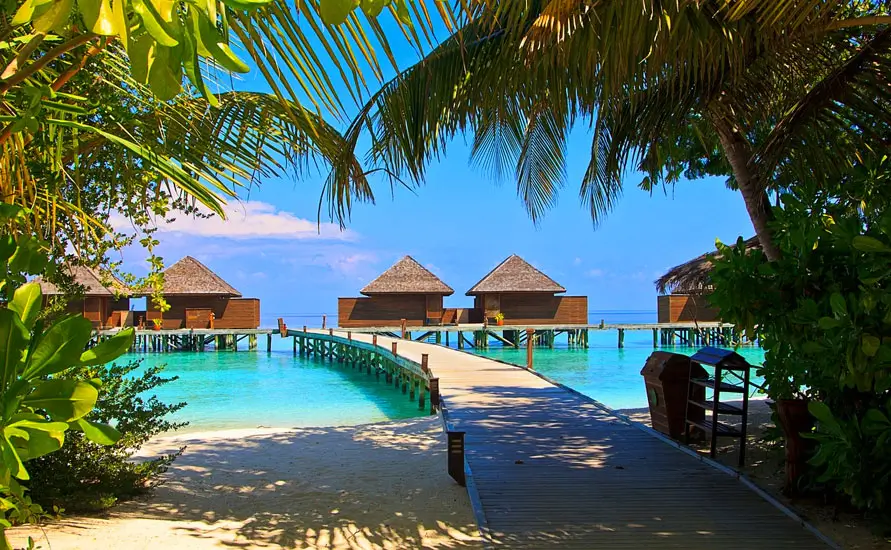
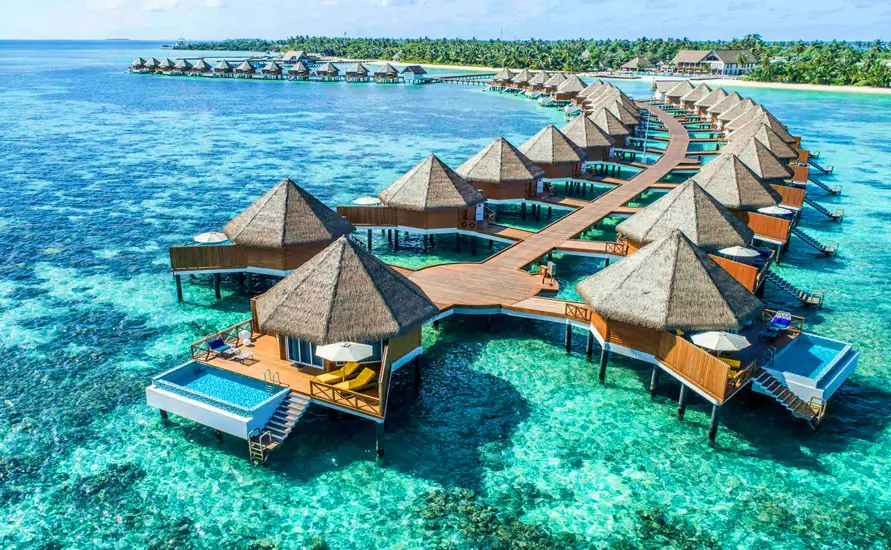
Over twenty-two days you have seen the temples of Tamil Nadu, the hills and backwaters of Kerala, the sacred city of Kandy, the tea country, the wildlife of Yala and the colonial walls of Galle. We hope this slow and thorough route has given you a real feel for both countries, and that you leave with memories of their people, food and landscapes. When you feel ready for the Himalaya, Rajasthan or a Maldives atoll, our planners are a message away.
Your Journey

N.S. Rathore & Mrs. Omlata Rathore · Managing Director
We still read every enquiry ourselves. Tell us the places you liked and our planners will send a day-by-day route with drive times and a clear price.
Every package can be customised and no pressure to book. A planner from our office replies within 24 hours with a route written for your group.
Fill this in and your planner will send a first draft itinerary.
Explore more
Kerala Backwaters Escape Kerala Backwaters Escape
 Kerala Backwaters Escape
 Kerala Backwaters Escape
 Kerala Backwaters Escape
 Kerala Backwaters Escape
 Kerala Backwaters Escape
 Kerala Backwaters Escape
 Kerala Backwaters Escape
 Kerala Backwaters Escape
 Kerala Backwaters Escape
 Kerala Backwaters Escape
 Kerala Backwaters Escape
 Kerala Backwaters Escape
 Kerala Backwaters Escape
 Kerala Backwaters Escape
 Kerala Backwaters Escape
 Kerala Backwaters Escape
 Kerala Backwaters Escape