 Kerala Backwaters Escape

South India with Sri Lanka and Maldives
Bangalore – Kabini – Bandipur – Negombo – Yala – Udawalawe – Colombo
At a glance
Two countries, two big cats and one shared animal: that is the simple idea behind our South India and Sri Lanka Wildlife Tour. The first half of the trip is spent in the forests of southern Karnataka, where Kabini on the edge of Nagarhole and the neighboring Bandipur Tiger Reserve hold some of the best tiger habitat in India, along with large herds of Asian elephants. A short flight from Bangalore then takes you to Sri Lanka, where the dry scrub of Yala is famous for leopards and Udawalawe for the elephants that gather around its reservoir.
The South India and Sri Lanka Wildlife Tour runs on safari time. Most days start before six with a jeep or canter drive and end with an afternoon session, with a long rest in the middle when the animals do the same. On the Indian side, every drive inside Nagarhole and Bandipur runs in vehicles of the Karnataka Forest Department, and seats are allotted subject to availability under whatever park rules apply that week. In Sri Lanka you travel in private safari jeeps with park trackers, and our local driver-guide handles the road sections.
This India Sri Lanka wildlife safari suits photographers, birders and families with older children who are happy to rise early. The months from October through May suit both countries well, though one point is checked before any booking is confirmed: Yala Block 1 usually closes for several weeks in the dry season, most often between September and October. Should your travel dates overlap with it, your drives shift to another Yala block or to nearby Bundala, so no safari day is lost.
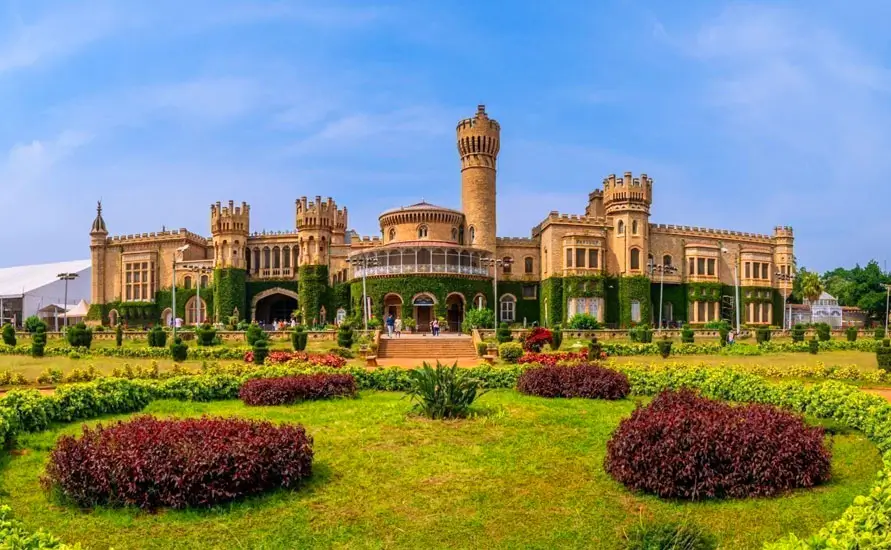
Binoculars come out later; first comes Kempegowda International Airport, where our Bangalore staff spot you by the placard they hold up in the arrivals area and load your bags into a cool, private car. Getting into Bangalore needs roughly sixty minutes, or more when commuters fill the roads, and the route passes rows of glass office towers that explain why the city is called India's technology capital. Since many long-haul flights touch down after midnight, nothing is planned before lunch. Hotels hand over keys from about 2 pm, though a guaranteed early check-in can be added at the time of booking. Your welcome pack includes the safari schedule, forest rules and our 24-hour phone number.
Around 3 pm a licensed city guide joins you for an easy first outing. Lalbagh Botanical Garden is a good place to start for nature lovers, with old rain trees, a Victorian-style glass pavilion used for the flower shows and a rocky outcrop that is among the oldest exposed rock formations in the region. Early birders often spot Indian pond herons, purple-rumped sunbirds and black kites here, which makes it a useful warm-up for the binoculars. Over a cup of coffee, your guide runs through the safari days ahead, including what to wear in the forest and why bright colors stay in the suitcase.
Later you drive into the old part of the city to see the carved wooden pillars of Tipu Sultan's Summer Palace from the outside or on a short visit, and the busy lanes of KR Market, where flower sellers pile marigolds and jasmine in huge heaps. Dinner is up to you, and a banana-leaf meal at a Karnataka-style eatery makes an easy first taste of local food. Your driver goes over tomorrow's timings, since an early departure helps you beat the traffic out of Bangalore and reach the forest in good time for the afternoon session. Overnight in Bangalore.
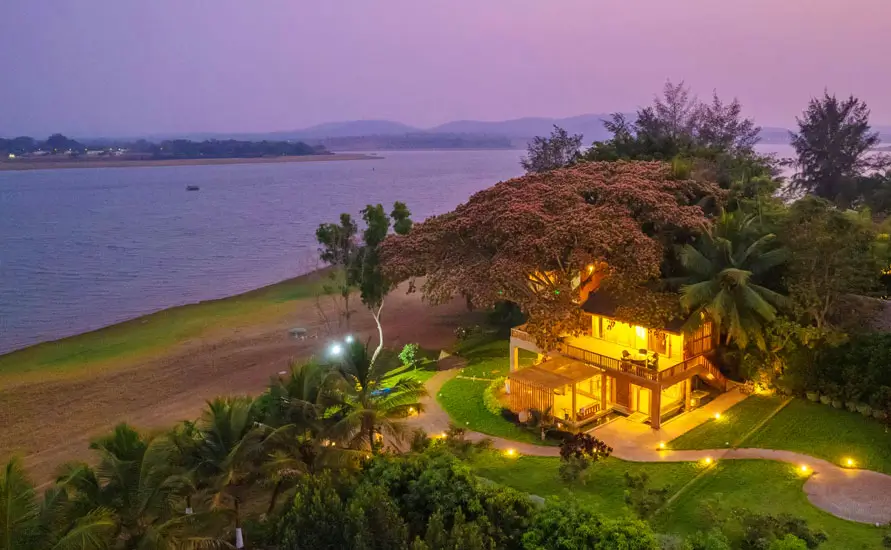
Leaving straight after an early breakfast, you head south-west through Mysore district towards the Kabini River, the river that separates Nagarhole National Park from the forests to its south. Sugarcane, coconut palms and small market towns line the way, and the last stretch narrows to a country lane lined with tamarind trees. Halfway, a break at a roadside eatery gives time for filter coffee and a leg stretch. You arrive at a riverside wildlife lodge around lunchtime, with enough time to settle into your room, change into muted forest clothes and charge your camera batteries before the first drive of the trip.
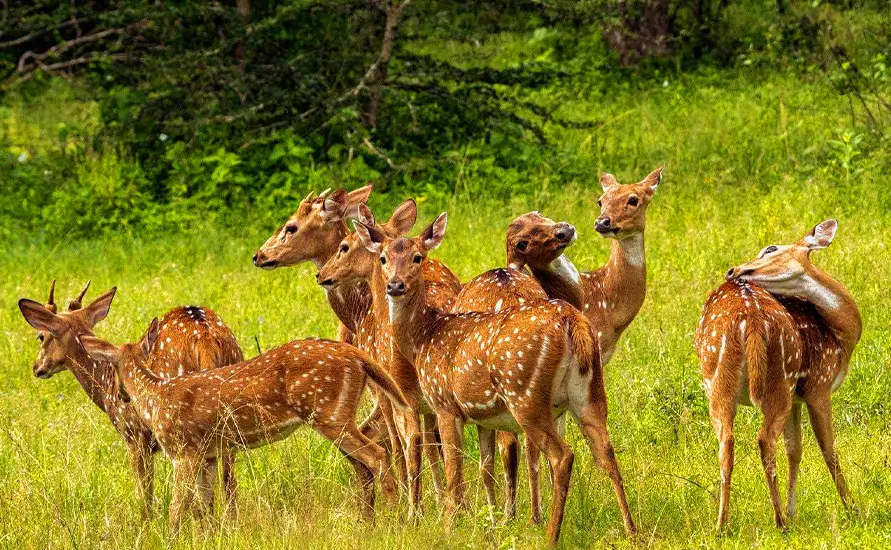
Afternoon safaris on the Kabini side start around 3 pm and run for about three hours. Inside the park, all drives use forest department jeeps or canters with a driver and guide who know the tracks well, and seats are confirmed subject to availability on the day. The forest here is dry deciduous, with teak, rosewood and tall stands of bamboo that turn golden in the hot months. Spotted deer, sambar, gaur and langur monkeys are common sightings, and the alarm call of a chital or a langur is often the first sign that a tiger or leopard is moving nearby.
Kabini has a reputation among Indian wildlife photographers for its leopards, and in recent years for rare sightings of a melanistic leopard, but no guide can promise a particular animal, and the best drives are often the ones with patient waiting by a waterhole. Once the gates shut at dusk, it is back to the lodge for a hot shower and a dinner that is often laid out under the trees. A naturalist usually gives a short evening talk about the tiger reserve, its history as a royal hunting ground and the work that brought its tiger numbers back. Overnight in Kabini.
A wake-up call before dawn, a cup of tea and a biscuit, and you are back at the safari pick-up point as the forest gates open around 6 am. Morning is the coolest part of the day and often the most active one, with peacocks calling, wild dogs out hunting and elephants moving between feeding grounds. Dholes, the rust-red wild dogs of the Indian forests, turn up regularly around Kabini, usually in packs of five to fifteen, and watching them coordinate a chase is one of the great sights of the southern forests. Your guide explains how each species shares the forest without competing too directly for the same prey.
A full breakfast waits at the lodge, followed by a long rest through the midday heat. This is a good time to sort your photos, read in a hammock or watch the birds that come to the lodge grounds, including Malabar pied hornbills, orange-headed thrushes and the noisy jungle babblers that move about in groups of seven or so. The Kabini backwaters form a large reservoir behind a dam, and when the water level drops in the dry months it exposes grassy shores that attract elephants from the surrounding forests, sometimes in gatherings of a hundred animals or more.
In the late afternoon you choose between a second jeep or canter safari and a boat outing on the backwater, depending on availability and what was seen in the morning. From the water, the view is quite different: herds of elephants with calves feeding at the edge, marsh crocodiles basking on mud banks, ospreys and river terns overhead and the occasional sambar wading through the shallows. Either way, you return to the lodge at dusk with time to share sightings around a campfire if the weather allows. Overnight in Kabini.
One last morning drive on the Kabini side gives you another chance at the big cats before breakfast and checkout. Afterward, the road to Bandipur runs south through HD Kote and a string of small villages where cattle graze along the verges and farmers dry ragi millet on the tarmac. The two parks are close neighbors, and together with Mudumalai, Wayanad and Sathyamangalam they make up one large forest block within the Nilgiri Biosphere Reserve. That connection matters for wildlife, since tigers and elephants move freely between the reserves without regard for state borders.
When India launched Project Tiger in 1973, Bandipur Tiger Reserve was among the original group of protected areas, and it remains one of the best-guarded forests in the south. The main highway between Mysore and Ooty passes through the park, and traffic on it is banned at night to protect the animals that cross it. You check in to a forest-edge lodge or jungle resort outside the park boundary around lunchtime and rest for a couple of hours. Your naturalist outlines the differences between Bandipur and Kabini, including the more open scrub in parts of Bandipur, which can make spotting easier.
For the afternoon drive you report to the forest department counter at the park entrance, where jeeps and canters are allotted subject to availability on the day. Gaur, the largest wild cattle species in the world, are common here and look startlingly large up close. Elephant herds, sambar, chital and barking deer appear regularly, and on lucky drives you may see a tiger walking down the dirt track or a sloth bear digging for termites. Birders can look for raptors on dead branches and green bee-eaters perched low along the track. Overnight in Bandipur.
An early start once again brings you to the reception area in the soft grey light before sunrise. Morning drives in Bandipur follow routes through dry deciduous forest, teak plantations from the colonial era and patches of scrub where the canopy opens up. The crew in your vehicle reads the signs: fresh pugmarks on the track, claw marks scored into bark and the alarm calls that travel through the forest when a predator is on the move. Tigers are seen regularly in Bandipur, but not on every drive, so we recommend treating each sighting as a bonus rather than a target.
Breakfast follows at the lodge, and the hours until lunch belong to you. Some guests like to take a short guided nature walk along the lodge perimeter, where the naturalist points out medicinal plants, termite mounds and footprints left by night visitors. Others prefer to sleep, swim if the lodge has a pool, or sit with a field guide trying to name the morning's birds. Bandipur is also a good place to learn about the human side of conservation, since many villages border the reserve and conflicts with elephants raiding crops are a real concern for farming families here.
In the afternoon you head out on a second drive, often on a different route from the morning, to give you a wider view of the reserve. Late light suits photography, as the animals move towards water and the forest colors deepen. Leopards are sometimes found resting on rocky outcrops or in the fork of a tree, and Indian rock pythons occasionally appear on warmer days. After dinner, take a few minutes to pack your bags and clean the dust off your lenses, since tomorrow is mostly a travel day ending in Sri Lanka. Overnight in Bandipur.
You can join an optional early drive if it fits your flight time, or simply have a relaxed breakfast before checking out. The road back to Bangalore passes Gundlupet and the outskirts of Mysore before joining the expressway towards the city and the airport on its northern edge. Allow about six hours with a lunch stop, as Bangalore traffic can add time without warning. Your driver drops you at the departures terminal for an evening flight to Colombo, a short hop of about one and a half hours that is direct on most days. Keep your India e-Visa printout handy for exit formalities.
On arrival at Bandaranaike International Airport, a Sri Lankan colleague of ours holds up your name at the exit, then drives you a short distance to a hotel in the coastal town of Negombo, close to the airport and well placed for an early start south. Ahead of your trip, our team tells you which Sri Lankan entry permit your passport currently needs, as the electronic authorization process has been revised several times in recent years. Local SIM cards and currency exchange are available in the arrivals hall if you need them. Eat early and get some rest, because tomorrow starts before sunrise. Overnight in Negombo.
Sri Lanka's road network has improved a great deal in the past decade, and the Southern Expressway now carries you most of the way from the west coast to the dry south-east in a fraction of the old travel time. Leaving Negombo after an early breakfast, you skirt Colombo, join the expressway and run south past rubber plantations, paddy fields and the coconut palms of the Matara area before turning inland towards Tissamaharama, the small town that serves as the base for Yala National Park. Your driver-guide speaks English and points out roadside fruit stalls, Buddhist shrines and the occasional water monitor crossing the road.
You check in to a safari lodge or hotel near the park around lunchtime, and after a quick meal you set out in a private open safari jeep for an afternoon drive. Yala is divided into several blocks, and Yala Block 1 is the best known for its leopards, which here live in open scrub, among rocky outcrops and by the lagoons. Block 1 often closes for several weeks between September and October each year, and if your dates fall in that period, your safari moves to another block of Yala or to Bundala National Park a short drive away.
Along with leopards, Yala is home to Sri Lankan elephants, sloth bears, wild water buffalo, spotted deer and mugger crocodiles in the waterholes. The park sits right on the coast, and a memorial near the beach recalls the 2004 tsunami, which struck this shoreline hard. Jeeps must leave the park by about 6 pm, so you watch the sun drop over the scrub before driving back to the lodge. Dinner tonight might be your first Sri Lankan rice and curry, with several small dishes of dhal, jackfruit and coconut sambol. Overnight in Yala.
Gates open at 6 am, and jeeps line up at the park entrance well before that, so expect a very early alarm and a packed breakfast. Your tracker and driver head for areas where leopards were seen recently, scanning the low branches, rock tops and shaded spots beside the road. The Sri Lankan leopard is a subspecies found only on this island, and with no tigers or lions to compete with, it is the top predator here and often moves more openly by day than leopards in India do. Patience counts more than speed, and the best guides wait quietly rather than racing between radio reports.
Depending on your preference, you can stay out for a full-day safari with a packed lunch eaten at one of the permitted picnic spots, or return to the lodge around 10 am for breakfast and rest. In the hot middle hours, many animals stay out of sight, so the lodge pool and a nap are a sensible choice for most travelers. Bird life in and around Yala is excellent, with painted storks, lesser adjutants, Indian peafowl and crested hawk eagles easily seen. An hour of easy birding on the bund of the big Tissamaharama tank can also be added.
The afternoon drive follows a different loop if possible, past lagoons where crocodiles bask, open grassland where elephants feed and the rocky areas where leopards often rest in the late light. Sloth bears are shy but seen most often when certain trees are in fruit, usually around the middle of the year. At dusk you return to the lodge with the day's sightings to compare. If you would like a break from safaris, ask about the Kataragama temple complex nearby, a sacred site for Buddhists, Hindus and Muslims, which is busiest during evening rituals. Overnight in Yala.
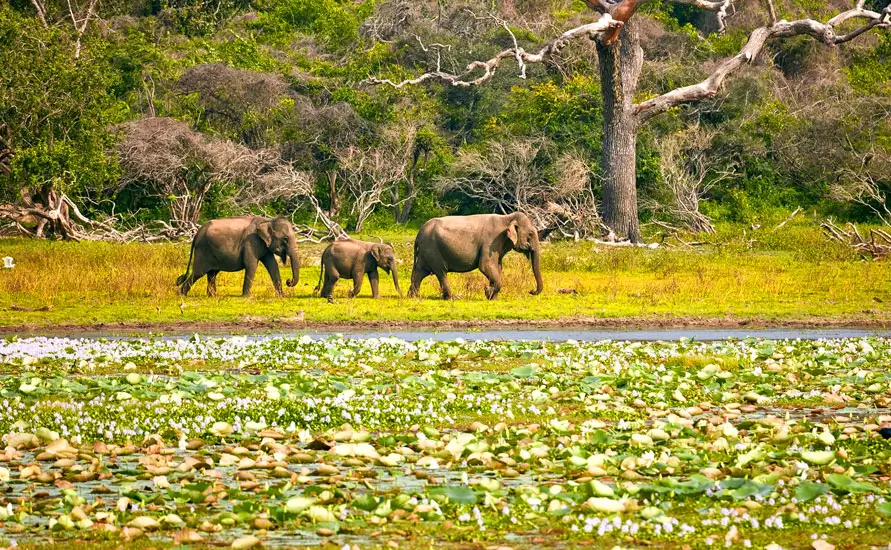
After an unhurried breakfast, you leave Tissamaharama and drive north-west through dry farmland and banana plantations to Udawalawe, a park built around a large reservoir on the Walawa River. The land is flatter and more open than in Yala, with grassland, scrub and dead trees standing in the water, which makes elephant viewing straightforward. Udawalawe National Park is well known for its herds, and it is common to see several family groups on a single drive, with calves sticking close to their mothers. You settle into your safari lodge outside the park boundary in time for lunch.
Before the safari, you visit the Elephant Transit Home, a rehabilitation center run by the Department of Wildlife Conservation for orphaned and injured elephant calves. The calves are fed milk at set times during the day, and visitors watch from a viewing platform at a distance, with no handling or riding involved. Once the young elephants are old enough, they are released back into the protected areas, and the center has returned many animals to the wild since it opened. This is the most ethical way to see young elephants up close in Sri Lanka, and a good contrast to places that keep elephants for display.
In the late afternoon you set out on a jeep safari inside the park, driving on open tracks past the reservoir edge and the patches of tall grass. Apart from elephants, look for water buffalo, spotted deer, golden jackals and a wide range of birds, including the brown-capped babbler and changeable hawk eagles. The park is also a good place to see crested serpent eagles hunting from dead trees. Leopards live here too but are much harder to find than in Yala. Dinner at the lodge rounds off the day. Overnight in Udawalawe.
A final dawn drive in Udawalawe is optional and repays the effort on a clear morning, since the elephants are often busiest at the water's edge in the first hours after sunrise. After breakfast and checkout, you drive back to the coast and join the Southern Expressway towards Colombo, stopping for lunch along the way. The route passes Embilipitiya and the farmland of the south before the landscape turns greener and more densely settled near the capital. You reach your Colombo hotel in the afternoon, with time for a rest and a shower after several days of dust and early starts.
Later in the afternoon, your driver-guide takes you on a short tour of the city. Colombo grew from a trading port used by Arab, Portuguese, Dutch and British merchants, and the Fort and Pettah districts still show that mixed history in their streets. The red-and-white Jami Ul-Alfar Mosque in Pettah stands out among the traders' warehouses, while the old Dutch Hospital building near the Fort has been turned into a row of cafes and shops. Gangaramaya Temple, a busy Buddhist site with a large and varied collection of donated objects, is another stop if time allows.
As the sun sets, Galle Face Green, a long stretch of lawn along the seafront, fills with families, kite flyers and food stalls selling isso wade, the spicy prawn fritters that are a Colombo favorite. It makes a pleasant last evening, and for a farewell meal your driver-guide knows several good places, be it a crab curry, a plate of hoppers or simply a cold drink by the ocean. Before bed, check your flight time and organize your luggage, especially binoculars and camera gear, for tomorrow's departure. Overnight in Colombo.
No early alarm today: breakfast is relaxed, and the room is yours until the usual noon checkout. With an evening flight, the morning can go to the National Museum, a spice shop in Pettah or a seafront cafe, and our team can arrange a late checkout if you ask in advance. At the agreed time, your driver collects you for the transfer to Bandaranaike International Airport, roughly an hour north of central Colombo by expressway; we recommend reaching the terminal three hours ahead of your flight.
Most travelers fly home with a full memory card: tiger tracks in Kabini, gaur in Bandipur, leopards in Yala and elephant calves at Udawalawe. For anyone keen to stay longer, the beaches of the south coast or the tea hills of Nuwara Eliya are easy additions from Colombo, and our team can quote for a few extra nights. We hope the sightings stay with you for a long time.
Your Journey

N.S. Rathore & Mrs. Omlata Rathore · Managing Director
We still read every enquiry ourselves. Tell us the places you liked and our planners will send a day-by-day route with drive times and a clear price.
Every package can be customised and no pressure to book. A planner from our office replies within 24 hours with a route written for your group.
Fill this in and your planner will send a first draft itinerary.
Explore more
Kerala Backwaters Escape Kerala Backwaters Escape
 Kerala Backwaters Escape
 Kerala Backwaters Escape
 Kerala Backwaters Escape