
 Kerala Backwaters Escape

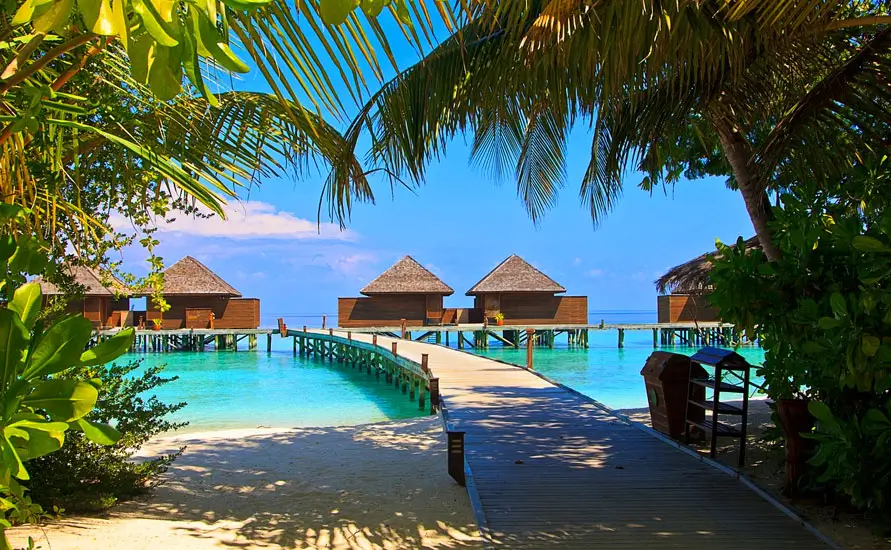
South India with Sri Lanka and Maldives
Kochi – Kumarakom – Colombo – Bentota – Kandy – Colombo
At a glance
Ayurveda is practised in Kerala and in Sri Lanka alike, yet it does not look quite the same in each country, and this Kerala and Sri Lanka Ayurveda tour lets you feel the difference for yourself. You begin with two easy days in Kochi, then spend four nights at a backwater Ayurveda resort in Kumarakom, where a qualified Ayurveda doctor plans daily oil treatments around a personal consultation. An hour-long hop by air then brings you to Colombo and on to the coast at Bentota for four more nights at a Sri Lankan Ayurveda center.
The Sri Lankan half adds a second layer. Alongside classical Ayurveda, which arrived from India many centuries ago, the island keeps its own indigenous medical tradition, known as Hela Wedakama or Deshiya Chikitsa, with family lineages of healers, herbal steam baths and local plant recipes. The tour closes with two nights in hill-country Kandy, where a sacred Buddhist relic shrine, the Peradeniya botanic gardens and a working spice garden show how plants and Buddhism shape daily life. Drives are short and the pace stays gentle throughout this Ayurveda wellness tour.
Please read this as a holiday built around wellbeing, not a medical program. The treatments are designed for rest, relaxation and a general sense of balance, and they do not replace any care from your own doctor. A full panchakarma detox needs at least two to three weeks, so the Kerala and Bentota stays use shorter, gentle routines instead. Tell us about any health conditions, pregnancy or medication when you book. The best months are roughly November to April, while many Kerala practitioners also favor the monsoon months.
A wellness holiday should start without stress, so the welcome at Cochin International Airport is kept simple. Our representative meets you just past the exit doors, takes your trolley and walks you to an air-conditioned car parked close to the terminal. The ride to your hotel in Fort Kochi or on the quieter Ernakulam waterfront needs anywhere from sixty to a hundred and twenty minutes, according to traffic. If your flight lands at dawn, we suggest paying for the previous night too, which means you can sleep at once; otherwise check-in is from the early afternoon, and the morning can pass gently in the hotel lounge.
When you feel ready, your Kochi guide comes by for a short orientation over a cup of ginger tea. The aim of this first meeting is practical: to walk through all twelve days ahead, to collect the health questionnaire that the Kumarakom and Bentota doctors will read before your first consultation, and to answer questions about the weather, mobile data and cash. Many guests are surprised to learn that Kerala has a licensed system of Ayurveda hospitals and colleges, and that most families here still use herbal oils and home remedies alongside modern medicine as a normal part of life.
Toward sunset an easy stroll along the Fort Kochi seafront is enough, where the harbor mouth opens to the Arabian Sea and tankers and fishing boats slide past the old Dutch-era bungalows. There is nothing to rush toward today. Light Kerala food suits a tired body after a long flight, and the guide knows small places serving kanji, a soft rice porridge eaten with green gram and pickle, which Ayurveda considers easy to digest. Try to sleep at local time, as the body clock settles faster before the treatments begin. Overnight in Kochi.
The morning begins in Mattancherry, the old trading quarter where Kochi's wealth was built on pepper, ginger, turmeric and cardamom. Several of the long warehouses on Bazaar Road still handle spices in bulk, and the guide can usually take you into one where workers sift and dry ginger on the floor. Many of these spices are also staples of the Ayurvedic pharmacy, and your guide explains how turmeric, black pepper and long pepper turn up in kitchen recipes and herbal formulas alike. Nearby, Mattancherry Palace does not open on Fridays, and the Paradesi Synagogue keeps its doors shut on Fridays, Saturdays and Jewish festivals, so our team sets the order once dates are fixed.
Later you drive about 40 minutes east to Tripunithura, the former seat of the Kochi royal family, to visit the Hill Palace Museum. The palace complex, built in traditional Kerala style around 1865, now holds royal palanquins, old coins, portraits, weapons and the crowns and ornaments of the rulers of Kochi, and its grounds are shaded by tall trees and filled with birdsong. The museum is usually closed on Mondays. It is a calm place to spend an hour, and the walk around the terraced grounds is easy, with benches where you can rest in the shade.
Heading back toward Kochi, there is time to call in at a long-established Ayurvedic pharmacy, one of the licensed manufacturers that supply clinics across Kerala. A pharmacist explains how oils are cooked slowly with herbs for many hours, how kashayam decoctions are prepared and why most medicines are prescribed only after a consultation rather than bought off the shelf. You are welcome to look and ask questions, but we suggest waiting to buy anything until your Kumarakom doctor has met you. Dinner tonight is your choice, and an early night helps before tomorrow's move to the lake. Overnight in Kochi.
After a light breakfast you leave Kochi for Kumarakom, where paddy villages and canals run down to Vembanad Lake, whose northern arm reaches almost to Kochi itself. The road passes through busy small towns before narrowing to a quieter route lined with paddy fields, canals and coconut palms. You reach your Ayurveda resort before lunch and are welcomed with a cold drink of tender coconut water. Most Ayurveda resorts in Kumarakom are set in lakeside gardens, with treatment rooms that open onto greenery, and the change from city noise to birdsong is one of the first things guests notice.
After lunch the resident physician, a graduate of a five-year Ayurvedic medical degree, sees you for a first consultation. The doctor asks about your sleep, digestion, energy, diet and any existing conditions, reads your pulse at the wrist as Ayurvedic practice teaches and, using the Ayurvedic idea of the three doshas, suggests a daily program for your stay. For a four-night visit this is normally a rejuvenation or stress-relief routine of one or two treatments a day, rather than a full detox. If you take regular medication, keep taking it as prescribed and tell the doctor, who will adjust the plan accordingly.
Your first treatment is often abhyanga, in which one or two therapists work warmed medicated oil into the skin with long synchronized strokes, finished with a few minutes in a steam chamber and a hot shower. Expect to feel sleepy afterwards, which is common and intended. Nothing else is planned: a walk in the garden, a cup of herbal tea and an early vegetarian dinner chosen by the kitchen to suit your program. Many resorts ask guests to avoid alcohol while they are having treatments, and the doctor will mention this at the consultation. The lake is very still after dark. Overnight in Kumarakom.
Early risers have the best of Kumarakom. At first light a naturalist meets you at the resort gate and walks with you along the shaded paths of the Kumarakom Bird Sanctuary, a former estate that today covers fourteen acres of trees, ponds and mangrove beside the water. Herons, egrets, cormorants, kingfishers and darters are regular sights, and between roughly November and February migratory species add to the numbers. The paths are flat and easy, and the walk takes about one and a half hours. Bring mosquito repellent and quiet shoes, and keep your voice low near the nesting colonies, where birds can be easily disturbed.
Back at the resort, a morning yoga class on a deck by the water focuses on breathing and simple stretches rather than demanding poses, and beginners are welcome. After breakfast comes the main treatment of the day, which on day two of most programs is shirodhara, the slow, even pouring of lukewarm medicated oil or herbal buttermilk over the forehead for around thirty to forty-five minutes. Many guests say it is the most relaxing therapy in the whole Ayurveda repertoire. You are asked not to wash your hair for a few hours afterwards, and to keep your head covered from wind and direct sun.
The afternoon is unhurried. You might read in a hammock, float in the pool or wander out to watch local farmers working the paddy fields, which here lie below lake level and are protected by mud dykes. Lunch and dinner follow the doctor's guidance, so you can expect vegetables cooked with coconut and mild spices, red rice, lentils and soups, with less oil and chili than in ordinary Kerala restaurants. Herbal drinking water, often boiled with spices such as cumin or a red bark called pathimugam, is served throughout the day. Evening brings a gentle meditation session. Overnight in Kumarakom.
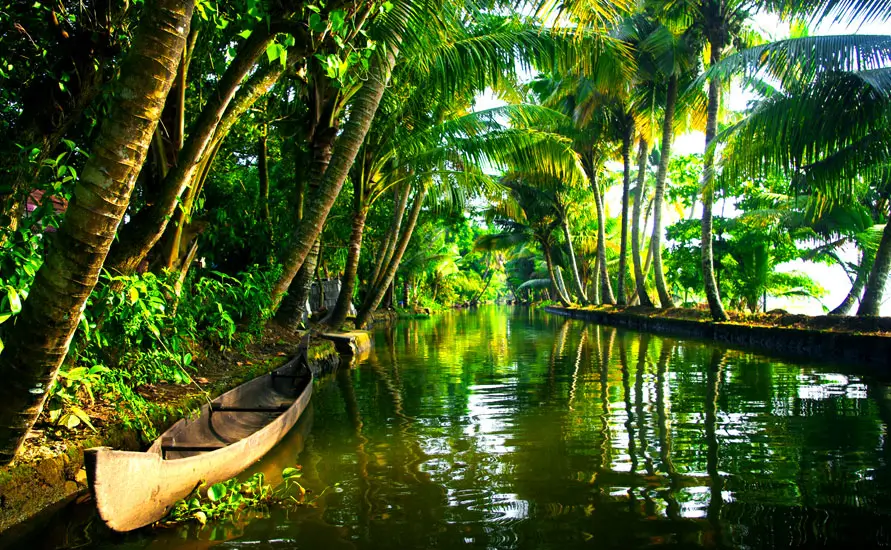
After breakfast and your morning treatment, a boatman paddles you in a narrow wooden canoe along the narrow canals around Kumarakom. Unlike a large houseboat, a small boat can slip into side channels too narrow for motor traffic, past village homes with laundry spread on the steps and men casting nets for pearl spot fish. With luck you see a tapper climbing a coconut trunk, knife at his waist, for the sweet morning sap. The ride lasts around two hours and is mostly in shade, so it does not tire you. Hats and a light scarf help on sunny days.
Returning for lunch, you join the resort chef for a short cooking session focused on Ayurvedic principles. The chef explains how meals are balanced across the six tastes of Ayurveda (sweet, sour, salty, bitter, pungent and astringent) and how ingredients are chosen for each season and body type. Together you prepare a few simple dishes, such as a moong dal soup with cumin and ginger, a vegetable thoran with grated coconut and a buttermilk drink spiced with curry leaves. You eat your own cooking for lunch, and the chef gives you written recipes to take home.
Treatments in the afternoon may include njavarakizhi, in which small cloth bundles of njavara rice cooked in milk and herbal decoction are massaged over the body, or a herbal powder massage, depending on what your doctor has prescribed. These therapies are traditional in Kerala and are not commonly offered elsewhere in India in the same form. After a rest, you can sit at the lake edge at dusk while the kitchen prepares a light dinner. For those curious how Kerala's eight traditional physician families shaped the system, the resident doctor often holds informal talks for guests in the evening. Overnight in Kumarakom.
Your last full day in Kerala follows the same quiet rhythm: yoga at sunrise, a herbal drink, breakfast and a morning treatment. By now the routine has become a habit, and several guests report that they sleep better and feel less restless than when they arrived, though everyone's response is different and no particular result can be promised. The doctor may add a foot massage, a face treatment with herbal pastes or pizhichil, in which warm oil is squeezed from cloth over the whole body while the therapists work on either side of the table. Pizhichil is one of the most traditional Kerala therapies and is often called the king of treatments.
Around midday you meet the doctor again for a short review. Use it to ask what was found at your first consultation, how your program was planned and what you could continue at home, for example simple diet changes, regular sleep times and daily oil self-massage. The doctor may suggest a few herbal products for the coming weeks, and you are under no obligation to buy them. Before purchasing anything, it is worth checking the customs rules of your home country, because some herbal preparations, oils above certain volumes or products containing minerals can be restricted.
The afternoon is free for packing, a swim or a slow walk through the village lanes behind the resort. If you feel like a little movement, your driver can run you down to the Kumarakom boat jetty to watch the passenger ferries crossing Vembanad Lake, or to a small temple on the shore where evening lamps are lit around dusk. Dinner is your last Kerala meal of the trip, and the kitchen often prepares a simple sadya-style spread on a banana leaf to mark the end of the stay. Settle your resort bills tonight to make the morning easier. Overnight in Kumarakom.
Breakfast is early today, as the road back to Cochin International Airport is roughly two hours, ahead of the short flight across to Colombo, normally around an hour and a quarter in the air. Our team times the departure to leave a calm margin for check-in. Our team also checks, a few weeks ahead, which Sri Lankan entry permit your nationality currently needs, since the online authorization process keeps changing. Keep any herbal oils bought in Kerala in your checked luggage, since liquids in cabin bags are limited.
At Bandaranaike International Airport your Sri Lankan driver greets you outside arrivals for the coastal run to Bentota. The expressway bypasses central Colombo, and the trip normally takes about two hours, with a stop for a king coconut drink on the way if you like. You arrive at your Ayurveda retreat toward evening and take the rest of the evening easy with a light dinner and an early night after the travel day. Overnight in Bentota.
Your first morning in Sri Lanka begins with a consultation with the retreat's Ayurveda physician. Sri Lankan doctors train in the same classical texts as their Kerala colleagues, and the questions about sleep, digestion and energy will sound familiar, yet the treatment style here often leans more on herbal steam baths, herbal pastes and locally grown plants. The physician reviews the notes from your Kerala stay if you bring them, so the two programs can follow on from one another. Treatments here are designed for relaxation and general wellbeing, and they are not a substitute for medical care at home.
After the consultation comes a first Sri Lankan therapy, typically an oil massage using recipes from the retreat's own herb garden, followed by time in a herbal steam bath. In many Sri Lankan retreats this is a wooden steam box, with your head kept outside, filled with vapor from leaves and roots boiled in a large pot. The heat is gentle, and a therapist checks on you every few minutes. Afterwards you rest wrapped in a cotton sheet with a cup of coriander tea, a traditional Sri Lankan remedy that many families brew at home whenever someone feels unwell or tired.
Afterwards your time is your own. Bentota has a long beach of soft sand, and during the dry season on this coast, roughly December to April, the water usually settles enough for swimming, though you should follow the lifeguards' flags. Ask the physician whether swimming fits your program, since some retreats prefer guests to avoid sun and seawater straight after oil treatments. Dinner is a Sri Lankan Ayurvedic menu, which often includes gotu kola salad, a herbal porridge called kola kenda and gently spiced vegetable curries with red rice. Overnight in Bentota.
Today focuses on the part of this trip that you cannot find in Kerala. Alongside the classical Ayurveda shared with India, Sri Lanka has its own indigenous medical tradition, called Hela Wedakama in Sinhala and Deshiya Chikitsa in official use. It grew from knowledge passed down in families of healers over many generations, often from father to son, and includes specialist branches such as traditional bone setting, eye treatments and the treatment of snake bites. The government's ministry for indigenous medicine regulates practitioners today, and Ayurveda and indigenous medicine sit side by side in the national health system.
In the morning a local practitioner visits the retreat, or you drive a short way inland to meet one at a village clinic. With an interpreter or the retreat's physician alongside, the practitioner shows the plants used in family recipes, the palm-leaf manuscripts in which some lineages recorded their knowledge, and the way oils are prepared over a wood fire. The aim is to understand a living tradition, not to receive a treatment, and questions about how patients are seen are welcome. Please do not photograph the practitioner or the clinic without permission, as some families keep their methods private.
Back at the retreat, your afternoon treatment may follow a more Sri Lankan pattern, such as a herbal poultice massage with leaves warmed in oil or a medicated paste applied to the joints and left to work. A short meditation session in the late afternoon, sometimes led by a teacher from a nearby Buddhist temple, focuses on breathing and simple mindfulness. In the evening you have dinner at the retreat, and you might sit outside for a while to listen to the waves, a sound that carries across the gardens on most nights in Bentota. Overnight in Bentota.
After the morning therapy comes a short outing about 10 km inland to the Brief Garden, the home and garden of Bevis Bawa, a landscape designer and the brother of the architect Geoffrey Bawa. Laid out over several decades on a former rubber estate, the garden is a series of paths, terraces, sculptures and quiet corners shaded by palms and frangipani. It is an easy walk on mostly level ground, and the house holds paintings and murals by friends of the family. A visit takes about an hour, and you return to the retreat in time for a light lunch.
The afternoon brings your final Bentota treatments, which may include a herbal face and head massage, a foot therapy or a medicated oil bath, depending on what the physician has prescribed. Before you leave the next day, you meet the physician once more for a closing review. You may be given simple advice about diet, sleep and herbal teas to continue at home, and perhaps a small supply of herbal oil. Ask the physician to explain where the Sri Lankan approach differed from what you received in Kumarakom; most enjoy the question, and the answers often make the whole trip clearer.
Late in the day, ten minutes by car take you to the edge of the Bentota lagoon, where the river meets the sea and the water turns gold in the evening light. Fishing canoes and small boats rest on the bank, and you can sit for a while on the rocks or walk along the sandbar. If you prefer, the retreat staff can arrange a quiet walk on the beach at sunset instead. Dinner is the final Ayurvedic meal of the retreat part of your holiday, often a little more generous than earlier in the week. Pack tonight for the drive to the hills. Overnight in Bentota.
After breakfast you leave the coast for the hill country around Kandy, the last royal capital of Sri Lanka. The drive follows the Southern Expressway north, then the Central Expressway and the older roads that climb through rubber and coconut plantations, small towns and roadside stalls selling pineapples and cashews. Your driver plans a break for tea halfway, and the route is comfortable for anyone who has just finished a course of treatments. You reach Kandy by early afternoon, a town built around a lake and surrounded by forested hills, and check in to your hotel.
After some rest, you walk with your guide around Kandy Lake, an artificial lake created by the last king of Kandy in the early 19th century. The walk is flat and shaded in places, and from the far bank the golden canopy over the relic chamber shows clearly across the water. Then you enter the Temple of the Tooth, called Dalada Maligawa locally; Sri Lankans revere the relic kept inside as the Buddha's own tooth, and for centuries whoever guarded it was seen as the island's rightful ruler. Kandy is listed by UNESCO as a sacred city, and the temple is an active place of worship.
Your visit is timed for the evening puja, as hewisi drums beat out the call to worship, pilgrims carry lotus and jasmine flowers to the upper shrine room and the doors of the inner chamber are opened for a short time. Shoulders and knees must be covered, shoes are left outside, and you should not pose for photos with your back to any image of the Buddha. The atmosphere is calm and deeply devotional. If your visit falls in July or August, ask us about the dates of the Esala Perahera procession, which fills the streets with dancers and drummers. Dinner is at your hotel. Overnight in Kandy.
A short drive west of the city brings you to the Royal Botanic Gardens at Peradeniya, which cover about 60 hectares inside a wide bend of the longest river in the country. The gardens began as a royal pleasure garden and became a botanic garden under British rule in the 19th century. Your guide leads you past the long avenue of royal palms, the giant Javan fig with its spreading branches, the orchid house and the spice garden, where you can see cinnamon, nutmeg, clove and pepper growing. Many plants here are used in both Ayurvedic and indigenous Sri Lankan medicine.
By late morning the car heads 45 minutes north to Matale, a spice-growing district where several gardens welcome visitors. A guide walks you through beds of cardamom, vanilla, turmeric, ginger and plants used in herbal remedies, and explains how each is grown and used. Many spice gardens end the walk with a short massage demonstration and a shop selling oils and creams, and the sales talk can be quite insistent. Buying is optional, and your own physician's advice from Bentota is a better guide than shop claims about curing ailments. Lunch is rice and curry at a local restaurant.
The afternoon is unhurried after the active morning. Back in Kandy you might visit a small Buddhist temple for a quiet meditation session, browse the handicraft shops near the lake or simply rest at the hotel. For a good view, ask to be dropped at the lookout above the city in the late afternoon, where Kandy's lake and temple roofs spread below the hills. Tonight's dinner is your last meal in Sri Lanka, with Kandyan specialties such as jackfruit curry on many local menus. Pack for tomorrow's departure, keeping oils and liquids in your checked bags. Overnight in Kandy.
Once checked out, you descend from the hills toward Bandaranaike International Airport, which lies north of Colombo near Negombo. The drive usually takes about three hours, depending on traffic, and the pick-up time gives you three clear hours for check-in. With an evening flight, a tea factory visit en route, a rest room by the terminal or a further night on Negombo beach can be added at extra cost.
Over thirteen days you have tried two traditions of the same old system of health: the oil-rich, highly structured Ayurveda of Kerala and the herbal steam baths and family knowledge of Sri Lanka. Take home the simple habits that suited you, such as regular meals, early nights and a short daily breathing routine, and keep in touch with your own doctor about any health matters. Should you want to come back, we can plan a longer Kerala stay or a hill-country retreat in Sri Lanka. Safe travels home.
Your Journey

N.S. Rathore & Mrs. Omlata Rathore · Managing Director
We still read every enquiry ourselves. Tell us the places you liked and our planners will send a day-by-day route with drive times and a clear price.
Every package can be customised and no pressure to book. A planner from our office replies within 24 hours with a route written for your group.
Fill this in and your planner will send a first draft itinerary.
Explore more
Kerala Backwaters Escape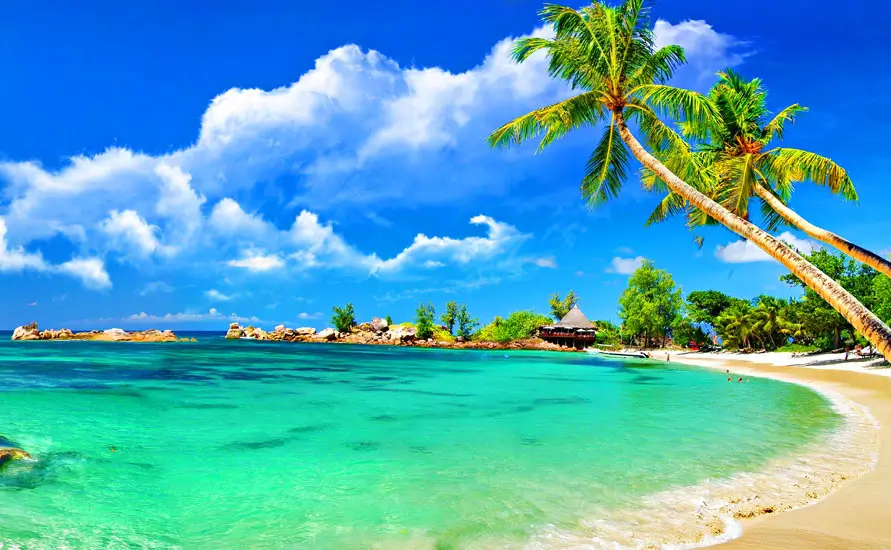 Kerala Backwaters Escape
 Kerala Backwaters Escape
 Kerala Backwaters Escape
 Kerala Backwaters Escape
 Kerala Backwaters Escape
 Kerala Backwaters Escape
 Kerala Backwaters Escape Kerala Backwaters Escape