 Kerala Backwaters Escape

Religious & Heritage Tour Of South India
Kochi (Paradesi Synagogue, Jew Town) – Paravur – Chendamangalam – Madurai – Chennai
At a glance
For more than a thousand years, Jews, Christians, Muslims and Hindus traded, prayed and lived side by side on the Malabar Coast, and a few towns north of Kochi still show it in a single street. Our Jewish heritage tour Kerala begins in Jew Town, Mattancherry, at the 16th-century Paradesi Synagogue, then follows the old spice-port routes to the restored synagogues of Paravur and Chendamangalam and to Kodungallur, where tradition places India's oldest mosque and the landing of St Thomas. From there the trip crosses to Tamil Nadu, where Madurai and Chennai add great temples, Sufi shrines and an apostle's tomb.
Across nine days you sleep in only three bases, three nights each in Kochi and Chennai and two in Madurai, which keeps packing to a minimum. One longer drive over the Western Ghats links Kerala with Madurai, and a short domestic flight carries you on to Chennai. On the road you travel in a reserved, chilled sedan or SUV whose English-fluent chauffeur stays for the whole trip, while local guides who know the history of each community, many of them trained under the Muziris Heritage Project, lead the visits and explain the etiquette of every house of worship.
This multi-faith heritage tour of South India is designed for Jewish travelers tracing family or community history, for church and interfaith groups, and for anyone from the US, UK, Europe, Israel, Canada or Australia curious about how different faiths shared one coast. NRI families are equally welcome. Because the Paradesi Synagogue Kochi locks its gates for Shabbat, on Fridays and on Jewish festivals, we fit the Kochi days around your arrival date. Kosher-style vegetarian meals, Shabbat rest days and slower walking can all be arranged on request.
Our Kochi representative will be standing just beyond the arrivals doors at Cochin International Airport, some forty kilometers from the old port, with your family name printed on a card. Reaching Fort Kochi by road needs about ninety minutes, past rubber trees, roadside chapels with painted saints and small shrines to Bhagavathi, which already hints at the mixed religious life of this coast. Most hotels hand over keys at 2 pm. Landing at dawn after an overnight flight? We can pay for the previous night as well, so jet-lagged travelers never sit dozing beside reception.
Once rested, a short orientation walk with your guide sets the scene for the week. St Francis Church, whose simple stepped gable was raised by Franciscan friars from Portugal soon after 1500, kept the body of the navigator Vasco da Gama from his death in Kochi in 1524 until his bones were shipped to Portugal; the original gravestone is still set in the floor. Two blocks south, the Santa Cruz Cathedral Basilica represents a later, more decorative face of Kerala Catholicism, with painted ceilings showing the Passion. Your guide also introduces the four communities you will meet on this trip and how the spice trade brought them here.
Toward sunset, wander to the seafront promenade by the harbor mouth, where teams of fishermen lower the big shore-operated nets and ferries cross toward Vypin Island. This is a good hour to share a pot of cardamom tea and talk through the plan with your guide, especially the Friday and Saturday closing days of the synagogue in Jew Town. If your arrival day is a Friday, we simply swap tomorrow's program with the Muziris day. Dinner is at leisure, perhaps a plate of Syrian Christian duck roast at a local restaurant. Overnight in Kochi.
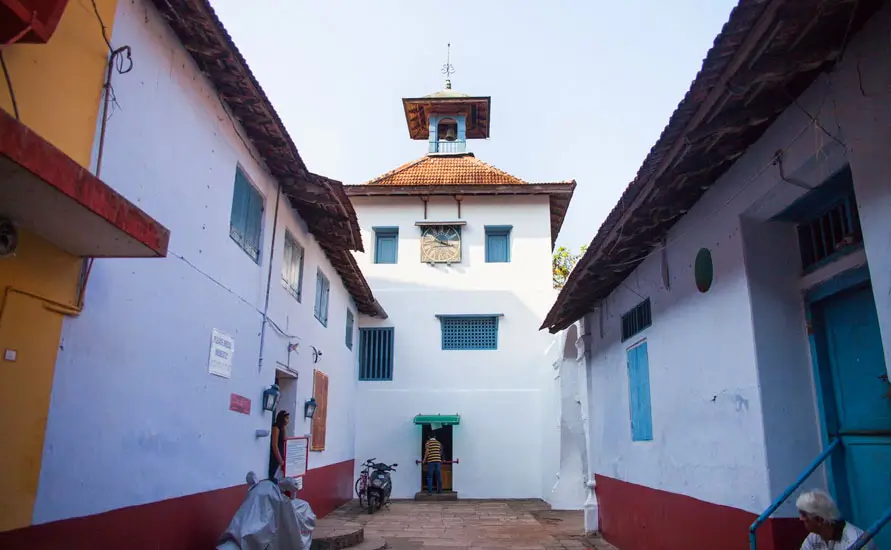
Mattancherry wakes up slowly, and by mid-morning the spice warehouses along Jew Town Road are open and the scent of dried ginger hangs over the lane. Your guide begins with the story of the Kochi Jews: the Malabari community, whose roots on this coast go back many centuries, and the Paradesi or foreign Jews, who arrived from Spain, Portugal, the Netherlands and the Middle East from the 16th century. Copper plates kept by the community record privileges granted by a local ruler, and you hear how the two groups kept separate synagogues and customs while sharing the same trade and the same royal protection.
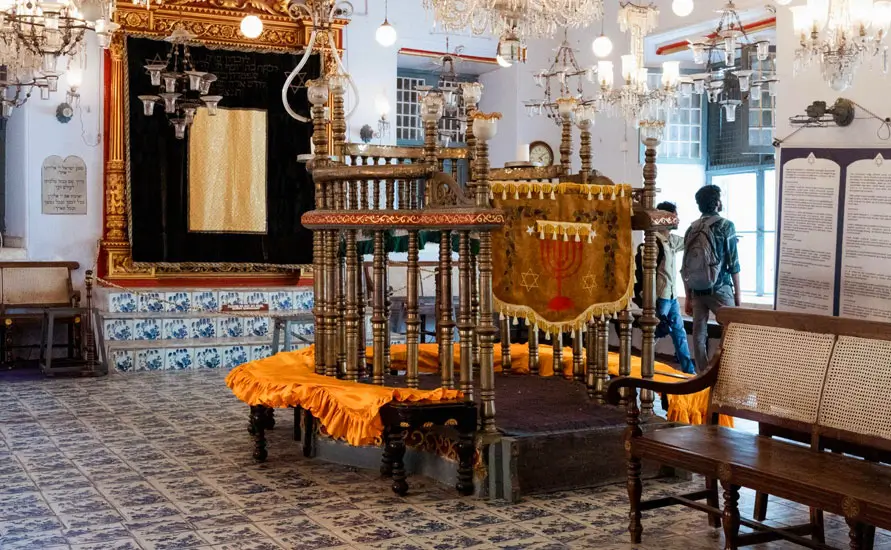
Inside the Paradesi Synagogue, built in 1568 beside the Raja's palace and temple, around eleven hundred hand-painted porcelain floor tiles, shipped from Canton in the mid-1700s, each carry a slightly different scene. Belgian glass chandeliers hang above the central bimah, and a clock tower added in the 1760s shows Hebrew, Malayalam and Roman numerals on its faces. Shoes stay outside, legs and upper arms should be covered, and cameras must stay in your bag. Because of its weekly and festival closures, our team reconfirms the open days a week before you travel.
After lunch the walk continues past the house fronts with Stars of David, the old Jewish cemetery near the synagogue and the shuttered sites of synagogues that once served the Malabari congregations of Mattancherry. Your guide explains how the interior of one of them, Kadavumbhagam, now stands in the Israel Museum in Jerusalem, after the community emigrated to Israel in the 1950s. Next door, the Mattancherry Palace holds Hindu murals of the Ramayana and the coronation portraits of the Kochi rajas; the palace is closed on Fridays. The evening is yours to browse antique shops on the lane. Overnight in Kochi.
An early breakfast, then you head north across the backwater bridges to Paravur, about an hour away, where the restored Paravur synagogue closes off a narrow lane that locals still call Jew Street. Its gatehouse, long corridor and upper women's gallery have been restored as a museum under the Muziris Heritage program, and the panels inside trace the life of the Malabari congregation that worshipped here until the late 1940s. Your guide points out the carved wooden ceiling and the steps to the raised tevah. The Muziris museums usually close one day a week, often Monday, which we check before you go.
Only a few minutes away, Chendamangalam shows the coexistence of faiths more clearly than almost anywhere in Kerala. The small Chendamangalam synagogue, the oldest standing synagogue building in the state according to local records, is now a museum with a tombstone dated 1269 at its entrance. On the nearby Kottayil Kovilakam hill you find a Catholic church, a mosque, a Vishnu temple and the broken walls of the Vypeekotta seminary, where Jesuits printed some of the earliest books in Tamil script. Below the hill, Paliam Palace, home of the hereditary prime ministers of Kochi, holds a museum of family life and old records.
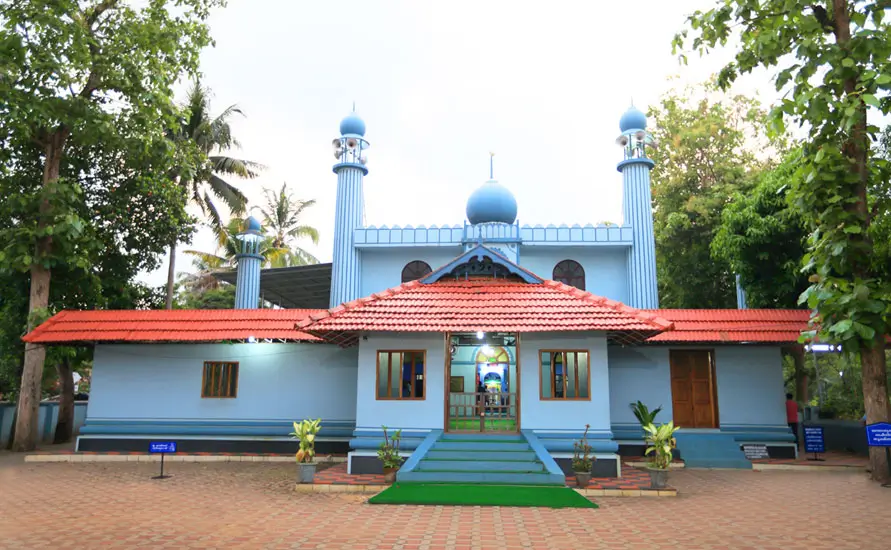
After a simple Kerala lunch on a banana leaf you continue about thirty minutes to Kodungallur, the likely site of ancient Muziris. The Cheraman Juma Masjid is believed by tradition to date from the 7th century, and its older wooden structure has been carefully restored; visitors in modest dress are usually welcome outside prayer times, and women may be shown a separate viewing area. Nearby, the Marthoma church at Azhikode marks where St Thomas is said to have landed in AD 52. You drive back to Fort Kochi by early evening, with time for a quiet dinner. Overnight in Kochi.
The Ghats crossing makes this the one long road day, so plan to roll out of Fort Kochi soon after breakfast. The road runs east through Muvattupuzha and climbs into the cardamom-growing hills of Idukki, where the air cools and the hillsides turn neatly clipped and green. Photo stops happen whenever a valley view catches your eye, and for sweet, milky chai poured from a height at a hillside stall. A connecting flight via Chennai or Bangalore is possible instead, but once airport waits are counted it rarely saves more than an hour or two.
Around midday you reach the spice gardens near Kumily, a sensible place for lunch and a short walk. A short walk through a family-run plantation shows peppercorn vines spiraling up tall shade trunks, pale cardamom capsules clustered near the soil and nutmeg split open to show its red mace. These were the very spices that drew Jewish, Arab and European traders to Kerala in the first place, which links neatly to the history you heard in Jew Town. From Kumily the road crosses the state border and winds down a staircase of tight bends to the plains of Tamil Nadu.
The landscape changes almost at once: coconut and grape farms around Cumbum and Theni, palmyra palms, stone temples at village crossroads and the flat light of the Tamil countryside. Madurai comes into view toward late afternoon, and after checking in the evening is yours to rest. Your Madurai guide meets you briefly in the lobby to talk through tomorrow, including the rules at the Meenakshi Temple for visitors who are not Hindu and the counters where phones and cameras must be left. Before bed, try jigarthanda, a cold sweet glass layered with reduced milk, sarsaparilla syrup and a scoop of cream on top. Overnight in Madurai.
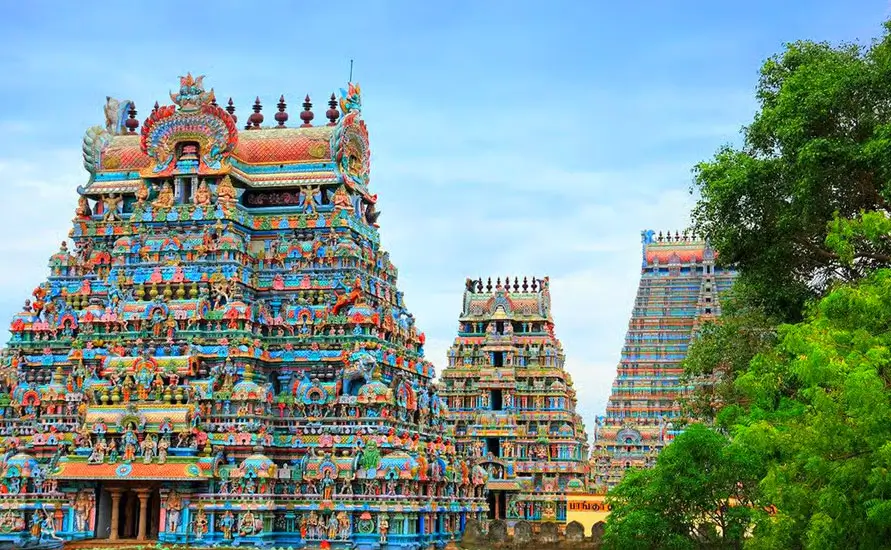
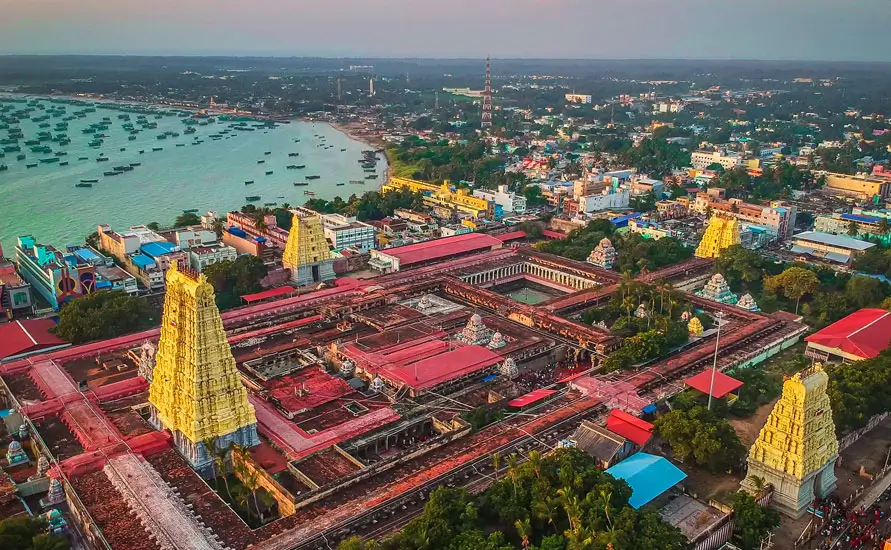
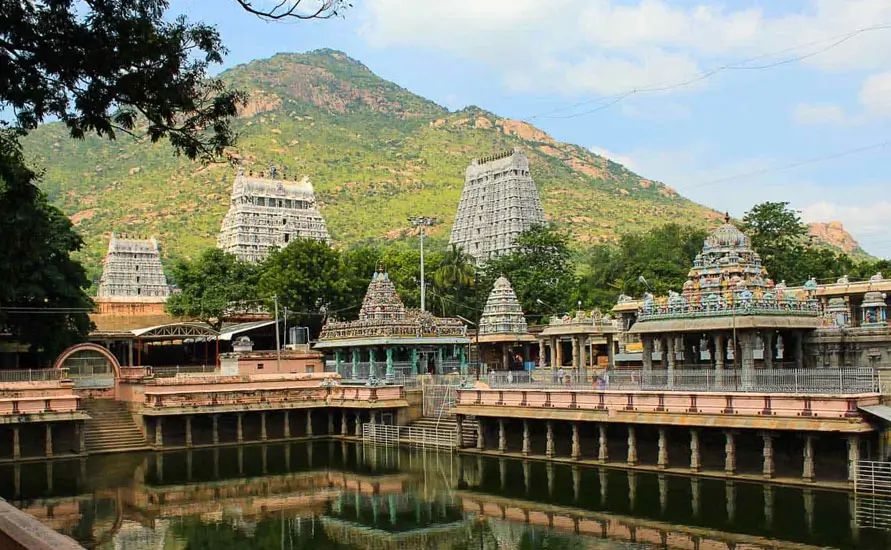
Plan on entering the Meenakshi Temple just after the gates swing open, when the stone halls are cool and devotees are bringing jasmine garlands and coconuts for the first pujas. No phones or cameras may be carried in, so they go into the cloakroom lockers near the east gate. Guests of other faiths may walk the long outer corridors, sit by the Potramarai tank and see the carved pillar hall now used as a museum, while the two inner sanctums remain open to Hindu worshippers only. Your guide explains how the goddess's marriage to Shiva is reenacted each spring in the Chithirai festival, when the whole city fills the streets.
Late in the morning you cross the Vaigai River to the Goripalayam dargah, the tomb of Sultan Alauddin and Sultan Shamsuddin, Muslim rulers of the 14th century whose shrine is honored by Hindus and Muslims alike. The large dome is said to have been shaped from one massive stone, and pilgrims tie threads to the screens with private wishes. Heads should be covered here and shoes removed at the entrance. You then visit St Mary's Cathedral, a Gothic-style Catholic church near the old city wall, which tells the story of the Jesuit missions in the Nayak kingdom.
After lunch and a rest, the Thirumalai Nayak Palace shows how Hindu, Islamic and European ideas mixed in 17th-century architecture, with tall stucco arches, onion domes and a huge courtyard. Its evening sound and light show tells the palace story in English on most days. Night owls may go back for the palliyarai ritual, held close to nine o'clock, in which Shiva's festival image is carried by palanquin bearers to the goddess's bedchamber. Non-Hindus watch from the permitted corridors, and your guide stays beside you to explain each step. Overnight in Madurai.
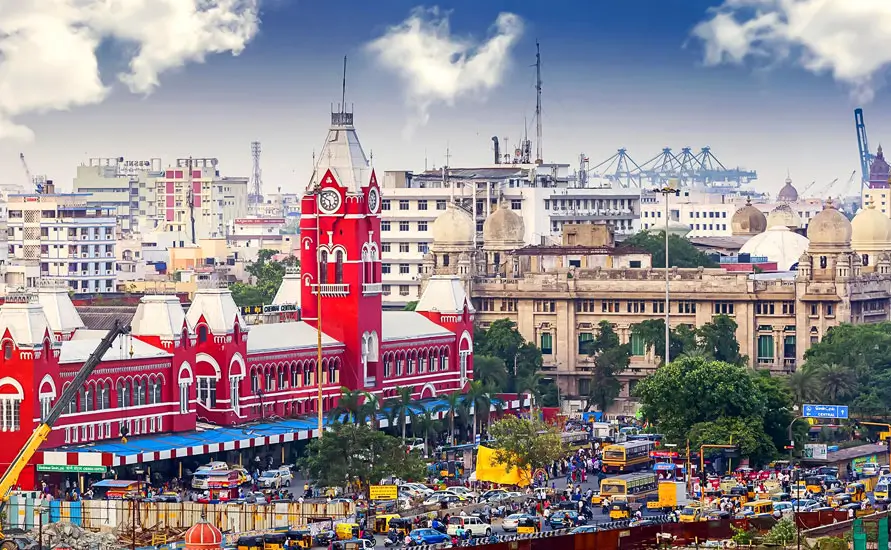
After breakfast you transfer to Madurai airport for the short morning flight to Chennai, barely seventy minutes in the air. A Chennai colleague greets you outside the domestic terminal for the drive into the city, usually under an hour unless the Guindy junctions are jammed. Chennai is your base for the last three nights, so you can unpack properly. Over lunch your new guide outlines how Madras grew from an East India Company factory founded in 1639 into one of India's largest cities, and how merchants from Armenia, Portugal and Jewish families from Europe and the Middle East each found a corner of it.
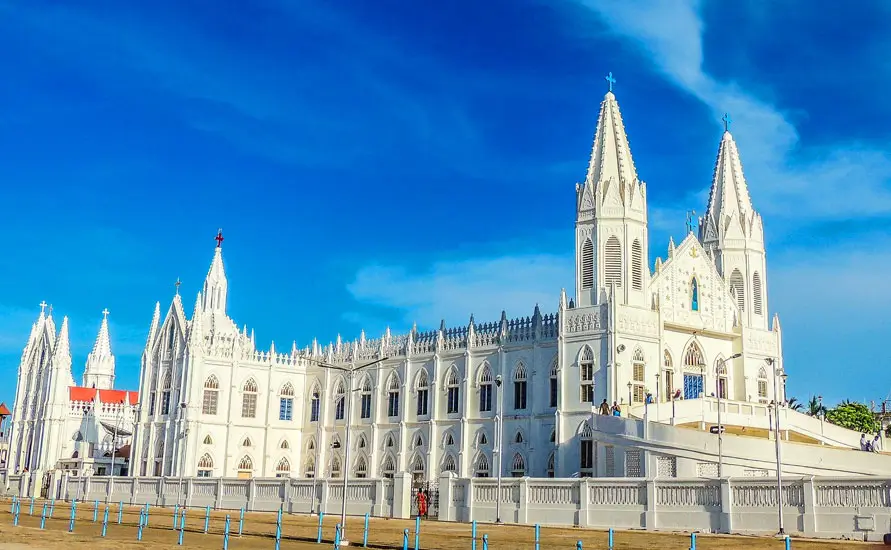
Once the heat drops, head to the San Thome Basilica Chennai, a white neo-Gothic church rebuilt in 1896 above the grave that Christian tradition assigns to the apostle Thomas, one of very few churches in the world believed to stand over an apostle's grave. A small museum and a chapel beneath the main hall let you see the tomb area quietly. Modest clothing and quiet voices are expected, since Mass and prayer go on through the day. Your guide also mentions the nearby Luz Church, one of the oldest Portuguese churches in the city, which you pass on the drive.
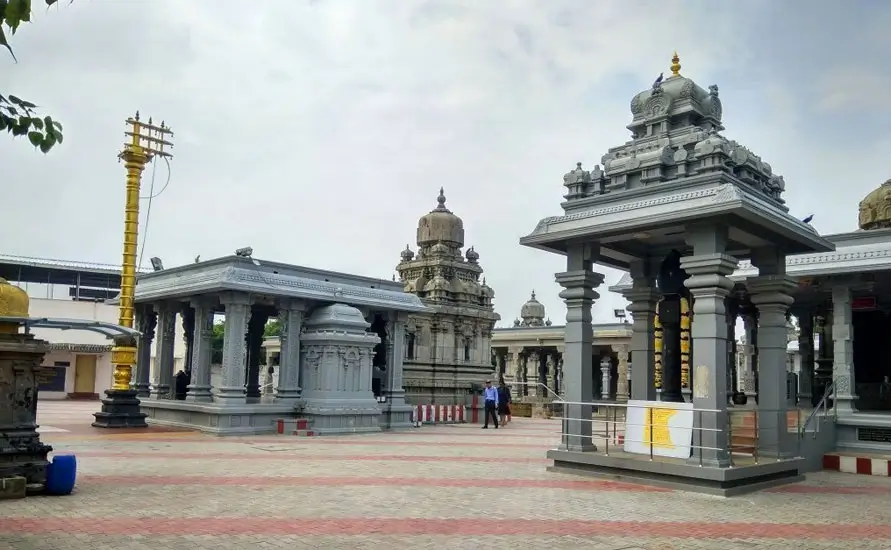
From San Thome it is a short walk into Mylapore and the Kapaleeshwarar Temple, where the late-afternoon crowd gathers around the temple tank and the painted gopuram. Anyone may enter the outer courtyards once shoes are left with the attendant and arms and legs are covered, although some inner shrines are for Hindus only. The streets around the tank sell brass lamps, flower garlands and filter coffee, and the evening lamps make the temple glow. A dinner of South Indian tiffin, dosa, idli and vada, makes a light end to a travel day. Overnight in Chennai.
The morning starts in George Town, the old 'Black Town' of colonial Madras, now a crowded wholesale district. Coral Merchants Street recalls the Jewish traders who once dealt in coral and diamonds here, and a short walk away the Armenian Church, rebuilt in 1772, keeps a quiet courtyard with Armenian gravestones and a separate bell tower. Within the walls of Fort St George, the 1680 church of St Mary ranks as the earliest surviving Anglican church in Asia, whose walls carry memorials of East India Company officials. The fort museum holds coins, uniforms and portraits; it is usually closed on Fridays.
Before lunch you visit the Thousand Lights Mosque on Anna Salai, a multi-domed Shia mosque that takes its name from the thousand oil lamps once lit in an older prayer hall on this site. Non-Muslim visitors are usually allowed to see the courtyard outside prayer times, with arms and legs covered and women's heads covered with a scarf. Your guide explains the Arcot Nawabs' role in the city's history and the Muharram customs of Chennai's Shia community. Lunch can be biryani at a long-running local restaurant nearby, or a vegetarian thali if you prefer.
Later your car heads down to Adyar for the riverside estate of the Theosophical Society, founded in New York in 1875 and headquartered here since 1882. Its riverside gardens hold a small Buddhist shrine, a church, a mosque, a Zoroastrian temple and a Hindu shrine side by side, reflecting the society's interest in the shared ground of all religions. A huge old banyan tree spreads over the lawns. Opening hours are limited and are revised now and then, which our office checks the day before your visit. Your evening carries no fixed plans. Overnight in Chennai.
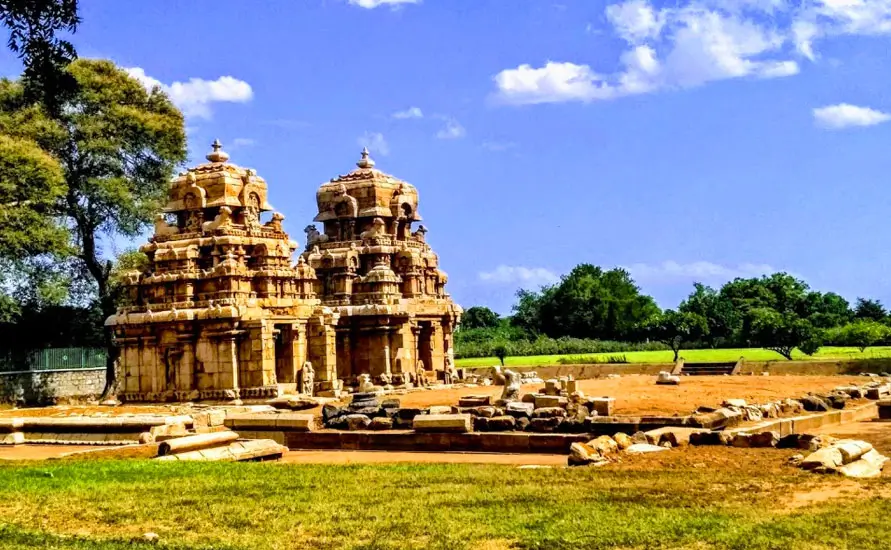
A full-day outing heads west for some two hours to Kanchipuram, a city where Hindu, Jain and Buddhist teachers studied and argued for many centuries under the Pallava kings. Your first stop is the sandstone Kailasanathar Temple, built around AD 700, whose low enclosing wall is lined with dozens of tiny cells carved with Shiva in his many forms. Because it is a protected monument rather than a busy shrine, visitors of every faith may walk around it freely. The guide shows how traces of ancient painted plaster still cling to some of the niches.
Next comes the less visited Jain quarter at Thiruparuthikundram, often called Jain Kanchi, where the Trilokyanatha temple has ceiling paintings from the Vijayanagara period showing the lives of the Tirthankaras. A small Jain community still cares for the shrine, so visitors are asked to remove leather items along with their shoes and to speak softly. You then see the Ekambareswarar Temple, the earth shrine among the five element temples of Shiva, where the inner sanctum is open to Hindus only; non-Hindus can walk the outer halls and see the old mango tree tied to its legend.
After lunch you may visit a weaving family to watch silk being woven with zari borders on a pit loom, an optional stop with no pressure to buy anything. The drive back to Chennai brings you to your hotel by late afternoon, leaving time to pack and to take a final stroll on Elliot's Beach in Besant Nagar, where families gather on the sand in the evening. Your guide hands over a short reading list on the Kerala Jewish communities and the St Thomas traditions for the trip home. A farewell dinner of Chettinad dishes can be booked on request. Overnight in Chennai.
Take breakfast slowly; rooms are held until the standard checkout time, usually noon. With an evening flight, your guide can arrange a short last visit to St Thomas Mount, where tradition says the apostle was martyred, with a view over the airport and the city from its hilltop church. Our driver then takes you to Chennai International Airport, reaching the terminal a good three hours ahead of an international flight, and helps with your luggage at the terminal.
Over nine days you have stood in synagogues, mosques, churches and temples that have shared the same coast and cities for centuries, often within sight of one another. For many guests the clearest memory is the hilltop at Chendamangalam, where four faiths meet within a few minutes' walk. If you would like to continue to Sri Lanka, the Andaman Islands or northern India, our team can plan the next leg. Shalom, salaam and vanakkam from all of our team.
Your Journey

N.S. Rathore & Mrs. Omlata Rathore · Managing Director
We still read every enquiry ourselves. Tell us the places you liked and our planners will send a day-by-day route with drive times and a clear price.
Every package can be customised and no pressure to book. A planner from our office replies within 24 hours with a route written for your group.
Fill this in and your planner will send a first draft itinerary.
Explore more
Kerala Backwaters Escape Kerala Backwaters Escape
 Kerala Backwaters Escape
 Kerala Backwaters Escape
 Kerala Backwaters Escape
 Kerala Backwaters Escape
 Kerala Backwaters Escape
 Kerala Backwaters Escape
 Kerala Backwaters Escape
 Kerala Backwaters Escape
 Kerala Backwaters Escape
 Kerala Backwaters Escape
 Kerala Backwaters Escape
 Kerala Backwaters Escape
 Kerala Backwaters Escape
 Kerala Backwaters Escape
 Kerala Backwaters Escape
 Kerala Backwaters Escape