 Kerala Backwaters Escape

Religious & Heritage Tour Of South India
Madurai – Tiruchendur – Thiruparankundram – Pazhamudircholai – Palani – Swamimalai – Trichy – Chennai – Tiruttani – Chennai
At a glance
Tamil devotion has a special name for the six shrines of Lord Murugan praised in the ancient poem Thirumurugatrupadai: the Arupadai Veedu, his six battle camps or sacred homes. Each tells a chapter of his story, from the wedding at Thiruparankundram to the victory by the sea at Tiruchendur, the renunciation at Palani, the lesson to his father at Swamimalai, the boyhood test of Avvaiyar at Pazhamudircholai and the calm after battle at Tiruttani. Our Arupadai Veedu Murugan temple tour visits all six in nine days, beginning in Madurai and finishing in Chennai, the nearest city to Tiruttani.
The shrines are spread over the whole of Tamil Nadu, so the route is planned to avoid backtracking and keep road time humane. Madurai serves as the base for three of the nights, because two abodes lie at its edge and Tiruchendur is a comfortable drive to the south. From there you head west to the hill of Palani, east into the Kaveri delta for Swamimalai, and then take a short flight from Trichy to Chennai, which saves a six-hour drive. In each region an English-speaking chauffeur waits with a private, air-cooled car, and local guides who know the rituals accompany every abode.
This six abodes of Murugan circuit is popular with NRI Tamil families from Malaysia, Singapore, Sri Lanka, Canada, the UK, the US and Australia, many of whom grew up singing Kanda Sashti Kavasam at home and now bring their children to the shrines named in it. Visitors of other faiths interested in Tamil culture are welcome too, though several sanctums admit Hindus only, and Palani displays notices limiting non-Hindus to the area below the flagstaff. Cooler months between October and March suit hill steps best, while Thaipusam and Skanda Sashti bring huge, joyful crowds.
Flights into Madurai come mostly through Chennai, Bengaluru or Mumbai, though Colombo, Dubai and Singapore also have direct services, and Tamil families from Malaysia often connect through one of those hubs. As you walk out of the small terminal, our Madurai coordinator holds up a sign bearing your surname, and the chauffeur who stays with you for the southern half of the trip brings the car to the curb. The hotel is around half an hour away. Rest until the afternoon, or ask for the room from the night before if your flight comes in at dawn.
Over afternoon coffee your guide sets out the logic of the pilgrimage and some house rules for Murugan temples. Shoes and socks stay outside, phones go into deposit lockers at most Tamil Nadu temples, and dress is traditional: veshti or trousers with a shirt for men, sarees or salwar suits for women, with no shorts or sleeveless tops. At several abodes men take off their shirts before the sanctum. The guide also asks whether anyone hopes to offer a kavadi, shave a child's head or sponsor an abhishekam, so arrangements can be made in advance at the right temple office.
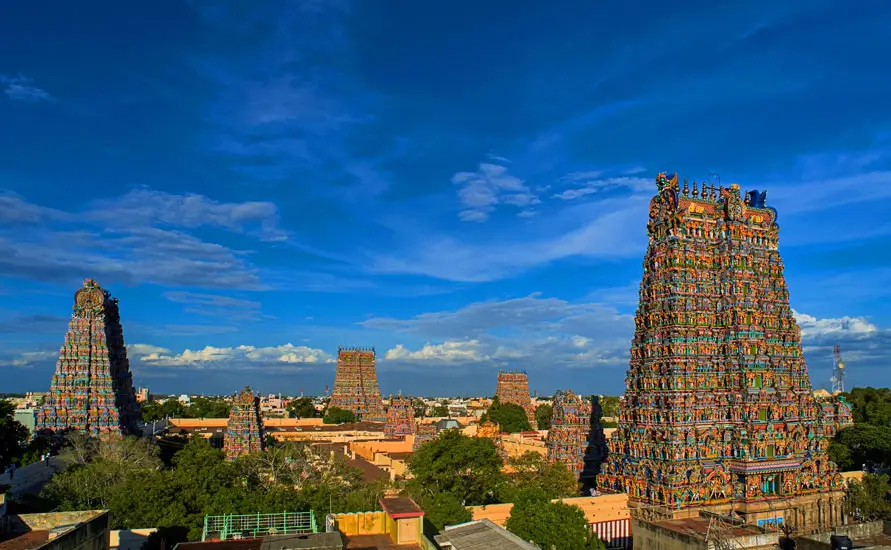
Murugan's mother, as Meenakshi, presides over Madurai, so the trip opens fittingly at the Meenakshi Amman Temple at dusk. Phones stay with the driver. Your guide leads you past the Golden Lotus Tank and the corridor of the eight goddesses to the evening worship, and Hindu members of the family go on for darshan of Meenakshi and Sundareswarar, whose inner sanctums are not open to non-Hindus. Look for the image of Murugan with his consorts in one of the side shrines. Dinner is kept early tonight, since tomorrow the road runs south to the sea. Overnight in Madurai.
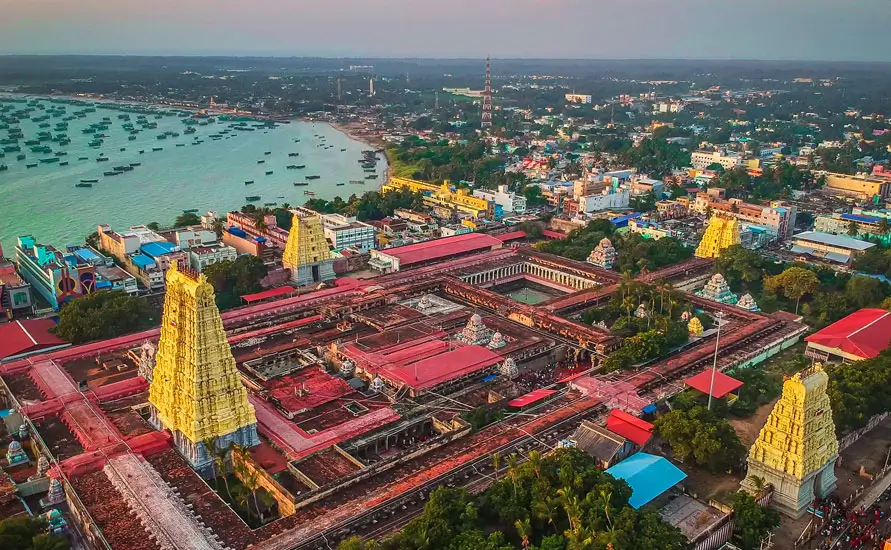
Leaving Madurai soon after breakfast, the car takes the four-lane highway south through Virudhunagar district, famous for its fireworks factories at Sivakasi a little way off the road, and then a quieter route through Tirunelveli district, where banana plantations and palmyra groves line the way. A tea stop at a roadside stall, perhaps with a sweet from Tirunelveli's famous halwa shops, breaks the drive. By lunchtime you reach Tiruchendur, a small town that faces the Gulf of Mannar and lives entirely for its temple. Rooms are near the shore, so you can hear the sea and the temple bells together.
The Tiruchendur Murugan Temple is the second abode in the traditional list, and the only one of the six built at sea level rather than on a hill. It marks the place where Murugan camped before destroying the demon Surapadman, and the main image shows him as a young ascetic offering worship to Shiva. A separate shrine honors Shanmukha, the six-faced form, whose festival image is carried out in great processions. The nine-tiered western tower is visible from far out at sea. Every October or November the Skanda Sashti festival ends with the Soorasamharam, a reenactment of the victory, performed on the sand before enormous crowds.
Plan on darshan once the heat eases toward evening. Shirts come off for men at the inner gate, women wear a saree or salwar suit, and phones are handed in outside. Non-Hindu visitors can stay in the outer halls and on the shore, where pilgrims wade into the sea before prayer. Ask to see the small fresh-water well near the beach that devotees consider sacred, and to the Valli cave, a narrow shrine cut into the sandstone cliff. A stroll on the beach under the lit temple tower closes the day. Overnight in Tiruchendur.
An early alarm brings you to the dawn worship at Tiruchendur, when the first lamps are offered while the sky lightens over the water. Many families find this the most peaceful hour of the whole circuit, before the tour buses arrive. You check out after a late breakfast and head back north toward Madurai. On the way, a short detour through Tirunelveli lets you see the twin Nellaiappar and Kanthimathi shrines from outside, or you can drive straight through and arrive in time for a long afternoon rest. Your chauffeur adjusts the plan to how the grandparents in the car are feeling.
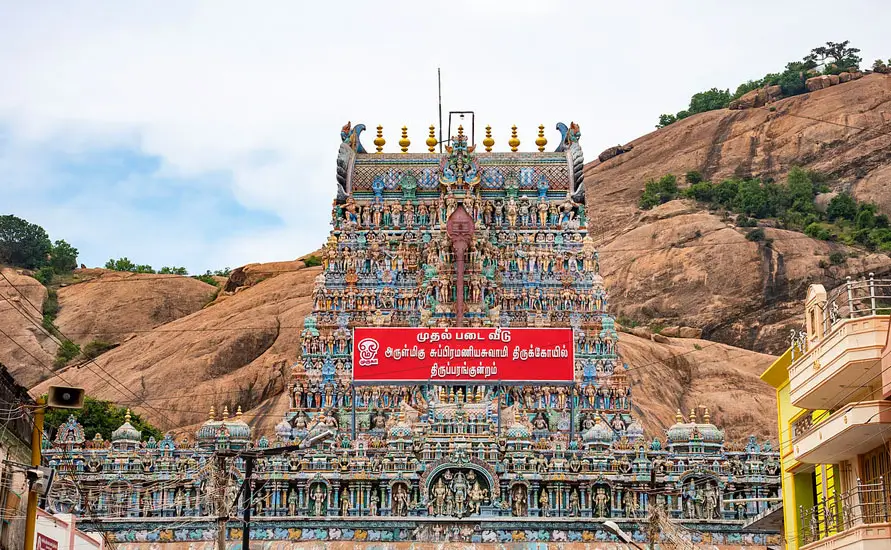
In the late afternoon you visit Thiruparankundram, just 8 km south-west of Madurai and counted as the first of the six abodes. This is where Murugan married Deivanai, the daughter of Indra, after his victory, and the temple is a favorite place for Tamil weddings to this day. Its sanctum is carved directly into the granite hill, and unusually Murugan is shown seated with his bride rather than standing. Within the same rock face are shrines to Shiva, Durga, Ganesha and Vishnu, so families can worship several deities under one roof, and the cave sculptures date back to the Pandya kings.
The temple climbs the hill in a series of halls and steps, and your guide explains the carvings on the pillars of the front mandapam, which show scenes from Murugan's wedding and battles. Men dress in the traditional way, and Hindu visitors go into the cave sanctum while others may usually see the halls in front of it, according to the temple's rules. After darshan you return to Madurai, checking back into the hotel from your first evening for two more nights. Dinner is free, and for dessert, try Madurai's own jigarthanda, which layers thickened milk, sarsaparilla syrup and almond gum under a scoop of ice cream. Overnight in Madurai.
A short drive north-east of Madurai brings you to the forested slopes of the Alagar hills. At their foot stands Alagar Kovil, the temple of Vishnu as Kallalagar, Meenakshi's brother in local belief, and a Divya Desam sung by the Alvars. Each spring at the Chithirai festival, his image rides a golden horse to Madurai and steps into the Vaigai, while villagers line the riverbank in their tens of thousands. Your guide shows you the fine Nayak-period carvings in the front hall, and then the car climbs a narrow forest road of about 4 km to the sixth abode. Watch out for monkeys, which are bold here and fond of bags.
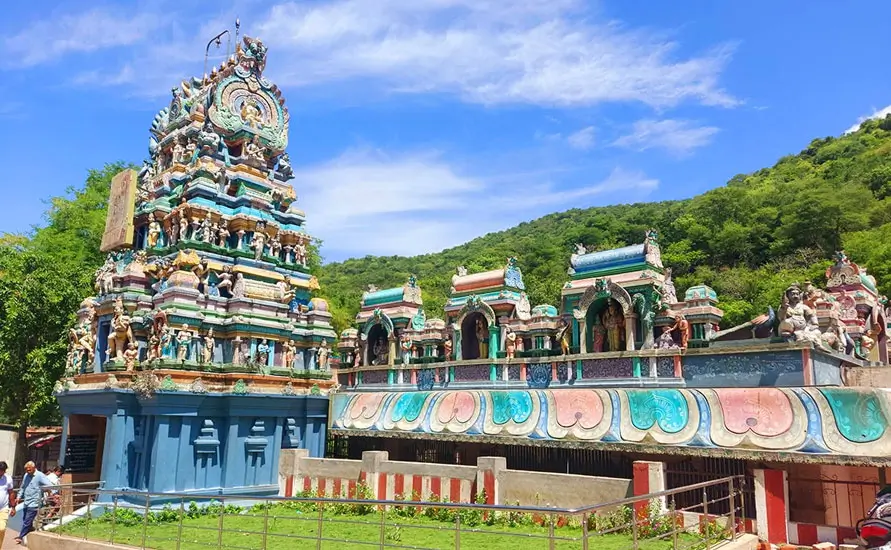
Pazhamudircholai is the most rustic of Murugan's six homes, set among trees on the Solaimalai hill, and here he is worshipped with both his consorts, Valli and Deivanai. Its best-known story concerns the poet Avvaiyar, who was resting under a fruit tree when a boy, really Murugan in disguise, asked whether she wanted hot fruit or cold fruit. Puzzled, she asked for the fruit, which fell into the sand, and when she blew on it to clean it, the boy laughed and asked if it was too hot. Children hearing that tale tend to remember this temple first.
Above the temple a path continues to Nupura Gangai, a natural spring where pilgrims bathe under a stone spout, and the walk is pleasant in the shade if knees allow. Lunch is back in Madurai, followed by a rest. Later, consider the Vandiyur Mariamman Teppakulam, one of the largest temple tanks in Tamil Nadu, whose central island holds a small shrine pavilion, where the Thai month float festival sets the deities afloat on a lit raft, or return to Meenakshi Temple for the 9 pm palliyarai ceremony. Shoes and phones follow the same rules as the first evening. Overnight in Madurai.
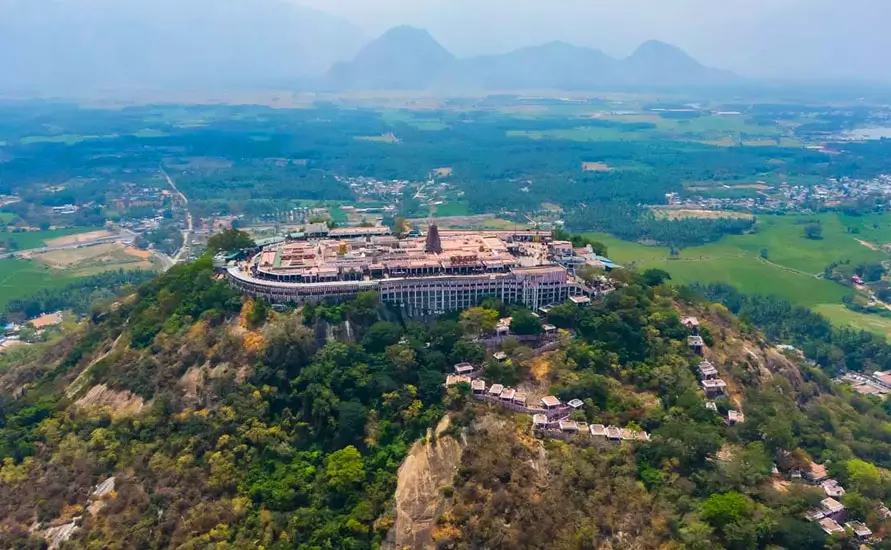
The road west to Palani climbs gently through Dindigul district, known for its locks, its biryani and its rocky outcrops. As you near the town, the hill of Sivagiri appears with the golden tower of the shrine on its summit and the long line of steps winding up its side. Palani is the third abode, and the story behind it is one every Tamil child knows. A divine fruit was promised to whichever of Shiva's two sons circled the world first. Murugan set off on his peacock, while Ganesha simply walked around his parents, who were his world, and won. Murugan left in protest and came here.
There are three ways up the hill: about 690 granite steps, the winch, a set of small rail cars pulled up the slope by cables, and a ropeway with cable cars, which is the fastest and gives fine views over the town and lakes. Your guide checks which one is running, since each closes now and then for maintenance. At the summit Murugan stands as Dhandayuthapani, an ascetic with a staff and a shaved head, and the image is said to have been made by the Siddhar Bhogar from a blend of nine medicinal minerals. Bhogar's own shrine is inside the temple complex.
Many devotees offer their hair at Palani, and you will see families with freshly shaved children everywhere. In the evening the golden chariot carries Murugan's festival image around the hilltop corridor, and devotees can sponsor a turn at a temple counter. Notices at the temple state that non-Hindus may not go beyond the flagstaff, so other visitors enjoy the views and the hill path. Before leaving, buy the famous Palani panchamirtham, a prasadam of bananas, jaggery, ghee, honey and cardamom that holds a geographical indication tag. The lower temple of Thiru Avinankudi is also visited. Overnight in Palani.
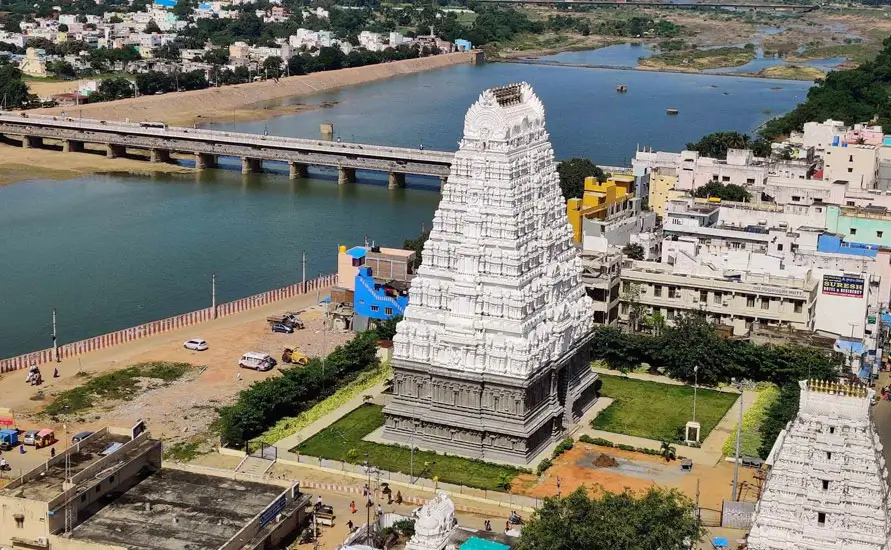
Five and a half hours separate Palani from the delta, so the day starts with an early breakfast and, for those who wish, a quick dawn visit to the foothill shrine at Palani. The route runs east through Oddanchatram and Dindigul, joins the national highway past the Sirumalai hills to Trichy, and then follows the Kaveri through Thanjavur district to Kumbakonam. Your chauffeur plans stops for coffee near Dindigul and for lunch around Trichy, and the car is spacious enough for older guests to rest along the way. The new driver for the delta region usually takes over from the southern team here.
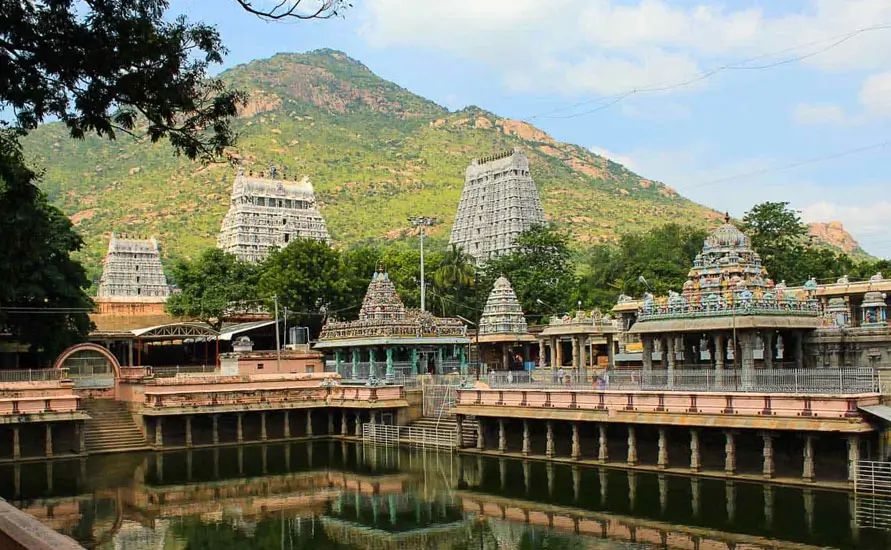
Rooms near the town center are ready when you pull in during the late afternoon. If energy allows, a short evening walk leads to the Kumbeswarar Temple, from which the town takes its name, or to the Mahamaham tank with its sixteen small pavilions. Kumbakonam is also famous for its strong filter coffee, called degree coffee, which is worth trying at one of the old cafés. The local guide drops by after dinner to plan the Swamimalai visit for the next morning, timed for the first worship of the day. Overnight in Kumbakonam.
Swamimalai, about 8 km west of Kumbakonam, is the fourth abode and the place of one of Murugan's most loved stories. When the creator Brahma could not explain the meaning of the syllable Om, the young Murugan imprisoned him, and when Shiva asked for an explanation, the son sat on his father's lap and taught him the meaning, becoming Swaminatha, the lord who was teacher to his own father. Built on a man-made hillock, the temple is reached by sixty steps, each bearing the name of a year in the sixty-year Tamil cycle. Arriving for the morning puja, you see the shrine at its most devotional.
The village around the temple is home to families of bronze casters who follow the Chola method of lost-wax casting, and Swamimalai bronze icons are protected by a geographical indication. In a family workshop you see each stage, from the beeswax model and the coat of fine river clay to the moment the mold is broken open after the pour. Many NRI families commission a Murugan or Nataraja for their home shrine here, and the workshop can ship it abroad, though buying is never expected. A simple lunch in Kumbakonam follows before the drive to Trichy airport, which takes about two hours.
Flying time from Trichy to Chennai is roughly sixty minutes, and someone from our Chennai office will be standing at the arrivals gate. If you prefer to travel by road, the drive takes around six hours and can be arranged instead. Chennai is the base for the final abode, so you stay two nights in the same hotel. Rest is the main plan for tonight; if you feel like an outing, the Kandakottam Murugan temple in Park Town, beloved of the poet-saint Ramalinga Swamigal, is a lively spot for evening worship. Eat in at the hotel or try a nearby South Indian restaurant. Overnight in Chennai.
Leave Chennai early to beat the traffic on the road to Tiruttani, which runs west through the suburbs of Poonamallee and Tiruvallur before the land turns green with paddy and the low hills of the Andhra border come into view. Tiruttani is the fifth abode, where Murugan is believed to have calmed his anger after the war with Surapadman and married Valli, the daughter of a hill chief. The name comes from the Tamil word for calming, and devotees come here for peace of mind. The hill temple can be reached by road almost to the top, or by climbing the steps.
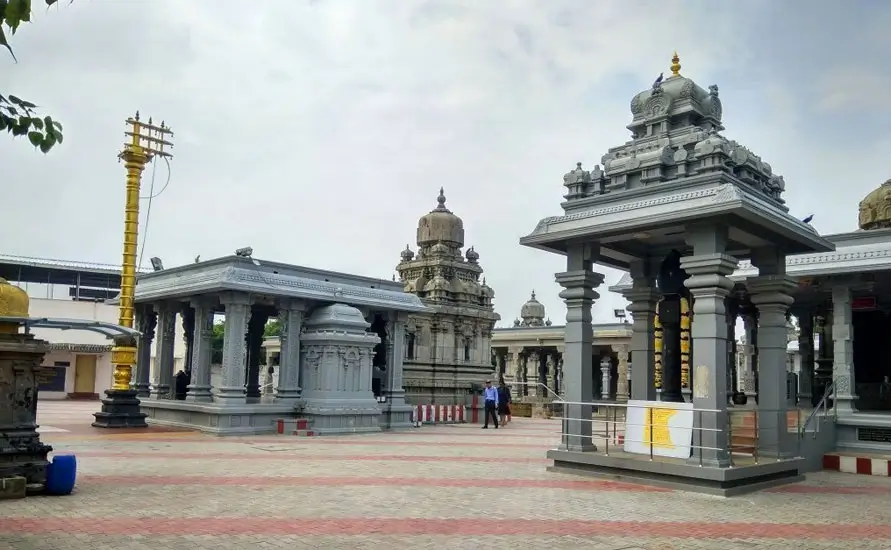
There are 365 steps at Tiruttani, one for each day of the year, and on the night of 31 December the Padi Utsavam, the step festival, sees thousands of devotees climb while singing hymns on every step, a tradition begun in the early 20th century. In the sanctum Murugan stands with his vel, and the temple has shrines to Valli and Deivanai. Male devotees may need to go bare-chested, and a saree or salwar suit is right for women. Phones are deposited at the counter. The temple follows its own rules for non-Hindu visitors, and your guide explains what is open.
With the sixth abode completed, many families take a moment for a special archana or to tie a thread at the shrine to mark the end of the pilgrimage. A vegetarian lunch in Tiruttani town comes before the drive back to Chennai. In the evening you may visit the Vadapalani Murugan Temple, one of the busiest Murugan shrines in the city and a popular place for weddings, or simply relax at the hotel. Your guide can also recommend shops in T. Nagar for silk saris, Murugan images and devotional music to take home. Overnight in Chennai.
The last morning is unhurried. Families with a late flight can walk on Marina Beach at sunrise, visit the Kapaleeshwarar Temple in Mylapore, which also has a shrine of Murugan as Singaravelar, or do some last shopping. Rooms are normally vacated by noon; on late-night flights, ask us about keeping your room until the transfer at extra cost. Then it is off to Chennai International Airport, which takes thirty to sixty minutes depending on traffic and where you are staying.
Chennai has direct flights to Singapore, Kuala Lumpur, Colombo, Dubai, Doha, London and Frankfurt, among other cities, which makes it easy to connect home to Malaysia, the UK, North America or Australia. We plan the transfer to allow three hours for an international departure. In nine days you have stood in all six homes of Murugan, from the seashore to the hilltops, and heard the stories that hold them together. Vel Vel Muruga, and may the blessings of the six abodes stay with your family on the way home.
Your Journey

N.S. Rathore & Mrs. Omlata Rathore · Managing Director
We still read every enquiry ourselves. Tell us the places you liked and our planners will send a day-by-day route with drive times and a clear price.
Every package can be customised and no pressure to book. A planner from our office replies within 24 hours with a route written for your group.
Fill this in and your planner will send a first draft itinerary.
Explore more
Kerala Backwaters Escape Kerala Backwaters Escape
 Kerala Backwaters Escape
 Kerala Backwaters Escape
 Kerala Backwaters Escape
 Kerala Backwaters Escape
 Kerala Backwaters Escape
 Kerala Backwaters Escape
 Kerala Backwaters Escape
 Kerala Backwaters Escape
 Kerala Backwaters Escape
 Kerala Backwaters Escape
 Kerala Backwaters Escape
 Kerala Backwaters Escape
 Kerala Backwaters Escape
 Kerala Backwaters Escape
 Kerala Backwaters Escape
 Kerala Backwaters Escape