
 Kerala Backwaters Escape

South India Wildlife Tours
Bangalore – Ranganathittu (Srirangapatna) – Kabini – Ooty – Aliyar – Valparai – Athirappilly – Thattekad – Munnar – Thekkady – Kochi
At a glance
Roughly two dozen bird species live only in the hills of south-west India, and most of them are shared out between very different habitats: dry deciduous forest in the north, cold shola woods on the high plateaus and wet lowland evergreen forest in Kerala. Our Western Ghats Birding Tour is planned for serious birders who want a realistic shot at as many of those endemics as two weeks allow. The route runs from the river islands of Ranganathittu through Kabini, the Nilgiris and Valparai to the lowland forest at Thattekad, then climbs to Munnar and finishes at the Periyar Tiger Reserve near Thekkady.
Target birds include the Malabar trogon, Sri Lanka frogmouth, white-bellied treepie, Nilgiri flycatcher, Nilgiri wood pigeon, Malabar parakeet, crimson-backed sunbird and broad-tailed grassbird, plus the two sholakili species and three of the Montecincla laughingthrushes, now known in many field guides as chilappans. The Palghat Gap splits several of these pairs, so the route crosses it deliberately: Nilgiri sholakili and Nilgiri laughingthrush in Ooty, white-bellied sholakili and Palani laughingthrush around Munnar. Each region has its own local Western Ghats birding specialist, and a lead bird guide travels with you from start to finish.
Expect early starts, long but gentle walks and plenty of patient waiting at fruiting trees and forest edges. Our guides find birds by knowledge of habitat, calls and behavior; we do not use playback, and we follow every park rule on silence, trails and vehicles. November to March is the main season, with migrants from the north adding warblers, thrushes and flycatchers to the resident list. No species can be guaranteed, but a well-run south India birding tour of this length regularly produces a long list of endemics along with mammals such as the lion-tailed macaque, Nilgiri tahr, gaur and Asian elephant.
Bangalore is an easy first stop for a birding trip because the city still keeps dozens of old lakes and tree-lined parks. Your driver waits where passengers leave the terminal at Kempegowda International Airport with your surname printed on a card, then takes you to a hotel on the northern side of Bangalore so that tomorrow's departure avoids the city center. Overnight long-haul arrivals are normal on this route, so the morning is left open for sleep. If your flight lands at dawn, tell us and we will book the room from the previous evening. A welcome folder in the car holds your itinerary, guide contacts and a printed checklist of the region's birds.
In the late afternoon your lead birding guide joins you at the hotel and goes over the whole fortnight, region by region. This is the moment to share your own target list and the birds you have already seen elsewhere in India or Sri Lanka, because the guide will adjust timings at each site to give the most chances to the species you care about most. You also talk about camera gear, rain covers for the monsoon-edge months, and the field rules followed on this tour, including silence in the forests, no playback, no flash photography on roosting birds and keeping a respectful distance from nests.
If your energy allows, a short walk at Hebbal Lake or one of the city's other wetlands gives you a first taste of Indian birds before dusk. Spot-billed ducks, purple swamphens, little cormorants and grey-headed swamphens are typical, along with pied kingfishers hovering over the water and Asian koels calling from the trees. Winter adds northern migrants such as garganey and northern shoveler, and the reed beds sometimes hold clamorous reed warblers. It is a gentle warm-up rather than serious birding, and you are back at the hotel for dinner and a briefing on tomorrow's early start. Overnight in Bangalore.
Leaving after an early breakfast, you take the Mysore expressway south-west across a plateau of granite outcrops, coconut groves and sugarcane. Telegraph wires and fallow fields along the way hold black drongos, rollers flashing turquoise as they drop to the ground, little bee-eaters and sometimes a black-winged kite hovering over stubble, so expect a few quick stops. You check in to a riverside hotel near Srirangapatna, the old island capital of Tipu Sultan, in time for lunch. The Kaveri river runs right past many of the hotels here, and even the grounds can be productive, with white-browed wagtails, small minivets and plum-headed parakeets common in the trees.
Once the heat eases, a few minutes' drive upstream brings you to Ranganathittu Bird Sanctuary, where a scatter of tree-covered islets breaks the flow of the Kaveri. Forest department boatmen row you past the colonies at a careful distance, where pelicans, painted storks, openbills and ibises crowd the branches, and nesting tends to peak between about December and May. Large marsh crocodiles lie motionless on the boulders with jaws open, and an otter family occasionally surfaces near the boats. The boatmen know how close they may go without disturbing the colonies, and you should keep voices low while passing the nesting trees.
Back on dry land, the paths along the riverbank are worth a slow walk before the gate closes. Look for river terns and great thick-knees on the rocks, streak-throated swallows over the water and stork-billed kingfishers perched low on branches, while bats leave their roosts in the large trees as dusk falls. Your guide will also check the bamboo clumps near the entrance for small birds such as the white-browed bulbul and Tickell's blue flycatcher. Back at the hotel, you go through the day's list with the guide and add the first entries to your trip log, which will grow fast over the next two weeks. Overnight in Srirangapatna.
Dawn is the best hour at Ranganathittu, so a short second visit before breakfast is worth it if the morning light is good. Afterwards you drive south past Mysore and through farming villages to the Kabini backwaters, the reservoir that forms the southern boundary of Nagarhole National Park. Your lodge stands on the bank of the water, and its gardens alone can keep a birder busy, with Malabar pied hornbills, Indian scops owls roosting in trees, white-bellied drongos and brown fish owls along the shore. You settle in, have lunch and rest during the hottest hours, when the forest is quiet.
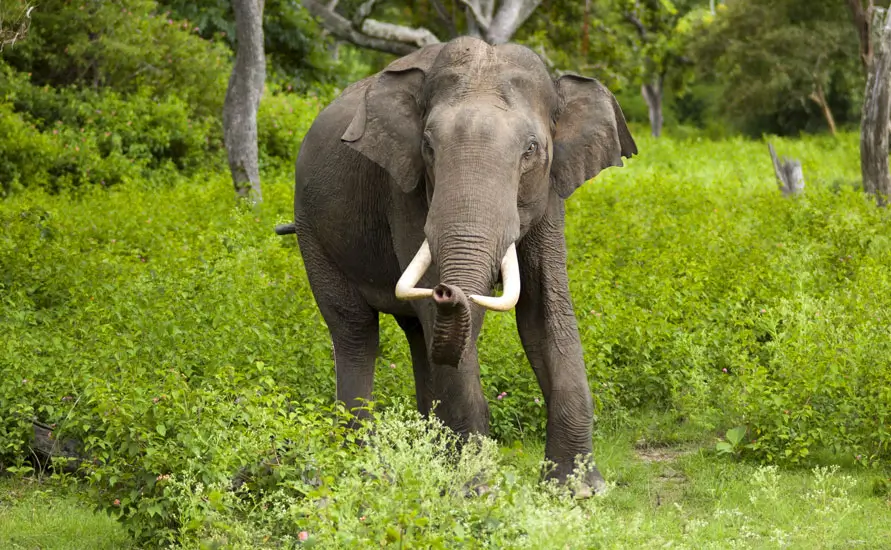
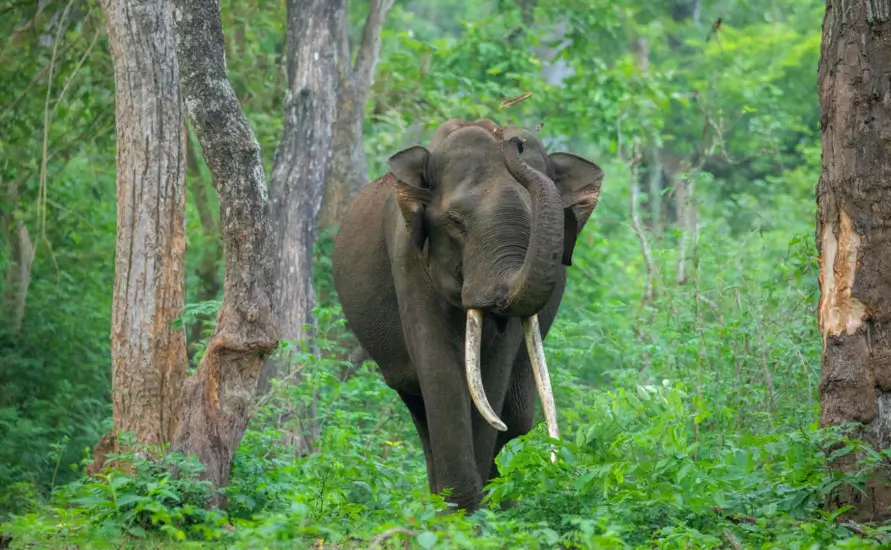
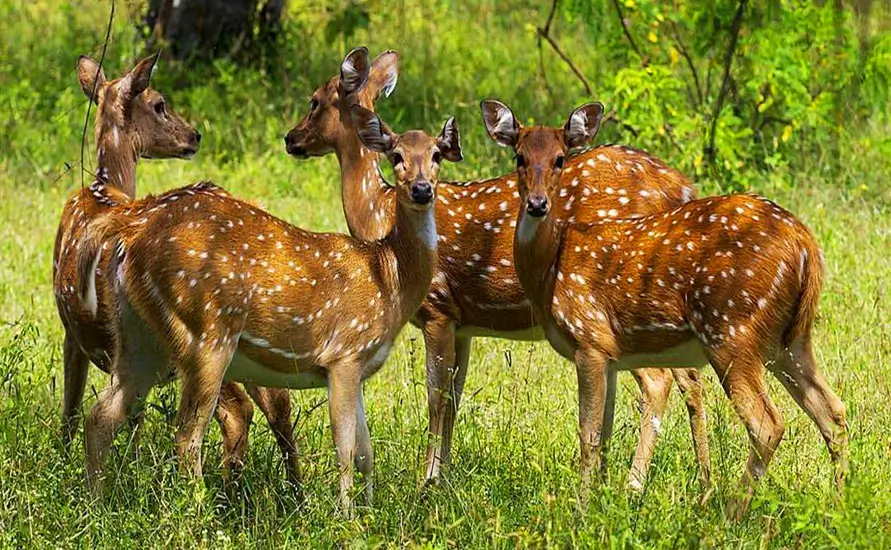
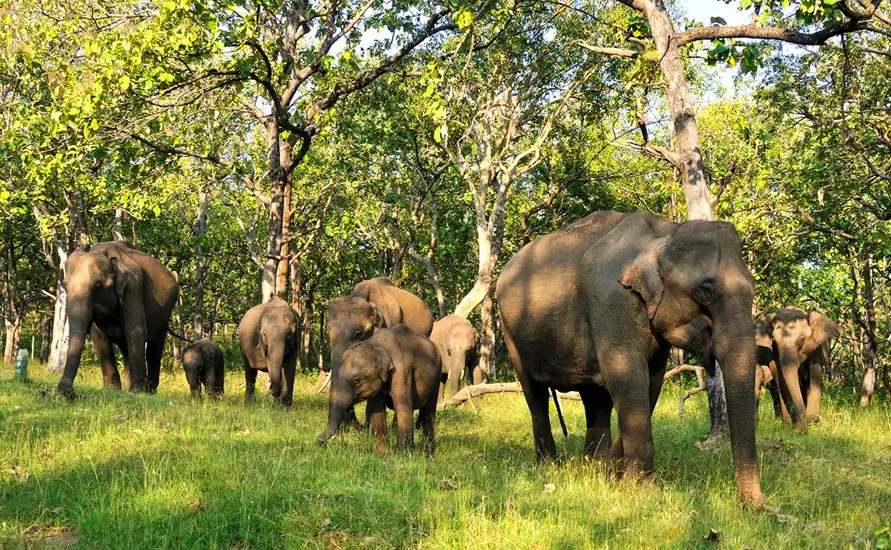
The afternoon outing is a Kabini boat safari on the reservoir, run under forest department rules and allocated by time slot. From the water you can scan the grassy banks where Asian elephants come down to drink and graze, often in large family groups during the dry months, along with gaur, spotted deer and wild boar. Birds are plentiful here: grey-headed fish eagles perched on dead trees, Oriental darters drying their wings, river terns, ospreys in winter and flocks of small pratincoles on sandbanks. Dead trees standing in the water also hold nesting cormorants and, sometimes, a crested serpent eagle watching for snakes below.
As the light fades, the boat returns to the lodge jetty, and the resident naturalist leads a short walk in the grounds to listen for owls and nightjars. Jungle owlets often call from the trees at dusk, and the brown hawk-owl is sometimes heard nearby, while Indian nightjars and Jerdon's nightjars start their repeated calls once it is dark. Meals at the lodge are full board, and after dinner the naturalist runs a short slide talk on how the reserve was formed and which forest birds to expect in the morning. Plan an early night, because the jeep safari begins at first light. Overnight in Kabini.
The morning jeep safari in Nagarhole leaves the lodge before sunrise, with permits and zones allocated by the forest department and subject to availability. Driving slowly along the forest roads, you watch for mammals such as elephants, gaur, sambar and dholes, while leopards and tigers are possible but never guaranteed. For birders, the mixed deciduous forest is rich in woodpeckers, including the white-bellied woodpecker and the black-rumped flameback, as well as Malabar grey hornbills, Indian peafowl, red spurfowl and grey junglefowl. Stay seated, keep noise down and wear earth-toned clothing, as the park rules require on all safaris.
Between the two safaris, your guide takes you along the edge of the lodge grounds and the nearby fields, which are good for small birds that rarely show from a jeep. Possible species include the blue-faced malkoha, the Malabar lark, the Indian pitta (a winter migrant) and the white-cheeked barbet, while flowering trees attract purple-rumped sunbirds and Loten's sunbirds. The Wynaad laughingthrush occurs in the area but is shy and unpredictable, so the guide will try for it in suitable thickets rather than promise it. Lunch and a rest at the lodge follow, as most birds go quiet in the middle of the day.
In the afternoon, a second jeep or canter drive takes you back into the forest, where the lower sun often brings animals out to the roads and waterholes. Watch for crested hawk-eagles and changeable hawk-eagles perched in the canopy, and for the blue flash of a black-naped monarch crossing the track. On slower drives the guide reads the forest for you instead, pointing out claw marks on tree bark, fresh tracks in the dust and the sharp alarm barks of deer and langurs that often betray a hidden cat. Back at the lodge, the evening tally adds a good batch of dry-forest species to the list. Overnight in Kabini.
After a final walk around the lodge at dawn, you drive south through Bandipur Tiger Reserve and into Mudumalai on the Tamil Nadu side. These forests share open borders, and the main road passes through them, so elephants, gaur and spotted deer are often seen from the car. Vehicles may not halt on most of this forest highway, so any viewing is done from a slow-moving car where rules and traffic allow. A night-time traffic ban protects animals crossing the Bandipur road, and our daylight timing fits easily around it. Your guide keeps watch for raptors such as the white-eyed buzzard and the oriental honey buzzard.
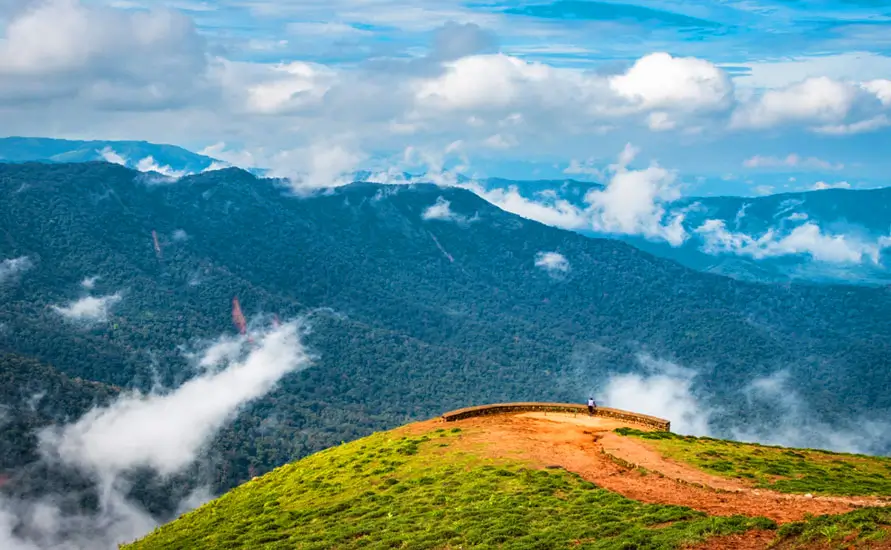
Beyond Masinagudi comes the Kalhatti ghat, thirty-six numbered hairpins on a gradient so steep that drivers use low gear the whole way. As you climb, the dry scrub gives way to eucalyptus and pine plantations and finally to the rolling hills of the Nilgiris, with the town of Ooty sitting at about 2,240 meters. The air is noticeably cooler, and evenings can be cold in winter, so pack a fleece or a warm jacket. Home for two nights is an old colonial-era property on the edge of town, close to the high sholas.
In the afternoon, your local Nilgiri birding guide takes you to a nearby patch of shola forest or a park on the edge of town. Look for the Nilgiri flycatcher, a dark blue bird of forest edges, the grey-breasted laughingthrush, a common hill bird, and the Indian blackbird, which here has a distinctive grey-brown shade. In flowering shrubs you may find the Indian white-eye, small sunbirds and the Nilgiri wood pigeon, a large pigeon with a checkered neck. As evening falls, temperatures drop sharply, and dinner at the hotel is followed by a briefing on tomorrow's search for the rarest Nilgiri endemics. Overnight in Ooty.
The main targets today are the Nilgiri laughingthrush, now often listed as the Nilgiri chilappan, and the Nilgiri sholakili, a small, dark, shy bird that lives in the dense undergrowth of high shola forest. Both are found only in the Nilgiri hills north of the Palghat Gap, which makes Ooty the key site for them on this tour. Your guide starts at a reserve forest such as Cairn Hill or the slopes near Doddabetta, the highest point of the Nilgiris, at around 2,637 meters. Walking quietly along forest trails and watching the undergrowth is the best way to find these birds, which often hop on the ground near streams.
Later in the morning, the group shifts to open grass slopes and forest margins to search for the Nilgiri pipit, a brown, streaked endemic that walks rather than hops, and the black-and-orange flycatcher, a bright little endemic often found in shady forest edges. Winter visitors such as the Indian blue robin and Tickell's leaf warbler join residents here, and from stream gullies comes the human-sounding song of the whistling thrush, which locals jokingly call the whistling schoolboy. Some of the best shola and grassland areas in the upper Nilgiris need separate forest department permission and are not always open, so your guide will choose sites according to access and season.
After lunch, the afternoon is lighter. Options include an easy stroll among the Victorian-era trees of the Government Botanical Garden, where flowering shrubs pull in sunbirds and flowerpeckers, or a stop at a Nilgiri tea factory to taste the local brew and look out across the slopes. In the evening, your guide reviews the list and decides whether to return to a site for a second try at any missed species before you leave tomorrow. If you are a photographer, ask for advice on light and shutter speeds in the dark shola understory, where flash is not used. Overnight in Ooty.
An early start gives you time for a final hour in the sholas if anything is still missing from the Ooty list, before the long descent through Coonoor and Mettupalayam to the plains around Coimbatore. The road then runs south through Pollachi, a town of coconut groves and cattle markets, and on to the Aliyar reservoir at the foot of the Anamalai hills. Here the climb to Valparai begins with forty hairpin bends, each one numbered, and the views open up over the dam and the forested slopes. Watch the rocky cliffs for Nilgiri tahr, which are sometimes seen near the road, and for black eagles soaring along the ridges.
At the top, the landscape becomes a plateau of tea estates broken by patches of rainforest, with the small town of Valparai at its center. There is just enough daylight after checking in to a planter's bungalow for a first walk with a Valparai guide who has spent years watching these forest patches. Great hornbills often fly over the tea at dusk to their roosting trees, and you may hear the loud wing beats before you see them. The evening is quiet and cool, and dinner is served at the bungalow, with a short talk on the conservation work that protects these fragments and the wildlife that moves between them. Overnight in Valparai.
First stop in Valparai is Puthuthottam, a ribbon of evergreen woodland beside the main road where lion-tailed macaques regularly forage. Black-coated with a grey lion's mane, this endemic monkey is listed as endangered and survives in scattered forest blocks along the southern Ghats. Watch them quietly from the road, never feed them and keep a safe distance. Birds share the same trees: hornbills of two species, the long-tailed treepie found only in these southern hills, grey-headed bulbuls and swiftlets hawking overhead, while your guide follows any mixed flock that passes.
Later, the guide takes you to other forest fragments around the plateau, some of which have been restored by conservation groups working with tea companies. Look for the rufous babbler, a noisy endemic of the hills, the Malabar barbet with its bright crimson face, the Malabar parakeet with blue-tinted wings and the dark-fronted babbler in thick undergrowth. Butterflies are plentiful, and the Malabar giant squirrel and Nilgiri langur are often seen in tall trees. Elephants also move through the tea estates around Valparai, and your guide will check local reports before walking, as these animals deserve a wide berth.
In the late afternoon, you can visit a viewpoint above the plateau, where the sun sets over the hills and the forested valleys of Kerala to the west. Birding at dusk might bring the Sri Lanka bay owl, a small, rarely seen owl of dense forest, although finding it depends on local knowledge and luck. Back at your bungalow, the guide updates the trip log, which now includes many of the Western Ghats endemics, and talks you through tomorrow's drive. The road to Kerala passes through protected forest with checkposts and time restrictions, so departure times are planned around those rules. Overnight in Valparai.
This is one of the great birding drives of the south. From Valparai the road drops to the Kerala border at Malakkappara and continues through the reserved forests of the Sholayar and Vazhachal ranges. Forest checkposts control the timing of vehicles through this stretch, stopping is restricted in many places, and passengers must not leave plastic or food behind, so the drive is planned with care. Your guide knows the safe and legal spots for a brief stop, where hornbills and other forest birds can be seen from the roadside. Elephants also use this road, and drivers are trained to wait patiently at a distance if a herd is crossing.
The forests around Athirappilly and Vazhachal are famous among birders because all four of the Western Ghats hornbills, the great, Malabar pied, Malabar grey and Indian grey, can occur in the area, although seeing all four in one day is a matter of luck. Look for great hornbills flying over the river valley and for mixed flocks with the white-bellied blue flycatcher, the dark-fronted babbler and the orange minivet. The Athirappilly waterfall, where the Chalakudy river drops about 25 meters over a wide rock face, is a short stop on the route, and the riverside is good for kingfishers, wagtails and the Malabar whistling thrush.
After lunch, you continue through the farming towns of central Kerala to Thattekad, a forest area along the Periyar river protected as the Salim Ali Bird Sanctuary. Salim Ali, the father of Indian ornithology, studied the birds of Travancore in the 1930s and rated these lowland forests among the finest he had seen in the south. Your base is a simple homestay close to the river, and the Thattekad guide drops by after tea to plan the next two days. Many of the guides here are from families who have worked in birding for generations, and they keep track of where key species are roosting each week. Overnight in Thattekad.
The first walk of the day starts at dawn on the forest trails near the river, where the canopy is busy with birds. The main target is the Malabar trogon, a beautiful endemic bird with a red belly, black head and white tail edges in the male, which often sits still on a branch in the middle levels of the forest. Your guide also listens for the call of the heart-spotted woodpecker, the chestnut-headed bee-eater and the flame-throated bulbul, all good birds of the lowland evergreen forest. The forest department allows guided walks inside the sanctuary, and you should keep to the paths, stay quiet and follow the guide's instructions at all times.
Late in the morning, the guide leads you to one of the known roost sites of the Sri Lanka frogmouth, a small night bird that spends the day sitting still on a low branch in dense forest. Its brown and grey plumage looks so much like dead leaves that many visitors walk past without seeing it. Pairs often roost close together, and the guide will show you where to stand and how long to stay without disturbing them. Nearby thickets can also hold roosting owls, including the much rarer Sri Lanka bay owl, and in winter an Indian pitta may hop across the leaf litter while a shama sings from deep cover.
Later, the guide works the mixed farmland and forest margin near the village, a good place for the white-bellied treepie, a striking long-tailed relative of crows, the tiny crimson-backed sunbird and flocks of Malabar starlings. Raptors such as the black baza, crested goshawk and Jerdon's baza are seen over the forest canopy. In the evening, your guide may suggest a short walk on the village road to look for the Sri Lanka frogmouth hunting at dusk, from a respectful distance and without bright torches. Dinner is home-cooked Kerala food at the homestay. Overnight in Thattekad.
A last dawn session at Thattekad gives you the chance to search for anything still missing, perhaps the blue-eared kingfisher along shaded streams, the black-throated munia in grassy clearings or the Malabar woodshrike in the canopy. After breakfast, the car climbs east into the hills of Idukki district along a winding road through rubber, cardamom and pepper plantations. Stops at roadside waterfalls such as Cheeyappara and Valara are optional, and your guide may ask to pause at forest edges if birds are active. Above roughly 1,500 meters the trees thin out and the clipped tea of Munnar takes over whole hillsides.
After checking in to a plantation resort and having lunch, you head out with your Munnar bird guide to a nearby estate where small patches of forest survive between the tea. The higher altitude means different species, such as the grey-headed canary-flycatcher, the yellow-browed bulbul and the Indian scimitar babbler. Hill swallows and Indian swiftlets swirl over the ridges, while black eagles sometimes glide along the hillsides looking for prey. Keep an eye on the tea bushes, where Indian blackbirds and Malabar whistling thrushes feed, and on the flowering trees, which attract Loten's sunbirds and Nilgiri flowerpeckers.
Before dinner the lead guide explains the Palghat Gap, a forty-kilometer break in the mountains that has kept bird populations apart for so long that northern and southern forms are now separate species. The Palani laughingthrush, sometimes called the Kerala laughingthrush, replaces the Nilgiri bird south of the gap, and the white-bellied sholakili replaces the Nilgiri sholakili, which you hopefully saw near Ooty. These pairs make Munnar an essential part of a full Western Ghats endemic list. Tomorrow's plan depends on access and season, so the guide confirms the details over dinner at the resort. Overnight in Munnar.
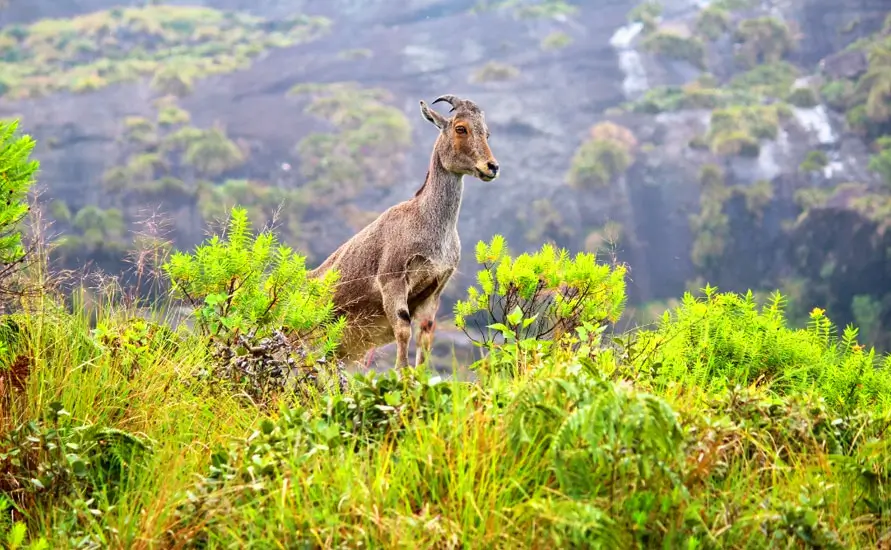
Provided the gates are open, you start at Eravikulam National Park, where the bulk of the world's Nilgiri tahr graze the rock faces and grass above the tea. Calving brings a closure of several weeks around the end of winter, while on open days visitors leave their own vehicles below and ride official park buses to Rajamala. Along the grassy slopes and rocky outcrops, look for the Nilgiri pipit, the broad-tailed grassbird, a secretive bird of tall grass, and the black-and-orange flycatcher in shola edges. Stay on the paths and keep a safe distance from the tahr, which are used to visitors but still wild.
By mid-morning you move on to a shola patch outside Munnar, such as the slopes around Top Station or a patch of forest close to the tea estates, depending on access. This is where you look for the white-bellied sholakili, a small, dark bird with a white belly that hops along mossy logs and streams, and the Palani laughingthrush, which moves in noisy family groups through the undergrowth. Other species include the Nilgiri flycatcher, the Nilgiri wood pigeon and the square-tailed bulbul, while the rare Nilgiri marten is sometimes seen crossing the road by lucky observers.
After lunch you can rest, or look round the tea museum in town, with its old rollers, dryers and photographs from the early planting days of the High Range. Birders who still have energy can take a short walk on a quiet estate road with the guide, looking for raptors such as the mountain hawk-eagle and the Bonelli's eagle. As the light fades, swifts and swallows gather over the valley, and the hills turn deep blue. After dinner the checklist comes out again, and with reasonable weather it should now show most of the endemics on your target sheet. Overnight in Munnar.
After an early walk around the resort grounds, you drive south through the cardamom hills toward Thekkady, a route of small towns, spice estates and viewpoints over the Western Ghats. Because cardamom needs shade, farmers keep the old forest canopy standing above the crop, so these estates still support a good range of birds. Your guide watches for mixed flocks on the roadside, which may hold the Indian yellow tit, the velvet-fronted nuthatch and the Malabar woodshrike. Tea and banana fritters at a roadside town break the drive before the final run into Kumily, which sits right on the boundary of the reserve.
The afternoon walk is through a family spice garden near Thekkady, where the owner shows how pepper vines, nutmeg and clove trees grow together in layers. These gardens are often good for birds too, with the Malabar grey hornbill, the Indian golden oriole, the black-hooded oriole and the white-bellied blue flycatcher using the shade trees. Butterflies such as the Malabar banded peacock and the blue Mormon are frequent in flowering hedges. Later the guide goes over the morning ahead in the Periyar Tiger Reserve, where group sizes, start times and clothing are all set by the forest department.
In the evening, the town of Kumily is busy with spice shops and small restaurants. An optional Kalaripayattu show, the old fighting art of Kerala with swords, sticks and acrobatic leaps, plays nightly in town, or you can stay in at the resort. The resort grounds may hold the brown fish owl or the Oriental scops owl at night, and your guide can help you listen for them after dinner. Dress code tomorrow is earth-toned clothing and long sleeves, with leech socks for the forest walk, which the forest department often provides. Make sure your camera batteries are charged, as the boat and walk both start early. Overnight in Thekkady.
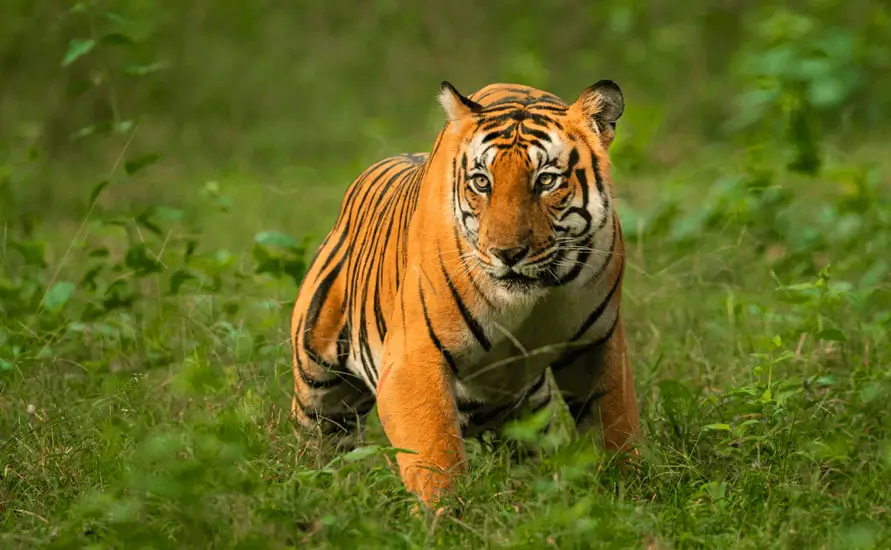
At first light you set off on a guided nature walk in the Periyar Tiger Reserve, led by forest department trackers, many from tribal families whose knowledge of the forest now goes into protecting it. The walk lasts about three hours, through evergreen and semi-evergreen forest, grassland and the edge of the lake. Birds you may see include the great hornbill, the Malabar trogon, the Nilgiri wood pigeon and the white-bellied treepie, as well as mammals such as gaur, sambar, wild boar and the Nilgiri langur. Tigers live here but are rarely seen, and the walk is about the whole forest, not one animal.
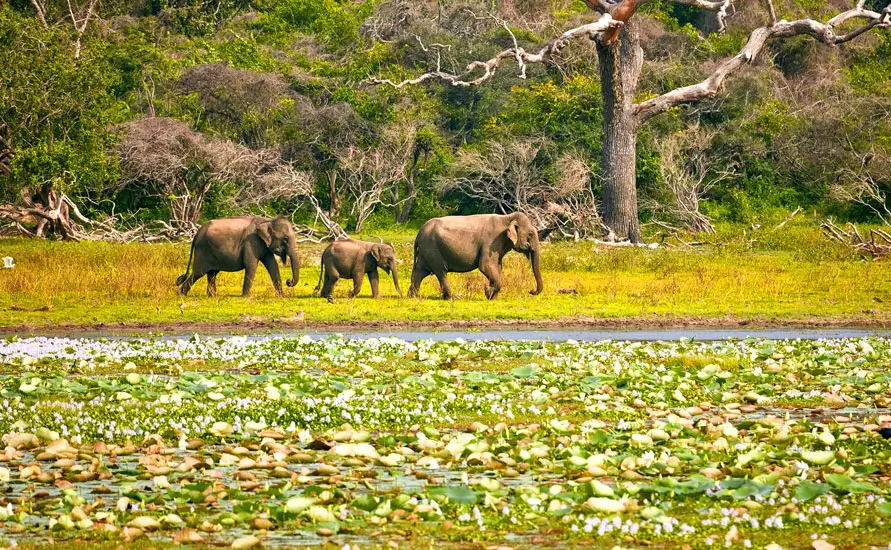
Later in the morning, you return to Kumily for breakfast and a rest. In the afternoon, a Periyar boat cruise on the lake gives a different view of the reserve. A British-built dam created the lake in the 1890s, and the bleached stumps of the old forest still rise from the water as lookout posts for darters, cormorants and kingfishers. From the boat you can scan the banks for elephants, gaur and sambar coming to drink, and for raptors such as the grey-headed fish eagle and the crested serpent eagle. Boat tickets are limited and sold by the forest department, so we book the best available slot.
As evening comes, return to your resort for a final review of the trip list with your lead guide. Over two weeks you will have walked through dry forest, river islands, high grasslands, rainforest and lake shores, and most birders leave with a list of several hundred species and a good share of the Western Ghats endemics. Your guide prepares a printed or digital checklist for your records and can help you upload sightings to eBird if you use it. Dinner on the last night is at a family restaurant in Kumily, a fitting close to the birding with Kerala fish curry and fresh parotta. Overnight in Thekkady.
Anyone up at dawn can make a final circuit of the resort garden with binoculars, since a last-morning addition to the list is always welcome. Then the car descends west through Kuttikanam and long belts of rubber, reaching Cochin International Airport in roughly four and a half hours. Lunch is taken en route, and the timing allows the full three hours that international check-in at Kochi usually needs. Flying close to midnight? We can reserve a room for the afternoon close to the airport, charged separately.
From Kochi, nonstop services to Gulf hubs, Singapore and Kuala Lumpur connect onward to most Western cities. As you leave, your guide's checklist and your own photographs will remind you of days spent waiting for a trogon, a frogmouth or a laughingthrush, and of the forests that protect them. For a future trip, the Agumbe rainforest, Silent Valley and the Andaman Islands each hold endemics you have not yet seen, and our birding team can build a route around them. Our office stays reachable by phone right up to the moment your bags are checked in. Have a safe flight home.
Your Journey

N.S. Rathore & Mrs. Omlata Rathore · Managing Director
We still read every enquiry ourselves. Tell us the places you liked and our planners will send a day-by-day route with drive times and a clear price.
Every package can be customised and no pressure to book. A planner from our office replies within 24 hours with a route written for your group.
Fill this in and your planner will send a first draft itinerary.
Explore more
Kerala Backwaters Escape Kerala Backwaters Escape
 Kerala Backwaters Escape
 Kerala Backwaters Escape
 Kerala Backwaters Escape
 Kerala Backwaters Escape
 Kerala Backwaters Escape
 Kerala Backwaters Escape
 Kerala Backwaters Escape
 Kerala Backwaters Escape
 Kerala Backwaters Escape
 Kerala Backwaters Escape
 Kerala Backwaters Escape
 Kerala Backwaters Escape
 Kerala Backwaters Escape
 Kerala Backwaters Escape Kerala Backwaters Escape Kerala Backwaters Escape Kerala Backwaters Escape Kerala Backwaters Escape