 Kerala Backwaters Escape

South India Wildlife Tours
Bangalore – Kabini – Wayanad – Ooty – Pollachi – Munnar – Thekkady – Kochi
At a glance
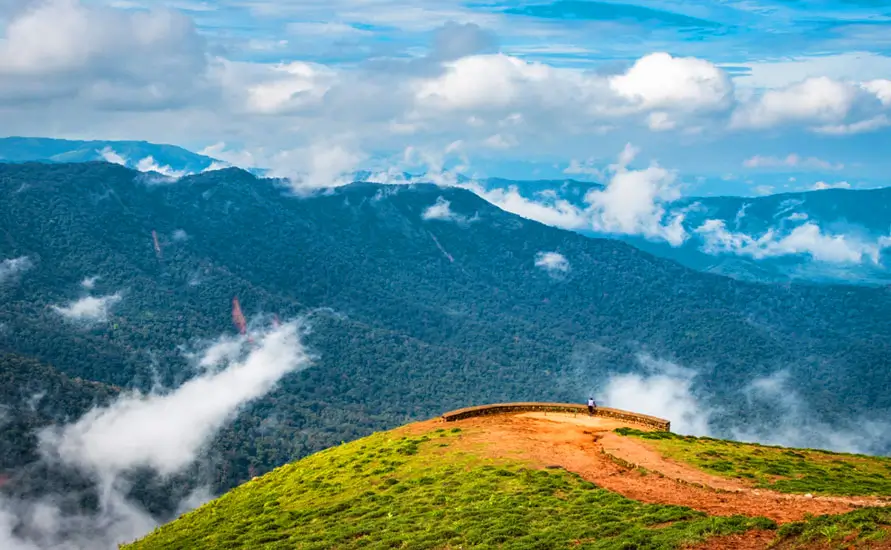
Few regions of India change scenery as often as the stretch of Western Ghats that runs through Karnataka, Tamil Nadu and Kerala. Our South India wildlife and nature tour follows those hills for thirteen days, starting with jeep and boat safaris at Kabini, where a reservoir separates Nagarhole from Bandipur and continuing into the forests and spice farms of Wayanad. From there you climb to the old hill station of Ooty to board the little blue trains of the Nilgiri Mountain Railway, drop through the coconut country of Pollachi, and finish in Kerala at Munnar, Thekkady and Kochi.
The pace is gentle by design, which makes this South India nature tour a good fit for families, mixed groups and anyone who likes wildlife without wanting to rise at 5 am every day. Most places get two nights, and only three mornings start before dawn. The long jump between Ooty and Munnar, which would take eight or nine hours in one go, is broken with an overnight at a farm stay near Pollachi, so neither half of the drive tops five hours. The same driver and vehicle cover the whole route, so luggage stays put and children get to know a familiar face.
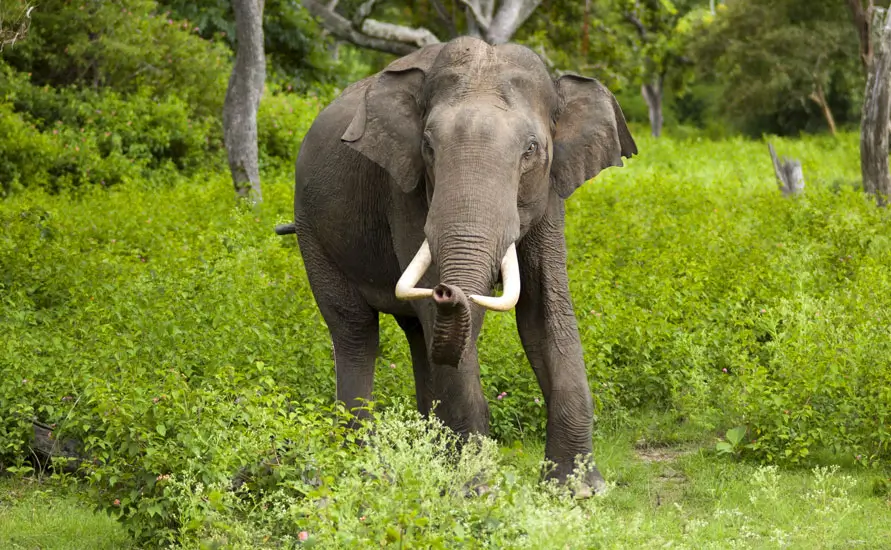
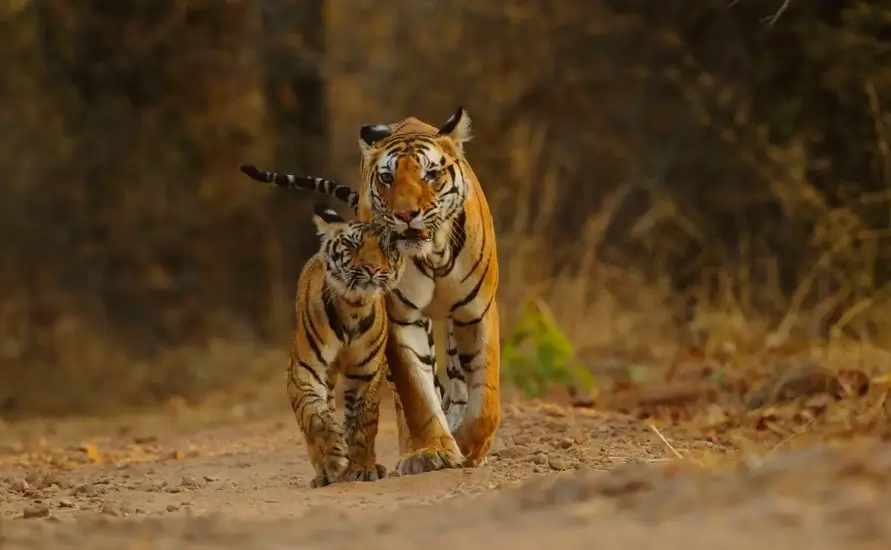
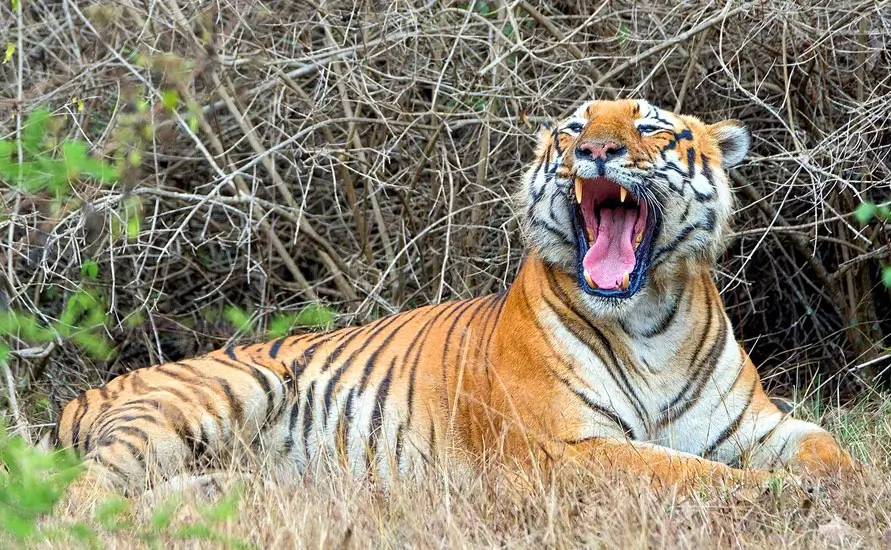
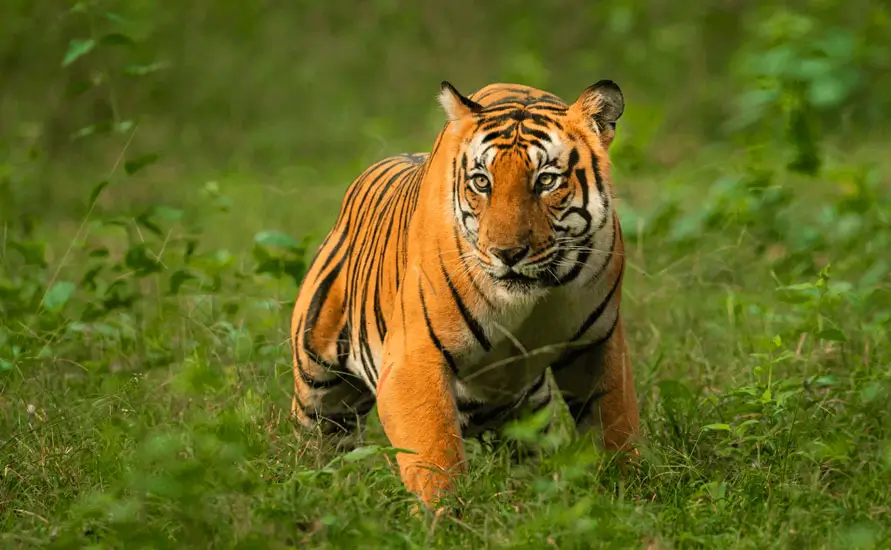
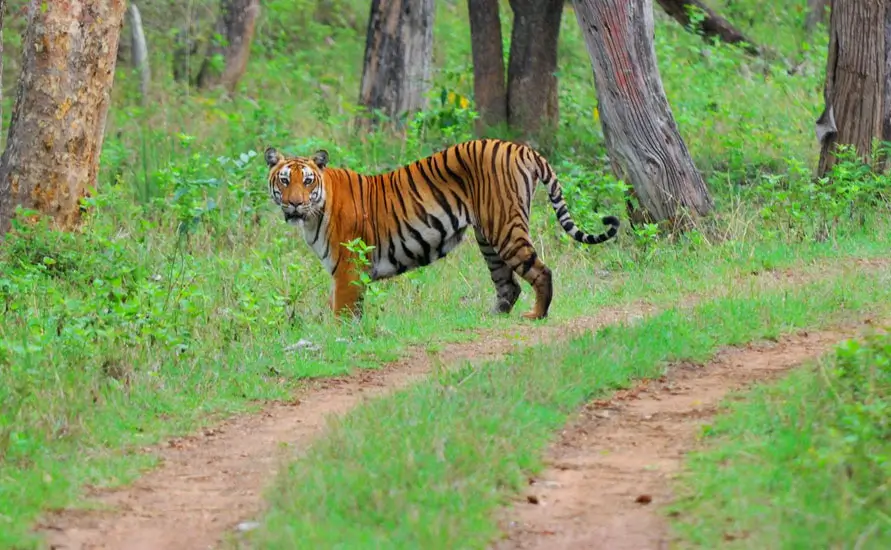
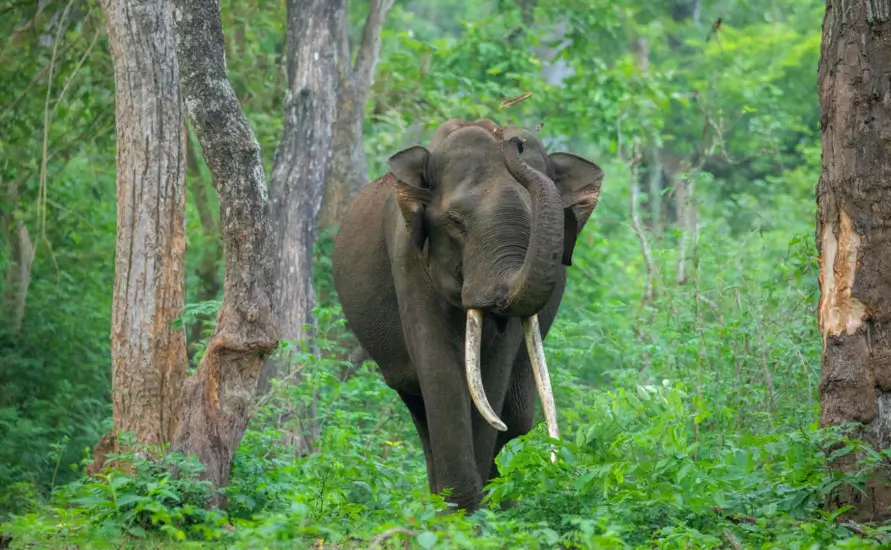
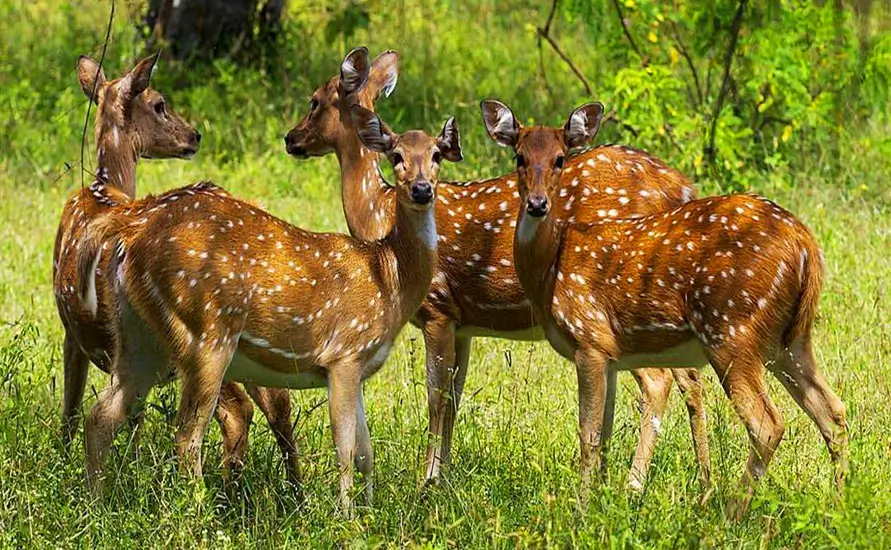
Expect plenty of animals but no promises. Asian elephants, gaur, spotted deer, Nilgiri langurs and Malabar giant squirrels are seen on most trips, and Kabini is one of the better places in India for a glimpse of a leopard or tiger, though sightings depend on season and luck. October to May suits most of the route, with the hills coolest from December to February. Safari permits are limited and booked through official portals, so early reservations help. The South India wildlife and nature tour can be shortened or extended, and hotels can be upgraded.
Kempegowda International Airport sits on open land some 40 km from central Bangalore, and our representative meets you with a name card at the exit for the hour-long ride into town. Night arrivals are common from Europe and the Gulf, so nothing happens until you have rested. The driver assigned to your trip introduces himself at the hotel, and our coordinator drops by later with your vouchers, safari confirmations and a route map. Families landing at dawn with tired children often pay for an extra night in advance, which guarantees beds the moment you walk in.
Once you are ready, a short afternoon outing gives you a first taste of South Indian nature right in the city. Lalbagh Botanical Garden began as a private Mughal-style garden commissioned by Hyder Ali in the 1760s, was enlarged by Tipu Sultan and now spreads over roughly 240 acres. Its Victorian glasshouse, built in iron and glass in the 1890s, hosts flower shows around Republic Day and Independence Day. Children usually enjoy the huge old trees, some planted more than a century ago, and the rocky outcrop near the south gate, formed of granite estimated to be billions of years old. Rose-ringed parakeets and black kites are everywhere.
Later you can stroll through Cubbon Park, the long green lung that separates the red-brick High Court from the domed granite home of the Karnataka legislature. Families walk their dogs under bamboo groves, and joggers circle the shaded lanes until dusk. Hungry travelers can try a darshini, one of Bangalore's stand-up snack counters, where a paper-thin dosa and a tumbler of frothy coffee cost less than a bottle of water at the hotel. Get an early night, as tomorrow's drive to the forest starts after breakfast and the best wildlife hours come late in the afternoon. Overnight in Bangalore.
Bangalore traffic thins once you pass the city ring road, and the highway south-west toward Mysore runs through sugarcane fields, coconut groves and small market towns known for their silk, toys and roadside idli stalls. A rest stop near Maddur, a town known across Karnataka for its crisp savory wadas, splits the drive. After skirting Mysore you take a narrower road via HD Kote, where farmland meets the edge of the forest and roadside signs warn of elephant crossings. You reach the Kabini River, which forms a reservoir along the boundary of Nagarhole National Park, around lunchtime, and you settle into a jungle lodge on the backwaters for two nights.
Most lodges at Kabini work on a full board basis, so lunch, dinner and breakfast are served at the lodge, often as buffets with both Indian and continental choices. After lunch there is a short briefing from the lodge naturalist, who explains the rules that apply in the park: silence during safaris, no flash photography, earth-toned clothing and no food carried in open vehicles. Children over about six usually cope well with safaris, and the naturalists are good at keeping them involved. Binoculars are useful, and a camera lens of 200 mm or longer helps for birds and distant animals.
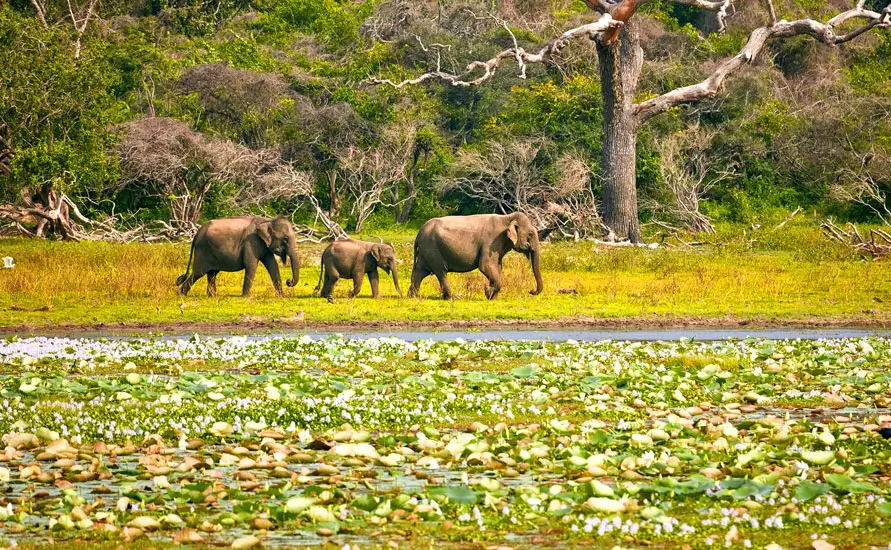
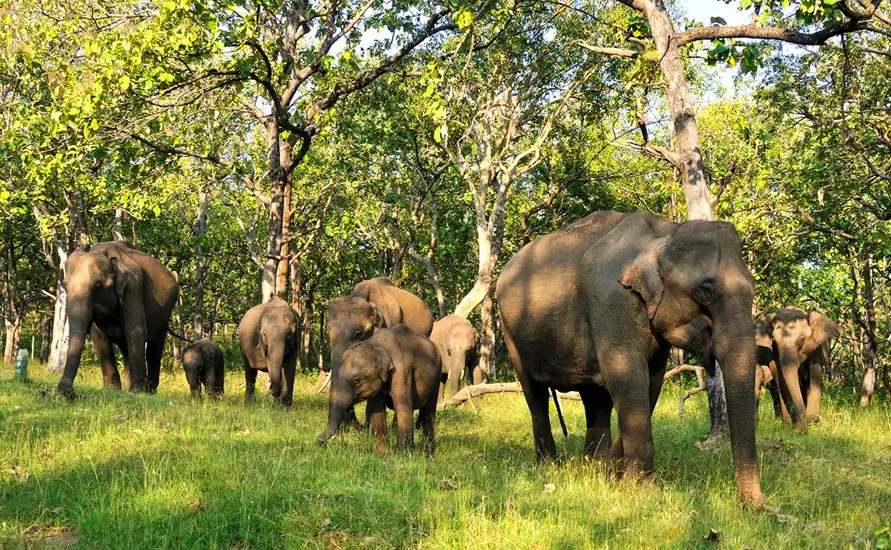
Toward 4 pm comes a boat safari along the reservoir shore, run by the lodge or forest department, depending on your accommodation. Gliding along the reservoir's edge gives you a view of the forest that a jeep cannot, and in the dry months from March to June elephant families gather by the dozen at the water's edge to drink and graze on the exposed grasslands. Marsh crocodiles bask on the banks, while ospreys and river terns plunge for fish and grey-headed fish eagles call from dead trees. The light at sunset turns the water copper as you return to the jetty. Overnight in Kabini.
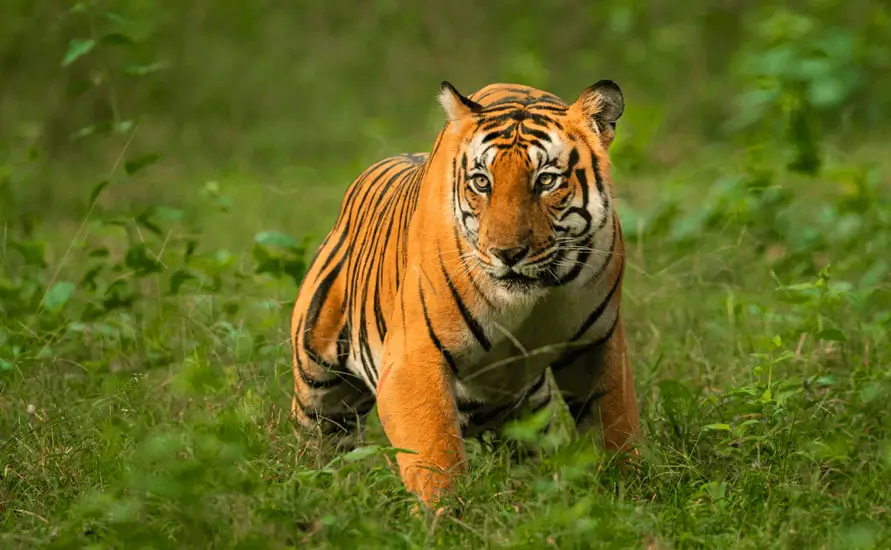
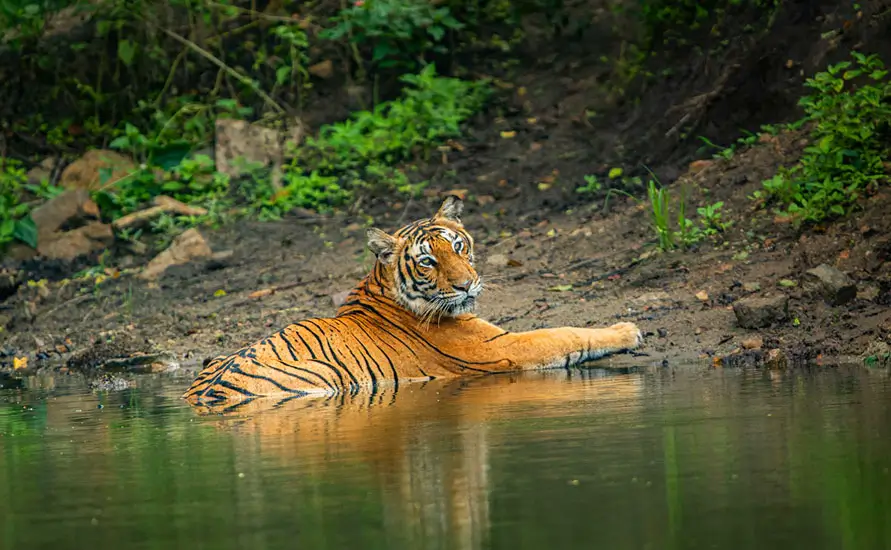
A wake-up call comes at about 5:30 am with tea, and the first safari of the day into Nagarhole National Park sets off soon after sunrise in forest department jeeps or canters, depending on permits. Zones and routes are allocated by the park authorities, and vehicles keep to designated forest roads, so your naturalist cannot leave the track even for the best sighting. Tiger and leopard numbers here rank among the best in southern India, and Kabini has become famous for a melanistic leopard seen in recent years, yet no drive can promise a big cat. Herds of spotted deer, sambar and gaur are seen on almost every drive, as are langurs and peacocks.
Returning around 9:30 am, you sit down to a late breakfast, then have the middle of the day to rest, swim or stroll in the grounds with the naturalist, who often points out birds such as the Malabar pied hornbill, the brown fish owl and several species of kingfisher. Lunch is served early, since the afternoon safari leaves at around 3 pm. Families might use the gap for a slide show or a talk about the forest, which many lodges organize for guests. If you prefer, the time can also be spent reading on the deck overlooking the backwaters, with a good chance of seeing elephants on the far shore.
Afternoon drives often head into another part of the forest, and the change in light and temperature brings different animals out. Dholes, India's russet-coated wild dogs, are frequently seen in Nagarhole, and sloth bears occasionally appear near the termite mounds they feed on. As the sun goes down, the forest grows louder with the calls of junglefowl and the alarm barks of spotted deer, which often indicate a predator nearby. Vehicles must leave the park by sunset, and night drives inside the park are not allowed. Dinner at the lodge is a good time to compare sightings. Overnight in Kabini.
Mid-morning, you cross into Kerala via the Bavali checkpost, where the road runs through the forest corridor connecting Nagarhole with Wayanad Wildlife Sanctuary. Speed limits are strict here, and pulling over or leaving the car is prohibited, because large animals use this road as a crossing point. The forest then gives way to coffee, pepper and tea plantations around Mananthavady, a busy market town that serves as the main hub of northern Wayanad. You settle into a plantation resort for two nights, surrounded by coffee bushes and silver oak trees, with a pool and plenty of space for children to run around.
Wayanad is a highland plateau around 700 to 2,100 meters above sea level, and its forests are part of the Nilgiri Biosphere Reserve, created in 1986 to protect a block of forest shared by three states. The district is also home to several indigenous communities, including the Paniya, Kurichiya and Kattunaika, many of whom still live in villages bordering the forest. Your guide can explain how these communities depend on the forest and how their traditional knowledge is used in forest protection and in eco-tourism. Lunch at the resort features Kerala dishes made with local produce, such as banana flower stir-fry, tapioca with fish curry and fresh pineapple.
In the afternoon you drive to the Tholpetty range of the sanctuary for a jeep safari, organized by the forest department with a local forest guide on board. Jeep numbers are restricted and permits are handed out at the gate in order of arrival, so your driver aims to join the queue early. The route passes through moist deciduous forest and bamboo thickets, where elephants, gaur, sambar and spotted deer are common, and tigers and leopards are occasionally seen. Drives last roughly ninety minutes, and the forest guide often knows where animals have been recently. Afterwards you return to the resort. Overnight in Wayanad.
A short walk around the plantation after breakfast shows you how coffee, pepper and cardamom grow side by side, with the plantation manager or a local guide explaining the harvesting and drying processes. Then you drive south to the Edakkal Caves, set high on Ambukuthi Hill near Sulthan Bathery. Reaching them involves a steep climb of about 45 minutes on steps and rocky paths, so wear shoes with grip and carry drinking water. The caves are actually a deep cleft between two huge boulders, and the walls are covered with carvings of human figures, animals and symbols that scholars place in the Neolithic period and later. The caves close on Mondays.
Following a lunch stop in Kalpetta, you continue north-west to Banasura Sagar Dam, said to be the largest earthen dam in India and one of the largest in Asia. Small islands are scattered across the water, the tops of hills submerged when the valley was flooded, and the hills of the Banasura range rise behind them. Boating is available for a fee from the jetty, and you can walk a stretch along the dam wall. Families often enjoy this stop, as it is a chance to stretch legs after a morning of climbing. The light is best in the late afternoon.
Heading back, a halt at Pookode Lake gives you a quiet half hour beside a pear-shaped pool of fresh water hemmed in by evergreen hills, with a footpath around its edge. The lake is home to a small fish found in few other places, and the forest around it supports many birds. At the resort, the hour before dinner suits a swim or a lantern-lit stroll to listen to the calls of frogs and nightjars. Dinner is at the resort, with the option of a bonfire on cool evenings. Overnight in Wayanad.
After breakfast, you leave Wayanad and drive east through Sulthan Bathery toward the Tamil Nadu border, passing through forested stretches where elephants sometimes cross the road and drivers are asked not to stop. At Gudalur the road begins to climb the Nilgiri plateau, and tea plantations start to appear on the slopes, interspersed with eucalyptus and pine planted during British times. The climb to Ooty through Naduvattam is full of hairpins but well surfaced, and the views open up as you gain altitude, with deep valleys and distant ridges visible on clear days. Anyone who feels queasy on bends should take a travel tablet before setting off.
Midway, the car pulls in at Pykara. The Pykara River flows through grassland and shola forest, dropping over a series of falls before reaching a reservoir used for hydroelectric power. A footpath leads down to a viewing area over the cascades, which are at their best after the monsoon. Boat rides on the reservoir are available, and the open grassland around the lake makes a good picnic spot. Look out for the Nilgiri laughingthrush, a bird found only in the Nilgiris, and the tiny black-and-orange flycatcher, which keeps to dense shola thickets. For lunch, simple eateries near the boat house serve rice meals and parottas.
By mid-afternoon you arrive in Ooty, whose official name is Udhagamandalam, where a colonial-era hotel or hill resort is booked for two nights. The town sits at about 2,240 meters, the highest point of the trip, and winter nights in December and January sometimes bring frost to the lawns. Pack warm layers and a light jacket. In the late afternoon, a walk around Ooty Lake, dug in the early 19th century as part of the first British settlement on the plateau, gives you a first feel of the town, with eucalyptus groves and boating jetties along the shore. Overnight in Ooty.
The morning belongs to the Nilgiri Mountain Railway, whose metre-gauge track was finished in 1908 and inscribed by UNESCO in 2005 alongside the Darjeeling and Shimla routes. The full route runs between Mettupalayam and Ooty, and today you travel the upper section from Ooty to Coonoor, about an hour downhill through tea gardens, eucalyptus forests and tunnels. Seats are limited and tickets sell out quickly, especially during Indian school holidays, so we book as early as possible. The car will be waiting at Coonoor when the train pulls in. Ask your guide which side of the carriage faces the deepest valleys on the day you travel.
Coonoor feels more relaxed than its larger neighbor, and its tea estates cover the slopes on every side. Sim's Park, set out on a steep hollow in the 1870s, has more than a thousand plant species, including tree ferns, rare conifers and a large collection of camellias, and its paths wind down a ravine to a small lake. Afterwards you drive to Dolphin's Nose, a jutting outcrop that looks across to the Catherine Falls and the deep valleys leading to the plains, and to Lamb's Rock, another viewpoint with wide views over tea gardens and the Coimbatore plains. Lunch is at a local café in Coonoor.
In the afternoon you visit a tea factory on the way back to Ooty, where you can see the whole process from fresh leaf to finished tea and buy packs of Nilgiri tea, known for its bright, brisk flavor. Children often enjoy the tasting session. Back in Ooty, you might visit the Government Botanical Garden, which dates from 1848 and climbs a terraced slope, which displays a fossilized tree trunk, an Italian garden and lawns where families picnic. The garden can be busy on weekends, so weekday visits are more relaxed. Dinner at the hotel tonight might include a hearty Nilgiri-style vegetable stew. Overnight in Ooty.
This is the first half of the long crossing from the Nilgiris to Munnar, a drive that would take eight or nine hours in one go. After breakfast you descend the Nilgiri ghat road through Coonoor and Mettupalayam, dropping more than 1,800 meters in under two hours, with tea gardens giving way to areca nut plantations and then dry plains. The road continues past Coimbatore, one of Tamil Nadu's major industrial cities, and turns south toward Pollachi, whose weekly markets handle huge volumes of coconuts and cattle. Lunch is at a vegetarian restaurant along the way, serving a Tamil-style meal on a banana leaf.
You check in to a farm stay in the coconut groves around Pollachi, a working property where the owners grow coconut, banana and vegetables and often keep a few cows and goats. Accommodation is simple but comfortable, with home-cooked meals made with produce from the farm. This stop gives you a break from hotels and a glimpse of rural Tamil Nadu, and it is often a highlight for children, who can help collect eggs, feed the calves under supervision or watch coconuts being harvested by climbers. Dinner and breakfast at the farm are included. The owners can share stories of farming life in the region.
In the late afternoon you can walk around the farm and the nearby village with the owner or a local guide, passing fields of sugarcane and paddy, small temples and ponds where egrets and pond herons feed. The Anamalai Hills rise to the south, part of the same Western Ghats range you will cross tomorrow, and on clear evenings the outline of the ridges stands out against the sunset. Peafowl call from the fields, and fruit bats fly overhead at dusk. After dinner, the night sky away from city lights can be very clear, and the farm is usually quiet apart from the sound of crickets. Overnight in Pollachi.
Leaving after breakfast, you drive east to Udumalpet and then turn into the hills, entering Kerala at the Chinnar checkpost. The road climbs through Chinnar Wildlife Sanctuary, a rain-shadow forest on the eastern slopes of the Western Ghats that receives far less rainfall than the rest of Kerala. Its dry thorn scrub and deciduous forest are home to the grizzled giant squirrel, a rare and threatened species found only in a few places in South India and Sri Lanka. Your driver can stop at the designated viewpoints, and with patience you may also see elephants, spotted deer, gaur and many birds of dry country, though no animal can be promised.
Beyond Chinnar, the road continues up to Marayoor, a small town famous for its natural sandalwood forest, the only one in Kerala, which is protected by the forest department. The area is also known for its ancient dolmens, burial chambers built from stone slabs thought to date from the Iron Age, and for the jaggery made from sugarcane grown in the valley. You can stop to buy fresh jaggery or watch it being made in small sheds near the road. After a simple lunch in Marayoor, you continue the climb through tea estates to Munnar.
Arrival in Munnar comes mid-afternoon, with two nights reserved at a hillside property surrounded by tea. Munnar lies roughly 1,600 meters up, where three streams join, which is how it got its name, and the hills around it are covered in carefully trimmed tea bushes. Evenings are cool, so a warm layer will be useful. After checking in, you can walk the resort grounds or visit a nearby tea estate, where pickers move along rows clipped flat so that only the youngest leaves are taken. If the weather is clear, the view from the resort at sunset over the hills rounds off a long day nicely. Overnight in Munnar.
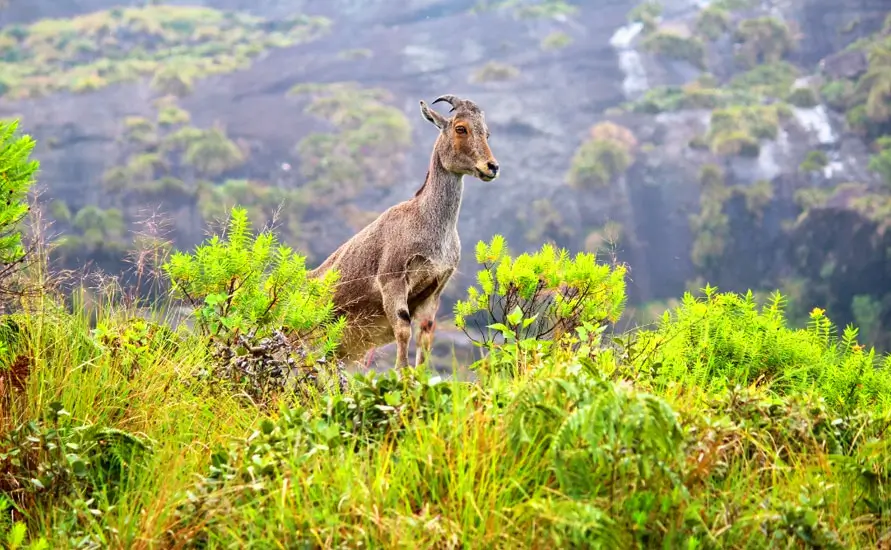
First on the list is Eravikulam National Park, the stronghold of the Nilgiri tahr, the only wild goat of South India's high hills. Visitors leave their cars at the entry point and board a forest department bus to Rajamala, where a short walk on a paved path offers good chances of seeing tahr grazing on the grassy slopes. Tickets go on sale online and are best bought early; note too that Eravikulam closes to visitors for some weeks in late winter, usually February into March, for the tahr calving season. Early morning visits are best, both to avoid queues and to see the grasslands before the clouds roll in.
After the park, you drive to Mattupetty Dam and the Echo Point, both popular with Indian families, where the reservoir is surrounded by forest and tea plantations. Continuing up the valley, the road reaches Top Station, at about 1,700 meters on the Kerala–Tamil Nadu border, with views over the valleys and plains of Tamil Nadu on clear days. The name comes from the ropeway once used to carry tea down to the railway at Kottagudi. The area is also known for the neelakurinji flower, which blooms only once every twelve years and covers the hills in purple when it does.
Returning to town, the Tea Museum is worth an hour for its old rollers, planters' photographs and a working demonstration, or walk through the town's small market, where stalls sell spices, homemade chocolate and tea. Families might also enjoy a short visit to the Munnar Rose Garden or the Blossom Hydel Park along the river. In the evening, you can return to the resort for a relaxed dinner, or attend an optional Kathakali or Kalaripayattu show in town. The night air in Munnar is cool, and the resort is usually quiet, perfect for an early night before the next drive. Overnight in Munnar.
Once breakfast is over you head south into cardamom country by way of Pooppara and Nedumkandam. For long stretches the highway hugs the crest of the hills, and on clear mornings the Cumbum valley shows as a patchwork of vineyards and paddy far to the east. Cardamom here grows under a high canopy of forest trees, so the drive feels shaded even at midday. Thekkady, the base for Periyar Tiger Reserve, is reached by lunch, and a forest-fringe resort is booked for your last two nights. Its gardens back onto woodland where Malabar giant squirrels and Nilgiri langurs often feed.
Later, at a spice farm close to Kumily, a local guide explains how cardamom, black pepper, nutmeg, cinnamon, cloves and vanilla are grown and harvested. Many of these spices are used in Kerala cooking, and the guide will often let you taste and smell the fresh spices along the way. The plantation tour is an easy walk, making it suitable for all ages, and children are often fascinated by the variety of plants and the stories behind them. A small shop at the farm gate sells what you have just seen growing, with no pressure to buy.
After dark, an optional show of Kalaripayattu is worth considering. Kerala's old martial art is performed in a sunken pit lit by oil lamps, with leaps, kicks, sword and shield bouts and a final routine with a flexible steel blade that keeps everyone on the edge of their seats. Shows run for about an hour, and children tend to love them. Those who prefer theater can choose Kathakali instead, with its painted faces and slow, expressive gestures. Back at the hotel, a light meal and an early bedtime make sense, because the forest walk tomorrow begins soon after first light. Overnight in Thekkady.
Your final full day centers on Periyar Tiger Reserve, covering more than 900 square kilometers of forest in the Cardamom Hills. The day begins with a guided nature walk run by the forest department, led by trained local guides from communities living around the reserve. The walk lasts about two to three hours and passes through evergreen and deciduous forest, grasslands and the edge of the lake, with chances of seeing langurs, giant squirrels, wild boar and many birds. Wear neutral clothing, sturdy shoes and leech socks during the wetter months.
Later in the morning, a seat on the department's cruise boat takes you out over Periyar Lake, formed when a masonry dam blocked the river at the end of the 19th century. For around ninety minutes the boat traces the winding shoreline of the lake, with chances of seeing elephants, gaur, sambar, wild boar and many waterbirds along the banks. Tigers are very rarely seen, so treat any sighting as a bonus. Tickets are limited, and we book them in advance for you. Life jackets must be worn throughout the trip, and passengers are asked to remain seated and quiet during the cruise.
Your afternoon has no fixed plan; Kumily's main street has spice shops, tea counters and handloom stores within a short walk. Families often enjoy a cooking session in a village kitchen, where children can learn to fold a banana-leaf parcel or grind coconut chutney. Those who want more wildlife time can book an optional bamboo rafting or border hiking programme with the forest department, subject to availability, although these require a full or half day. Dinner tonight is your farewell meal in the hills, so ask the chef for a Kerala-style sadya if available. Overnight in Thekkady.
Check-out follows breakfast, and the car descends from the hills toward Kochi, passing rubber plantations and small towns as the road descends to the coastal plains. Allow roughly four and a half hours, which makes this day best for afternoon or evening flights. For morning departures, we suggest adding a night in Kochi to see Fort Kochi's Chinese fishing nets and old streets. A lunch break at Muvattupuzha or a stall selling fresh pineapple can be fitted in. You arrive at Cochin International Airport in time for your international flight, with at least three hours for check-in.
Over thirteen days, you have crossed three states, from the forests of Kabini and Wayanad to the hill towns of Ooty and Munnar, and finally the cardamom forests of Thekkady. You have seen elephants, deer, langurs and perhaps a big cat, ridden one of the world's oldest mountain railways and spent a night on a farm in rural Tamil Nadu. That is a broad sample of how varied the southern hills are. If you would like to return, we can plan a trip to the Andaman Islands, the backwaters of Alleppey or the temples of Tamil Nadu. Safe travels home.
Your Journey

N.S. Rathore & Mrs. Omlata Rathore · Managing Director
We still read every enquiry ourselves. Tell us the places you liked and our planners will send a day-by-day route with drive times and a clear price.
Every package can be customised and no pressure to book. A planner from our office replies within 24 hours with a route written for your group.
Fill this in and your planner will send a first draft itinerary.
Explore more
Kerala Backwaters Escape Kerala Backwaters Escape
 Kerala Backwaters Escape
 Kerala Backwaters Escape
 Kerala Backwaters Escape
 Kerala Backwaters Escape
 Kerala Backwaters Escape
 Kerala Backwaters Escape
 Kerala Backwaters Escape
 Kerala Backwaters Escape
 Kerala Backwaters Escape
 Kerala Backwaters Escape
 Kerala Backwaters Escape
 Kerala Backwaters Escape