 Kerala Backwaters Escape

South India Wildlife Tours
Jabalpur – Kanha – Bandhavgarh – Jabalpur – Bangalore – Kabini – Bandipur – Bangalore
At a glance
Few wildlife trips let you compare two completely different tiger landscapes in one holiday. Our Tigers of Central India and Kabini Tour starts in Madhya Pradesh, where the open sal-fringed meadows of Kanha and the rocky, fort-topped hills of Bandhavgarh have long drawn tiger watchers from around the world. Midway through the trip a domestic flight carries you south from Jabalpur to Bangalore, and the second week moves to the teak and bamboo forests of Kabini and Bandipur, where Asian elephants, gaur and leopards share the same tracks as the tiger.
The plan is built around safari slots rather than sightseeing. You spend three nights in each of the two Madhya Pradesh reserves, three nights on the Kabini backwaters and two at Bandipur, so there is time for repeat drives and second chances. Long transfers are kept to a handful of days, and every jungle lodge on the route is chosen for its location near a safari gate. A private car and driver handle the road legs, while forest-department vehicles and park naturalists take over inside the reserves.
No wild animal can be promised, but this central India tiger tour gives you four protected areas and around sixteen jeep or canter drives, which tilts the odds well in your favor. The Madhya Pradesh core zones close for the monsoon, so the trip runs from October to June, with March to May bringing the best tiger viewing and the hottest afternoons. Photographers, first-time safari travelers and returning wildlife enthusiasts from abroad all fit this Kanha Bandhavgarh tiger safari with a southern finish.
Most international visitors reach Jabalpur on a morning connection from Delhi or Mumbai, and our driver waits at the small airport terminal with a name card. The city sits on the Narmada River in eastern Madhya Pradesh and is the most practical arrival point for Kanha, Bandhavgarh and Pench. After a short drive to your hotel, you have time to rest, eat lunch and sort out camera batteries, memory cards and binoculars for the week ahead. Our representative goes through the safari schedule with you, confirms your permit details and explains how zone allocation works in the Madhya Pradesh reserves.
In the afternoon you drive about 25 km west to Bhedaghat, where the Narmada has cut a narrow gorge through cliffs of white and grey marble. Rowing boats operated by local boatmen take visitors upstream between walls that rise straight from the water, and the boatmen keep up a running commentary full of local jokes and film references, since several Hindi movies were shot here. Boats usually run only outside the monsoon months, which matches the safari season anyway. The marble changes tone with the light, turning pale gold late in the day and almost silver on cloudy afternoons.
A short walk upstream brings you to Dhuandhar Falls, where the river drops into a cloud of spray that gives the falls its name, meaning smoke stream, and on a dry-season afternoon the roar carries a long way down the valley. On a low hill nearby, a flight of stone steps climbs to the Chausath Yogini Temple, a circular 10th-century shrine ringed with carved figures of the yoginis, many of them damaged over the centuries but still full of detail. Kalachuri kings once ruled from nearby Tripuri, and your guide links these carvings to their era. You return to Jabalpur for dinner and an early night before the first drive into the forest. Overnight in Jabalpur.
Breakfast is early so you can be on the road soon after sunrise. The route to Kanha National Park runs south-east through Mandla district, crossing farmland, small market towns and finally stretches of sal forest where the road narrows and village houses are built of mud and tile. Gond and Baiga communities live in many of these villages, and your driver can stop briefly if you want to see a weekly haat market on the way. You reach your jungle lodge near the Khatia or Mukki side of the park by late morning, depending on where your safari permits have been issued.
After lunch and a short rest, you meet the forest-department naturalist and driver who will take you on your first safari. Each gypsy jeep carries a small group, enters through the allotted gate at a fixed time and must stay on marked tracks inside the assigned zone. Kanha is divided into core zones such as Kanha, Kisli, Mukki and Sarhi, and the park office, not the visitor, decides which one you enter. Afternoon drives tend to start in strong light and end at dusk, when langurs and chital begin their alarm calls if a predator moves through the grass.
The meadows of Kanha, which local guides call maidans, are what make this park different from most Indian reserves. Old village sites abandoned decades ago have turned into wide grasslands edged by tall sal trees, and you can watch herds of chital, sambar and barasingha grazing in the open. Tigers often walk along the forest edge or cross the tracks between meadows, and leopards, jackals and wild boar are seen as well. Back at the lodge, the naturalist reviews the day's sightings with you over tea, and dinner is served under the trees or in the dining room. Overnight in Kanha.
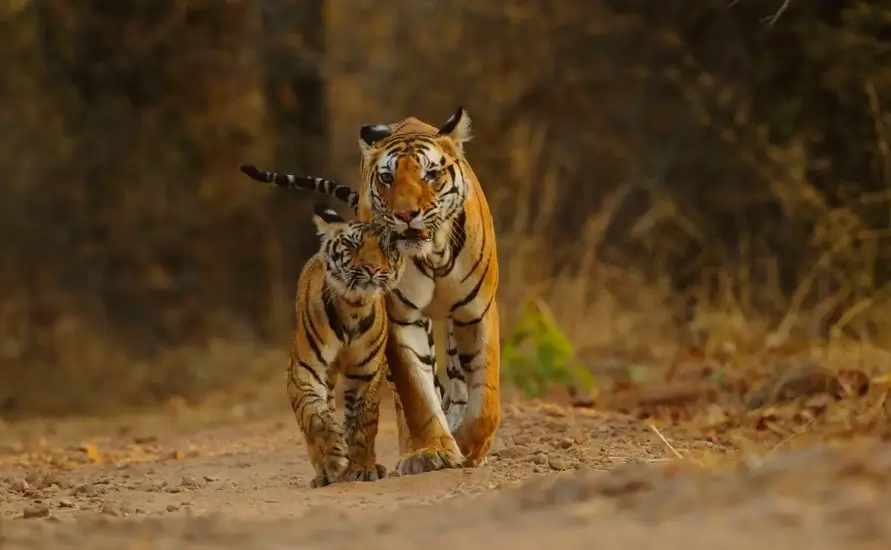
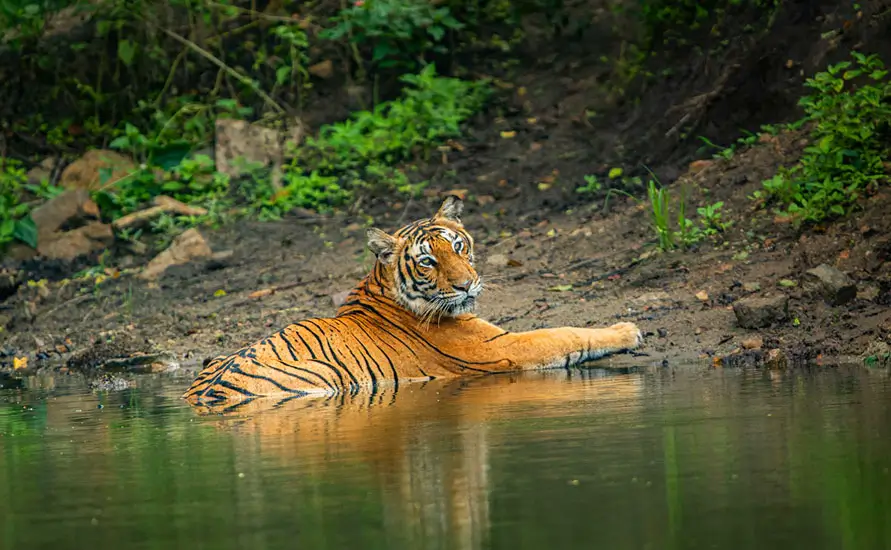
A wake-up call before 5 am is part of safari life in Madhya Pradesh. Hot tea and biscuits are ready at the lodge, and you leave in the dark with blankets for the open jeep, since winter mornings in Kanha can drop close to freezing between December and February. Vehicles queue at the gate for permit checks before the barrier lifts at first light. The first hour is often the most rewarding, as tigers patrol the tracks and mark territory before the day warms up, and fresh pugmarks in the dust tell your naturalist which way an animal has gone.
Kanha played a central role in saving the hard-ground barasingha, a subspecies of swamp deer that adapted to grassland rather than marsh. Their count here fell to a mere handful of dozens by about 1970, and decades of grassland care, translocation and strict protection have lifted it back into the hundreds. Stags carry wide, many-tined antlers and gather in herds on the Kanha meadow, especially in the cooler months. Your naturalist can also point out Indian bison, or gaur, the largest wild cattle in the world, along with crested serpent eagles, racket-tailed drongos and the bright green Indian pitta in spring.
Breakfast is served as a picnic at a designated rest point inside the park, and you return to the lodge by late morning for lunch and a few hours of rest. The afternoon drive goes into the same zone or a different one, depending on your permits. Note that the Madhya Pradesh parks have one weekly half-day closure, an afternoon when no safaris run, and we plan the schedule around it so you do not lose a safari. Before dinner, the lodge may screen a short wildlife film or hold a talk by its resident naturalist. Overnight in Kanha.
Day three in Kanha brings two more drives, and the dawn routine of gate queues, blankets and flasks of tea should now feel familiar. If your morning permit covers the Kanha zone, the route may climb toward Bamni Dadar, a plateau in the park where the view stretches over rolling sal and bamboo country. Sambar and gaur often graze on the higher slopes, and the open ground makes it easier to scan for movement. Ask your naturalist to stop for a few minutes of silence at a waterhole, since tigers frequently come to drink in the late morning during the dry season.
Sightings in central India depend on season and luck in equal measure. From October to January the grass is still tall and the forest is green, so animals are harder to spot but the air is cool and the light is soft. From March onward the grass is burned or grazed down, water dries up to a few pools and tigers are seen more often near those sources. Whatever the month, keep voices low, wear brown, olive or khaki clothing and leave plastic bags at the lodge, as park rules ban them and the guides take these rules seriously.
Between safaris you can visit the small Kanha interpretation center near the gate, which covers the park's history, the barasingha project and the life of the forest villages around it. Some lodges arrange a guided walk in their own grounds or a visit to a nearby Gond village, where artists paint in the dotted style that has become popular across India. The evening is relaxed, with time to back up photos and compare notes with other guests. Tomorrow is a travel day, so your naturalist suggests a sensible early start. Overnight in Kanha.
Leaving Kanha after breakfast, you head north-east toward Bandhavgarh National Park on one of the longest road legs of the fortnight. The route passes through Mandla and Dindori districts, with hilly forest sections, wide river crossings over the Narmada and its tributaries, and long stretches of farmland where farmers grow rice, pulses and mustard in winter. Roads in this part of Madhya Pradesh have improved, but they still pass through many villages, so your driver keeps a steady rather than fast pace. Comfort stops are planned at clean roadside restaurants for tea and a light lunch.
Around 3 pm you reach Tala, the village beside the main Bandhavgarh gate, where your jungle lodge stands among mahua and mango trees. The reserve takes its name from the steep hill at its center, which carries the ruins of an old fort, and local legend links the fort to the epic Ramayana. The Maharajas of Rewa kept these hills as a private shikar reserve for generations, and Mohan, the famous white tiger, was caught in the wider Rewa region in 1951. Today hunting is long banned and the park is managed for its wild tiger population.
There is no safari this afternoon, which gives you a slower evening to settle in and recover from the drive. The lodge naturalist usually gives a short briefing on the zones, the safari rules and the tiger families that have been active recently, so you know what to look for tomorrow. Spotted owlets often call from the trees around Tala after sunset, and nightjars can be heard churring along the edge of the fields. Dinner is served at the lodge, and blankets and hot water bottles are provided for the early morning drives in winter. Overnight in Bandhavgarh.
Bandhavgarh packs a lot of terrain into a fairly compact core area: rocky hills, valleys of sal forest, marshy meadows and bamboo thickets, all within short driving distance of each other. The park is usually divided into the Tala, Magadhi and Khitauli core zones, each with its own gate, and your entry zone is fixed when the permits are issued. Tala is the oldest and most visited sector, and its tracks wind around the foot of the fort hill where cliffs, caves and old water tanks give tigers and leopards plenty of shade and cover during the hot hours of the day.
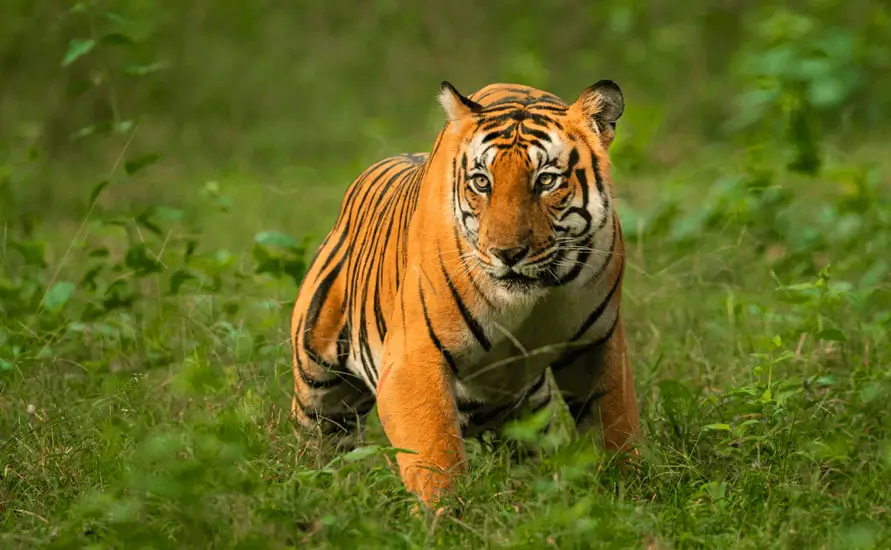
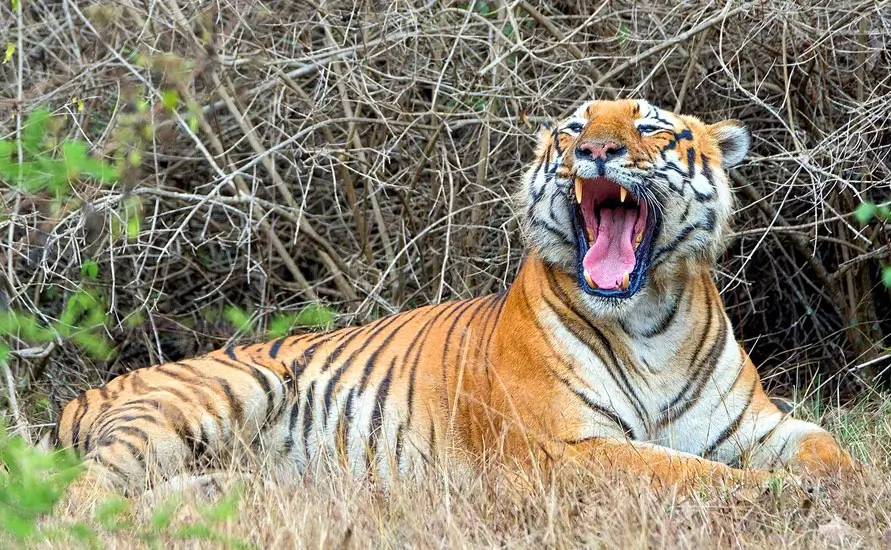
Bandhavgarh is often described as having one of the higher tiger densities in India, which means territories here are small and resident cats are seen more regularly than in larger, wetter forests. Even so, a sighting is never certain, and the best naturalists read the forest through alarm calls of chital and langur, fresh scat and scrape marks along the track. Patience is often rewarded by watching from one spot rather than driving around. Look also for the Indian vulture species that nest on the cliffs and for the jungle cats and golden jackals that hunt the grasslands at dawn.
Jeeps leave the park before noon, so lunch and a siesta at the lodge fill the hottest part of the day. The afternoon safari may enter a different zone, which helps you compare the hill country of Tala with the more open valleys of Magadhi. Along some routes you pass ancient caves cut into the sandstone, a few carrying Brahmi inscriptions that date back roughly two thousand years, and your naturalist explains how earlier communities used these shelters. After the drive you return for a hot shower and dinner, and the guides note any tiger movements for the next morning. Overnight in Bandhavgarh.
Another dawn start takes you back into the reserve, where frost may lie on the grass in winter and the sun quickly lights up the cliffs of the fort hill. The Bandhavgarh fort sits on a flat plateau above the forest, and access to its upper sections is controlled by the forest department, so visits depend on current park rules. Many safari routes in Tala pass the reclining Vishnu statue, known as Shesh Shaiya, carved from a single rock near a spring at the foot of the hill. Your naturalist explains the legends and history while keeping an eye out for movement in the surrounding bamboo.
Bandhavgarh is also a rewarding park for birds, with more than 250 species recorded, and many of them are easy to see from the jeep. Malabar pied hornbills feed in fruiting trees, crested hawk-eagles sit on bare branches, and a male flycatcher trailing long white tail ribbons flits across shaded streams in summer. A good pair of binoculars, 8x42 or 10x42, makes a big difference, and a long telephoto lens in the 300 mm to 600 mm range, ideally steadied on a bean bag resting on the jeep frame, suits most wildlife photography here. Remember that drones are not allowed in any Indian tiger reserve.
The final afternoon safari of your stay gives you one more chance to see any tiger family that the naturalists have been following. If you have already had good sightings, use this drive to watch the smaller life of the forest, from termite mounds and spider webs to the sambar that stand alert at the edge of the meadows. Once back at the lodge, you can join an optional village walk around Tala or relax with a drink by the fire. The lodge kitchen usually serves regional dishes from Madhya Pradesh at dinner if you ask in advance. Overnight in Bandhavgarh.
Your last central India safari begins at first light and lasts about four hours, ending in time for a late breakfast at the lodge. The morning drive is often worth the effort, since tigers that have been hunting at night are sometimes still on the move along the forest roads. After freshening up and packing, you check out and leave for Jabalpur around midday. The route crosses the Umaria and Katni districts, with views of limestone quarries, wheat fields and small temples by the roadside, before reaching the outskirts of the city in the afternoon.
Your driver takes you directly to Jabalpur Airport, where you check in for the domestic flight to Bangalore. A direct service runs on this route on most days, and on dates when timings do not suit we book a connection via another hub such as Delhi, Mumbai or Hyderabad. The flight takes roughly two hours when direct, carrying you from the dry plateau of central India to the cooler Deccan uplands of Karnataka. Check-in for domestic flights usually closes 45 minutes before departure, so we build in a margin for traffic on the final stretch into the city.
On arrival at Kempegowda International Airport in Bangalore, our southern team meets you in the arrivals hall and drives you to a hotel near the airport or on the northern side of the city, which shortens tomorrow's start. Bangalore traffic can be heavy in the evening, so a hotel close to the airport keeps the transfer short. For dinner, ask the hotel kitchen for Karnataka favorites such as bisi bele bath or ragi mudde with saaru. Use the evening to charge equipment and wash safari clothes before the second half of the tour. Overnight in Bangalore.
After an early breakfast, the drive to Kabini heads south-west on the expressway toward Mysore and then on smaller roads through sugarcane fields, coconut groves and villages of the Mysore plateau. The last part of the route runs past the town of H.D. Kote and ends at the edge of the reservoir created by the Kabini dam. Jungle lodges here sit along the backwaters or a short drive from the safari reception, and many offer full-board stays with all meals included. Lunch on the lodge veranda is followed by an hour of quiet before the first outing on the water.
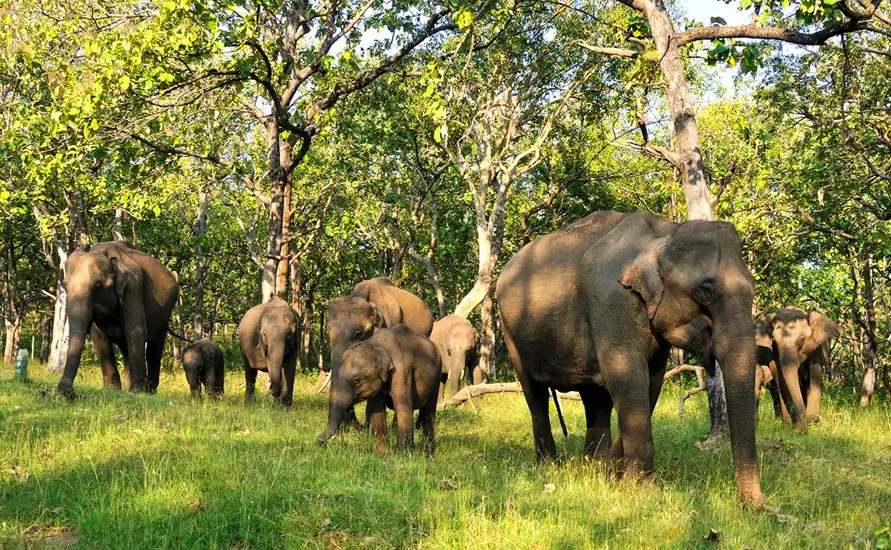
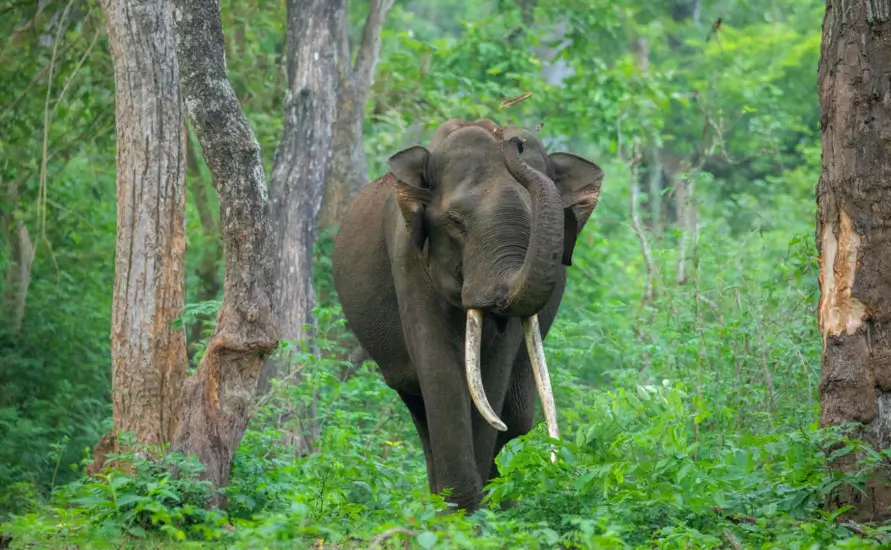
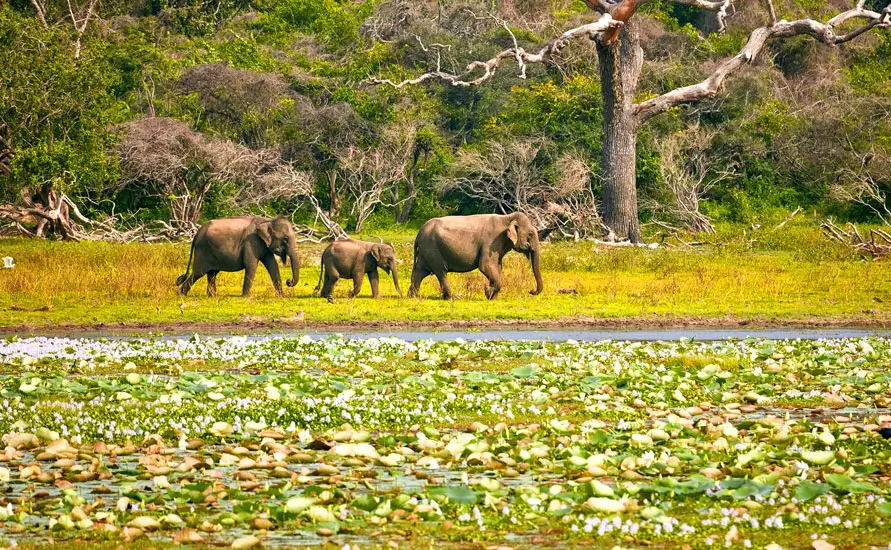
Held back by a dam built in the 1970s, the Kabini River now spreads into the Kabini backwaters, with Nagarhole National Park (officially Rajiv Gandhi National Park) on the northern shore and Bandipur across the water. Around 4 pm a forest-licensed motorboat collects you from the jetty, with a naturalist and a boatman on board, for a slow run along the shoreline. As summer lowers the reservoir, fresh grass sprouts on the exposed banks, and from March to June family groups of Asian elephants gather there to graze and wallow, at times dozens together. From the boat you can watch them at a respectful distance, along with marsh crocodiles, otters, cormorants, ospreys and grey-headed fish eagles.
Boat timings and routes are set by the forest department and the operators licensed to run them, and the number of boats is limited, so all slots are booked in advance and remain subject to availability. Bleached stumps of trees flooded when the dam rose poke out of the shallows, and against a low orange sun they frame the classic Kabini picture. You return to the lodge by dusk, when the lodge staff may light a campfire and your naturalist briefs you on the jeep safaris in Nagarhole over the next two days. Dinner is a southern spread with Kodava and Karnataka dishes. Overnight in Kabini.
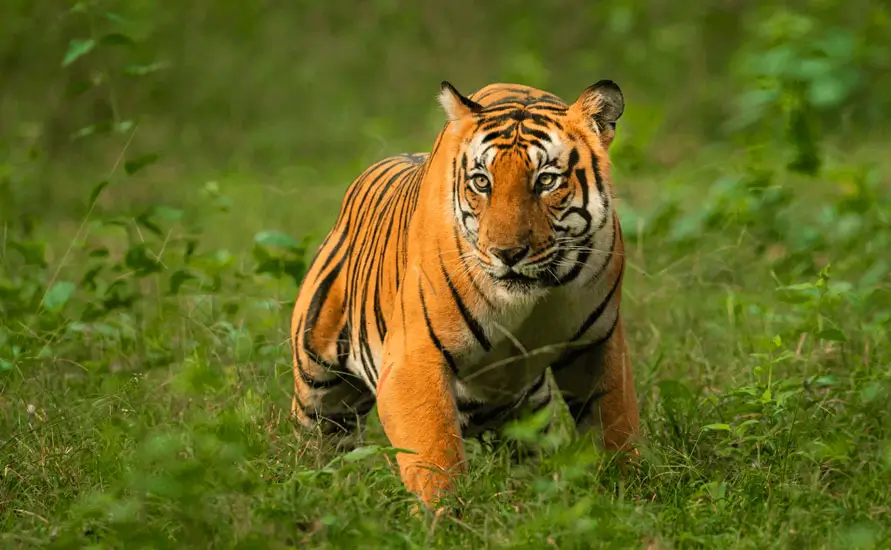
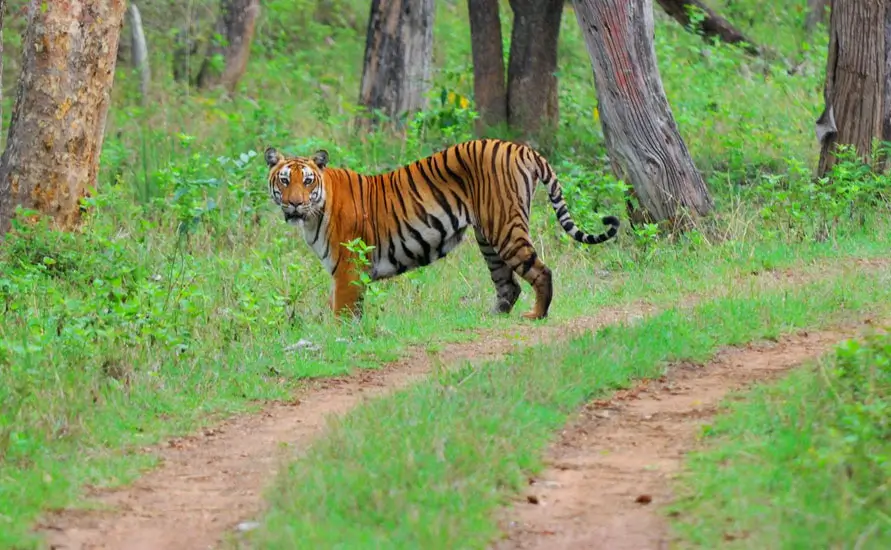
Forest-department safaris at Kabini start from a reception point near the park gate, where tickets and passports are checked, and vehicles head into the forest soon after sunrise. Nagarhole feels very different from Kanha and Bandhavgarh. Instead of open meadows and sal, you drive through moist and dry deciduous woodland of teak, rosewood and bamboo, with thick undergrowth in places and occasional clearings beside forest streams. Tigers live here in good numbers, but the denser cover means sightings depend heavily on chance and on how well your driver reads fresh signs on the road.
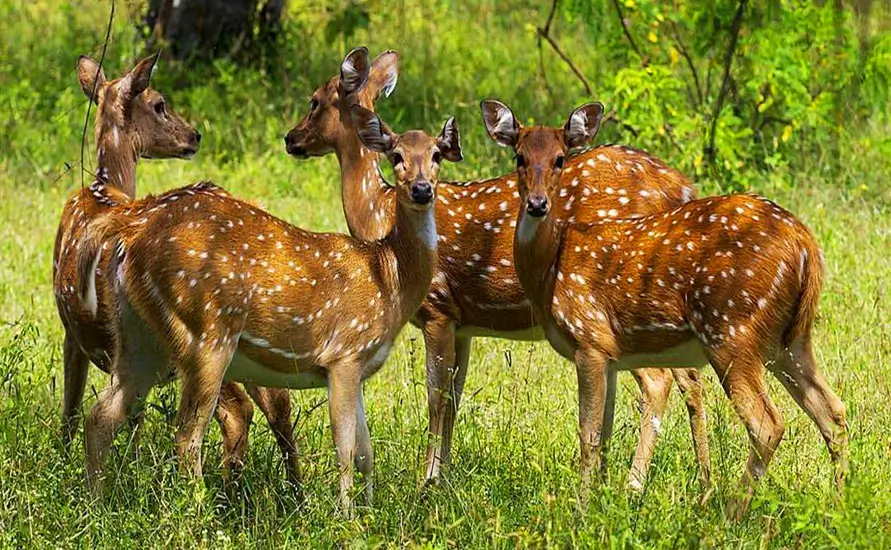
Leopards are also seen around Kabini, and the area became widely known after a melanistic leopard, often called a black panther, was photographed regularly in recent years. Do keep expectations realistic, since such a cat is rare and its presence changes from season to season. More regular sightings include herds of gaur, sambar, spotted deer, wild boar and troops of tufted grey langurs, as well as Malabar giant squirrels with their long chestnut tails. Packs of dhole, the Indian wild dog, are seen often enough to be a real highlight, especially early in the morning.
After breakfast at the lodge you have free time for a swim or a nap during the heat of the day. The afternoon brings a second Kabini boat safari, which lets you see the backwaters in a different light and at a different stretch of the shoreline. Your naturalist may suggest a quieter inlet where birds gather in good numbers, such as darters, river terns, stork-billed kingfishers and painted storks. Keep your camera ready for elephants swimming across a channel, a sight that is possible in the dry months. You return to the lodge for dinner. Overnight in Kabini.
A dawn drive and a late-afternoon drive in Nagarhole National Park fill this full day at the lodge. The park allocates routes within its tourism zone, and different drivers know different stretches well, so repeat drives are rarely the same. In the morning, mist sometimes hangs in the low ground near the reservoir, and elephant families can appear suddenly from the trees onto the track. Drivers keep a safe distance and switch off the engine when needed, giving the animals space to cross without stress, which is part of the park's standard rules.
Between the safaris you might join a bird walk inside the lodge grounds, where a resident naturalist points out species such as the Malabar grey hornbill, white-bellied treepie, Indian scimitar babbler and several types of woodpecker. Kabini also attracts serious bird photographers, and it is worth asking the lodge whether a hide or quiet waterside seating area is available. Please avoid using playback calls to attract birds, as it disturbs breeding behavior. Lunch is followed by a rest in your room or on a shaded deck overlooking the water, with tea served before the afternoon drive.
Your final Nagarhole safari returns to the forest when the heat fades and animals start moving toward water. From about 4 pm onward, tigers sometimes lie up beside forest streams, and elephants drift out of the woods toward the reservoir. Even if the big cats stay out of sight, the drive gives you a closer feel for the southern Western Ghats foothills, which are part of the wider Nilgiri Biosphere Reserve. Back at the lodge, your naturalist can help you sort out photos and identify any birds or mammals you were not sure about. Overnight in Kabini.
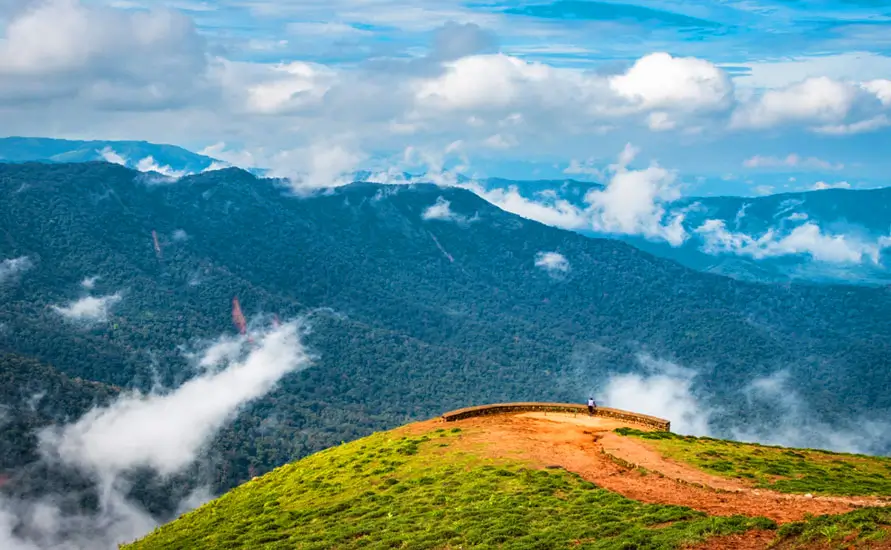
A relaxed morning lets you enjoy a slow breakfast by the water before checking out, and early risers can sit on the deck with binoculars as kingfishers and herons work the shallows below the lodge. Heading south toward Bandipur National Park, the car skirts Gundlupet, a farming town whose roadside fields turn yellow with sunflowers and marigolds in some months. Bandipur borders Nagarhole to the north-west, Mudumalai in Tamil Nadu to the south and Wayanad in Kerala to the south-west, forming one of the largest continuous protected forest areas in southern India. Lunch is waiting at your resort on the edge of the reserve.
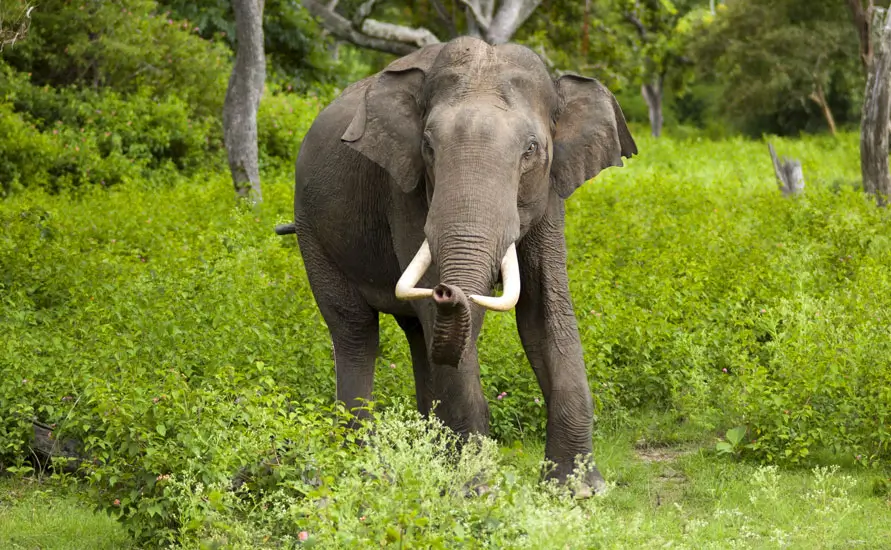
All drives in Bandipur leave from the forest-department reception beside the Mysore–Ooty highway, in jeeps or larger canters assigned by the department each session. Rainfall is lower than at Kabini, so the woodland is thinner, with scrub, bamboo clumps and scattered teak, and an animal standing fifty meters away is often in plain view, which also suits photographers working with shorter lenses. Gaur, chital, sambar, wild boar and elephants are seen regularly, and tigers and leopards are possible, while dhole packs often use the forest roads during the cooler hours of the morning.
The afternoon safari takes about two to three hours, and the light in Bandipur turns warm and gold as the sun drops behind the Nilgiri hills to the south. Your naturalist explains how the highway passing through the reserve is closed to most night traffic, a rule introduced to reduce the number of animals killed on the road. This means that once the drive is over, you head straight back to your resort for the evening, where dinner is usually served buffet style. Look out for nightjars and owls in the trees around the property. Overnight in Bandipur.
Two more safaris in Bandipur give you a final full day in the southern forests. The morning drive is often the best time for tigers and leopards resting on the forest roads before the heat sets in, and dhole may be seen hunting chital in short, fast chases. Your naturalist can also point out the termite mounds, wild flowers and medicinal plants that local communities have used for generations. Grey jungle fowl call loudly at first light, and you may hear the deep alarm bark of sambar when a predator is nearby.
The middle of the day is free for rest and reflection at your resort. An optional nature walk outside the park with a lodge guide lets you look for butterflies, lizards and smaller birds such as the yellow-throated bulbul and the Indian robin. If you would like a short cultural visit instead, a temple on Gopalaswamy Betta, the highest hill in Bandipur, lies inside the reserve and is reached only by authorized vehicles, so we can advise you on access. Lunch is followed by tea and a review of your best photos so far.
Your final safari of the tour enters the forest in the late afternoon and returns before dusk. After almost two weeks in four very different reserves, you will be able to recognize the alarm calls of chital, sambar and langur, read pugmarks with your guide and spot movement in the grass much faster than at the start of the trip. The resort may arrange a farewell dinner in the open air if weather allows. Your driver confirms the timing for tomorrow's drive to Bangalore so you can plan your packing around your departure flight. Overnight in Bandipur.
Your final road leg returns to Bangalore through Gundlupet and Mysore, a little over 200 km of mostly four-lane highway. City traffic on both ends decides the timing, so we leave Bandipur early enough to reach the airport at least three hours before your international departure. With a late-night flight, there is room for lunch in Mysore or an hour at Tipu Sultan's island fort of Srirangapatna on the way. Our driver takes you directly to the departure terminal.
Over fourteen days you have followed tiger tracks across the meadows of Kanha, the rocky hills of Bandhavgarh, the backwaters of Kabini and the dry forests of Bandipur, with plenty of time in the jeep and on the water. Periyar, Valparai's rainforest, the birds of Thattekad and the Andaman reefs are all good themes for a second wildlife holiday with us. Safe travels, and we hope the forests call you back.
Your Journey

N.S. Rathore & Mrs. Omlata Rathore · Managing Director
We still read every enquiry ourselves. Tell us the places you liked and our planners will send a day-by-day route with drive times and a clear price.
Every package can be customised and no pressure to book. A planner from our office replies within 24 hours with a route written for your group.
Fill this in and your planner will send a first draft itinerary.
Explore more
Kerala Backwaters Escape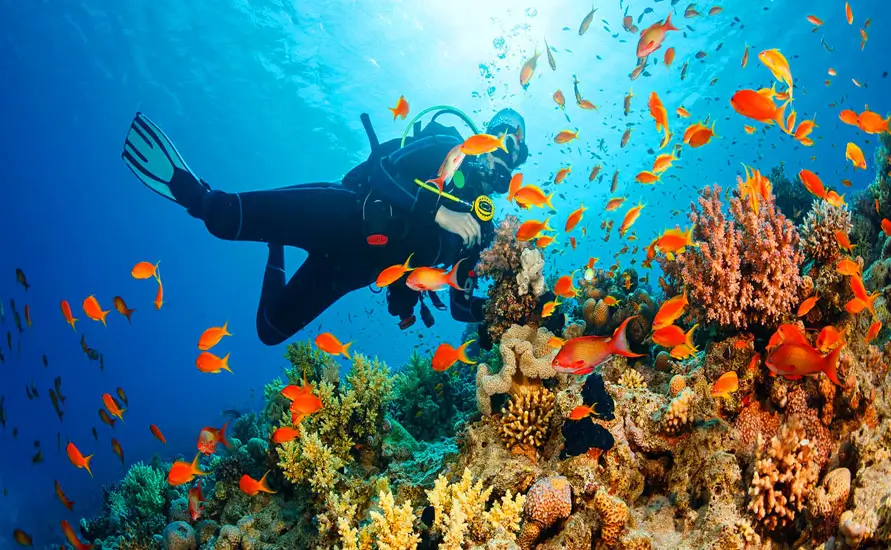 Kerala Backwaters Escape
 Kerala Backwaters Escape
 Kerala Backwaters Escape
 Kerala Backwaters Escape
 Kerala Backwaters Escape
 Kerala Backwaters Escape
 Kerala Backwaters Escape
 Kerala Backwaters Escape
 Kerala Backwaters Escape
 Kerala Backwaters Escape
 Kerala Backwaters Escape
 Kerala Backwaters Escape
 Kerala Backwaters Escape