 Kerala Backwaters Escape

South India Wildlife Tours
Delhi – Bharatpur (Keoladeo) – Sultanpur – Delhi – Jim Corbett – Delhi – (flight) Bangalore – Srirangapatna (Ranganathittu) – Kabini – Wayanad – Thattekad – Munnar – Kochi
At a glance
Few countries let you swap Himalayan foothill species for rainforest endemics in a single holiday, and our Birding Tour of North and South India is built around that contrast. It opens in winter at Keoladeo National Park in Bharatpur, a UNESCO World Heritage wetland where ducks, geese, cranes and raptors from Central Asia and Siberia spend the cold months. From there you head north to Jim Corbett National Park, where forest, grassland and fast rivers below the Himalaya hold hornbills, fish owls and wintering ibisbills, before flying south to the Western Ghats.
The southern half follows a line of habitats from the Kaveri river to the Kerala hills. Ranganathittu's river islands host colonies of storks, pelicans and ibises, the Kabini backwaters add boat and jeep safaris in Nagarhole, and a night in Wayanad breaks the long road west. Thattekad, the bird sanctuary named after Salim Ali, is the place for Sri Lanka frogmouth and Malabar trogon, while the grassy summits and shola forest of Munnar complete the list with high-altitude endemics such as the Nilgiri pipit and Palani laughingthrush.
Over 17 days a keen group can realistically log well over 300 species, though numbers always depend on season, weather and patience. The Birding Tour of North and South India runs best from late November to February, when the migrants are in at Bharatpur and Corbett's Dhikala zone is open. Specialist local birding guides join you at every site, and permits for safaris are booked in advance through official portals, subject to availability. Pace, hotel style and the order of the southern sites can be adjusted for photographers or for newer birders.
Your flight lands at Indira Gandhi International Airport, and after immigration and baggage claim you walk out to find our representative with your name on a card. Your hotel is a short ride away by private air-conditioned car, and guests landing before dawn can have it held from the previous evening. On the way, our representative gives you a folder with the full itinerary, permit copies and the phone numbers of every birding guide on the route. The morning is left free for sleep, because jet lag and a dawn birding schedule do not mix well.
In the afternoon a local birding guide picks you up for a gentle first outing on the Yamuna floodplain or at Okhla Bird Sanctuary on the city's southern edge, depending on water levels and recent reports. Even inside one of the world's largest cities, the reed beds and mudflats here attract good numbers of waterbirds in winter. Expect bar-headed geese, ruddy shelducks, black-winged stilts and several species of egret, along with Indian spot-billed ducks and red-wattled lapwings calling noisily from the bank. It is a useful way to start learning the common birds you will see again and again.
Back at the hotel your guide runs through a practical briefing over a cup of tea. Delhi winters are cool, and early mornings in Bharatpur and Corbett can drop close to freezing, so pack layers, a warm hat and gloves alongside light clothing for the warmer south. Muted greens, browns and greys are better than bright colors in the field. Bring your own binoculars, ideally 8x or 10x, and a field guide or a birding app with Indian species loaded. A notebook or a checklist app makes the evening log much easier. Overnight in Delhi.
Breakfast is early, and soon you are heading south on the Yamuna Expressway and then turn west past Mathura toward Bharatpur, a small town on the border between Uttar Pradesh and Rajasthan. Four hours of driving sounds dull, yet the crop fields beside the road deserve attention: sarus cranes, the tallest flying birds in the world, often stand in pairs in the mustard and wheat fields, and black kites and Indian rollers perch on the electricity wires. Your driver will stop safely if anything good appears, and there are clean rest areas along the expressway for coffee.
You check in to a lodge close to the park gate by lunchtime. Bharatpur's wetland was once the private duck-shooting reserve of the local maharajas, who flooded natural depressions with water from a nearby canal to attract waterfowl, and records of the famous colonial-era shoots are still carved on a stone near the main track. Protection grew from the 1950s, it became a national park in 1982 and was listed by UNESCO in 1985 as Keoladeo National Park, named after an old Shiva temple inside. More than 370 bird species have been recorded within its roughly 29 square kilometers.
Late in the afternoon you make a first short visit into the park with your birding guide. No private cars are allowed past the entrance, so visitors move on foot, by bicycle or in one of the licensed cycle rickshaws, whose pullers are trained by the forest department and often know the birds remarkably well. In the soft evening light you may find painted storks, Indian cormorants and darters near the main track, and spotted owlets peering from the tree holes along the road. As darkness falls, large flocks of egrets and herons fly in to roost. Overnight in Bharatpur.
Today you spend the full day in Keoladeo National Park, starting at the gate just after sunrise when mist still lies over the water. The main track runs through a mix of shallow marshes, grassland and acacia woodland, and each section holds different species. Ducks are the big story in winter, with northern shovelers, gadwalls, northern pintails, common teals and garganeys gathering in large numbers on the open water. Greylag and bar-headed geese graze at the edges, while purple swamphens move through the reeds. Your guide will help you separate the similar species and spot rarer birds among the flocks.
Raptors are a highlight of a winter visit. Greater spotted and imperial eagles often sit on dead trees near the water, and marsh harriers patrol low over the reeds hoping to flush a duck. Common cranes and sarus cranes feed in the grassy areas, and in some years small numbers of demoiselle cranes appear. The Siberian crane, once the symbol of Bharatpur, has not returned since 2002, which your guide can explain in more detail. At midday, a picnic lunch near the Keoladeo temple gives you a short rest, and you may spot a rock python sunning itself on the bund.
The afternoon is for slower birding along the side tracks, where you look for shy species such as the dusky eagle-owl, the Indian grey hornbill and the black bittern. Smaller birds also reward patience, with bluethroats in the reeds, warblers in the acacias and wagtails along the paths. If water levels are high enough, the forest department sometimes runs short boat rides on the main lake, which can bring you closer to the birds. Light fades early in winter, so you return to the lodge around sunset for a hot shower and the evening checklist. Overnight in Bharatpur.
A final dawn session in Keoladeo gives you one more chance at anything still missing from your list. Many birders use the last morning for the quieter woodland near the temple, where owls, woodpeckers and the orange-headed thrush may be found, or for one more look at the eagles. The morning light here is also the best for photography, with the low sun coming from behind you as you face the main marsh. Around nine or ten you are back at the lodge for a late breakfast, then the luggage is loaded for the run north.
Your route back toward Delhi passes close to Sultanpur National Park, a small wetland on the edge of Gurugram that is one of the best birding sites in the capital region. A circular path around the lake has several watchtowers, making it easy to scan the water. In winter it attracts large numbers of ducks and geese as well as greater flamingos in some years, and the surrounding scrub has species such as the grey francolin and the Indian robin. The park can close for maintenance or on a set weekday, so our team checks the schedule before your trip.
Gurugram traffic decides how long the last stretch into Delhi takes, usually ninety minutes or so. After such a full day, most guests choose a simple hotel dinner and bed by ten. Your guide can help you go through the photos from Bharatpur and confirm any difficult identifications, especially among the eagles and the many similar ducks. If you need to do laundry before the Corbett leg, the hotel can usually offer a same-day service if you hand it in before noon. Tomorrow morning brings another early start for the drive into the foothills. Overnight in Delhi.
After breakfast you leave Delhi early and drive east into Uttar Pradesh and then north into Uttarakhand, passing the towns of Moradabad and Kashipur. The first half of the drive is through flat farmland, where cattle egrets follow plows and bank mynas gather in noisy groups at roadside tea stalls. Nearer the Shivaliks, tall straight sal trees begin to line the highway and the air grows noticeably fresher. With breaks, plan on six or seven hours before you pull up at a riverside lodge near Ramnagar, where a late lunch is waiting.
Jim Corbett National Park was set up in 1936, which makes it the oldest national park in mainland India, and it was also where Project Tiger began in 1973. More than 600 bird species have been recorded across the wider reserve, a number that reflects the meeting of plains, foothills and Himalayan elements. In winter many altitudinal migrants come down from the higher hills to escape the cold, which is why this season is so productive for birders. The habitats range from dense sal forest and open grassland to fast rivers with shingle banks.
Toward four o'clock your birding guide leads you down to the Kosi river, which runs just outside the park boundary. Walking inside the national park is not allowed, but the riverbank and nearby forest edge are excellent for birds. Crested kingfishers dive from boulders, plumbeous and white-capped redstarts flit on the rocks, and spotted and slaty-backed forktails work along the edges of the water. With luck you may find a wintering wallcreeper on a rock face or an ibisbill on the shingle, two species many birders travel a long way to see. Overnight at Jim Corbett.
Your first safari inside the park starts in darkness, with an open gypsy, its driver and a forest department guide collecting you from the lodge. The zone is allotted by the forest department with your permit, and morning drives often go into areas such as Bijrani or Jhirna. As the sun rises, red junglefowl and kalij pheasants step onto the forest roads, and the calls of chestnut-headed bee-eaters and Himalayan flamebacks fill the trees. Your birding guide joins you in the jeep and helps you pick out species in the dense foliage, while the forest guide watches for mammals.
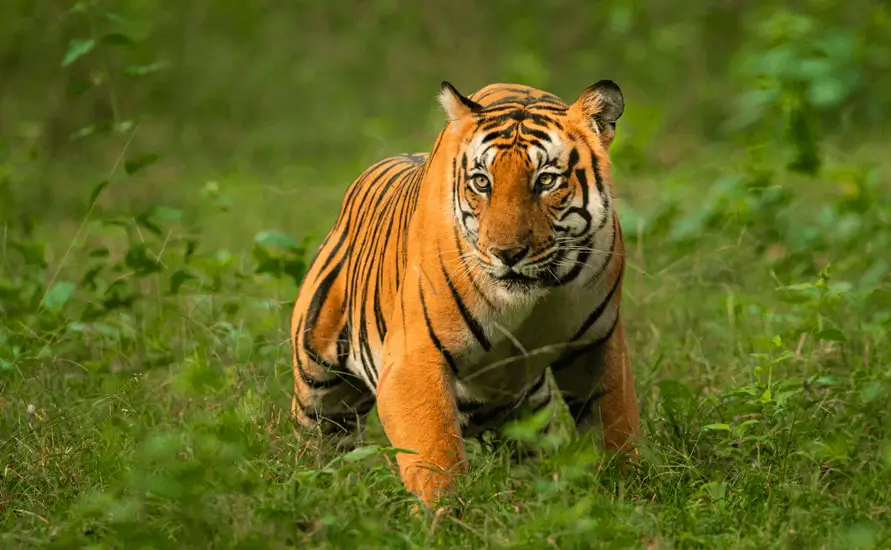
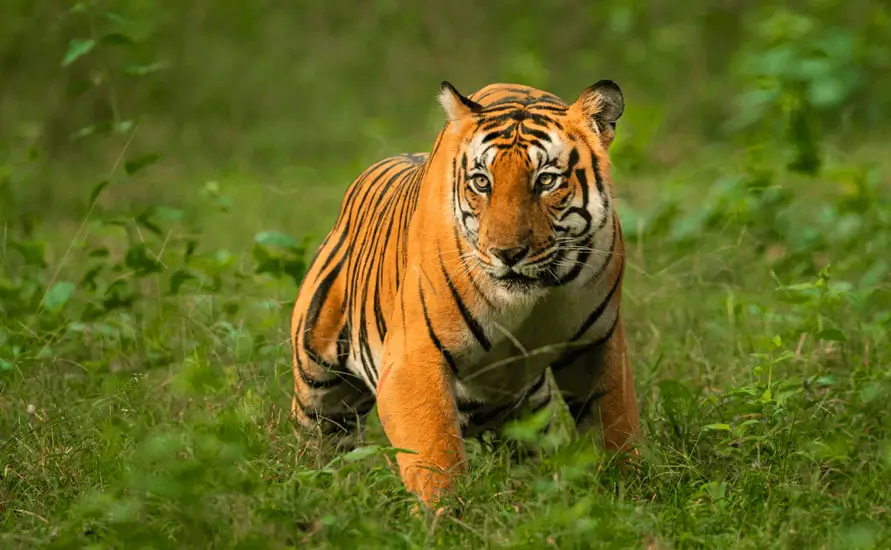
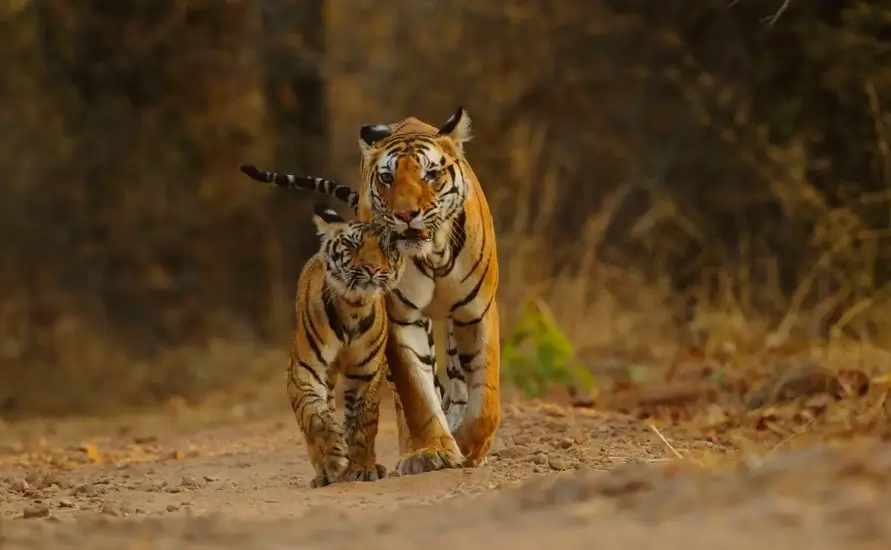
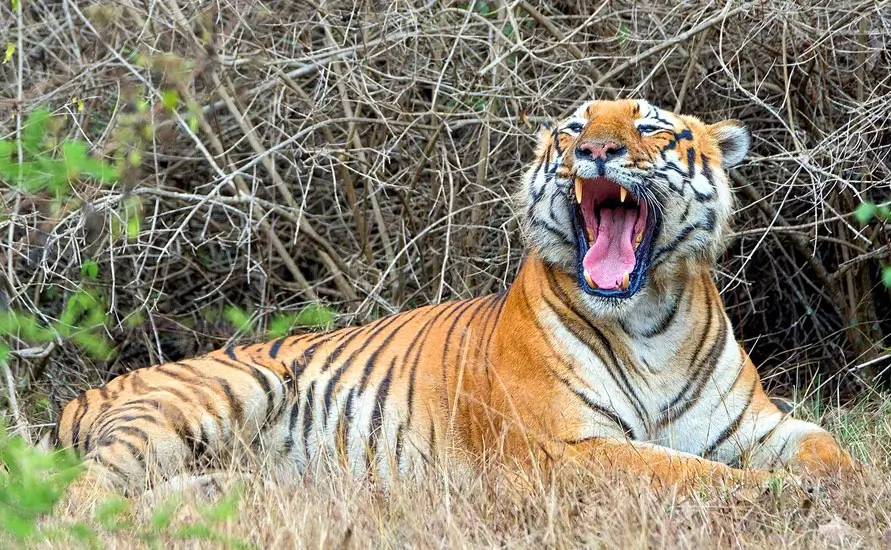
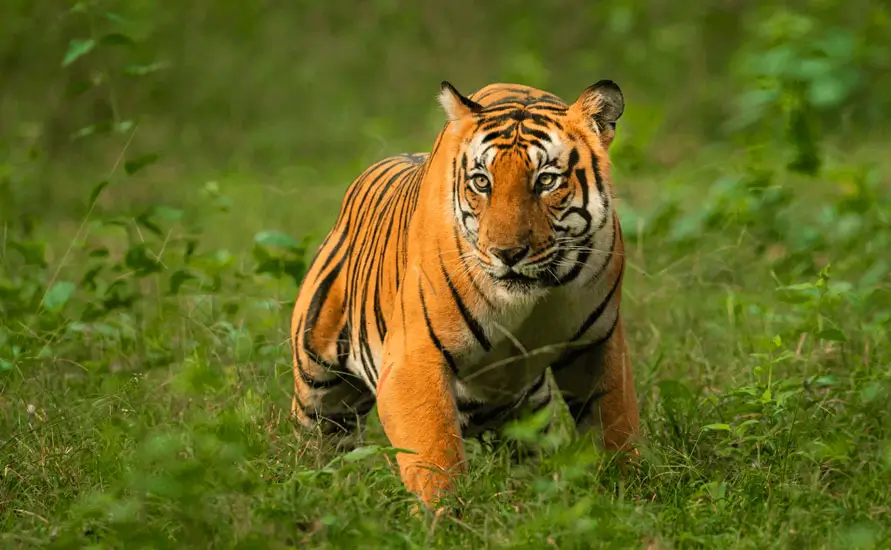
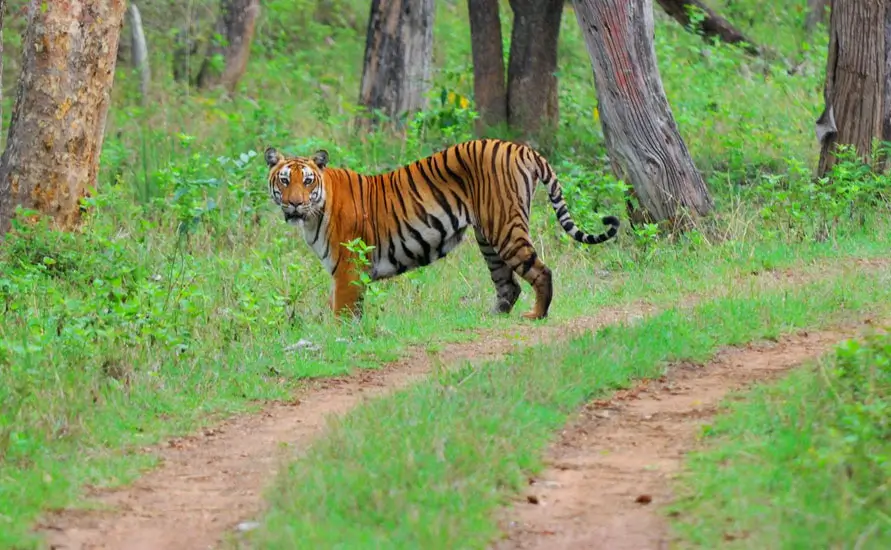
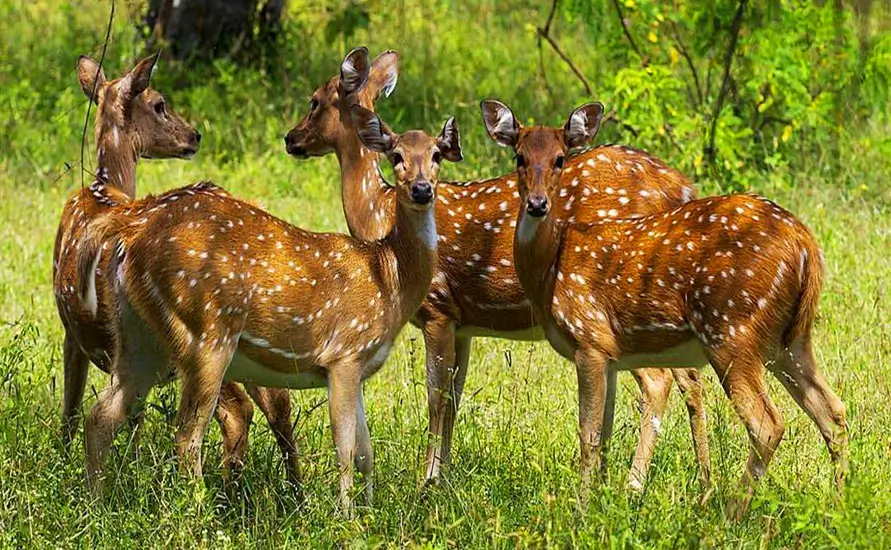
Corbett is a tiger reserve, so mammals are part of every drive. Spotted deer, sambar and wild boar are common, Asian elephants are often seen in winter, and tigers and leopards are possible but never certain. For birders, the forest edges hold great hornbills, crested serpent eagles and changeable hawk eagles, while the grasslands can produce black francolin and several species of bushchat. Vehicles keep to the permitted roads, and drivers switch off the engine at each halt. Quiet talk and no sudden movements give you the best chance of seeing animals at close range.
Following a midday break, the second drive of the day often covers another section of the zone or a nearby one. The low light of late afternoon is good for photography, and owls start calling as the sun sets. Your guide may stop near a known roost to look for brown fish owls or collared scops owls. Safaris must leave the park before dark, and you return to the lodge in time for a warm drink. In the evening your guide goes through the bird list with you and plans the next day around any species still missing. Overnight at Jim Corbett.
Today you take the forest department's canter, a shared open-sided vehicle of about sixteen seats, deep into the Dhikala zone. Dhikala is open only from around mid-November to mid-June, because monsoon rains and river crossings make the roads unusable for the rest of the year. Private jeeps cannot enter without an overnight forest rest house booking, so the canter is the most practical way in for a day visit. It leaves from Ramnagar on a fixed schedule and spends most of the day inside the park, so pack water, sun protection and a warm layer for the early start.
The road to Dhikala climbs over forested ridges and then drops down to the Ramganga reservoir, with long views over the water and the grasslands beyond. Ospreys, Pallas's fish eagles and lesser fish eagles hunt over the reservoir, while great cormorants and river terns fish in the shallows. On the riverbanks, gharials and mugger crocodiles sun themselves on sandbanks. The grasslands are home to hog deer, elephants and, with luck, tigers, and the tall grass holds grassbirds and bushchats that are not easy to see elsewhere. Your guide helps you scan for them from the canter.
In the afternoon the canter returns along the same route, stopping for any good sightings on the way. The birding here can be very rewarding, with species such as the great hornbill, the oriental pied hornbill and several woodpeckers often seen near the road. Because the canter is shared and runs to a timetable, you cannot ask it to wait at one spot for long, but the variety of habitats you cover in a single day makes up for that. Back at the lodge in the evening, you add the day's sightings to your growing list and relax by the fire. Overnight at Jim Corbett.
A last short walk near the lodge at first light is optional, and it often turns up mixed flocks of tits, minivets and warblers moving through the trees along the Kosi. Once breakfast is done, the car takes you back across the plains to Delhi along the familiar highway. The road is busy, and the drive lasts six to seven hours including a stop for lunch. Your driver keeps an eye out for sarus cranes in the fields near Moradabad, and your guide can use the time to go over the North India checklist with you.
An airport-area hotel is booked for tonight, so the morning flight to Bangalore needs only a short transfer. The evening is free for repacking, since the southern leg is warmer and more humid and calls for lighter clothing, rain protection and leech socks. Aerocity's restaurants are a short walk from most of these hotels. Our team confirms the pickup time for the morning before you go to bed. Overnight in Delhi.
An early morning flight takes you from Delhi to Bangalore in about two and three-quarter hours, crossing most of the length of India. Waiting by the arrivals exit at Kempegowda International Airport is someone from our Karnataka office, ready to drive you south-west toward Mysore. The airport is on the north side of the city, so the drive includes some city traffic before you reach the expressway. The highway skirts Ramanagara, Mandya's sugarcane fields and coconut groves, with black-shouldered kites and Indian rollers perched on the wires.
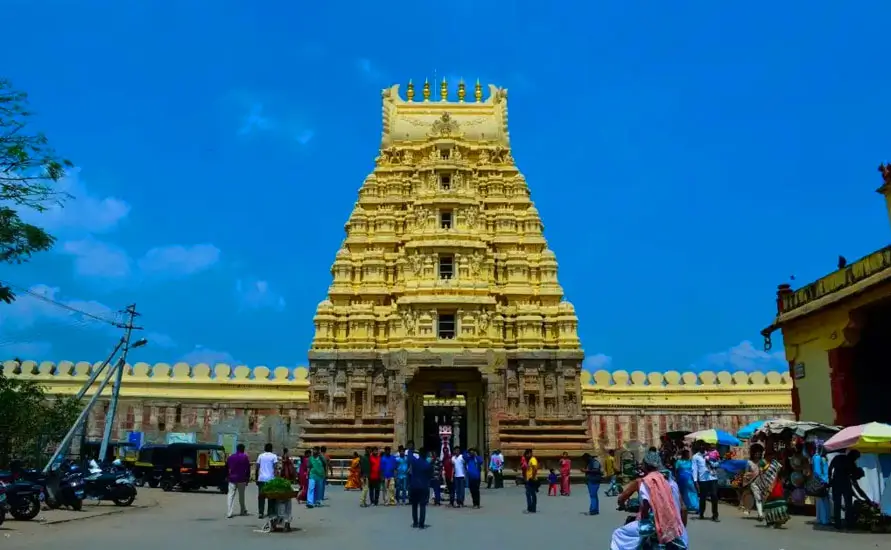
Your base tonight is a riverside hotel in Srirangapatna, Tipu Sultan's old capital, ringed by two arms of the Kaveri a few kilometers short of Mysore. In the late afternoon you can take a short walk along the river to look for kingfishers, cormorants and pond herons, or visit the summer palace of Tipu Sultan with its painted walls. Your birding guide for the southern section joins you in the evening for a briefing on the birds of Ranganathittu, Kabini and the Kerala hills. Overnight in Srirangapatna.
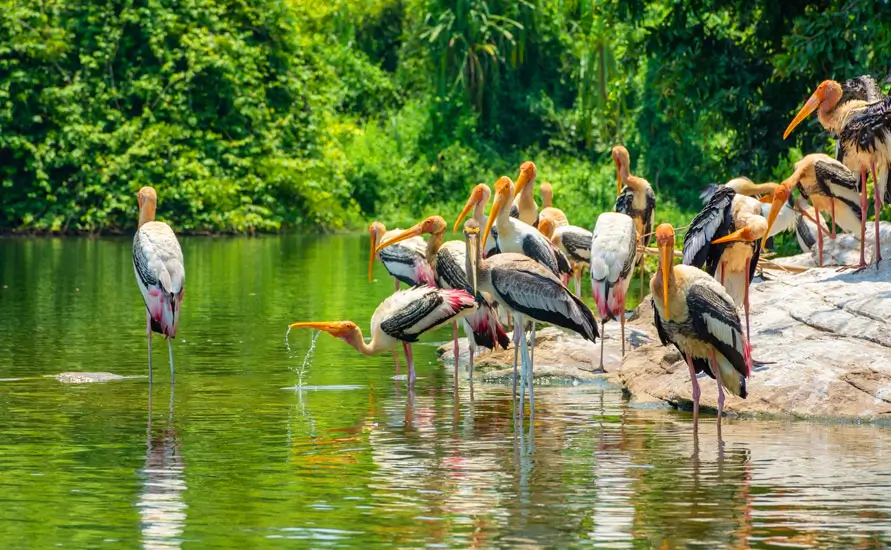
Just a few kilometers upstream from your hotel lies Ranganathittu Bird Sanctuary, a group of small islands in the Kaveri that was protected on the advice of the ornithologist Salim Ali in 1940. You arrive as the sanctuary opens and take a rowing boat around the islands with a boatman who knows exactly how close the birds will tolerate. In the winter months the trees are full of nesting colonies of painted storks, Asian openbills, black-headed ibises and spot-billed pelicans, with Eurasian spoonbills and night herons roosting among them. Mugger crocodiles lie on the rocks right next to the nests.
After the boat ride, walk along the riverside path for great views of the colonies. River terns and great stone-curlews can be seen on the rocks in the river, and in the trees above there are often roosting Indian flying foxes. Photographers should aim for the first hour, when storks fly in with twigs for their nests or regurgitate fish for hungry chicks. Please follow the boatman's lead and keep noise to a minimum near the nests. Breakfast and checkout follow, then a two-hour drive south-west to the Kabini river, where Nagarhole National Park begins.
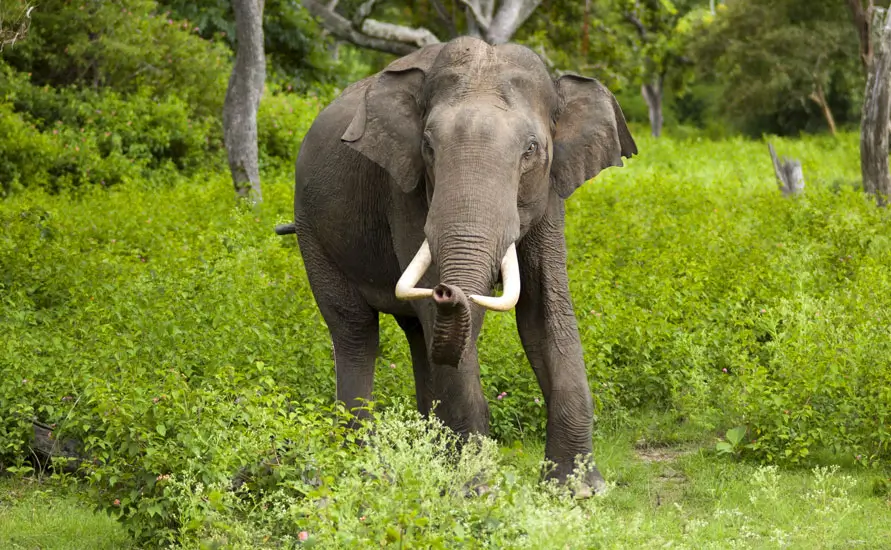
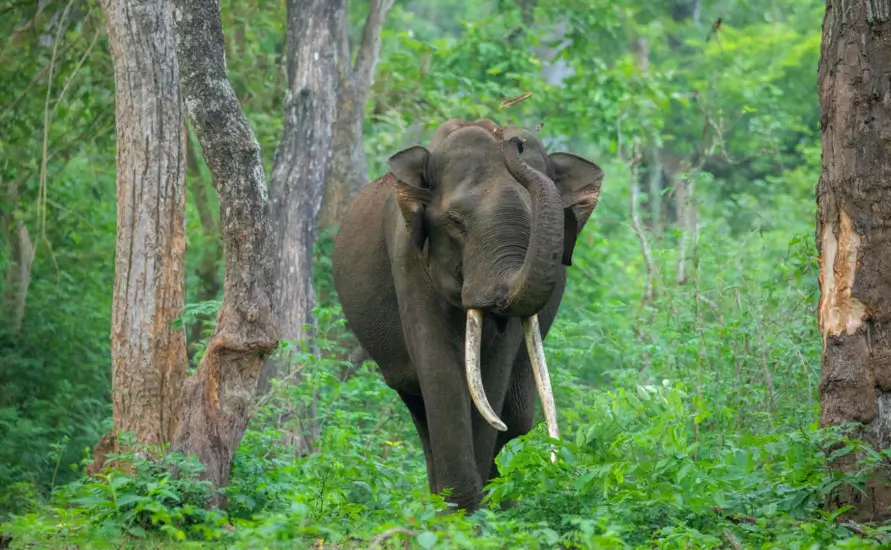
Your jungle lodge sits on the edge of the Kabini reservoir, where the backwaters meet the forest of Nagarhole. Many lodges here are full board, so lunch, dinner and breakfast are usually included. After lunch, your first boat safari on the reservoir starts in the late afternoon. As the reservoir shrinks through the dry months, new grass covers the bare mud and pulls in elephant herds, and gaur and spotted deer graze nearby. Grey-headed fish eagles, ospreys and river terns are common, while smooth-coated otters are sometimes seen playing in the shallows. Overnight at Kabini.
An early jeep safari takes you into the Kabini section of Nagarhole National Park, also called Rajiv Gandhi National Park, one of the best places in South India to see large mammals. The forest is mostly dry deciduous, with teak and rosewood, and in winter the trees are still leafy. Big cats turn up fairly often in a good season, yet nobody can promise one, and a pack of dholes is always a possibility. For birders the morning drive can produce Malabar pied hornbills, white-bellied woodpeckers, Indian scimitar babblers and changeable hawk eagles. Safari zones and timings are set by the forest department.
Back at base, a slow stroll around the property with your birding guide follows breakfast, looking for flowerpeckers, white-browed bulbuls, Tickell's blue flycatchers and small sunbirds in the flowering trees. The open lawns often have Indian robins and ashy prinias, and the edge of the water holds several species of kingfisher. This is a good time to practice photographing small birds, as they are used to people and can often be approached closely. After lunch, a short rest is a good idea before the afternoon outing, since tomorrow is another early start.
Later you return to the water, either in a round coracle or a motor boat, depending on what the lodge offers and the water level. The dead tree stumps standing in the reservoir are favored perches for darters, cormorants and Indian pond herons, and stork-billed kingfishers hunt along the shoreline beside and black-headed ibises. As the sun goes down, large herds of elephants often gather at the water's edge, which makes for a striking sight. Dinner and the species tally close the day, and your guide marks which forest birds are still missing. Overnight at Kabini.
A final morning jeep safari in Nagarhole gives you one more chance at mammals and forest birds before you leave Karnataka. Morning light in the forest is excellent for photography, and the first hours bring the best odds of a leopard or tiger walking the road, as well as sloth bears if you are lucky. Look also for jungle owlets and brown wood owls sitting in the trees near the track. Breakfast and checkout come next, and then the car crosses from Karnataka into Kerala and up into the hills of Wayanad.
The road climbs gently from the Kabini plains through coffee and pepper plantations to the town of Mananthavady. Wayanad sits at around 700 to 2,100 meters on the Western Ghats plateau, and its mix of forest, coffee estates and paddy fields supports many endemic birds. You stay tonight at a plantation stay surrounded by coffee, pepper and tall shade trees, where the birding starts right outside your room. Later the guide walks you between the coffee rows, looking for species such as the Malabar whistling thrush, white-bellied blue flycatcher and the dark-fronted babbler.
Wayanad is also home to the Wayanad laughingthrush, a localized Western Ghats endemic that moves through thick undergrowth in noisy groups. Your guide may also find Malabar grey hornbills and Malabar barbets in the fruiting trees and orange minivets in the canopy. As the light fades, listen for the calls of the Sri Lanka bay owl and the jungle nightjar near the plantation. Dinner tonight is a home-style Kerala meal served at the plantation, often with vegetables and rice grown on the estate and coffee grown just a few meters from your table. Overnight in Wayanad.
After an early breakfast you drive down the Thamarassery ghat road, a series of nine hairpin bends with views over the coastal plain, to the city of Kozhikode on the Arabian Sea coast. Budget around two and a half hours for this descent. From Kozhikode you board a daytime express train south along the coast to Aluva, near Kochi, a trip of roughly four hours in an air-conditioned chair car. The train passes rice fields, coconut groves and rivers, with egrets and kites common along the line, and it is a relaxing way to cover a distance that would take longer by road.
Your driver meets you at Aluva station and drives you about an hour and a half east to Thattekad, a small village on the Periyar river at the edge of the Salim Ali Bird Sanctuary. You check in to a simple birding lodge by the evening, where you meet your local birding guide for the next two days. Many of the birders who stay here are serious bird photographers, so the lodge's dinner table often turns into an informal swap of tips and sightings from the area. Overnight in Thattekad.
Thattekad Bird Sanctuary was the first bird sanctuary in Kerala, set up in 1983 following a survey by Salim Ali, who rated it among the finest birding areas of the peninsula. The sanctuary is a patchwork of evergreen and deciduous forest, plantations and river, and it holds a large number of Western Ghats endemics. Local guides here have spent years tracking birds, and they often know exactly where the shy species are roosting. You start at dawn, walking forest trails and plantation edges in search of the Malabar trogon, whose male has a bright red belly and black head.
The most famous bird of Thattekad is the Sri Lanka frogmouth, an odd, well-camouflaged nightbird that sits motionless on low branches during the day. Your guide will take you to a known roosting site, and you will be asked to keep a respectful distance and avoid using flash. Other specialties include the flame-throated bulbul, Malabar starling and black baza, a small and striking raptor that is often seen in pairs. In the trees along the river, look for crimson-backed sunbirds, Indian pittas in winter and the white-bellied treepie, another endemic of the southern Western Ghats.
Later a country boat carries you a short way along the Periyar river, where you may see white-throated and stork-billed kingfishers, purple herons and darters drying their wings. Back on land, the paddy fields around the village can produce Indian pitta, Asian koel and greater coucal, as well as egrets and storks feeding in the wet fields. As dusk falls, your guide may try for nightjars and owls, such as the Sri Lanka bay owl or brown hawk owl, along a forest edge. Back at the lodge, dinner is served with simple Kerala dishes and your growing species list. Overnight in Thattekad.
A last morning walk in Thattekad gives you another chance at anything you missed, and many birders use it to look again for the Malabar trogon or the Sri Lanka frogmouth. The early hours are also good for woodpeckers, including the heart-spotted woodpecker and the rufous woodpecker. Leaving after breakfast, you head east and climb into the high ranges of Idukki district, past rubber plantations, small waterfalls and spice gardens. The road climbs steadily for about three hours, and the air gets noticeably cooler as you reach the tea estates of Munnar.
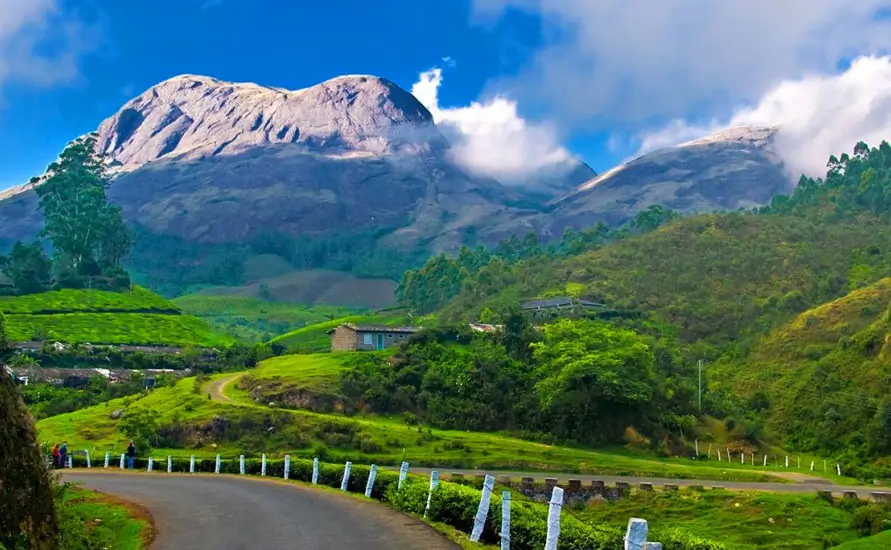
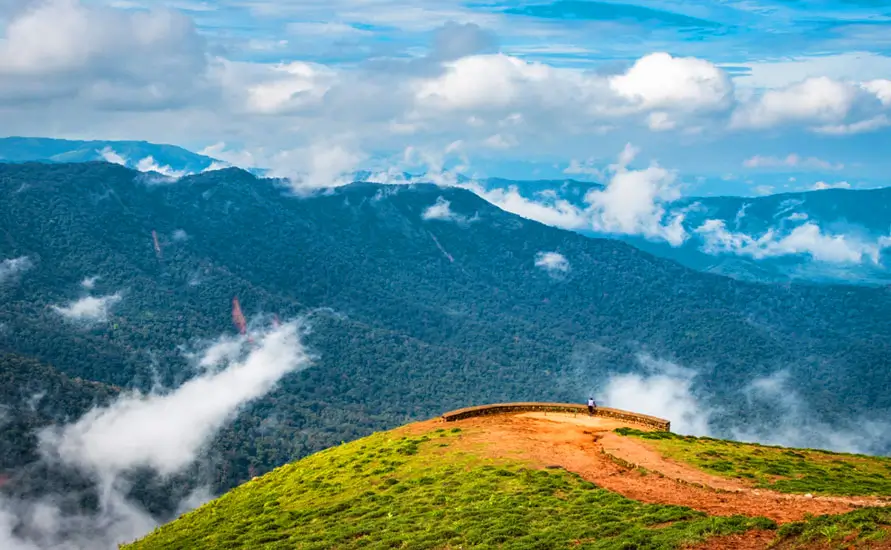
Munnar sits at around 1,600 meters in the Western Ghats, where three rivers meet among rolling hills covered with tea plantations. The British set up the first tea estates here in the late nineteenth century, and the neat rows of bushes still dominate the landscape. Between the estates there are pockets of shola forest, a stunted, moss-hung evergreen woodland restricted to the high hills of the south, with grasslands on the upper slopes. These two habitats hold many high-altitude endemics that you will not find lower down, which is why Munnar makes a good final stop.
A shola patch close to the hotel is the target for an afternoon walk, looking for the Nilgiri flycatcher, black-and-orange flycatcher and the Indian blue robin in winter. The Palani laughingthrush, also called the Kerala laughingthrush, is common here and often comes to the edge of the forest in small groups. Near running water, a human-sounding whistle gives away the Malabar whistling thrush, and listen for the calls of the Nilgiri wood pigeon in the canopy. Evening temperatures can drop sharply, so bring a warm layer for dinner. Overnight in Munnar.
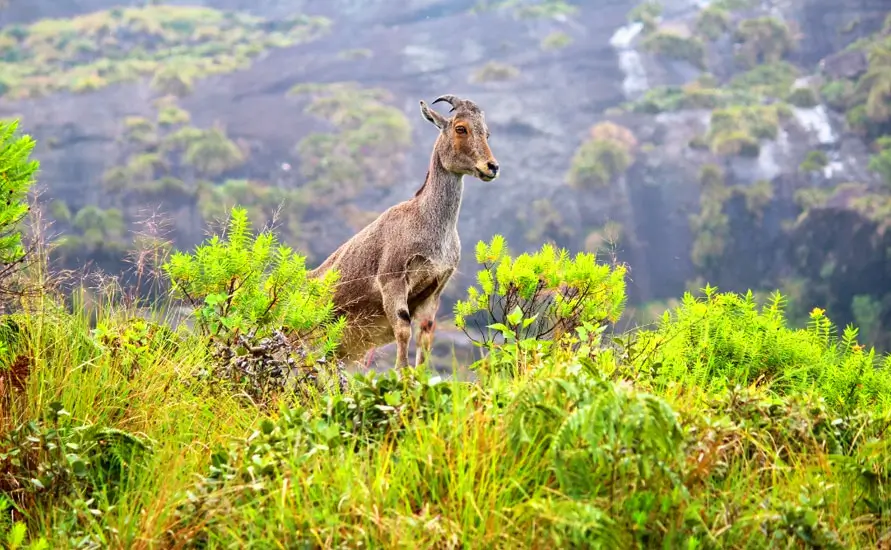
A short early drive brings you to Eravikulam National Park, home to the largest population of the endangered Nilgiri tahr, a wild mountain goat that lives on the steep grassy slopes. Private vehicles are not allowed inside, so visitors ride a forest department bus uphill to Rajamala, where a single paved walking path is open to visitors. Tahr calving brings an annual closure lasting some weeks in late winter, and we schedule around it. From that path you can often watch tahr grazing just a few meters away on the slopes.
For birders, the grassland and shola edges of Eravikulam are the place to look for the Nilgiri pipit, a small brown endemic that is easy to miss among the tussocks. You may also find the Nilgiri flycatcher, the Indian blackbird and small groups of Palani laughingthrushes along the path, while black eagles and kestrels hunt over the slopes. Looming over the plateau is Anamudi, the highest point in peninsular India at 2,695 meters, though walkers may not climb it. Clouds can roll in quickly, so an early visit gives you the best chance of clear views and good light.
In the afternoon you continue birding in the high ranges around Munnar, visiting areas such as Mattupetty and the forested slopes toward Top Station, depending on conditions. These areas can produce the white-bellied sholakili, a small, shy endemic of the shola undergrowth, as well as the Nilgiri wood pigeon and the Malabar whistling thrush. As this is the last full day, your guide helps you finalize the full trip list in the evening, and you will likely be surprised at how many species you have seen over the past two weeks. Overnight in Munnar.
A last cup of Munnar tea, then checkout and the descent to Cochin International Airport, roughly four hours away through tea estates, spice plantations and lowland towns. Hairpin bends slow the first hour, so we build generous slack into the pickup time. There are a few roadside spots where you can stop to photograph the view or buy tea, cardamom and spices. A short-stay room by the airport is available at extra cost for late departures.
From Kochi there are good connections via the Gulf and Southeast Asia to Europe, North America and Australia. Over seventeen days you have covered wetlands, foothill forests, river islands and the rainforest slopes of the south, and you leave with a list of birds that few single trips can match. If you would like to return, ask us about the Andaman Islands or the forests of central India for more endemic species. Happy birding, and travel home safely.
Your Journey

N.S. Rathore & Mrs. Omlata Rathore · Managing Director
We still read every enquiry ourselves. Tell us the places you liked and our planners will send a day-by-day route with drive times and a clear price.
Every package can be customised and no pressure to book. A planner from our office replies within 24 hours with a route written for your group.
Fill this in and your planner will send a first draft itinerary.
Explore more
Kerala Backwaters Escape Kerala Backwaters Escape
 Kerala Backwaters Escape
 Kerala Backwaters Escape
 Kerala Backwaters Escape
 Kerala Backwaters Escape
 Kerala Backwaters Escape
 Kerala Backwaters Escape
 Kerala Backwaters Escape
 Kerala Backwaters Escape
 Kerala Backwaters Escape
 Kerala Backwaters Escape
 Kerala Backwaters Escape
 Kerala Backwaters Escape
 Kerala Backwaters Escape
 Kerala Backwaters Escape
 Kerala Backwaters Escape
 Kerala Backwaters Escape
 Kerala Backwaters Escape
 Kerala Backwaters Escape