 Kerala Backwaters Escape

South India Wildlife Tours
Delhi – Ranthambore – Jabalpur – Bandhavgarh – Jabalpur – Bangalore – Nagarhole (Kabini) – Bangalore – Kochi – Thekkady (Periyar) – Kochi
At a glance
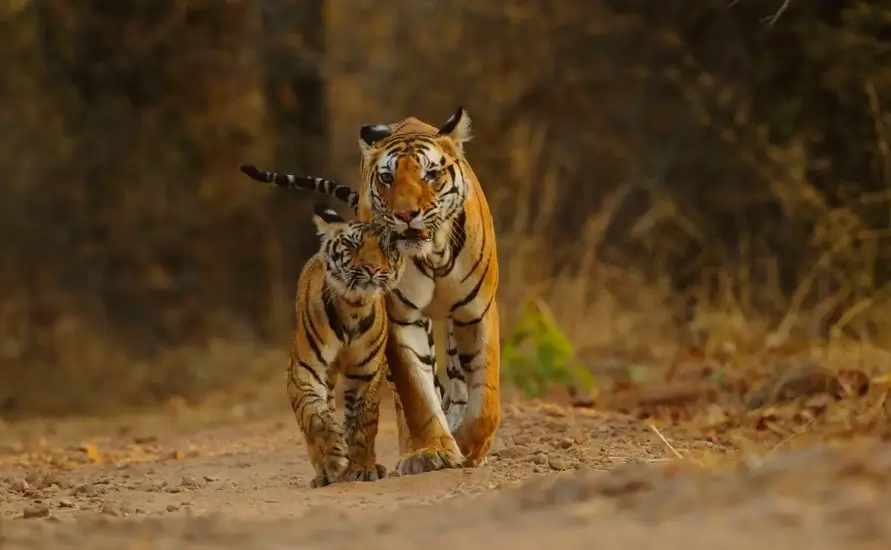
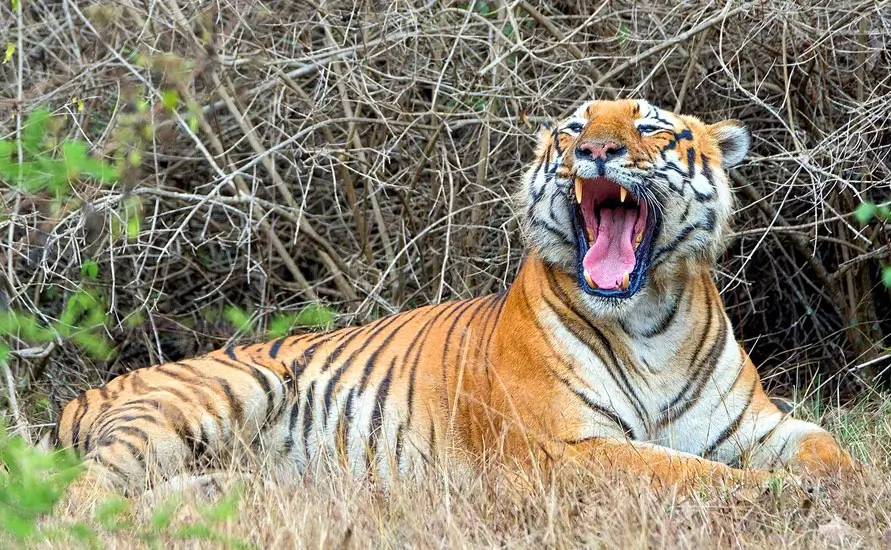
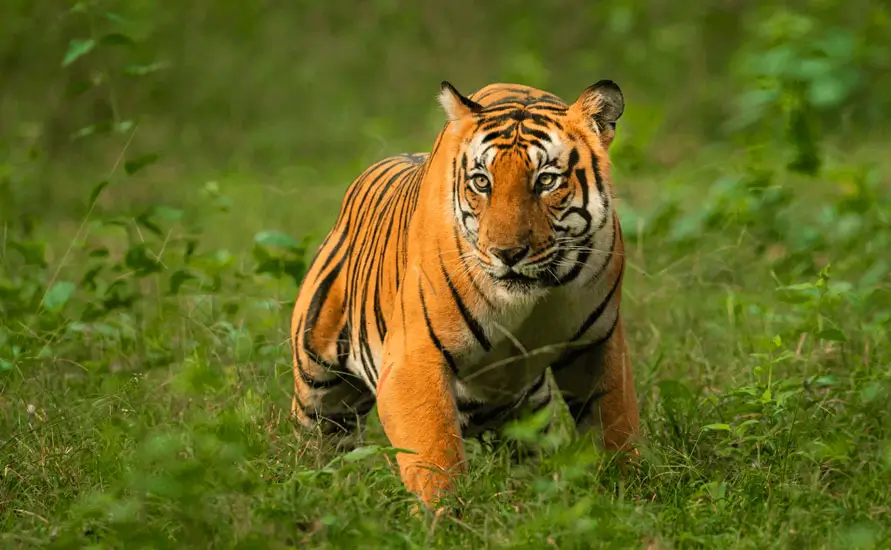
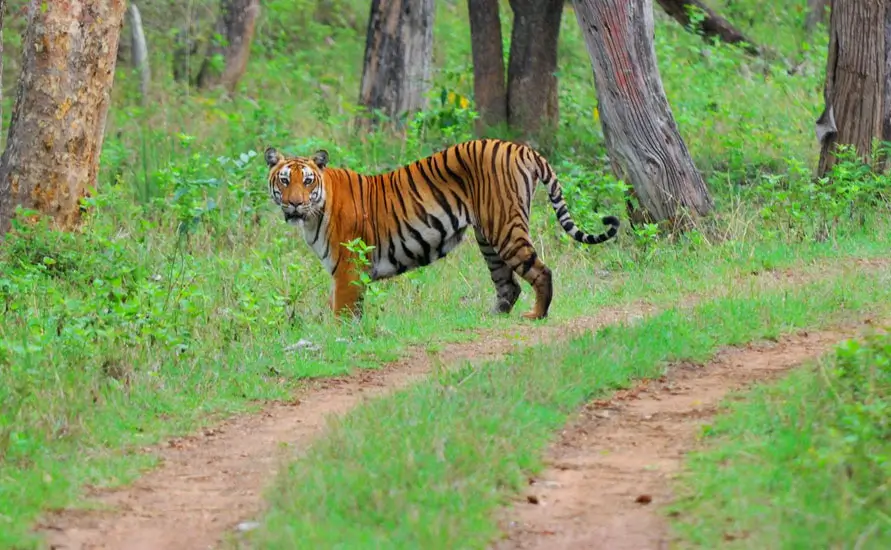
Two animals shape this trip. Our Tiger and Elephant Safari Tour India begins with tigers in the dry forests of Ranthambore in Rajasthan and the sal-covered hills of Bandhavgarh in Madhya Pradesh, two reserves where open terrain and healthy cat populations give you real chances in the jeep. The second half turns south to look for wild Asian elephants, first on the Nagarhole shore of the Kabini reservoir in Karnataka and then on the lake at Periyar in Kerala, where herds come to the water's edge in the dry months.
Linking north, center and south takes careful planning, and we keep it practical. A morning express train runs from Delhi to Sawai Madhopur for Ranthambore, an overnight train carries you on to Jabalpur for Bandhavgarh, and domestic flights cover the long hops to Bangalore and Kochi. Each reserve gets two or three nights so that you have repeat safaris rather than one rushed drive. Private cars with long-serving drivers meet you at every station and airport, and park naturalists guide you on every drive.
Sightings of any wild animal are never guaranteed, yet this tiger safari India route stacks the odds with around fourteen jeep, canter and boat safaris across four protected areas. All elephant viewing is from vehicles or boats at a respectful distance, and the trip does not include elephant rides of any kind. Because the core zones of Rajasthan and Madhya Pradesh shut for the rains, this India wildlife tour operates between October and June, and the hot weeks of March, April and May tend to concentrate both tigers and elephant herds around the last water.
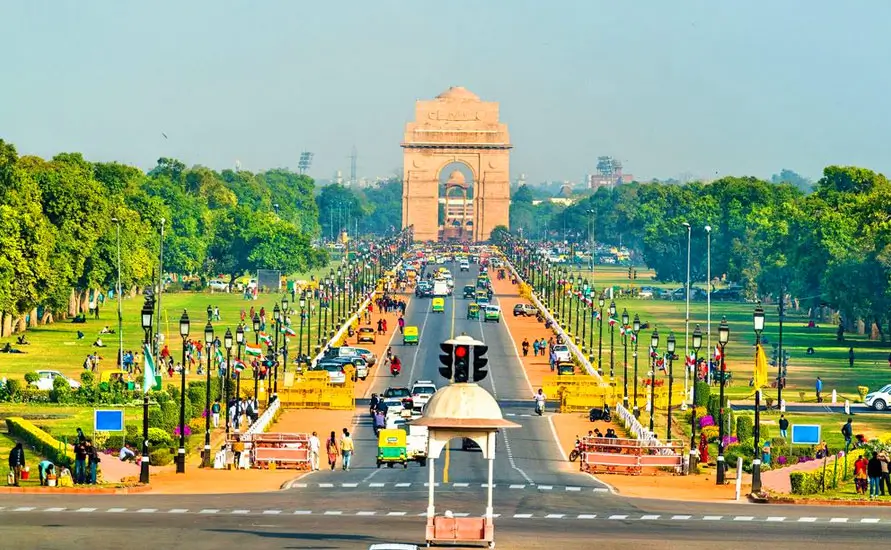
Your tiger-and-elephant fortnight opens in Delhi, and someone from our office waits beyond the customs hall at Indira Gandhi International Airport with a printed name board, whatever the hour your long-haul flight touches down. At night the run into the city is quick, often well under an hour. Sleep in if you landed in the small hours, because paying for the previous night keeps the room on hold for your arrival. Over coffee, our team hands over your train tickets, safari permit details and a printed plan, and explains how the next two weeks are put together.
Around noon your guide takes you to Lodhi Garden, where domed tombs of Delhi's Sayyid and Lodi sultans rise from lawns shaded by old banyans and palms. Bring your binoculars, because the park makes a fine first birding session: rose-ringed parakeets nest in tomb crevices, Indian grey hornbills flap between fig trees and coppersmith barbets tap out their metallic call. Local walkers, yoga groups and families use the paths at all hours, and your guide can tell you which tomb belongs to which dynasty. A short drive brings you to lunch at a café in nearby Khan Market.
In the afternoon you visit Humayun's Tomb, completed in the 1570s for the second Mughal emperor and listed by UNESCO. Architects point to its double dome, red sandstone and marble inlay and its four-part charbagh garden as ideas the Mughals later perfected at the Taj Mahal. Your guide explains how the tomb was restored in the 2000s and how the gardens were brought back to their Mughal layout. Return to the hotel in time for an early dinner, since tomorrow begins with a morning train to Rajasthan and you will want to pack light. Overnight in Delhi.
An early transfer takes you to the railway station in Delhi for a morning express train to Sawai Madhopur, the town closest to Ranthambore. Your driver helps with the bags and points you to the right platform, and our assistant can stay with you until the train arrives if this is your first time on Indian Railways. Seats are booked in an air-conditioned chair car or executive class, depending on the train. The route runs south through Haryana and eastern Rajasthan, where mustard fields, brick kilns and small station platforms full of tea sellers slide past the window.
A driver meets you at Sawai Madhopur station around midday and takes you to a jungle lodge on the road toward the park, a short ten-minute run from the station. After lunch you prepare for the first afternoon safari in Ranthambore National Park. Drives are run in six-seater gypsies or larger twenty-seater canters, with permits booked through the Rajasthan forest department's online system and limited for each session. Ranthambore's tourism area is split into ten numbered sectors, and the sector printed on your permit is assigned by the department, not picked at the gate.
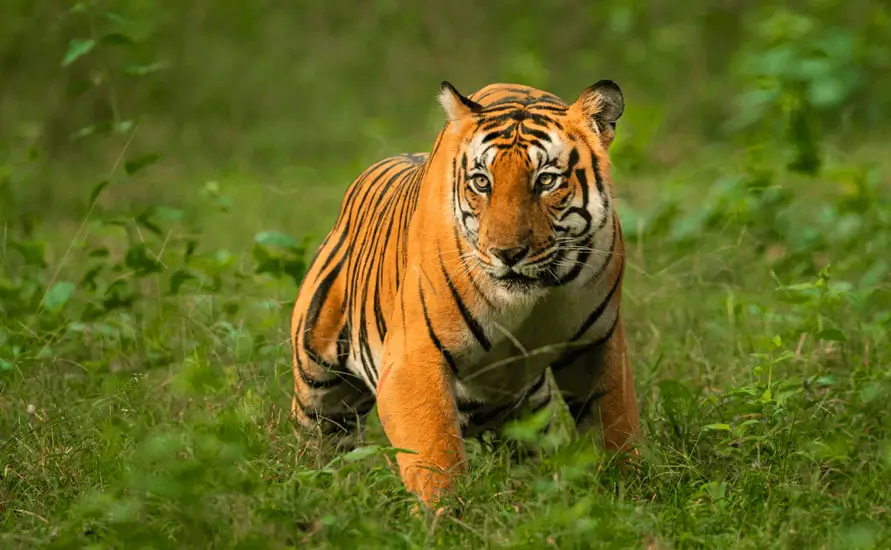
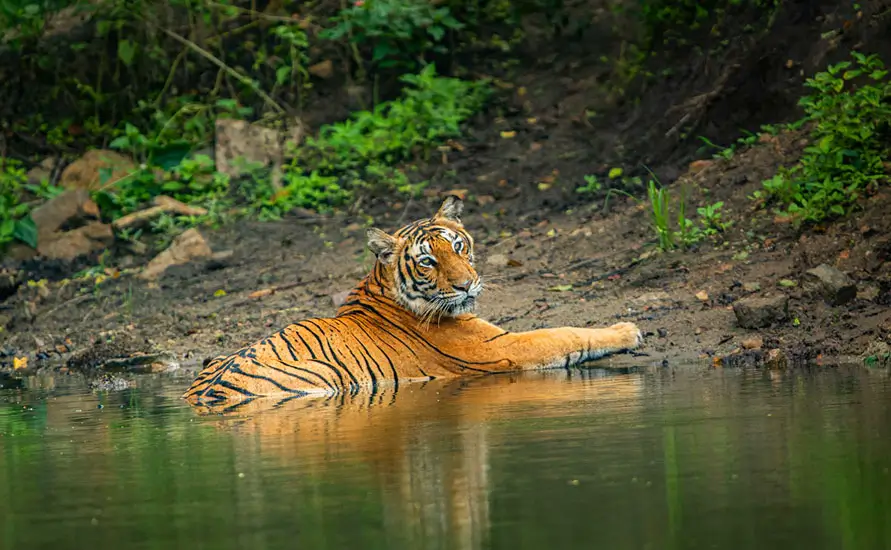
Ranthambore's landscape is quite different from the other reserves on this tour. Dry deciduous forest of dhok trees covers rocky hills, while lakes such as Padam Talao, Rajbagh and Malik Talao lie in the valleys below the fort. Tigers here have become known for walking past old ruined pavilions and chhatris left over from royal hunting days, which makes for memorable photographs if you are lucky. Sambar often stand knee-deep in the lakes grazing on water plants, and marsh crocodiles bask on the banks. Your safari ends at dusk, and dinner is served at the lodge. Overnight in Ranthambore.
Gates open at first light, and the cold desert air of a Rajasthan winter morning means warm layers, gloves and a hat are worth packing between December and February. Your gypsy enters the allotted zone with a naturalist who speaks English and knows the local tigers by their codes and family histories. In the first hour, listen for the alarm calls of sambar and the sharp chattering of langurs, both of which often point to a tiger or leopard moving through the scrub. The zones around the lakes tend to be popular in the dry months, since animals stay close to water.
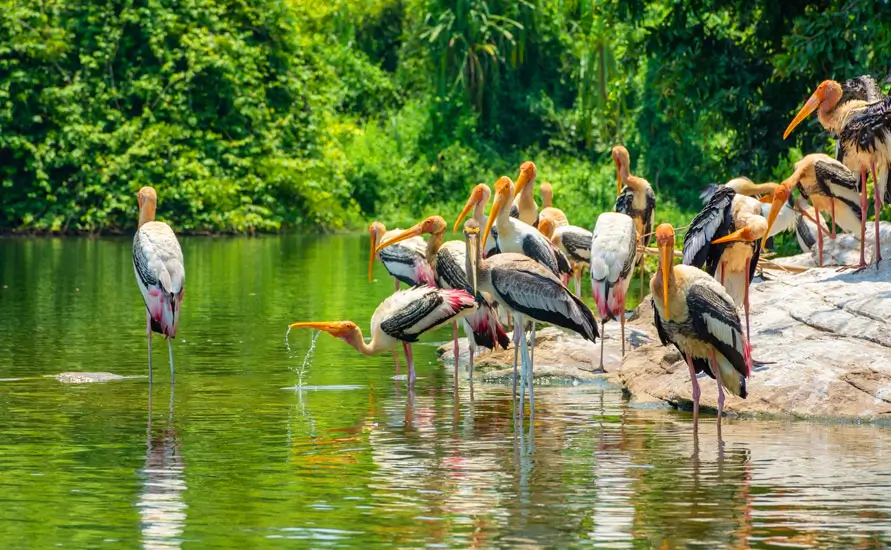
Ranthambore was once the private hunting reserve of the Maharajas of Jaipur, and it became one of the first tiger reserves under Project Tiger in 1973. Today the tigers here live among the ruins, ravines and grasslands of a park that has bounced back from heavy poaching in the past. Beyond tigers, look for nilgai, the largest Asian antelope, chinkara gazelles and sloth bears, which feed on termites and fallen fruit and are seen more often in summer. Birdlife includes painted storks, Bonelli's eagles, crested serpent eagles and the colorful Indian roller perching on dead branches.
Breakfast waits back at the lodge once the morning drive ends, and the hottest part of the day is spent resting in the shade of the garden. Most Ranthambore lodges are set in landscaped grounds with neem and peepal trees, which attract peacocks, treepies and small birds during the afternoon lull. Your second safari leaves around 2:30 pm in winter and later in summer. If your morning drive was in an area near the lakes, the afternoon permit may take you into one of the outer zones with more open ground. The core zones close for the monsoon from about July to September, so this tour does not run then. Overnight in Ranthambore.
Your last Ranthambore drive starts at dawn, and by now you will have learned how the forest changes as the day warms up. After returning for a late breakfast, the driver takes you up the hill to Ranthambore Fort, which sits inside the park on a ridge above the jungle. Built around the 10th century and later held by several Rajput dynasties, it was listed by UNESCO in 2013 as one of the Hill Forts of Rajasthan. Its walls give long views over the lakes and valleys, and langurs often wait along the steps looking for food, which visitors should not give them.
Inside the fort stands the Trinetra Ganesh Temple, one of the oldest Ganesh shrines in Rajasthan, where devotees post wedding invitations to the god and the temple keeps sacks of letters from across India. Your guide shows you the old water tanks, and the ruined palace halls linked to Rao Hammir, the 13th-century ruler who defended the fort against the Delhi Sultanate. You return to the lodge for lunch and time to repack, since the next leg is an overnight train to central India. The lodge can arrange a packed dinner for the train if you prefer.
In the evening your driver brings you to Sawai Madhopur station for an overnight train to Jabalpur, the most practical rail link between Ranthambore and Bandhavgarh. Air-conditioned sleeper berths are booked in two-tier or first-class AC where available, with clean bedding provided by the railway. The service crosses the Chambal region and western Madhya Pradesh while you sleep, and train days and timings vary through the year, so we confirm the exact service when you book. If a suitable train is not available on your dates, we offer a flight-and-road alternative via Jaipur. Overnight on the train.
The train reaches Jabalpur in the morning, and a driver from our central India team meets you on the platform. After a quick breakfast at a hotel near the station, you set off north-east toward Bandhavgarh National Park, passing through Katni and Umaria districts. The road runs past limestone quarries, wheat and pulse fields, and small towns with busy weekly markets. Tala village, home to most of the Bandhavgarh lodges, comes into view around 1 pm, and your room is ready in a jungle lodge a few minutes from the gate.
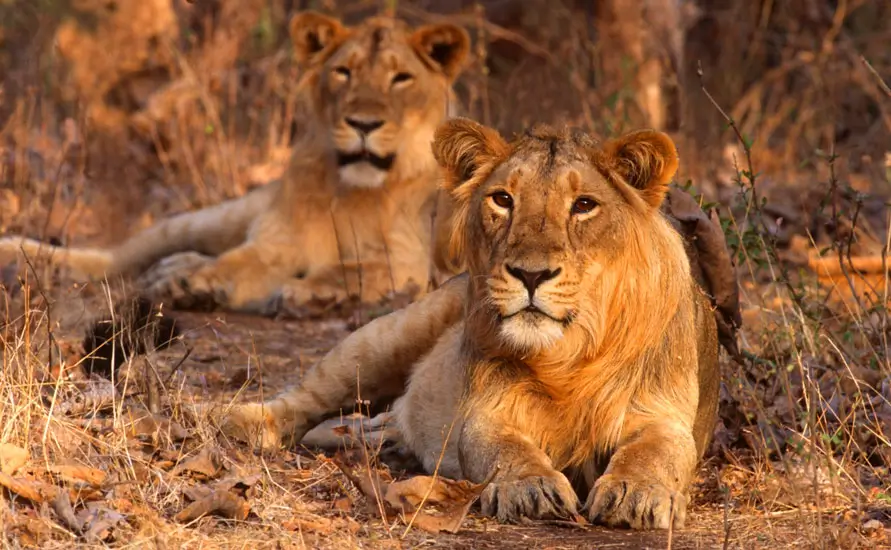
Bandhavgarh lies in the Vindhya hills, and its core area is small compared with many Indian reserves, but it holds a strong population of tigers, which is why the park is so popular with wildlife photographers. The core is split into the Tala, Magadhi and Khitauli zones, each with its own entry gate, and permits are booked through the Madhya Pradesh forest department and remain subject to availability. Every jeep carries a park guide, and vehicles must stay on fixed routes, keep their distance from animals and return before sunset.
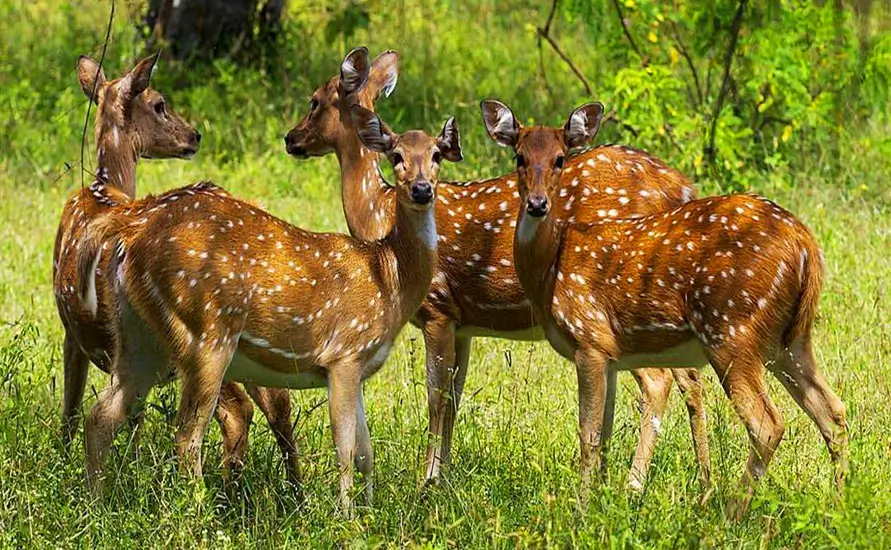
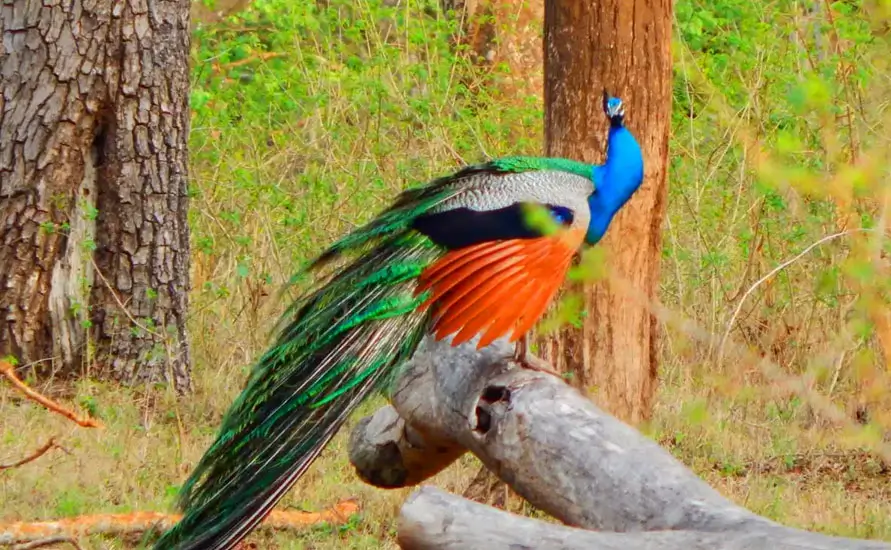
Your first Bandhavgarh drive leaves after lunch and spends the afternoon on the forest roads of your allotted zone. Rising above the forest, the fort hill gave the park its title, linked in legend to Rama gifting the stronghold to his brother Lakshmana. Even on a quiet drive, you can expect to see spotted deer, sambar, wild boar, langurs and peafowl, and in the dry months the open meadows of Chakradhara are worth a long look for big cats. Keep the camera on your lap rather than in the bag, because the best moments in Bandhavgarh often last only a few seconds before an animal steps back into cover. Overnight in Bandhavgarh.
Two full safaris fill your first complete day at Bandhavgarh. The morning jeep enters through the gate at sunrise, often in thick ground mist during winter, and the first hours are spent driving slowly while the guide checks the sand for fresh pugmarks. A tiger that has passed recently leaves sharp-edged prints, and a seasoned guide can tell from their size whether it was a male or a female. Jeeps stop to listen at junctions, and if a chital barks or a langur calls from high in a tree, the driver may wait quietly at the spot for several minutes.
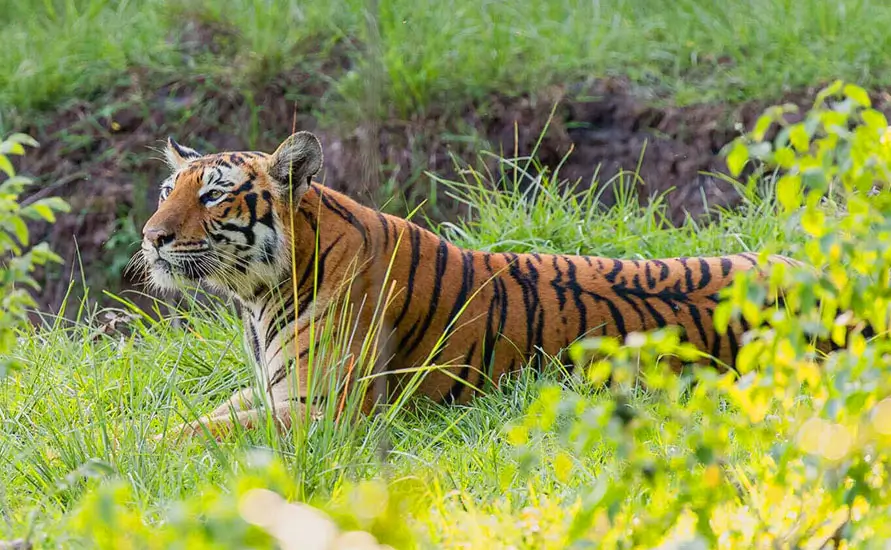
Tala zone lies around the base of the fort hill, with rocky slopes, caves and pools of water that tigers use to cool off in summer. Magadhi is more open, with grassy patches, bamboo stands and several waterholes. Each has its own resident tigers, and territories in Bandhavgarh are small enough that cats are seen crossing the tracks or resting near water more often than in denser forests. Sightings remain a matter of chance, however, and patience matters more than covering many kilometers. Your guide also shares news of recent tiger cubs and how the local families are doing.
The middle of the day is time for lunch, rest and a dip in the lodge pool if it is warm. In the afternoon, your second safari heads back into the park when the heat begins to ease. Leopards are present in Bandhavgarh too, though shy, and sloth bears, jungle cats, jackals and the occasional Indian fox may cross your path. Please wear muted clothing, keep voices low and avoid flash photography, which disturbs animals and is against park rules. In the evening the lodge naturalist can show slides of the tigers seen in recent weeks. Overnight in Bandhavgarh.
Another dawn drive gives you more time with the forest, and the third zone, Khitauli, may be on your schedule if permits allow. Khitauli is known for its views of hills and open grasslands and is often a bit quieter than Tala. Your guide explains how fire lines, waterholes and anti-poaching camps are used to manage the reserve, and you might pass a forest guard on foot or on a bicycle doing patrol rounds. Look up as well as around you, since the cliffs and tall trees of Bandhavgarh hold nesting vultures, crested hawk-eagles and the Malabar pied hornbill.
Back at the lodge, after breakfast, you can join an optional walk through a nearby village with a member of the lodge staff. Most families in the buffer villages around Bandhavgarh farm rice and lentils, keep cattle and goats, and collect mahua flowers in spring, which are dried and used for food and a local drink. A visit like this shows how people and wildlife share this landscape and why compensation schemes and community support matter for tiger conservation. Lunch is served at the lodge, followed by a short rest before the last safari of the day.
The afternoon drive gives you a final chance to look for the tigers of Bandhavgarh. If you have already been lucky, try to spend time on the details: the way a sambar stamps its foot to warn others, the colors of dragonflies at a pool, or the rows of termite mounds along the track. As the sun sets behind the fort hill, jeeps head back toward the gate before closing time. The Madhya Pradesh parks close their core zones during the monsoon and observe a weekly half-day closure, which we take into account when planning your safaris. Overnight in Bandhavgarh.
One last Bandhavgarh drive begins at first light. Morning safaris often produce the best sightings, as tigers move between their resting places and water after a night of hunting, and the air is cool enough for you to stay out without discomfort. After about four hours in the park you return to the lodge for breakfast, a shower and packing. Around noon the car heads back toward Jabalpur through Umaria and Katni, pausing for lunch at a dhaba your driver trusts. The trip takes four to five hours, so you arrive with time to spare before check-in closes, even if a level crossing or roadworks hold the car up for a while.
At Jabalpur Airport, you check in for your afternoon or evening flight to Bangalore, which may be direct or via a hub depending on the airline schedule for your dates. The flight crosses most of the Deccan plateau, from the forested hills of central India to the southern state of Karnataka. Domestic airlines in India have a standard free baggage allowance of around 15 kg in economy, so if you are carrying heavy camera gear we can advise on extra baggage or pre-booking options when you confirm the tour, and we suggest keeping lenses and bodies in your cabin bag.
At Kempegowda International Airport a driver from our Karnataka office is waiting, and tonight's hotel is on the airport side of Bangalore to shorten tomorrow's road leg. Perched on the Deccan at roughly 900 meters, the city feels mild and green after the dust of Madhya Pradesh. Dinner is at your hotel, where you can try southern dishes such as masala dosa, rava idli or a Karnataka meals plate with rice, sambar and rasam. Use the evening to charge camera batteries and back up your tiger photos before the elephant half of the trip. Overnight in Bangalore.
Breakfast done, the car points south-west, toward the Kabini shore of Nagarhole National Park. The route takes the expressway toward Mysore and then follows smaller roads through H.D. Kote, with fields of ragi, sugarcane and coconut palms on both sides. The last stretch passes small villages and reaches the shore of the Kabini reservoir, where your jungle lodge sits in a shaded campus by the water. Lunch is ready on arrival, and the lodge naturalist briefs you on the boat and jeep safaris planned for the next three days, along with the house rules for walking in the grounds after dark.
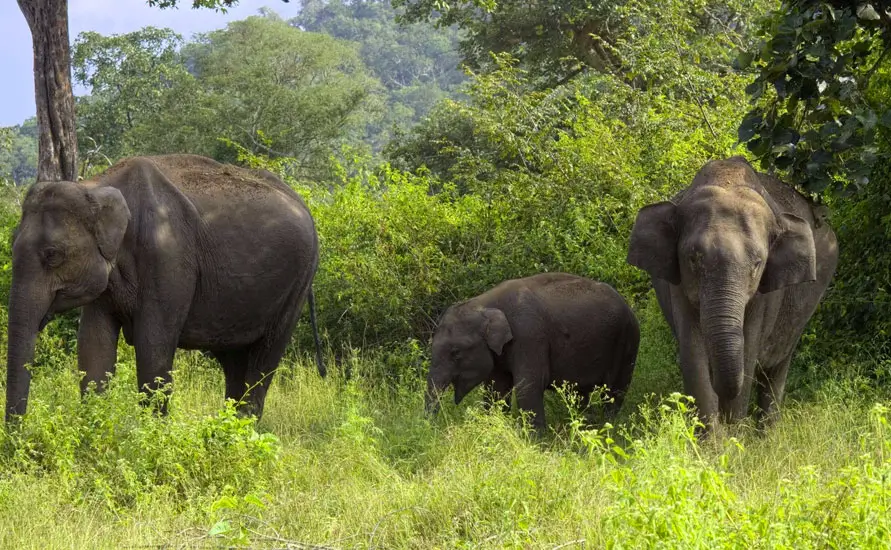
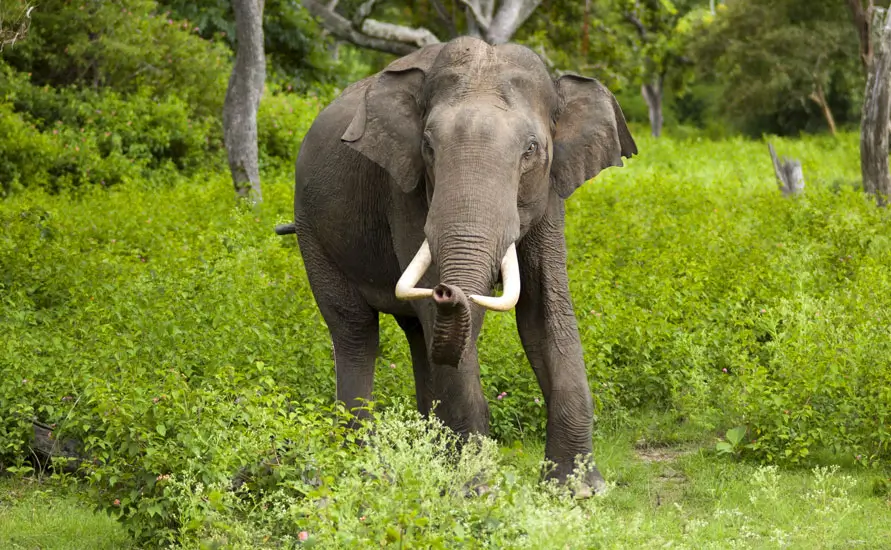
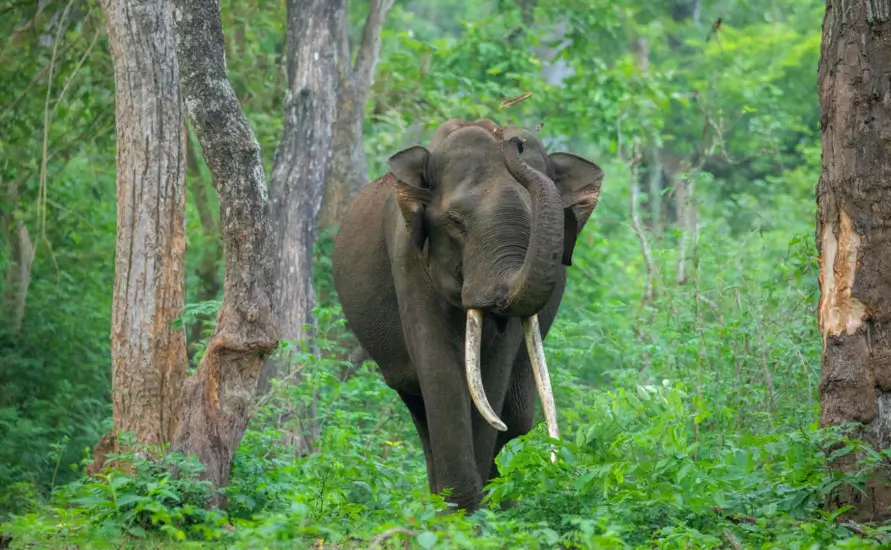
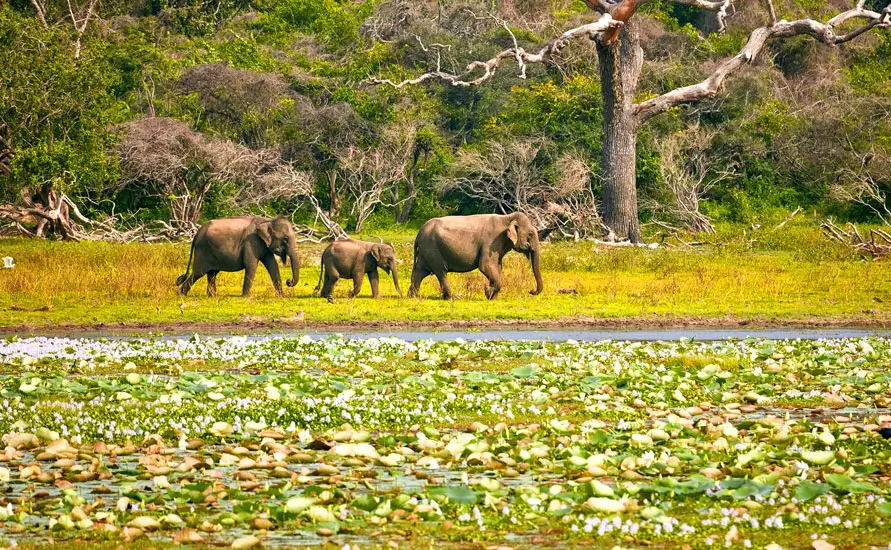
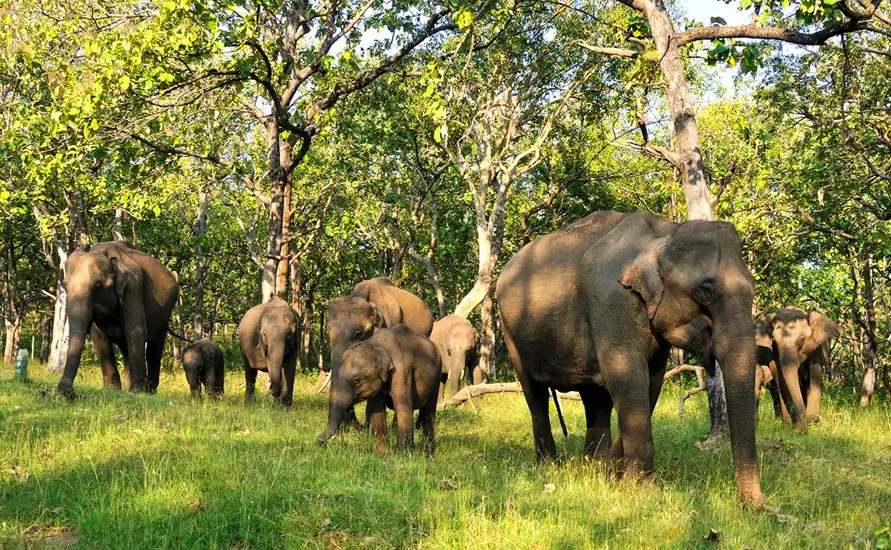
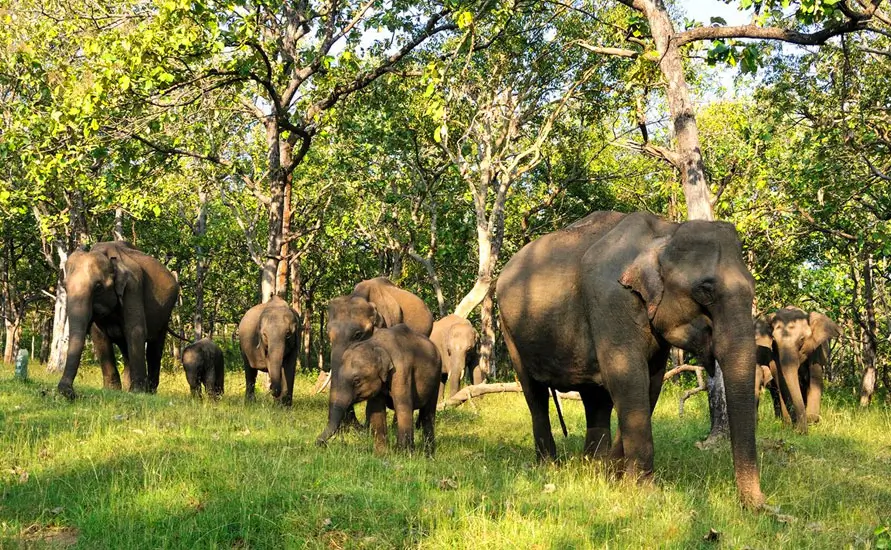
Elephants now take center stage, and few places in India rival the Kabini shoreline for watching wild Asian elephants in the open. Together with Bandipur, Mudumalai and Wayanad, Nagarhole belongs to a forest block in the Nilgiri region that shelters thousands of elephants, among the largest populations of the species anywhere. When forest pools dry up after the winter, the herds walk down to the receding reservoir, where new grass grows on the exposed mud. Groups can include several adult females, young calves and occasionally large tuskers on the edges.
Your first boat safari leaves in the late afternoon from a jetty operated under forest-department rules, with a limited number of boats permitted on the water. The boatman steers along the edge of the forest while the naturalist scans the banks for elephants, gaur and spotted deer. Elephants are watched from the boat at a respectful distance, and the engine is cut when a herd is close so that the animals are not disturbed. Birds such as darters, grey herons, ospreys and pied kingfishers are common. Dusk brings the boat back to the jetty. Overnight in Kabini.
Your first jeep safari in Nagarhole begins at dawn from the forest-department reception at Kabini, where passports and permit details are checked before you board. The vehicles enter a tourism zone of mixed teak, rosewood and bamboo forest, crossed by dirt roads and streams. Family groups pull down bamboo stems beside the road, and drivers hold back well short of them, engine idling, until the herd chooses to move on. Tigers and leopards are also present in good numbers, but thicker vegetation makes them harder to see than in central India.
Nagarhole supports a wide range of mammals beyond elephants. Herds of gaur, dark brown with pale lower legs, graze in the clearings, and packs of dhole, the reddish wild dogs of India, are seen fairly often in the mornings. Tufted grey langurs, bonnet macaques and Malabar giant squirrels move through the canopy, and the forest is home to more than 270 species of birds, including the Malabar trogon, Indian pitta and several woodpeckers. Your naturalist helps with identification and explains how the park manages the human–elephant conflict in the farms around its edges.
Back at the lodge, a late breakfast runs into lunch and a long siesta while the sun is high. Late in the afternoon you head back to the water for a second Kabini boat safari, often along a different stretch of shore from yesterday. Herds tend to leave the shade after 4 pm to graze the open banks, just as the light turns soft for photography. On some days, herds swim across a narrow channel with trunks held above the water. Afterward, dinner at the lodge features local Kodava and Karnataka dishes, and you may hear elephants trumpeting in the dark. Overnight in Kabini.
Two jeep drives, at sunrise and in the late afternoon, give you a full last day in Nagarhole National Park. Forest roads at Kabini cover different habitat types, from riverside forest near the reservoir to drier woodland further inland, and the department sets the route for each vehicle. Elephants remain the main focus today, and your naturalist can help you read their behavior: a raised trunk sniffing the air, a calf sticking close to its mother, or a female flapping her ears as a warning signal. Giving herds space is part of every driver's training here.
Between safaris you can take part in a short bird walk in the lodge grounds with a resident naturalist, where common sightings include the white-browed bulbul, Indian golden oriole, jungle babbler and brown fish owl roosting by the water. Many lodges here also hold presentations on elephant ecology and the challenges facing elephant corridors in South India, such as fences, roads and farm expansion. The ethics are clear: no feeding, no touching and no riding. Lunch is served by the water, and the afternoon break is long enough for a swim or a nap in your room.
Your final Nagarhole safari goes out when the heat begins to fade and animals move again. Late afternoon light filters through the teak trees, turning the forest gold, and elephants may emerge to feed along the edges of the track. Even if the herds stay in the trees, you may see gaur, sambar, wild boar or a crested serpent eagle sitting on a dead branch. Back at the lodge, you can review your photos with your naturalist and plan for tomorrow, which is mostly a travel day. Packing tonight saves time in the morning. Overnight in Kabini.
After breakfast you leave the Kabini backwaters and drive back toward Bangalore via Mysore. The drive takes around five to six hours with a lunch stop, and your driver times it to give a comfortable margin before your afternoon or evening flight to Kochi. There are no direct road shortcuts across the Western Ghats from here to central Kerala that would save time, so the flight from Bangalore remains the most comfortable link between the two parks.
Barely an hour in the air takes you over the Ghats and down to the Malabar coast at Kochi. A Kerala driver collects you in arrivals and takes you to a hotel either near the airport at Nedumbassery or in the city, as you prefer. Dinner and an early night are all that is planned, with the hill drive to Thekkady ahead. Overnight in Kochi.
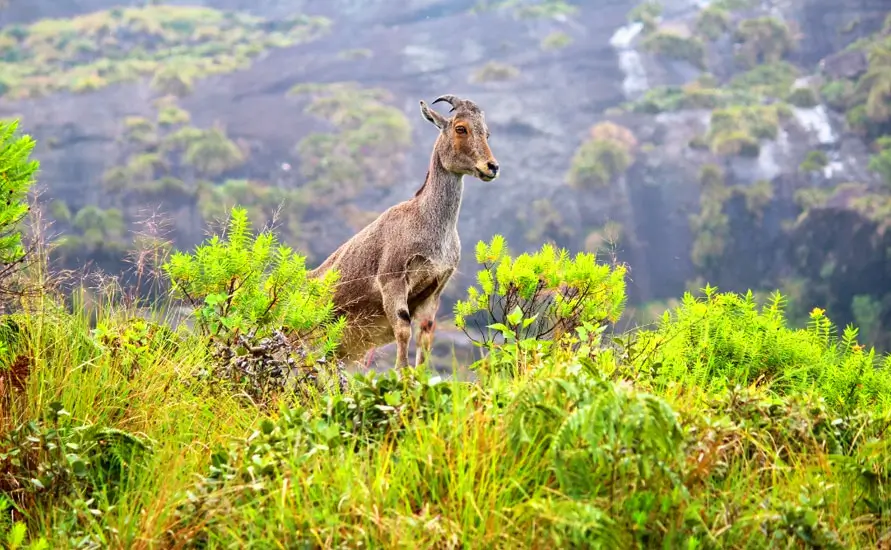
The road to Thekkady climbs east from the coastal plain into the Cardamom Hills, part of the Western Ghats. After leaving Kochi, you pass rubber plantations, small market towns and churches before the road begins to wind up through forested slopes. Tea bushes, cardamom plants growing under shade trees and pepper vines climbing their supports appear as you gain height. Allow four to five hours with a tea break; by the time you reach Kumily, the spice town on the boundary of Periyar Tiger Reserve, you will want a light sweater in the evenings.
Lunch at your forest-edge resort is followed by an hour among the shade trees of a family spice garden near Kumily. The farmer's guide crushes cardamom pods and nutmeg mace in your palm, lifts a pepper vine to show the green berries, and explains how Arab and European traders once valued these hills. The walk is easy and gives you a first idea of the landscape around Periyar, where farms, villages and forest sit very close together. Many plantations also have small shops selling whole spices and local tea, but there is no obligation to buy.
For the evening, an optional Kalaripayattu show in Kumily features this old Kerala fighting art, with leaps, staff work and sword-and-shield bouts in a small sunken arena. Alternatively, you may prefer a quiet dinner at the resort after the travel day. Please note that some private camps around Thekkady offer elephant rides and bathing sessions with captive elephants, which we do not include or recommend in line with ethical wildlife practice. Tomorrow begins early with a boat cruise on the lake, so your guide will confirm pickup times with you. Overnight in Thekkady.
Completed under British engineers in the 1890s, the Mullaperiyar dam flooded a wooded valley and created the winding lake at the center of Periyar. Today, the Periyar Lake boat cruise run by the Kerala Forest Department is the best-known way to see the reserve. Boats leave from the jetty at Thekkady at set times, and the first departure of the day is the most popular, as wildlife is often active near the shore in the early hours. Seats are capped for each sailing, so we secure tickets ahead whenever the system allows.
Look for elephant groups feeding on the grassy promontories, and for gaur, sambar and wild pigs at the waterline. Otters sometimes appear near the banks, and the lake attracts darters, cormorants, kingfishers and fish eagles. Periyar does hold tigers, but a sighting from the deck would be exceptional, so think of the cruise as an elephant and birding outing. The cruise lasts about one and a half hours, and binoculars are useful, since animals often stay at a distance from the boats. Life jackets are provided, and passengers must stay seated during the trip.
In the afternoon a guided nature walk follows a forest trail with tribal guides trained under the reserve's community ecotourism scheme. Groups are small and walk on fixed trails, looking for birds, butterflies, macaques and signs of larger animals such as elephant dung and claw marks on trees. For more active travelers, the department also runs longer options such as bamboo rafting or the border hiking program, which can be booked separately depending on availability. Dinner tonight is at the resort, with Kerala dishes on the menu. Overnight in Thekkady.
After breakfast you leave Thekkady and drive back to Kochi, descending from the Cardamom Hills through tea gardens and rubber plantations. Hairpins dominate the first hour of the descent, and a couple of lookout stops give you a last wide view over the ridges. Lunchtime or soon after, you reach your hotel in Fort Kochi, the old harbor quarter at the mouth of the backwaters. After two weeks of jungle lodges, a short break in town gives you time to rest, send out laundry and repack dusty gear for the flight home.
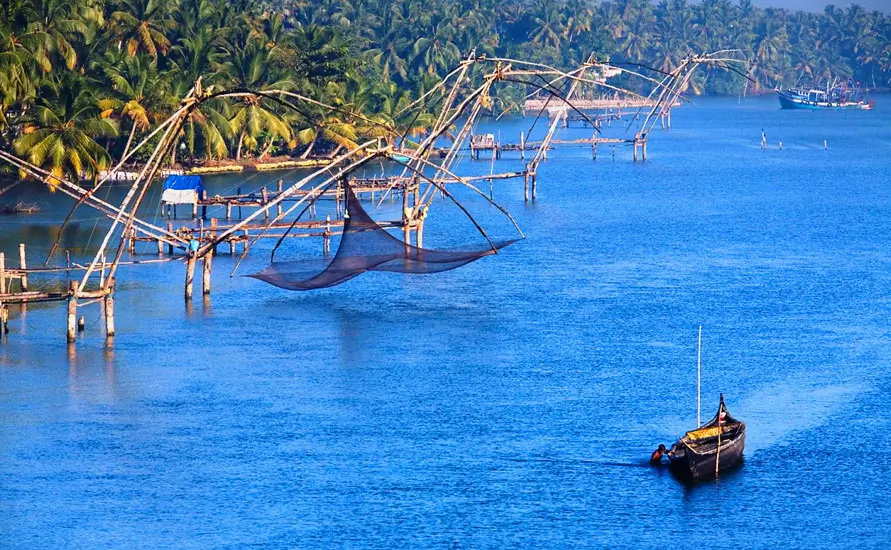
At about 4 pm a guide leads a short stroll through Fort Kochi, starting at the shore where giant fishing nets on teak frames dip and rise with the tide. Along the lanes behind the shore, you pass old Portuguese, Dutch and British buildings, cafés in converted warehouses and the small parade ground where football is played every evening. If your dates allow, the walk can include St. Francis Church and the spice warehouses of Mattancherry, and we shuffle the order to suit your dates, because the Dutch Palace locks its doors each Friday and the old synagogue keeps Friday, Saturday and Jewish festival closures.
In the evening, you might like to attend an optional Kathakali dance-drama performance or enjoy a seafood dinner near the waterfront. Kerala fish curry cooked with kodampuli, a sour fruit, and served with rice is a good choice for a last meal in South India. Your guide can also suggest a short sunset cruise in the harbor if you would rather end the trip on the water. Before turning in, your driver confirms the time for the airport transfer tomorrow based on your flight schedule, giving you plenty of time to reach the airport. Overnight in Kochi.
After breakfast, and depending on your flight time, you have a little free time in Fort Kochi before the drive to Cochin International Airport, which takes about an hour to an hour and a half. A team member rides with you and sees you to the departure doors. Most long-haul routes from Kochi connect through Dubai, Doha, Abu Dhabi or Singapore, and many leave close to midnight, in which case a day-use room can be added.
In sixteen days you have looked for tigers in Ranthambore and Bandhavgarh, watched wild elephants along the Kabini shore in Nagarhole and cruised the lake at Periyar, linking four reserves by train, road and air. We hope the sightings, the naturalists and the forests themselves have given you a clear picture of India's wildlife. If you would like to plan another trip to see snow leopards, rhinos or the birds of Kerala, our team is happy to help. Have a safe flight home.
Your Journey

N.S. Rathore & Mrs. Omlata Rathore · Managing Director
We still read every enquiry ourselves. Tell us the places you liked and our planners will send a day-by-day route with drive times and a clear price.
Every package can be customised and no pressure to book. A planner from our office replies within 24 hours with a route written for your group.
Fill this in and your planner will send a first draft itinerary.
Explore more
Kerala Backwaters Escape Kerala Backwaters Escape
 Kerala Backwaters Escape
 Kerala Backwaters Escape
 Kerala Backwaters Escape
 Kerala Backwaters Escape
 Kerala Backwaters Escape
 Kerala Backwaters Escape
 Kerala Backwaters Escape
 Kerala Backwaters Escape
 Kerala Backwaters Escape
 Kerala Backwaters Escape
 Kerala Backwaters Escape
 Kerala Backwaters Escape
 Kerala Backwaters Escape
 Kerala Backwaters Escape
 Kerala Backwaters Escape
 Kerala Backwaters Escape
 Kerala Backwaters Escape
 Kerala Backwaters Escape