
 Kerala Backwaters Escape

South India Wildlife Tours
Delhi – Ranthambore – (overnight train) Katni – Bandhavgarh – Kanha – Jabalpur – (flight) Bangalore – Kabini – Bandipur – Bangalore
At a glance
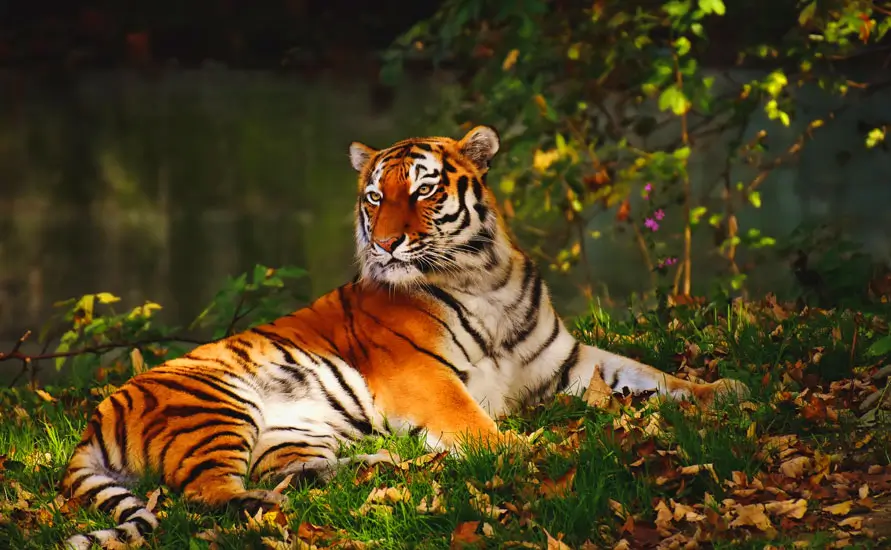
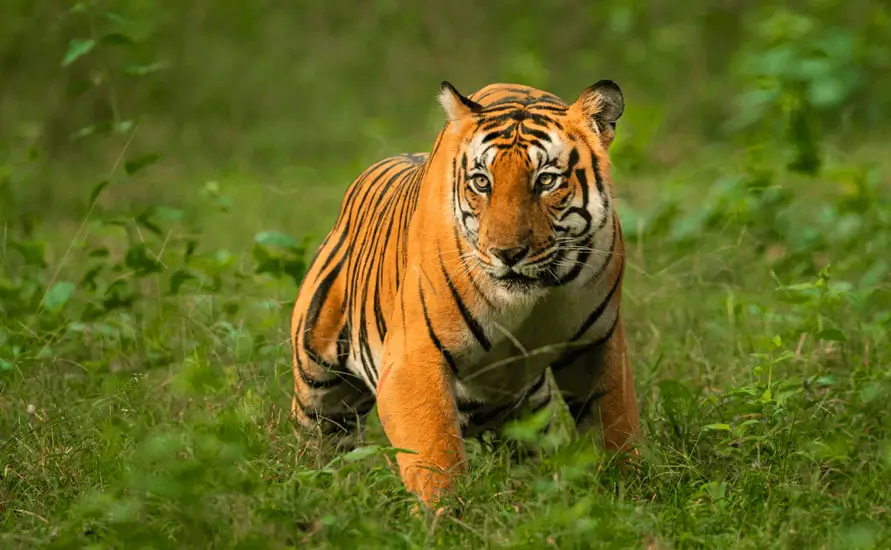
Few countries let you follow one big cat through three completely different kinds of forest in a single trip. Our India Big Cats Tour North and South does exactly that. It starts in the dry deciduous hills of Ranthambore, where tigers walk past ruined pavilions and lake edges, moves to the sal forests and grassy valleys of Bandhavgarh and Kanha in Madhya Pradesh, then flies south to the teak and bamboo country of Kabini and Bandipur, where leopards, elephants and wild dogs share the stage with the tiger.
Safari time is the backbone of this India big cats tour. The plan holds 19 jungle drives in five reserves plus two boat outings on the Kabini backwaters, with long stays of three or four nights wherever the cats are. A specialist wildlife naturalist travels with you in central India and joins the lodge naturalists in the south, so tracks, alarm calls and animal behavior are explained as you go. Long legs are handled sensibly: an overnight train links Rajasthan with Madhya Pradesh, and a flight from Jabalpur carries you to Bangalore.
The best window runs from about mid-October to April, when all core zones are open and the weather is kind; April to June brings heat but often better sightings at waterholes. Core zones in Ranthambore and the Madhya Pradesh parks close during the monsoon months, and the parks have weekly closure rules that we plan around. Safari permits are limited and released by the forest departments, so booking four to six months ahead is wise. Tigers and leopards are possible on every drive in good season, but no sighting is ever guaranteed.
Tiger country begins tomorrow; tonight is about recovery, so our Delhi host collects you past customs, lifts your lens cases into the cooled car himself and gets you to bed quickly. Since most intercontinental flights touch down near midnight or noon, this opening day keeps its schedule empty until teatime. Rooms are usually ready from 2 pm; tell us your landing time and we can reserve one from dawn instead. Your welcome pack contains train tickets, safari confirmations, a list of park rules and a contact sheet with the phone numbers of every person who will look after you over the next eighteen days.
Around four o'clock your wildlife naturalist joins you in the lounge, and the first tiger conversation of the tour starts over masala chai. This is the person who will share the jeep with you across Ranthambore, Bandhavgarh and Kanha, and the conversation covers what to expect on a typical safari, how the forest departments allot zones, what clothes to pack for cold dawn drives and how to set up a camera for low forest light. Bring your questions about lenses and binoculars: a 100–400 mm zoom or similar covers most situations, and a pair of 8x42 binoculars makes birds and distant cats far easier to enjoy.
Before dinner a short ride takes you to Lodhi Garden, ninety acres of lawns where Sayyid and Lodi sultans of the 1400s and 1500s lie under domed tombs. In the evening light it is full of joggers, families and birdwatchers, and your naturalist can point out the rose-ringed parakeets, Indian grey hornbills and black kites that nest around the domes. It is a gentle way to stretch your legs after the long flight and to sharpen your eyes before the jungle. Eat early and set two alarms, since the Rajasthan-bound train pulls out soon after first light. Overnight in Delhi.
Your driver collects you before sunrise for the short ride to the railway station, where a porter helps with the bags and our representative sees you into your reserved air-conditioned coach. The express to Sawai Madhopur needs roughly five hours, rolling south across Haryana and eastern Rajasthan past winter crops, smoking chimneys of brickworks and buffalo standing in ponds. Breakfast is available on board or packed from the hotel, and the window seat is worth claiming for the egrets and blackbuck that sometimes show in the fields. When broken ridges where the Aravalli and Vindhya ranges meet begin to crowd the tracks, Ranthambore is only minutes away.
A car meets you at Sawai Madhopur station and takes you about fifteen minutes to a forest-edge lodge, where there is time for lunch and a quick change into khaki, olive or brown clothing. Bright colors and white are best left in the suitcase, since they stand out in the dry forest. Your naturalist checks camera batteries, hats and dust covers with you, and the safari vehicle arrives at the lodge gate in the early afternoon. Permits at Ranthambore National Park come tied to a single numbered sector picked by the forest department, so neither we nor you decide which tracks a given drive will follow.
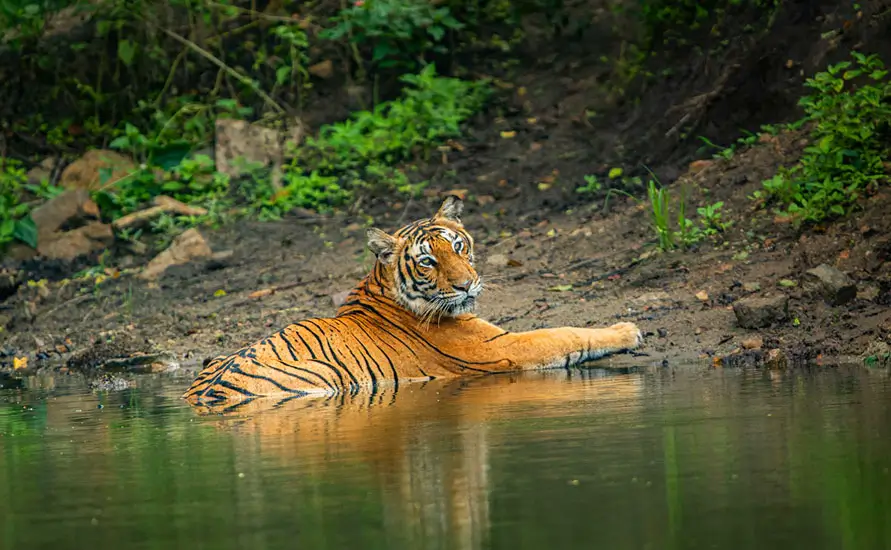
The first afternoon in a tiger reserve is about learning the language of the forest. Your naturalist shows you how to read fresh pugmarks in the dust, listen for the sharp alarm bark of a sambar or the shrill call of spotted deer, and watch the behavior of langur monkeys in the trees, which often warn of a cat long before you see it. Ranthambore's tigers are used to vehicles and are sometimes seen resting by water in the open, but every drive is different. The gypsy returns to the gate before sunset, as the park rules require, and you head back to the lodge for dinner. Overnight in Ranthambore.
Tea and biscuits are waiting in the lobby long before first light, and the jeep leaves the lodge so that you reach the park entrance as the gates open. Winter mornings here are cold, often close to freezing in December and January, so a fleece, warm hat and gloves are worth carrying even if the day will be hot later. Should the allotment land in the central sectors, your gypsy may circle the trio of lakes under the fortress, Padam, Rajbagh and Malik Talao, where muggers lie open-mouthed on the mud and sambar stand chest-deep chewing weed.
Ranthambore's character comes from the way nature and ruins mix. Old stone gateways, domed chhatris and the crumbling hunting pavilion of Rajbagh sit inside the forest, and tigers here have been photographed walking along these walls for decades. Away from the lakes the landscape is open, with dhok trees, rocky ridges and dry grass that make it easier to spot movement than in the denser forests further east. Your naturalist keeps a quiet log of every sign the team finds, from scrape marks on the track to a kill hidden under a bush, and uses it to plan how to spend the time in the afternoon zone.
Back at the lodge you have a hot breakfast, a rest through the middle of the day and lunch before setting out again in the afternoon. Drives run roughly three hours or a little more, varying by month, and the later slot frequently brings a fresh sector plus warmer, lower sunshine. Keep a list going: nilgai bulls, rooting boar, a sloth bear shuffling across scree, and among birds the painted stork, Bonelli's eagle and, once summer comes, the Indian pitta. At dinner, laptops come out and your naturalist helps pick the keepers from the card. Overnight in Ranthambore.
Another first-light outing opens the morning, and after three drives your eyes catch the curve of an antler or a twitching ear in dry grass far quicker than they did on day one. Ranthambore holds a healthy leopard population too, though leopards here keep to the rocky edges and steep slopes because tigers dominate the valley floors. Your naturalist explains how the two cats avoid each other, and how striped hyenas, jungle cats and golden jackals fit into the same food web. Morning light on the cliffs is warm and low, the best time of day for photographs of animals against the honey-colored rock.
Late morning you ride up to Ranthambore Fort, a hilltop citadel begun around the 10th century inside the park itself and inscribed by UNESCO among the six Hill Forts of Rajasthan. A steep stone path climbs through a series of gates to the top, where you find temples, reservoirs, ruined palaces and wide views over the forest and lakes below. The fort is also home to the Trinetra Ganesh Temple, visited by thousands of pilgrims who walk up through tiger country, especially on Wednesdays and during festivals, which says something about how people and wildlife share this land.
The fort walls are a fine spot to scan the canopy with binoculars, as langurs, peafowl and raptors use the ramparts too, and sometimes a leopard or tiger has been seen on the slopes beneath. Wear good walking shoes, carry water and expect monkeys that are bold around food. Come late afternoon there is free time at the lodge, or a stop at a women's craft cooperative outside town that turns out block prints and stitched cushion covers. The lodge kitchen usually serves a Rajasthani dinner with dal baati and gatte ki sabzi on request. Overnight in Ranthambore.
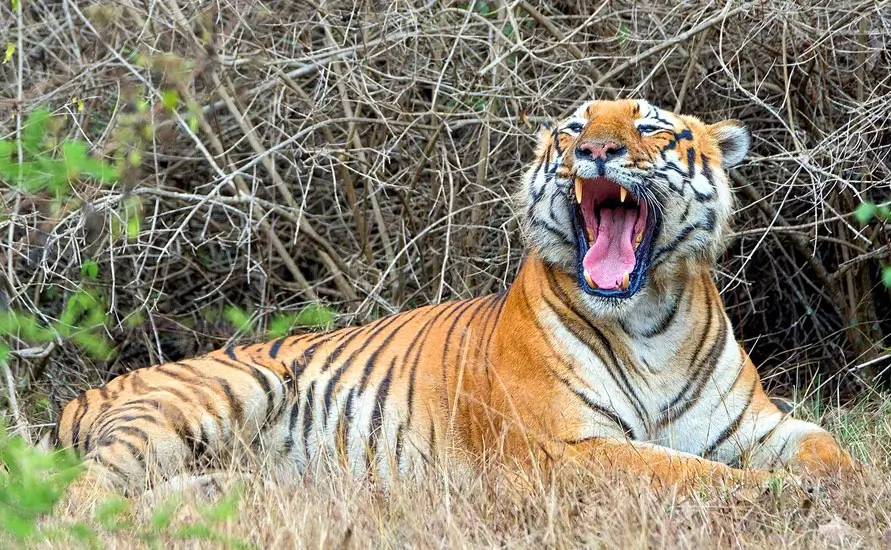
Your fifth and last drive in Ranthambore goes out at sunrise, and by now the naturalist has a feeling for which tigers are using which zone. Many travelers find that this final drive is the calmest one, with less urgency and more time to watch smaller things: a pair of collared scops owls in a hollow, a monitor lizard on a rock, a troop of langurs grooming in the first sun. If a tiger appears, enjoy it with the engine off and the camera low for a while; the best memories often come from simply watching an animal walk, drink or lie down without hurrying the moment.
The day after breakfast is unhurried. You check out at a comfortable time, keep a day room until evening if needed, and pack the bags for the train. Lunch at the lodge is followed by a slow afternoon by the pool or a short walk around the lodge grounds, where birders often find Indian robins, grey francolins and white-browed fantails. The rail link between Rajasthan and Madhya Pradesh is the most practical way to reach Bandhavgarh, since flights would mean a long drive at both ends and a change through Delhi or Mumbai, losing a full day of wildlife time.
After dark your driver runs you to Sawai Madhopur station, where you board an overnight train in a reserved air-conditioned sleeper class with bedding provided. Our representative settles you into your berths and a packed dinner is supplied from the lodge, since food on board can be limited. Through the night the train runs east across the plains of Madhya Pradesh toward Katni, a junction town about 100 km from Bandhavgarh. Keep valuables close, a small torch handy and a light shawl for the air-conditioning. The exact timing depends on the train schedule on your date, which we confirm when booking. Overnight on the train.
The train reaches Katni in the morning, and your car is waiting at the station for the drive to Bandhavgarh National Park. The road crosses farmland and small villages of the Umaria district, with roadside stalls selling poha and sweet tea, and soon the plateau of Bandhavgarh rises ahead. Your naturalist, who has traveled with you, explains how this reserve differs from Ranthambore: the forests are greener and denser, with tall sal trees, bamboo thickets and meadows in the valleys, and the tiger population is one of the densest in central India, which is why the park became famous among photographers.
Rooms at your lodge close to the Tala entry are ready on arrival, so a late breakfast, a hot shower and a nap wash away the sleeper berth. Bandhavgarh's core is divided into three main zones, Tala, Magadhi and Khitauli, plus several buffer areas, and the forest department again allots one zone for each permit. Tala is the most famous because it holds the old fort plateau and the grasslands around Chakradhara, but the other zones often give excellent sightings too. Madhya Pradesh parks also keep one weekly half-day closure, and our plan has already been shaped around it.
Your first safari in Bandhavgarh heads out in the afternoon in an open gypsy with a forest guide on board, as the rules require. The air under the sal canopy is cooler and stiller than in Rajasthan, and the light falls in shafts between the trunks, which makes for moody tiger photographs if you are lucky. Look out for gaur, the huge Indian bison, in the valleys, along with barking deer, wild boar and jungle fowl crossing the tracks. You are back at the gate before sunset and return to the lodge, where dinner is often served around a fire. Overnight in Bandhavgarh.
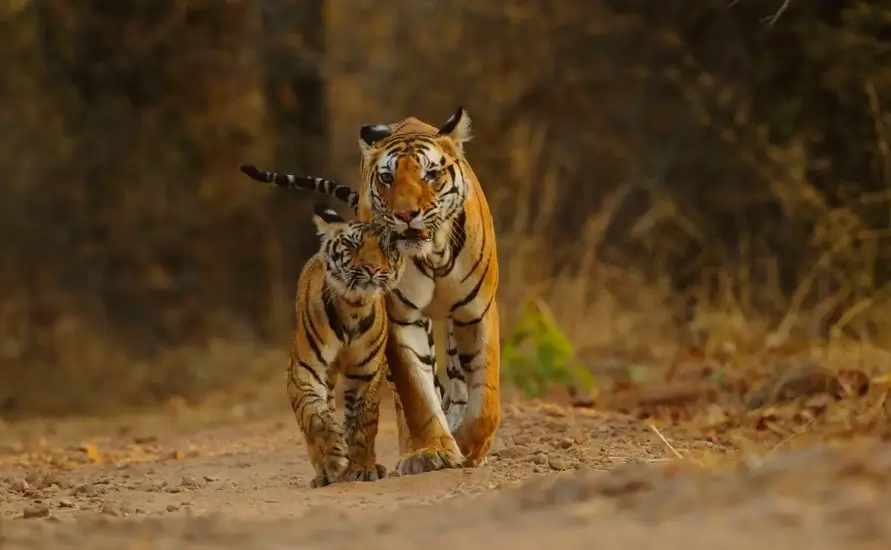
A full day of safaris begins with a dark drive to the gate and a long wait in line while the forest staff check permits and passports. Carry the passport you used for the booking, because the names and numbers on your permit must match it exactly. Once inside, the gypsy moves slowly along the sandy tracks, and the naturalist and forest guide share notes about fresh signs. Bandhavgarh has produced some of the most photographed tigers in India over the years, and tiger families with growing cubs are sometimes seen here in the open grassland in the early morning.
High over Tala rise the ramparts of Bandhavgarh Fort; legend says Rama handed this cliff-top citadel to his brother Lakshmana, hence a park title translating roughly as the brother's stronghold. Visitors cannot climb to the fort, but some routes pass close to the base of the cliffs, near the Shesh Shaiya, a large stone statue of Vishnu reclining on the serpent Shesha beside a spring. Ruined caves with old inscriptions are scattered across the hills. The guide on board will tell you which of these spots fall on the route of the day, since access depends on the zone and the forest department's rules.
After a midday break at the lodge you head out for the afternoon drive, possibly in a different zone. The late hours are a good time for birdlife in Bandhavgarh: Malabar pied hornbills, crested hawk-eagles, white-rumped vultures and the bright green Indian roller are all possible. Leopards and sloth bears live here too, though they are more elusive than in some other parks. Evenings are a good moment to copy memory cards to two drives, a routine your naturalist will nag you about with nineteen safaris ahead. Dinner is served on the lodge veranda. Overnight in Bandhavgarh.
Your fourth and final drive in Bandhavgarh leaves before sunrise, and the naturalist uses everything learned on the previous outings to decide where to wait and where to keep moving. Patience is often rewarded near water, where tigers come to drink and rest in the shade as the morning warms up. If the zone allotted for today has a meadow or a stream, the gypsy may park quietly with the engine off for a while. Silence matters: no shouting, no standing on seats and no calling out to other vehicles. The forest guide has the final say on distances and positions, and good guests respect that.
After breakfast and a rest, you set off in the late afternoon for a guided walk through a Gond or Baiga village on the edge of the reserve, accompanied by a local guide from the community. The houses are made of mud and tile, painted with simple patterns, and many families farm small plots of rice and millet while working in the tourism sector as guides, drivers or cooks. Your guide talks about how life alongside a tiger reserve works, what happens when cattle are taken by a predator, and how compensation and conservation projects try to keep both people and wildlife safe.
The walk ends at sunset with tea in the village or back at the lodge, depending on the community's wishes. The evening is free to pack, as tomorrow brings the longest drive of the central Indian section. Ask your naturalist for the list of species you have seen so far; many groups have already recorded more than a hundred birds by this point, and the mammal list grows steadily too. The lodge kitchen can prepare a dinner of local dishes such as kodo millet, dal and seasonal greens, with mild spice on request. Overnight in Bandhavgarh.
A relaxed breakfast is followed by the road trip south-west to Kanha National Park, which takes most of the day with stops. The route runs through Shahpura and the rural districts of Dindori and Mandla, past forested hills, small rivers and markets where villagers sell vegetables, bangles and clay pots. Your driver has favourite dhabas for chai and decent washrooms, and en route the naturalist traces how the central Indian tiger reserves went from royal shooting blocks to the 1973 Project Tiger list, on which Kanha was one of the original nine.
Lunch is in a simple roadside restaurant or a packed picnic, depending on what you prefer, and you reach the Kanha area in the middle of the afternoon. The jungle lodge here stands among trees close to one of the park gates, and the staff will greet you with a cold drink and a short introduction to the lodge rules. The core splits into Kanha, Kisli, Mukki and Sarhi sectors; the first holds the big maidans, open grass plains where deer herds feed in dawn fog and a striped shape crossing them is visible from far off.
No drive is booked this first afternoon. Take a walk with the lodge naturalist through the property, where birds such as the long-tailed Asian flycatcher of the forest edge, black-hooded oriole and rufous treepie are often seen. Later, the evening program at the lodge may include a short talk or a film about the reserve, which helps you understand the hard-ground barasingha, the swamp deer that was reduced to only a few dozen animals in the 1970s and saved through careful management here. Dinner is served under the trees, and you go to bed early for tomorrow's double safari. Overnight in Kanha.
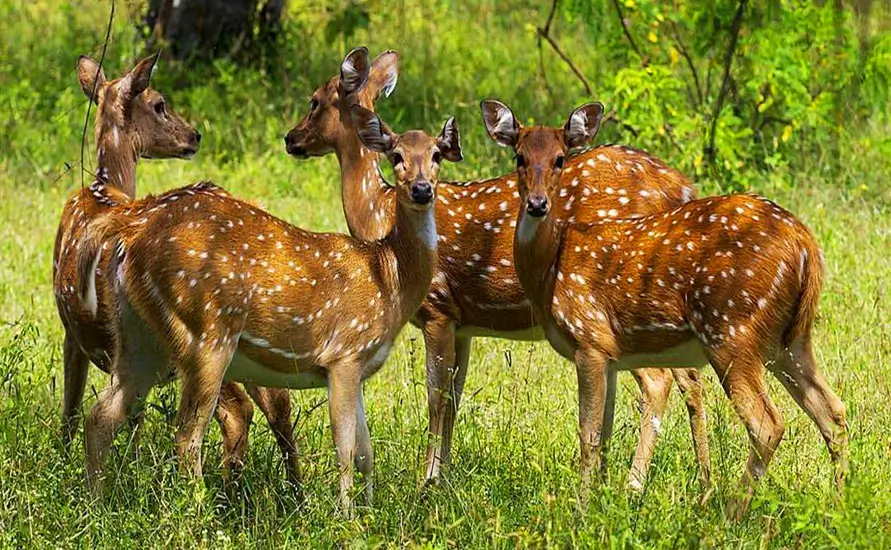
The gypsy pulls away from the lodge in darkness, and a thin mist often lies over the grassland when you enter the park. Kanha feels larger and more spacious than the other reserves on this trip, with long views across meadows framed by sal forest and the low hills of the Maikal range. These open spaces are where the barasingha herds graze, the stags carrying large branched antlers, and where tigers sometimes walk in the open at dawn. Your naturalist will help you spot the difference between barasingha, spotted deer and sambar, three species that often feed together here.
Kanha is closely tied to Rudyard Kipling, since the forests of this region inspired parts of The Jungle Book, though the author never visited himself. Your naturalist can tell you how the real animals compare with the characters, from the sloth bear Baloo to the wild dogs that Kipling called red dogs. Dholes are seen in Kanha from time to time, hunting in packs, as are gaur, jackals and many birds of prey. The sal forest also hosts woodpeckers, minivets and drongos, so you will hear plenty of calls even when the big animals stay hidden.
After a midday rest and lunch you go out again in the afternoon, often to a different zone. Hope that your route includes Bamni Dadar, a plateau with views over the forest at sunset that is used by sambar, gaur and sometimes tigers. Remember that the park allots zones, so we cannot promise any one spot. Late in the drive the light turns golden over the meadows, and a herd of deer standing still with their ears up is often the best sign that a predator is near. Back at the lodge, dinner is followed by a quiet night. Overnight in Kanha.
The last full day in Madhya Pradesh brings two more drives, bringing your total in central India to thirteen. By this point you know the routine well: warm layers in the morning, binoculars around the neck, camera on a beanbag, and a quiet word with the forest guide about any recent sightings. Kanha's leopards tend to be seen in the hills and along the edges of the forest, while tigers use the meadows and streams. Indian wolves are rare here, but the reserve does hold them, and the naturalist can explain which animals are most likely in each part of the park.
Between safaris you can visit the Kanha Museum and interpretation area near one of the gates, which shows skulls, pugmark casts and displays about the forests and their animals. Kanha even has its own cartoon mascot, Bhoorsingh the barasingha, who grins from park notice boards, mugs and children's booklets sold at the counters, a light reminder that this deer is the reserve's pride and that local schoolchildren grow up seeing it as their own. Ask about the villages moved out of Kanha's core over past decades; guides will give you both sides, the extra room it won for barasingha and tigers, and the cost borne by families who left.
Your afternoon safari is the last drive in central India, so take time at the end to simply watch the forest as the light fades and the birds start calling. Back at the lodge, your central India naturalist will say goodbye at dinner, as tomorrow you fly south and the lodge naturalists in Karnataka take over. Swap email addresses, compare checklists and raise a glass to thirteen drives together. If you want, we can also arrange a small donation to a local school or conservation project, which the lodge can handle on your behalf. Overnight in Kanha.
After an early breakfast you leave Kanha for the drive to Jabalpur, about four hours by road through Mandla and farming country along the Narmada valley. Your driver plans the timing around your flight, with a margin for slow traffic in towns and roadwork. Dumna, Jabalpur's compact airfield, has few direct services south, so the routing to Bangalore normally involves one change, commonly at Delhi, Mumbai or Hyderabad according to that season's timetable. We book a connection with enough time to make the transfer without stress, and your checked bags normally go through to Bangalore.
By evening you land on the Deccan plateau, where Bangalore perches high enough for evenings to feel fresh even in April. A Karnataka colleague greets you off the plane; depending on how late you land, the night is spent either close to the terminal or on the southern edge of town for an easier start tomorrow. The evening is free to rest, do laundry and recharge camera batteries before the southern half of the tour. A light dinner at the hotel is recommended, as tomorrow begins with a long drive to the Kabini backwaters. Overnight in Bangalore.
An early start keeps you ahead of the city traffic as you leave Bangalore on the expressway toward Mysore, then turn south-west through sugarcane fields and coconut groves toward the town of HD Kote. Allow five hours including a filter-coffee halt; fields turn steadily greener as the Ghats draw near. Lunch is waiting at your jungle lodge on the Kabini backwaters. The landscape here is a big change from central India: tall teak and rosewood trees, thick bamboo and a wide reservoir formed by the Kabini dam, whose shoreline has become one of the best wildlife areas in South India.
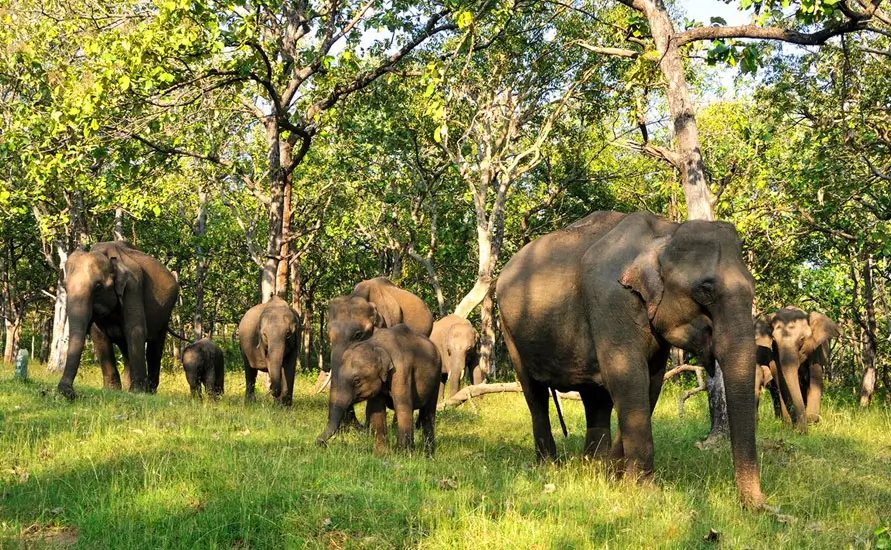
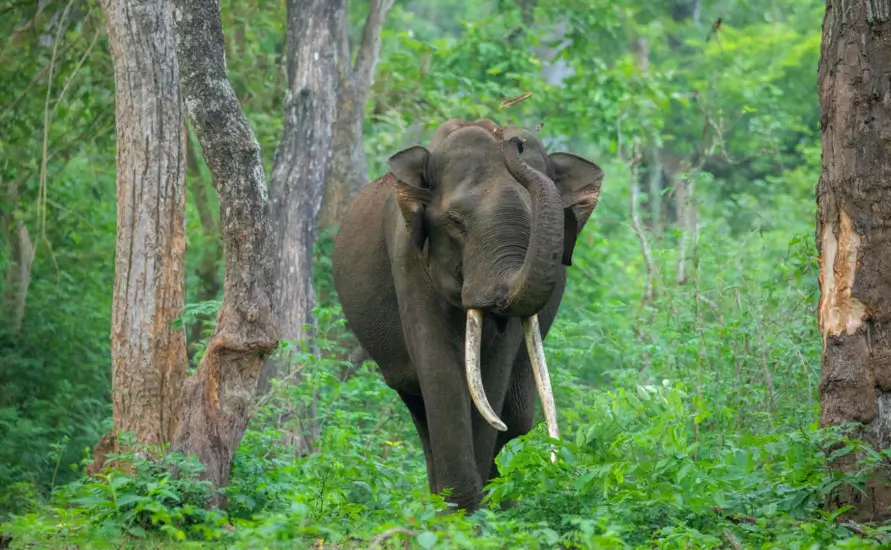
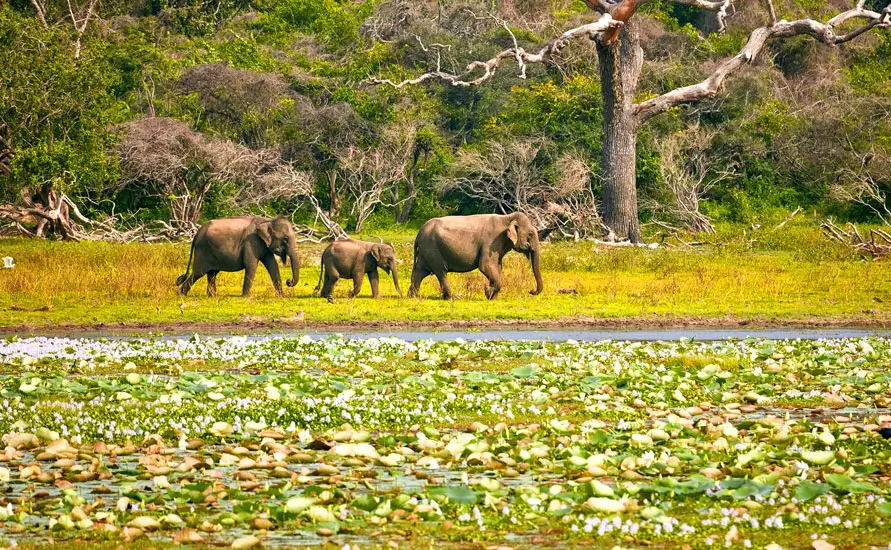
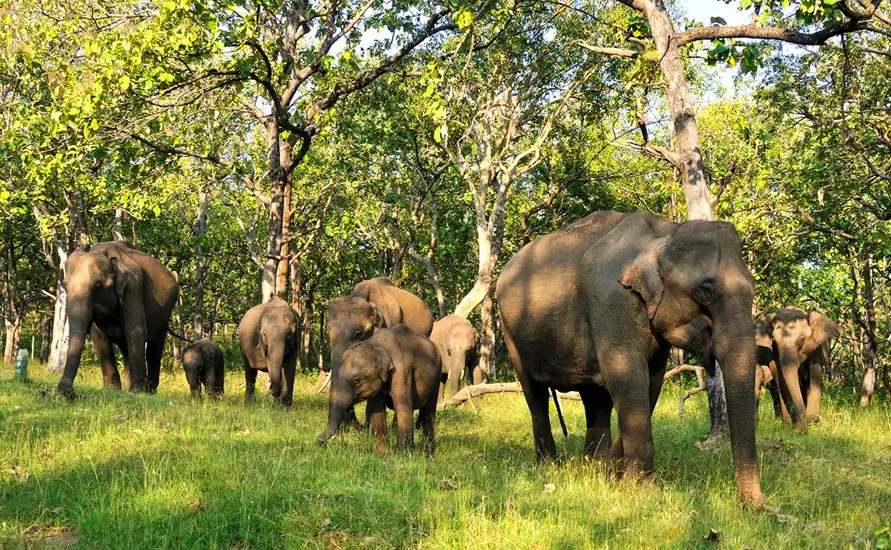
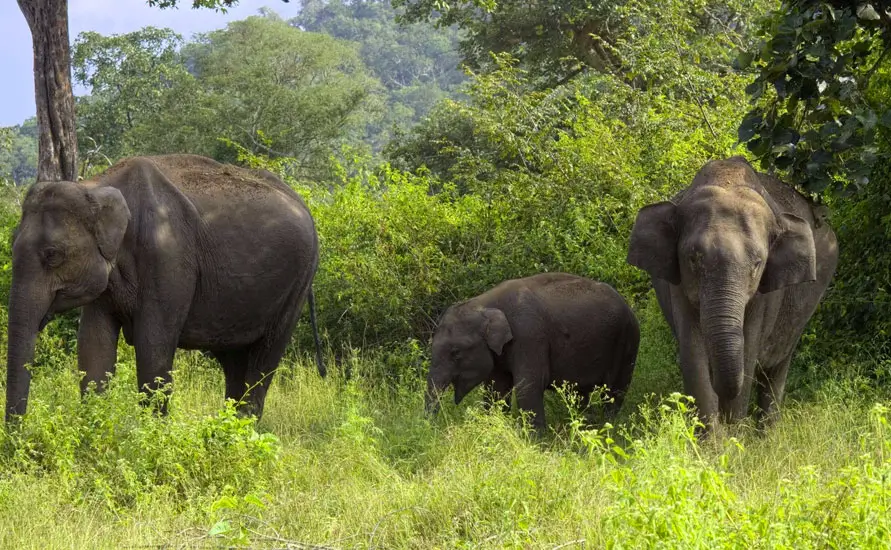
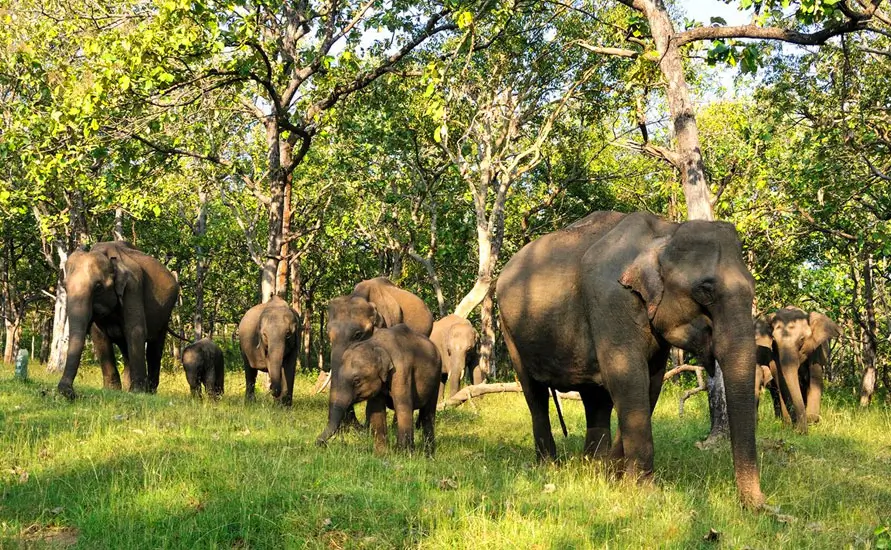
The Kabini woods belong to Nagarhole Tiger Reserve, itself one piece of a contiguous block with Bandipur, Mudumalai and Wayanad that shelters more tigers and wild elephants than almost any other landscape in Asia. Between late winter and the first rains the dam level falls, uncovering green flats along the edge, and elephant families, gaur and chital gather there in numbers that can run into the hundreds on a good evening. The lodge naturalist gives a short introduction to the area after lunch, explaining that the forest department runs the jungle safaris, and that the vehicle type and the number of seats per permit are set by the department.
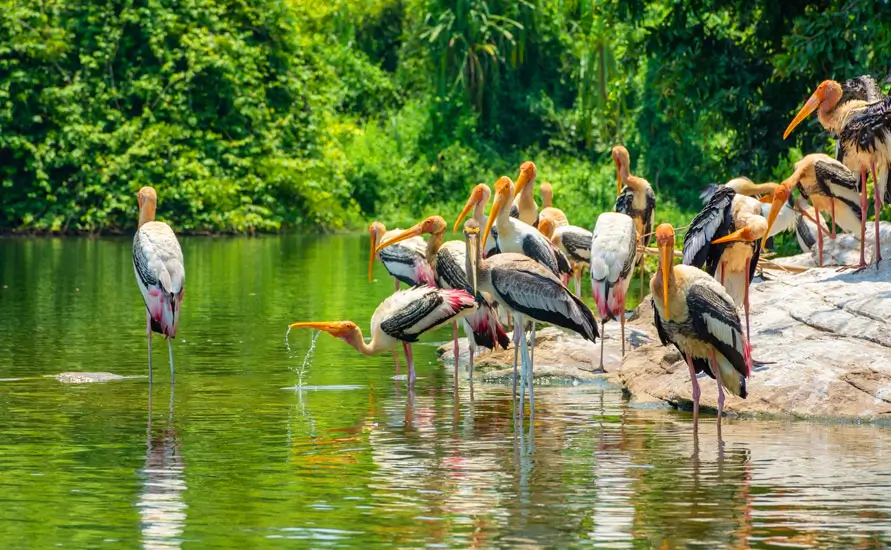
In the late afternoon you head out on a boat safari on the Kabini backwaters, gliding along the edge of the forest with a guide on board. From the water you get a low, quiet view of elephants bathing, otters, marsh crocodiles and a long list of water birds, including river terns, ospreys, grey-headed fish eagles and darters drying their wings on dead trees. Leopards and tigers sometimes come down to the shoreline to drink, but they are a bonus rather than the aim of the trip. Dusk turns the reservoir copper as the pilot steers home. Overnight in Kabini.
First up today is a jungle drive in Kabini, operated entirely by the state forest department, which owns the vehicles and staffs every seat allocation. Karnataka's safari rules have changed several times in recent years, and in 2025–2026 safaris were suspended for some months and then brought back with new safety rules, so we confirm the current format, vehicle type and number of slots when your tour is booked. Tracks wind through teak and bamboo, and the naturalist on board keeps a sharp eye on low branches and termite mounds, because Kabini's leopard density makes spotted cats a realistic hope on any outing.
Kabini is also known for the black panther, a melanistic leopard with a dark coat whose rosettes are only visible in good light. One such animal made the forest famous among photographers, but sightings are occasional and depend on luck, time and season, so please treat it as a rare bonus rather than a reason to come. The forest holds plenty of other species: dholes, the Indian wild dogs, often hunt in packs along the tracks here, and you may also see sloth bears, Malabar giant squirrels, gray langurs and the crested serpent eagle.
After breakfast and a rest you return to the jetty in the afternoon for a second boat safari, this time perhaps on a different stretch of the reservoir. Anyone tired of sitting can trade the boat for a stroll around the property with a naturalist, looking at butterflies, spiders and trees that a moving vehicle rushes past. Later, many lodges host a talk on the elephant corridors of the Nilgiri Biosphere Reserve, where several thousand wild elephants roam between three states. Dinner is served at the lodge. Overnight in Kabini.
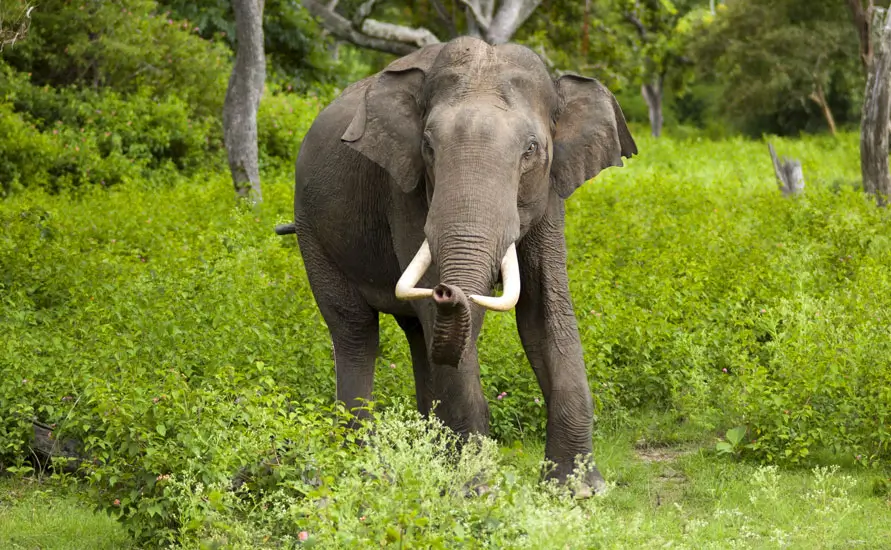
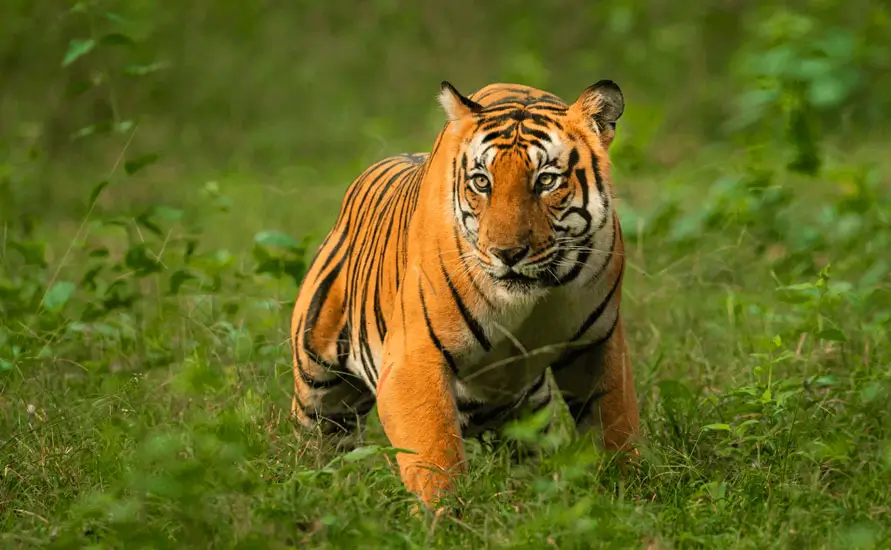
Two jungle safaris fill the day, giving you more time in the forests of Nagarhole around Kabini. The early drive is usually the coolest and quietest, and mist rises from the water as elephants move back into the forest from the shore. The naturalist will explain how to tell a female herd from a lone bull, and how to keep a safe distance when a bull is in musth, a period of higher hormones when he can be unpredictable. Tigers do live in these forests and are seen on some drives, but the thicker vegetation here makes sightings less frequent than in central India.
The midday break is a good time to rest by the water or sit on the lodge deck with binoculars. Birders get plenty here as well; fruiting figs near the cottages pull in green pigeons and barbets, while the forest adds Malabar trogon, scimitar babbler and the endemic grey hornbill. The afternoon safari follows the same rules as the morning, with vehicles staying on the forest roads and no off-road driving allowed. Wildlife photographers should carry a lens with a long reach, as many animals keep to the forest edge rather than the open track.
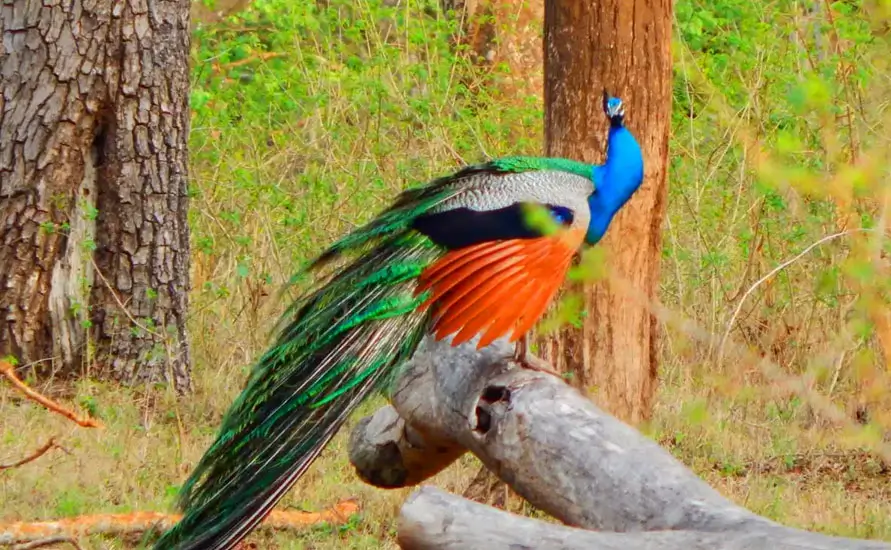
On the way back from the afternoon safari, as the light fades, the forest begins to change: spotted deer gather in clearings, peafowl climb into trees to roost, and the alarm calls of langurs and deer become more frequent. Your naturalist may stop to listen for the call of a leopard, a rasping sound like a saw cutting wood. Back at the lodge, enjoy a dinner of Kodava or Karnataka dishes, such as pandi curry or ragi mudde, if the kitchen offers them. Tomorrow you leave Kabini for your last park. Overnight in Kabini.
After a leisurely breakfast and a final look over the backwaters, you drive south-east to Bandipur Tiger Reserve, about two hours away through villages and farmland, passing the town of Gundlupet. Bandipur spreads below the northern slopes of the Nilgiris, a drier mosaic of deciduous woodland, lantana scrub and grass, with the Ghats forming a hazy wall to the south. Declared under Project Tiger in 1973, it now counts among the strongholds of the southern tiger population. Leopards, dholes and large elephant herds share the same forest, so this final stop rounds off the big-cat theme with a very different look from the sal country of Madhya Pradesh.
Your resort sits a short drive from the reserve boundary, and lunch is served soon after arrival. The national highway through Bandipur is closed to most traffic at night, a measure that protects animals crossing the road, and you will notice speed breakers and warning signs on the way in. The forest department runs the safaris from its reception center on the highway, using its own vehicles, and seats are given on a first-come basis or through pre-booking, depending on the current rules. Your car parks at the reception while you ride the department's vehicle into the forest.
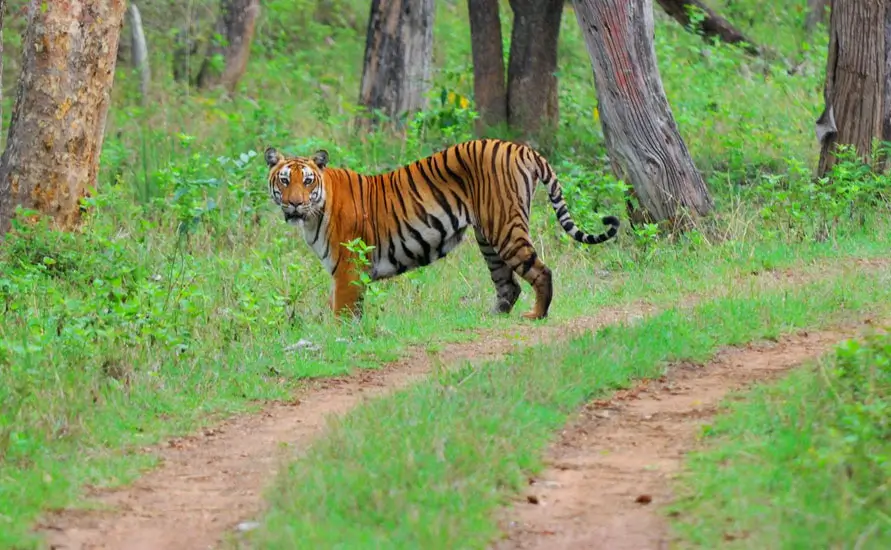
The afternoon safari in Bandipur often brings sightings of elephants, gaur, spotted deer and sambar, and tigers and leopards are both present in the forest. The landscape is more open than at Kabini, which can help with visibility, especially during the dry season. Scan the canopy for the maroon Malabar giant squirrel and the scrub for the shy four-horned antelope, and keep watch on dead branches where changeable hawk-eagles hunt. Back at the resort, look over the day's shots before supper on the terrace, where nightjars churr and a sambar may bell from the darkness. Overnight in Bandipur.
Your last full day in the wild begins with a dawn safari in Bandipur. Cats patrol most actively in the first hour, and low sunshine on elephant skin and deer coats gives the gentlest photographs of the day. The naturalist will point out the differences between the forests here and those of central India, from the plants to the animals' behavior, and help you sum up what you have learned about India's big cats across the five reserves. If a tiger or leopard appears on this drive, it is a fitting end to the trip, but every safari brings something new.
After breakfast you can take an optional trip to Gopalaswamy Betta, a hill inside the reserve topped with a temple to Krishna, where the views over the forests reach the Nilgiri range. Cars must stop below, and the climb is made on a state-run shuttle bus. The hill is often covered in mist, and it is cool even in summer. Elephants are sometimes seen on the slopes. Please note that the temple and bus have their own timings and rules, and that the hill may be closed on certain days for safety reasons.
The final safari of the tour goes out in the afternoon, bringing your total jungle drives to nineteen. Use it to simply enjoy the forest without the pressure to see anything in particular, listening to the calls of birds and the rustling of the leaves. Tonight is the final one beside the jungle. We can arrange a farewell dinner with a bonfire if the resort allows it. Take time to pack your bags and sort your photos, as tomorrow you drive back to Bangalore for your flight home. Overnight in Bandipur.
Breakfast done, the car heads north from Bandipur through Mysore and onto the expressway, about five hours in all to Kempegowda International Airport. We set the leaving hour from your flight time, keeping the usual three-hour check-in window plus a cushion for Bangalore traffic. Late-night departures leave room for a lunch halt in Mysore with a short look at the palace or Devaraja market, or a paid day room close to the terminal.
Over eighteen days you have seen tigers in three very different landscapes, searched for leopards in the forests of the south and shared the jungle with elephants, wild dogs and hundreds of birds. The naturalists who traveled with you will be happy to hear from you, and we would love to see your best photographs. For a second trip, the rainforests of the Western Ghats or the rhino grasslands of Assam make natural sequels. Safe travels, and may the alarm calls stay in your ears for a while.
Your Journey

N.S. Rathore & Mrs. Omlata Rathore · Managing Director
We still read every enquiry ourselves. Tell us the places you liked and our planners will send a day-by-day route with drive times and a clear price.
Every package can be customised and no pressure to book. A planner from our office replies within 24 hours with a route written for your group.
Fill this in and your planner will send a first draft itinerary.
Explore more
Kerala Backwaters Escape Kerala Backwaters Escape
 Kerala Backwaters Escape
 Kerala Backwaters Escape
 Kerala Backwaters Escape
 Kerala Backwaters Escape
 Kerala Backwaters Escape
 Kerala Backwaters Escape
 Kerala Backwaters Escape
 Kerala Backwaters Escape
 Kerala Backwaters Escape
 Kerala Backwaters Escape
 Kerala Backwaters Escape
 Kerala Backwaters Escape
 Kerala Backwaters Escape
 Kerala Backwaters Escape
 Kerala Backwaters Escape
 Kerala Backwaters Escape
 Kerala Backwaters Escape
 Kerala Backwaters Escape