
 Kerala Backwaters Escape

South India Wildlife Tours
Delhi – Jim Corbett – Delhi – (flight) Kochi – Thekkady (Periyar) – Alleppey – Kochi
At a glance
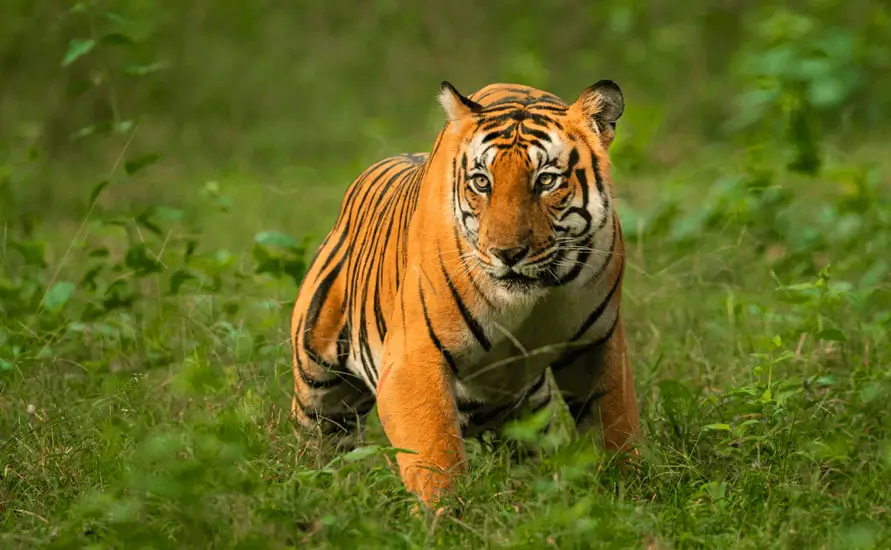
Two very different tiger forests sit at opposite ends of India, and our Corbett and Periyar Wildlife Tour links them in twelve private days. You begin in Jim Corbett National Park, set up in 1936 as the first national park on the Indian mainland, where sal forest and open grassland run down from the Himalayan foothills to the Ramganga river. A short flight then carries you south to Periyar Tiger Reserve in the Kerala hills, where the wildlife watching happens from a boat and on foot, and the trip closes on the backwaters of Alleppey.
In Corbett you stay four nights at a forest-edge lodge near Ramnagar, with three jeep safaris and one canter trip into the Dhikala grasslands. Permits are issued in limited numbers by the Uttarakhand forest department and the zone is allotted with the booking, so we apply the moment your dates are fixed. Thekkady gives you three nights for a lake cruise, a guided forest walk and a full-day bamboo rafting trek run by the reserve's ecotourism program, before a night on a private houseboat and a final night on the water's edge.
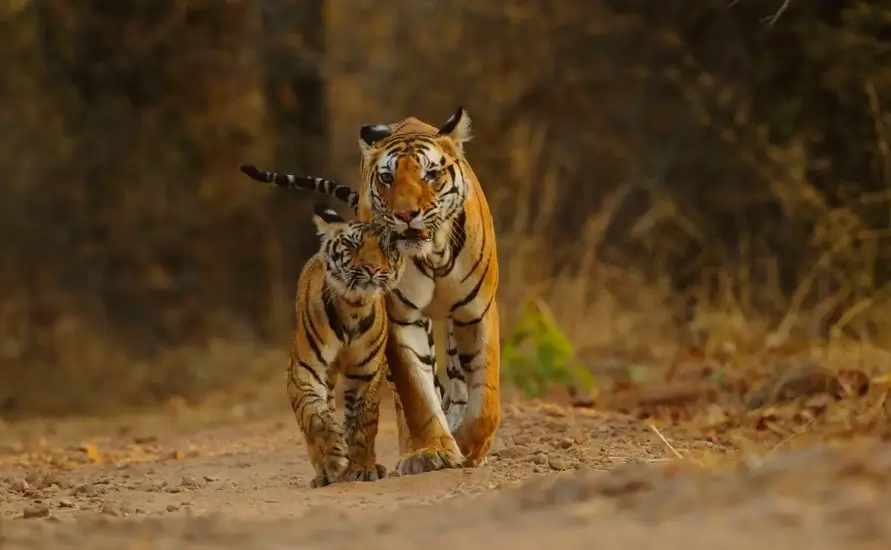
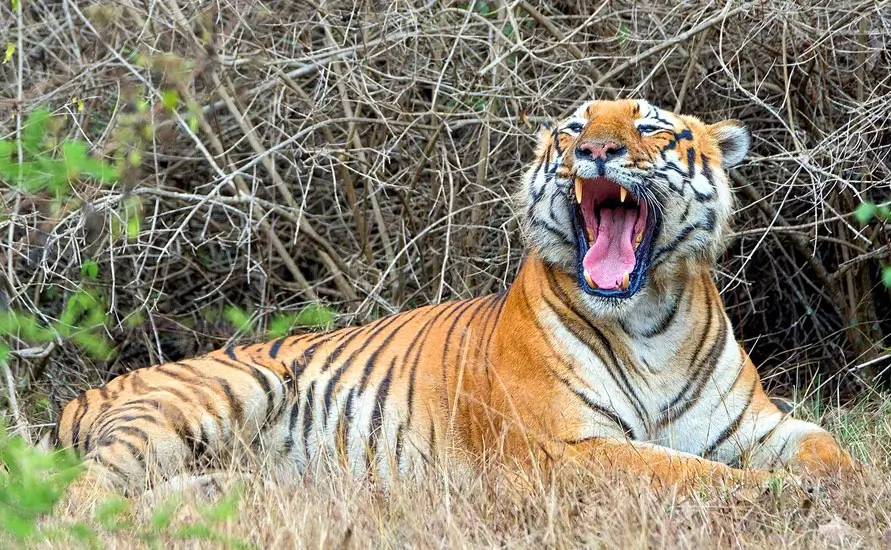
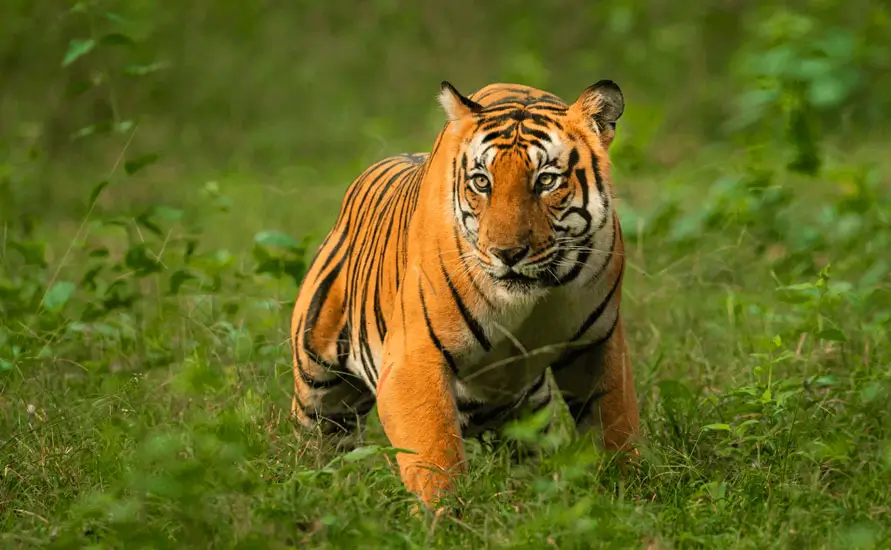
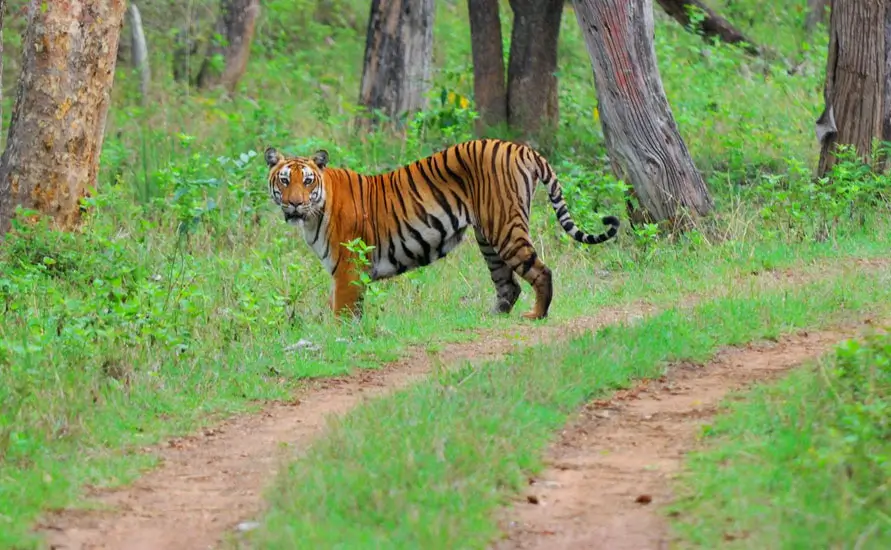
Tigers are possible in Corbett, especially from March to June, yet no responsible operator can promise one, and Periyar is better known for elephants, gaur, otters and hornbills than for big cats. The Corbett and Periyar Wildlife Tour works best between mid-November and mid-June, when the Dhikala zone is open. Naturalists, earth-toned clothing and a good pair of binoculars matter far more than luck. Everything is private, so hotel level, extra safaris and pace can be changed to suit couples, families or keen photographers.
Once through customs at Indira Gandhi International Airport, you will spot our Delhi representative holding a card printed with your surname, with a private air-conditioned car waiting outside for the hotel run. Since flights out of Europe and North America tend to land at awkward hours, the morning stays empty on purpose, leaving room for sleep, a shower and a slow breakfast. Your tour folder, with safari permits, train of events and emergency numbers, is handed over during the drive. If you want a local SIM card or some rupees in cash, your representative will point you to the right counter before leaving the airport.
Later, with some energy back, you head out for a gentle first birding session among the domed Sayyid and Lodi tombs of Lodhi Garden, where old neem and banyan trees shade the paths. It is a pleasant place to tune your eyes for the weeks ahead, because the old trees hold flocks of parakeets, a few grey hornbills, coppersmith barbets and, with some patience, a pair of spotted owlets roosting in a hollow branch. Local walkers do their evening laps around the paths while you watch. Bring your binoculars, since this short session is a useful test of focus, straps and camera settings before the real safaris begin.
Back at the hotel your tour manager runs through the practical side of the coming days. Corbett gate rules ask for photo identification, so carry your passport on every safari, and pack clothing in khaki, olive or brown rather than white or bright colors. Mornings in the foothills between December and February can be close to freezing in an open jeep, so a fleece, a beanie and gloves are worth the space in your bag. In April, May and June the same drives are hot and dusty instead. Eat in the hotel or let the concierge suggest a kebab house close by. Overnight in Delhi.
An early departure helps you clear the Delhi traffic before it builds, and the road then runs east across the flat farmland of western Uttar Pradesh through Hapur, Moradabad and Kashipur. Sugarcane fields, brick kilns and roadside dhabas serving parathas and sweet milky tea line most of the route, and your driver stops wherever you need a break. The plains slowly give way to a darker line of forest on the horizon, which marks the start of the Shivalik hills. Expect six to seven hours in total, depending on the traffic around Moradabad and how long you linger over lunch.
The small town of Ramnagar is the administrative base for Jim Corbett National Park, and your forest-edge lodge lies a little beyond it along the Kosi river. Corbett became Hailey National Park in 1936, the first national park on the Indian mainland, and was renamed in the 1950s after Jim Corbett, the hunter who became a writer and campaigned for its protection. It was also the place where Project Tiger was launched in 1973. Today the wider tiger reserve covers more than 1,200 square kilometers of sal forest, river valleys and open grassland, which local people call chaurs.
After check-in there is time for a gentle walk along the riverbank near the lodge with our naturalist. The Kosi is a clear, fast foothill river, and its boulders are good places to look for plumbeous water redstarts, river lapwings, crested kingfishers and, in winter, the occasional brown dipper. Walking is only allowed outside the park boundary, so this short stroll stays among fields and village tracks. Over tea the naturalist explains how the zones work, how permits are issued and why staying quiet in the jeep matters so much. Overnight at Jim Corbett.
Your alarm goes off well before sunrise, and a hot drink and a packed snack wait at reception before the open gypsy pulls up at the door. Each jeep carries up to six guests, a driver and a forest department guide who joins you at the gate after checking your passports against the permit. Zones are allotted by the park when the permit is issued, and Bijrani is a common choice for first safaris because it mixes dense sal forest with open grassland. In the first light, chital stags and wild boar move along the forest roads, and the guide watches the soft dust for fresh pugmarks.
Corbett guides read the forest by sound as much as sight. A sharp bark from a sambar or the repeated alarm call of a langur often means a tiger or leopard is close, and the driver will cut the engine and wait. Sometimes a big cat walks across the track; more often the morning gives you elephants feeding at the edge of a chaur, a crested serpent eagle on a dead branch or a mugger crocodile on a sandbank. Off-road driving is not allowed, so all sightings happen from the track. By mid-morning the gypsy rolls back out through the gate, and a hearty late breakfast followed by a siesta fills the hot hours.
The afternoon safari leaves in time to be inside the zone a few hours before sunset and is back out by the official closing time at dusk. Afternoons can be quieter, though animals often come out to drink as the heat fades, and the long golden light suits photographers. For photographers, a telephoto zoom reaching around 400 mm handles nearly everything here, and resting it on a small beanbag over the jeep door keeps it far steadier than any tripod could. No drones are permitted anywhere in the reserve. In the evening, the lodge often lights a bonfire, and your naturalist goes through the day's checklist with you. Overnight at Jim Corbett.
Today is the highlight of the Corbett stay, a canter safari into Dhikala, the largest and most famous zone of the park. Dhikala is open only from roughly mid-November to mid-June, because the monsoon floods the river crossings and washes out the forest roads. Private jeeps without an overnight booking cannot drive in, so the forest department runs a shared canter, a larger open vehicle with about sixteen seats, from Ramnagar. The drive in is long, with stops at viewpoints over the Ramganga reservoir, and the day is planned around the canter's fixed departure and return times.
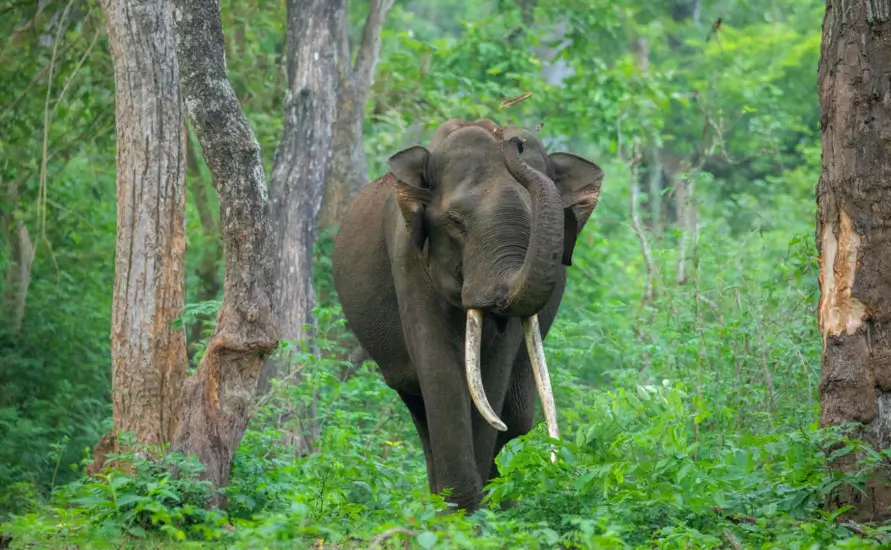
The reason Dhikala is worth the effort is its great open grassland, stretching along the Ramganga river with the forested hills behind it. Herds of Asian elephants, sometimes forty or more animals in the hot months, come down to the river to drink and bathe, and hog deer graze in the long grass. Tigers hunt across these grasslands too, and Dhikala has a good record for them in the hot months, but even here a sighting is never certain. Look along the riverbank for gharials, the narrow-snouted fish-eating crocodiles, and for ospreys and Pallas's fish eagles hunting over the water.
Birders have a long list to work through here, since Corbett has recorded around 600 species. Red junglefowl scratch at the forest edge, great hornbills fly across the valley in pairs and Himalayan griffon vultures circle over the ridges. Pack a warm layer for the early part of the day and a hat and sunscreen for the open grassland later on. If you would rather stay overnight inside the park, ask us about the forest rest house at Dhikala, which has to be booked weeks ahead and may not be available on your dates. You return to the lodge by evening. Overnight at Jim Corbett.
Your last Corbett safari heads for a different zone, often Jhirna or Dhela on the southern side of the reserve, which stay open for much of the year. The habitat is drier and more open than Bijrani, with mixed scrub, bamboo and patches of grassland where elephants, sambar and barking deer are regular. Sloth bears are seen here now and then, usually early in the morning when they dig for termites. Leopards also move through these zones, and your guide may stop to check scratch marks on trees. Even without a big cat, the mix of birds and mammals here makes a good final drive.
After a late breakfast and a short rest you drive about 30 km to Kaladhungi, a quiet village at the foot of the hills where Jim Corbett spent his winters. His old house is now a small museum run by the forest department, with letters, photographs, a few pieces of furniture and the story of how a hunter of man-eating tigers became one of India's first conservation voices. Corbett's books, starting with Man-Eaters of Kumaon, are sold in the shop and make good reading for the long flight home. Nearby, a short trail leads to Corbett Falls, a small waterfall surrounded by forest.
Heading back toward Ramnagar, it is worth a brief halt at Garjiya Devi Temple, a small shrine perched on a rock pillar in the middle of the Kosi, which pilgrims climb by a steep stairway. The river below is a good spot for wagtails and kingfishers in the late afternoon. Back at the lodge, your naturalist puts together a list of every bird and mammal recorded during your four days, which is a nice record to take home. Do your packing tonight, since breakfast tomorrow is followed straight away by the long road back to the capital. Overnight at Jim Corbett.
After breakfast you leave the foothills and drive back across the plains to Delhi, retracing the route through Kashipur and Moradabad. Flat and largely straight, the highway is broken up with a midday meal at a reliable roadside restaurant chosen by your driver. If you have the energy, ask for a short pause at one of the roadside jaggery units, where sugarcane juice is boiled in large open pans. Toward late afternoon you arrive in the capital and settle into an airport-area hotel, handy for tomorrow's early flight south.
The evening is free. Many guests use it to back up their photographs, wash dusty safari clothes or simply have an early dinner after six days on the move. Aerocity, the hotel district beside the airport, has plenty of restaurants within walking distance, so dinner needs no planning. Your flight to Kochi is usually in the morning, so our team confirms the pickup time with you before you go to bed. Overnight in Delhi.
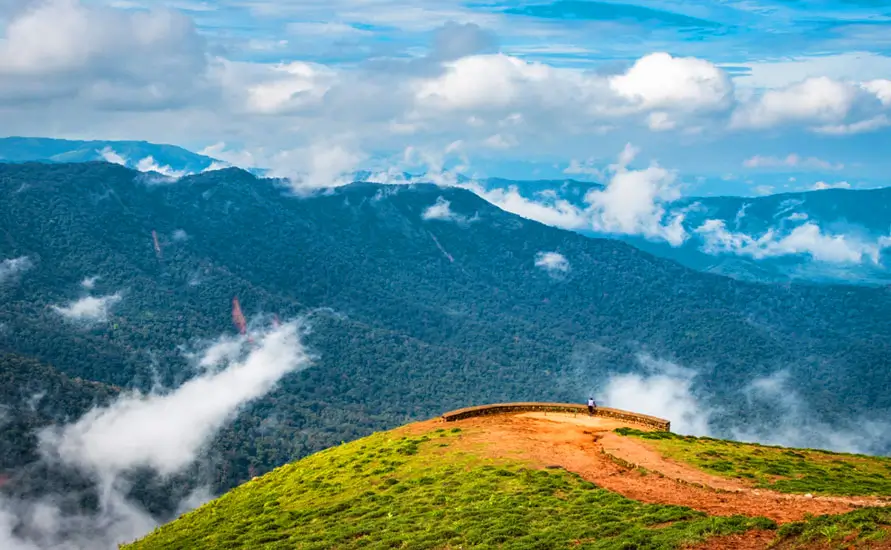
A morning flight of roughly three hours takes you from Delhi to Kochi, across almost the whole length of India and from the dry winter north to the humid green south. Our Kerala team meets you outside arrivals at Cochin International Airport and loads your bags into the car for the drive into the Western Ghats. The road climbs through rubber plantations and small towns, then winds up into cooler hills where cardamom grows under the shade of tall forest trees. Plan on four or five hours in the car, broken by a lunch of rice and curries served on a banana leaf.
You reach Thekkady and the neighboring town of Kumily by late afternoon. Kumily, a market town hugging the boundary of Periyar Tiger Reserve, smells of cardamom and coffee, and its single main road is crowded with spice sellers and little cafés. From your forest-edge hotel the reserve gate is only minutes away. After dark, one option is a demonstration of Kalaripayattu, the old fighting art of Kerala, at a small local theater; otherwise an early dinner and bed make sense before tomorrow's dawn walk. Overnight in Thekkady.
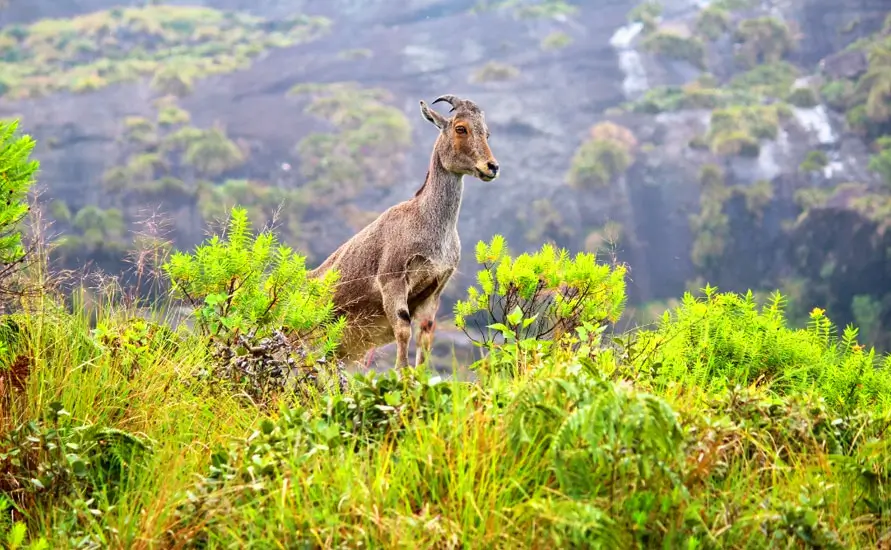
Periyar works differently from Corbett, because there are no jeep safaris inside the core. The reserve's ecotourism program replaces them with small walking groups, and your first outing is a guided nature walk lasting about three hours. The guides come from local tribal communities, some of whom once relied on the forest for a living, and they know every trail and animal sign. When the trails are damp, guides supply leech socks, and groups move in a quiet line. Look for Malabar giant squirrels, Nilgiri langurs and the deep calls of Malabar grey hornbills high in the canopy.
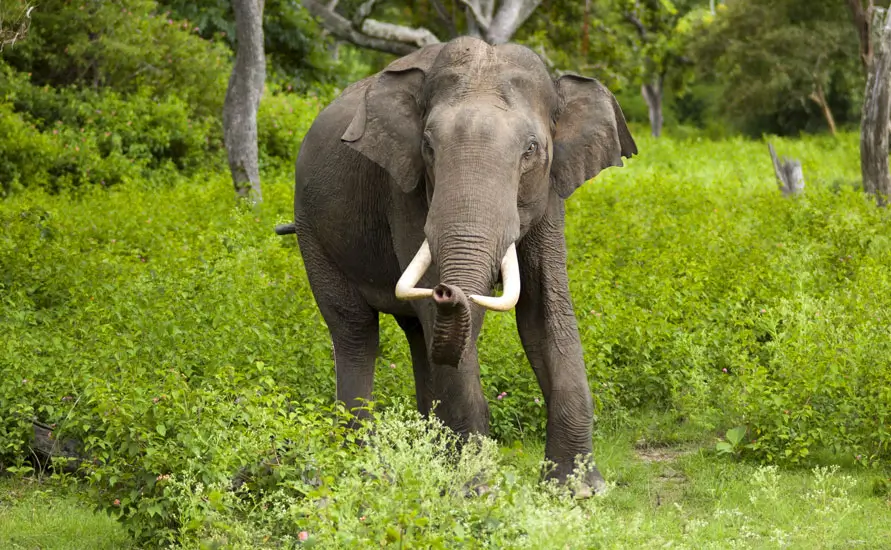
Afterwards it is time for the Periyar Lake cruise, around ninety minutes on a forest department boat. Engineers created the reservoir by damming the Periyar river at Mullaperiyar in the 1890s, and the dead tree stumps still standing in the water are a reminder of the forest that was flooded. Its route traces the twisting bays of the shore, and those grassy edges draw herds of elephants, gaur and sambar to feed and drink. Cormorants and darters dry their wings on the stumps, and smooth-coated otters are sometimes seen fishing near the banks. Seats on each sailing are capped, which is why we reserve yours before you arrive.
After lunch you visit a working spice plantation near Kumily, where a farmer shows you cardamom pods growing at the base of the plants, black pepper vines climbing the shade trees and smaller crops of cinnamon, nutmeg and cloves. The Cardamom Hills around Thekkady have supplied traders for centuries, and many families still dry and sort the spice by hand. You can buy fresh cardamom and pepper at fair prices, and your guide can explain how to tell good quality. Spend what is left of the day wandering Kumily at your own pace. Overnight in Thekkady.
Today you spend a long day inside the reserve on the bamboo rafting trek, one of the best ways to see Periyar's quieter corners. A small group sets out early with community guides and an armed forest watcher, walking first through grassland and evergreen forest and then crossing parts of the lake on rafts made from lashed bamboo poles. Spaces are limited and the program is run by the reserve, so it is subject to availability and weather. A light packed lunch is carried, and you return to Kumily in the late afternoon. Fitness needed is moderate, with several hours of walking.
Being on foot and on the water changes how you see the forest. You hear the crash of a gaur moving through the undergrowth before you see it, and the guides point out elephant dung, wild boar diggings and the scratch marks left by a sloth bear on a tree. Tigers live in Periyar, but sightings are rare, and the real rewards are often smaller ones. Great hornbills, Malabar pied hornbills, racket-tailed drongos and white-bellied treepies are all possible. Wear sturdy shoes, quick-dry trousers and a hat, and keep your camera in a dry bag while on the rafts.
If you prefer something shorter, the reserve also runs half-day options such as border hiking along the ridges or a green walk, and we can switch your booking if you let us know before arrival. Back in Kumily, a hot shower and a cup of locally grown tea feel well earned after the trek. Dinner tonight could be at a small family restaurant serving Kerala-style fish curry, appam and thick vegetable stews made with coconut milk. Your guide gives you a short briefing about tomorrow's houseboat and the backwater birds to look out for. Overnight in Thekkady.
Down from the Cardamom Hills you go this morning, past rubber trees and through Kottayam, heading for Alleppey on the coast. The temperature rises as you drop, and the landscape opens up into wide, flat paddy land crossed by canals. You reach the jetty around noon, the usual time for houseboat check-in, and step aboard your private Kerala houseboat. The crew of three welcomes you with a cool drink and shows you the cabin, the open sitting deck and the small galley where all your meals will be cooked. The cook brings out lunch shortly after the mooring ropes are untied.
Instead of looking only at the village scenes, try watching the backwaters as a birding habitat this afternoon. Little cormorants and Indian darters fish in the open channels, purple herons stand still among the water hyacinth and pond herons wait on floating weeds. White-throated, pied and stork-billed kingfishers all hunt from the banks, and brahminy kites circle over the boat looking for scraps. Your binoculars from Corbett and Periyar are just as useful here. You drift across Lake Vembanad and into the Kuttanad channels, an area farmed for rice even though the fields lie lower than the sea.
Local rules oblige every houseboat to stop for the night by early evening, so your crew moors the boat by a village landing or a rice field bund. This is a good hour to watch egrets and night herons flying to their roosts in long lines against the sky. Hot tea and fritters appear on deck, and later the cook serves a dinner of Kerala rice with fish or vegetable curries spiced to your liking. Once the motor is switched off, all you hear is the chorus of frogs and crickets across the water. Overnight on the houseboat.
Appam and egg curry come out on deck while the crew steers back to the starting jetty, and checkout from the boat is normally around 9 am. From there it is a brief drive to a resort right on Vembanad's shoreline, your base for the last night. After the size of a houseboat, the next outing is on a much smaller scale. Before lunch a village boatman paddles you in a slim wooden country canoe along side channels that houseboats are far too wide to enter. Without an engine you can get much closer to kingfishers, waterhens and the shy bronze-winged jacanas walking on lily pads.
Afterwards you have hours to yourself for the pool, a hammock or an Ayurvedic treatment at the resort spa. If you still want more birds, an optional motorboat ride reaches Pathiramanal, a forested islet out in the lake where herons, egrets and cormorants gather to roost, in largest numbers in winter. Village options include watching coconut fiber twisted into coir rope, or seeing a toddy tapper scale a palm with just a loop of rope. The pace is deliberately slow today, after early mornings in two national parks, and the lake views from the resort make for a calm last afternoon of the trip.
Sunset over Vembanad is the moment to open your notebook and tally the species seen since Delhi. Over eleven days you have moved from the sal forests and grasslands of the Himalayan foothills to the evergreen hills of the Western Ghats and finally to the wetlands of the Kerala coast. Your guide can help you sort photos and identify any birds you were unsure about. Dinner tonight is at the resort, where fresh pearl spot fish or a seafood platter are popular choices. Pack your bags before bed for tomorrow's flight. Overnight in Alleppey.
Final morning: breakfast on the lawn, checkout and a road trip of roughly two hours up to Cochin International Airport, with traffic in the coastal towns setting the exact time. We set the pickup with plenty of spare time, and anyone flying out after midnight can book a short-stay room by the terminal for a fee. Shops along the highway sell cardamom, pepper and Kerala tea if you need a last gift. Our phone line remains open right up to the moment you walk into departures.
Homeward flights from Kochi usually connect via a Gulf hub or Singapore. If this trip has given you a taste for India's national parks, ask us about tiger reserves in central India or the birding areas of Kabini and Thattekad for a future visit. Safe travels, and may the photos from Dhikala and Periyar keep you smiling for a long while.
Your Journey

N.S. Rathore & Mrs. Omlata Rathore · Managing Director
We still read every enquiry ourselves. Tell us the places you liked and our planners will send a day-by-day route with drive times and a clear price.
Every package can be customised and no pressure to book. A planner from our office replies within 24 hours with a route written for your group.
Fill this in and your planner will send a first draft itinerary.
Explore more
Kerala Backwaters Escape Kerala Backwaters Escape
 Kerala Backwaters Escape
 Kerala Backwaters Escape
 Kerala Backwaters Escape
 Kerala Backwaters Escape
 Kerala Backwaters Escape
 Kerala Backwaters Escape
 Kerala Backwaters Escape
 Kerala Backwaters Escape
 Kerala Backwaters Escape Kerala Backwaters Escape Kerala Backwaters Escape Kerala Backwaters Escape