 Kerala Backwaters Escape

South India Wildlife Tours
Nagpur – Pench – Kanha – Jabalpur – Kochi – Thekkady – Kumarakom
At a glance
Rudyard Kipling never set foot in the forests of Seoni, yet the jungle he imagined for Mowgli, Baloo and Shere Khan was drawn from them. Our Pench Kanha and Periyar Wildlife Tour starts in that same country, at Pench National Park on the border of Madhya Pradesh and Maharashtra, then moves deeper into the sal forests and meadows of Kanha. After a stop at the marble gorge of Jabalpur, a connecting flight takes you to Kerala for the hill forest of Periyar and the bird-rich waters of Kumarakom.
Kanha holds one of India's great conservation stories. The hard-ground barasingha, a swamp deer found nowhere else, had fallen to a few dozen animals by around 1970, and patient protection of its meadows has since brought it back to more than a thousand. Seeing a herd grazing at dawn is as rewarding as any tiger. In the south the pace changes: a forest department boat on Periyar Lake, a guided walk with a tribal tracker, and an early-morning bird walk on the shore of Vembanad Lake.
This central and south India wildlife tour suits overseas travelers who want tigers and birds in the same trip, without long daily drives. Pench and Kanha core zones close in the monsoon, roughly July to September, and both shut their core for the Wednesday afternoon safari each week, which we plan around. October to June is the season; winter brings migrant birds in Kerala, and the hot months improve the odds of tiger sightings at water. Wild animals keep no timetable, so treat every tiger as a bonus rather than a promise.
Overseas guests usually reach Nagpur through Delhi, Mumbai or a Gulf connection, and the airport sits only a short drive from the city center. A placard with your surname marks our representative in the arrivals crowd, and a private air-conditioned car carries you to a comfortable city hotel. If your connecting flight lands in the early hours, an early check-in can be held for you when booked ahead. The day is kept free on purpose, so you can recover from the long flights, eat something light and sort out cash, a local SIM card and any last items you need for the forest.
Around six, one of our trip managers sits down with you in the hotel lobby to talk through the safari week. You will go over how jeep permits work in Madhya Pradesh, which zones have been allocated, what to wear on safari and how to pack camera gear against the fine dust of the dry forest. Earth-toned clothing in khaki, olive or brown is best, along with a hat, a scarf and a warm layer for winter dawns, when an open jeep can feel close to freezing. We also explain the park rules: no loud talking, no plastic, no drones, no feeding of animals and no leaving the vehicle.
For anyone still awake enough, an optional half-hour loop passes the Zero Mile marker from the colonial survey and the busy market streets of Sitabuldi, where vendors sell Nagpur's well-known oranges in season. For dinner, ask for saoji cooking, a fiery local style of mutton and chicken curry made with a dark, roasted spice blend, or a milder dish if you prefer to save your appetite for the lodges. You go to bed early, because the forest starts tomorrow and most of the next week begins before sunrise. Overnight in Nagpur.
After breakfast you leave Nagpur on the national highway north toward the Madhya Pradesh border. Within two hours, the cotton and orange farms give way to low hills covered in teak, and you turn off toward the Turia gate of Pench National Park. Your jungle lodge stands in the forest buffer, with cottages spread among trees, and all meals here are included. After an early lunch you have a few minutes to settle in, fill water bottles and check batteries. Your naturalist introduces himself and runs through the zone you have been allocated for the afternoon.
Pench takes its name from the river that winds through the reserve from north to south and splits it between Madhya Pradesh and Maharashtra. The Seoni district around it is the setting that Kipling borrowed for The Jungle Book, based on accounts written by British officers who served in the area. Your guide will point out real-life versions of the characters: sloth bears like Baloo, Indian wolves, leopards like Bagheera, and the jackals that once followed Shere Khan. Fiction aside, Pench today is one of the best-run reserves in central India, with good tiger numbers in recent years.
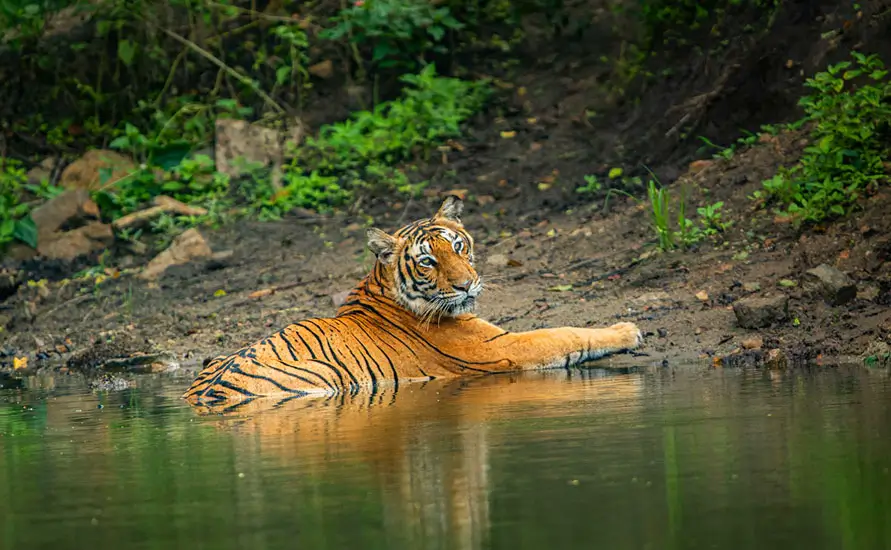
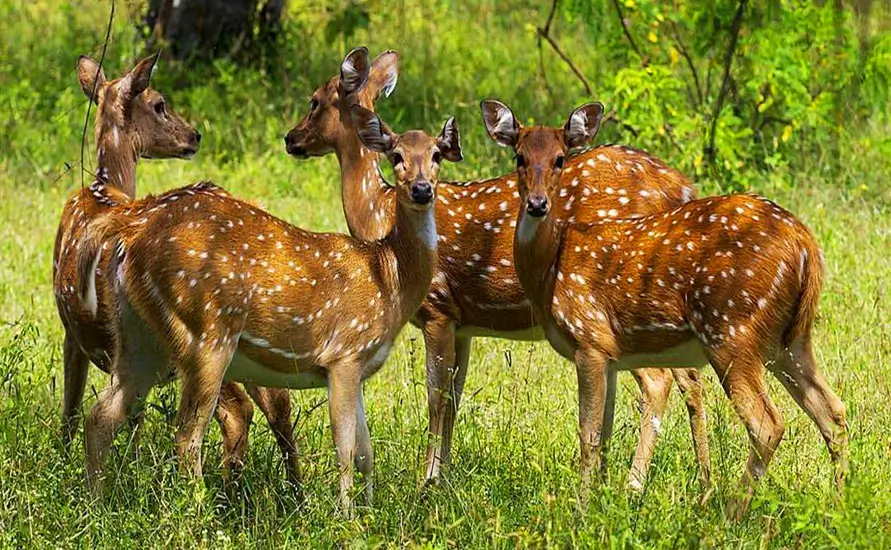
The afternoon safari heads out in an open gypsy with a park driver and a local guide assigned by the forest department. Forest roads cross dry streambeds and open teak stands, with patches of grassland where spotted deer gather in large herds; Pench is known for having some of the highest densities of prey animals in the region. Watch for the Indian roller flashing blue in flight and for crested serpent eagles perched on bare branches. Tigers are possible on any drive, though most of the first afternoon goes to learning the forest. Overnight in Pench.
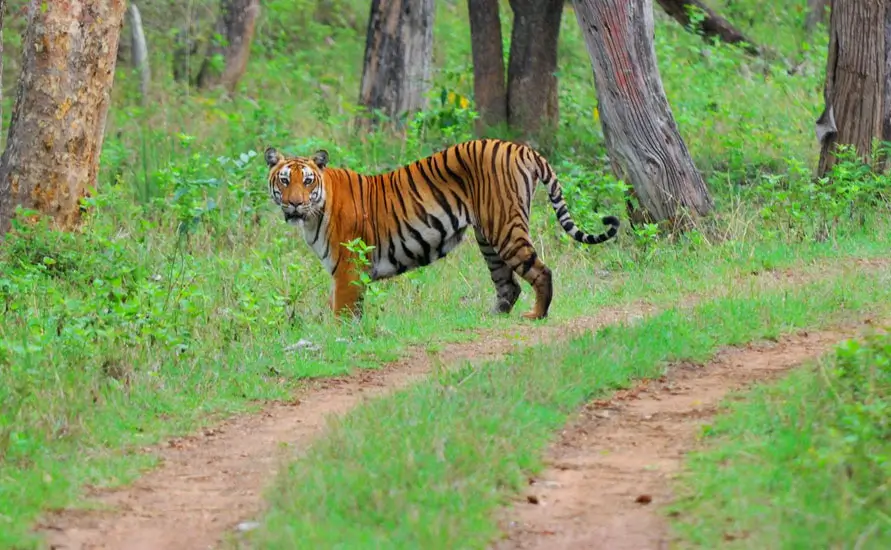
A wake-up call before dawn brings tea to your door, and the jeeps leave so they reach the gate at opening time. Morning drives in Pench often follow the river, where water stays in pools through the dry months and draws tigers, leopards and herds of gaur. Your naturalist stops at junctions to look for fresh pugmarks and listens for the warning calls of chital and langurs, which often reveal a predator on the move. Langurs and spotted deer frequently feed together, since the monkeys drop leaves from above and the deer benefit from the extra pair of eyes.
Breakfast is eaten on your return or at a designated stop inside the park, and the warm hours are for rest. Madhya Pradesh closes the core zones of its tiger reserves on Wednesday afternoons, so if one of your days falls on a Wednesday we use the morning in the core and plan a buffer drive, a village visit or simply a quiet afternoon at the lodge instead. The dates also need to avoid the monsoon months, when the core is closed altogether. Photographers can use the break to clean lenses, which pick up a surprising amount of dust on the dry tracks.
Later, the jeep may be sent into another sector, sometimes near the Totladoh reservoir area or the open meadows where wild dogs hunt. Wild dogs do well in Pench, and packs sometimes rest by the track at dusk, sometimes with pups tumbling around them in the spring months. Keep an eye out for wild pigs, the small chousingha antelope and shy nilgai on the open edges. As the light turns golden, scan the water for marsh crocodiles and storks. Back at the lodge, many guests gather around a fire to talk through the day before dinner. Overnight in Pench.
Your final morning in Pench starts with another dawn drive. If you have seen a tiger already, use this outing to look for smaller details: the Indian scops owl in a tree hollow, the orange-headed thrush scratching in leaf litter, or the giant wood spider stretching its web between branches in the cool season. The forest changes a great deal across the year, from green and dense just after the monsoon to bare and brown by April, when tigers become easier to spot near water. Your naturalist explains how the people of Pench learned to read these cycles long before the park was set up.
In the afternoon you visit a Gond village on the buffer edge with a lodge guide. Here families grow rice and pulses, keep cattle and collect forest produce such as mahua flowers and tendu leaves, used to roll beedis. The Gond have their own painting tradition, with animals and trees made of fine dots and lines, and you may meet a local artist at work. Please ask before photographing anyone, and keep in mind that life next to a tiger reserve brings both hardship and new jobs in tourism. A small purchase from a village craft group goes directly to the families.
Back at the lodge, the evening is quiet. Some lodges keep a hide or a viewing platform near a waterhole, where you can sit with binoculars and listen to the forest settle down: peacocks calling to roost, the hoot of a mottled wood owl, perhaps the bark of a deer if a leopard is nearby. Pack tonight, as tomorrow is a long road day across the Satpura country to Kanha. Dinner might include local dishes such as bhutte ka kees, a grated corn preparation from Madhya Pradesh, if the kitchen is serving it. Overnight in Pench.
An early breakfast precedes the eastward road trip to Kanha National Park. The route runs through farming towns and stretches of forest, and on clear days you see the hills of the Maikal range rising ahead. Expect about five hours on the road with a stop for tea and a stretch, depending on traffic through towns such as Seoni and Mandla. Our driver has a handful of reliable halts with decent washrooms and hot chai. Arrival is by mid-afternoon at a jungle lodge close to the Mukki or Khatia gate, depending on your allocated zones, and all meals at the lodge are included.
Kanha is one of the largest and oldest tiger reserves in India, set up as a national park in 1955 and among the first areas brought under Project Tiger in 1973. Its landscape is a mosaic of sal forest, bamboo, and open meadows known locally as maidans, which are the remains of old village fields cleared when the park was formed. These grasslands are what make Kanha special, because they support large herds of deer and give you a far longer view than in most Indian forests. They also make it one of the most photogenic tiger reserves in the country.
No safari is planned this afternoon, which gives you time to settle in after the drive. Late in the day, a walk with the lodge naturalist on the buffer edge shows you termite mounds, sloth bear diggings and birds such as the Indian grey hornbill and the white-bellied drongo. Many lodges also have a small library or a slide talk on Kanha's history, including the research by George Schaller in the 1960s, whose tiger study here was one of the first scientific studies of the animal in the wild. Dinner is at the lodge. Overnight in Kanha.
Kanha's first dawn drive sets off in the dark, with blankets and a flask in the jeep for cold months. As the mist lifts off the Kanha meadows, the first animals to appear are often herds of chital and the tall, pale barasingha, the hard-ground swamp deer. Unlike other swamp deer in India, this subspecies lives on firm grassland rather than marshes, and today it survives in the wild only in this region. Males carry branching antlers with up to twelve points, which is where the name barasingha, meaning twelve-tined, comes from. Your naturalist explains how close the deer came to disappearing.
By around 1970 only about sixty-six barasingha were left, mostly in Kanha, and the park's managers took an unusual approach. They relocated villages from the core with compensation, managed the grass meadows by controlled burning, built fenced enclosures to breed the deer safely, and reduced competition from cattle. Over the following decades the numbers climbed to well over a thousand, and some animals have since been moved to restock other reserves such as Satpura and Van Vihar. Watching a herd graze calmly at dawn is a reminder that conservation can work when it is given time.
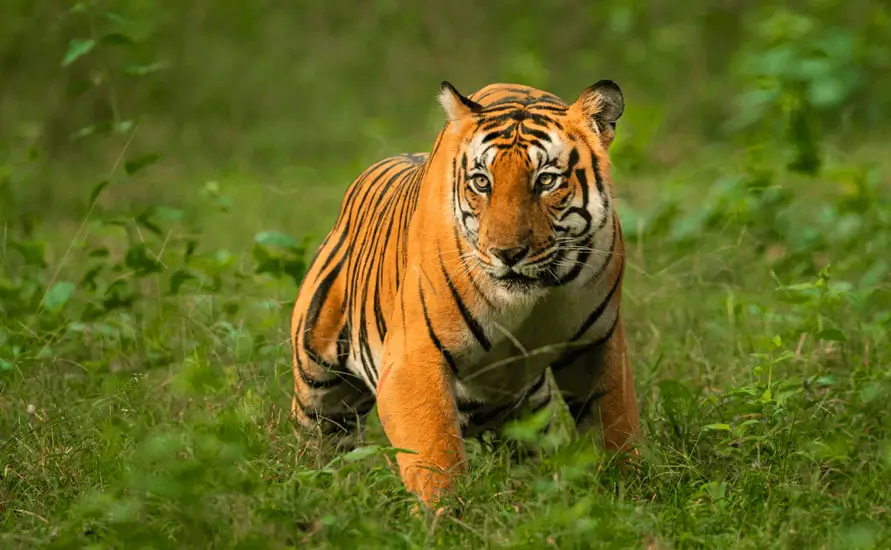
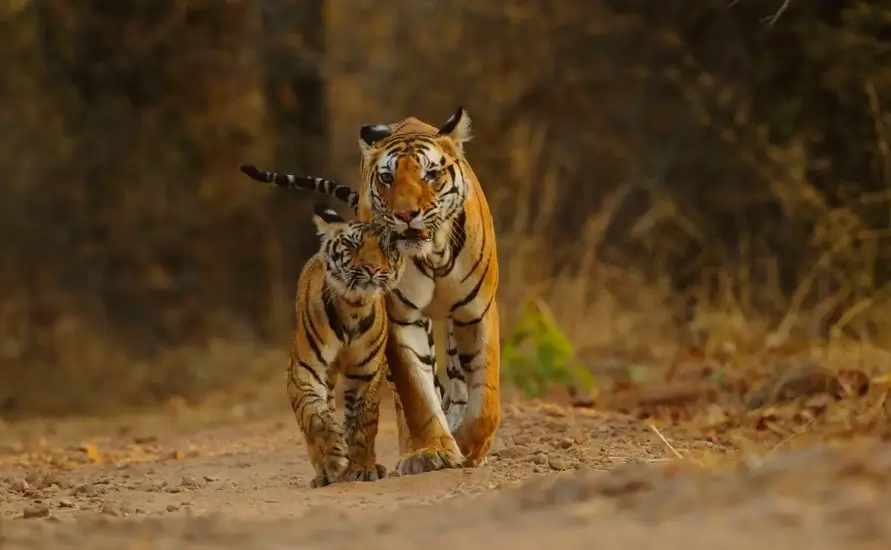
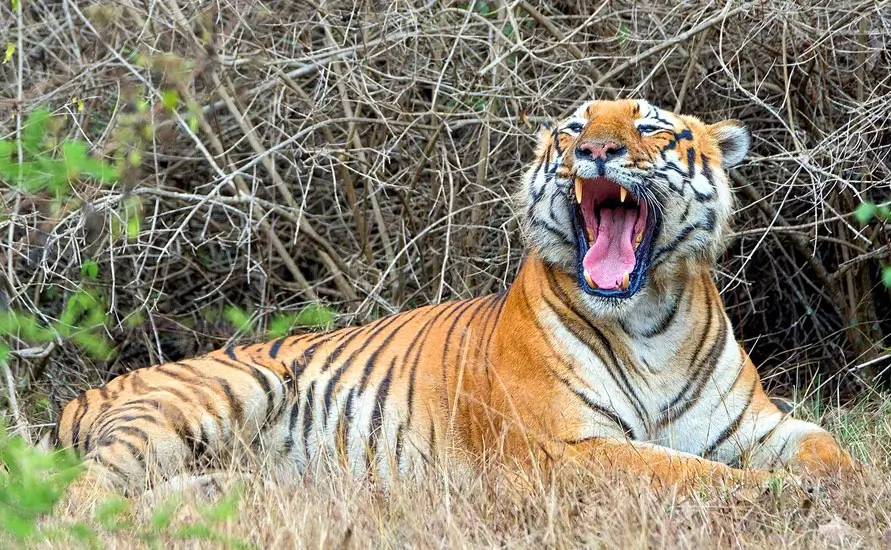
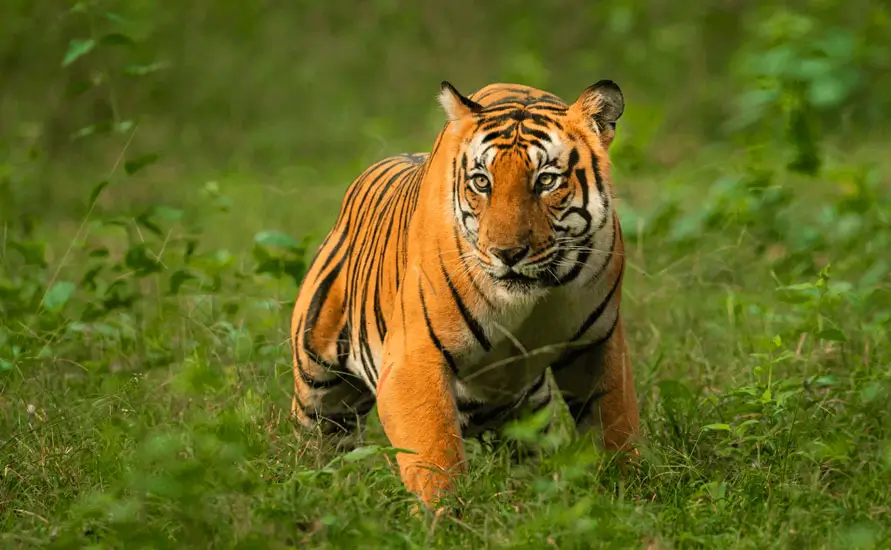
After breakfast and a midday rest, the afternoon drive heads into another part of the core zone allocated by the forest department. Tigers in Kanha are often seen crossing the meadows or resting in the shade at their edges, and leopards, dholes and sloth bears also live here, though none can be promised. You will very likely see gaur, sambar and wild boar, and perhaps the Indian jackal trotting along a meadow edge. Remember that the core is closed on Wednesday afternoons, which we take into account when booking your permits. Overnight in Kanha.
Your third day in Kanha begins with another early drive, and by now your eyes will be quicker at picking out a tail in the grass or a striped shape behind a tree. Mornings are also the best time for birds such as the Indian peafowl, the red junglefowl, the black-hooded oriole and raptors like the changeable hawk eagle. Ask your naturalist to show you the spot where an old tiger is known to patrol, or the burrows of the Indian porcupine. The routes here are long, and some drives cover the central meadows near Kanha village and others the hillier south.
During the midday break your lodge may arrange a visit to the Kanha Museum near the Kanha zone, a small interpretation center with exhibits on the reserve's history, its plants and animals, and the forest staff who protect it. Kanha is also known for its mascot Bhoorsingh the Barasingha, a cartoon figure created to teach children about conservation, and his antlered face turns up on park boards and gate posters. This is a good time to buy a field guide or a book on the barasingha project if you want to read more back home.
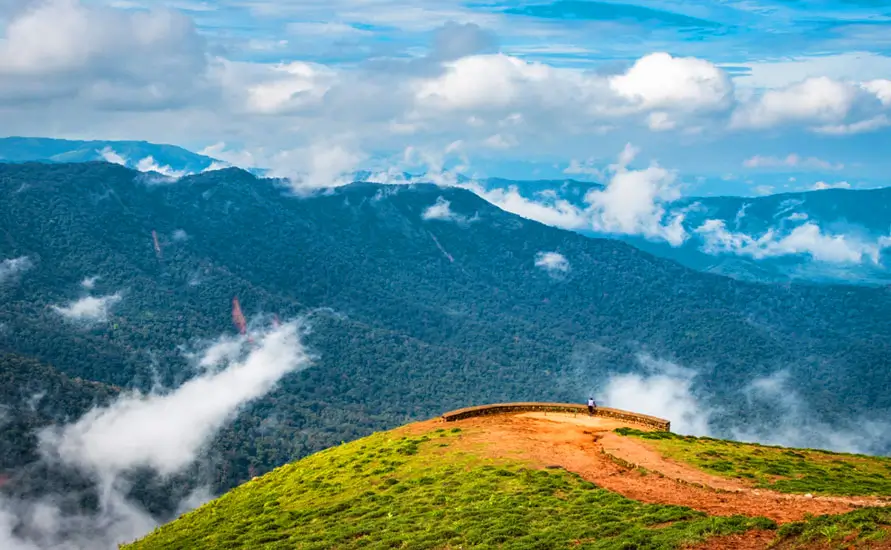
If your afternoon permit covers it, the route climbs to Bamni Dadar, a high flat-topped ridge where gaur and sambar graze the grassy slopes and the western sky opens up over miles of sal. When the zone allocation allows it, your jeep finishes the drive here as the light drops, ideal for wide-angle frames of the forest below. Leopards are sometimes seen in the rocky areas nearby. Back at the lodge, you will have dinner and a last evening with your naturalist, who can help you review your sightings list from both Pench and Kanha. Overnight in Kanha.
After a final breakfast at the lodge, you leave Kanha and drive north-west to Jabalpur, the largest city in this part of Madhya Pradesh. The road passes through the town of Mandla, set in a loop of the Narmada River, and farmland with ponds and small temples. Check-in at a city hotel follows soon after midday. The river is sacred to Hindus, who believe a walk around its whole length brings great merit, and you will see pilgrims and small shrines along the way. Lunch can be at the hotel or a local restaurant.
Around four you drive roughly 20 km west to Bhedaghat, a gorge of soft white, grey and faintly green marble carved out by the Narmada over countless monsoons. A rowing boat takes you between cliffs that rise close to thirty meters on either side, and the boatmen are famous for their witty commentary in Hindi as they point out rock shapes named after animals and gods. The boat ride does not run in the monsoon months when the river is high. You may also see the Dhuandhar Falls, where the river crashes into the gorge in a cloud of spray.
On a hill above the river stands the Chausath Yogini Temple, a 10th-century circular shrine with stone figures of sixty-four yoginis, female divinities linked to tantric worship, set in alcoves around a courtyard. Many of the statues were damaged centuries ago, but the circle still feels unusual, and very few temples of this design survive in India. The climb up is about a hundred stone steps, steep in places, so wear sturdy shoes and carry water in the hotter months. Back at the hotel, dinner is followed by repacking for tomorrow's flights. Overnight in Jabalpur.
With no nonstop service between Jabalpur and Kochi, our team routes you via a hub such as Bangalore, Hyderabad, Mumbai or Delhi, choosing the schedule with the most comfortable layover for your dates. Your driver takes you to Jabalpur's Dumna Airport after breakfast, and the whole trip usually takes most of the day, depending on the connection. Economy seats and normal baggage are covered, and luggage is tagged straight through to Kochi whenever the carriers allow. Keep long lenses and batteries in your cabin bag.
Once you clear Cochin International Airport, our Kerala colleague drives you to a hotel for the night, chosen close to the runway for a late arrival or in town for an earlier one. The change of scene is sharp: palms, rice fields and a warm, humid air after the dry forests of Madhya Pradesh. If you land early enough, the hotel can suggest a nearby restaurant for Kerala fish curry, appam and stew. The evening is for rest before tomorrow's drive up into the Western Ghats. Overnight in Kochi.
Heading east from Kochi into the hills after breakfast, you follow a road that starts in flat, green farmland and climbs gradually through rubber plantations, then forest and tea gardens. The road winds through towns such as Kothamangalam and Kumily, and the final climb is full of hairpins, so anyone who gets carsick will be happier in the front seat. Arrival in Thekkady comes around two, at a forest-edge resort a short walk from Periyar Tiger Reserve. The air here is cooler than on the coast, especially in the evenings, so keep a light jacket handy.
Thekkady lies in the Cardamom Hills, named after the spice that grows under the shade of the forest canopy. Toward five, a farmer's son leads a walk around his family's spice garden, showing cardamom, black pepper vines climbing trees, cloves, nutmeg, cinnamon and vanilla, plus coffee bushes, allspice and the odd jackfruit tree. He describes the hand-harvesting of green cardamom and the wood-fired drying sheds, and how pepper once drew traders from Rome, Arabia and Portugal to this coast. You can buy spices directly from the farm, which is often fresher and cheaper than in town shops.
After dark there is an optional hour of Kalaripayattu, the fighting art of medieval Kerala, at a small arena in Kumily, where performers use sticks, swords and shields in fast, acrobatic routines. Shows are short and loud, and front-row seats can get close to the action. Those who prefer a quiet night can stay in for red rice, coconut fish curry and a cabbage thoran, all served with a side of pappadam and pickle. We confirm your slots for the morning, because the forest department sets fixed times for both the boat and the walk. Overnight in Thekkady.
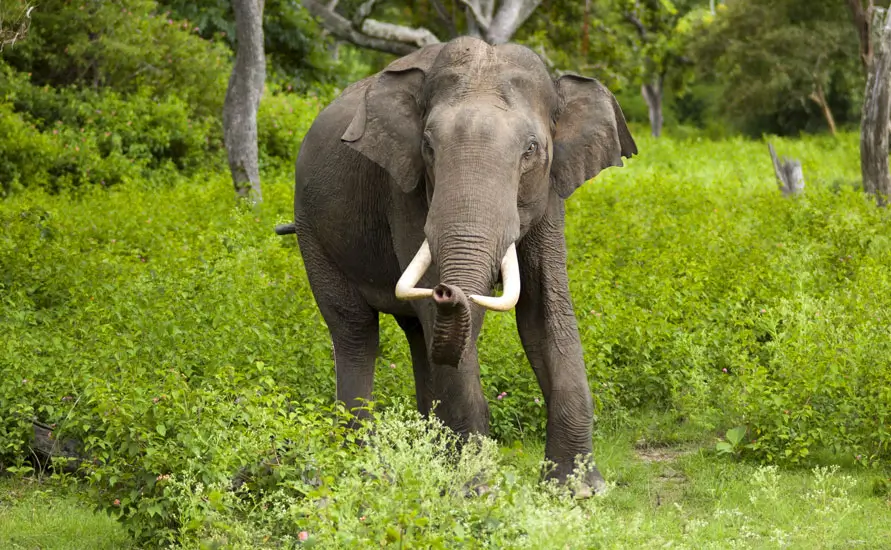
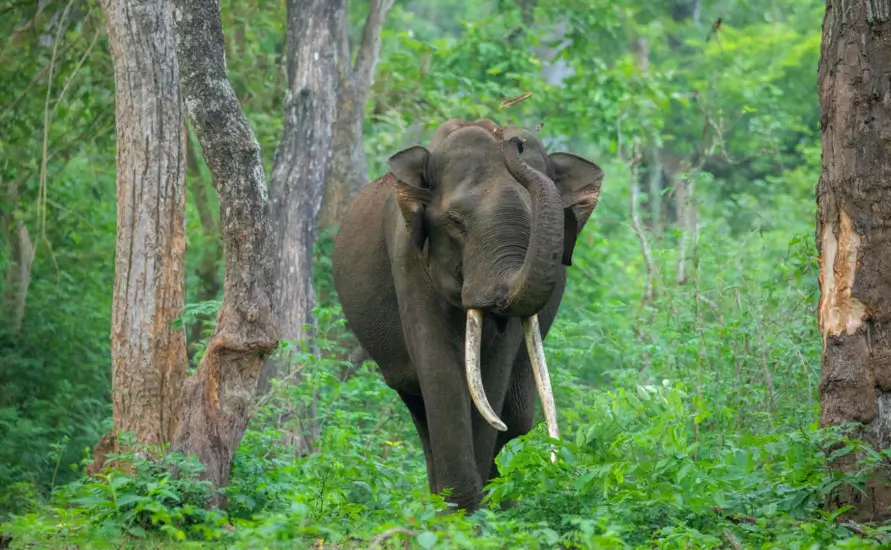
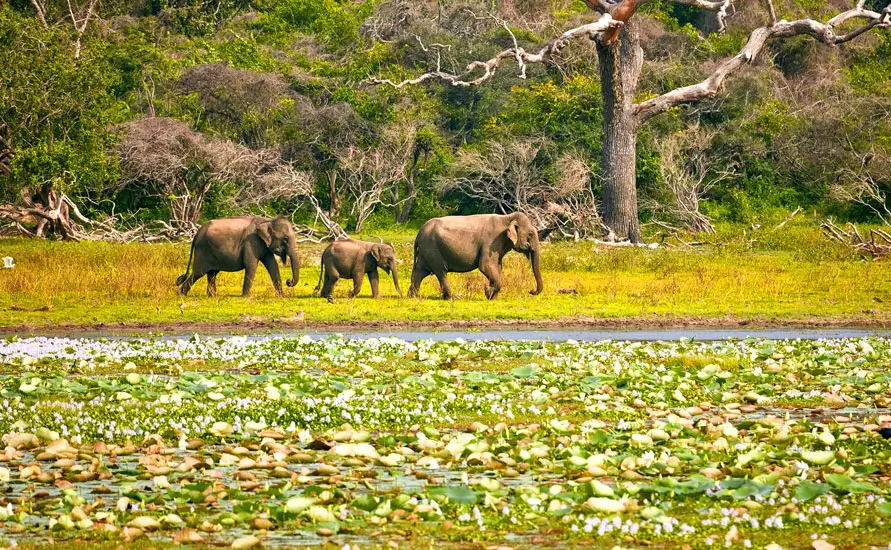
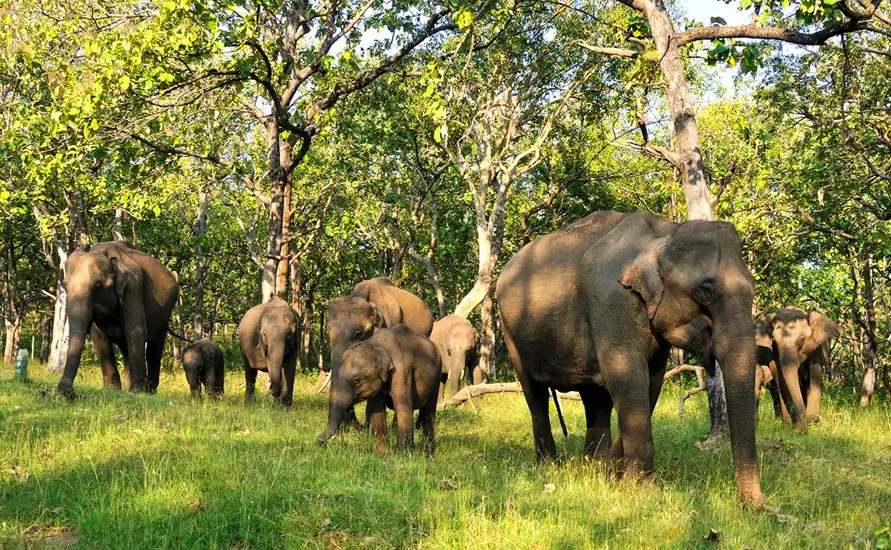
First up is the forest department boat cruise on Periyar Lake, formed in the 1890s when British engineers dammed the river to send water east to Tamil Nadu. Grey skeletons of the original forest still rise from the surface as perches for cormorants, darters and kingfishers. From the boat you may see herds of Asian elephants, gaur, sambar and wild boar coming to the shore, and otters are often seen in the shallows. Tigers live in Periyar Tiger Reserve but are rarely seen in the thick forest. Plan on ninety minutes afloat; seats sell out on busy days, which is why we reserve early.
Next comes a guided nature walk led by a tracker from one of the forest-dwelling communities, part of a well-known eco-development scheme that hired people once dependent on poaching or illegal collection as protectors of the reserve. The walk covers a few kilometers of forest and grassland and is done in small groups. You will look for Nilgiri langurs, Malabar giant squirrels and birds such as the great hornbill, the Malabar trogon and the white-bellied treepie. Leech socks are provided in wet months. Keep quiet, follow the guide and stay on the path at all times.
Spend the afternoon resting, or add a further department program like bamboo rafting or a border hike at additional cost, if slots are available. Bamboo rafting is a full-day program that combines a trek with a slow paddle on the lake, and spaces are limited each day. Alternatively, a quiet stroll in Kumily town offers shops selling spices, tea and Ayurvedic oils. The evening can be spent at the hotel, perhaps with a short Ayurvedic massage, which many visitors try at least once in Kerala, booked through a licensed center rather than a street-side parlor. Overnight in Thekkady.
Descending from the Ghats after breakfast, you head for Kumarakom beside Vembanad Lake, the biggest wetland in Kerala. The road drops through tea estates, rubber plantations and small towns such as Kottayam, with views over the plains as you descend. Kumarakom is a quieter base than Alleppey on the opposite side of the lake, with resorts set along canals and coconut groves. Lunch is at the resort, and until the canoe outing you can laze on the lawn or follow village lanes past duck farmers, toddy tappers and egrets stalking the ditches.
Kumarakom sits on reclaimed land below sea level, part of the Kuttanad rice-farming region, where fields are protected from the lake by earth walls and drained with pumps. This mix of paddy, canal and lake makes it excellent for waterbirds. In the late afternoon a short canoe outing along the canals, arranged through your resort, gives you close views of purple herons, cattle egrets, Indian pond herons and the white-throated kingfisher. Canoes are paddled by hand, quiet and low to the water, which makes them ideal for photography without disturbing the birds.
Vembanad Lake is listed as a Ramsar wetland, recognized for its importance to waterbirds and fish. In winter, migrant birds such as the garganey, the northern pintail and the Siberian stonechat can join the resident species, though numbers vary from year to year with rainfall and water levels. As dusk falls, flocks of egrets and night herons return to roost in the trees, and the light over the lake turns soft and pink. Ask the kitchen for karimeen pollichathu, the lake's pearl spot cooked in a sealed parcel of banana leaf with shallots and chili, a dish every Kumarakom family claims as its own. Overnight in Kumarakom.
Get up early for a final bird walk at Kumarakom Bird Sanctuary, a small area of mangroves, canals and trees on the lakeshore that is best visited at first light. A local birding guide points out darters, cormorants, little egrets, kingfishers and, in season, migrant birds from the north. The walk lasts about two hours on simple paths. Breakfast and checkout follow at the resort, before the road transfer to Cochin International Airport, timed to land you there three hours before your international flight.
In thirteen days you have followed the Jungle Book trail in Pench, watched the barasingha that Kanha saved from extinction and seen elephants come to drink at Periyar's lake, ending with herons on the Kerala backwaters. If you would like to visit other parks next time, Bandhavgarh, Tadoba or Kaziranga each add something new, and planning that next trip is something our team enjoys. Our team sees you to the airport entrance. Have a good flight home.
Your Journey

N.S. Rathore & Mrs. Omlata Rathore · Managing Director
We still read every enquiry ourselves. Tell us the places you liked and our planners will send a day-by-day route with drive times and a clear price.
Every package can be customised and no pressure to book. A planner from our office replies within 24 hours with a route written for your group.
Fill this in and your planner will send a first draft itinerary.
Explore more
Kerala Backwaters Escape Kerala Backwaters Escape
 Kerala Backwaters Escape
 Kerala Backwaters Escape
 Kerala Backwaters Escape
 Kerala Backwaters Escape
 Kerala Backwaters Escape
 Kerala Backwaters Escape
 Kerala Backwaters Escape
 Kerala Backwaters Escape
 Kerala Backwaters Escape
 Kerala Backwaters Escape
 Kerala Backwaters Escape
 Kerala Backwaters Escape