
 Kerala Backwaters Escape

South India Wildlife Tours
Ahmedabad – Sasan Gir – Ahmedabad – (flight) Bangalore – Kabini – Bandipur – Mysore
At a glance
Only one forest on Earth still holds wild Asiatic lions, and it sits in the dry teak country of Saurashtra in western Gujarat. Our Gir Lions and South India Tigers Tour pairs that rare population with the leafy tiger and leopard forests of southern Karnataka, two ecosystems more than 1,500 km apart and joined here by a single domestic flight. You begin with a short look at Ahmedabad, India's first UNESCO World Heritage City, then spend three nights at Sasan Gir before heading south to Kabini and Bandipur, with a final night in royal Mysore.
Wildlife time is the core of the trip. The plan includes four Gir National Park safari drives on the Gir Jungle Trail, one visit to the fenced Devalia interpretation zone, three jeep drives plus a boat outing at Kabini and three safaris at Bandipur. Permits in Gujarat and Karnataka are limited and issued by the forest departments, so we apply the moment you confirm the travel dates. Sightings can never be promised, but lions in Gir and tigers, leopards and elephants in the south are likely in good season with patient, quiet viewing.
The Gir Lions and South India Tigers Tour runs from mid-October to mid-June, the window when the Gir forest is open; November to April gives the most comfortable weather at both ends. Photographers, families with teenagers and overseas visitors who want both of India's big cats on one itinerary will find the pacing works well. On the road you always have a private car with its own driver, a naturalist rides along on each safari, and the lodges sit within easy reach of the park gates.
Clearing customs at Sardar Vallabhbhai Patel International Airport, you will spot our Gujarat colleague with your surname printed in large letters. The drive to your hotel takes about thirty minutes, and on the way you get a first look at a city of more than eight million people that still keeps its medieval core intact beside the Sabarmati River. Long-haul arrivals into Ahmedabad tend to land before dawn, so we leave the morning open. Use the time to sleep, adjust your watch and drink plenty of water, because the air in Gujarat is dry for most of the year.
Your welcome pack includes the safari plan for the whole trip, a list of the park rules in Gujarat and Karnataka, and a short note on clothing for game drives: olive, khaki, brown and grey work best, and bright white or red is best left in the suitcase. Our team also collects the passport details needed for the Gir permits if anything is still missing. It is worth checking your camera gear now too. A zoom of 100 to 400 mm covers most situations on safari, and a small beanbag helps steady a long lens on the side of an open jeep.
Around five o'clock, a short ride brings you to the Sabarmati Riverfront, a long paved promenade built along both banks of the river, where local families walk, cycle and sit on the steps as the light fades. From the western bank you can see the old city's skyline of minarets and temple spires across the water. Back at the hotel, dinner is at your own pace; Gujarati food is mostly vegetarian, and a thali here brings a dozen small dishes at once, some sweet, some sour and all mildly spiced. An early night sets you up for the heritage walk tomorrow. Overnight in Ahmedabad.
In 2017 Ahmedabad became the first Indian city to be listed by UNESCO as a World Heritage City, mainly for its walled old town founded by Sultan Ahmed Shah in 1411. The best way to see it is on foot in the early morning, before traffic fills the lanes. With your guide you walk through the pols, gated residential neighborhoods where related families have lived side by side for generations in carved timber houses. Look for the tall bird feeders called chabutaras standing in the small squares, secret passages linking one pol to the next, and the underground rainwater tanks that once kept each household supplied.
The walk ends near the Jama Masjid, built in 1424 from yellow sandstone with 260 pillars holding up its prayer hall, and the busy market streets around Manek Chowk and Teen Darwaza. A short drive then brings you to the Sidi Saiyyed Mosque, famous for its stone lattice windows; the best known depicts an intertwined tree whose carved branches now appear on the logo of a leading management institute here. Afternoon heat is strong for much of the year, so lunch and a rest at the hotel follow. Visitors to mosques and temples should cover shoulders and knees, and shoes come off at every entrance.
Later in the afternoon you visit the Sabarmati Ashram, where Mahatma Gandhi lived from 1917 to 1930 and from where he set out on the Salt March. The simple rooms and the small museum give a clear sense of the man and the independence movement. Your last stop is the Adalaj stepwell, about 20 km north of the city, built in 1499 and descending five levels underground, with every landing carved with flowers, elephants and small shrines. The temperature drops noticeably as you walk down the steps, which was the whole point for the travelers who once rested here. Overnight in Ahmedabad.
Expect the longest road day of the itinerary, and an early breakfast to match. The road crosses the flat cotton and groundnut fields of central Gujarat and enters Saurashtra, the large peninsula that makes up the western part of the state. Your driver stops roughly every two hours for tea, a stretch and a restroom break at a clean highway restaurant. Along the way you pass small towns where camel carts and tractors share the road, and roadside stalls sell ganthiya and fafda, the crunchy chickpea-flour snacks that Gujaratis eat for breakfast with green chilies and a sweet papaya relish.
Lunch is taken around Rajkot or Junagadh, depending on progress. Junagadh sits at the foot of Mount Girnar, a holy granite mountain with Jain and Hindu temples on its slopes, and its outline rises above the plain to the east of the highway. From here the landscape changes: the fields give way to scrub, low hills and patches of teak and acacia. This is the edge of the Gir landscape, and lions sometimes wander well outside the protected area, into mango orchards and village grazing land, which is one reason the local people have learned to live alongside them.
By late afternoon you pull into Sasan Gir, a small village that serves as the main entry point to the park, where a forest-edge resort will be home for three nights. The evening is for rest and a briefing with your naturalist, who explains how the Gir Jungle Trail works: permits are issued online by the Gujarat Forest Department in each traveler's name, routes are allocated by the department at the reception center, and a forest guide is mandatory in every vehicle. Dinner at the resort is usually a Kathiawadi spread with bajra rotla, garlic chutney and buttermilk. Overnight in Sasan Gir.
Wake-up calls come before dawn, and a hot cup of tea is ready before you walk to the Sinh Sadan reception center to collect your permit and meet your forest guide. Gypsies leave in a line at the opening time and fan out onto the routes allocated for your slot. Gir National Park and the surrounding sanctuary cover about 1,400 square km of dry deciduous forest, rocky hills and seasonal rivers. The Asiatic lion once ranged from Greece to eastern India; by the early twentieth century only a few dozen survived here, and decades of protection have brought the number back to several hundred across Saurashtra.
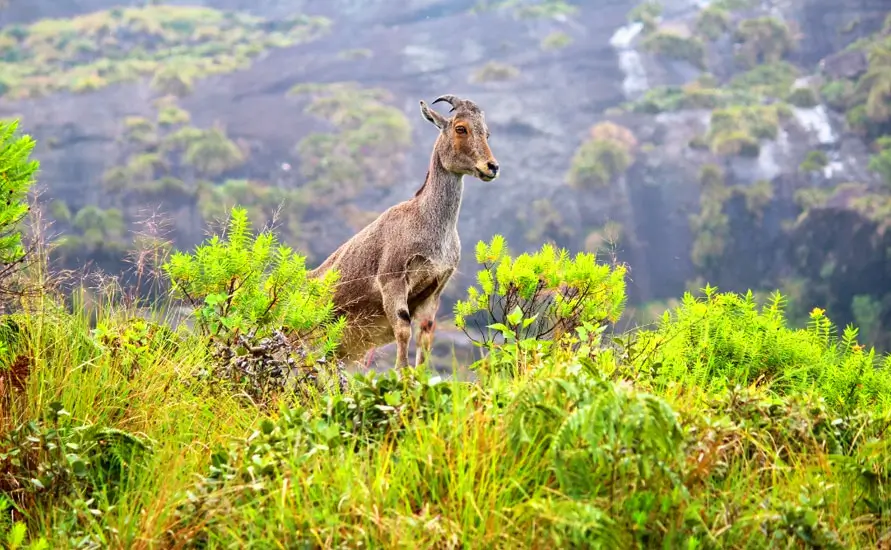
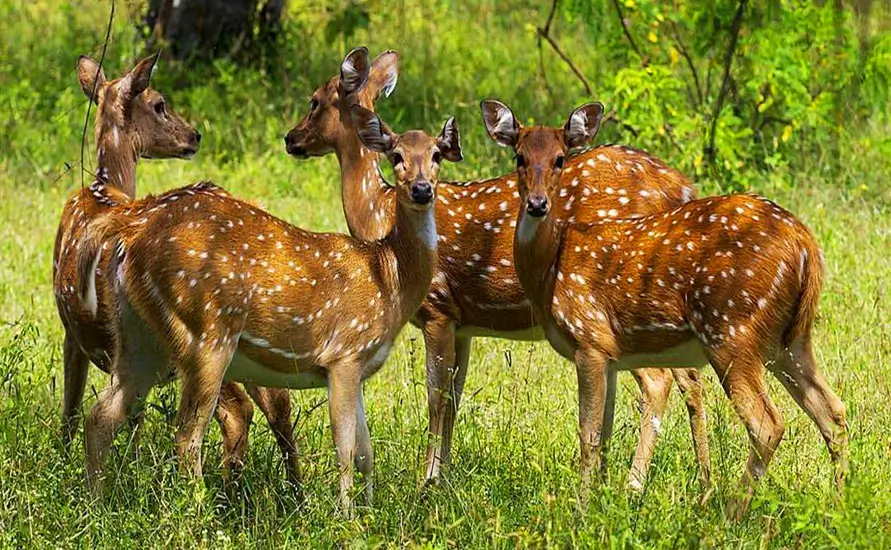
Lions in Gir are often seen resting in the shade during the day, so trackers rely on alarm calls from chital and langurs, pugmarks in the dust and reports from other vehicles. Males here have a shorter mane than African lions and a fold of skin along the belly, which your guide will point out if you are lucky enough to watch one at close range. The forest is also home to a healthy leopard population, along with sambar, nilgai, wild boar, striped hyena and the small four-horned antelope, or chousingha. Drivers must stay on the tracks, so patience matters more than speed.
After a late breakfast and a midday rest at the resort, the afternoon safari usually starts in the mid-afternoon and runs until sunset. The light becomes warm and soft, and lionesses with cubs sometimes move to the riverbeds to drink. Talk in low voices, switch phones to silent and never stand up or lean out of the gypsy. Between drives, look around the resort grounds for Indian peafowl, grey francolin, rufous treepie and the crested serpent eagle calling overhead. Your naturalist keeps a sightings log, which helps plan where to focus the remaining drives. Overnight in Sasan Gir.
A second morning on the Gir Jungle Trail usually takes you on a different route from yesterday, because routes rotate through the forest department's allocation system. Each route has its own character: some follow the dry streams lined with jamun and karanj trees, others climb over rocky ridges where you can look down across a sea of teak. Gir is also good for birds of open forest, including the Indian pitta in the warmer months, the changeable hawk-eagle and the endangered white-rumped and Indian vultures. Maldhari herders, who keep buffalo in small forest settlements called nes, still live inside parts of the sanctuary.
In the afternoon you visit Devalia, the Gir Interpretation Zone, about 12 km from Sasan. It is a fenced area of natural forest where lions, leopards, deer and antelope live in a large enclosed space, and forest department buses and gypsies follow a fixed loop. The chances of seeing a lion here are high, which makes it useful for families and photographers, but it is not the same as tracking free-ranging animals in the open forest, and your naturalist will be honest about the difference. Devalia has one weekly closure day, which we plan around when we fix your program.
Some Jungle Trail routes run past the Kamleshwar Dam on the Hiran River, the largest reservoir in Gir, where mugger crocodiles haul out on the mud and painted storks fish in the shallows. The Gir forest also feeds several rivers that supply water to towns across Saurashtra, and your naturalist can explain why this patch of dry forest matters well beyond the lions. Dinner is back at the resort, with a chance to look through the day's photographs and compare notes on the different prides you have seen so far. Overnight in Sasan Gir.
Your fourth and last Gir National Park safari sets off at first light. Three drives in, the routine feels familiar, and many guests find the final drive the most rewarding, because they have learned to read the forest themselves: the bark of a chital, a sudden stillness among the langurs or fresh tracks crossing the trail. In winter the morning mist hangs low over the riverbeds, while in April and May the forest thins out and animals gather near the remaining water holes. Your naturalist will review the trip's sightings with you before you leave the park gate.
After breakfast and checkout you begin the long return to Ahmedabad, following the same highway through Junagadh and Rajkot. If you would rather break the day, we can arrange a stop at a roadside dhaba known for simple Kathiawadi cooking, or a short visit to the old palace quarter of Gondal, where a royal car collection is kept. Most of the drive is on a good divided road, and your driver plans comfort stops roughly every two hours. Use the time to back up your photographs, because tomorrow brings an early flight to the south.
Evening brings you back to Ahmedabad, this time to an airport-area hotel, so the morning flight needs no long transfer. If you still have energy, the night food market at Manek Chowk opens after the jewelry shops close, and stalls sell pav bhaji, kulfi and the famous chocolate sandwich that the city's students love. Most guests, though, settle for a quiet meal and bed by ten. Repack so that safari clothing, binoculars and camera gear stay in your hand luggage for the flight to Karnataka, and keep a power bank charged for the long transfer day. Overnight in Ahmedabad.
Soon after sunrise you are at the terminal for the domestic flight to Bangalore, with a flying time near two and a half hours over most of the Deccan plateau. Our Karnataka driver meets you outside arrivals at Kempegowda International Airport with a fresh car and drives you south-west toward Mysore and the forests beyond. Traffic around Bangalore can be slow, so the driver uses the expressway where possible. Lunch is at a highway restaurant serving South Indian meals or north Indian dishes, and the scenery changes from city to sugarcane fields and coconut groves.
The final stretch beyond Mysore runs through farming villages to the edge of the Kabini reservoir, formed by a dam on the Kabini River on the southern side of Nagarhole National Park. Late in the day you reach a jungle lodge on the Kabini backwaters, which serves all meals on a full-board basis. Your naturalist briefs you on the safari schedule for the next three days, and you can sit by the water as herons, cormorants and river terns fly past at dusk. Overnight in Kabini.
Kabini has become one of the best-known wildlife areas in southern India, and the reason is visible on your first morning drive. The forest here is moist and dry deciduous, with tall teak, rosewood and bamboo, and it supports one of the highest densities of herbivores in Asia. Chital move in large herds, gaur graze in clearings, and tigers and leopards are possible on any drive in good season. Kabini is also known for a melanistic leopard that has been photographed here over several years, though such sightings are rare and never guaranteed. Safari zones and vehicles are allocated by the forest department.
Breakfast follows the morning drive, and the hot hours after it are yours for sleep, reading on the veranda or a slow birding walk around the lodge. Malabar pied hornbills, Indian scimitar babblers, crested serpent eagles and the noisy jungle babblers are all common around the camps. Your naturalist can lend you a field guide and help you start a trip list. Keep a hat, sunscreen and a refillable water bottle close at hand, because single-use plastic is not allowed inside the reserve and the forest department checks vehicles at the gate.
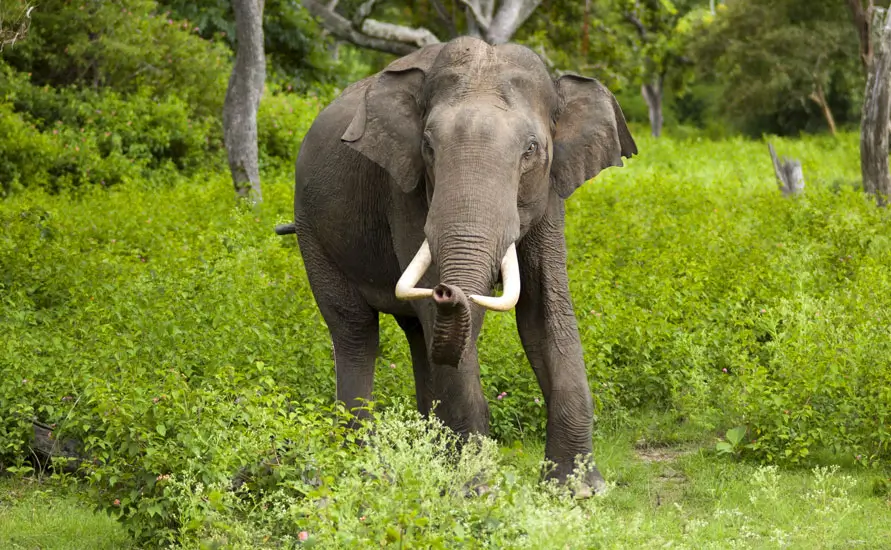
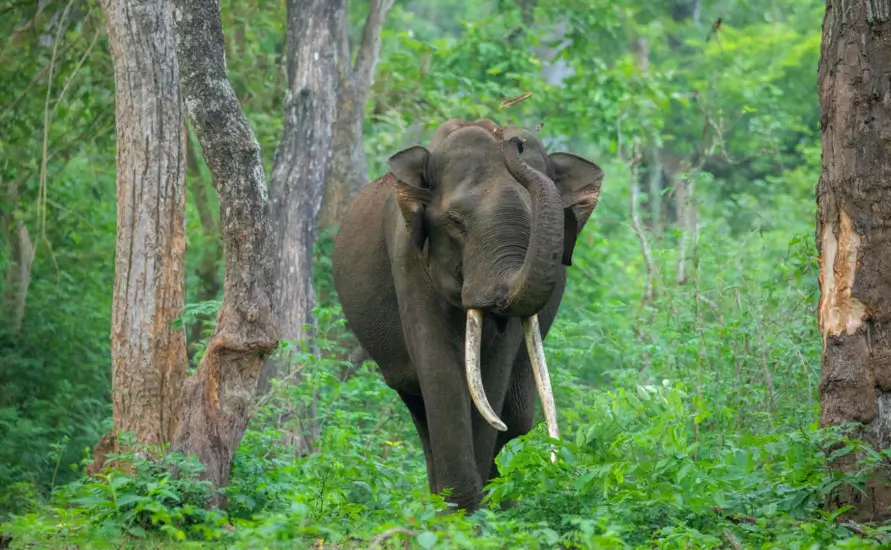
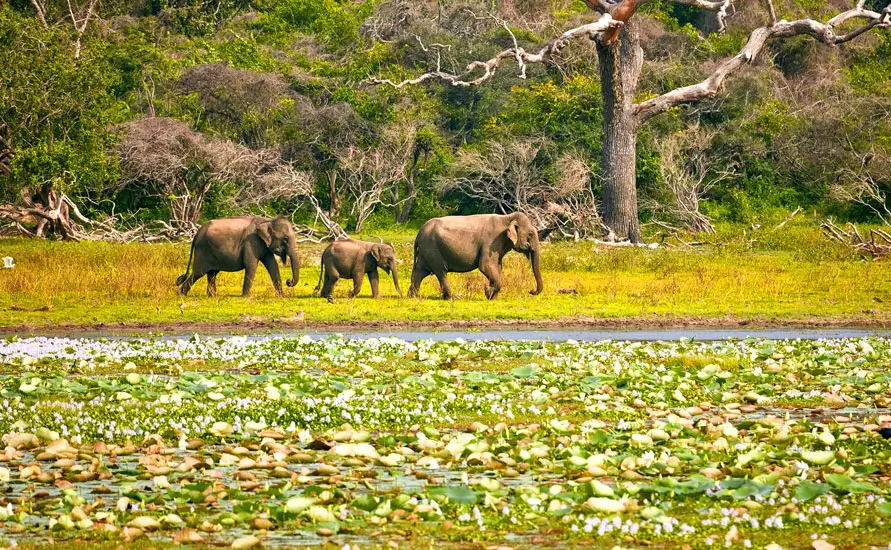
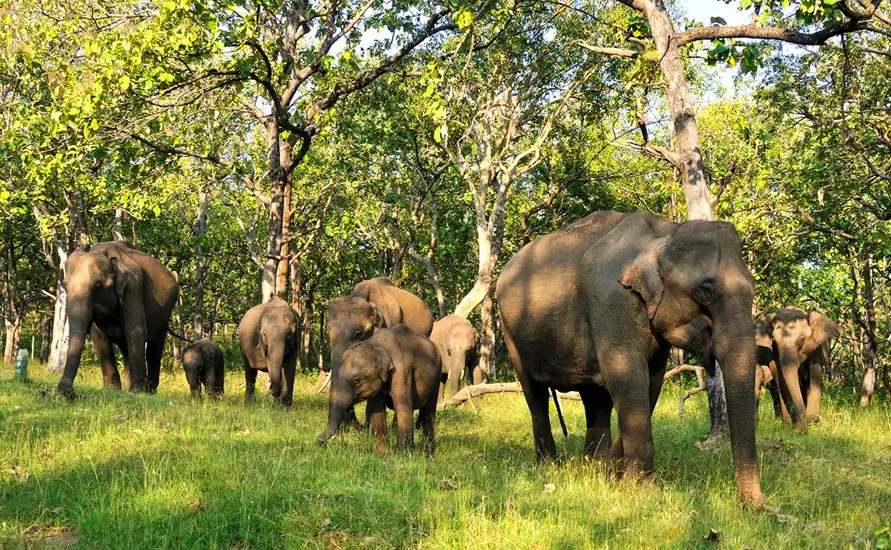
In the afternoon you head out by boat on the Kabini backwaters, the reservoir that borders the national park. From January to May, as the water level drops, fresh grass grows on the exposed shoreline and large herds of Asian elephants come down to feed, sometimes dozens at once. From the water you may also see marsh crocodiles, smooth-coated otters, ospreys and grey-headed fish eagles. The boat keeps a respectful distance from the animals, and engines are switched off when elephants are close. Dinner is at the lodge, often with a short wildlife presentation afterwards. Overnight in Kabini.
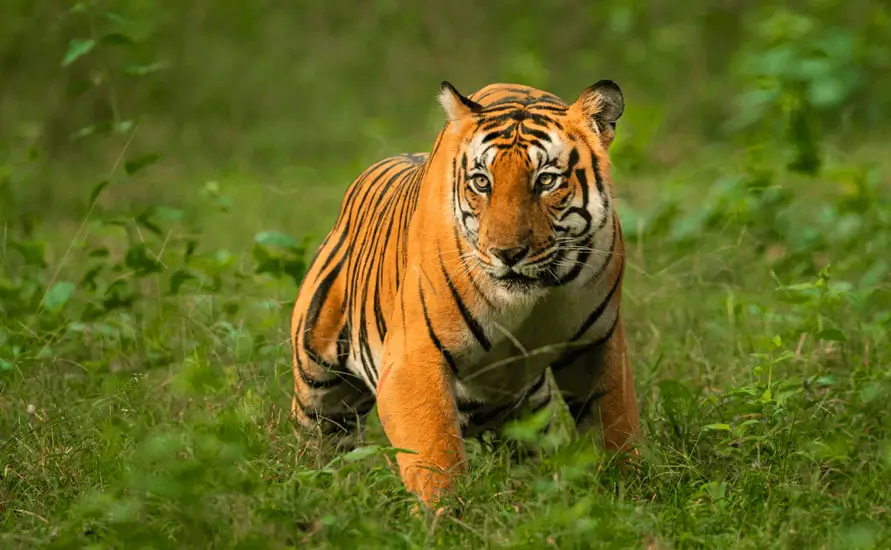
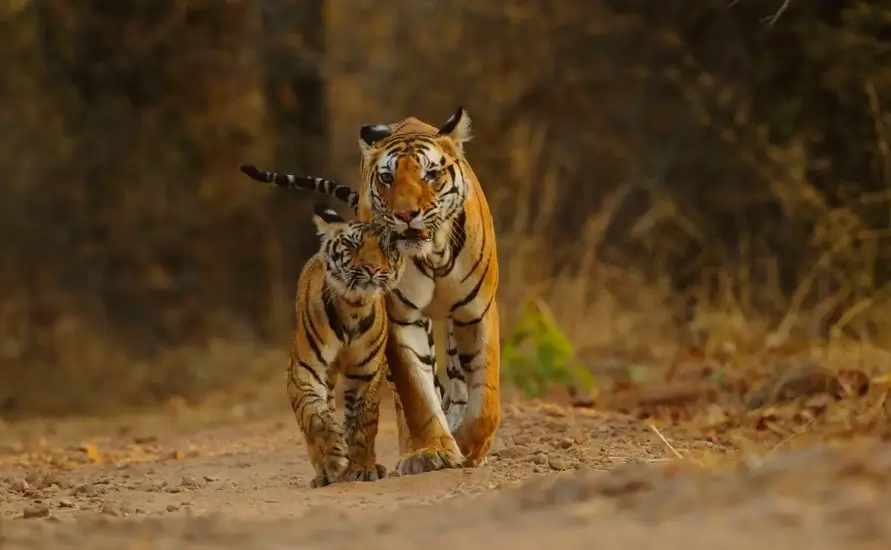
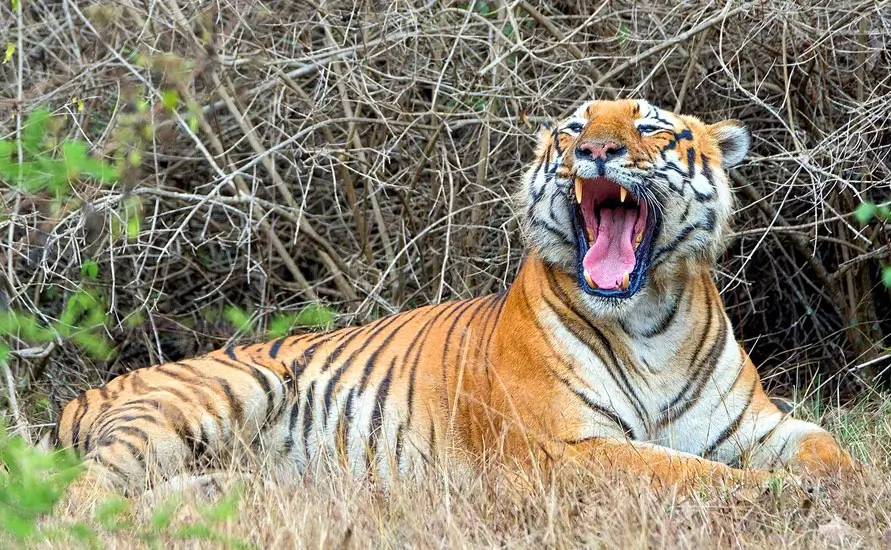
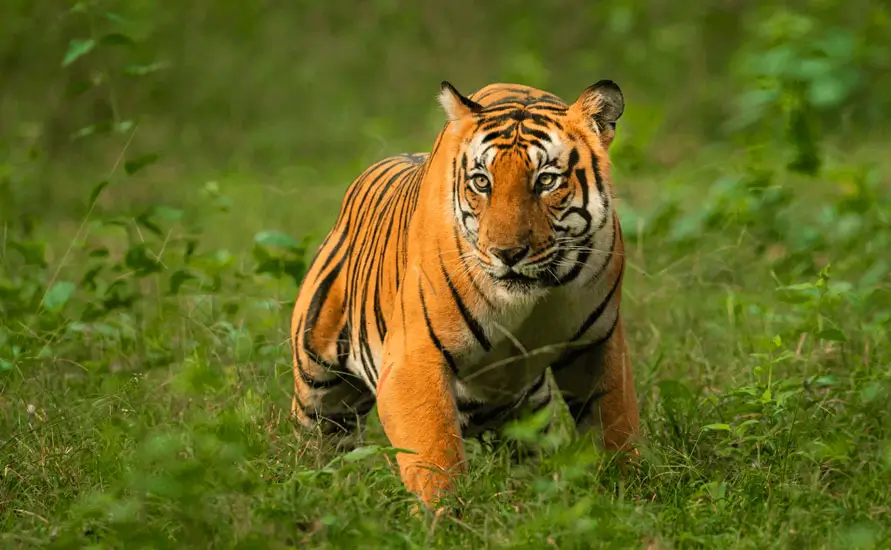
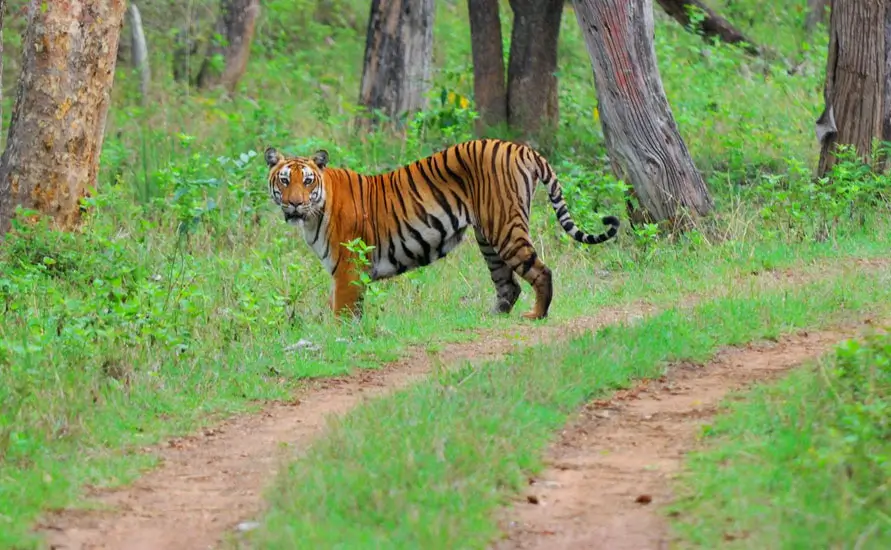
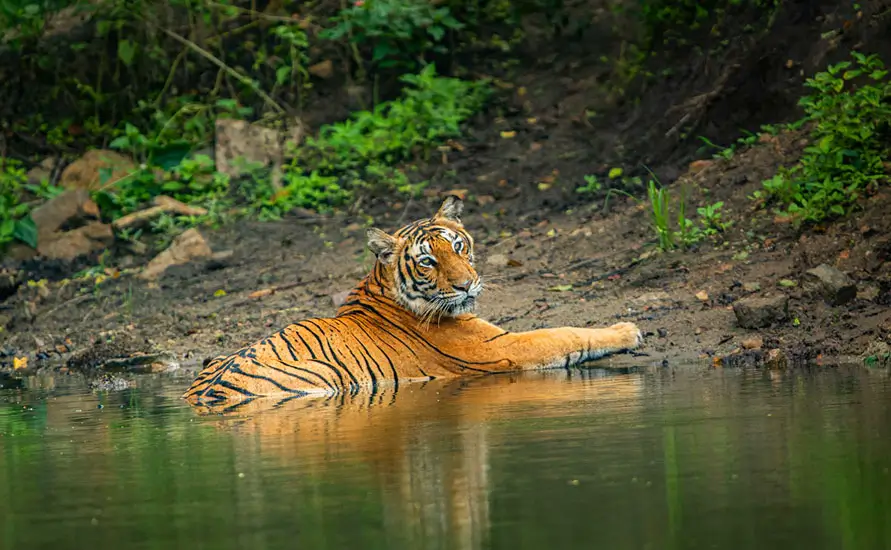
Your schedule holds a pair of Nagarhole jeep drives: one leaving at the gate opening, the other after tea. Nagarhole National Park rewards repeat visits because each zone has its own character. Leaving at opening time is worth it: tigers tend to patrol the forest roads in the cool hour after sunrise, before the heat sends them into cover. Your naturalist listens for the deep alarm call of the sambar and the sharp bark of a muntjac, both signs that a predator is moving. Dholes, the Indian wild dogs that hunt in packs, are also seen here regularly and are worth as much attention as the big cats, since healthy packs are now rare across much of their range.
Between the drives you have time to compare Gir and Kabini. Gir is open, dry and rocky, with lions living close to people; Nagarhole is greener and denser, with a wider range of large mammals including elephants, gaur and sloth bears. Many guests are surprised by how different the two forests feel only a week apart. If you would like a change from the jeep, certain lodges arrange a guided walk on village land outside the reserve or a trip in a round coracle boat, both optional and dependent on the season and water levels.
The afternoon safari returns at dusk, when the park gates close and all vehicles must leave the forest. There are no night drives inside the national park, so evenings are spent at the lodge, often around a campfire with your naturalist. Use the time to ask about conservation work in the region, such as camera-trap surveys, the relocation of villages from the core and the human-elephant conflict that farmers on the forest edge deal with every harvest season. Charge your batteries and clear your memory cards tonight, because you move to Bandipur tomorrow. Overnight in Kabini.
After a relaxed breakfast at the lodge you drive south to Bandipur, whose forest runs unbroken into Nagarhole to the north, and into Tamil Nadu's Mudumalai and Kerala's Wayanad sanctuary to the south. All of these protected areas belong to the wider Nilgiri Biosphere Reserve, among the largest connected forest blocks in India and home to a large share of the country's wild tigers and Asian elephants. Two hours of rural roads lead you through banana plantations, cotton fields and small villages where farmers dry turmeric and chilies on the roadside.
Two nights follow at a forest-edge resort near the park boundary, again with all meals included. Bandipur Tiger Reserve was one of the first reserves declared under Project Tiger in 1973 and was once the private hunting ground of the Maharajas of Mysore. Compared with Nagarhole, the country here feels drier and more open, with stretches of scrub and teak and the blue outline of the Nilgiri hills to the south. Night traffic on the national highway crossing the reserve has been banned for years to cut road kills, a sign of how many animals use these roads.
At the Bandipur safari counter, run by the forest department, your afternoon drive is assigned, by jeep or canter depending on what the department allocates. Routes are fixed and vehicles must stay on the tracks. Tigers, leopards, elephants, gaur, sambar and chital are all possible, and Bandipur is good for raptors such as the changeable hawk-eagle and the white-eyed buzzard. Your naturalist will help you scan the ridge lines and the water holes as the sun drops. After dark there is little to do except eat well and sleep, since the next drive leaves before first light. Overnight in Bandipur.
Today brings two more drives in Bandipur Tiger Reserve, at dawn and in the late afternoon. Morning mist often lies over the valleys between November and February, and elephants appear out of it on the forest roads with little warning. The reserve has a strong tiger population, and in good years many visitors see one, but the dense undergrowth after the monsoon can make sightings harder. Your naturalist adjusts expectations honestly and focuses on everything else the forest offers: grey langurs, Malabar giant squirrels, Indian rock pythons sunning on rocks and the white-browed bulbul chattering in the lantana.
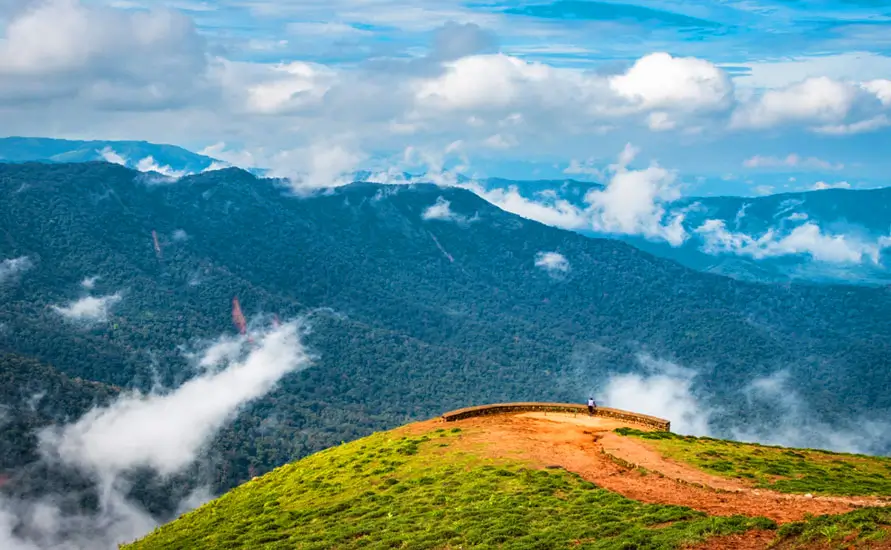
Between the drives you can visit the Himavad Gopalaswamy Betta, a hill temple dedicated to Krishna at about 1,450 meters inside the reserve. Private vehicles are not allowed up the final stretch, so visitors use the state buses from the base, and the hill is often wrapped in cloud, which is where the word himavad, meaning misty, comes from. When the cloud lifts, the summit looks out over the Bandipur forest toward the Nilgiris. The temple is open during the day only, and the forest department sometimes restricts access, so we confirm the situation locally.
The final safari of the trip returns at sunset. By now you have spent more than a week watching lions, leopards and, with luck, tigers in four different forests, and your naturalist can help you put together a full species list. Tonight's dinner is your chance to say thank you to the drivers, trackers and guides who have looked after you in Karnataka. If you have more time, we can add an extra night here or a short stay in Mudumalai on the Tamil Nadu side, which is just across the state border. Overnight in Bandipur.
After breakfast you drive north to Mysore, the old capital of the Wodeyar kings, who ruled the region for more than five centuries. The road passes through Gundlupet, a farming town surrounded by sunflower and marigold fields that bloom in the cooler months. Lunch is at your hotel, either a heritage property or a comfortable modern one. Mysore is calm, clean and green compared with Bangalore, with wide avenues, shady parks, old colonial buildings and a long tradition of sandalwood carving, silk weaving and incense making, all of which you can see in the small workshops around the city.
Your afternoon begins at Mysore Palace, put up in the early twentieth century after an older wooden palace burned down. The Indo-Saracenic building mixes Hindu, Islamic and Gothic elements, and its stained-glass ceilings, carved doors and painted wall panels showing the Dasara procession are worth a slow look, ideally with your guide explaining the scenes one by one. Everyone hands in their shoes at a counter near the gate, and photography inside the main halls is not allowed. Sunday and public holiday dates let you stay for the brief evening illumination, when close to 100,000 bulbs outline the building.
Late in the day the car climbs Chamundi Hill for the Chamundeshwari Temple; the goddess worshipped here is said to have slain Mahishasura, the buffalo demon who lent Mysore its name. On the descent, a stop at the huge 17th-century Nandi, cut from a single rock, is followed by a look over the city lights. Later, wander the Devaraja Market, where flower sellers pile jasmine and marigold beside pyramids of colored kumkum powder. Dinner is at your own pace as your last evening in India, with a guide recommendation on hand for a local place serving Mysore masala dosa or a full banana-leaf meal if you want one final taste of Karnataka cooking. Overnight in Mysore.
Once you have checked out, the last road leg runs to Kempegowda International Airport in Bangalore, a drive of about four hours depending on city traffic. The departure time is set around your international flight, with a comfortable margin for check-in. Should time allow, a halt at the old river-island capital of Srirangapatna or at Channapatna with its lacquered wooden toys breaks the drive. Guests with a midnight departure can add a day-use room at an airport hotel for an extra charge.
Over thirteen days you have tracked Asiatic lions in Gir, walked through the old pols of Ahmedabad and searched for tigers and leopards in Kabini and Bandipur, two of the most important forests in southern India. Your naturalist will share the species list and any notes for future trips. Many of our guests come back for Kaziranga's rhinos, the birdlife of Kerala or the tiger reserves of central India, and our team is happy to plan the next one. Safe travels home.
Your Journey

N.S. Rathore & Mrs. Omlata Rathore · Managing Director
We still read every enquiry ourselves. Tell us the places you liked and our planners will send a day-by-day route with drive times and a clear price.
Every package can be customised and no pressure to book. A planner from our office replies within 24 hours with a route written for your group.
Fill this in and your planner will send a first draft itinerary.
Explore more
Kerala Backwaters Escape Kerala Backwaters Escape
 Kerala Backwaters Escape
 Kerala Backwaters Escape
 Kerala Backwaters Escape
 Kerala Backwaters Escape
 Kerala Backwaters Escape
 Kerala Backwaters Escape
 Kerala Backwaters Escape
 Kerala Backwaters Escape
 Kerala Backwaters Escape
 Kerala Backwaters Escape
 Kerala Backwaters Escape
 Kerala Backwaters Escape