 Kerala Backwaters Escape

Kerala Tour Packages
Kochi – Thrissur (Pooram) – Guruvayur – Munnar – Alleppey – Kochi
At a glance
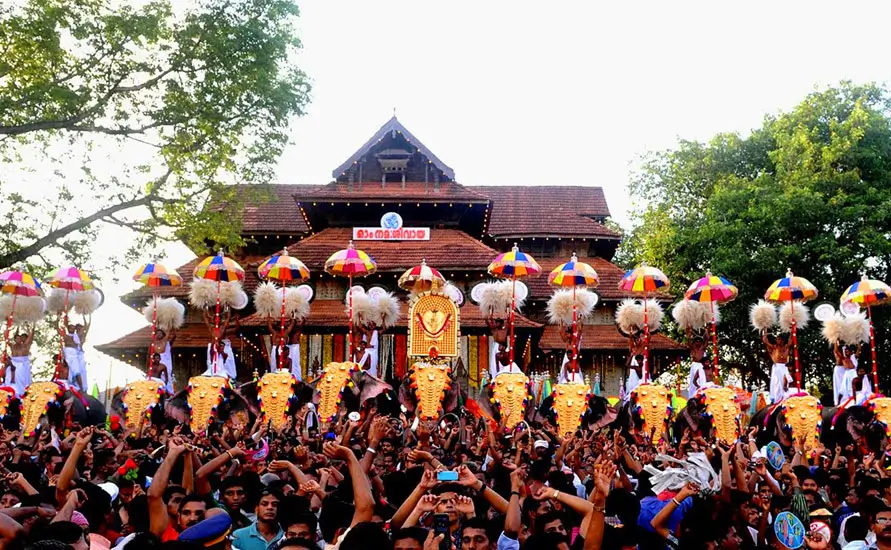
Drummers, parasols and more than thirty caparisoned elephants fill a single sun-baked square in central Kerala for one day each spring, and a million people come to watch. Our Kerala tour with Thrissur Pooram puts you in that crowd beside a Thrissur-born guide who knows where to stand, when to move and what each ritual means. The festival falls in the Malayalam month of Medam, which lands in late April or early May, and the exact date changes every year with the temple calendar, so we confirm it with you before booking flights.
Around the festival, the route stays easy to manage. You arrive in Kochi, spend two nights in Thrissur so you never have to drive in or out on Pooram day itself, then continue to the Krishna temple town of Guruvayur, the cool tea slopes of Munnar and a private houseboat on the Alleppey backwaters before flying home from Kochi. This Thrissur Pooram tour package comes with a private air-conditioned car and driver, English-speaking guides, and hotels picked for location, which matters a great deal when roads around the Vadakkunnathan temple close to traffic.
Pooram is a temple festival first and a spectacle second. Elephants are part of the ritual procession, and we treat their presence with care: you watch from public viewing areas, keep a safe distance and never ride or feed them. Entry to the temple interiors at Vadakkunnathan and Guruvayur is for Hindus only, while the Pooram grounds outside are open to everyone. Expect heat in the mid-30s Celsius, heavy crowds and very loud fireworks; light cotton clothes, a hat and earplugs make the Kerala festival tour much more comfortable. Families with young children should talk to us about pacing first.
Whatever hour your plane lands at Cochin International Airport, a driver from our team is already parked and waiting, and he walks you from the terminal to an air-conditioned car loaded with chilled water and a small towel for the April heat. Allow roughly seventy-five minutes to Fort Kochi, with the route crossing the backwater bridges near Ernakulam and the naval base island before the old harbor quarter comes into view. Your hotel sits a few lanes back from the seafront, so you can step out later without needing the car at all. Check-in normally starts at 2 pm.
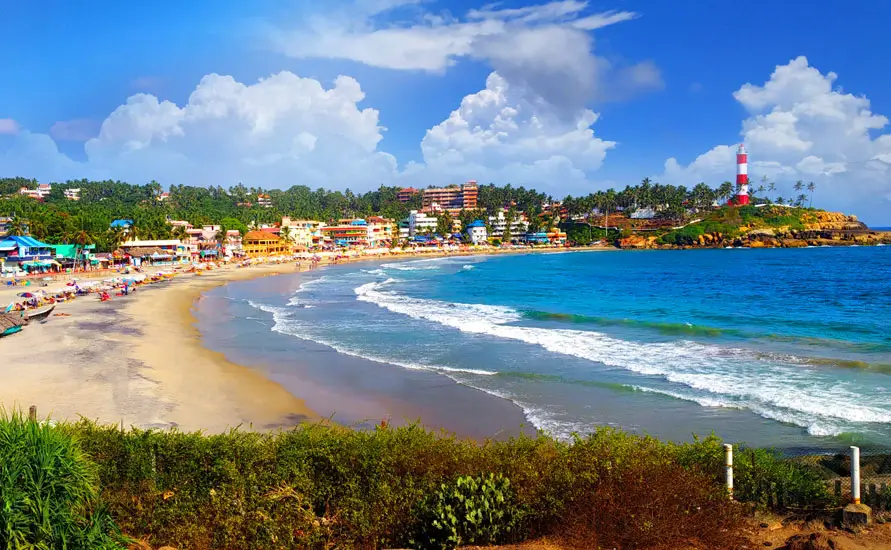
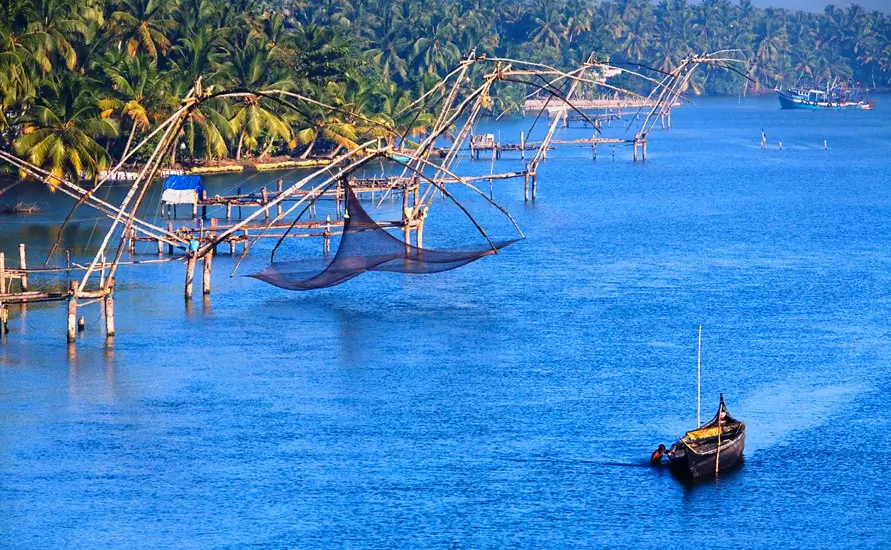
Spring is the hottest part of the year on the coast, and the smartest plan for the first afternoon is a cool shower, a long lunch and some sleep. Around 4:30 pm, when the sun softens, your guide knocks on the lobby door for a gentle stroll. You pass the sea wall where fishermen haul up their great cantilevered nets with a rhythmic call, the old Portuguese and Dutch bungalows now turned into cafes, and Princess Street with its pastel shopfronts. The guide gives a first briefing on the festival ahead: who takes part, how long it lasts and how to stay comfortable in a crowd.
Sunset on the Fort Kochi beach path is a social hour, with snack carts frying banana and chili fritters and families walking along the promenade. If you want something quieter, a rooftop restaurant facing the harbor serves grilled seafood, Kerala-style prawn curry and cold lime soda. Pick up a cotton mundu or a light scarf in one of the shops on Burgher Street; you will want breathable fabric for Pooram day. Ask your guide to help choose a hat as well, since shade at the festival grounds is limited. Overnight in Kochi.
Morning light is the best time for Mattancherry, before the lanes get warm. Your guide starts at the Dutch Palace, whose wall murals of Krishna and Rama are among the finest in Kerala; it does not open on Fridays, so the plan shifts if your date falls on one. A few steps away the Paradesi Synagogue, with its Chinese floor tiles and Belgian chandeliers, welcomes visitors on most days, though its doors stay closed each Friday and Saturday and on Jewish holy days. Spice merchants in Jew Town still trade ginger and pepper in bulk, and the scent of drying turmeric drifts out of the old godowns on warm mornings.
After an early lunch you leave Kochi and drive north toward Thrissur, the cultural capital of Kerala. The road passes Aluva and Angamaly, then the town of Chalakudy, and on an ordinary weekday the drive runs to roughly 150 minutes, though it can be slower in the run-up to the festival. Your hotel is within reach of the Swaraj Round, the circular road that wraps around the Vadakkunnathan temple and the open Thekkinkadu ground. Staying close is important because police close several roads during the festival, and walking becomes the only practical way to get around.
In the days before Thrissur Pooram, the two main participating temples, Thiruvambady and Paramekkavu, put their festival ornaments on public view in an event known as the aana chamayam pradarshanam. Glittering golden headpieces for the elephants, peacock-feather fans, white yak-tail whisks and dozens of parasols are laid out in halls around town, and the crowds come to compare them. If the festival calendar allows, the evening may also bring the sample fireworks, a shorter rehearsal of the big display. Your guide tells you what is happening that particular year and takes you to whatever is on. Overnight in Thrissur.
Pooram day begins early, when smaller temples from the surrounding villages send their deities, carried on elephants, toward the Vadakkunnathan temple in a sequence that has been followed since the late 18th century, when the Kochi ruler Sakthan Thampuran shaped the festival into its present form. Once breakfast is done, the guide walks with you to a good spot along the route. In the late morning, the Thiruvambady side performs the Madathil Varavu, a panchavadyam ensemble of timila drums, maddalam, cymbals, horns and the conch, building slowly in volume over more than two hours.
Early in the afternoon the Paramekkavu group takes over with the Ilanjithara Melam, a chenda drum ensemble of a couple of hundred players performed within the temple precincts near an old ilanji tree. Entry rules for the temple enclosure apply, so your guide finds the best public place to hear it as the beat rises and the crowd waves its hands in time. Drink plenty of water, take a break in the shade or return to the hotel for an hour if you need to; the main event of the day is still to come. Shoes may need to be left in some areas, so wear sandals.
Toward 5:30 pm, the two sides line up their elephants face to face on the Thekkinkadu ground in front of the southern gateway. This is Kudamattam, the parasol exchange, when teams on top of the elephants raise one set of brightly sequined umbrellas after another, each design kept secret until the moment it appears. The crowd roars at every change. Watch from the designated viewing areas only and follow police instructions. The great fireworks display starts around 3 am, and if you want to see it, your guide will lead you to a safe spot at a distance if you want to see it. Overnight in Thrissur.
Whether or not you stayed up for the fireworks, the morning after Pooram starts slowly. Breakfast can wait until nine, and then comes the Pakal Pooram, the daytime procession in which the deities return to the Thekkinkadu ground for a last appearance with elephants and drums. Around noon, the two temple groups take formal leave of each other in the upacharam cholli piriyal, a short farewell ceremony that marks the end of the festival for another year. It is calmer than the day before, and many locals say it is their favorite moment, as the crowds thin out and the town begins to breathe again.
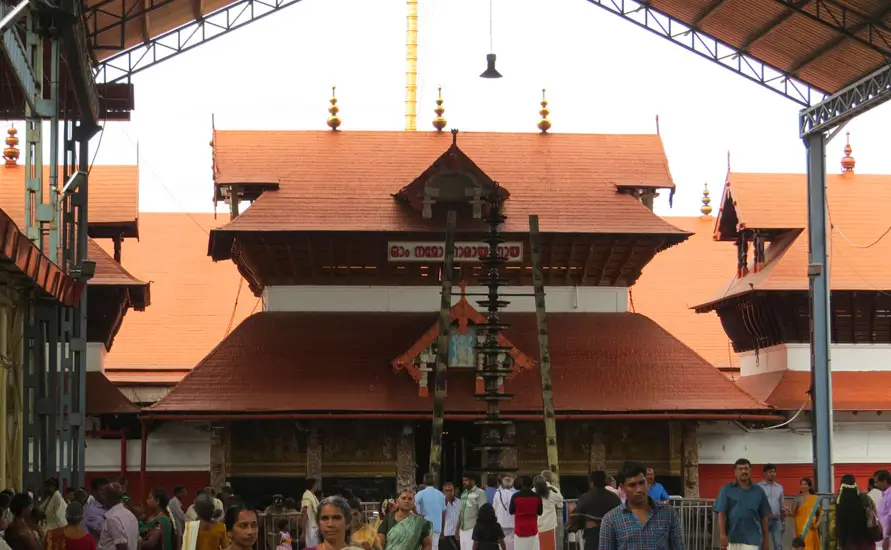
Following lunch, a one-hour ride westward brings you to Guruvayur, home to one of the most important Krishna temples in South India. Your hotel is close to the temple, which means an easy walk in and out. Inside the temple only Hindus are permitted, and staff insist on traditional clothes: a mundu and bare chest for men, and a saree or salwar kameez for women. Bags, phones and cameras are left at the cloak counters. The guide explains the evening rituals, the role of the temple musicians and the lamps that are lit around the outer walls at dusk.
Visitors who do not go inside the temple can spend an hour at the mural painting institute run by the temple board, where students work on large panels in mineral reds, ochres and greens. The surrounding bazaar sells bell metal lamps, framed Krishna prints and the small sandalwood paste packets that pilgrims take home. Dinner is vegetarian, as is the custom in Guruvayur, and many restaurants serve a simple thali on a steel plate with rice, sambar and two or three vegetables. After two packed days of festival, an early night is a sound idea before the long drive to the hills. Overnight in Guruvayur.
Leave Guruvayur by about 8 am, while the roads are still clear and the air is cooler. The route heads back through Thrissur, then south to Angamaly and east toward Kothamangalam, where lowland rubber estates give way to forested slopes. Your driver plans a coffee stop after about two hours and lunch at a clean roadside restaurant near Adimali. The first part of the drive is on busy plains highways, while the second half climbs steadily through ghat bends, so it is worth taking motion sickness tablets beforehand if you need them. Total driving time is roughly six hours with breaks.
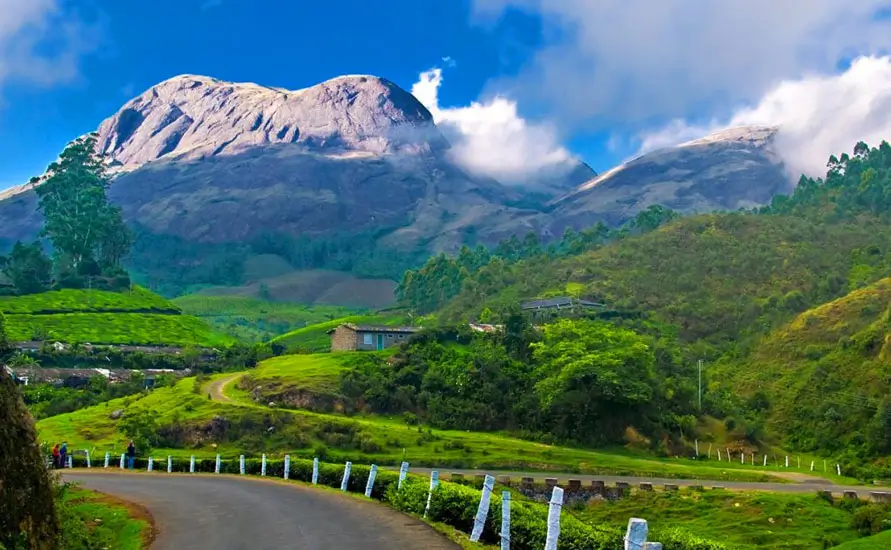
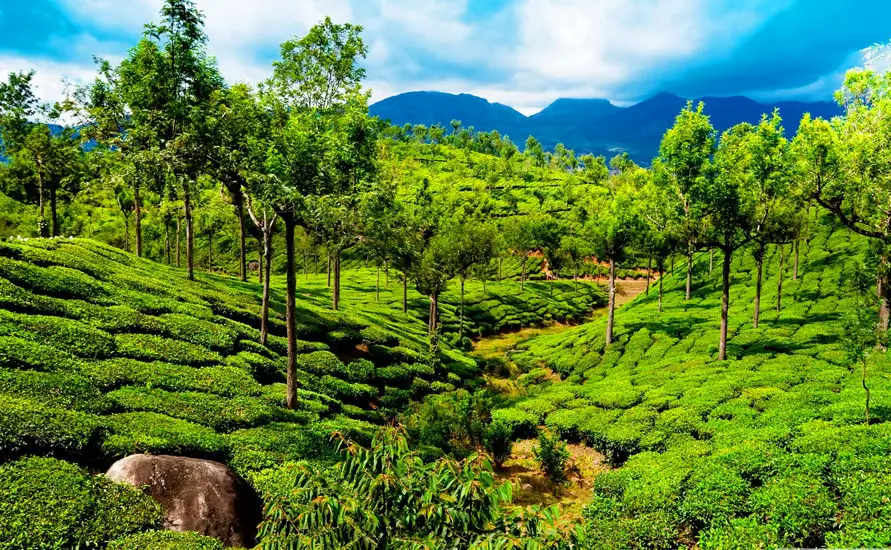
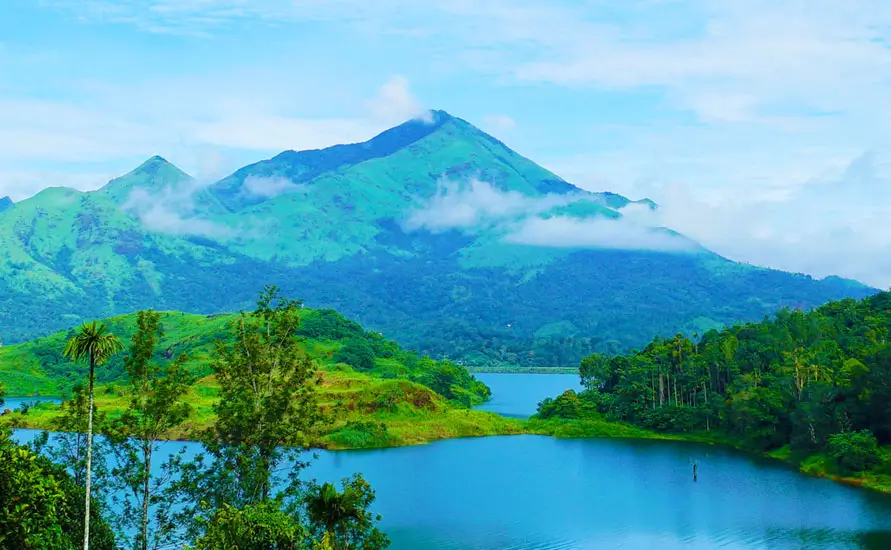
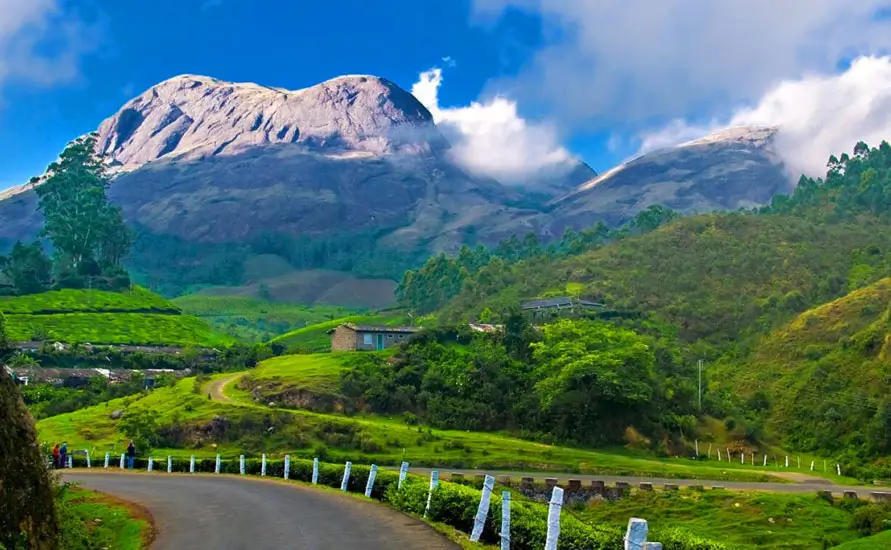
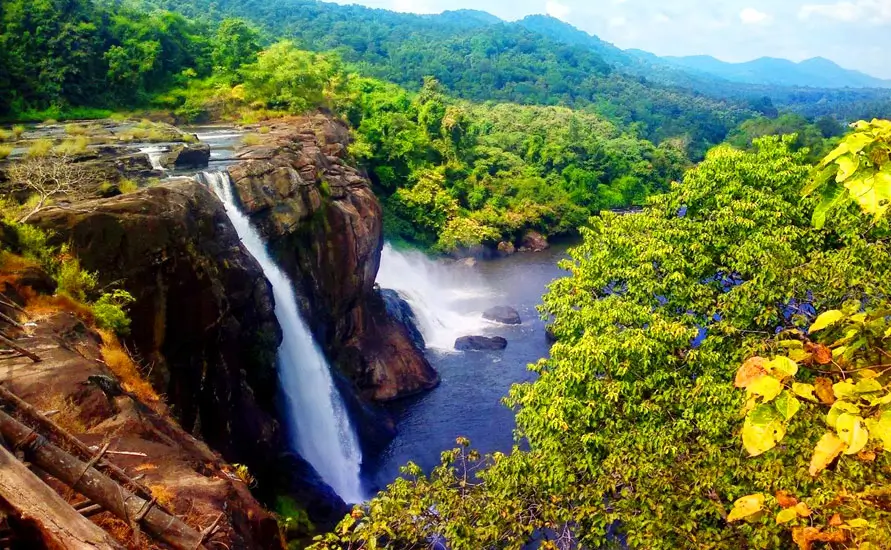
Past Adimali, the forests thicken and you pass a series of waterfalls that tumble down the rock walls next to the road, although in late April and May they are much thinner than after the monsoon. Cardamom plantations shaded by tall trees line the hills, and the air carries a faint spice smell. Small stalls sell honey, pepper and homemade chocolate, and the driver can stop at one if anything catches your eye. Pack a light jacket within reach, since the temperature in Munnar is far cooler than on the Thrissur plains, a real relief after the festival heat.
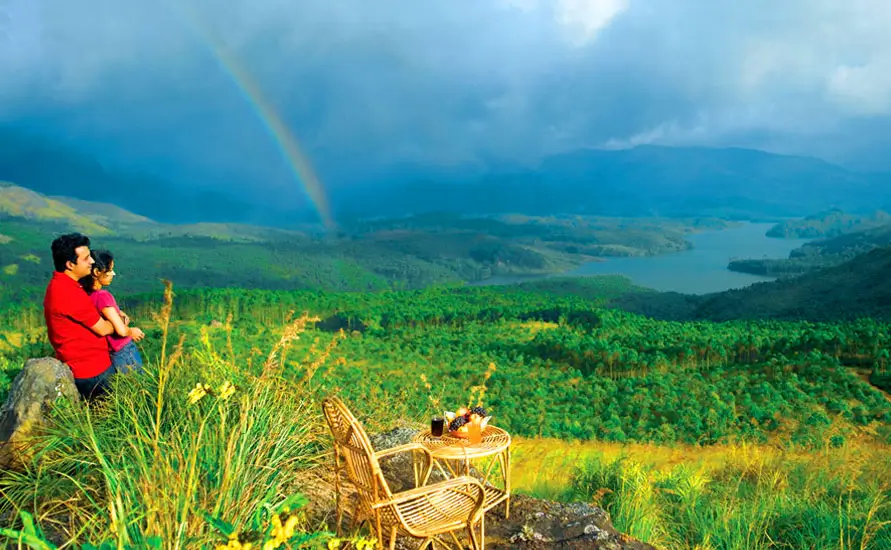
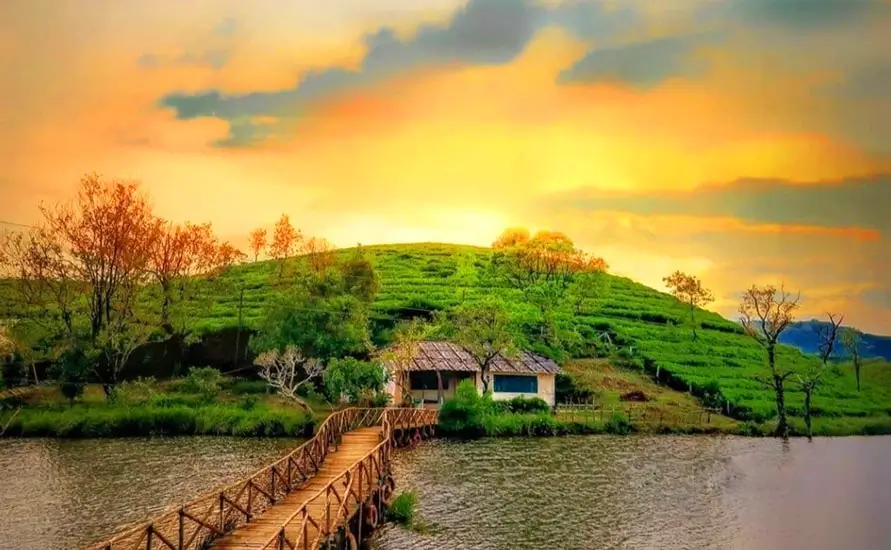
Munnar comes into sight by around three, and your room at a tea estate property or hillside hotel looks straight across the valley. Nothing is planned until dinner. A walk down a plantation track, a book on the balcony or an Ayurvedic oil massage at the spa all fit the hours, which is a good way to ease the strain of two days of standing in the crowds. Evening temperatures can drop to around 15 degrees even in May, and many guests enjoy a bonfire or a cup of ginger tea before dinner. Overnight in Munnar.
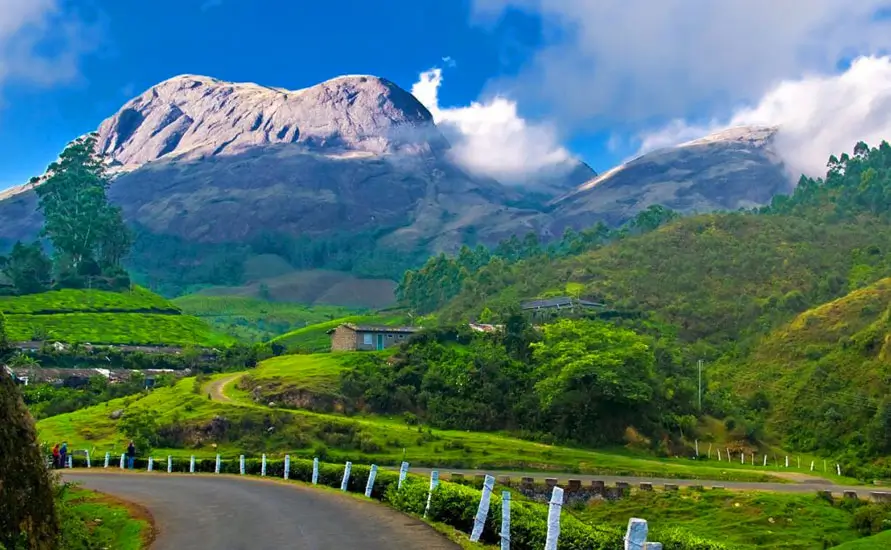
Spend the day in the green hills that made Munnar famous. Your guide starts at the Kanan Devan Hills tea museum, where a working factory shows how a leaf becomes black tea in a matter of hours, passing through long withering beds, the roller, the dryer and finally the grading sieves. The museum also displays old photographs from the British planting era and a small collection of colonial-era equipment. Tasting a fresh cup at the end of the tour, with notes on how different grades taste, makes it easier to choose which tea to buy for home. Most guests leave with a couple of packets.
Next comes Eravikulam National Park, where a shuttle bus takes visitors up to the Rajamala section and a short walking trail leads across rolling grassland and rocky outcrops. The park protects the Nilgiri tahr, a rare mountain goat, and visitors often see them near the path, though nothing is guaranteed. It is closed for calving in roughly February and March, which is usually over by Pooram season. When the sky is clear, Anamudi, at 2,695 meters, shows its dark summit above the ridge. Wear good walking shoes and carry water, since there is little shade on the trail.
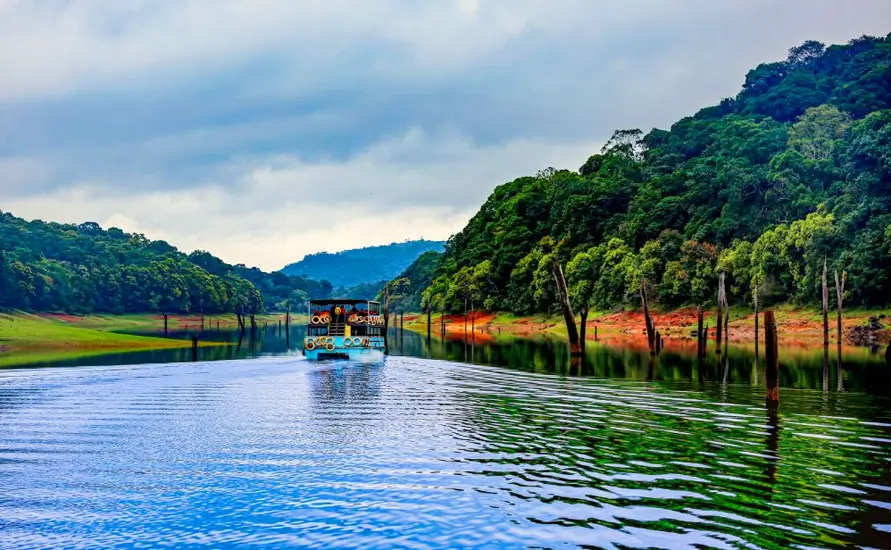
In the afternoon, the car follows the scenic road toward Top Station, stopping at Mattupetty dam, Echo Point and the Kundala lake, where pedal boats are available. The road runs past rolling tea gardens and eucalyptus groves, and at the end the viewpoint looks down into the Tamil Nadu plains from the edge of the Western Ghats. Afternoon mist can blank out the viewpoint quickly, so the order of stops may change based on the weather that day. After the drive back, you have the evening to wander the market or have a quiet dinner at the resort. Overnight in Munnar.
After an early breakfast, the descent from the hills begins. The road winds down through spice gardens and small towns to Kothamangalam, then crosses the flat central plains past Muvattupuzha and Kottayam. Pineapple farms, rubber trees and churches with tall white facades line the way. Your driver takes a break midway for coffee and fresh fruit. You reach the backwater town of Alleppey around lunchtime, with time to stretch your legs at the jetty before boarding. The crew helps load your luggage and shows you around the cabins, the dining deck and the upper sun deck.
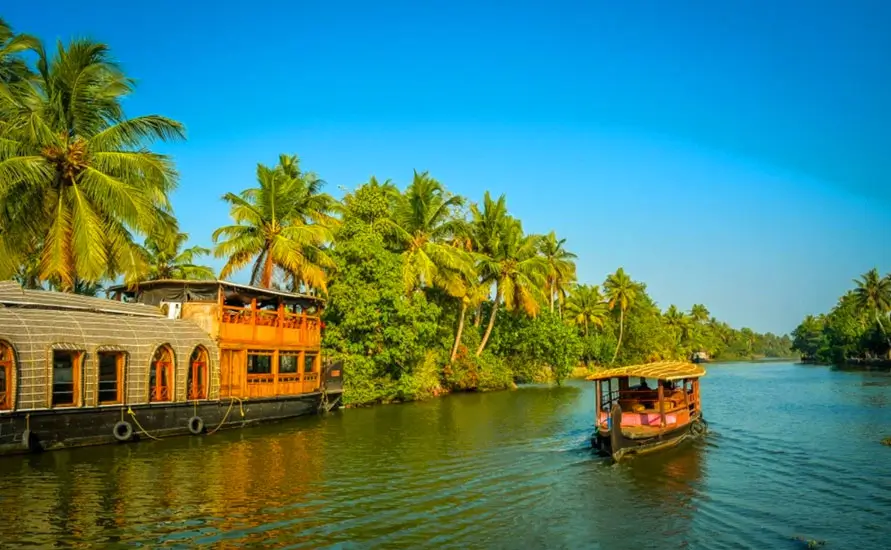
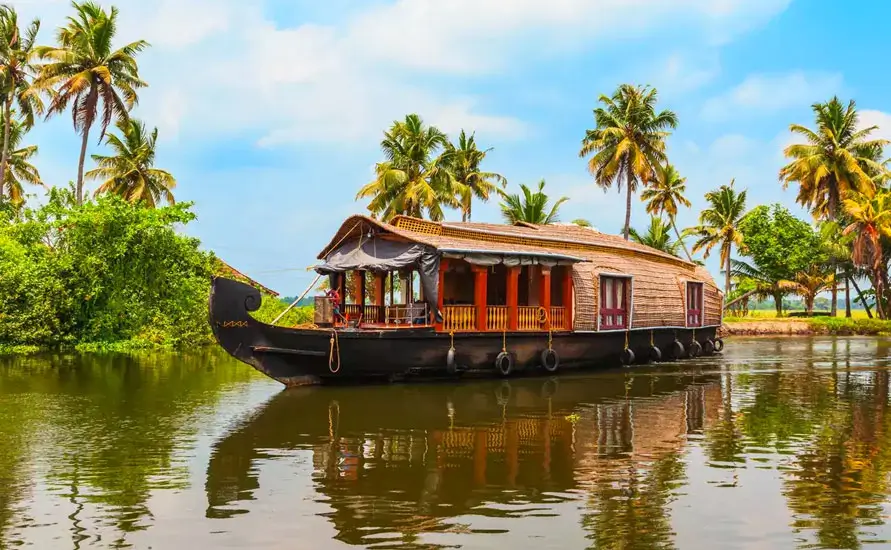
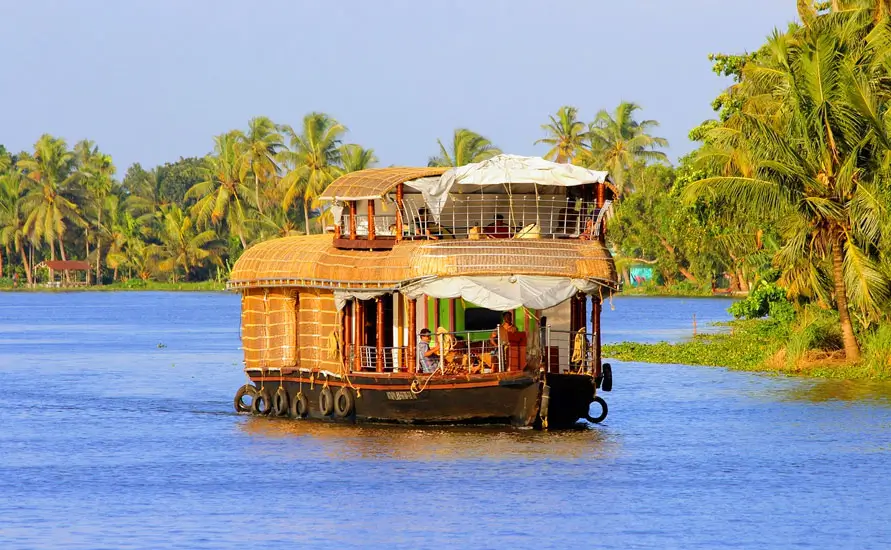
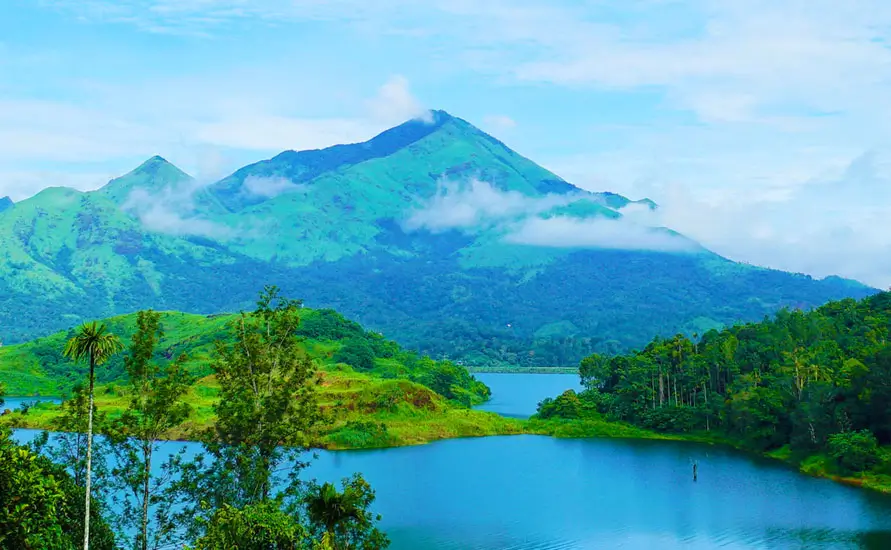
Once on board, the houseboat moves slowly into a network of canals, lakes and narrow waterways fringed with coconut palms and paddy fields. Lunch is served soon after departure, typically rice with a fish curry in coconut and kudampuli sauce, a vegetable thoran, pickles and pappadam, prepared by the boat's cook in a compact kitchen at the stern. The afternoon passes at the pace of the water, with village women washing clothes on stone steps, kingfishers on overhead lines and canoes loaded with coconuts heading to market. After the festival crowds, the quiet is welcome.
Around sunset, the boat pulls into a peaceful spot along the bank and stops for the night, as cruising is not permitted after dark. Tea comes up with hot banana fritters, and from the deck chairs the light fades over the paddy fields. Dinner may include chicken curry, a vegetable stew or a karimeen fish fry, a local specialty of the backwaters. Mosquito coils and repellent are provided. The crew sleeps in their own quarters at the rear of the boat, and the generator or battery powers the cabin air-conditioning through the night. Overnight on the houseboat.
Dawn on Vembanad's edges is cool and still, with mist lifting off the water as the first canoes appear. Breakfast is served on board before the boat returns to its jetty around 9 am. From the jetty your driver points the car north, and the 85 km run to Cochin International Airport usually fits inside two hours. Guests flying out near midnight often ask us to book a day-use room in Kochi at extra cost, which leaves time to shower and rest before check-in.
In eight days you have heard the drums of Thrissur Pooram, watched the parasols rise at Kudamattam, walked through tea country and drifted along the backwaters. Plenty of Pooram guests return for Onam in August or September, or for Theyyam in the village shrines of North Kerala between December and March, and we can build a second festival trip around either one. Safe travels home, and thank you for choosing us.
Your Journey

N.S. Rathore & Mrs. Omlata Rathore · Managing Director
We still read every enquiry ourselves. Tell us the places you liked and our planners will send a day-by-day route with drive times and a clear price.
Every package can be customised and no pressure to book. A planner from our office replies within 24 hours with a route written for your group.
Fill this in and your planner will send a first draft itinerary.
Explore more
Kerala Backwaters Escape Kerala Backwaters Escape
 Kerala Backwaters Escape
 Kerala Backwaters Escape
 Kerala Backwaters Escape
 Kerala Backwaters Escape
 Kerala Backwaters Escape
 Kerala Backwaters Escape
 Kerala Backwaters Escape
 Kerala Backwaters Escape
 Kerala Backwaters Escape
 Kerala Backwaters Escape
 Kerala Backwaters Escape
 Kerala Backwaters Escape