 Kerala Backwaters Escape

Kerala Tour Packages
Kozhikode – Wayanad – Kannur – Thrissur – Kochi – Munnar – Thekkady – Alleppey – Kumarakom – Varkala – Kovalam
At a glance
Most visitors see a narrow slice of Kerala: Kochi, a hill station, a houseboat and a beach. Our complete Kerala tour 15 days covers the whole length of the state instead, starting in the old Malabar port of Kozhikode and finishing on the sands of Kovalam, close to the southern tip of India. On the way you climb into the coffee and pepper country of Wayanad, watch ritual performance in Kannur, visit the classical arts school near Thrissur, and then follow the familiar southern circuit through Kochi, Munnar, Thekkady and the backwaters, before ending at the cliffs of Varkala.
Fourteen nights let the route breathe. The longest single drive, from Kannur to Thrissur, comes once and is broken with a beach stop and lunch, and every other transfer stays within roughly four hours. Two-night stays in Wayanad, Kochi and Munnar give you full days on the ground without moving bags. This 15 day Kerala itinerary uses one private air-conditioned car with the same English-speaking driver throughout, plus licensed local guides in each region, so the stories connect from the spice ports of the north to the royal city of Trivandrum.
North Kerala sees far fewer foreign travelers than the south, which is the main reason to book a north and south Kerala tour like this one. Malabar food, Mappila mosques, Portuguese forts and village shrines where Theyyam is performed between December and March feel very different from the tea hills and canals further south. The best months overall are October to March. Hotels range from plantation homestays and heritage bungalows to lake resorts and cliff-top properties, and every part of this Kerala tour package can be adjusted to your dates, interests and budget.
Landing at Calicut International Airport, which sits on a flattened hilltop at Karipur, gives you a first view of Malabar from the air: red earth, coconut groves and the silver line of the Chaliyar river. Gulf carriers fly in several times a day, and domestic links run to Mumbai, Delhi and Bangalore. Our Malabar coordinator greets you holding a sign with your surname and leads the way to your car, and roughly an hour later you are in Kozhikode. Rooms can usually be taken from 2 pm, so a long-haul flier has time for sleep before anything is planned.
Toward 4 pm, your driver takes the coastal lanes north to Kappad, a beach of dark sand around 45 minutes away. Here, in May 1498, three Portuguese ships under Vasco da Gama anchored offshore and sent men ashore, the first time a European fleet had reached India around Africa. A simple monument records the date. Your guide talks through what followed: the Zamorin of Calicut, his court of Arab traders, the gifts that failed to impress him, and the cannon fire that later ruined relations. Boulders at the southern end are a good seat for watching the boats come home.
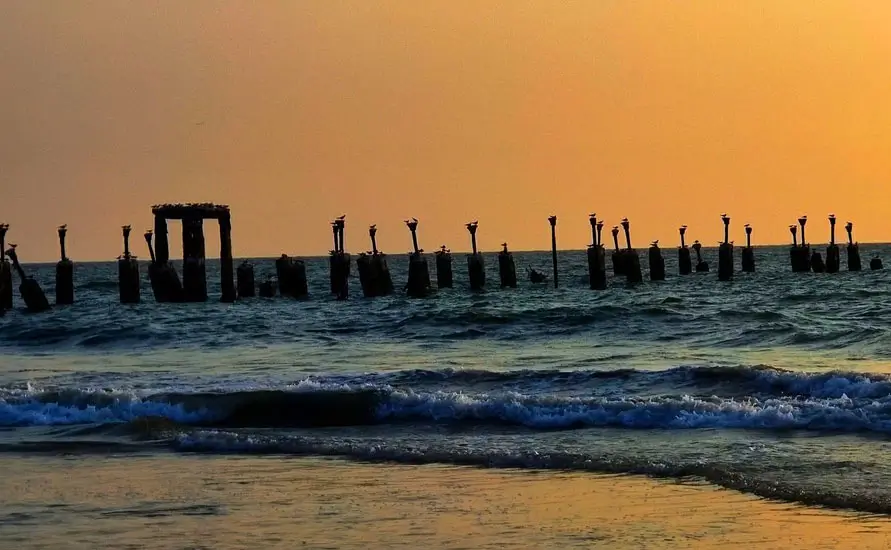
Malabar food is reason enough to come to this city, and dinner is the first chance to try it. Look for biryani cooked with the short, fragrant kaima rice, crisp fried mussels called kallummakaya, and soft rice pathiri eaten with chicken curry. Sulaimani, a black tea brightened with lime and a hint of cardamom, closes most meals here. Your driver knows the places local families queue for and can drop you at the door. After dinner, the beach road is busy with ice cream carts and strolling couples, with the broken stumps of two colonial-era piers standing in the surf. Overnight in Kozhikode.
Old Kozhikode rewards an early walk before the heat builds. Your guide begins at Mananchira, a large tank framed by lawns and municipal buildings, then steers you into Sweet Street, the stretch of SM Street where halwa sits in glossy slabs of red, green, black and yellow, sliced by the kilo and handed over to sample. Shopkeepers are happy to explain which version uses coconut oil and which uses ghee. A short rickshaw hop south reaches Kuttichira, where the Mishkal Mosque rises four storeys in carved wood and terracotta tiles, a 14th-century merchant's gift that looks more like a temple than a domed mosque.
By late morning the car turns inland, and within an hour the plain gives way to the Thamarassery ghat, nine numbered hairpins that lift you onto the Wayanad plateau. Each bend gives a wider view back over the jungle-covered slopes, and on clear days the coast shows as a haze far below. Bonnet macaques wait on the low walls hoping for snacks; please keep windows up and food out of sight. Lakkidi viewpoint at the top marks the end of the climb. From here the air is noticeably fresher, and silver oak trees stand in lines through the coffee estates.
Your base for two nights in Wayanad is a plantation homestay or a hill resort set among coffee bushes, chosen so that you wake up to birdsong rather than traffic. After lunch, someone from the estate can walk you around the property, pointing out robusta berries, pepper vines wound around silver oak trunks and low clumps of cardamom. Farm-grown vegetables and spices often end up on the dinner table. Toward evening, half an hour by car takes you to Pookode lake, ringed by evergreen forest, where you can row a small boat or walk the lakeside path as the light fades. Overnight in Wayanad.
Make the Edakkal Caves your first stop, aiming to arrive close to opening time. The walk up Ambukuthi hill takes about 45 minutes from the car park, first on a sloping road, then on stone steps and finally on steel ladders between giant boulders. At the top, a fallen rock wedged across a crack formed the chamber, and its walls carry carved figures, animals and patterns that archaeologists date in part to the Neolithic age. Mondays are a closing day, and only a set number of tickets are sold daily, so timing matters here. Sturdy shoes and a water bottle are essential.
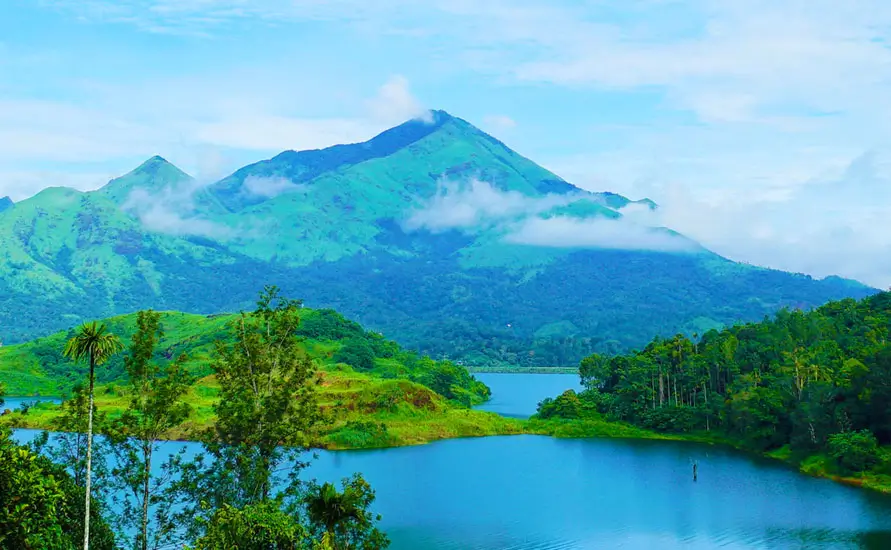
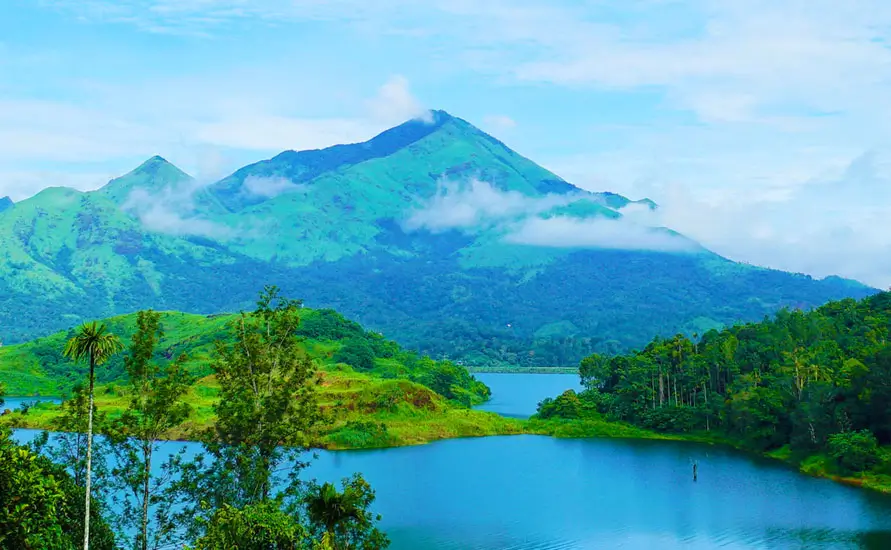
After a meal of rice and curries near Kalpetta, you continue to Banasura Sagar, a reservoir held back by what is described as the biggest earth dam in India. Small green islands in the water are the summits of hills that were flooded when the dam was built. You can walk along the dam top, take a speedboat across the lake, or simply sit and watch the clouds catch on the Banasura range. Trekkers sometimes ask about Chembra peak; access is controlled by the forest office and changes with the season, so your guide checks on the day.
Before heading back, a stop at a bamboo craft unit or a tribal handicrafts cooperative shows another side of the district. Wayanad is home to several Adivasi communities, among them the Paniya, Kurichiya and Kattunayakan, and your guide can talk about their farming traditions, crafts and current challenges in a thoughtful way. Baskets, lamps and small woven items make light souvenirs that support the makers directly. At your stay, dinner might be bamboo-rice payasam, a jackfruit curry when in season or a peppery chicken roast. Nights up here are cool and quiet apart from crickets and frogs, so a light blanket is welcome. Overnight in Wayanad.
Heading for the north coast, you leave Wayanad through Mananthavady and wind down the Nedumpoil ghat, where forest gives way to rubber and arecanut palms. Roadside tea stalls along this stretch serve strong milky tea and banana fritters, and your driver will pick a clean one for a short break. Expect to reach Kannur close to lunchtime. Tonight's bed is in a seaside resort or an old family house turned homestay. Foreign visitors are still uncommon here, so people may smile, wave or ask where you are from. The district is known for handloom cloth, for its politics and above all for Theyyam.
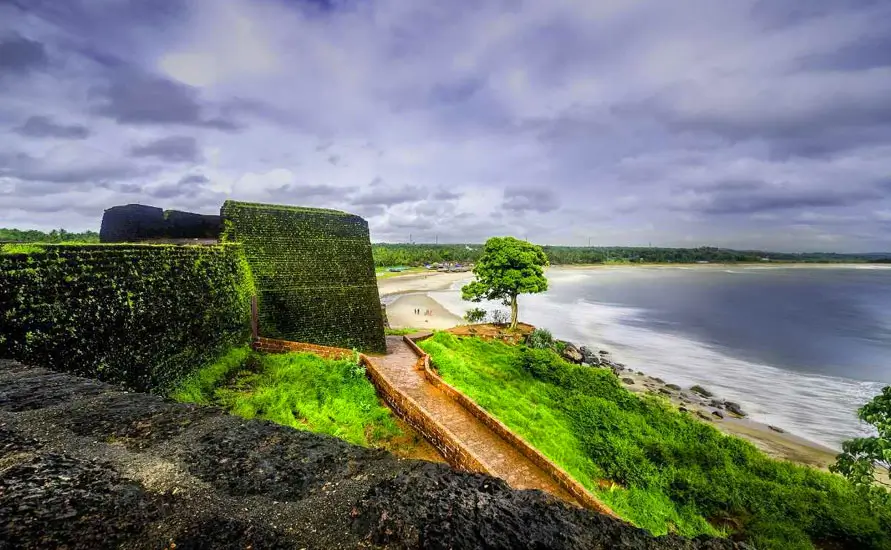
With lunch over, the first stop is St. Angelo Fort, a triangular laterite fort that the first Portuguese viceroy, Francisco de Almeida, raised on the headland in the early 1500s. Dutch and then British garrisons followed, and the sea-facing bastions, moat and cannons give a sense of how fiercely this coast was contested. Across the bay sits the Arakkal Museum, housed in a wing of the old palace of Kerala's one Muslim ruling house, whose authority once reached the Lakshadweep islands. Inside are carved chairs, swords, telescopes and letters, and your guide explains how succession passed through the women of the family.
Around four o'clock a weavers' cooperative shows the looms that made Kannur cotton famous. Bedsheets, towels and furnishing fabric are sold at the counter at fair prices, and the weavers are usually glad to show how a pattern is set up. Sunset is best at Payyambalam, a broad beach where the town comes to walk and fly kites. For trips falling between December and March, your guide will look up which village shrines have Theyyam scheduled over the next day, since many begin late at night and run until dawn. Overnight in Kannur.
An alarm before 5 am is worth it today. During the season, mostly December to March, with some shrines active between October and May, your guide brings you to a village kavu where a Theyyam dancer in red paint, palm-leaf skirt and a tall crown becomes, for the community, the living deity. Drums and torches build the atmosphere. Dates are fixed by each shrine and change yearly. Outside the season, the Muthappan temple at Parassinikadavu, around 20 km away, holds its ritual every morning and admits people of every faith. Dress modestly, follow the guide's lead on seating and photography, and stay back from the performer.
Breakfast is followed by the longest drive of the trip, broken into sections. First comes Muzhappilangad, a firm, flat beach about four kilometers long where cars may legally drive on the sand, and your driver can take a slow run along the waterline when the tide allows. Next is Thalassery, where India's first Christmas cake is said to have been baked in 1883, then Vadakara and the Kozhikode bypass. A lunch stop of Malabar dishes breaks the road. Guests who prefer rails can ride an express train from Kannur to Thrissur, about four hours, and the car will drive ahead to collect you at the station.
South of Kozhikode, the highway crosses the Bharathapuzha, Kerala's longest river, wide and sandy in the dry months and much loved by Malayalam poets and filmmakers. Thrissur's outskirts appear at around five o'clock. The city is built around a hill crowned by the Vadakkunnathan temple, with a ring road called the Swaraj Round looping around the temple grounds. A short evening stroll with your guide covers the area where the Pooram festival takes place each spring, and he can tell you how a million people fit into these streets. Dinner options range from a peppery Syrian Christian duck roast to a simple vegetarian thali. Overnight in Thrissur.
Begin with an early circuit of the Vadakkunnathan temple grounds, where centuries-old banyan and peepal trees shade the open lawns. The temple itself, with its sloping copper and tile roofs and its Shiva shrine, is reserved for Hindus who follow the dress code, but anyone may walk the outer grounds and see the walls and gateways. From there it is a 45-minute ride to Cheruthuruthy, on the banks of the Bharathapuzha, where Kerala Kalamandalam has trained classical artists since the poet Vallathol set it up in 1930. Classes are open to visitors on weekday mornings, Monday to Friday.
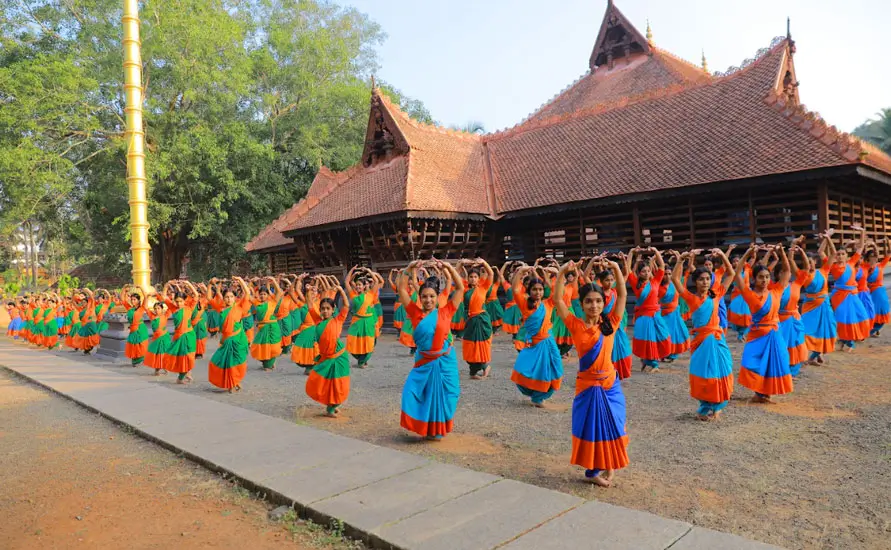
Students begin their day here long before you arrive, and a morning visit catches them deep in practice. You may see Kathakali trainees rolling their eyes in slow circles to strengthen the muscles, Mohiniyattam dancers repeating a single gliding step, or young percussionists drilling a rhythm until it is perfect. Classes also cover Koodiyattam, Thullal and the chenda drum. The Koothambalam, a temple-style theater of carved wood on the campus, is used for formal performances. Ask before photographing, keep voices low and stay on the paths, since this is a working school and not a show for tourists. Allow around two hours.
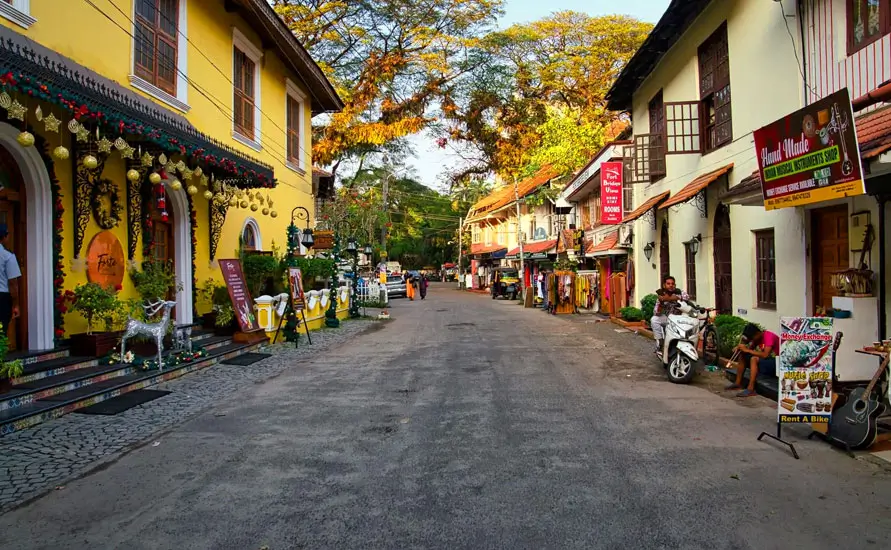
Lunch near Shoranur sets you up for the three-hour run south via Thrissur and Angamaly to Kochi. For two nights you stay near the old quarter of Fort Kochi, which is easy to walk and full of cafes. Two days on the road call for a quiet evening, so nothing is scheduled. When the light softens, the seafront is a short walk away: the great fishing nets stand out against the sunset, and the Vypeen ferry chugs across the harbor mouth every few minutes. Rose Street and Princess Street have small cafes serving filter coffee and plum cake, and the lanes are pleasant after dark. Overnight in Kochi.
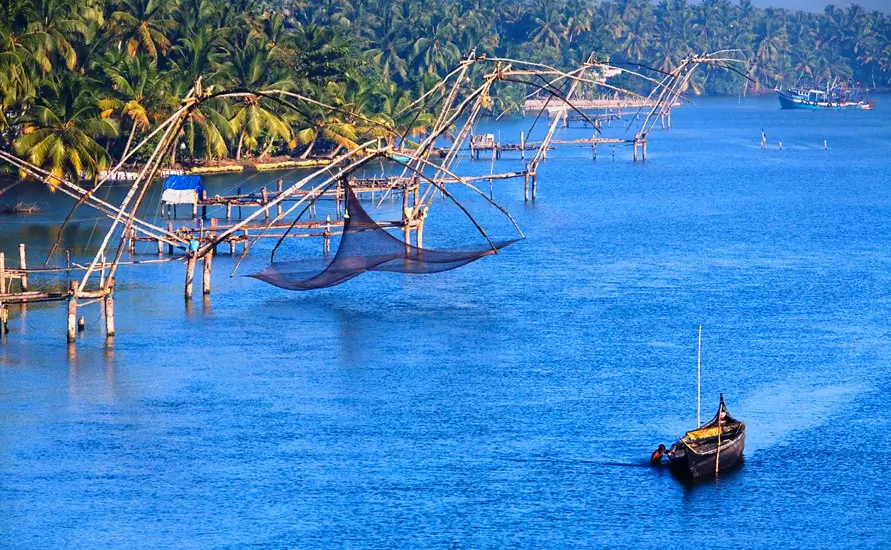
Kochi is best begun at the shoreline when the net crews are working. Each of the big Chinese fishing nets needs a crew of four, five or six men, who walk along a wooden beam to lower the net and then lean back together to lift it, a rhythm you can watch for as long as you like. Local tradition credits Chinese traders with introducing the design centuries ago. A short stroll inland leads to St. Francis Church, one of the earliest European-built churches in the country, and then to Santa Cruz Basilica, whose ceiling paintings of the Passion deserve a quiet look.
Your guide then drives you to Mattancherry. The Dutch Palace began as a Portuguese present to the ruling raja around 1555 and took its present name after Dutch repairs, and its bedchamber walls hold dense, fine murals of scenes from the Hindu epics; Friday is its closing day. The Paradesi Synagogue, dating from 1568, has hand-painted Chinese tiles and hanging glass lamps, and visitors are not admitted on Fridays, Saturdays or Jewish feast days. Between the two, Jew Town's old warehouses now hold antique dealers and galleries, though a few still trade spices by the sack. Nearby cafes serve Kerala fish curry or a lighter salad for lunch.
Spend the afternoon resting or shopping before an evening of Kathakali, the dance drama Kerala is most famous for. Most Fort Kochi theaters let you come in early and sit close while the actors paint their own faces, the heroes in green and the villains with red and black, a slow and careful process. A short talk explains the language of hand gestures and eye movement before the play begins, and the performance usually runs around an hour and a half. Dinner afterward can be grilled seafood near the harbor, picked from the day's catch on display and cooked as you like it. Overnight in Kochi.
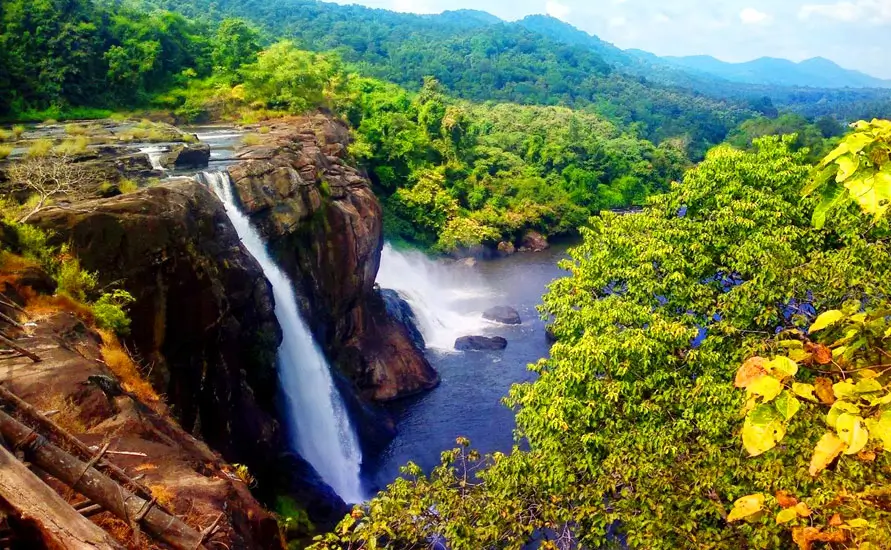
Your road east to the hills begins in flat country and climbs steadily after Kothamangalam, the last sizeable town before the ghats. Coconut and arecanut palms give way to rubber estates, and then to tall forest hung with creepers and wild pepper. Valara and Cheeyappara waterfalls tumble down the rocks right beside the highway, strongest between June and November, and your driver pulls over for photos. Spice sellers line the road near Adimali, offering cardamom, cloves, nutmeg and vanilla pods direct from local growers. It is worth buying here, since the same items cost more in the city shops.
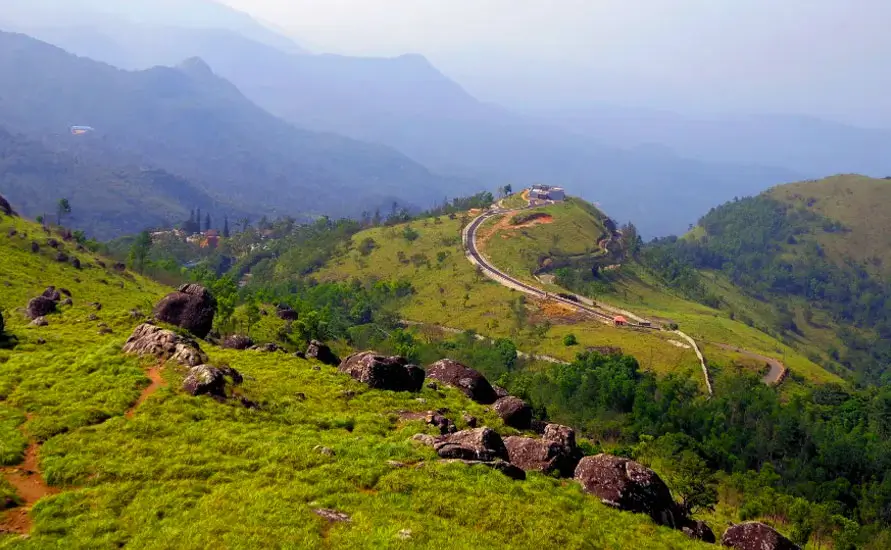
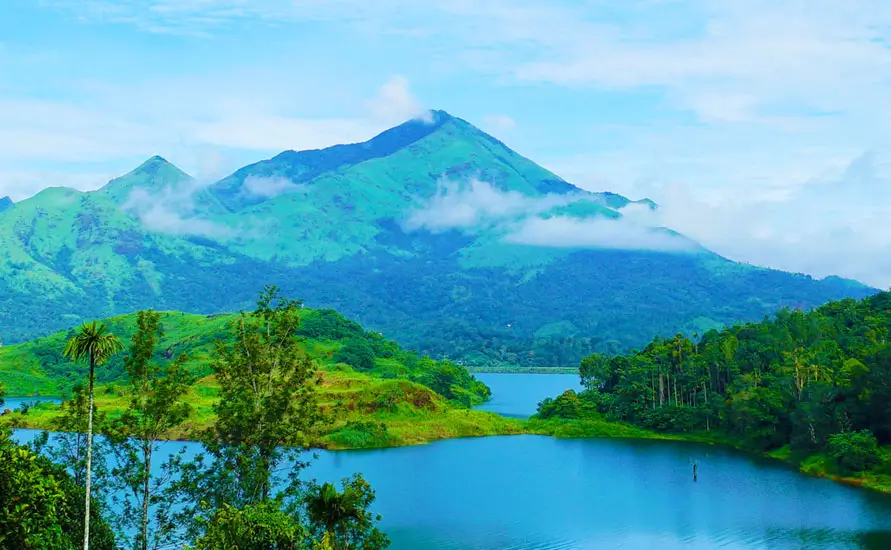
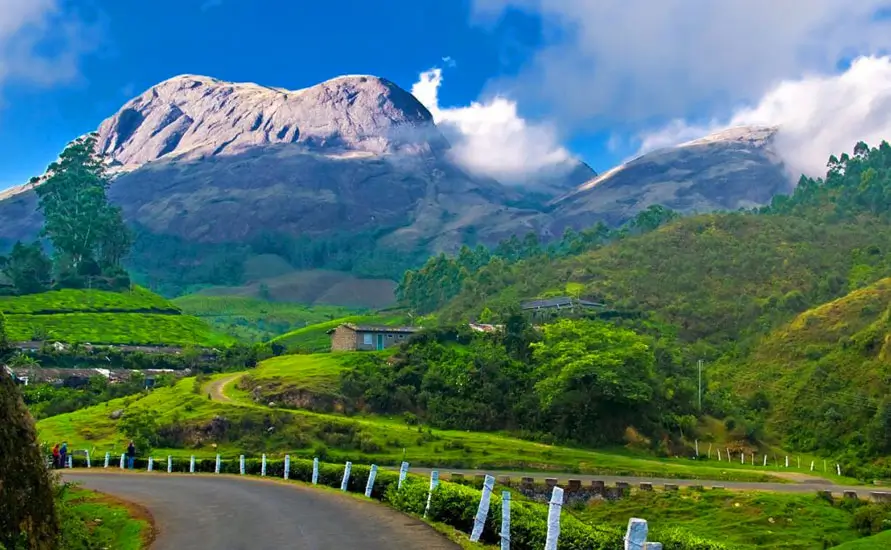
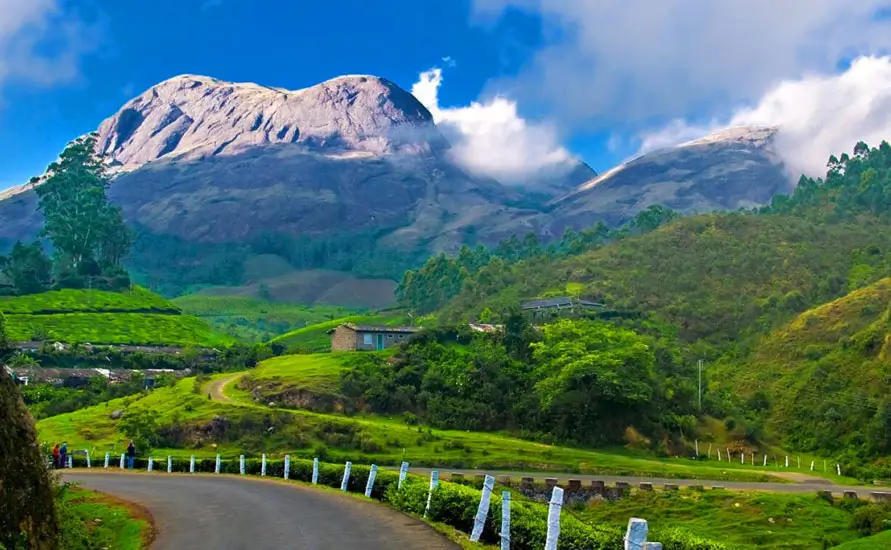
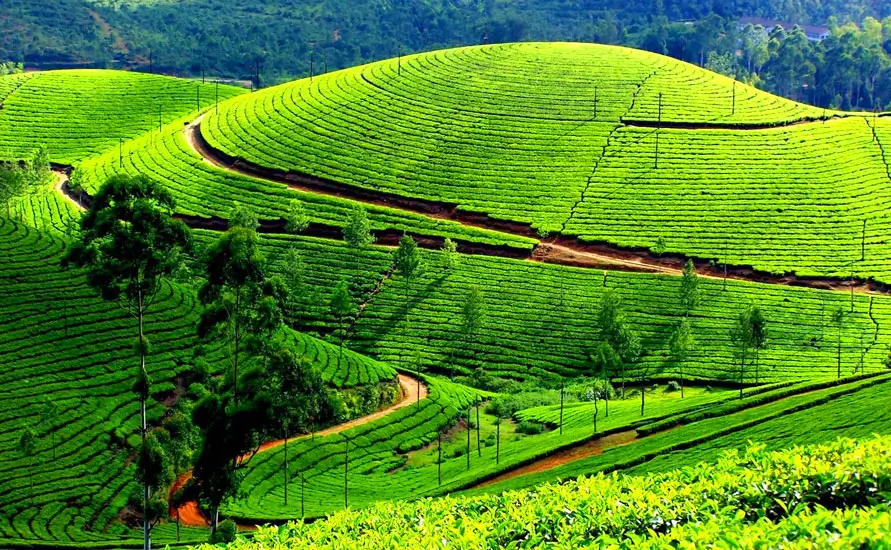
Tea appears suddenly as you approach Munnar, the bushes cut to waist height and laid out in curving rows that hug every contour of the land. The town stands at about 1,600 meters where three rivers meet, and mist often drifts through the valleys in the afternoon. Two nights are booked at a plantation resort or a hill hotel whose rooms face the slopes. Lunch is waiting on arrival, and nothing else is scheduled. A gentle walk along the estate roads gives you a close look at the plants, and you may pass pluckers carrying their bags of leaves to the weighing shed.
Before dinner, a quick drive into town shows Munnar's busy market, where carrots, cabbages and beans from the hill farms are sold beside packets of tea, spices and homemade chocolate. Planters from Britain shaped this town more than a century ago, and a few of their bungalows and an old church still stand on the hillsides. Once the sun sets the thermometer falls fast, most of all in the December to February months, and a fleece earns its place in the suitcase. Most resort kitchens up here cook both Kerala and Western food, with soft appam and a mild vegetable stew always popular. Overnight in Munnar.
First stop is the Munnar tea museum, owned by Kanan Devan Hills Plantations, the firm behind most estates in the valley. A screening in the small theater outlines the story of planting in the High Ranges, and then a working line shows leaves spread out to wilt, crushed, oxidized, dried and graded. You leave the factory section with a tasting cup and a clearer idea of why some teas are strong and malty while others are light. The museum rooms hold old photographs, a rusty roller from the early days and a granite sundial. Tea can be bought at fixed prices in the shop.
Mid-morning, you head to Eravikulam National Park. Visitors leave their cars at the entrance and ride an official bus to the Rajamala sector, then walk a paved road overlooking grassland, rock faces and distant summits. The Nilgiri tahr, a wild goat found in the higher Western Ghats, is often seen grazing close by, but sightings can never be promised. The park shuts in February and March so the young can be born undisturbed, and numbers are capped on busy days. Afterward the car follows the eastern road, with stops at the Mattupetty reservoir, the shouting spot known as Echo Point and Kundala lake, where small boats are for hire.
Free time in the afternoon can be spent at a spice garden, among the flower beds of Blossom Park, or resting back at your room. Walkers can ask the guide for a two-hour stroll up through the estates to a ridge above town, an easy outing with fine views on a clear day. In the evening, cultural centers in Munnar stage short Kathakali and Kalaripayattu shows, handy for anyone keen to watch Kerala's martial art twice. After dinner at the resort the hills fall silent early, so you get a good night's sleep before tomorrow's drive. Overnight in Munnar.
South of Munnar the road crosses Poopara and drops into the cardamom hills, where the forest canopy is left in place to shade the spice plants growing beneath it. Small towns such as Rajakumari and Nedumkandam have busy markets and painted churches, and the views across the ranges are wide on a clear morning. Thekkady comes into view around lunchtime. Your room is near the edge of the Periyar reserve, a few minutes from the lively town of Kumily, which sits right on the Tamil Nadu border. Spice shops, Ayurveda centers and small eateries serving Kerala and Tamil food line its main road.
Later, a farmer-guide leads the way around a spice plantation where pepper, cardamom, nutmeg, clove, cinnamon, vanilla, allspice and coffee grow in the same patch of ground. He pinches leaves for you to smell, splits a nutmeg to show the red mace inside, and explains which spices are used in cooking and which in traditional medicine. Fruit trees such as jackfruit, rambutan and mangosteen are often planted between them. The farm shop sells spices fresh from the drying racks, usually at lower prices than in tourist stores. The walk takes about 90 minutes on gentle paths and suits most fitness levels.
Evening brings a Kalaripayattu show, Kerala's martial art, staged in a small arena in Thekkady. Practitioners trace the form back many centuries, and the hour-long demonstration includes high kicks, leaps over obstacles, sword-and-shield duels, combat with long staves and flexible daggers, and a final sequence with fire. Sit close to the front for the best view, but expect speed and noise. After the show, you can eat at the resort or try a family restaurant in Kumily, where a Kerala parotta with vegetable kurma or chicken fry is the classic order. Head to bed early, since tomorrow begins before seven. Overnight in Thekkady.
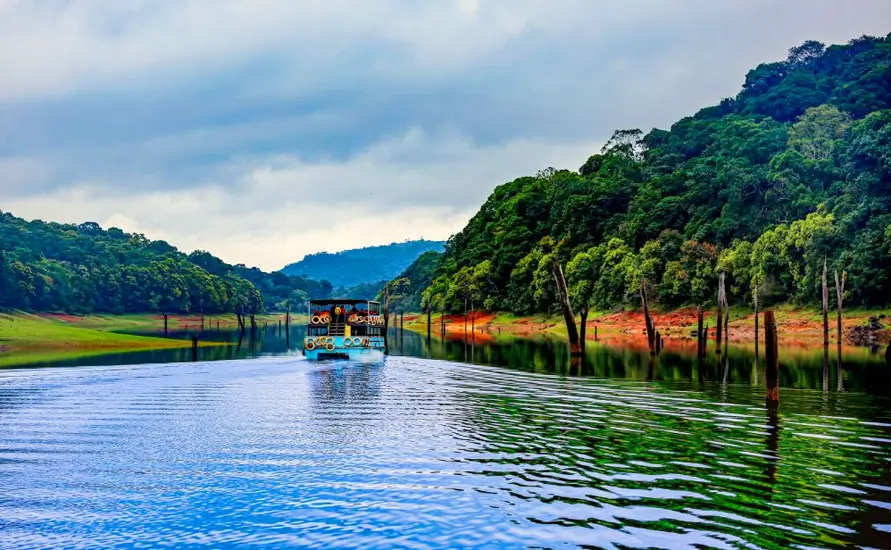
Before dawn you head to the jetty inside the Periyar Tiger Reserve for the first boat of the day, which usually leaves around 7:30 am. Tickets are issued by the forest department in limited numbers, so your driver aims to arrive well before the counter opens. The boat moves slowly across a reservoir created in the 1890s, past the bleached trunks of drowned trees, with forested hills rising on every side. The reserve shelters elephants, Indian bison, sambar, otters and hundreds of bird species, but wild animals keep their own schedule and no sighting can be promised. The ride lasts about 90 minutes, and the morning mist is lovely on its own.
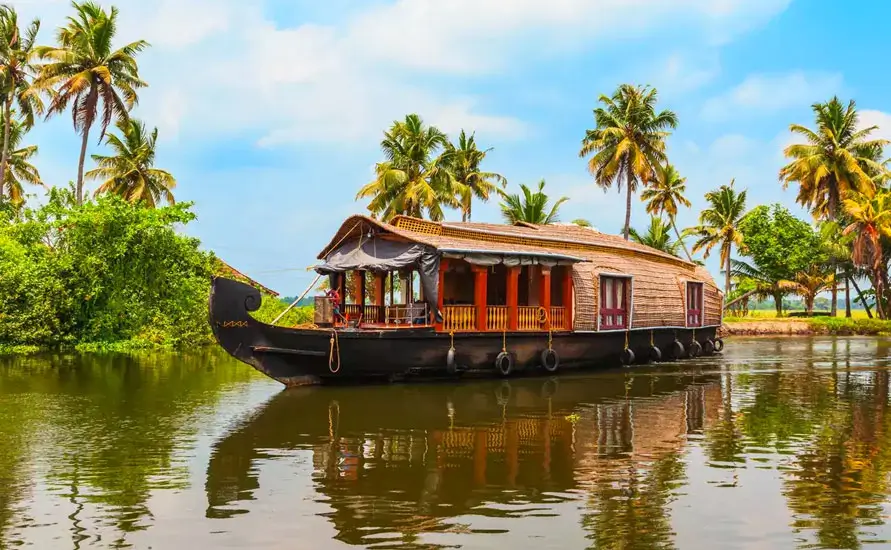
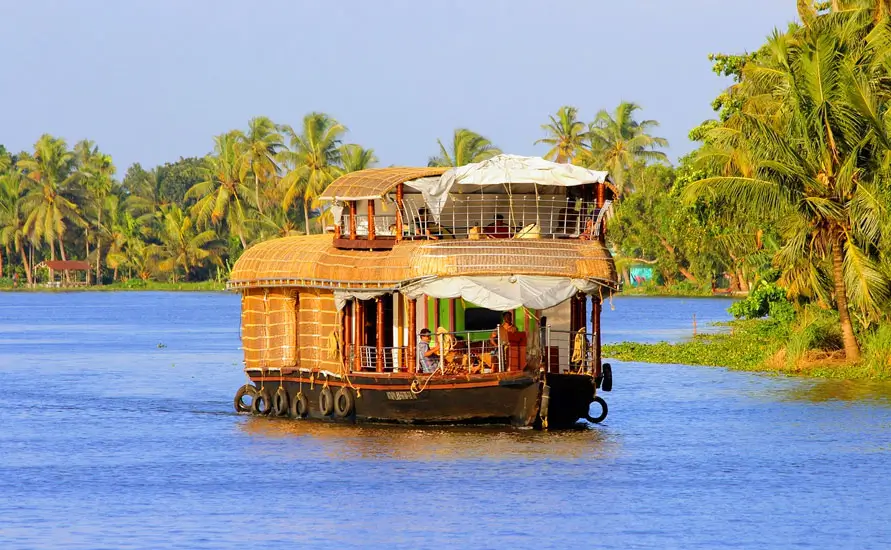
With breakfast done, the car heads down to the coast. The road drops through Vandiperiyar, Mundakayam and Kanjirappally, past rubber estates and white churches, and reaches the flat country near Kottayam before turning toward the backwaters. Your driver stops for a quick lunch, unless the houseboat has agreed to serve a late lunch on board. You reach Alleppey in the early afternoon. The crew hands you a fresh coconut with a straw, walks you through the cabins and the open dining deck, and then casts off as soon as you have settled your bags.
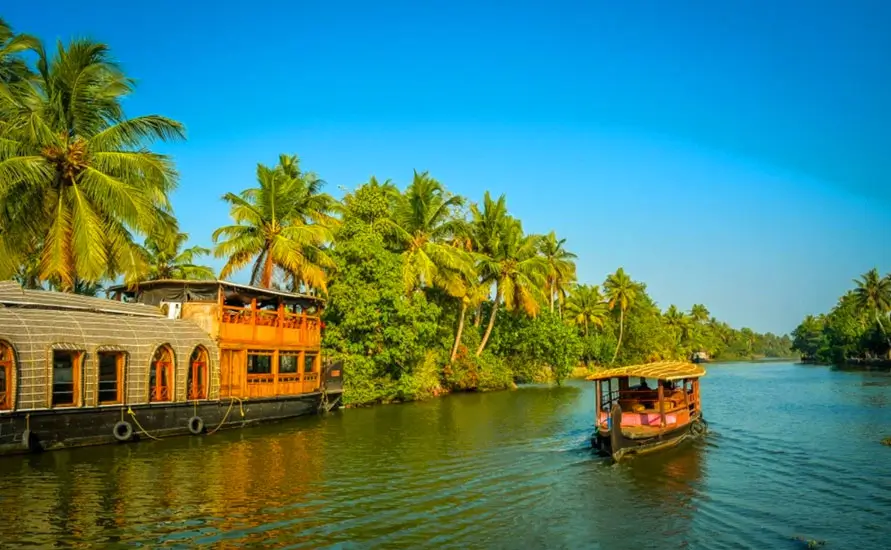
Afternoon on the water is slow and peaceful. The boat threads through channels, wide lakes and rice paddies that lie below sea level, past churches and temples on narrow banks, ducks being herded by men with long poles, and canoes carrying people to market. In the galley, the cook works on a lunch or tea of fish curry, vegetable thoran, sambar and red rice, with fresh fruit after. By law the boat must stop cruising at dusk, so it ties up beside a quiet field and the stars come out over the paddy. The cook brings dinner up to the deck table, and the crew retires to their cabin at the stern. Overnight on the houseboat.
Breakfast arrives on deck while the boat motors back to base, where checkout is around 9 am. From the jetty, your driver loops round the lake's southern shore via Kottayam district roads to Kumarakom, about an hour away. Compared with Alleppey, Kumarakom is quieter, with lakeside resorts, villages and wide open water. Your room is at a lakeside resort with its own jetty and pool beside the water. Ayurveda spas are a feature of most properties here, and you can book a massage or a longer treatment if you like. Use the late morning for doing very little.
Late afternoon, when the birds are most active, is the time for the Kumarakom Bird Sanctuary, a pocket of mangroves and woodland on the lake shore that was once a rubber estate. A walking trail leads through the trees, with herons, egrets, cormorants, kingfishers and darters among the regulars, and migrant birds arriving from about November to February. Numbers vary with the season and the hour, so count every bird you spot as good luck. Binoculars help a great deal. Your guide can identify calls and point out nests, and the walk is flat and easy, taking around an hour.
As the light softens, a country canoe slips into narrow side canals where no houseboat could fit. Your boatman paddles past homes, tiny shops and vegetable plots, and you may see people fishing, washing or feeding ducks. A stop can be arranged with a toddy tapper, who climbs coconut palms to collect sap, or a coir worker twisting coconut fiber into rope on a hand wheel. Sunset over Vembanad turns the water orange and pink. Later, the resort menu may feature karimeen, the pearl spot fish that locals consider the best on the lake. Overnight in Kumarakom.
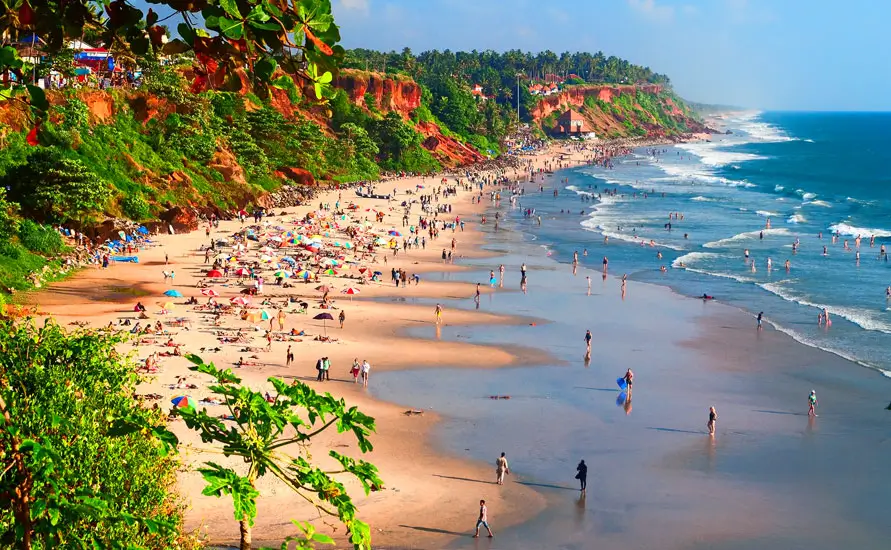
Today's drive south runs through Kottayam, Chengannur and Kollam toward Varkala. Rubber estates and paddy fields line the road, and in Kollam your driver can stop at a cashew factory outlet or a viewpoint over Ashtamudi lake, whose many arms give the town its backwater character. You reach Varkala in the early afternoon, staying at a hotel on or close to the North Cliff. Varkala is unusual on the Kerala coast: the beach sits at the foot of tall red laterite cliffs, and freshwater seeps from cracks in the cliff wall down to the beach. The cliff top is lined with cafes and guesthouses.
Once the sun drops a little, a walk along the cliff path with your guide looks down on Papanasam beach, whose name means the washing away of sins. Hindu families gather here for bali tharpanam, the rites for departed ancestors, so be discreet with cameras near the ceremonies. Up the hill stands Janardhana Swamy, a temple to Vishnu that local belief holds to be two millennia old; the inner temple is for Hindus only. A short drive away, Sivagiri holds the memorial shrine of Sree Narayana Guru, the spiritual leader whose teaching against caste discrimination changed Kerala society.
At sunset, the cliff top fills with visitors and locals watching the sky turn gold over the water from cafe terraces and benches. Seafood places set out trays of fresh fish and shellfish at their doors, and you can pick fish, prawns or squid to be grilled with spices or fried in a light batter. Swimming is possible, but the surf here is powerful, so keep within the area the lifeguards mark. After dark, the cliff path stays busy with stalls selling clothes, books, silver jewelry and handicrafts, and many guests book a yoga class or an Ayurveda session for the next morning. Overnight in Varkala.
Heading south after breakfast, the car follows the coastal road to Anjengo, an East India Company outpost of the late 17th century and one of the first footholds of the British on the Malabar coast. The small fort is quiet, with a lighthouse nearby and a cemetery where English traders and their families are buried, and you will probably have it almost to yourself. From Anjengo the road runs on to Trivandrum, the capital, where the Travancore royal family held court. The city is greener and calmer than you might expect, with broad roads and fine buildings from the royal era.
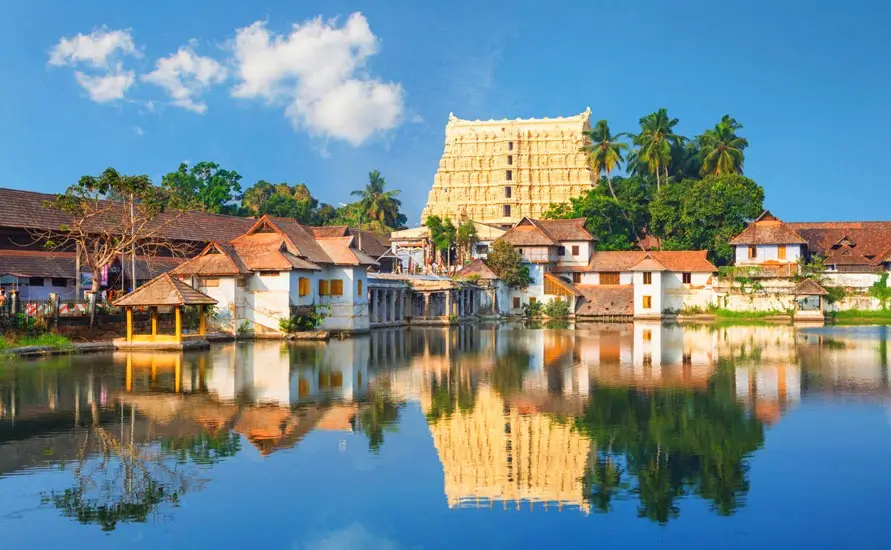
In the city, your guide starts at the Napier Museum, an 1880 building in red and cream brick that mixes Kerala roof lines with Indo-Saracenic and Gothic touches. Its galleries hold bronze figures, temple carvings, ivory pieces and old coins. A neighboring building, the Sree Chitra gallery, displays paintings by Raja Ravi Varma, known for his oil portraits of goddesses and heroines; both close on Mondays. You then pass the Padmanabhaswamy Temple, open to Hindus only, to see its seven-tiered gopuram reflected in the tank, and visit the Kuthiramalika palace museum beside it, also closed on Mondays.
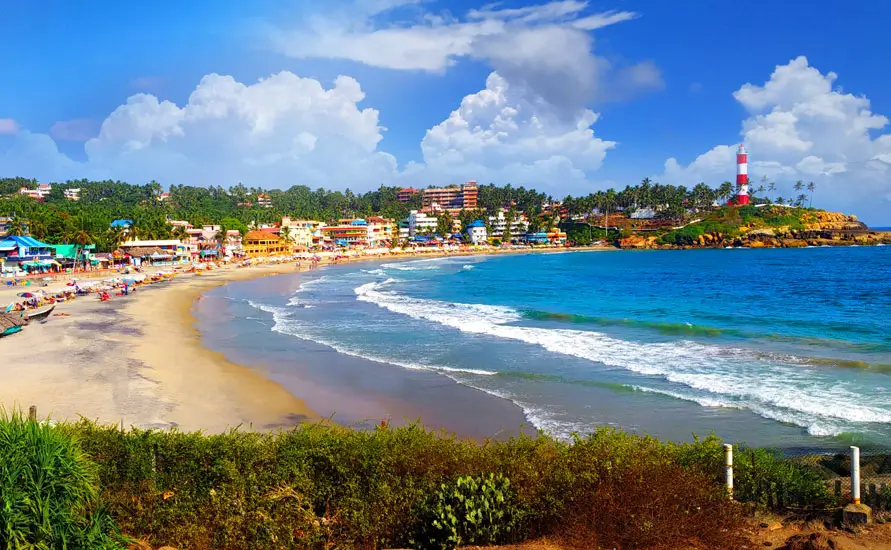
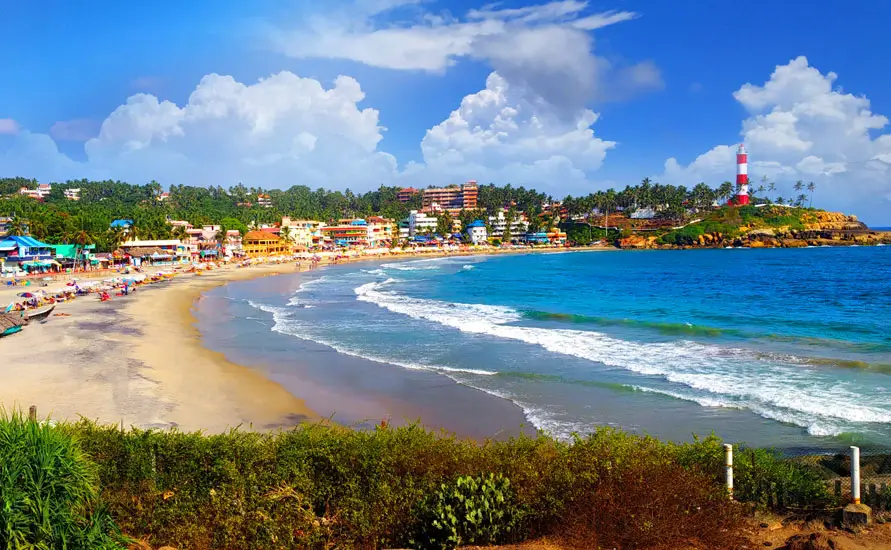
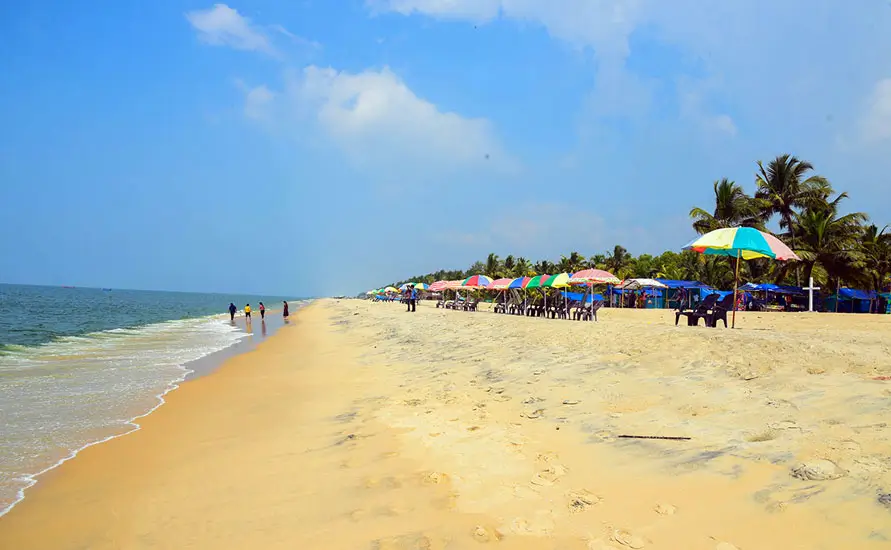
Afternoon brings the short drive to Kovalam, about 30 minutes south of the city, and your beach resort. Kovalam has three small bays divided by rocky points, and the lighthouse beach is the busiest of them. Swim in the zones marked by lifeguards, rest on a sunbed or book a final Ayurveda massage. As evening falls, the beachfront cafes light their lamps and serve seafood, Kerala curries and international dishes side by side. Take a last walk on the sand as the lighthouse beam starts to sweep the bay, and think back on two weeks spent traveling the full length of the state. Overnight in Kovalam.
Breakfast by the sea is your last meal in Kerala, and an afternoon or evening departure leaves room for one more swim or a slow walk along the bay. At the time we set together, the car leaves for the 15 km run to Trivandrum International Airport, normally about thirty minutes. Flights from here go direct to several Gulf cities, Singapore, Colombo and Malé, with domestic links to Delhi, Mumbai, Bangalore and Chennai for long-haul connections home.
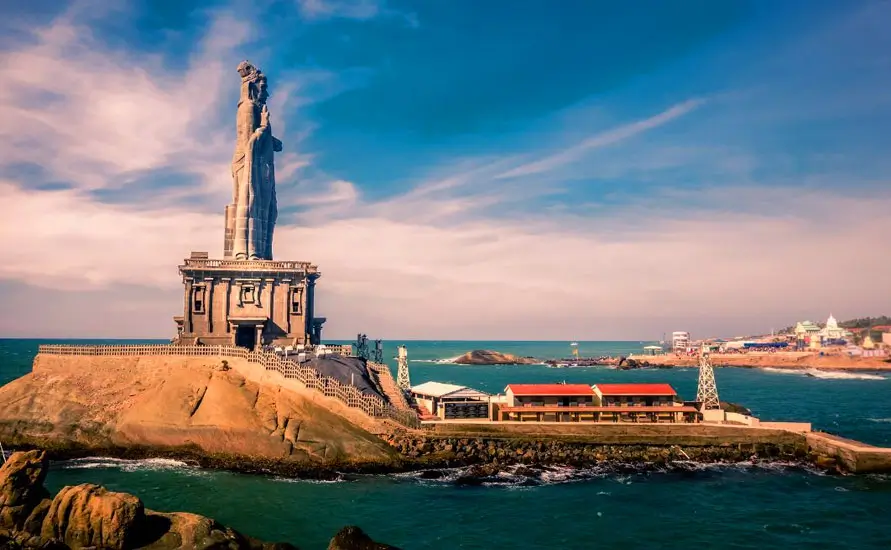
In fifteen days you have crossed Kerala from the Malabar ports in the north to beaches within easy reach of India's southern tip, with coffee hills, tea estates, spice gardens, backwaters and temple towns in between. To stretch the trip, Kanyakumari is about two hours south by road, and the Maldives or Sri Lanka are a short flight away. It has been a pleasure planning this trip, and our whole team hopes the flight home is an easy one.
Your Journey

N.S. Rathore & Mrs. Omlata Rathore · Managing Director
We still read every enquiry ourselves. Tell us the places you liked and our planners will send a day-by-day route with drive times and a clear price.
Every package can be customised and no pressure to book. A planner from our office replies within 24 hours with a route written for your group.
Fill this in and your planner will send a first draft itinerary.
Explore more
Kerala Backwaters Escape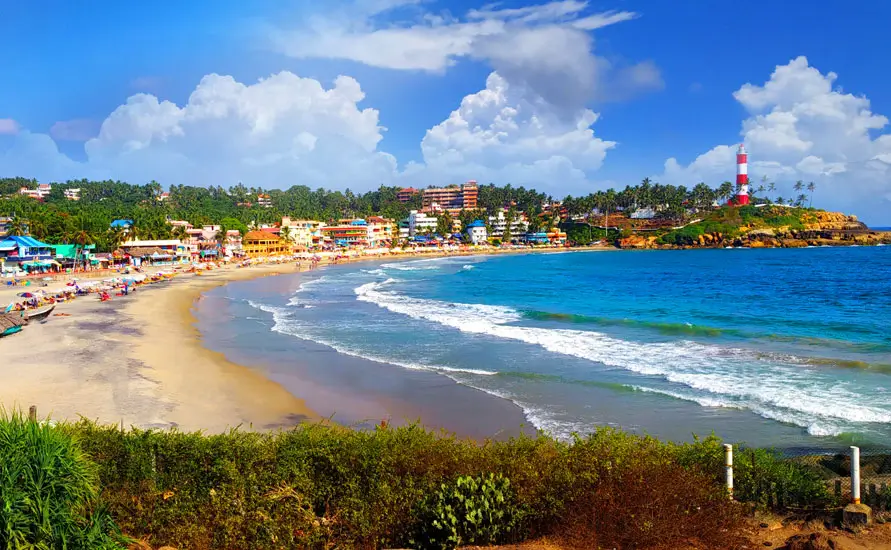 Kerala Backwaters Escape
 Kerala Backwaters Escape
 Kerala Backwaters Escape
 Kerala Backwaters Escape
 Kerala Backwaters Escape
 Kerala Backwaters Escape
 Kerala Backwaters Escape
 Kerala Backwaters Escape
 Kerala Backwaters Escape
 Kerala Backwaters Escape
 Kerala Backwaters Escape
 Kerala Backwaters Escape
 Kerala Backwaters Escape
 Kerala Backwaters Escape
 Kerala Backwaters Escape
 Kerala Backwaters Escape
 Kerala Backwaters Escape
 Kerala Backwaters Escape
 Kerala Backwaters Escape
 Kerala Backwaters Escape
 Kerala Backwaters Escape
 Kerala Backwaters Escape
 Kerala Backwaters Escape
 Kerala Backwaters Escape