
 Kerala Backwaters Escape

Kerala Tour Packages
Kochi – Tripunithura – Kodungallur (Muziris) – Thrissur – Cheruthuruthy (Kalamandalam) – Guruvayur – Alleppey – Krishnapuram – Trivandrum – Padmanabhapuram – Trivandrum
At a glance
Pepper brought the world to Kerala long before beaches did, and the traders, kings, priests and performers who followed left a trail that runs the whole length of the state. Our Kerala heritage and culture tour follows that trail from north to south over thirteen unhurried days. It begins among the synagogues, churches and spice godowns of Fort Kochi and Jew Town, moves up the coast to the old Muziris port and the dance academy of Kerala Kalamandalam, pauses in the temple town of Guruvayur, and ends in Trivandrum with the teak and rosewood halls of Padmanabhapuram Palace, where Travancore rulers held court until 1795.
Unlike a classic hills-and-backwaters loop, this route puts the weight on people and craft. You watch young students practice Kathakali eye exercises at dawn, see mural painters grind natural pigments, meet a Kalaripayattu master in his training pit and listen to the rhythm of chenda drums in a village temple courtyard. A houseboat night near Alleppey and some village mornings give you breathing room between the cities. Drives are short, rarely more than three hours, except for the one longer transfer south from Guruvayur.
The Kerala cultural tour suits inquisitive overseas guests, be they from Ohio, Ontario, Oxford, Oslo or Adelaide, plus second-generation NRIs curious about the places their grandparents spoke of. One chauffeur-driven vehicle handles every road leg, and specialist local guides lead each site, including historians in Kochi and Muziris. Some places keep weekly closing days, such as Mondays at the Trivandrum palaces and Fridays in Mattancherry, and Kalamandalam classes run on weekdays, so we arrange the order of days around your dates. Travel is best from October to March.
A placard with your name greets you in the arrivals hall at Cochin International Airport, held by a member of our Kerala team who has followed your flight's progress through the night. Expect roughly seventy minutes on the road to your heritage property in Fort Kochi, across bridges over the Periyar river and the backwater channels that make Kochi a city of islands. He or she passes you a folder of vouchers, phone numbers, guide names and a short reading list on Kerala history, then leaves you to rest. A late breakfast or early lunch can be arranged at the hotel.
When the afternoon heat drops, a twenty-minute drive takes you to the Kerala Folklore Museum in Thevara, a private collection housed in a building that combines the three main architectural styles of the state, from the Malabar north to the Travancore south. Inside, the floors are crowded with wooden masks, Theyyam headdresses, temple carvings, bronze lamps, old jewelry and costumes used in ritual art forms that most visitors never get to see performed. Room by room, your guide links each object to a region or a community, which makes it an ideal first lesson for the twelve days ahead.
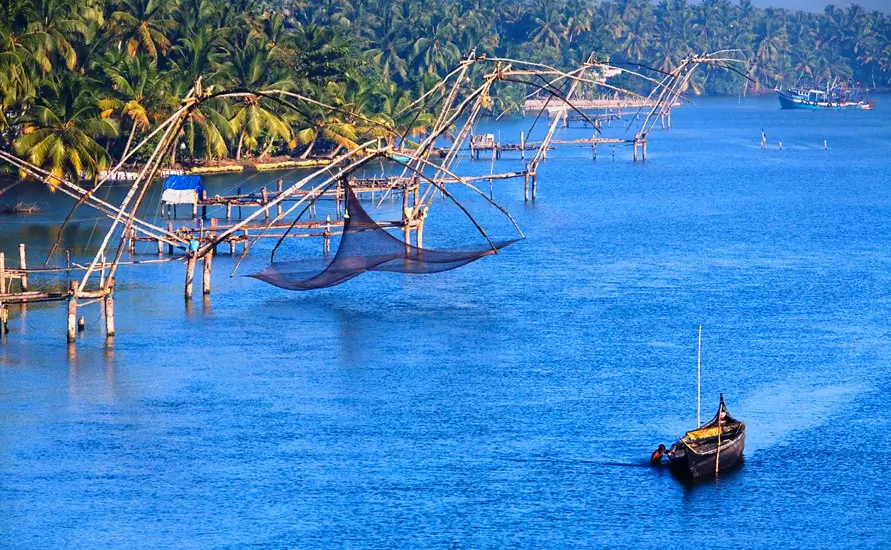
On some evenings, the small theater on the top floor of the museum hosts short performances of classical or folk forms, and when the calendar lines up with your dates, we hold seats. Otherwise you return to Fort Kochi by early evening for an amble on the beach road by the fishing nets, where the giant wooden frames, roasted peanut sellers and the evening breeze from the Arabian Sea make a pleasant introduction to the old town. Dinner could be at a restaurant run by a Syrian Christian family, ordering duck roast with lacy appam, a cuisine you rarely find outside Kerala. Overnight in Kochi.
Today's walk with a local historian covers the colonial core of Fort Kochi at an easy pace. Inside St. Francis Church, a slab on the floor shows where the Portuguese admiral da Gama lay for fourteen years, and hear how the building passed from Portuguese Catholics to Dutch Protestants and later to the Anglican Church. Nearby, the Dutch cemetery holds weathered tombs from the 1700s, and the Bastion Bungalow, raised over a Portuguese gun platform, is now a small heritage museum. The walk ends at the Indo-Portuguese Museum beside the bishop's residence, where altar pieces and processional crosses survive from churches along the coast.
After lunch the pace slows. Since 2012 the Kochi-Muziris Biennale has turned the town into a stage for contemporary art, and old warehouses along the waterfront now show paintings, installations and photography. If your visit falls during the Biennale season, which runs for several months every two years, your guide can steer you to the main venues; in other years a few permanent galleries and cafés keep the spirit alive. You may also visit a coir or handloom shop where staff show how coconut fiber is spun and woven into mats and rugs, one of the oldest export trades of the coast.
Evening belongs to Kathakali, a story theater with no spoken lines at all. You arrive about ninety minutes before the curtain to see the artists sitting cross-legged in front of small mirrors, mixing pigments from stone and rice powder, while a senior make-up artist fixes the stiff white frame known as chutti along the jaw. A short demonstration explains the nine basic emotions, the eye movements and the mudras, the hand gestures that form the vocabulary of the art. The performance itself is a single episode from the epics, accompanied by singers and the drums called chenda and maddalam. Overnight in Kochi.
Mattancherry was the commercial heart of old Kochi, home to Jewish, Gujarati, Konkani and Muslim trading families who lived on neighboring streets for centuries. Begin at the Mattancherry Palace, where upstairs bedchambers carry wall paintings made between the 16th and 19th centuries and showing scenes from the Ramayana, Krishna's childhood and the coronation of Rama. Then stroll to Jew Town for the Paradesi Synagogue, the Malabar Jews' prayer hall since 1568, its small clock tower facing the lane and its Cantonese tiles laid edge to edge inside. Fridays rule out both buildings and Saturdays or Jewish festivals keep the synagogue locked, which is why your three Kochi days may shuffle.
From Jew Town your guide leads you through lanes where Gujarati merchant families still run spice and rice businesses, to the Dharmanath Jain temple, built by the community in the early 20th century. Around midday temple staff scatter grain in the courtyard and hundreds of pigeons come down to feed, a daily ritual linked to the Jain value of care for all living things. Visitors are welcome to watch quietly, leather items are left outside, and modest dress is expected. Lunch is at a small café in a former spice warehouse or a vegetarian place run by one of the Gujarati families.
Post-lunch, forty minutes of city traffic lead to Tripunithura, once the residence of the Kochi royal family, for the Hill Palace Museum, the largest archaeological museum in Kerala. Its many buildings, set in landscaped grounds with a small deer park, hold royal portraits, palanquins, carved beds, weapons, coins, copper plate inscriptions and the gold-plated crown of the Kochi rajas. The museum usually closes on Mondays, so this visit moves to another afternoon if needed. On the way back, your guide points out the old temple town of Tripunithura, still known for its temple festivals and classical music concerts. Overnight in Kochi.
Long before Kochi rose to prominence, the main port of this coast was Muziris, near present-day Kodungallur, where Roman ships came for pepper and pearls in the first centuries of the Common Era. A flood of the Periyar river in 1341 is believed to have choked the old harbor and helped Kochi take its place. Today the Muziris Heritage Project links a series of restored sites along the backwaters north of Kochi, and your historian guide spends the day showing you the most interesting ones. The drive north is short, with stops every half hour or so, and your luggage travels with you in the car.
The first stop is the Paliam Palace at Chendamangalam, the ancestral home of the Paliath Achans, who served for generations as prime ministers to the Kochi rajas, now a museum of family life with a Dutch-built main building. Close by stands the restored Paravur synagogue, one of several old Jewish prayer houses on this coast, and a short drive further takes you to the ruins of Kottappuram Fort, a Portuguese stronghold dating from 1523. In Kodungallur, the Cheraman Juma Masjid completes the circuit; popular belief places its founding to the 7th century and counts among the oldest mosques in South Asia; dress modestly and remove your shoes.
Lunch is at a village restaurant serving fresh fish from the backwaters, then sixty more minutes up the highway to Thrissur, often called the cultural capital of Kerala. Your hotel is close to the center, where the town is organized around the huge round ground of the Vadakkunnathan temple, and in the evening you can walk part of it with your guide. Thrissur is home to Kerala's state academies of music, drama, fine arts and literature, and many evenings bring a concert, a play or a lecture somewhere in town. Ask your guide what is on, as these events are open and often free. Overnight in Thrissur.
Leave Thrissur by 7:30 for the hour-long ride to Cheruthuruthy, a village on the banks of the Bharathapuzha river, for a morning at Kerala Kalamandalam. Mahakavi Vallathol, the Malayalam poet, set it up in 1930 to save Kathakali and other classical arts from decline, it is now a deemed university with students living and training on campus. Classes run on weekday mornings, so this day is placed on a Monday to Friday. With permission, visitors walk quietly between open-sided classrooms to watch students practice Kathakali, Mohiniyattam, Koodiyattam, Ottanthullal, chenda drumming and Carnatic singing under the eyes of their teachers.
The campus also has a koothambalam, a traditional temple theater built in the old style with carved wooden pillars, where some performances take place. Your guide explains how a Kathakali student's training starts with eye and body exercises at dawn and oil massages during the monsoon months to make the body supple, and why a full course takes many years. Photography is allowed in most areas, but not in all classrooms, and the teacher in each room has the final word on how long guests may linger. Before leaving, there is time to see the old Kalamandalam site nearby and walk to the river, the setting for many poems and films in Malayalam.
Back in Thrissur after lunch, you visit the Shakthan Thampuran Palace, rebuilt in a Kerala-Dutch style in the late 18th century for the Kochi ruler who laid out the modern town, and now a museum of bronzes, coins and stone sculpture. Ten minutes away by car is the Our Lady of Dolours Basilica, known locally as Puthanpally, whose tall Gothic towers rise high above the old town center. At dusk you circle the Vadakkunnathan temple grounds on foot; only Hindus may go inside, but the outer walls and the great gateways are open to view from the surrounding maidan. Overnight in Thrissur.
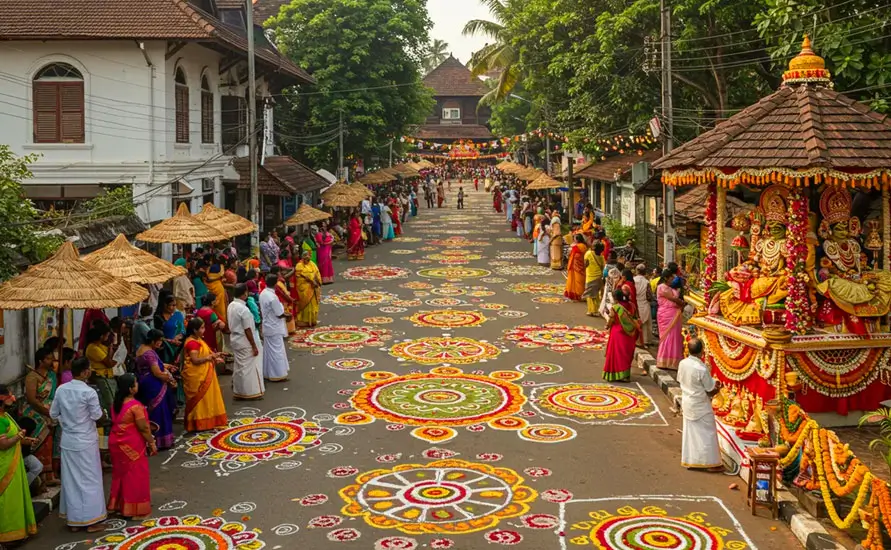
Barely an hour northwest lies Guruvayur, a pilgrimage town that draws millions every year and is dedicated to Krishna as Guruvayurappan. Entry to the main temple is reserved for Hindus, and the dress rules are strict, so the focus for other visitors is the life of the town around it. Your hotel lies within walking distance of the temple's east gate, where wedding parties gather in the morning, as dozens of couples marry here on auspicious days in short ceremonies held one after another at the temple's wedding platforms. The sight of families in silk, flowers and gold is a cultural lesson in itself.
Late morning you visit the Institute of Mural Painting run by the Guruvayur temple board, one of the few places where the Kerala tradition of temple mural painting is still taught in a formal way. Students grind their own colors from minerals and plant extracts, use brushes made from grass and work slowly on large panels showing scenes from the Puranas. Your guide explains the five main colors of Kerala murals and how the figures are drawn according to old rules of proportion. If you are interested, the teachers can arrange a short hands-on session, and small paintings by students are sometimes for sale.
In the afternoon you drive about 15 minutes to Palayur Church, which Christian tradition links to the arrival of the apostle Thomas in the first century, and where a small museum and a pond tell the story of the community that grew here. Back in Guruvayur toward dusk, oil lamps are lit along the temple walls and the streets fill with pilgrims, flower sellers and the sound of nadaswaram pipes. Shops sell brass lamps, devotional pictures and banana chips, and simple vegetarian restaurants serve thick buttermilk and rice meals. Your guide stays with you for this evening walk, explaining the customs you see. Overnight in Guruvayur.
Today has the tour's longest stint at the wheel, roughly five hours, so bags are loaded by 8 am for the southbound run on the coastal highway past Kodungallur, around Kochi on the bypass, and down through Cherthala to Alleppey. Stops for filter coffee and a Kerala meal are built in, along with any photo halts you ask for. Halfway, near Cherthala, a coir hamlet makes a good leg-stretch: women there spin husk fiber into two-ply yarn on hand-cranked wheels, chatting as the strands lengthen. The scenery changes slowly as the coast flattens out and canals begin to run alongside the road.
Alleppey owes its canals to Raja Kesavadas, a Travancore chief minister of the late 1700s, who dug waterways and laid out, warehouses and a market to rival Kochi, and some of the old warehouses and bridges can still be seen in the town center. After you reach your heritage hotel, a short walk with your guide takes you along the old canal banks and past the 19th-century lighthouse near the beach, with its spiral staircase climbing to a viewing gallery. Your guide talks about the coir industry, which made Alleppey one of the busiest trading centers in Travancore for more than a century.
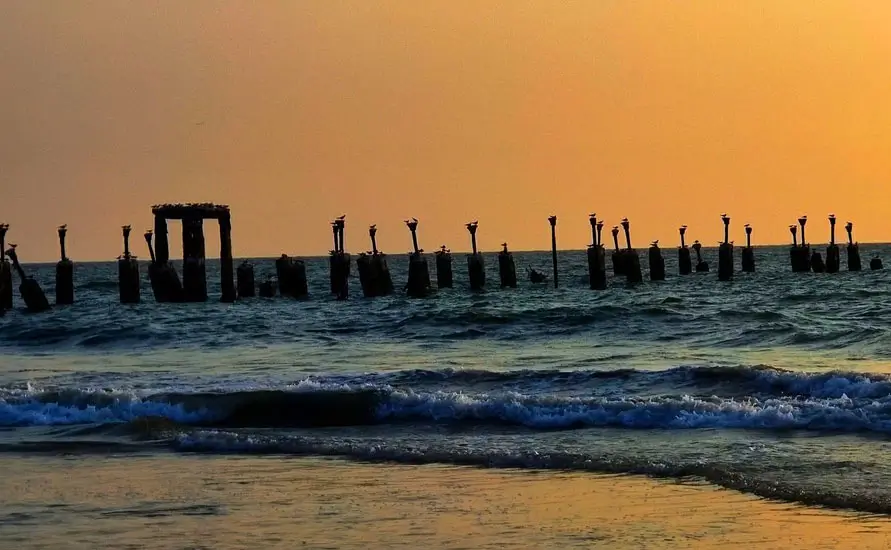
Toward sunset you walk out to the old pier on Alleppey beach, where only the iron pillars of the 1860s jetty remain standing in the sea. Families stroll on the sand, snack sellers wheel their carts along the promenade and fishermen pull their canoes up above the tide line. Dinner tonight might be a Kuttanad specialty such as duck curry or tapioca with spicy fish, the everyday food of the backwater villages you will see tomorrow. Your hotel is a good place for an early night, as tomorrow begins with a morning tour before boarding the houseboat at noon. Overnight in Alleppey.
A short drive into the Kuttanad countryside opens the day. The first stop is St. Mary's Forane Church at Champakulam, also called Kalloorkadu church, which tradition counts among the oldest Christian parishes in Kerala, founded according to local belief in the 5th century; the present building has old murals and a granite cross outside. A few kilometers away, under a small roof, sits Karumadi Kuttan, a black granite Buddha thought to date from around the 9th to 11th centuries, a reminder that Buddhism once had followers in this region. Both visits are short, and your guide explains how so many faiths ended up living side by side here.
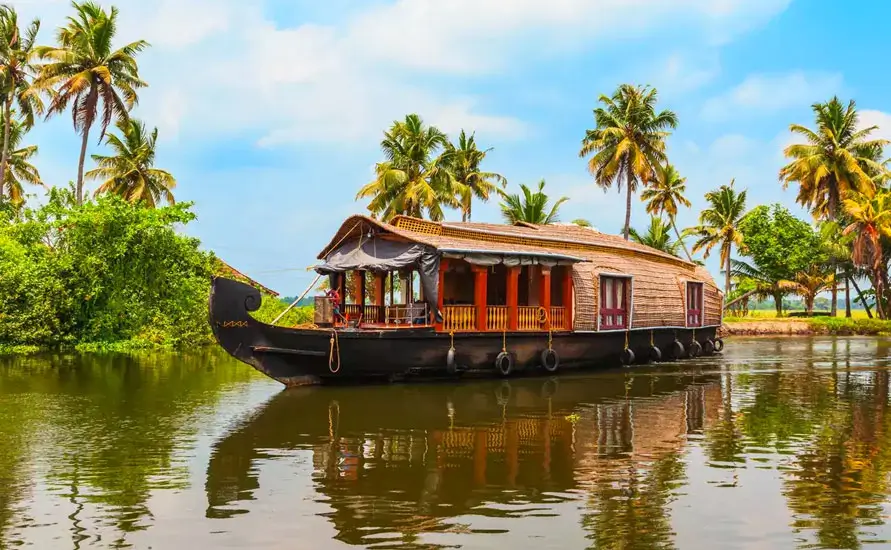
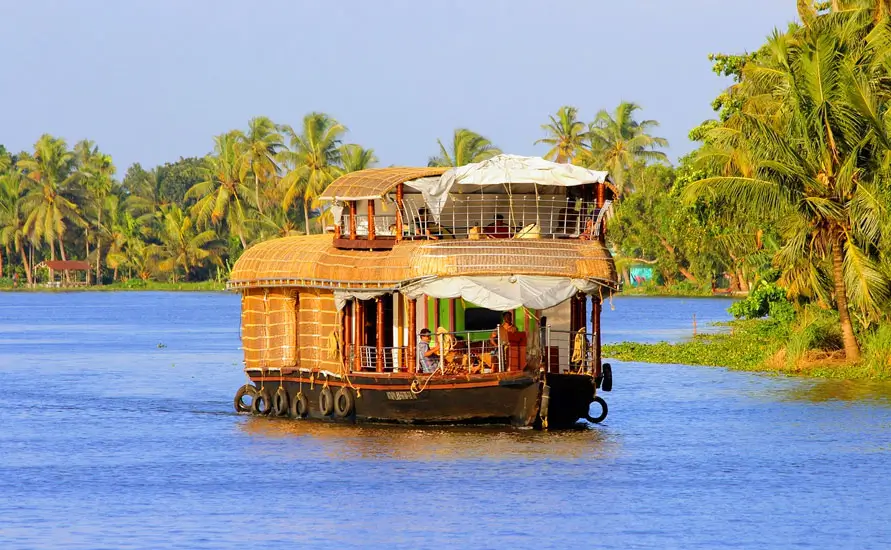
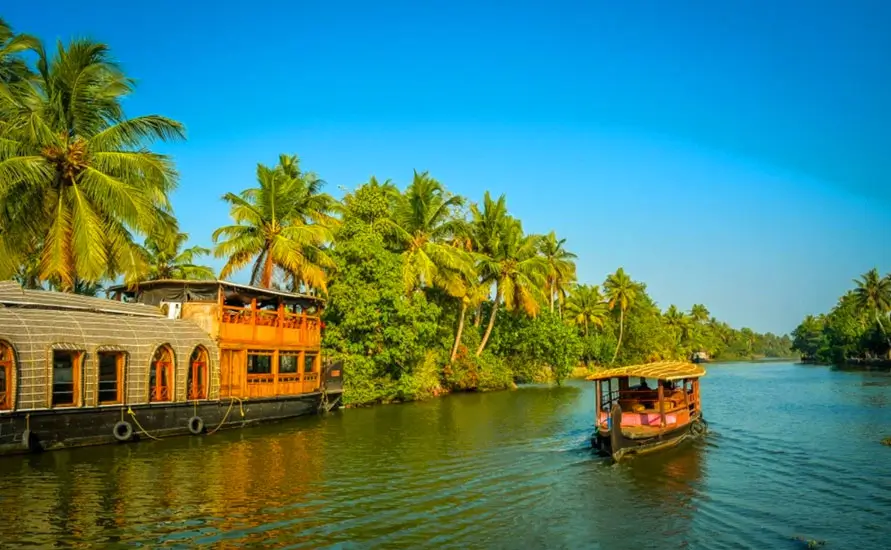
You then pass the Ambalappuzha Sri Krishna temple, famous for its sweet rice and milk payasam, and your guide tells the legend of the chess game between Krishna, in disguise, and the local king, which involved grains of rice doubling on each square of the board. Entry to the inner temple follows temple custom, so your guide asks at the gate. By noon you are at the jetty to board your private houseboat, where the crew offers a chilled tender coconut before pointing out the bedroom, the bathroom, the open deck and the tiny kitchen.
Lunch is served while the boat moves out into the canals, a Kuttanad meal of red rice, fish curry, beans thoran and pickles. During the afternoon cruise you pass villages much like the ones you visited this morning, with churches and temples facing the water, small shops on stilts and boat-builders working on new canoes. Ask the captain to slow down near one of the toddy tappers climbing coconut palms, an old trade that still survives here. As required, the boat stops cruising at sunset and moors near a village, where tea, a short walk on the bank and a home-style dinner follow. Overnight on the houseboat.
Your crew serves breakfast on deck, has you back at the landing around nine, and hands your bags to the driver. The road south follows the coast through Haripad and Kayamkulam, and about an hour into the drive you stop at Krishnapuram Palace, rebuilt in the 18th century by Marthanda Varma, the king who unified Travancore. Built in classic Kerala style, it has gabled roofs, narrow corridors and small courtyards, and it now serves as a museum of bronzes, coins, old weapons and stone sculpture. Like most state museums, it is usually closed on Mondays, and we plan the day with that in mind.
The highlight of Krishnapuram is the Gajendra Moksham mural, one of the largest single mural panels in Kerala, which shows Vishnu riding on Garuda to rescue the elephant king Gajendra from the grip of a crocodile. Your guide shows you how the painter filled every space with animals, gods and plants and how the colors have lasted for more than two centuries. The grounds also hold a small Buddha statue found in the region. After the visit, lunch waits in a family-run eatery in Kayamkulam or Kollam, where you can try Kerala-style beef fry or a vegetarian meal of rice with sambar and avial.
The rest of the drive to Trivandrum, or Thiruvananthapuram, the state capital, takes about three hours, passing the cashew factories of Kollam and the long, busy coastal strip of small towns. In the late afternoon you reach your heritage hotel, often a converted mansion or a quiet property with a garden, where you stay for the last four nights of the tour. Free time after check-in can go on a stroll around Kowdiar or Vellayambalam, or a coffee at the Indian Coffee House, whose spiral building near the railway station was designed by the architect Laurie Baker. Overnight in Trivandrum.
Trivandrum became the capital of Travancore in 1795, and its old town still revolves around the Sree Padmanabhaswamy Temple inside the walls of East Fort. First comes the temple tank, where the seven-tiered gopuram is reflected in the water in the morning light. The temple admits only Hindus and requires traditional dress, so for most guests the visit means the outer streets, the old agraharam houses of the Brahmin families and the shops selling lamps, bells and fresh flowers. Your guide explains the temple's role in the history of the Travancore kings, who ruled as servants of the deity.
Just steps from the tank stands the Kuthiramalika Palace museum, built in the 1840s for Maharaja Swathi Thirunal, who was also a composer of classical music. Look up at the eaves for the 122 timber horses that inspired its name; inside, the rooms show royal thrones, Belgian glass, Kathakali figures and musical instruments. Every January, a festival of classical music is held in the palace courtyard in memory of the king. Following a vegetarian sadya-style meal at a busy local canteen, you drive a short way north to the museum district.
Then comes the Napier Museum, an 1880s landmark designed by the English architect Robert Chisholm, which combines Kerala, Chinese and Indo-Saracenic elements. The collection includes bronze idols, temple chariots, ivory carvings and ornaments. Across the lawns, the Sree Chitra Art Gallery hangs canvases by Raja Ravi Varma, who was born near Trivandrum and became one of India's best-known painters in the late 19th century. Both usually close on Mondays, so we reorder the Trivandrum days if needed. Allow two hours here; the gardens around the buildings are a favorite strolling ground for local families in the late afternoon. Overnight in Trivandrum.
Although it lies just over the border in the Kanyakumari district of Tamil Nadu, Padmanabhapuram Palace belongs to the Kerala government and is maintained as a museum of Kerala architecture. It was the capital of Travancore until the late 18th century, and its oldest parts date back to around 1600, with major rebuilding under Marthanda Varma in the 1750s. Getting there means ninety minutes on the national highway through Neyyattinkara. The palace closes on Mondays, and it can be busy on weekends, so we aim to reach the gate soon after it opens.
Inside, the palace is a maze of wooden rooms, courtyards and corridors built without nails, using teak, rosewood and jackwood, with floors finished in a polished black mix said to include charred coconut husk, egg white and lime. The council chamber has colored mica windows that let light in while keeping out heat and rain, and the king's bedchamber holds a bed said to be made of dozens of kinds of medicinal wood. The oldest building, the Thai Kottaram or Mother's Palace, has a small inner courtyard with a sunken floor. Shoes are removed at the entrance, and the floors stay cool underfoot.
Before leaving, climb with your guide to the mural chamber in the upper part of the palace, if open, and through the long dining hall, where it is said that up to two thousand people were fed each day. A meal in Thuckalay, the town next to the palace, mixes Tamil and Kerala dishes on one menu. Heading north again, a roadside workshop weaving palmyra-leaf baskets is worth ten minutes. By late afternoon you are back in Trivandrum, with the evening free for rest or a walk along Shanghumukham beach near the airport. Overnight in Trivandrum.
The day opens early at a Kalaripayattu training center near East Fort, where students begin their practice soon after sunrise in a sunken earth pit with a small shrine in one corner. Visitors watch from the side as the master leads warm-up kicks and jumps, then moves on to sticks and short weapons. Many centers also run traditional massage and treatment clinics based on the same body knowledge, and a few minutes with one of the gurus can usually be arranged to hear about how the art has passed from teacher to student for generations. Please keep quiet and follow your guide's directions during the practice.
Late morning you visit Margi, a cultural organization in the Fort area that has worked since the 1970s to train young artists and keep two of Kerala's oldest theater forms alive: Kathakali and Koodiyattam, the Sanskrit theater recognized by UNESCO as part of the intangible heritage of humanity. Depending on the schedule, you may see a rehearsal, a make-up session or a lecture demonstration, and the staff can talk about costumes, music and the long training. Half an hour south lies Vizhinjam, a fishing town with a small rock-cut cave temple carved around the 8th century.
The Vizhinjam cave temple holds a carved figure of Shiva as Vinadhara Dakshinamurthy, playing a lute, with unfinished reliefs on the inner walls, and is one of the few rock-cut shrines in Kerala. Kovalam is ten minutes on, and its Lighthouse Beach is where you spend the last daylight hours of the tour. We can book a farewell meal at a seafood grill near the beach or back in Trivandrum, giving you time to look back over twelve days of temples, palaces, mosques, synagogues, churches and stages from one end of the state to the other. Overnight in Trivandrum.
Depending on your flight, the morning may be free for a last coffee in the hotel garden or a short visit to a handloom shop selling Balaramapuram cotton saris and mundus, a weaving tradition from a village just outside the city. Trivandrum International Airport is only a short drive from most city hotels, and your driver picks you up allowing a generous margin for overseas check-in. Onward connections run through Gulf hubs, Colombo or Singapore. Travelers on a late-night flight can keep their room into the evening for a supplement if we request it early.
On this Kerala heritage tour package you have followed the story of the state through its ports, palaces, places of worship and stages, and met many of the people who keep its arts alive. If you would like to see Theyyam in the villages of North Kerala, the Thrissur Pooram festival in spring or the great Chola temples of neighboring Tamil Nadu, our team would be pleased to plan a second trip with you.
Your Journey

N.S. Rathore & Mrs. Omlata Rathore · Managing Director
We still read every enquiry ourselves. Tell us the places you liked and our planners will send a day-by-day route with drive times and a clear price.
Every package can be customised and no pressure to book. A planner from our office replies within 24 hours with a route written for your group.
Fill this in and your planner will send a first draft itinerary.
Explore more
Kerala Backwaters Escape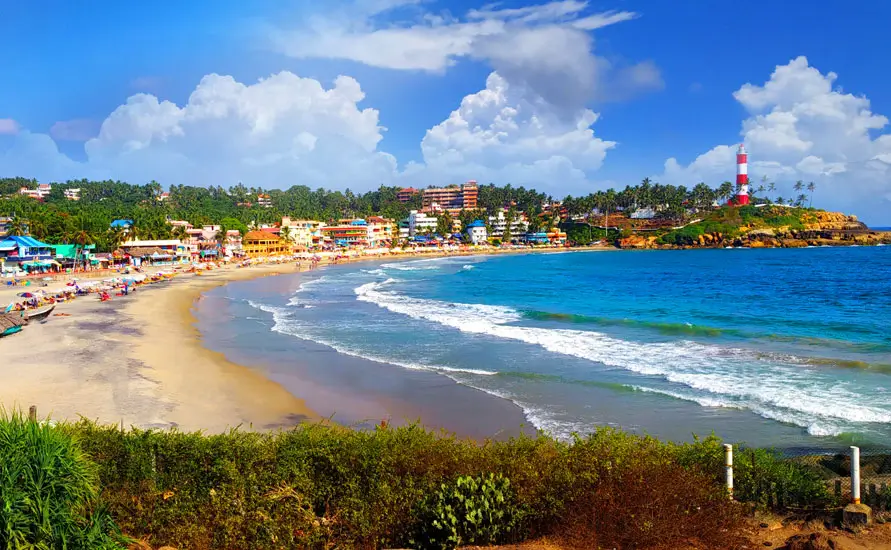 Kerala Backwaters Escape
 Kerala Backwaters Escape
 Kerala Backwaters Escape
 Kerala Backwaters Escape
 Kerala Backwaters Escape
 Kerala Backwaters Escape
 Kerala Backwaters Escape
 Kerala Backwaters Escape
 Kerala Backwaters Escape
 Kerala Backwaters Escape
 Kerala Backwaters Escape
 Kerala Backwaters Escape
 Kerala Backwaters Escape
 Kerala Backwaters Escape
 Kerala Backwaters Escape
 Kerala Backwaters Escape
 Kerala Backwaters Escape Kerala Backwaters Escape Kerala Backwaters Escape Kerala Backwaters Escape Kerala Backwaters Escape Kerala Backwaters Escape Kerala Backwaters Escape Kerala Backwaters Escape