
 Kerala Backwaters Escape

Kerala Tour Packages
Trivandrum – Kovalam – Varkala – Alleppey – Thekkady – Munnar – Kochi
At a glance
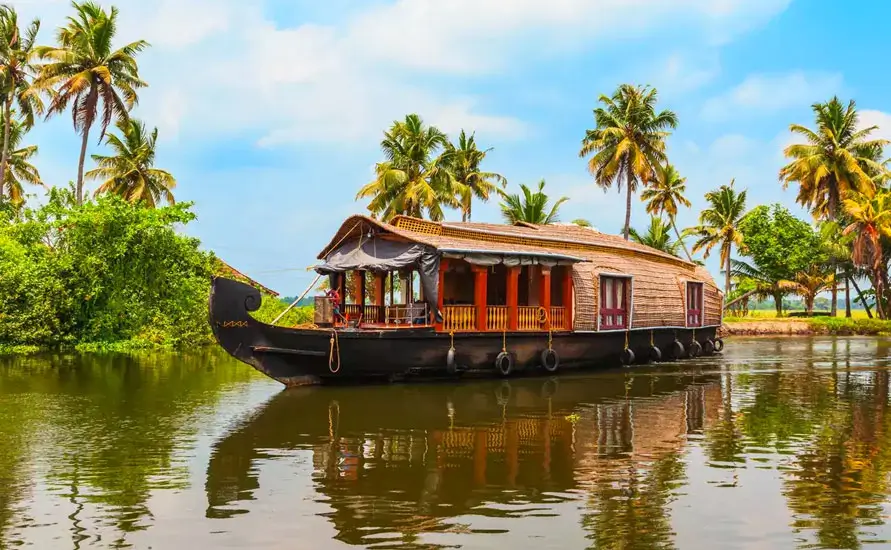
Plenty of travelers to South India fly into Kochi by default, yet starting at the southern tip of the state makes a lot of sense. Our Kerala tour from Trivandrum uses the capital's airport, with its good Gulf connections, and then works steadily north: two beach stops at Kovalam and Varkala, a night aboard a rice-barge houseboat in Alleppey, the cardamom forests of Thekkady, the tea slopes of Munnar, and finally the old trading quarter of Fort Kochi, where you catch your flight home.
Because the route runs in one direction, you never double back, and no single day on the road lasts more than about four hours. Two nights in most places give you a full day at each stop, with one houseboat night in between, and the order moves from sea level up to 1,600 meters and down again, so the cool hill air arrives just when the coastal heat starts to feel long. A single cooled sedan or SUV, driven by the same English-speaking chauffeur throughout, handles each leg, while licensed guides step in at Trivandrum, Varkala, Thekkady, Munnar and Kochi.
Families from the US, Canada, the UK and Europe often pick this Kerala tour from Trivandrum for a first visit, and NRI travelers with relatives in the southern districts find it handy to begin near home. The Trivandrum Kerala tour package works well between October and March, when beaches are calm and hill nights are crisp. Hotel category, extra beach nights or a cooking class can all be adjusted, since every element of the trip is private.
Flights from Dubai, Doha, Muscat, Sharjah and Singapore land at Trivandrum International Airport, a compact terminal only a few kilometers from the city center and the sea. Our Kerala staff wait beyond the customs exit with a sign bearing your surname, and your driver stows the luggage in the trunk for the half-hour trip south to Kovalam. Out of the window come the capital's tree-lined roads, its painted shopfronts and the green hills behind the coast. Paperwork, a printed route plan and our phone numbers are handed over before you reach the resort.
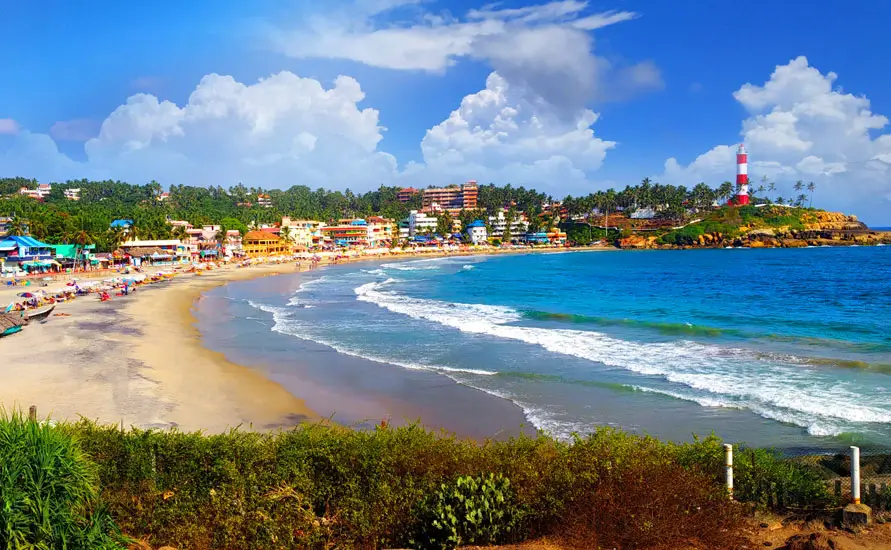
Kovalam is built around three crescent-shaped coves separated by rocky headlands, and most hotels climb the slopes above them so that rooms and terraces look over the Arabian Sea. Check-in is normally from early afternoon, and if you have come in on an overnight flight we suggest sleeping first and saving any outing for later. Many resorts here have Ayurveda centers on site, and a gentle head and shoulder massage is a good remedy for jet lag. Lunch by the pool, perhaps a plate of fried squid or a mild vegetable korma with flaky Kerala paratha, is all the day really needs.
As the afternoon cools, walk down to Lighthouse Beach, the southernmost of the coves, where a red and white striped tower stands on the rocks at one end. Climbing its spiral stairs is usually allowed in the afternoon for a small fee, and from the gallery you can trace the whole curve of the shoreline, with wooden boats drawn high above the tide line. A promenade of cafés and shops runs behind the beach, and bathers should stay inside the flagged zone, since the waves can pull hard. Sunset is a gentle event here, with tea or fresh juice at a table facing west. Overnight in Kovalam.
After breakfast a guide rides with you on the short drive into Trivandrum, or Thiruvananthapuram, which served as capital of the princely state of Travancore for almost two centuries. East Fort is the historic core, and here the Sree Padmanabhaswamy Temple looks down on a wide stepped tank, its seven-tiered entrance tower covered in carved figures. Only Hindus may go inside, wearing a dhoti or sari according to the temple's strict rules, but anyone can stand at the tank, watch pilgrims arrive with flowers and listen to your guide explain why the temple made headlines in 2011 when sealed vaults full of gold were opened.
Right beside the temple, the Kuthiramalika Palace dates from the 1840s and the reign of Swathi Thirunal, a maharaja remembered as much for his music as for his rule. Its name means horse palace, from the 122 wooden horses carved along the outer eaves, and inside you walk barefoot over polished floors past royal portraits, a crystal throne and rooms with views of the temple tower. Afterwards you drive across town to the Napier Museum, a nineteenth-century building whose striped brickwork and steep pitched roofs mix Kerala and Indo-Saracenic styles, set in gardens next to the city zoo and art gallery.
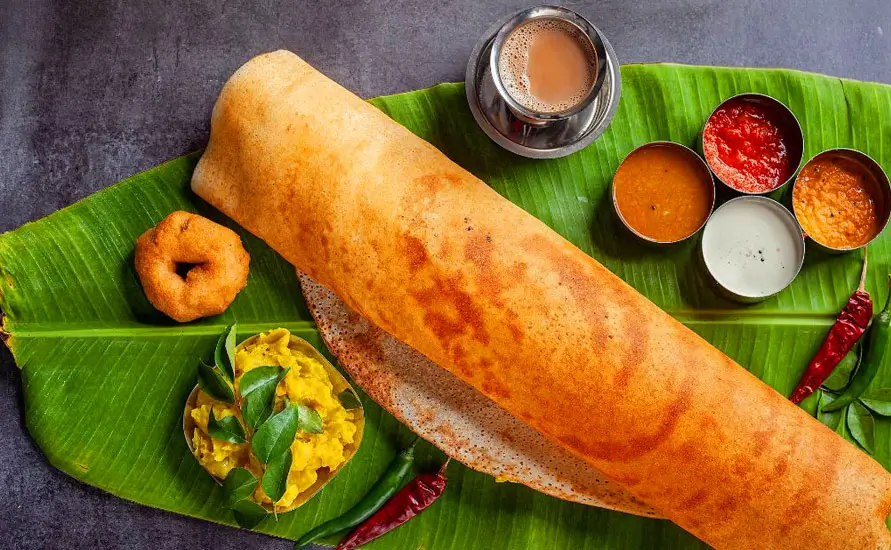
Museums in Trivandrum keep weekly closing days, usually including Mondays, and we plan the sequence of visits around your calendar. For lunch, the guide picks a local eatery where rice and a dozen small vegetarian dishes arrive on a banana leaf, a filling first lesson in Kerala food. Later, should your legs allow it, the guide can take you through Chalai Bazaar, the city's oldest market, where shops sell brass lamps, spices, jasmine garlands and gold jewelry. Those interested in Travancore history can also add Padmanabhapuram Palace, an hour south, on a separate morning, remembering that it is closed on Mondays. Overnight in Kovalam.
Start the morning with a walk to Vizhinjam, the fishing harbor just south of the Kovalam coves, where dozens of boats painted in blue, red and yellow unload what the night brought in. Auctioneers shout prices on the jetty, women carry baskets of sardines and mackerel, and the whole scene is over by mid-morning. Close to the harbor road, a small rock-cut cave temple dating to roughly the eighth century shows an unfinished carving of Shiva, a quiet reminder that this coast has been settled for well over a thousand years. Return to your room after that, leaving time for breakfast and a last swim before you pack.
Leaving after a late checkout, you drive north past Trivandrum on a road that runs inland for much of the way, with coconut groves and small market towns on both sides. About an hour along, a short detour leads to Anchuthengu, where traders of the English East India Company raised a fort during the 1690s, one of their earliest strongholds on this coast. Its low walls and a small cemetery of old British graves overlook the beach, and a lighthouse nearby can sometimes be climbed. From here the backwater lagoon runs parallel to the sea, separated from it by a thin strip of sand.
You pull into Varkala around three, and your room is waiting either on the North Cliff, where most guesthouses face the sea, or in a garden property slightly back from the edge. The cliff here is made of reddish laterite rock that drops straight down to the beach, and a paved walkway along the top is lined with cafés, yoga schools and small shops selling cotton clothing. Evenings revolve around the sunset, as people line the railings and the sun sinks into the sea, and the restaurants fill with diners choosing fish from ice trays displayed at the entrance. Overnight in Varkala.
Varkala is a pilgrim town as much as a beach resort, and our guide begins with the Janardanaswamy Temple, dedicated to Vishnu and counted among the oldest shrines in South Kerala. Entry to the inner sanctum is limited to Hindus, though visitors may look in from the outer areas, and custom may require men to go shirtless close to the sanctum. Down the steps lies Papanasam Beach, a name that refers to washing away sins, where families perform rites in memory of their ancestors. Please photograph these ceremonies only from a respectful distance and never without asking first.
A few minutes inland, on a hill above the town, stands Sivagiri Mutt, the ashram founded by Sree Narayana Guru in the early twentieth century. The Guru preached equality across caste lines at a time when many Keralans could not enter temples at all, and every December and January thousands of followers in yellow robes walk here for the Sivagiri pilgrimage. Next, drive about twenty minutes north to Kappil, where a quiet lagoon lies almost touching the open sea, and take a country boat out among the mangroves and coconut groves that fringe its banks. Cormorants and kingfishers perch on the poles of fishing traps.
Nothing more is planned after that. Booking a drop-in yoga class is simple in Varkala, as is an Ayurvedic oil treatment, and many guests also enjoy a slow walk north to Black Beach and Odayam, where the sand turns darker and the crowds thin out. Swimming is best at the main beach when lifeguards are on duty, because rip currents form along these beaches, especially before November. For dinner, the cliff offers everything from tandoori kingfish to Kerala fish curry with tapioca, and most places will happily tone down the chili on request. Overnight in Varkala.
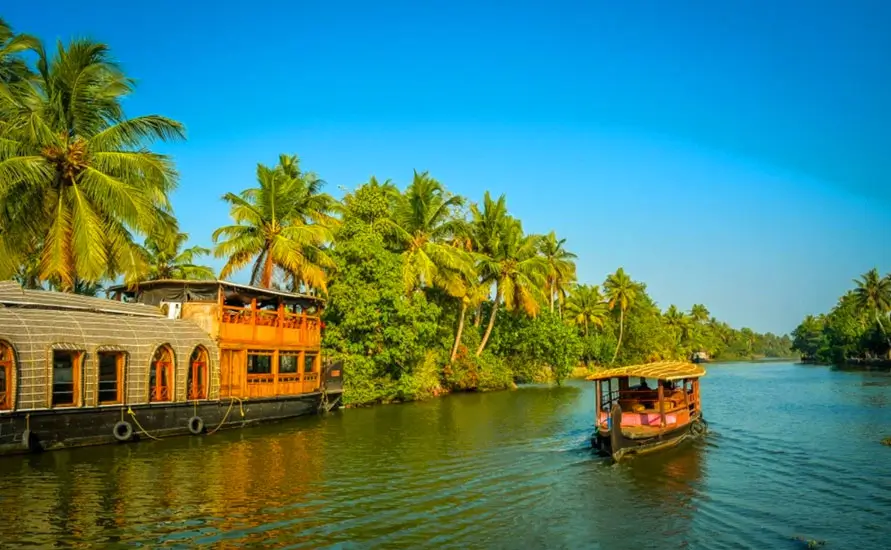
Eat early today ahead of the drive north to Alleppey, or Alappuzha, since houseboat boarding usually happens around noon. The route passes Kollam, the old port where Arab, Chinese and later Portuguese ships once loaded pepper, and then continues along the coastal highway past Kayamkulam and Haripad, both known for their temples and their annual snake boat races. Your driver will stop for coffee wherever you like. By late morning you leave the main road and turn onto a narrow lane that ends at the water's edge, where your private Alleppey houseboat is moored and the crew is waiting on deck.
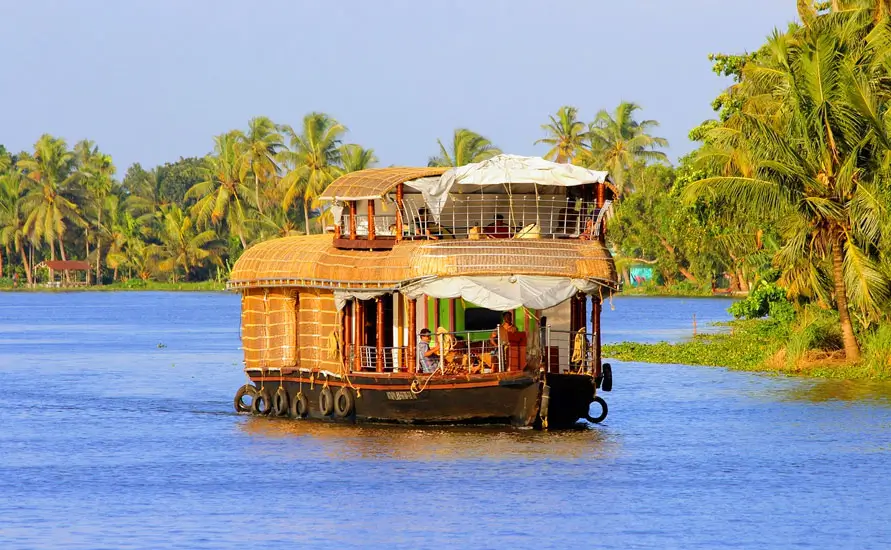
Kerala houseboats are adapted from the kettuvallam, a barge stitched together from planks of anjili wood with coir rope and no nails at all, which once carried rice from the fields to the coast. Your boat has one or more bedrooms with private bathrooms, a sitting area open to the breeze up front and a galley behind, all looked after by a skipper, a cook and one helper. Lunch comes out soon after you sail and might include karimeen fried in red masala, a cabbage thoran, sambar, rice and crisp pappadam. The meal is unhurried, and the boat moves slowly enough that you can eat and watch at the same time.
Through the afternoon you glide along the Kuttanad canals, passing churches with tall white bell towers, small temples, toddy shops and long rows of rice fields that sit below the level of the water beside them. Children wave from the banks, and women carry bundles of washing down to stone landings. Every houseboat must be moored before sunset, so in the late afternoon the captain chooses a quiet spot, often beside a paddy field, and you can go ashore to stretch your legs. Evening tea comes with crisp banana chips, and dinner is cooked fresh as darkness settles over the water. Overnight on the houseboat.
Get up at first light if you can: a haze hangs low over the canals and men in narrow canoes are already lifting their lines. The cook may serve puttu for breakfast, layers of coconut and rice flour cooked in a bamboo-shaped steamer, eaten with black chickpea curry and small sweet bananas. Near nine the boat ties up, you thank the crew, and the car is ready for the climb east into the hills. The road crosses the flat Kuttanad plains, passes through Kottayam, and then begins to rise past rubber estates, hill villages and forests of tall trees draped in pepper vines.
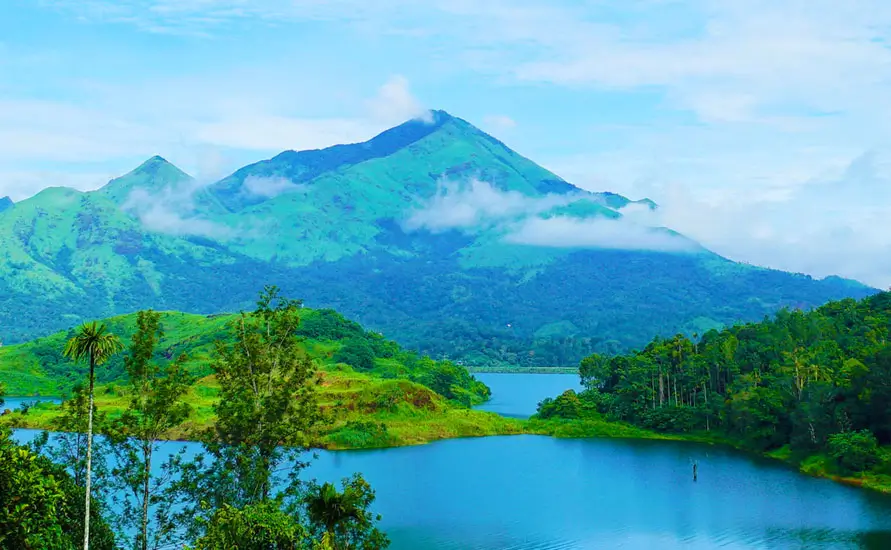
The second half of the drive winds up into the Western Ghats via Mundakayam and Peermade, gaining height steadily so that the air cools and the vegetation changes around you. Tea gardens appear in patches on the higher slopes, and roadside stalls sell cardamom, tea and homemade chocolate. Your driver knows the hairpin bends well, but travelers who get carsick should take their usual remedy beforehand. You reach Thekkady, the area around the town of Kumily on the forest line of the Periyar reserve, soon after lunch, and settle into a hotel set among trees and spice gardens.
Toward evening, walk the length of the main road in Kumily, a long strip of spice shops, tea stalls and small handicraft stores. The spices sold here come from estates in the surrounding hills, and shopkeepers are happy to let you smell green cardamom, black pepper, cloves and nutmeg before you buy. At around six in the evening, many visitors attend a Kalaripayattu performance at one of the small arenas in town, where young fighters show kicks, leaps, staff and sword sequences of Kerala's traditional martial art inside a lamp-lit earthen arena. Seats fill fast, so arrive early. Overnight in Thekkady.
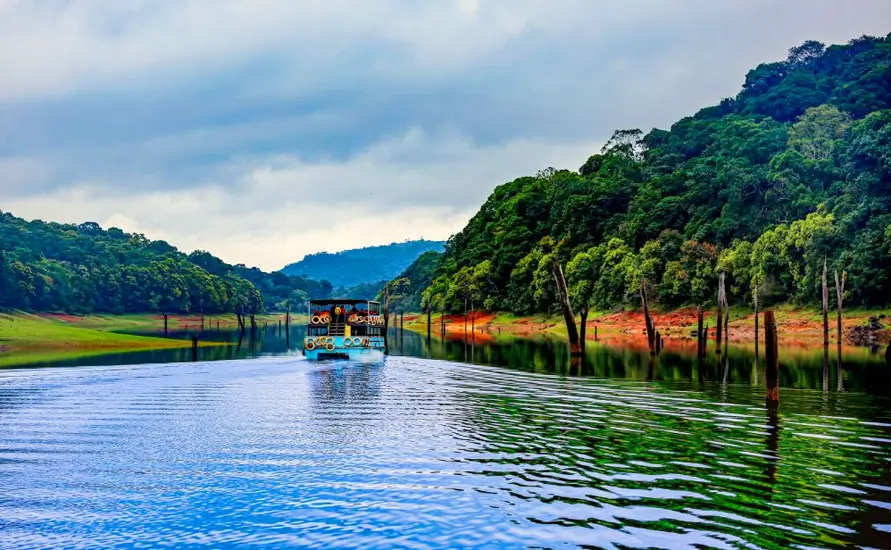
Forest and grassland cover the hills of the Periyar Tiger Reserve, wrapped around a reservoir that formed when John Pennycuick's dam was finished in 1895; dead trunks of the flooded trees still poke out of the water like grey posts. Boat trips on Periyar Lake are run by the forest and tourism departments, and the first departure of the morning is the quietest and the most likely to show you wild animals along the shore, such as gaur, sambar deer, wild boar or elephants coming to drink. Sightings are never guaranteed, and tickets are limited, so our team helps arrange them in advance whenever possible.
For those who would rather walk than sail, the forest department also offers short guided nature walks with trained tribal trackers, covering a few kilometers of trails where the focus is on birds, butterflies, giant squirrels and the healing herbs known to the forest communities here. Our local guide then takes you to a spice plantation just outside Kumily for a walk among the plants you have only ever seen dried: cardamom growing in clumps at ground level, pepper climbing up silver oak trees, cinnamon bark, vanilla pods, nutmeg fruit and cocoa. Planters often explain how they harvest and dry each crop.
The afternoon is free. Some guests book a bamboo raft trip, a longer ranger-led outing that must be reserved well ahead, while others prefer a cooking class with a local family that shows how spices from the morning's walk go into a Kerala chicken curry or a vegetable stew. Alternatively, ride out to the Chellarkovil viewpoints by the state border, from where the hills drop away sharply to the plains below. Dress in layers for the evening, since Thekkady sits at around 900 meters and nights here can be noticeably cooler than on the coast. Overnight in Thekkady.
Leave Thekkady after breakfast and drive north on a scenic hill road through cardamom country, where rows of shade trees protect the delicate plants growing underneath. The road passes Vandanmedu, one of the largest cardamom trading towns in India, and later Poopara, as the climb steepens toward the upper ranges. Although the distance is modest, the narrow road and countless bends keep the average speed low, so budget three and a half hours, not counting breaks. Your driver can pause at a small roadside tea shop for strong sugary tea and banana fritters, or at viewpoints over the valleys below.
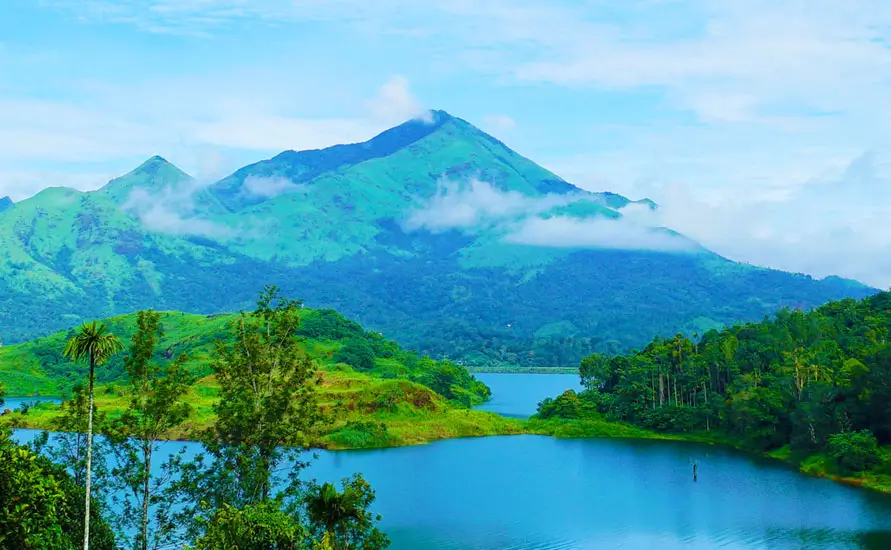
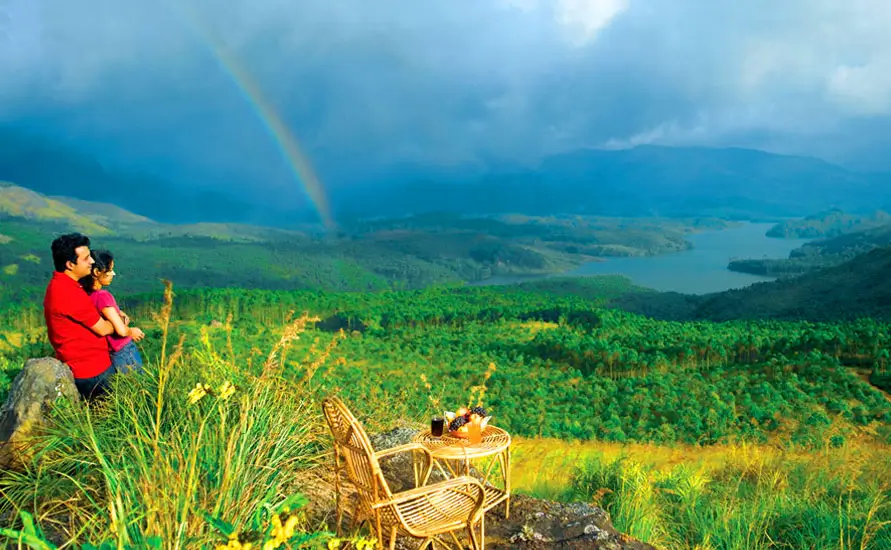
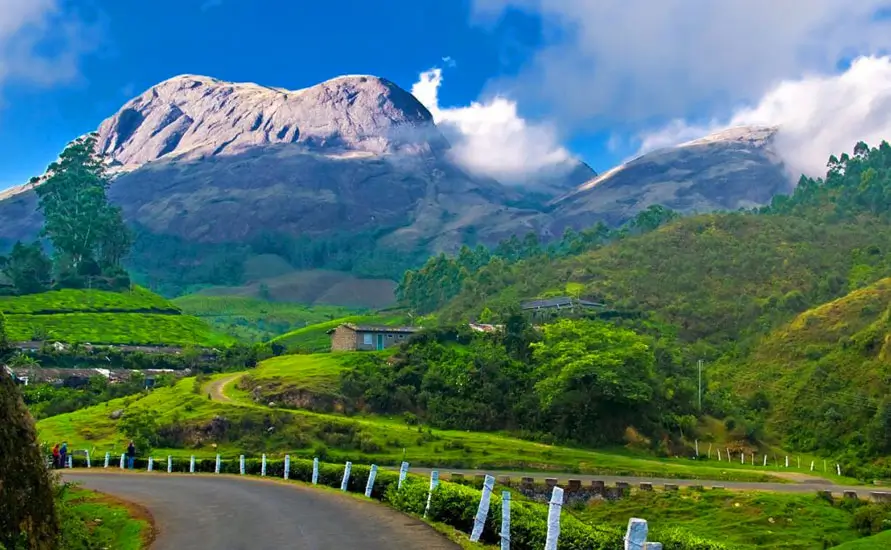
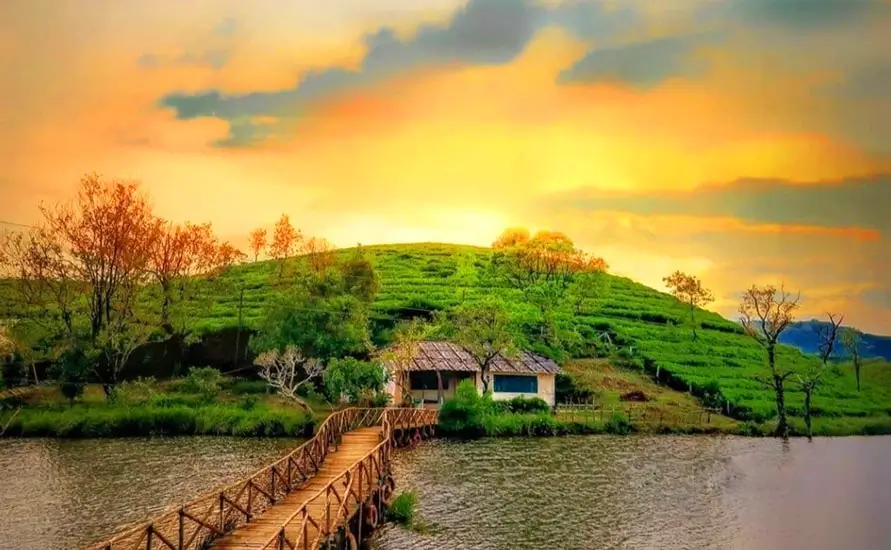
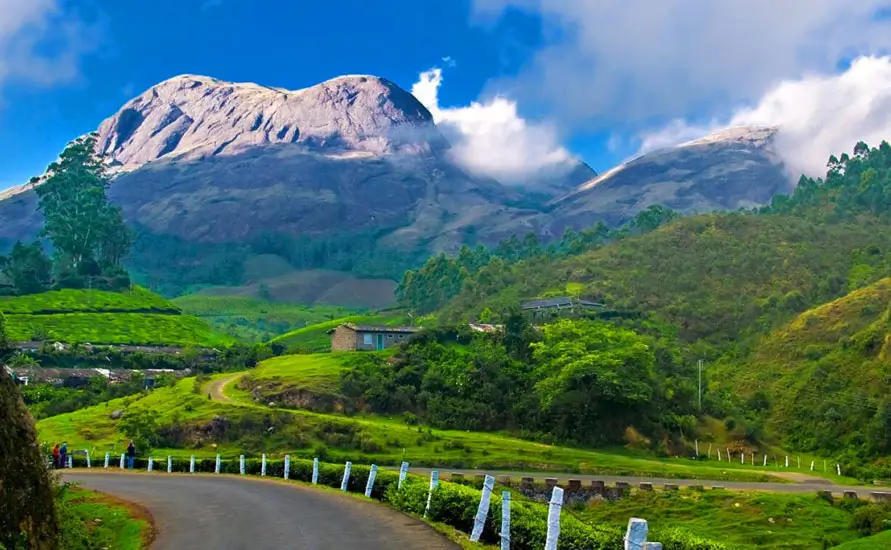
Around midway, the scenery changes from mixed spice farms to the neat green carpets of tea that make Munnar famous. These estates were cleared by British planters in the late nineteenth century and are still worked today, with pickers working the rows, each with a sack slung from the forehead. Your hotel may be a resort on a hillside facing the valleys or a cottage in a working estate outside the town. Check in in the early afternoon and take time to settle, because at about 1,600 meters the cool, thinner air can feel tiring at first.
In the late afternoon, wander through the Munnar town market, a lively place where vegetables, spices, woolen shawls and homemade chocolate are sold alongside tea in every grade. Your guide can tell orthodox leaf from granular CTC tea and help you choose a few packets to take home. The evenings here are cool, above all in December, January and February, when the mercury can fall close to single figures, so pack warm layers. Dinner at your hotel may include hill-country dishes such as appam with stew, or Tamil-style meals, as many tea workers' families have roots across the border. Overnight in Munnar.
Head out early to Eravikulam National Park, set up chiefly to protect the Nilgiri tahr; this sure-footed mountain ungulate, the state animal of Tamil Nadu, lives only on a few southern ranges. Vehicles are parked at the checkpost, and shuttle buses run by the park ferry everyone to Rajamala, from where a tarred footpath rises across grassland beneath the cliffs of Anamudi, whose 2,695-meter crest is the loftiest point in peninsular India. The tahr are often seen grazing near the path, but as wild animals they come and go as they please. Calving season brings an annual closure lasting several weeks in roughly February and March, so we confirm the reopening date before fixing your itinerary.
After the park, the guide takes you to the KDHP Tea Museum at the Nallathanni estate, where a short film and displays of old rolling machines, photographs and tools trace the story of tea in the High Range from the days of the British planters to the cooperative that runs much of the industry today. A short tour of the working factory shows how freshly picked leaf passes through withering troughs, rollers and dryers on its way to becoming black tea, and you finish by sipping a few grades side by side. The smell of drying leaves stays with you long after you leave.
In the afternoon you drive up to Mattupetty Dam and the reservoir behind it, passing the Indo-Swiss dairy farm and stopping at Echo Point, where the lake curves between forested hills. Pedal boats and speedboats are available on the water if you want them. On the way back, the road passes through the Kundala area with views across a wide valley of tea gardens, and on clear days you may continue up to Top Station at the rim of the High Range, looking down over the Theni plains, though mist can roll in quickly after midday. Overnight in Munnar.
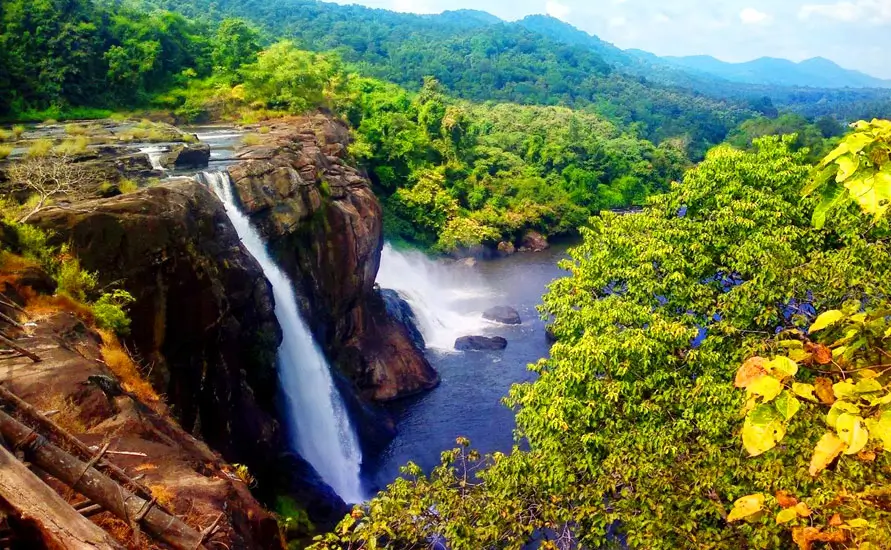
Say goodbye to the tea hills after breakfast and begin the long descent toward the coast. The first part of the drive winds down past Pallivasal, where Kerala's first hydroelectric plant was built in the 1940s, and on to the Cheeyappara and Valara falls, which pour over the rocks next to the highway and run fullest from about August to November. Your driver will stop for photographs and a short stretch, and the many roadside vendors here sell honey, spices and fresh fruit. Below the falls, the road continues through Adimali and Kothamangalam into lower, warmer rubber and pineapple country.
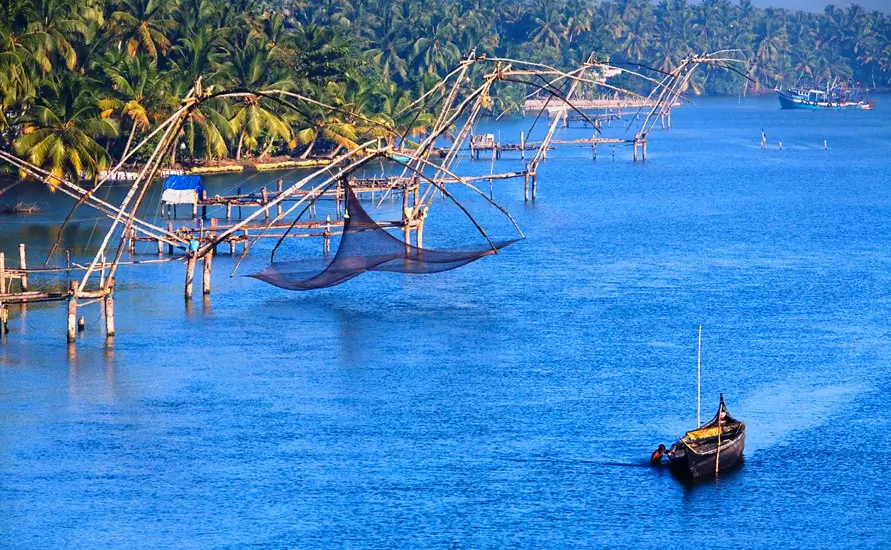
By early afternoon you reach Kochi and cross onto the island of Fort Kochi, where your hotel may be a converted colonial bungalow or a small heritage property set around a courtyard. The old quarter is ideal for walking, with shaded streets and low traffic. After checking in, rest for a while and then head to the waterfront around five, as the harbor light turns golden and the Chinese fishing nets begin their evening work. Each net rises and falls on a long wooden arm held in balance by rocks tied to ropes, and fishermen will often invite you to help pull down the beam.
Tonight brings a Kathakali performance, the theatrical dance of Kerala in which a story from the epics is told entirely through gesture, eye movement and the beat of drums. The audience can watch the actors paint their faces in the hour before curtain, a slow and absorbing ritual of rice paste, colored pigment and paper frames fixed to the jawline. A short explanation in English introduces the main gestures and the story, which helps you follow the action. Dinner afterwards might be in a garden café nearby, where prawns in coconut gravy and fish molee are menu favorites. Overnight in Kochi.
A morning walk with your guide leads through the colonial lanes of Fort Kochi, which has passed through Portuguese, Dutch and British hands since the early sixteenth century. St. Francis Church, put up by the Portuguese around 1503, ranks as India's earliest surviving European church; Vasco da Gama was buried inside in 1524 before his family moved the remains to Portugal. Nearby, the Santa Cruz Cathedral Basilica shows a much later and more ornate style, with painted ceilings and tall windows. Along the way, you pass old warehouses, the Dutch cemetery and the shaded parade ground, now used for football matches by local teams.
Mid-morning, move on to Mattancherry Palace, handed by the Portuguese to the Kochi ruler around 1555, later repaired by the Dutch, whose name it still carries in local speech. Upstairs, the bedchamber and coronation hall walls carry Ramayana panels in ochre, leaf green and lamp-soot black, among the best preserved murals in the state. The neighboring Paradesi Synagogue in Jew Town, dating to 1568, has a clock tower, brass pulpit and blue willow-pattern floor tiles. Note the closures: no palace visits on Friday, and no synagogue visits on Friday, Saturday or Jewish holy days; if your dates clash, we swap Days 10 and 11 around.
After lunch, the afternoon is yours for shopping and wandering. Jew Town's antique shops hold everything from old temple doors to brass oil lamps, and the spice merchants along the waterfront sell pepper, cardamom and ginger by weight. If you prefer something calmer, the Kerala Folklore Museum near Thevara has a large collection of masks, costumes and carved wood from across the state, or you can take an optional sunset harbor cruise past Willingdon Island and the Bolgatty area. Your last evening in Kerala is open for a farewell meal, and we are happy to reserve somewhere special. Overnight in Kochi.
Depending on your flight, a quiet breakfast, one more look at the fishing nets and an espresso in a gallery café may all fit in before checking out at noon. Guests with late-night flights to Europe or North America can ask us to arrange a later checkout or a day room at extra cost. Our driver then takes you across the bridges and north through Ernakulam to Cochin International Airport, reached in around ninety minutes on a normal day, with time allowed for check-in for international departures.
Twelve days have carried you from the southern capital up through beaches, canals, spice forests and tea hills to Kerala's busiest port, each stop a short and comfortable drive from the last. Cochin International Airport has strong links to the Gulf, Singapore and Colombo for onward connections to the US, Canada, the UK and Europe. If this Kerala tour from Trivandrum has made you want to see more of the south, our team can plan a follow-up trip to the Tamil Nadu temple towns or the forests of Wayanad next time.
Your Journey

N.S. Rathore & Mrs. Omlata Rathore · Managing Director
We still read every enquiry ourselves. Tell us the places you liked and our planners will send a day-by-day route with drive times and a clear price.
Every package can be customised and no pressure to book. A planner from our office replies within 24 hours with a route written for your group.
Fill this in and your planner will send a first draft itinerary.
Explore more
Kerala Backwaters Escape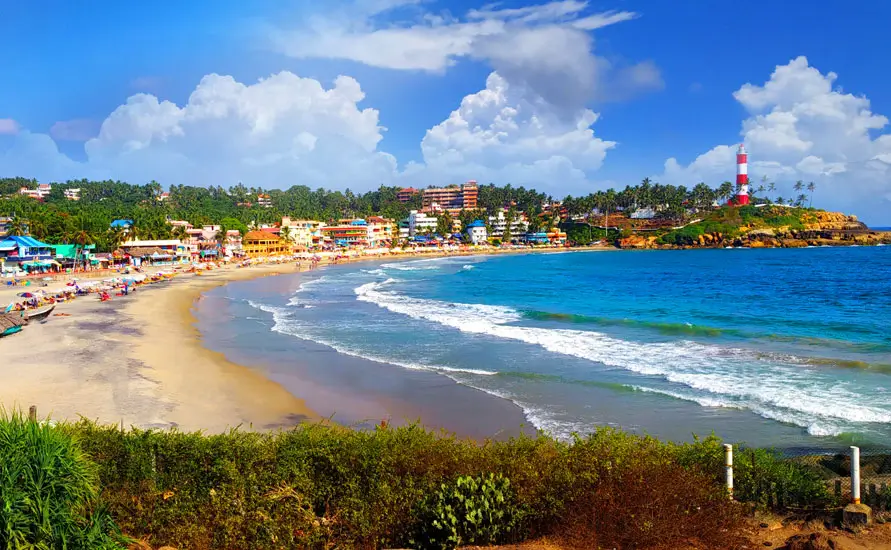 Kerala Backwaters Escape
 Kerala Backwaters Escape
 Kerala Backwaters Escape
 Kerala Backwaters Escape
 Kerala Backwaters Escape
 Kerala Backwaters Escape
 Kerala Backwaters Escape
 Kerala Backwaters Escape
 Kerala Backwaters Escape
 Kerala Backwaters Escape
 Kerala Backwaters Escape
 Kerala Backwaters Escape
 Kerala Backwaters Escape
 Kerala Backwaters Escape
 Kerala Backwaters Escape
 Kerala Backwaters Escape
 Kerala Backwaters Escape
 Kerala Backwaters Escape Kerala Backwaters Escape Kerala Backwaters Escape Kerala Backwaters Escape Kerala Backwaters Escape Kerala Backwaters Escape Kerala Backwaters Escape