
 Kerala Backwaters Escape

Kerala Tour Packages
Kochi – Alleppey (houseboat) – Kumarakom – Marari – Varkala – Kovalam
At a glance
Few trips in India ask so little of you on the road and give back so much time by the water. Our Kerala backwaters and beach holiday opens in Fort Kochi, the harbor town where pepper once paid for empires, spends a night drifting on a private Alleppey houseboat, settles for two quiet days on the shore of Vembanad Lake at Kumarakom, and then turns south along the Arabian Sea to three very different beaches: fishing-village Marari, cliff-top Varkala and the rocky coves of Kovalam.
The longest drive of the whole trip is about four hours, between Marari and Varkala, and every other transfer takes two hours or less. You sleep two nights in most places, which leaves real time for swimming, reading, Ayurvedic massages and long lunches of fish curry and rice. One driver and one car stay assigned to you for all eleven days, start to finish, and a local guide joins you for the Kochi walk and for village and backwater outings where a little context makes all the difference.
Our planners shaped this Kerala backwater tour around what guests from Boston, Leeds, Munich or Perth tend to ask for, and around NRI households wanting an easy coastal break with children or older parents. Hotels range from heritage bungalows in Kochi to lakeside cottages and beach resorts, and the pace of the Kerala backwaters and beach holiday can be slowed further with extra nights at any stop. October to March brings calm seas and dry days, while the monsoon months suit travelers who want Ayurveda at lower rates.
After immigration and baggage at Cochin International Airport, watch for a member of our Kerala team near the exit doors with your name written on a card. The airport sits in the countryside north of the city, and the run down to Fort Kochi usually lasts about ninety minutes, over the Periyar River and then the long bridges that link the islands of the Kochi harbor. Your driver introduces himself here as well, since he will be with you for the next eleven days, and our representative passes you a paper copy of the plan, advice on getting a local SIM, and our round-the-clock numbers before leaving you at your hotel.
Most long-haul arrivals via the Gulf land after dark or before sunrise, which is why we leave the hours until late afternoon empty. Most guests sleep, have a light lunch and then wander out on foot, because the old town of Fort Kochi is small and flat and easy to walk once the midday heat fades. Around Princess Street and Burgher Street you pass Portuguese, Dutch and British era houses, many of them now cafés, galleries and homestays painted in cream, ochre and blue, with wooden shutters and tiled roofs.
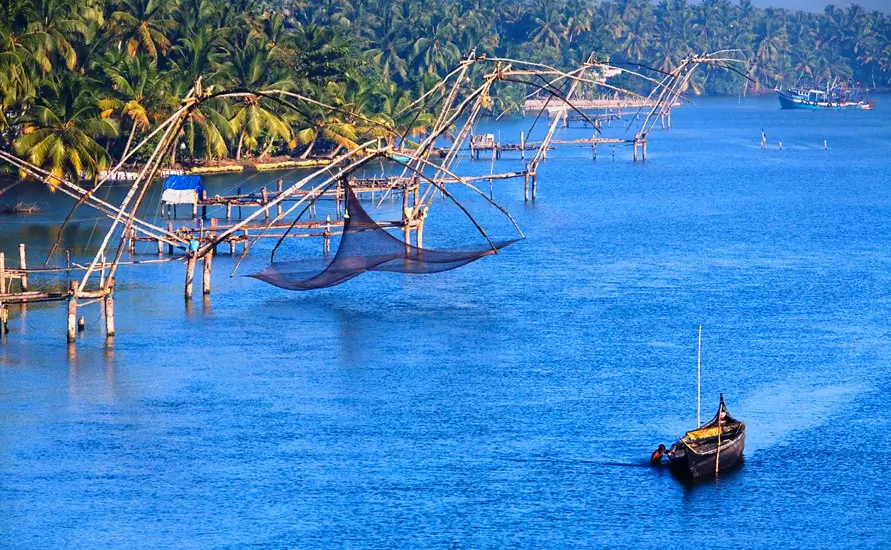
Toward sunset, stroll to the seafront path by Vasco da Gama Square, where a breeze blows in from the harbor mouth and cargo vessels glide toward the container port across the water. Local families gather here with ice cream cones as the light changes, and the row of cantilevered fishing nets along the shore turns into dark outlines against an orange sky. You choose where to eat tonight, and our team can name a simple seafood place close by where coconut, curry leaves and black pepper give an honest first taste of the region. Overnight in Kochi.
After breakfast your local guide arrives to lead a morning on foot through Fort Kochi, a town shaped by five centuries of foreign traders. You begin at St. Francis Church, a plain whitewashed church raised by Portuguese settlers in the early 1500s, and see the floor slab that marked Vasco da Gama's first grave before his remains were carried back to Lisbon. A few streets away, the Dutch cemetery and the old parade ground still show the outline of the colonial town, and the guide explains how the port changed hands between Portugal, the Netherlands and Britain.
An auto-rickshaw or your car then covers the short hop to Mattancherry, whose Mattancherry Palace keeps large murals of Ramayana episodes in deep reds, yellows and greens, as well as portraits and palanquins of the Kochi royal family. A few steps on, the narrow lanes of Jew Town end at the Paradesi Synagogue, where blue and white floor tiles from Canton were laid by hand and no two patterns match. Keep the calendar in mind: the palace never opens on Fridays, while the synagogue receives no visitors from Friday through the Sabbath or during Jewish feast days, so your guide fixes the walk for a weekday that works. Old spice godowns along the waterfront still smell strongly of ginger and black pepper as traders sort sacks by hand.
Rested after a quiet hour or two, you head out at dusk for Kathakali, the old dance-drama of the Kerala temples and courts. Most small theaters in Fort Kochi open their doors early so that you can sit close to the stage while the actors paint their faces, slowly building the green masks of heroes and the red and black features of demons with rice paste and natural colors. The show itself is short and comes with an English introduction to the hand gestures, so you can follow an episode from the epics with no knowledge of Malayalam at all. Overnight in Kochi.
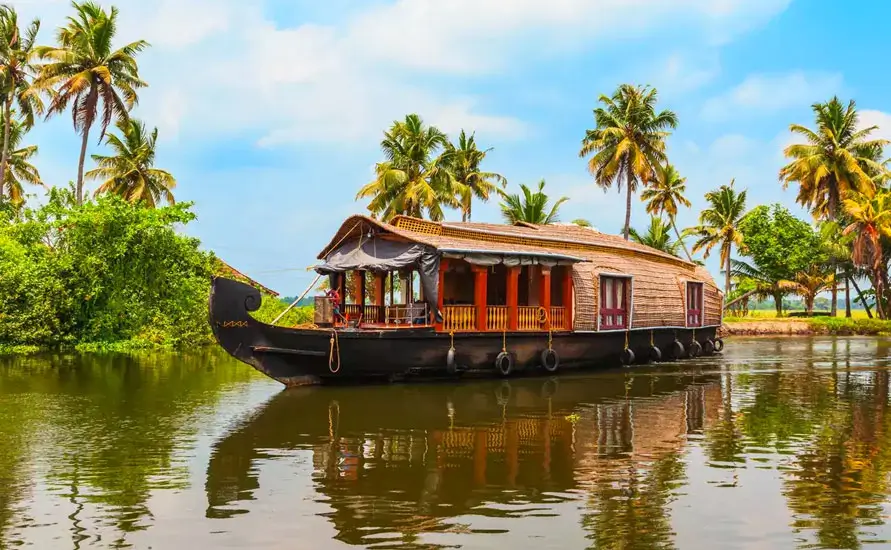
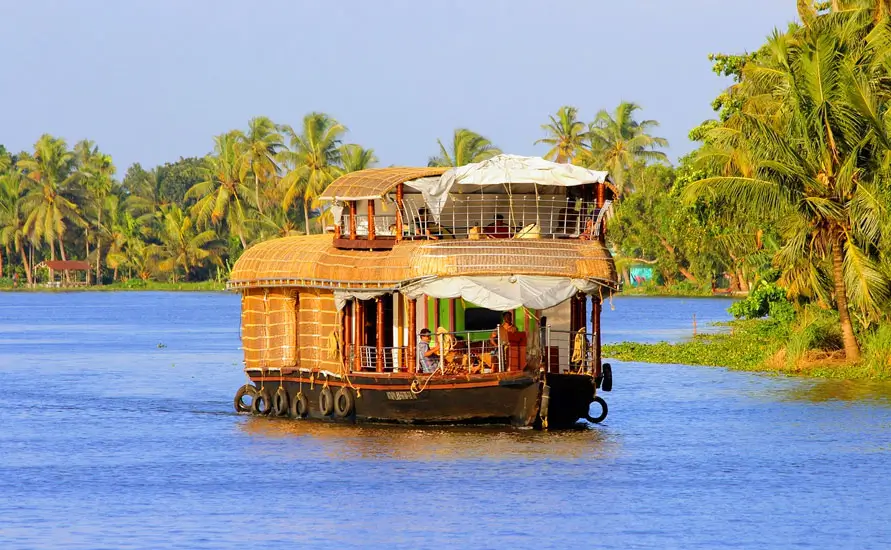
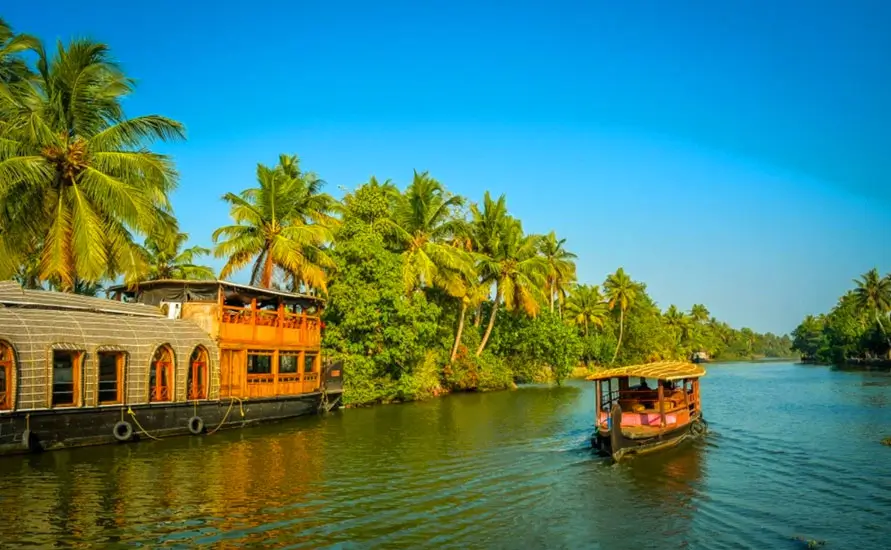
Breakfast is unhurried, because houseboats in Alleppey only take guests on board around noon. You leave Kochi in mid-morning and drive south on the coastal highway, past roadside churches with tall white facades, fish stalls shaded by umbrellas and endless rows of coconut palms. Around ninety minutes later you pull up at the boat jetty at Punnamada or a quieter village landing outside town, depending on your boat. Waiting there is your private Alleppey houseboat, a rebuilt kettuvallam, the long wooden barge that once hauled rice and coir to market, today carrying bedrooms with attached bathrooms, a shaded sitting deck and a galley in the stern.
Three crew members share the steering, the cooking and the housekeeping, and lunch is served soon after you settle in: red Kerala rice, a lentil curry, a dry vegetable stir-fried with grated coconut, pickles and a whole fried pearl spot fish from the lake. As the boat leaves the busy main channel, the scenery narrows to green walls of palms, small chapels and homes with stone steps running down to the water. Kuttanad, the farming area around you, farms rice on fields reclaimed from the lake, lying beneath sea level, protected by earth dykes that the crew can point out as you pass.
Local regulations require every houseboat to halt by sunset, and in the late afternoon your captain ties up beside paddy fields or a village bank where the water is calm. This is a good time to step ashore with a crew member and walk along the dyke, greeting children on their way home from school and watching ducks being herded back into their pens. Tea and banana fritters arrive on deck as the light goes, and dinner follows a little later, with the spice level adjusted to your taste. Mosquito nets or screens are provided in the cabins for the night. Overnight on the houseboat.
Mornings on the backwaters start early, with mist lifting off the water and the first ferries and canoes heading toward town. Breakfast on deck is usually appam, the lacy rice pancake, with a mild vegetable stew or egg curry, along with fruit and coffee. By about 9 am the boat is back at the landing and you disembark; most guests leave a tip for the crew, which is customary in Kerala if the service pleased you. Your driver is already waiting, and the short road to Kumarakom follows the southern edge of Vembanad Lake through rice country and small market towns.
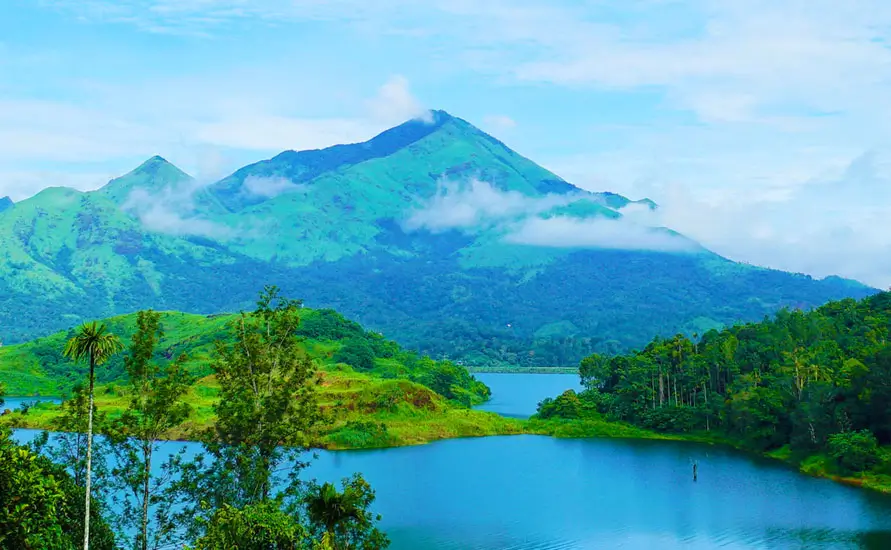
Kumarakom lies along the eastern edge of Vembanad, the biggest lake in Kerala, and its resorts are spread out along the water among coconut groves and narrow canals. Rooms are generally ready at midday, and nothing else is planned for today. Many lakeside properties have swimming pools facing the water, rooms set in old Kerala-style wooden houses that were moved here from villages and rebuilt, and an Ayurveda center offering oil massages. For guests who have just come off a long flight and a houseboat night, the first afternoon here is often spent doing very little at all.
Late in the day, ask your resort for a country boat or a short sunset cruise on the open lake, where the horizon is wide and flat and fishermen in dugout canoes throw circular nets close to the shore. Pathiramanal, a little island of trees out on Vembanad, can be seen in the distance and visited on a longer boat trip if you wish. Dinner at the resort usually includes a few Kottayam specialties, such as duck roast or fish simmered in an earthen pot with kudampuli, a smoked sour fruit that gives the curry its dark color. Overnight in Kumarakom.
Set an alarm for first light and the Kumarakom Bird Sanctuary, made up of lakeside mangrove and woodland that a British rubber planter once owned. A walking trail of roughly two kilometers circles through the trees, and early morning is the only sensible time to walk it, before the heat and before the birds go quiet. Herons, cormorants, kingfishers and darters nest here, and from November to February visiting species from the north swell the count. Sightings depend on the season and the water level, so think of it as a quiet nature walk rather than a guaranteed wildlife show. A naturalist guide can be arranged on request.
After breakfast back at the resort, our local guide takes you into the village behind the lake for a slow look at daily life along the small canals. A narrow wooden canoe, paddled by a boatman, slips into waterways far too narrow for houseboats, passing toddy tappers climbing palms, women spreading coir fiber to dry and men mending fishing nets in the shade. You may stop at a family home to see how coconut husks are turned into rope, or at a small farm growing tapioca, bananas and pepper vines around the house. Expect to be out on the water for about two hours, back before the sun climbs too high.
Pass the midday heat poolside or with an appointment at the spa; a full body oil massage called abhyanga is a popular first choice. Some guests prefer a cooking demonstration with the resort chef, learning to make fish molee, a mild coconut milk curry, or avial, mixed vegetables in coconut and yogurt. If you feel like a short outing, the old town of Kottayam with its historic churches lies about thirty minutes away. In the evening, the lake turns pink and grey as egrets fly back to their roosts in the trees along the water. Overnight in Kumarakom.
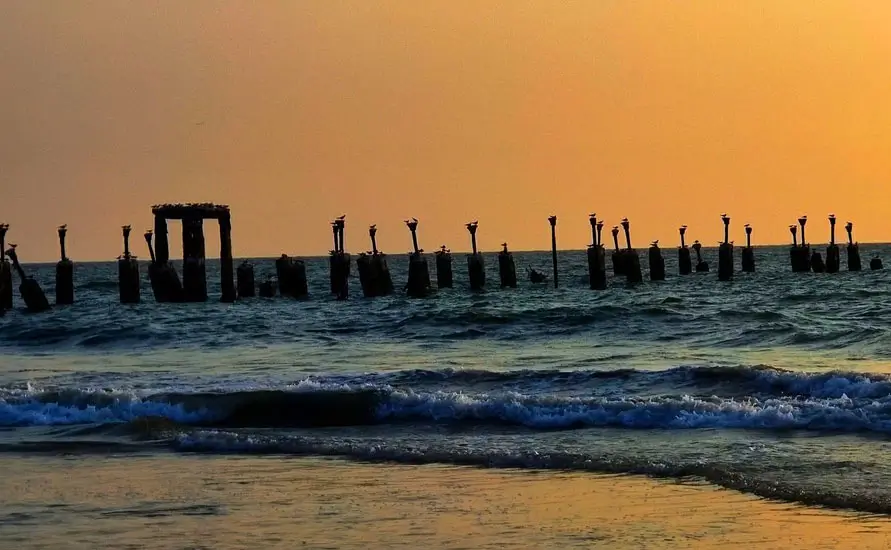
Leave Kumarakom after a late breakfast and cross back over the lake region toward the coast. The road runs past Alleppey town, and if you did not see it on your houseboat day, your driver can stop at the long beach with its old pier posts or at the canal bridges where boat builders work on new hulls. Covering the whole distance to Marari Beach takes about ninety minutes, so you arrive in time for lunch. Marari, also called Mararikulam, sits around fifteen kilometers north of Alleppey and remains a working fishing area with a few low-rise resorts set back from the sand.
The beach here is long, wide and mostly empty apart from local fishermen, which is exactly why many repeat visitors to Kerala come back to it. Resorts are spread out among coconut groves just behind the dunes, and several of them grow their own vegetables and herbs or run small organic farms. After lunch you can walk barefoot along the shore for kilometers without meeting a crowd, though it helps to know that currents here can be strong, so ask the resort staff where it is safe to swim and avoid the water during the rough months of the monsoon.
In the late afternoon the fishermen of the village start preparing their boats and nets for the next morning, and you can watch the work from a respectful distance. Sunsets on this west-facing coast are clear on most days between November and March, and many resorts set up chairs on the sand for an evening drink. Dinner is likely to feature seafood bought from the morning catch, from tiger prawns in a peppery masala to sardines fried with chili and turmeric. Ask for the dishes to be made mild if you prefer, since local cooking can be quite fiery. Overnight in Marari.
Get up before six if you can, because the most interesting hour at Marari Beach is the return of the fishing boats. Teams of twelve men or more push their boats through the surf, haul long nets up the sand in a steady rhythm and then sort the catch into baskets of mackerel, sardines and small sharks. Women from the village gather quickly to buy and carry fish to market on their heads. A resort staff member or our local guide can accompany you so that photography is done politely, with permission, and without getting in the way of a busy working morning.
After breakfast, the day is free to enjoy the beach and resort at your own pace. A bicycle outing through the back lanes of the village is a pleasant option, past small temples, churches, ponds covered in water lilies and houses with neat front yards swept every morning. Some resorts offer yoga sessions on a covered deck or a short class in the basics of Kerala cooking. For those who want to see a little more, the Arthunkal church to the south is one of the oldest Christian sites on this coast and draws pilgrims during its January festival.
Spend the afternoon with a long lunch, an Ayurvedic treatment or simply a hammock under the palms, and save some energy for one more walk along the beach at dusk. Children usually love the tide pools and the small crabs that run sideways across the beach at dusk. For a different setting at dinner, our driver can take you to a simple local restaurant in Alleppey for a toddy shop style meal of spicy fish, tapioca and duck curry, though you are not obliged to try the palm wine itself. Overnight in Marari.
Today has the longest drive of the holiday, so we start soon after breakfast to reach Varkala by early afternoon. The route follows the coastal highway south through Alleppey and Kayamkulam toward Kollam, a busy road lined with shops, schools and churches, and your driver will stop whenever you need a break. A good place for coffee is near Kollam, the old port once known to Arab and Chinese traders as Quilon, which sits at the edge of the long Ashtamudi Lake. The lake is the starting point for the public ferry between Kollam and Alleppey, one of the longest backwater routes in the state.
Arriving in Varkala, the landscape changes completely. Instead of flat sand and palms, the coast here rises into sheer red laterite cliffs, and the cliff top is lined with a footpath, small guesthouses, cafés, bookshops and yoga studios looking straight out over the sea. Nowhere else on this coastline of Kerala will you find cliffs like these, and geologists have studied the layered rock for many years. Your hotel may sit on the North Cliff itself or in a quieter garden setting a little inland, and take time to rest after the drive.
As the afternoon cools, walk the Varkala cliff path from the helipad area northward, stopping at cafés for fresh lime soda and grilled fish. Stairways cut into the cliff lead down to Papanasam Beach, considered sacred by Hindus, where families come to perform rites for their ancestors and lifeguards keep watch over bathers during the main season. The sun sets directly ahead over the sea, and the cliff-top restaurants fill quickly with travelers watching it go down. Be careful near the edge after dark, as parts of the path have no railings. Overnight in Varkala.
Start the morning at the Janardanaswamy Temple, a temple to Vishnu standing on a low hill above Papanasam Beach and said to be around two thousand years old. Entry to the main shrine is generally limited to Hindus, but the outer courtyard, the old bell said to have come from a Dutch ship and the view down to the sea are worth the short climb. Temple custom can ask men to remove their shirts close to the shrine, and everyone should dress modestly. Our guide also takes you to Sivagiri Mutt, where the reformer Sree Narayana Guru is buried on a hilltop; his teaching that all people share a single caste, faith and god still shapes politics and society in Kerala.
After a coffee break, drive north for about twenty minutes to Kappil, where a narrow strip of sand separates a quiet backwater lake from the open sea. This makes a nice contrast to the busy cliff, with fishermen working the lake in small canoes and coconut groves on both banks. A country boat or a motorboat can take you out on the water for an hour or so. Alternatively, the guide can arrange a trip to the Anchuthengu area further south, where a small island temple sits in the lagoon and the remains of an old British trading fort stand near the shore.
Return to Varkala for a free afternoon. Many visitors use this time for a yoga class or an Ayurvedic massage, both of which are easy to find along the cliff, or simply spend a few hours on Black Beach at the northern end, named for its dark mineral sand. Shopping is relaxed here, with stalls selling cotton clothes, handmade jewelry and Kashmiri crafts, and prices are open to friendly bargaining. Dinner on the cliff gives you the choice of seafood, Kerala thalis, wood-fired pizza or Tibetan momos, as well as plenty of options for vegetarians. Overnight in Varkala.
Once breakfast is done and the luggage loaded, you head south to Trivandrum (officially Thiruvananthapuram), the state capital, conveniently placed on the road to Kovalam. Our local guide joins you in the city for a short look at its royal past. The Sree Padmanabhaswamy Temple admits Hindus only, and they must wear a dhoti for men and a sari or long skirt for women, but all visitors can see its tall carved entrance tower from the street and walk around the temple tank and the old market lanes of the East Fort area nearby.
Next to the temple, the Kuthiramalika Palace museum, built by the Travancore royal family in the nineteenth century, shows fine wood carving, Belgian glass, ivory thrones and a long row of carved wooden horses supporting the eaves outside. A short drive away, the Napier Museum sits in a park with the city zoo and is worth seeing for its striking building alone, with bright striped walls and steep roofs that blend Kerala, Chinese and Gothic ideas. Both museums have weekly closing days, so the order of stops depends on which weekday you are in the city.
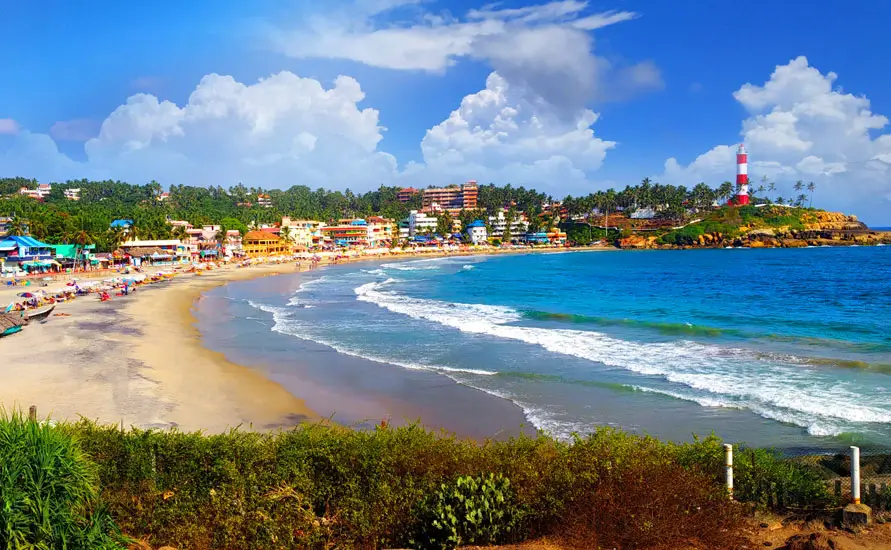
By mid-afternoon you continue the last thirty minutes to Kovalam, a beach town built around a series of rocky bays south of the city. Check in to your resort, many of which sit on the hillside above the sea with long views of the coast. In the evening, walk down to Lighthouse Beach, the busiest of the three bays, where the red and white lighthouse stands on a rocky point and a promenade of restaurants faces the water. Lifeguards watch the swimming areas marked by flags, and it is best to swim only between them. Overnight in Kovalam.
Guests flying out later in the day can spend the morning on a walk to Vizhinjam, just south of Kovalam, where a large fishing harbor fills with colorful boats and a small rock-cut cave shrine from around the eighth century sits quietly near the road. Alternatively, take one last swim and a slow breakfast on the terrace before packing. Rooms must normally be vacated by midday; a later checkout or a day-use room costs extra and suits guests on night flights to Europe or the US.
Then it is a short ride to Trivandrum International Airport, only about half an hour away; we time the drop so you have about three hours at the terminal before your flight home. Nonstop flights connect Trivandrum with the main Gulf carriers' home airports and a few Asian hubs, so there is no need to return north to Kochi for your flight home. Eleven days have taken you from the canals and lake of central Kerala to three very different stretches of sand. Should you want tea hills or a spice forest next time, drop our planners a line and a fresh route can be sketched around your dates.
Your Journey

N.S. Rathore & Mrs. Omlata Rathore · Managing Director
We still read every enquiry ourselves. Tell us the places you liked and our planners will send a day-by-day route with drive times and a clear price.
Every package can be customised and no pressure to book. A planner from our office replies within 24 hours with a route written for your group.
Fill this in and your planner will send a first draft itinerary.
Explore more
Kerala Backwaters Escape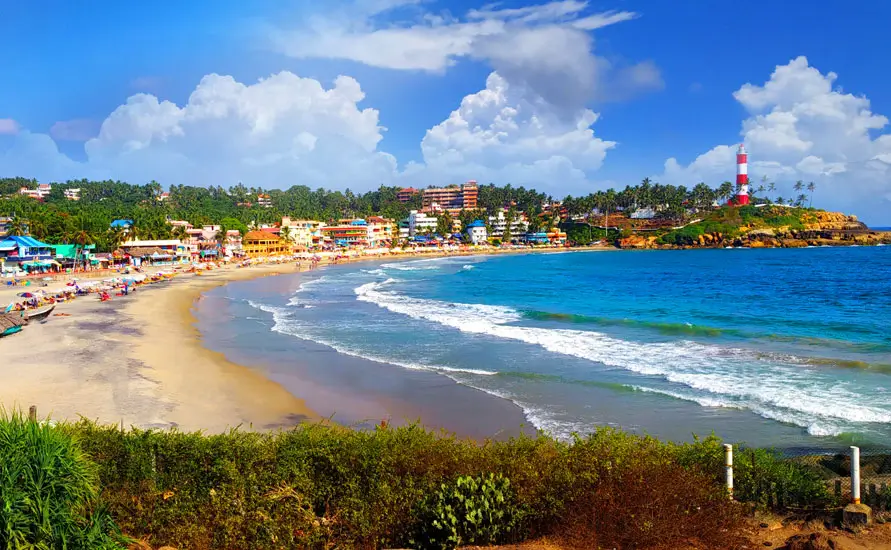 Kerala Backwaters Escape
 Kerala Backwaters Escape
 Kerala Backwaters Escape
 Kerala Backwaters Escape
 Kerala Backwaters Escape
 Kerala Backwaters Escape
 Kerala Backwaters Escape
 Kerala Backwaters Escape
 Kerala Backwaters Escape
 Kerala Backwaters Escape
 Kerala Backwaters Escape
 Kerala Backwaters Escape
 Kerala Backwaters Escape
 Kerala Backwaters Escape
 Kerala Backwaters Escape
 Kerala Backwaters Escape
 Kerala Backwaters Escape Kerala Backwaters Escape Kerala Backwaters Escape Kerala Backwaters Escape Kerala Backwaters Escape Kerala Backwaters Escape Kerala Backwaters Escape Kerala Backwaters Escape