 Kerala Backwaters Escape

Kerala Tour Packages
Kochi – Tripunithura – Thrissur (Pulikali) – Aranmula (snake boat race) – Alleppey – Munnar – Kochi
At a glance
Onam is the one week of the year when all of Kerala, Hindu, Christian and Muslim alike, cooks the same feast, lays flower carpets at the doorstep and heads outdoors to watch street dancers and boat crews. Our Kerala Onam festival tour is built around the festival calendar rather than the usual sightseeing loop. You arrive in Kochi for Thiruvonam, the main day, and sit down to a full Onasadya on a banana leaf, then follow the celebrations north to Thrissur and south to the Pampa river before ending with quieter days on the backwaters and in the hills.
Onam falls in the Malayalam month of Chingam, usually between late August and mid-September, and the exact days move every year with the lunar calendar. We fix your dates once the official calendar is published, so that the fourth day of Onam finds you on Swaraj Round in Thrissur for Pulikali, the painted tiger dance, and Uthrattathi day finds you on the riverbank at Aranmula for the Aranmula snake boat race. Because these dates do not shift for visitors, the Kerala Onam festival tour works best when booked three to four months ahead.
The trip suits foreign travelers who want Kerala at its most social, and NRI parents keen for overseas-raised kids to share the Onam they remember from childhood. Your own car, driver and local guides stay with you throughout, and each event is watched from public viewing areas or spots our team arranges with local contacts. August and September sit at the tail of the monsoon, so expect green hills, full rivers and the odd heavy shower. After the festival days, a night on a houseboat in Alleppey and two nights in Munnar let the pace drop before you fly out.
Plan to land at Cochin International Airport on Thiruvonam, the biggest of the Onam days; a member of our Kochi team holds up a placard with your name just past customs. Your hotel is roughly an hour by road, and en route you will notice that the roads are lighter than usual, many shops have pulled down their shutters, and families are out in new clothes, often the cream and gold kasavu sari or mundu that is worn at this time of year. Your welcome pack includes a printed plan of the festival days and a short note on Onam etiquette, written by our Kochi team.
Around midday you sit down to the Onasadya, the vegetarian feast that is the heart of the Onam in Kerala celebrations. It is served on a fresh banana leaf in a fixed order, and a full sadya can run to more than twenty items: banana chips, sharkara varatti, pickles, avial, thoran, olan, kalan, erissery, pulissery, sambar, rasam and rice, closed with two or three kinds of payasam. Your guide shows which curry is mixed with rice at which stage, why only the right hand is used, and what it means when guests fold the leaf inward once they finish. We arrange the lunch at a family home or a respected local restaurant, depending on your dates.
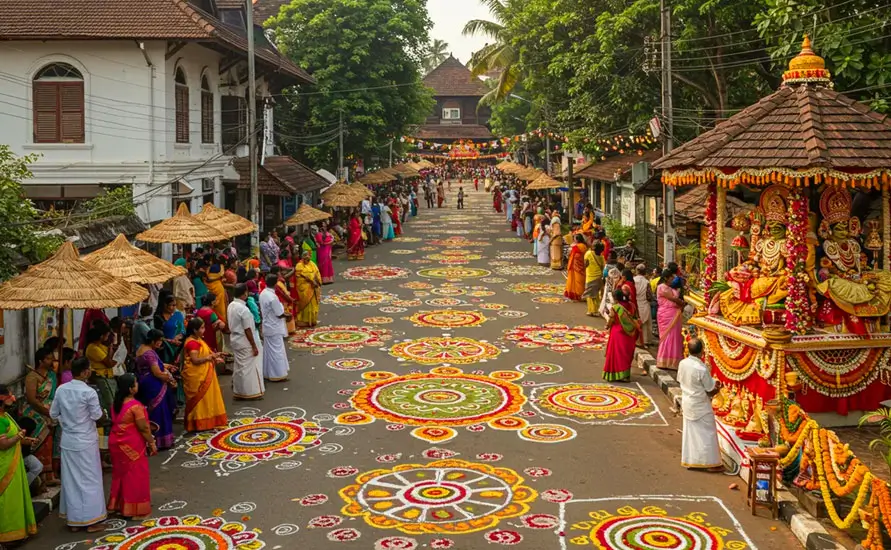
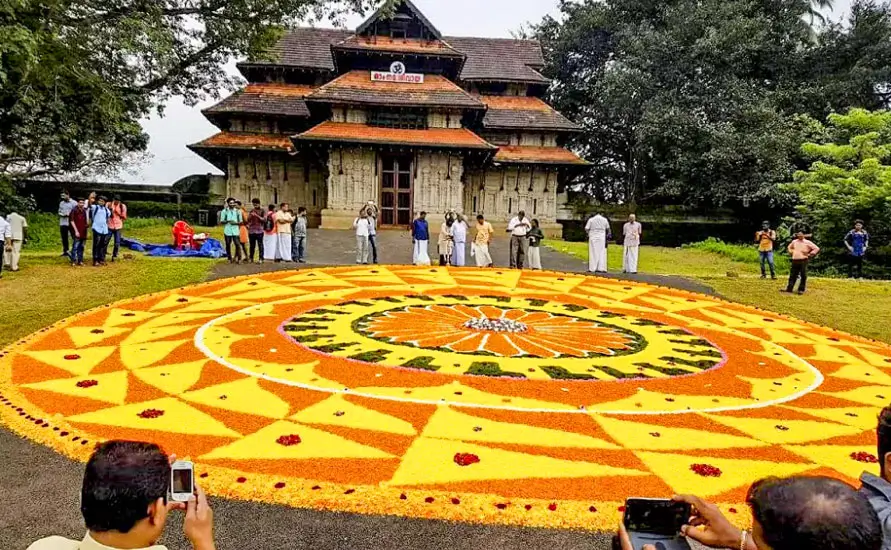
The afternoon is free for rest, because a sadya is a heavy meal and most of Kerala takes a long nap after it. Toward evening, a stroll through a residential lane lets you see the pookalam flower carpets laid in front of houses, temples and offices, some of them several meters across and made from marigold, chrysanthemum and local wild flowers. You may also see swings hung from tree branches and children playing traditional games. Evening is at your own pace, with dinner at your hotel or a nearby restaurant. Overnight in Kochi.
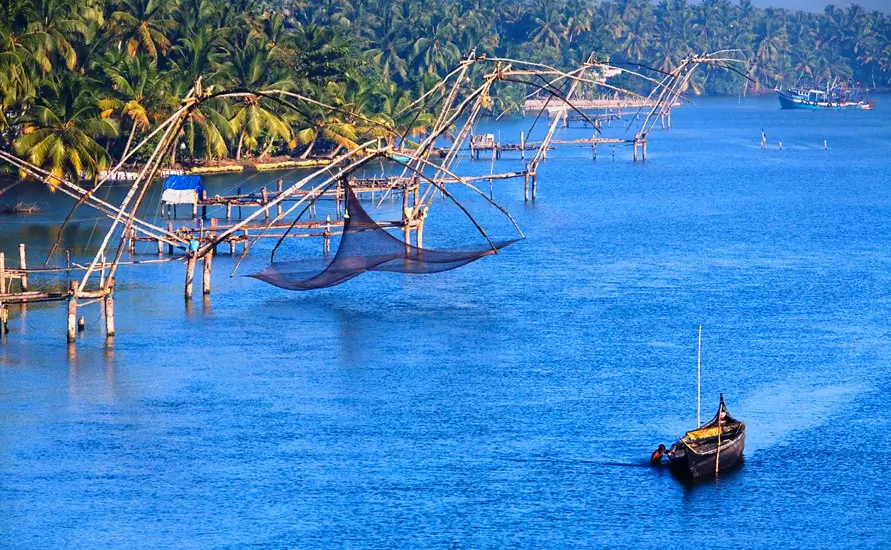
On the day after Thiruvonam, called Avittom, the city is still in holiday mood, so it suits a slow walk through the old quarter of Fort Kochi before the crowds return. Your guide begins beside the Chinese nets, each lowered and raised by a small crew pulling on ropes weighted with stones, and continues past St. Francis Church, the old Dutch cemetery and colonial bungalows shaded by rain trees. Spice buyers from Yemen and Canton, then Lisbon, Amsterdam and London, each left a trace in this harbor town, from food habits to church architecture and the names of local streets.
By late morning you are in Mattancherry, looking at Ramayana murals in mineral pigments inside the Mattancherry Palace, with the Paradesi Synagogue, consecrated in 1568, a few minutes away on foot. Note that the palace shuts every Friday, the synagogue closes Fridays, Saturdays and on Jewish festivals, and some government sites may keep shorter hours during the Onam holidays, so your guide confirms the timings and adjusts the order if needed. Lunch is a light Kerala meal after yesterday's feast, perhaps appam with vegetable stew or a plate of fish fry at a small local place in Mattancherry.
In the afternoon you drive about 40 minutes to Tripunithura, a former royal town, where the Hill Palace, once home to the rulers of Kochi, now displays royal portraits, palanquins, weapons and ceremonial costumes. Tripunithura is also where the festival officially opens each year with Athachamayam, a street procession on Atham day, about ten days before Thiruvonam, with floats, folk art forms, drummers and caparisoned figures. Your guide walks you along part of the procession route and shows photos from past years. If you can arrive earlier, we can add nights in Kochi so you see Athachamayam itself. Overnight in Kochi.
Today is Nalaam Onam, the fourth day of the festival, and the reason this tour heads to Thrissur. Leaving Kochi after breakfast, the northbound highway takes roughly two and a half hours via Aluva and Chalakudy, past churches decorated for the season and roadside stalls selling banana chips by the kilo. You check in to your hotel close to the town center by late morning, which gives you time for an early lunch and a rest before the afternoon parade. Your guide hands out water, hats and a simple map of the viewing area, as the crowds around the main square become very dense.
Pulikali, literally the play of tigers, sees teams of men painted from head to foot as tigers, leopards and the occasional hunter dance through the streets of Thrissur to the beat of udukku and thakil drums. The painting starts early in the morning in local halls, where artists cover each dancer's body and belly with yellow, black and red patterns, often with a large tiger face drawn across the stomach. If your guide can arrange it, you stop by one of these halls to watch the final touches. Each team is backed by its own neighborhood, and the dancers make their bellies ripple and roll as they move.
In the late afternoon the teams enter Swaraj Round, the ring road around the Vadakkunnathan temple grounds, and dance in turn while the crowd cheers each group. Your guide finds a spot on the edge of the road or on a raised step, and stays with you for the whole event, which usually runs until early evening. Keep valuables to a minimum, wear closed shoes and expect to be jostled, as Pulikali Thrissur draws thousands of people each year. Once the last team has passed and the drums go quiet, your driver collects you from an agreed point a short walk away. Overnight in Thrissur.
The morning starts with a short walk around the Thekkinkadu Maidan, the open ground that circles the Vadakkunnathan temple at the center of Thrissur. Entry to the temple itself is for Hindus only, as at most Kerala temples, but the outer walls, gopuram towers and the great banyan trees give a good sense of where the famous Thrissur Pooram festival takes place every April or May. Your guide talks about the town's role as the cultural capital of Kerala, home to the state academies of music, drama and literature, and points out the gold and silk shops that keep Thrissur busy during the wedding season.
After breakfast you drive south toward Aranmula, a small temple town on the Pampa river in Pathanamthitta district. The route goes back past Kochi and through Kottayam or Chengannur, four and a half hours or so at the wheel for your driver, broken by a lunch halt. The landscape changes from the flat coastal plain to low rubber-covered hills, and the closer you get to Aranmula, the more you see boat sheds along the river, where the long snake boats are kept between festivals and repaired by village teams in the weeks before Onam. You check in to a heritage homestay or hotel in the area by late afternoon.
Aranmula is famous for something besides boats: the Aranmula kannadi, a mirror made not from glass but from a polished alloy of metals whose exact mix is a closely guarded family secret. After tea, your guide takes you into a family foundry, one of very few that still cast them, where craftsmen explain how the metal is heated, poured into clay molds and polished for days until it reflects a clear image from its front surface. The mirrors are bought as wedding gifts and are said to bring good fortune. You can also walk past the Parthasarathy temple, which is closely tied to the boat race, before dinner. Overnight in Aranmula.
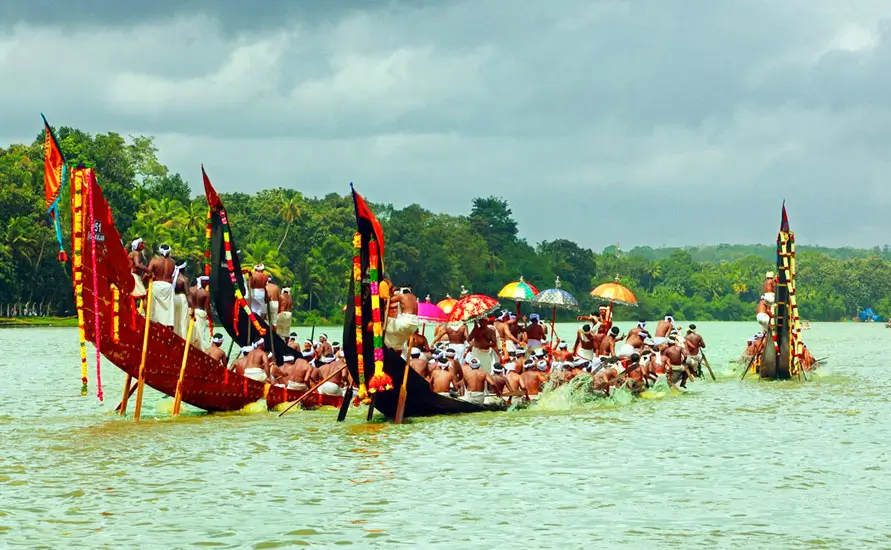
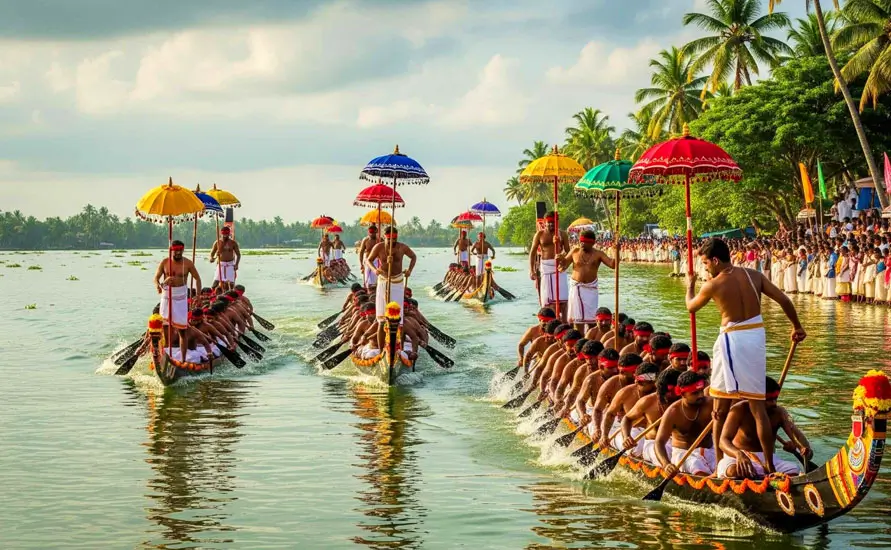
Uthrattathi day is the date of the Aranmula snake boat race, held on the Pampa river close to the Parthasarathy temple. Unlike the speed races held at Alleppey and elsewhere, Aranmula is first of all a religious event, linked to the legend of a devotee who carried offerings to the temple by boat and was escorted by villagers from the riverside communities. The morning is unhurried: your guide takes you along the bank to see the boats being decorated, and to watch the rowers gather in their white mundus and turbans before they climb aboard. Breakfast can be late and leisurely, and a village stroll follows.
The boats here are called palliyodams, and each belongs to a village along the river. They are more than 30 meters long, with a raised, gilded stern and a long tapering bow, and each carries around a hundred rowers plus singers and steersmen. Instead of racing flat out, the crews row in pairs to the rhythm of vanchipattu, the boat songs sung in praise of Krishna, with lines called out and answered from boat to boat. Your guide explains the order of the procession, the meaning of the decorations and why some crews receive special honors from the temple at the end of the day.
The main procession and the race usually take place in the afternoon, and the riverbanks fill with spectators from early in the day, so we plan a seat on the steps of the ghat or a viewing point arranged through local contacts. Bring a hat, an umbrella for sun or rain, and patience, because the program runs to its own rhythm and timings can shift with river conditions. Light snacks and water are carried in the car, as food stalls can get very busy. Back at your lodging after dark, the hosts often lay out a simple festive dinner. Overnight in Aranmula.
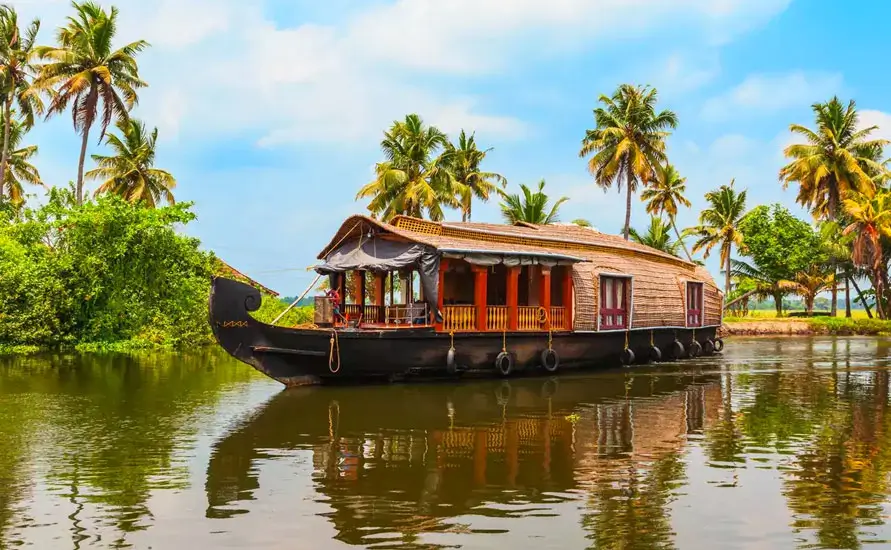
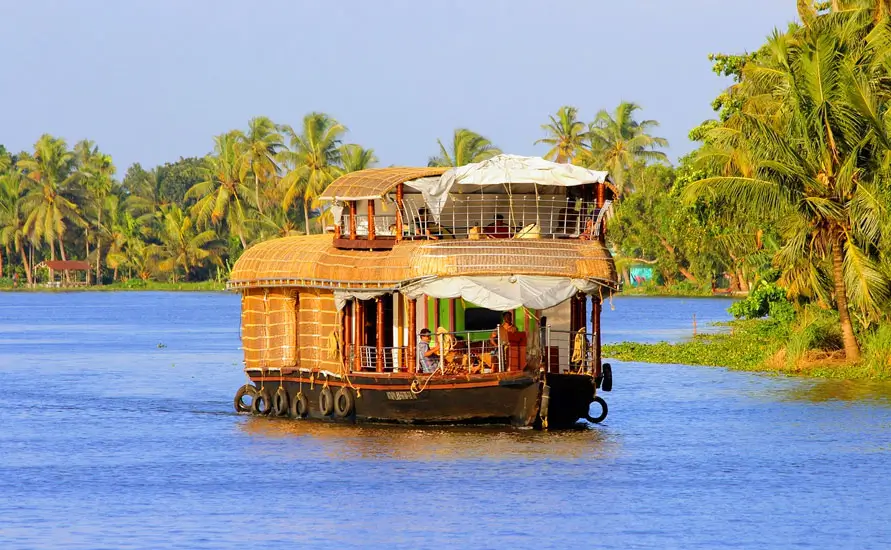
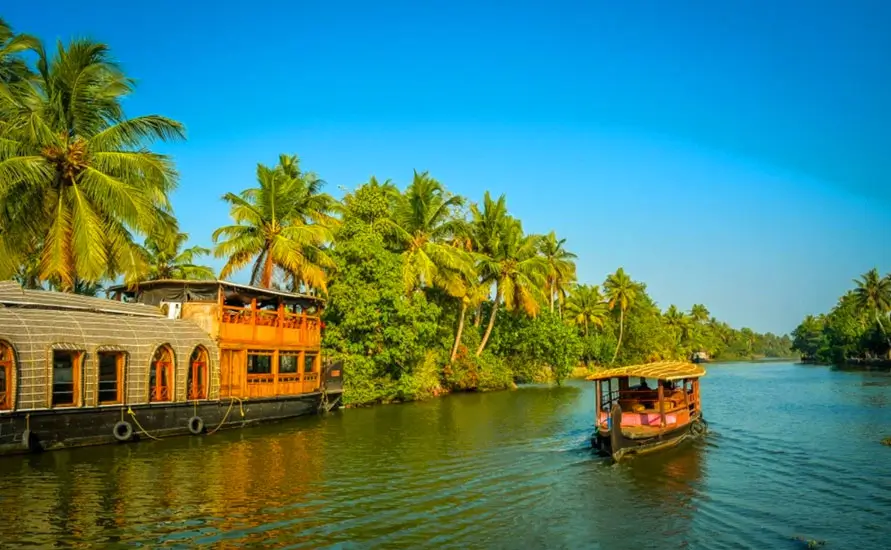
After breakfast you leave the Pampa river behind and drive west through Chengannur and Mavelikkara to Alleppey, roughly 90 minutes away. You reach the houseboat jetty in time for the noon check-in, and the crew lifts your luggage aboard. A Kerala houseboat is a modern take on the kettuvallam, the old cargo barge, with bedrooms, a bathroom and an open lounge deck under a curved roof of palm and bamboo. During Onam many boats fly small flags and some crews hang garlands, so the jetty has a cheerful feel even after the main festival days are over.
Once the boat casts off, lunch arrives, and in festival week the cook may add a payasam or an extra vegetable dish in honor of the season. The boat heads out across part of Vembanad Lake and then into the smaller canals of Kuttanad, where rice is grown on fields reclaimed from the lake and kept dry by mud and stone embankments. In August and September the paddy is green and young, the water level is high after the monsoon, and the canals are busy with villagers rowing to church, to market or to visit relatives during the holidays. You may also pass practice sessions of local boat clubs on the wider channels.
Local rules oblige every boat to halt by sunset, so the captain ties up for the night near a village, usually alongside a paddy embankment where you can step off for a short walk. On deck you get tea with banana fritters, and later a dinner of rice, fish curry or a vegetarian menu if you prefer, cooked fresh in the small kitchen at the back. As darkness falls the lights of homes along the bank come on, and you may hear the evening prayers from nearby temples and churches. The air conditioning in the bedroom usually runs only at night, from early evening until morning. Overnight on the houseboat.
You eat breakfast aboard while the captain heads for the jetty, where checkout is around 9 am. Your driver is waiting, and the route to Munnar heads east through Kottayam and the rubber country of the midlands before climbing into the Western Ghats. The full drive takes about five hours with breaks, and the last two hours are on winding hill roads, so travelers who are sensitive to motion should take a tablet before setting off and sit in the front. After the noise of the festival days, the change of scenery is welcome, with cooler air and fewer vehicles as you climb.
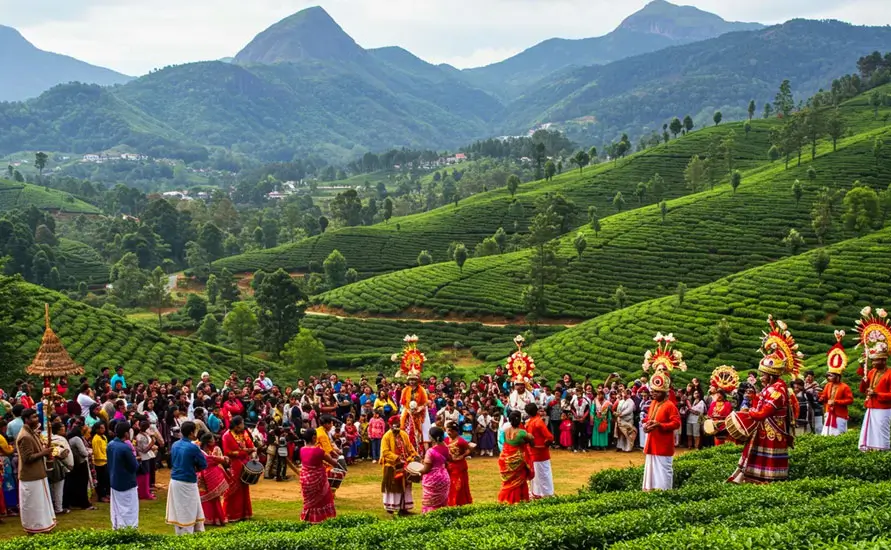
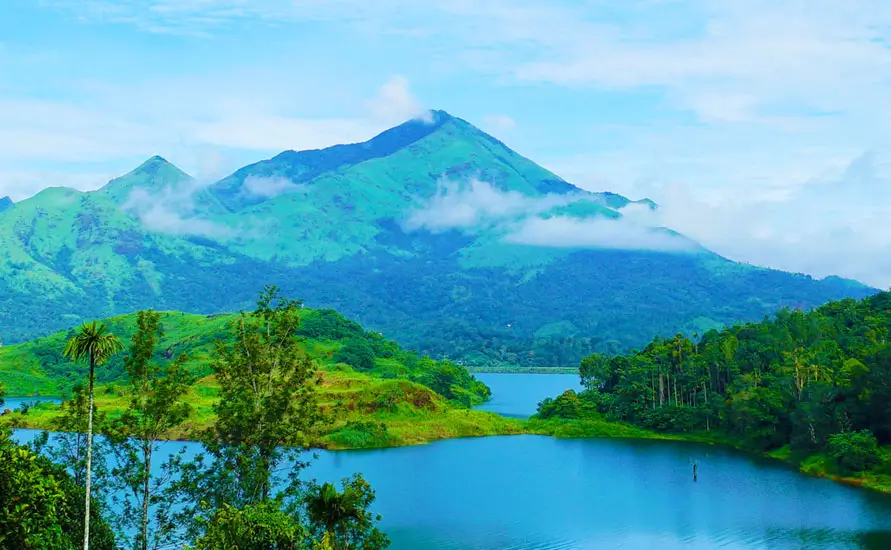
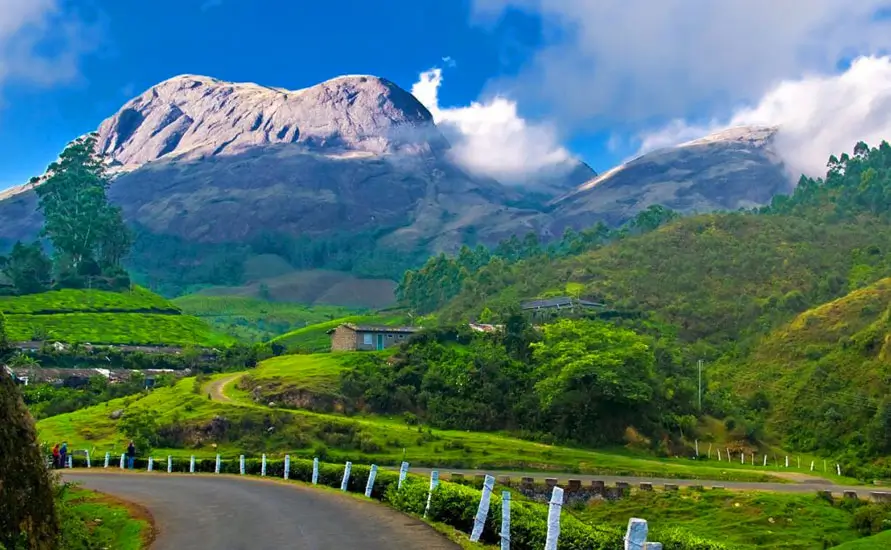
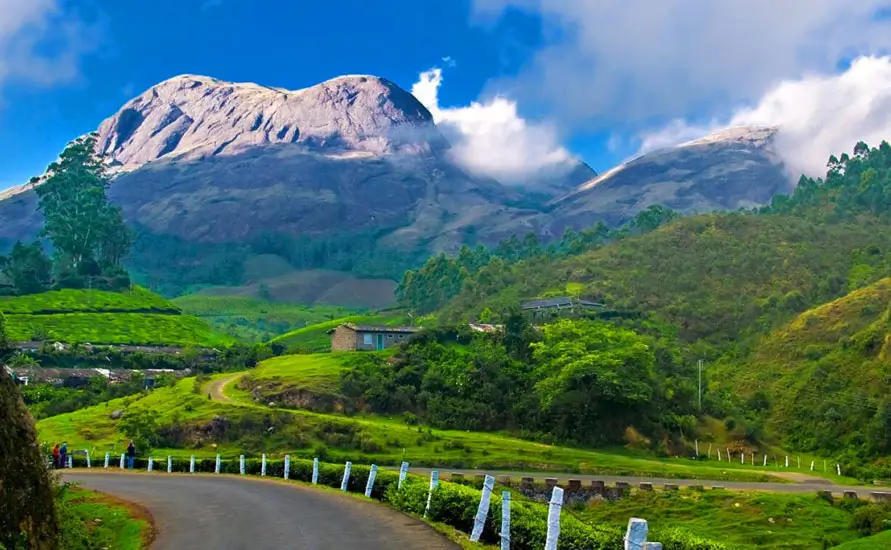
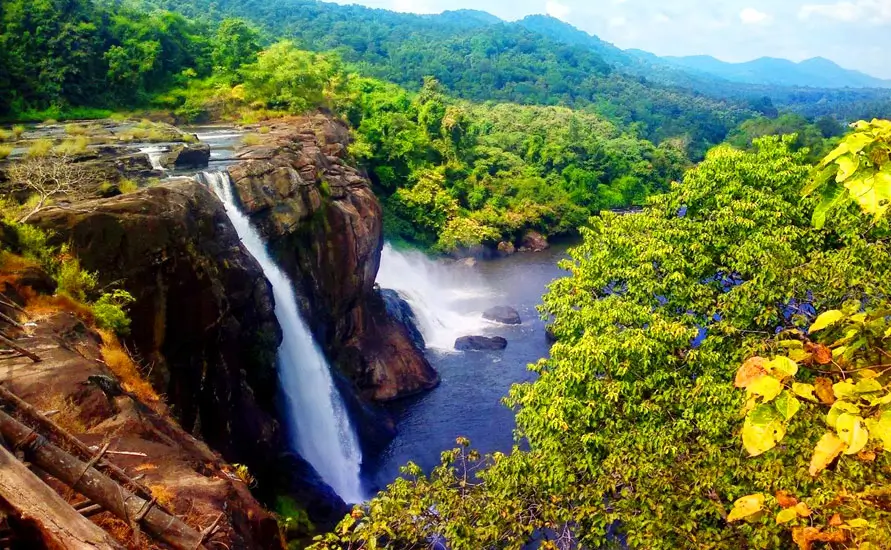
Above Adimali the road enters spice and cardamom country, then the first tea gardens appear, planted in neat rows hugging each fold of the slopes. In the monsoon season several waterfalls pour straight down onto the roadside, the largest being Cheeyappara and Valara, and your driver stops at a safe point so you can take photos. A roadside restaurant serves lunch, a chance to try parotta with a spicy Kerala beef or vegetable curry. Mist often rolls in during the afternoon, so the views can change from clear to white within minutes.
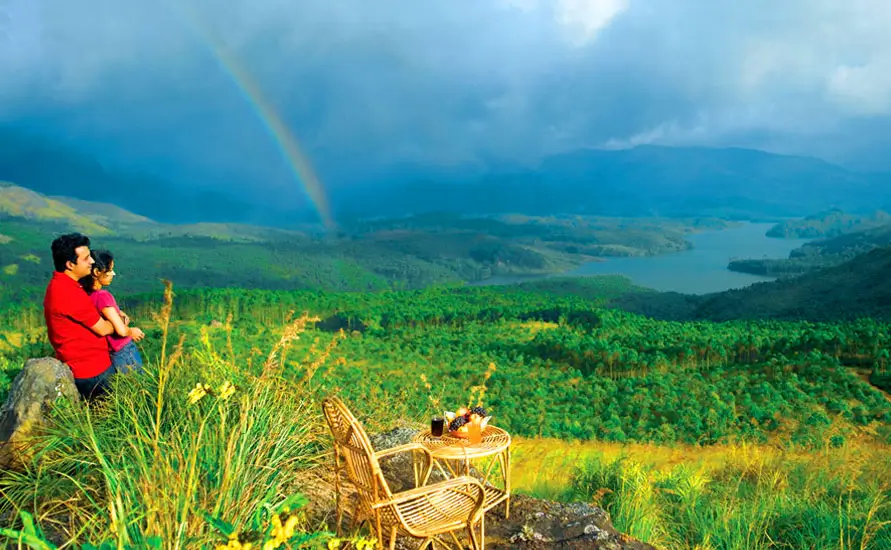
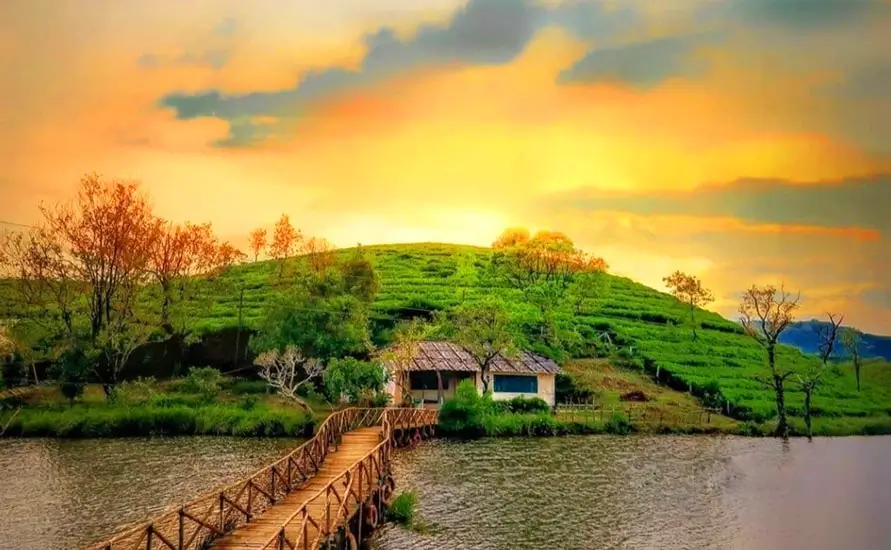
Toward five o'clock you check in at your resort, set among tea estates or cardamom gardens a short drive from town. Munnar stands at roughly 1,600 meters, and evenings in August and September can be cool and damp, so a light fleece and a rain jacket are useful. No plans are set for the evening; most guests enjoy a hot shower, a cup of local tea and an early dinner after a busy week. If the sky clears, the view of the hills at dusk from the resort grounds is one of the quiet rewards of this part of the trip. Overnight in Munnar.
Fifteen kilometers north of town lies Eravikulam National Park, where the protected Nilgiri tahr, a wild goat of the high grasslands, lives on the cliffs. Cars must be left at the gate; a park shuttle climbs to Rajamala, and from there a paved walkway rises beneath Anamudi, the loftiest point of peninsular India. Sightings of the tahr are common here but never certain, and in the post-monsoon weeks low clouds can hide the slopes for part of the morning. Its annual shutdown, when the tahr kids are born early in the year, is months away from Onam, so it never clashes with this trip.
Next is the KDHP Tea Museum in town, where rollers, sorting tables, old photos and a brief film trace the estates from their colonial start in the 1880s and 1890s. In the working factory you follow green leaf as it is withered, crushed, oxidized and dried to become the black tea sold in local shops. Ask your guide how orthodox leaf differs from the granular CTC kind before buying a pack for home. Lunch depends on the weather and your mood, either in town or at the resort. Cardamom, white pepper and homemade chocolate, a Munnar specialty, are sold in the shops along the main bazaar road.
The afternoon takes you along the Top Station road to Mattupetty Dam and the lake at Echo Point, passing tea gardens where pickers work their way along the rows with large bags on their heads. A short guided walk on an estate path lets you see the bushes up close and hear about daily life in the workers' lines, many of whose families came from Tamil Nadu several generations ago. If the weather turns wet, your guide can swap the walk for a spice garden visit or a kitchen session on a Kerala curry. Dinner is at your resort tonight. Overnight in Munnar.
Straight after an early breakfast comes the descent to Cochin International Airport, around four hours on the road, longer if rain or traffic slow things. We set the departure time from your flight, adding margin in the monsoon months, when hill roads can slow down. A stop is possible at a spice shop near Adimali for cardamom, pepper or Munnar tea, or at a roadside stall for a final glass of fresh lime soda. Our Kochi coordinator says goodbye at the departures curb.
Over nine days you have eaten an Onasadya, watched painted tigers dance in Thrissur, sat on the banks of the Pampa for the palliyodam procession and slept on the Kerala backwaters, which is a rare way to see the state. Should you come back for Thrissur Pooram in spring or a calm winter week on the beaches, our team can build that route too. Safe travels, and happy Onam.
Your Journey

N.S. Rathore & Mrs. Omlata Rathore · Managing Director
We still read every enquiry ourselves. Tell us the places you liked and our planners will send a day-by-day route with drive times and a clear price.
Every package can be customised and no pressure to book. A planner from our office replies within 24 hours with a route written for your group.
Fill this in and your planner will send a first draft itinerary.
Explore more
Kerala Backwaters Escape Kerala Backwaters Escape
 Kerala Backwaters Escape
 Kerala Backwaters Escape
 Kerala Backwaters Escape
 Kerala Backwaters Escape
 Kerala Backwaters Escape
 Kerala Backwaters Escape
 Kerala Backwaters Escape
 Kerala Backwaters Escape
 Kerala Backwaters Escape
 Kerala Backwaters Escape
 Kerala Backwaters Escape
 Kerala Backwaters Escape
 Kerala Backwaters Escape
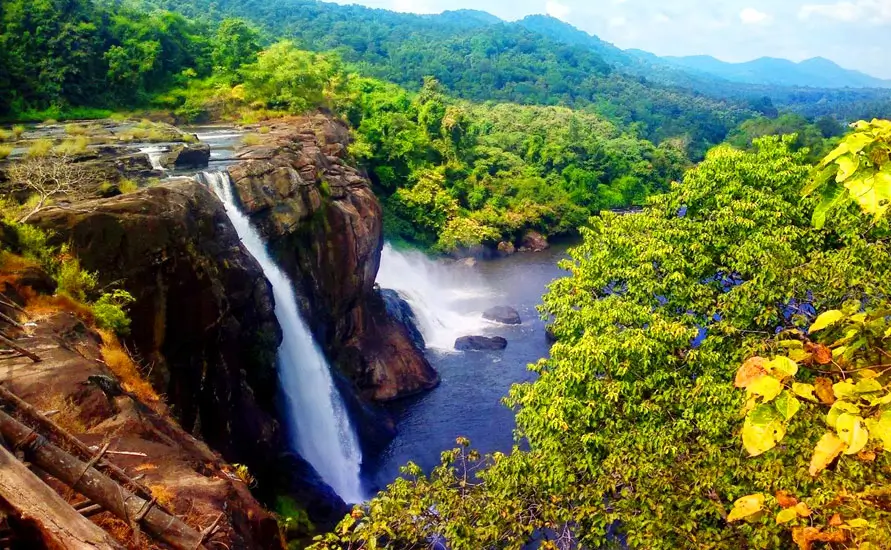 Kerala Backwaters Escape
 Kerala Backwaters Escape Kerala Backwaters Escape Kerala Backwaters Escape Kerala Backwaters Escape Kerala Backwaters Escape Kerala Backwaters Escape Kerala Backwaters Escape Kerala Backwaters Escape Kerala Backwaters Escape