 Kerala Backwaters Escape

Luxury South India Tours
Chennai – Mahabalipuram – Kanchipuram – Bangalore – Mysore – Goa – Ashtamudi (Kollam) – Varkala – Kovalam – Kanyakumari – Trivandrum
At a glance
Some travelers prefer to know exactly what kind of room, service and breakfast waits at the end of each day. Our South India tour with The Leela Palaces is built for them. Over eighteen nights you stay only at hotels of the Leela group, moving between five bases: The Leela Palace Chennai on the Bay of Bengal, The Leela Palace Bengaluru, The Leela Goa between a river and the Arabian Sea, The Leela Ashtamudi on a Kerala backwater lake and The Leela Kovalam on a cliff above the beaches near Trivandrum.
The pace is deliberately slow. Each base holds three or four nights, so you unpack five times in nineteen days, and day trips go out from the hotel and return to it. Chennai is the springboard for Pallava stonework at Mahabalipuram and Kanchipuram; Bangalore for a long day in Mysore; Goa for Old Goa's churches and the Chandor mansions; Ashtamudi for the village canals of Munroe Island; and Kovalam for Padmanabhapuram's wooden palace and the land's end at Kanyakumari.
Three short flights cut out the tiring road links, while a chauffeur in a premium car and a specialist guide in each region handle the touring. Retired couples, long-break honeymooners and overseas visitors keen to cover four southern states at an easy tempo are the people this Leela hotels South India tour was designed for. Rest days are built into each base for the pool, the spa or a book. November to March is the best season, with calm seas on both coasts.
Your South India tour with The Leela Palaces opens in Chennai, the old Madras and today Tamil Nadu's capital. A member of our team meets you as you leave the arrivals hall, takes care of your bags and settles you into a chauffeur-driven luxury car for the drive to the hotel, around forty minutes along the city's southern roads. Long-haul flights often touch down before dawn, and a room reserved from the evening before will be ready the minute you check in. Your tour manager briefs you on the coming nineteen days when you are ready, not before.
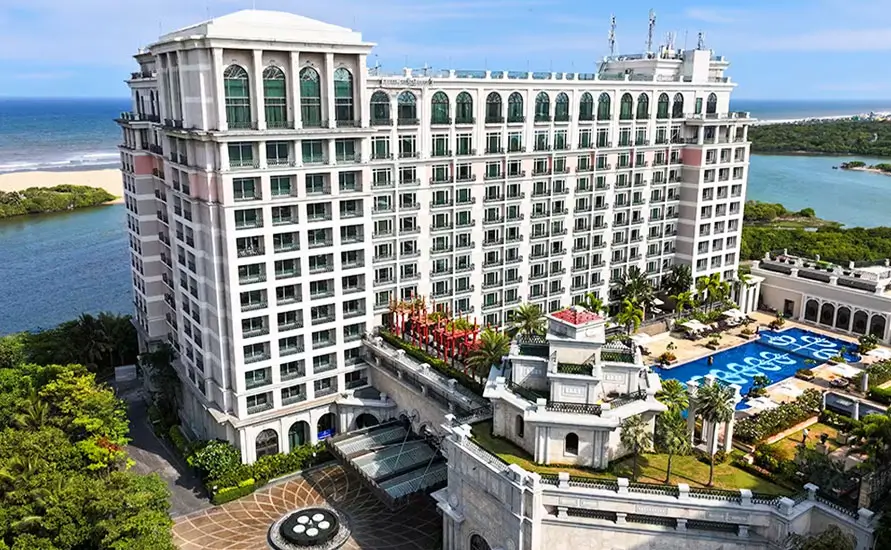
The Leela Palace Chennai rises above the Adyar Seaface at MRC Nagar, where the Adyar River meets the Bay of Bengal. The design takes ideas from the merchant mansions of the Chettinad region, with carved wood, brass details and tall doorways, and almost every room has wide windows toward the water or the city. On clear mornings the sun comes up out of the sea directly in front of the sea-view rooms, which is reason enough to leave the curtains open. The ESPA spa, the outdoor pool and the gym are all close at hand for a recovery afternoon after the long flight.
No sightseeing is scheduled today. Toward evening there is tea in the Lobby Lounge, then dinner at Jamavar, the group's signature Indian room, whose cooks work behind glass so you can watch kebabs and breads come out of the tandoor. If you prefer something lighter, Spectra offers an international buffet and à la carte dishes with views across the water. Sleep early; tomorrow's city tour starts after breakfast. Before you turn in, look out from your window at the fishing boats' lights moving along the dark water of the bay, a sight you will see on few city hotel stays in India. Overnight in Chennai.
Modern Chennai began in 1640 as Fort St. George, the first fortified trading post of the British East India Company in India, and your expert guide starts the day there. Inside the old walls stands St. Mary's Church, dating from 1680 and regarded as the first Anglican church built in Asia, its floor set with gravestones of Company soldiers, clerks and their families. The Fort Museum nearby holds uniforms, coins, porcelain and portraits of Company officials. Parts of the fort still house the state government, so expect security checks at the gate.
North of the fort lies George Town, the old 'Black Town' where Indian merchants lived and traded outside the British walls. On foot with your guide, you find lanes given over entirely to one trade, be it paper, dried chillies, brassware or marigolds, with handcart pullers weaving through. The Madras High Court, a red Indo-Saracenic building of domes and minarets, is seen from outside. Lunch is at a classic South Indian restaurant for a banana-leaf meal, or back at the Leela if you prefer air-conditioned calm after the morning's heat.
Late in the afternoon you drive south to Mylapore, a neighborhood older than the city itself. Walk around the tank of the Kapaleeshwarar Temple with your guide as the evening lamps are lit and the priests begin the evening rituals, then take a look at the coastal church of San Thome, linked by tradition to St. Thomas the Apostle. The Marina, Chennai's long seafront, is close by if you want to watch families strolling at dusk. Back at the hotel, dinner at China XO offers Cantonese and Sichuan dishes on a terrace by the water. Overnight in Chennai.
Set off after breakfast down the East Coast Road, the scenic highway that runs south along the shore past fishing hamlets and casuarina plantations. Halfway down, a stop at DakshinaChitra shows real village homes from the four southern states moved here beam by beam and rebuilt, among them a Chettiar trader's courtyard house and a Syrian Christian home from Kerala. Potters, weavers and leather-puppet makers work in the courtyards, and you are welcome to try a wheel or a loom yourself. DakshinaChitra is closed on Tuesdays, so we arrange the day around your dates and skip it if necessary.
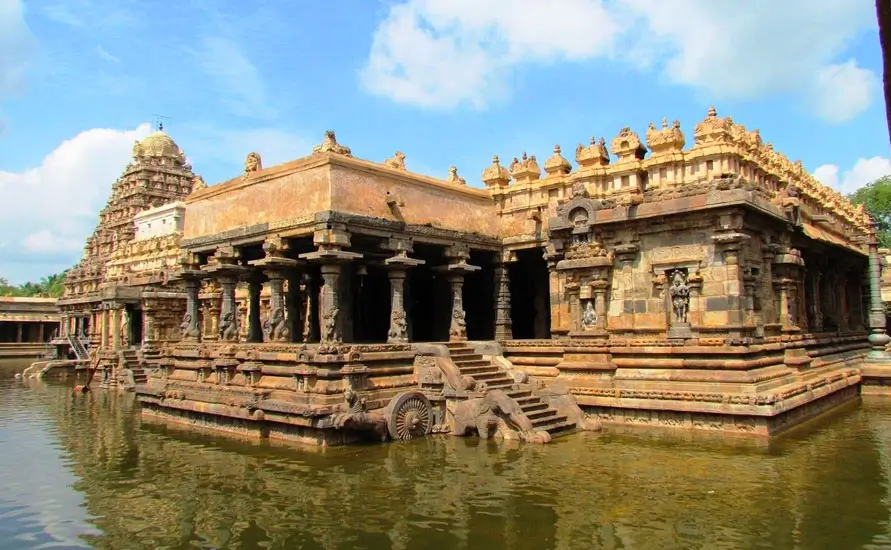
At Mahabalipuram, the old Pallava port also called Mamallapuram, the monuments are listed by UNESCO as a group. Your guide begins with the Pancha Rathas, five temple forms carved out of single granite outcrops, each a model of a different building style, standing next to stone elephants, a lion and a bull. Close by is Arjuna's Penance, a granite wall alive with celestials, ascetics, a meditating cat and a herd of elephants, and beside it the Krishna Mandapa, where the god holds up a hill to shelter villagers and their cattle.
End the visit at the Shore Temple in the late afternoon, when the granite takes on a warm gold color and the sea breeze picks up. Before you leave town, stop at a sculptors' workshop, as Mahabalipuram's stone carvers still work in the traditions of their Pallava ancestors and the sound of chisels on granite fills several streets. Expect roughly ninety minutes back to Chennai, with the sun setting behind the salt pans on your right. Tonight, the hotel's Library Blu bar is a quiet place for a cocktail before dinner. Overnight in Chennai.
Kanchipuram is known in India as the city of a thousand temples, and many of them are still in daily use. An early departure gets you there before the midday heat and before the temple doors close for the afternoon break. Your guide starts at the Varadaraja Perumal Temple, dedicated to Vishnu, whose hall of one hundred carved pillars shows horse riders, musicians and stone chains carved from single blocks. Every forty years the temple's ancient wooden image of the deity is brought out of the temple tank for public worship, and the last such event in 2019 drew millions of pilgrims.
Next is the Kailasanathar Temple, a sandstone Shiva temple built by the Pallava king Rajasimha around the early 8th century, with rows of small cell-like shrines around its courtyard and traces of old painted plaster still visible in places. Compared with the town's giant temples it feels intimate and calm, and in the morning you may have it almost to yourself apart from a resident priest. Last comes the Ekambareswarar Temple, whose southern gopuram rises close to 60 meters and whose sacred mango tree is said to bear four different fruits. Dress modestly for all three temples and leave your shoes in the car.
Kanchipuram silk saris are woven with heavy gold thread and bold contrasting borders, and a visit to a weaving family shows you how a single sari can take two or three weeks of work on a handloom. If you want to buy, your guide can point you to cooperative stores where purity is certified. After a late lunch, the drive back to Chennai is easy, and the evening is free for the ESPA spa or a swim. For your last dinner in Chennai, the hotel can set up a table with a sea view at your preferred restaurant. Overnight in Chennai.
After a relaxed breakfast your chauffeur takes you to Chennai International Airport for the flight to Bangalore, which takes just under an hour. Bangalore sits on the Deccan plateau at around 900 meters, so you will notice the cooler, drier air as soon as you step outside. At Kempegowda International Airport a Karnataka colleague is waiting, and the run south into town normally takes sixty to ninety minutes. Your chauffeur in Bangalore has local knowledge and can suggest the best times to cross town, which matters in one of India's busiest cities.
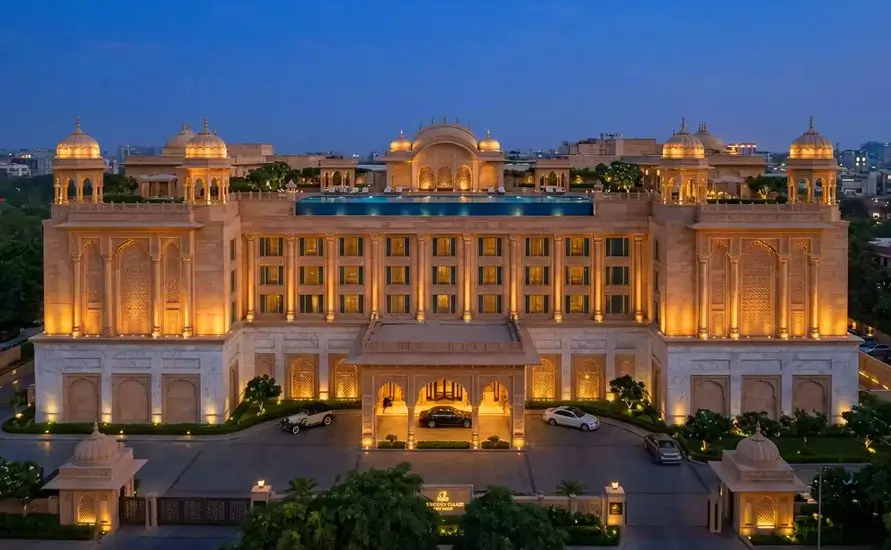
The Leela Palace Bengaluru stands on Old Airport Road in landscaped grounds with lily ponds, fountains and old trees. The building was designed after the palaces of the Vijayanagara empire, with copper-topped domes, carved ceilings and a long, pink-toned facade. Rooms are generous, with marble bathrooms and garden or city views, and many guests choose the Royal Club floors for a private lounge. Check in at your leisure and take a short rest. If you enjoy evening drinks, The Library Bar is styled like a Victorian study, with leather chairs and bookcases.
Around five o'clock, stroll with your guide through Cubbon Park, laid out in 1870 and named for Sir Mark Cubbon, under rain trees and bamboo clumps that shade the red State Central Library. At the park's edge rise the pale granite steps of the Vidhana Soudha, Karnataka's parliament, viewed from the road, opposite the red Attara Kacheri. Back at the hotel, dinner at Zen brings Japanese, Thai and Chinese dishes to the table, a gentle start to the Karnataka part of the trip, and the garden paths outside are lit for a short walk after the meal. Overnight in Bangalore.
Bangalore is often seen only as a technology city, but your guide shows you its older layers this morning. First stop is the teak-pillared summer palace of Tipu Sultan, completed in 1791 and used by the Mysore ruler as a retreat when the heat rose. A small museum inside tells the story of Tipu's wars with the British. A few minutes away, a single carved gateway of Bangalore Fort survives from the mud stronghold of 1537, later rebuilt in stone by Hyder Ali. The old market streets of K.R. Market are close by for those who like noise and color.
From here you drive to Basavanagudi, a leafy neighborhood planned in the late 1890s, to see the Bull Temple, which houses a huge monolithic Nandi carved from a single granite boulder and blackened by centuries of oil and butter offerings. Local legend says a bull once ate the area's groundnut crops, and an annual groundnut fair still takes place in the lanes nearby in November or December. Stop at one of the old vegetarian restaurants of the area for a crisp masala dosa and a filter coffee, as these places are part of Bangalore's food history.
The afternoon is spent in Lalbagh Botanical Garden, laid out in the 18th century and home to trees from across the world, some of them more than a century old. Look for the cluster of flowering trees near the glasshouse, the lake at the far end and the ancient granite outcrop that rises inside the garden. Return to The Leela for some rest before dinner at Le Cirque Signature, the hotel's French and Italian restaurant, which is worth booking ahead. Ask your tour manager to confirm the early start for tomorrow's day in Mysore. Overnight in Bangalore.
Leave early on the Bengaluru–Mysuru expressway, which has cut the drive to about two and a half to three hours, with coffee in a flask from the hotel. Your first halt is Srirangapatna, the river-island fortress from which Tipu Sultan ruled. Walk the ramparts and the marked spot where he died in the 1799 siege, then go inside Daria Daulat Bagh, the summer residence whose teak walls are painted with murals of the battle of Pollilur and royal processions. The nearby Ranganathaswamy Temple gives the island its name and has been a place of Vishnu worship for many centuries.
In Mysore you go straight to the Mysore Palace, the seat of the Wadiyar dynasty, rebuilt in the early 20th century after a fire destroyed the earlier wooden palace. Look up in the octagonal Kalyana Mantapa at its peacock-patterned glass ceiling, then walk onto the columned Durbar Hall balcony and past murals of the royal Dasara parade. Shoes must be left outside and photography rules apply inside. Should the day fall on a Sunday or public holiday, the facade lights up with close to a hundred thousand bulbs from about 7 to 7:45 pm, and an extra night in Mysore lets you stay for it.
After lunch you drive up Chamundi Hill to the temple of the goddess Chamundeshwari, guardian of the Wadiyar kings, and stop on the way down at the large granite Nandi carved into the hillside. The view from the top takes in the whole city and the palace domes. If time allows, a short visit to Devaraja Market shows you jasmine garlands, sandalwood products and heaps of colored kumkum powder. The road back to Bangalore gets you in after dark, ready for a quiet supper in your room. Overnight in Bangalore.
Leaving The Leela after breakfast, you head north to the airport for a flight of just over an hour to Goa. Goa now has two airports, Dabolim in the south and the newer Mopa (Manohar International) in the north, and we book flights into Dabolim where possible because it is closest to your hotel. Our Goa team meets you at the exit and drives you to Mobor, near Cavelossim on the southern coast, about an hour away, past whitewashed churches, paddy fields and red-roofed Portuguese-era houses with deep verandas.
The Leela Goa occupies the Mobor spit, where the Sal River runs parallel to the Arabian Sea, so the grounds have river frontage on one side, sea frontage on the other and lagoons in between. Rooms and suites are arranged in low buildings around the water, with terraces and lagoon views, and the resort has its own 12-hole golf course and a spa built around the five elements. Afternoon is for the sand or the pool; once the sun has dropped into the sea, walk over to Susegado, the beach grill, for tiger prawns and kingfish cooked over charcoal. Overnight in Goa.
An hour north of Mobor lies Old Goa, capital of the Portuguese Estado da India, which travelers of the 1500s rated as grand as Lisbon. Its surviving churches and convents are a UNESCO World Heritage Site. Pilgrims head first for the Basilica of Bom Jesus, consecrated in 1605, where a silver casket keeps the body of St. Francis Xavier. Facing it, the whitewashed Se Cathedral is among Asia's biggest churches and hangs the Golden Bell in its surviving tower. Modest dress is expected inside both churches, with shoulders and knees covered.
Next door is the Church and Convent of St. Francis of Assisi, glowing with gilt woodwork and panel paintings, while its old convent now holds the Archaeological Museum and a gallery of Portuguese viceroys. Up the slope, a lone broken belfry of the Church of St. Augustine stands alone as a reminder of how much of the old city was lost to disease and abandonment in the 17th and 18th centuries. Lunch is at a Goan restaurant serving dishes such as fish recheado, chicken xacuti and bebinca, the many-layered coconut dessert.
Afterward the car drops you in Panjim for a stroll through Fontainhas, the Latin Quarter by the Ourem creek. Its houses wear ochre, indigo and lime walls, wrought-iron balconies and hand-painted azulejo name plates. Peek into the little Chapel of St. Sebastian, whose crucifix once hung in the palace of the Inquisition, and the bakeries that still make Portuguese-style bread such as poi and crusty undo rolls. A café stop for bebinca or a cold drink breaks up the walk. End at the gleaming Immaculate Conception Church above its crisscross stairway, Panjim's favorite photograph. Dinner tonight is at Jamavar at the resort. Overnight in Goa.
South Goa has kept a slower, village way of life, and this morning your guide shows you its grand Catholic family homes. At Chandor, a short drive from the resort, you visit the Braganza House, a long mansion divided into two wings owned by branches of the same family, with ballrooms, rosewood furniture, Chinese porcelain and a private chapel. Family members usually show visitors around themselves, and a donation is expected. In Loutolim, another old village nearby, you can also see a restored 18th-century house that gives a picture of how Goan landed families lived under Portuguese rule.
Returning via Margao, South Goa's market town, wander the covered bazaar for spicy chouriço, roasted cashews, dried kokum and bottles of feni distilled from cashew fruit or palm sap. Lunch is at the resort's Riverside restaurant, which serves Italian dishes on a deck above the water, and then the afternoon is free. Nothing else is planned until the boat trip at four. The Leela's spa offers Ayurvedic treatments such as Abhyanga massage and Shirodhara, where warm oil is poured slowly over the forehead, and a session here suits a quiet hot afternoon.
Late in the day, a private boat takes you on a cruise along the Sal River as it winds toward the sea near the resort. Fishermen's canoes line the banks, kingfishers and herons hunt in the mangroves, and at the river mouth there is a chance of seeing Indian Ocean humpback dolphins, which often feed close to shore near Mobor, though sightings can never be promised. You return to the jetty as the sun sets over the water. Dinner tonight could be at The Restaurant, the resort's international dining room, or at a beach shack in Cavelossim. Overnight in Goa.
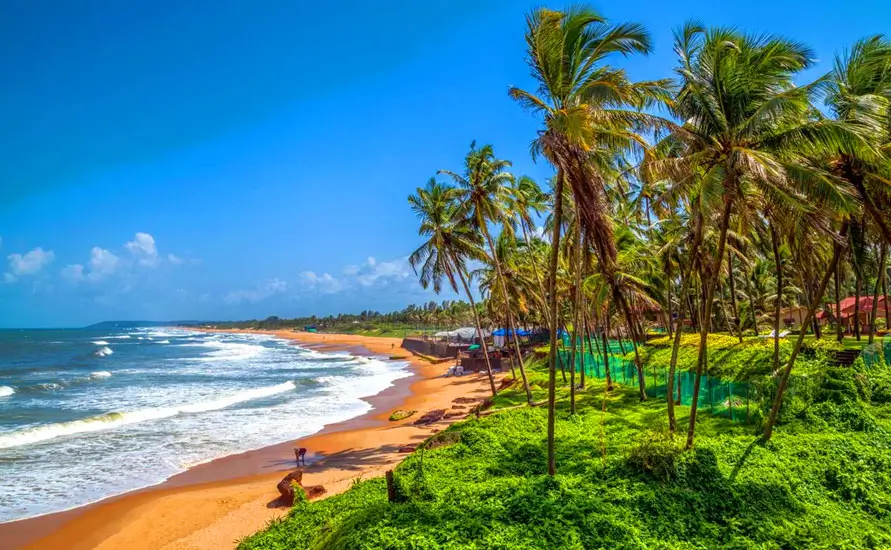
After three busy days on the road, this day has no plans at all. Start with a walk along Mobor Beach, which is wide and quiet in the early morning, with fishing boats pulled up on the sand and crows hunting at the waterline. The sea on this stretch is usually calm in the winter months, though lifeguard flags show where swimming is safe. Breakfast at The Leela is served late enough for a slow morning, and the terrace looks toward the lagoons, where egrets and pond herons stand motionless in the shallows.
Golfers can play the resort's 12-hole, par-3 course, which is short enough for beginners and children, with clubs and balls provided at the golf counter. Others may prefer tennis, cycling along the quiet roads of Cavelossim or simply a lounger and a book by the pool. If you are interested in Goan cooking, ask the hotel about a cooking session with one of its chefs, often focused on dishes such as prawn balchão or a Goan fish curry, and book it a day in advance at an extra charge. Ask the concierge as well about the resort's bicycles.
For an outing, your chauffeur can take you south to Cabo de Rama, a ruined hilltop fort above the sea with a small church still inside its walls, or to Palolem, a crescent-shaped beach lined with palms near the Karnataka border, about an hour away. Both are optional and easy to arrange on the day. Back at the resort, toast your final Goan sunset on the sand before dinner at your favorite restaurant. Tomorrow is a travel day, so pack this evening and leave out what you need for Kerala. Overnight in Goa.
Your chauffeur collects you after breakfast for the transfer to Dabolim and the flight to Trivandrum (Thiruvananthapuram) in southern Kerala. Depending on the airline schedule on your date, this will be a direct flight or a short connection via Bangalore or Kochi, and we choose the most comfortable timing. Our Kerala team meets you at Trivandrum International Airport and drives you north along the National Highway toward Kollam, a trip of about two hours through coconut groves, church spires and busy market towns.
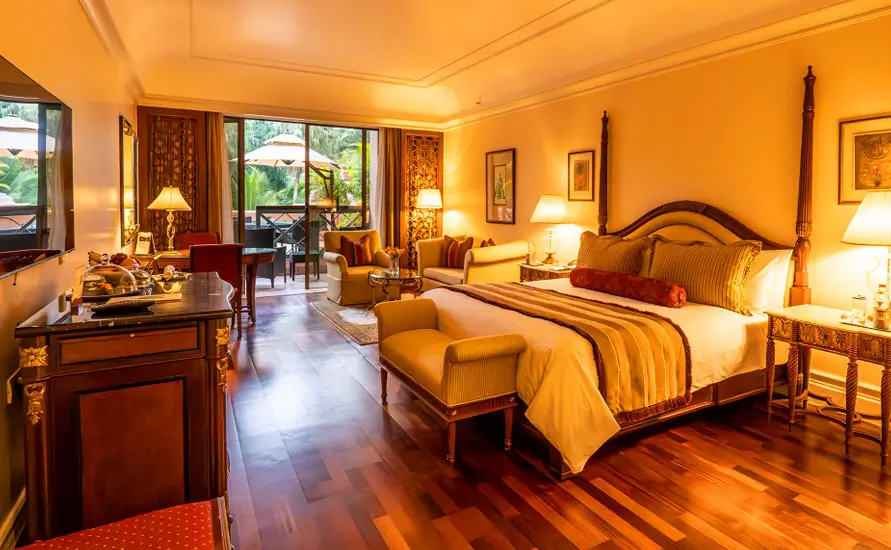
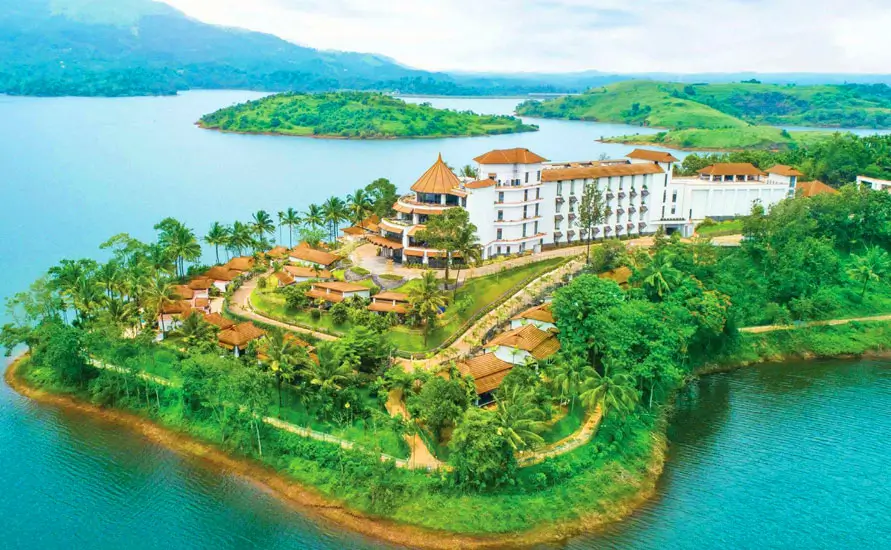
The Leela Ashtamudi stands at Thevally on Ashtamudi Lake; the name means eight crowns, for the lake's branching inlets, and it ranks second in size among Kerala's backwaters. Most rooms face the lake, and from the balcony you watch Chinese fishing nets, country boats and cormorants on the water. The resort has its own jetty, an Ayurveda spa, a pool and Raanthal, a floating restaurant on the lake, where dinner tonight is lit by lanterns and comes with Kerala seafood such as karimeen and prawns in coconut. Overnight in Ashtamudi.
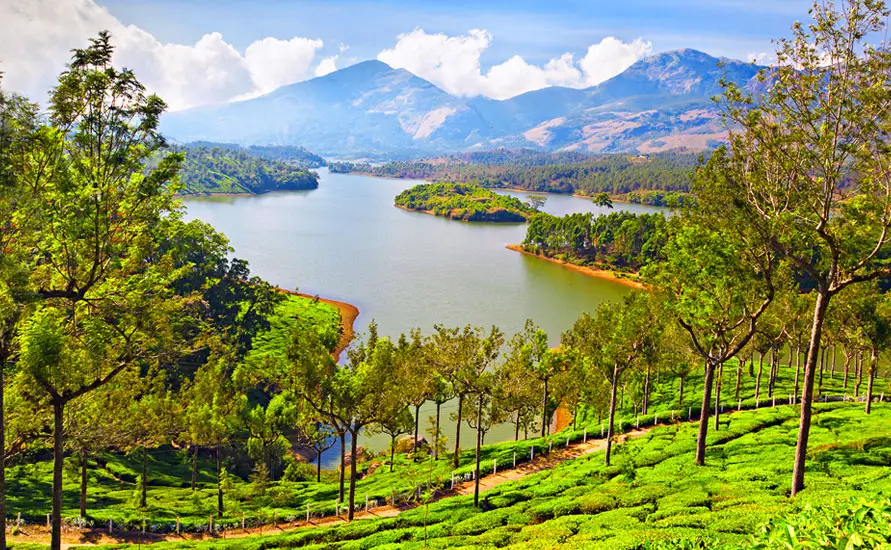
Rise early for a canoe trip on Munroe Island, a group of small islands where Ashtamudi Lake meets the Kallada River, about forty minutes from the resort. A local boatman paddles you through narrow canals so close to the houses that you can greet families brushing their teeth on the steps. Along the banks, women spin husk fiber into coir yarn on hand wheels, a tapper shins up a palm for toddy, and men wade through shrimp ponds. Some bridges are so low that you must duck, which children always enjoy. Morning light here is soft, and birdlife is at its most active.
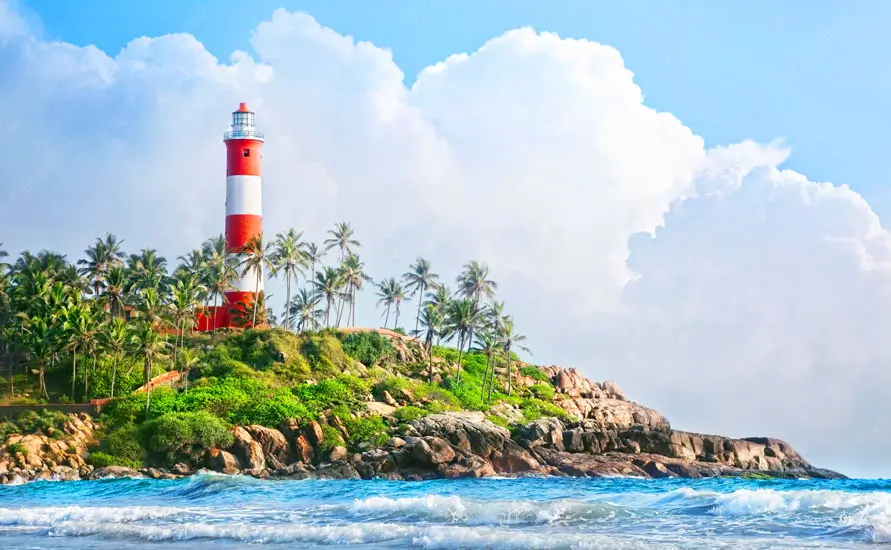
Return to the resort for a late breakfast and a rest, then head into Kollam with your guide. Known in old records as Quilon, the harbor drew Chinese junks and Arab dhows for centuries and was described by both Marco Polo and Ibn Battuta. At Thangassery, the tall red-and-white lighthouse of 1902 can be climbed for views over the coast, and the ruins of a Portuguese fort later taken by the Dutch and the British lie nearby. Kollam is also the cashew capital of India, and a visit to a small processing unit shows you how the nuts are roasted, shelled and graded by hand.
The afternoon is free at the resort. Borrow a kayak from the jetty for an hour on the lake, keeping close to the shore where egrets fish in the shallows, or book the spa's herbal-oil massage. As evening falls, watch the fishermen work the nets along the lake shore and take a drink by the water. Dinner tonight is at Keraleeyam, the all-day restaurant, where you can try a traditional Kerala sadya of rice and many small vegetarian dishes served on a banana leaf, or ask for a lighter menu if you prefer. Overnight in Ashtamudi.
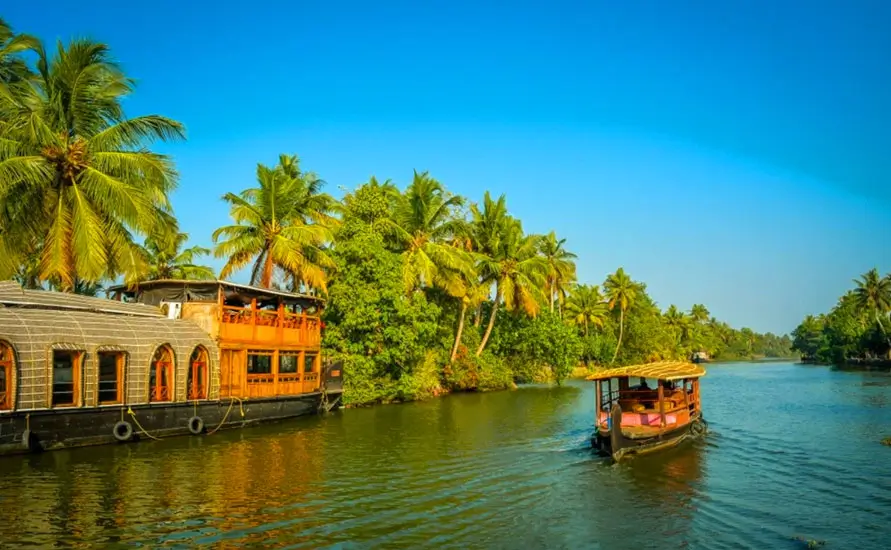
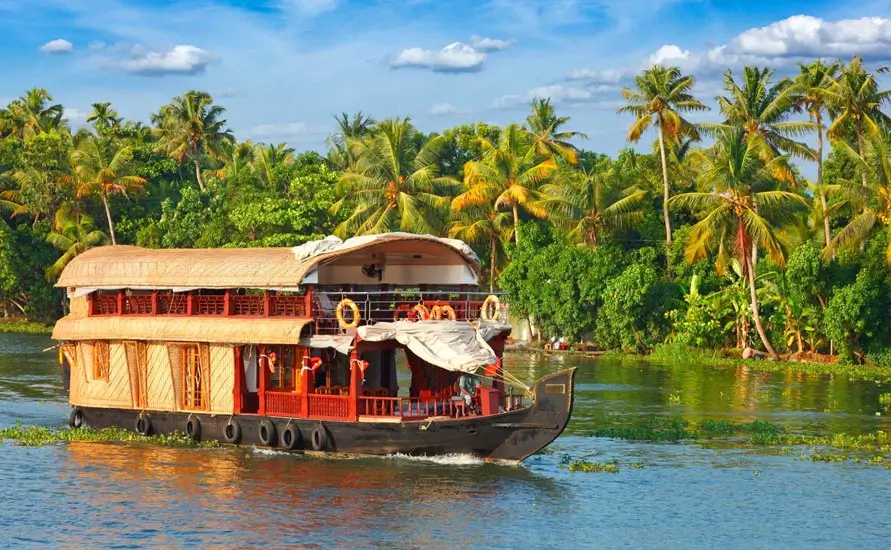
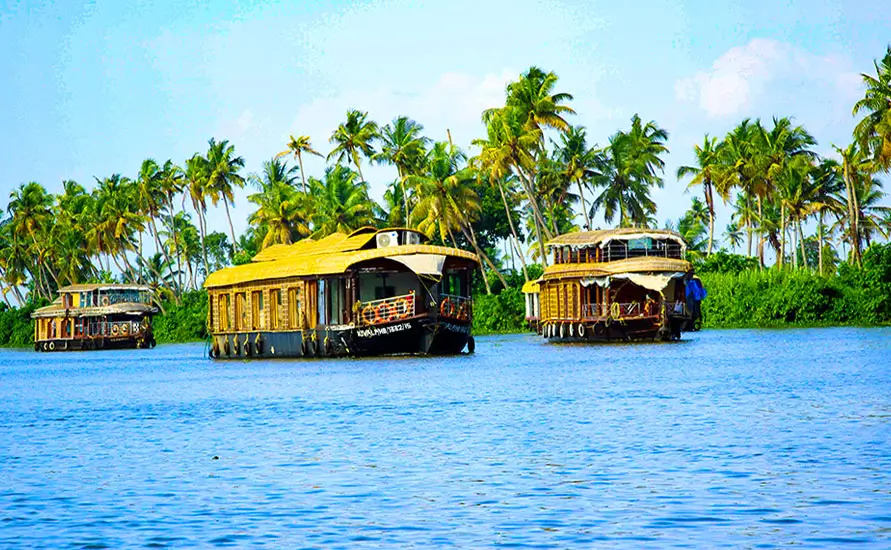
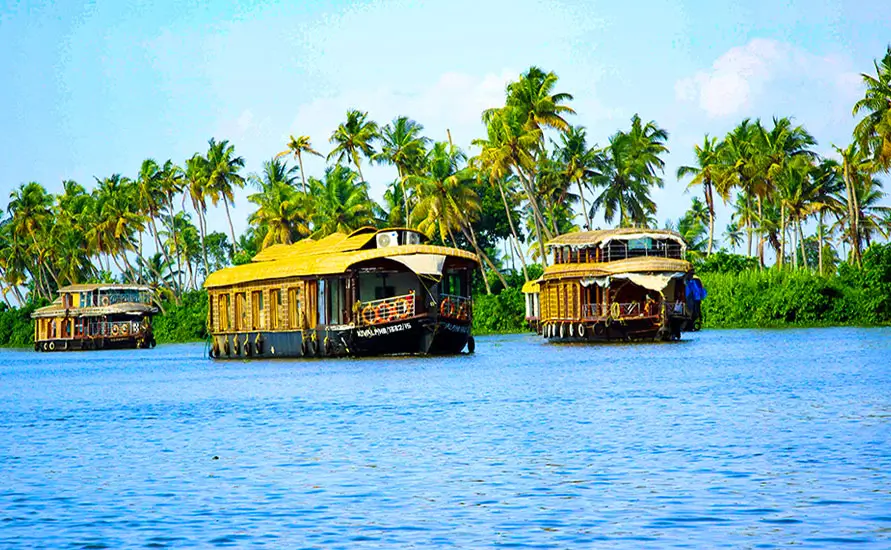
Today belongs to Ashtamudi Lake itself. After breakfast you board a private houseboat at the resort jetty for a day cruise across the open water and into the side channels, a quieter alternative to the busy backwaters further north at Alleppey. The boat moves slowly past small islands, coconut-shaded villages and coir-making yards, and the crew points out kingfishers, darters and Brahminy kites. Fresh tender coconuts are served on deck, and the captain cuts the engine now and then so you can hear the lake. Since you return to the hotel in the evening, there is no need to pack an overnight bag.
Lunch is cooked on board in the boat's small kitchen and served on deck: Kerala red rice, a coconut-based fish curry, a vegetable stir-fry with grated coconut and crispy fried pappadam. In the afternoon the boat stops at a village where a family shows you how they weave coconut leaves into roofing mats and use the fiber for rope and doormats. The pace of the day is slow and the water is calm, which makes it a good day for older travelers and for anyone needing a break after two weeks of sightseeing.
Back at the resort by late afternoon, you might book an Ayurvedic treatment at the spa, such as an Abhyanga full-body oil massage or a herbal steam, which the therapists can recommend after a short consultation. Yoga and meditation sessions are also available in the mornings. Your final evening on the lake could be a drink at the Zirkon bar, followed by dinner overlooking the water. Our team reminds you to pack in the evening, though tomorrow's drive south is a short one with a pleasant stop on the coast. Overnight in Ashtamudi.
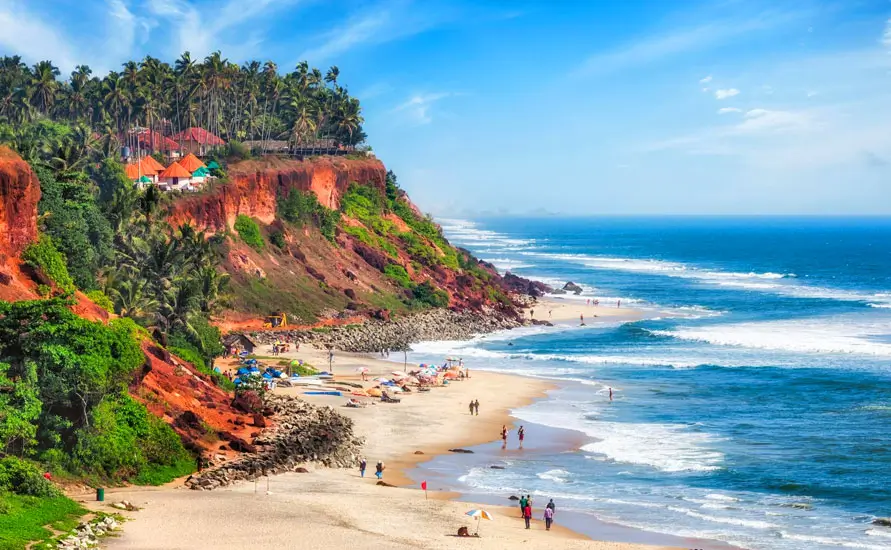
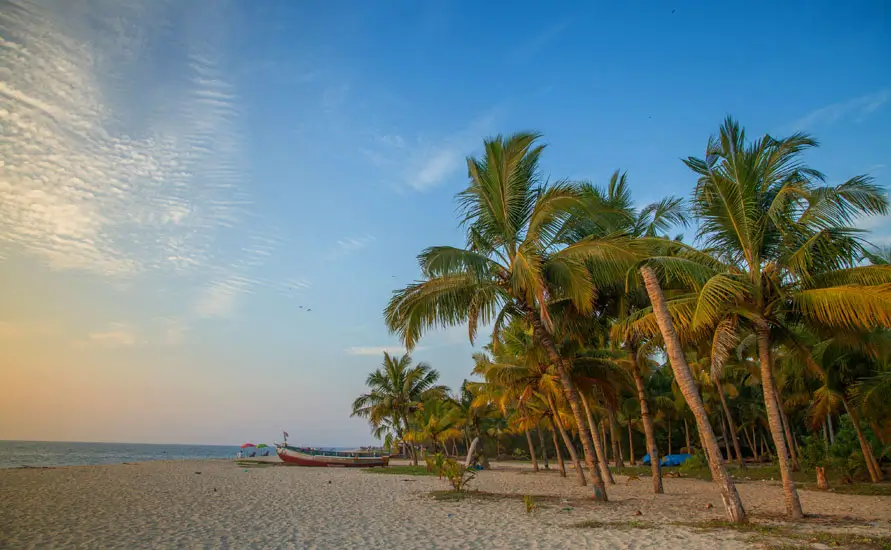
After breakfast you leave Ashtamudi and drive south along the coast to Varkala, about an hour away, where tall red laterite cliffs drop straight down to the Arabian Sea. A walk along the North Cliff path shows you a long line of small cafés and shops above the waves, and stairs lead down to Papanasam Beach, where Hindus come to perform rituals for their ancestors because the water is believed to wash away sins. Bathing is fine on still days, yet rip currents appear without warning, so swim only between the flags.
Above the sand, the hilltop Janardhana Swamy Temple is a Vishnu shrine that local tradition dates back some two millennia. Non-Hindus can usually walk around the outer courtyard but not into the main shrine. Lunch is at one of the clifftop cafés serving grilled fish, fresh juices and simple Kerala dishes, with a table at the railing looking straight down to the surf. You then continue south past Trivandrum to Kovalam, about an hour and a half more, arriving in the middle of the afternoon at your last hotel of the trip.
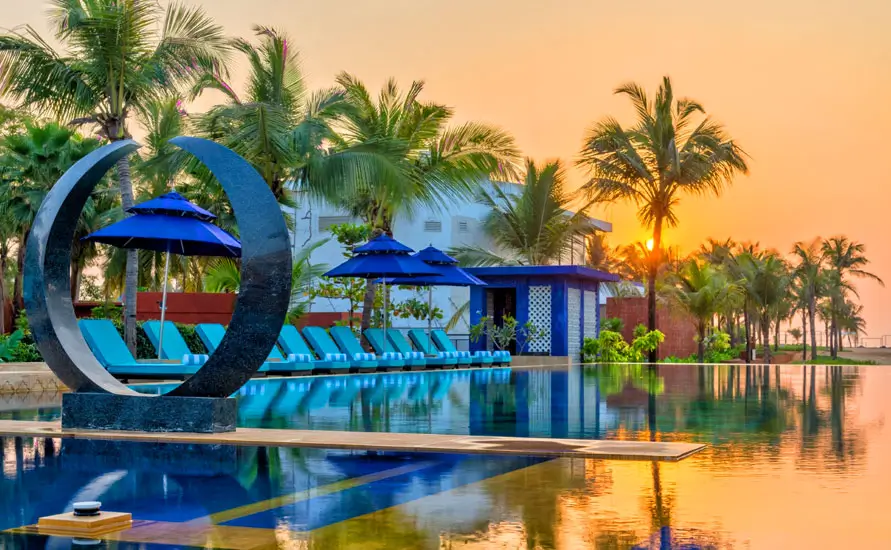
The Leela Kovalam sits on a headland above the sea, with rooms, villas and suites stepping down the cliff so that most of them face the water. On one side is a wide sandy beach, and on the other the curve of Kovalam's beaches leading to the red-and-white lighthouse. The infinity pool appears to run straight into the ocean, and the Sky Bar is the place for a sunset drink. Dinner tonight could be Pan-Asian seafood at The Tides or Kerala food at Pandhal, a traditional open-sided hall. Overnight in Kovalam.
Trivandrum, the capital of Kerala and once the seat of the Travancore kings, is about half an hour from the resort. Begin at the East Fort area, where the seven-story gopuram of the Sree Padmanabhaswamy Temple reflects in the Padmatheertham tank; inside, Vishnu lies on the coiled serpent Anantha. Only Hindus may go in, wearing dhoti or sari, so international guests usually admire the tower and the agraharam streets of priests' houses around it. In 2011 court-ordered inspections opened the temple's sealed vaults and found a vast hoard of gold, a tale your guide tells well.
A few steps away is Kuthiramalika, the Puthen Malika palace raised for Swathi Thirunal, the composer-king of Travancore, in the mid-1800s. The name means mansion of horses, after the 122 wooden horses carved into the brackets under the roof. The palace museum shows Travancore royal items such as thrones, weapons and Belgian glass, and the wooden interiors are cool and dark. In the afternoon you visit the Napier Museum, a striking building with Kerala roof lines and Gothic details, and the Sree Chitra Art Gallery next door, which holds paintings by Raja Ravi Varma and Nicholas Roerich.
The museums in Trivandrum close on Mondays and keep shorter hours on some mornings, so we plan this day carefully around your dates. After the gallery, your chauffeur drives you back to Kovalam for a quiet evening. Walk down to Lighthouse Beach to see the fishermen hauling in their nets as the light fades, then return to the cliff for dinner. If you prefer a quiet night, the resort's in-room dining can serve a Kerala fish curry with appam on your balcony, with the sound of the waves below. Overnight in Kovalam.
Today you cross into Tamil Nadu to visit two very different sights. You start at Padmanabhapuram Palace, ninety minutes down the highway, the Travancore royal seat until the capital shifted to Trivandrum in 1795. Built largely of teak and rosewood, it has a council hall with colored mica windows, glossy dark floors said to contain egg white and charred coconut husk, and a ceiling carved with ninety different flower designs. The palace is closed on Mondays, and shoes must be removed inside, so bring socks if the floors feel hot.
Continue south to Kanyakumari, the southernmost tip of mainland India, where the Arabian Sea, the Bay of Bengal and the Indian Ocean meet. Boats shuttle visitors to the Vivekananda Rock Memorial, raised in 1970 where Swami Vivekananda sat in meditation in December 1892. Next to it stands the 133-foot statue of the Tamil poet Thiruvalluvar. Ferry queues can be long on weekends and holidays, and services stop in rough seas, so your guide will advise on timing. The Kumari Amman Temple near the shore is dedicated to the virgin goddess who gives the town its name.
Kanyakumari is famous for its sunsets, and on clear evenings the sun drops into the water while families gather on the shore. If you stay to watch it, you will reach Kovalam later in the evening, so we can arrange a packed snack for the drive. Alternatively, leave in the afternoon to get back in daylight and watch the sunset from your balcony at The Leela instead. Either way, dinner at The Terrace, the resort's all-day restaurant, or room service makes for an easy end to a long day. Overnight in Kovalam.
Your last full day is free to enjoy the resort. Many guests start with an early yoga session on the lawn above the sea, as the cliff catches the breeze and the morning light falls across the water. Breakfast at The Terrace is unhurried, and afterwards you can walk down to the private beach area or go swimming in the infinity pool. Kovalam's sea can be rough at times, so check the red and green flags and follow the lifeguards' advice. Fishermen launch their wooden boats from the bay in the mornings, and they are good to watch from a sun lounger.
Kerala is known for its Ayurveda, and The Leela Kovalam has a well-regarded wellness center with doctors who can suggest treatments after a short consultation. A single long massage or a combination of treatments over the last few days of the trip can help after nearly three weeks of travel. Book on your first evening here so the therapists can plan a sequence. For a short outing, ask for Vizhinjam harbor, where an 8th-century cave shrine stands near the fish auction, or browse Kovalam's craft stalls for spices, tea and handloom cotton.
In the late afternoon, take a last walk along the beach toward the lighthouse, and then head up to the Sky Bar for sunset over the Arabian Sea. For your farewell dinner on this South India tour with The Leela Palaces, The Tides serves seafood prepared with Asian flavors, and the restaurant can set up a table outside on a clear evening. Your tour manager calls this evening to confirm tomorrow's airport transfer time and to help with any last requests, such as a late checkout or help with packing purchases. Overnight in Kovalam.
With Trivandrum International Airport just 15 km from the cliff, your last transfer is a short one, often under thirty minutes. Nonstop services connect to Dubai, Doha, Abu Dhabi, Singapore and Colombo for long-haul onward flights. We time the transfer to give you three hours before an international flight. Evening departures can be paired with a paid late checkout, so you shower and change before leaving.
We see you right to the departure doors. Over nineteen days you have stayed in five Leela hotels, seen Pallava temples, the Mysore palace, the churches of Goa, the backwaters of Ashtamudi and the southern tip of India. Should the Malabar coast, the Western Ghats hill stations or North India call you back, tell us, and the planning can start whenever suits you. Have a safe flight home.
Your Journey

N.S. Rathore & Mrs. Omlata Rathore · Managing Director
We still read every enquiry ourselves. Tell us the places you liked and our planners will send a day-by-day route with drive times and a clear price.
Every package can be customised and no pressure to book. A planner from our office replies within 24 hours with a route written for your group.
Fill this in and your planner will send a first draft itinerary.
Explore more
Kerala Backwaters Escape Kerala Backwaters Escape
 Kerala Backwaters Escape
 Kerala Backwaters Escape
 Kerala Backwaters Escape
 Kerala Backwaters Escape
 Kerala Backwaters Escape
 Kerala Backwaters Escape
 Kerala Backwaters Escape
 Kerala Backwaters Escape
 Kerala Backwaters Escape
 Kerala Backwaters Escape
 Kerala Backwaters Escape
 Kerala Backwaters Escape
 Kerala Backwaters Escape
 Kerala Backwaters Escape
 Kerala Backwaters Escape
 Kerala Backwaters Escape
 Kerala Backwaters Escape
 Kerala Backwaters Escape
 Kerala Backwaters Escape
 Kerala Backwaters Escape
 Kerala Backwaters Escape
 Kerala Backwaters Escape
 Kerala Backwaters Escape