 Kerala Backwaters Escape
Luxury South India Tours
Chennai – Pondicherry – Chettinad – Madurai – Munnar – Kumarakom – Kochi – Coorg – Kabini – Bangalore
At a glance
Eighteen days is long enough to cross the whole southern peninsula without ever watching the clock, which is exactly what shapes our ultra luxury South India tour 18 days in length. You start on the Coromandel shore in Chennai and colonial Pondicherry, turn inland to the banker-built palaces of Chettinad and the gopurams of Madurai, rise into the tea country of Munnar, settle by the water at Kumarakom and the spice port of Kochi, and then swing north to coffee-growing Coorg and the teak forests of Kabini, ending in Bangalore. Nine bases, three states, and two nights in nearly all of them.
Service is pitched at guests who notice details. One chauffeur-driven luxury SUV covers each road leg, a senior private guide takes over in every region, and our stays come from the top shelf of each place: a sea-facing five-star address in Chennai, a restored villa in Pondicherry's French grid, a heritage Chettinad mansion hotel, a five-star lake resort in Kumarakom, a planter's estate retreat in Coorg and a wilderness lodge right on the Kabini reservoir. Private touches, from a mansion-kitchen cooking lesson to a day of cruising Vembanad Lake, come as standard on this ultra luxury South India tour.
Our planners built the route for overseas visitors and NRI families who have time to spare and little appetite for queues. Alarm clocks are saved for the hours that deserve them, such as temple dawns and forest drives, and most road days stay under five hours. October through March is the sweet spot for the full luxury South India itinerary; April and May bring heat on the plains while the hills stay mild. Nothing here is shared with strangers, so any stay can be lengthened, any room upgraded to a suite, and Ayurveda days slotted in wherever you wish.
After immigration and baggage claim in Chennai, our local host and your chauffeur step forward with a name card, and they have chilled towels waiting in the SUV. Overnight flights from London, Frankfurt, New York or Dubai tend to touch down in the small hours or close to lunchtime, and we hold your suite from the moment you land so sleep or a swim can come first. The ride to your sea-facing five-star hotel runs forty to sixty minutes, enough time for your host to pass across a bound itinerary, an Indian SIM card and a contact sheet covering every region ahead.
When the sun has lost its sting, your private guide arrives for an unhurried first stroll through Mylapore, the oldest district of the city. Jasmine garlands, brass oil lamps and sandalwood paste crowd tiny shopfronts beside the sacred pool of the Kapaleeshwarar Temple, and its entrance tower climbs in stacked tiers of painted gods and guardians. Inside the outer precinct, which visitors of any faith may enter, your guide decodes the plan of a Tamil temple, the meaning of the flagstaff and the reason pilgrims walk clockwise. Cover shoulders and knees for this visit; a cotton stole is ideal.
A ten-minute drive leads on to San Thome Cathedral, whose present white spires date from the 1890s and rise over a crypt linked by tradition to St. Thomas the Apostle. From there the car follows Marina Beach while families gather along the surf, and your guide names the red Indo-Saracenic landmarks of old Madras as they slide past the window. Back at the hotel, the signature restaurant offers Chettinad, Andhra and coastal Tamil plates alongside a wide global menu, so jet-lagged palates have choices. Turn in early if you can; tomorrow brings the coast road and a full day of carvings. Overnight in Chennai.
Southbound on the East Coast Road, your SUV rolls past casuarina groves and fishing hamlets for roughly ninety minutes until Mahabalipuram, whose 7th-century merchants shipped cloth and spices to Java and Cambodia. Your guide sets an easy pace through the UNESCO-listed monuments, beginning at the Shore Temple, two granite spires facing the Bay of Bengal whose edges have been rounded by twelve centuries of salt wind. Most of what you see here was cut between the 600s and 800s, when Pallava masons were testing the forms later copied by temple builders across the south. Morning light makes the reliefs crisp and the heat still bearable.
Your next stop is the vast boulder relief known as Arjuna's Penance, alive with gods, ascetics, hunters, monkeys and two full-size elephants leading their calves. Scholars still argue whether it shows a warrior's penance or the river Ganga descending to earth, and your guide lays out both cases before pointing to the comic figure of a cat posing as a holy man. Close by, the Five Rathas stand like a sculptor's sample book, each hewn from one outcrop with a different roof shape. Lunch follows at a calm beach resort restaurant, after which the coast road leads on south.
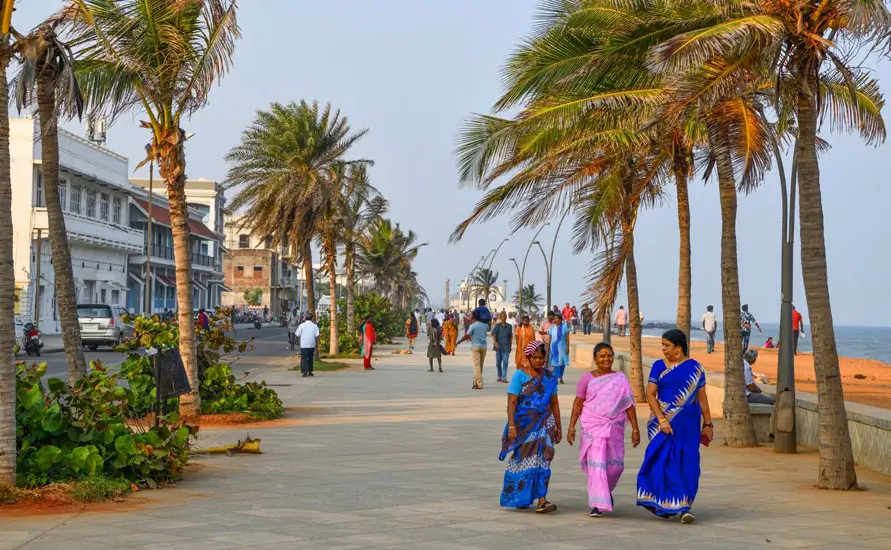
The last hundred kilometers to Pondicherry run past salt pans, shrimp ponds and almost empty beaches, and toward five o'clock you reach your villa hotel in the French Quarter, a restored mansion with tall ceilings, louvered shutters and a pool tucked into the courtyard. As dusk falls, stroll the seafront Goubert Avenue, where traffic is banned in the evening and half the town comes out to walk along the breakwater. Your guide will have booked a courtyard table for Franco-Tamil cooking, a menu on which crab masala and crème caramel sit comfortably together. Overnight in Pondicherry.
Early hours suit Pondicherry's White Town best, before the sun bleaches its yellow walls, so your guide arrives soon after breakfast. On streets such as rue Dumas, arched entrances open onto shaded villas, and blue enamel signs still give street names in French above the Tamil script. Your guide recounts the Anglo-French tug of war over this coast, the quiet transfer to India in 1954 and the local families who chose to keep French passports. You also stop at the pastel church of Notre-Dame des Anges beside the beach road and at the old war memorial on the promenade.
Over the canal lies the Tamil Quarter, where homes keep their raised street-side benches, known as thinnai, and heavy teak doors carved with flowers. A family workshop here makes handmade paper or terracotta, and your guide arranges a short look at the process before walking you to the Sri Aurobindo Ashram, where guests are welcome to sit quietly by the flower-strewn samadhi. Just around the corner, the Manakula Vinayagar Temple honors Ganesha beneath gilded towers and painted ceilings. For lunch, choose between a bakery café with wood-oven bread and tarts or a South Indian dining hall serving a full banana-leaf meal.
Mid-afternoon the car covers the twelve kilometers to Auroville, a planned settlement begun in 1968 by followers of the Mother, with the ideal of human unity. A brief film at the visitors' center sets the scene, and a woodland footpath then brings you to a clearing where visitors look across at the Matrimandir, a gold-disc-clad sphere that anchors the township. Entry to its inner meditation room is handled separately, in limited daily slots that must be booked ahead, and our team will try to secure one if you ask before arrival. Evening is unscheduled: perhaps a massage at your villa or a sundowner on a rooftop above the old town. Overnight in Pondicherry.
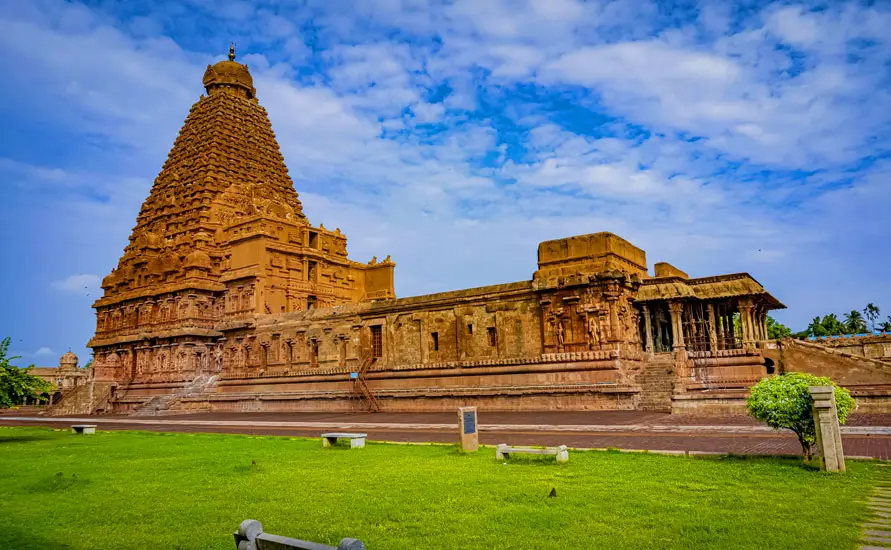
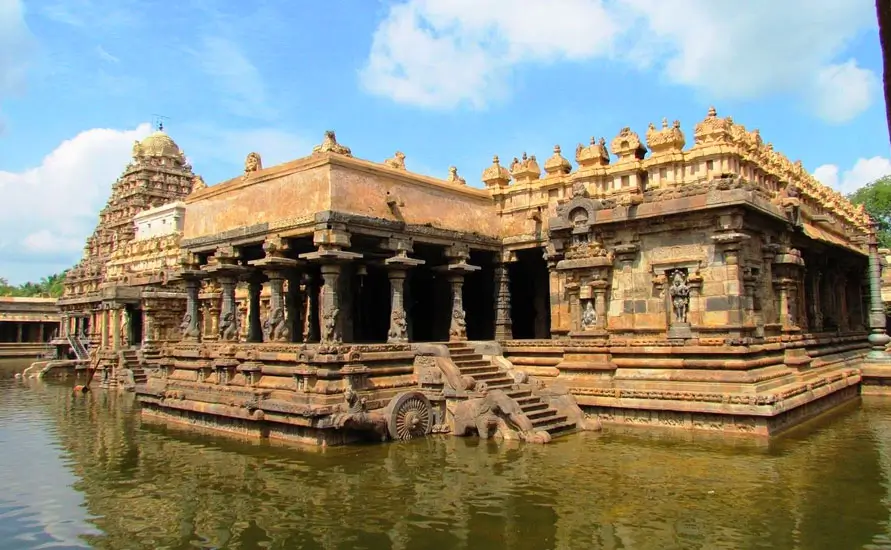
Leaving the coast, the road heads inland across the Kaveri delta, a wide plain of rice paddies, irrigation channels and roadside village shrines painted in bright colors. Some four hours later you arrive in Thanjavur, the old Chola capital, for a guided visit to the Brihadeeswarar Temple, finished around 1010 under Rajaraja Chola I. Listed by UNESCO alongside two other Chola shrines, it lifts a granite tower about 66 meters above the courtyard, topped by a single enormous capstone. A monolithic Nandi rests in its own pavilion before the sanctum, and your guide explains how the tower was raised without mortar.
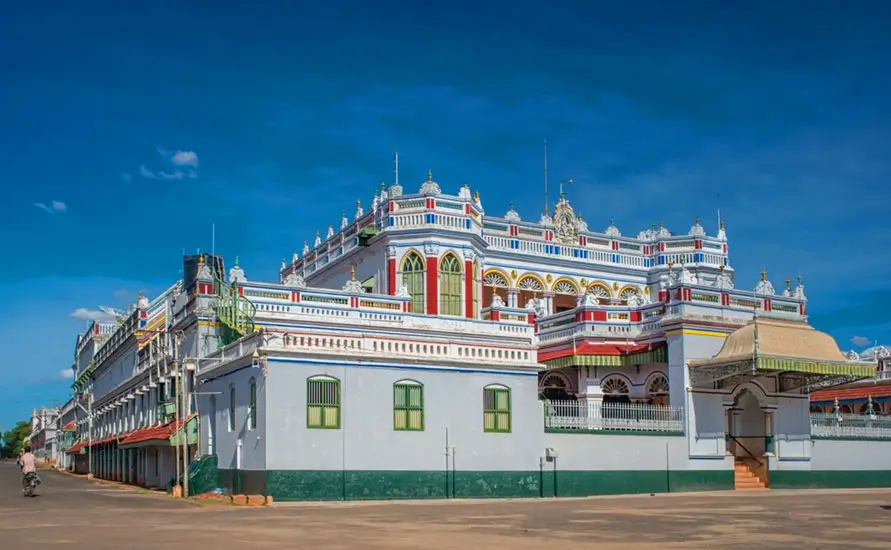
After a relaxed lunch in Thanjavur, a two-hour drive south through dry fields and palmyra palms brings you to Chettinad. En route your guide sketches the story of the Nattukottai Chettiars, moneylenders and traders whose firms financed rice farmers in Burma and rubber growers in Malaya and Ceylon from the 1850s until the Second World War, and who spent their profits on vast family homes back here. Around seventy villages near Karaikudi and Kanadukathan still hold such houses; many stand shuttered, a handful have been restored, and a few now welcome guests as small luxury hotels.
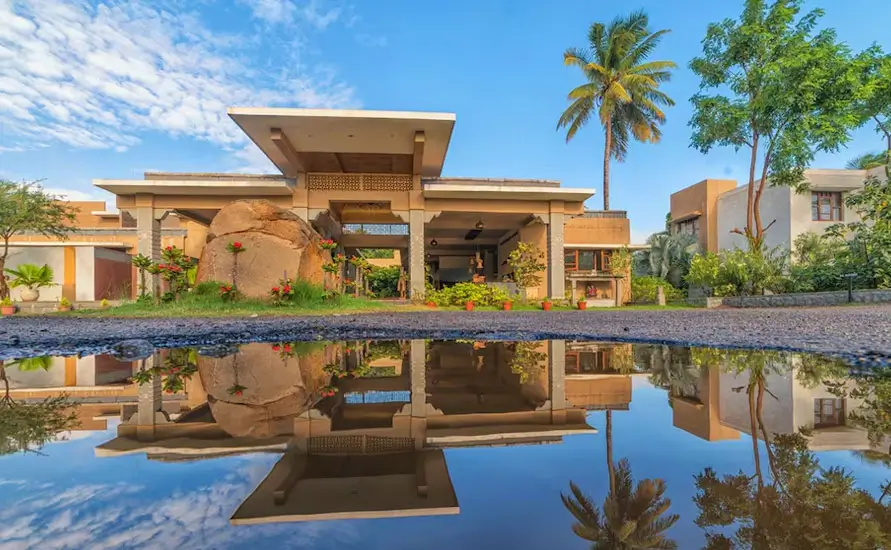
For the next two nights home is a heritage Chettinad mansion hotel, a merchant family's house brought back to life with pillared courtyards, Burmese teak, marble from Italy and hand-poured Athangudi floor tiles in jewel colors. Rooms open onto long shaded verandas, and the swimming pool sits where the kitchen garden once grew. Staff serve panakam, a cool jaggery and dry-ginger drink, as you check in. Dinner is a full Chettinad meal on banana leaves, with pepper chicken, kuzhi paniyaram dumplings and several vegetable dishes, the chili level tuned to your liking, and brass oil lamps flicker along the courtyard pillars. Overnight in Chettinad.
Morning is for walking the empty lanes of Kanadukathan and its neighboring villages with your guide, past façades so long they fill an entire block and doorways carved with deities, lotus flowers and parrots. One of the largest family houses opens its doors by appointment, and inside you move from the front hall where business visitors were received, to the central courtyard of family life, to a dining hall built to feed hundreds at a wedding. Your guide points out Belgian mirrors, Japanese wall tiles and Scottish cast-iron pillars, all shipped home when Chettiar credit flowed around the Bay of Bengal.
Before lunch you stop at an Athangudi tile workshop, where craftsmen pour pigmented cement into brass stencils laid on glass, then leave each tile to cure in water, a method found only in this district. You are welcome to make one yourself, and the patterns will look familiar from the mansion floors you saw earlier. Nearby, handloom weavers turn out the checked cotton Kandangi saris of the area, while Karaikudi's antique lanes are stacked with brass, enamelware, carved doors and wooden toys from dismantled homes. The early afternoon is free for a siesta or a bicycle ride around the village with a staff member.
Toward five, a private Chettinad cooking lesson begins in the mansion's old kitchen, opening with the dry-roasting and grinding of the masalas that define the cuisine: star anise, kalpasi stone flower, marathi mokku buds, black pepper and dried red chilies. Side by side with the cook you make a couple of dishes, maybe a black-pepper chicken or mushroom kuzhambu and a coconut-flecked vegetable poriyal, which are then served at your dinner. Over the meal your guide describes Chettiar weddings, when relatives fly in from Singapore and beyond and the silent houses briefly fill with music again. Overnight in Chettinad.
A short drive west in the morning delivers you to Madurai, a city that has hosted Tamil poets, pilgrims and kings for well over two thousand years. Your hotel is a luxury retreat on a hillside above town, with long views over the temple towers. Once lunch is over, a guided hour at the Thirumalai Nayak Palace begins; King Thirumalai ordered it built around 1636, and it is and today only a fraction of its original size. Its colossal courtyard is ringed by white pillars nearly 20 meters tall, and the stucco domes and arches of the audience hall blend Dravidian and Indo-Islamic ideas in a way few visitors expect.
Next on the list is the Gandhi Memorial Museum, occupying a Nayak-era palace associated with Queen Rani Mangammal. Its galleries follow India's freedom movement, and one room preserves the blood-marked dhoti Mahatma Gandhi had on at the moment of his murder in Delhi, a sobering sight. Your guide then walks you into the old bazaar east of the temple, where tailors inside the pillared Pudhu Mandapam stitch a shirt within the hour and stalls sell copper pots, glass bangles and puja items. Allow time to watch, since the hall itself was built in the 1630s as a festival pavilion.
Following dinner near the temple, you return to the Meenakshi Amman Temple for the palliyarai night ceremony, which begins around 9 pm. Priests bear the processional image of Lord Sundareswarar in a silver palanquin to the chamber of his consort Meenakshi, accompanied by nadaswaram pipes, drums and chanting, while devotees line the halls to watch the procession. Non-Hindu guests are welcome to watch from the outer halls, while the two innermost shrines remain reserved for Hindu worshippers. Phones and cameras cannot come in, so your guide checks them at a cloakroom by the entrance and keeps the receipt. Overnight in Madurai.
Rise early for a calm hour inside the Meenakshi Amman Temple, while the granite underfoot holds the night's coolness and families arrive bearing garlands and ghee lamps. Spread across some 14 acres, the complex has fourteen entrance towers, the highest topping 50 meters, each crowded with painted gods, demons and animals. Next comes the Thousand Pillar Hall (Aayiram Kaal Mandapam), now home to a small art museum, where no two columns carry the same carving, then past the Golden Lotus Tank and corridors where musicians play for the deities. Modest dress is expected, and once more phones and cameras stay at the gate.
Head back up the hill for a late breakfast and let the hottest hours drift by with a swim, a nap or a spa visit. Before sunset your guide drives you to the Mattuthavani flower market, the wholesale hub for Madurai malli, a jasmine so prized that it carries a geographical indication tag. Heaps of white buds, orange marigolds and red roses are weighed by the kilo and tied into bundles bound for temples and weddings across the state, and the air is thick with scent. Photographers love the color and movement here, and most traders will gladly pose once asked.
Dinner tonight can be calm at the hotel or lively at a local institution where your guide orders Madurai favorites: kari dosa topped with minced mutton, peppery chukka and a tall glass of jigarthanda, a cold Madurai dessert drink of milk, almond gum and cream. Afterwards, if you are curious, the car can loop past the Vandiyur Mariamman Teppakulam, a vast granite-stepped tank of the Nayak period, whose island pavilion becomes the stage for a float festival around January or February. Pack tonight, since tomorrow's drive climbs from the Tamil plains into the cardamom hills of Kerala. Overnight in Madurai.
Westward from Madurai the land is flat and farmed, with vineyards and coconut gardens filling the Theni valley under a wall of blue mountains. At Bodinayakanur the ascent starts in earnest, and the Bodimettu ghat zigzags up through a long run of hairpins into the cardamom country of Kerala. Every bend drops the temperature a little and widens the view back over the Tamil plain. Your chauffeur pulls over at a safe lookout for photographs and a fresh lime soda before the final stretch, and points out the old cardamom curing sheds tucked into the forest at the top.
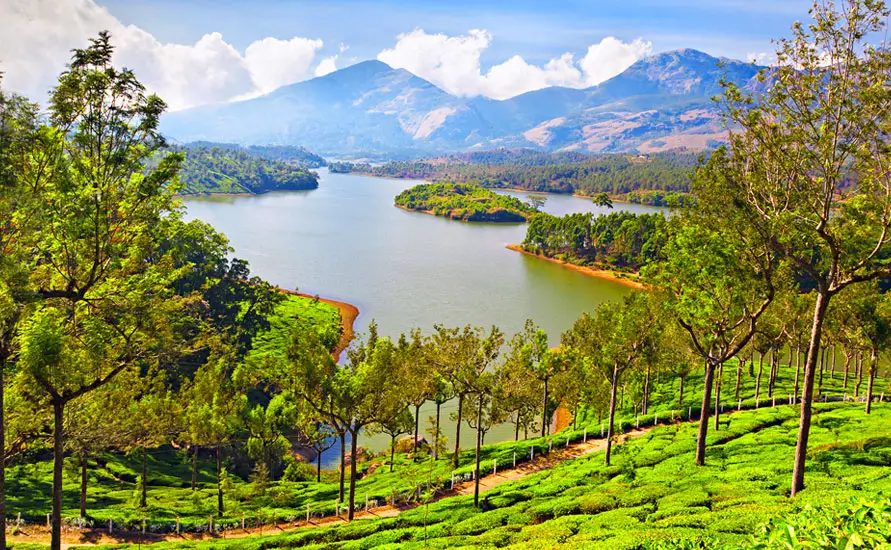
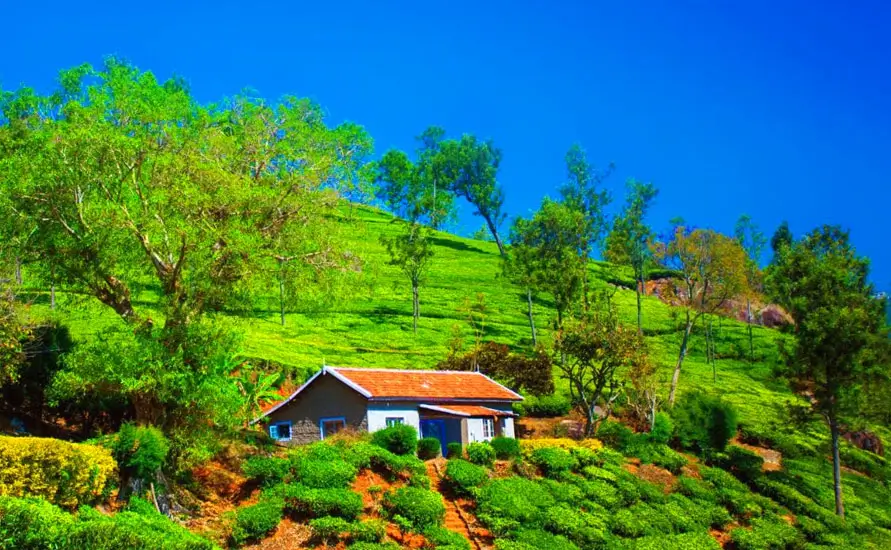
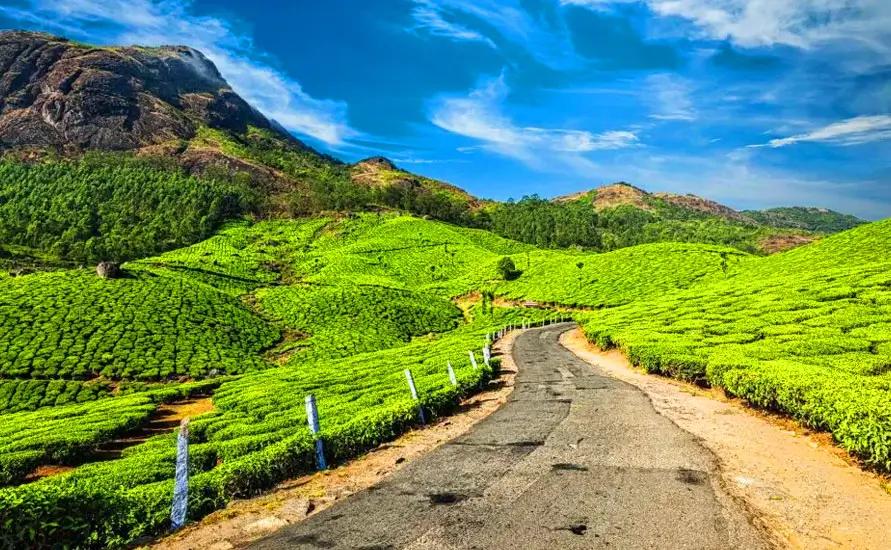
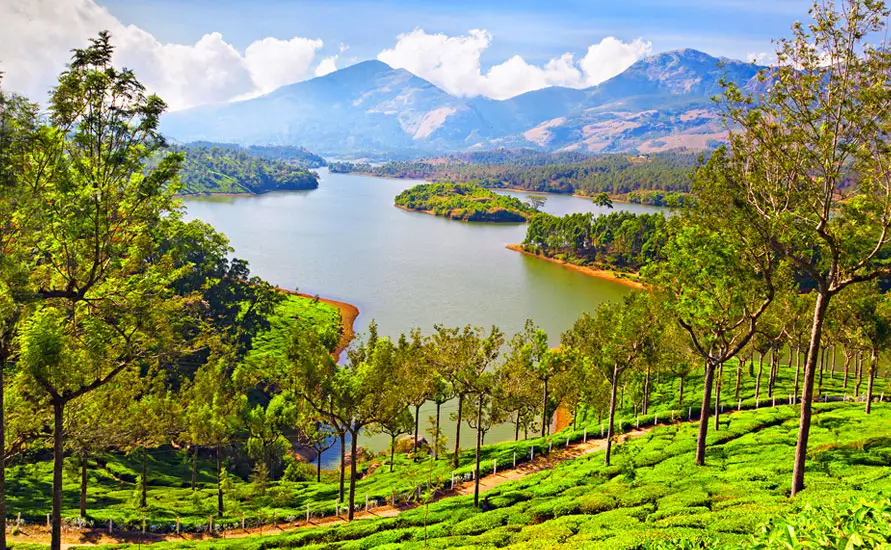
Past the state border, the hills turn a deep green and the tea gardens of Munnar begin, each slope trimmed into rows so even they resemble a giant thumbprint. Your local guide joins you en route to name the estates and explain the small shrines set between the bushes. Around three o'clock you check in at a luxury hillside resort with valley-facing villas, private balconies and an infinity pool that seems to spill into the mist. A late lunch is served on arrival, leaving the remaining hours free for a nap, a slow walk around the gardens or a first spa booking.
At dusk the staff light a fire pit on the terrace and bring out hot tea with banana fritters, and your guide stops by to outline tomorrow's plan of grasslands, tea estates and a planter's lunch. Dinner can lean local, with appam and vegetable stew or a Kerala fish moilee, or switch to a European menu if you prefer something familiar. A warm layer is wise, since nights at this height can be chilly even when Madurai is sweltering below. The resort will also leave a hot water bottle in your bed on cooler evenings. Overnight in Munnar.
First up is Eravikulam National Park, where shuttle buses operated by the park climb the Rajamalai hillside to a walking trail through rolling downs and folds of shola woodland. More Nilgiri tahr live on this plateau than anywhere else on earth; the animal is a stocky, endangered mountain ungulate, and herds frequently wander close to the path, though nature makes no promises. Beyond the grassland looms Anamudi, which at close to 2,700 meters outranks every peak south of the Himalayas. Each year the park closes for the tahr calving season, generally from early February until late March or April, and if your dates fall then, a guided estate trek takes its place.
Late morning brings you to the KDHP Tea Museum, where antique rollers, sorting tables and a documentary screening cover High Range planting from the 1880s up to the present employee-owned company. A walk through a working estate with your guide follows, with the chance to chat with pluckers and watch the leaf weighed at the collection point. The day's centerpiece is a private planter's lunch in an old estate bungalow, hosted by a manager or retired planter who shares stories of club nights, monsoon floods and company life while you taste several grades of High Range tea.
Afternoon takes you past the reservoir behind Mattupetty Dam, lined with eucalyptus and dotted with pedal boats, and on to Echo Point if the crowds are thin. Should you prefer something quieter, your guide can instead lead a gentle walk through cardamom forest or visit a small family spice garden. Once you return to the resort, use the evening for an Ayurvedic massage or dinner beside the pool. Keen birders can join the resort naturalist at dusk to look for laughingthrushes, white-bellied blue flycatchers and other hill birds found only in the Western Ghats. Overnight in Munnar.
The descent from Munnar follows the Periyar valley through spice gardens and rubber estates, with roadside cascades that roar loudest from August to November. Your chauffeur takes the bends gently and stops at Cheeyappara Falls, where the water drops in seven steps beside the highway, for photographs and a cup of filter coffee. As the altitude falls away, cardamom gives way to rubber, then to coconut palms, paddy and canals, and you drive through market towns where a church, a temple and a mosque often share a single street. Lunch is at a quiet restaurant on the way or at the resort on arrival, whichever suits your energy.
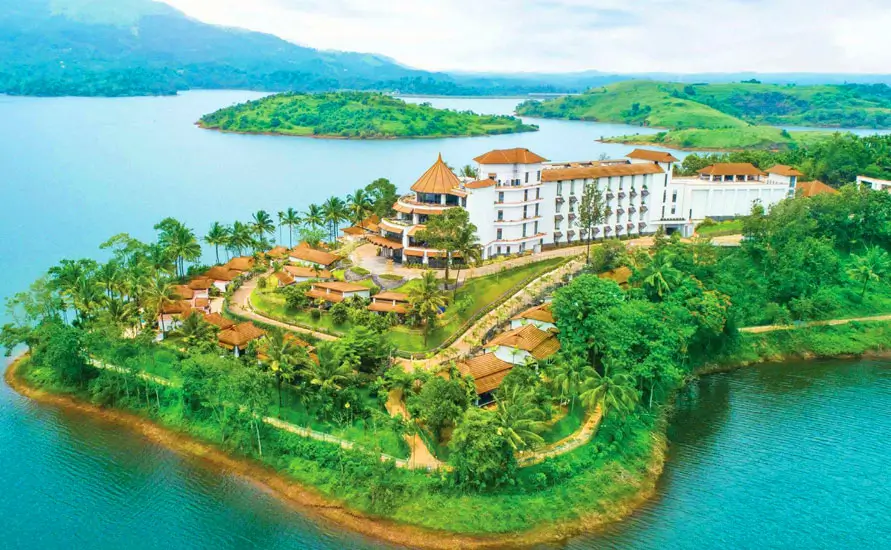
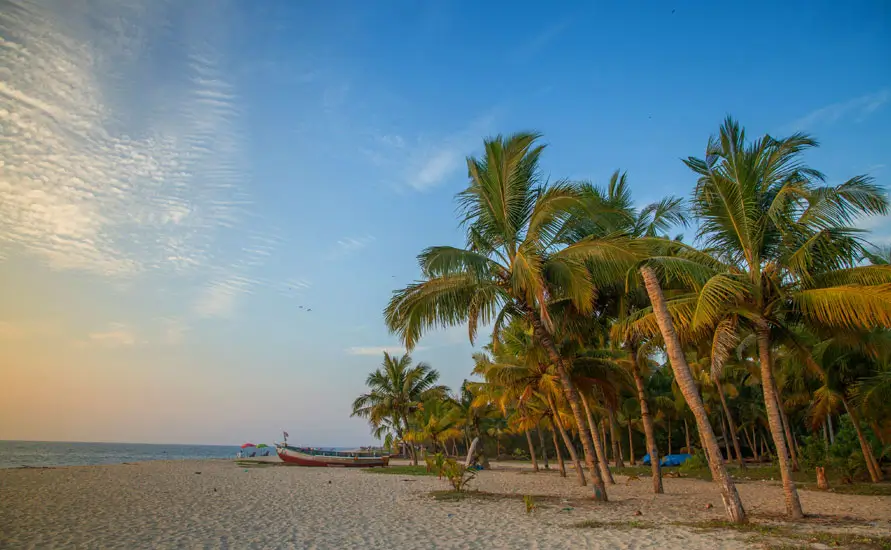
By mid-afternoon you reach your Kumarakom luxury resort, spread through coconut groves and canals on the east bank of Vembanad Lake, Kerala's largest body of water, whose shoreline wanders for nearly 100 km. Villas are generous, many built in the old Kerala manner with steep clay-tile roofs, carved wooden pillars and open-air bathrooms, and several have their own plunge pools or decks above the water. Check-in comes with chilled coconut water straight from the shell, and staff explain the spa, the cooking demonstrations and the boat outings on offer, so you can book tomorrow's treatments in advance.
When the light begins to soften, a small wooden canoe slips out along the resort canals with you aboard, past fishermen casting nets, villagers bathing on stone steps and egrets heading in to roost. Dinner can be laid on your private veranda or at the lakefront restaurant, where the chef prepares karimeen pollichathu, in which a whole pearl spot is coated in shallot and chili masala, wrapped in banana leaf and slow-seared on a flat iron pan. The night air is soft and humid, and the only noises are frogs, crickets and the odd splash of a fish. Overnight in Kumarakom.
As dawn breaks, the resort naturalist takes you walking into the Kumarakom Bird Sanctuary, a compact reserve of mangrove swamp and dense woodland covering around 14 acres along the lakeshore that were once a rubber plantation. Cormorants, darters, night herons and several kinds of kingfisher are regular sightings, and the winter months add migrants from northern India and Central Asia, though counts rise and fall with each season. Binoculars and closed shoes are useful, as the paths turn muddy after rain. By eight o'clock you are back for breakfast overlooking the water, with tropical fruit, steamed puttu and black chickpea kadala curry on the menu.
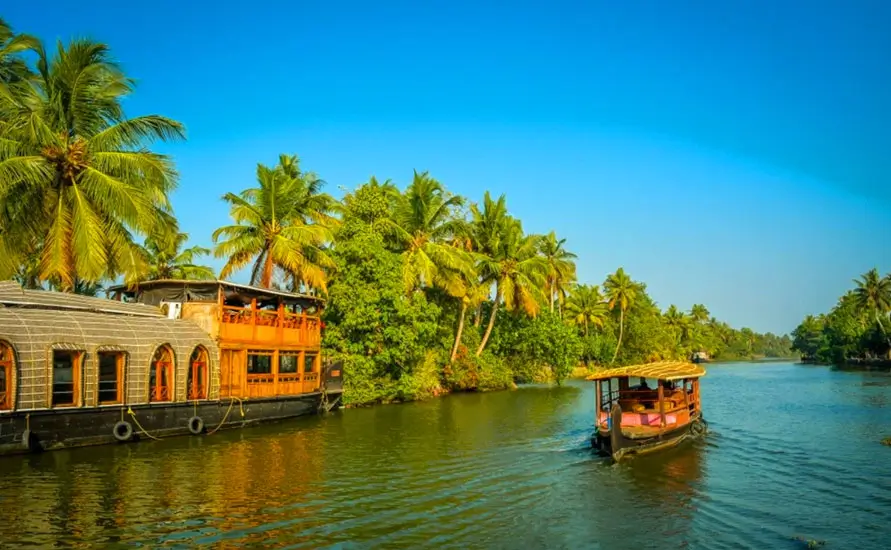
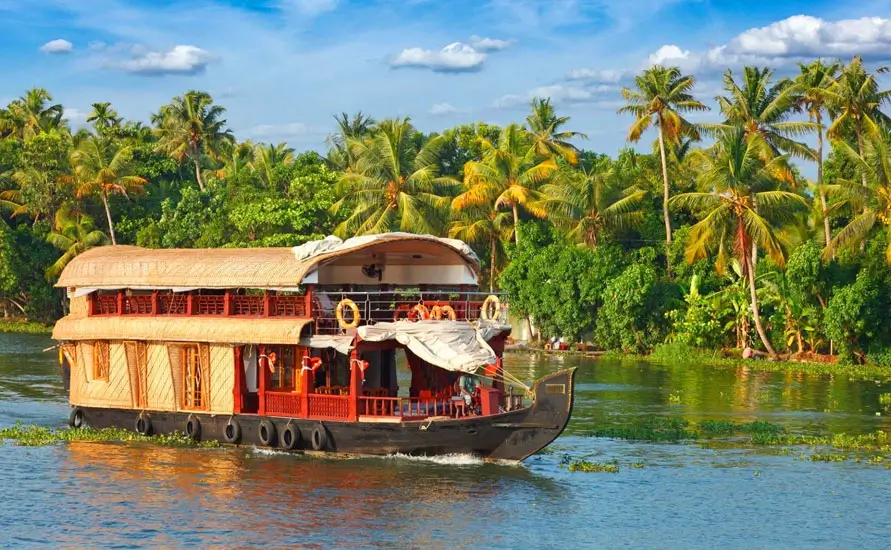
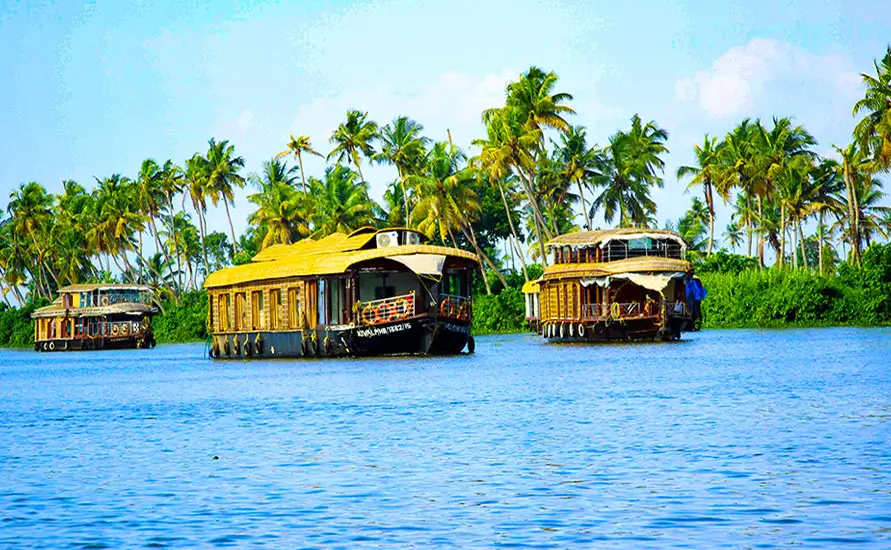
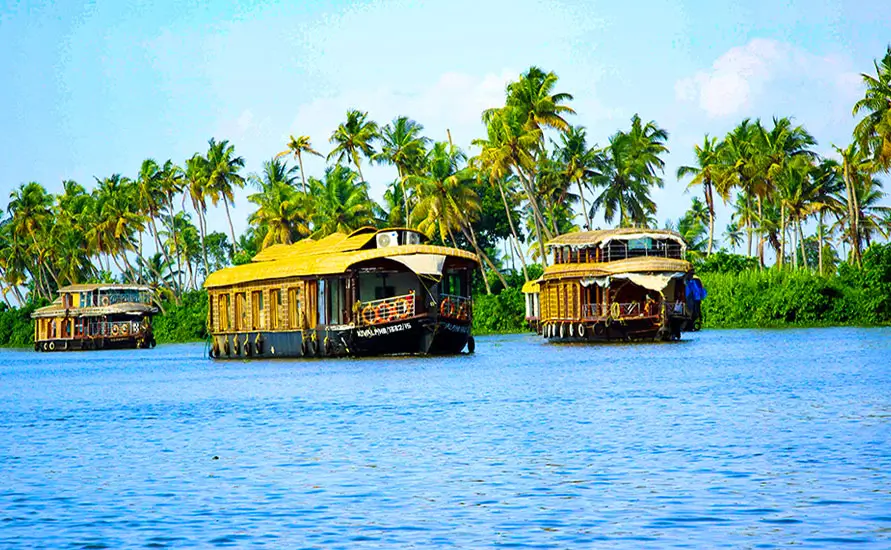
At about eleven you step aboard a private houseboat for a day on Vembanad Lake, with a captain at the wheel, a cook in the galley and a deckhand on the ropes. The boat crosses the open water and then noses into narrow channels framed by coconut palms, where children paddle to school and farmers move ducks along the dikes. Lunch is prepared in the onboard kitchen: red rice, fish curry, a vegetable thoran and a payasam for dessert. Your guide explains Kuttanad, nicknamed Kerala's rice bowl, whose growers plant paddy on reclaimed land lying beneath the level of the sea, protected by earthen bunds, a system recognized by the FAO.
The houseboat returns you to the resort by late afternoon, in time for a spa appointment if you wish. Popular choices are abhyanga, a synchronized four-hand oil massage, or shirodhara, where warm medicated oil trickles across the forehead for thirty minutes or so. If cooking interests you more, the resort chef runs a short demonstration on fermented appam batter and a coconut-milk stew, and you leave with the recipes. Dinner is at your leisure tonight, perhaps on a lamp-lit jetty with the lake stretching away into darkness and the lights of fishing canoes drifting past. Overnight in Kumarakom.
Thanks to a late checkout, the morning is unhurried, and only after lunch do you set off on the short drive to Kochi, a road of about ninety minutes through small towns and backwater villages. In Fort Kochi your address is a heritage hotel, typically a restored spice warehouse or colonial mansion with timber beams, antique furniture and a pool shaded by rain trees. Once you have settled in, wander the lanes nearby, where old trading houses now hold galleries, design stores, coffee shops and the occasional studio left over from the Kochi-Muziris Biennale, the large contemporary art festival held here every two years.
As the sun starts to drop, your guide walks with you along the seafront to the Chinese fishing nets, those great teak and bamboo cantilevers that appear on every postcard of Fort Kochi. Each net is worked by a team of five or six men who step out along the main pole to tip the net down, then lean back together on ropes weighted with stones to lift the catch. If the crew waves you over, you can lend your weight to the lever. Fishmongers spread their morning catch on slabs a few steps away, and small kitchens behind the stalls will fry your choice with chili and lime.
Evening brings a private Kathakali session in a small Fort Kochi theater, where you are invited behind the curtain while the performers prepare. Using rice paste, natural pigments and coconut oil, the artists build up their faces in green, red, black and white over roughly ninety minutes, and you can ask questions as they work. The performance that follows enacts an episode from the Mahabharata through exaggerated eye movements, mudra hand signs and thunderous chenda drumming. Before the curtain rises, your guide demonstrates a handful of mudras that unlock the plot. Overnight in Kochi.
Your morning starts at St. Francis Church, a whitewashed Portuguese foundation of 1503 that ranks among the earliest European churches anywhere in Asia. The navigator Vasco da Gama, who passed away here on Christmas Eve 1524, rested under this floor until 1538, when his remains were returned home to Lisbon, and his original gravestone can still be seen inside. From there your guide leads you past the Dutch cemetery, the old British club houses and the parade ground, telling how Kochi passed from Portuguese to Dutch to British hands in turn, each power leaving its own buildings, churches and family names behind.
Next, the car crosses to Mattancherry Palace, nicknamed the Dutch Palace even though it was Portuguese money, around 1555, that built it for the ruling Raja. Inside, murals rank with the best in the state, with scenes from the Ramayana in ochre, green and black that cover entire rooms. Walk on into Jew Town to reach the Paradesi Synagogue of 1568, whose floor is paved with hand-painted blue Cantonese tiles, no two quite alike, beneath a cluster of Belgian glass chandeliers. Fridays shut the palace, and the synagogue also closes on Saturdays and Jewish festivals, so we fix this day around those dates.
Afternoon is free for browsing Jew Town's antique dealers or ducking into the old godowns where pepper, dried ginger and cardamom are still sifted by hand and packed into jute sacks. Toward sunset, an optional private launch takes you around Kochi harbor, past Willingdon Island, the shipyards and the palace hotel on Bolgatty Island, as container ships and ferries cross the channel. Your guide has a shortlist of seafood places for dinner, serving prawn roast, crab curry or a mild fish moilee. Tomorrow begins with a morning train north, so have your bags packed tonight. Overnight in Kochi.
Your chauffeur takes you to Ernakulam Junction for a morning express train up the Kerala coast to Kannur, roughly four and a half hours in reserved executive or air-conditioned chair-car seats. The line runs through Thrissur, Shoranur and Kozhikode, crossing broad rivers, paddy fields and red-tiled towns, and the view from the window is a good cross-section of everyday Kerala. Our representative boards with you to stow your bags and settle you in, and your hotel packs a lunch box for the ride. Taking the train cuts several hours from what would otherwise be a long road day.
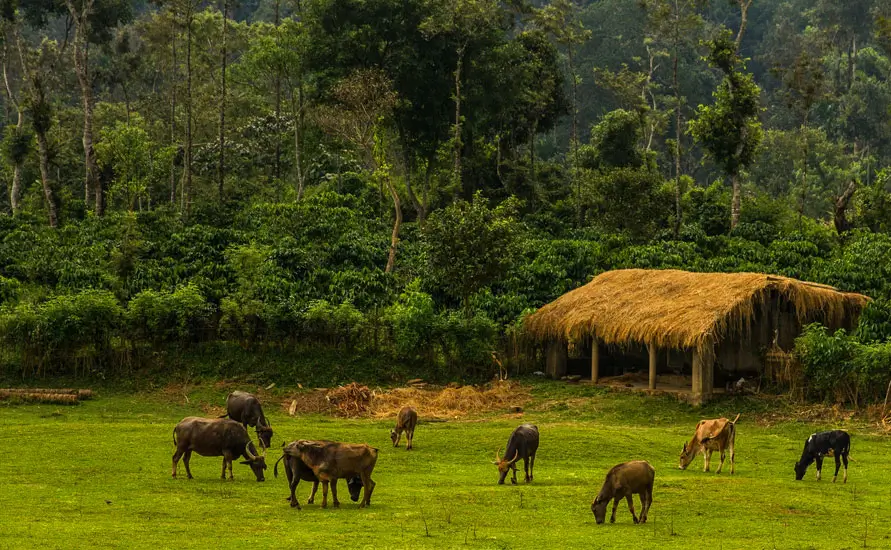
At Kannur your next chauffeur waits on the platform, and the drive east soon leaves the coast behind, climbing through cashew orchards and rubber plantations into the forested ridges of the Western Ghats. After about three hours you reach Coorg, or Kodagu, a hill district of coffee estates, cardamom forest and mist, home to the proud Kodava community, famous for its soldiers, its hockey players and its hospitality. Your Coorg coffee estate stay is a luxury plantation resort with private villas, a heated pool and walking trails winding among the coffee. A freshly brewed cup from the estate's own beans awaits you on arrival.
Tonight is for recovering from the travel day, with nothing planned beyond dinner. The resort kitchen introduces you to Kodava cuisine, a meat-loving tradition quite unlike the rest of Karnataka: pandi curry, pork cooked dark and tangy with kachampuli vinegar, soft akki roti of rice flour, kadambuttu steamed rice balls and, in season, bamboo shoot curry. Continental and North Indian dishes are always available as well. Coorg evenings are cool and very quiet, with crickets and the occasional barking deer as the only sounds after dark, and many villas have a fireplace for chilly nights. Overnight in Coorg.
A planter leads your morning coffee plantation walk through the estate, showing how arabica and robusta shrubs thrive beneath a canopy of silver oak, jackfruit and rosewood that also supports climbing pepper vines and orange trees. You watch ripe red cherries being pulped, fermented, washed and spread on drying yards, then finish with a cupping session comparing light and dark roasts. Karnataka grows most of India's coffee, and Kodagu accounts for a big part of that, so your host has plenty to say about erratic monsoons, labor shortages and the swing between commodity prices and specialty beans.
Before lunch the car takes you to Abbey Falls, a cascade hidden among coffee and spice plantations that is at its loudest from July to October. A few hundred steps and a swaying footbridge lead down to the viewing platform. The afternoon covers Madikeri Fort, a 17th-century mud stronghold that Tipu Sultan later refaced with stone, and the Omkareshwara Temple of 1820, whose central dome and four slim towers show clear Islamic influence. Your guide also covers Kodava customs, from ancestor veneration and the kupya robe to the reverence for the Kaveri.
Close to sunset, the car stops at Raja's Seat, the cliff-top garden where, according to local accounts, Kodagu's royal family would sit in the evenings to see the ridges turn gold and then violet. Layers of blue ridges fade toward Kerala, and mist starts pooling in the hollows as the light goes. Vendors at the gate sell hot coffee and roasted corn, which taste better in the cool hill air. Later at the resort, you might book a spa ritual, sit by the fire with a glass of wine or arrange a private dinner on your villa deck. Overnight in Coorg.
Heading east after breakfast, you reach Bylakuppe within an hour, the site of Tibetan refugee camps set up in the early 1960s and now one of the biggest Tibetan communities in exile. Your guide brings you to the Namdroling Monastery, among the biggest Nyingma monastic universities anywhere, where the main prayer hall holds three towering gold-finished images, with Shakyamuni Buddha at the center, framed by brilliantly painted walls. Monks in maroon robes may be chanting in the assembly hall or debating in the courtyard. Nearby cafés serve momos and salty butter tea, and small shops sell incense, prayer flags and thangka paintings.
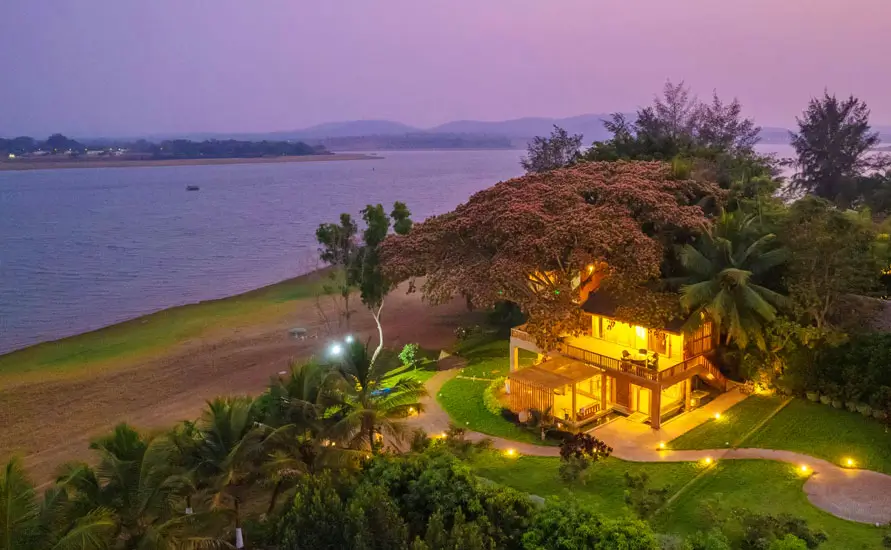
From Bylakuppe the road runs south through Hunsur and the sugarcane fields of Heggadadevanakote to the Kabini reservoir, the shared edge of Nagarhole and Bandipur national parks. Your Kabini jungle lodge sits on the backwaters themselves, with cottages and luxury tents looking across the water to the forest. After a buffet lunch on the deck, the lodge naturalist gives a briefing on the reserve, its residents and the rules for forest drives, all of which are set and run by the Karnataka forest department. Rest for an hour; the afternoon drive leaves at around three.
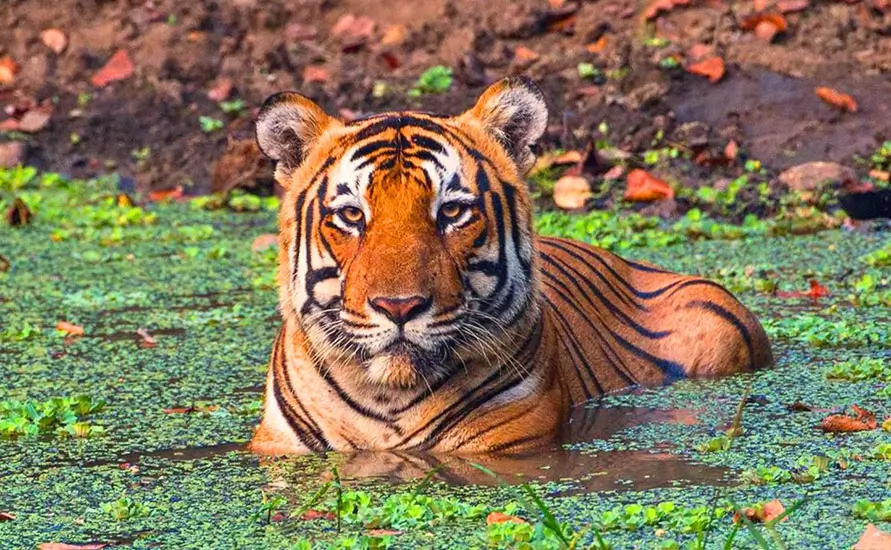
Your first jeep safari enters Nagarhole in the mid-afternoon in an open vehicle with your naturalist and a forest department driver. These deciduous forests shelter Asian elephants, gaur, chital, sambar, dhole, leopards and tigers, but animals keep to their own plans and no drive can promise any particular species. Expect around three hours in the forest, returning as the gates close at dusk. Dinner is served around the campfire, where naturalists swap notes on what each vehicle saw, and the forest across the water carries on its own noisy nightlife. Overnight in Kabini.
A knock on the door before six brings tea and cookies, and then you are off on a morning jeep safari while the forest is cool and its animals are on the move. Your naturalist checks the track for fresh pugmarks while listening for the sharp bark of spotted deer or the shriek of langurs, both signs that a predator may be close. Even when the cats stay hidden, there is plenty to watch: peafowl dancing in clearings, hornbills crossing the road, crested serpent eagles on dead branches and elephant families heading for the water. You come back to the lodge around nine for a full breakfast.
Midday at the lodge is slow by design. You might swim, book a massage, sleep in your cottage or settle into the library, which holds field guides and books on Indian wildlife and conservation. Ask the naturalist and they will happily talk about the long-term efforts to protect tigers and elephants in the Nagarhole–Bandipur landscape and the work being done with villages on the forest fringe. Lunch is served on the deck facing the reservoir, and on many afternoons in the dry months, elephants walk out onto the far bank to drink and bathe in full view.
In the late afternoon a motorboat takes you out for a boat safari across the Kabini backwaters, a quite different angle on the reserve. You glide slowly past drowned tree trunks used as perches by cormorants and fish eagles, sandbanks where mugger crocodiles bask and grassy shores where elephant herds and gaur come down to graze as the water recedes. As the sun sinks behind the hills the lake turns copper, and the motor is switched off so you can drift and listen. Back at the lodge, a farewell dinner marks the last evening of your eighteen days. Overnight in Kabini.
After a last breakfast by the water, you check out and your chauffeur drives north-east to Bangalore through the farmland and small towns of Mysore district. Plan on roughly 330 minutes of driving, more if Bangalore's traffic is heavy, with a lunch stop planned along the way at a clean highway restaurant. For a departure near midnight, we can build in a few hours in Mysore for its palace and market, a shopping stop in Bangalore, or a day-use room by the terminal at additional cost. Your guide will confirm timings with you the previous evening.
At Kempegowda International Airport, your chauffeur unloads your luggage at departures and our operations team remains on call until you are through check-in. Across eighteen days you have walked Pallava shores, Chola temples and Chettiar mansions, slept among tea gardens and coffee bushes, drifted on Kerala's largest lake and listened to the Kabini forest at night. When you are ready to see more of India, whether the palaces of Rajasthan or the Himalayan foothills, our team will be glad to start planning. Have a safe flight home.
Your Journey
N.S. Rathore & Mrs. Omlata Rathore · Managing Director
We still read every enquiry ourselves. Tell us the places you liked and our planners will send a day-by-day route with drive times and a clear price.
Every package can be customised and no pressure to book. A planner from our office replies within 24 hours with a route written for your group.
Fill this in and your planner will send a first draft itinerary.
Explore more
Kerala Backwaters Escape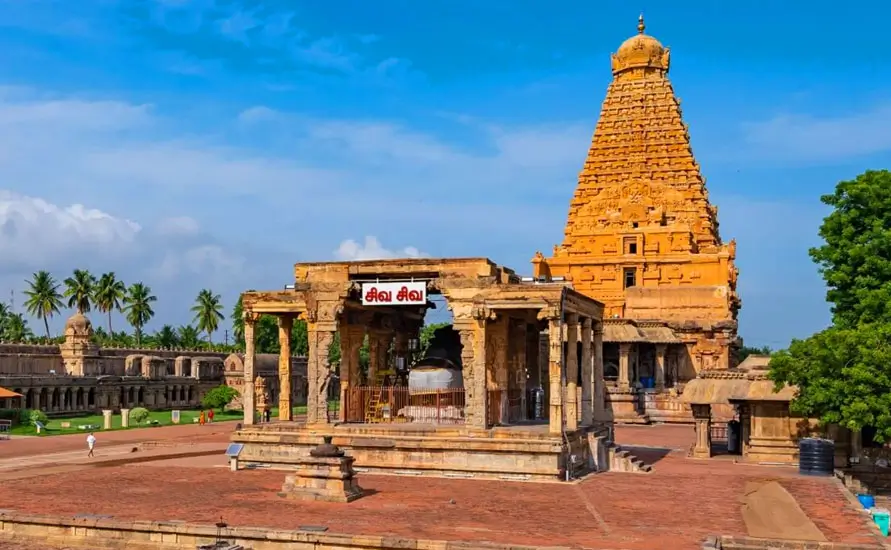 Kerala Backwaters Escape
 Kerala Backwaters Escape
 Kerala Backwaters Escape
 Kerala Backwaters Escape
 Kerala Backwaters Escape
 Kerala Backwaters Escape
 Kerala Backwaters Escape
 Kerala Backwaters Escape
 Kerala Backwaters Escape
 Kerala Backwaters Escape
 Kerala Backwaters Escape
 Kerala Backwaters Escape
 Kerala Backwaters Escape
 Kerala Backwaters Escape
 Kerala Backwaters Escape
 Kerala Backwaters Escape
 Kerala Backwaters Escape
 Kerala Backwaters Escape
 Kerala Backwaters Escape
 Kerala Backwaters Escape
 Kerala Backwaters Escape