 Kerala Backwaters Escape
Luxury South India Tours
Kochi – Kumarakom – Thekkady – Munnar – Marari
At a glance
Kerala tells its story most clearly at the table. Merchants sailed here from Arabia, China, Lisbon and Amsterdam for pepper and cardamom, and each wave left something in the pot: Syrian Christian duck roast, Jewish-era bakeries, Malabar biryani. Our luxury Kerala culinary tour follows that trail over ten days, pairing five-star resorts and heritage stays with the people who cook, farm and perform here. It is a Kerala food tour for travelers who want to understand what they eat, not just photograph it.
Day one opens in the trading town of Kochi, move on to a resort beside Vembanad Lake at Kumarakom, climb into the spice hills of Thekkady, continue north to the tea country of Munnar and close beside the Arabian Sea at Marari. Along the way you share lunch in a Syrian Christian family home, learn backwater fish curry in a village kitchen, cook with fresh cardamom on a working spice estate and sit down to four dinners prepared by a private chef. Evenings bring Kathakali, Kalaripayattu and long conversations with the hosts. Every leg is driven by a chauffeur in a premium car.
This luxury Kerala tour is built for food-curious couples, friends and small family groups traveling from the States, Britain, Europe or Australia, plus NRI families keen that their kids taste the Kerala their grandparents remember. Two nights in most places keep the pace relaxed. Menus can be fully vegetarian, gluten-free or mild on request, and every Kerala cooking class is hands-on rather than a demonstration. October to March is cooler and drier, though the monsoon months bring their own seasonal dishes and lower rates.
Past immigration at Cochin International Airport you will find our Kerala chauffeur holding a sign bearing your surname; a premium sedan or SUV carries you south across the bridges that join the islands of Kochi. Expect roughly seventy-five minutes on the road, more if Ernakulam is congested. Home for two nights is a restored heritage hotel close to the waterfront, where cold towels, a glass of lime soda with a pinch of salt and a quiet room are ready. The afternoon is kept open for sleep, a swim and time to adjust to the coastal humidity.
At around five, when the sun drops behind the harbor, a food guide collects you at the hotel for a walk built around small bites. The first stop is a stall frying banana chips in coconut oil in a wide iron pan, then a tea shop pouring sulaimani, the black tea with lemon and spice that came south with Arab traders. You sample pazham pori, sweet plantain slices coated in flour batter and deep-fried, and a crisp egg puffs pastry from a bakery that has been working the same ovens for generations. The guide explains how coconut oil, curry leaves and black pepper became the base of almost every dish here.
The walk ends in Mattancherry, where Gujarati and Kutchi families settled as spice merchants centuries ago and still run temples, sweet shops and small vegetarian kitchens. You taste a plate of hot snacks served on a steel dish and see how a very different regional cuisine has survived for generations on the Kerala coast. Back at the hotel, dinner can be light, or our team can reserve a table at a waterfront seafood restaurant. Before you sleep, your guide hands over a short printed food glossary to help you read menus for the rest of the trip. Overnight in Kochi.
Mornings in Mattancherry start early on Bazaar Road, where porters still roll sacks of pepper, ginger and turmeric through the doors of old godowns. Your private guide takes you inside a working spice warehouse to watch dried ginger being sorted on the floor and pepper graded by size and color, a trade that made this street rich long before tourists arrived. You then visit Mattancherry Palace, whose Ramayana murals are some of the finest in Kerala, and the 1568 Paradesi Synagogue, its floor covered in Cantonese porcelain tiles. Friday closes the palace; the synagogue also stays shut on Saturday and Jewish festivals, so this day is fixed around those dates.
Lunch is the culinary highlight of the day, served in the home of a Syrian Christian family whose ancestors have lived in central Kerala for many generations. Your hosts show you how they prepare lacy appam from fermented rice batter, a gentle coconut-milk vegetable stew and a dark, peppery duck roast that usually appears at Easter and weddings. You can help in the kitchen or simply sit at the dining table and ask questions about church festivals, family recipes and how food marks the year in this community. Vegetarian guests receive a separate menu with jackfruit and raw banana dishes. Allow about two hours for the visit.
Keep the afternoon for a siesta or a browse among the antique dealers of Jew Town. Toward five you stroll to an intimate Fort Kochi auditorium for Kathakali, arriving early enough to watch the artists grind rice paste and natural pigments and build up the green faces of the heroes, layer by layer. A short talk explains the mudras, the hand gestures that work almost like a spoken language. Expect about an hour of storytelling, with drums and singing driving the story. Dinner tonight is at a quiet restaurant that serves Kerala dishes with a modern touch. Overnight in Kochi.
After a slow breakfast, you make a short morning stop at the Ernakulam market, where your guide points out the vegetables and fish that will appear on plates later in the trip: snake gourd, drumstick pods, tapioca, raw jackfruit and mounds of shining sardines. You also see the shops that grind fresh coconut and sell kudampuli, the smoked Malabar tamarind that gives Kerala fish curry its sour depth. From there your chauffeur drives south-east toward Kumarakom, a trip of about ninety minutes that crosses rice fields, rubber groves and small canal towns before reaching the eastern shore of Vembanad Lake.
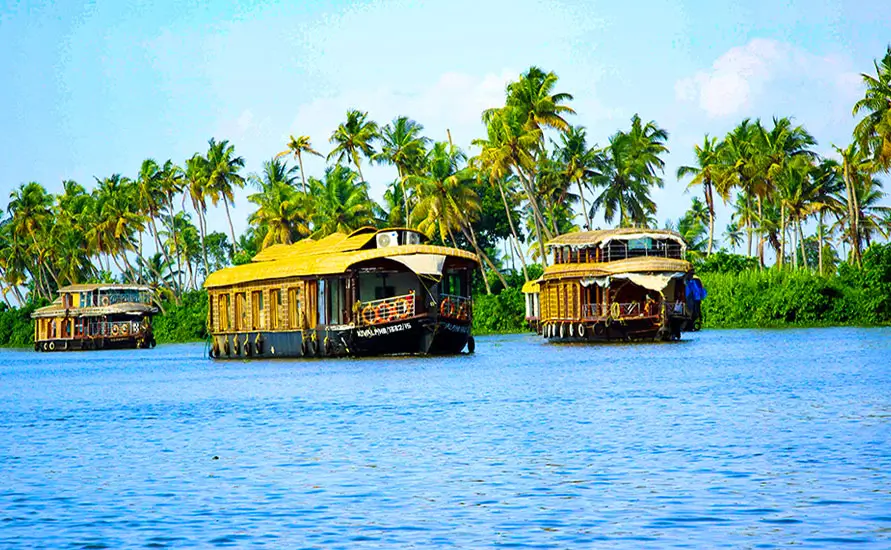
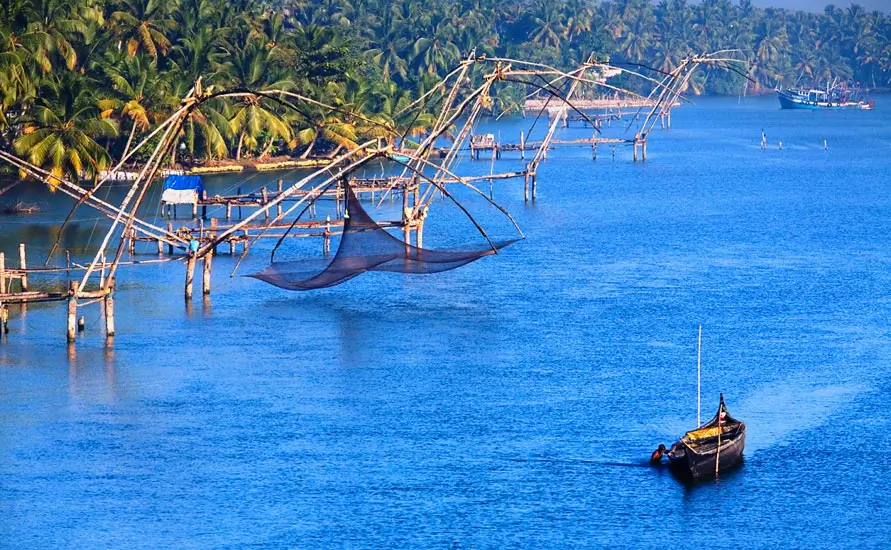
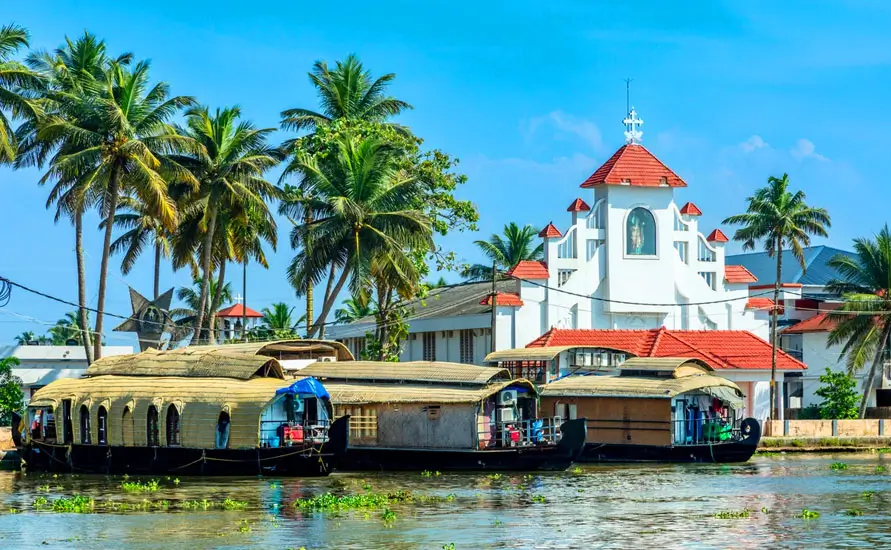
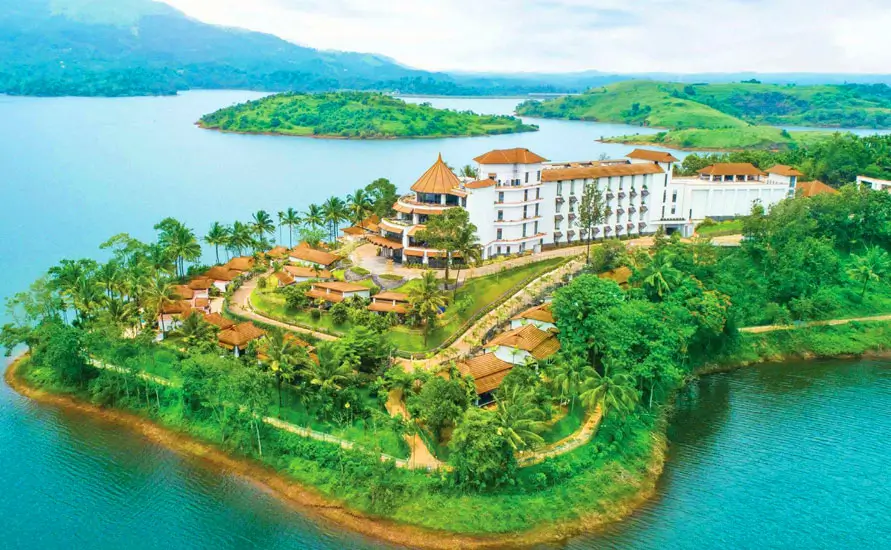
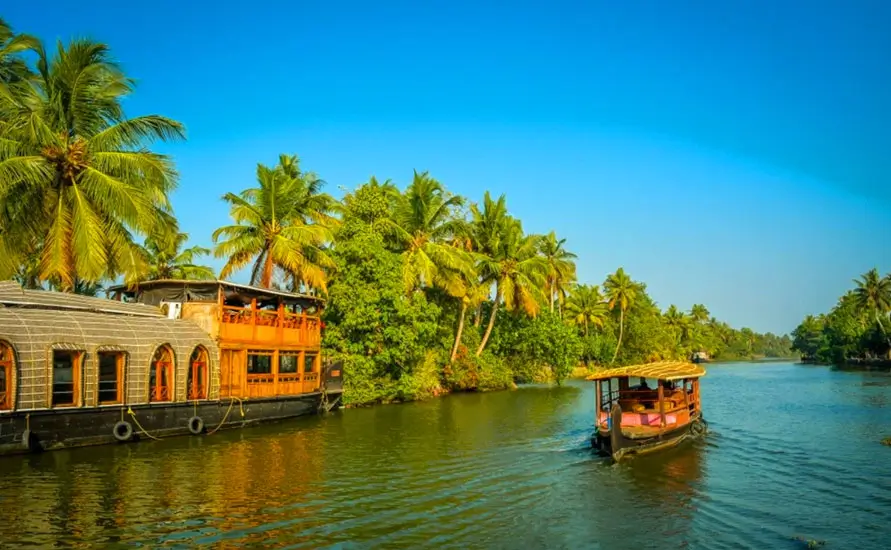
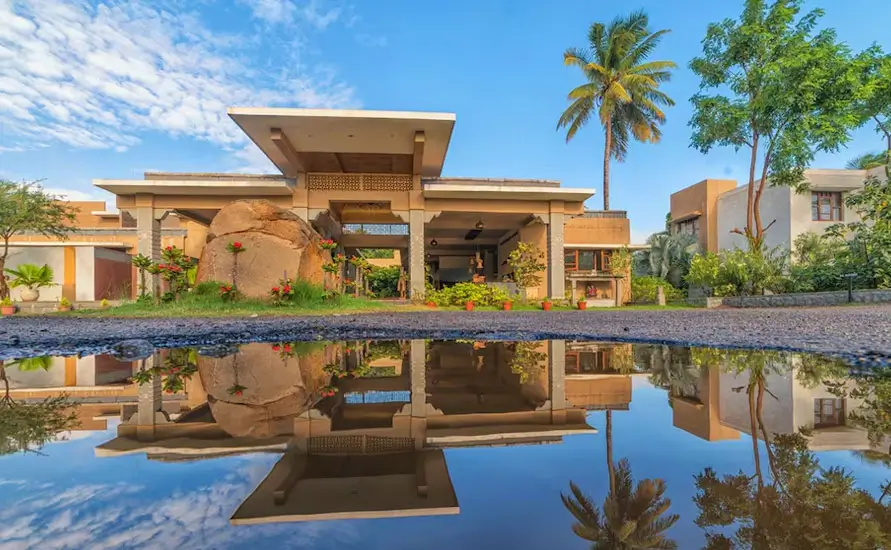
For the coming two nights you stay at a lakeside five-star resort built around canals and old Kerala-style houses, where rooms open onto lawns that slope down to the water. Lunch is served by the pool, and the afternoon is yours for an Ayurvedic massage, a hammock nap or a slow walk along the resort's waterways. Around five, a private motorboat carries you beyond the resort canals onto Vembanad to watch the light fade over the water. Fishermen work from narrow canoes with long poles, and in the cooler months flocks of cormorants and egrets cross the sky toward their roosts.
Back on shore, a table is set on the edge of the lake, lit by brass lamps, for the first of your private chef Kerala dinners. The chef cooks in front of you on a small open grill and walks you through each course. Expect karimeen pollichathu, pearl spot fish rubbed with red chili and shallot paste and roasted in a banana leaf, along with prawns in coconut milk, red rice and a sweet palm-jaggery payasam to finish. There is plenty of time to ask about techniques and ingredients, and the chef will write down any recipe you would like to take home. Overnight in Kumarakom.
Birders and early risers can start at dawn with a naturalist-led walk in the Kumarakom Bird Sanctuary, a small mangrove-and-woodland reserve by the water. From November into February, winter visitors join the resident herons, darters and kingfishers, though what you see depends on the season and the morning. After breakfast you board a small country canoe, rowed by a village boatman, for a quiet ride through narrow village canals too shallow for houseboats. You glide past coir spinners turning husk fiber into rope, women cleaning fish on stone steps and children heading to school along the embankments.
Your canoe stops beside a coconut grove where a toddy tapper climbs a palm with a ring of rope binding his feet and shows you how he collects the sweet sap at the top. Toddy is fermented within hours and is sold in simple roadside shops called kallu shaps, which are famous across Kerala for spicy food rather than for the drink itself. Your guide arranges a tasting of kappa, boiled tapioca mashed with coconut and green chili, served with a fiery fish curry, the kind of meal locals swear by. Tasting the toddy itself is entirely optional.
After lunch-time rest, a village family welcomes you for a hands-on Kerala cooking class led by the lady of the house, who cooks for the family every day. Coconut is shredded by hand on a low bench scraper, temper mustard seeds and curry leaves, and learn to make meen curry, a vegetable thoran and a crisp pappadam in hot oil. The lesson ends with lunch together on the veranda, eaten in the local way from banana leaves. Your guide translates where needed and makes sure you have the recipes. The evening is free at the resort, with dinner served on your private deck if you prefer. Overnight in Kumarakom.
Leaving the backwaters behind, you drive east through Kottayam and then begin the long climb into the Western Ghats. Rubber trees give way to pineapple fields, then tea gardens around Peermade and finally to the dense cardamom forests that cover the hills around Kumily. The road has many bends, so your chauffeur takes it slowly and stops at a viewpoint for coffee. You pull into Thekkady, beside the Periyar Tiger Reserve boundary, in time for lunch. Two nights are booked at a luxury forest resort built from local stone and timber, with cottages set among old trees and spice gardens.
In the afternoon a planter-guide leads you on a private walk through a working spice estate, the best way to understand what you have been eating since Kochi. Pepper twines up every tall tree, cardamom pods sprout on runners near the soil under broad leaves, while cinnamon bark, vanilla orchids, cocoa pods and nutmeg turn up every few steps. Your guide breaks open fruit for you to smell and taste and explains why green cardamom from these hills fetches high prices in the Gulf. At the estate store you can buy spices straight from the drying room.
As dark falls you take seats for Kalaripayattu, the martial art of Kerala, at a small theater near Kumily. Practitioners duel with staffs, blades and shields in a pit lit by oil lamps, leaping and spinning in routines that have been taught for centuries in family training halls. Your guide can tell you which moves have links to Ayurvedic massage and the healing traditions of the kalari. The show lasts about an hour. Dinner back at the resort includes hill-country dishes such as kappa with chicken curry and fresh fruit from the estate. Overnight in Thekkady.
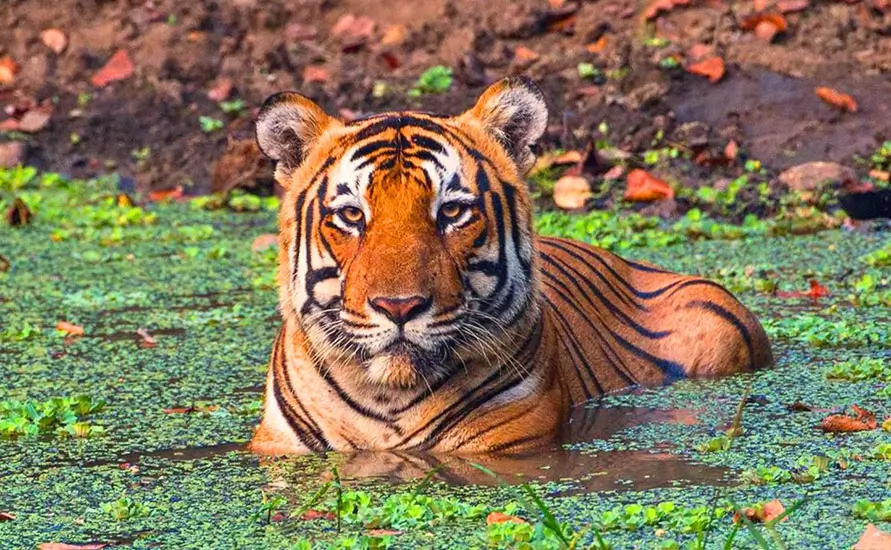
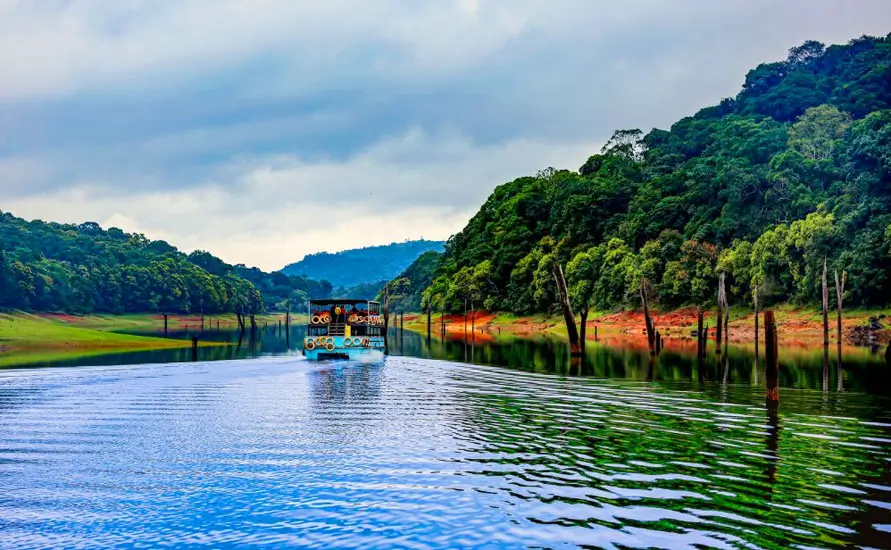
Board the earliest launch on Periyar Lake, when vapor still hangs over the reservoir and the light is soft. You spend around ninety minutes aboard a forest department launch, past drowned tree stumps standing in the reservoir and grassy banks where sambar deer, wild boar, gaur and, on lucky mornings, a herd of elephants grazing near the reeds. Sightings are never guaranteed, and the ride is worth it for the scenery alone. Seats are few and issued only through the forest office, so our local team handles the booking. Prefer to stay on foot? A ranger-led trail walk inside the reserve can replace the boat.
Late morning brings you to a family-run cardamom estate in the hills above Kumily, where a private chef has set up an outdoor kitchen under a shade tree. Today the focus is on spices fresh from the plant, and the chef shows how green pepper, cardamom and cinnamon leaves change a dish compared with dried versions. You cook a pepper chicken or mushroom roast, a cardamom-scented rice and a coconut chutney ground on a stone, and then share the meal you cooked with the estate family. The planter talks about prices, weather and the hard work behind each pod.
Nothing is scheduled afterward. You might book a spa session at the resort, walk through the spice shops of Kumily town or sit on your veranda listening to the birds of the forest edge. Kumily sits right on the Kerala–Tamil Nadu border, and your guide can explain how Tamil Nadu farmers on the other side supply many of the vegetables used in Kerala's hill kitchens. Dinner tonight is simple and light after the long lunch, and your guide can arrange it in your cottage if you like. Overnight in Thekkady.
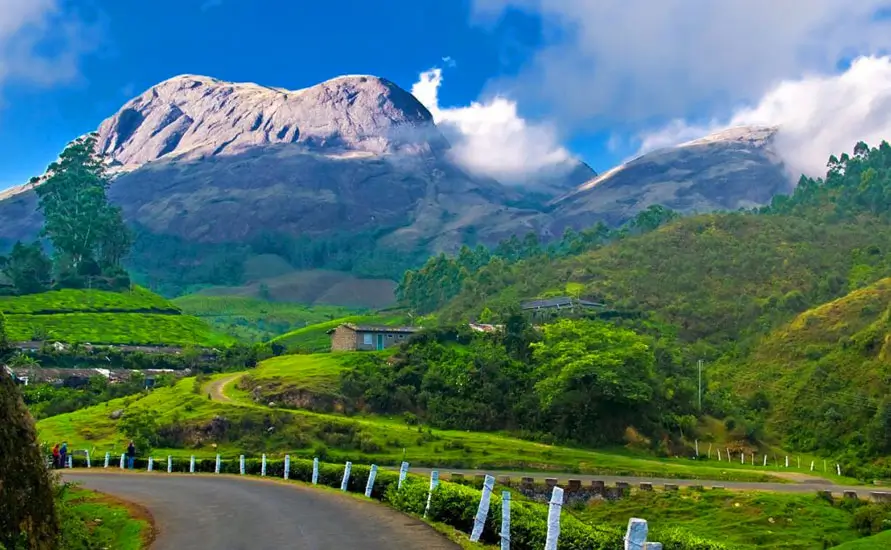
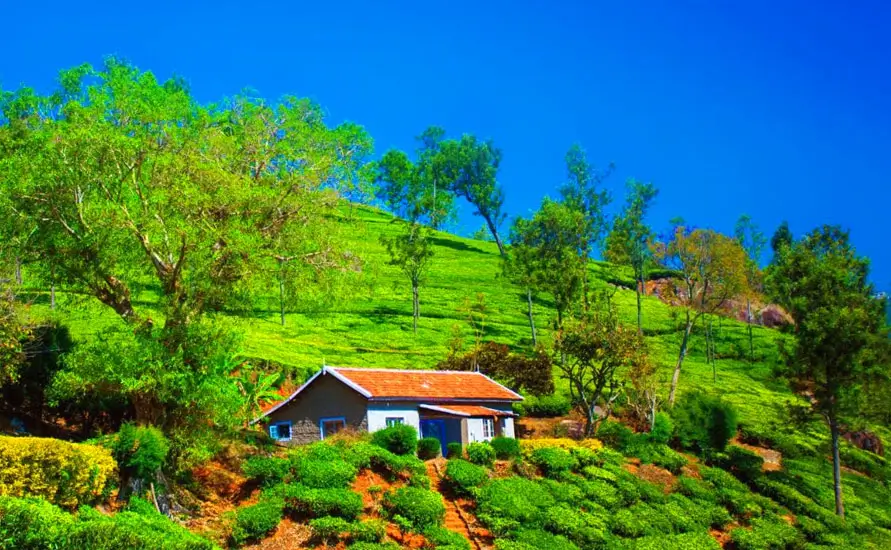
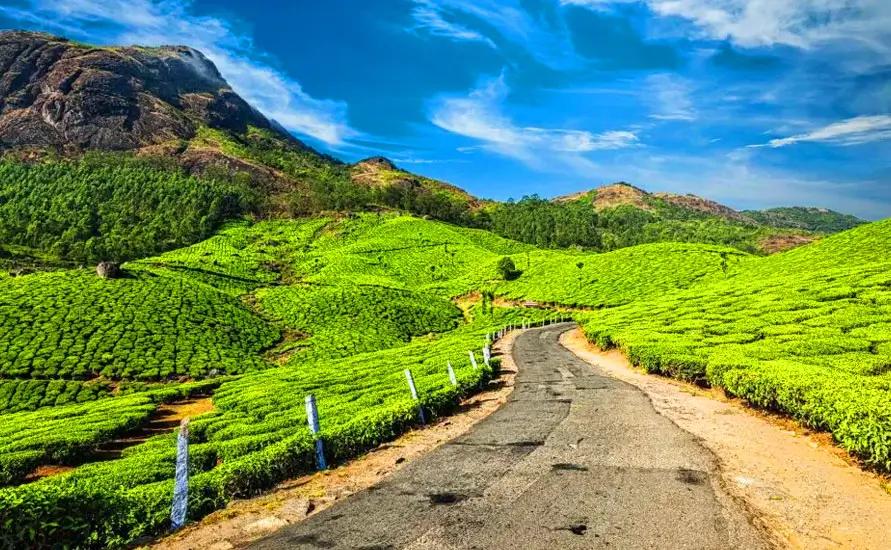
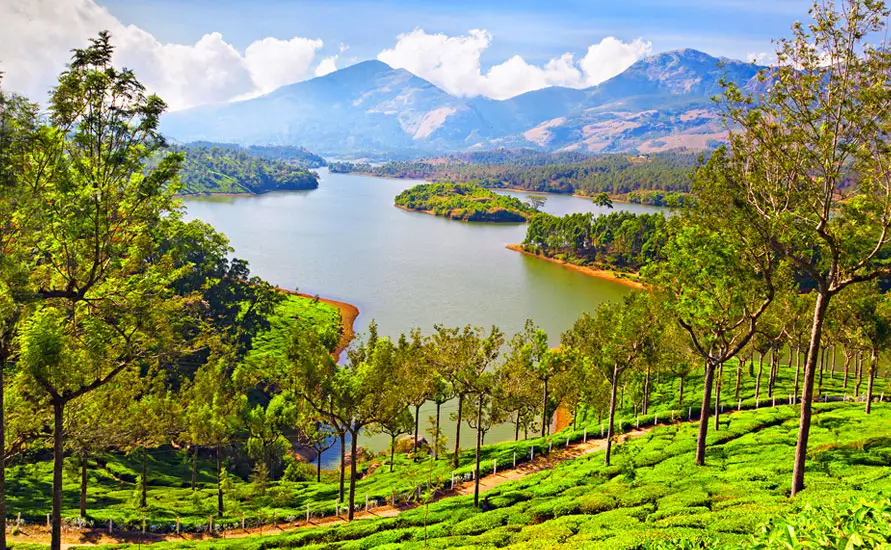
The drive north to Munnar follows a ridge road through some of the richest cardamom country in Kerala, passing small towns such as Nedumkandam where spice dealers trade sacks of pods. Your chauffeur takes the route in easy stages with stops at viewpoints looking down on the Tamil Nadu plains. Gradually the forest thins and the hills turn green with neatly clipped tea bushes, planted in rows that follow every curve of the land. Early afternoon brings you to a luxury tea estate resort outside Munnar, your base for two nights, with valley views from the room.
After lunch a tea planter meets you for a private walk through the estate. You learn how pickers pluck just a bud plus the two newest leaves, why altitude and mist matter, and how the same bush gives different flavors in different seasons. At a tasting room you sit down to a proper session, slurping and comparing several teas side by side, from light, high-grown leaf to strong broken-grade tea that goes into the milky chai sold at every roadside stall. The planter talks about the British companies that cleared these hills in the late 1800s and the Tamil workers who still live on many estates.
Evenings in Munnar are cool, especially from December to February, when temperatures can drop sharply after dark. Your resort lights a fire on the terrace, and cardamom tea served alongside banana fritters is the local way to end the day. Dinner is at the resort restaurant, where many dishes use vegetables grown in the hill farms around Munnar, such as carrots, cabbage and beans that do not grow well in the hot lowlands. Pack a fleece or shawl for the rest of your hill stay, and ask the resort for an extra blanket if you feel the cold. Overnight in Munnar.
Morning belongs to Eravikulam National Park, rolling high grassland where the protected Nilgiri tahr, an endangered mountain ungulate, survives in its largest population. Park shuttles climb from the ticket gate to Rajamala, where a paved trail gives views toward Anamudi, South India's tallest summit. The tahr frequently feed beside the trail, yet sightings can never be promised. Calving brings an annual closure, usually spanning part of February and March; should your visit coincide, we substitute a walk on a higher tea estate. Wear good shoes and carry a light jacket, since wind on the ridge can be chilly even at midday.
Later you visit the KDHP Tea Museum, a small but interesting museum run by the main tea company in Munnar. Old photographs, a vintage rolling machine and a short film explain the history of tea in the High Range, and a small processing line demonstrates withering, rolling, oxidizing and drying. Afterwards you have lunch in town or at your resort and spend the afternoon at leisure. With energy to spare, ask your guide for a drive to Mattupetty Dam or to a quiet viewpoint for photographs of the tea slopes in the late afternoon light.
Tonight a private chef cooks a planters'-style dinner for you at a heritage estate bungalow, once home to a British manager. The menu draws on the Anglo-Indian dishes that planters ate in these hills: a peppery mulligatawny soup, crumbed meat or vegetable cutlets, a mild estate curry with rice, and a caramel custard to finish. The chef explains how British tastes mixed with Kerala spices to create this hybrid cuisine, which is now quite hard to find. Candles, old furniture and a log fire set the scene. Your chauffeur drives you back to the resort after dinner. Overnight in Munnar.
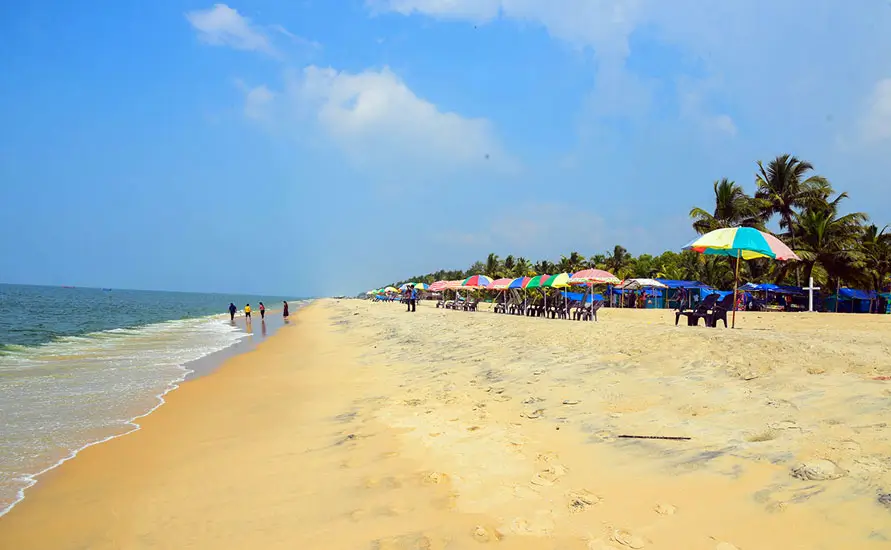
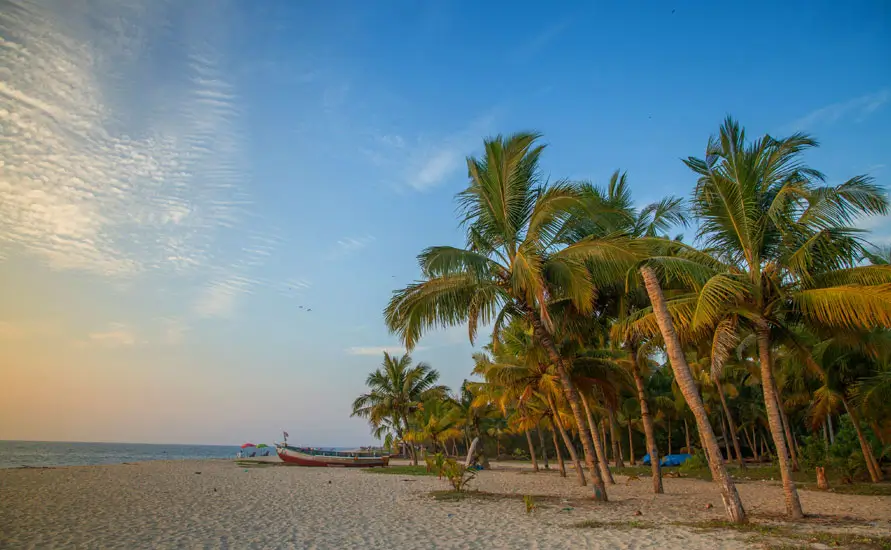
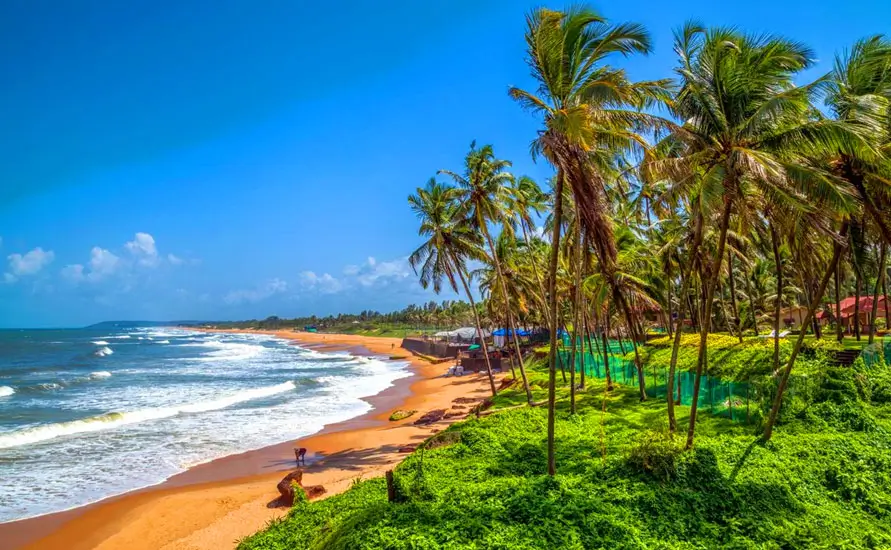
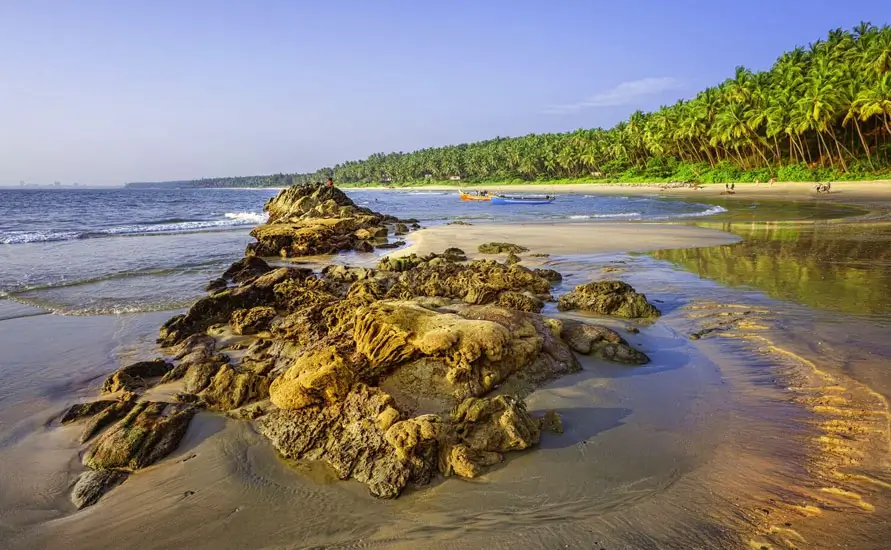
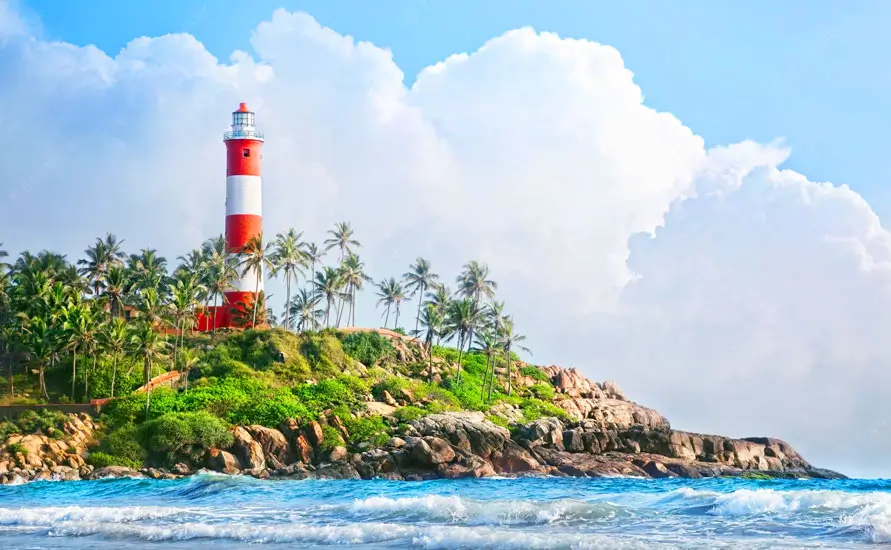
Five hours lie ahead, the biggest driving stretch, so wheels roll soon after an early breakfast. You wind downhill past cardamom groves and waterfalls toward Adimali and Kothamangalam, then crosses the flat, green lowlands of central Kerala. Lunch is planned at a well-run local restaurant serving Kerala meals on banana leaves, a final chance to try dishes you may have missed. Mid-afternoon brings you to Marari Beach, a broad, empty shore above Alleppey backed by coconut groves and fishing hamlets. Your beach resort for the final night has villas set among the trees.
Fishing still drives life on this shore, and around four or five the boats begin landing their catch. Fishermen pull their nets onto the beach and sort the catch, and women from the village buy fish right at the waterline to sell in local markets. Through your guide you meet a fisherman who explains how the community works with the monsoon, when the sea is rough and fishing almost stops. Swimming is possible on calm days in the winter months, but always check with the resort's lifeguard first, as currents change quickly here.
Your farewell dinner is set on the beach, with a table on the sand, lanterns and surf just a few steps away. A private chef prepares a seafood menu from the day's catch, which might include tiger prawns grilled with lime and chili, crab roast with shallots and curry leaves, a red fish curry made with kudampuli and a final serving of Kerala red rice. Vegetarian menus are prepared just as carefully. It is a good chance to talk over the trip, compare favorite dishes and plan how to cook some of them at home. Overnight in Marari.
Breakfast at the resort may include puttu, steamed rice and coconut cylinders served with chickpea curry, one last Kerala classic. Checkout is usually around noon, and our team times your departure to the airport around your flight, leaving a good margin for traffic north of Alleppey and around Kochi. On the way your chauffeur can pause at a spice store or bakery for snacks to take home. If your flight leaves very late, a later checkout or an airport-side day room can be booked for an extra charge.
From Kochi, connections through the Gulf, Singapore and other hubs reach America, Britain, Europe and Australia. Across ten days you have cooked and tasted your way from Kochi's spice warehouses to the backwaters, the cardamom hills, the tea estates and the fishing coast, and you leave with recipes, spices and stories from the families who shared their kitchens. Our team would gladly shape a second trip, perhaps to the Malabar coast in North Kerala for its biryani and Theyyam season. Safe travels home.
Your Journey
N.S. Rathore & Mrs. Omlata Rathore · Managing Director
We still read every enquiry ourselves. Tell us the places you liked and our planners will send a day-by-day route with drive times and a clear price.
Every package can be customised and no pressure to book. A planner from our office replies within 24 hours with a route written for your group.
Fill this in and your planner will send a first draft itinerary.
Explore more
Kerala Backwaters Escape Kerala Backwaters Escape
 Kerala Backwaters Escape
 Kerala Backwaters Escape
 Kerala Backwaters Escape
 Kerala Backwaters Escape
 Kerala Backwaters Escape
 Kerala Backwaters Escape
 Kerala Backwaters Escape
 Kerala Backwaters Escape
 Kerala Backwaters Escape
 Kerala Backwaters Escape
 Kerala Backwaters Escape
 Kerala Backwaters Escape
 Kerala Backwaters Escape
 Kerala Backwaters Escape
 Kerala Backwaters Escape
 Kerala Backwaters Escape
 Kerala Backwaters Escape
 Kerala Backwaters Escape
 Kerala Backwaters Escape
 Kerala Backwaters Escape